Vocabularios

Descubra, aprenda y domine el vocabulario en inglés

noun
/lɒs/
pérdida (pérdida)

The state of no longer having something or someone; the harm resulting from losing.

"The company suffered a huge financial loss last year."

"La compañía sufrió una gran pérdida financiera el año pasado." (La compañía sufrió una gran pérdida financiera el año pasado.)
verb/adjective
/lɒst/
perdido (perdido)

Unable to find the way; no longer in possession of something.

"He lost his keys and couldn’t enter the house."

"Él perdió sus llaves y no pudo entrar a la casa." (Él perdió sus llaves y no pudo entrar a la casa.)
noun
/lɒt/
un montón (un monton)

A large number or amount; a group or portion.

"She bought a lot of books at the fair."

"Ella compró un montón de libros en la feria." (Ella compro un monton de libros en la feria.)
pronoun/noun
/lɒts/
muchos (muchos)

A large number or amount of something.

"She has lots of friends in the city."

"Ella tiene muchos amigos en la ciudad." (Ella tiene muchos amigos en la ciudad.)
noun
/ˈlɒtəri/
lotería (loteria)

A means of raising money by selling numbered tickets and giving prizes to the holders of numbers drawn at random.

"He won a car in the national lottery."

"Ganó un coche en la lotería nacional." (Gano un coche en la loteria nacional.)
noun
/ˈloʊ.təs/
loto (loto)

a large water flower that floats on the surface of ponds and lakes

"The lotus flower blooms beautifully in the quiet pond."

"La flor de loto florece hermosamente en el estanque tranquilo." (la flor de loto florese ermosamente en el estanque tranquilo)
adjective/adverb
/laʊd/
alto (alto)

Producing or capable of producing much noise.

"The music was too loud to concentrate."

"La música estaba demasiado alta para concentrarse." (La música estaba demasiado alta para concentrarse.)
adverb
/ˈlaʊdli/
en voz alta (en voz alta)

in a way that produces a lot of sound; with a high volume

"He spoke loudly so everyone in the room could hear him."

"Habló en voz alta para que todos pudieran oírlo." (Hablo en voz alta para que todos pudieran oirlo)
noun
/lɒx/ or /lɒk/
embalse (embalse)

An Irish or Scottish word for a lake or sea inlet.

"The fishermen lived by the lough for generations."

"Los pescadores vivían junto al embalse durante generaciones." (Los pescadores vivían junto al embalse durante generaciones.)
noun, verb
/laʊndʒ/
salón (salon)

A public room for relaxing; or to sit, lie, or stand in a relaxed way.

"They lounged on the sofa after dinner."

"Ellos se recostaron en el sofá después de la cena." (Ellos se recostaron en el sofá después de la cena.)
noun
/laʊs/
piojo (piojo)

A small parasitic insect that lives on the skin of mammals and birds; also used as an insult for a contemptible person.

"The child had to be treated for head louse infestation."

"El niño tuvo que ser tratado por infestación de piojos en la cabeza." (El nino tuvo que ser tratado por infestacion de piojos en la cabeza.)
adjective
/ˈlaʊzi/
malo (malo)

of very poor quality; bad or unpleasant

"He felt lousy after catching the flu."

"Se sintió mal después de coger la gripe." (Se sintió mal después de coger la gripe.)
noun
/laʊt/
bruto (bruto)

An uncouth or aggressive man or boy.

"The drunken lout caused a scene at the party."

"El borracho bruto causó un escándalo en la fiesta." (El borracho bruto causó un escándalo en la fiesta.)
adjective
/ˈlaʊtɪʃ/
grosero (grosero)

Clumsy, rude, or aggressive in behavior.

"His loutish remarks offended everyone at the meeting."

"Sus comentarios groseros ofendieron a todos en la reunión." (Sus comentarios groseros ofendieron a todos en la reunión.)
adjective
/ˈlʌvəbəl/
felicidad (felicidad)

Inspiring or deserving love or affection.

"The puppy was so lovable that everyone wanted to hold it."

"No podía ocultar su felicidad cuando recibió el premio." (No podia ocultar su felicidad cuando recibio el premio.)
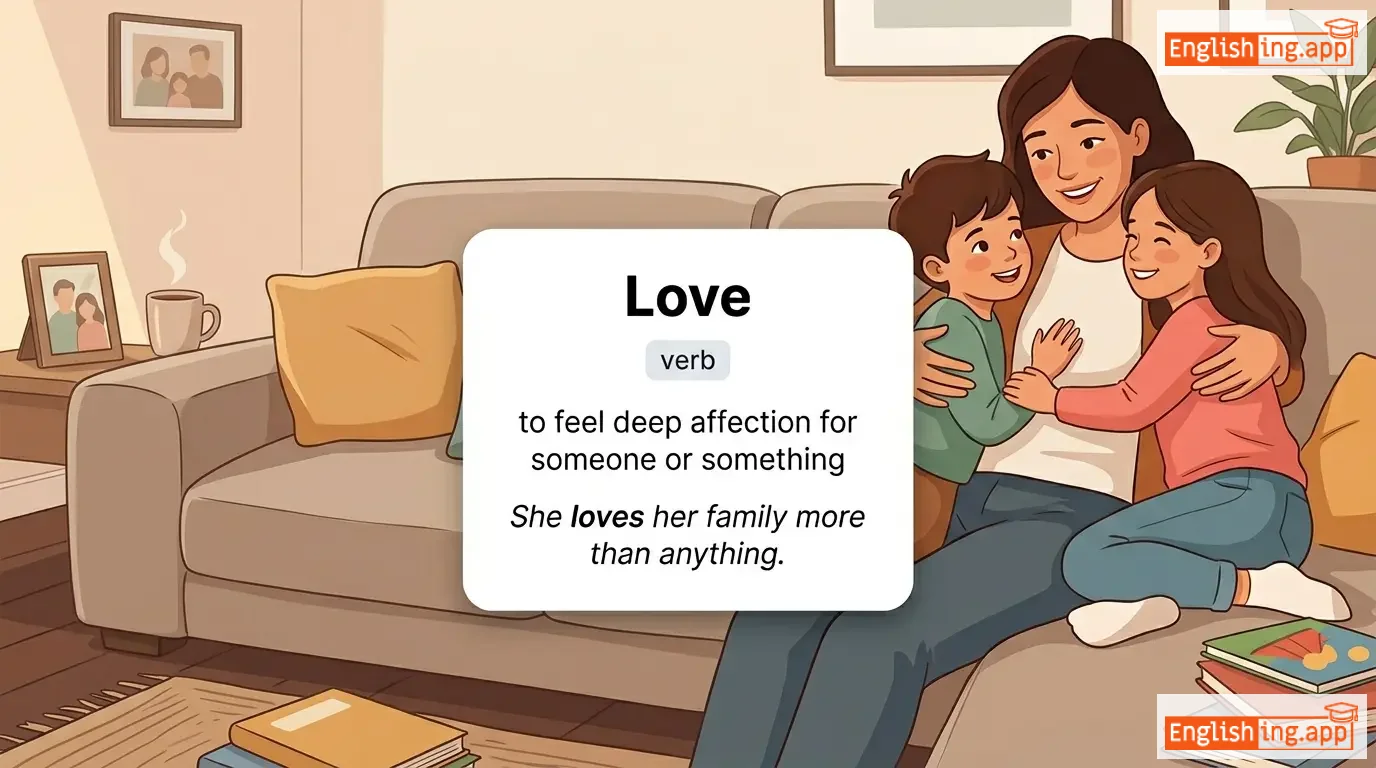
Love definition card — visual illustration of the meaning
verb
/lʌv/
amor (amor)

to feel deep affection for someone or something

"She loves her family more than anything."

"Ella ama a su familia más que nada." (Ella ama a su familia más que nada.)
adjective
/ˈlʌvəbl̩/
felicidad (felicidad)

easy to love; endearing or charming

"The puppy was so loveable that everyone wanted to hold it."

"Ella no pudo esconder su felicidad cuando recibió el premio." (Ella no pudo esconder su felicidad cuando recibió el premio.)
adjective
/ˈlʌvli/
hermoso (hermoso)

Delightful or very pleasing; beautiful.

"It was a lovely evening by the beach."

"Fue una tarde hermosa junto a la playa." (Fue una tarde hermosa junto a la playa.)
noun
/ˈlʌvər/
amante (amante)

a person who is in a romantic relationship or has strong affection for someone

"She met her lover at the café every evening."

"Ella se encontraba con su amante en el café cada tarde." (Ella se encontraba con su amante en el cafe cada tarde.)
adjective
/ˈlʌv.ɪŋ/
afectuoso; cariñoso; que muestra amor y calidez (afectuoso; carinoso; que muestra amor y calidez)

affectionate; caring; showing love and warmth

"She is a loving mother who cares deeply for her children."

"Ella es una madre cariñosa que se preocupa profundamente por sus hijos." (Ella es una madre cariñosa que se preocupa profundamente por sus hijos.)
adjective
/loʊ/
bajo (bajo)

Small in amount, degree, or position; not high.

"The river is at its lowest level in years."

"El río está en su nivel más bajo en años." (El rio esta en su nivel mas bajo en anos.)
adjective
/ˌloʊ ˈspɪrɪtɪd/
deprimido (deprimido)

feeling sad, depressed, or lacking enthusiasm

"He felt low-spirited after hearing the bad news."

"Se sintió deprimido después de escuchar las malas noticias." (Se sintió deprimido después de escuchar las malas noticias.)
verb
/ˈloʊər/
reducir (reducir)

to move something to a lower position or to reduce

"The company decided to lower the prices."

"La compañía decidió reducir los precios." (La compania decidio reducir los precios.)
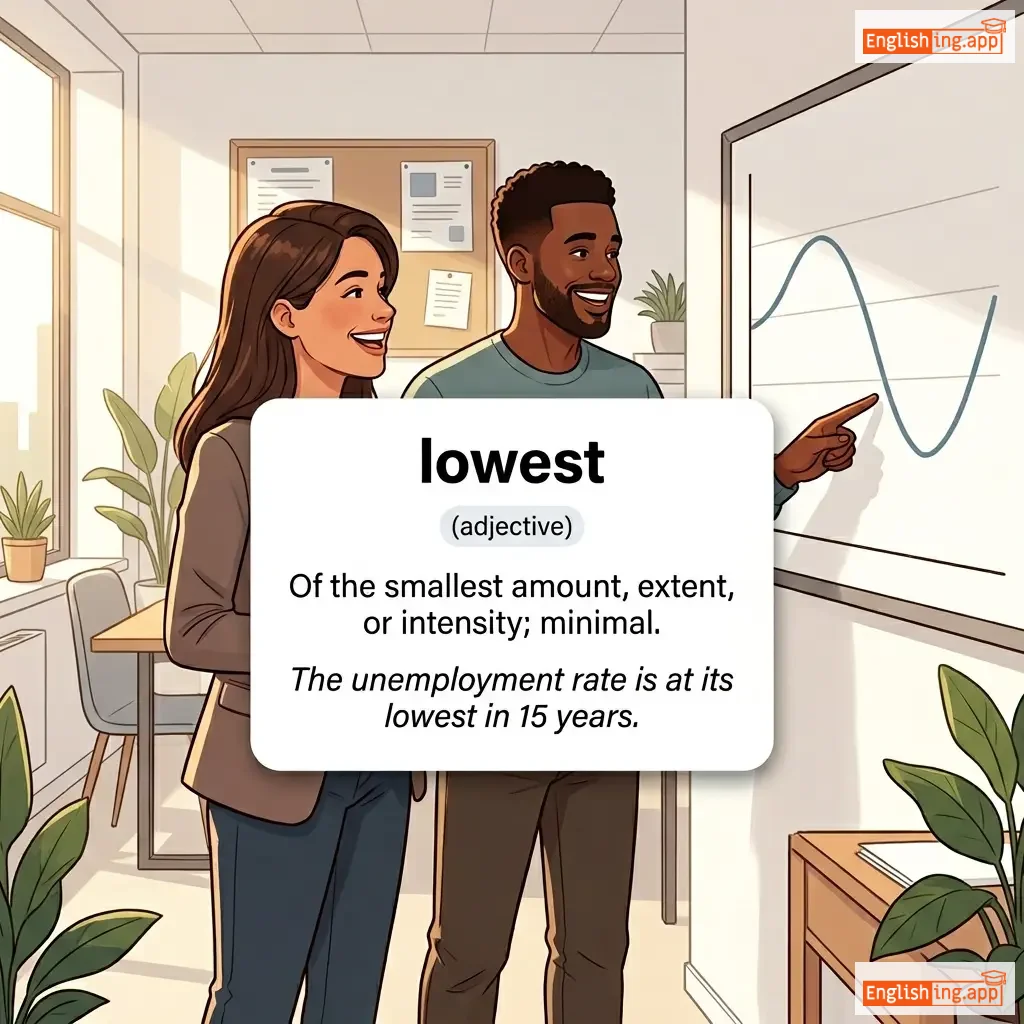
lowest definition card — visual illustration of the meaning
adjective
/ˈloʊɪst/
más bajo (mas bajo)

Of the smallest amount, extent, or intensity; minimal.

"The unemployment rate is at its lowest in 15 years."

"La tasa de desempleo está en su nivel más bajo en 15 años." (La tasa de desempleo esta en su nivel mas bajo en 15 años.)
adjective
/ˈloʊli/
humilde (humilde)

humble in status, position, or manner

"She rose from a lowly position to become the company's CEO."

"Ella subió de una posición humilde a ser la CEO de la empresa." (Ella subió de una posición humilde a ser la CEO de la empresa.)
adjective
/ˈlɔɪəl/
leal, fiel (leal, fiel)

showing firm and constant support or allegiance to someone or something

"She remained loyal to her friends even in hard times."

"Ella siguió siendo leal a sus amigos incluso en tiempos difíciles." (Ella siguió siendo leal a sus amigos incluso en tiempos difíciles.)
noun
/ˈlɔɪəlti/
lealtad (lealtad)

a strong feeling of support or allegiance

"His loyalty to the company earned him great respect."

"Su lealtad a la empresa le valió mucho respeto." (Su lealtad a la empresa le valió mucho respeto.)
verb
/ˈluːbrɪkeɪt/
lubricar (lubrikar)

to apply oil or grease to reduce friction between surfaces

"The mechanic lubricated the car engine parts."

"El mecánico lubricó las piezas del motor del coche." (El mecanico lubrico las piezas del motor del coche.)
lubrication definition card — visual illustration of the meaning
noun
ˌluː.brɪˈkeɪ.ʃən
lubricación (lubricacion)

The application of a substance such as oil or grease to reduce friction between moving parts.

"Lubrication reduces wear and tear in machines."

"La lubricación reduce el desgaste en las máquinas." (La lubricacion reduce el desgaste en las maquinas.)
noun
/luːˈbrɪsɪti/
resbalosidad (resbalosidad)

the quality of being slippery or smooth; sometimes also refers to lewdness

"The lubricity of the surface made it difficult to walk on."

"La resbalosidad de la superficie hizo difícil caminar sobre ella." (La resbalosidad de la superficie hizo difícil caminar sobre ella.)
adjective
/ˈluːsənt/
luminiscente (luminisente)

shining or glowing with light

"The lucent stars brightened the night sky."

"Las estrellas luminiscentes iluminaron el cielo nocturno." (Las estrellas luminiscentes iluminaron el cielo nocturno.)
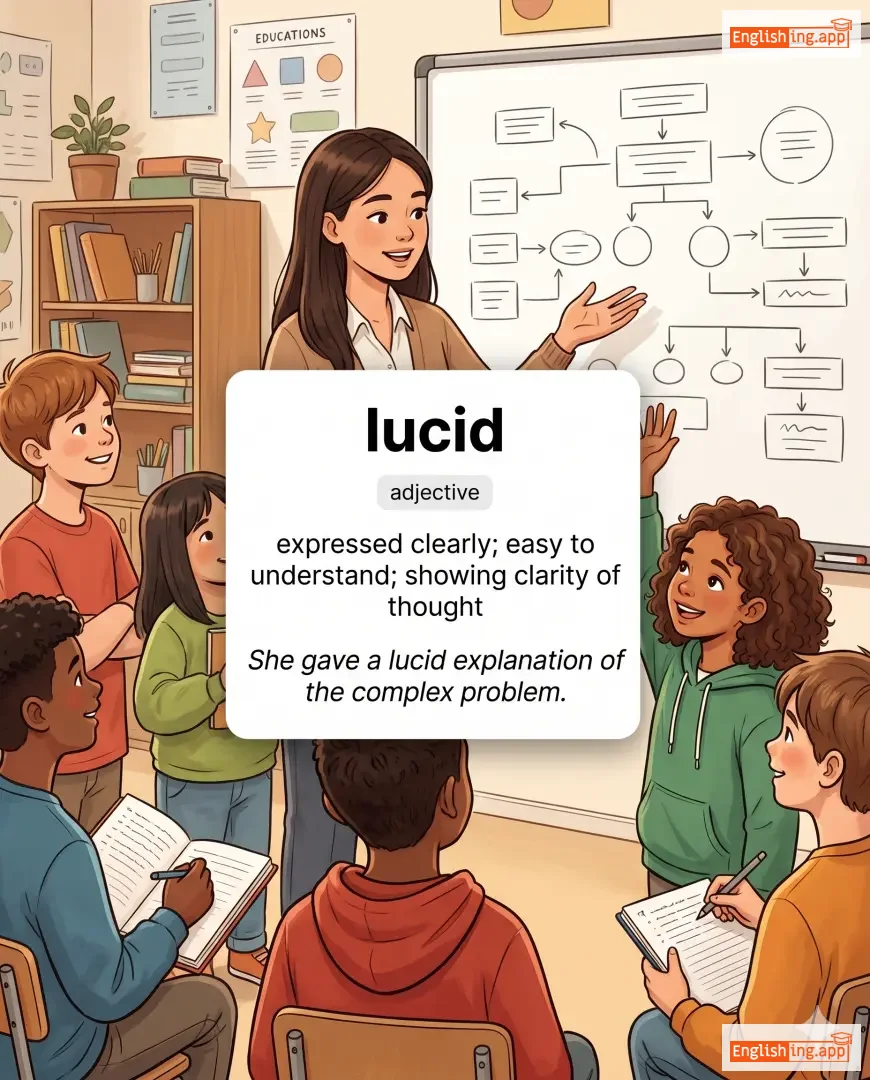
lucid definition card — visual illustration of the meaning
adjective
/ˈluːsɪd/
lúcido (lucido)

expressed clearly; easy to understand; showing clarity of thought

"She gave a lucid explanation of the complex problem."

"Ella dio una explicación lúcida del problema complejo." (Ella dio una explicacion lucida del problema complejo.)
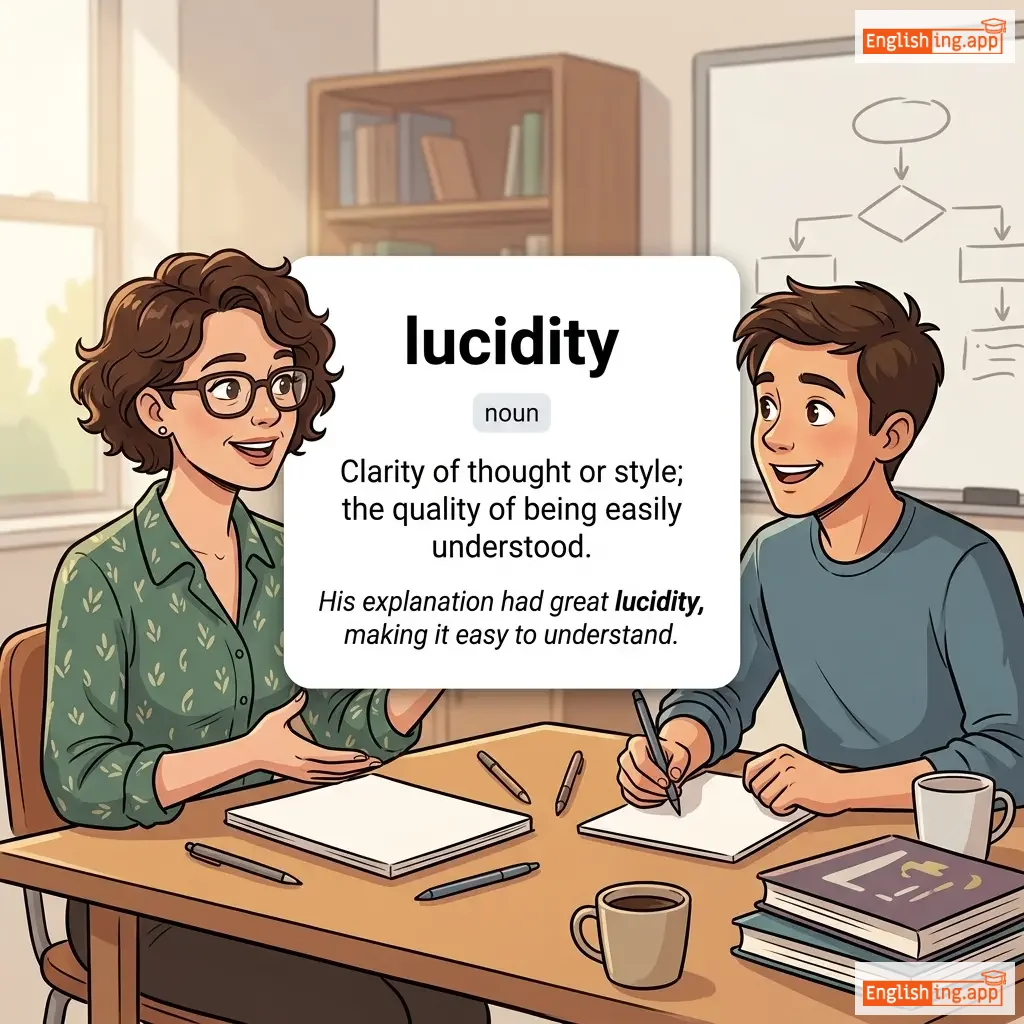
lucidity definition card — visual illustration of the meaning
noun
/luːˈsɪd.ə.ti/
lucidez (lucidez)

Clarity of thought or style; the quality of being easily understood.

"His explanation had great lucidity, making it easy to understand."

"Su explicación tuvo gran lucidez, lo que facilitó la comprensión." (Su explicacion tuvo gran lucidez, lo que facilito la comprension.)
noun
/lʌk/
suerte (luk)

success or failure apparently brought by chance rather than through one’s actions

"He had the luck to find a good job quickly."

"Tuvo la suerte de encontrar un buen trabajo rápidamente." (tuvo la suerte de encontrar un buen trabajo rapidamente.)
adjective
/ˈlʌki/
afortunado (afortunado)

having good fortune or favorable circumstances

"She felt lucky to have such supportive friends."

"Ella se sintió afortunada de tener amigos tan solidarios." (Ella se sintió afortunada de tener amigos tan solidarios.)
lucrative definition card — visual illustration of the meaning
adjective
/ˈluːkrətɪv/
lucrativo (lucrativo)

producing a great deal of profit

"He left his job for a more lucrative business opportunity."

"Dejó su trabajo por una oportunidad de negocio más lucrativa." (Dejó su trabajo por una oportunidad de negocio más lucrativa.)
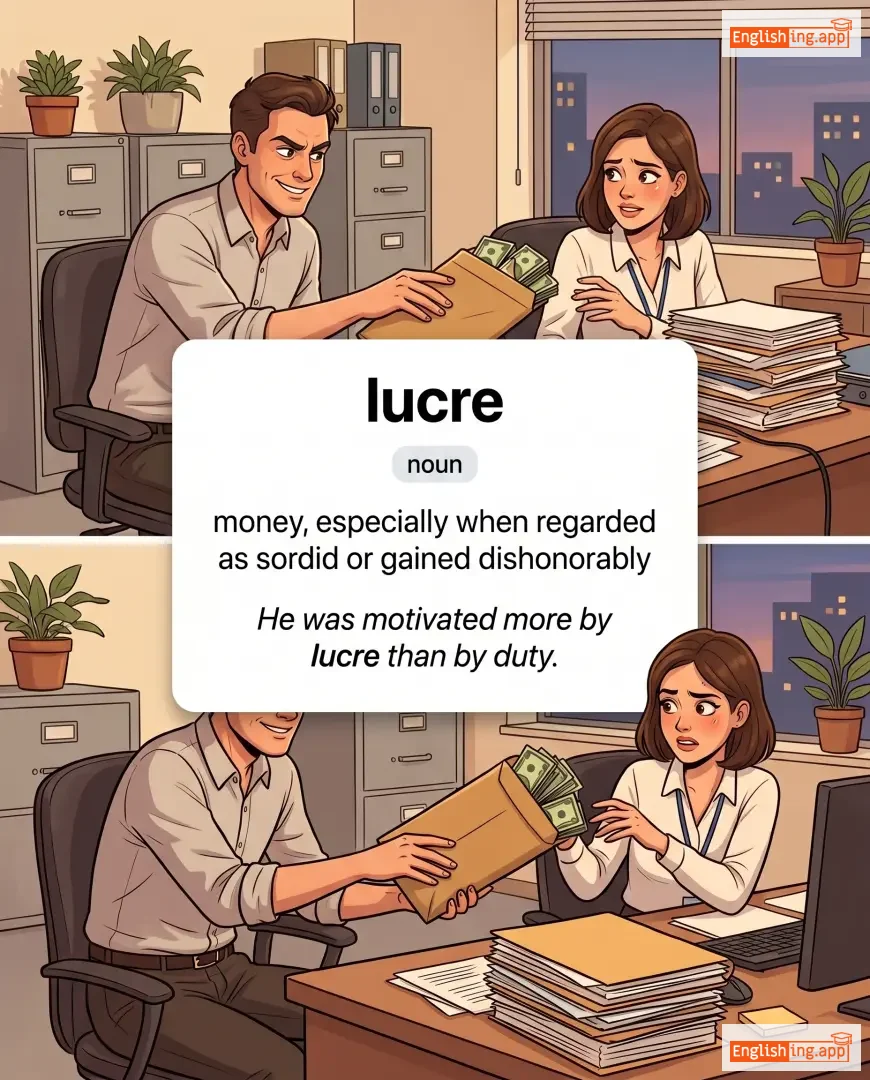
lucre definition card — visual illustration of the meaning
noun
/ˈluːkər/
lucre (lucre)

money, especially when regarded as sordid or gained dishonorably

"He was motivated more by lucre than by duty."

"Estaba motivado más por el lucro que por el deber." (Estaba motivado más por el lucro que por el deber.)
noun
/ˌluːkjʊˈbreɪʃən/
estudio nocturno (estudio nocturno)

study or meditation, especially at night

"His novel was the result of long lucubration."

"Su novela fue el resultado de un largo estudio nocturno." (Su novela fue el resultado de un largo estudio nocturno.)
adjective
/ˈluːdɪkrəs/
absurdo (absurdo)

so foolish, unreasonable, or out of place as to be amusing

"It is ludicrous to think the Earth is flat."

"Es absurdo pensar que la Tierra es plana." (Es absurdo pensar que la Tierra es plana.)
verb
/lʌɡ/
cargar o arrastrar algo pesado o incómodo con esfuerzo (cargar o arrastrar algo pesado o incomodo con esfuerzo)

to carry or drag something heavy or cumbersome with effort

"He had to lug the suitcase up three flights of stairs."

"Tuvo que arrastrar la maleta por tres vuelos de escaleras." (Tuvo que arrastrar la maleta por tres vuelos de escaleras.)
noun
/ˈlʌɡ.ɪdʒ/
equipaje (equipaje)

suitcases or other bags in which to pack personal belongings for traveling

"Please check your luggage at the airport counter."

"Por favor, revise su equipaje en el mostrador del aeropuerto." (Por favor, revise su equipaje en el mostrador del aeropuerto)
noun
/ˈlʌɡ.ɪdʒ væn/
furgón de equipaje (furgon de equipaje)

a vehicle designed for carrying luggage and cargo

"The luggage van carried all the passengers' suitcases."

"El furgón de equipaje transportó todas las maletas de los pasajeros." (El furgon de equipaje transporto todas las maletas de los pasajeros)
adjective
/luːˈɡuːbriəs/
lugubre (lugubre)

looking or sounding sad and dismal

"His lugubrious expression made everyone feel uneasy."

"Su expresión lugubre hizo que todos se sintieran incómodos." (Su expresion lugubre hizo que todos se sintieran incomodos.)
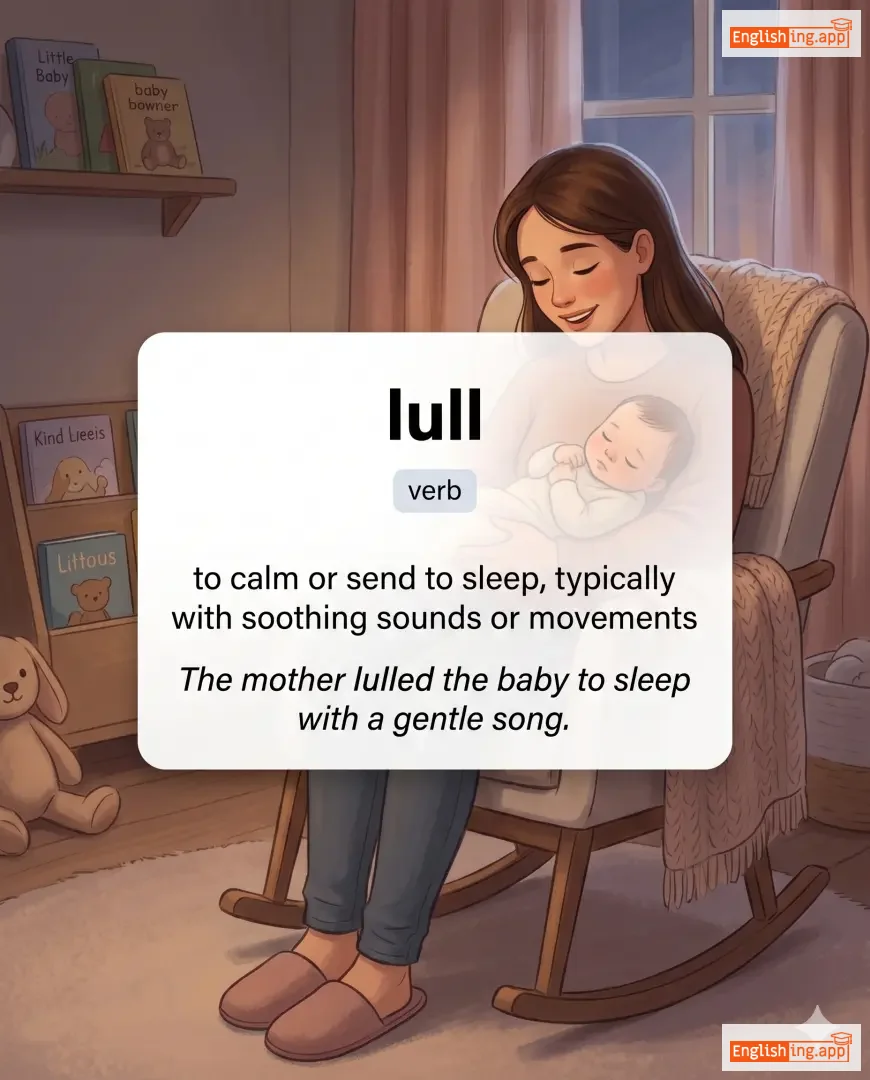
lull definition card — visual illustration of the meaning
verb
/lʌl/
arrullar (arrullar)

to calm or send to sleep, typically with soothing sounds or movements

"The mother lulled the baby to sleep with a gentle song."

"La madre arrulló al bebé para dormir con una canción suave." (La madre arrulló al bebé para dormir con una canción suave.)
noun
/ˈlʌləˌbaɪ/
canción de cuna (cancion de cuna)

a soothing song sung to help a child fall asleep

"She sang a lullaby to her baby every night."

"Ella cantaba una canción de cuna a su bebé todas las noches." (Ella cantaba una cancion de cuna a su bebe todas las noches)
verb
/ˈlʌmbər/
caminar pesadamente (caminar pesadamente)

to move in a slow, heavy, awkward way

"The bear lumbered through the forest in search of food."

"El oso caminó pesadamente a través del bosque en busca de comida." (El oso caminó pesadamente a través del bosque en busca de comida.)
noun
/ˈluː.mən/
lúmen (lumen)

A unit of luminous flux, measuring the amount of visible light emitted by a source.

"The bulb produces 800 lumens of light."

"La bombilla produce 800 lúmenes de luz." (La bombilla produce 800 lúmenes de luz.)
noun
/ˈluː.məˌnɛr.i/
persona destacada (persona destacada)

A person who inspires or influences others, especially in a particular field.

"He is considered a luminary in the world of science."

"Se le considera una persona destacada en el mundo de la ciencia." (Se le considera una persona destacada en el mundo de la ciencia.)
noun
/ˌluː.mɪˈnɛs.əns/
luminescencia (luminescencia)

The emission of light by a substance not resulting from heat; a type of cold light.

"The luminescence of the fireflies lit up the forest."

"La luminescencia de las luciérnagas iluminó el bosque." (La luminescencia de las luciernagas ilumino el bosque.)
adjective
/ˌluː.mɪˈnɛs.ənt/
luminoso (luminoso)

Emitting light without heat, glowing softly.

"The luminescent watch dial was visible in the dark."

"El dial luminoso del reloj era visible en la oscuridad." (El dial luminoso del reloj era visible en la oscuridad.)