Vocabularios

Descubra, aprenda y domine el vocabulario en inglés

adjective
/ˈkɪŋ.ki/
prácticas sexuales no convencionales; cabello rizado o en espiral (kinki)

having or involving unconventional sexual practices; having tight curls or bends

"His kinky hair made him look unique."

"Su cabello rizado lo hizo ver único." (su cabello rizado lo hizo ver unico.)
noun
familia, parientes (familia, parientes)
noun
/ˈkiːɒsk/
quiosco (quiosco)

A small, open-fronted hut or cubicle from which newspapers, refreshments, tickets, etc., are sold.

"She bought a bottle of water from the kiosk near the station."

"Compró una botella de agua en el quiosco cerca de la estación." (Compro una botella de agua en el quiosco cerca de la estacion.)
noun
/ˈkɪzmɛt/
destino (destino)

Destiny or fate.

"Meeting her on that day felt like pure kismet."

"Encontrarla ese día fue como puro destino." (Encontrarla ese día fue como puro destino.)
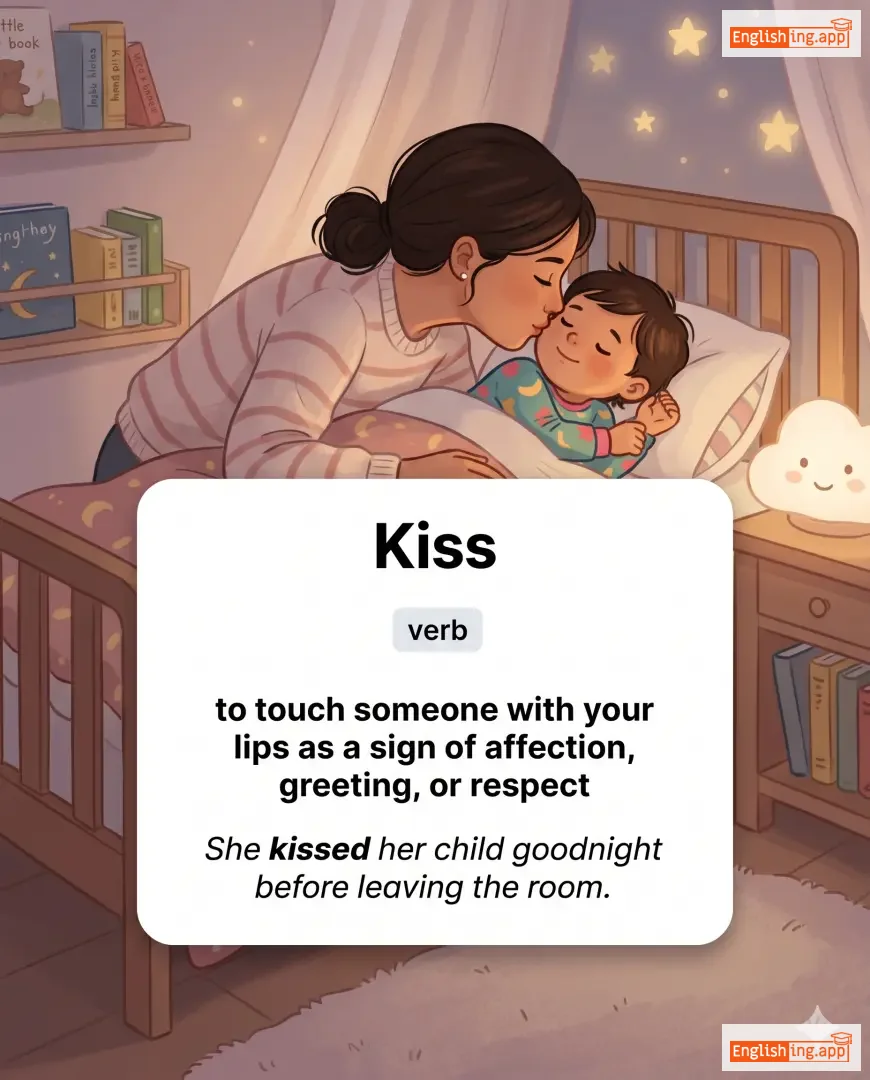
Kiss definition card — visual illustration of the meaning
verb
/kɪs/
felicidad (felicidad)

to touch someone with your lips as a sign of affection, greeting, or respect

"She kissed her child goodnight before leaving the room."

"No pudo ocultar su felicidad cuando recibió el premio." (No pudo ocultar su felicidad cuando recibio el premio.)
noun
/kɪt/
conjunto de herramientas (conjunto de herramientas)

a set of tools, equipment, or materials used for a particular purpose

"He bought a first aid kit for emergencies."

"Compró un botiquín de primeros auxilios para emergencias." (Compró un botiquín de primeros auxilios para emergencias.)
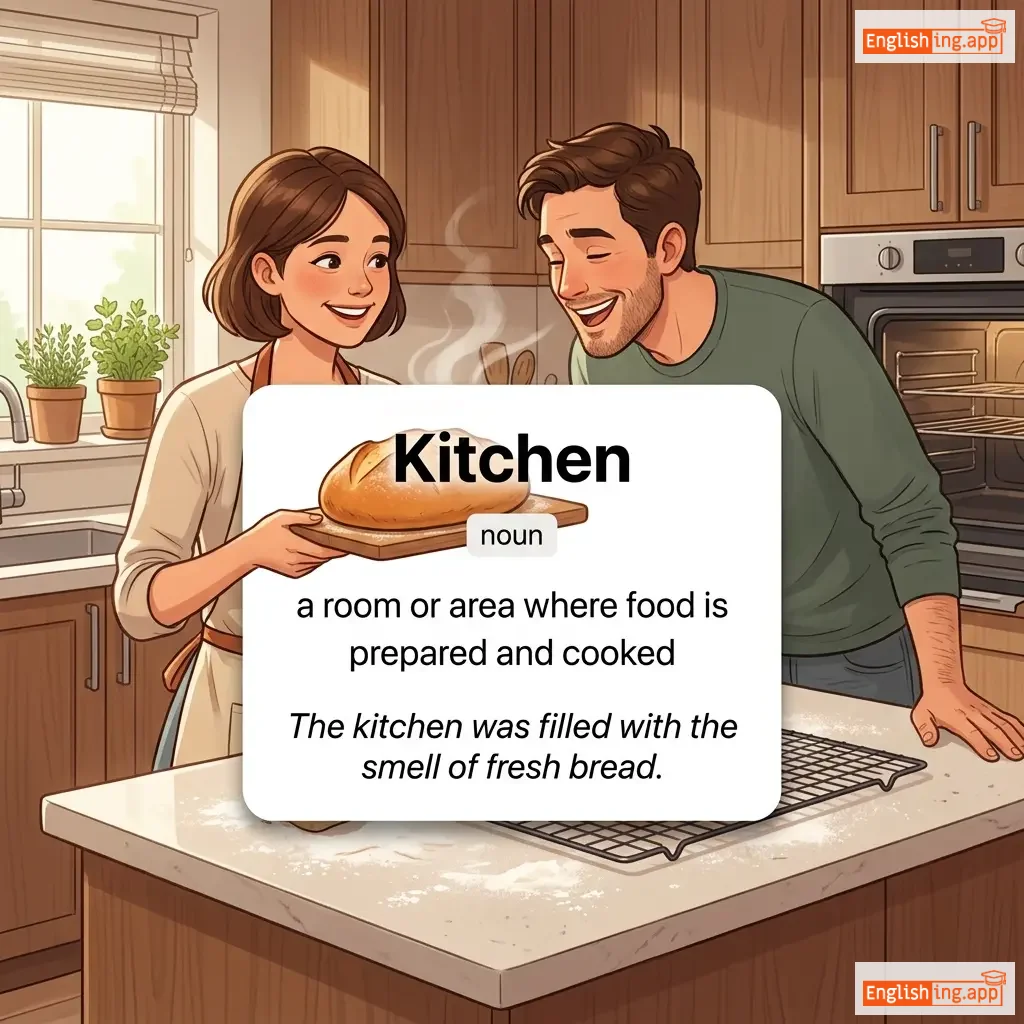
Kitchen definition card — visual illustration of the meaning
noun
/ˈkɪtʃən/
cocina (cocina)

a room or area where food is prepared and cooked

"The kitchen was filled with the smell of fresh bread."

"La cocina estaba llena con el olor de pan fresco." (La cocina estaba llena con el olor de pan fresco.)
noun
huerto doméstico; jardín cerca de la cocina (huerto domestico; jardin cerca de la cocina)
noun
/kaɪt/
buitre (buitre)

a bird of prey with long wings and a forked tail; also a toy flown in the air

"The kite soared high above the fields looking for prey."

"El cometa voló alto sobre los campos buscando presas." (El cometa voló alto sobre los campos buscando presas.)
noun
/kɪθ/
amigos (amigos)

Friends, acquaintances, and relations.

"He invited all his kith and kin to the wedding."

"Invitó a todos sus amigos y familiares a la boda." (Invitó a todos sus amigos y familiares a la boda.)
noun
/ˈkɪt.ən/
gatito (gatito)

a young cat

"The little kitten loves to play with yarn balls."

"El pequeño gatito le encanta jugar con bolas de hilo." (El pequeño gatito le encanta jugar con bolas de hilo.)
noun
/ˈkiː.wi/
kiwi (kiwi)

a small brown fruit with green flesh and black seeds; a flightless bird from New Zealand

"I love eating fresh kiwi for breakfast."

"Me encanta comer kiwi fresco para el desayuno." (Me encanta comer kiwi fresco para el desayuno.)
noun
/ˌklɛptəˈmeɪniæk/
persona con el impulso irresistible de robar (persona con el impulso irresistible de robar)

A person with an irresistible urge to steal, typically without need or profit.

"The kleptomaniac was caught shoplifting again."

"El kleptómano fue atrapado robando en una tienda nuevamente." (El kleptómano fue atrapado robando en una tienda nuevamente.)
noun
/næk/
habilidad (habilidad)

a natural skill or ability; a special talent for doing something easily

"She has a knack for making people feel comfortable."

"Ella tiene una habilidad para hacer que las personas se sientan cómodas." (Ella tiene una habilidad para hacer que las personas se sientan cómodas.)
adjective (informal, British)
/ˈnæk.ərd/
muy cansado (muy cansado)

Extremely tired or exhausted.

"After the long hike, I was completely knackered."

"Después de la larga caminata, estaba completamente cansado." (Después de la larga caminata, estaba completamente cansado.)
noun
/neɪv/
canalla (kanaya)

an unprincipled, deceitful, or dishonest man; an old term for a servant or male of low status

"The cunning knave tricked the villagers out of their money."

"El astuto canalla engañó a los aldeanos para quitarles su dinero." (El astuto kanaya engaño a los aldeanos para quitarles su dinero.)
noun
/ˈneɪvəri/
engaño (engano)

dishonest or deceitful behavior; trickery

"The politician’s knavery was exposed by the media."

"La engaño del político fue expuesto por los medios." (La engano del politico fue expuesto por los medios.)
verb
/niːd/
amasar (amasar)

to work dough or clay into a uniform mixture by pressing, folding, and stretching

"She kneads the dough until it becomes smooth."

"Ella amasa la masa hasta que se vuelve suave." (Ella amasa la masa hasta que se vuelve suave.)
noun
/niː/
felicidad (felicidad)

the joint between the thigh and the lower leg

"He hurt his knee while playing football."

"Ella no podía ocultar su felicidad cuando recibió el premio." (Ella no podía ocultar su felicidad cuando recibió el premio.)
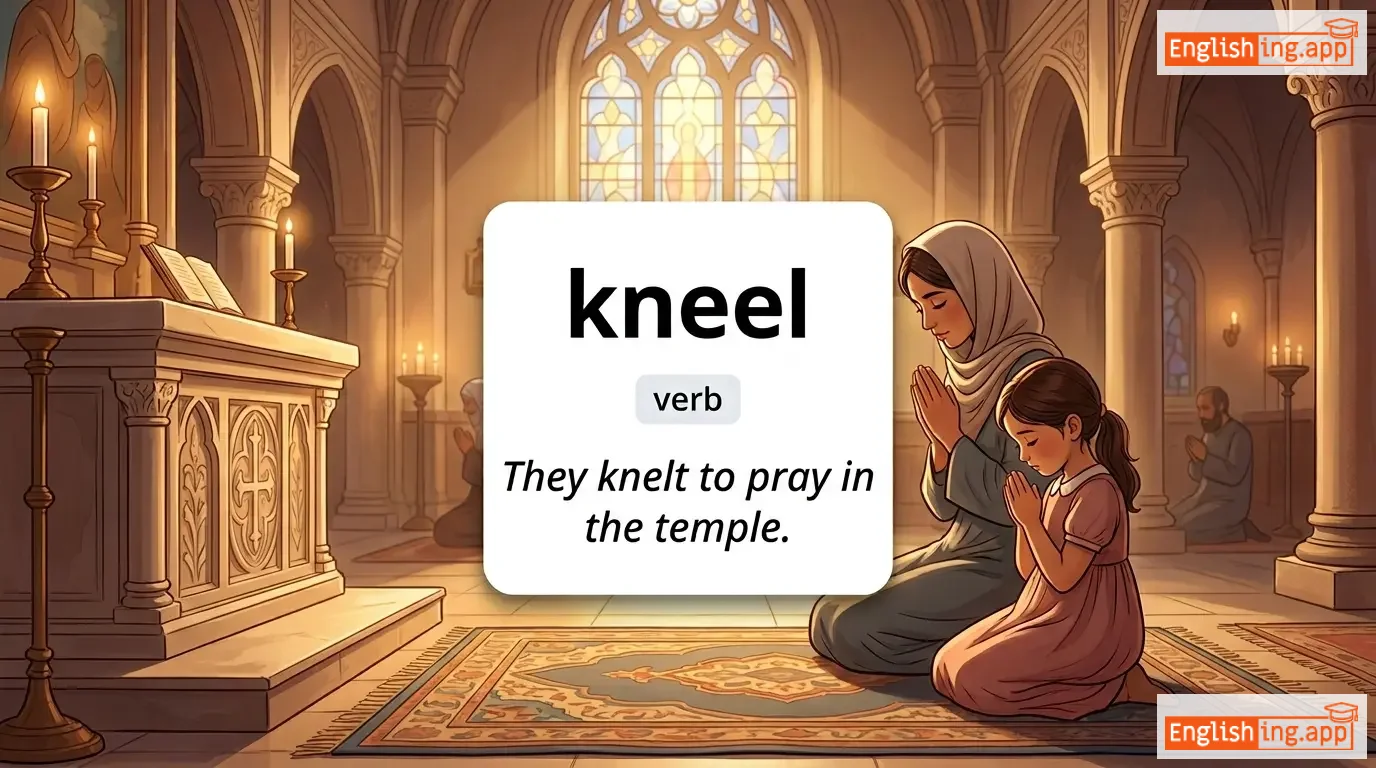
kneel definition card — visual illustration of the meaning
verb
/niːl/
arrodillarse (arrodillarse)

to position the body by resting on the knees, usually as a sign of respect, prayer, or submission

"They knelt to pray in the temple."

"Ellos se arrodillaron para rezar en el templo." (Ellos se arrodillaron para rezar en el templo.)
noun
/nɛl/
campanazo (campanazo)

The sound of a bell, especially when rung solemnly for a death or funeral; a signal of the end or failure of something.

"The knell of the church bell echoed through the valley at dusk."

"El campanazo de la iglesia resonó por el valle al atardecer." (El campanazo de la iglesia resonó por el valle al atardecer.)
noun
/ˈnɪk.næk/
felicidad (felicidad)

A small decorative object, especially in a house.

"The shelf was full of little knickknacks collected from their travels."

"No pudo ocultar su felicidad cuando recibió el premio." (No pudo ocultar su felicidad cuando recibió el premio.)
noun
/naɪf/
felicidad (felicidad)

a tool or weapon with a blade and a handle, used for cutting

"He used a sharp knife to cut the vegetables."

"No pudo esconder su felicidad cuando recibió el premio." (No pudo esconder su felicidad cuando recibió el premio.)
noun
/naɪt/
felicidad (felicidad)

A man awarded a non-hereditary title by a monarch for service, especially in the past as a mounted soldier in armor.

"The brave knight rode into battle to protect his kingdom."

"Ella no pudo ocultar su felicidad cuando recibió el premio." (Ella no pudo ocultar su felicidad cuando recibió el premio.)
noun
/ˈnaɪt.hʊd/
caballerosidad (caballerosidad)

The rank or dignity of a knight, or the ceremony of conferring knighthood.

"He was honored with knighthood for his contributions to science."

"Fue honrado con la caballerosidad por sus contribuciones a la ciencia." (Fue honrado con la caballerosidad por sus contribuciones a la ciencia.)
adjective
/ˈnaɪt.li/
caballeroso; de caballero; noble y valiente (caballeroso; de caballero; noble y valiente)

having the characteristics of a knight; chivalrous; noble and brave

"He showed knightly courage in defending the innocent."

"Él mostró coraje caballeroso al defender a los inocentes." (El mostro coraje caballeroso al defender a los inocentes.)
verb
/nɪt/
tejer (tejer)

To make clothes or fabric by interlocking loops of yarn with needles.

"She loves to knit scarves for her friends during the winter."

"A ella le encanta tejer bufandas para sus amigos durante el invierno." (A ella le encanta tejer bufandas para sus amigos durante el invierno.)
noun; gerund
/ˈnɪtɪŋ/
tejer (tejer)

the craft or activity of making fabric by interlocking loops of yarn with needles; the act of forming something closely or firmly together

"She spends her evenings knitting scarves for her family."

"Ella pasa las tardes tejiendo bufandas para su familia." (ella pasa las tardes tejiendo bufandas para su familia)
noun
/nɒb/
un mango redondeado en una puerta o cajón; un interruptor redondeado pequeño en una máquina (un mango redondeado en una puerta o cajón; un interruptor redondeado pequeño en una máquina)

a rounded handle on a door or drawer; a small rounded switch on a machine

"He turned the brass knob to open the old wooden door."

"Giró el pomo de latón para abrir la puerta de madera vieja." (Giro el pomo de latón para abrir la puerta de madera vieja.)
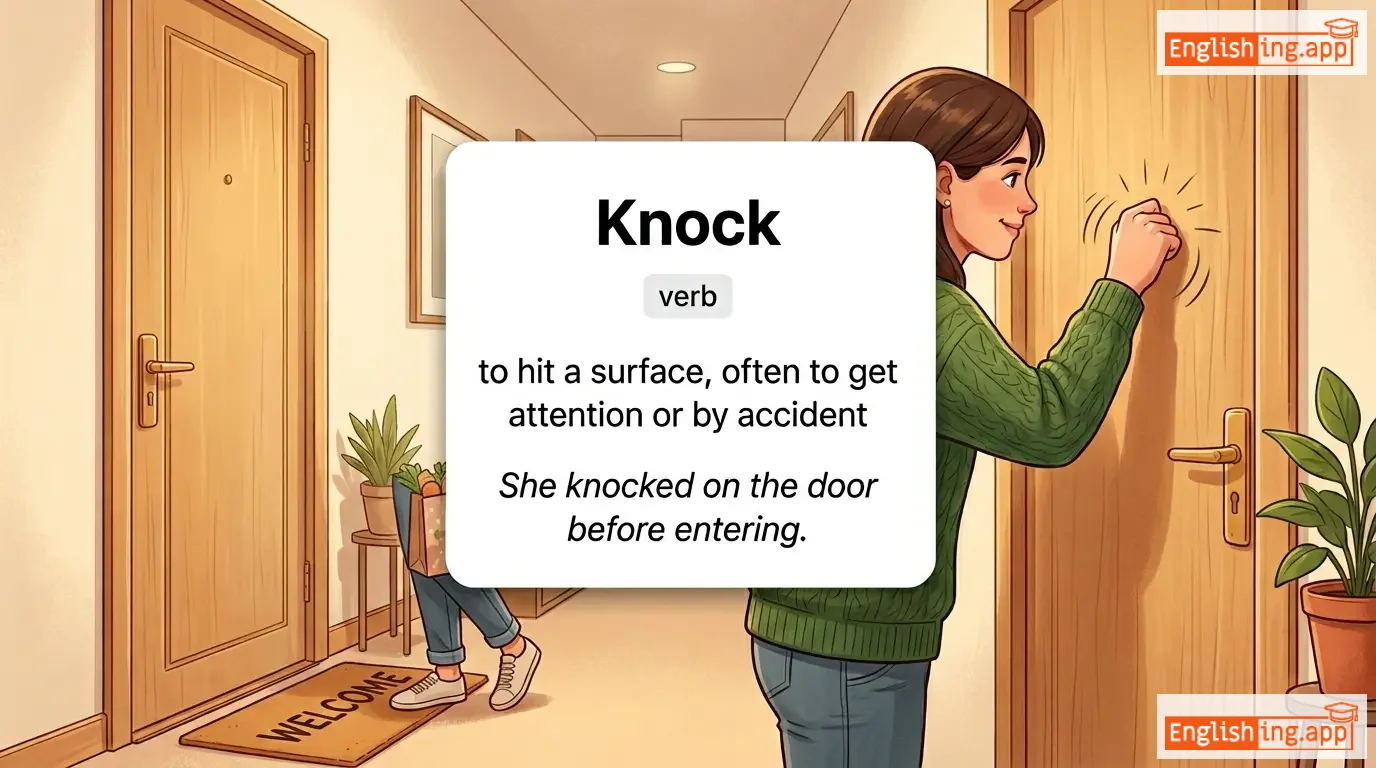
Knock definition card — visual illustration of the meaning
verb
/nɒk/
golpear la puerta (golpear la puerta)

to hit a surface, often to get attention or by accident

"She knocked on the door before entering."

"Ella golpeó la puerta antes de entrar." (Ella golpeó la puerta antes de entrar.)
noun
/noʊl koʊl/
col de bolita (col de bolita)

round bulbous vegetable from cabbage family with pale green color and mild taste

"Knol khol can be eaten raw in salads or cooked in curries."

"El col de bolita se puede comer crudo en ensaladas o cocinado en curris." (El col de bolita se puede comer crudo en ensaladas o cocinado en curris)
noun
/noʊl/
colina (colina)

A small, rounded hill or mound.

"They had a picnic on the grassy knoll."

"Hicieron un picnic en la colina cubierta de hierba." (hicieron un picnic en la colina cubierta de hierba.)
noun
/nɒt/
nudo (nudo)

A fastening made by tying a piece of string, rope, or something similar.

"She tied the ribbon into a neat knot."

"Ella ató el lazo en un nudo perfecto." (Ella ató el lazo en un nudo perfecto.)
adjective
/ˈnɒti/
complicado (complicado)

Complicated, difficult to solve or full of knots.

"He faced a knotty legal issue."

"Él enfrentó un complicado problema legal." (Él enfrentó un complicado problema legal.)
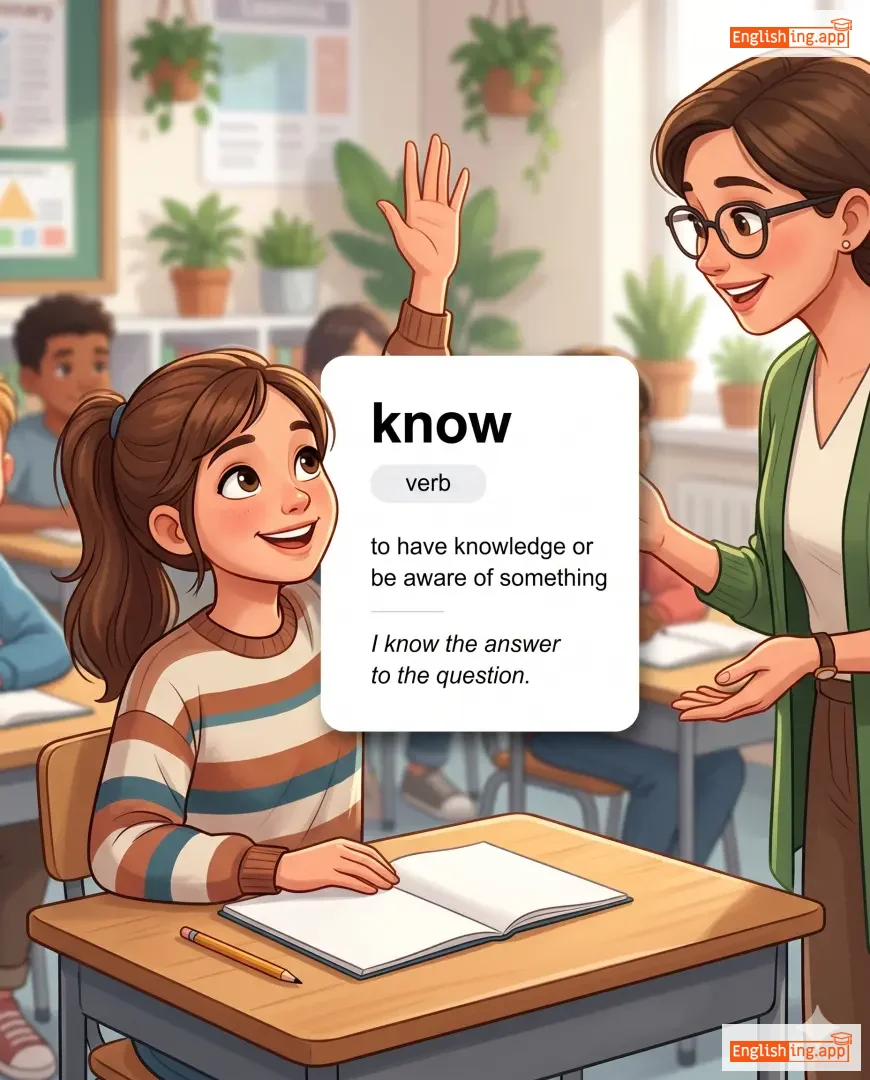
know definition card — visual illustration of the meaning
verb
/noʊ/
saber (saber)

to have knowledge or be aware of something

"I know the answer to the question."

"Sé la respuesta a la pregunta." (Sé la respuesta a la pregunta.)
adjective
/ˈnoʊ.ɪŋ/
conocimiento; perceptivo; astuto; (noing)

showing awareness or understanding; perceptive; shrewd

"She gave him a knowing smile when he mentioned the secret."

"Ella le dio una sonrisa comprensiva cuando mencionó el secreto." (Ella le dio una sonrisa comprensiva cuando mencionó el secreto.)
adverb
/ˈnoʊɪŋli/
conscientemente (conscientemente)

in a way that shows you are aware of something; intentionally

"She knowingly kept the secret from her friends."

"Ella conscientemente guardó el secreto de sus amigos." (Ella conscientemente guardó el secreto de sus amigos.)
knowledge definition card — visual illustration of the meaning
noun
/ˈnɒlɪdʒ/
conocimiento (conocimiento)

information, understanding, and skills gained through learning or experience

"Her knowledge of history is impressive."

"Su conocimiento de la historia es impresionante." (Su conocimiento de la historia es impresionante.)
adjective
/ˈnɑː.lɪ.dʒə.bəl/
sabio; informado; educado (sabio; informado; educado)

having extensive knowledge; well-informed; educated

"She is very knowledgeable about ancient history."

"Ella es muy sabia sobre la historia antigua." (Ella es muy sabia sobre la historia antigua.)
adjective
/noʊn/
conocido (conocido)

recognized or familiar; something that is identified or acknowledged

"He is a well-known actor in the country."

"Él es un actor bien conocido en el país." (Él es un actor bien conocido en el país.)
adjective
/kəˈriːən/
coreano (coreano)

relating to Korea, its people, language, or culture

"We went to a Korean restaurant for dinner."

"Fuimos a un restaurante coreano para cenar." (Fuimos a un restaurante coreano para cenar.)
verb
/ˌkaʊˈtaʊ/
actuar de manera excesivamente sumisa (actuar de manera excesivamente sumisa)

To act in an excessively subservient or obedient manner.

"He refused to kowtow to the unreasonable demands."

"Se negó a ceder a las demandas irracionales." (Se negó a ceder a las demandas irracionales.)
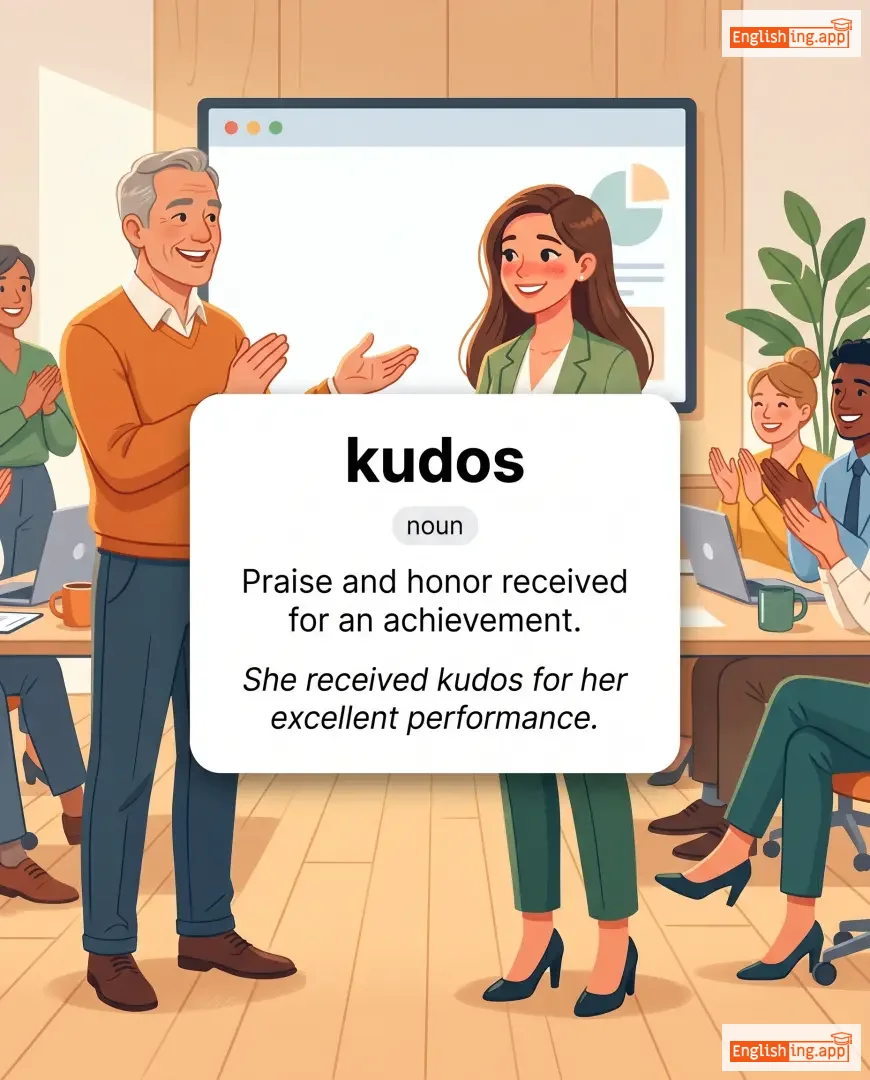
kudos definition card — visual illustration of the meaning
noun
/ˈkuːdɒs/
elogio (elogio)

Praise and honor received for an achievement.

"She received kudos for her excellent performance."

"Ella recibió elogios por su excelente desempeño." (Ella recibió elogios por su excelente desempeño.)