Vocabularios

Descubra, aprenda y domine el vocabulario en inglés

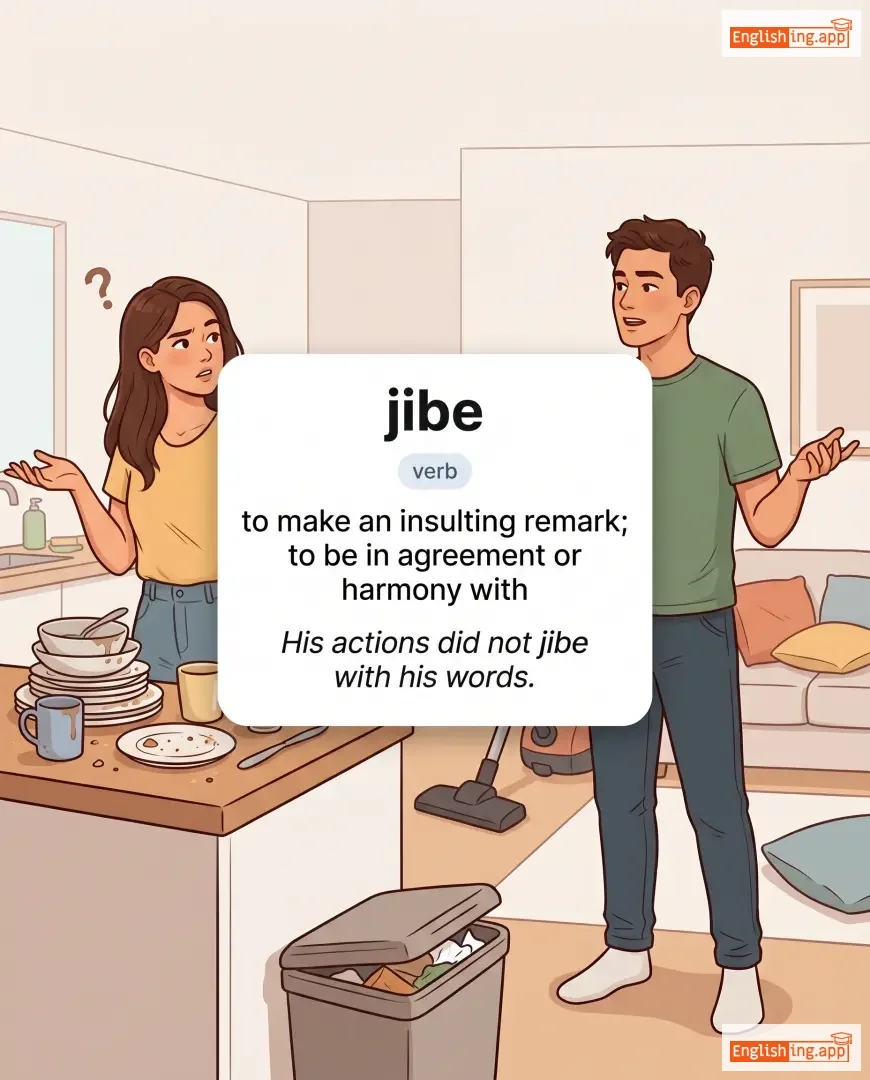
jibe definition card — visual illustration of the meaning
verb
/dʒaɪb/
insultar / estar en armonía (insultar / estar en armonia)

to make an insulting remark; to be in agreement or harmony with

"His actions did not jibe with his words."

"Sus acciones no coincidían con sus palabras." (Sus acciones no coincidían con sus palabras.)
adjective
/ˈdʒɪg.ərd/
sorprendido; asombrado; (jiggerd)

surprised or astonished; confused or puzzled

"I'll be jiggered if I know what happened here."

"Me sorprendería si supiera lo que ocurrió aquí." (Me sorprenderia si supiera lo que ocurrio aqui.)
noun
/ˈdʒɪŋ.ɡəl/
un sonido metálico ligero, como el que hacen los objetos metálicos cuando se agitan; una canción corta y pegadiza (dʒɪŋɡəl)

a light ringing sound such as that made by metal objects being shaken together; a short catchy song

"The jingle of keys could be heard as she walked down the hallway."

"El sonido de las llaves se podía escuchar mientras caminaba por el pasillo." (El sonido de las llaves se podía escuchar mientras caminaba por el pasillo.)
noun
/ˈdʒɪŋɡoʊ/
nacionalista belicista (nacionalista belicista)

a person who strongly supports warlike or aggressive foreign policy; an extreme nationalist

"The leader was criticized as a reckless jingo."

"El líder fue criticado como un jingo imprudente." (El líder fue criticado como un jingo imprudente.)
noun
/ˈdʒɪŋɡoʊˌɪzəm/
patriotismo extremo (patriotismo extremo)

extreme patriotism expressed in aggressive foreign policy

"The politician's speech was filled with jingoism."

"El discurso del político estaba lleno de jingoísmo." (El discurso del político estaba lleno de jingoísmo.)
noun
/ˈdʒɪŋɡoʊɪst/
jingoísta (jingoista)

a person who supports jingoism; an extreme nationalist with aggressive foreign policies

"He was labeled a jingoist for his extreme views."

"Fue etiquetado como un jingoísta por sus opiniones extremas." (Fue etiquetado como un jingoísta por sus opiniones extremas.)
verb
/ˈdʒɪtər/
temblar (temblar)

to shake or tremble slightly, often from fear, nervousness, or excitement

"He began to jitter nervously before giving his speech."

"Comenzó a temblar nerviosamente antes de dar su discurso." (Comenzó a temblar nerviosamente antes de dar su discurso.)
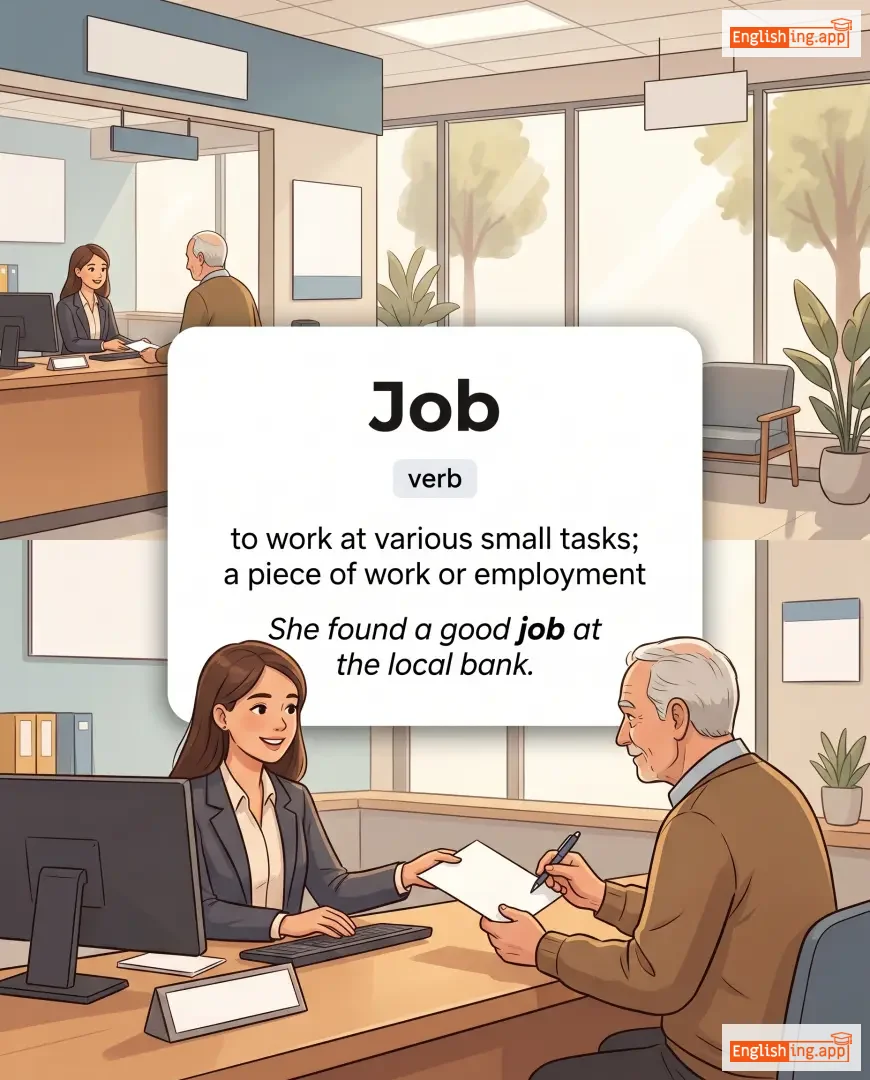
Job definition card — visual illustration of the meaning
noun
/dʒɒb/
trabajo (trabajo)

a paid position of regular employment

"She got a new job at a software company."

"Ella consiguió un nuevo trabajo en una empresa de software." (Ella consiguio un nuevo trabajo en una empresa de software.)
jocose definition card — visual illustration of the meaning
adjective
/dʒoʊˈkoʊs/
jocoso (jocoso)

playful or humorous in speech or behavior

"The professor’s jocose remarks kept the class entertained."

"Los comentarios jocosos del profesor mantuvieron entretenida a la clase." (Los comentarios jocosos del profesor mantuvieron entretenida a la clase.)
adjective
/ˈdʒɒkjələr/
bromista (bromista)

fond of or characterized by joking; humorous

"His jocular nature made him popular among colleagues."

"Su naturaleza bromista lo hizo popular entre sus compañeros." (Su naturaleza bromista lo hizo popular entre sus compañeros.)
adjective
/ˈdʒɒkənd/
alegre (alegre)

cheerful and lighthearted

"They walked together in a jocund mood after the celebration."

"Caminaban juntos con un ánimo alegre después de la celebración." (Caminaban juntos con un animo alegre despues de la celebracion.)
verb
/dʒɑːɡ/
trotar (trotar)

to run at a slow, steady pace for exercise

"She jogs every morning in the park."

"Ella trota todas las mañanas en el parque." (eya trota todas las mananas en el parke)
verb
/ˈdʒɒɡəl/
sacudir ligeramente (sacudir ligeramente)

to shake slightly; to move or cause to move with quick, small jerks

"He joggled the table and the vase nearly fell."

"Él movió la mesa y el jarrón casi se cayó." (Él movió la mesa y el jarrón casi se cayó.)
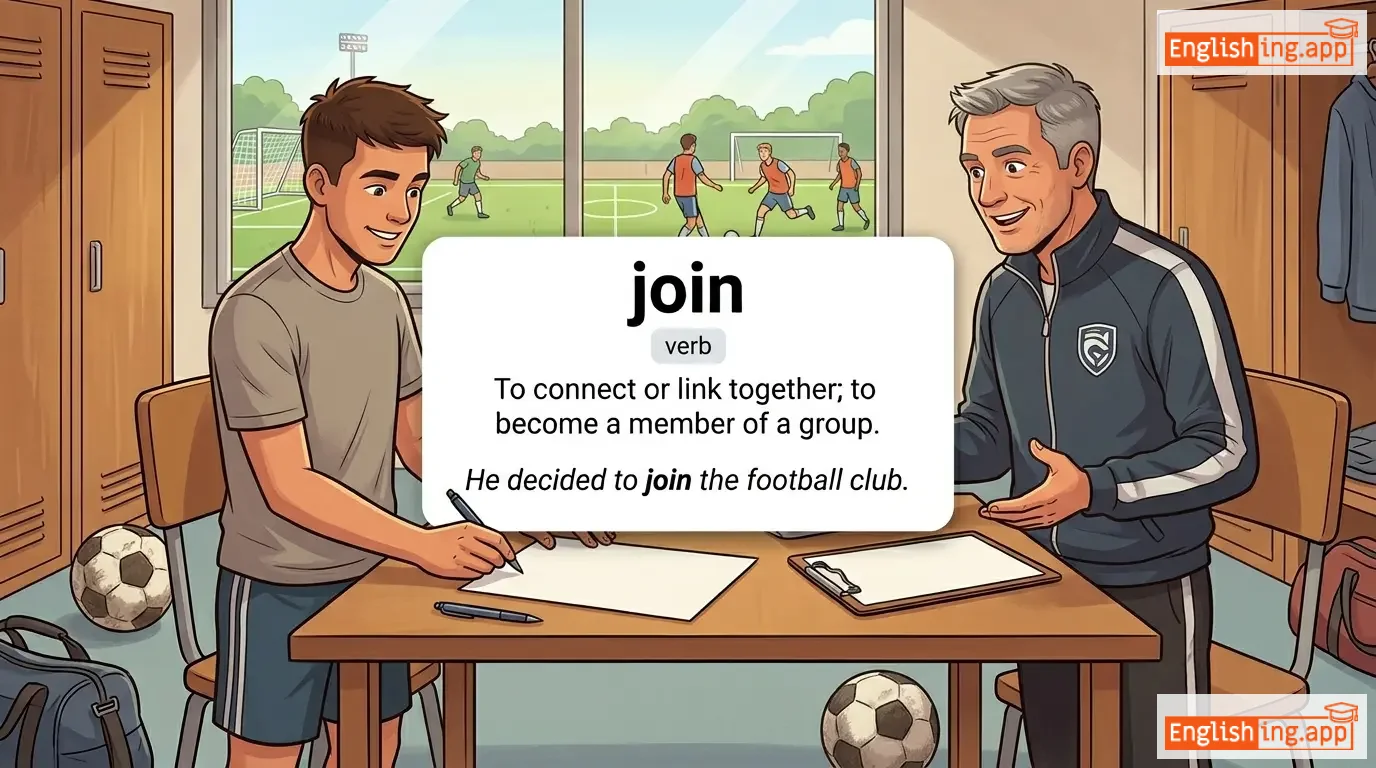
join definition card — visual illustration of the meaning
verb
/dʒɔɪn/
unirse (unirse)

To connect or link together; to become a member of a group.

"He decided to join the football club."

"Él decidió unirse al club de fútbol." (Él decidió unirse al club de fútbol.)
noun
/dʒɔɪnt/
articulación (articulacion)

a place where two parts of something are joined; also a term for a business establishment or a cannabis cigarette

"The knee is a joint that connects the thigh and the leg."

"La rodilla es una articulación que conecta el muslo y la pierna." (La rodilla es una articulacion que conecta el muslo y la pierna.)
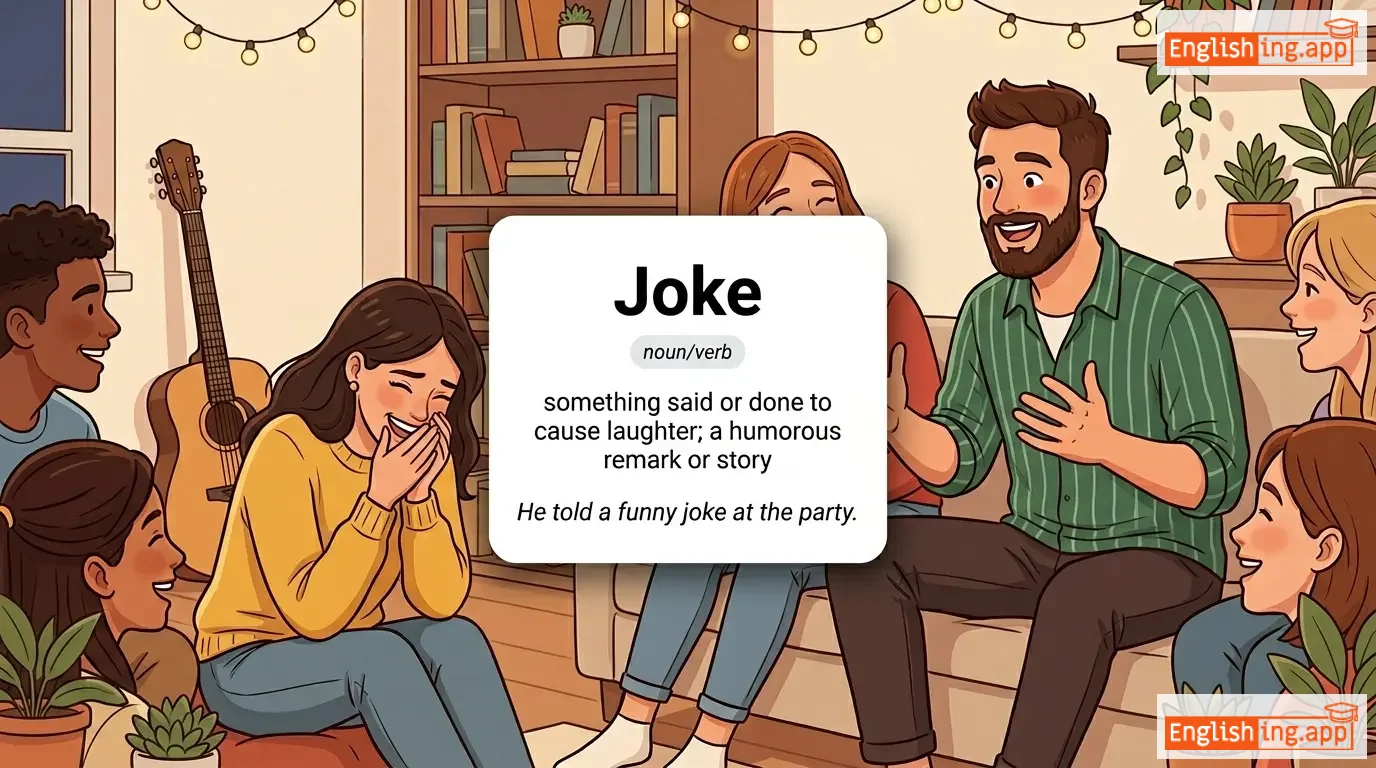
Joke definition card — visual illustration of the meaning
noun/verb
/dʒoʊk/
broma (broma)

something said or done to cause laughter; a humorous remark or story

"He told a funny joke at the party."

"Él contó una broma divertida en la fiesta." (Él contó una broma divertida en la fiesta.)
noun
/ˈdʒoʊ.kər/
una carta de juego con una imagen de un bufón, utilizada como carta comodín; una persona que disfruta de hacer bromas (una carta de juego con una imagen de un bufón, utilizada como carta comodín; una persona que disfruta de hacer bromas)

a playing card with a picture of a jester, used as a wild card; a person who is fond of joking

"He used the joker card to complete his winning hand in the poker game."

"Usó la carta del joker para completar su mano ganadora en el juego de póker." (Uso la carta del joker para completar su mano ganadora en el juego de poker.)
noun
/ˈdʒɒlɪti/
jolgorio (jolgorio)

lively and cheerful activity or celebration

"The wedding was full of jollity and laughter."

"La boda estuvo llena de jolgorio y risas." (La boda estuvo llena de jolgorio y risas.)
adjective
/ˈdʒɒli/
alegre (alegre)

Full of good humor and cheerfulness.

"The children were in a jolly mood at the party."

"Los niños estaban de buen ánimo en la fiesta." (Los niños estaban de buen ánimo en la fiesta.)
verb
/dʒəʊlt/
sacudida (sacudida)

to push or shake someone or something abruptly and roughly

"The sudden stop jolted all the passengers forward."

"La parada repentina empujó a todos los pasajeros hacia adelante." (La parada repentina empujó a todos los pasajeros hacia adelante.)
noun
/ˈdʒɒs.stɪk/
incienso (incienso)

a thin stick of incense that is burned for its pleasant smell, especially in religious ceremonies

"She lit a joss-stick in the temple during her prayers."

"Ella encendió un palo de incienso en el templo durante sus oraciones." (Ella encendió un palo de incienso en el templo durante sus oraciones.)
🚶‍♂️

jostle (yósl)

verb
/ˈdʒɒsl/
empujar (empujar)

to push, elbow, or bump against someone roughly, typically in a crowd

"The fans jostled each other to get closer to the stage."

"Los aficionados se empujaban unos a otros para acercarse al escenario." (Los aficionados se empujaban unos a otros para acercarse al escenario.)
verb
/dʒɒt/
escribir rápidamente y brevemente (escribir rapidamente y brevemente)

to write something quickly and briefly

"She jotted down his phone number on a napkin."

"Ella anotó rápidamente su número de teléfono en una servilleta." (Ella anoto rapidamente su numero de telefono en una servilleta.)
noun
/ˈdʒɒt.ər/
cuaderno (cuaderno)

a small notebook for writing quick notes or reminders

"The student carried a jotter to write down important points during lectures."

"El estudiante llevó un cuaderno para escribir puntos importantes durante las lecciones." (El estudiante llevo un cuaderno para escribir puntos importantes durante las lecciones.)
noun
/ˈdʒɜːrnəl/
diario (diario)

a daily record of news, events, or personal thoughts

"She writes in her journal every night."

"Ella escribe en su diario todas las noches." (Ella escribe en su diario todas las noches.)
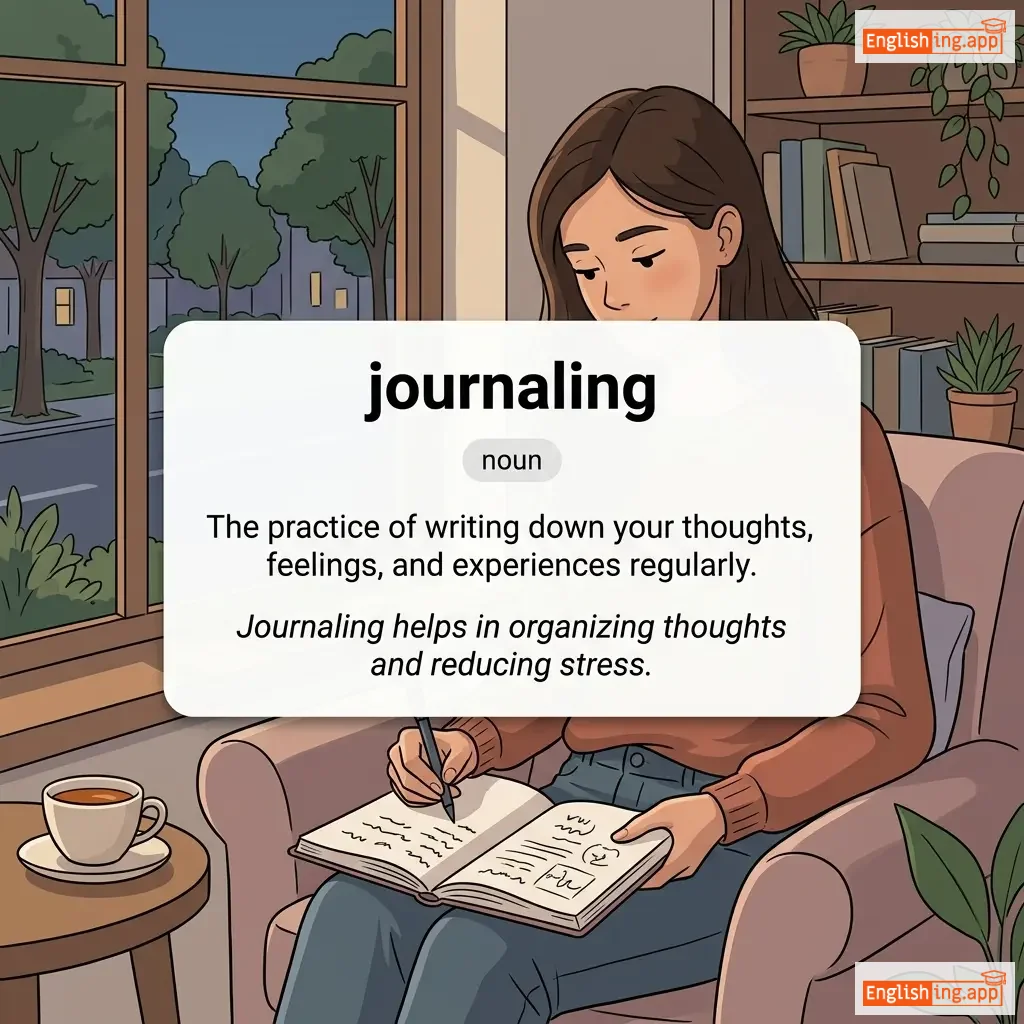
journaling definition card — visual illustration of the meaning
noun
/ˈdʒɝː.nə.lɪŋ/
escritura de diario (escritura de diario)

The practice of writing down your thoughts, feelings, and experiences regularly.

"Journaling helps in organizing thoughts and reducing stress."

"El journaling ayuda a organizar los pensamientos y reducir el estrés." (El journaling ayuda a organizar los pensamientos y reducir el estrés.)
noun
/ˈdʒɜːrnəlɪzəm/
periodismo (periodismo)

the activity or profession of collecting, writing, and publishing news and articles for newspapers, magazines, or broadcast media

"He studied journalism to become a news reporter."

"Estudió periodismo para convertirse en reportero de noticias." (Estudió periodismo para convertirse en reportero de noticias.)
noun
/ˈdʒɜːrnəlɪst/
periodista (periodista)

a person who writes news articles or reports for newspapers, magazines, or media

"The journalist covered the political event."

"El periodista cubrió el evento político." (El periodista cubrio el evento politico.)
verb
/ˈdʒɜːrnəlaɪz/
registrar en un diario (registrar en un diario)

to record daily transactions or events in a journal, especially in accounting

"The accountant will journalize all financial transactions at the end of the day."

"El contador registrará todas las transacciones financieras al final del día." (El contador registrará todas las transacciones financieras al final del día.)
noun
/ˈdʒɜːrni/
viaje (viaje)

the act of traveling from one place to another

"Their journey across the desert was difficult."

"Su viaje a través del desierto fue difícil." (Su viaje a través del desierto fue difícil.)
verb
/dʒaʊst/
lucha a caballo (lucha a caballo)

to engage in a medieval contest on horseback with lances; to compete or argue

"The knights prepared to joust in front of the cheering crowd."

"Los caballeros se prepararon para luchar a caballo frente a la multitud animada." (Los caballeros se prepararon para luchar a caballo frente a la multitud animada.)
adjective
/ˈdʒoʊ.vi.əl/
alegre (alegre)

cheerful and friendly in manner

"He was in a jovial mood during the family gathering."

"Estaba de buen humor durante la reunión familiar." (Estaba de buen humor durante la reunión familiar.)
noun
/dʒɔɪ/
alegría (alegria)

A feeling of great happiness and delight.

"The children shouted with joy when they saw the gifts."

"Los niños gritaron de alegría cuando vieron los regalos." (Los niños gritaron de alegría cuando vieron los regalos.)
adjective
/ˈdʒɔɪfəl/
alegre (alegre)

full of joy and happiness; causing joy or delight

"She felt joyful when she heard the good news."

"Se sintió alegre cuando escuchó la buena noticia." (se sintio alegre cuando escucho la buena noticia)
adjective
/ˈdʒuː.bɪ.lənt/
jubiloso (jubiloso)

feeling or expressing great happiness and joy

"The team was jubilant after winning the championship."

"El equipo estaba jubiloso después de ganar el campeonato." (El equipo estaba jubiloso después de ganar el campeonato.)
noun
/ˌdʒuː.bɪˈleɪ.ʃən/
jubileo (jubileo)

a feeling or expression of great happiness and triumph

"There was jubilation in the streets after the victory."

"Hubo jubileo en las calles después de la victoria." (Hubo jubileo en las calles despues de la victoria.)
noun
/ˈdʒuː.bɪ.liː/
aniversario; jubileos (yubilee)

a special anniversary celebration, especially the 25th, 50th, or 60th anniversary of an important event

"The school celebrated its golden jubilee with a grand ceremony."

"La escuela celebró su jubileo de oro con una gran ceremonia." (La escuela celebro su jubileo de oro con una gran ceremonia.)
noun
/ˈdʒʌŋk.tʃər/
momento crítico (momento critico)

a particular point in time, especially one of great importance or crisis

"At this critical jucture, the company must decide whether to expand or downsize."

"En este momento crítico, la empresa debe decidir si expandirse o reducirse." (En este momento critico, la empresa debe decidir si expandirse o reducirse.)
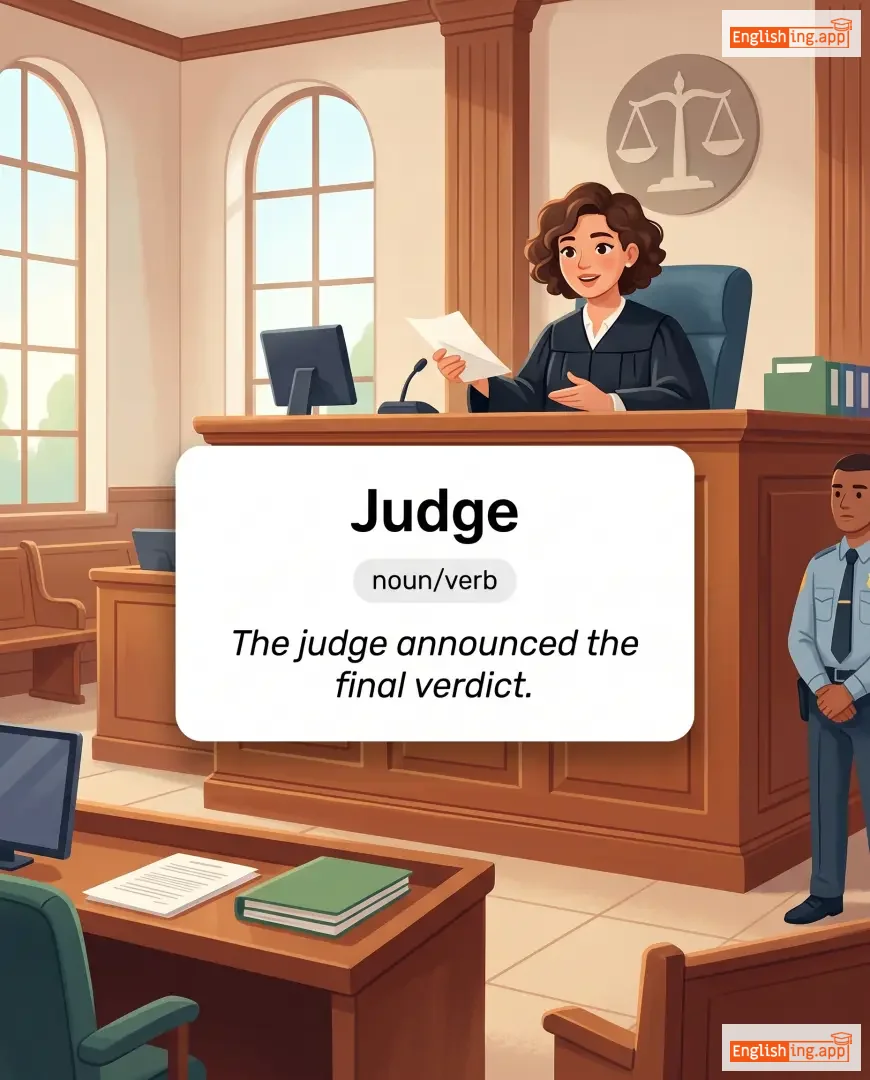
Judge definition card — visual illustration of the meaning
noun/verb
/dʒʌdʒ/
juez / juzgar (juez / juzgar)

a person who makes decisions in a court of law; or to form an opinion about something

"The judge announced the final verdict."

"El juez anunció el veredicto final." (El juez anunció el veredicto final.)
noun
/ˈdʒʌdʒ.mənt/
juicio; decisión (juicio, decision)

the ability to make considered decisions or form sensible opinions; an official decision made by a judge or court

"The jury's judgement was based on careful consideration of all the facts."

"El juicio del jurado se basó en una cuidadosa consideración de todos los hechos." (El juicio del jurado se basó en una cuidadosa consideración de todos los hechos.)
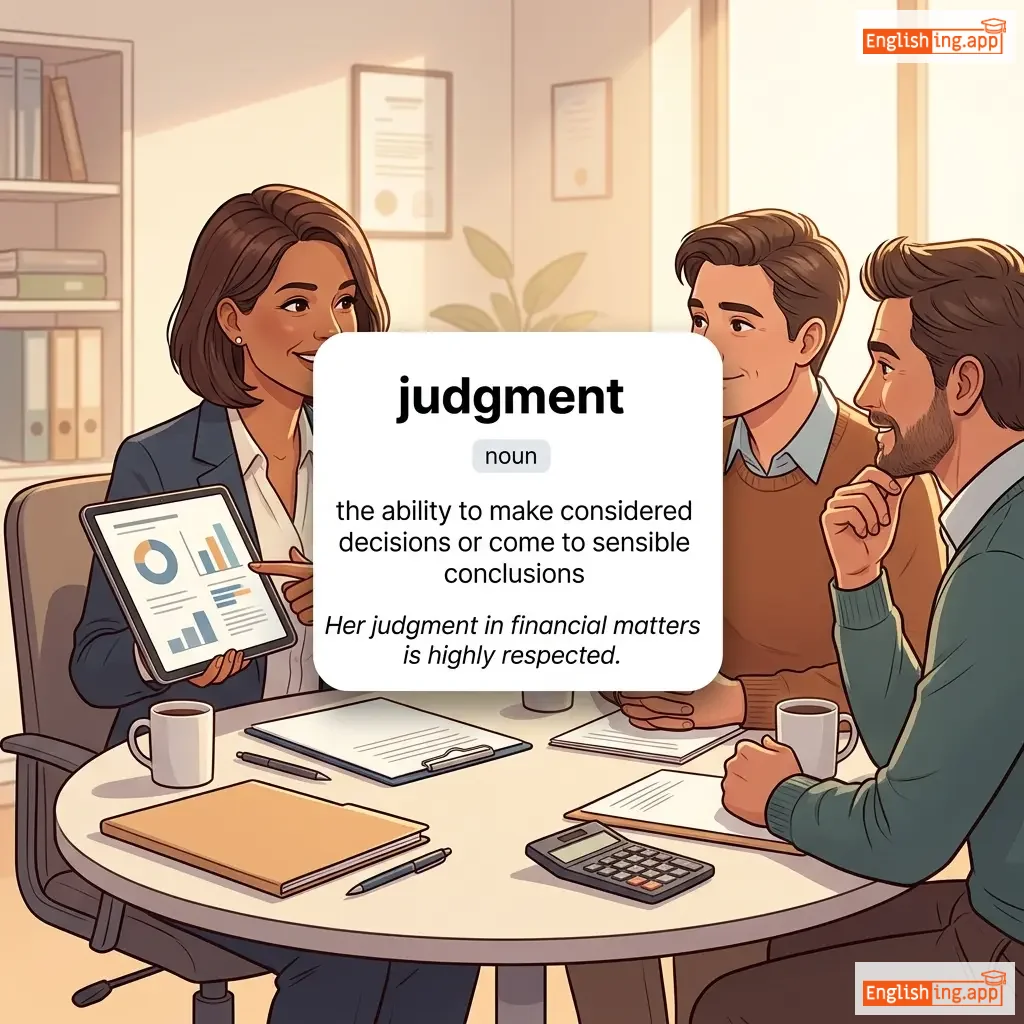
judgment definition card — visual illustration of the meaning
noun
/ˈdʒʌdʒ.mənt/
juicio (juicio)

the ability to make considered decisions or come to sensible conclusions

"Her judgment in financial matters is highly respected."

"Su juicio en asuntos financieros es altamente respetado." (Su juicio en asuntos financieros es altamente respetado.)
noun
/ˈdʒuː.dɪˌkeɪ.tʃər/
sistema judicial (sistema judicial)

the administration of justice or the system of courts

"The judicature ensures that laws are fairly applied."

"El sistema judicial asegura que las leyes se apliquen de manera justa." (El sistema judicial asegura que las leyes se apliquen de manera justa.)
👩‍⚖️

judicial (judicial)

adjective
/dʒuːˈdɪʃ.əl/
judicial (judicial)

relating to judges, courts, or the administration of justice

"The new law faced strong judicial review before implementation."

"La nueva ley enfrentó una fuerte revisión judicial antes de su implementación." (La nueva ley enfrento una fuerte revision judicial antes de su implementacion.)
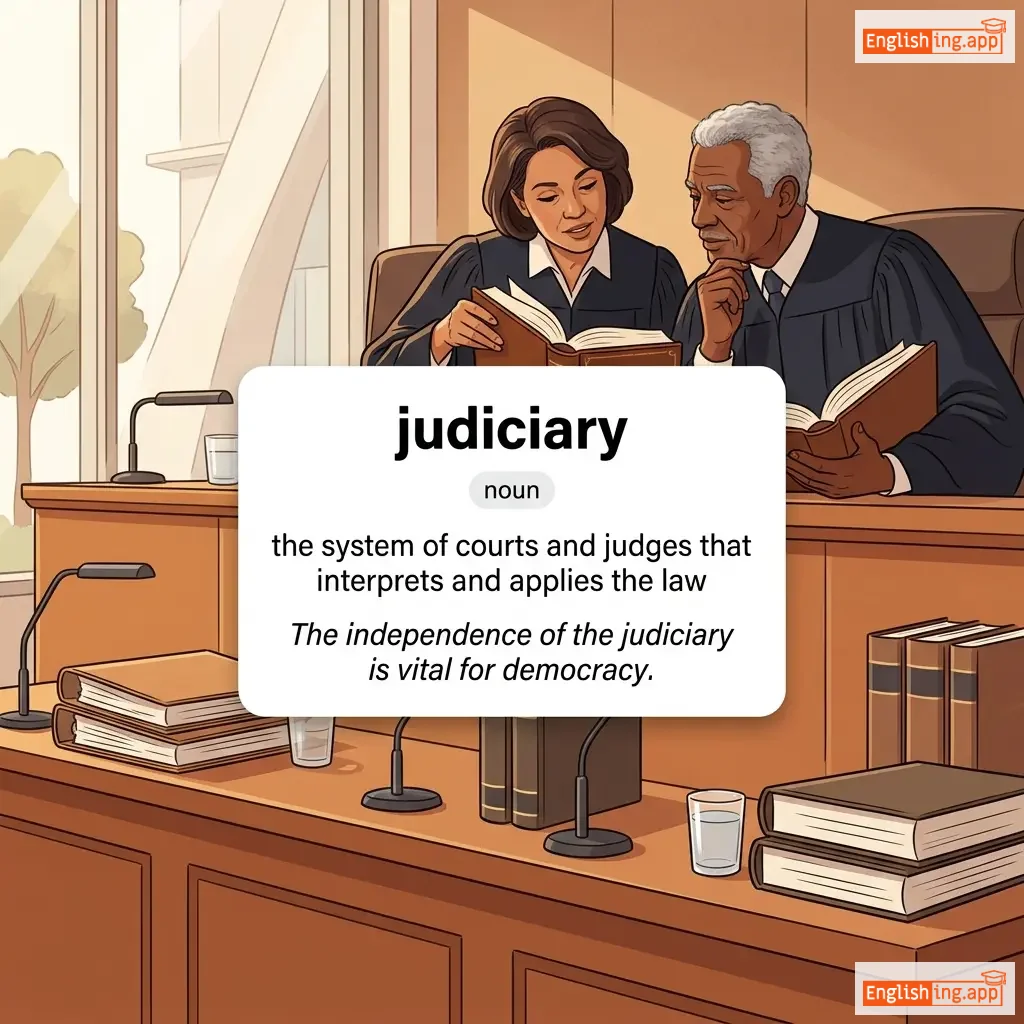
judiciary definition card — visual illustration of the meaning
noun
/dʒuːˈdɪʃ.i.er.i/
poder judicial (poder judicial)

the system of courts and judges that interprets and applies the law

"The independence of the judiciary is vital for democracy."

"La independencia del poder judicial es vital para la democracia." (La independencia del poder judicial es vital para la democracia.)
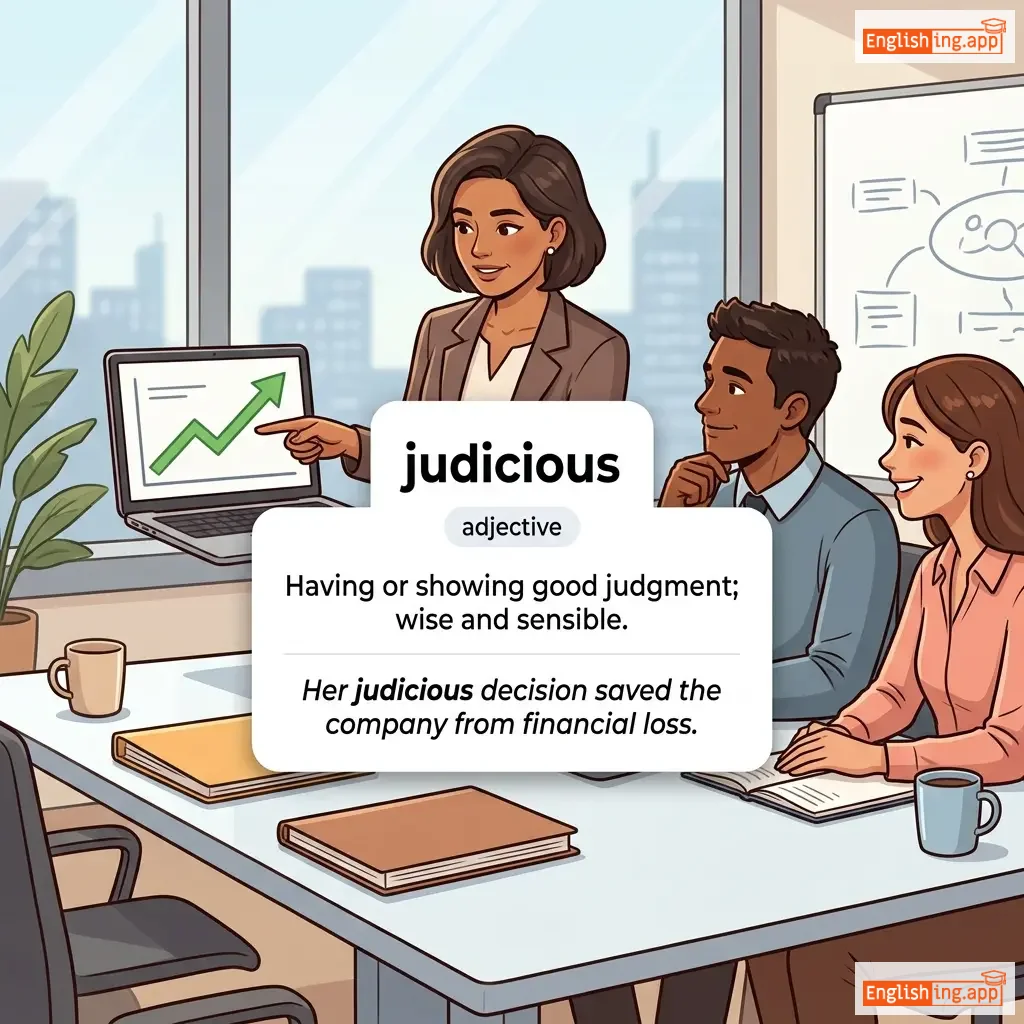
judicious definition card — visual illustration of the meaning
adjective
/dʒuːˈdɪʃəs/
juicioso (juicioso)

Having or showing good judgment; wise and sensible.

"Her judicious decision saved the company from financial loss."

"Su decisión juiciosa salvó a la empresa de una pérdida financiera." (Su decisión juiciosa salvó a la empresa de una pérdida financiera.)
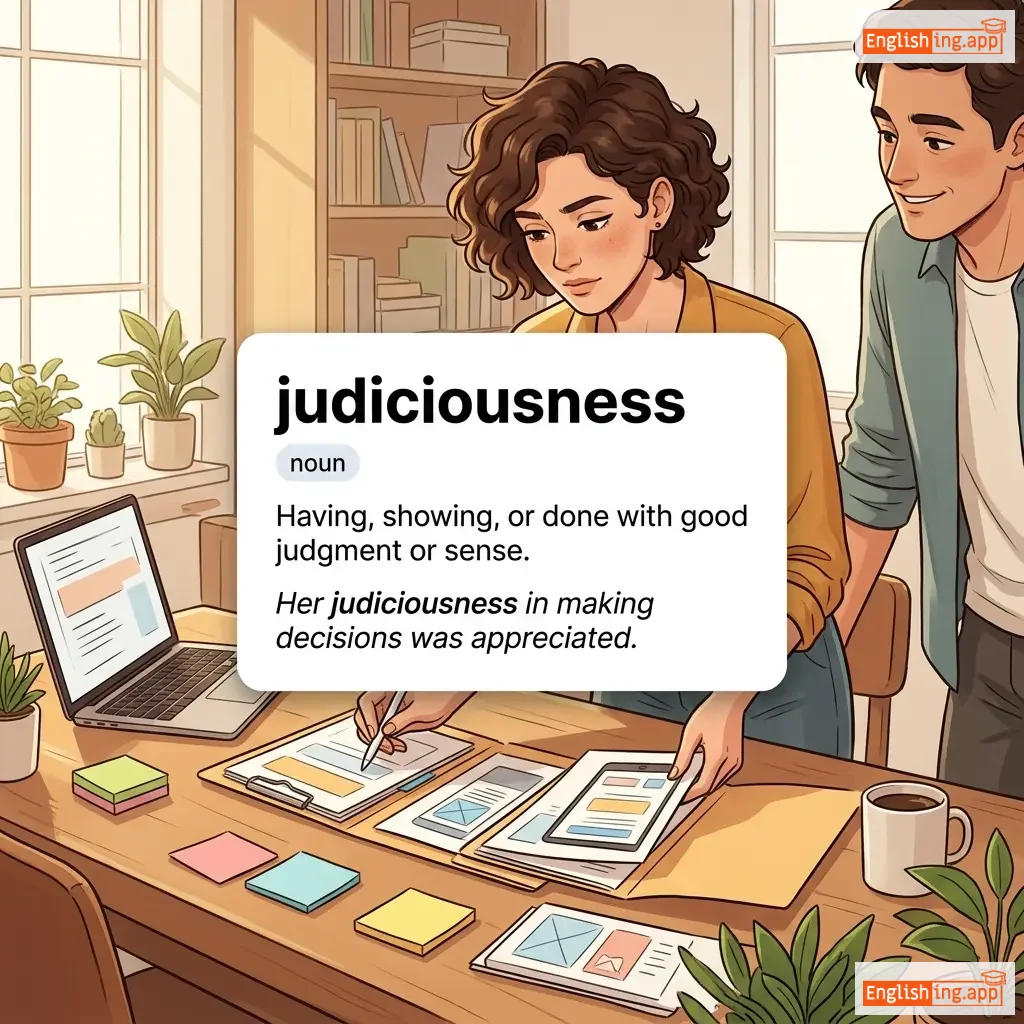
judiciousness definition card — visual illustration of the meaning
noun
dʒʊˈdɪʃəsnɪs
sensatez, juicio prudente (sensatez, juicio prudente)

Having, showing, or done with good judgment or sense.

"Her judiciousness in making decisions was appreciated."

"Se apreció su sensatez al tomar decisiones." (Se apreció su sensatez al tomar decisiones.)
noun
/dʒʌɡ/
felicidad (felicidad)

A large container used for holding and pouring liquids.

"She filled a jug with fresh water from the well."

"Ella no pudo esconder su felicidad cuando recibió el premio." (Ella no pudo esconder su felicidad cuando recibio el premio.)
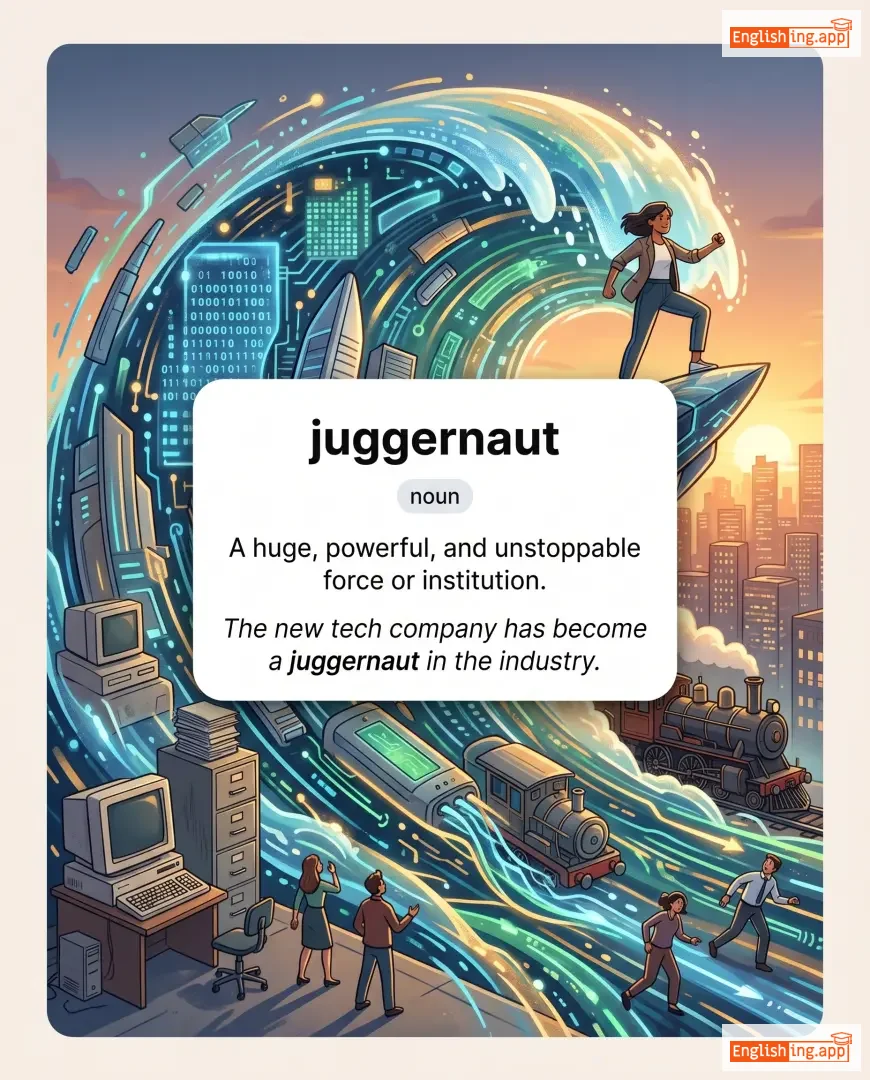
juggernaut definition card — visual illustration of the meaning
noun
/ˈdʒʌɡərˌnɔːt/
fuerza imparable (fuerza imparable)

A huge, powerful, and unstoppable force or institution.

"The new tech company has become a juggernaut in the industry."

"La nueva empresa tecnológica se ha convertido en una fuerza imparable en la industria." (La nueva empresa tecnologica se ha convertido en una fuerza imparable en la industria.)
verb
/ˈdʒʌɡəl/
hacer malabares (hacer malabares)

To continuously toss and catch objects in the air; to manage many tasks at the same time.

"He tried to juggle work, studies, and family responsibilities."

"Él trató de hacer malabares con el trabajo, los estudios y las responsabilidades familiares." (El trato de hacer malabares con el trabajo, los estudios y las responsabilidades familiares.)
noun
/ˈdʒʌɡ.lər/
malabarista (juggler)

a person who skillfully throws and catches objects as entertainment

"The juggler entertained the crowd with his amazing ball tricks."

"El malabarista entretuvo a la multitud con sus increibles trucos con pelotas." (El malabarista entretuvo a la multitud con sus increibles trucos con pelotas.)