Vocabularios

Descubra, aprenda y domine el vocabulario en inglés

adjective
/ɪnˈdɛtɪd/
agradecido (agradecido)

Owing gratitude or money to someone; obligated.

"I am deeply indebted to my teacher for her guidance."

"Estoy profundamente agradecido con mi profesora por su orientación." (Estoy profundamente agradecido con mi profesora por su orientación.)
adjective
/ɪnˈdiːsənt/
indecente (indecente)

not conforming to accepted standards of behavior or morality; improper or offensive

"He was warned for making an indecent remark during the meeting."

"Fue advertido por hacer un comentario indecente." (Fue advertido por hacer un comentario indecente)
noun
/ˌɪndɪˈsɪʒən/
indecisión (indecision)

The inability to make a decision quickly or confidently.

"Her indecision caused a delay in the project."

"Su indecisión causó un retraso en el proyecto." (Su indecision causó un retraso en el proyecto.)
adjective
/ˌɪndɪˈsaɪsɪv/
indeciso (indeciso)

Unable to make decisions quickly or firmly.

"He is too indecisive to be a good leader."

"Él es demasiado indeciso para ser un buen líder." (Él es demasiado indeciso para ser un buen líder.)
adjective
/ɪnˈdɛkərəs/
indecoroso (indecoroso)

Not in keeping with good taste and propriety; improper.

"His indecorous behavior shocked the audience."

"Su comportamiento indecoroso sorprendió a la audiencia." (Su comportamiento indecoroso sorprendió a la audiencia.)
adverb
/ɪnˈdiːd/
en efecto (en efecto)

used to emphasize or confirm a statement

"It was a long journey indeed."

"Fue un largo viaje, de hecho." (Fue un largo viaje, de hecho.)
adjective
/ˌɪndɪˈfætɪɡəbl̩/
inagotable (inagotable)

persisting tirelessly; incapable of being fatigued

"Her indefatigable spirit kept the team motivated during the long project."

"Su espíritu inagotable mantuvo al equipo motivado durante el largo proyecto." (Su espiritu inagotable mantuvo al equipo motivado durante el largo proyecto.)
adjective
/ˌɪndɪˈfɛnsəbl̩/
indefendible (indefendible)

not able to be protected or justified

"The minister’s remarks were considered indefensible by the public."

"Los comentarios del ministro fueron considerados indefendibles por el público." (Los comentarios del ministro fueron considerados indefendibles por el público.)
adjective
/ɪnˈdefɪnət/
indefinido (indefinido)

not clearly defined; uncertain; vague; unlimited in time

"The meeting has been postponed for an indefinite period."

"La reunión se ha pospuesto por un período indefinido." (La reunion se ha pospuesto por un periodo indefinido.)
adverb
/ɪnˈdɛfɪnətli/
indefinidamente (indefinidamente)

for an unlimited or unspecified period of time

"The project has been postponed indefinitely."

"El proyecto ha sido pospuesto indefinidamente." (El proyecto ha sido pospuesto indefinidamente.)
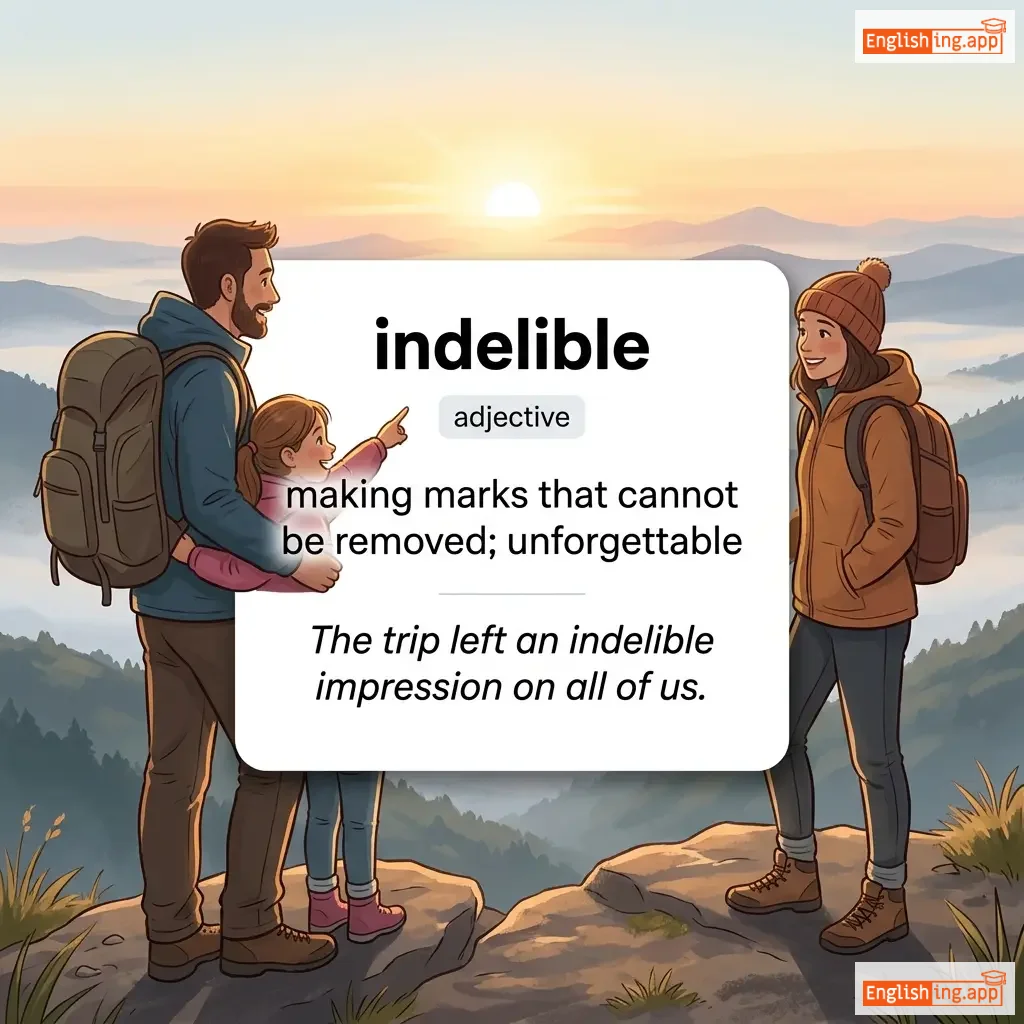
indelible definition card — visual illustration of the meaning
adjective
/ɪnˈdɛlɪbl̩/
inolvidable (inolvidable)

making marks that cannot be removed; unforgettable

"The trip left an indelible impression on all of us."

"El viaje dejó una impresión inolvidable en todos nosotros." (El viaje dejó una impresión inolvidable en todos nosotros.)
verb
/ɪnˈdɛmnɪfaɪ/
indemnizar (indemnizar)

to compensate someone for harm or loss; to secure against future damage or cost

"The insurance company agreed to indemnify the client for the damages."

"La compañía de seguros acordó indemnizar al cliente por los daños." (La compania de seguros acordó indemnizar al cliente por los daños.)
noun
/ɪnˈdɛmnɪti/
indemnización / protección (indemnizacion / proteccion)

Security or protection against financial loss or damage; compensation for loss or damage.

"The insurance policy provides indemnity against fire damage."

"La póliza de seguro proporciona indemnización contra daños por incendio." (La poliza de seguro proporciona indemnizacion contra danos por incendio.)
noun
/ˌɪndɛnˈteɪʃən/
sangría (sangria)

A space left at the beginning of a line of text; a notch or deep recess on a surface.

"The teacher asked the students to use proper indentation in their essays."

"El profesor pidió a los estudiantes que usaran una sangría adecuada en sus ensayos." (El profesor pidió a los estudiantes que usaran una sangría adecuada en sus ensayos.)
noun
/ɪnˈdɛntʃər/
contrato de servidumbre (contrato de servidumbre)

A formal legal agreement, contract, or document, often relating to work or service.

"In the 18th century, many workers came under indenture to work overseas."

"En el siglo XVIII, muchos trabajadores estuvieron bajo un contrato de servidumbre para trabajar en el extranjero." (En el siglo XVIII, muchos trabajadores estuvieron bajo un contrato de servidumbre para trabajar en el extranjero.)
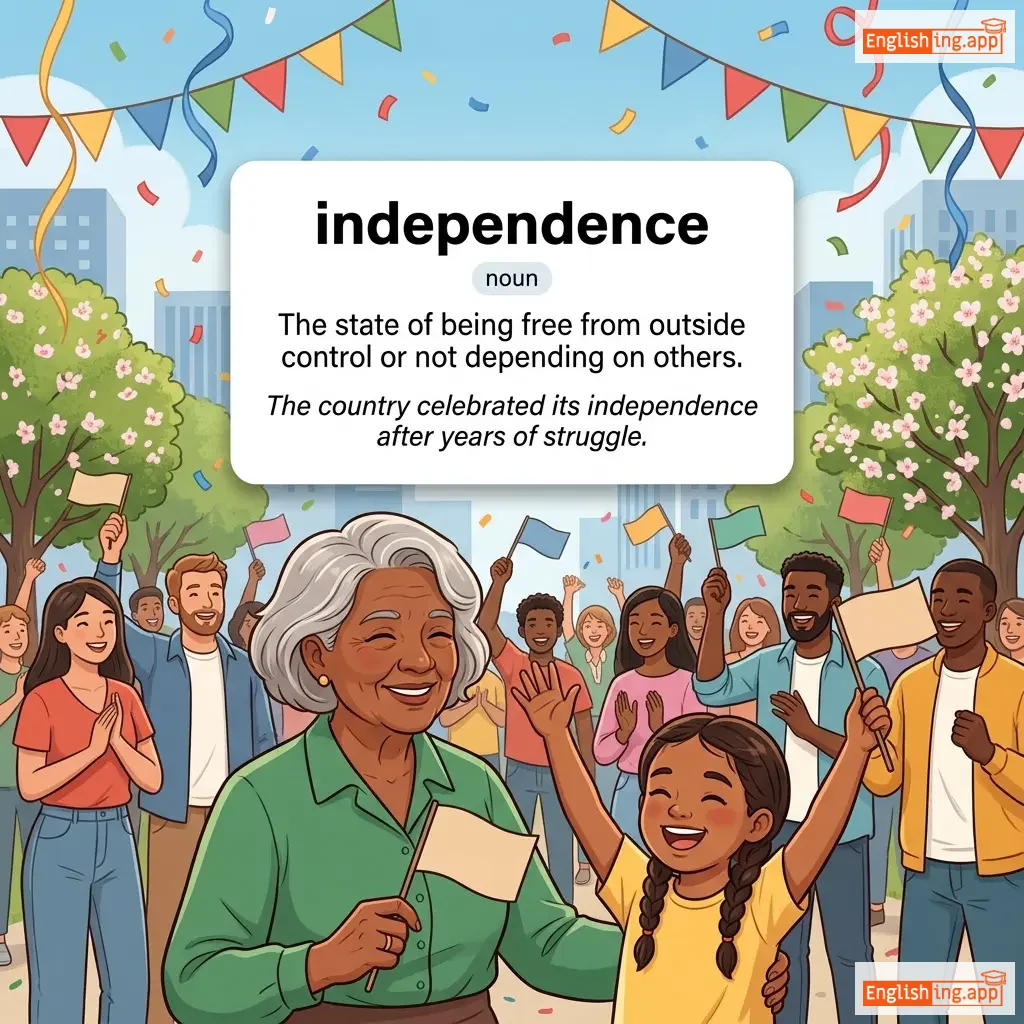
independence definition card — visual illustration of the meaning
noun
/ˌɪndɪˈpɛndəns/
independencia (independencia)

The state of being free from outside control or not depending on others.

"The country celebrated its independence after years of struggle."

"El país celebró su independencia después de años de lucha." (El pais celebro su independencia despues de anos de lucha.)
independent definition card — visual illustration of the meaning
adjective
/ˌɪn.dɪˈpen.dənt/
independiente (independiente)

Free from outside control; not depending on others.

"She is an independent woman who runs her own business."

"Ella es una mujer independiente que maneja su propio negocio." (Ella es una mujer independiente que maneja su propio negocio.)
adjective
/ˌɪndɪˈskraɪbəbl/
indescriptible (indescriptible)

Too unusual, extreme, or great to be adequately described in words.

"The beauty of the sunset was indescribable."

"La belleza del atardecer era indescriptible." (La belleza del atardecer era indescriptible.)
adjective
/ˌɪndɪˈstrʌktəbl/
indestructible (indestructible)

Impossible to destroy or break.

"The superhero's shield was said to be indestructible."

"Se dijo que el escudo del superhéroe era indestructible." (Se dijo que el escudo del superhéroe era indestructible.)
indeterminate definition card — visual illustration of the meaning
adjective
/ˌɪndɪˈtɜːrmənət/
indeterminado (indeterminado)

Not exactly known, defined, or established; vague or uncertain.

"The project was delayed for an indeterminate amount of time."

"El proyecto se retrasó por un tiempo indeterminado." (El proyecto se retrasó por un tiempo indeterminado.)
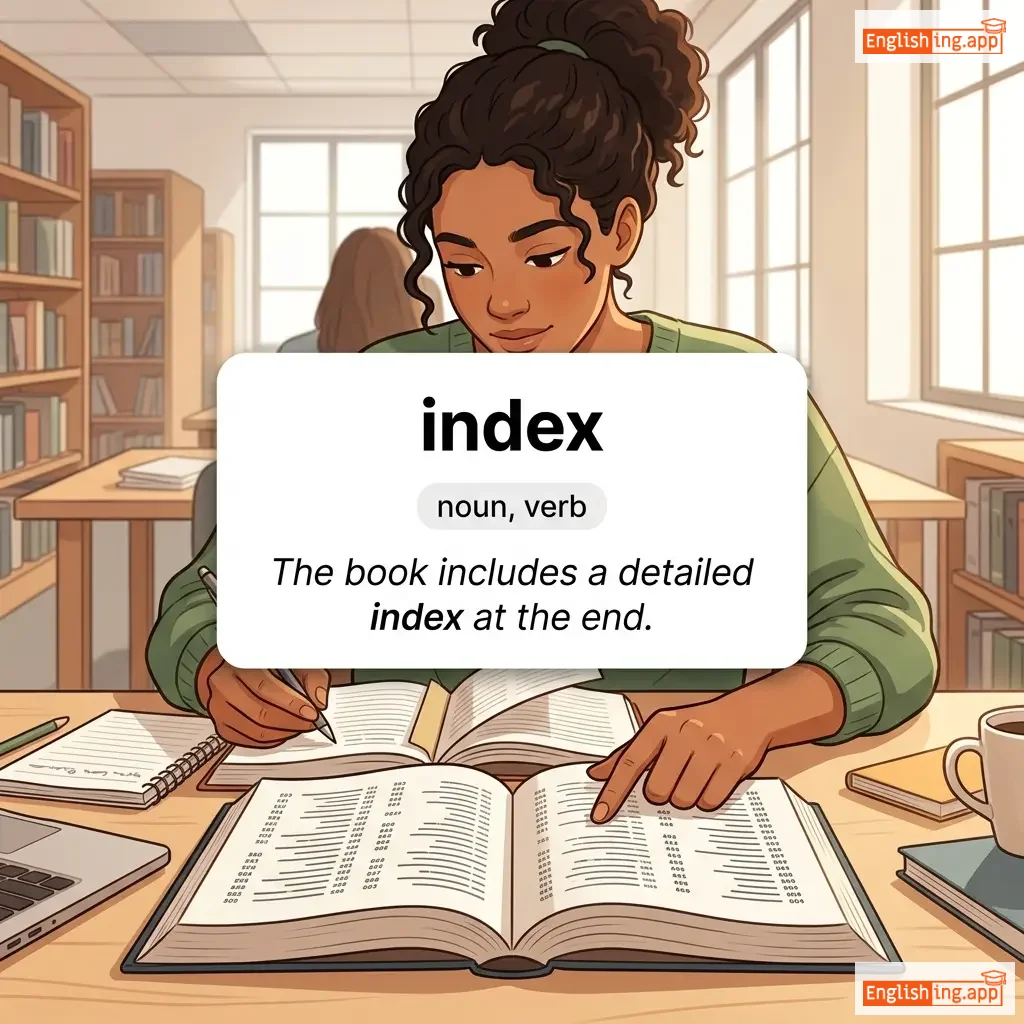
index definition card — visual illustration of the meaning
noun, verb
/ˈɪndeks/
índice (indice)

A list of items arranged in order, or to arrange data systematically for reference.

"The book includes a detailed index at the end."

"El libro incluye un índice detallado al final." (El libro incluye un índice detallado al final.)
adjective/noun
/ˈɪndiən/
indio (indio)

Relating to India, its people, or their culture.

"She loves Indian food, especially biryani."

"A ella le encanta la comida india, especialmente el biryani." (A ella le encanta la comida india, especialmente el biryani.)
noun
/ˈɪndɪkənt/
indicador (indicador)

Something that indicates or points to a fact or condition.

"High fever is often an indicant of infection."

"La fiebre alta a menudo es un indicador de infección." (La fiebre alta a menudo es un indicador de infección.)
indicate definition card — visual illustration of the meaning
verb
/ˈɪndɪˌkeɪt/
indicar (indicar)

To point out, show, or suggest something.

"The results indicate that the treatment was effective."

"Los resultados indican que el tratamiento fue efectivo." (Los resultados indican que el tratamiento fue efectivo.)
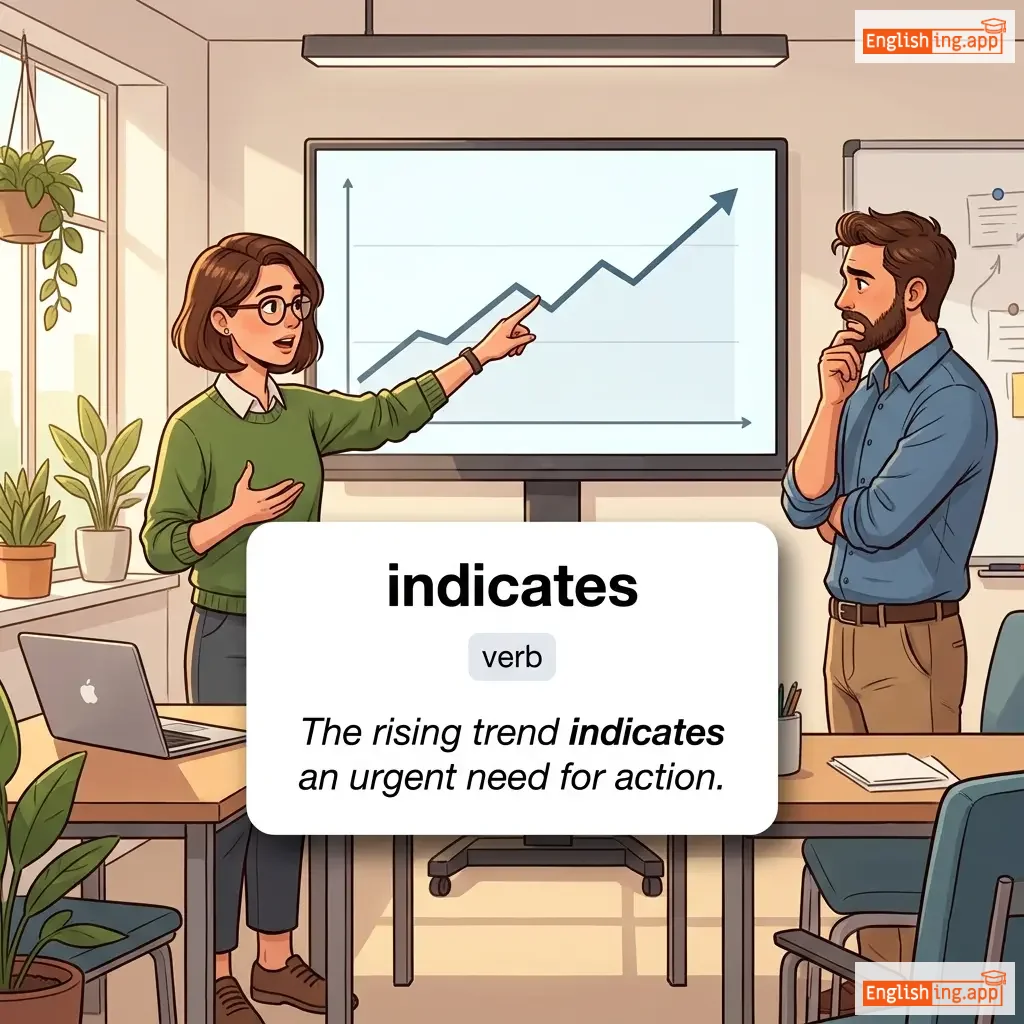
indicates definition card — visual illustration of the meaning
verb
ˈɪndɪkeɪts
indica (indika)

Point out; show; be a sign or symptom of; suggest as a desirable or necessary course of action.

"The rising trend indicates an urgent need for action."

"La tendencia creciente indica una necesidad urgente de acción." (La tendencia creciente indica una necesidad urgente de acción.)
noun
/ˌɪndɪˈkeɪʃən/
indicación (indicacion)

A sign, piece of information, or signal that suggests something.

"Dark clouds are an indication of an approaching storm."

"Las nubes oscuras son una indicación de una tormenta que se acerca." (Las nubes oscuras son una indicacion de una tormenta que se acerca)
adjective, noun
/ɪnˈdɪkətɪv/
indicativo (indicativo)

Serving as a sign or expression of something; in grammar, a mood used to make factual statements.

"His tone was indicative of his frustration."

"Su tono era indicativo de su frustración." (Su tono era indicativo de su frustración.)
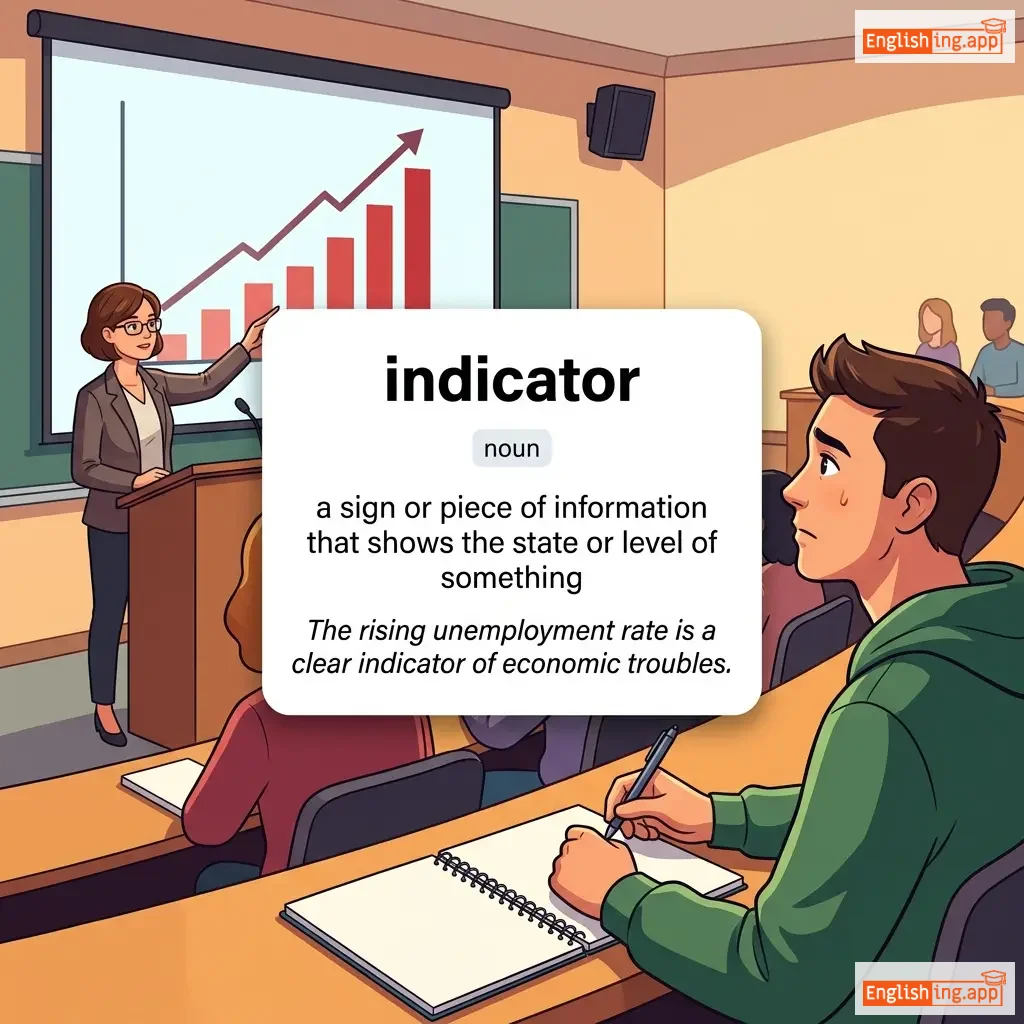
indicator definition card — visual illustration of the meaning
noun
/ˈɪndɪˌkeɪtər/
indicador (indicador)

a sign or piece of information that shows the state or level of something

"The rising unemployment rate is a clear indicator of economic troubles."

"La tasa creciente de desempleo es un claro indicador de problemas económicos." (La tasa creciente de desempleo es un claro indicador de problemas economicos.)
noun (plural)
/ˈɪndɪˌsiːz/
índices (indices)

plural form of index; statistical measures or reference points used for comparison

"Stock market indices fell sharply after the announcement."

"Los índices del mercado de valores cayeron drásticamente después del anuncio." (Los indices del mercado de valores cayeron drasticamente despues del anuncio.)
verb
/ɪnˈdaɪt/
acusar (acusar)

to formally accuse someone of committing a serious crime

"The grand jury decided to indict the politician for corruption."

"El gran jurado decidió acusar al político por corrupción." (El gran jurado decidió acusar al político por corrupción.)
noun
/ɪnˈdaɪtmənt/
acusación formal (acusacion formal)

a formal charge or accusation of a serious crime

"The indictment accused the company of multiple violations."

"La acusación formal acusó a la empresa de múltiples violaciones." (La acusacion formal acuso a la empresa de multiples violaciones.)
noun
/ɪnˈdɪfərəns/
indiferencia (indiferencia)

lack of interest, concern, or sympathy

"He showed complete indifference to the suffering around him."

"Él mostró completa indiferencia ante el sufrimiento a su alrededor." (El mostro completa indiferencia ante el sufrimiento a su alrededor.)
adjective
/ɪnˈdɪf.ər.ənt/
indiferente (indiferente)

having no particular interest or concern; not caring one way or another

"She was indifferent to the outcome of the match."

"Ella estaba indiferente al resultado del partido." (Ella estaba indiferente al resultado del partido.)
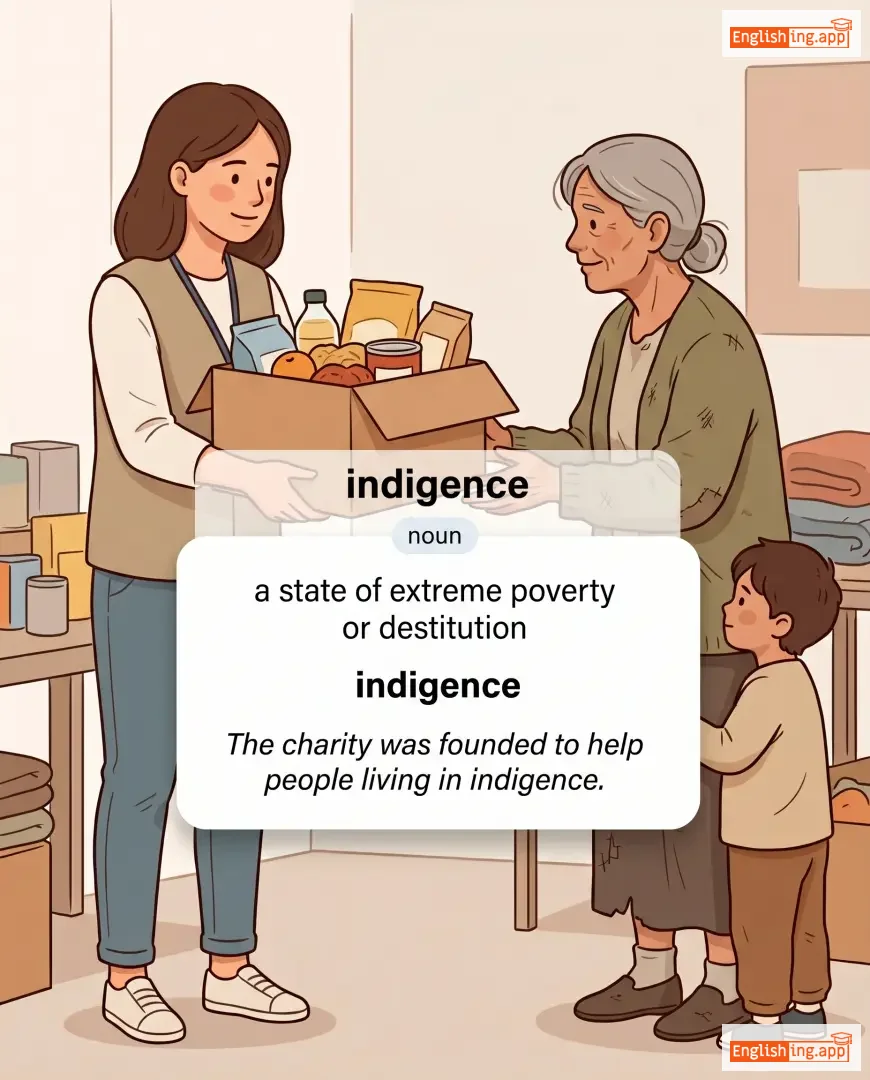
indigence definition card — visual illustration of the meaning
noun
/ˈɪn.dɪ.dʒəns/
indigencia (indigencia)

a state of extreme poverty or destitution

"The charity was founded to help people living in indigence."

"La caridad se fundó para ayudar a las personas que viven en indigencia." (La caridad se fundo para ayudar a las personas que viven en indigencia.)
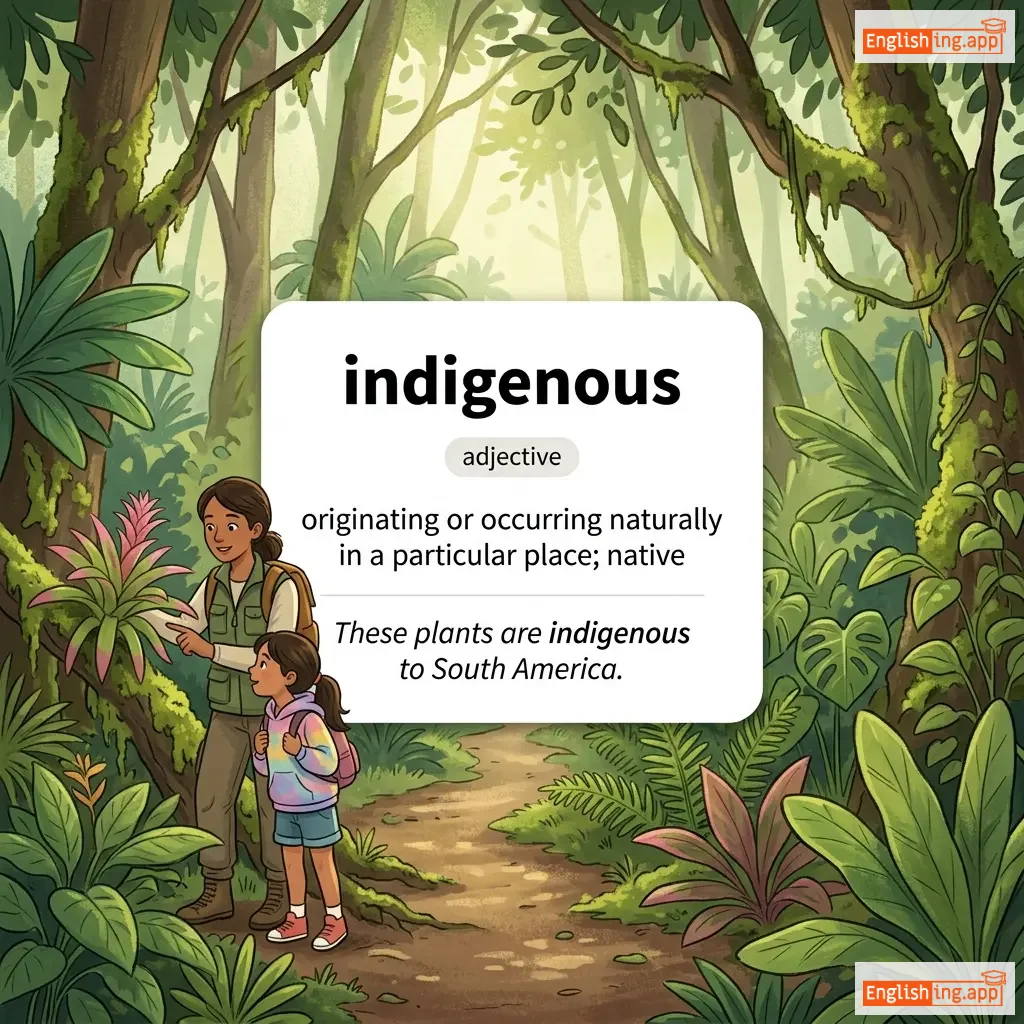
indigenous definition card — visual illustration of the meaning
adjective
/ɪnˈdɪdʒ.ə.nəs/
indígena (indigena)

originating or occurring naturally in a particular place; native

"These plants are indigenous to South America."

"Estas plantas son indígenas de América del Sur." (Estas plantas son indígenas de América del Sur.)
Indigenous Traditions definition card — visual illustration of the meaning
noun
ɪnˈdɪdʒɪnəs trəˈdɪʃənz
Tradiciones indígenas (tradiciones indígenas)

Cultural practices, beliefs, and customs that have been passed down through generations among native peoples.

"Indigenous traditions in the Chittagong Hill Tracts are unique."

"Las tradiciones indígenas en los Chittagong Hill Tracts son únicas." (Las tradiciones indígenas en los Chittagong Hill Tracts son únicas.)
adjective
/ˈɪn.dɪ.dʒənt/
indigente (indigente)

lacking the necessities of life due to poverty; very poor

"The hospital offers free care to indigent patients."

"El hospital ofrece atención gratuita a los pacientes indigentes." (El hospital ofrece atencion gratuita a los pacientes indigentes.)
adjective
/ˌɪn.daɪˈdʒes.tə.bəl/
indigesto (indigesto)

difficult or impossible to digest; hard to accept or understand

"The report was so long and detailed that it became almost indigestible."

"El informe era tan largo y detallado que se volvió casi indigesto." (El informe era tan largo y detallado que se volvio casi indigesto.)
noun
/ˌɪndɪˈdʒɛstʃən/
indigestión (indigestion)

Discomfort or pain in the stomach associated with difficulty in digesting food.

"He avoided spicy food because it often gave him indigestion."

"Él evitó la comida picante porque a menudo le provocaba indigestión." (El evito la comida picante porque a menudo le provoco indigestion.)
adjective
/ɪnˈdɪɡnənt/
indignado (indignado)

Feeling or showing anger at something considered unfair or unjust.

"She was indignant when accused of cheating."

"Ella estaba indignada cuando la acusaron de hacer trampa." (Ella estaba indignada cuando la acusaron de hacer trampa.)
noun
/ˌɪndɪɡˈneɪʃən/
indignación (indignacion)

Strong displeasure or anger caused by something unjust, offensive, or insulting.

"Public indignation grew after the unfair verdict."

"La indignación pública creció después del veredicto injusto." (La indignacion publica crecio despues del veredicto injusto.)
noun
/ɪnˈdɪɡnɪti/
indignidad (indignidad)

Treatment or circumstances that cause one to feel shame or humiliation.

"He suffered the indignity of being ignored in the meeting."

"Él sufrió la indignidad de ser ignorado en la reunión." (El sufrio la indignidad de ser ignorado en la reunion.)
adjective
/ˈɪndɪɡoʊ bluː/
azul índigo (azul indigo)

a deep blue color with a purplish tinge

"The indigo-blue sky looked magnificent at twilight."

"El cielo azul índigo se veía magnífico al atardecer." (El cielo azul índigo se veía magnífico al atardecer.)
adverb
/ˌɪndəˈrɛktli/
indirectamente (indirectamente)

in a way that is not direct; through an intermediate means or influence

"The policy affected small businesses indirectly."

"La política afectó indirectamente a las pequeñas empresas." (la politica afecto indirectamente a las pequenas empresas)
adjective
/ˌɪndɪˈsɜːrnəbl/
indistinguible (indistinguible)

Impossible or difficult to see, notice, or distinguish.

"The difference between the two shades was almost indiscernible."

"La diferencia entre los dos tonos era casi indistinguible." (La diferencia entre los dos tonos era casi indistinguible.)
noun
/ˌɪnˈdɪsəplɪn/
indisciplina (indisciplina)

lack of discipline or self-control; failure to obey rules or maintain order

"Indiscipline among the students disrupted the learning environment."

"La indisciplina entre los estudiantes interrumpió el ambiente de aprendizaje." (La indisciplina entre los estudiantes interrumpio el ambiente de aprendizaje)
adjective
/ˌɪndɪˈskriːt/
imprudente (imprudente)

Not careful in what one says or does, likely to reveal secrets or offend.

"It was indiscreet of him to mention the plan in public."

"Fue imprudente de su parte mencionar el plan en público." (Fue imprudente de su parte mencionar el plan en público.)
adjective
/ˌɪndɪˈskrɪmɪnət/
indiscriminado (indiscriminado)

Done without careful judgment; random or haphazard.

"The indiscriminate use of pesticides harms the environment."

"El uso indiscriminado de pesticidas daña el medio ambiente." (El uso indiscriminado de pesticidas daña el medio ambiente.)
adverb
/ˌɪn.dɪˈskrɪm.ɪ.nət.li/
indiscriminadamente (indiscriminadamente)

without making careful distinctions; randomly; without discrimination

"The company fired employees indiscriminately without considering their performance."

"La empresa despidió a los empleados indiscriminadamente sin considerar su rendimiento." (La empresa despidió a los empleados indiscriminadamente sin considerar su rendimiento.)
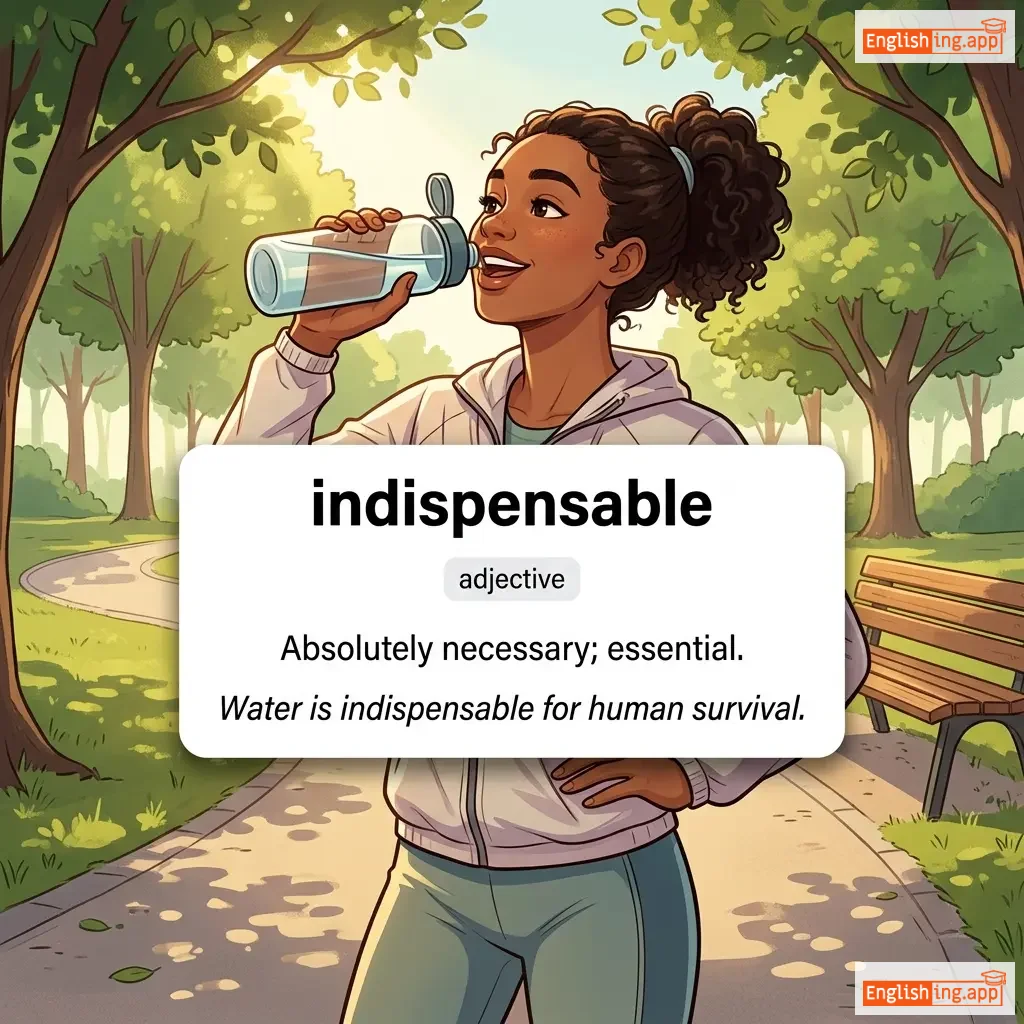
indispensable definition card — visual illustration of the meaning
adjective
/ˌɪndɪˈspɛnsəbl/
indispensable (indispensable)

Absolutely necessary; essential.

"Water is indispensable for human survival."

"El agua es indispensable para la supervivencia humana." (El agua es indispensable para la supervivencia humana.)