Vocabularios

Descubra, aprenda y domine el vocabulario en inglés

adjective
/ɪnˈkɒmp(ə)rəbl/
incomparable (incomparable)

Without an equal in quality or excellence; matchless.

"The view from the mountain was incomparable."

"La vista desde la montaña era incomparable." (La vista desde la montaña era incomparable.)
noun
/ˌɪnkəmˌpætəˈbɪlɪti/
incompatibilidad (incompatibilidad)

the state of being unable to exist or work together harmoniously; lack of compatibility

"The project failed because of incompatibility between the two software systems."

"El proyecto fracasó por la incompatibilidad entre los dos sistemas de software." (El proyecto fracaso por la incompatibilidad entre los dos sistemas de software)
adjective
/ˌɪnkəmˈpætəbl/
incompatible (incompatible)

Not able to exist or work together without conflict.

"Their personalities were completely incompatible."

"Sus personalidades eran completamente incompatibles." (Sus personalidades eran completamente incompatibles.)
noun
/ɪnˈkɒmpɪtəns/
incompetencia (incompetencia)

Lack of ability, skill, or effectiveness in doing something.

"The project failed due to the manager’s incompetence."

"El proyecto fracasó debido a la incompetencia del gerente." (El proyecto fracasó debido a la incompetencia del gerente.)
adjective
/ɪnˈkɒmpɪtənt/
incompetente (incompetente)

Lacking the necessary ability or skills to do something successfully.

"He was fired because he was incompetent at his job."

"Lo despidieron porque era incompetente en su trabajo." (Lo despidieron porque era incompetente en su trabajo.)
adjective
/ˌɪnkəmˈpliːt/
incompleto (incompleto)

Not finished, lacking some parts or not whole.

"Her report was incomplete and needed further details."

"Su informe estaba incompleto y necesitaba más detalles." (Su informe estaba incompleto y necesitaba más detalles.)
noun
/ˌɪnkəmˈpliːtnəs/
incompletitud (incompletitud)

the state of not being complete or whole; lack of necessary parts or fullness

"The incompleteness of the report caused delays in the project."

"La incompletitud del informe causó retrasos en el proyecto." (La incompletitud del informe causo retrasos en el proyecto)
adjective
/ˌɪnkɒmprɪˈhɛnsəbl/
incomprensible (incomprensible)

Impossible or very difficult to understand.

"The professor’s lecture was so fast it became incomprehensible."

"La conferencia del profesor fue tan rápida que se volvió incomprensible." (La conferencia del profesor fue tan rapida que se volvio incomprensible.)
adjective
/ˌɪnkəmˈprɛsəbl/
incompresible (incompresible)

Not able to be pressed or squeezed into a smaller space.

"Liquids are generally considered incompressible."

"Los líquidos generalmente se consideran incomprensibles." (Los líquidos generalmente se consideran incomprensibles.)
adjective
/ˌɪnkənˈsiːvəbl̩/
inconcebible (inconseible)

Impossible to imagine or believe; beyond comprehension.

"It seemed inconceivable that she could finish the marathon after such little training."

"Parecía inconcebible que ella pudiera terminar el maratón después de tan poco entrenamiento." (Parecia inconcebible que ella pudiera terminar el maraton despues de tan poco entrenamiento.)
adjective
/ˌɪnkənˈkluːsɪv/
inconcluso (inconcluso)

Not leading to a definite result or decision.

"The investigation remained inconclusive due to a lack of evidence."

"La investigación permaneció inconclusa debido a la falta de evidencia." (La investigacion permanecio inconclusa debido a la falta de evidencia.)
adjective
/ɪnˈkɒŋɡruənt/
incongruente (incongruente)

Not in harmony or keeping with the surroundings or other aspects.

"His casual outfit looked incongruent at the formal dinner."

"Su atuendo casual se veía incongruente en la cena formal." (Su atuendo casual se veia incongruente en la cena formal.)
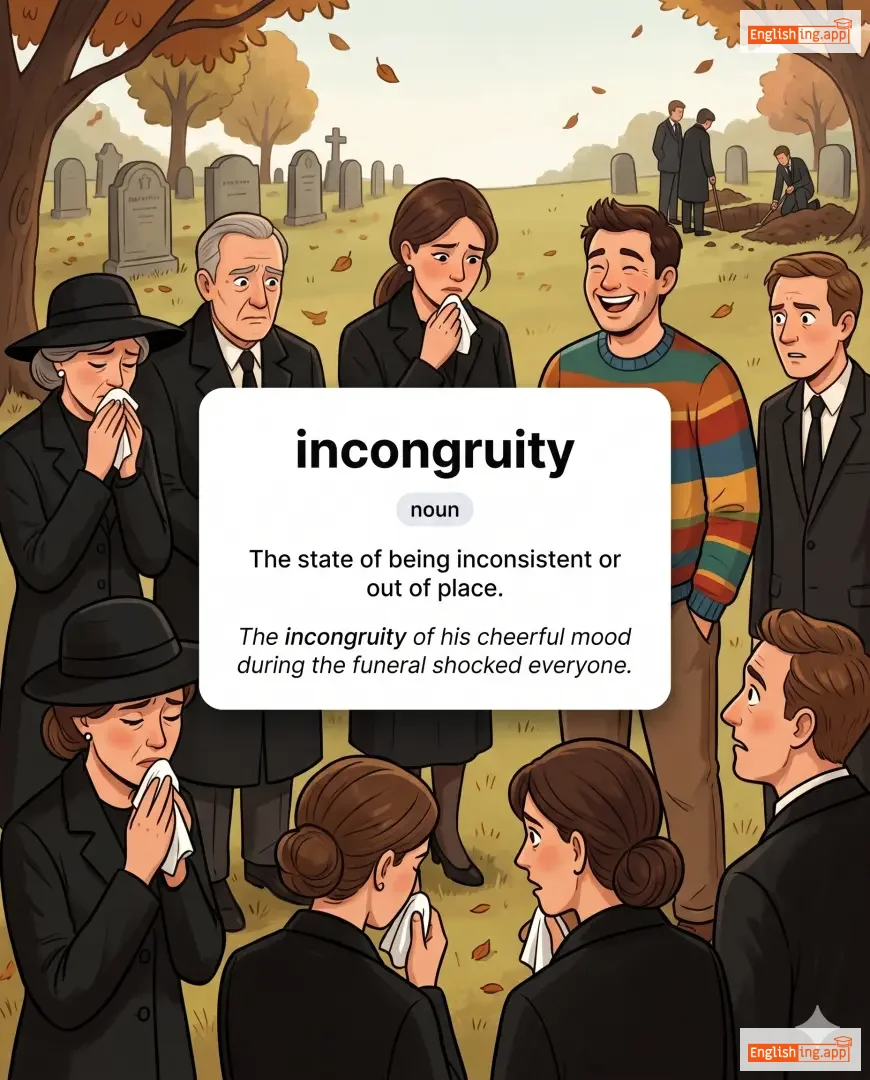
incongruity definition card — visual illustration of the meaning
noun
/ˌɪnkənˈɡruːəti/
incongruencia (incongruencia)

The state of being inconsistent or out of place.

"The incongruity of his cheerful mood during the funeral shocked everyone."

"La incongruencia de su estado de ánimo alegre durante el funeral sorprendió a todos." (La incongruencia de su estado de ánimo alegre durante el funeral sorprendió a todos.)
adjective
/ɪnˈkɒŋɡruəs/
incongruente (incongruente)

Not fitting in with or suitable for the surroundings.

"His jokes were incongruous during the serious meeting."

"Sus chistes fueron incongruentes durante la reunión seria." (Sus chistes fueron incongruentes durante la reunión seria.)
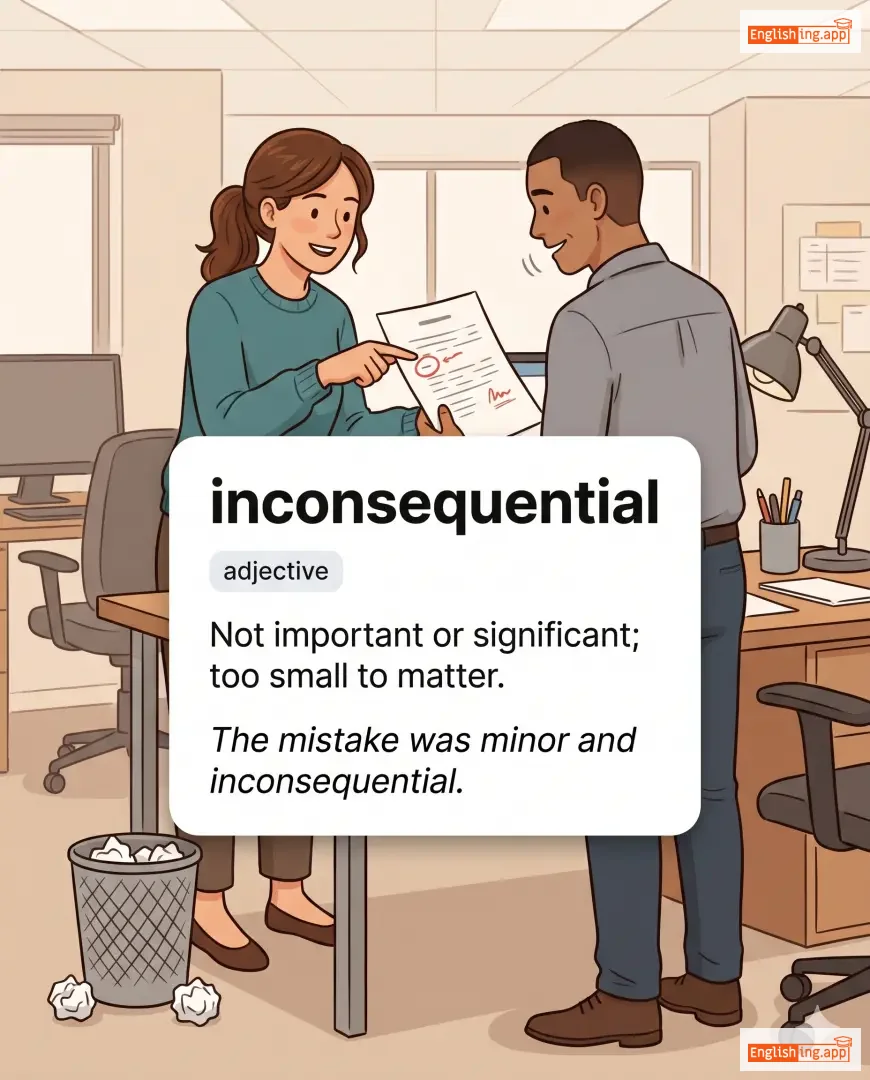
inconsequential definition card — visual illustration of the meaning
adjective
/ˌɪnˌkɒnsɪˈkwɛnʃəl/
insignificante (insignificante)

Not important or significant; too small to matter.

"The mistake was minor and inconsequential."

"El error fue menor e insignificante." (El error fue menor e insignificante.)
adjective
/ˌɪnkənˈsɪdərəbl/
insignificante (insignificante)

Too small or unimportant to be worth considering.

"The donation was not inconsiderable, though smaller than expected."

"La donación no fue insignificante, aunque más pequeña de lo esperado." (La donación no fue insignificante, aunque más pequeña de lo esperado.)
adjective
/ˌɪnkənˈsɪdərət/
desconsiderado (desconsiderado)

Thoughtless; showing a lack of concern for others.

"It was inconsiderate of him to play loud music late at night."

"Fue desconsiderado de su parte poner música alta tarde en la noche." (Fue desconsiderado de su parte poner musica alta tarde en la noche.)
noun
/ˌɪnkənˈsɪstənsi/
inconsistencia (inconsistencia)

The quality of being contradictory, irregular, or not staying the same.

"There is an inconsistency between his words and actions."

"Hay una inconsistencia entre sus palabras y acciones." (Hay una inconsistencia entre sus palabras y acciones.)
adjective
/ˌɪnkənˈsɪstənt/
inconsistente (inconsistente)

Not staying the same throughout; lacking harmony or regularity.

"His answers were inconsistent and confusing."

"Sus respuestas fueron inconsistentes y confusas." (Sus respuestas fueron inconsistentes y confusas.)
noun
/ɪnˈkɒnstənsi/
inconstancia (inconstancia)

The quality of changing frequently or being unreliable.

"The inconstancy of the weather makes planning difficult."

"La inconstancia del clima hace que planificar sea difícil." (La inconstancia del clima hace que planificar sea difícil.)
adjective
/ɪnˈkɒnstənt/
inconstante (inconstante)

frequently changing; not consistent or dependable

"His inconstant moods made it difficult to work with him."

"Sus estados de ánimo inconstantes hacían difícil trabajar con él." (Sus estados de ánimo inconstantes hacían difícil trabajar con él.)
adjective
/ɪnˈkɒntɪnənt/
incontinente (incontinente)

lacking control over urination or defecation; lacking self-restraint

"The patient was incontinent after surgery."

"El paciente era incontinente después de la cirugía." (El paciente era incontinente despues de la cirugia.)
adjective
/ˌɪnkɒntrəˈvɜːtəbl/
incontrovertible (incontrovertible)

impossible to deny or dispute; unquestionable

"The evidence was incontrovertible and proved his innocence."

"La evidencia era incontrovertible y demostró su inocencia." (La evidencia era incontrovertible y demostró su inocencia.)
noun, verb
/ˌɪnkənˈviːniəns/
inconveniente (inconveniente)

trouble or difficulty caused to someone; to cause trouble or difficulty to someone

"We apologize for any inconvenience caused by the delay."

"Pedimos disculpas por cualquier inconveniente causado por el retraso." (Pedimos disculpas por cualquier inconveniente causado por el retraso)
adjective
/ˌɪnkənˈviːniənt/
incómodo (incomodo)

causing trouble, difficulties, or discomfort

"It was inconvenient for her to travel during the storm."

"Era incómodo para ella viajar durante la tormenta." (Era incomodo para ella viajar durante la tormenta.)
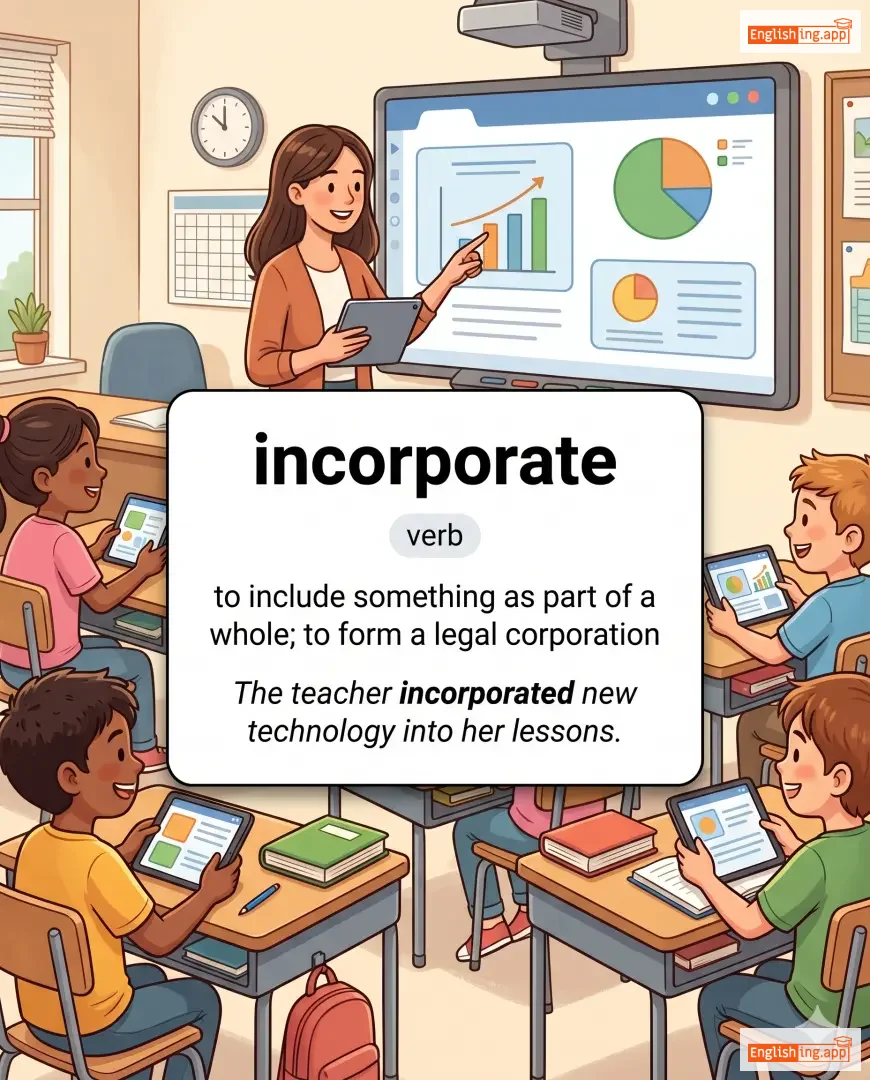
incorporate definition card — visual illustration of the meaning
verb
/ɪnˈkɔːpəreɪt/
incorporar (incorporar)

to include something as part of a whole; to form a legal corporation

"The teacher incorporated new technology into her lessons."

"El profesor incorporó nueva tecnología en sus lecciones." (El profesor incorporó nueva tecnología en sus lecciones.)
adjective
/ˌɪnkɔːrˈpɔːriəl/
incorpóreo (incorporeo)

lacking a physical body; not composed of matter; intangible

"Ghosts are often described as incorporeal beings."

"Los fantasmas a menudo se describen como seres incorpóreos." (Los fantasmas a menudo se describen como seres incorpóreos.)
adjective
/ɪnkəˈrɛkt/
incorrecto (incorrecto)

not correct or accurate

"The information you provided was incorrect."

"La información que proporcionaste era incorrecta." (La informacion que proporcionaste era incorrecta.)
adjective
/ɪnˈkɒrɪdʒəbəl/
incorregible (incorregible)

incapable of being corrected, improved, or reformed

"He is an incorrigible optimist who never loses hope."

"Él es un optimista incorregible que nunca pierde la esperanza." (Él es un optimista incorregible que nunca pierde la esperanza.)
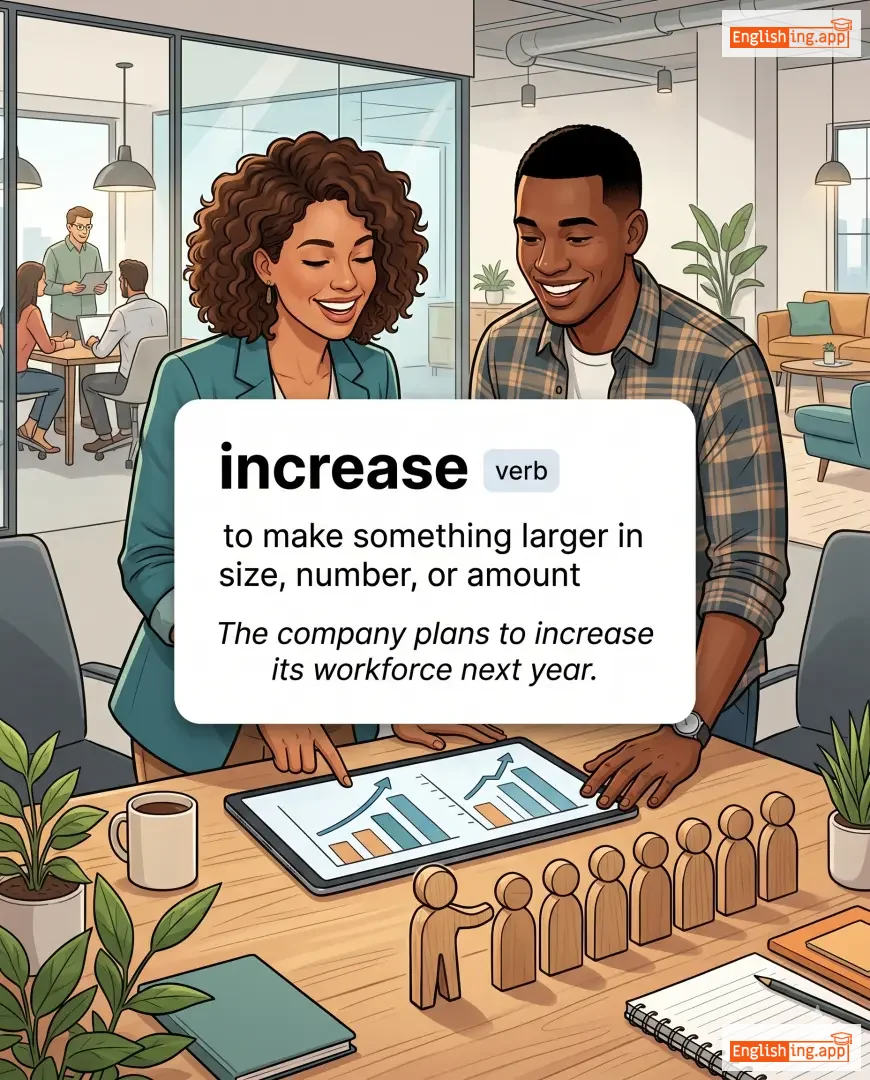
increase definition card — visual illustration of the meaning
verb
/ɪnˈkriːs/
aumentar (aumentar)

to make something larger in size, number, or amount

"The company plans to increase its workforce next year."

"La compañía planea aumentar su fuerza laboral el próximo año." (La compania planea aumentar su fuerza laboral el proximo ano.)
verb
/ɪnˈkriːst/
aumentado (aumentado)

became greater in size, amount, or degree

"The company's revenue increased last year."

"Los ingresos de la compañía aumentaron el año pasado." (Los ingresos de la compañía aumentaron el año pasado.)
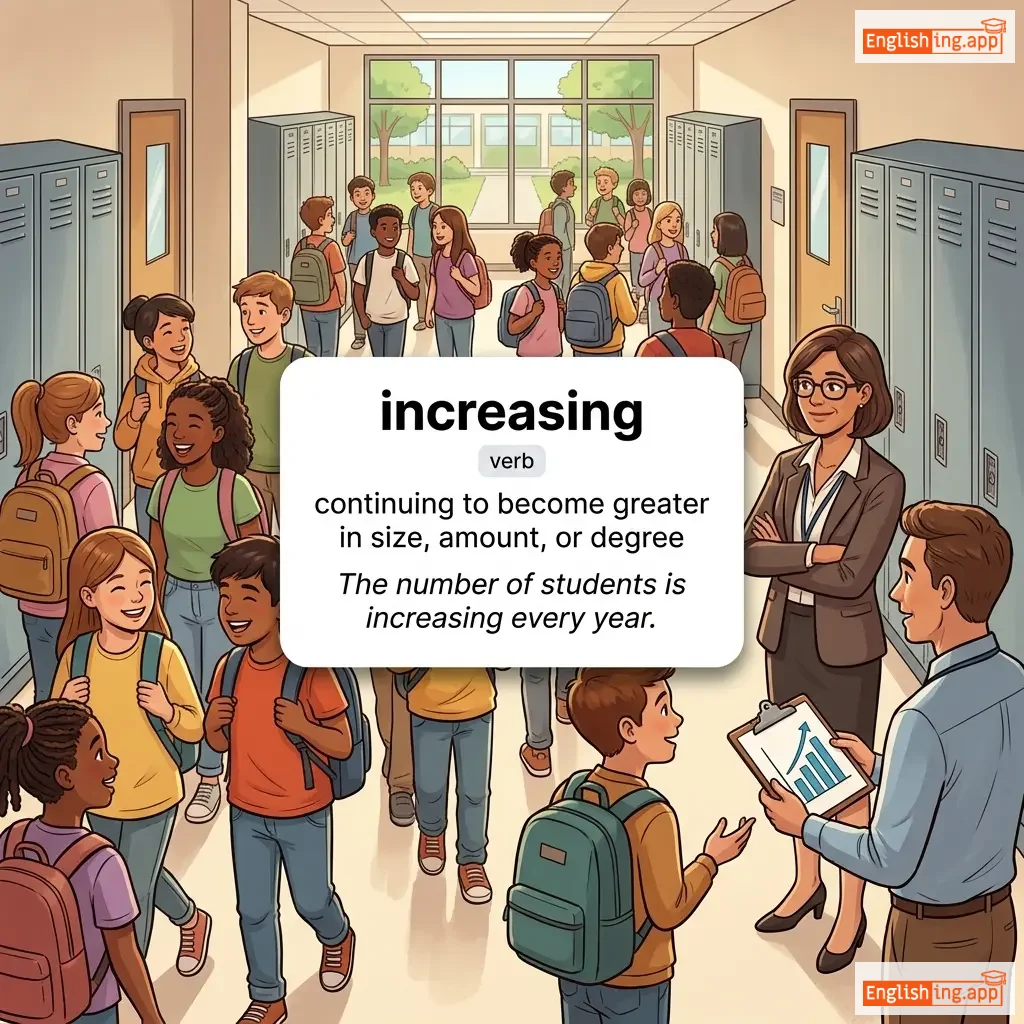
increasing definition card — visual illustration of the meaning
verb
/ɪnˈkriːsɪŋ/
aumentar (aumentar)

continuing to become greater in size, amount, or degree

"The number of students is increasing every year."

"El número de estudiantes aumenta cada año." (El numero de estudiantes aumenta cada ano.)
adverb
/ɪnˈkriːsɪŋli/
cada vez más (cada vez mas)

more and more over time

"People are increasingly concerned about climate change."

"Las personas están cada vez más preocupadas por el cambio climático." (Las personas estan cada vez mas preocupadas por el cambio climatico.)
adjective
/ɪnˈkrɛdəbl/
increíble (increible)

so extraordinary that it is hard to believe; amazing

"The view from the mountain was incredible."

"La vista desde la montaña fue increíble." (La vista desde la montaña fue increible.)
adverb
/ɪnˈkrɛdɪbli/
increíblemente (increiblemente)

to a great degree; extremely or unbelievably

"The view from the top of the mountain was incredibly beautiful."

"La vista desde la cima de la montaña era increíblemente hermosa." (La vista desde la cima de la montaña era increiblemente hermosa.)
noun
/ˌɪnkrɪˈdjuːləti/
incredulidad (incredulidad)

the state of being unwilling or unable to believe something

"She looked at him with incredulity after hearing the strange story."

"Ella lo miró con incredulidad después de escuchar la extraña historia." (Ella lo miro con incredulidad despues de escuchar la extraña historia.)
adjective
/ɪnˈkrɛdjələs/
incrédulo (inkredyulus)

unwilling or unable to believe something

"He gave her an incredulous look when she claimed she could fly."

"Le lanzó una mirada incrédula cuando afirmó que podría volar." (Le lanzo una mirada incredula cuando afirmo que podia volar.)
noun
/ˈɪŋkrɪmənt/
incremento (incremento)

an increase or addition, especially one of a series on a fixed scale

"Employees received an annual salary increment."

"Los empleados recibieron un incremento salarial anual." (Los empleados recibieron un incremento salarial anual.)
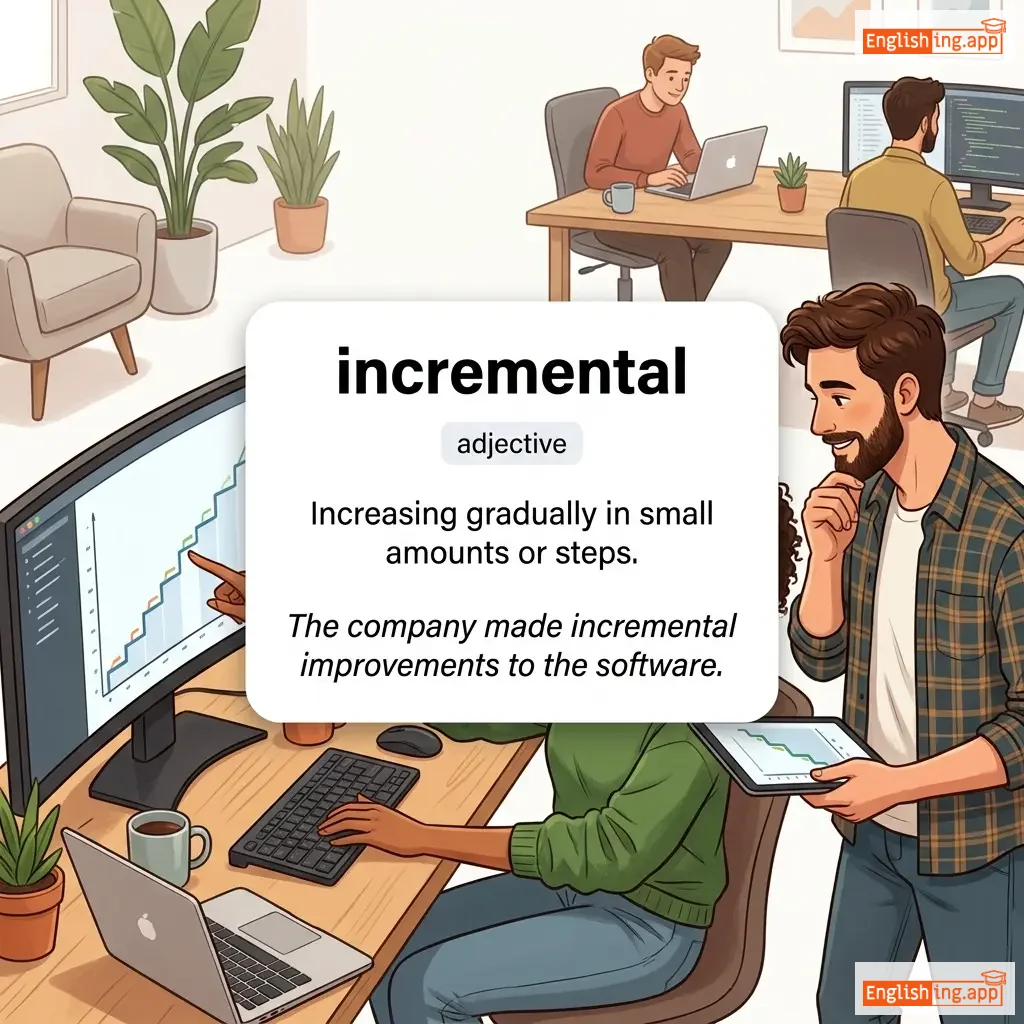
incremental definition card — visual illustration of the meaning
adjective
/ˌɪŋ.krɪˈmen.təl/
incremental (incremental)

Increasing gradually in small amounts or steps.

"The company made incremental improvements to the software."

"La empresa hizo mejoras incrementales en el software." (La empresa hizo mejoras incrementales en el software.)
verb
/ɪnˈkrɪmɪˌneɪt/
incriminar (incriminar)

to make someone appear guilty of a crime or wrongdoing

"The new evidence could incriminate the suspect in the robbery case."

"La nueva evidencia podría incriminar al sospechoso en el caso de robo." (La nueva evidencia podría incriminar al sospechoso en el caso de robo.)
noun
/ˌɪnkrʌˈsteɪʃən/
costra (costra)

a crust or hard coating formed on the surface of something

"The old pipes were blocked due to heavy incrustation of minerals."

"Las viejas tuberías estaban bloqueadas debido a una fuerte incrustación de minerales." (Las viejas tuberías estaban bloqueadas debido a una fuerte incrustación de minerales.)
verb
/ˈɪnkjʊˌbeɪt/
incubar (incubar)

to keep eggs, cells, or organisms at the right conditions for development

"The hen will incubate the eggs until they hatch."

"La gallina incubará los huevos hasta que eclosionen." (La gallina incubará los huevos hasta que eclosionen.)
noun
/ˌɪnkjʊˈbeɪʃən/
el proceso de mantener huevos, células u organismos en las condiciones adecuadas para su desarrollo (el proceso de mantener huevos, células u organismos en las condiciones adecuadas para su desarrollo)

the process of keeping eggs, cells, or organisms in the right conditions for development

"The incubation of the eggs lasted for three weeks."

"La incubación de los huevos duró tres semanas." (La incubación de los huevos duró tres semanas.)
noun
/ˈɪnkjʊˌbeɪtər/
incubadora (incubadora)

a device or environment that provides suitable conditions for eggs, cells, or infants to develop

"The premature baby was placed in an incubator for care."

"El bebé prematuro fue colocado en una incubadora para su cuidado." (El bebe prematuro fue colocado en una incubadora para su cuidado.)
noun
/ˈɪŋkjʊbəs/
espíritu maligno (espiritu maligno)

An oppressive or nightmarish burden; in folklore, an evil spirit that lies upon sleeping people.

"Debt became an incubus that weighed heavily on the family."

"La deuda se convirtió en un espíritu maligno que pesaba mucho sobre la familia." (La deuda se convirtio en un espiritu maligno que pesaba mucho sobre la familia.)
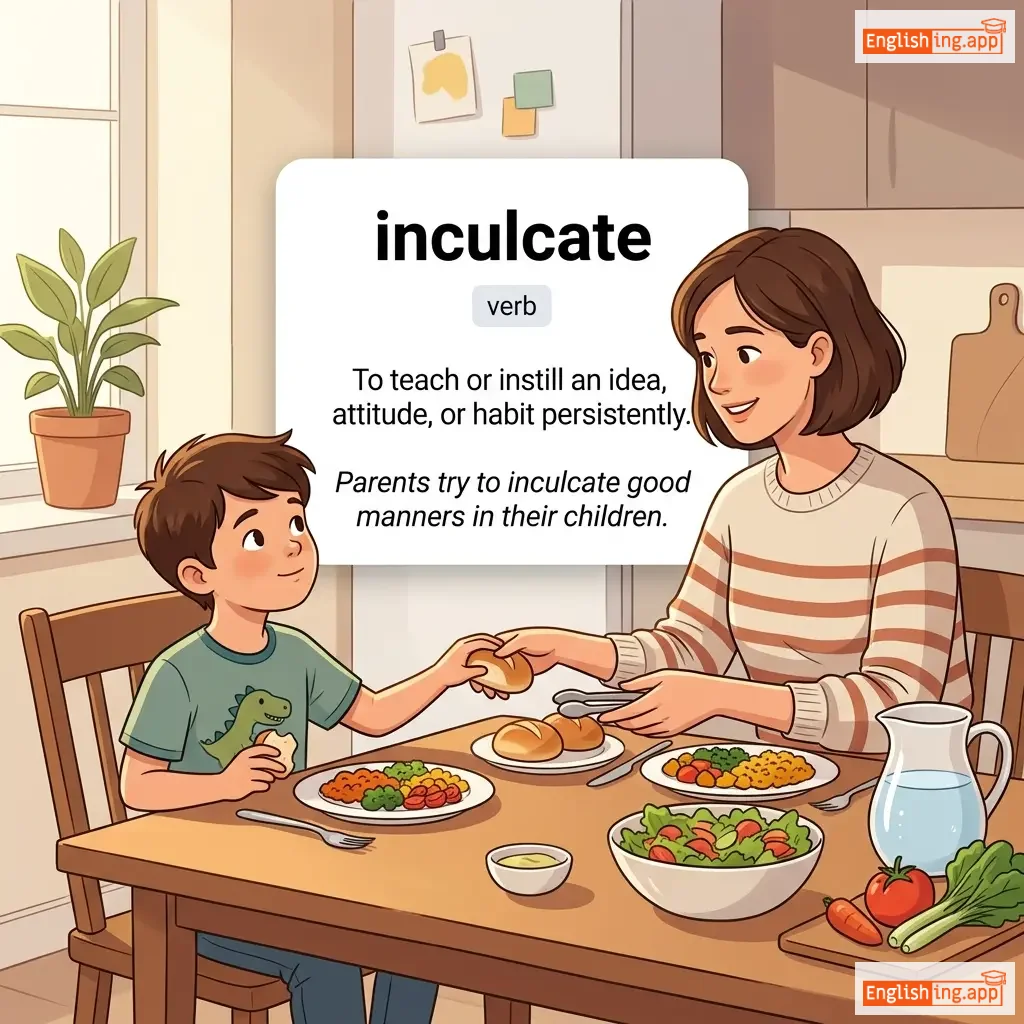
inculcate definition card — visual illustration of the meaning
verb
/ˈɪŋkʌlkeɪt/
inculcar (inculcar)

To teach or instill an idea, attitude, or habit persistently.

"Parents try to inculcate good manners in their children."

"Los padres intentan inculcar buenos modales en sus hijos." (Los padres intentan inculcar buenos modales en sus hijos.)
verb
/ˈɪŋkʌlpeɪt/
inculpar (inculpar)

To blame or accuse someone of wrongdoing.

"The evidence seemed to inculpate the suspect in the crime."

"La evidencia parecía inculpar al sospechoso en el crimen." (La evidencia parecía inculpar al sospechoso en el crimen.)
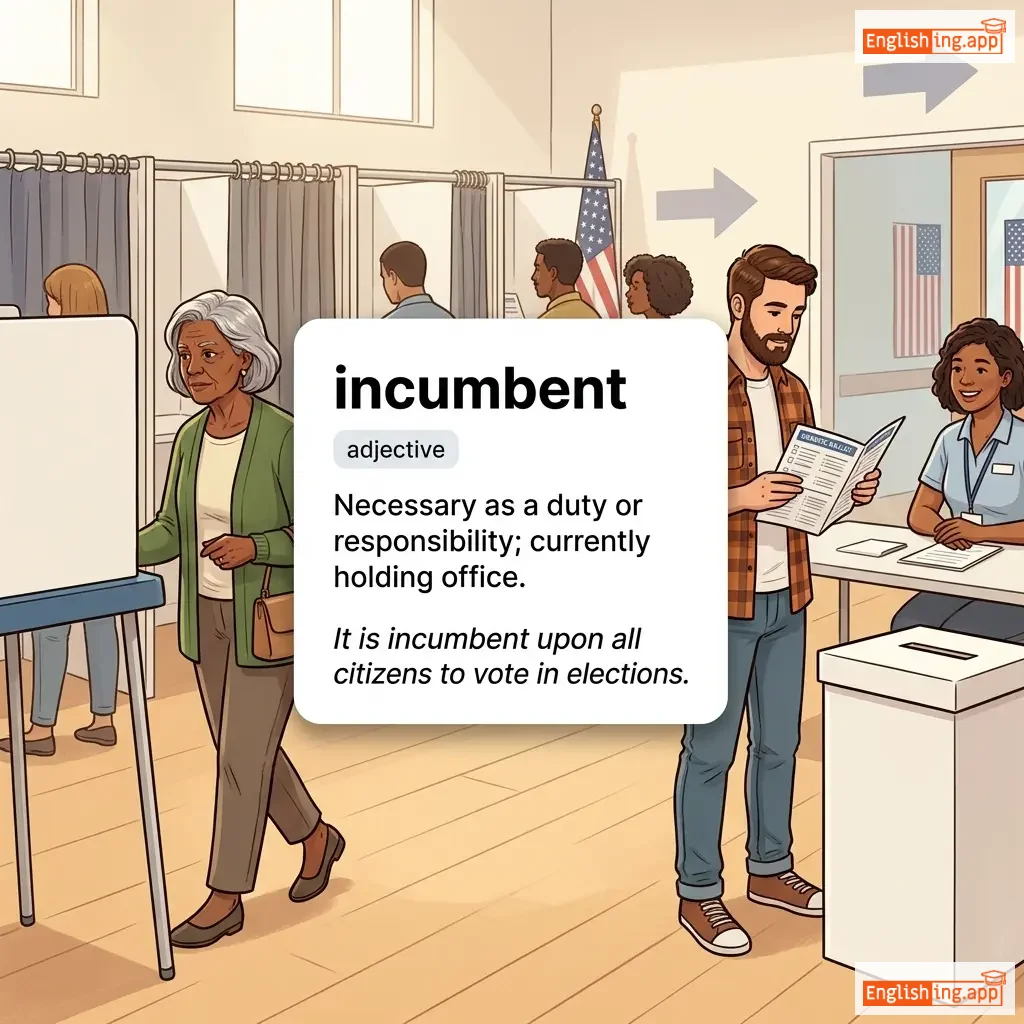
incumbent definition card — visual illustration of the meaning
adjective
/ɪnˈkʌmbənt/
incumbente (incumbente)

Necessary as a duty or responsibility; currently holding office.

"It is incumbent upon all citizens to vote in elections."

"Es incumbente para todos los ciudadanos votar en las elecciones." (Es incumbente para todos los ciudadanos votar en las elecciones.)
verb
/ɪnˈkɜːr/
incurrir (incurrir)

To bring upon oneself something undesirable, usually as a result of actions.

"He incurred a fine for parking in the wrong place."

"Él incurrió en una multa por aparcar en el lugar equivocado." (Él incurrió en una multa por aparcar en el lugar equivocado.)
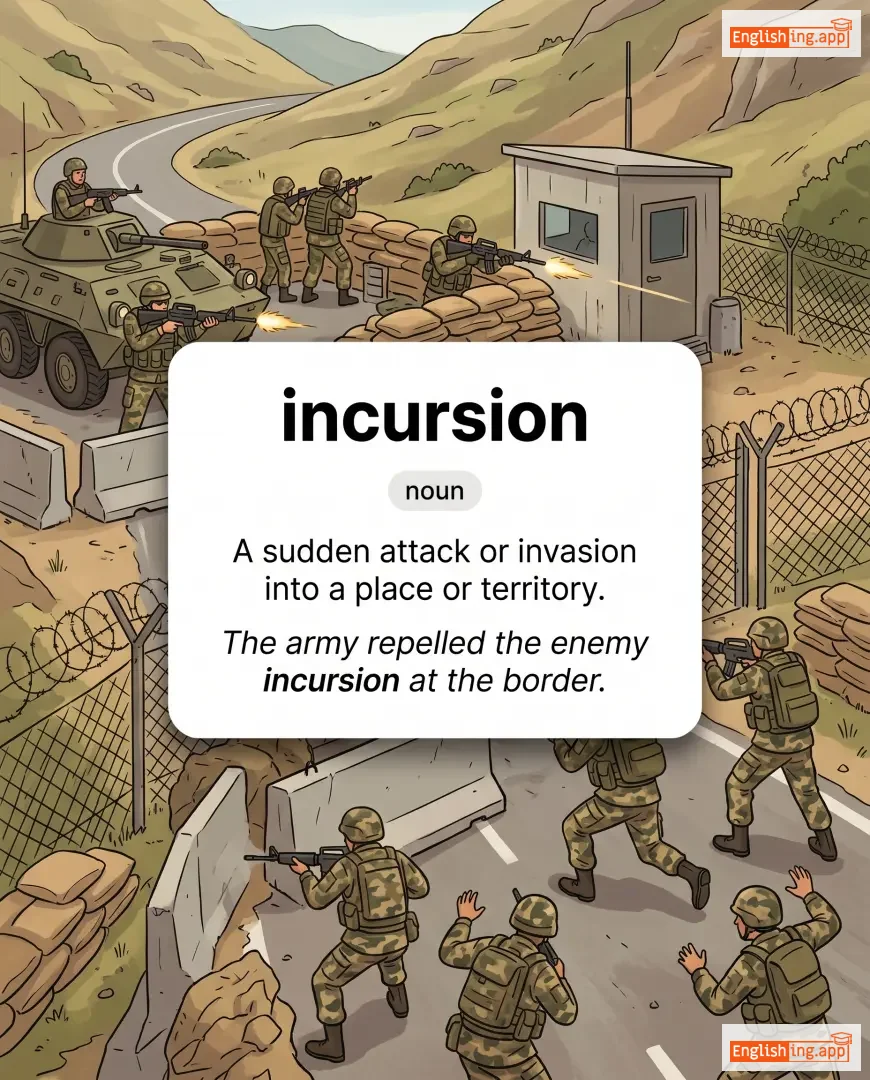
incursion definition card — visual illustration of the meaning
noun
/ɪnˈkɜːrʒən/
incursión (incursion)

A sudden attack or invasion into a place or territory.

"The army repelled the enemy incursion at the border."

"El ejército repelió la incursión enemiga en la frontera." (El ejercito repelió la incursión enemiga en la frontera.)