Vocabularios

Descubra, aprenda y domine el vocabulario en inglés

noun
/ˌɪnkænˈdɛsəns/
incandescencia (incandescencia)

the emission of light from a hot object; brilliance

"The incandescence of the candle filled the dark room."

"La incandescencia de la vela llenó la habitación oscura." (La incandescencia de la vela lleno la habitacion oscura.)
adjective
/ˌɪnkænˈdɛsənt/
incandescente (incandescente)

emitting light as a result of being heated; extremely bright or passionate

"The incandescent lamp lit up the entire hall."

"La lámpara incandescente iluminó todo el salón." (La lámpara incandescente iluminó todo el salón.)
noun
/ˌɪnkænˈteɪʃən/
encantación (encantacion)

a series of words used as a magic spell or charm

"The wizard chanted an incantation to summon the spirits."

"El mago recitó una encantación para invocar los espíritus." (El mago recito una encantacion para invocar los espiritus.)
noun
/ˌɪnˌkeɪpəˈbɪləti/
incapacidad (incapacidad)

lack of ability or power to do something; inability or incompetence

"His incapability to manage the team led to serious problems."

"Su incapacidad para gestionar el equipo provocó problemas graves." (su incapacidad para gestionar el equipo provoco problemas graves)
adjective
/ɪnˈkeɪpəbəl/
incapaz (incapaz)

lacking the ability, skill, or capacity to do something

"He is incapable of understanding complex instructions."

"Es incapaz de entender instrucciones complejas." (Es incapaz de entender instrucciones complejas)
verb
/ˌɪnkəˈpæsɪteɪt/
incapacitar (incapacitar)

to deprive someone or something of the ability or strength to function

"The severe injury incapacitated the player for the rest of the season."

"La grave lesión incapacitó al jugador para el resto de la temporada." (La grave lesion incapacito al jugador para el resto de la temporada.)
noun
/ˌɪnkəˈpæsəti/
incapacidad (incapacidad)

the lack of ability, power, or fitness to do something

"His mental incapacity prevented him from making important decisions."

"Su incapacidad mental le impidió tomar decisiones importantes." (Su incapacidad mental le impidió tomar decisiones importantes.)
verb
/ɪnˈkɑːrsəreɪt/
encarcelar (encarcelar)

to imprison or confine someone

"The authorities incarcerated the criminal after the trial."

"Las autoridades encarcelaron al criminal después del juicio." (Las autoridades encarcelaron al criminal después del juicio.)
noun
/ɪnˌkɑːsəˈreɪʃən/
encarcelamiento (encarcelamiento)

the state of being imprisoned or confined

"The criminal faced years of incarceration for his crimes."

"El criminal enfrentó años de encarcelamiento por sus crímenes." (El criminal enfrento anos de encarcelamiento por sus crimenes.)
adjective/noun
/ɪnˈkɑːrnədiːn/
rojo intenso (rojo intenso)

a bright crimson or pinkish-red color

"The sky turned incarnadine at sunset."

"El cielo se tornó rojo intenso al atardecer." (El cielo se tornó rojo intenso al atardecer.)
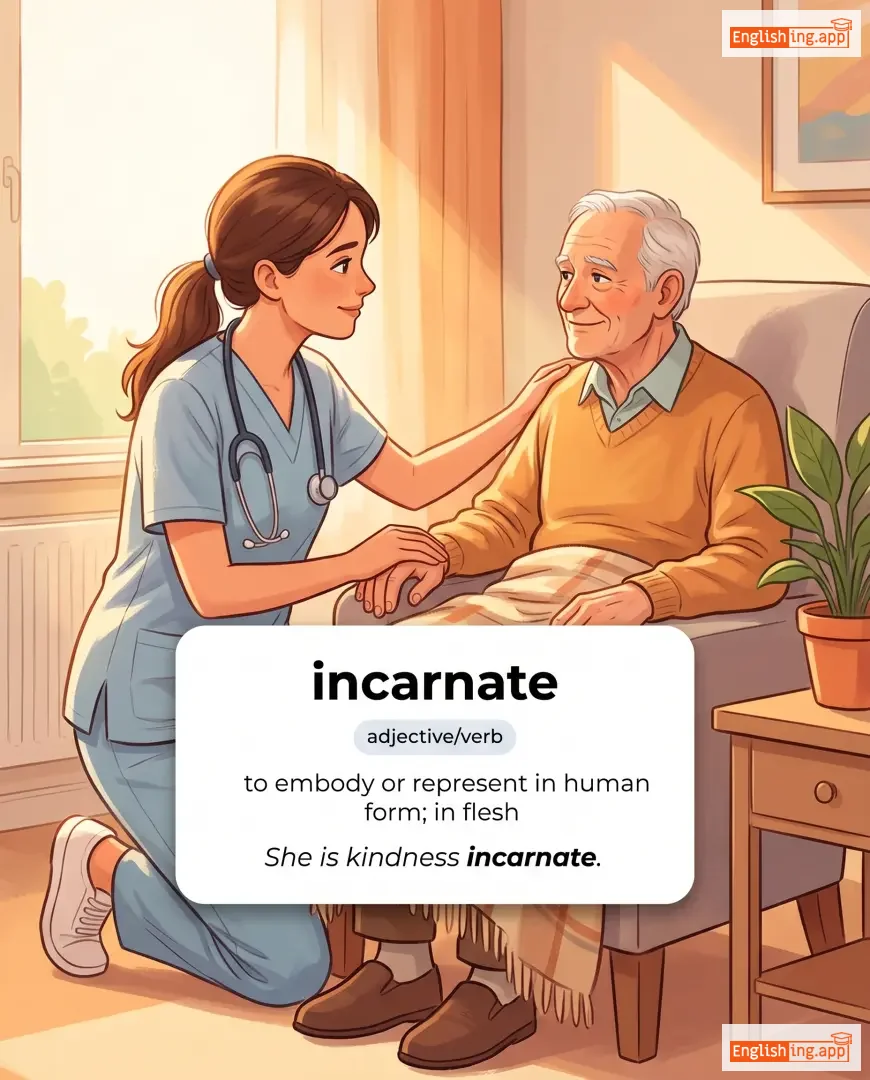
incarnate definition card — visual illustration of the meaning
adjective/verb
/ɪnˈkɑːrneɪt/
encarnado (encarnado)

to embody or represent in human form; in flesh

"She is kindness incarnate."

"Ella es la bondad encarnada." (Ella es la bondad encarnada.)
noun
/ˌɪnkɑːrˈneɪʃən/
encarnación (encarnacion)

the embodiment of a deity, spirit, or quality in a physical form

"The monk was considered the incarnation of compassion."

"El monje fue considerado la encarnación de la compasión." (El monje fue considerado la encarnacion de la compasion.)
adjective
/ɪnˈsɛndiˌɛri/
incendiario / provocador (incendiario / provocador)

designed to cause fires or stir up conflict

"The politician’s incendiary remarks angered the crowd."

"Las declaraciones incendiarias del político enfurecieron a la multitud." (Las declaraciones incendiarias del politico enfurecieron a la multitud.)
noun/verb
/ˈɪnsɛns/
incienso / enfurecer (incienso / enfurecer)

a substance burned for its sweet smell (noun); to make very angry (verb)

"The smell of incense filled the temple, but his rude words incensed her."

"El olor del incienso llenó el templo, pero sus palabras groseras la enfurecieron." (El olor del incienso llenó el templo, pero sus palabras groseras la enfurecieron.)
noun
/ɪnˈsɛntɪv/
incentivo (incentivo)

a thing that motivates or encourages someone to do something

"The company offers bonuses as an incentive to increase productivity."

"La empresa ofrece bonificaciones como incentivo para aumentar la productividad." (La empresa ofrece bonificaciones como incentivo para aumentar la productividad.)
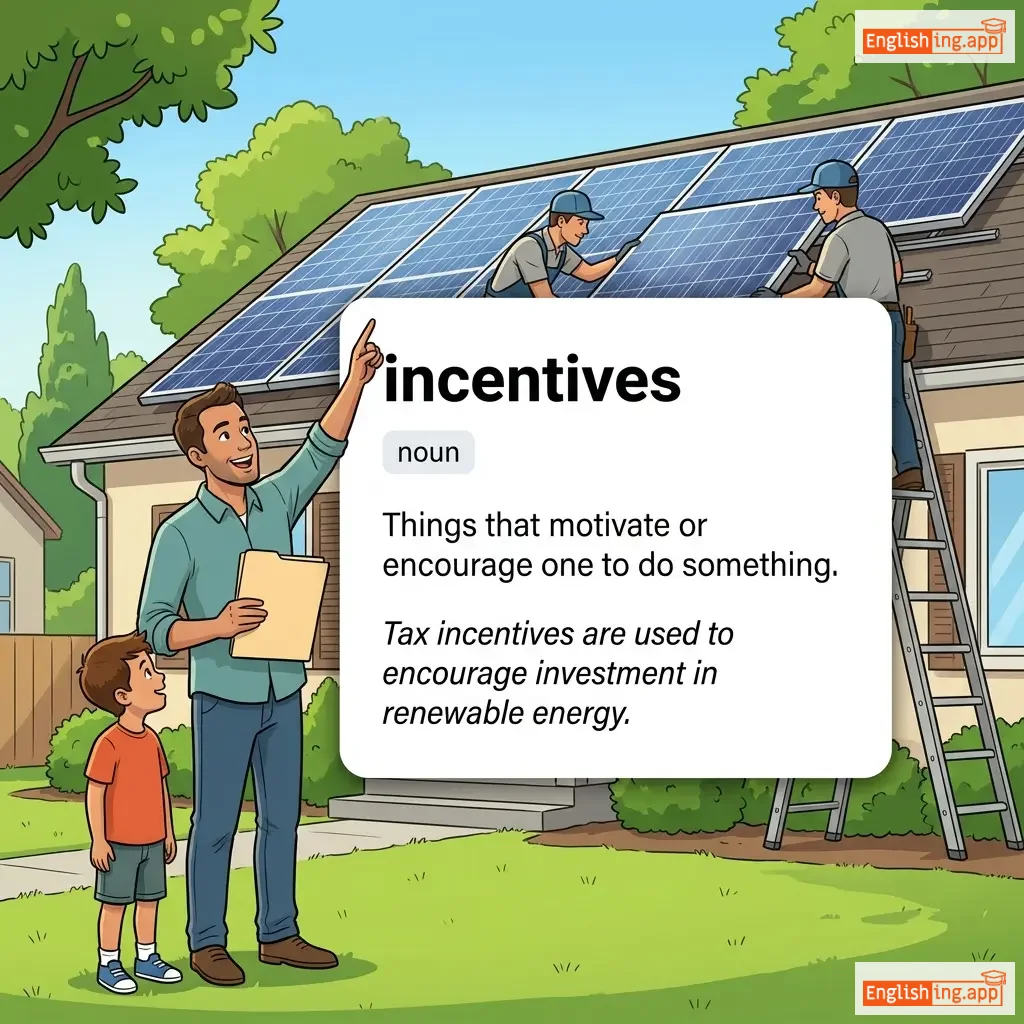
incentives definition card — visual illustration of the meaning
noun
ɪnˈsɛntɪvz
incentivos (incentivos)

Things that motivate or encourage one to do something.

"Tax incentives are used to encourage investment in renewable energy."

"Se utilizan incentivos fiscales para fomentar la inversión en energía renovable." (Se utilizan incentivos fiscales para fomentar la inversión en energía renovable.)
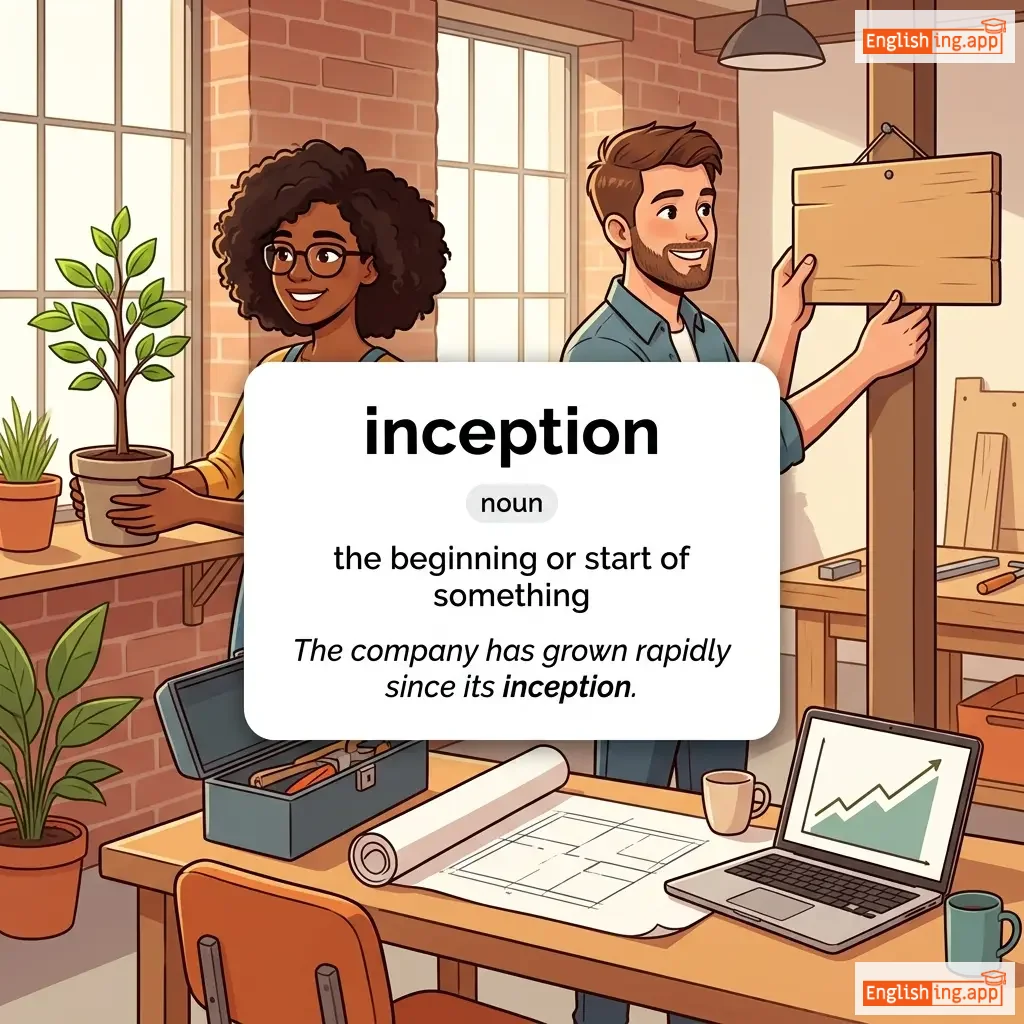
inception definition card — visual illustration of the meaning
noun
/ɪnˈsɛpʃən/
inicio (inicio)

the beginning or start of something

"The company has grown rapidly since its inception."

"La empresa ha crecido rápidamente desde su inicio." (La empresa ha crecido rápidamente desde su inicio.)
adjective
/ɪnˈsɛptɪv/
inicial (inicial)

Relating to or marking the beginning or initial stage of something.

"The inceptive phase of the project was marked by enthusiastic planning."

"La fase inicial del proyecto fue marcada por una planificación entusiasta." (La fase inicial del proyecto fue marcada por una planificación entusiasta.)
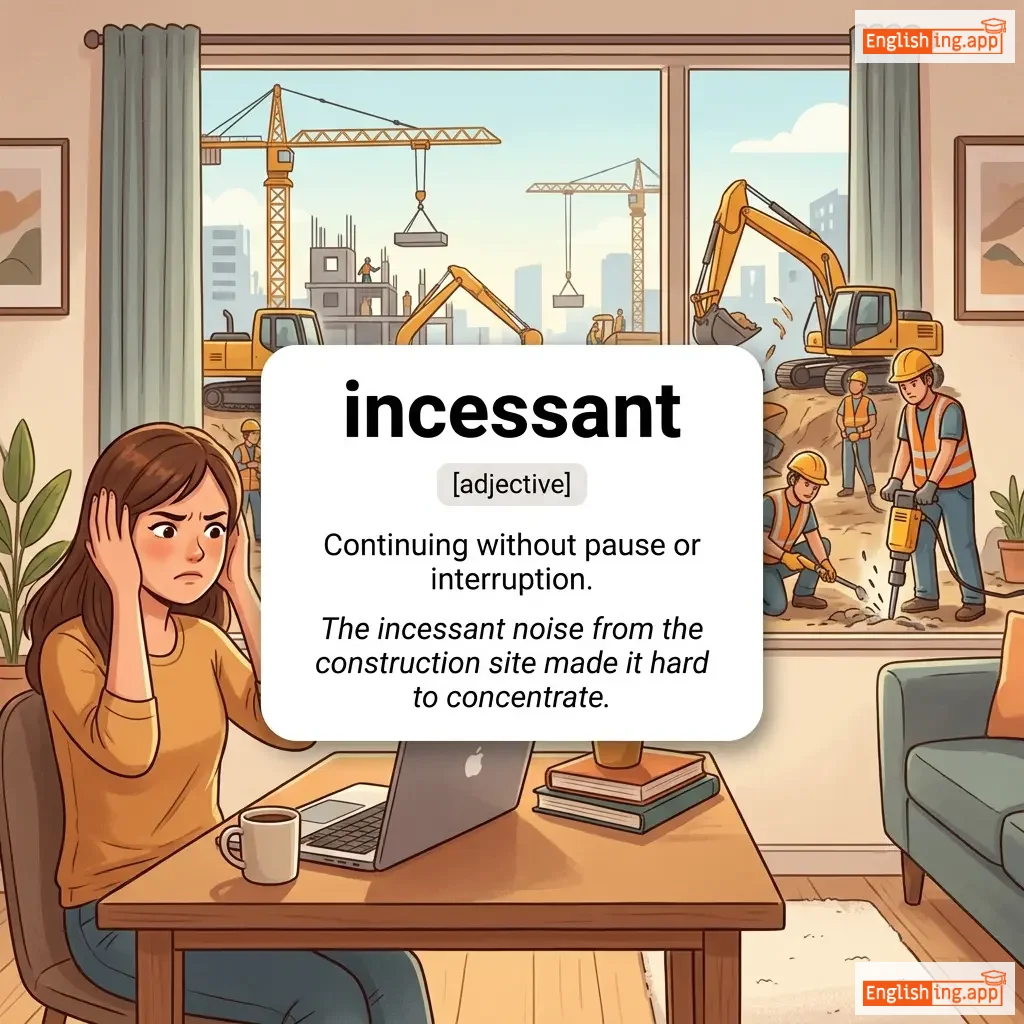
incessant definition card — visual illustration of the meaning
adjective
/ɪnˈsɛsənt/
incesante (incesante)

Continuing without pause or interruption.

"The incessant noise from the construction site made it hard to concentrate."

"El ruido incesante del sitio de construcción hizo difícil concentrarse." (El ruido incesante del sitio de construccion hizo dificil concentrarse.)
noun, verb
/ɪntʃ/
pulgada / moverse lentamente (pulgada / moverse lentamente)

A unit of length equal to 2.54 centimeters; or to move slowly and carefully in small amounts.

"She inched closer to the edge of the stage."

"Ella se acercó lentamente al borde del escenario." (Ella se acerco lentamente al borde del escenario.)
adverb
/ˈɪntʃmiːl/
poco a poco (poco a poco)

Gradually, little by little.

"The old castle fell inchmeal into ruin."

"El viejo castillo cayó poco a poco en ruinas." (El viejo castillo cayó poco a poco en ruinas.)
inchoate definition card — visual illustration of the meaning
adjective
/ɪnˈkoʊ.ɪt/ or /ɪnˈkoʊ.eɪt/
incompleto (incompleto)

Just begun and not fully formed; rudimentary.

"His inchoate ideas needed more research to be developed."

"Sus ideas incompletas necesitaban más investigación para ser desarrolladas." (Sus ideas incompletas necesitaban más investigación para ser desarrolladas.)
adjective
/ɪnˈkoʊətɪv/
incipiente (incipiente)

relating to the beginning of something; in an initial stage

"The poet used inchoative expressions to depict the dawn of creation."

"El poeta utilizó expresiones incipientes para describir el amanecer de la creación." (El poeta utilizó expresiones incipientes para describir el amanecer de la creación.)
noun
/ˈɪnsɪdəns/
incidencia (incidencia)

the occurrence, rate, or frequency of something

"The incidence of road accidents has decreased this year."

"La incidencia de accidentes de tráfico ha disminuido este año." (La incidencia de accidentes de tráfico ha disminuido este año.)
noun
/ˈɪnsɪdənt/
incidente (incidente)

an event or occurrence, often unpleasant or unusual

"The police quickly responded to the incident in the park."

"La policía respondió rápidamente al incidente en el parque." (La policía respondió rápidamente al incidente en el parque.)
adjective
/ˌɪnsɪˈdɛntəl/
incidental (incidental)

happening as a minor part or in connection with something else

"Incidental expenses like snacks and tips were included in the bill."

"Gastos incidentales como bocadillos y propinas fueron incluidos en la factura." (Gastos incidentales como bocadillos y propinas fueron incluidos en la factura.)
adverb
/ˌɪnsɪˈdɛntəli/
por cierto (por cierto)

by the way; used to introduce a remark not directly related to the main subject

"Incidentally, did you know that she studied in Paris?"

"Por cierto, ¿sabías que estudió en París?" (Por cierto, ¿sabías que estudió en París?)
verb
/ɪnˈsɪnəˌreɪt/
incinerar (incinerar)

to burn something completely until it is reduced to ashes

"The city decided to incinerate the medical waste for safety."

"La ciudad decidió incinerar los desechos médicos por seguridad." (La ciudad decidió incinerar los desechos médicos por seguridad.)
noun
/ɪnˈsɪpiəns/
inicio (inicio)

the beginning or initial stage of something

"The project was still in its incipience when funding was approved."

"El proyecto aún estaba en su inicio cuando se aprobó la financiación." (El proyecto aun estaba en su inicio cuando se aprobó la financiación.)
adjective
/ɪnˈsɪpiənt/
incipiente (incipiente)

in an initial stage; beginning to develop

"The incipient storm made the sky turn dark and heavy."

"La tormenta incipiente hizo que el cielo se volviera oscuro y pesado." (La tormenta incipiente hizo que el cielo se volviera oscuro y pesado.)
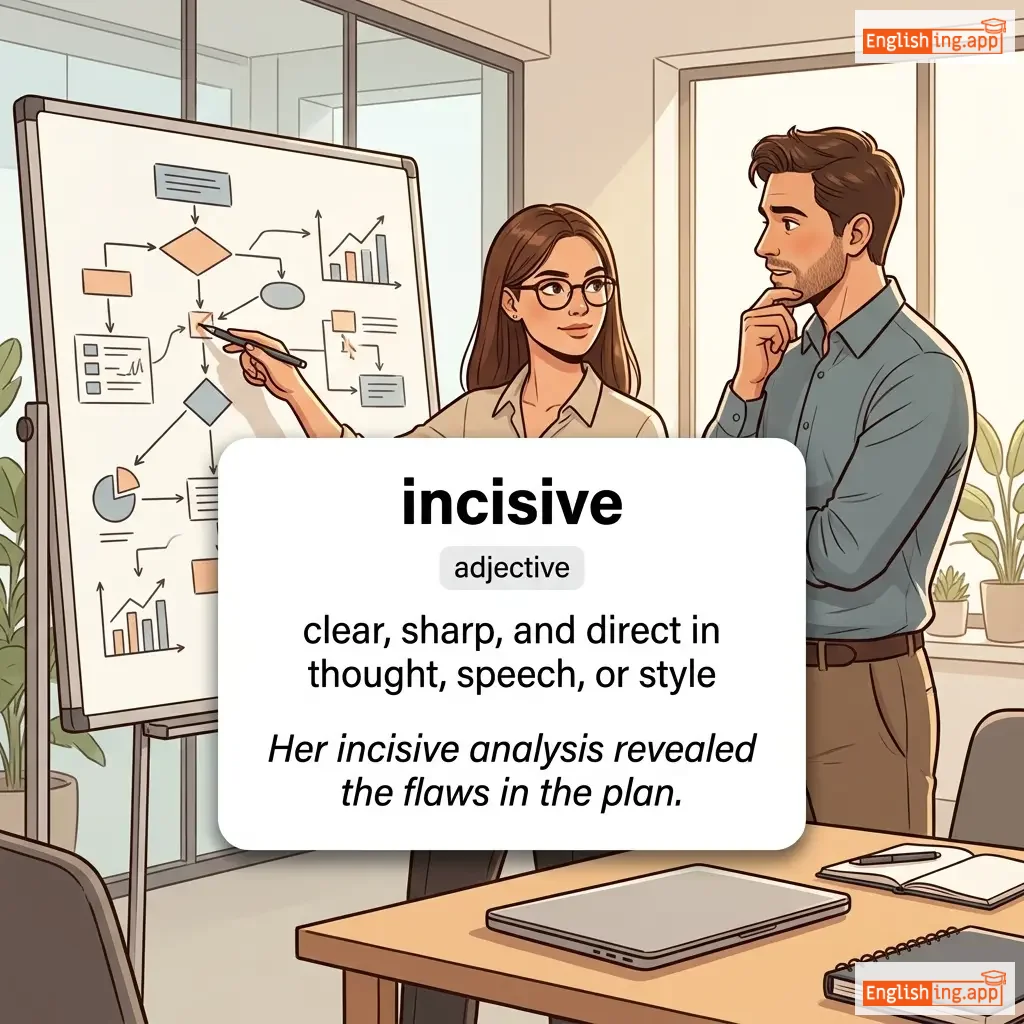
incisive definition card — visual illustration of the meaning
adjective
/ɪnˈsaɪsɪv/
agudo (agudo)

clear, sharp, and direct in thought, speech, or style

"Her incisive analysis revealed the flaws in the plan."

"Su análisis agudo reveló los defectos del plan." (Su análisis agudo reveló los defectos del plan.)
noun
/ɪnˈsaɪzər/
incisivo (insisivo)

a narrow-edged tooth at the front of the mouth, adapted for cutting

"The dentist noted that his upper left incisor was chipped."

"El dentista notó que su incisivo superior izquierdo estaba astillado." (El dentista noto que su incisivo superior izquierdo estaba astillado.)
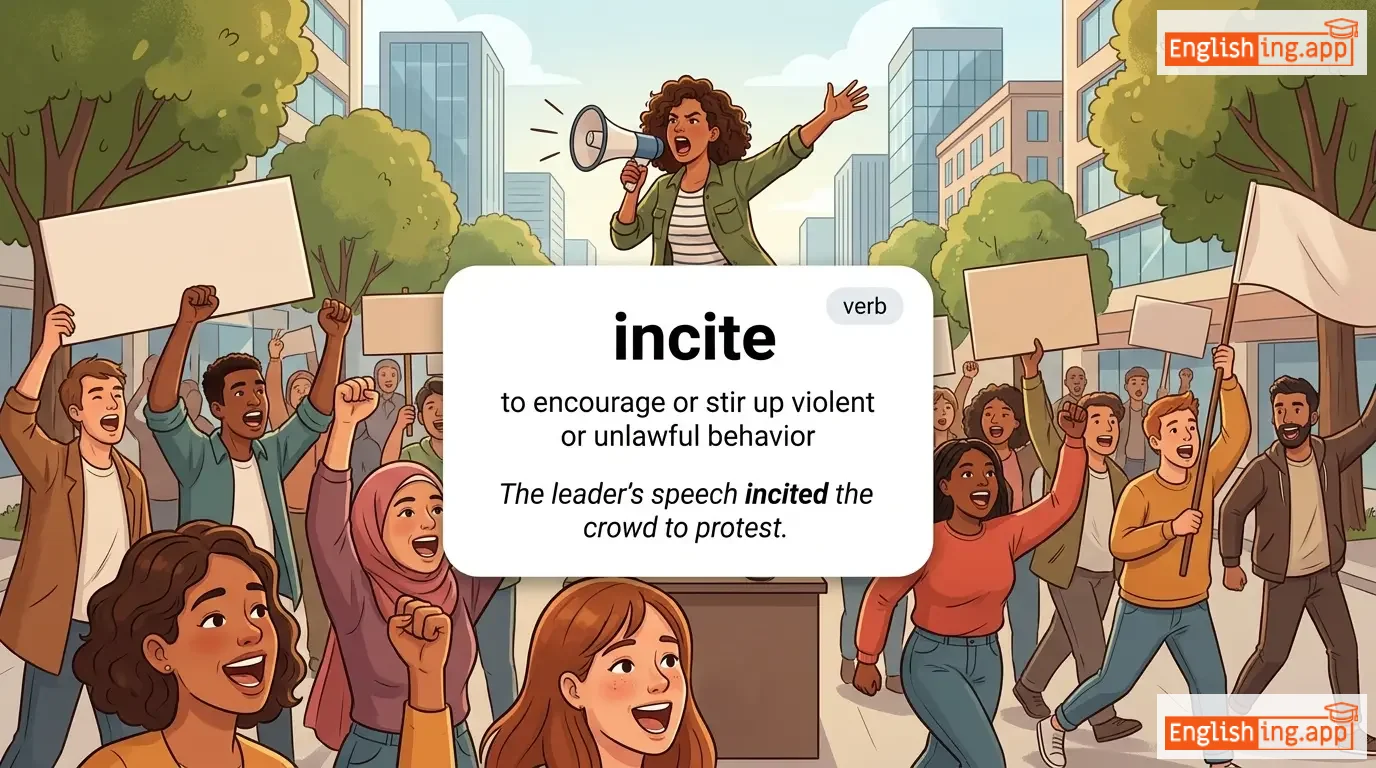
incite definition card — visual illustration of the meaning
verb
/ɪnˈsaɪt/
incitar (incitar)

to encourage or stir up violent or unlawful behavior

"The leader's speech incited the crowd to protest."

"El discurso del líder incitó a la multitud a protestar." (El discurso del líder incitó a la multitud a protestar.)
noun
/ɪnˈsaɪtmənt/
incitación (incitacion)

the action of provoking unlawful or violent behavior

"He was arrested for incitement to riot."

"Fue arrestado por incitación a la violencia." (Fue arrestado por incitacion a la violencia.)
adjective
/ɪnˈklɛmɛnt/
clima inclemente (clima inclemente)

unpleasantly cold, wet, or stormy (usually weather)

"The match was canceled due to inclement weather."

"El partido fue cancelado debido al clima inclemente." (El partido fue cancelado debido al clima inclemente.)
noun
/ˌɪnklɪˈneɪʃən/
inclinación (inclinacion)

A natural tendency or urge to act or feel in a particular way.

"She has an inclination towards helping others."

"Ella tiene una inclinación hacia ayudar a los demás." (Ella tiene una inclinación hacia ayudar a los demás.)
verb
/ɪnˈklaɪn/
inclinarse (incli-nar-se)

to feel willing or favorably disposed toward something; to bend or tilt

"She is inclined to agree with the proposal."

"Ella está inclinada a estar de acuerdo con la propuesta." (Ella esta inclinada a estar de acuerdo con la propuesta.)
adjective
/ɪnˈklaɪnd/
inclinada (inclinada)

having a tendency or disposition toward something

"He is inclined to help those in need."

"Él está inclinado a ayudar a los necesitados." (El esta inclinado a ayudar a los necesitados.)
include definition card — visual illustration of the meaning
verb
/ɪnˈkluːd/
incluir (incluir)

to make something part of a whole or group

"The package includes free breakfast."

"El paquete incluye desayuno gratuito." (El paquete incluye desayuno gratuito.)
preposition
/ɪnˈkluːdɪŋ/
incluido (incluido)

used to show that someone or something is part of a larger group

"Many people attended the event, including students and teachers."

"Muchas personas asistieron al evento, incluidos estudiantes y maestros." (Muchas personas asistieron al evento, incluidos estudiantes y maestros.)
noun
/ɪnˈkluːʒən/
inclusión (inclusion)

the action or state of including or being included within a group or structure

"Diversity and inclusion are key values in modern workplaces."

"La diversidad y la inclusión son valores clave en los lugares de trabajo modernos." (La diversidad y la inclusión son valores clave en los lugares de trabajo modernos.)
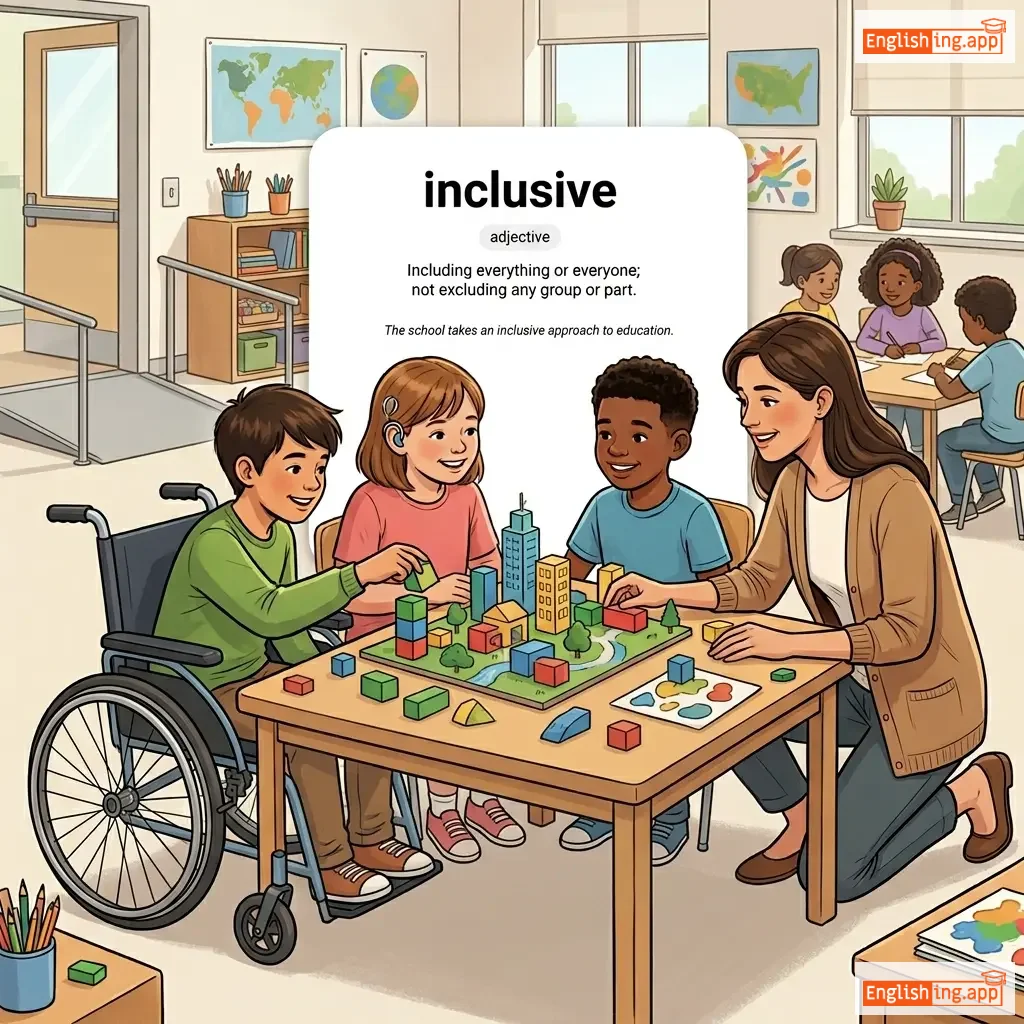
inclusive definition card — visual illustration of the meaning
adjective
/ɪnˈkluːsɪv/
inclusivo (inclusivo)

Including everything or everyone; not excluding any group or part.

"The school takes an inclusive approach to education."

"La escuela adopta un enfoque inclusivo para la educación." (La escuela adopta un enfoque inclusivo para la educación.)
adjective
/ˌɪnkoʊˈɜːrsəbl̩/
incoercible (incoercible)

Not capable of being forced, compelled, or restrained.

"Her incoercible spirit inspired others to fight for justice."

"Su espíritu incoercible inspiró a otros a luchar por la justicia." (Su espíritu incoercible inspiró a otros a luchar por la justicia.)
adjective
/ɪnˈkɑːdʒɪtənt/
desconsiderado (desconsiderado)

Lacking thought; inconsiderate or thoughtless.

"It was incogitant of him to make such a rude comment."

"Fue incogitante de su parte hacer un comentario tan grosero." (Fue incogitante de su parte hacer un comentario tan grosero.)
adverb, adjective
/ˌɪnkɑːɡˈniːtoʊ/
incógnito (incognito)

In disguise or with one's identity concealed.

"The celebrity traveled incognito to avoid the paparazzi."

"La celebridad viajó incognito para evitar a los paparazzi." (La celebridad viajó incognito para evitar a los paparazzi.)
noun
/ˌɪnkoʊˈhɪrəns/
incoherencia (incoherencia)

The quality of being unclear, confused, or lacking logical connection.

"His speech was full of incoherence and difficult to follow."

"Su discurso estaba lleno de incoherencias y era difícil de seguir." (Su discurso estaba lleno de incoherencias y era dificil de seguir.)
adjective
/ˌɪnkəʊˈhɪərənt/
incoherente (incoherente)

Not clear or easy to understand; lacking logical connection.

"His explanation was so incoherent that nobody could follow it."

"Su explicación era tan incoherente que nadie pudo seguirla." (Su explicacion era tan incoherente que nadie pudo seguirla.)
adjective
/ˌɪnkəmˈbʌstəbl/
incombustible (incombustible)

Not capable of catching fire or burning.

"This material is incombustible and safe for construction."

"Este material es incombustible y seguro para la construcción." (Este material es incombustible y seguro para la construcción.)
noun
/ˈɪnkʌm/
ingreso (ingreso)

money received for work or through investments

"His monthly income is enough to support his family."

"Su ingreso mensual es suficiente para mantener a su familia." (Su ingreso mensual es suficiente para mantener a su familia.)
adjective
/ˌɪnkəˈməʊdiəs/
incómodo (incomodo)

Uncomfortably small, cramped, or inconvenient.

"We had to stay in an incommodious room during the trip."

"Tuvimos que quedarnos en una habitación incómoda durante el viaje." (Tuvimos que quedarnos en una habitacion incomoda durante el viaje.)