Vocabularios

Descubra, aprenda y domine el vocabulario en inglés

verb
/ɪmˈplaɪ/
implicar (implicar)

To suggest something without directly stating it.

"Her tone seemed to imply that she was upset."

"Su tono parecía implicar que estaba molesta." (Su tono parecía implicar que estaba molesta.)
adjective
/ˌɪmpəˈlaɪt/
grosero (grosero)

Not showing good manners; rude.

"It is impolite to interrupt someone while they are speaking."

"Es grosero interrumpir a alguien mientras está hablando." (Es grosero interrumpir a alguien mientras está hablando.)
adverb
/ɪmˈpɒlɪtli/
de manera grosera (de manera grosera)

in a rude or discourteous manner; without showing respect or proper manners

"He spoke impolitely to the waiter despite the polite service."

"Habló de manera grosera con el camarero a pesar del buen servicio." (Hablo de manera grosera con el camarero a pesar del buen servicio)
noun
/ɪmˈpɒlɪtnəs/
descortesía (descortesia)

lack of good manners or courtesy; rude behavior

"His impoliteness towards the guests shocked everyone."

"Su descortesía hacia los invitados sorprendió a todos." (su descortesia hacia los invitados sorprendio a todos)
adjective
/ɪmˈpɑːlɪtɪk/
imprudente (imprudente)

Unwise or imprudent; not showing good judgment.

"It would be impolitic to criticize them openly."

"Sería imprudente criticarlos abiertamente." (Sería imprudente criticarlos abiertamente.)
adjective
/ɪmˈpɒndərəbl̩/
imponderable (imponderable)

Something difficult or impossible to estimate, assess, or understand

"The outcome of the election depends on many imponderable factors."

"El resultado de las elecciones depende de muchos factores imponderables." (El resultado de las elecciones depende de muchos factores imponderables.)
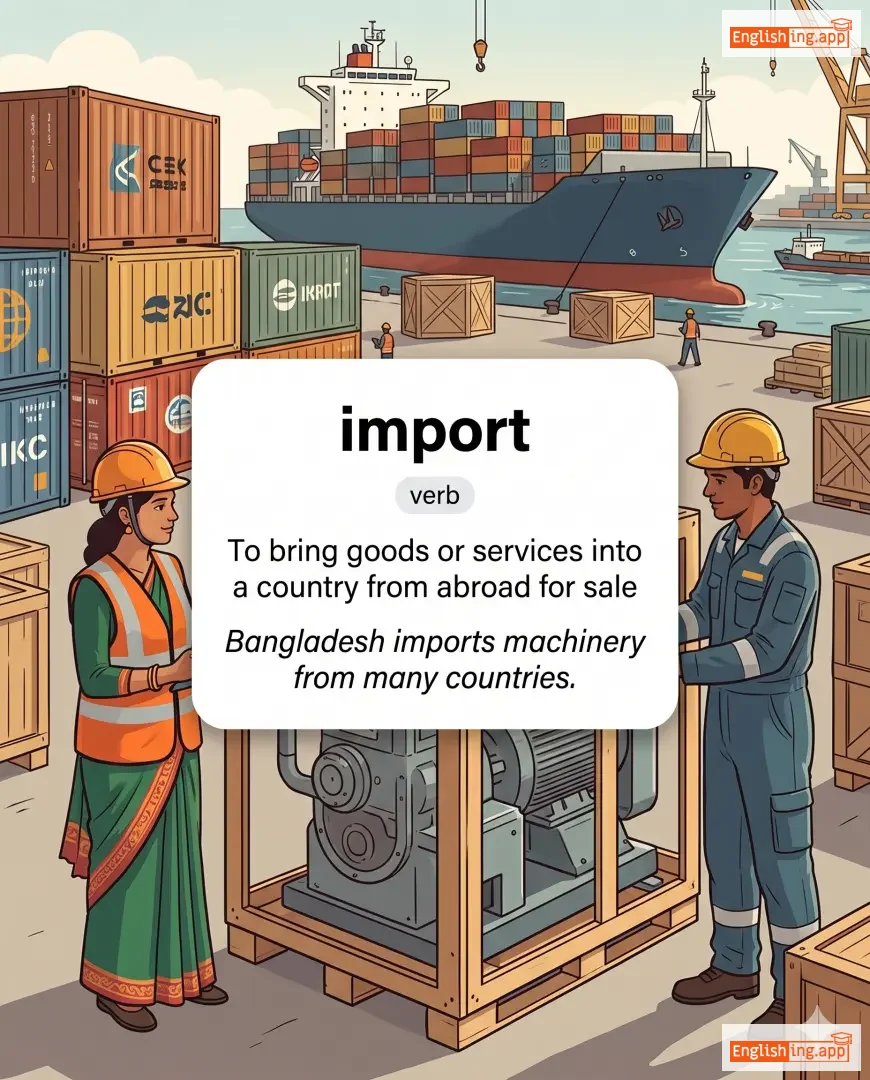
import definition card — visual illustration of the meaning
verb
/ˈɪmpɔːrt/
importar (importar)

To bring goods or services into a country from abroad for sale

"Bangladesh imports machinery from many countries."

"Bangladesh importa maquinaria de muchos países." (Bangladesh importa maquinaria de muchos paises.)
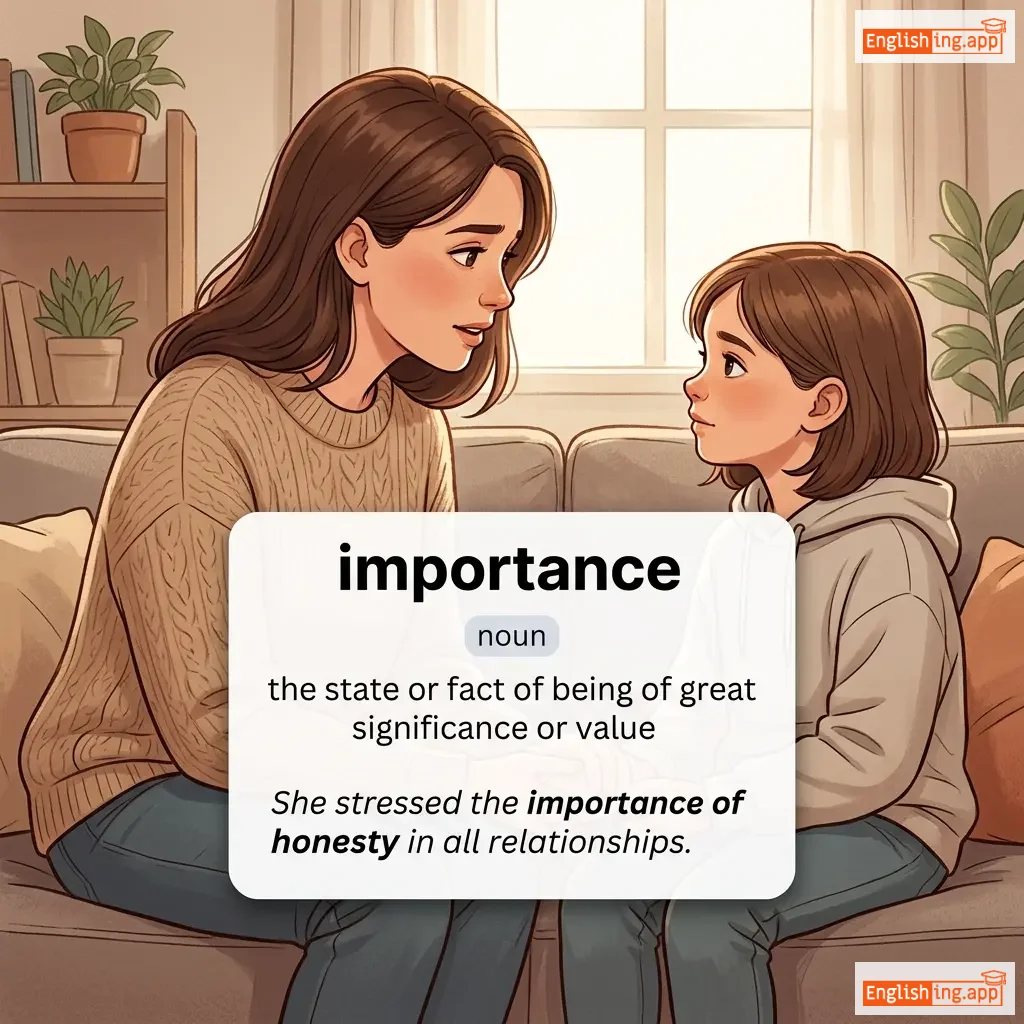
importance definition card — visual illustration of the meaning
noun
/ɪmˈpɔːrtəns/
importancia (importancia)

the state or fact of being of great significance or value

"She stressed the importance of honesty in all relationships."

"Ella enfatizó la importancia de la honestidad en todas las relaciones." (Ella enfatizó la importancia de la honestidad en todas las relaciones.)
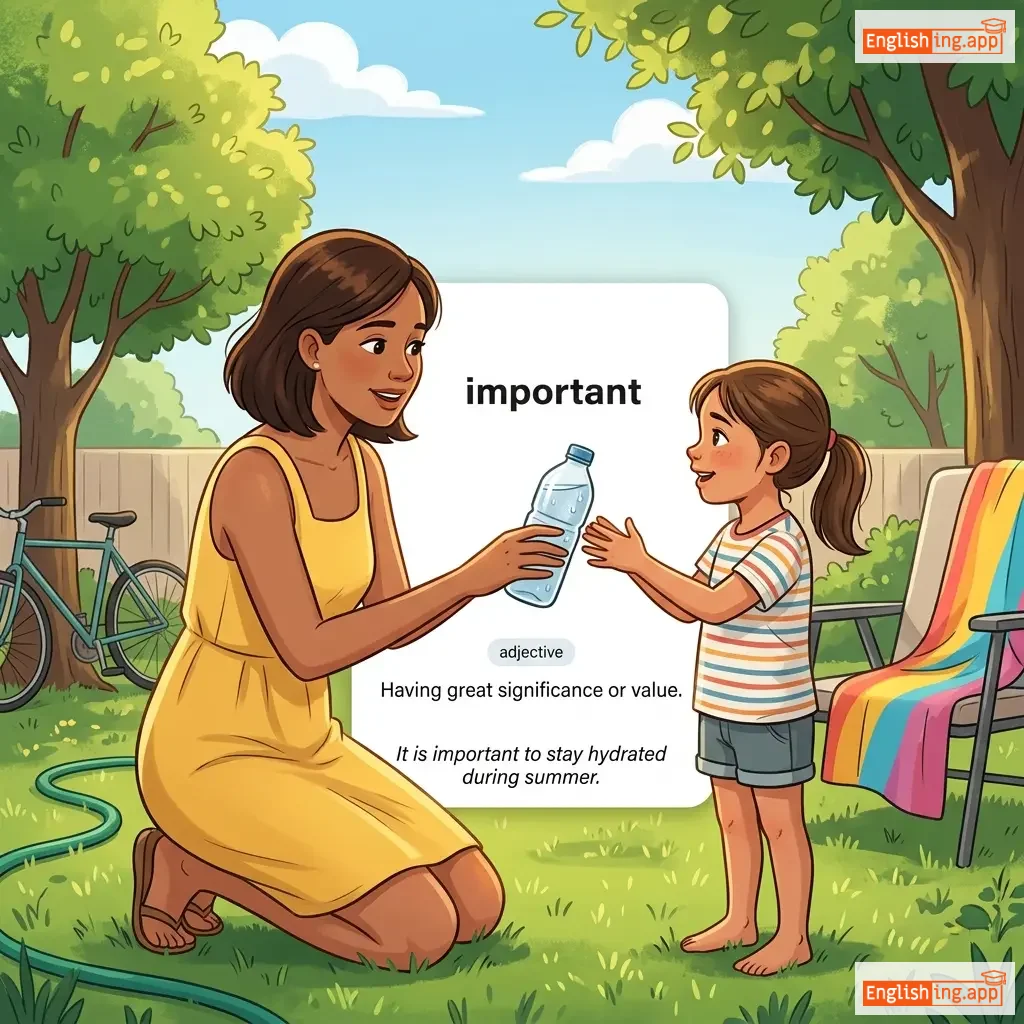
important definition card — visual illustration of the meaning
adjective
/ɪmˈpɔːrtənt/
importante (importante)

Having great significance or value.

"It is important to stay hydrated during summer."

"Es importante mantenerse hidratado durante el verano." (Es importante mantenerse hidratado durante el verano.)
adverb
/ɪmˈpɔːtəntli/
de manera importante (de manera importante)

in a way that is of great significance or value

"Importantly, the report highlights the need for immediate action."

"De manera importante, el informe resalta la necesidad de acción inmediata." (De manera importante, el informe resalta la necesidad de acción inmediata.)
noun
/ˌɪmpɔːrˈteɪʃən/
importación (importacion)

The act of bringing goods or services into a country from abroad

"The importation of luxury goods is strictly regulated."

"La importación de productos de lujo está estrictamente regulada." (La importacion de productos de lujo esta estrictamente regulada.)
adjective
/ɪmˈpɔːrtʃənət/
importuno (importuno)

Persistent to the point of annoyance or intrusion

"The importunate salesman kept calling despite repeated refusals."

"El vendedor importuno siguió llamando a pesar de las repetidas negativas." (El vendedor importuno siguió llamando a pesar de las repetidas negativas.)
verb
/ˌɪmpɔːrˈtuːn/
pedir insistentemente (pedir insistentemente)

To ask someone persistently or pressingly for something

"The child importuned his mother for a new toy."

"El niño importunó a su madre para que le comprara un juguete nuevo." (El niño importunó a su madre para que le comprara un juguete nuevo.)
verb
/ˌɪmpɔːrˈtuːnd/
insistir persistentemente (insistir persistentemente)

asked someone persistently and pressingly for something

"She importuned her boss for a raise until he finally gave in."

"Ella insistió persistentemente a su jefe por un aumento hasta que finalmente accedió." (Ella insistió persistentemente a su jefe por un aumento hasta que finalmente accedió.)
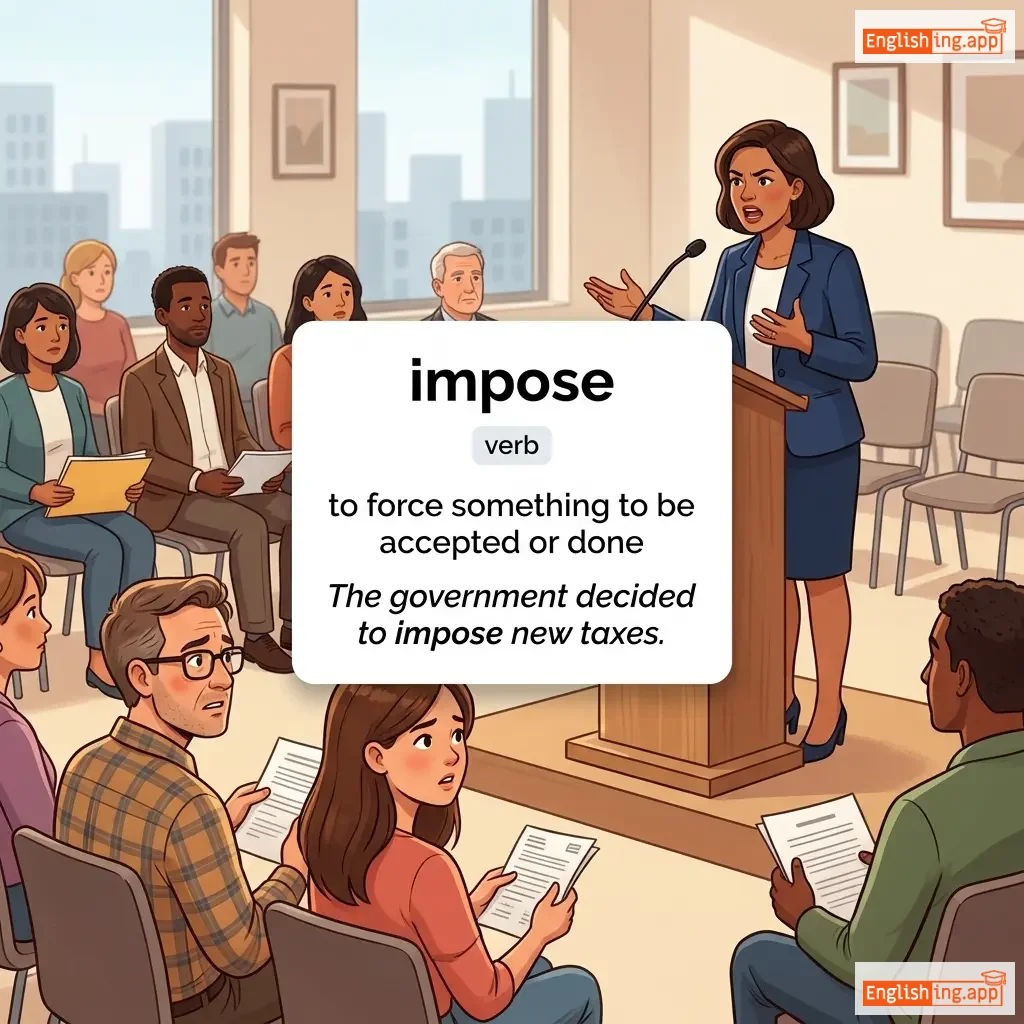
impose definition card — visual illustration of the meaning
verb
/ɪmˈpoʊz/
imponer (imponer)

to force something to be accepted or done

"The government decided to impose new taxes."

"El gobierno decidió imponer nuevos impuestos." (El gobierno decidió imponer nuevos impuestos.)
verb
/ɪmˈpoʊzd/
impuesto (impuesto)

forced something to be accepted or put in place

"The government imposed new regulations on the industry."

"El gobierno impuso nuevas regulaciones sobre la industria." (El gobierno impuso nuevas regulaciones sobre la industria.)
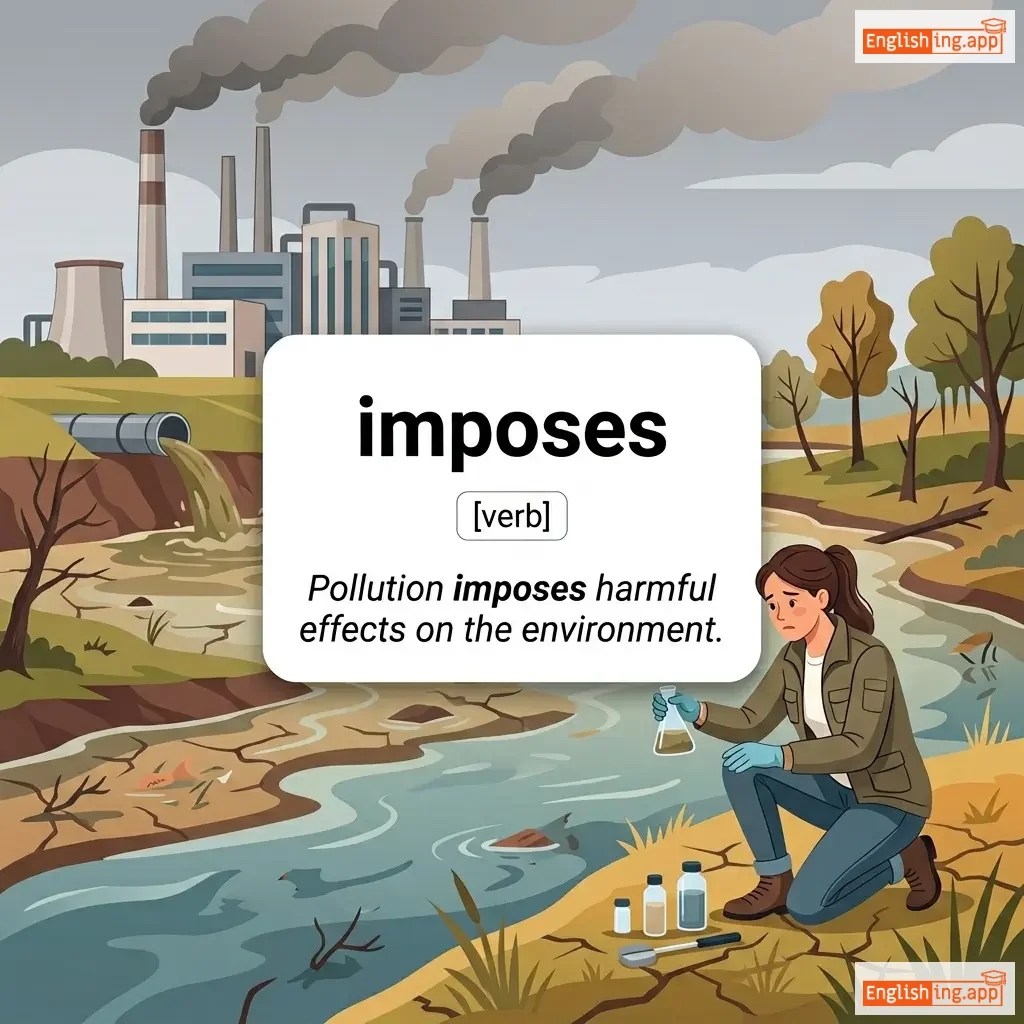
imposes definition card — visual illustration of the meaning
verb
ɪmˈpoʊz
imponer (imponer)

To establish or apply by authority; to force something unwelcome or unfamiliar to be accepted or put in place.

"Pollution imposes harmful effects on the environment."

"La contaminación impone efectos perjudiciales en el medio ambiente." (La contaminacion impone efectos perjudiciales en el medio ambiente.)
adjective
/ɪmˈpoʊzɪŋ/
imponente (imponente)

having an appearance that is grand, impressive, or commanding

"The castle is an imposing structure overlooking the valley."

"El castillo es una estructura imponente que domina el valle." (El castillo es una estructura imponente que domina el valle.)
noun
/ˌɪmpəˈzɪʃən/
imposición (imposicion)

the act of forcing something on someone; an unwelcome demand or burden

"The new tax was seen as an unfair imposition on the poor."

"El nuevo impuesto fue visto como una imposición injusta sobre los pobres." (El nuevo impuesto fue visto como una imposición injusta sobre los pobres.)
noun
/ɪmˌpɒsəˈbɪlɪti/
imposibilidad (imposibilidad)

the state or fact of being impossible; something that cannot be done or achieved

"Finishing the project in one day was an impossibility."

"Terminar el proyecto en un día fue una imposibilidad." (terminar el proyecto en un dia fue una imposibilidad)
adjective
/ɪmˈpɑːsəbl/
imposible (imposible)

not able to occur, exist, or be done

"It is impossible to finish this work in one day."

"Es imposible terminar este trabajo en un día." (Es imposible terminar este trabajo en un día.)
noun
/ɪmˈpɑːstər/
impostor, fraude (impostor, fraude)

a person who pretends to be someone else in order to deceive others

"The man turned out to be an impostor posing as a doctor."

"El hombre resultó ser un impostor que se hacía pasar por doctor." (El hombre resultó ser un impostor que se hacía pasar por doctor.)
noun
/ɪmˈpɒstʃər/
falsificación (falsificacion)

The act of pretending to be someone else in order to deceive others; deception or fraud.

"The imposture was discovered when the man failed to answer basic questions about his supposed identity."

"La falsificación fue descubierta cuando el hombre no pudo responder a preguntas básicas sobre su supuesta identidad." (La falsificacion fue descubierta cuando el hombre no pudo responder a preguntas basicas sobre su supuesta identidad.)
adjective
/ˈɪmpətənt/
impotente (impotente)

Lacking power, ability, or strength to take effective action.

"The citizens felt impotent against the corrupt system."

"Los ciudadanos se sintieron impotentes contra el sistema corrupto." (Los ciudadanos se sintieron impotentes contra el sistema corrupto.)
verb
/ɪmˈpɒvərɪʃ/
empobrecer (empobrecer)

To make someone poor or reduce the quality or richness of something.

"The long war impoverished the entire nation."

"La larga guerra empobreció a toda la nación." (La larga guerra empobreció a toda la nación.)
adjective
/ɪmˈpræktɪkəbl/
impracticable (impracticable)

Not capable of being carried out or put into practice.

"The plan seemed impracticable due to limited resources."

"El plan parecía impracticable debido a los recursos limitados." (El plan parecía impracticable debido a los recursos limitados.)
verb
/ˈɪmprɪkeɪt/
imprecate (imprecate)

To utter a curse or invoke evil upon someone.

"The old woman imprecated her enemies with dark words."

"La vieja mujer imprecó a sus enemigos con palabras oscuras." (La vieja mujer imprecó a sus enemigos con palabras oscuras.)
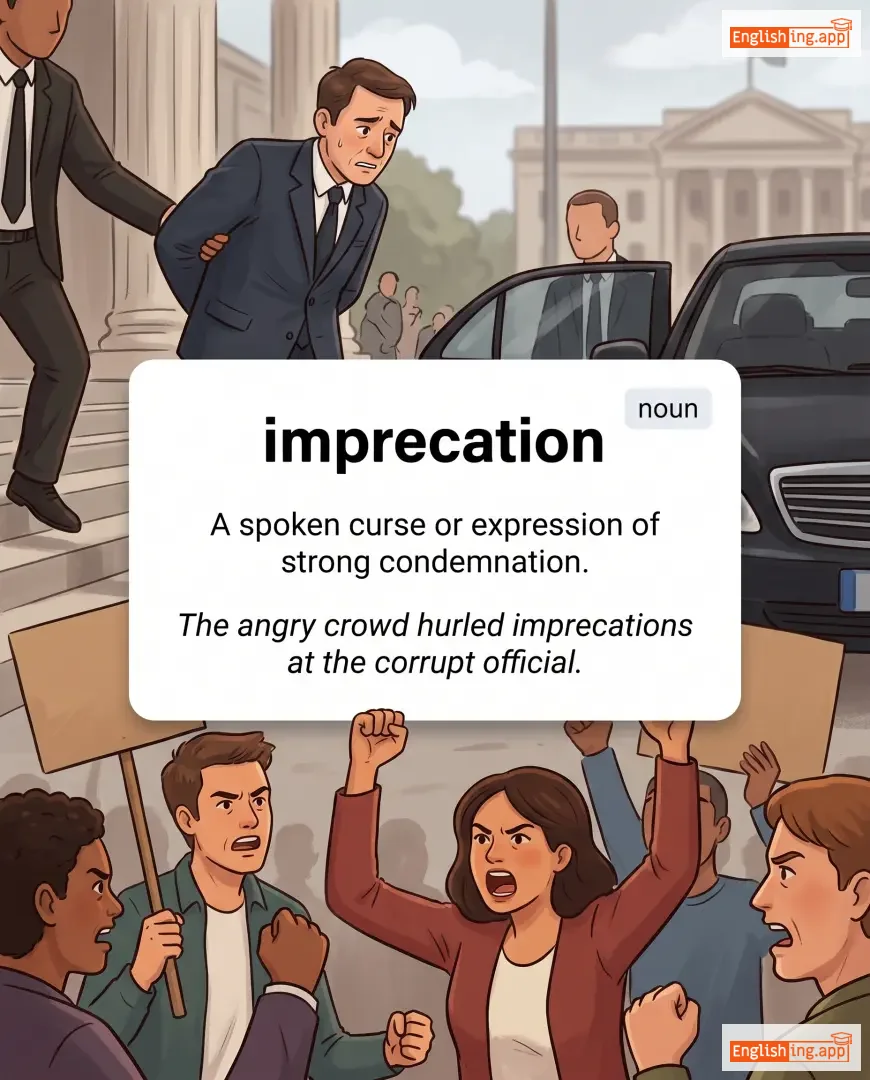
imprecation definition card — visual illustration of the meaning
noun
/ˌɪmprɪˈkeɪʃən/
maldición (maldicion)

A spoken curse or expression of strong condemnation.

"The angry crowd hurled imprecations at the corrupt official."

"La multitud enojada lanzó maldiciones al funcionario corrupto." (La multitud enojada lanzo maldiciones al funcionario corrupto.)
adjective
/ˌɪmprɪˈsaɪs/
impreciso (impreciso)

Not exact or accurate; vague.

"His explanation was too imprecise to be helpful."

"Su explicación era demasiado imprecisa para ser útil." (Su explicacion era demasiado imprecisa para ser util.)
adjective
/ɪmˈprɛɡnəbl̩/
impenetrable (impenetrable)

Unable to be captured, broken into, or defeated.

"The fortress was considered impregnable by the enemy."

"La fortaleza fue considerada impenetrable por el enemigo." (La fortaleza fue considerada impenetrable por el enemigo.)
verb
/ˈɪmprɛɡneɪt/
embarazar / impregnar (embarazar / impregnar)

To make pregnant; to fill or saturate with something.

"The scientist used a method to impregnate the material with resin."

"El científico utilizó un método para impregnar el material con resina." (El científico utilizó un método para impregnar el material con resina.)
noun
/ˌɪmprəˈsɑːrioʊ/
productor (productor)

A person who organizes or finances concerts, plays, or operas.

"The impresario arranged a series of concerts for the rising star."

"El impresario organizó una serie de conciertos para la estrella emergente." (El impresario organizó una serie de conciertos para la estrella emergente.)
verb
/ɪmˈprɛs/
impresionar (impresionar)

to cause someone to feel admiration or respect

"Her speech managed to impress the audience."

"Su discurso logró impresionar a la audiencia." (Su discurso logró impresionar a la audiencia.)
noun
/ɪmˈprɛʃən/
impresión, concepto (impresion, concepto)

an idea, feeling, or opinion about something or someone

"The book gave me a good first impression."

"El libro me dio una buena primera impresión." (El libro me dio una buena primera impresion.)
adjective
/ɪmˈprɛsɪv/
impresionante, digno de admiración (impresionante, digno de admiracion)

causing admiration or respect; remarkable

"The building is an impressive example of modern architecture."

"El edificio es un ejemplo impresionante de arquitectura moderna." (El edificio es un ejemplo impresionante de arquitectura moderna.)
noun
/ˌɪmprɪˈmɑːtər/
imprimátur (imprimatur)

An official license or approval, especially to publish a book.

"The book was released with the official imprimatur of the church."

"El libro fue lanzado con el imprimátur oficial de la iglesia." (El libro fue lanzado con el imprimatur oficial de la iglesia.)
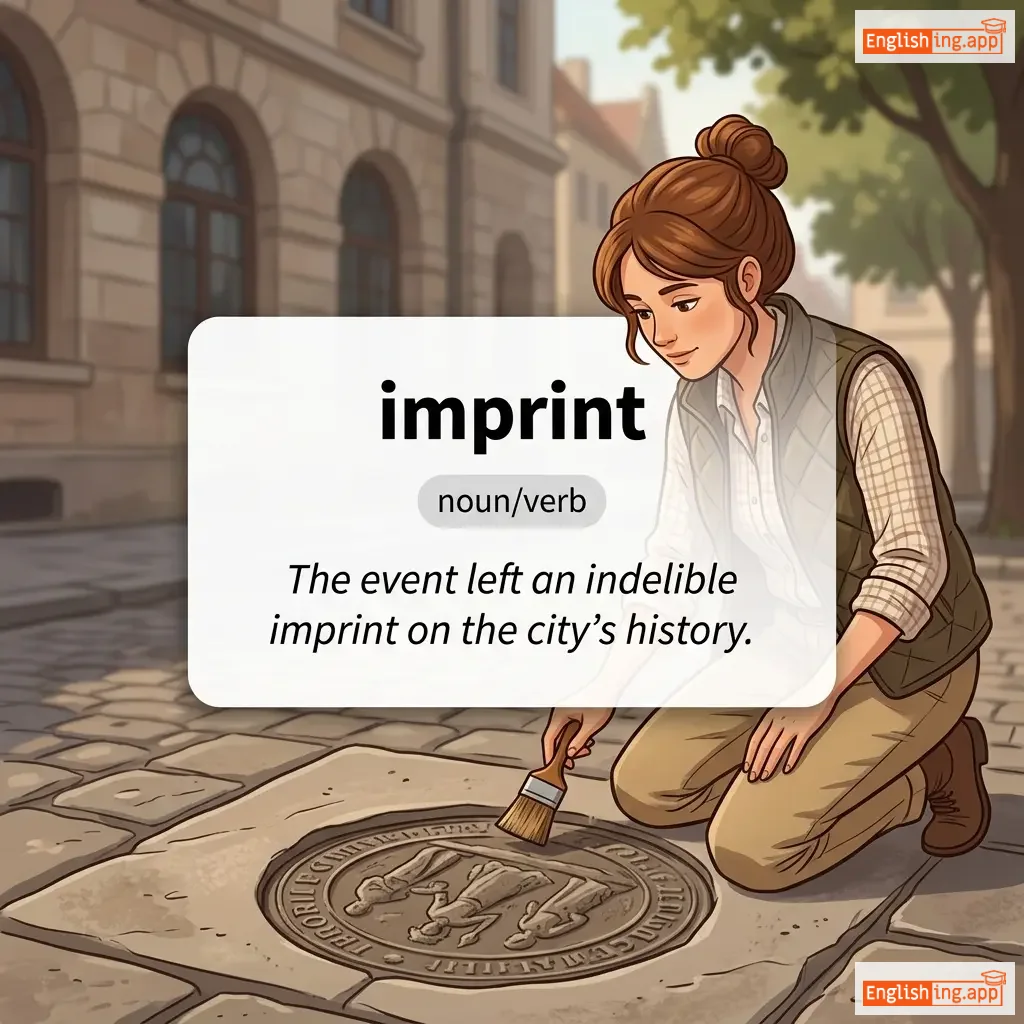
imprint definition card — visual illustration of the meaning
noun/verb
/ˈɪmprɪnt/
huella (imprint)

A mark or impression made by pressure; to establish or fix firmly in someone's mind.

"The event left an indelible imprint on the city's history."

"El evento dejó una huella indeleble en la historia de la ciudad." (El evento dejo una huella indeleble en la historia de la ciudad.)
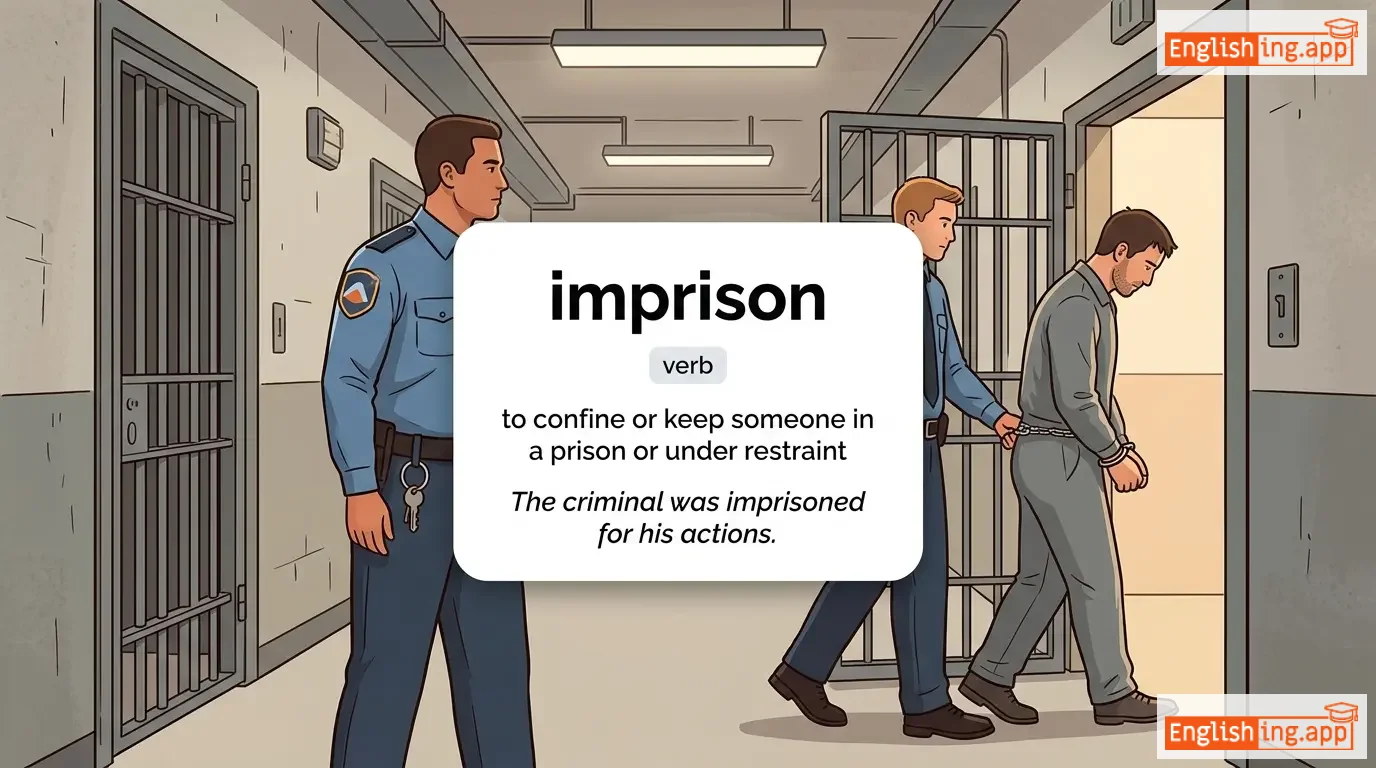
imprison definition card — visual illustration of the meaning
verb
/ɪmˈprɪzən/
encarcelar (encarcelar)

to confine or keep someone in a prison or under restraint

"The criminal was imprisoned for his actions."

"El criminal fue encarcelado por sus acciones." (El criminal fue encarcelado por sus acciones.)
noun
/ɪmˈprɪzənmənt/
encarcelamiento (encarcelamiento)

the act of putting someone in prison; the state of being confined as punishment

"He faced imprisonment for violating the court order."

"Se enfrentó al encarcelamiento por violar la orden judicial." (Se enfrento al encarcelamiento por violar la orden judicial)
noun
/ɪmˌprɒb.əˈbɪl.ə.ti/
improbabilidad (improbabilidad)

the quality or state of being improbable; unlikely to be true or to happen

"The improbability of winning the lottery twice didn't stop her from buying tickets."

"La improbabilidad de ganar la lotería dos veces no la detuvo de comprar boletos." (La improbabilidad de ganar la lotería dos veces no la detuvo de comprar boletos.)
adjective
/ɪmˈprɒbəbl/
improbable (improbable)

Not likely to be true or to happen.

"It seems improbable that he will arrive on time."

"Parece improbable que llegue a tiempo." (Parece improbable que llegue a tiempo.)
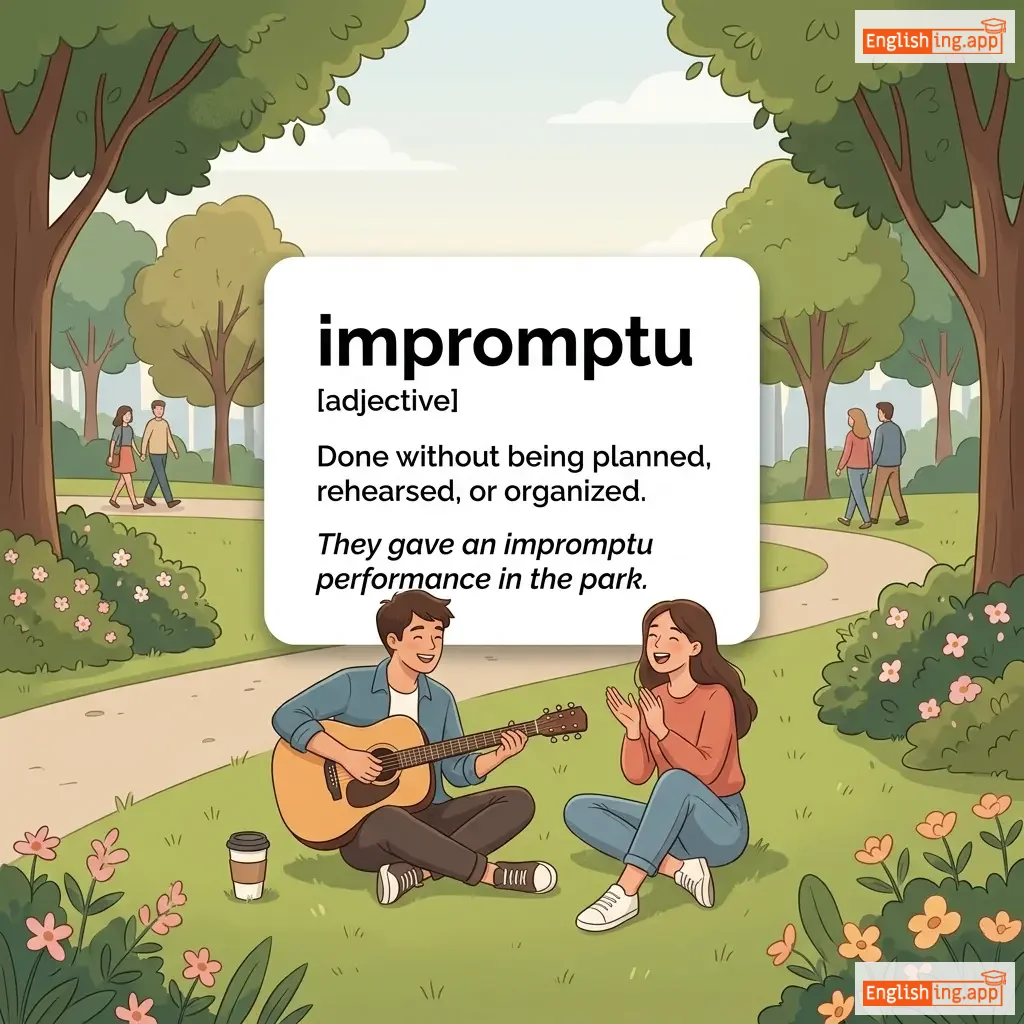
impromptu definition card — visual illustration of the meaning
adjective
/ɪmˈprɒmptjuː/
improvisado (improvisado)

Done without being planned, rehearsed, or organized.

"They gave an impromptu performance in the park."

"Ellos dieron una actuación improvisada en el parque." (Ellos dieron una actuacion improvisada en el parque.)
adjective
/ɪmˈprɒpər/
impropio (impropio)

Not suitable or appropriate; against accepted standards.

"It is improper to talk loudly in the library."

"Es impropio hablar en voz alta en la biblioteca." (Es impropio hablar en voz alta en la biblioteca.)
noun
/ˌɪmprəˈpraɪəti/
improiedad (improiedad)

Failure to observe standards of honesty or modesty; improper behavior.

"The politician was accused of financial impropriety."

"El político fue acusado de impropiedad financiera." (El politico fue acusado de impropiedad financiera.)
verb
/ɪmˈpruːv/
mejorar (mejorar)

to make something better or become better

"Regular practice will improve your skills."

"la práctica regular mejorará tus habilidades." (la práctica regular mejorará tus habilidades.)
adjective
/ɪmˈpruːvd/
mejorado (mejorado)

made better or enhanced in quality or condition

"Her health has significantly improved since last month."

"Su salud ha mejorado significativamente desde el mes pasado." (Su salud ha mejorado significativamente desde el mes pasado.)
noun
/ɪmˈpruːvmənt/
mejora (mejora)

the act of making something better

"There has been a significant improvement in his health."

"Ha habido una mejora significativa en su salud." (Ha habido una mejora significativa en su salud.)
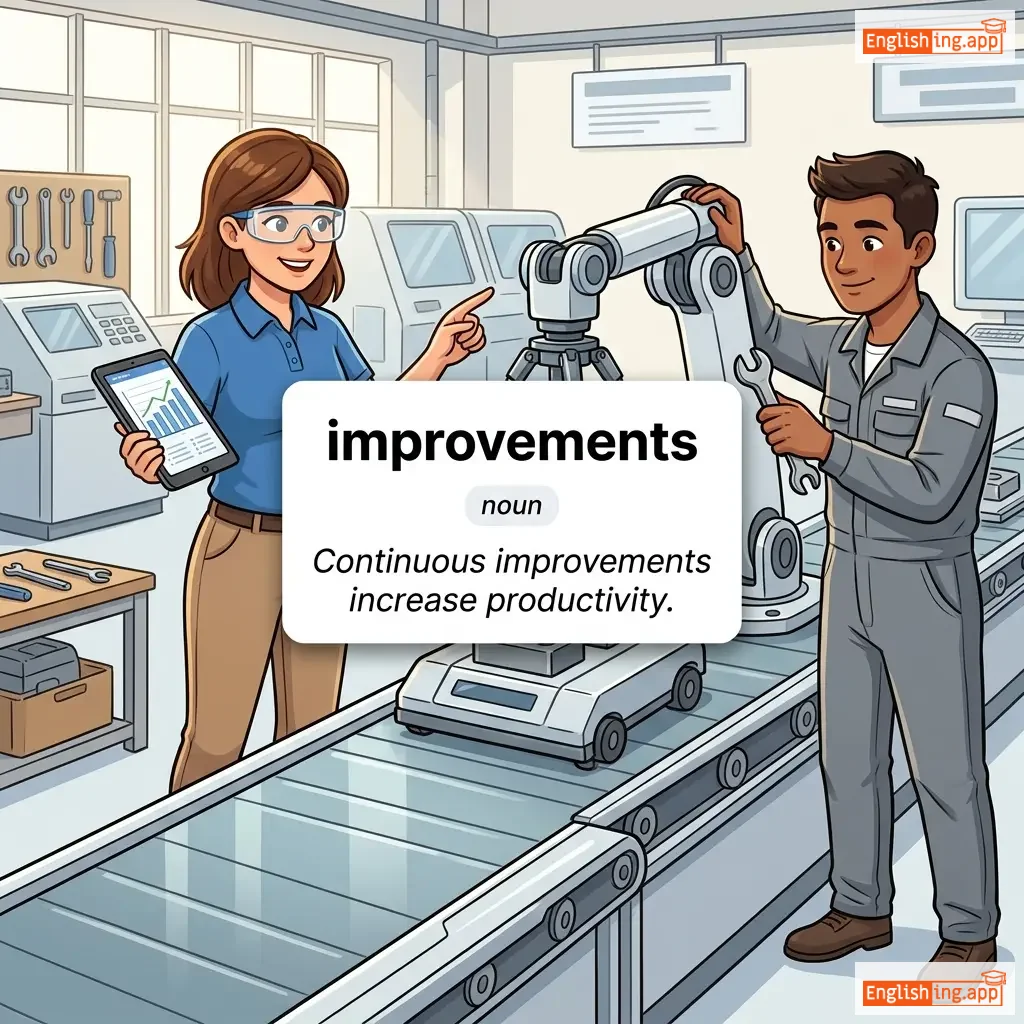
improvements definition card — visual illustration of the meaning
noun
ɪmˈpruːv.mənts
mejoras (mejoras)

The action of making or becoming better; an instance of something becoming or being made better.

"Continuous improvements increase productivity."

"Las mejoras continuas aumentan la productividad." (Las mejoras continuas aumentan la productividad.)
noun
/ɪmˈprɑːvɪdəns/
imprudencia (imprudencia)

Lack of foresight or care for future needs.

"His improvidence led to financial difficulties."

"Su imprudencia lo llevó a dificultades financieras." (Su imprudencia lo llevó a dificultades financieras.)
adjective
/ɪmˈprɒvɪdənt/
imprudente (imprudente)

Not having or showing foresight; spending wastefully or without thought for the future.

"His improvident habits left him with no savings."

"Sus hábitos imprudentes lo dejaron sin ahorros." (Sus hábitos imprudentes lo dejaron sin ahorros.)