Vocabularios

Descubra, aprenda y domine el vocabulario en inglés

adjective
/ˌɪməˈtɪəriəl/
inmaterial (inmaterial)

Not important or relevant; lacking physical substance.

"The judge ruled that the argument was immaterial to the case."

"El juez falló que el argumento no era relevante para el caso." (El juez fallo que el argumento no era relevante para el caso.)
adjective
/ˌɪməˈtjʊər/
inmaduro (inmaduro)

Not fully developed; childish or lacking maturity.

"His immature behavior annoyed everyone at the meeting."

"Su comportamiento inmaduro molestó a todos en la reunión." (Su comportamiento inmaduro molestó a todos en la reunión.)
noun
/ˌɪməˈtjʊərəti/
inmadurez (inmadurez)

the state of not being fully developed emotionally, mentally, or physically; lack of maturity

"His immaturity made it difficult for him to handle responsibility."

"Su inmadurez le dificultó manejar la responsabilidad." (su inmadurez le dificulto manejar la responsabilidad)
adjective
/ɪˈmɛʒərəbl/
inconmensurable (inconmensurable)

Too great or extreme to be measured.

"Her kindness brought him immeasurable happiness."

"Su bondad le dio una felicidad inconmensurable." (Su bondad le dio una felicidad inconmensurable.)
immediacy definition card — visual illustration of the meaning
noun
/ɪˈmiːdiəsi/
inmediación, urgencia (inmediacion, urgencia)

The quality of bringing one into direct and instant involvement with something, giving rise to a sense of urgency or excitement.

"The immediacy of digital communication has reshaped business operations."

"La inmediatez de la comunicación digital ha transformado las operaciones comerciales." (La inmediatez de la comunicacion digital ha transformado las operaciones comerciales.)
adjective
/ɪˈmiːdiət/
inmediato (inmediato)

happening or done without delay

"The doctor gave her immediate attention."

"El doctor le dio atención inmediata." (El doctor le dio atencion inmediata.)
adverb
/ɪˈmiːdiətli/
inmediatamente (inmediatamente)

at once; without delay

"She responded immediately to the emergency call."

"Ella respondió inmediatamente a la llamada de emergencia." (Ella respondió inmediatamente a la llamada de emergencia.)
adjective
/ˌɪməˈmɔːriəl/
inmemorial (inmemorial)

Extending back beyond memory or record; ancient.

"The tradition has been followed since time immemorial."

"La tradición ha sido seguida desde tiempos inmemoriales." (La tradicion ha sido seguida desde tiempos inmemoriales.)
adjective
/ɪˈmɛns/
inmenso (inmenso)

Extremely large or great in size, amount, or degree.

"The project required an immense amount of effort."

"El proyecto requirió una cantidad inmensa de esfuerzo." (El proyecto requirio una cantidad inmensa de esfuerzo.)
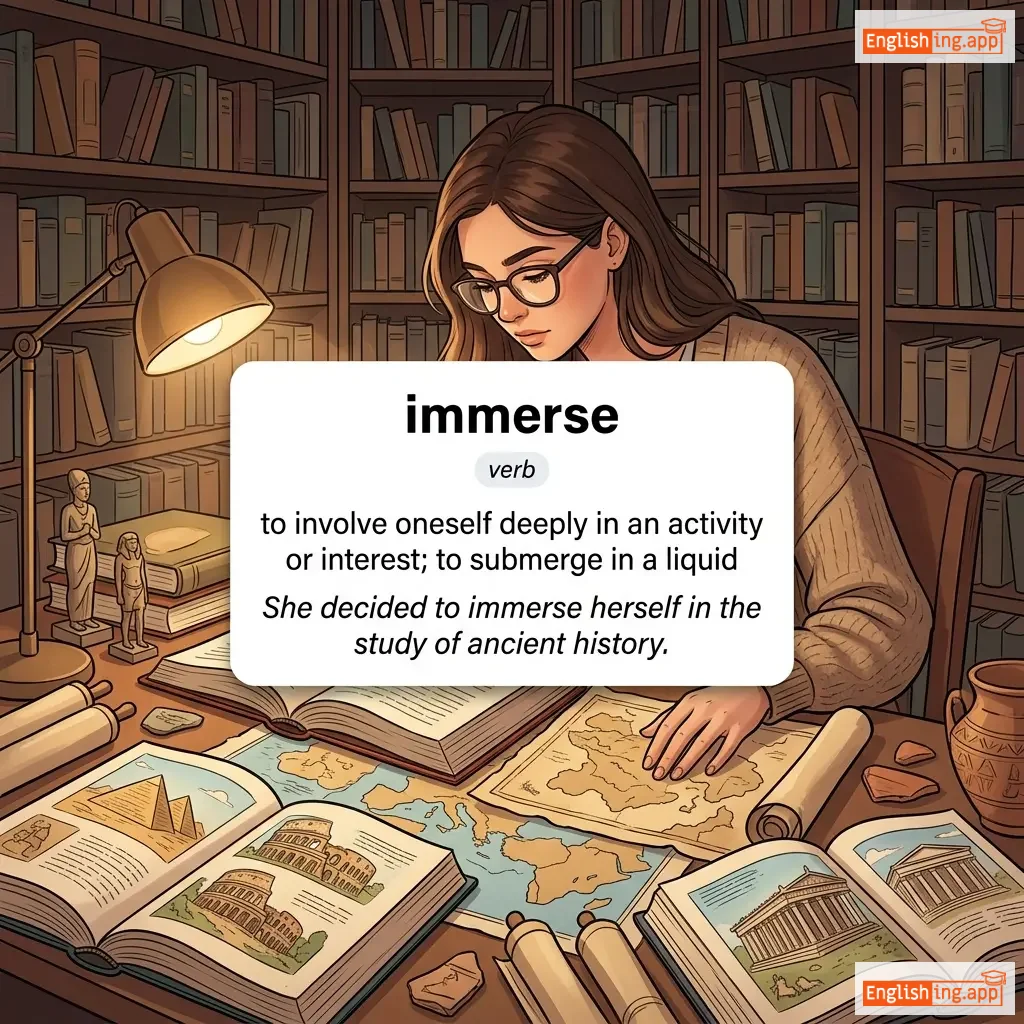
immerse definition card — visual illustration of the meaning
verb
/ɪˈmɜːrs/
sumergir, involucrarse profundamente (sumergir, involucrarse profundamente)

to involve oneself deeply in an activity or interest; to submerge in a liquid

"She decided to immerse herself in the study of ancient history."

"Ella decidió sumergirse en el estudio de la historia antigua." (Ella decidió sumergirse en el estudio de la historia antigua.)
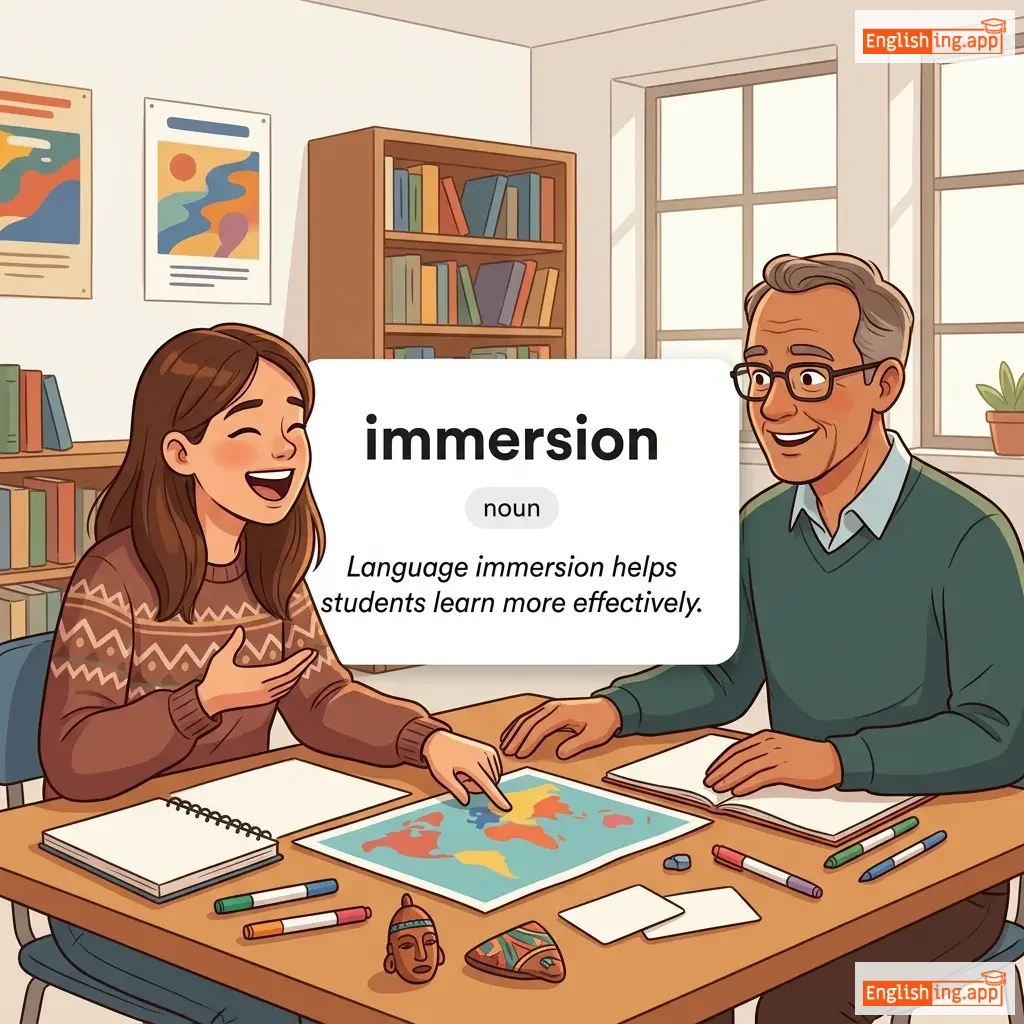
immersion definition card — visual illustration of the meaning
noun
/ɪˈmɜːrʒən/
inmersión (inmersion)

the act of deeply involving oneself in something; the state of being completely surrounded by liquid

"Language immersion helps students learn more effectively."

"La inmersión lingüística ayuda a los estudiantes a aprender de manera más efectiva." (La inmersión lingüística ayuda a los estudiantes a aprender de manera más efectiva.)
immersive definition card — visual illustration of the meaning
adjective
ɪˈmɜː.sɪv
inmersivo (inmersivo)

Providing, involving, or characterized by deep absorption or immersion in something.

"The immersive experience of VR makes learning more interactive."

"La experiencia inmersiva de la realidad virtual hace que el aprendizaje sea más interactivo." (La experiencia inmersiva de la realidad virtual hace que el aprendizaje sea más interactivo.)
noun
/ˈɪmɪɡrənt/
inmigrante (inmigrante)

a person who comes to live permanently in a foreign country

"The city has welcomed many new immigrants this year."

"La ciudad ha dado la bienvenida a muchos nuevos inmigrantes este año." (La ciudad ha dado la bienvenida a muchos nuevos inmigrantes este año.)
verb
/ˈɪmɪɡreɪt/
inmigrar (inmigrar)

to come to live permanently in a foreign country

"He immigrated to Canada five years ago."

"Él inmigró a Canadá hace cinco años." (Él inmigró a Canadá hace cinco años.)
noun
/ˌɪmɪˈɡreɪʃən/
inmigración (inmigracion)

the action of coming to live permanently in a foreign country

"Immigration policies vary from country to country."

"Las políticas de inmigración varían de un país a otro." (Las politicas de inmigracion varian de un pais a otro.)
noun
/ˈɪmɪnəns/
inminencia, estado de proximidad (inminencia, estado de proximidad)

the state of being about to happen

"The imminence of the storm forced people to take shelter."

"La inminencia de la tormenta obligó a la gente a buscar refugio." (La inminencia de la tormenta obligó a la gente a buscar refugio.)
adjective
/ˈɪmɪnənt/
inminente (inminente)

About to happen; likely to occur very soon.

"Dark clouds signaled that a storm was imminent."

"Las nubes oscuras señalaron que una tormenta era inminente." (Las nubes oscuras señalaron que una tormenta era inminente.)
adjective
/ɪˈmɪsəbl/
inmiscible (inmiscible)

Describes liquids that do not mix together.

"Oil and water are immiscible liquids."

"El aceite y el agua son líquidos inmiscibles." (El aceite y el agua son líquidos inmiscibles.)
adjective
/ɪˈmoʊbəl/
inmóvil (inmovil)

unable to move or be moved

"After the accident, he was immobile for weeks."

"Después del accidente, estuvo inmóvil durante semanas." (Despues del accidente, estuvo inmovil durante semanas.)
noun
/ˌɪməʊˈbɪləti/
inmovilidad (inmovilidad)

The state of being unable to move.

"After the accident, she suffered from immobility in her legs."

"Después del accidente, sufrió de inmovilidad en sus piernas." (Después del accidente, sufrió de inmovilidad en sus piernas.)
adjective
/ɪˈmɒdərət/
excesivo (excesivo)

excessive; beyond reasonable limits

"He has an immoderate love for sweets."

"Él tiene un amor excesivo por los dulces." (El tiene un amor excesivo por los dulces.)
adjective
/ɪˈmɒdɪst/
presuntuoso / indecente (presuntuoso / indecente)

lacking humility or decency; excessively proud or improper

"His immodest remarks offended the audience."

"Sus comentarios presuntuosos ofendieron a la audiencia." (Sus comentarios presuntuosos ofendieron a la audiencia.)
noun
/ɪˈmɒdəsti/
immodestia (immodestia)

lack of modesty or decency; behavior or attitude that is overly bold or improper

"The article was criticized for its tone of immodesty."

"El artículo fue criticado por su tono de immodestia." (El articulo fue criticado por su tono de immodestia)
verb
/ˈɪməleɪt/
inmolar (inmolar)

To kill or sacrifice, especially by burning.

"The protesters threatened to immolate themselves in front of the building."

"Los manifestantes amenazaron con inmolarse frente al edificio." (Los manifestantes amenazaron con inmolarse frente al edificio.)
adjective
/ɪˈmɒrəl/
inmoral (inmoral)

Not conforming to accepted standards of morality; unethical or wicked.

"He was fired for his immoral behavior."

"Lo despidieron por su comportamiento inmoral." (Lo despidieron por su comportamiento inmoral.)
noun
/ˌɪməˈrælɪti/
inmoralidad (inmoralidad)

the quality of being immoral; behavior that violates accepted moral standards

"The community condemned the immorality of the corrupt officials."

"La comunidad condenó la inmoralidad de los funcionarios corruptos." (La comunidad condeno la inmoralidad de los funcionarios corruptos)
adjective; noun
/ɪˈmɔːrtl/
inmortal (inmortal)

living forever; never dying; lasting forever in fame or memory

"Legends often describe heroes as immortal beings who never die."

"Las leyendas describen a los héroes como inmortales." (las leyendas describen a los heroes como inmortales)
noun
/ˌɪmɔːrˈtæləti/
inmortalidad (inmortalidad)

the state of living forever; eternal life or lasting fame beyond death

"Many ancient cultures believed that heroes could achieve immortality through great deeds."

"Muchas culturas antiguas creían que los héroes podían alcanzar la inmortalidad mediante grandes hazañas." (muchas culturas antiguas creian que los heroes podian alcanzar la inmortalidad mediante grandes hazanas)
verb
/ɪˈmɔːrtəlaɪz/
inmortalizar (inmortalizar)

to preserve the memory of someone or something forever

"The statue was built to immortalize the hero’s sacrifice."

"La estatua fue construida para inmortalizar el sacrificio del héroe." (La estatua fue construida para inmortalizar el sacrificio del héroe.)
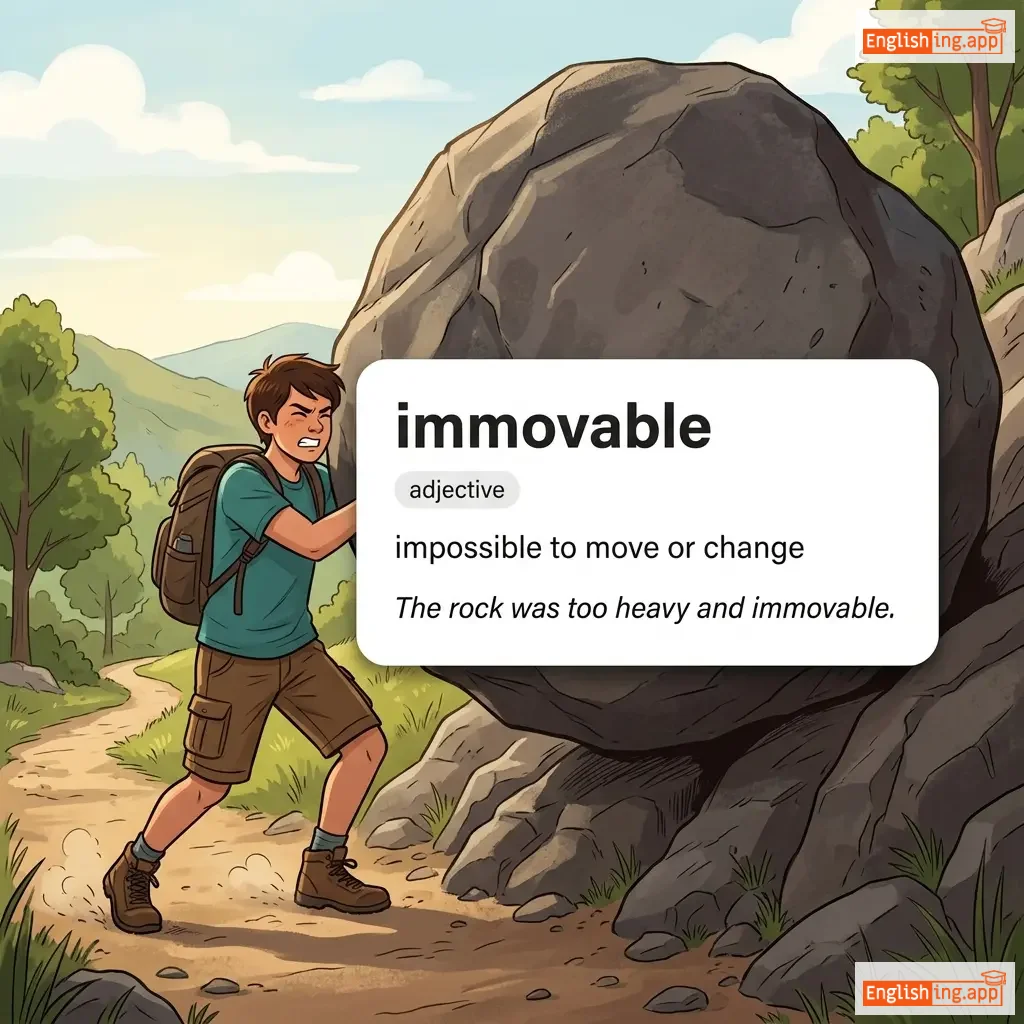
immovable definition card — visual illustration of the meaning
adjective
/ɪˈmuːvəbl/
inmóvil (inmovil)

impossible to move or change

"The rock was too heavy and immovable."

"La roca estaba demasiado pesada e inmóvil." (La roca estaba demasiado pesada e inmovil.)
adjective
/ɪˈmjuːn/
inmunizado (inmunizado)

protected from disease or from the effects of something

"Children who are vaccinated are immune to many diseases."

"Los niños vacunados están inmunizados contra muchas enfermedades." (Los niños vacunados están inmunizados contra muchas enfermedades.)
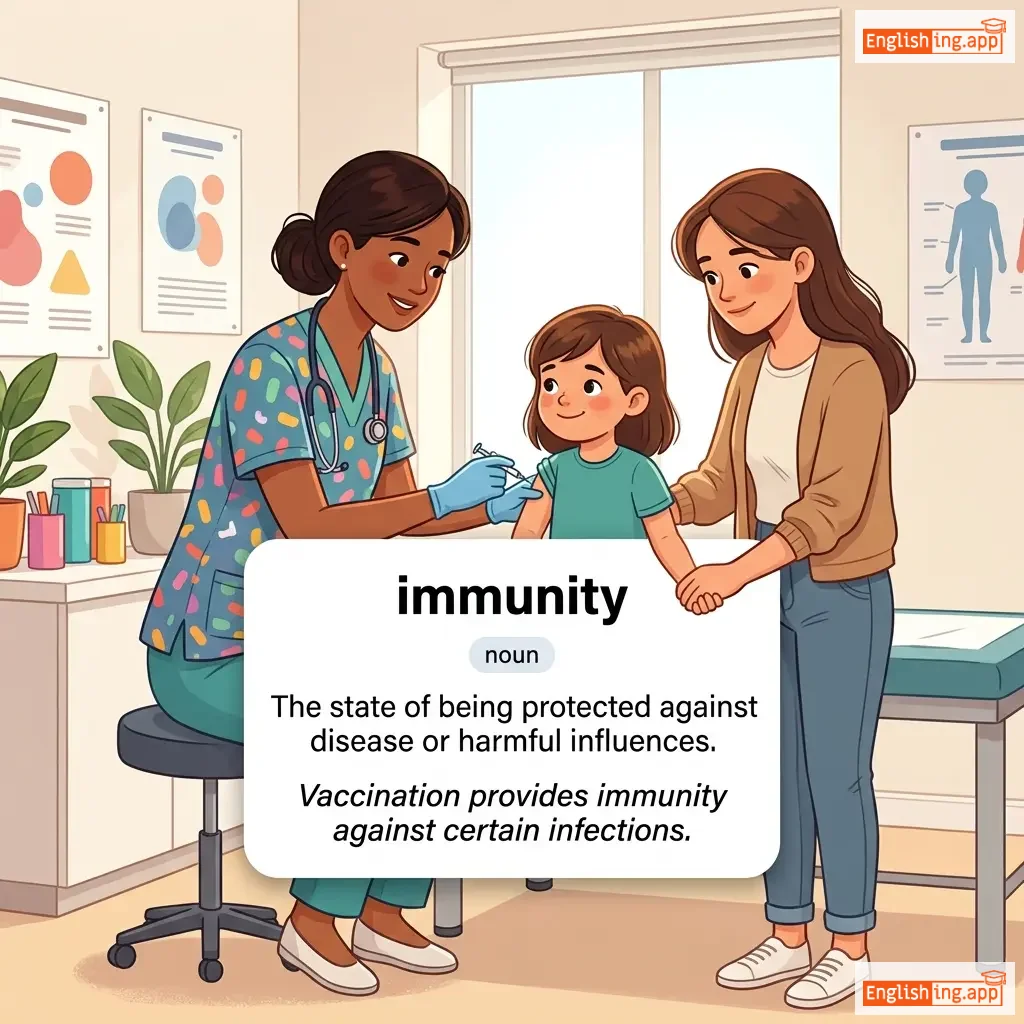
immunity definition card — visual illustration of the meaning
noun
/ɪˈmjuːnɪti/
inmunidad (inmunidad)

The state of being protected against disease or harmful influences.

"Vaccination provides immunity against certain infections."

"La vacunación proporciona inmunidad contra ciertas infecciones." (La vacunación proporciona inmunidad contra ciertas infecciones.)
verb
/ɪˈmjʊər/
encerrar (encerrar)

to confine or enclose someone against their will

"The prisoner was immured in a dark cell."

"El prisionero fue encerrado en una celda oscura." (El prisionero fue encerrado en una celda oscura.)
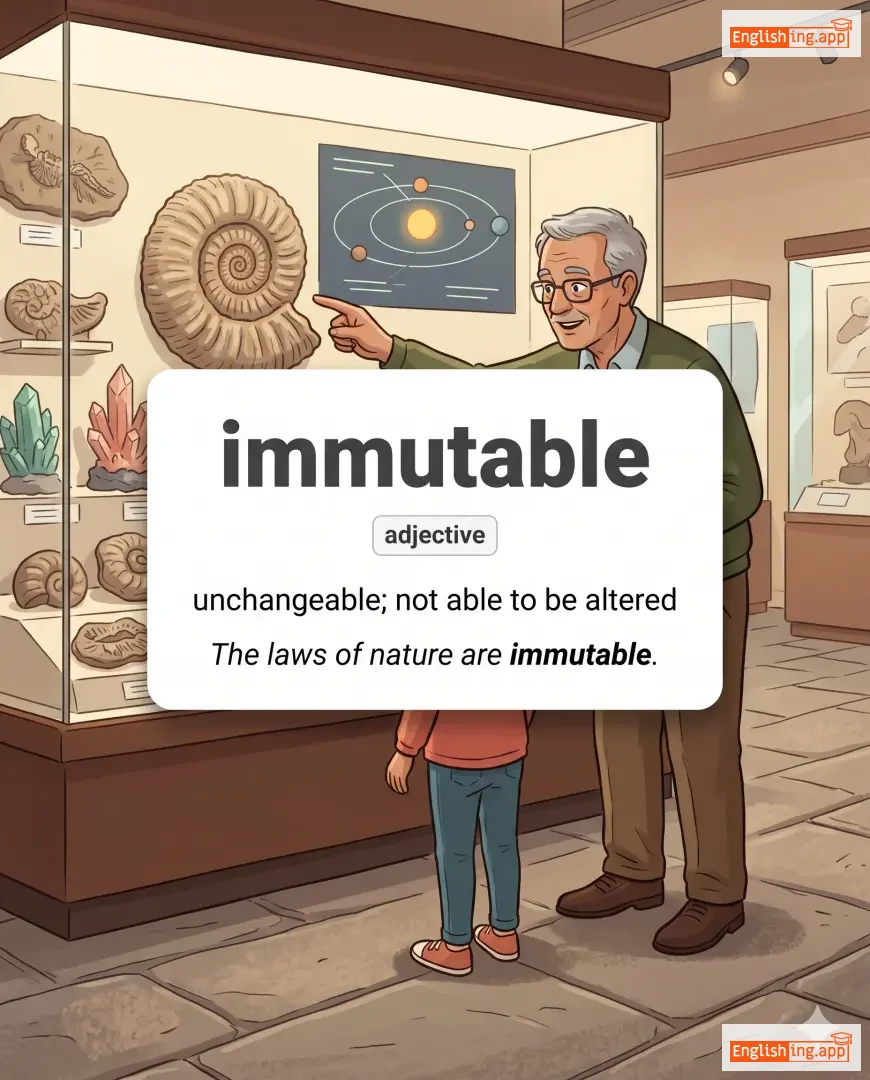
immutable definition card — visual illustration of the meaning
adjective
/ɪˈmjuːtəbl/
inmutable (inmutable)

unchangeable; not able to be altered

"The laws of nature are immutable."

"Las leyes de la naturaleza son inmutables." (Las leyes de la naturaleza son inmutables.)
noun
/ɪmp/
pequeño diablillo travieso (pequeno diablillo travieso)

a small mischievous devil or sprite; a playful troublemaker

"The child was acting like a little imp, hiding his toys everywhere."

"El niño se comportaba como un pequeño diablillo, escondiendo sus juguetes por todas partes." (El niño se comportaba como un pequeño diablillo, escondiendo sus juguetes por todas partes.)
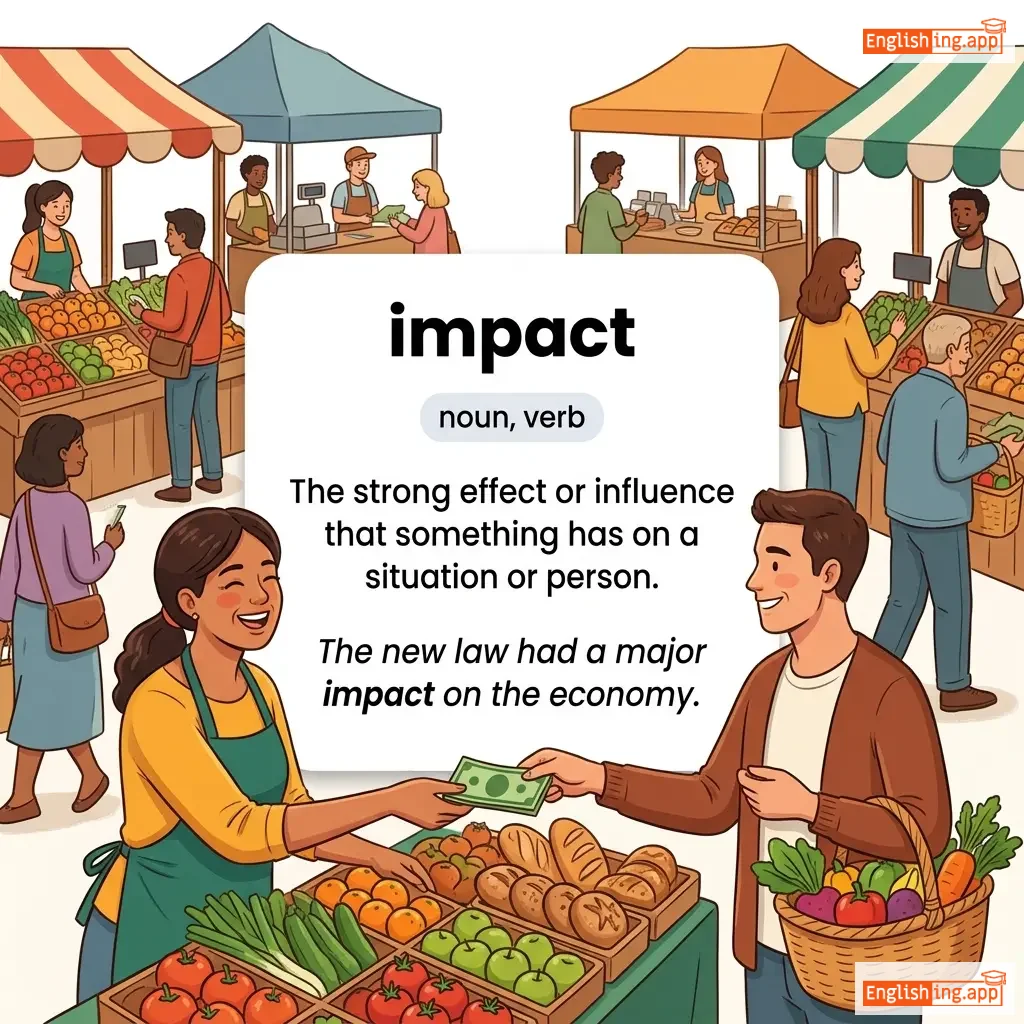
impact definition card — visual illustration of the meaning
noun, verb
/ˈɪmpækt/
impacto (impacto)

The strong effect or influence that something has on a situation or person.

"The new law had a major impact on the economy."

"La nueva ley tuvo un gran impacto en la economía." (La nueva ley tuvo un gran impacto en la economía.)
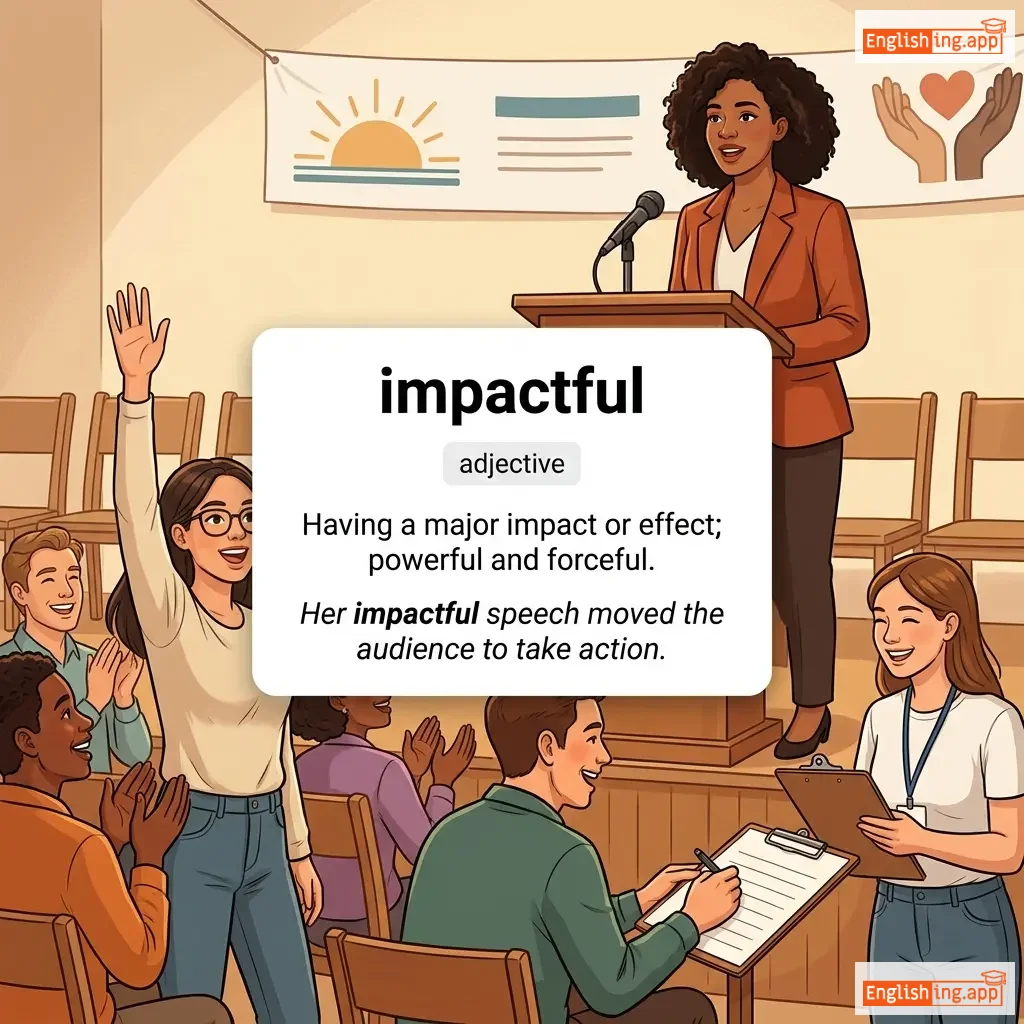
impactful definition card — visual illustration of the meaning
adjective
/ˈɪmpæktfʊl/
impactante (impactante)

Having a major impact or effect; powerful and forceful.

"Her impactful speech moved the audience to take action."

"Su discurso impactante movió al público a tomar acción." (Su discurso impactante movió al público a tomar acción.)
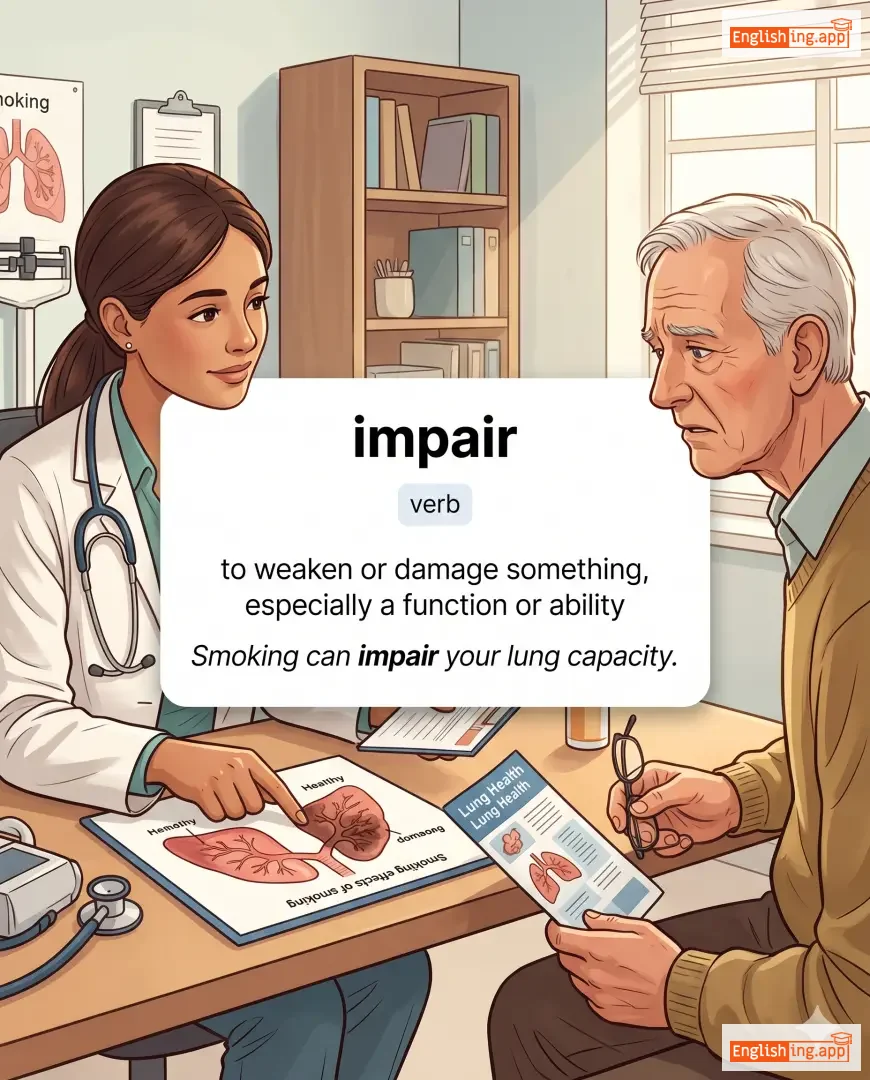
impair definition card — visual illustration of the meaning
verb
/ɪmˈpɛər/
deteriorar (deteriorar)

to weaken or damage something, especially a function or ability

"Smoking can impair your lung capacity."

"Fumar puede dañar tu capacidad pulmonar." (Fumar puede danar tu capacidad pulmonar.)
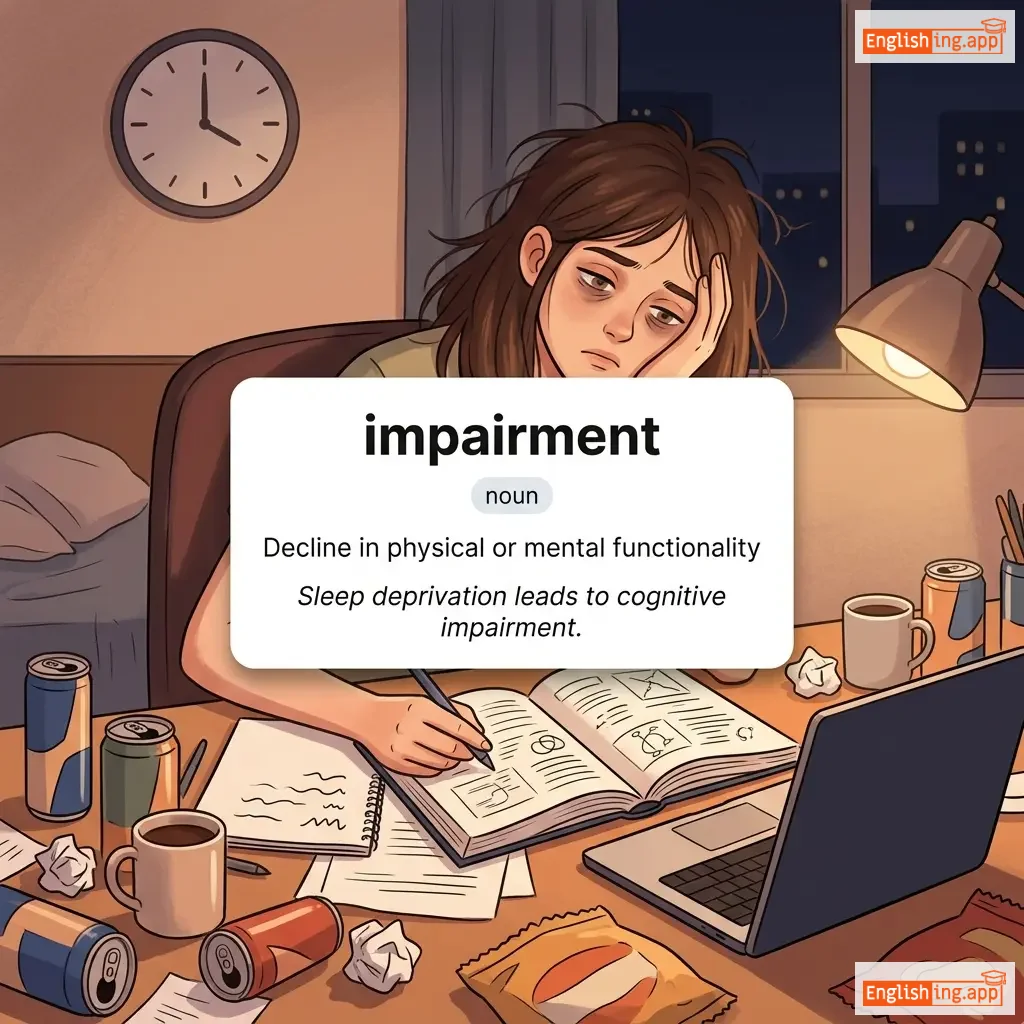
impairment definition card — visual illustration of the meaning
noun
ɪmˈpɛərmənt
deterioro (deterioro)

Decline in physical or mental functionality

"Sleep deprivation leads to cognitive impairment."

"La privación de sueño conduce a un deterioro cognitivo." (La privaśión de sueño conduce a un deterioro cognitivo.)
verb
/ɪmˈpeɪl/
empalar (empalar)

to pierce or fix something with a sharp object

"The knight was impaled by the enemy’s spear."

"El caballero fue empalado por la lanza del enemigo." (El caballero fue empalado por la lanza del enemigo.)
adjective
/ɪmˈpælpəbəl/
intangible (intangible)

unable to be felt by touch; difficult to grasp or understand

"There was an impalpable sense of fear in the room."

"Había una sensación intangible de miedo en la habitación." (Habia una sensacion intangible de miedo en la habitacion.)
verb
/ɪmˈpɑːrt/
impartir (impartir)

to make information known; to bestow or communicate

"The teacher imparted valuable knowledge to her students."

"La maestra impartió valioso conocimiento a sus estudiantes." (La maestra impartió valioso conocimiento a sus estudiantes.)
adjective
/ɪmˈpɑːrʃəl/
imparcial (imparcial)

Treating all rivals or disputants equally; fair and just.

"The judge remained impartial throughout the trial."

"El juez permaneció imparcial durante el juicio." (El juez permaneció imparcial durante el juicio.)
adjective
/ɪmˈpæsəbəl/
intransitable (intransitable)

Impossible to travel along or over.

"The road became impassable after the heavy snowfall."

"La carretera se volvió intransitable después de la fuerte nevada." (La carretera se volvió intransitable después de la fuerte nevada.)
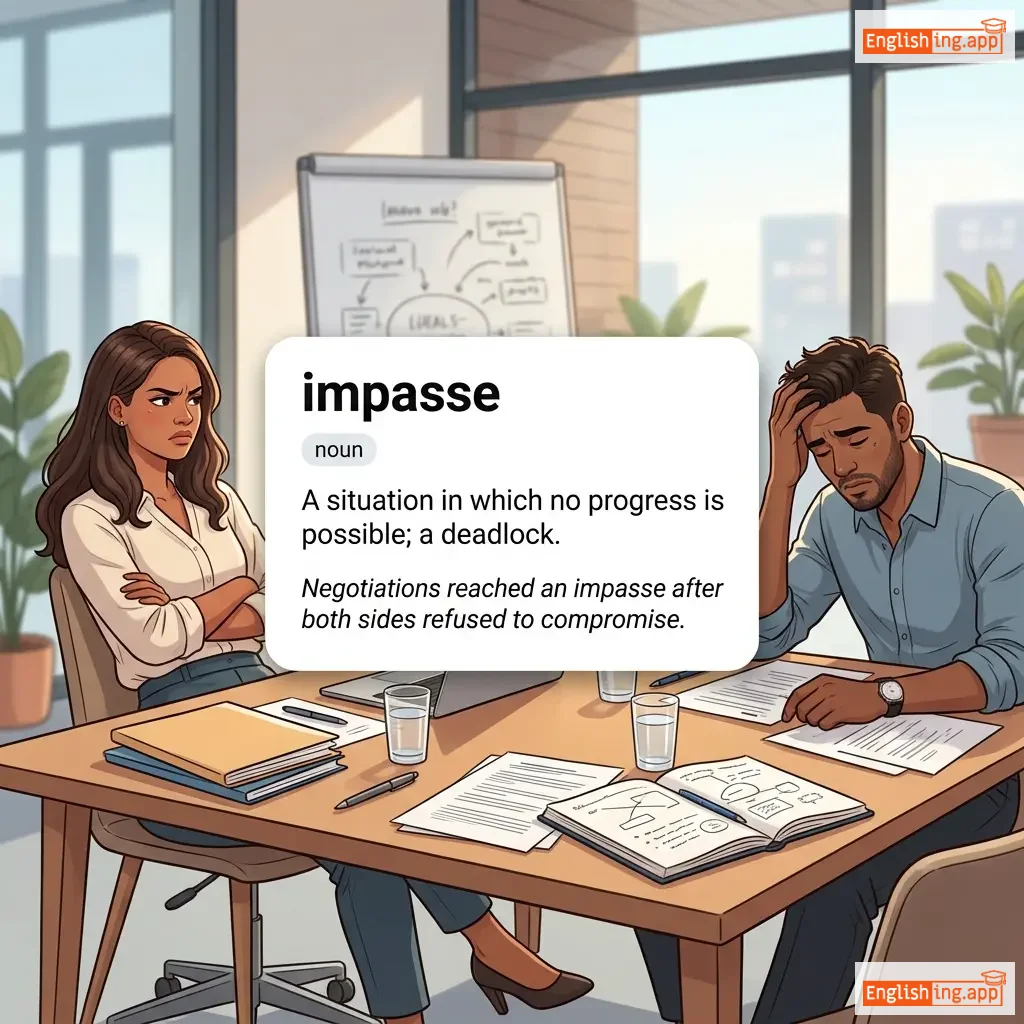
impasse definition card — visual illustration of the meaning
noun
/ˈɪmpæs/
bloqueo (bloqueo)

A situation in which no progress is possible; a deadlock.

"Negotiations reached an impasse after both sides refused to compromise."

"Las negociaciones llegaron a un bloqueo después de que ambas partes se negaran a comprometerse." (Las negociaciones llegaron a un bloqueo despues de que ambas partes se negaran a comprometerse.)
adjective
/ɪmˈpæsɪbəl/
impasible (impasible)

Incapable of suffering or feeling pain (used mainly in theological or philosophical contexts).

"Some philosophers argue that God is impassible and cannot experience human emotions."

"Algunos filósofos argumentan que Dios es impasible y no puede experimentar emociones humanas." (Algunos filosofos argumentan que Dios es impasible y no puede experimentar emociones humanas.)
adjective
/ɪmˈpæʃənd/
apasionado (apasionado)

Filled with or showing great emotion.

"She gave an impassioned speech about human rights."

"Ella dio un discurso apasionado sobre los derechos humanos." (Ella dio un discurso apasionado sobre los derechos humanos.)
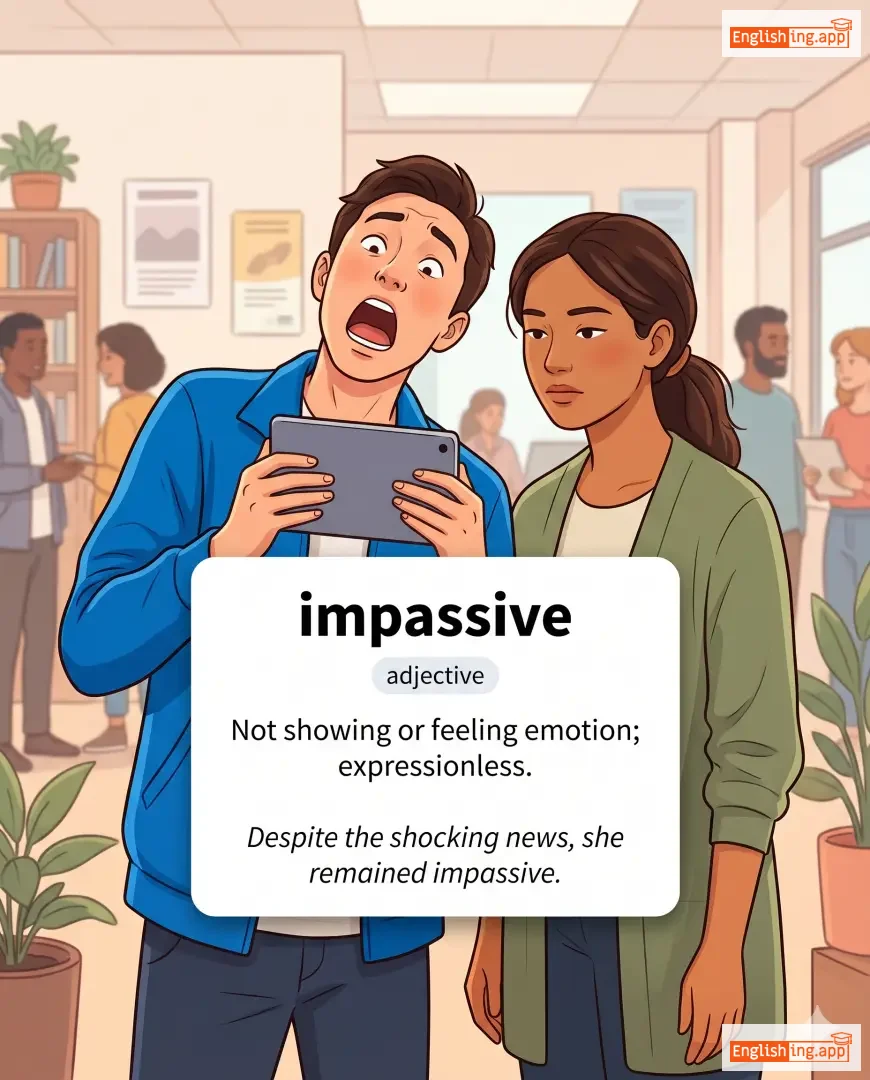
impassive definition card — visual illustration of the meaning
adjective
/ɪmˈpæsɪv/
impasible (impasible)

Not showing or feeling emotion; expressionless.

"Despite the shocking news, she remained impassive."

"A pesar de las noticias impactantes, ella permaneció impasible." (A pesar de las noticias impactantes, ella permaneció impasible.)
noun
/ɪmˈpeɪʃəns/
impaciencia (impaciencia)

The state of being quickly irritated or unable to wait calmly.

"His impatience grew as the meeting dragged on."

"Su impaciencia creció a medida que la reunión se alargaba." (Su impaciencia crecio a medida que la reunion se alargaba.)
adjective
/ɪmˈpeɪʃənt/
impaciente (impaciente)

Not able to wait calmly; restless and eager for something to happen.

"She grew impatient while waiting in the long queue."

"Ella se impacientó mientras esperaba en la larga fila." (Ella se impacientó mientras esperaba en la larga fila.)