Vocabularios

Descubra, aprenda y domine el vocabulario en inglés

adjective
/ˌɪɡ.nəˈmɪn.i.əs/
ignominioso (ignominioso)

Marked by shame, disgrace, or humiliation.

"The team suffered an ignominious defeat in the finals."

"El equipo sufrió una ignominiosa derrota en la final." (El equipo sufrio una ignominiosa derrota en la final.)
noun
/ˈɪɡ.nəˌmɪn.i/
ignominia (ignominia)

Public shame, disgrace, or dishonor.

"He lived the rest of his life in ignominy after the scandal."

"Vivió el resto de su vida en ignominia después del escándalo." (Vivió el resto de su vida en ignominia después del escándalo.)
noun
/ˈɪɡnərəns/
ignorancia (ignorancia)

lack of knowledge or awareness in general

"His ignorance about the subject was evident."

"Su ignorancia sobre el tema era evidente." (Su ignorancia sobre el tema era evidente.)
adjective
/ˈɪɡ.nər.ənt/
ignorante (ignorante)

lacking knowledge, awareness, or education

"He made an ignorant comment about the culture."

"Hizo un comentario ignorante sobre la cultura." (Hizo un comentario ignorante sobre la cultura.)
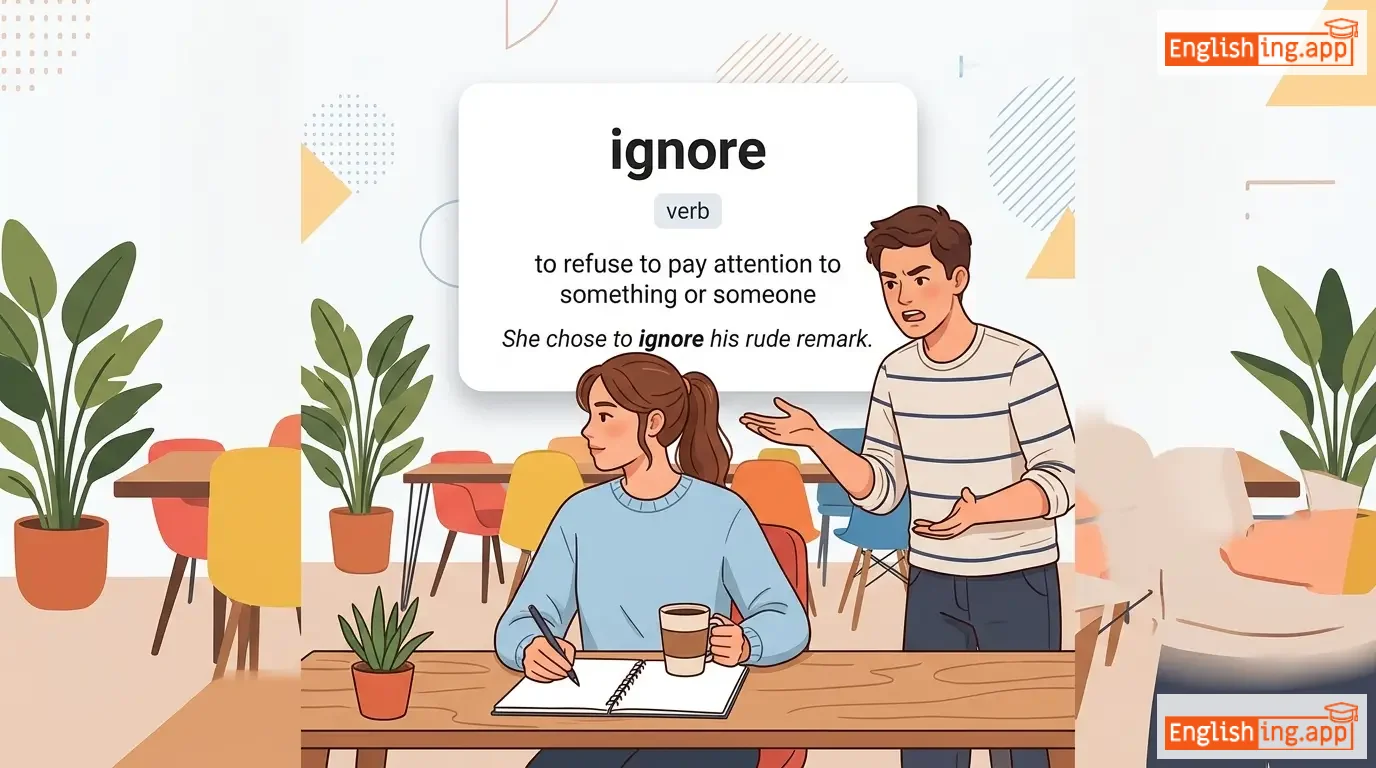
ignore definition card — visual illustration of the meaning
verb
/ɪɡˈnɔːr/
ignorar (ignorar)

to refuse to pay attention to something or someone

"She chose to ignore his rude remark."

"Ella eligió ignorar su comentario grosero." (Ella eligió ignorar su comentario grosero.)
noun
/ˈaɪ.kɒn/
imagen religiosa o símbolo (imagen religiosa o simbolo)

A religious image or symbol, especially in the Eastern Orthodox Church.

"The church displayed a beautifully painted ikon of the Virgin Mary."

"La iglesia mostró un ícono bellamente pintado de la Virgen María." (La iglesia mostro un ikono bellamente pintado de la Virgen Maria.)
noun
/ˈɪl.i.æd/
Ilíada (Iliada)

An ancient Greek epic poem attributed to Homer, describing the events of the Trojan War.

"Students studied the Iliad to understand Greek mythology and heroism."

"Los estudiantes estudiaron la Ilíada para entender la mitología griega y el heroísmo." (Los estudiantes estudiaron la Iliada para entender la mitología griega y el heroísmo.)
adjective
/ɪl/
enfermo (enfermo)

Not in good health; sick or unwell.

"He has been feeling ill since yesterday."

"Ha estado sintiéndose enfermo desde ayer." (Ha estado sintiéndose enfermo desde ayer.)
adjective
/ˈɪl bred/
maleducado (maleducado)

lacking good manners; rude; showing poor upbringing

"His ill-bred behavior shocked everyone at the dinner party."

"Su conducta maleducada dejó a todos sorprendidos en la cena." (Su conducta maleducada dejo a todos sorprendidos en la cena.)
adjective
/ˌɪlˈneɪ.tʃəd/
de mal carácter (de mal caracter)

Having a bad or unpleasant character; unkind or malicious.

"He made an ill-natured remark about his colleague."

"Hizo un comentario de mal carácter sobre su colega." (Hizo un comentario de mal caracter sobre su colega.)
adjective
/ɪˈliː.ɡəl/
ilegal (ilegal)

Not allowed by law; unlawful.

"It is illegal to drive without a valid license."

"Es ilegal conducir sin una licencia válida." (Es ilegal conducir sin una licencia válida.)
noun
/ɪˌledʒ.əˈbɪl.ə.ti/
ilegibilidad (ilegibilidad)

the quality of being impossible or difficult to read; unclear writing or print

"The doctor's handwriting was famous for its illegibility among the pharmacy staff."

"La letra del médico era famosa por su ilegibilidad entre el personal de la farmacia." (La letra del medico era famosa por su ilegibilidad entre el personal de la farmacia.)
adjective
/ɪˈledʒ.ə.bəl/
ilegible (ilegible)

Not clear enough to be read; unreadable.

"The doctor’s handwriting was almost illegible."

"La escritura del doctor era casi ilegible." (La escritura del doctor era casi ilegible.)
adjective
/ˌɪlɪˈdʒɪtɪmət/
ilegítimo (ilegitimo)

Not authorized by law, rules, or standards; not recognized as valid.

"The court ruled the contract to be illegitimate."

"El tribunal dictaminó que el contrato era ilegítimo." (El tribunal dictaminó que el contrato era ilegítimo.)
adjective
/ɪˈlɪbərəl/
iliberal (iliberal)

Opposed to liberal principles; restricting freedom of thought or behavior.

"The government was criticized for its illiberal policies."

"El gobierno fue criticado por sus políticas iliberales." (El gobierno fue criticado por sus políticas iliberales.)
noun
/ˌɪlɪbəˈræləti/
ilicitud (ilicitud)

The quality of being illiberal; lack of tolerance or generosity.

"The illiberality of the new laws alarmed the citizens."

"La iliberalidad de las nuevas leyes alarmó a los ciudadanos." (La iliberalidad de las nuevas leyes alarmó a los ciudadanos.)
adjective
/ɪˈlɪsɪt/
ilícito (ilicito)

Forbidden by law, rules, or custom.

"The police shut down the illicit drug operation."

"La policía cerró la operación de drogas ilícitas." (La policia cerro la operacion de drogas ilicitas.)
adjective
/ɪˈlɪmɪtəbl/
ilimitado (ilimitado)

Without limits or bounds.

"The universe is often described as illimitable."

"El universo a menudo se describe como ilimitado." (El universo a menudo se describe como ilimitado.)
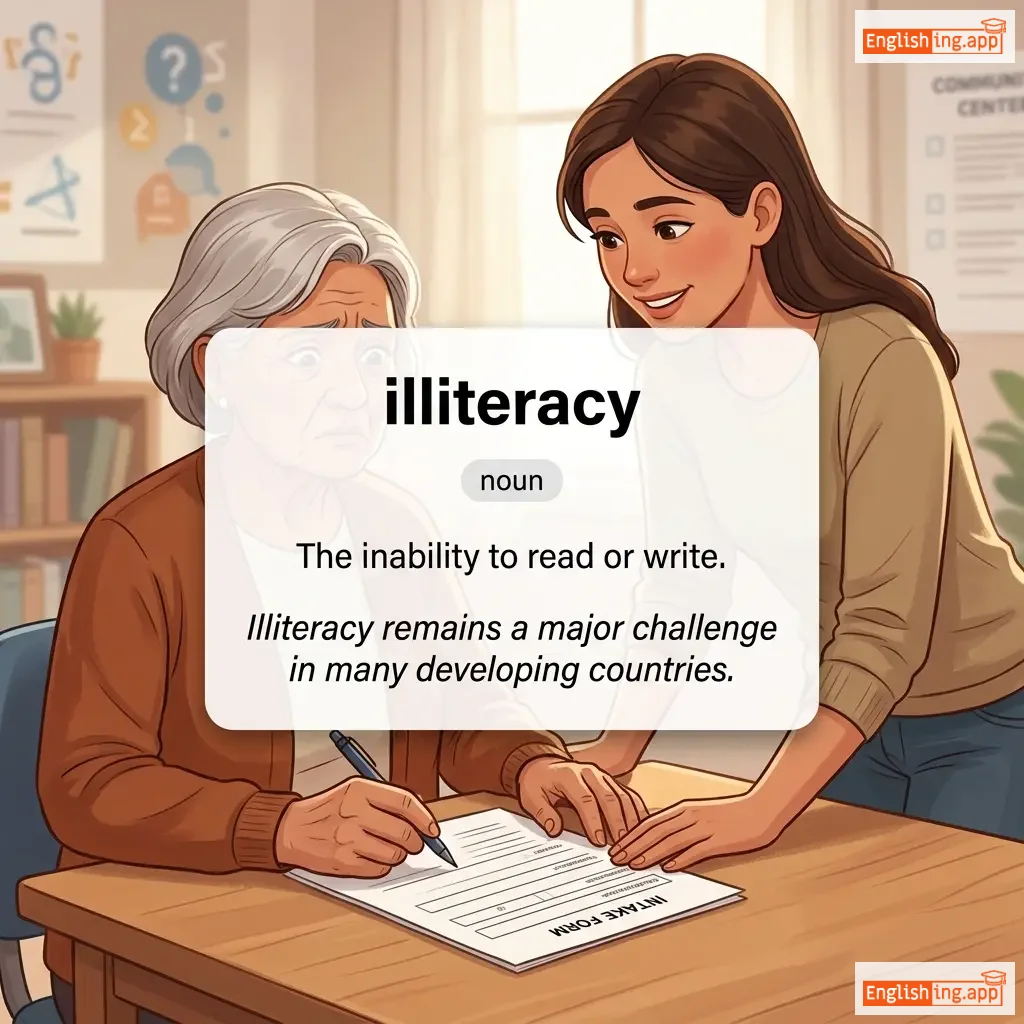
illiteracy definition card — visual illustration of the meaning
noun
/ɪˈlɪtərəsi/
analfabetismo (analfabetismo)

The inability to read or write.

"Illiteracy remains a major challenge in many developing countries."

"El analfabetismo sigue siendo un desafío importante en muchos países en desarrollo." (El analfabetismo sigue siendo un desafio importante en muchos paises en desarrollo.)
adjective
/ɪˈlɪtərət/
analfabeto (analfabeto)

Unable to read or write.

"Many villagers were still illiterate in the past."

"Muchos aldeanos aún eran analfabetos en el pasado." (Muchos aldeanos aun eran analfabetos en el pasado.)
noun
/ˈɪlnəs/
enfermedad (enfermedad)

A condition of being unwell or suffering from a disease.

"She missed school due to a serious illness."

"Ella no fue a la escuela debido a una enfermedad grave." (Ella no fue a la escuela debido a una enfermedad grave.)
adjective
/ɪˈlɒdʒɪkl/
ilógico (ilogico)

Not making sense or lacking clear reasoning.

"It is illogical to blame children for adult mistakes."

"Es ilógico culpar a los niños por los errores de los adultos." (Es ilógico culpar a los niños por los errores de los adultos.)
noun
/ɪˈluːmɪnənt/
iluminante (iluminante)

A substance or device that produces light.

"The lamp acted as an illuminant in the dark cave."

"La lámpara actuó como un iluminante en la cueva oscura." (La lámpara actuó como un iluminante en la cueva oscura.)
verb
/ɪˈluːmɪneɪt/
iluminar (iluminar)

To light up or make something clearer.

"Streetlights illuminate the road at night."

"Las farolas iluminan la carretera de noche." (Las farolas iluminan la carretera de noche.)
noun
/ɪˌluːmɪˈnɑːti/
iluminati (iluminati)

a group of people claiming to have special enlightenment or secret knowledge, often linked to conspiracies

"Many conspiracy theories involve the Illuminati as a secret world-controlling group."

"Muchas teorías de conspiración involucran a los Illuminati como un grupo secreto que controla el mundo." (Muchas teorias de conspiracion involucran a los Illuminati como un grupo secreto que controla el mundo.)
noun
/ɪˌluːmɪˈneɪʃən/
iluminación (iluminacion)

the act of lighting something or making something clear

"The street was filled with bright illumination from the lamps."

"La calle estaba llena de una iluminacion brillante proveniente de las lamparas." (La calle estaba llena de una iluminacion brillante proveniente de las lamparas)
verb
/ɪˈluːmɪn/
iluminar (iluminar)

to light up or make clear

"The rising sun illumined the mountain peaks."

"El sol naciente iluminó las cumbres de la montaña." (El sol naciente iluminó las cumbres de la montaña.)
noun
/ɪˈluːʒən/
ilusión (ilusyon)

a false idea or belief; a deceptive appearance

"The magician created the illusion of a floating woman."

"El mago creó la ilusión de una mujer flotante." (El mago creó la ilusión de una mujer flotante.)
adjective
/ɪˈluːsɪv/
ilusorio (ilusorio)

deceptive or misleading; based on illusion

"His hopes of sudden wealth proved to be illusive."

"Sus esperanzas de riqueza repentina resultaron ser ilusorias." (Sus esperanzas de riqueza repentina resultaron ser ilusorias.)
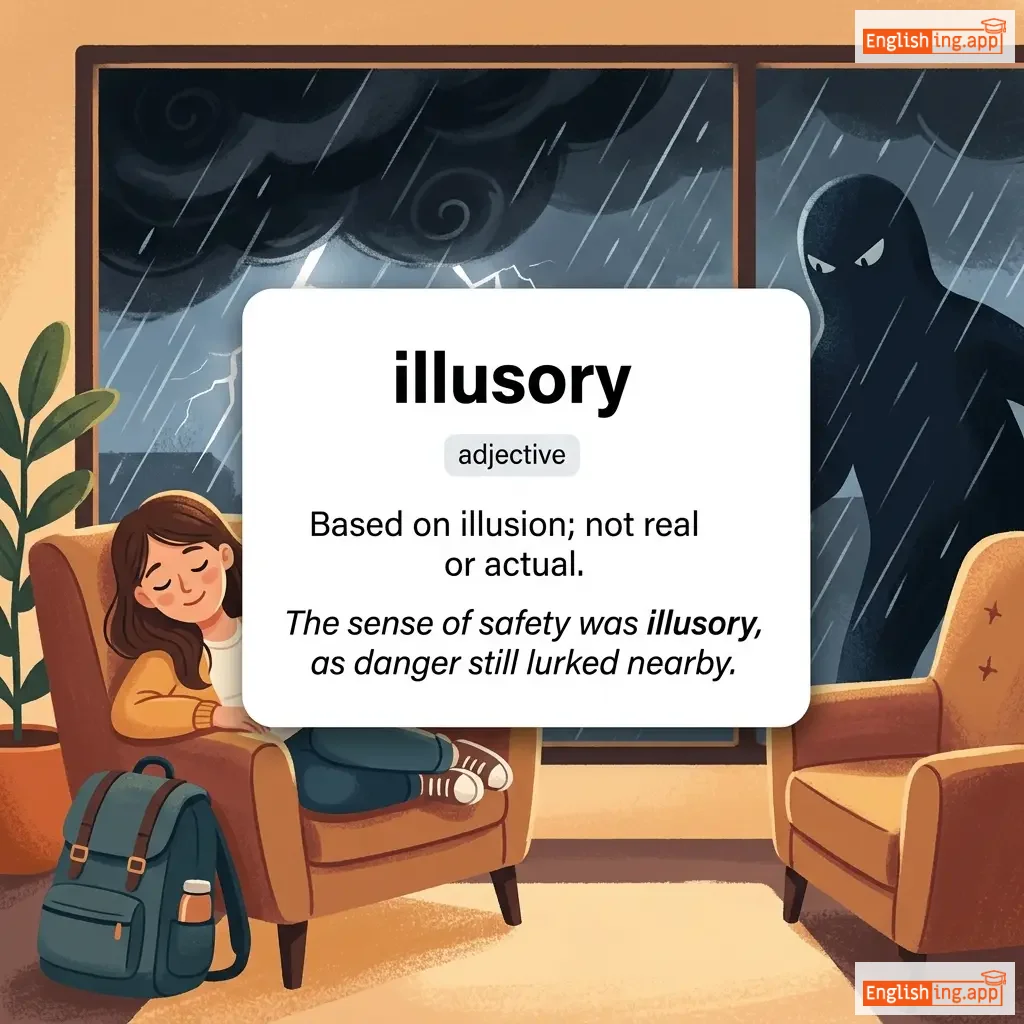
illusory definition card — visual illustration of the meaning
adjective
/ɪˈluːsəri/
ilusorio (ilusorio)

Based on illusion; not real or actual.

"The sense of safety was illusory, as danger still lurked nearby."

"El sentido de seguridad era ilusorio, ya que el peligro aún acechaba cerca." (El sentido de seguridad era ilusorio, ya que el peligro aún acechaba cerca.)
verb
/ˈɪl.ə.streɪt/
ilustrar (ilustrar)

to explain or make something clear by using examples, pictures, or comparisons

"The teacher used diagrams to illustrate the concept."

"El maestro utilizó diagramas para ilustrar el concepto." (El maestro utilizó diagramas para ilustrar el concepto.)
adjective
/ɪˈlʌstriəs/
ilustre (ilustre)

Well known, respected, and admired for past achievements.

"She had an illustrious career in medicine."

"Tuvo una carrera ilustre en la medicina." (Tuvo una carrera ilustre en la medicina.)
noun
/ˈɪmɪdʒ/
imagen (imagen)

A visual representation of something, such as a picture or likeness.

"The magazine published a clear image of the celebrity."

"La revista publicó una imagen clara de la celebridad." (La revista publico una imagen clara de la celebridad.)
noun
/ˈɪmɪdʒəri/
imaginería (imaginaria)

visually descriptive or figurative language, especially in a literary work

"The poet's use of imagery brought the scene to life."

"El uso de imaginería por el poeta dio vida a la escena." (El uso de imaginería por el poeta dio vida a la escena.)
adjective
/ɪˈmædʒɪnəbl/
imaginable (imaginable)

Capable of being imagined or conceived.

"They offered every imaginable type of food at the festival."

"Ofrecieron todo tipo de comida imaginable en el festival." (Ofrecieron todo tipo de comida imaginable en el festival.)
adjective
/ɪˈmædʒɪnəri/
imaginario (imaginario)

Existing only in the imagination; not real.

"Children often have imaginary friends."

"Los niños a menudo tienen amigos imaginarios." (Los niños a menudo tienen amigos imaginarios.)
noun
/ɪˌmædʒɪˈneɪʃən/
imaginación (imaginacion)

The ability of the mind to create ideas or pictures not present to the senses.

"Children often use their imagination while playing."

"Los niños a menudo usan su imaginación mientras juegan." (Los niños a menudo usan su imaginacion mientras juegan.)
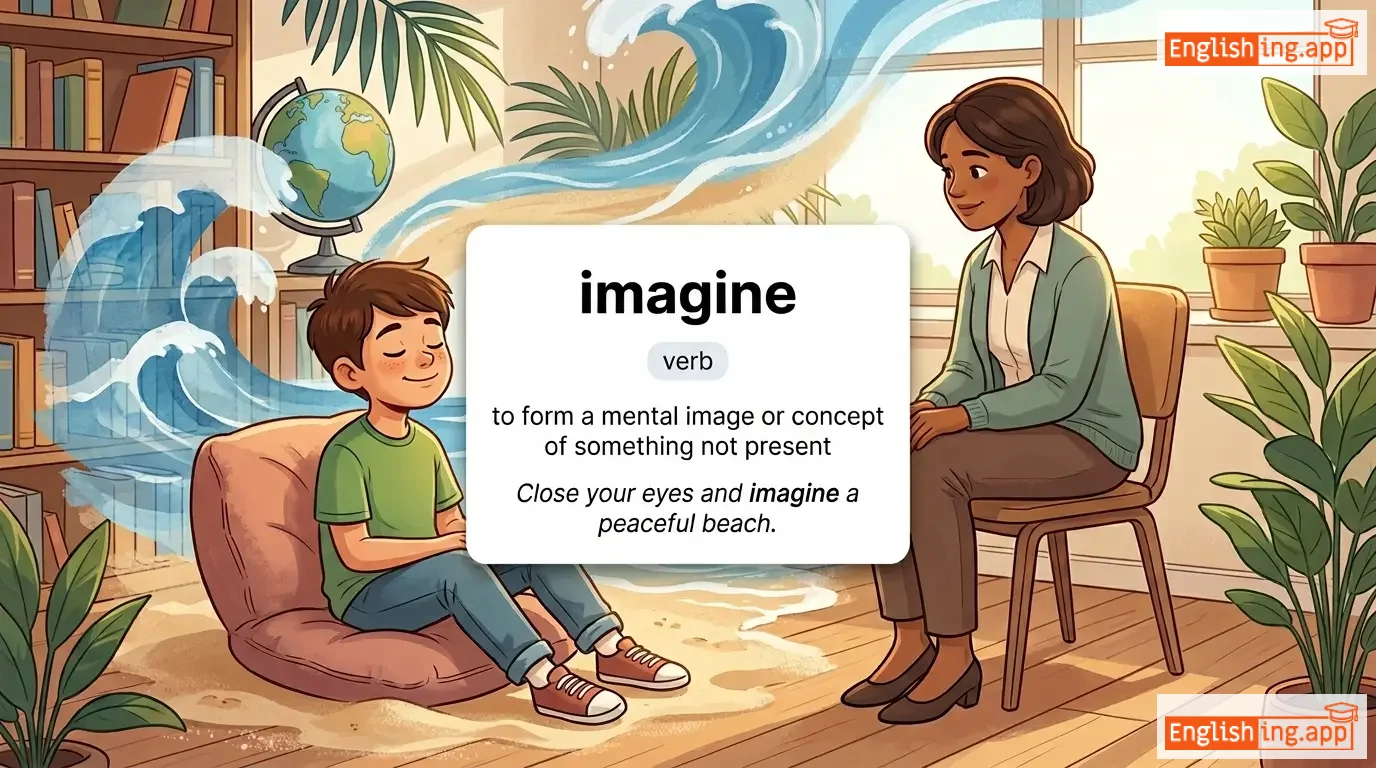
imagine definition card — visual illustration of the meaning
verb
/ɪˈmædʒ.ɪn/
imaginar (imaginar)

to form a mental image or concept of something not present

"Close your eyes and imagine a peaceful beach."

"Cierra los ojos e imagina una playa tranquila." (Cierra los ojos e imagina una playa tranquila.)
noun
/ɪmˈbæləns/
desbalance (desbalance)

A lack of balance; a state of inequality or disproportion.

"The imbalance of power led to conflict."

"El desbalance de poder llevó al conflicto." (El desbalance de poder llevo al conflicto.)
noun
/ˌɪmbəˈsɪləti/
imbecilidad (imbesilidad)

Extreme foolishness, stupidity, or weakness of mind.

"The plan was abandoned due to its sheer imbecility."

"El plan fue abandonado debido a su pura imbecilidad." (El plan fue abandonado debido a su pura imbecilidad.)
verb
/ɪmˈbɛd/
incrustar (incrustar)

To fix firmly or deeply in a surrounding mass.

"The journalist imbedded himself with the troops to report firsthand."

"El periodista se incrustó con las tropas para reportar de primera mano." (El periodista se incrustó con las tropas para reportar de primera mano.)
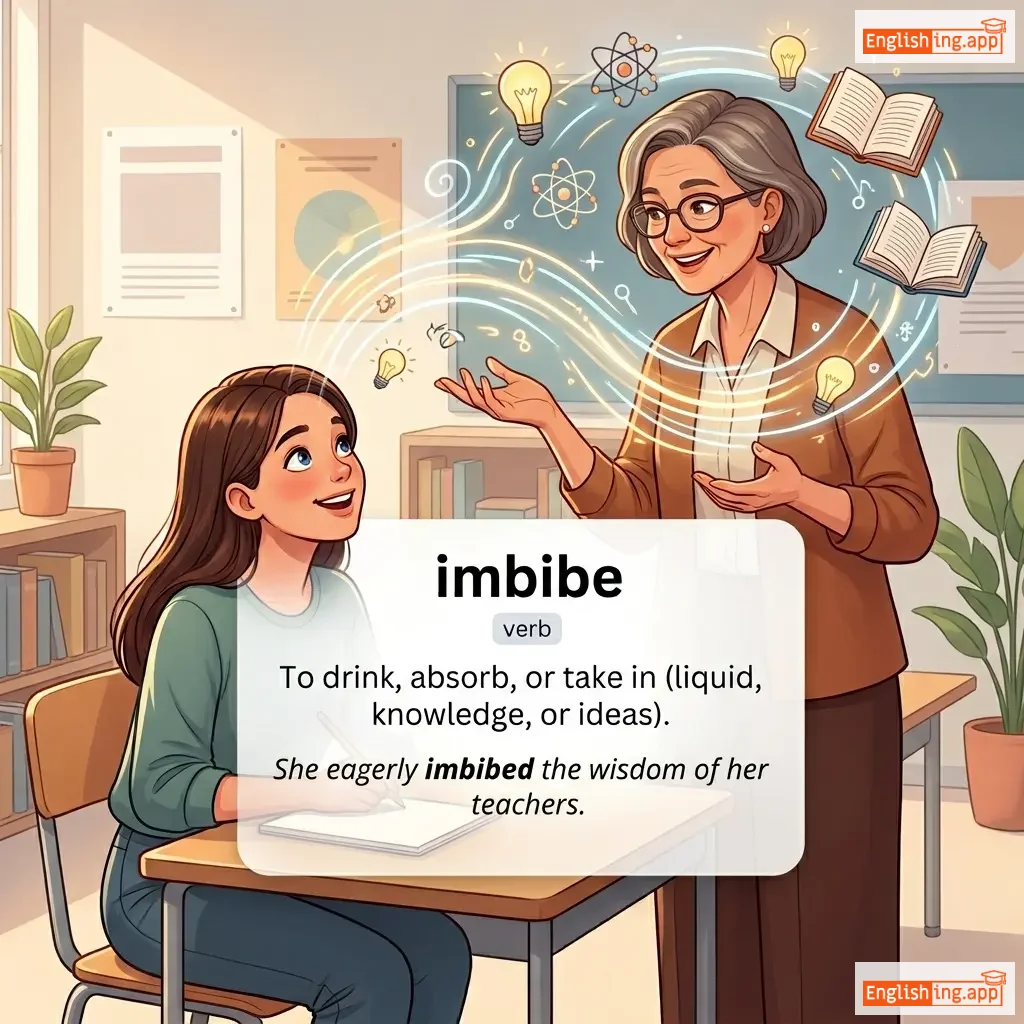
imbibe definition card — visual illustration of the meaning
verb
/ɪmˈbaɪb/
beber (beber)

To drink, absorb, or take in (liquid, knowledge, or ideas).

"She eagerly imbibed the wisdom of her teachers."

"Ella absorbió con entusiasmo la sabiduría de sus maestros." (Ella absorbió con entusiasmo la sabiduría de sus maestros.)
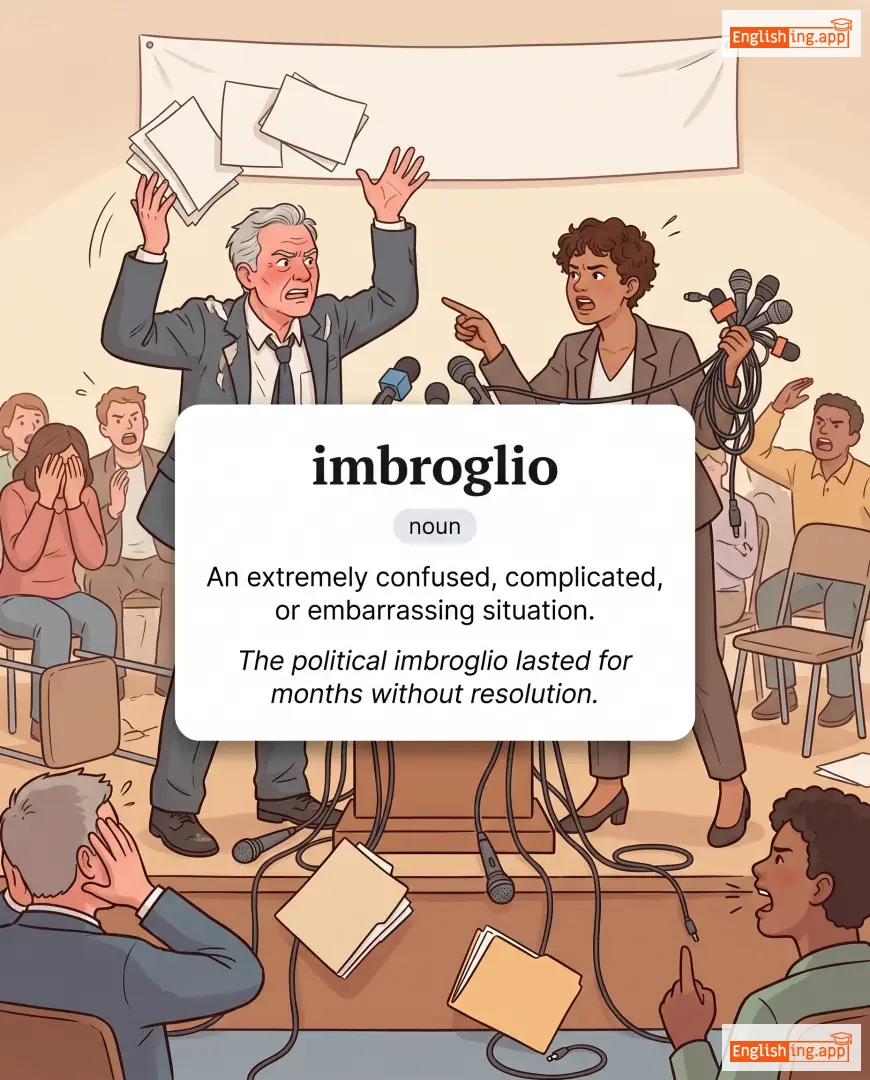
imbroglio definition card — visual illustration of the meaning
noun
/ɪmˈbroʊlioʊ/
embrollo (embrollo)

An extremely confused, complicated, or embarrassing situation.

"The political imbroglio lasted for months without resolution."

"El embrollo político duró meses sin resolución." (El embrollo politico duro meses sin resolucion.)
verb
/ɪmˈbruː/
manchar (manchar)

To stain, especially with blood.

"His hands were imbrued with blood after the battle."

"Sus manos estaban manchadas con sangre después de la batalla." (Sus manos estaban manchadas con sangre después de la batalla.)
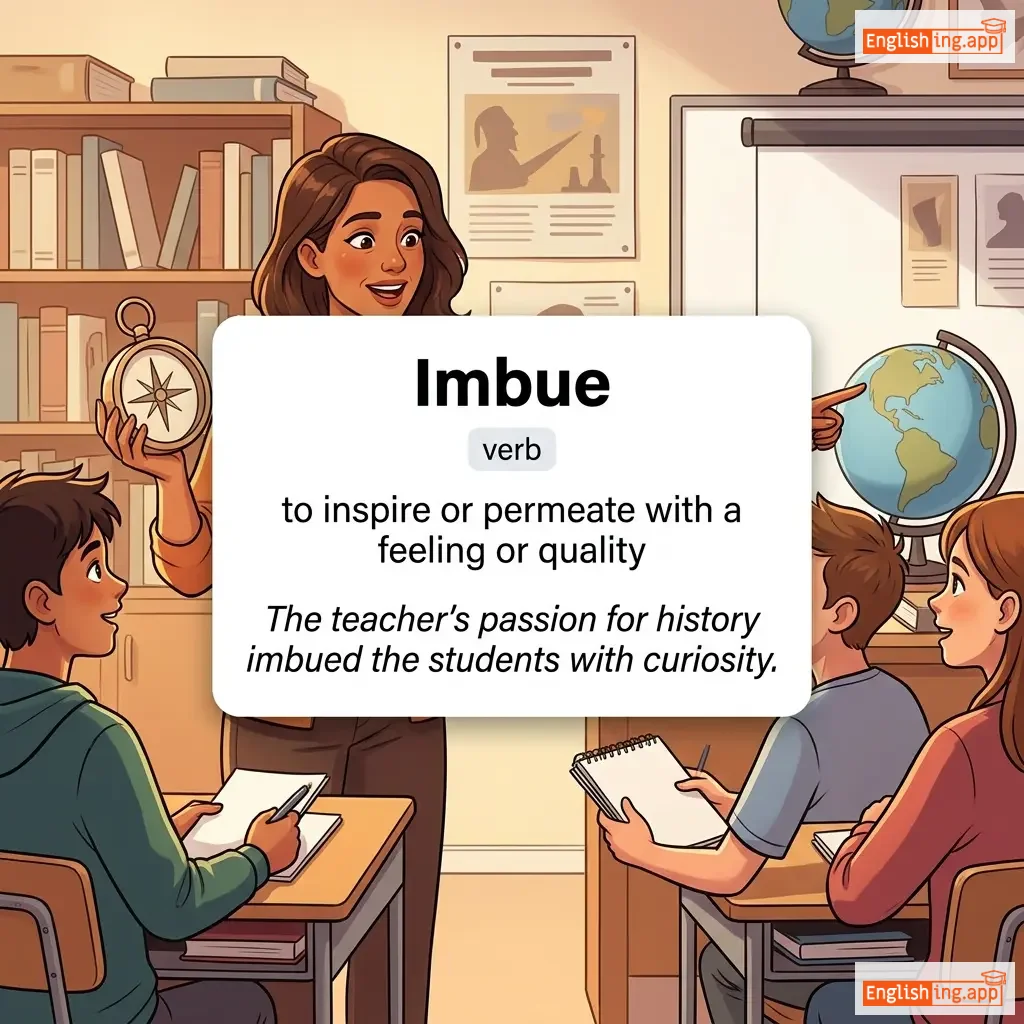
Imbue definition card — visual illustration of the meaning
verb
/ɪmˈbjuː/
imbuir (imbuir)

to inspire or permeate with a feeling or quality

"The teacher's passion for history imbued the students with curiosity."

"La pasión del maestro por la historia imbuyó a los estudiantes con curiosidad." (La pasion del maestro por la historia imbuyo a los estudiantes con curiosidad.)
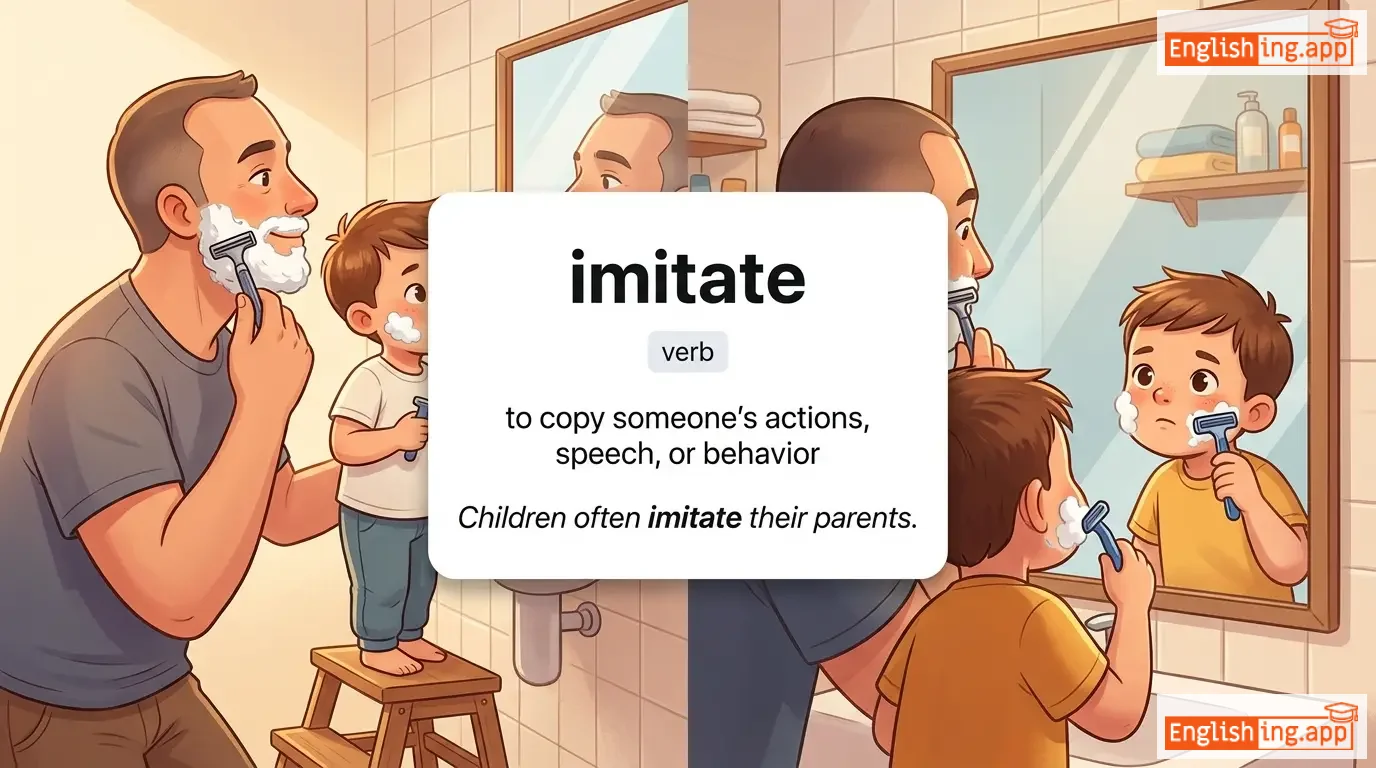
imitate definition card — visual illustration of the meaning
verb
/ˈɪmɪteɪt/
imitar (imitar)

to copy someone's actions, speech, or behavior

"Children often imitate their parents."

"Los niños a menudo imitan a sus padres." (Los niños a menudo imitan a sus padres.)
noun
/ˌɪmɪˈteɪʃən/
imitación (imitacion)

the act of copying or mimicking someone or something

"Children learn many skills through imitation."

"Los niños aprenden muchas habilidades a través de la imitación." (Los niños aprenden muchas habilidades a través de la imitación.)
noun
/ˈɪmɪˌteɪtər/
imitador (imitador)

a person who copies the behavior, style, or actions of others

"He became famous as an imitator of popular singers."

"Se hizo famoso como imitador de cantantes populares." (Se hizo famoso como imitador de cantantes populares.)
adjective
/ɪˈmækjələt/
inmaculado (inmaculado)

perfectly clean, neat, or free from flaws

"Her room was immaculate, with everything in its place."

"Su habitación estaba inmaculada, con todo en su lugar." (Su habitación estaba inmaculada, con todo en su lugar.)
adjective
/ˈɪmənənt/
inmanente (inmanente)

existing or operating within; inherent

"He believed that moral values are immanent in human nature."

"Él creía que los valores morales son inmanentes en la naturaleza humana." (El creía ke los valores morales son inmanentes en la naturaleza humana.)