Vocabularios

Descubra, aprenda y domine el vocabulario en inglés

adjective
/ɪnˈtɒlərənt/
intolerante (intolerante)

unwilling to accept or respect beliefs or behavior different from one's own

"He is intolerant of any opinion that differs from his own."

"Él no tolera ninguna opinión que difiera de la suya." (Él no tolera ninguna opinión que difiera de la suya.)
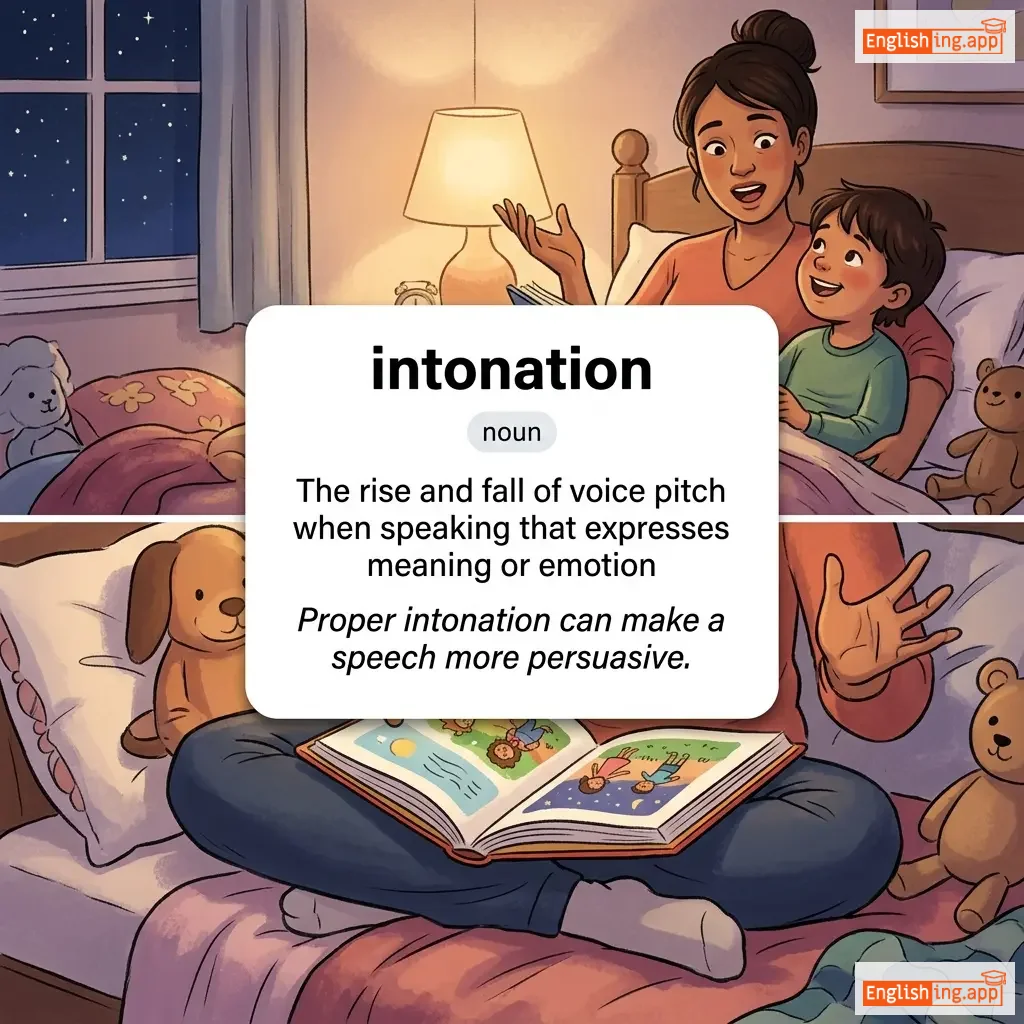
intonation definition card — visual illustration of the meaning
noun
ˌɪn.toʊˈneɪ.ʃən
entonación (entonacion)

The rise and fall of voice pitch when speaking that expresses meaning or emotion

"Proper intonation can make a speech more persuasive."

"La intonación adecuada puede hacer un discurso más persuasivo." (La intonacion adecuada puede hacer un discurso mas persuasivo.)
noun
/ɪnˈtɒksɪkənt/
intoxicante (intoxicante)

a substance, especially alcohol or a drug, that causes intoxication

"Alcohol is the most commonly used intoxicant in many cultures."

"El alcohol es el intoxicante más comúnmente usado en muchas culturas." (El alcohol es el intoxicante más comúnmente usado en muchas culturas.)
verb
/ɪnˈtɒksɪkeɪt/
felicidad (felicidad)

to make someone lose control of their faculties or behavior due to alcohol or drugs

"The strong drink quickly intoxicated him."

"No pudo esconder su felicidad cuando recibió el premio." (No pudo esconder su felicidad cuando recibió el premio.)
adjective
/ˌɪn.trəˈsɛl.jʊ.lər/
dentro de la célula (dentro de la celula)

Located or occurring within a cell.

"The drug works by targeting intracellular bacteria."

"El medicamento funciona al dirigirse a las bacterias intracelulares." (El medicamento funciona al dirigirse a las bacterias intracelulares.)
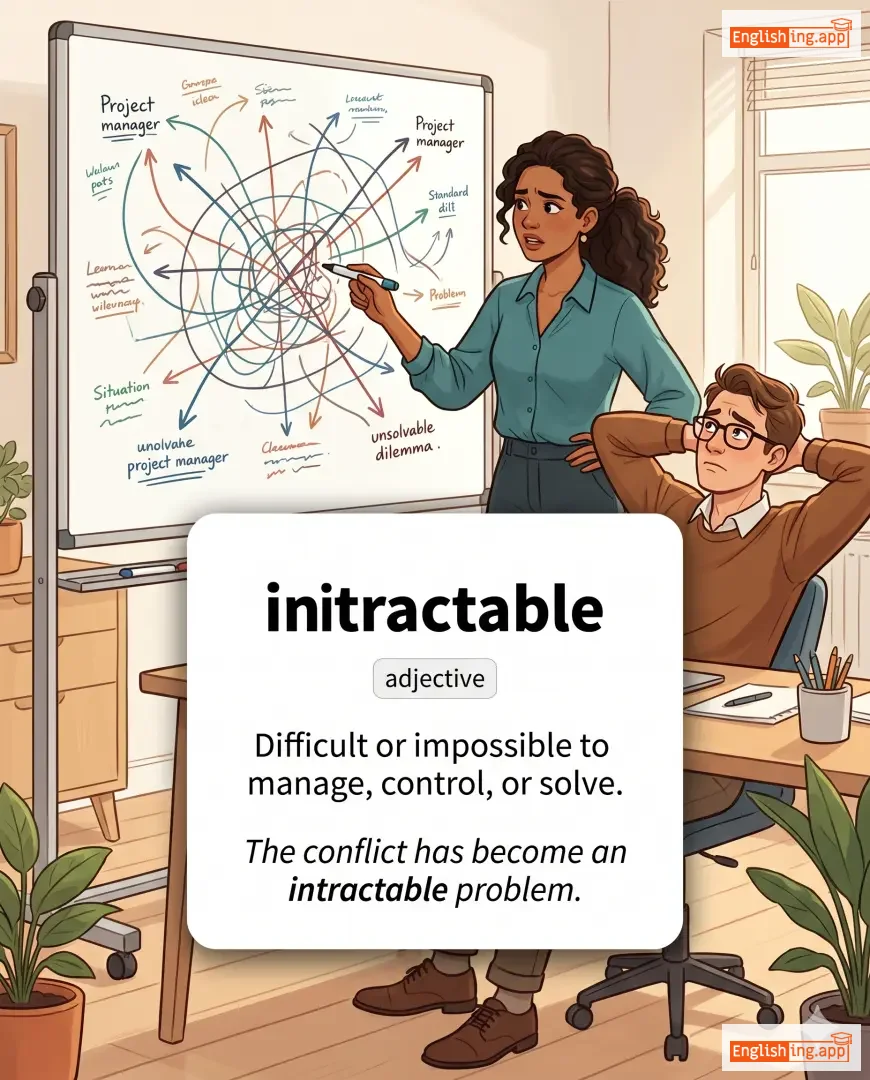
intractable definition card — visual illustration of the meaning
adjective
/ɪnˈtræk.tə.bəl/
incontrolable (incontrolable)

Difficult or impossible to manage, control, or solve.

"The conflict has become an intractable problem."

"El conflicto se ha convertido en un problema incontrolable." (El conflicto se ha convertido en un problema incontrolable.)
adjective
/ˌɪn.trəˈmjʊə.rəl/
dentro de la institución (dentro de la institucion)

Occurring within the walls of a single institution, especially a school or college.

"The college organizes intramural sports competitions every semester."

"La universidad organiza competencias deportivas intramuros cada semestre." (La universidad organiza competencias deportivas intramuros cada semestre.)
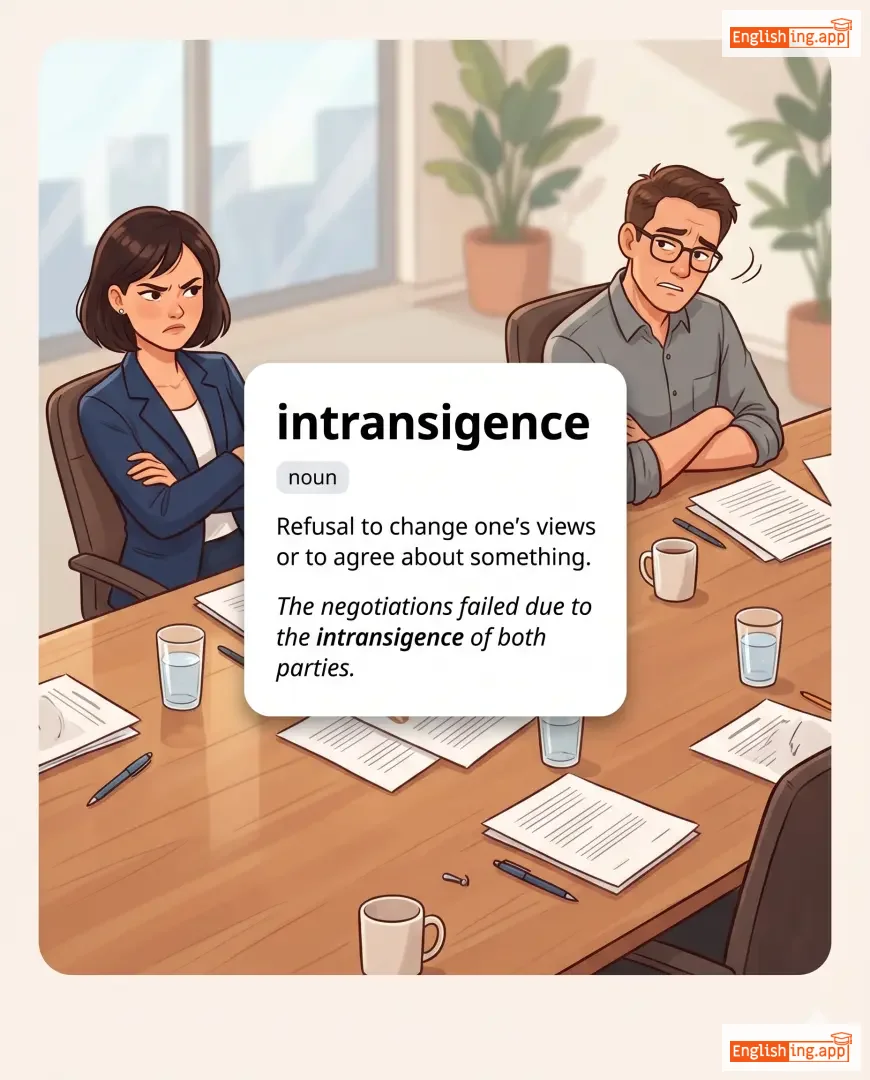
intransigence definition card — visual illustration of the meaning
noun
/ɪnˈtræn.sɪ.dʒəns/
intransigencia (intransigencia)

Refusal to change one's views or to agree about something.

"The negotiations failed due to the intransigence of both parties."

"Las negociaciones fracasaron debido a la intransigencia de ambas partes." (Las negociaciones fracasaron debido a la intransigencia de ambas partes.)
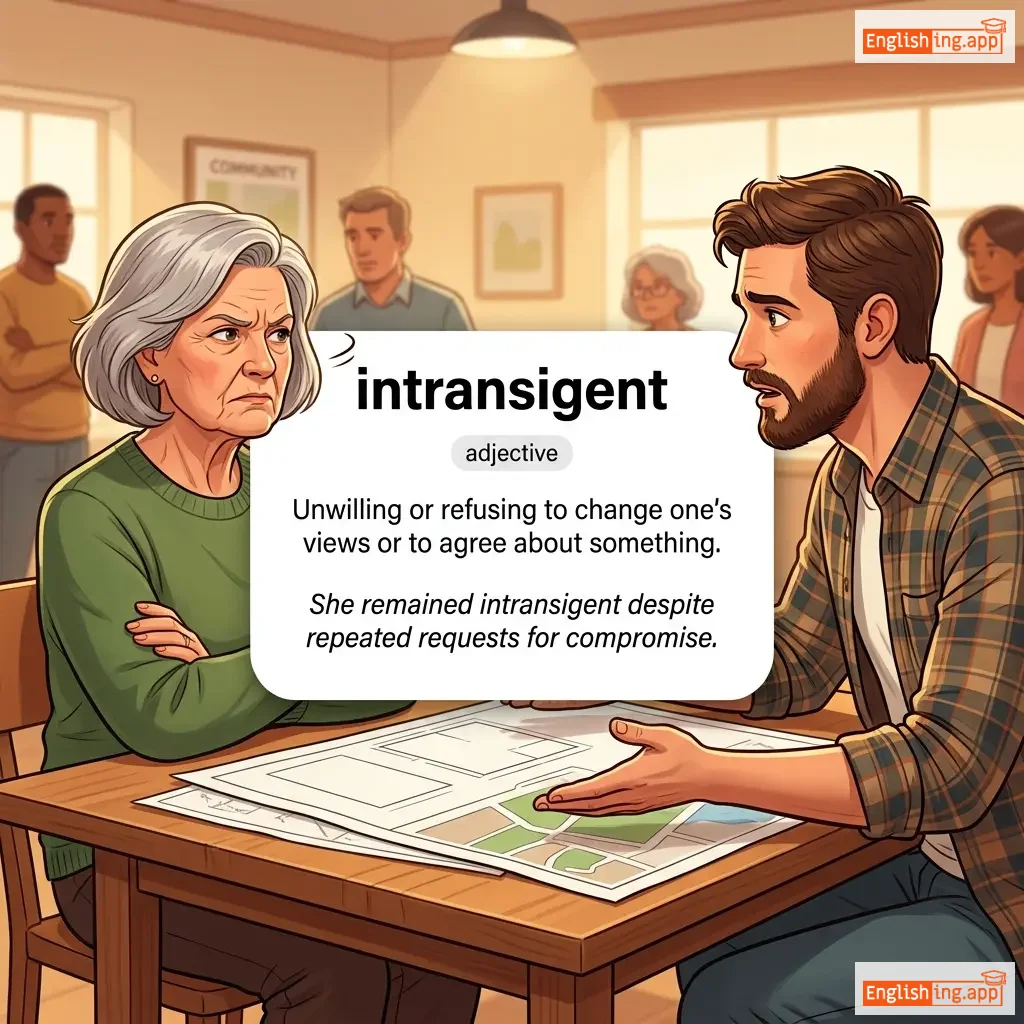
intransigent definition card — visual illustration of the meaning
adjective
/ɪnˈtræn.sɪ.dʒənt/
intransigente (intransigente)

Unwilling or refusing to change one's views or to agree about something.

"She remained intransigent despite repeated requests for compromise."

"Ella permaneció intransigente a pesar de las repetidas solicitudes de compromiso." (Ella permaneció intransigente a pesar de las repetidas solicitudes de compromiso.)
adjective
/ɪnˈtrɛpɪd/
intrépido (intrepido)

fearless and adventurous, often used humorously

"The intrepid traveler explored the jungle alone."

"El intrépido viajero exploró la jungla solo." (El intrepido viajero exploro la jungla solo.)
noun
/ˈɪntrɪkəsi/
complejidad (complejidad)

the quality of being very detailed or complicated

"The intricacy of the design impressed everyone."

"La complejidad del diseño impresionó a todos." (La complejidad del diseño impresionó a todos.)
adjective
/ˈɪntrɪkət/
intrincado (intrincado)

very detailed, complex, and difficult to understand

"The artist created an intricate pattern on the wall."

"El artista creó un patrón intrincado en la pared." (El artista creo un patron intrincado en la pared.)
verb
/ɪnˈtriːɡ/
intrigar (intrigar)

to arouse curiosity or interest; to make someone fascinated

"The mystery novel will intrigue any reader."

"La novela de misterio intriga a cualquier lector." (La novela de misterio intriga a cualquier lector.)
adjective
/ɪnˈtriːɡɪŋ/
interesante y extraño; que despierta curiosidad (interesante y extrano; que despierta curiosidad)

very interesting and unusual; arousing curiosity

"The movie has an intriguing plot that keeps the audience hooked."

"La película tiene una trama interesante que mantiene al público cautivo." (La pelicula tiene una trama interesante que mantiene al publico cautivo.)
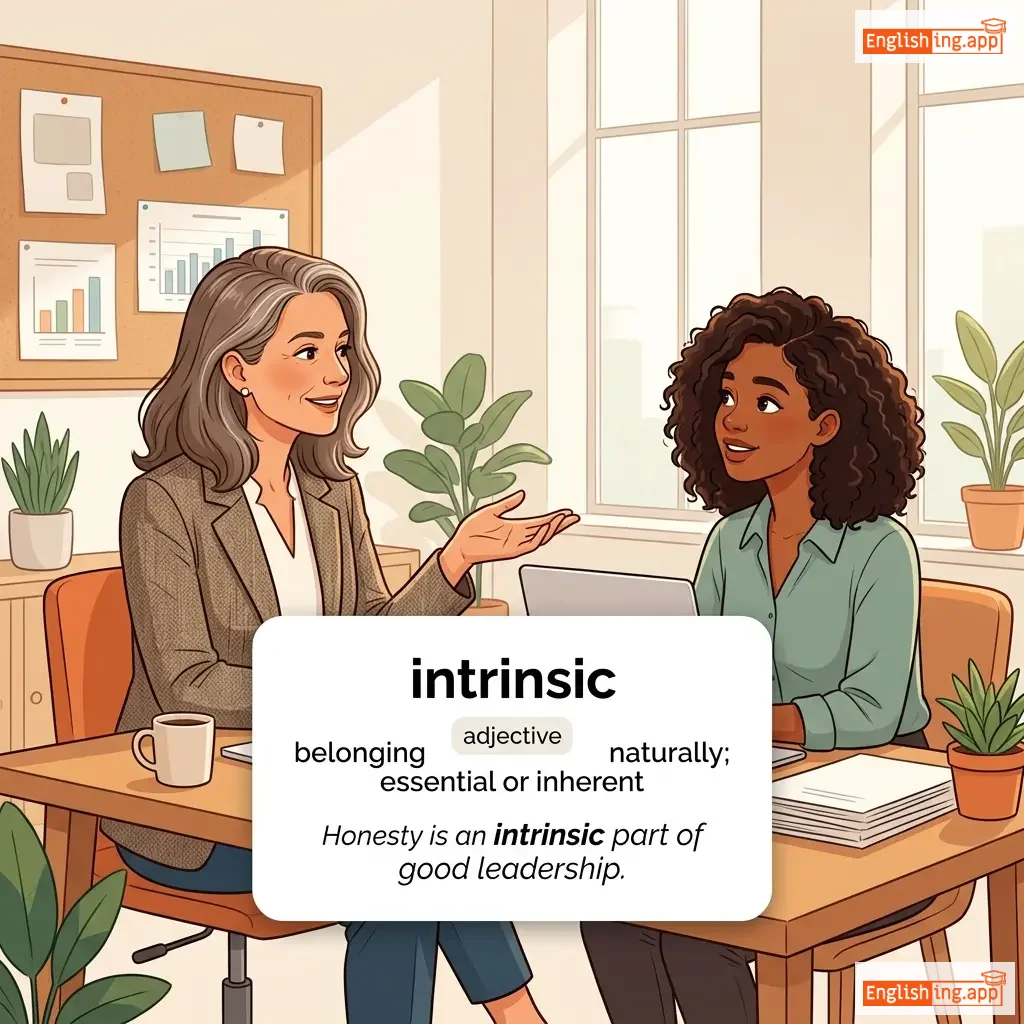
intrinsic definition card — visual illustration of the meaning
adjective
/ɪnˈtrɪnzɪk/
intrínseco (intrínseco)

belonging naturally; essential or inherent

"Honesty is an intrinsic part of good leadership."

"La honestidad es una parte intrínseca de un buen liderazgo." (La honestidad es una parte intrínseca de un buen liderazgo.)
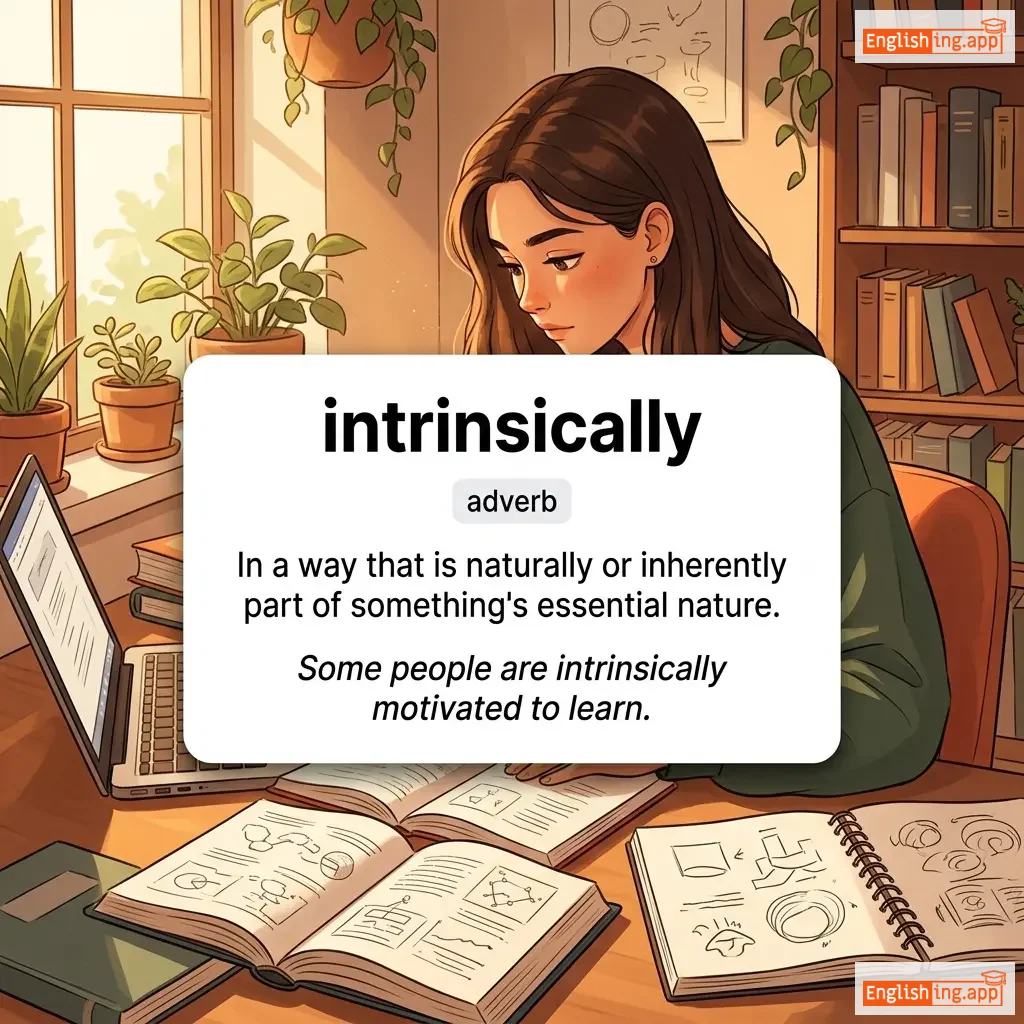
intrinsically definition card — visual illustration of the meaning
adverb
ɪnˈtrɪn.zɪ.kli
intrínsecamente (intrinsecamente)

In a way that is naturally or inherently part of something's essential nature.

"Some people are intrinsically motivated to learn."

"Algunas personas están intrínsecamente motivadas para aprender." (Algunas personas están intrínsecamente motivadas para aprender.)
introduce definition card — visual illustration of the meaning
verb
/ˌɪntrəˈduːs/
introducir (introducir)

to present someone or something to another person or group

"He will introduce his new idea at the meeting."

"Él presentará su nueva idea en la reunión." (El presentará su nueva idea en la reunión.)
noun
/ˌɪn.trəˈdʌk.ʃən/
introducción (introduccion)

the action of introducing something or someone; an opening or beginning part

"The professor gave a brief introduction before starting the lecture."

"El profesor dio una breve introducción antes de comenzar la conferencia." (El profesor dio una breve introducción antes de comenzar la conferencia.)
adjective
/ˌɪn.trəˈdʌk.tər.i/
introductorio (introductorio)

Serving as an introduction; preliminary or preparatory.

"The professor gave an introductory lecture on economics."

"El profesor dio una conferencia introductoria sobre economía." (El profesor dio una conferencia introductoria sobre economia.)
noun
/ˌɪn.trəˈɡreʃ.ən/
introducción genética (introduccion genetica)

The transfer of genetic information from one species to another through repeated backcrossing.

"Introgression plays a significant role in plant breeding."

"La introgressión juega un papel importante en la mejora de plantas." (La introgrision juega un papel importante en la mejora de plantas.)
verb
/ˌɪn.trəˈmɪt/
introducir (introducir)

To insert or introduce something into a place or body.

"The doctor carefully intromitted the instrument into the wound."

"El doctor introdujo cuidadosamente el instrumento en la herida." (El doctor introdujo cuidadosamente el instrumento en la herida.)
verb
/ˌɪn.trəˈspekt/
introspectar (introspectar)

To examine one's own thoughts, feelings, or mental state.

"He often introspects before making important decisions."

"Él a menudo se introspecta antes de tomar decisiones importantes." (El a menudo se introspecta antes de tomar decisiones importantes.)
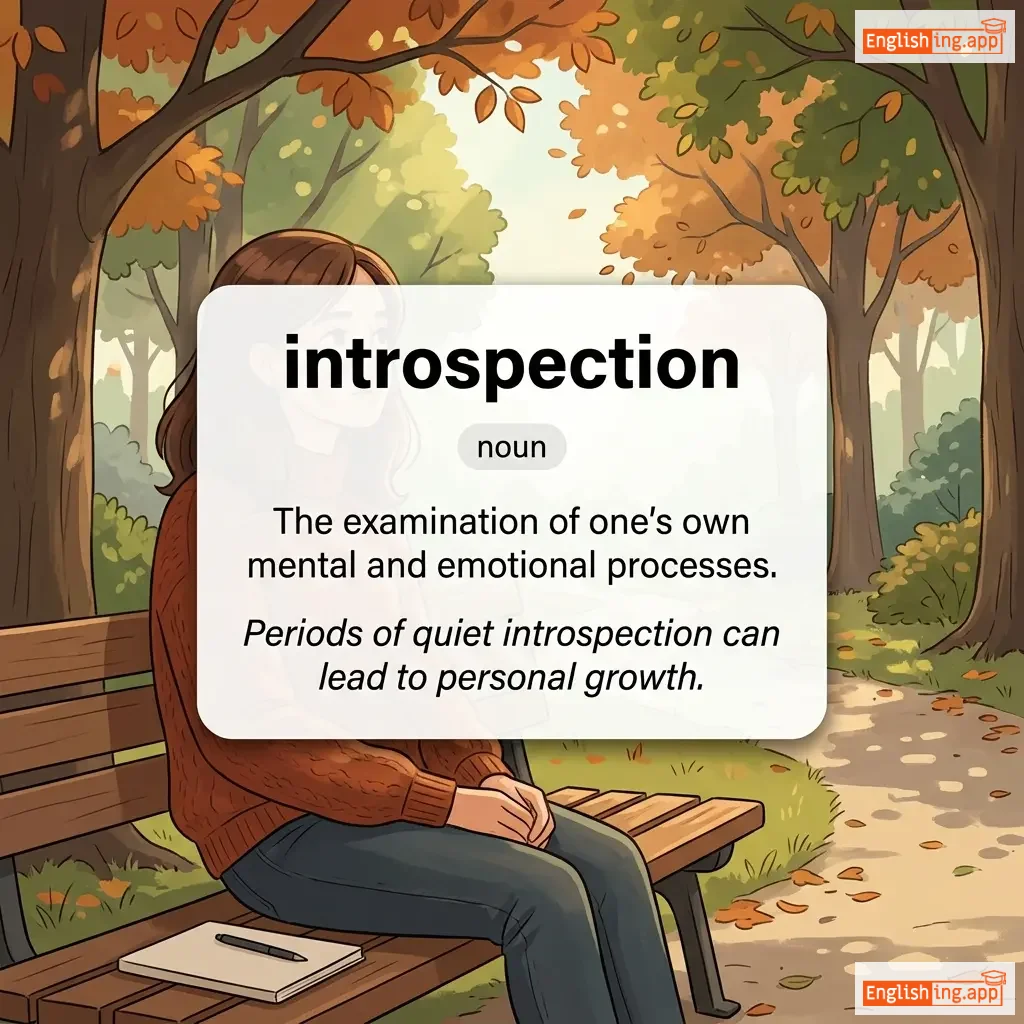
introspection definition card — visual illustration of the meaning
noun
/ˌɪn.trəˈspek.ʃən/
introspección (introspeccion)

The examination of one's own mental and emotional processes.

"Periods of quiet introspection can lead to personal growth."

"Los períodos de introspección tranquila pueden llevar al crecimiento personal." (Los periodos de introspección tranquila pueden llevar al crecimiento personal.)
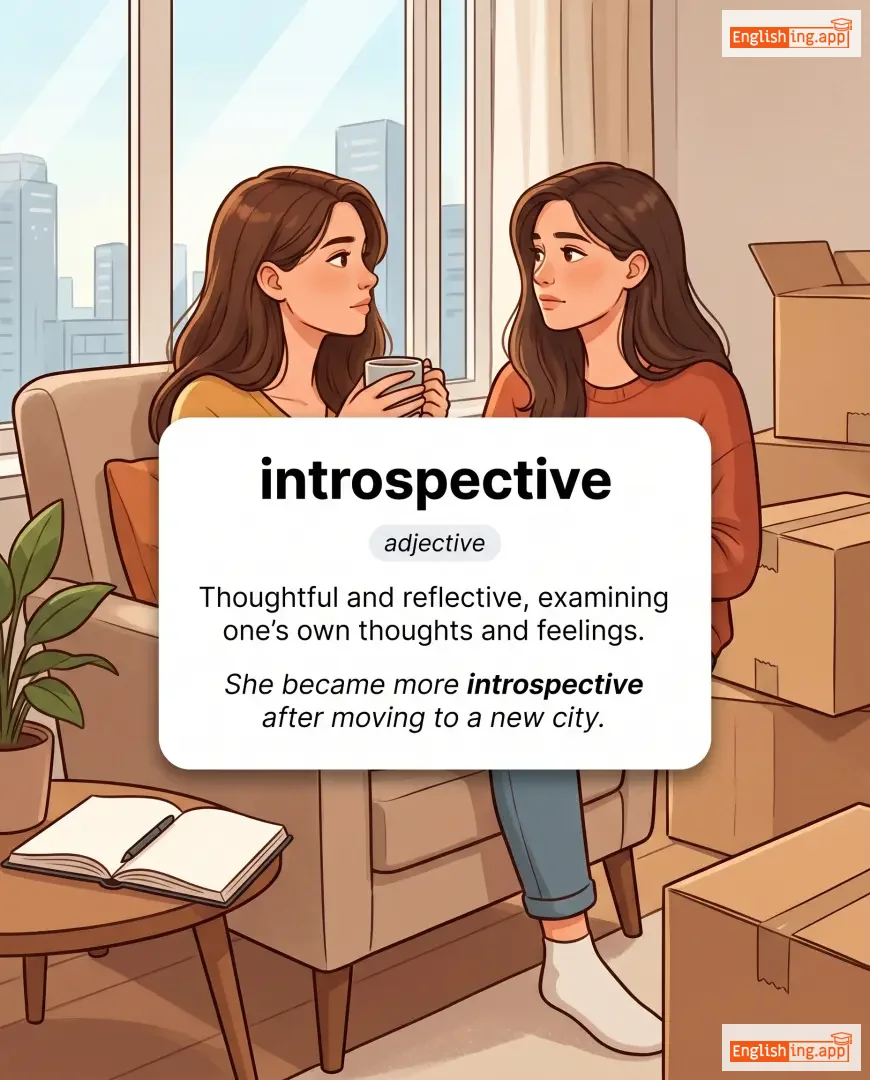
introspective definition card — visual illustration of the meaning
adjective
/ˌɪn.trəˈspɛk.tɪv/
introspectivo (introspectivo)

Thoughtful and reflective, examining one's own thoughts and feelings.

"She became more introspective after moving to a new city."

"Se volvió más introspectiva después de mudarse a una nueva ciudad." (Se volvió más introspectiva después de mudarse a una nueva ciudad.)
noun
/ˌɪn.trəˈvɜːr.ʒən/
introversión (introversion)

The tendency to be inward-looking and shy, preferring solitary activities.

"Her introversion made it difficult for her to enjoy large parties."

"Su introversión le dificultaba disfrutar de las grandes fiestas." (Su introversion le dificultaba disfrutar de las grandes fiestas.)
noun
/ˈɪn.trə.vɜːrt/
introvertido (introvertido)

A person who tends to be shy and prefers spending time alone rather than in groups.

"As an introvert, he preferred reading over attending parties."

"Como introvertido, prefería leer en lugar de asistir a fiestas." (Como introvertido, prefería leer en lugar de asistir a fiestas.)
verb
/ɪnˈtruːd/
interrumpir (interrumpir)

To enter a place or situation where one is not wanted or not invited.

"He felt embarrassed to intrude on their private conversation."

"Él se sintió avergonzado de interrumpir su conversación privada." (El se sintió avergonzado de interrumpir su conversación privada.)
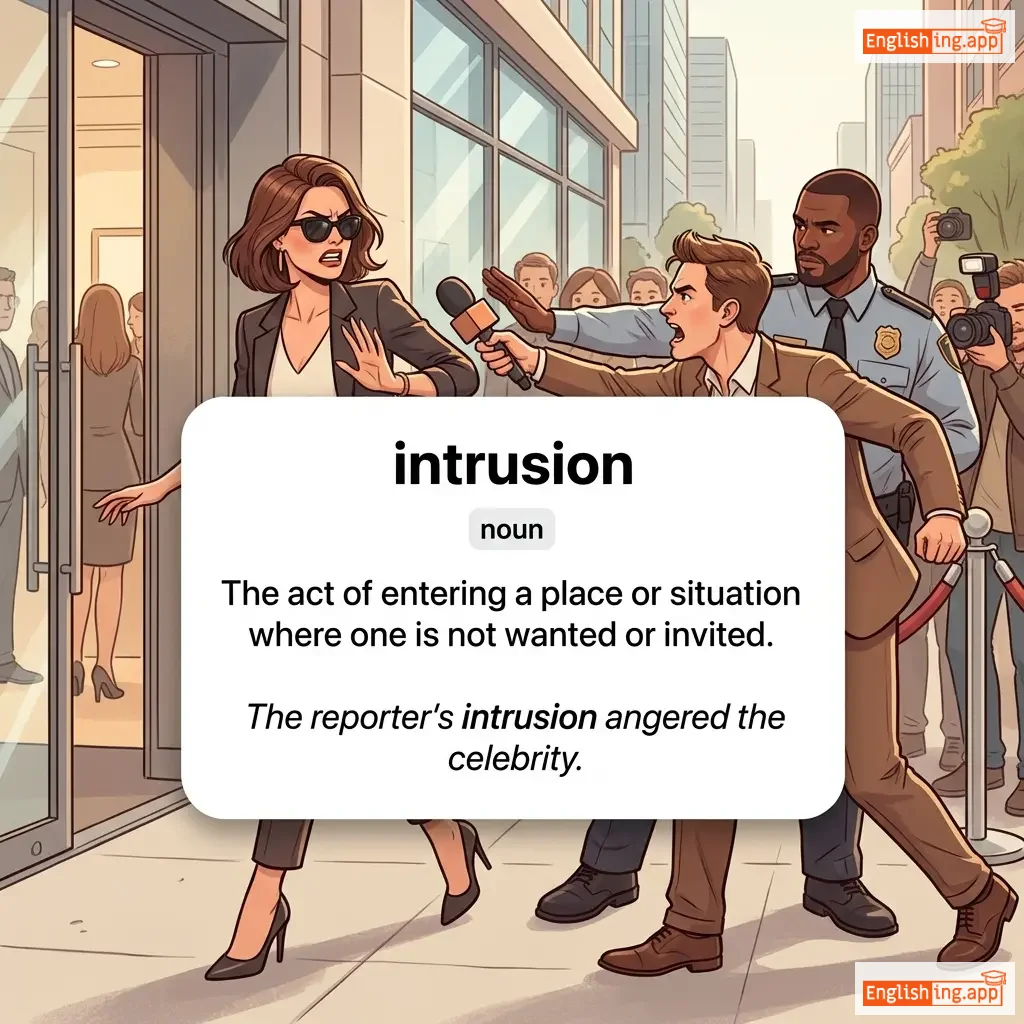
intrusion definition card — visual illustration of the meaning
noun
/ɪnˈtruː.ʒən/
intrusión no deseada (intrusion no deseada)

The act of entering a place or situation where one is not wanted or invited.

"The reporter's intrusion angered the celebrity."

"La intrusión del reportero enfureció a la celebridad." (La intrusion del reportero enfureció a la celebridad.)
intuition definition card — visual illustration of the meaning
noun
/ˌɪn.tjuˈɪʃ.ən/
intuición (intuicion)

The ability to understand or know something immediately, without conscious reasoning.

"Her intuition told her that something was wrong."

"Su intuición le dijo que algo estaba mal." (Su intuicion le dijo que algo estaba mal.)
adjective
/ɪnˈtjuː.ɪ.tɪv/
intuitivo (intuitivo)

Based on instinctive understanding rather than reasoning.

"The software has an intuitive design that makes it easy to use."

"El software tiene un diseño intuitivo que lo hace fácil de usar." (El software tiene un diseño intuitivo que lo hace fácil de usar.)
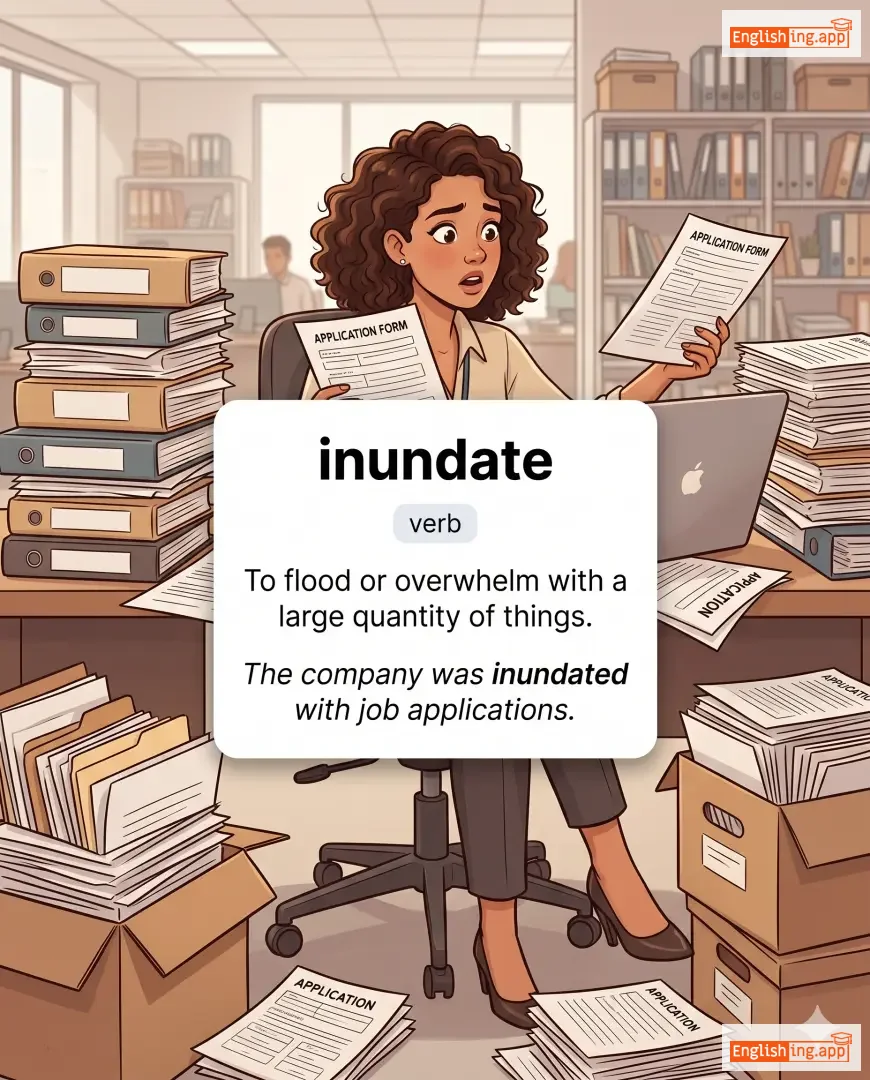
inundate definition card — visual illustration of the meaning
verb
/ˈɪn.ʌn.deɪt/
inundar / desbordar (inundar / desbordar)

To flood or overwhelm with a large quantity of things.

"The company was inundated with job applications."

"La empresa fue inundada con solicitudes de empleo." (La empresa fue inundada con solicitudes de empleo.)
noun
/ˌɪn.ʌnˈdeɪ.ʃən/
inundación (inundacion)

The act of flooding or overwhelming with water or things.

"The town suffered from a severe inundation after the heavy rains."

"La ciudad sufrió una grave inundación después de las fuertes lluvias." (La ciudad sufrió una grave inundación después de las fuertes lluvias.)
verb
/ɪˈnjʊər/
acostumbrar (acostumbrar)

To become accustomed to something, especially something unpleasant.

"Soldiers quickly became inured to the harsh conditions."

"Los soldados rápidamente se acostumbraron a las duras condiciones." (Los soldados rápidamente se acostumbraron a las duras condiciones.)
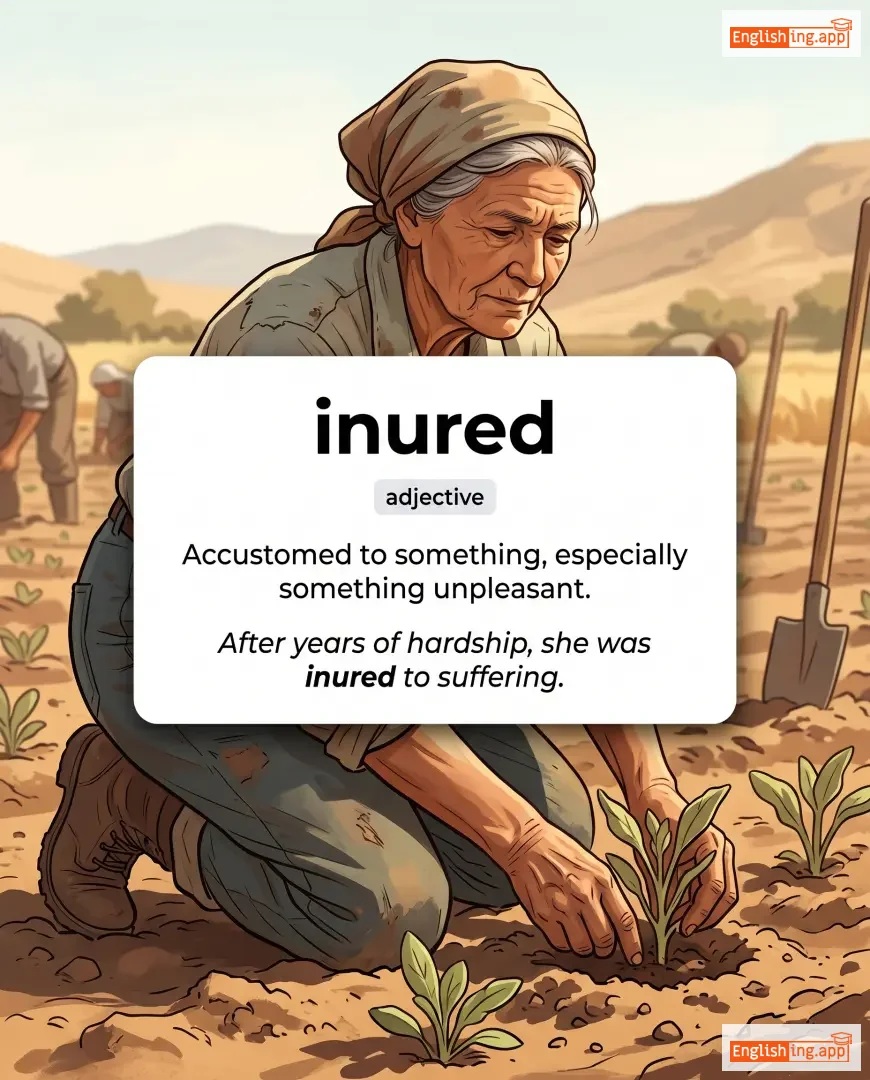
inured definition card — visual illustration of the meaning
adjective
/ɪˈnjʊərd/
acostumbrado (acostumbrado)

Accustomed to something, especially something unpleasant.

"After years of hardship, she was inured to suffering."

"Después de años de sufrimiento, ella estaba acostumbrada al dolor." (Después de años de sufrimiento, ella estaba acostumbrada al dolor.)
verb
/ɪnˈveɪd/
invadir (invaidir)

to enter a place or country forcefully, especially as an enemy

"The army invaded the neighboring country."

"El ejército invadió el país vecino." (El ejercito invadio el pais vecino.)
adjective, noun
/ˈɪnvəlɪd/ (adjective), /ɪnˈvælɪd/ (noun)
inválido (invalido)

Not valid; having no force or effect. Also refers to a person too weak or ill to care for themselves.

"The court declared the contract invalid."

"El tribunal declaró el contrato inválido." (El tribunal declaro el contrato invalido.)
verb
/ɪnˈvælɪdeɪt/
invalidar (invalidar)

To make something not valid or legally acceptable.

"The new evidence may invalidate the previous ruling."

"La nueva evidencia puede invalidar el fallo anterior." (La nueva evidencia puede invalidar el fallo anterior.)
noun
/ˌɪnvəˈlɪdɪti/
invalidez (invalidez)

the state of being invalid, legally void, or lacking force or validity

"The court ruled that the contract suffered from invalidity."

"El tribunal dictaminó que el contrato tenía invalidez." (el tribunal dictamino que el contrato tenia invalidez)
adjective
/ɪnˈvæljʊəbl/
invaluable (invaluable)

Extremely useful or indispensable.

"Her advice proved invaluable to my success."

"Su consejo resultó invaluable para mi éxito." (Su consejo resulto invaluable para mi exito.)
adjective
/ɪnˈvɛəriəbl/
invariable (invariable)

Not changing; constant and unchanging.

"His invariable kindness won him many friends."

"Su amabilidad invariable le ganó muchos amigos." (Su amabilidad invariable le ganó muchos amigos.)
noun
/ɪnˈveɪʒən/
invasión (invasion)

An instance of invading a country, region, or personal space with armed force or unwelcome presence.

"The army prepared for the possibility of an invasion."

"El ejército se preparó para la posibilidad de una invasión." (El ejercito se preparo para la posibilidad de una invasion.)
adjective
/ɪnˈveɪsɪv/
invasivo (invasivo)

Tending to spread harmfully, intruding aggressively, or encroaching beyond proper boundaries.

"The doctor explained that the procedure was minimally invasive."

"El doctor explicó que el procedimiento era mínimamente invasivo." (El doktor ekspliko ke el prosedimiento era minimamente invasivo.)
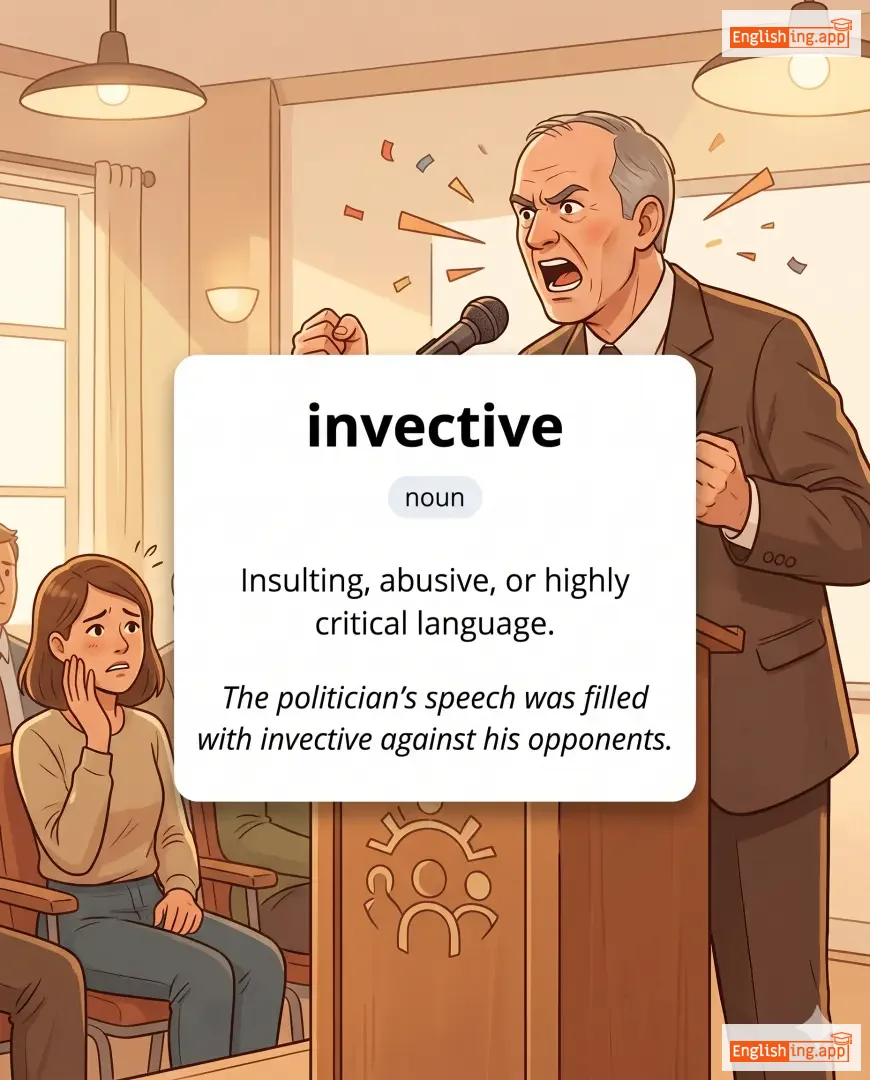
invective definition card — visual illustration of the meaning
noun
/ɪnˈvɛktɪv/
lenguaje insultante (lenguaje insultante)

Insulting, abusive, or highly critical language.

"The politician’s speech was filled with invective against his opponents."

"El discurso del político estaba lleno de invectivas contra sus oponentes." (El discurso del político estaba lleno de invectivas contra sus oponentes.)
verb
/ɪnˈveɪ/
criticar duramente (kritikar duramente)

To speak or write about something with great hostility and criticism.

"He inveighed against the corruption in government."

"Él criticó duramente la corrupción en el gobierno." (Él criticó duramente la corrupción en el gobierno.)
inveigle definition card — visual illustration of the meaning
verb
/ɪnˈveɪɡəl/
engatusar (engatusar)

To persuade someone to do something by deception or flattery.

"She inveigled him into signing the contract."

"Ella lo engañó para que firmara el contrato." (Ella lo engañó para que firmara el contrato.)
verb
/ɪnˈvɛnt/
inventar (inventar)

to create or design something that has not existed before

"Thomas Edison invented the electric bulb."

"Thomas Edison inventó la bombilla eléctrica." (Thomas Edison invento la bombilla electrica.)
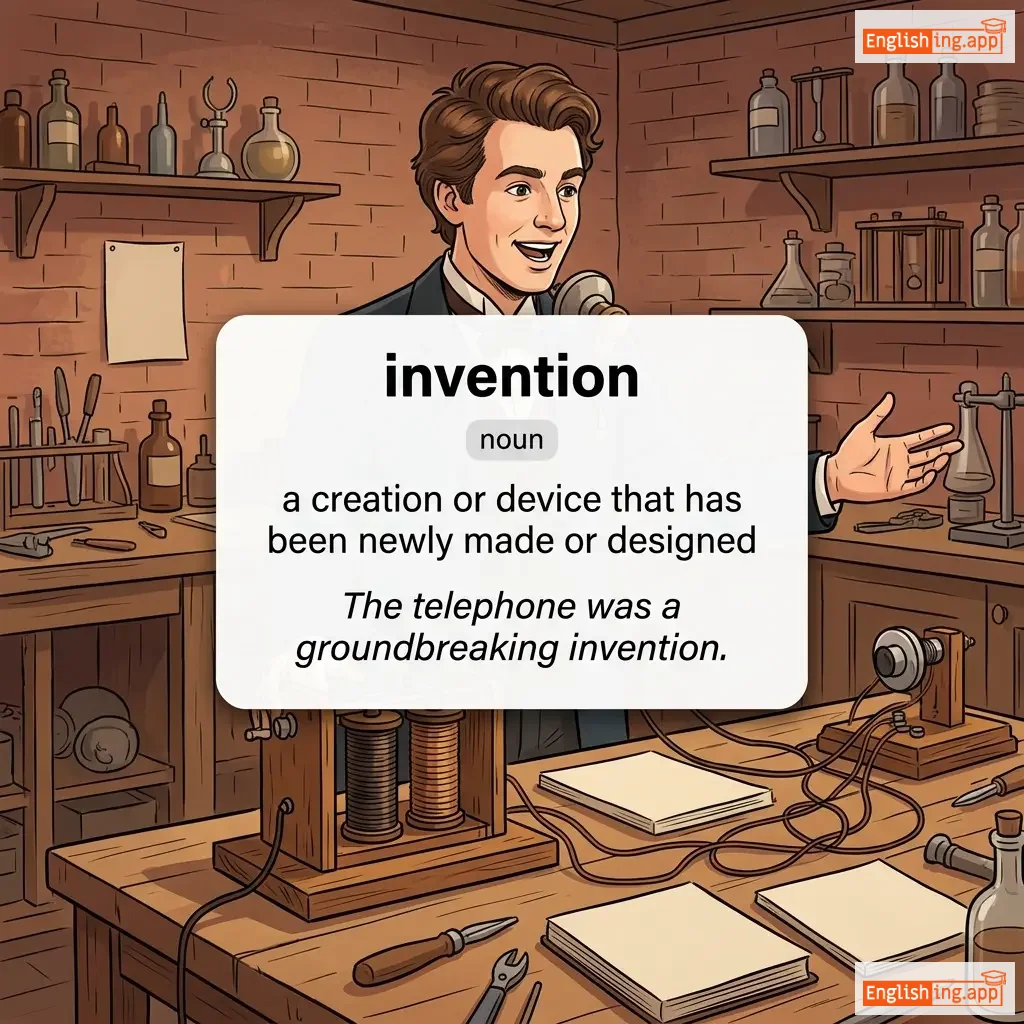
invention definition card — visual illustration of the meaning
noun
/ɪnˈvɛnʃən/
invención (invencion)

a creation or device that has been newly made or designed

"The telephone was a groundbreaking invention."

"El teléfono fue una invención revolucionaria." (El telefono fue una invencion revolucionaria.)
adjective
/ɪnˈvɛntɪv/
inventivo (inventivo)

Having the ability to create or design new things or to think originally.

"The inventor was known for his inventive solutions to everyday problems."

"El inventor era conocido por sus soluciones inventivas para los problemas cotidianos." (El inventor era conocido por sus soluciones inventivas para los problemas cotidianos.)
noun
/ɪnˈventər/
inventor (inventor)

a person who creates or designs something new, especially a device, method, or process

"The inventor patented her new medical device."

"El inventor patentó su nuevo dispositivo médico." (El inventor patento su nuevo dispositivo medico)
noun
/ˈɪnvənˌtɔːri/
inventario (inventario)

A complete list of items, such as goods in stock or property.

"The shopkeeper checked the inventory before opening the store."

"El tendero revisó el inventario antes de abrir la tienda." (El tendero revisó el inventario antes de abrir la tienda.)