Vocabularios

Descubra, aprenda y domine el vocabulario en inglés

noun/adjective
/ˈɪnstənt/
instantáneo (instantaneo)

A very short period of time; happening immediately.

"He replied in an instant without hesitation."

"Él respondió en un instante sin dudar." (Él respondió en un instante sin dudar.)
adjective
/ˌɪnstənˈteɪniəs/
instantáneo (instantaneo)

Happening immediately, without any delay.

"The change in temperature was almost instantaneous."

"El cambio de temperatura fue casi instantáneo." (El cambio de temperatura fue casi instantáneo.)
adverb
/ˈɪnstəntli/
instantáneamente (instantaneamente)

immediately, without any delay

"He replied instantly to the message."

"Él respondió instantáneamente al mensaje." (El respondió instantáneamente al mensaje.)
verb
/ɪnˈsteɪt/
instaurar (instaurar)

To set up in position, office, or authority.

"The board decided to instate her as the new director."

"La junta decidió instatarla como la nueva directora." (La junta decidió instatarla como la nueva directora.)
adverb
/ɪnˈstɛd/
en lugar de (en lugar de)

As an alternative or substitute.

"She didn’t buy the dress; instead, she chose a pair of shoes."

"Ella no compró el vestido; en su lugar, eligió un par de zapatos." (Ella no compró el vestido; en su lugar, eligió un par de zapatos.)
verb
/ˈɪnstɪˌɡeɪt/
incitar (incitar)

To bring about or initiate an action, often something negative.

"He was accused of instigating the riot."

"Fue acusado de incitar el motín." (Fue acusado de incitar el motín.)
noun
/ˈɪnstɪˌɡeɪtər/
instigador (instigador)

A person who brings about or initiates something, usually something bad.

"The police identified him as the instigator of the violence."

"La policía lo identificó como el instigador de la violencia." (La policía lo identificó como el instigador de la violencia.)
verb
/ɪnˈstɪl/
instruir (instruir)

to gradually but firmly establish an idea, attitude, or habit in someone's mind

"Parents try to instill good values in their children."

"Los padres intentan inculcar buenos valores en sus hijos." (Los padres intentan inculcar buenos valores en sus hijos.)
noun
/ˈɪnstɪŋkt/
instinto (instinto)

A natural way of behaving or reacting that does not require learning.

"Birds build nests by instinct."

"Los pájaros construyen nidos por instinto." (Los pájaros construyen nidos por instinto.)
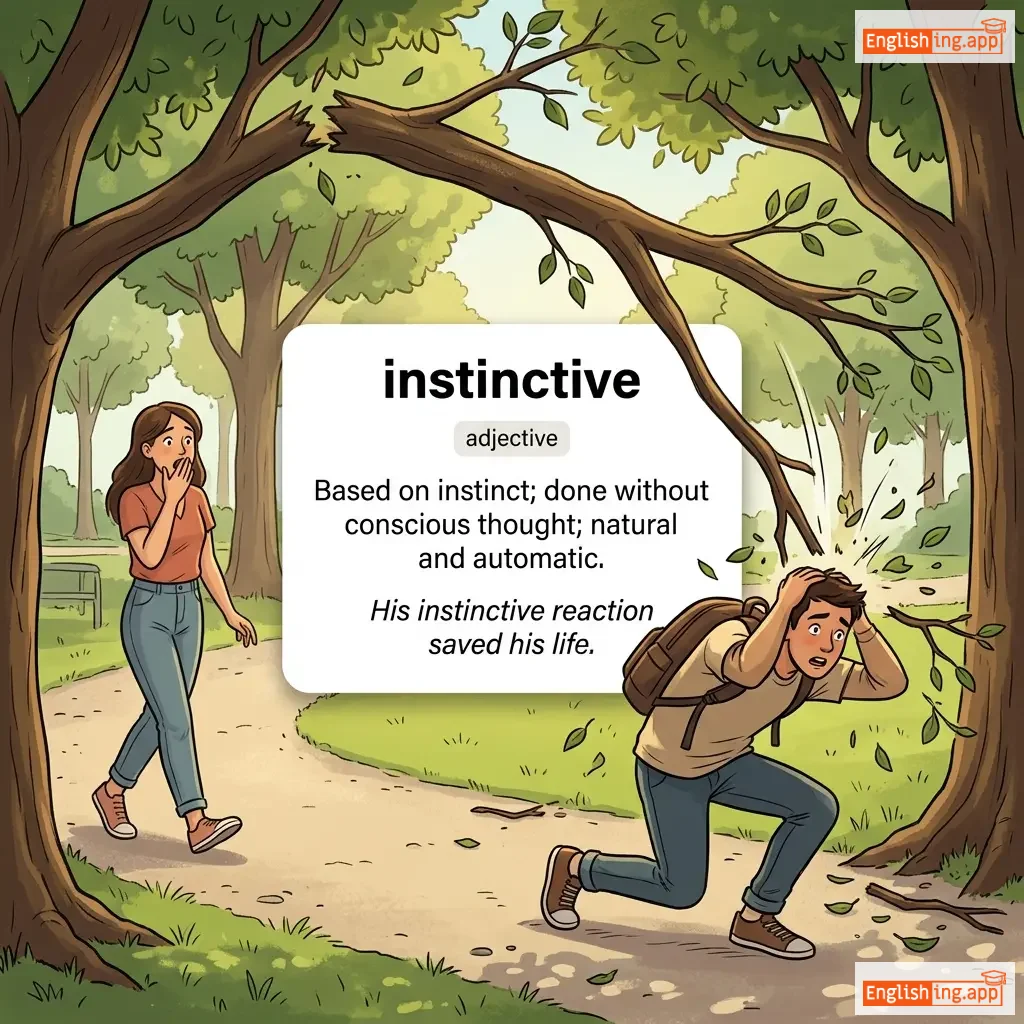
instinctive definition card — visual illustration of the meaning
adjective
/ɪnˈstɪŋk.tɪv/
instintivo, natural, automático (instintivo, natural, automatico)

Based on instinct; done without conscious thought; natural and automatic.

"His instinctive reaction saved his life."

"Su reacción instintiva le salvó la vida." (Su reaccion instintiva le salvo la vida.)
noun, verb
/ˈɪnstɪˌtjuːt/
institución (institucion)

as a noun, an organization founded for a specific purpose; as a verb, to establish or initiate

"The university decided to institute new rules for the library."

"La universidad decidió instituir nuevas reglas para la biblioteca." (La universidad decidio instituir nuevas reglas para la biblioteca.)
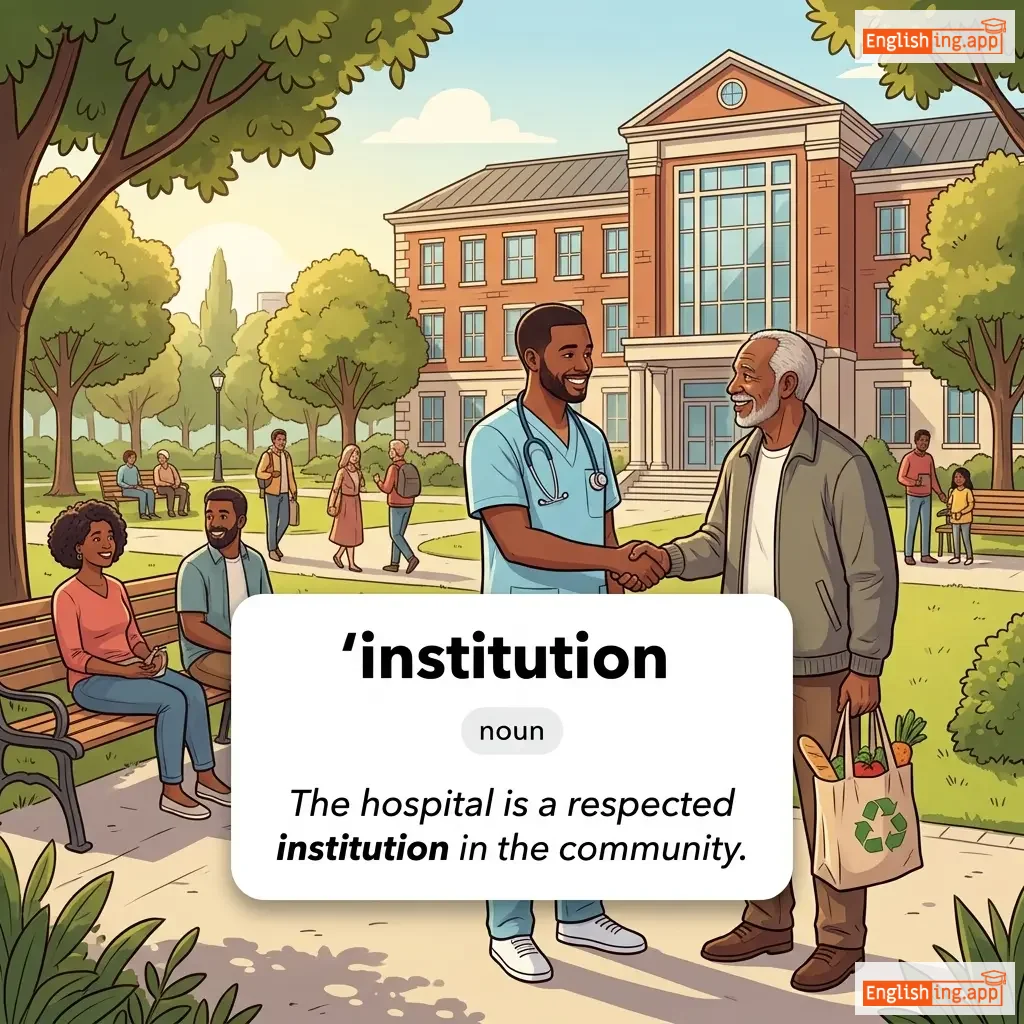
institution definition card — visual illustration of the meaning
noun
/ˌɪnstɪˈtjuːʃən/
institución (institucion)

an established organization, especially one dedicated to education, public service, or a particular purpose

"The hospital is a respected institution in the community."

"El hospital es una institución respetada en la comunidad." (El hospital es una institucion respetada en la comunidad.)
adjective
/ˌɪnstɪˈtjuːʃənl/
institucional (institucional)

Relating to an organization or established practice.

"The government made several institutional reforms in education."

"El gobierno hizo varias reformas institucionales en la educación." (El gobierno hizo varias reformas institucionales en la educacion.)
verb
/ˌɪnstɪˈtjuːʃənəlaɪz/
institucionalizar (institucionalizar)

to establish something as a formal institution, custom, or practice

"The government seeks to institutionalize environmental protection."

"El gobierno busca institucionalizar la protección ambiental." (El gobierno busca institucionalizar la proteccion ambiental.)
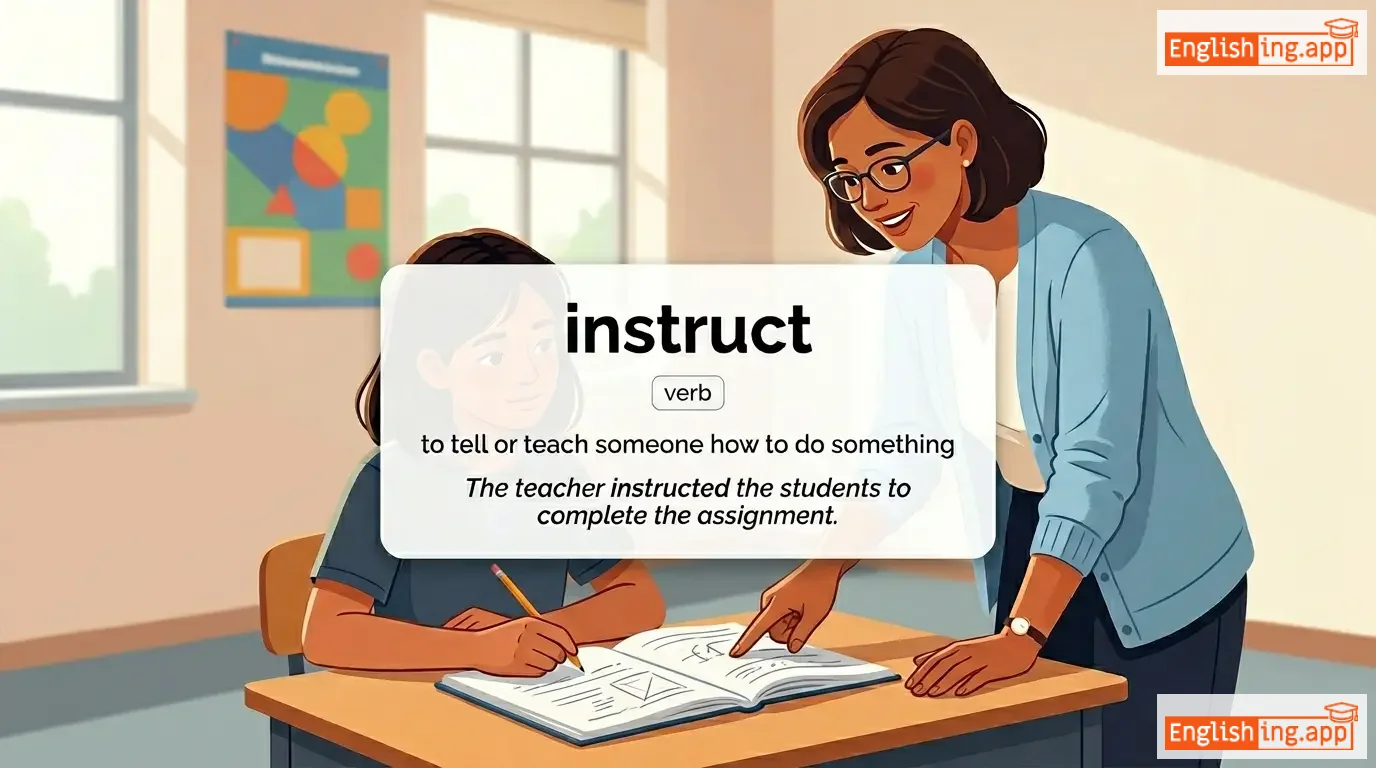
instruct definition card — visual illustration of the meaning
verb
/ɪnˈstrʌkt/
instruir, enseñar (instruir, ensenyar)

to tell or teach someone how to do something

"The teacher instructed the students to complete the assignment."

"El maestro instruyó a los estudiantes para completar la tarea." (El maestro instruyó a los estudiantes para completar la tarea.)
noun
/ɪnˈstrʌkʃən/
instrucción (instruccion)

Detailed information telling how something should be done or operated.

"Please read the instruction carefully before using the machine."

"Por favor, lea la instrucción cuidadosamente antes de usar la máquina." (Por favor, lea la instruccion cuidadosamente antes de usar la maquina.)
adjective
/ɪnˈstrʌkʃənəl/
instructivo (instructivo)

providing knowledge or information; intended to teach

"The website offers many instructional videos for beginners."

"El sitio web ofrece muchos videos instructivos para principiantes." (El sito web ofrece muchos videos instructivos para principiantes.)
noun
/ɪnˈstrʌkʃənz/
instrucciones (instrucciones)

Detailed information on how something should be done or operated.

"Please follow the instructions on the box."

"Por favor, siga las instrucciones en la caja." (Por favor, siga las instrucciones en la caja.)
adjective
/ɪnˈstrʌktɪv/
instructivo (instructivo)

useful and informative; providing knowledge or instruction

"The lecture was highly instructive and engaging."

"La conferencia fue muy instructiva y atractiva." (La conferencia fue muy instructiva y atractiva.)
noun
/ɪnˈstrʌktər/
instructor (instructor)

A person who teaches a subject or skill.

"The driving instructor was very patient with new learners."

"El instructor de manejo fue muy paciente con los nuevos estudiantes." (El instructor de manejo fue muy paciente con los nuevos estudiantes.)
noun
/ˈɪnstrəmənt/
instrumento (instrumento)

A tool or device used for a particular purpose, especially for scientific or musical work.

"The doctor used a special instrument during the surgery."

"El médico utilizó un instrumento especial durante la cirugía." (El médico utilizó un instrumento especial durante la cirugía.)
instrumental definition card — visual illustration of the meaning
adjective
/ˌɪnstrʊˈmɛntəl/
instrumental (instrumental)

serving as an instrument or means to an end; helpful or useful

"His instrumental role in the project was vital to its success."

"Su papel instrumental en el proyecto fue vital para su éxito." (Su papel instrumental en el proyecto fue vital para su éxito.)
noun
/ˌɪn.strəˈmɛn.təl.ɪst/
instrumentista (instrumentista)

A person who plays a musical instrument.

"The instrumentalist played a beautiful solo on the violin."

"El instrumentista tocó un hermoso solo en el violín." (El instrumentista tocó un hermoso solo en el violín.)
adjective
/ˌɪn.səˈbɔːr.dɪ.nət/
insubordinado (insubordinado)

Defiant of authority; disobedient to orders.

"The insubordinate employee refused to follow the manager's instructions."

"El empleado insubordinado se negó a seguir las instrucciones del gerente." (El empleado insubordinado se negó a seguir las instrucciones del gerente.)
noun
/ˌɪn.səˌbɔːr.dɪˈneɪ.ʃən/
insubordinación (insubordinacion)

Defiance of authority; refusal to obey orders.

"The soldier was punished for insubordination during the mission."

"El soldado fue castigado por insubordinación durante la misión." (El soldado fue castigado por insubordinacion durante la mision.)
adjective
/ˌɪn.səbˈstæn.ʃəl/
insustancial (insustancial)

Lacking strength, substance, or solidity.

"The evidence provided was insubstantial and unconvincing."

"La evidencia proporcionada fue insustancial y poco convincente." (La evidencia proporcionada fue insustancial y poco convincente.)
adjective
/ɪnˈsʌf.ər.ə.bəl/
insoportable (insoportable)

Too extreme to bear; intolerable.

"The heat during the summer was insufferable."

"El calor durante el verano fue insoportable." (El calor durante el verano fue insoportable.)
noun
/ˌɪnsəˈfɪʃənsi/
insuficiencia (insuficiencia)

The state of not being enough or not being adequate.

"The project failed due to the insufficiency of funds."

"El proyecto falló debido a la insuficiencia de fondos." (El proyecto falló debido a la insuficiencia de fondos.)
adjective
/ˌɪnsəˈfɪʃənt/
insuficiente (insuficiente)

Not enough; inadequate.

"His explanation was insufficient to clear the confusion."

"Su explicación fue insuficiente para aclarar la confusión." (Su explicacion fue insuficiente para aclarar la confusion.)
adjective
/ˈɪnsjələr/
limitado, relacionado con una isla (limitado, relacionado con una isla)

Narrow-minded, isolated, or relating to an island.

"The community was criticized for its insular attitudes toward outsiders."

"La comunidad fue criticada por sus actitudes insulares hacia los forasteros." (La comunidad fue criticada por sus actitudes insulares hacia los forasteros.)
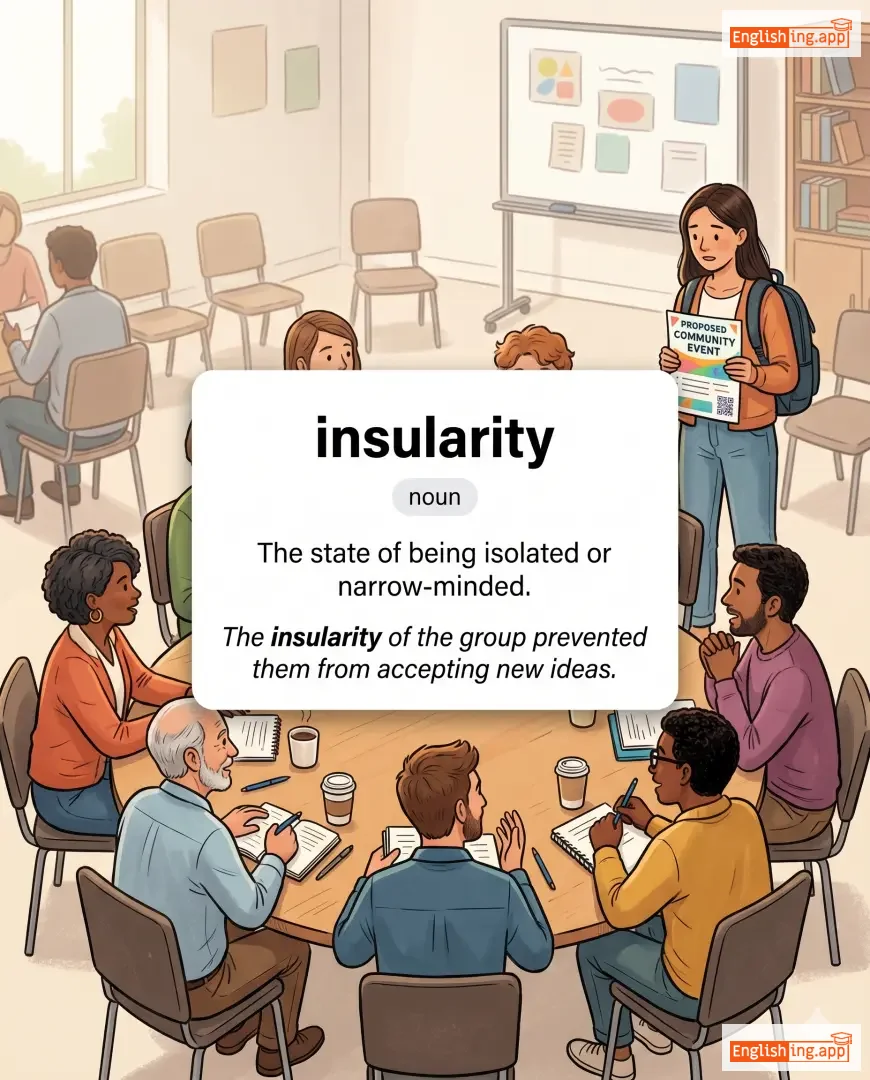
insularity definition card — visual illustration of the meaning
noun
/ˌɪnsjəˈlærəti/
insularidad (insularidad)

The state of being isolated or narrow-minded.

"The insularity of the group prevented them from accepting new ideas."

"La insularidad del grupo les impidió aceptar nuevas ideas." (La insularidad del grupo les impidió aceptar nuevas ideas.)
verb
/ˈɪnsjuleɪt/
aislar (aislar)

To protect something by covering it, especially to prevent heat, sound, or electricity from escaping or entering.

"The house was insulated to reduce heating costs."

"La casa fue aislada para reducir los costos de calefacción." (La casa fue aislada para reducir los costos de calefacción.)
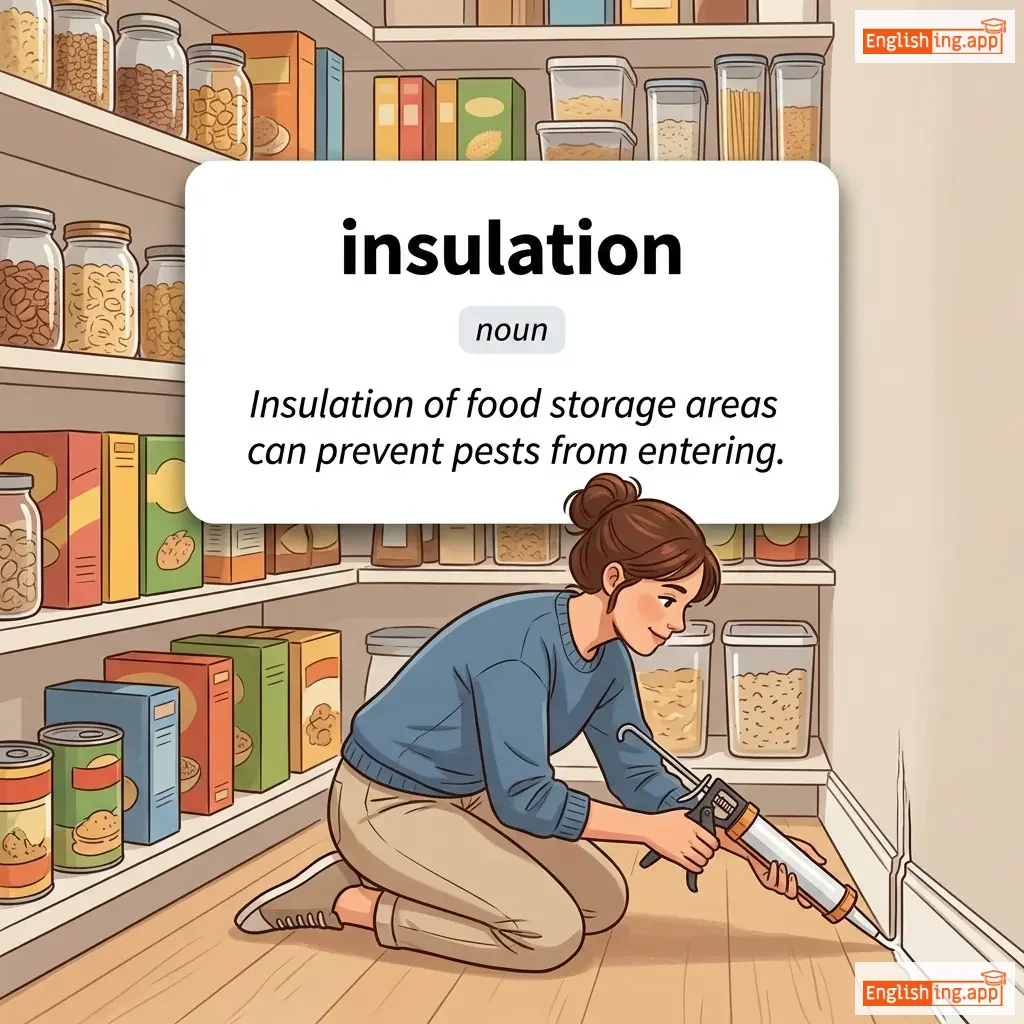
insulation definition card — visual illustration of the meaning
noun
ˌɪnsjʊˈleɪʃən
aislamiento (aislamento)

Material used to prevent heat, sound, or electricity from being transmitted from one area to another.

"Insulation of food storage areas can prevent pests from entering."

"El aislamiento de las áreas de almacenamiento de alimentos puede evitar que entren plagas." (El aislamiento de las áreas de almacenamiento de alimentos puede evitar que entren plagas.)
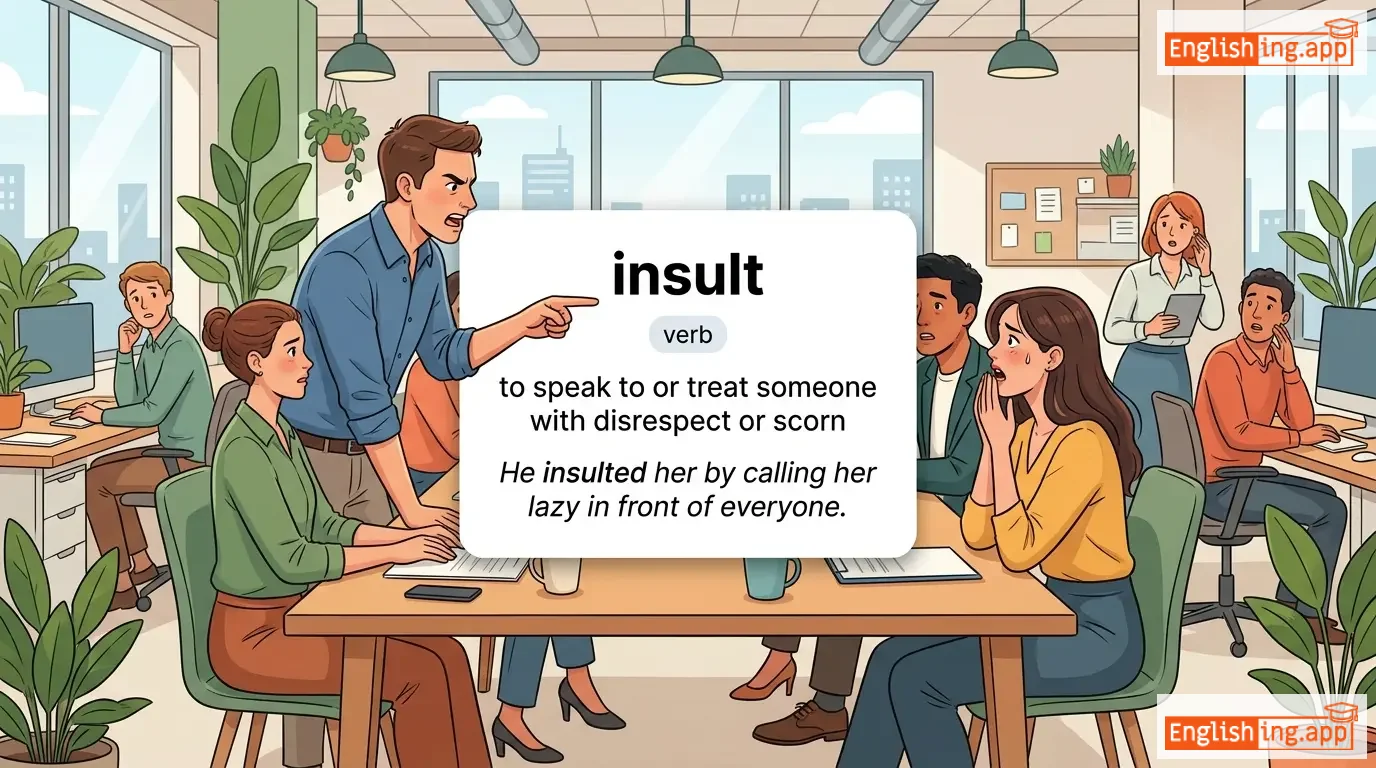
insult definition card — visual illustration of the meaning
verb
/ˈɪnsʌlt/
insultar (insultar)

to speak to or treat someone with disrespect or scorn

"He insulted her by calling her lazy in front of everyone."

"Él la insultó llamándola vaga frente a todos." (Él la insultó llamándola vaga frente a todos.)
insuperable definition card — visual illustration of the meaning
adjective
/ɪnˈsuːpərəbl/
insuperable (insuperable)

Impossible to overcome or surpass.

"The team faced insuperable challenges during the expedition."

"El equipo enfrentó desafíos insuperables durante la expedición." (El equipo enfrento desafios insuperables durante la expedicion.)
adjective
/ˌɪnsəˈpɔːrtəbl̩/
insuportable (insuportable)

Too extreme or difficult to be endured.

"The heat was insupportable during the long journey."

"El calor era insoportable durante el largo viaje." (El calor era insoportable durante el largo viaje.)
adjective
/ˌɪnsəˈprɛsəbl/
irreprimible (irreprimible)

That cannot be suppressed or restrained.

"She had an insuppressible urge to laugh during the ceremony."

"Ella tenía un impulso irreprimible de reír durante la ceremonia." (Ella tenía un impulso irreprimible de reír durante la ceremonia.)
noun
/ɪnˈʃʊərəns/
seguro (seguro)

An arrangement by which a company provides compensation for loss, damage, or illness in return for a premium.

"He bought health insurance to cover medical expenses."

"Compró un seguro de salud para cubrir los gastos médicos." (Compró un seguro de salud para cubrir los gastos médicos.)
insure definition card — visual illustration of the meaning
verb
/ɪnˈʃʊr/
asegurar, proteger (asegurar, proteger)

to arrange for compensation in case of loss or damage, typically by taking out insurance

"You should insure your car against theft or accidents."

"Deberías asegurar tu coche contra robos o accidentes." (Deberías asegurar tu coche contra robos o accidentes.)
noun
/ɪnˈsɜːrdʒəns/
insurgencia (insurgencia)

An act of rebellion or uprising against authority.

"The government struggled to contain the growing insurgence."

"El gobierno luchó por contener la creciente insurgencia." (El gobierno luchó por contener la creciente insurgencia.)
noun
/ɪnˈsɜːrdʒənt/
insurgente (insurgente)

A person who rises in revolt against authority or government.

"The army arrested several insurgents after the attack."

"El ejército arrestó a varios insurgentes después del ataque." (El ejercito arresto a varios insurgentes despues del ataque.)
adjective
/ˌɪnsərˈmaʊntəbl/
insuperable (insuperable)

Too great to be overcome.

"The explorers faced insurmountable odds in the desert."

"Los exploradores enfrentaron obstáculos insuperables en el desierto." (Los exploradores enfrentaron obstáculos insuperables en el desierto.)
noun
/ˌɪnsəˈrɛkʃən/
insurrección (insurreccion)

A violent uprising against an authority or government.

"The army was called in to suppress the insurrection."

"El ejército fue llamado para sofocar la insurrección." (El ejercito fue llamado para sofocar la insurreccion.)
adjective
/ɪnˈtækt/
intacto (intacto)

Remaining whole, complete, and undamaged.

"Despite the storm, the old house remained intact."

"A pesar de la tormenta, la casa antigua permaneció intacta." (A pesar de la tormenta, la casa antigua permaneció intacta.)
noun
/ˈɪnˌteɪk/
ingesta (ingesta)

the process of taking something in, especially food or drink

"He monitored his daily intake of calories to maintain a healthy diet."

"Él monitoreó su ingesta diaria de calorías para mantener una dieta saludable." (El monitoreo su ingesta diaria de calorías para mantener una dieta saludable.)
intangible definition card — visual illustration of the meaning
adjective
/ɪnˈtændʒəbl/
intangible (intangible)

Unable to be touched or grasped; not having a physical presence.

"Trust is an intangible quality in relationships."

"La confianza es una cualidad intangible en las relaciones." (La confianza es una cualidad intangible en las relaciones.)
integral definition card — visual illustration of the meaning
adjective
/ˈɪntɪɡrəl/ or /ɪnˈtɛɡrəl/
integral (integral)

Necessary and important as a part of a whole.

"Honesty is an integral part of good leadership."

"La honestidad es una parte integral del buen liderazgo." (La honestidad es una parte integral del buen liderazgo.)
verb
/ˈɪntɪɡreɪt/
integrar (integrar)

To combine or bring together into a unified whole.

"The new system integrates data from multiple sources."

"El nuevo sistema integra datos de múltiples fuentes." (El nuevo sistema integra datos de múltiples fuentes.)
integrated definition card — visual illustration of the meaning
adjective
/ˈɪntɪɡreɪtɪd/
integrado (integrado)

combined or united to form a whole; including all parts or people equally

"The company offers an integrated system for managing all business operations."

"La empresa ofrece un sistema integrado para gestionar todas las operaciones comerciales." (La empresa ofrece un sistema integrado para gestionar todas las operaciones comerciales.)
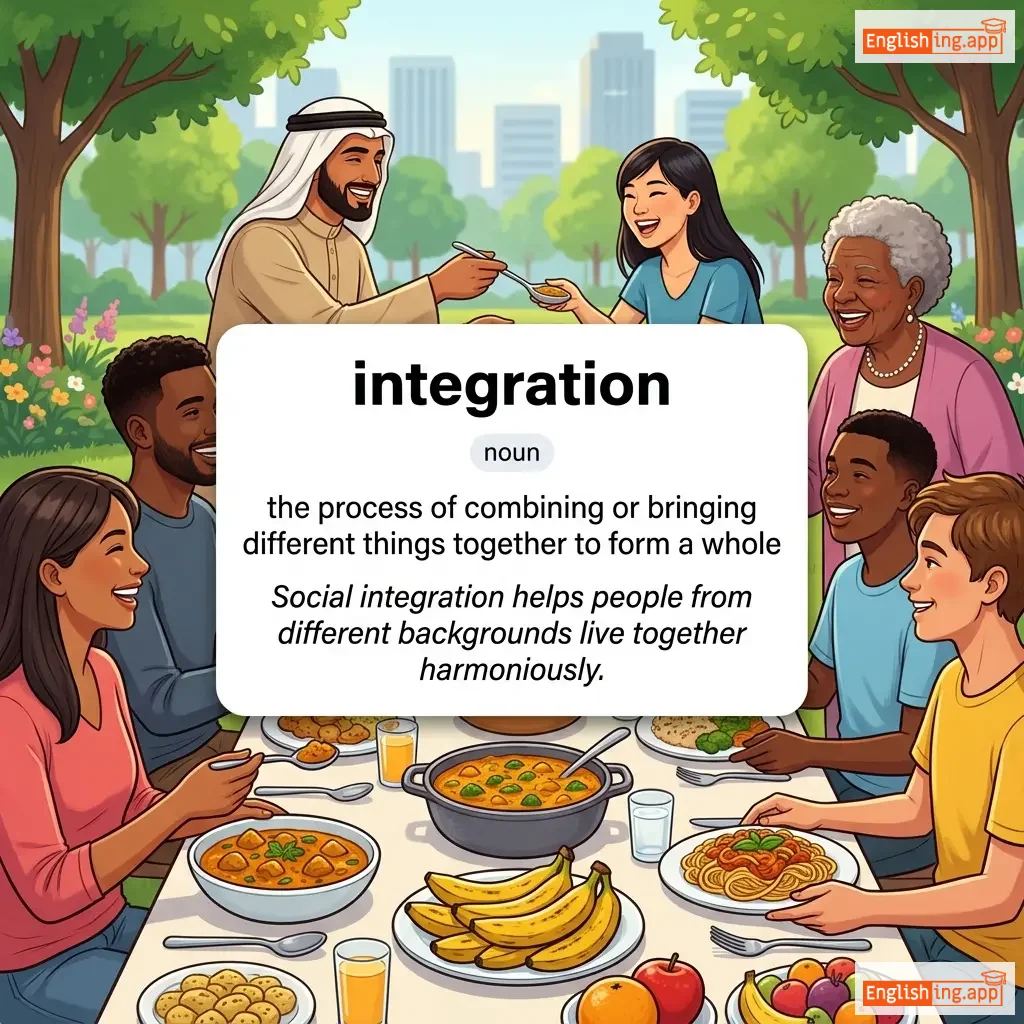
integration definition card — visual illustration of the meaning
noun
/ˌɪntɪˈɡreɪʃən/
integración (integracion)

the process of combining or bringing different things together to form a whole

"Social integration helps people from different backgrounds live together harmoniously."

"La integración social ayuda a las personas de diferentes orígenes a vivir juntas armoniosamente." (La integracion social ayuda a las personas de diferentes origenes a vivir juntas armoniosamente.)