Vocabularios

Descubra, aprenda y domine el vocabulario en inglés

adjective
/ˌɪnhɒˈspɪtəbl/
inhóspito (inhospito)

Harsh and difficult to live in; unfriendly or unwelcoming to guests.

"The desert is an inhospitable environment for most plants."

"El desierto es un ambiente inhóspito para la mayoría de las plantas." (El desierto es un ambiente inhospito para la mayoría de las plantas.)
adjective
/ɪnˈhjuːmən/
inhumano (inhumano)

lacking human qualities of compassion and mercy; cruel or barbaric

"The prisoners were kept in inhuman conditions."

"Los prisioneros fueron mantenidos en condiciones inhumanas." (Los prisioneros fueron mantenidos en condiciones inhumanas.)
verb
/ɪnˈhjuːm/
inhumar (inhumar)

to bury a dead body in the ground

"They inhumed the warrior with full honors."

"Ellos inhumaron al guerrero con todos los honores." (Ellos inhumaron al guerrero con todos los honores.)
adjective
/ɪˈnɪmɪkəl/
hostil / adverso (hostil / adverso)

tending to obstruct or harm; unfriendly or hostile

"The policy was inimical to the country's economic growth."

"La política era hostil al crecimiento económico del país." (La política era hostil al crecimiento económico del país.)
inimitable definition card — visual illustration of the meaning
adjective
/ɪˈnɪmɪtəbəl/
inimitable (inimitable)

so good or unusual as to be impossible to copy; unique

"Her inimitable style made her stand out in the fashion industry."

"Su estilo inimitable la hizo destacar en la industria de la moda." (Su estilo inimitable la hizo destacar en la industria de la moda.)
adjective
/ɪˈnɪkwɪtəs/
iniquo (iniquo)

grossly unfair and morally wrong

"Slavery was one of the most iniquitous practices in history."

"La esclavitud fue una de las prácticas más iniquas de la historia." (La esclavitud fue una de las prácticas más iniquas de la historia.)
noun
/ɪˈnɪkwɪti/
iniquidad (iniquidad)

Immoral or grossly unfair behavior.

"The dictator's regime was marked by corruption and iniquity."

"El régimen del dictador estuvo marcado por la corrupción y la iniquidad." (El regimen del dictador estuvo marcado por la corrupcion y la iniquidad.)
adjective
/ɪˈnɪʃəl/
inicial (inicial)

Existing or occurring at the beginning.

"Her initial reaction was one of surprise."

"Su reacción inicial fue una de sorpresa." (Su reaccion inicial fue una de sorpresa.)
adverb
/ɪˈnɪʃəli/
inicialmente (inicialmente)

At the beginning; at first.

"Initially, he refused the offer but later accepted it."

"Inicialmente, rechazó la oferta pero luego la aceptó." (Inicialmente, rechazó la oferta pero luego la aceptó.)
initiate definition card — visual illustration of the meaning
verb
/ɪˈnɪʃieɪt/
iniciar (iniciar)

To cause something to begin; to start.

"The company plans to initiate a new training program next month."

"La empresa planea iniciar un nuevo programa de capacitación el próximo mes." (La empresa planea iniciar un nuevo programa de capacitación el próximo mes.)
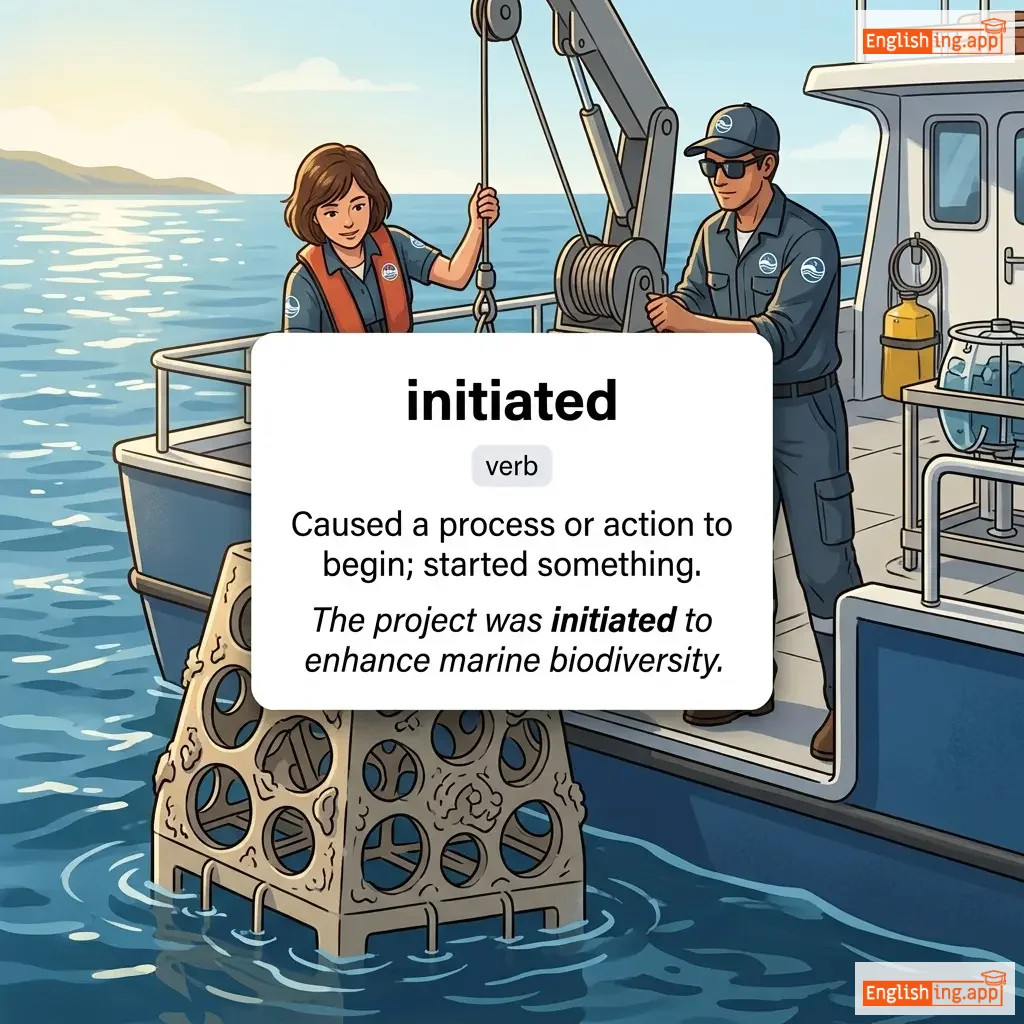
initiated definition card — visual illustration of the meaning
verb
ɪˈnɪʃɪeɪtɪd
iniciado (iniciado)

Caused a process or action to begin; started something.

"The project was initiated to enhance marine biodiversity."

"El proyecto fue iniciado para mejorar la biodiversidad marina." (El proyecto fue iniciado para mejorar la biodiversidad marina.)
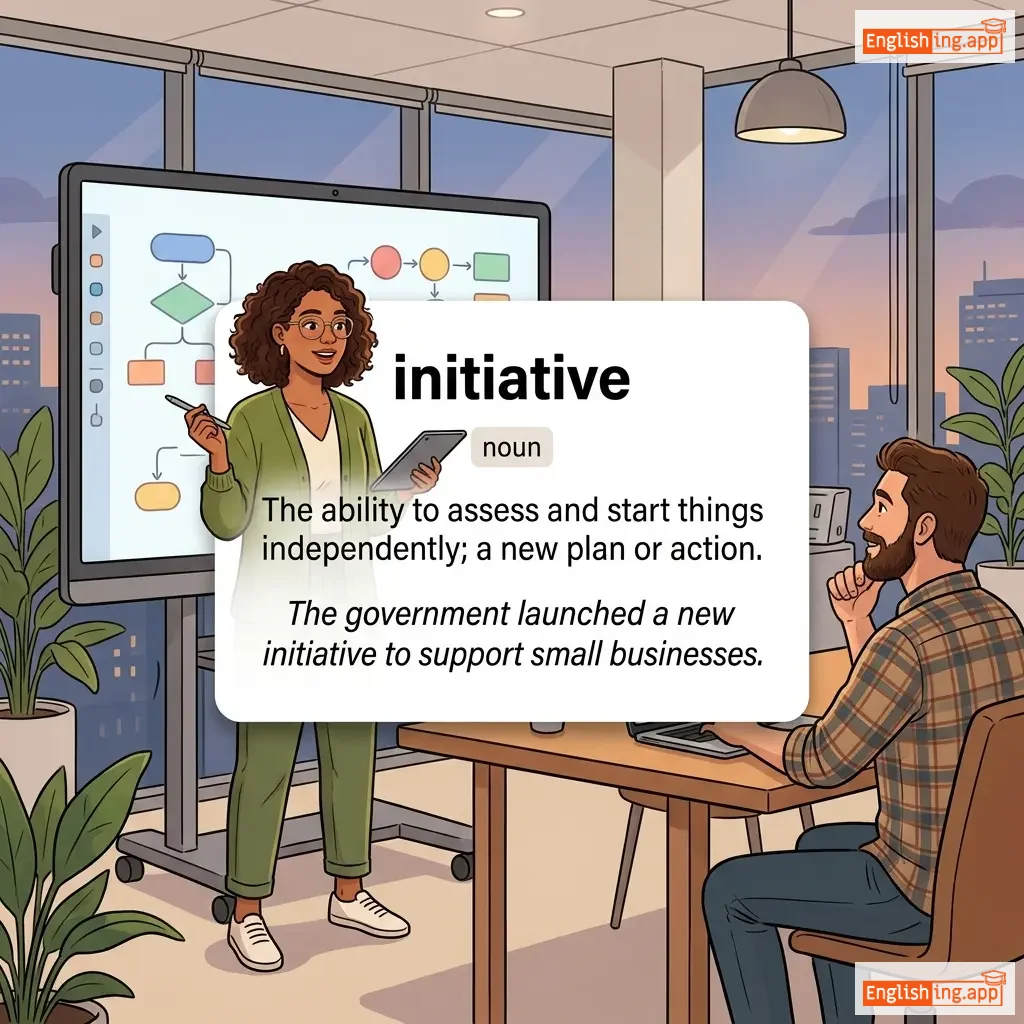
initiative definition card — visual illustration of the meaning
noun
/ɪˈnɪʃətɪv/
iniciativa (iniciativa)

The ability to assess and start things independently; a new plan or action.

"The government launched a new initiative to support small businesses."

"El gobierno lanzó una nueva iniciativa para apoyar a las pequeñas empresas." (El gobierno lanzó una nueva iniciativa para apoyar a las pequeñas empresas.)
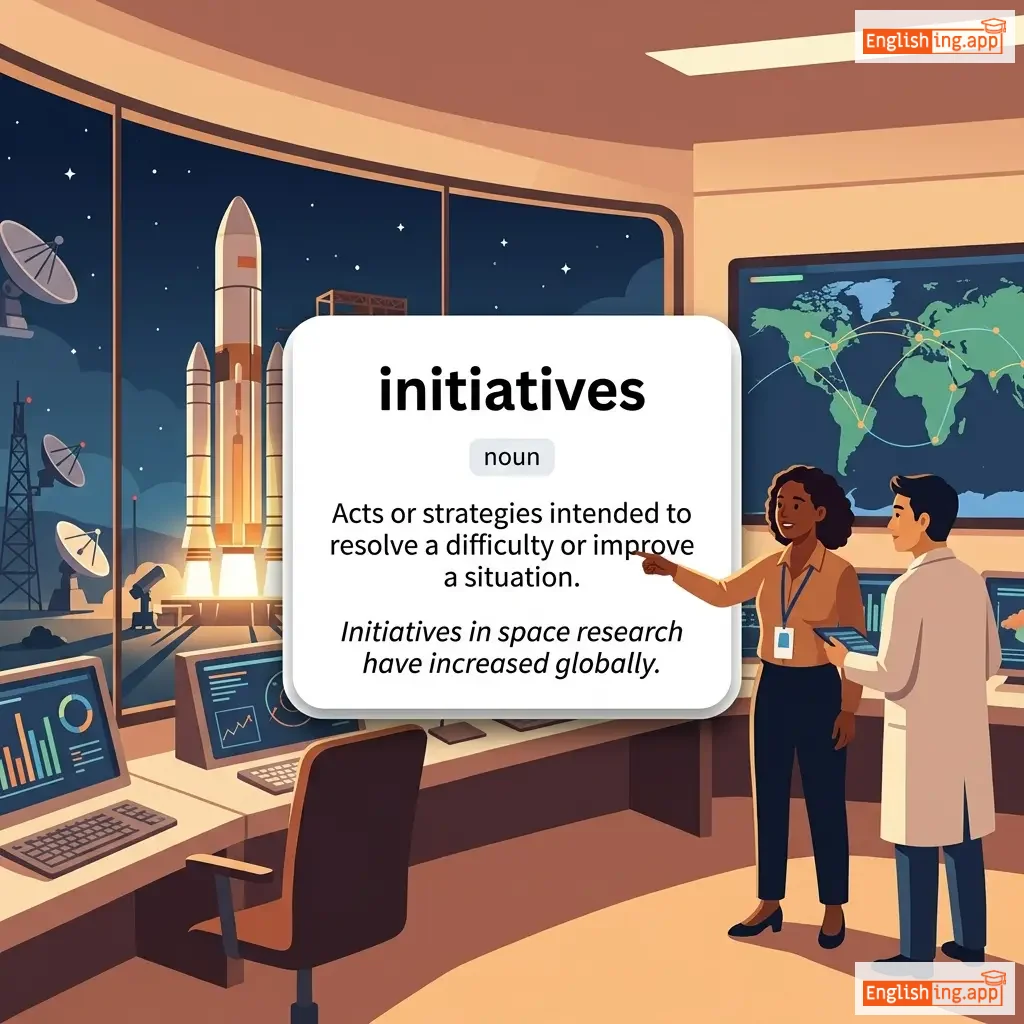
initiatives definition card — visual illustration of the meaning
noun
/ɪˈnɪʃ.ə.tɪvz/
iniciativas (iniciativas)

Acts or strategies intended to resolve a difficulty or improve a situation.

"Initiatives in space research have increased globally."

"Las iniciativas en la investigación espacial han aumentado globalmente." (Las iniciativas en la investigación espacial han aumentado globalmente.)
verb
/ɪnˈdʒɛkt/
inyectar (inyectar)

To introduce a substance, especially a drug, into the body using a needle.

"The nurse will inject the vaccine into the patient's arm."

"La enfermera inyectará la vacuna en el brazo del paciente." (La enfermera inyectará la vacuna en el brazo del paciente.)
noun
/ɪnˈdʒɛkʃən/
inyección (inyeccion)

the act of introducing a substance into the body through a needle

"The nurse gave me an injection to prevent the infection."

"La enfermera me dio una inyección para prevenir la infección." (La enfermera me dio una inyeccion para prevenir la infeccion.)
noun
/ɪnˈdʒʌŋkʃən/
orden judicial (orden judicial)

A judicial order restraining a person from an action or compelling a certain act.

"The court issued an injunction to stop the company from polluting the river."

"El tribunal emitió una orden judicial para evitar que la empresa contaminara el río." (El tribunal emitió una orden judicial para evitar que la empresa contaminara el río.)
verb
/ˈɪndʒər/
lesionar (lesionar)

to cause physical harm or damage to someone or something

"He injured his leg while playing football."

"Él lesionó su pierna mientras jugaba al fútbol." (Él lesionó su pierna mientras jugaba al fútbol.)
adjective
/ɪnˈdʒʊəriəs/
perjudicial (perjudicial)

Causing or likely to cause harm or damage.

"Smoking is injurious to health."

"Fumar es perjudicial para la salud." (Fumar es perjudicial para la salud.)
noun
/ˈɪndʒəri/
lesión (lesion)

Harm or damage to a person’s body caused by an accident or attack.

"He suffered a serious injury during the football match."

"Sufrió una lesión grave durante el partido de fútbol." (Sufrio una lesion grave durante el partido de futbol.)
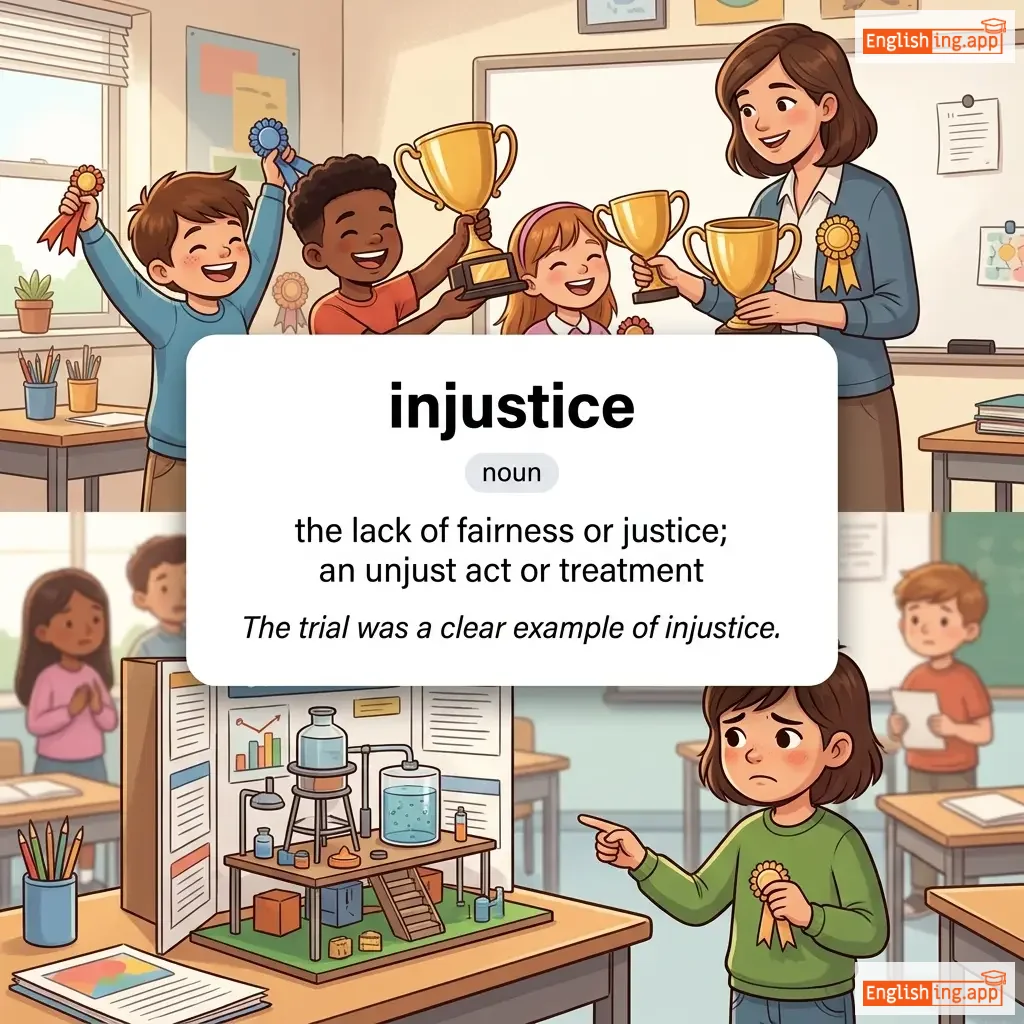
injustice definition card — visual illustration of the meaning
noun
/ɪnˈdʒʌstɪs/
injusticia (injusticia)

the lack of fairness or justice; an unjust act or treatment

"The trial was a clear example of injustice."

"El juicio fue un claro ejemplo de injusticia." (El juicio fue un claro ejemplo de injusticia.)
🖋️

Ink (ink)

noun
/ɪŋk/
tinta (tinta)

a colored liquid used for writing, printing, or drawing

"The ink in my pen ran out during the exam."

"La tinta de mi bolígrafo se terminó durante el examen." (La tinta de mi bolígrafo se termino durante el examen.)
noun
/ˈɪŋklɪŋ/
presentimiento (presentimiento)

A slight idea, hint, or suspicion about something.

"She had an inkling that he was planning a surprise."

"Ella tenía una ligera sospecha de que él estaba planeando una sorpresa." (Ella tenía una ligera sospecha de que él estaba planeando una sorpresa.)
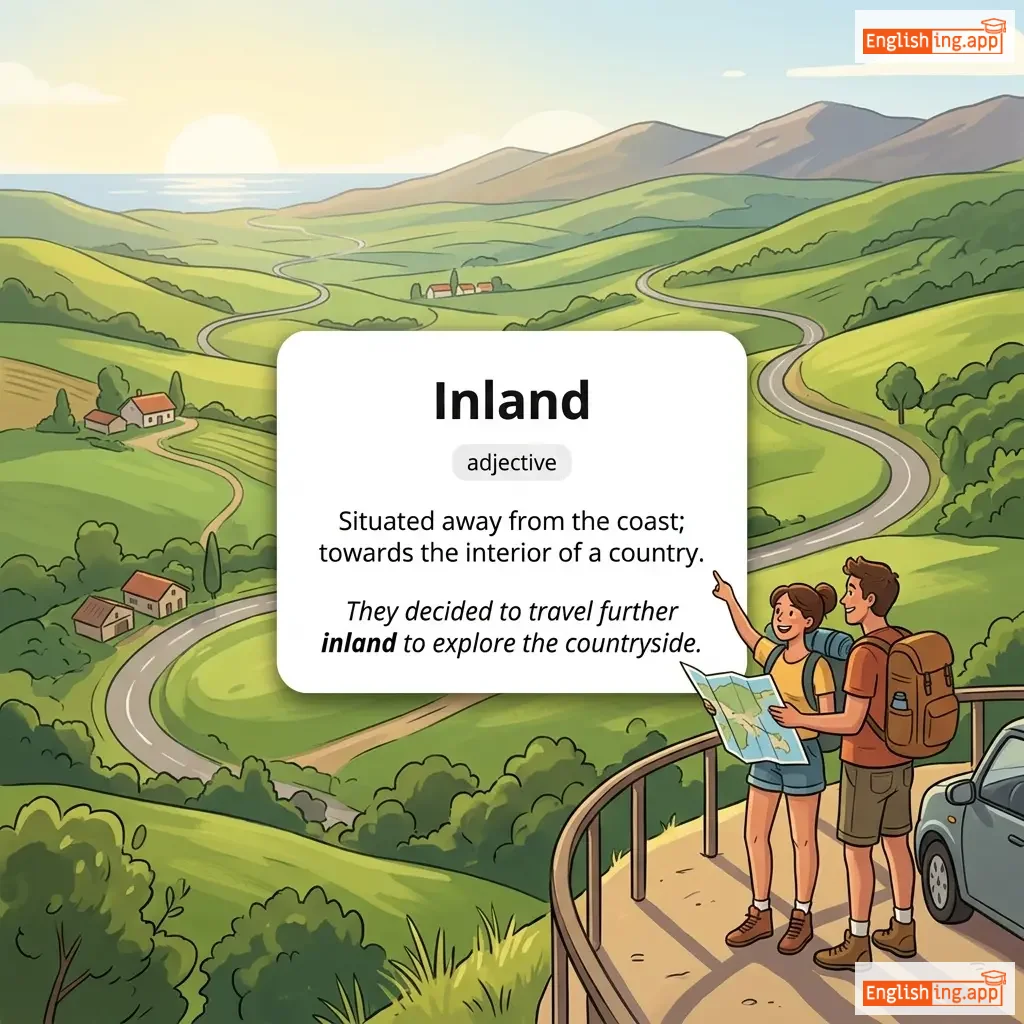
Inland definition card — visual illustration of the meaning
adjective
/ˈɪnlənd/
interior (interior)

Situated away from the coast; towards the interior of a country.

"They decided to travel further inland to explore the countryside."

"Decidieron viajar más hacia el interior para explorar el campo." (Decidieron viajar más hacia el interior para explorar el campo.)
noun
/ˈɪnlɛt/
entrada (entrada)

A small arm of the sea, a lake, or a river; an opening or passage for entry.

"The boat entered a narrow inlet along the coast."

"El bote entró en una entrada estrecha a lo largo de la costa." (El bote entro en una entrada estrecha a lo largo de la costa.)
noun
/ˈɪnˌmeɪt/
interno (interno)

a person confined to an institution such as a prison or hospital

"The prison has over a thousand inmates."

"La prisión tiene más de mil internos." (La prision tiene mas de mil internos.)
adjective
/ˈɪnmoʊst/
más profundo (mas profundo)

Situated at the very heart or deepest part; most private or secret.

"She revealed her inmost thoughts to her closest friend."

"Ella reveló sus pensamientos más profundos a su amigo más cercano." (Ella reveló sus pensamientos más profundos a su amigo más cercano.)
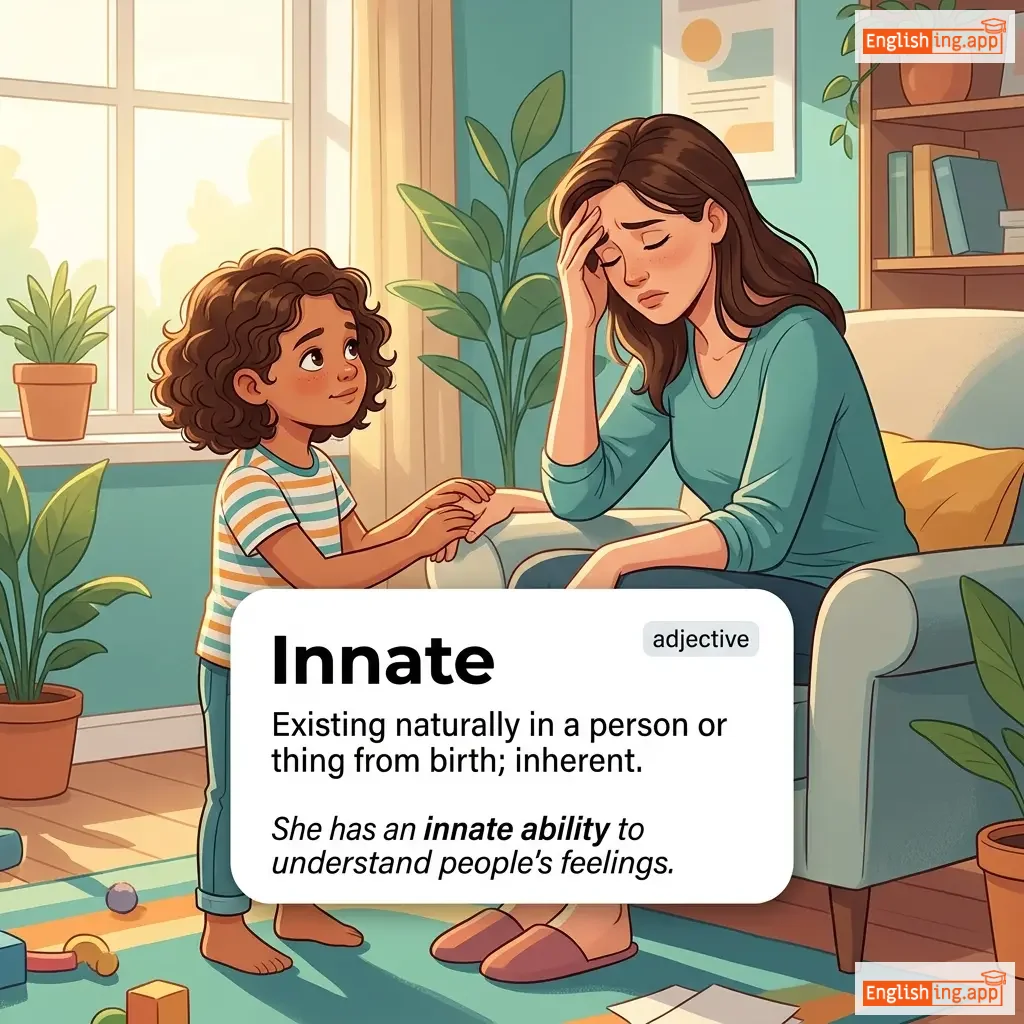
Innate definition card — visual illustration of the meaning
adjective
/ɪˈneɪt/
innato (innato)

Existing naturally in a person or thing from birth; inherent.

"She has an innate ability to understand people's feelings."

"Ella tiene una habilidad innata para entender los sentimientos de las personas." (Ella tiene una habilidad innata para entender los sentimientos de las personas.)
adjective
/ˈɪnər/
interno (interno)

Located inside or closer to the center; relating to one’s thoughts or feelings.

"She shared her inner thoughts with her best friend."

"Ella compartió sus pensamientos internos con su mejor amiga." (Ella compartió sus pensamientos internos con su mejor amiga.)
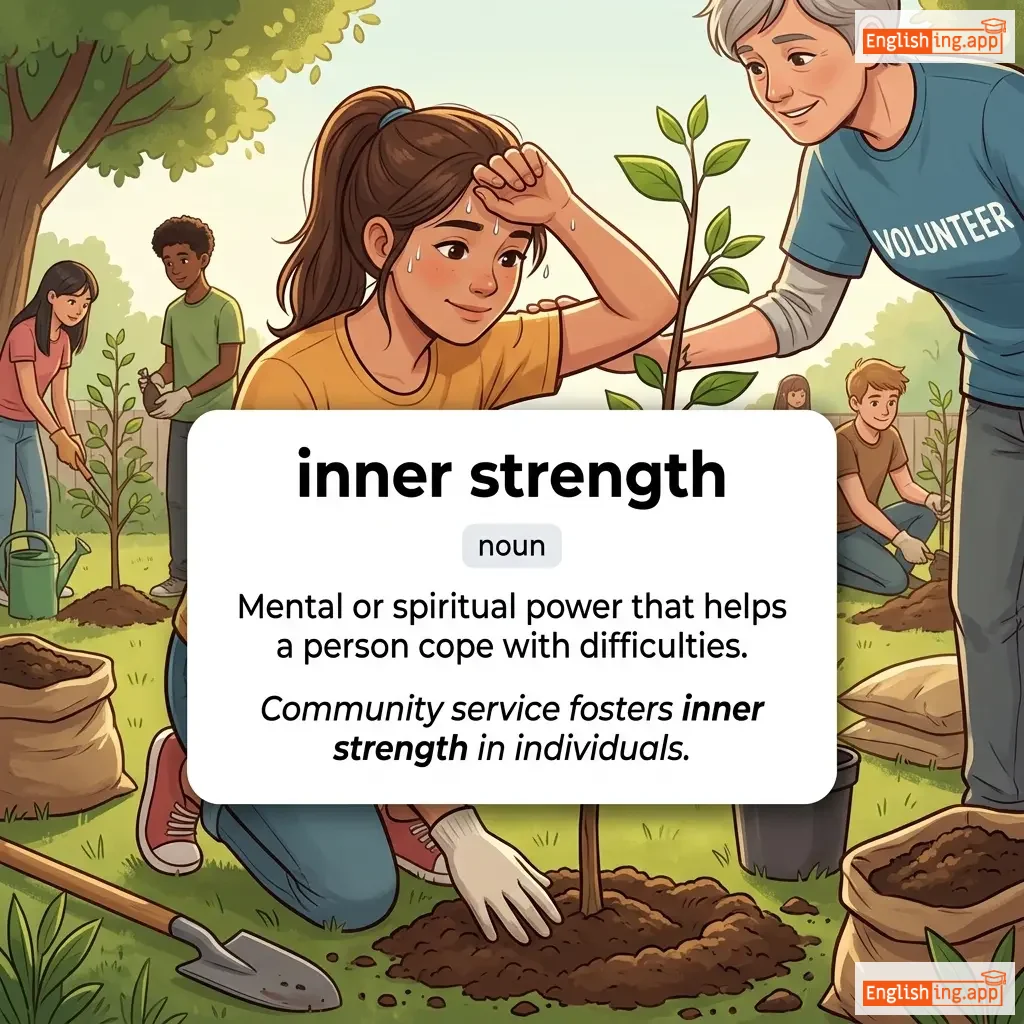
inner strength definition card — visual illustration of the meaning
noun
ˈɪnər strɛŋkθ
fuerza interior (fuerza interior)

Mental or spiritual power that helps a person cope with difficulties.

"Community service fosters inner strength in individuals."

"El servicio comunitario fomenta la fuerza interior en los individuos." (El servicio comunitario fomenta la fuerza interior en los individuos.)
adjective
/ˈɪnərmoʊst/
más profundo; más personal (mas profundo; mas personal)

most private and secret; deepest; most personal

"She shared her innermost feelings with her closest friend."

"Ella compartió sus sentimientos más profundos con su amigo más cercano." (Ella compartio sus sentimientos mas profundos con su amigo mas cercano.)
adjective
/ˈɪnəsənt/
inocente (inocente)

not guilty of a crime or wrongdoing; harmless

"The court found him innocent of all charges."

"El tribunal lo encontró inocente de todos los cargos." (El tribunal lo encontró inocente de todos los cargos.)
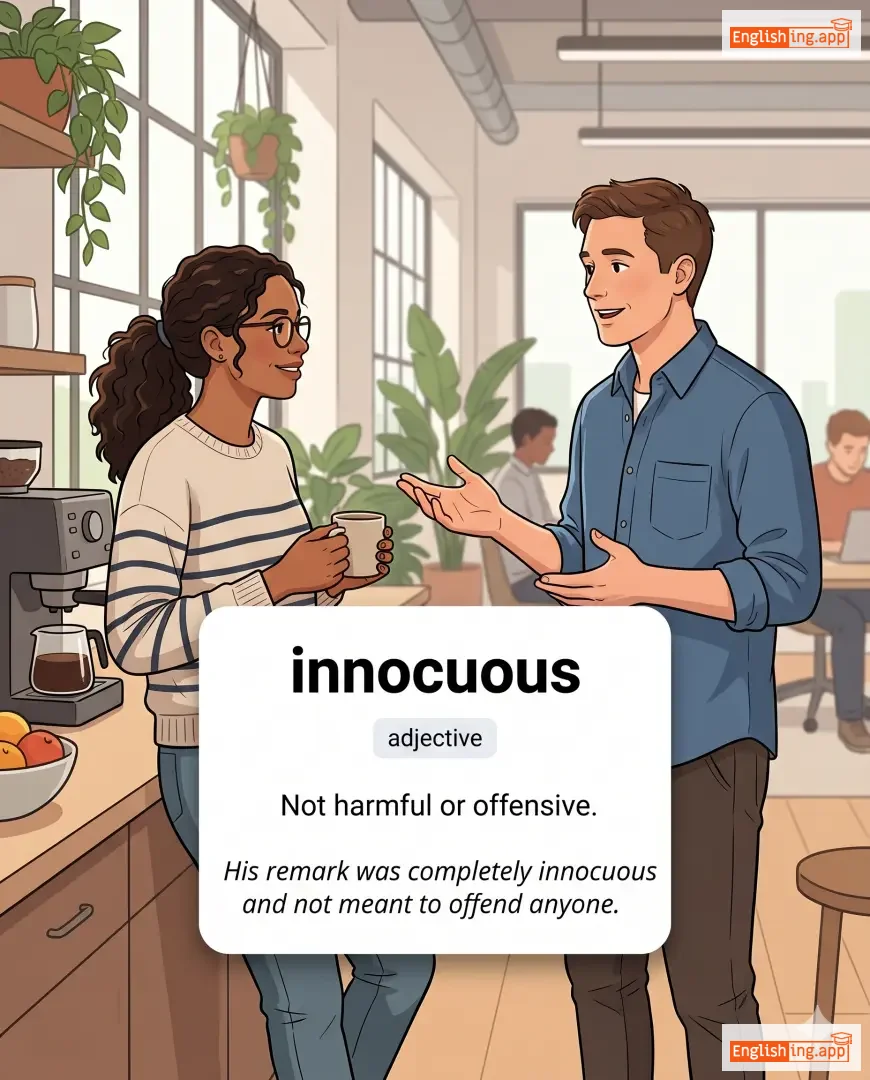
innocuous definition card — visual illustration of the meaning
adjective
/ɪˈnɒkjuəs/
inofensivo (inofensivo)

Not harmful or offensive.

"His remark was completely innocuous and not meant to offend anyone."

"Su comentario fue completamente inofensivo y no tenía la intención de ofender a nadie." (Su comentario fue completamente inofensivo y no tenia la intencion de ofender a nadie.)
verb
/ˈɪnəveɪt/
innovar (innovar)

To introduce new methods, ideas, or products.

"The company must innovate to stay ahead of its competitors."

"La empresa debe innovar para mantenerse por delante de sus competidores." (La empresa debe innovar para mantenerse por delante de sus competidores.)
innovation definition card — visual illustration of the meaning
noun
/ˌɪnəˈveɪʃən/
innovación (innovacion)

The introduction of something new, such as an idea, method, or device.

"Innovation is key to the success of technology companies."

"La innovación es clave para el éxito de las empresas tecnológicas." (La innovacion es clave para el exito de las empresas tecnologicas.)
innovative definition card — visual illustration of the meaning
adjective
/ˈɪnəˌveɪtɪv/
innovador (innovador)

introducing new ideas, methods, or products; creative and original

"The company is known for its innovative solutions."

"La empresa es conocida por sus soluciones innovadoras." (La empresa es conocida por sus soluciones innovadoras.)
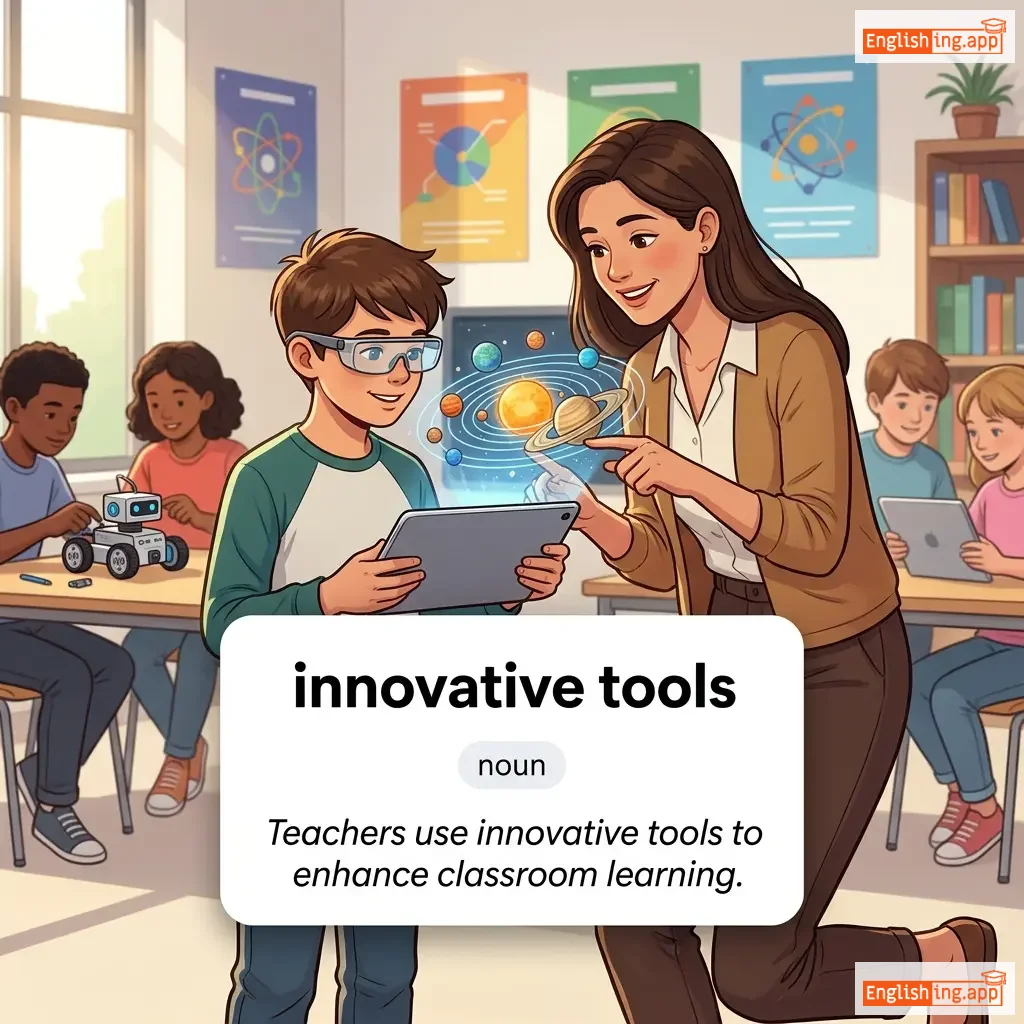
innovative tools definition card — visual illustration of the meaning
noun
ˈɪnəveɪtɪv tuːlz
herramientas innovadoras (herramientas innovadoras)

Creative devices or advanced technologies that introduce new methods or approaches to accomplish tasks.

"Teachers use innovative tools to enhance classroom learning."

"Los maestros utilizan herramientas innovadoras para mejorar el aprendizaje en el aula." (Los maestros utilizan herramientas innovadoras para mejorar el aprendizaje en el aula.)
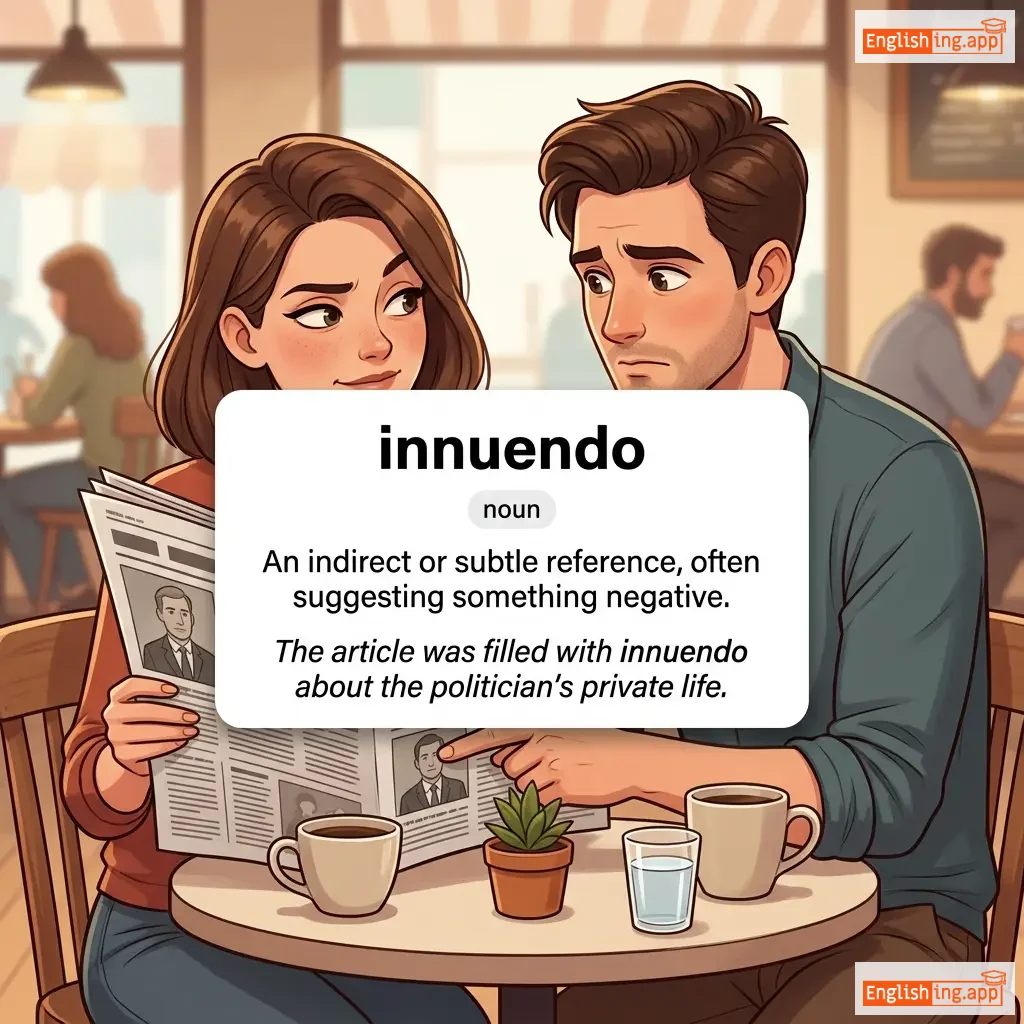
innuendo definition card — visual illustration of the meaning
noun
/ˌɪnjuˈɛndoʊ/
insinuación (insinuacion)

An indirect or subtle reference, often suggesting something negative.

"The article was filled with innuendo about the politician's private life."

"El artículo estaba lleno de insinuaciones sobre la vida privada del político." (El articulo estaba lleno de insinuaciones sobre la vida privada del politico.)
adjective
/ɪˈnuːm(ə)rəbəl/
innumerable (innumerable)

Too many to be counted.

"She has innumerable memories of her childhood."

"Ella tiene innumerables recuerdos de su infancia." (Ella tiene innumerables recuerdos de su infancia.)
adjective
/ˌɪnəˈfɛnsɪv/
inoffensivo (inoffensivo)

Not likely to offend or provoke; harmless.

"His inoffensive remarks kept the conversation friendly."

"Sus comentarios inofensivos mantuvieron la conversación amigable." (Sus comentarios inofensivos mantuvieron la conversación amigable.)
adjective
/ˌɪnˌɑːpərˈtuːn/
momento inoportuno (momento inoportuno)

Happening at a bad or inconvenient time.

"His call came at the most inopportune moment."

"Su llamada llegó en el momento más inoportuno." (Su llamada llegó en el momento más inoportuno.)
adjective
/ɪˈnɔːrdənət/
excesivo (excesivo)

Excessive or unusually large in degree.

"She spent an inordinate amount of time on her phone."

"Ella pasó un tiempo excesivo en su teléfono." (Ella paso un tiempo excesivo en su telefono.)
adjective
/ˌɪnɔːrˈɡænɪk/
inorgánico (inorganico)

relating to substances that are not derived from living organisms; lacking organic structure or growth

"Inorganic compounds are commonly studied in chemistry labs."

"Los compuestos inorgánicos se estudian en los laboratorios." (los compuestos inorganicos se estudian en los laboratorios)
noun
/ˈɪnpʊt/
entrada, información proporcionada (entrada, informacion proporcionada)

information, advice, or data that is put into a system, device, or process

"The manager asked for everyone's input on the new project."

"El gerente pidió la opinión de todos sobre el nuevo proyecto." (El gerente pidió la opinión de todos sobre el nuevo proyecto.)
noun
/ˈɪnkwest/
investigación (investigacion)

A legal or official inquiry, especially into the cause of a death.

"The inquest revealed the cause of the accident."

"La investigación reveló la causa del accidente." (La investigacion revelo la causa del accidente.)
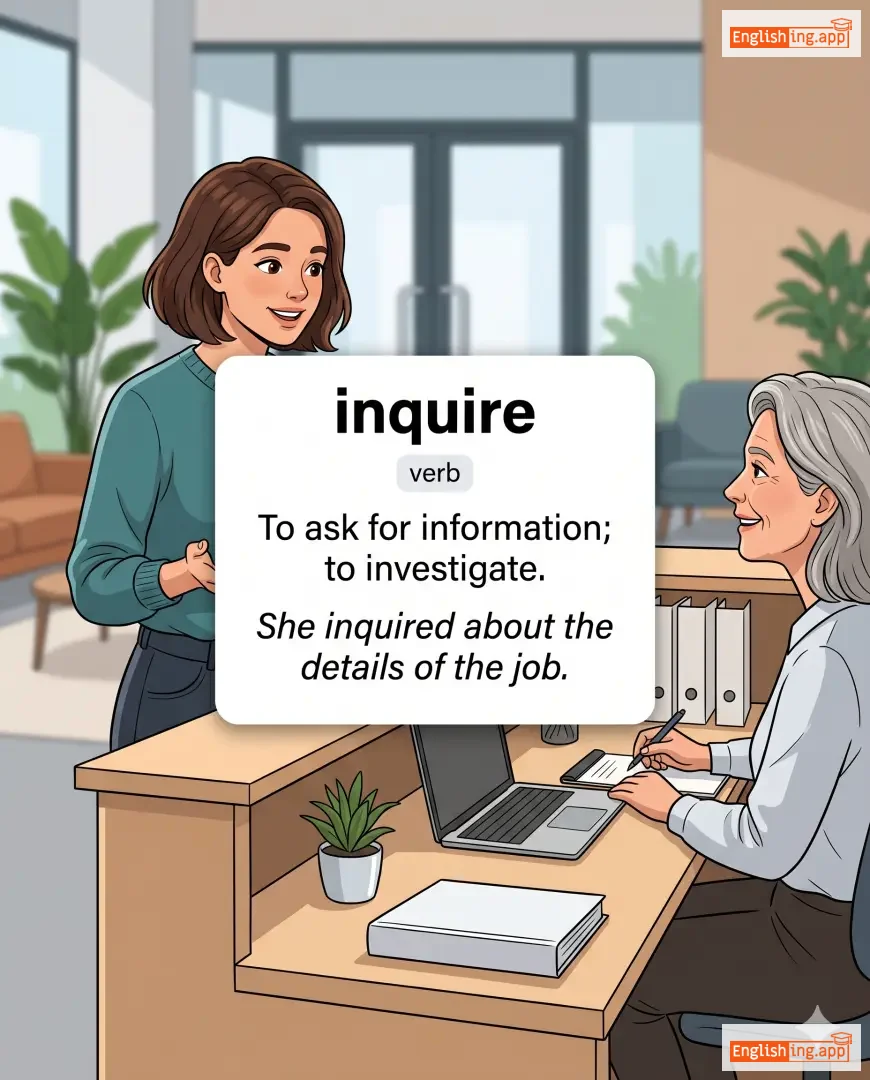
inquire definition card — visual illustration of the meaning
verb
/ɪnˈkwaɪər/
preguntar (preguntar)

To ask for information; to investigate.

"She inquired about the details of the job."

"Ella preguntó sobre los detalles del trabajo." (Ella pregunto sobre los detalles del trabajo.)
noun
/ɪnˈkwaɪəri/ or /ˈɪnkwəri/
investigación / consulta (investigacion / consulta)

An act of asking for information; an investigation into something.

"The committee launched an inquiry into the financial irregularities."

"El comité inició una investigación sobre las irregularidades financieras." (El comite inicio una investigacion sobre las irregularidades financieras.)
noun
/ˌɪnkwɪˈzɪʃən/
inquisición (inquisicion)

A prolonged and intense questioning or investigation, often harsh in nature.

"The journalist faced an inquisition from the panel about his sources."

"El periodista enfrentó una inquisición del panel sobre sus fuentes." (El periodista enfrento una inquisicion del panel sobre sus fuentes.)
adjective
/ɪnˈkwɪzɪtɪv/
inquisitivo (inquisitivo)

Curious or eager to learn and ask questions.

"The inquisitive child asked endless questions about the stars."

"El niño inquisitivo hizo preguntas interminables sobre las estrellas." (El niño inquisitivo hizo preguntas interminables sobre las estrellas.)
noun
/ɪnˈkwɪzɪtər/
inquisidor (inquisidor)

A person who asks many questions, often in an official or harsh manner.

"The inquisitor demanded detailed answers from the witness."

"El inquisidor exigió respuestas detalladas del testigo." (El inquisidor exigió respuestas detalladas del testigo.)
noun
/ˈɪnroʊd/
progreso (progreso)

An advance or significant progress, often at the expense of something else.

"The company made significant inroads into the mobile market."

"La compañía hizo avances significativos en el mercado móvil." (La compañía hizo avances significativos en el mercado móvil.)