Vocabularios

Descubra, aprenda y domine el vocabulario en inglés

verb
/ɪnˈfleɪt/
inflar (inflar)

to fill with air or gas so it expands; to increase excessively or artificially

"The mechanic inflated the tire to the correct pressure."

"El mecánico infló el neumático a la presión correcta." (El mecanico inflo el neumatico a la presion correcta)
adjective
/ɪnˈfleɪtɪd/
inflado (inflado)

excessively increased in size, value, or importance; filled with air or gas

"The company faced criticism for its inflated prices."

"La empresa enfrentó críticas por sus precios inflados." (La empresa enfrento criticas por sus precios inflados.)
inflation definition card — visual illustration of the meaning
noun
/ɪnˈfleɪʃən/
inflación (inflacion)

A general increase in prices and fall in the purchasing value of money.

"The government is taking steps to control inflation."

"El gobierno está tomando medidas para controlar la inflación." (El gobierno esta tomando medidas para controlar la inflacion.)
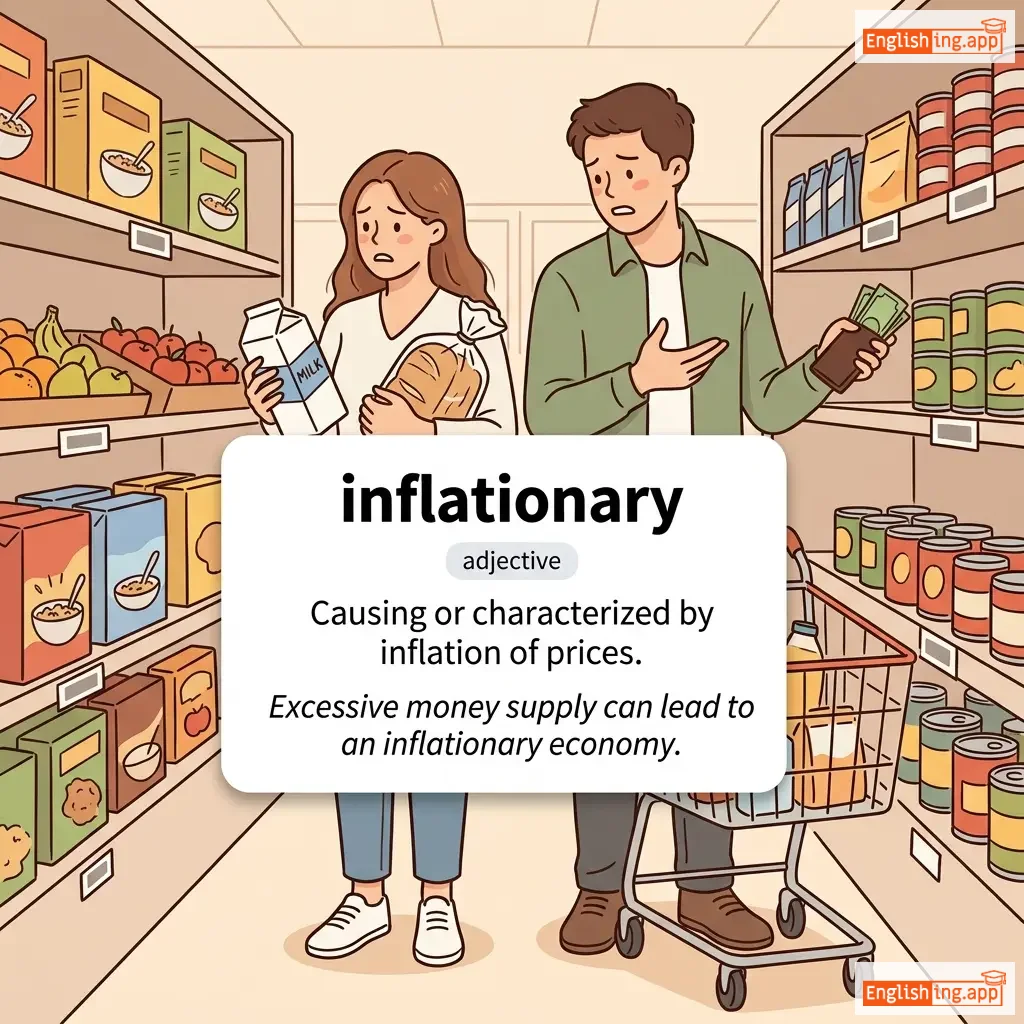
inflationary definition card — visual illustration of the meaning
adjective
/ɪnˈfleɪ.ʃə.ner.i/
inflacionario (inflacionario)

Causing or characterized by inflation of prices.

"Excessive money supply can lead to an inflationary economy."

"El exceso de suministro de dinero puede llevar a una economía inflacionaria." (El exceso de suministro de dinero puede llevar a una economia inflacionaria.)
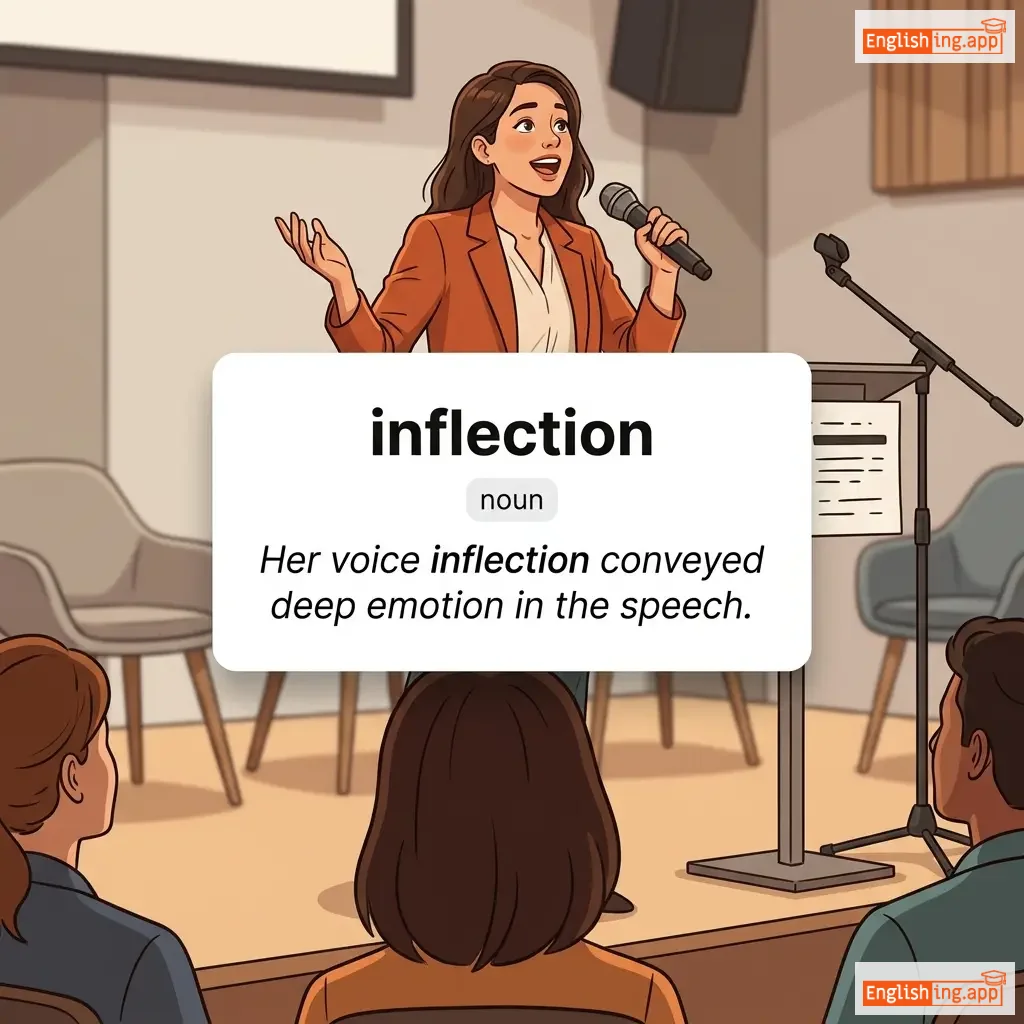
inflection definition card — visual illustration of the meaning
noun
/ɪnˈflɛk.ʃən/
cambio de tono o inflexión (cambio de tono o inflexión)

A change in the tone or pitch of the voice when speaking, which helps convey meaning and emotion.

"Her voice inflection conveyed deep emotion in the speech."

"La inflexión de su voz transmitió una profunda emoción en el discurso." (La inflexión de su voz transmitió una profunda emoción en el discurso.)
noun
/ˌɪnflɛksɪˈbɪlɪti/
inflexibilidad (inflexibilidad)

the quality of being rigid or unwilling to change; lack of adaptability

"The inflexibility of the rules caused unnecessary delays."

"La inflexibilidad de las reglas causó retrasos innecesarios." (La inflexibilidad de las reglas causo retrasos innecesarios)
adjective
/ɪnˈflɛksəbl/
inflexible (inflexible)

Not able to bend or change; unwilling to change ideas or behavior.

"His inflexible attitude made negotiations difficult."

"Su actitud inflexible dificultó las negociaciones." (Su actitud inflexible dificultó las negociaciones.)
verb
/ɪnˈflɪkt/
infligir (infligir)

to cause something unpleasant or painful to be suffered by someone or something

"The storm inflicted considerable damage to the city."

"La tormenta infligió un daño considerable a la ciudad." (La tormenta infligió un daño considerable a la ciudad.)
noun
/ˈɪn.floʊ/
flujo (flujo)

The movement of things such as money, people, or water into a place.

"The inflow of tourists boosted the local economy."

"El flujo de turistas impulsó la economía local." (El flujo de turistas impulsó la economía local.)
noun/verb
/ˈɪnfluəns/
influencia (influencia)

The power to affect how someone thinks or acts.

"Her teacher had a strong influence on her career choice."

"Su maestro tuvo una gran influencia en su elección de carrera." (Su maestro tuvo una gran influencia en su eleccion de carrera.)
Influencer definition card — visual illustration of the meaning
noun
/ˈɪn.flu.ən.sər/
influenciador, persona que promueve productos (influenciador, persona que promueve productos)

A person with the ability to influence potential buyers of a product or service by promoting or recommending the items on social media.

"Social media influencers shape consumer preferences."

"Los influencers de las redes sociales moldean las preferencias de los consumidores." (Los influencers de las redes sociales moldean las preferencias de los consumidores.)
adjective
/ˌɪnfluˈɛnʃl/
influyente (influyente)

Having great power to change or affect people or things.

"She is one of the most influential leaders of our time."

"Ella es una de las líderes más influyentes de nuestro tiempo." (Ella es una de las líderes más influyentes de nuestro tiempo.)
noun
/ˈɪnflʌks/
afluencia (afluencia)

A large arrival or flow of people or things.

"The city experienced an influx of tourists during the festival."

"La ciudad experimentó una afluencia de turistas durante el festival." (La ciudad experimento una afluencia de turistas durante el festival.)
noun
/ˈɪnfoʊ/
información (informacion)

information; knowledge or facts about something or someone

"She gave me all the info I needed for the meeting."

"Ella me dio toda la información que necesitaba para la reunión." (Ella me dio toda la informacion que necesitaba para la reunion.)
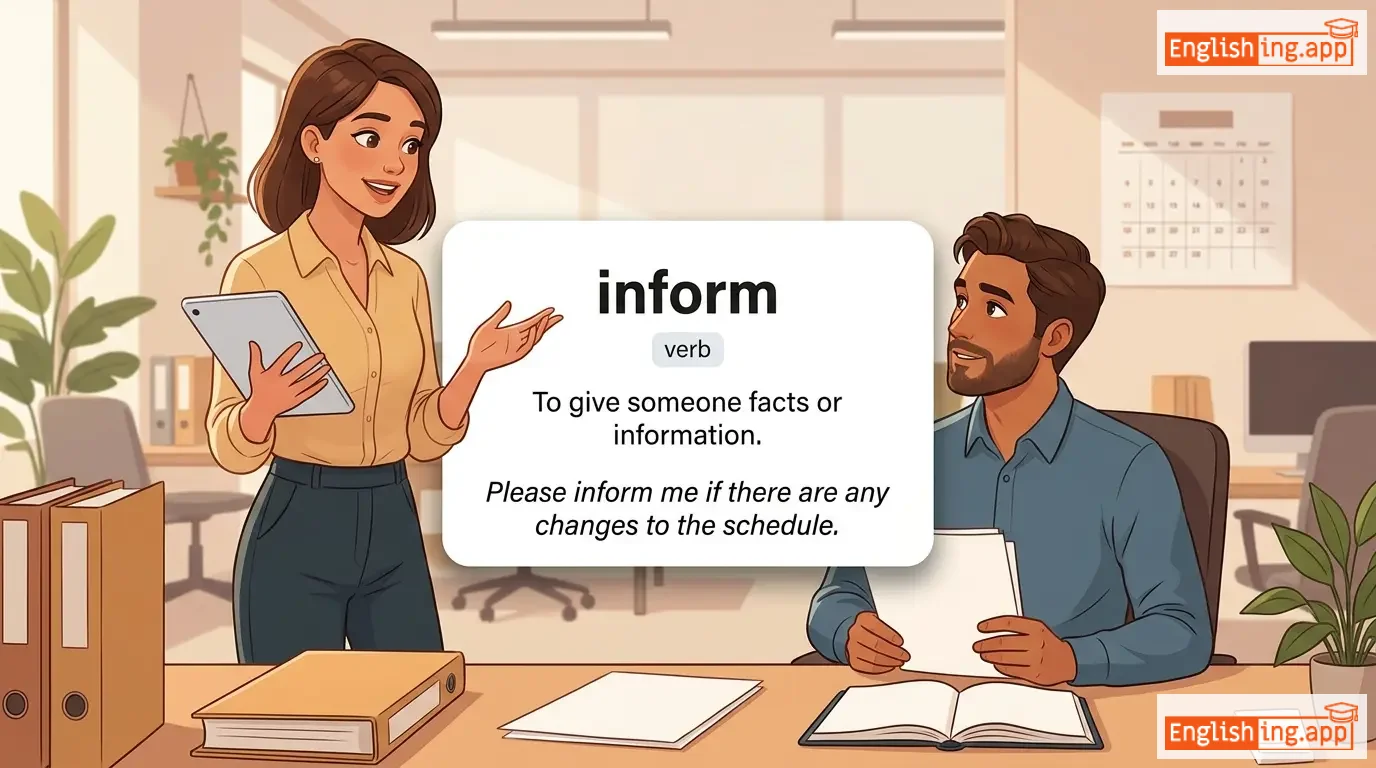
inform definition card — visual illustration of the meaning
verb
/ɪnˈfɔːrm/
informar (informar)

To give someone facts or information.

"Please inform me if there are any changes to the schedule."

"Por favor, infórmame si hay algún cambio en el horario." (Por favor, infórmame si hay algún cambio en el horario.)
adjective
/ɪnˈfɔːrməl/
informal (informal)

relaxed, friendly, and not following strict rules or conventions

"They had an informal meeting at the coffee shop."

"Tuvieron una reunión informal en la cafetería." (Tuvieron una reunion informal en la cafeteria.)
noun
/ˌɪnfərˈmeɪʃən/
información (informacion)

Facts or knowledge provided or learned about something.

"The website provides useful information about travel destinations."

"El sitio web proporciona información útil sobre destinos de viaje." (El sitio web proporciona información útil sobre destinos de viaje.)
adjective
/ɪnˈfɔːrmətɪv/
informativo (informativo)

giving or providing useful information; educational; instructive

"The documentary was very informative and educational."

"El documental fue muy informativo y educativo." (El documental fue muy informativo y educativo)
noun
/ɪnˈfrækʃən/
infracción (infraccion)

A violation or breach of a rule, law, or agreement.

"The student was punished for a minor infraction of the school rules."

"El estudiante fue castigado por una infracción menor de las reglas escolares." (El estudiante fue castigado por una infraccion menor de las reglas escolares.)
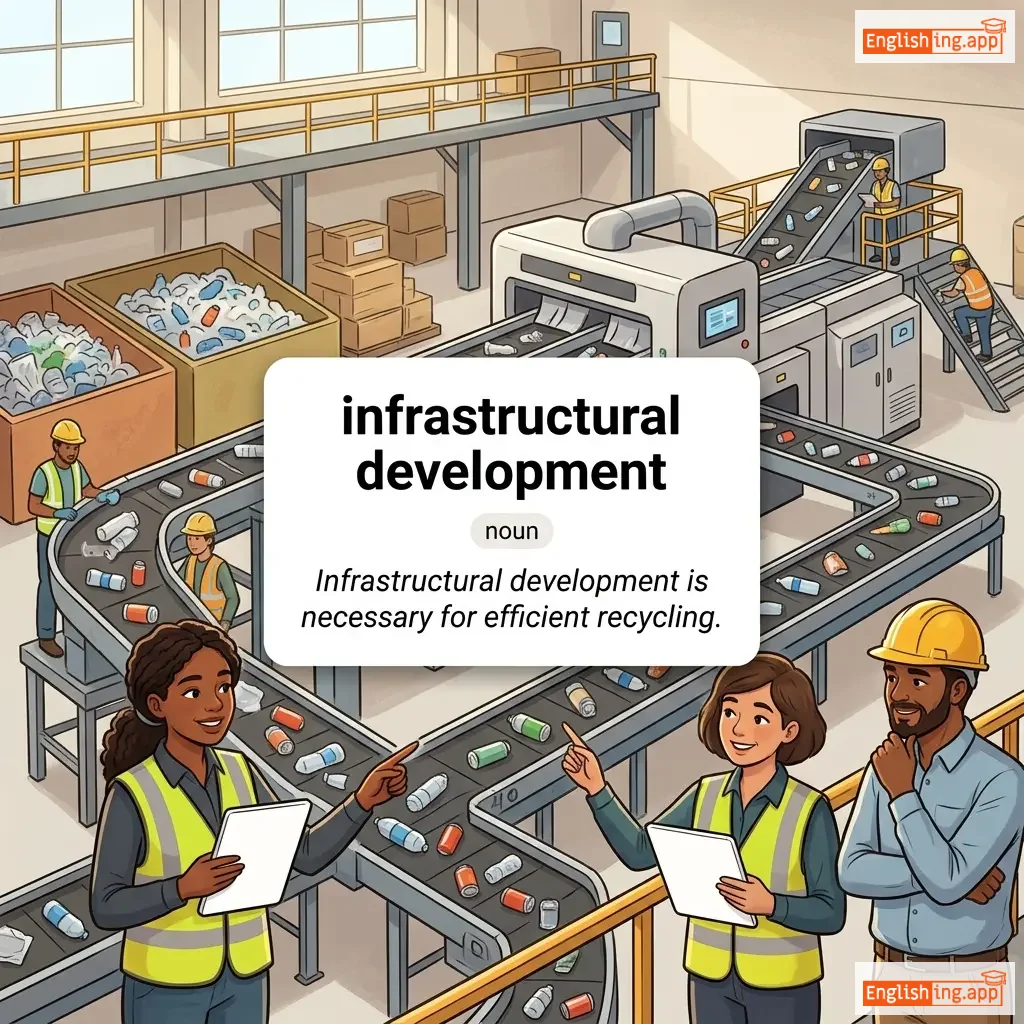
infrastructural development definition card — visual illustration of the meaning
noun
ˌɪnfrəˈstrʌktʃərəl dɪˈveləpmənt
desarrollo infraestructural (desarrollo infraestructural)

The process of building and improving the basic physical and organizational structures and facilities needed for the operation of a society or enterprise.

"Infrastructural development is necessary for efficient recycling."

"El desarrollo infraestructural es necesario para el reciclaje eficiente." (El desarrollo infraestructural es necesario para el reciclaje eficiente.)
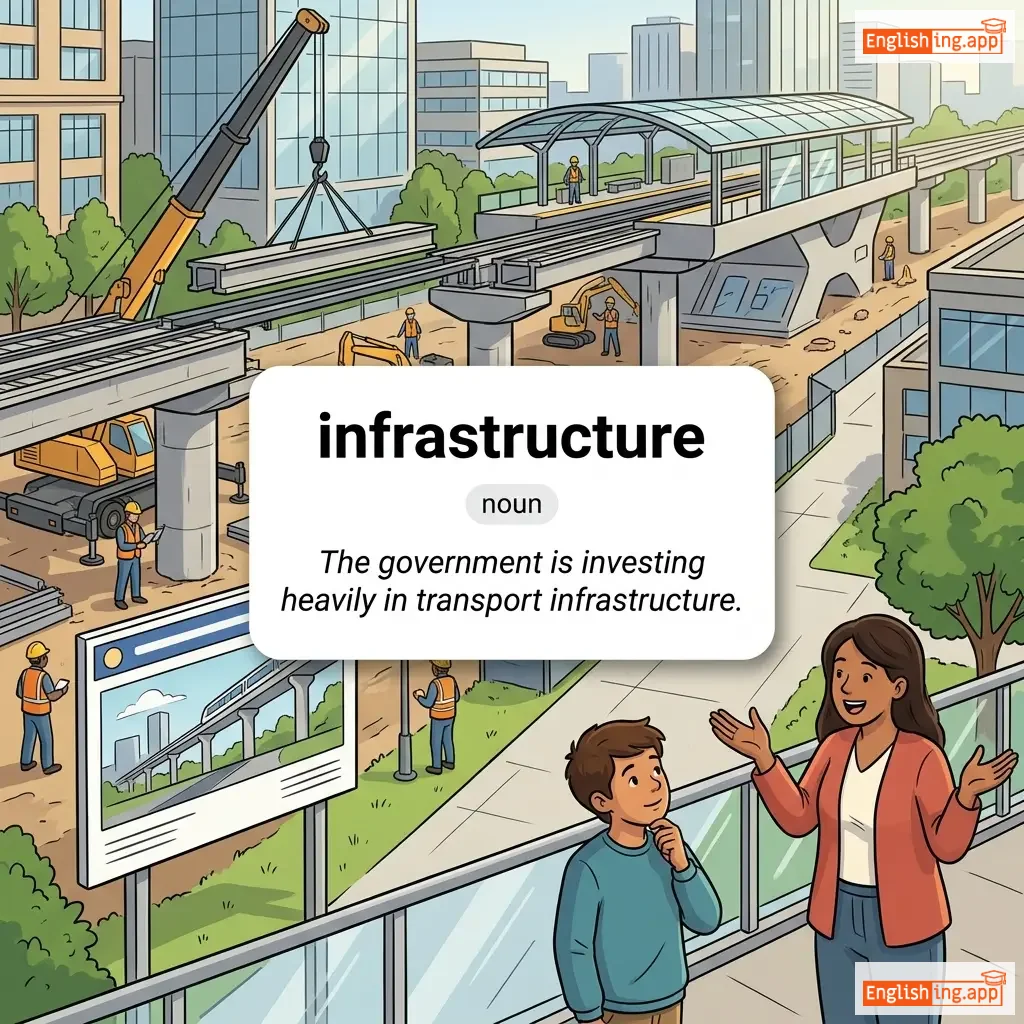
infrastructure definition card — visual illustration of the meaning
noun
/ˈɪnfrəˌstrʌktʃər/
infraestructura (infraestructura)

the basic physical and organizational structures and facilities needed for the operation of a society or enterprise

"The government is investing heavily in transport infrastructure."

"El gobierno está invirtiendo fuertemente en infraestructura de transporte." (El gobierno esta invirtiendo fuertemente en infraestructura de transporte.)
noun
/ɪnˈfriːkwəns/
infrecuencia (infrecuencia)

The state of occurring rarely or at long intervals.

"The infrequence of their meetings made it hard to maintain close ties."

"La infrecuencia de sus reuniones hacía difícil mantener vínculos cercanos." (La infrecuencia de sus reuniones hacía difícil mantener vínculos cercanos.)
adjective
/ɪnˈfriːkwənt/
poco frecuente (poco frecuente)

Happening rarely or not often.

"He made infrequent visits to his hometown after moving abroad."

"Él hacía visitas poco frecuentes a su ciudad natal después de mudarse al extranjero." (Él hacía visitas poco frecuentes a su ciudad natal después de mudarse al extranjero.)
verb
/ɪnˈfrɪndʒ/
infringir (infringir)

To actively break the terms of a law, agreement, or right.

"Copying this software without permission will infringe copyright laws."

"Copiar este software sin permiso infringirá las leyes de derechos de autor." (Copiar este software sin permiso infringirá las leyes de derechos de autor.)
verb
/ɪnˈfjʊərieɪt/
enfurecer (enfurecer)

To make someone extremely angry.

"His careless remarks infuriated the entire team."

"Sus comentarios descuidados enfurecieron a todo el equipo." (Sus comentarios descuidados enfurecieron a todo el equipo.)
verb
/ɪnˈfjuːz/
infundir (infun-deer)

to fill or spread through something; to instill a quality, idea, or feeling

"The teacher tried to infuse her students with a love for reading."

"La profesora trató de infundir a sus estudiantes con un amor por la lectura." (La profesora trato de infundir a sus estudiantes con un amor por la lectura)
noun
/ɪnˈfjuːʒən/
infusión (infusion)

the act of introducing something into another; a drink made by steeping leaves or herbs in liquid

"She prepared a calming infusion of chamomile tea."

"Ella preparó una infusión calmante de té de manzanilla." (Ella preparó una infusion calmante de te de manzanilla.)
ingenious definition card — visual illustration of the meaning
adjective
/ɪnˈdʒiːniəs/
ingenioso (ingenioso)

very clever and inventive; showing creativity in problem-solving

"The engineer came up with an ingenious solution to the problem."

"El ingeniero encontró una solución ingeniosa para el problema." (El ingeniero encontró una solución ingeniosa para el problema.)
noun
/ˈænʒənuː/
jovencita inocente (jovencita inocente)

an innocent, naïve young woman, especially as represented in literature or theater

"She played the role of the ingénue in the play with great charm."

"Ella interpretó el papel de la jovencita inocente en la obra con gran encanto." (Ella interpreto el papel de la jovencita inocente en la obra con gran encanto.)
ingenuity definition card — visual illustration of the meaning
noun
/ˌɪndʒəˈnjuːɪti/
ingenio (ingenio)

the quality of being clever, original, and inventive

"The project was completed on time thanks to the ingenuity of the team."

"El proyecto se completó a tiempo gracias a la ingenuidad del equipo." (El proyecto se completó a tiempo gracias a la ingenuidad del equipo.)
ingenuous definition card — visual illustration of the meaning
adjective
/ɪnˈdʒɛnjuəs/
ingenuo (ingenuo)

Innocent, naive, and unsuspecting; showing childlike simplicity and sincerity.

"Her ingenuous smile revealed her genuine kindness."

"Su sonrisa ingenua reveló su genuina amabilidad." (Su sonrisa ingenua reveló su genuina amabilidad.)
verb
/ɪnˈdʒɛst/
ingerir (ingerir)

To take food, drink, or another substance into the body, usually by swallowing.

"The patient must ingest the medicine with water."

"El paciente debe ingerir el medicamento con agua." (El paciente debe ingerir el medicamento con agua.)
adjective
/ɪnˈɡlɔːriəs/
deshonroso (deshonroso)

Causing shame or disgrace; not bringing honor or glory.

"The army suffered an inglorious defeat."

"El ejército sufrió una derrota deshonrosa." (El ejército sufrió una derrota deshonrosa.)
verb
/ɪnˈɡrɑːft/
implantar (implantar)

To implant or fix deeply, often used in the sense of grafting an idea or quality.

"The teacher tried to ingraft good manners in the students."

"El maestro trató de implantar buenos modales en los estudiantes." (El maestro trató de implantar buenos modales en los estudiantes.)
adjective
/ɪnˈɡreɪnd/
arraigado (arraigado)

Firmly fixed or established; deeply rooted and difficult to change.

"His ingrained habits were hard to break."

"Sus hábitos arraigados eran difíciles de romper." (Sus hábitos arraigados eran difíciles de romper.)
noun
/ˈɪnˌɡreɪt/
ingrato (ingrate)

An ungrateful person; someone who shows no appreciation.

"He worked hard for his friend, but the ingrate never thanked him."

"Trabajó duro para su amigo, pero el ingrato nunca le dio las gracias." (Trabajo duro para su amigo pero el ingrato nunca le dio las gracias)
verb
/ɪnˈɡreɪʃiˌeɪt/
ganarse el favor de (ganarse el favor de)

To gain favor or approval by deliberate effort, often in a flattering way.

"She tried to ingratiate herself with her boss by complimenting him often."

"Ella intentó ingraciarse con su jefe al elogiarlo con frecuencia." (Ella intentó ingraciarse con su jefe al elogiarlo con frecuencia.)
adjective
/ɪnˈɡreɪʃiˌeɪtɪŋ/
adulador (adulador)

Charming or flattering in a way intended to gain favor.

"His ingratiating smile made everyone trust him quickly."

"Su sonrisa aduladora hizo que todos confiaran en él rápidamente." (Su sonrisa aduladora hizo que todos confiaran en él rápidamente.)
noun
/ɪnˈɡrætɪˌtjuːd/
ingratitud (ingratitud)

Lack of gratitude; failure to show thanks or appreciation.

"His ingratitude hurt her feelings after all she had done for him."

"Su ingratitud le dolió después de todo lo que ella había hecho por él." (Su ingratitud le dolió después de todo lo que ella había hecho por él.)
noun
/ɪnˈɡriːdiənt/
ingrediente (ingrediente)

A component part or element of something, especially in a recipe.

"Flour is a key ingredient in baking bread."

"La harina es un ingrediente clave en la preparación del pan." (La harina es un ingrediente clave en la preparación del pan.)
verb
/ɪnˈhæbɪt/
habitar (habitar)

to live in; to occupy as a dwelling

"Many animals inhabit the forest."

"Muchos animales habitan el bosque." (Muchos animales habitan el bosque.)
noun
/ɪnˈhæbɪtənt/
habitante (habitante)

a person or animal that lives in a particular place

"The inhabitants of the village rely on farming for their livelihood."

"Los habitantes del pueblo dependen de la agricultura para su sustento." (Los habitantes del pueblo dependen de la agricultura para su sustento.)
inhale definition card — visual illustration of the meaning
verb
/ɪnˈheɪl/
inhalar (inhayl)

to breathe in; to draw air into the lungs

"Take a deep breath and inhale slowly."

"Toma una respiración profunda e inhala lentamente." (Toma una respiracion profunda e inhala lentamente.)
adjective
/ɪnhɑːrˈmoʊniəs/
desarmónico (desarmonico)

lacking harmony; discordant in sound; not in tune

"The inharmonious sounds from the broken piano made everyone cover their ears."

"Los sonidos desarmónicos del piano roto hicieron que todos se cubrieran los oídos." (Los sonidos desarmonicos del piano roto hicieron que todos se cubrieran los oidos.)
noun
/ɪnˈhɪərəns/
inherencia (inherencia)

The state of being an essential or permanent part of something.

"The inherence of risk is part of every business venture."

"La inherencia del riesgo es parte de cada aventura empresarial." (La inherencia del riesgo es parte de cada aventura empresarial.)
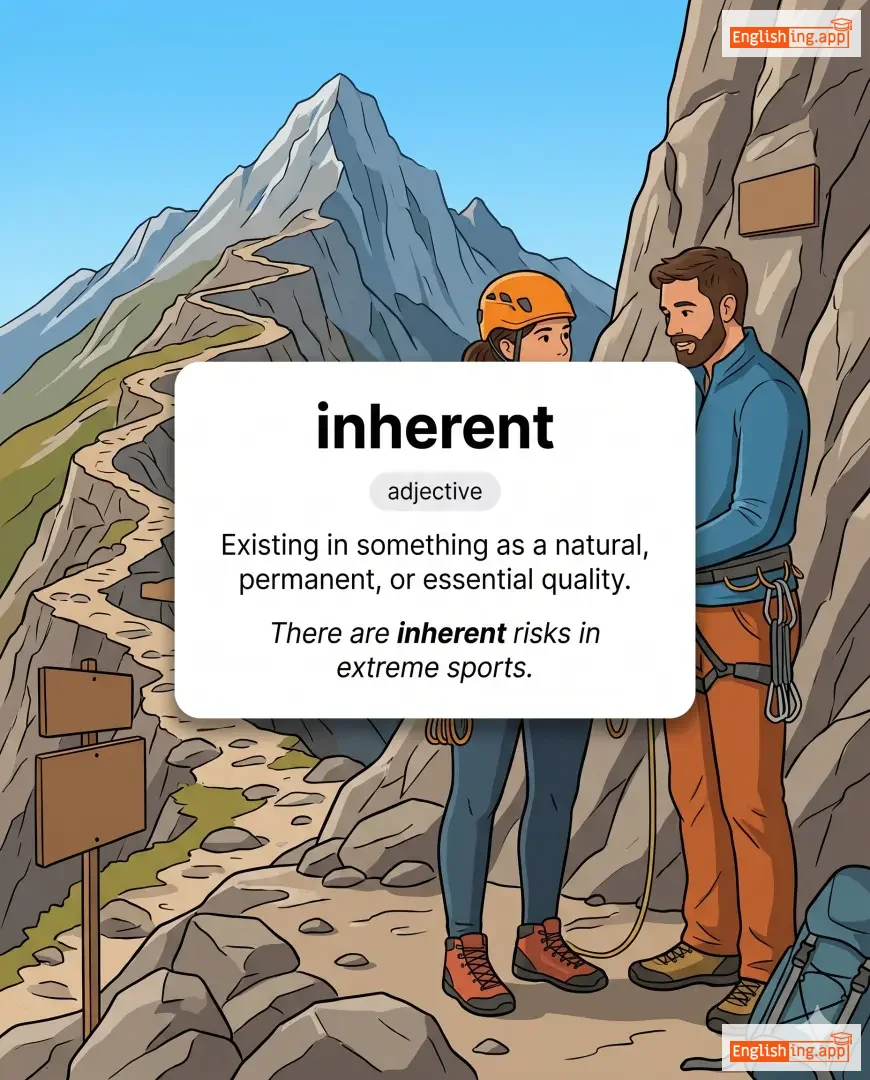
inherent definition card — visual illustration of the meaning
adjective
/ɪnˈhɛrənt/
inherente (inherente)

Existing in something as a natural, permanent, or essential quality.

"There are inherent risks in extreme sports."

"Existen riesgos inherentes en los deportes extremos." (Existen riesgos inherentes en los deportes extremos.)
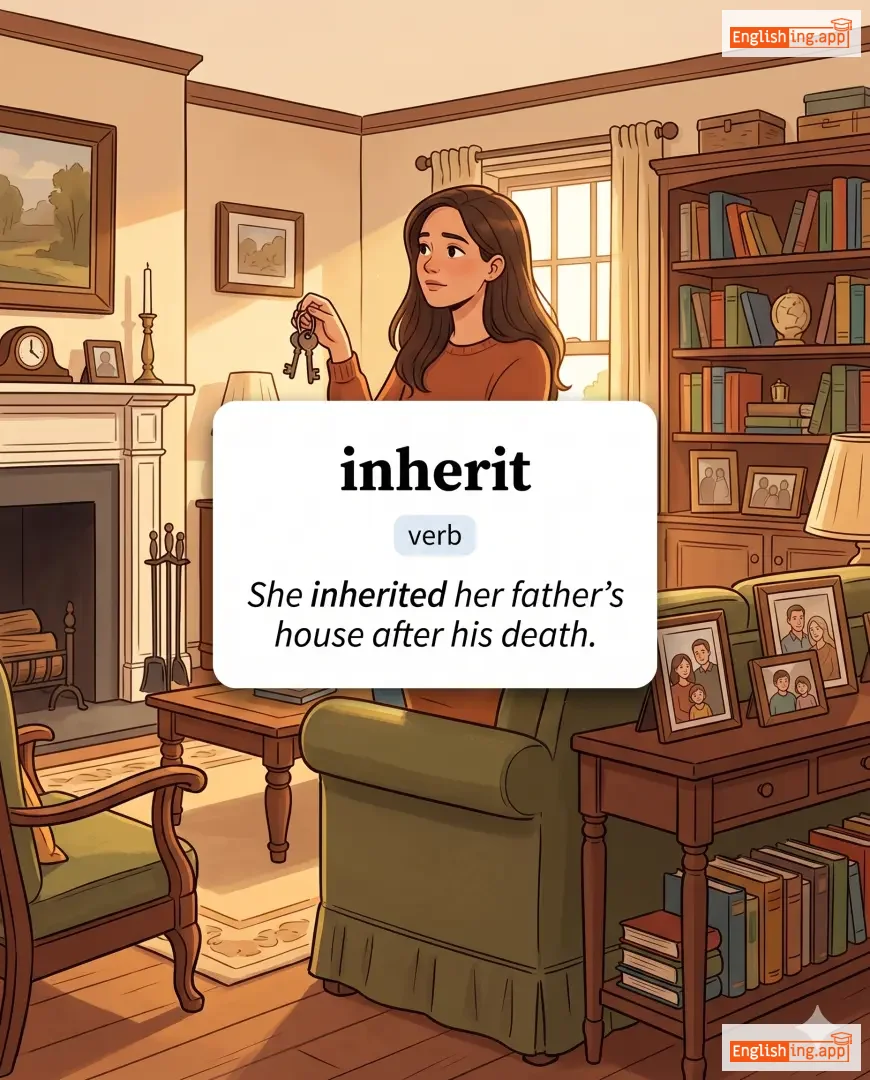
inherit definition card — visual illustration of the meaning
verb
/ɪnˈhɛrɪt/
heredar (heredar)

to receive property, money, or traits from someone after their death or from ancestors

"She inherited her father's house after his death."

"Ella heredó la casa de su padre después de su muerte." (Ella heredó la casa de su padre después de su muerte.)
noun
/ɪnˈhɛrɪtər/
heredero (heredero)

a person who receives money, property, or a title when someone dies

"She became the inheritor of her family's estate."

"Ella se convirtió en la heredera de la propiedad de su familia." (Ella se convirtió en la heredera de la propiedad de su familia.)
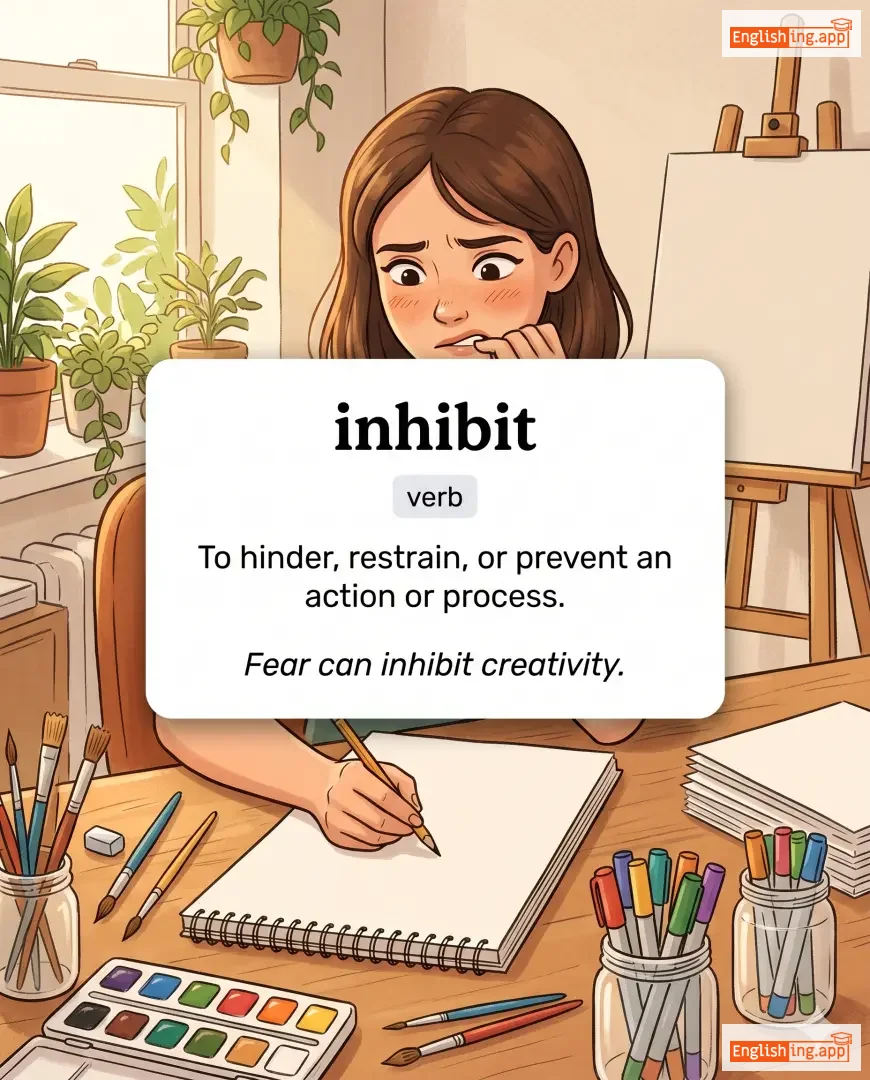
inhibit definition card — visual illustration of the meaning
verb
/ɪnˈhɪbɪt/
inhibir (inhibir)

To hinder, restrain, or prevent an action or process.

"Fear can inhibit creativity."

"El miedo puede inhibir la creatividad." (El miedo puede inhibir la creatividad.)
adjective
/ɪnˈhɪbɪtɪd/
inhibido (inhibido)

Unable to act in a relaxed and natural way, especially due to self-consciousness or restraint.

"He was too inhibited to express his true feelings."

"Él estaba demasiado inhibido para expresar sus verdaderos sentimientos." (El estaba demasiado inhibido para expresar sus verdaderos sentimientos.)