Vocabularios

Descubra, aprenda y domine el vocabulario en inglés

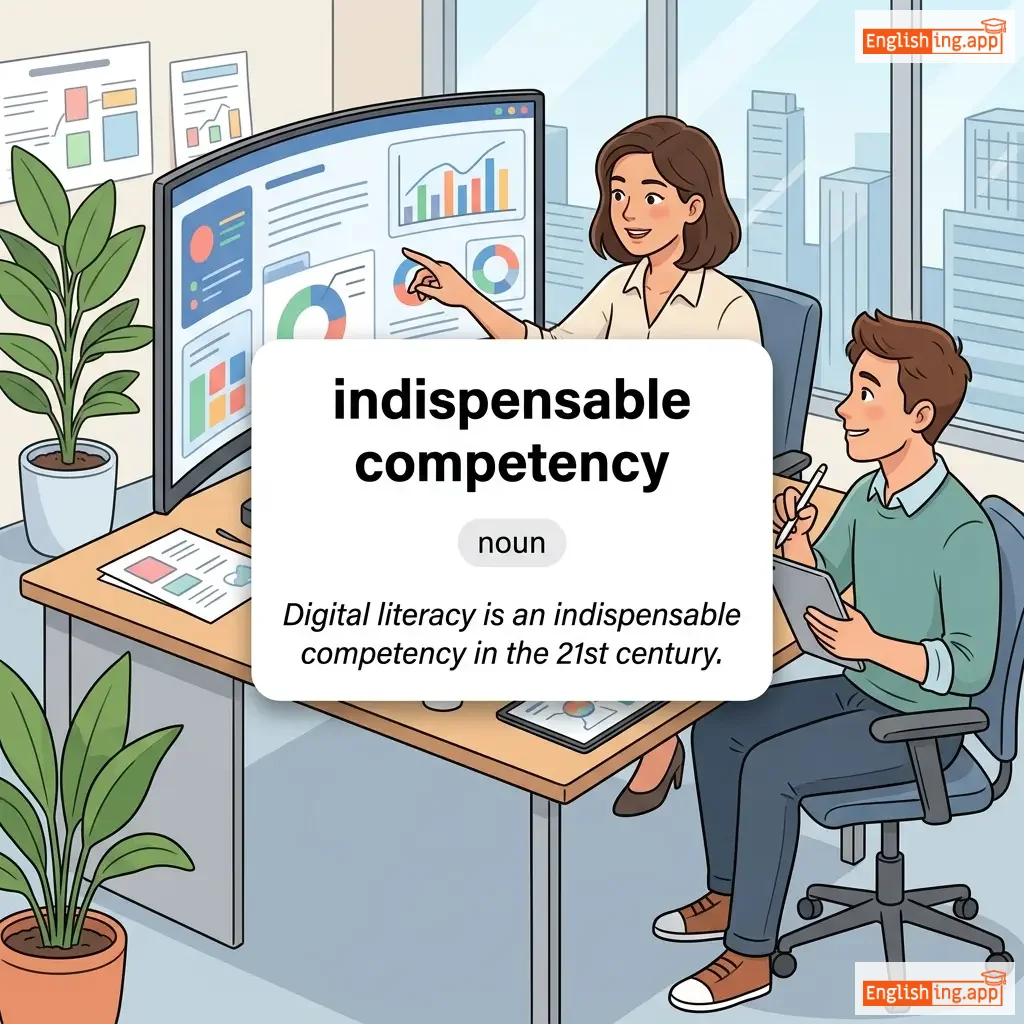
indispensable competency definition card — visual illustration of the meaning
noun
ˌɪndɪˈspensəbl̩ ˈkɒmpɪtənsi
competencia indispensable (competencia indispensable)

Essential skill or ability that cannot be done without; a crucial capability that is absolutely necessary.

"Digital literacy is an indispensable competency in the 21st century."

"La alfabetización digital es una competencia indispensable en el siglo XXI." (La alfabetización digital es una competencia indispensable en el siglo XXI.)
indispensable support definition card — visual illustration of the meaning
noun
ˌɪndɪˈspensəbl səˈpɔːrt
apoyo indispensable (apoyo indispensable)

Essential assistance that cannot be done without; absolutely necessary help.

"Volunteers provide indispensable support to communities."

"Los voluntarios proporcionan apoyo indispensable a las comunidades." (Los voluntarios proporcionan apoyo indispensable a las comunidades.)
adjective
/ˌɪndɪˈspjuːtəbl/
indiscutible (indiscutible)

Impossible to doubt or question; certain.

"It is an indisputable fact that the earth orbits the sun."

"Es un hecho indiscutible que la Tierra gira alrededor del Sol." (Es un hecho indiscutible que la Tierra gira alrededor del Sol.)
adjective
/ˌɪndɪˈsɒljʊbl/
Indisoluble (Indisoluble)

Unable to be destroyed, broken, or dissolved.

"Marriage was once considered an indissoluble bond."

"El matrimonio alguna vez fue considerado un vínculo indisoluble." (El matrimonio alguna vez fue considerado un vínculo indisoluble.)
adjective
/ˌɪndɪˈstɪŋkt/
indistinto (indistinto)

Not clear or sharply defined; vague or blurred.

"The sound of voices was indistinct in the distance."

"El sonido de las voces era indistinto a lo lejos." (El sonido de las voces era indistinto a lo lejos.)
verb
/ɪnˈdaɪt/
componer (componer)

To write or compose (literary or formal works).

"The poet indited a heartfelt sonnet."

"El poeta compuso un soneto sincero." (El poeta compuso un soneto sincero.)
adjective
/ˌɪndɪˈvɜːrtɪbəl/
no desviable (indivertible)

Not able to be turned aside or diverted.

"The judge's indivertible attention was on the case."

"La atención del juez no podía desviarse del caso." (La atencion del juez no podia desviarse del caso)
noun/adjective
/ˌɪndɪˈvɪdʒuəl/
individuo (individuo)

A single human being as distinct from a group; relating to one person.

"Each individual has the right to freedom of speech."

"Cada individuo tiene el derecho a la libertad de expresión." (Cada individuo tiene el derecho a la libertad de expresión.)
adjective
/ˌɪndɪˈvɪzəbl/
indivisible (indivisible)

Not able to be divided or separated.

"The country's unity was indivisible despite differences."

"La unidad del país era indivisible a pesar de las diferencias." (La unidad del pais era indivisible a pesar de las diferencias.)
verb
/ɪnˈdɒktrɪˌneɪt/
adoctrinar (adoctrinar)

To teach someone to fully accept a set of beliefs or ideas without question.

"The regime tried to indoctrinate the youth with propaganda."

"El régimen trató de adoctrinar a la juventud con propaganda." (El régimen trató de adoctrinar a la juventud con propaganda.)
noun
/ˈɪndələns/
indolencia (indolencia)

Avoidance of activity or exertion; laziness.

"His indolence kept him from finishing the project on time."

"Su indolencia le impidió terminar el proyecto a tiempo." (su indolencia le impidio terminar el proyecto a tiempo.)
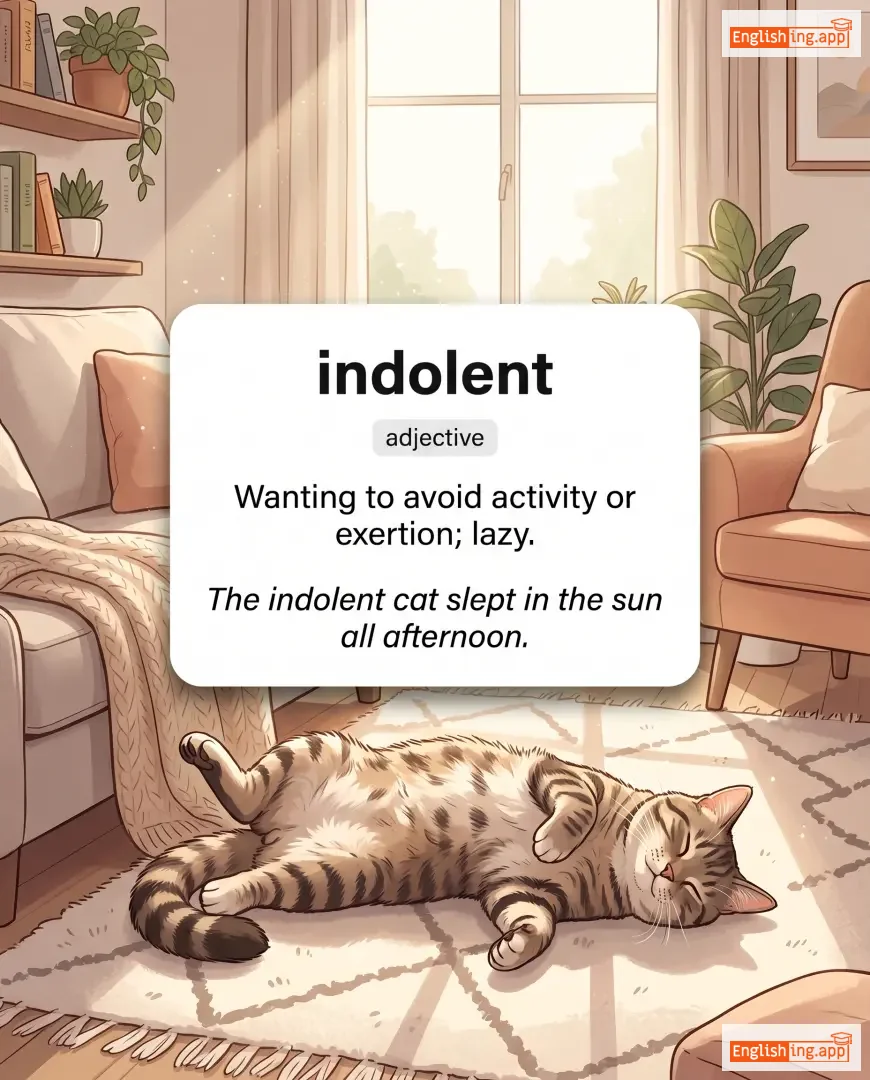
indolent definition card — visual illustration of the meaning
adjective
/ˈɪndələnt/
perezoso (perezoso)

Wanting to avoid activity or exertion; lazy.

"The indolent cat slept in the sun all afternoon."

"El gato perezoso durmió al sol toda la tarde." (El gato perezoso durmió al sol toda la tarde.)
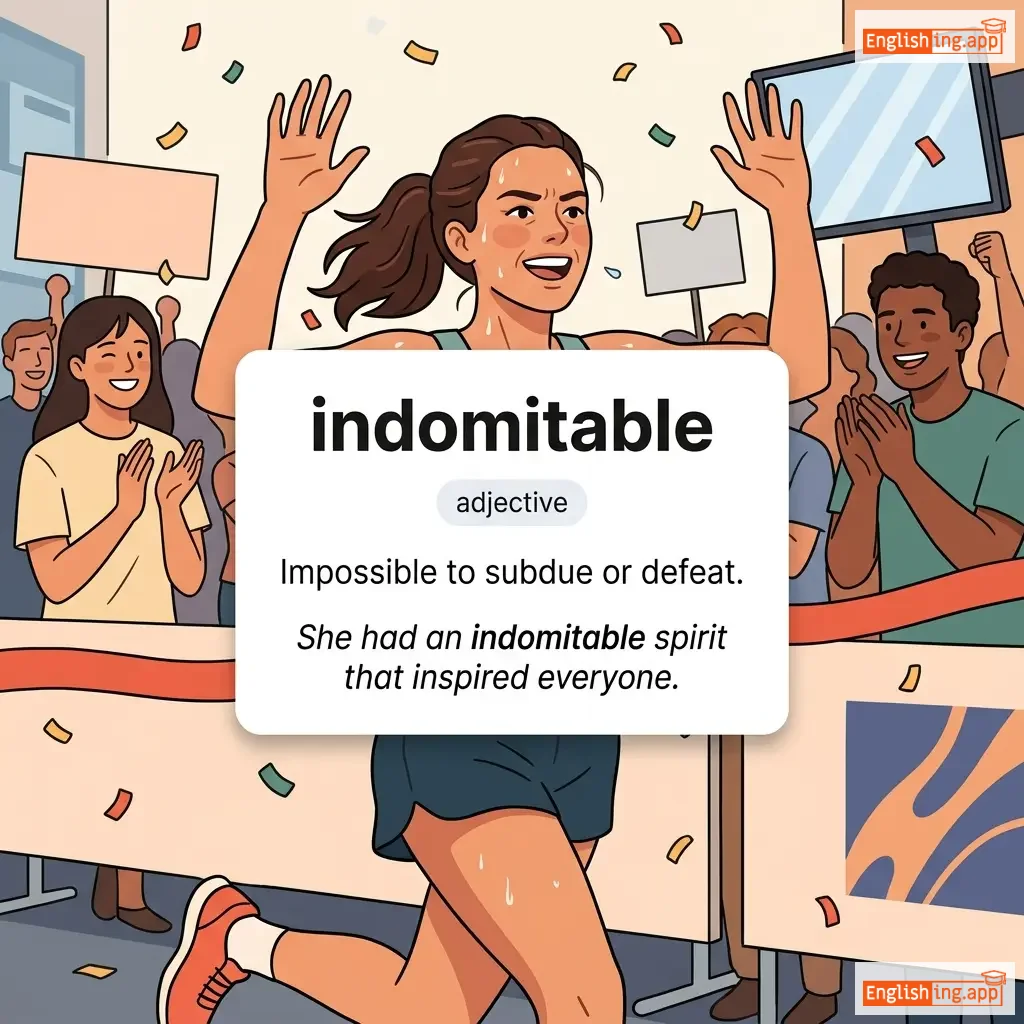
indomitable definition card — visual illustration of the meaning
adjective
/ɪnˈdɒmɪtəbl/
indomable (indomable)

Impossible to subdue or defeat.

"She had an indomitable spirit that inspired everyone."

"Ella tenía un espíritu indomable que inspiró a todos." (Ella tenía un espíritu indomable que inspiró a todos.)
adjective
/ˈɪn.dɔːr/
de interior (de interior)

situated, occurring, or used inside a building

"Indoor plants can improve air quality at home."

"Las plantas de interior pueden mejorar la calidad del aire en casa." (las plantas de interior pueden mejorar la calidad del aire en casa)
adverb
/ˌɪnˈdɔːrz/
en el interior (en el interior)

inside a building; within an enclosed space

"Because of the rain, everyone stayed indoors."

"Debido a la lluvia, todos se quedaron en el interior." (Debido a la lluvia, todos se quedaron en el interior)
adjective
/ɪnˈdjuːbɪtəbl/
indudable (indudable)

Impossible to doubt; unquestionable.

"It is indubitable that hard work leads to success."

"Es indudable que el trabajo duro lleva al éxito." (Es indudable que el trabajo duro lleva al éxito.)
adverb
/ɪnˈdjuːbɪtəbli/
indudablemente (indudablemente)

Without a doubt; certainly.

"She is indubitably the best candidate for the job."

"Ella es indudablemente la mejor candidata para el trabajo." (Ella es indudablemente la mejor candidata para el trabajo.)
verb
/ɪnˈdjuːs/
inducir (inducir)

to cause or persuade someone to do something; to bring about a result

"The doctor induced sleep with a mild sedative."

"El doctor indujo el sueño con un sedante suave." (El doctor indujo el sueño con un sedante suave.)
noun
/ɪnˈdjuːsmənt/
inducido (indusido)

something that persuades or encourages someone to do something

"The company offered a bonus as an inducement to employees."

"La empresa ofreció un bono como incentivo para los empleados." (La empresa ofreció un bono como incentivo para los empleados.)
verb
/ɪnˈdʌkt/
admitir formalmente a alguien en una posición, organización o cargo (admitir formalmente a alguien en una posicion, organizacion o cargo)

to formally admit someone into a position, organization, or office

"She was inducted into the university's honor society."

"Ella fue admitida en la sociedad de honor de la universidad." (Ella fue admitida en la sociedad de honor de la universidad.)
adjective
/ɪnˈdʌktɪv/
inductivo (induktivo)

characterized by the inference of general laws from particular instances; reasoning from specific cases to general principles

"The scientist used inductive reasoning to form a hypothesis."

"El científico usó razonamiento inductivo para formular una hipótesis." (El cientifico uso razonamiento inductivo para formular una hipotesis.)
verb
/ɪnˈdʌldʒ/
entregarse (entregarse)

to allow oneself to enjoy something enjoyable, often excessively

"He indulged in a piece of chocolate cake after dinner."

"Él se entregó a un trozo de pastel de chocolate después de la cena." (El se entregó a un trozo de pastel de chocolate después de la cena.)
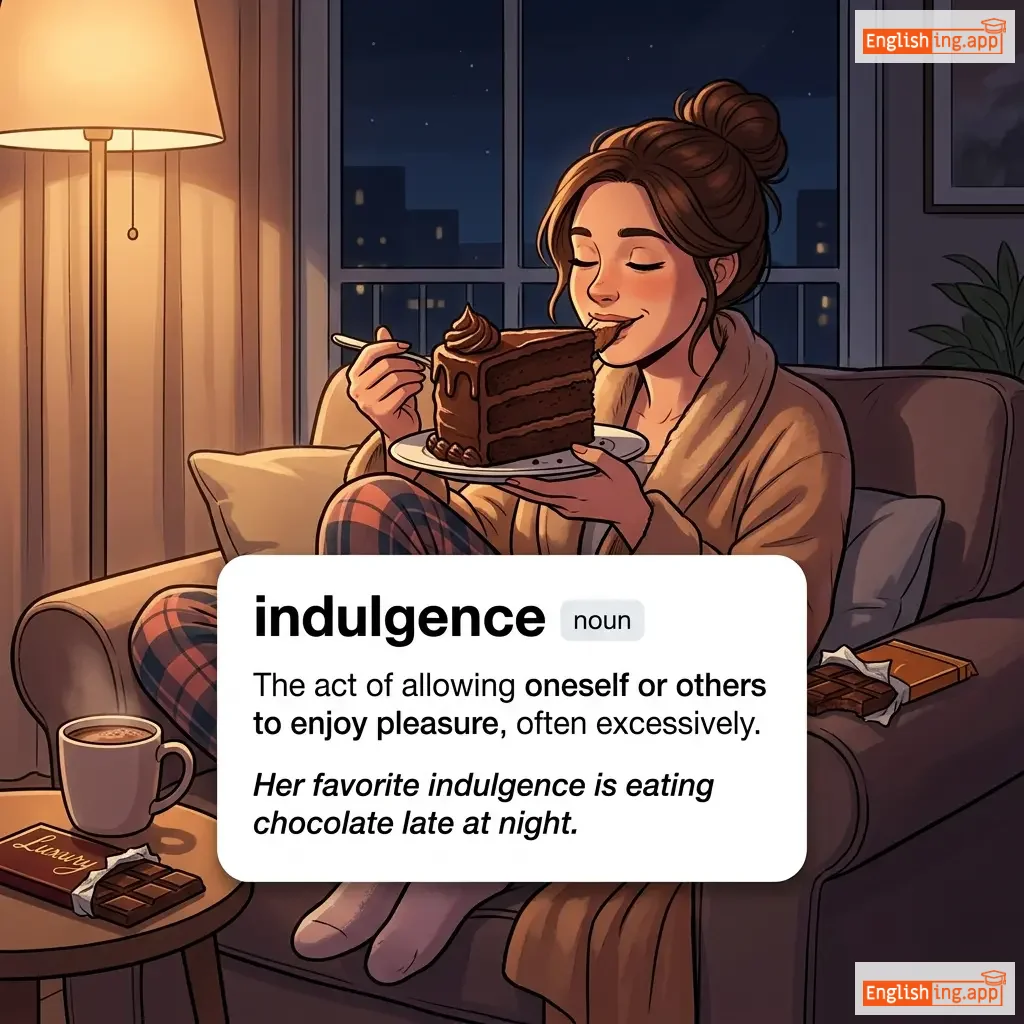
indulgence definition card — visual illustration of the meaning
noun
/ɪnˈdʌldʒəns/
indulgencia (indulgencia)

The act of allowing oneself or others to enjoy pleasure, often excessively.

"Her favorite indulgence is eating chocolate late at night."

"Su indulgencia favorita es comer chocolate tarde en la noche." (Su indulgencia favorita es comer chocolate tarde en la noche.)
adjective
/ɪnˈdʌldʒənt/
indulgente (indulgente)

Having a tendency to be overly generous or lenient with someone.

"The indulgent mother allowed her child to stay up late."

"La madre indulgente permitió que su hijo se quedara despierto hasta tarde." (La madre indulgente permitió que su hijo se quedara despierto hasta tarde.)
verb
/ˈɪndjʊˌreɪt/
endurecer (endurecer)

To harden or make something physically or emotionally tough.

"Years of hardship indurated his spirit."

"Años de dificultades induraron su espíritu." (Anos de dificultades induraron su espiritu.)
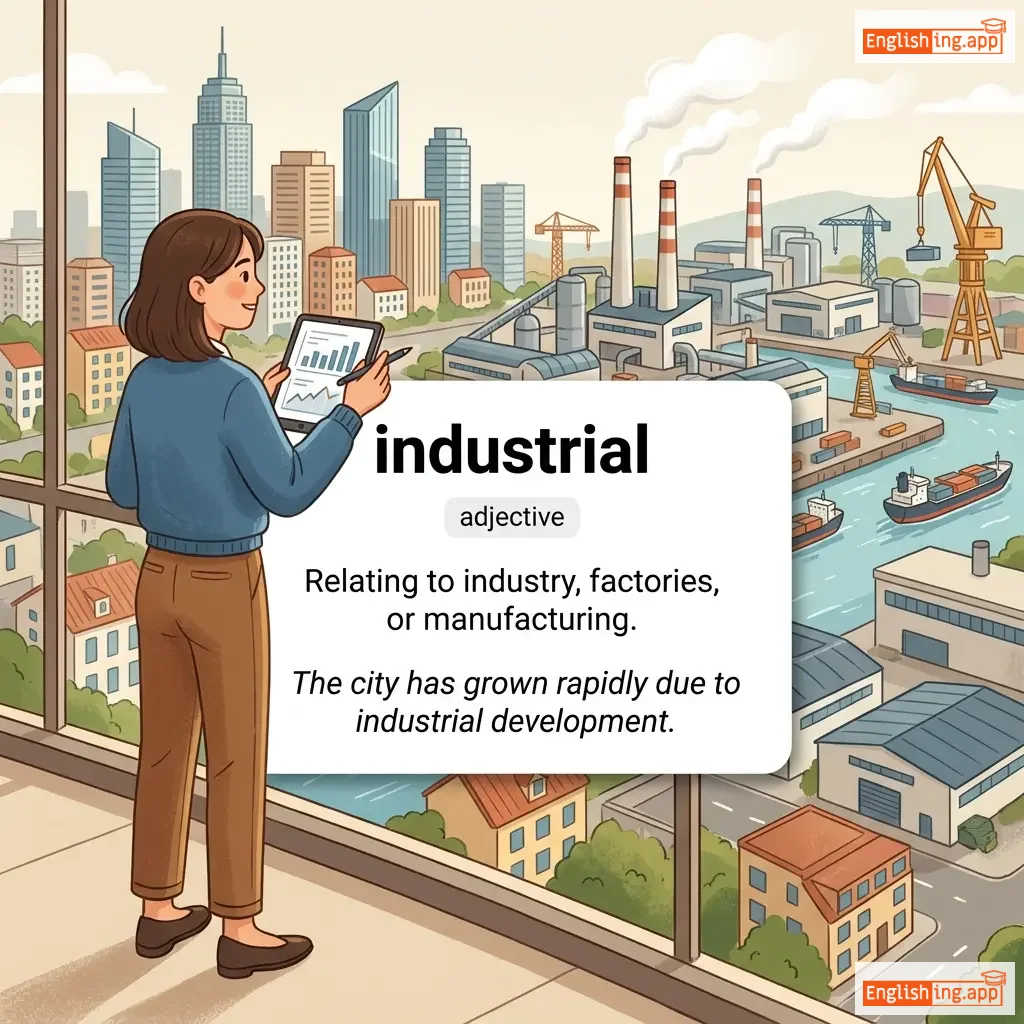
industrial definition card — visual illustration of the meaning
adjective
/ɪnˈdʌstriəl/
industrial (industrial)

Relating to industry, factories, or manufacturing.

"The city has grown rapidly due to industrial development."

"La ciudad ha crecido rápidamente debido al desarrollo industrial." (La ciudad ha crecido rápidamente debido al desarrollo industrial.)
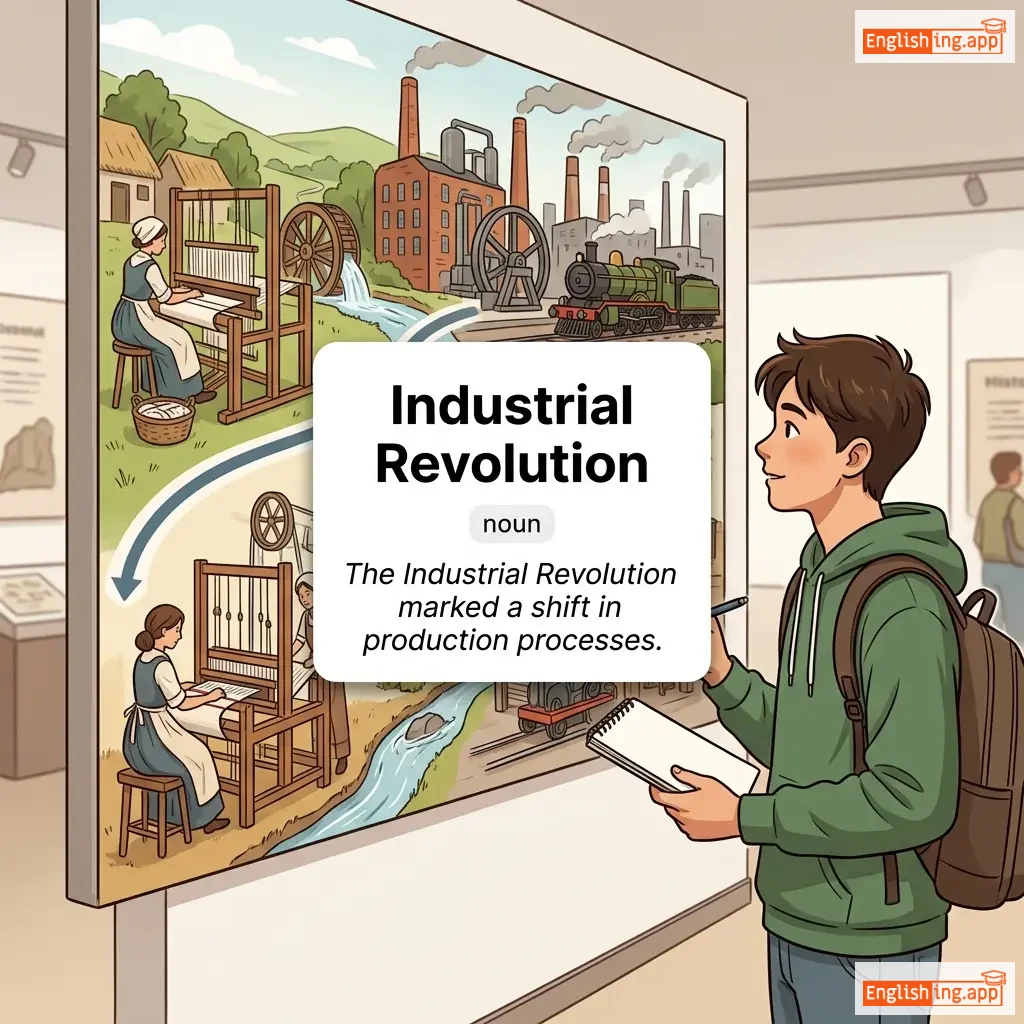
Industrial Revolution definition card — visual illustration of the meaning
noun
/ɪnˈdʌstriəl ˌrɛvəˈluːʃən/
Revolución Industrial (Revolucion Industrial)

The rapid development of industry that occurred in Britain in the late 18th and 19th centuries, brought about by the introduction of machinery and characterized by the use of steam power and the growth of factories.

"The Industrial Revolution marked a shift in production processes."

"La Revolución Industrial marcó un cambio en los procesos de producción." (La Revolucion Industrial marco un cambio en los procesos de produccion.)
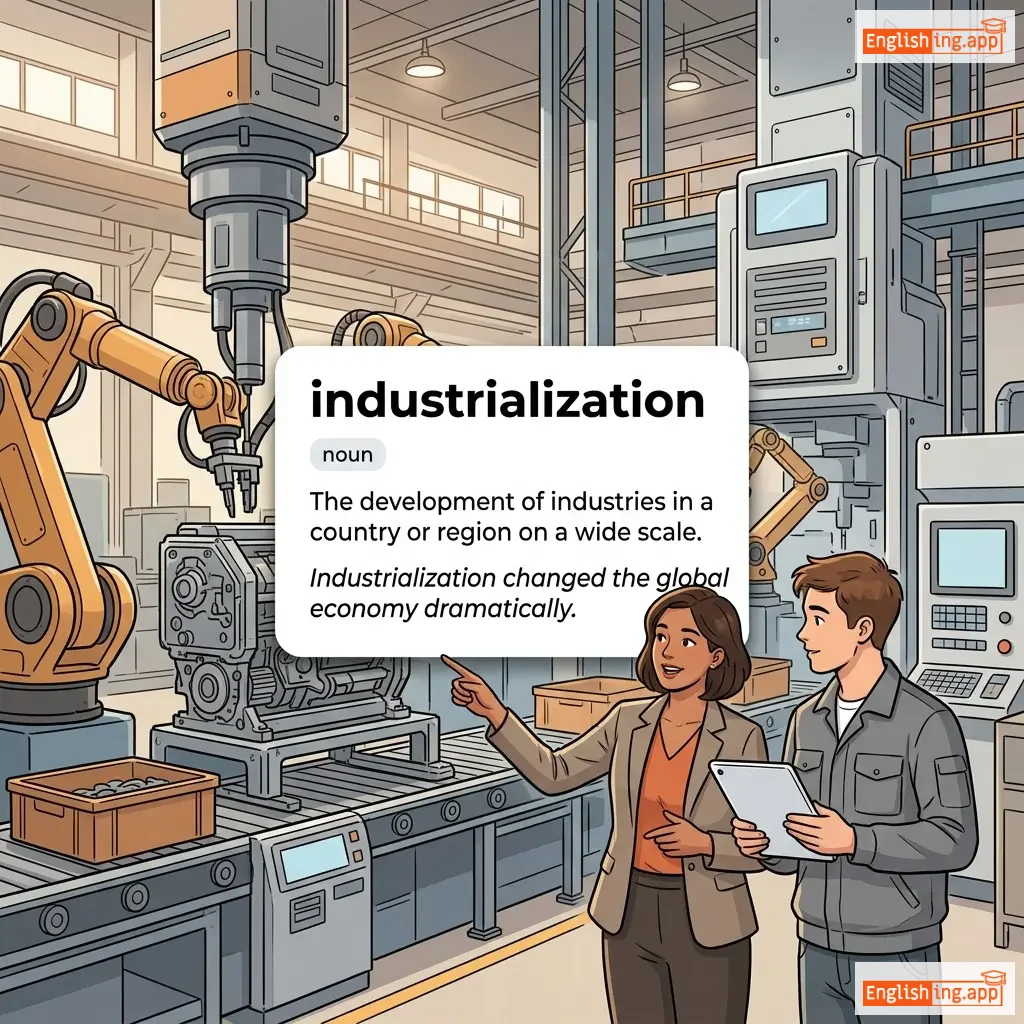
industrialization definition card — visual illustration of the meaning
noun
ɪnˌdʌstrɪəlaɪˈzeɪʃən
industrialización (industrializacion)

The development of industries in a country or region on a wide scale.

"Industrialization changed the global economy dramatically."

"La industrialización cambió drásticamente la economía global." (La industrializacion cambio drasticamente la economia global.)
adjective
/ɪnˈdʌstriəs/
trabajador (trabajador)

Hardworking and diligent in one's duties.

"She is an industrious student who always completes her assignments on time."

"Ella es una estudiante trabajadora que siempre completa sus tareas a tiempo." (Ella es una estudiante trabajadora que siempre completa sus tareas a tiempo.)
noun
/ɪnˈdʌstriəsnəs/
diligencia (diligencia)

The quality of being hardworking and diligent.

"His industriousness earned him a promotion at work."

"Su diligencia le valió una promoción en el trabajo." (Su diligencia le valió una promoción en el trabajo.)
industry definition card — visual illustration of the meaning
noun
/ˈɪndəstri/
industria (industria)

The production of goods or services within an economy.

"The textile industry employs thousands of workers in the region."

"La industria textil emplea a miles de trabajadores en la región." (La industria textil emplea a miles de trabajadores en la region.)
verb
/ɪˈniː.bri.eɪt/
embriagar (embriagar)

to intoxicate; to make someone drunk

"The strong wine was enough to inebriate even the most experienced drinker."

"El vino fuerte fue suficiente para embriagar incluso al bebedor más experimentado." (El vino fuerte fue suficiente para embriagar incluso al bebedor más experimentado.)
adjective
/ɪˈniː.bri.eɪ.tɪd/
ebrio (ebrio)

under the influence of alcohol; drunk

"He stumbled into the room completely inebriated."

"Entró en la habitación completamente ebrio." (Entró en la habitación completamente ebrio.)
noun
/ˌɪn.ɪˈbraɪ.ə.ti/
embriaguez (embriaguez)

the state of being drunk or intoxicated

"His frequent inebriety led to the loss of his job."

"Su frecuente embriaguez le llevó a perder su trabajo." (Su frecuente embriaguez le llevó a perder su trabajo.)
adjective
/ɪˈnɛd.ə.bəl/
incomestible (incomestible)

not fit to be eaten

"The spoiled food was inedible."

"La comida podrida era incomestible." (La comida podrida era incomestible)
ineffable definition card — visual illustration of the meaning
adjective
/ɪˈnɛf.ə.bəl/
inefable (inefable)

too great, extreme, or beautiful to be expressed in words

"The beauty of the sunset was ineffable."

"La belleza del atardecer era inefable." (La belleza del atardecer era inefable.)
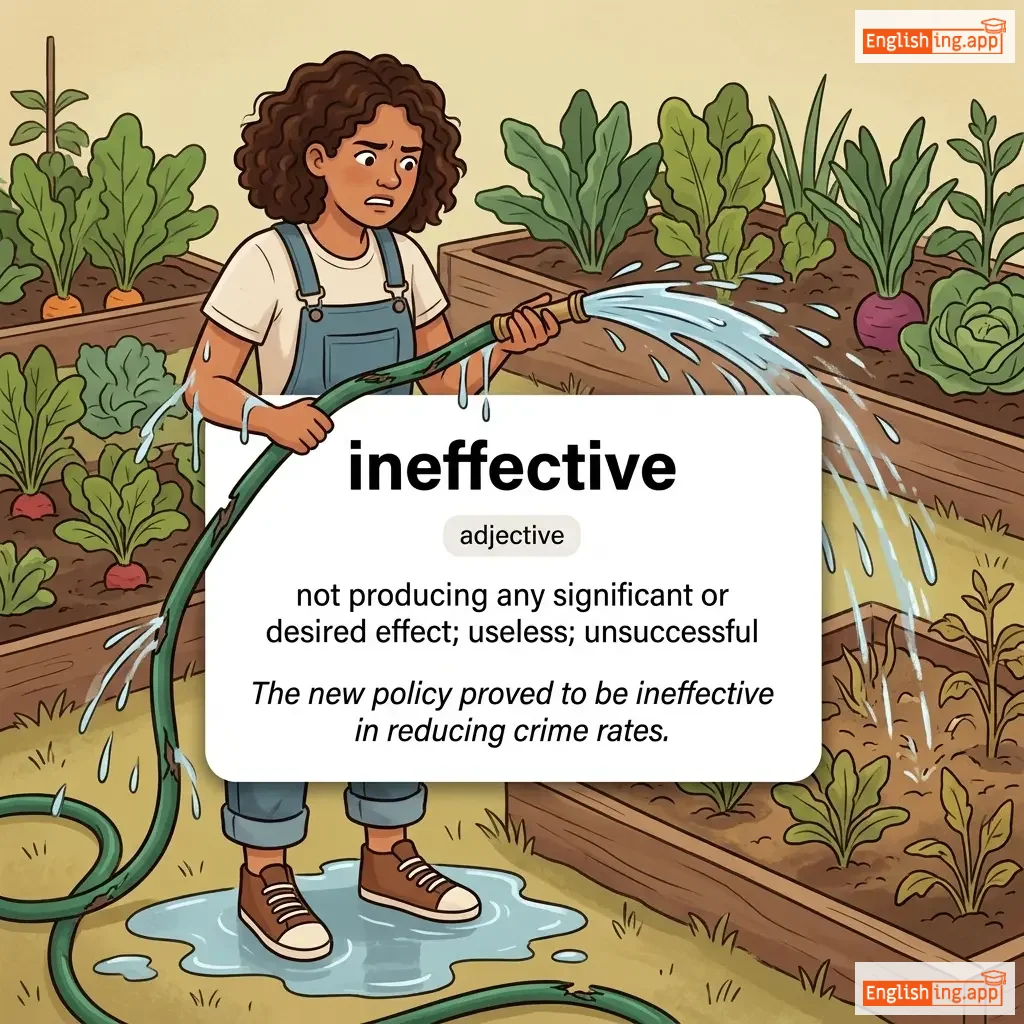
ineffective definition card — visual illustration of the meaning
adjective
/ˌɪnɪˈfɛktɪv/
ineficaz; inútil; sin éxito (inefikaz; inutil; sin exito)

not producing any significant or desired effect; useless; unsuccessful

"The new policy proved to be ineffective in reducing crime rates."

"La nueva política resultó ser ineficaz para reducir las tasas de criminalidad." (La nueva politica resulto ser ineficaz para reducir las tasas de criminalidad.)
adjective
/ˌɪn.ɪˈfɛk.tʃu.əl/
ineficaz (ineficaz)

Not producing any or the desired effect; lacking the ability or qualities to achieve a purpose.

"The manager’s ineffectual leadership caused the team to lose motivation."

"El liderazgo ineficaz del gerente hizo que el equipo perdiera la motivación." (El liderazgo ineficaz del gerente hizo que el equipo perdiera la motivacion.)
inefficacious definition card — visual illustration of the meaning
adjective
ˌɪn.ɪ.fɪˈkeɪ.ʃəs
ineficaz (inefikaz)

Not producing any or the desired effect; ineffective.

"The treatment was inefficacious in curing the disease."

"El tratamiento fue ineficaz en curar la enfermedad." (El tratamiento fue ineficaz en curar la enfermedad.)
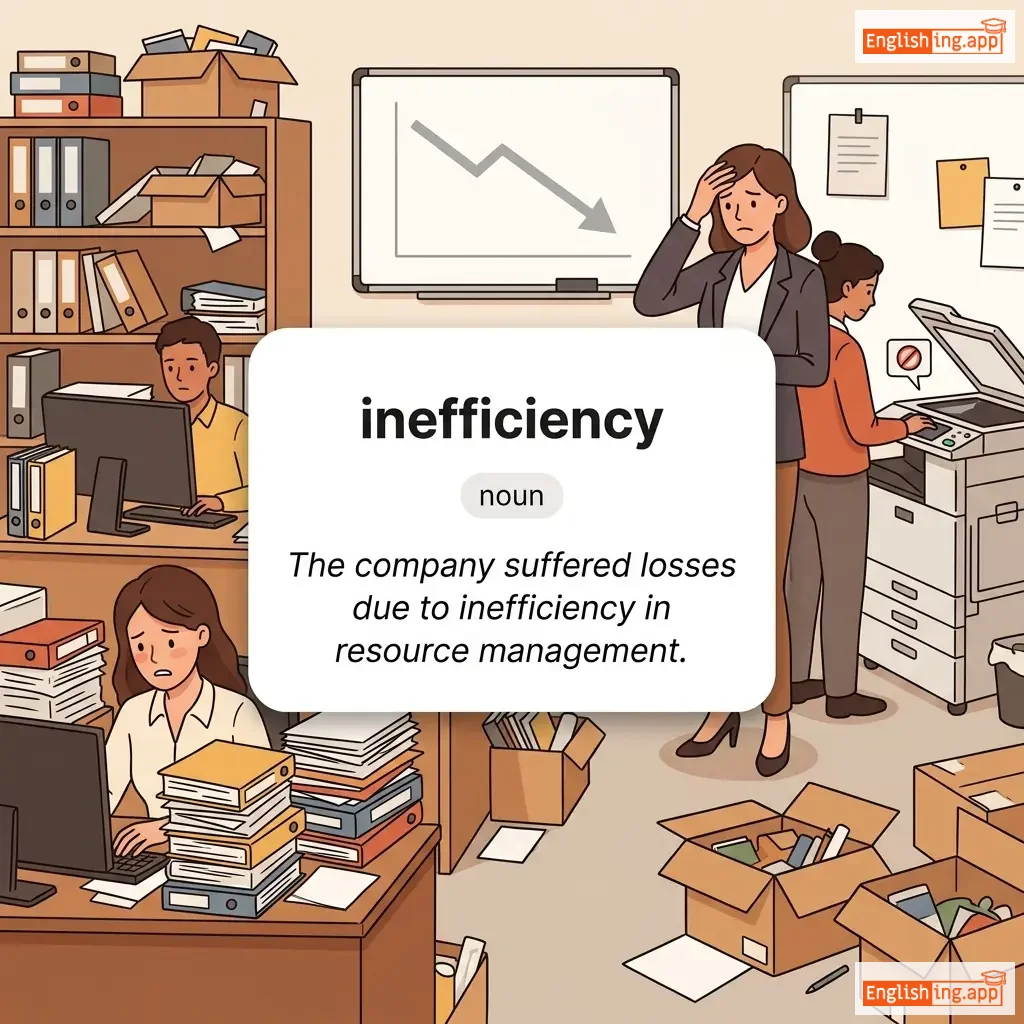
inefficiency definition card — visual illustration of the meaning
noun
/ˌɪn.ɪˈfɪʃ.ən.si/
ineficiencia (ineficiencia)

The state of not achieving maximum productivity; wastefulness or lack of competence.

"The company suffered losses due to inefficiency in resource management."

"La empresa sufrió pérdidas debido a la ineficiencia en la gestión de recursos." (La empresa sufrió pérdidas debido a la ineficiencia en la gestión de recursos.)
adjective
/ˌɪn.ɪˈfɪʃ.ənt/
ineficiente (ineficiente)

Not achieving maximum productivity; wasting resources or effort.

"The machine is old and inefficient compared to modern equipment."

"La máquina está vieja y es ineficiente en comparación con el equipo moderno." (La maquina esta vieja y es ineficiente en comparacion con el equipo moderno.)
adjective
/ɪnˈɛl.ɪ.dʒə.bəl/
no elegible (no elegible)

Not qualified or permitted to do something or to receive something.

"He was ineligible to apply for the scholarship because of his age."

"Él no era elegible para postularse a la beca debido a su edad." (Él no era elegible para postularse a la beca debido a su edad.)
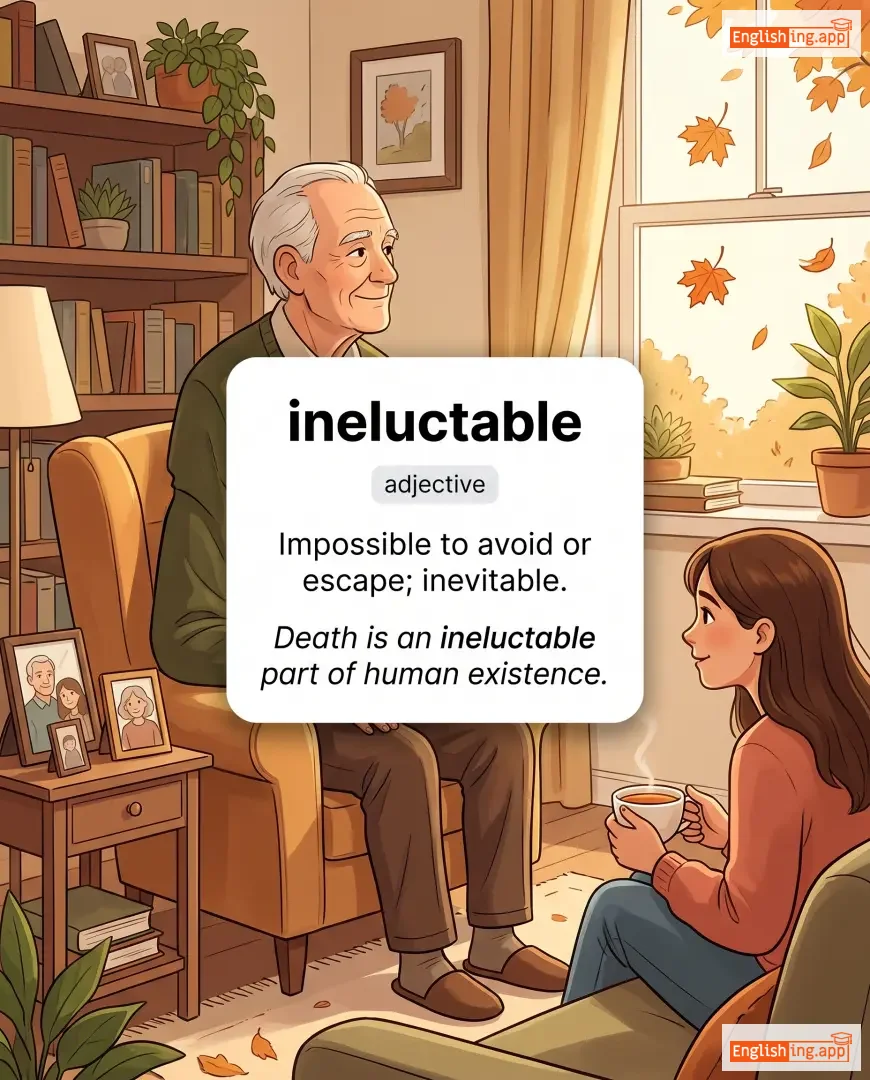
ineluctable definition card — visual illustration of the meaning
adjective
/ˌɪn.ɪˈlʌk.tə.bəl/
inevitable (inevitable)

Impossible to avoid or escape; inevitable.

"Death is an ineluctable part of human existence."

adjective
/ɪˈnɛpt/
inepto (inepto)

lacking skill or ability; clumsy or incompetent

"His inept handling of the situation made it worse."

"Su manejo inepto de la situación lo empeoró." (Su manejo inepto de la situación lo empeoró.)
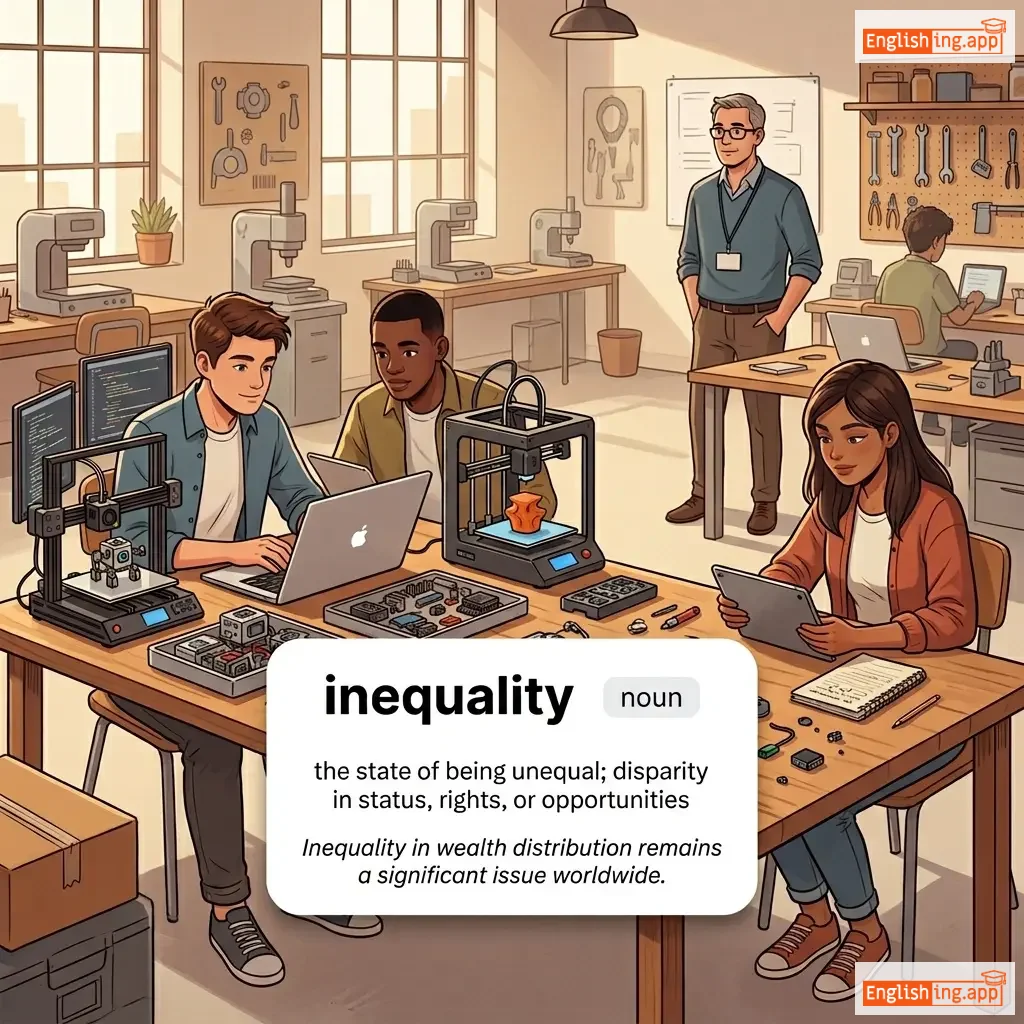
inequality definition card — visual illustration of the meaning
noun
/ˌɪnɪˈkwɒləti/
desigualdad (desigualdad)

the state of being unequal; disparity in status, rights, or opportunities

"Inequality in wealth distribution remains a significant issue worldwide."

"La desigualdad en la distribución de la riqueza sigue siendo un problema importante a nivel mundial." (La desigualdad en la distribución de la riqueza sigue siendo un problema importante a nivel mundial.)
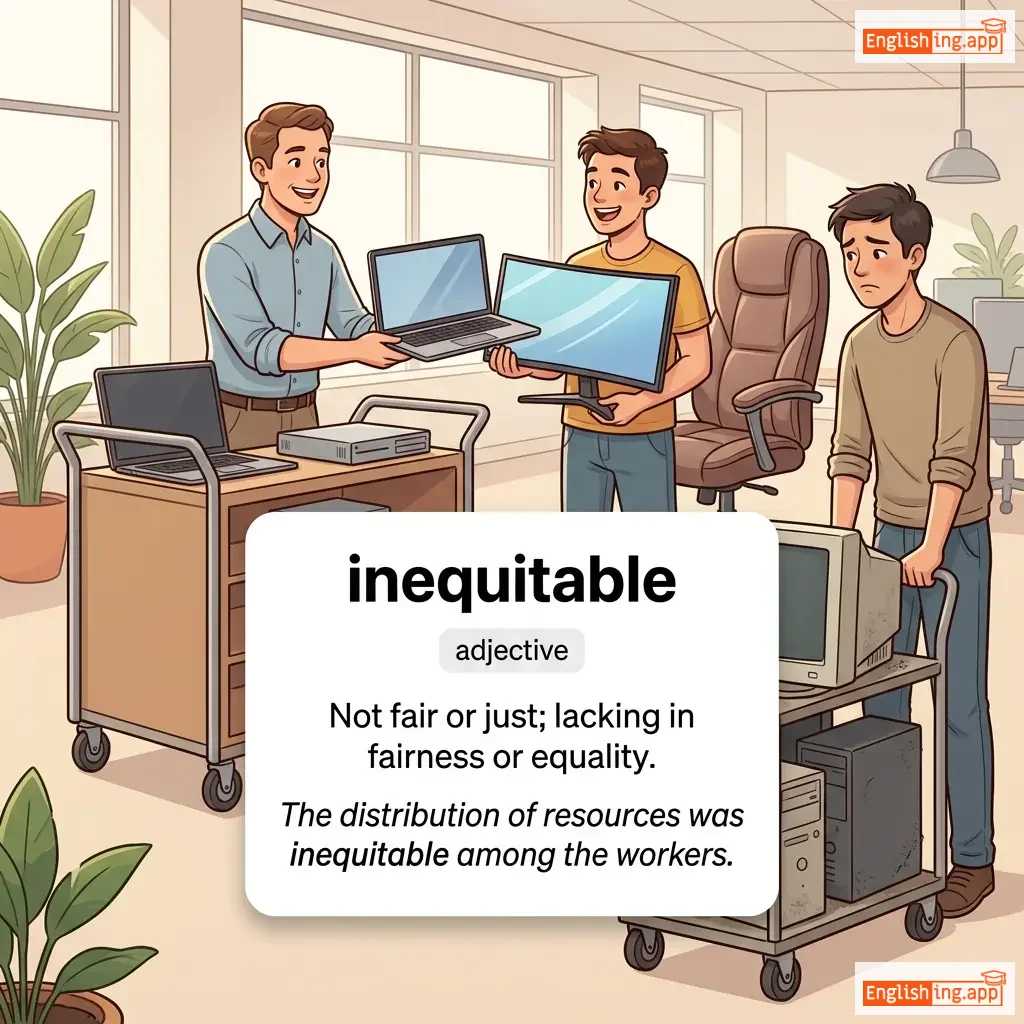
inequitable definition card — visual illustration of the meaning
adjective
/ɪnˈɛk.wɪ.tə.bəl/
inequitativo (inequitativo)

Not fair or just; lacking in fairness or equality.

"The distribution of resources was inequitable among the workers."

"La distribución de recursos fue inequitativa entre los trabajadores." (La distribucion de recursos fue inequitativa entre los trabajadores.)
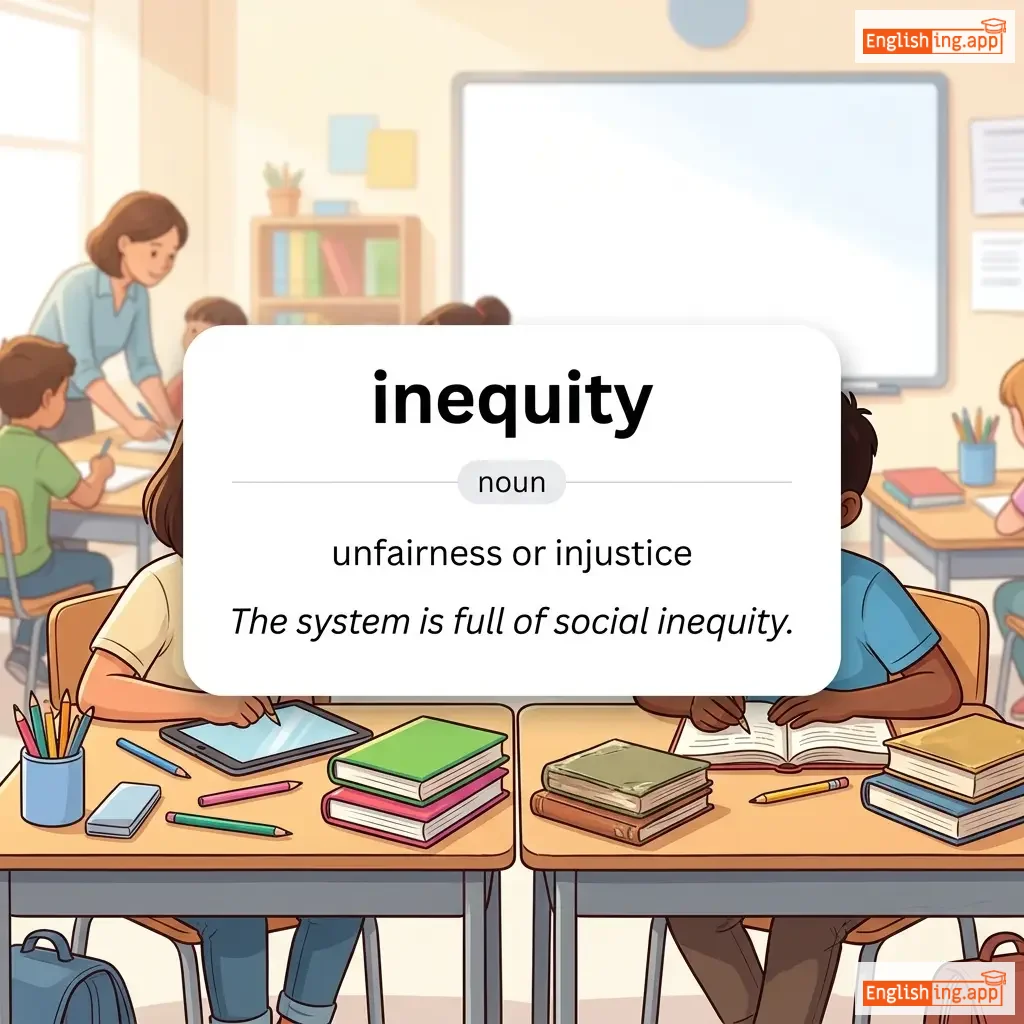
inequity definition card — visual illustration of the meaning
noun
/ɪnˈɛkwɪti/
inequidad (inequidad)

unfairness or injustice

"The system is full of social inequity."

"El sistema está lleno de inequidad social." (El sistema está lleno de inequidad social.)
noun
/ɪnˈɛrənsi/
inerrancia (inerrancia)

the belief or quality of being free from error; absolute correctness

"Some religious groups strongly affirm the inerrancy of their sacred texts."

"Algunos grupos religiosos afirman fuertemente la inerrancia de sus textos sagrados." (Algunos grupos religiosos afirman fuertemente la inerrancia de sus textos sagrados.)
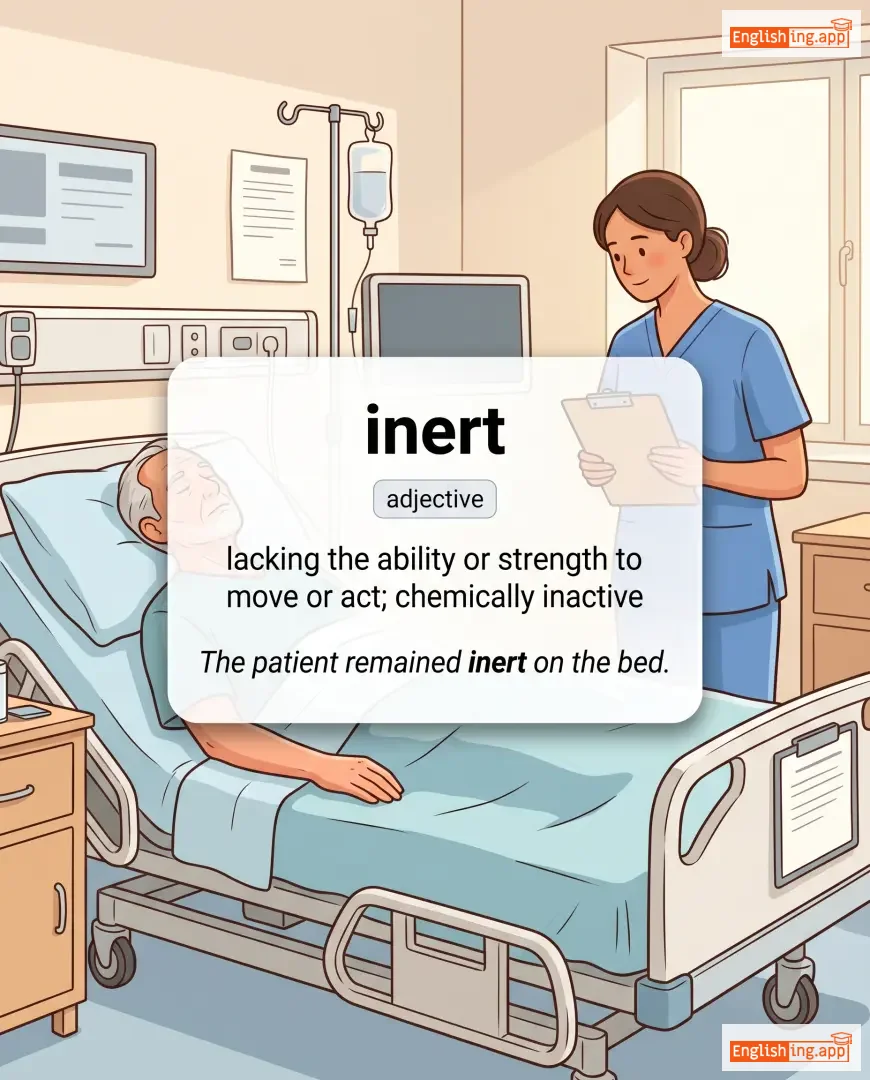
inert definition card — visual illustration of the meaning
adjective
/ɪˈnɜːrt/
inactivo (inactivo)

lacking the ability or strength to move or act; chemically inactive

"The patient remained inert on the bed."

"El paciente permaneció inactivo en la cama." (El paciente permaneció inactivo en la cama.)
noun
/ɪˈnɜːrʃə/
inercia (inercia)

A tendency to remain unchanged or continue in the same state of motion unless acted upon.

"The project failed due to the inertia of outdated systems."

"El proyecto fracasó debido a la inercia de los sistemas obsoletos." (El proyecto fracasó debido a la inercia de los sistemas obsoletos.)