Vocabularios

Descubra, aprenda y domine el vocabulario en inglés

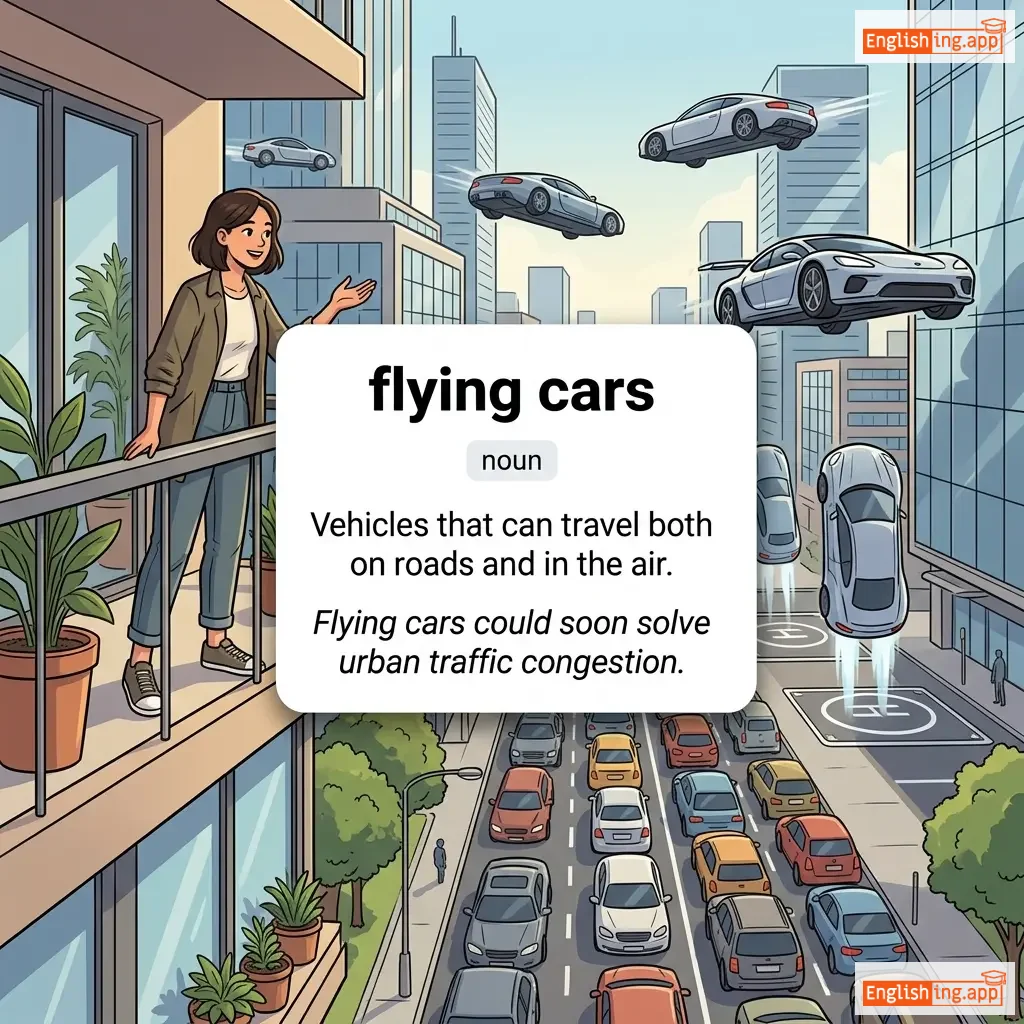
flying cars definition card — visual illustration of the meaning
noun
ˈflaɪ.ɪŋ kɑːrz
autos voladores (autos voladores)

Vehicles that can travel both on roads and in the air.

"Flying cars could soon solve urban traffic congestion."

"Los autos voladores pronto podrían resolver el problema del tráfico urbano." (Los autos voladores pronto podrian resolver el problema del trafico urbano.)
noun
/ˈflaɪ.ɪŋ ˈkriː.tʃər/
criatura voladora (criatura voladora)

any animal that has the ability to fly through the air

"Birds, bats, and insects are all examples of flying creatures."

"Los pájaros, los murciélagos y los insectos son ejemplos de criaturas voladoras." (Los pájaros, los murciélagos y los insectos son ejemplos de criaturas voladoras.)
noun
/foʊl fʊt/
flor de pezuña de caballo (flor de pezuna de caballo)

a yellow flowering plant with leaves shaped like a horse's hoof, also known as coltsfoot

"The foal-foot plant grows wild in many meadows and is often the first flower to bloom in spring."

"La planta de pezuña de caballo crece silvestre en muchos prados y a menudo es la primera flor en florecer en primavera." (La planta de pezuna de caballo crece silvestre en muchos prados y a menudo es la primera flor en florecer en primavera.)
noun
/foʊm/
espuma (espuma)

a mass of small bubbles formed on or in liquid; frothy white mass

"The waves crashed against the rocks, creating white foam on the shore."

"Las olas chocaron contra las rocas, creando espuma blanca en la orilla." (Las olas chocaron contra las rocas, creando espuma blanca en la orilla.)
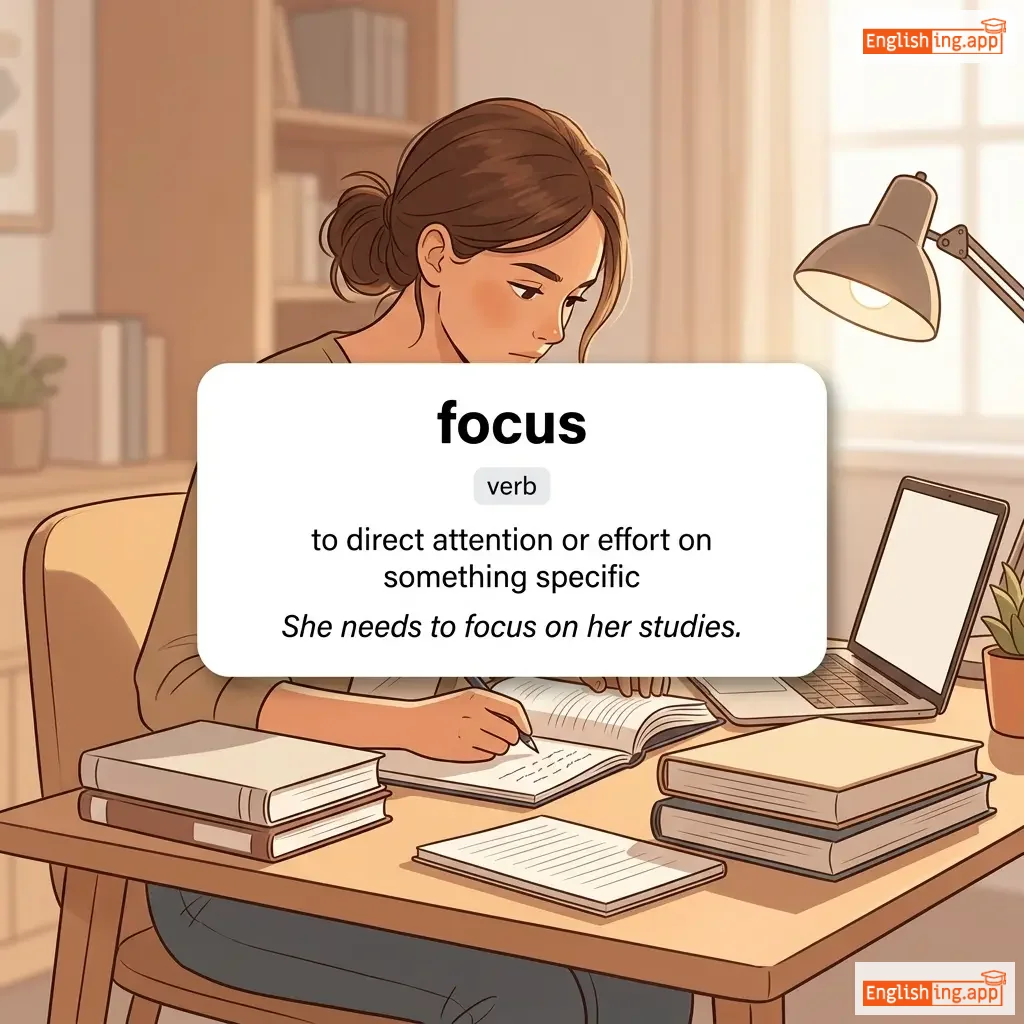
focus definition card — visual illustration of the meaning
verb
/ˈfoʊ.kəs/
centrarse (centrarse)

to direct attention or effort on something specific

"She needs to focus on her studies."

"Ella necesita concentrarse en sus estudios." (Ella necesita concentrarse en sus estudios.)
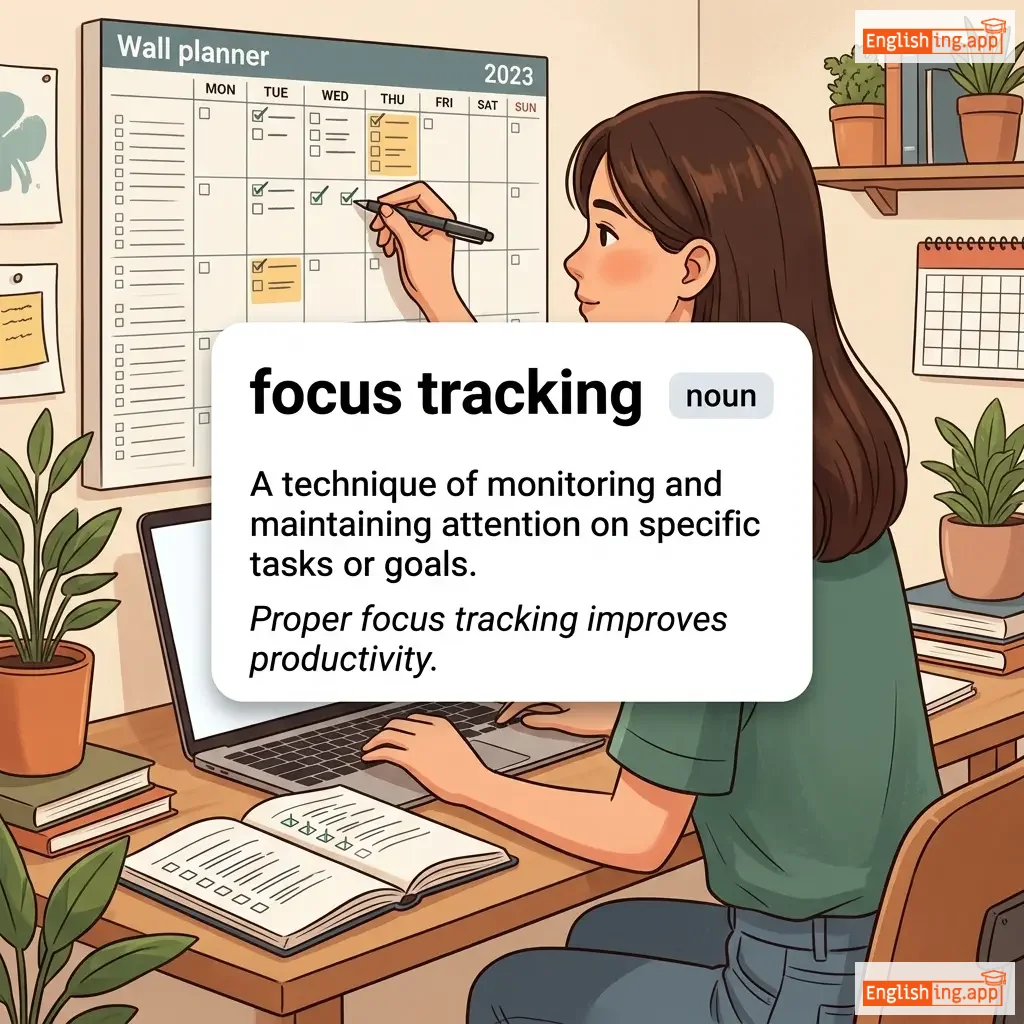
focus tracking definition card — visual illustration of the meaning
noun
/ˈfoʊ.kəs ˈtræk.ɪŋ/
seguimiento del enfoque (seguimiento del enfoque)

A technique of monitoring and maintaining attention on specific tasks or goals.

"Proper focus tracking improves productivity."

"Un seguimiento adecuado del enfoque mejora la productividad." (Un seguimiento adecuado del enfoque mejora la productividad.)
focused definition card — visual illustration of the meaning
adjective
/ˈfəʊkəst/
enfocado (enfokado)

Directing a great deal of attention or effort toward a particular activity, situation, or person.

"Staying focused during work hours enhances productivity."

"Mantenerse enfocado durante las horas de trabajo mejora la productividad." (Mantenerse enfocado durante las horas de trabajo mejora la productividad.)
noun
/ˈfɒdər/
forraje (forraje)

food for livestock such as cattle, horses, or sheep; also something considered of little value but used to supply a demand

"The farmer stored enough fodder for the cattle to last through winter."

"El granjero almacenó suficiente forraje para que el ganado tuviera suficiente durante el invierno." (El granjero almacenó suficiente forraje para que el ganado tuviera suficiente durante el invierno.)
noun
/foʊ/
enemigo (enemigo)

an enemy or opponent

"The knight fought bravely against his foe."

"El caballero luchó valientemente contra su enemigo." (El caballero luchó valientemente contra su enemigo.)
adjective
/ˈfiːtɪd/
hediondo (hediondo)

having an offensive, unpleasant smell

"The foetid smell from the garbage made it hard to breathe."

"El hedor del basurero hizo que fuera difícil respirar." (El hedor del basurero hizo que fuera difícil respirar.)
🌫️

Fog (fóg)

noun
/fɒɡ/
niebla (niebla)

a thick cloud of tiny water droplets suspended in the air near the ground that reduces visibility

"The airplane was delayed due to heavy fog."

"El avión se retrasó debido a la niebla espesa." (El avion se retraso debido a la niebla espesa.)
adjective
/ˈfɒɡi/
neblinoso (neblinoso)

Full of or covered with fog; unclear or hazy.

"The mountain road was dangerous on the foggy morning."

"La carretera de la montaña era peligrosa en la mañana neblinosa." (La carretera de la montaña era peligrosa en la mañana neblinosa.)
noun
/ˈfɔɪbəl/
pequeña debilidad (pequena debilidad)

A minor weakness or eccentricity in someone's character.

"She loved him despite his little foibles."

"A pesar de sus pequeñas debilidades, ella lo quería." (A pesar de sus pequeñas debilidades, ella lo quería.)
verb
/fɔɪl/
frustrar (frustrar)

To prevent something (especially a plan) from succeeding.

"The police foiled the robbery attempt."

"La policía frustró el intento de robo." (La policia frustro el intento de robo.)
verb
/fɔɪst/
imponer a la fuerza (imponer a la fuerza)

To impose something unwelcome or unnecessary on someone.

"He tried to foist his old books onto his friends."

"Intentó imponer sus viejos libros a sus amigos." (Intentó imponer sus viejos libros a sus amigos.)
verb
/fəʊld/
doblar (doblar)

to bend something, especially paper or cloth, so that one part covers another

"She folded the letter neatly before placing it in the envelope."

"Ella dobló la carta cuidadosamente antes de colocarla en el sobre." (Ella dobló la carta cuidadosamente antes de colocarla en el sobre.)
noun
/ˈfoʊldər/
carpeta (carpeta)

a container or directory used to store and organize papers or digital files

"I saved all the photos in a separate folder."

"Guardé todas las fotos en una carpeta separada." (guarde todas las fotos en una carpeta separada)
noun
/ˈfoʊliɪdʒ/
follaje (follaje)

The leaves of a plant, collectively.

"The autumn foliage looked stunning in the park."

"El follaje de otoño se veía impresionante en el parque." (El follaje de otoño se veía impresionante en el parque.)
noun
/ˈfoʊ.li.oʊ/
gran libro o manuscrito (gran libro o manuscrito)

A sheet of paper folded once to form two leaves (four pages) of a book; also a term for a large book or manuscript.

"The library houses an ancient Shakespeare folio."

"La biblioteca alberga un antiguo folio de Shakespeare." (La biblioteca alberga un antiguo folio de Shakespeare.)
👨‍👩‍👧‍👦

folk (folk)

noun
/foʊk/
gente (gente)

people in general, often referring to a group or community

"Country folk often live a simple life."

"La gente del campo suele llevar una vida sencilla." (La gente del campo suele llevar una vida sencilla.)
noun
/ˈfoʊk.lɔːr/
folklore (folklore)

The traditional beliefs, customs, stories, songs, and practices of a community, passed down through generations.

"Bangladeshi folk-lore is rich with myths and legends."

"El folklore mexicano está lleno de mitos y leyendas." (El folklore mexicano esta lleno de mitos y leyendas.)
verb
/ˈfɒloʊ/
seguir (seguir)

to move behind someone or something; to go after or come after

"The children followed their teacher into the classroom."

"Los niños siguieron a su maestro al aula." (Los niños siguieron a su maestro al aula.)
noun
/ˈfɑː.loʊ.ɪŋ/
seguidores (seguidores)

a group of supporters or people who admire something or someone

"The singer has a large following around the world."

"El cantante tiene una gran cantidad de seguidores alrededor del mundo." (El cantante tiene una gran cantidad de seguidores alrededor del mundo.)
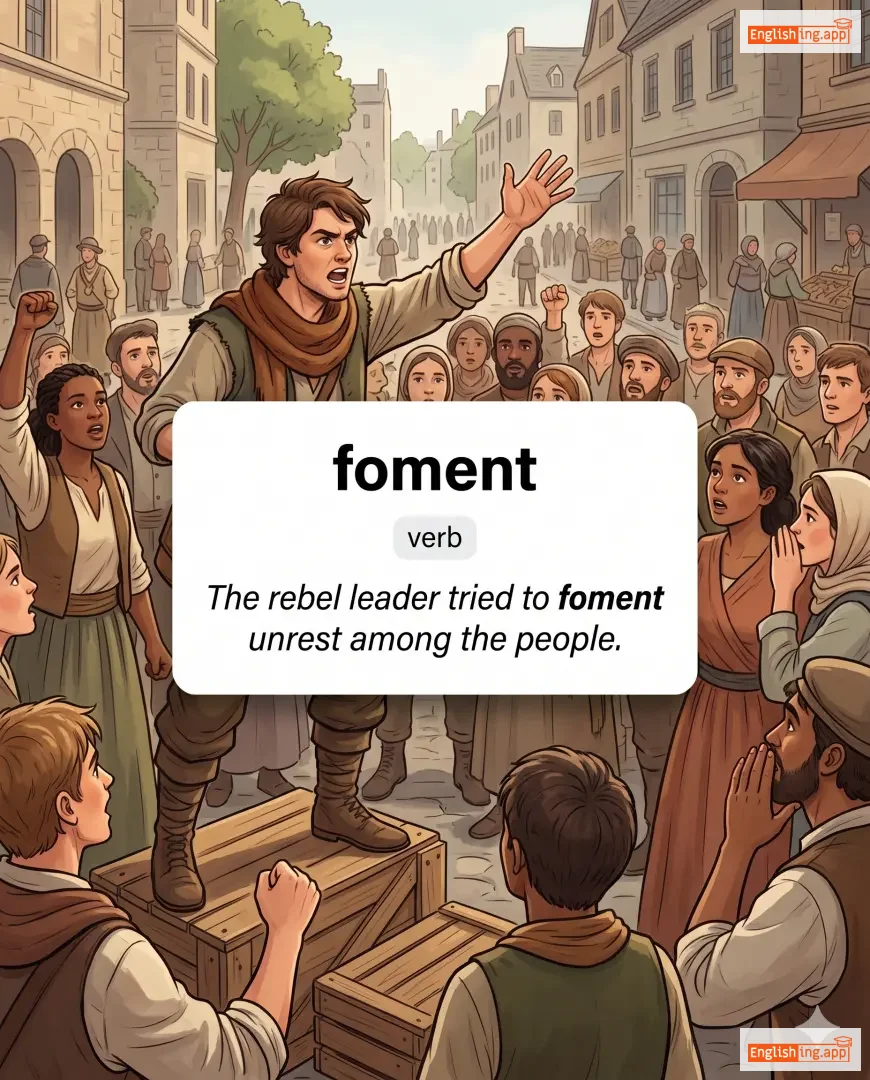
foment definition card — visual illustration of the meaning
verb
/foʊˈmɛnt/
fomentar (fomentar)

To instigate or stir up (an undesirable or violent sentiment or course of action).

"The rebel leader tried to foment unrest among the people."

"El líder rebelde trató de fomentar el descontento entre la gente." (El lider rebelde trato de fomentar el descontento entre la gente.)
noun
/ˌfoʊ.mənˈteɪ.ʃən/
incitación, estimulación (incitacion, estimulación)

The action of instigating or stirring up; also the application of warm substances to the body to ease pain.

"His speech led to the fomentation of violence in the region."

"Su discurso llevó a la fomentación de la violencia en la región." (Su discurso llevo a la fomentacion de la violencia en la region.)
adjective
/fɒnd/
afectuoso (afectuoso)

having a strong liking or affection for something or someone

"She is fond of painting and spends hours in front of her canvas."

"Ella es afectuosa con la pintura y pasa horas frente a su lienzo." (Ella es afectuosa con la pintura y pasa horas frente a su lienzo.)
verb
/ˈfɒn.dəl/
acariciar (acariciar)

To stroke or caress lovingly or gently.

"She fondled the kitten gently in her lap."

"Ella acarició al gatito suavemente en su regazo." (Ella acarició al gatito suavemente en su regazo.)
noun
/fuːd/
comida (comida)

any nutritious substance that people or animals eat or drink to maintain life and growth

"Rice is a common food in Asia."

"El arroz es una comida común en Asia." (El arroz es una comida comun en Asia.)
noun, verb
/fuːl/
tonto (tonto)

a silly or stupid person; to trick someone

"He felt like a fool after believing the prank."

"Se sintió como un tonto después de creer en la broma." (Se sintió como un tonto después de creer en la broma.)
noun
/ˈfuːləri/
necedad (necedad)

Silly or foolish behavior or actions.

"His constant foolery made the meeting hard to take seriously."

"Su constante necedad hizo que la reunión fuera difícil de tomar en serio." (Su constante necedad hizo que la reunión fuera difícil de tomar en serio.)
adjective
/ˈfuːlˌhɑːrdi/
temerario (temerario)

Recklessly bold or rash; taking foolish risks.

"It was foolhardy of him to climb the mountain without proper gear."

"Fue temerario de su parte escalar la montaña sin el equipo adecuado." (Fue temerario de su parte escalar la montaña sin el equipo adecuado.)
adjective
/ˈfuːlɪʃ/
necio (necio)

showing a lack of good sense or judgment

"It was foolish to go out without an umbrella in the storm."

"Fue necio salir sin paraguas en la tormenta." (Fue necio salir sin paraguas en la tormenta.)
adjective
/ˈfuːlpruːf/
a prueba de tontos (a prueba de tontos)

Designed to be very easy to use or understand, leaving no possibility of failure or error.

"The new software has a foolproof installation process."

"El nuevo software tiene un proceso de instalación a prueba de tontos." (El nuevo software tiene un proceso de instalación a prueba de tontos.)
noun
/fʊt/
pie (pie)

The lower extremity of the leg below the ankle, used for standing and walking.

"He injured his foot while playing basketball."

"Se lastimó el pie mientras jugaba al baloncesto." (Se lastimó el pie mientras jugaba al baloncesto.)
noun
/ˈfʊtˌnoʊt/
nota al pie (nota al pie)

A note of reference, explanation, or comment placed at the bottom of a page.

"The author included a foot-note to explain the historical context."

"El autor incluyó una nota al pie para explicar el contexto histórico." (El autor incluyo una nota al pie para explicar el contexto historico.)
noun
/ˈfʊtɪdʒ/
grabación de video (grabcion de video)

a recorded film or video, especially one that is used for news or documentaries

"The footage of the protest was shown on television all day."

"El metraje de la protesta se mostró en la televisión todo el día." (El metraje de la protesta se mostro en la television todo el dia.)
noun
/ˈfʊtˌbɔːl/
fútbol (futbol)

A team sport played with a ball that is kicked or carried to score points.

"They watched a football match on TV."

"Vieron un partido de fútbol en la televisión." (Vieron un partido de futbol en la television.)
adjective
/ˈfʊtˌluːs/
libre (libre)

Free to go anywhere or do anything; not tied down by responsibilities.

"After graduating, he felt footloose and ready to explore the world."

"Después de graduarse, se sintió libre y listo para explorar el mundo." (Despué de graduarse, se sintió libre y listo para explorar el mundo.)
noun
/ˈfɒpəri/
excesivo esnobismo (excesivo esnobismo)

Foolish or excessive concern with one's appearance or manners; pretentious behavior.

"His obsession with fashion was dismissed as mere foppery."

"Su obsesión por la moda fue descartada como simple esnobismo." (Su obsesion por la moda fue descartada como simple esnobismo.)
adjective
/ˈfɒpɪʃ/
excesivamente preocupado por la ropa y la apariencia de manera tonta (excesivamente preocupado por la ropa y la apariencia de manera tonta)

Excessively concerned with clothes and appearance in a vain or foolish way.

"He looked rather foppish in his brightly colored suit."

"Él se veía algo fatuo en su traje de colores brillantes." (El se veia algo fatuo en su traje de colores brillantes.)
preposition
/fɔːr/
para (para)

used to indicate purpose, destination, or recipient

"This gift is for you."

"Este regalo es para ti." (Este regalo es para ti.)
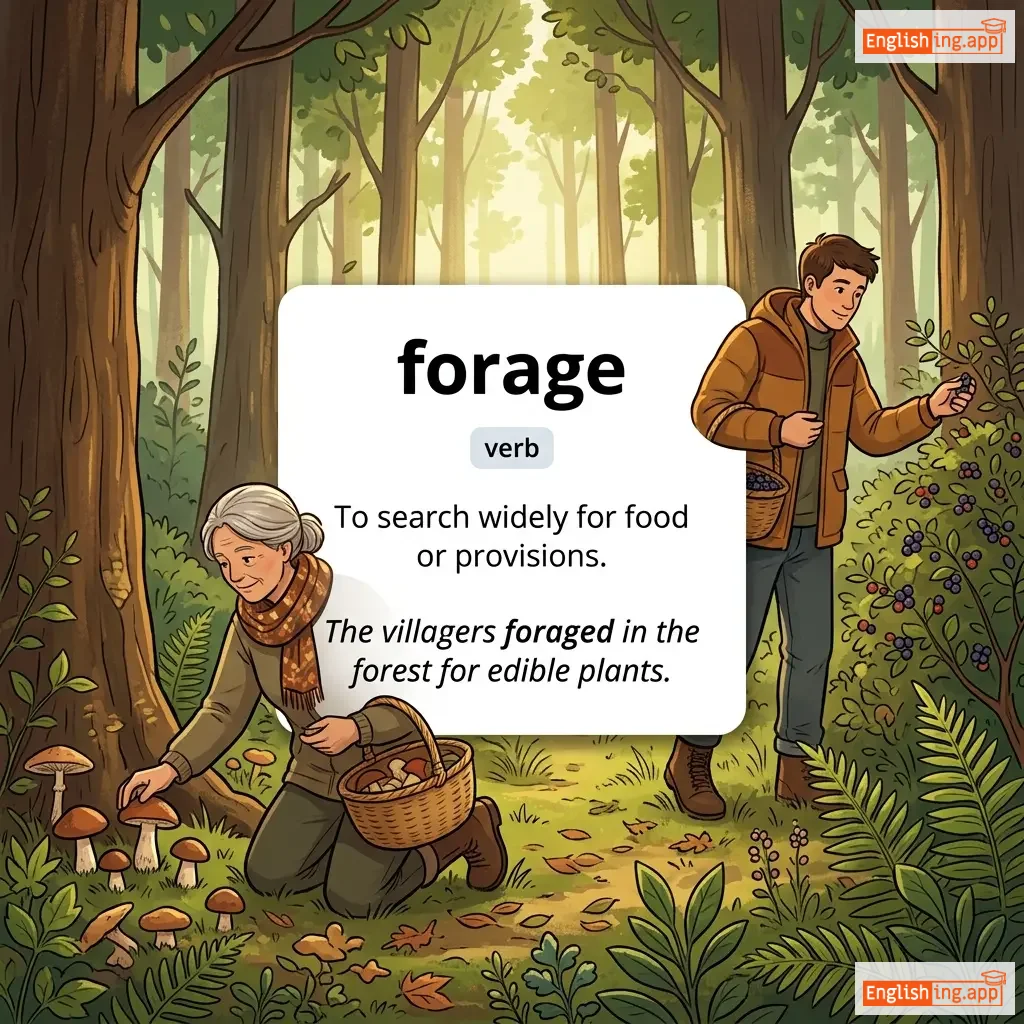
forage definition card — visual illustration of the meaning
verb
/ˈfɒrɪdʒ/
buscar comida (buscar comida)

To search widely for food or provisions.

"The villagers foraged in the forest for edible plants."

"Los aldeanos buscaron plantas comestibles en el bosque." (Los aldeanos buscaron plantas comestibles en el bosque.)
noun
/ˈfɔːreɪ/
incursión / primer intento (incursion / primer intento)

A sudden short attack or attempt, especially into new activity or territory.

"The company made its first foray into the international market."

"La empresa hizo su primera incursión en el mercado internacional." (La empresa hizo su primera incursión en el mercado internacional.)
verb
/fɔːˈbɛər/
abstenerse (abstenerse)

To refrain from doing something; to show patience or self-control.

"She forbore from commenting on his mistake."

"Ella se abstuvo de comentar sobre su error." (Ella se abstuvo de comentar sobre su error.)
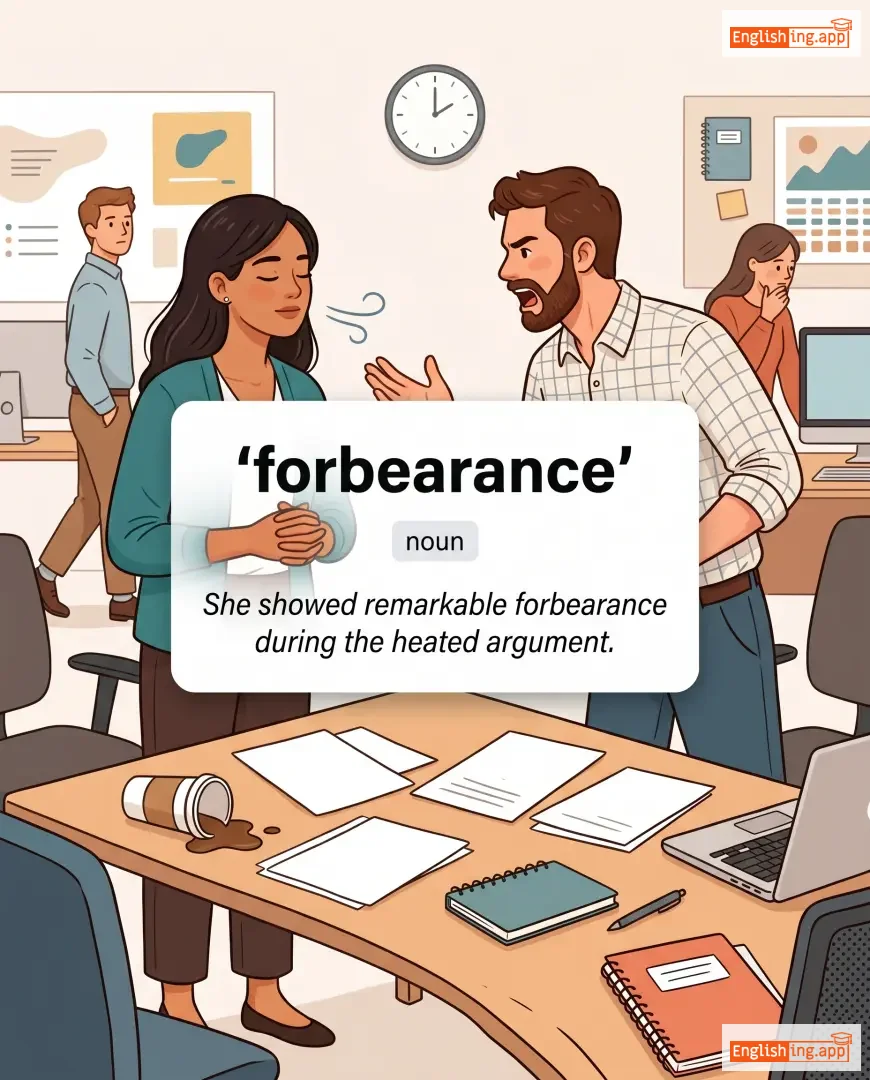
forbearance definition card — visual illustration of the meaning
noun
/fɔːrˈbɛrəns/
tolerancia (tolerancia)

Patient self-control; restraint and tolerance, especially in difficult situations.

"She showed remarkable forbearance during the heated argument."

"Ella mostró una notable tolerancia durante la acalorada discusión." (Ella mostró una notable tolerancia durante la acalorada discusión.)
verb
/fərˈbɪd/
prohibir (prohibir)

to order someone not to do something

"The school forbids smoking on campus."

"La escuela prohíbe fumar en el campus." (La escuela prohíbe fumar en el campus.)
adjective
/fəˈbɪd.ən/
prohibido; vetado; ilegal (prohibido; vetado; ilegal)

not allowed; prohibited; banned

"Smoking is strictly forbidden in this building."

"Fumar está estrictamente prohibido en este edificio." (Fumar está estrictamente prohibido en este edificio.)
adverb
/ˈfɔːrbi/
además (ademas)

In addition; besides (archaic Scottish/English word).

"He is kind and generous, and wise forby."

"Él es amable y generoso, y además sabio." (El es amable y generoso, y ademas sabio.)
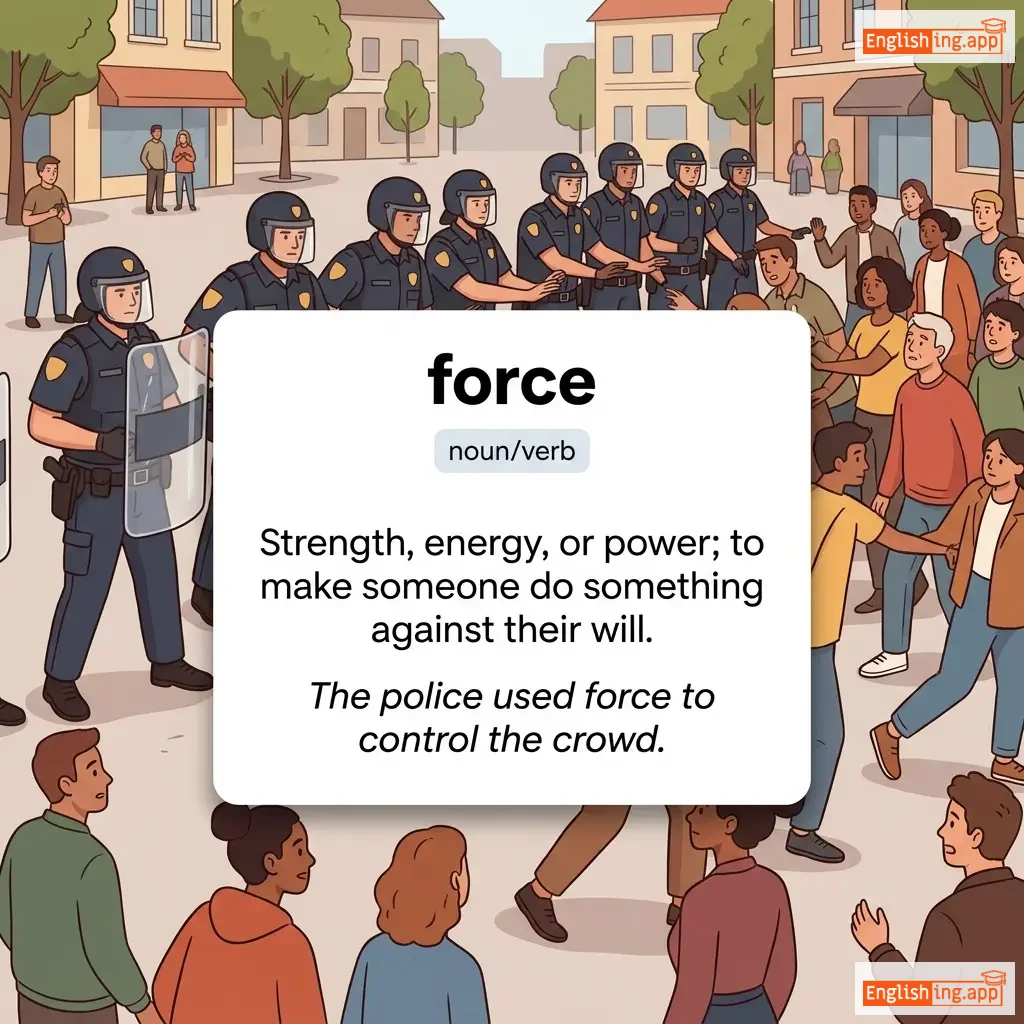
force definition card — visual illustration of the meaning
noun/verb
/fɔːrs/
fuerza / poder (fuerza / poder)

Strength, energy, or power; to make someone do something against their will.

"The police used force to control the crowd."

"La policía usó la fuerza para controlar a la multitud." (La policía usó la fuerza para controlar a la multitud.)
adjective
/ˈfɔːrsəbl/
forzoso (forzoso)

Done by force; using physical strength or power.

"The police made a forcible entry into the house."

"La policía hizo una entrada forzosa en la casa." (La policía hizo una entrada forzosa en la casa.)