Vocabularios

Descubra, aprenda y domine el vocabulario en inglés

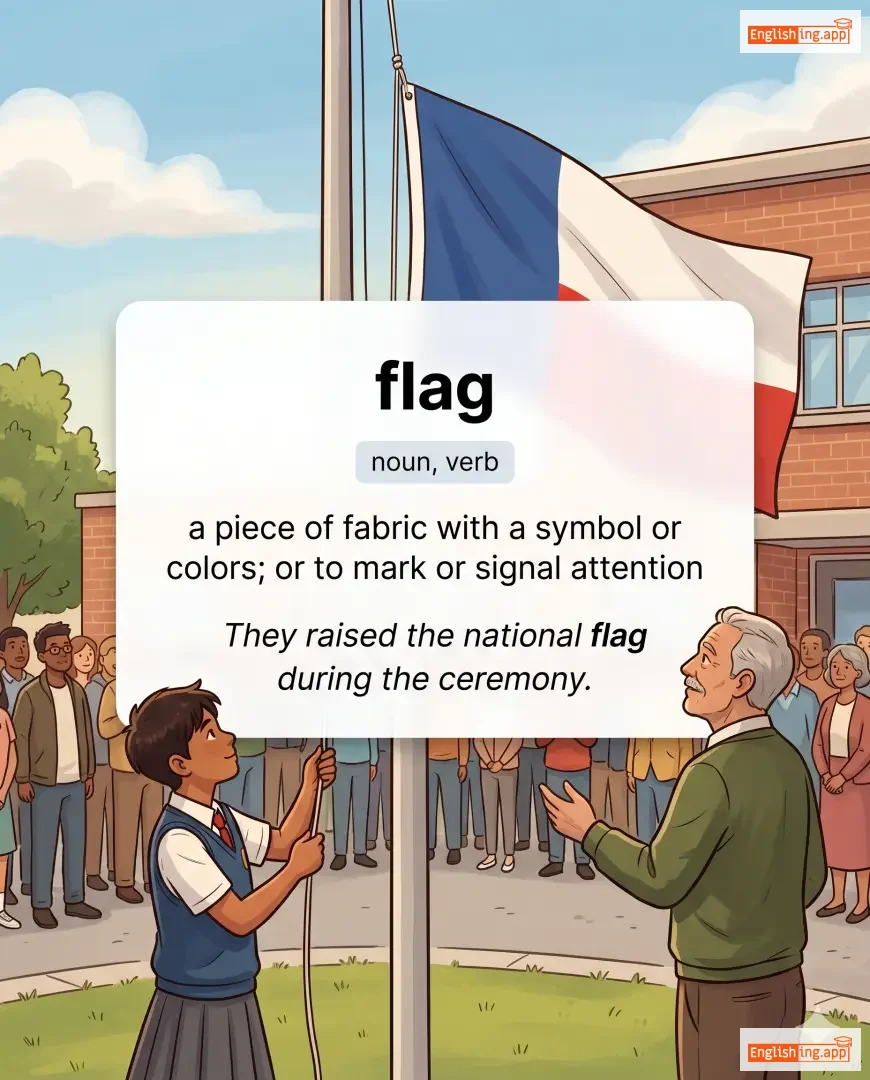
flag definition card — visual illustration of the meaning
noun, verb
/flæɡ/
bandera, estandarte; o una señal de advertencia (bandera, estandarte; o una señal de advertencia)

a piece of fabric with a symbol or colors; or to mark or signal attention

"They raised the national flag during the ceremony."

"Ellos levantaron la bandera nacional durante la ceremonia." (Ellos levantaron la bandera nacional durante la ceremonia.)
noun
/ˈflæɡ ˌɒfɪsər/
oficial de bandera (oficial de bandera)

a senior naval officer entitled to fly a flag to mark the command

"The flag-officer reviewed the fleet before the ceremony."

"El oficial de bandera revisó la flota antes de la ceremonia." (El oficial de bandera revisó la flota antes de la ceremonia.)
verb
/ˈflædʒəˌleɪt/
azotar o flagelar a alguien como una forma de castigo o auto-disciplina (azotar o flagelar a alguien como una forma de castigo o autodisciplina)

to whip or flog someone, either literally or as a form of punishment or self-discipline

"In history, some monks would flagellate themselves as penance."

"En la historia, algunos monjes se flagelaban como penitencia." (En la historia, algunos monjes se flagelaban como penitencia.)
adjective
/ˈflæɡɪŋ/
decaer, agotarse o perder entusiasmo (decaer, agotarse o perder entusiasmo)

becoming tired, weaker, or less enthusiastic

"After hours of work, his energy was flagging."

"Después de horas de trabajo, su energía estaba disminuyendo." (Despues de horas de trabajo, su energia estaba disminuyendo.)
adjective
/ˈfleɪɡrənt/
escandaloso y claramente erróneo (escandaloso y claramente erroneo)

shockingly noticeable or evident; glaringly wrong

"It was a flagrant violation of the rules."

"Fue una clara violación de las reglas." (Fue una clara violación de las reglas.)
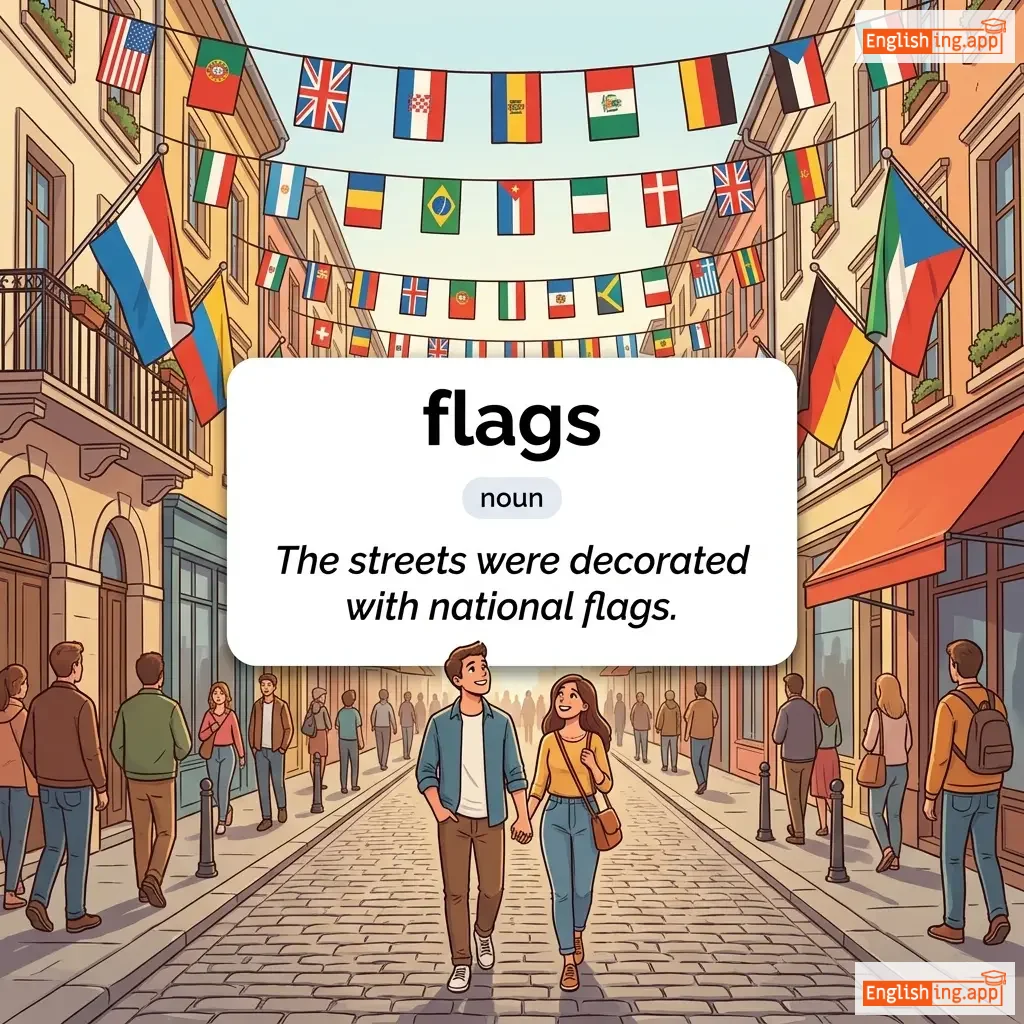
flags definition card — visual illustration of the meaning
noun
flæɡz
bandera (bandera)

A piece of cloth or similar material, typically oblong or square, attachable by one edge to a pole or rope.

"The streets were decorated with national flags."

"Las calles estaban decoradas con banderas nacionales." (Las calles estaban decoradas con banderas nacionales.)
verb
/fleɪl/
agitar o mover algo de manera salvaje; forcejear (agitar o mover algo de manera salvaje; forcejear)

to wave or swing something about wildly; to thrash about

"He flailed his arms to keep afloat in the water."

"Él agitó sus brazos para mantenerse a flote en el agua." (El agito sus brazos para mantenerse a flote en el agua.)
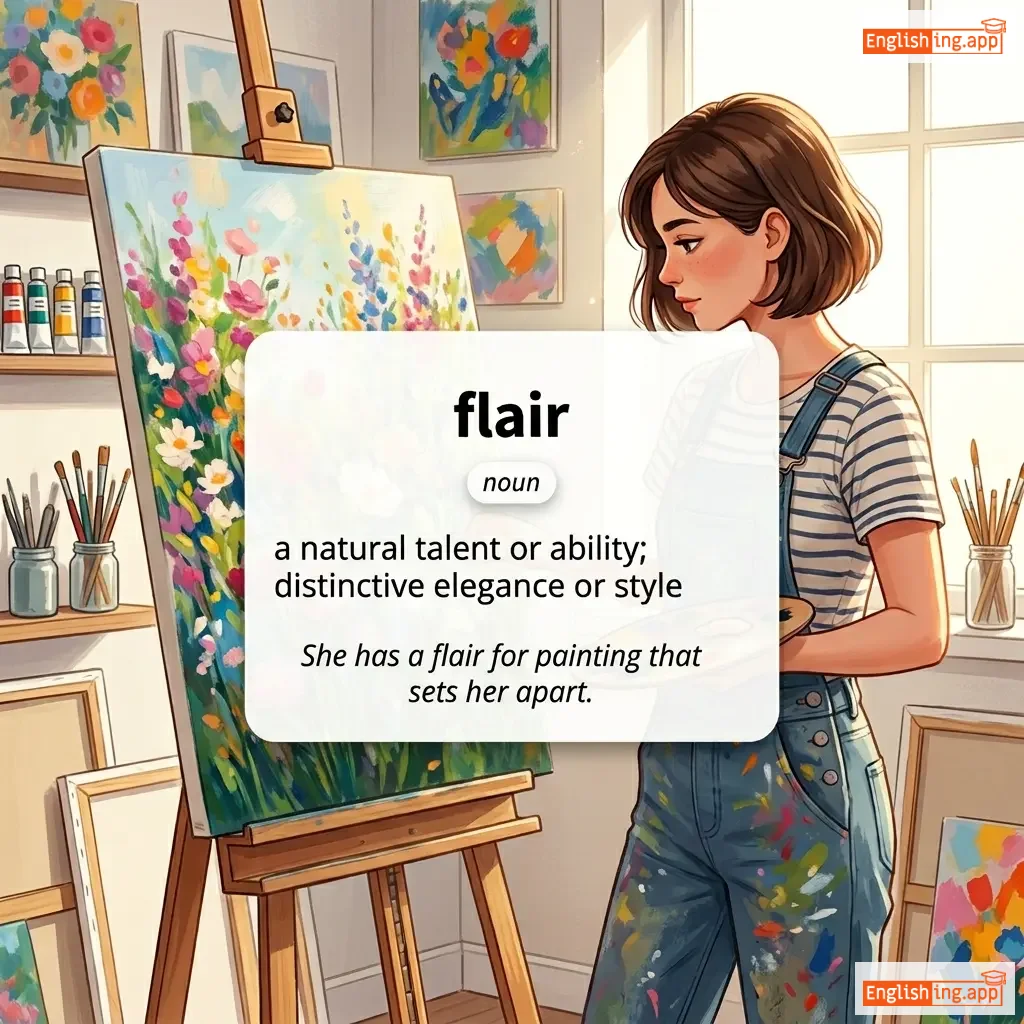
flair definition card — visual illustration of the meaning
noun
/flɛr/
talento natural o habilidad; elegancia o estilo distintivo (talento natural o habilidad; elegancia o estilo distintivo)

a natural talent or ability; distinctive elegance or style

"She has a flair for painting that sets her apart."

"Ella tiene un flair para la pintura que la distingue." (Ella tiene un flair para la pintura que la distingue.)
adjective
/flæmˈbɔɪənt/
llamativo, colorido o confiado (llamativo, colorido o confiado)

showy, strikingly bold or colorful; confident and lively

"His flamboyant style drew everyone's attention at the party."

"Su estilo llamativo atrajo la atención de todos en la fiesta." (Su estilo llamativo atrajo la atencion de todos en la fiesta.)
noun
/fleɪm/
llama (llama)

A hot glowing body of ignited gas that is generated by something on fire.

"The flame from the candle lit up the dark room."

"La llama de la vela iluminó la habitación oscura." (La llama de la vela iluminó la habitación oscura.)
noun
/ˈflæn.əl/
flanela (flanela)

a soft woven fabric, typically made of wool or cotton and slightly milled and raised

"He wore a warm flannel shirt in winter."

"Él usó una camisa de flanela cálida en invierno." (El uso una camisa de flanela calida en invierno.)
verb
/flæʃ/
destellar (destellar)

to shine or appear suddenly and brightly for a short time

"Lightning flashed across the night sky."

"El relámpago brilló a través del cielo nocturno." (El relámpago brilló a través del cielo nocturno.)
flashcards definition card — visual illustration of the meaning
noun
ˈflæʃkɑːrdz
tarjetas didácticas (tarjetas didacticas)

Cards containing small amounts of information, held up for students to see, as an aid to learning.

"Flashcards help in quick memorization."

"Las tarjetas didácticas ayudan en la memorización rápida." (Las tarjetas didacticas ayudan en la memorizacion rapida.)
adjective
/ˈflæʃi/
llamativo, ostentoso (llamativo, ostentoso)

ostentatious or showy in a way that attracts attention

"He drove a flashy sports car through the city streets."

"Él condujo un coche deportivo llamativo por las calles de la ciudad." (El condujo un coche deportivo llamativo por las calles de la ciudad.)
adjective
/flæt/
plano (plano)

Smooth and level, without raised areas or curves.

"The road ahead was completely flat."

"El camino adelante estaba completamente plano." (El camino adelante estaba completamente plano.)
noun
/flæt fɪʃ/
pez plano (pez plano)

a type of fish with a flattened body that lives on the sea floor

"Flat fish like sole and flounder are excellent for grilling."

"Los peces planos como el lenguado y el platija son excelentes para asar a la parrilla." (los peces planos komo el lenguado y el platija son excelentes para asar a la parrilla)
verb
/ˈflætər/
alabar excesivamente o insinceramente para ganar favor (alabar excesivamente o insinceramente para ganar favor)

to praise excessively or insincerely to gain favor

"He tried to flatter his boss to get a promotion."

"Él intentó halagar a su jefe para obtener una promoción." (El intento halagar a su jefe para obtener una promoción.)
noun
/ˈflæt.ər.ər/
adulador (adulador)

a person who lavishes praise, often insincerely and in order to gain advantage

"The king was surrounded by flatterers who only told him what he wanted to hear."

"El rey estaba rodeado de aduladores que solo le decían lo que quería oír." (El rey estaba rodeado de aduladores que solo le decían lo que quería oír.)
noun
/ˈflæt.ər.i/
adulación (adulacion)

excessive and insincere praise, given especially to further one's own interests

"His constant flattery made everyone suspicious of his true motives."

"Su constante adulación hizo que todos sospecharan de sus verdaderas intenciones." (Su constante adulacion hizo que todos sospecharan de sus verdaderas intenciones.)
noun
/ˈflætʃələns/
acumulación de gas en el sistema digestivo (acumulacion de gas en el sistema digestivo)

the accumulation of gas in the digestive system; excessive gas in the stomach or intestines

"Eating beans can sometimes cause flatulence."

"Comer frijoles a veces puede causar flatulencia." (Comer frijoles a veces puede causar flatulencia.)
verb
/flɔːnt/
presumir (presumir)

to show off something proudly, often to attract attention

"She likes to flaunt her new jewelry at parties."

"A ella le gusta presumir sus nuevas joyas en las fiestas." (A ella le gusta presumir sus nuevas joyas en las fiestas.)
noun
/ˈfleɪvər/
sabor (sabor)

The distinctive taste of a food or drink.

"This ice cream has a delicious mango flavor."

"Este helado tiene un delicioso sabor a mango." (Este helado tiene un delicioso sabor a mango.)
noun
/ˈfleɪ.vər/
sabor (sabor)

the distinctive taste of a food or drink; a particular quality or atmosphere

"The soup had a rich flavour of herbs and spices from the garden."

"La sopa tenía un rico sabor de hierbas y especias del jardín." (La sopa tenía un rico sabor de hierbas y especias del jardín.)
noun
/flɔː/
defecto (defecto)

a defect or imperfection in something

"The diamond had a small flaw that was barely visible."

"El diamante tenía un pequeño defecto que apenas se veía." (El diamante tenia un pequeno defecto que apenas se veia.)
adjective
/flɔːd/
defectuoso (defectuoso)

having a mistake or fault that reduces its value or quality

"The flawed design of the car led to a recall."

"El diseño defectuoso del coche provocó un retiro del mercado." (El disenyo defectuoso del coche provoco un retiro del mercado.)
adjective
/ˈflɔː.ləs/
perfecto; sin defectos (flawless)

perfect; without any defects or faults; immaculate

"Her flawless performance earned her a standing ovation."

"Su actuación perfecta le valió una ovación de pie." (Su actuacion perfecta le valio una ovacion de pie.)
noun
/flæks/
lino (lino)

a plant whose fibers are used to make linen and whose seeds are edible

"Flax is often used in making linen fabrics."

"El lino se usa a menudo para hacer telas de lino." (El lino se usa a menudo para hacer telas de lino.)
verb
/fleɪ/
despojar/criticar severamente (despojar/criticar severamente)

to strip off the skin of something or criticize severely

"The chef flayed the fish before cooking it."

"El chef despojó el pescado antes de cocinarlo." (El chef despojó el pescado antes de cocinarlo.)
noun
/flɛk/
mancha pequeña (mancha pequena)

a small spot or mark, often of a different color

"There was a fleck of paint on the floor."

"Había una mancha de pintura en el suelo." (Habia una mancha de pintura en el suelo.)
noun
/ˈflɛkʃən/
flexión (flexion)

The act of bending or the state of being bent, especially of a limb or joint.

"The doctor tested the patient's knee flection during the examination."

"El doctor probó la flexión de la rodilla del paciente durante el examen." (El doctor probó la flexión de la rodilla del paciente durante el examen.)
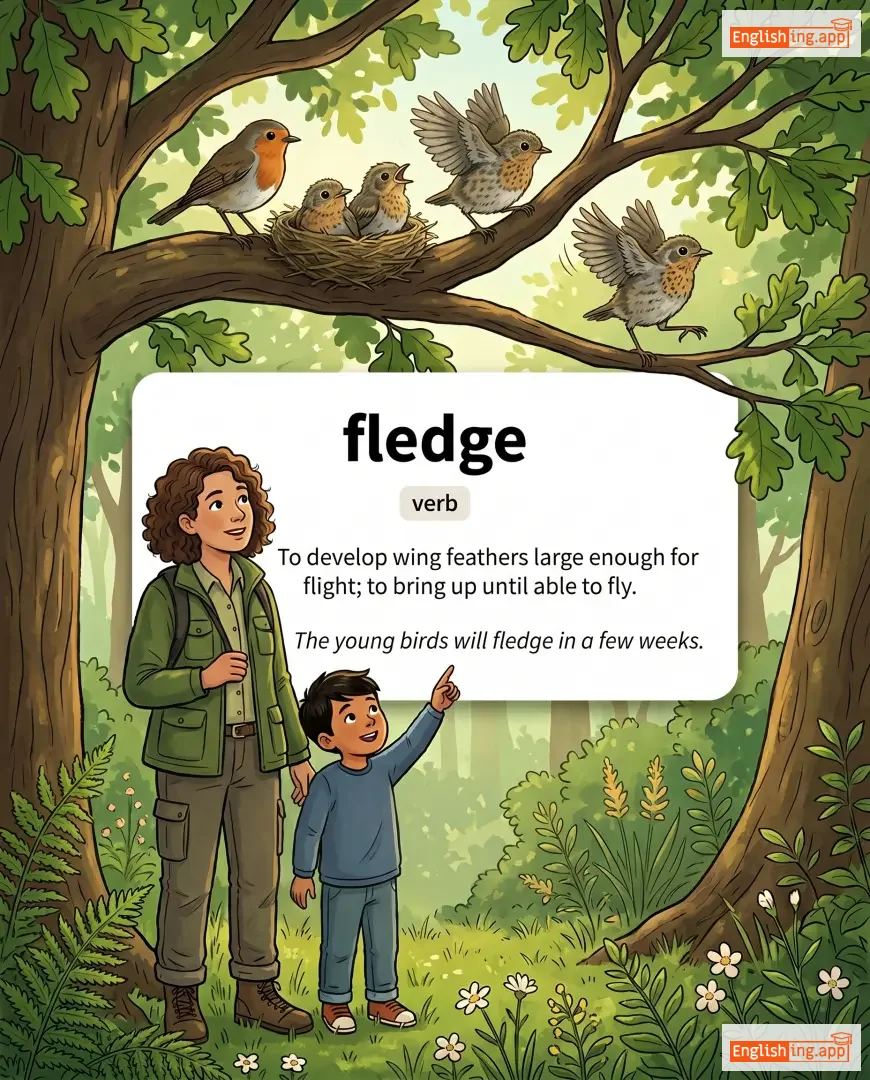
fledge definition card — visual illustration of the meaning
verb
/flɛdʒ/
emergir (emerjir)

To develop wing feathers large enough for flight; to bring up until able to fly.

"The young birds will fledge in a few weeks."

"Los pájaros jóvenes volarán en unas pocas semanas." (Los pájaros jóvenes volarán en unas pocas semanas.)
noun
/ˈflɛdʒlɪŋ/
pájaro joven (pajaro joven)

A young bird that has just developed its feathers and is learning to fly; a beginner.

"The fledgeling was trying hard to take its first flight."

"El pájaro joven estaba tratando de hacer su primer vuelo." (El pajaro joven estaba tratando de hacer su primer vuelo.)
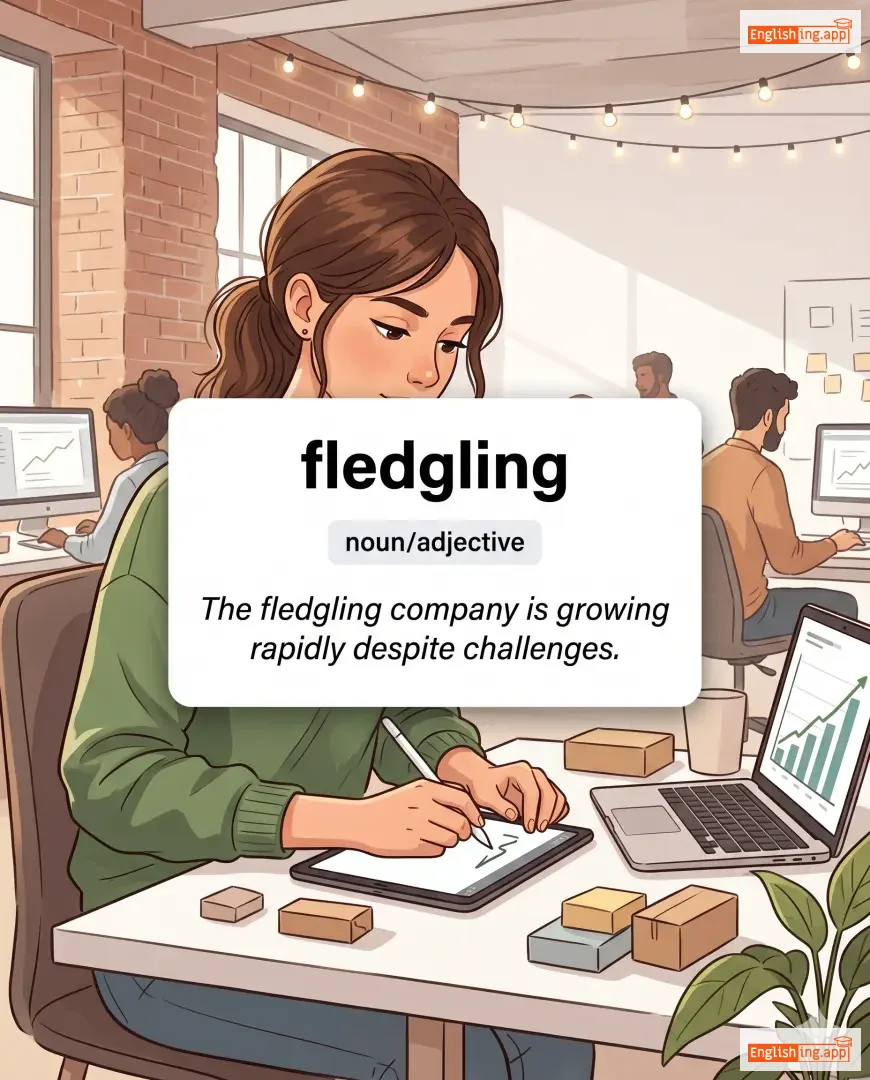
fledgling definition card — visual illustration of the meaning
noun/adjective
/ˈflɛdʒlɪŋ/
novato (novato)

A young bird just learning to fly; also used for a person or organization that is inexperienced or new.

"The fledgling company is growing rapidly despite challenges."

"La empresa novata está creciendo rápidamente a pesar de los desafíos." (La empresa novata esta creciendo rapidamente a pesar de los desafios.)
🏃‍♂️

flee (flí)

verb
/fliː/
huir (huir)

To run away from danger or a threatening situation.

"The villagers had to flee during the flood."

"Los aldeanos tuvieron que huir durante la inundación." (Los aldeanos tuvieron que huir durante la inundación.)
noun/verb
/fliːs/
lana de oveja (lana de oveja)

The woolly covering of a sheep; as a verb, to swindle or cheat someone.

"The farmer sheared the sheep’s fleece carefully."

"El granjero esquiló el vellón de la oveja cuidadosamente." (El granjero esquiló el vellón de la oveja cuidadosamente.)
noun
/fliːt/
flota (flota)

a group of ships, vehicles, or aircraft operating together under one command

"The navy deployed its entire fleet for the exercise."

"La armada desplegó toda su flota para el ejercicio." (La armada desplego toda su flota para el ejercicio.)
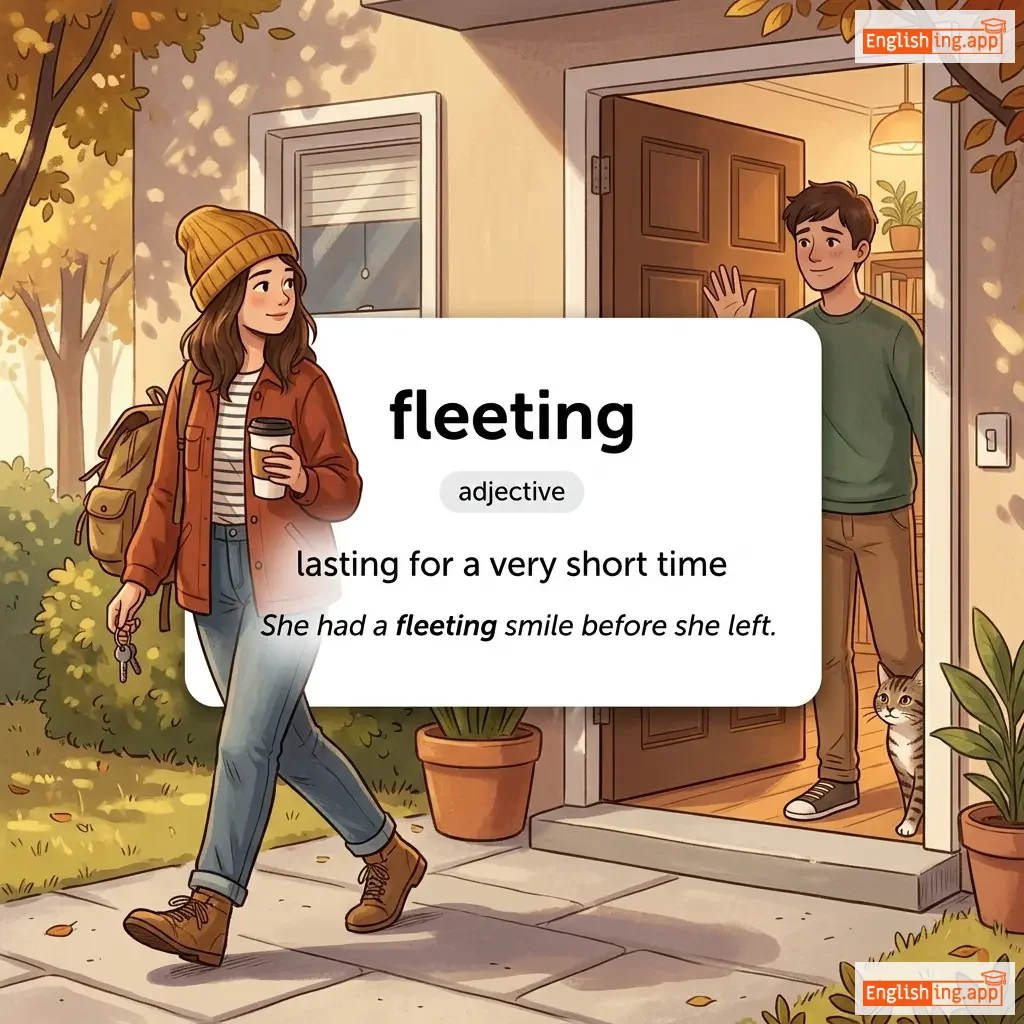
fleeting definition card — visual illustration of the meaning
adjective
/ˈfliː.tɪŋ/
efímero (efimero)

lasting for a very short time

"She had a fleeting smile before she left."

"Ella tenía una sonrisa efímera antes de irse." (Ella tenía una sonrisa efímera antes de irse.)
noun
/flɛʃ/
carne (kar-ne)

the soft substance consisting of muscle and fat that is found between the skin and bones of animals or humans

"The wound cut deep into the flesh of his arm."

"La herida cortó profundamente en la carne de su brazo." (La herida kortó profundamente en la karne de su brazo.)
flexibility definition card — visual illustration of the meaning
noun
/ˌflɛksəˈbɪləti/
flexibilidad (flexibilidad)

the ability to bend easily without breaking or to adapt to new situations

"Flexibility is essential for success in a changing work environment."

"La flexibilidad es esencial para el éxito en un entorno laboral cambiante." (La flexibilidad es esencial para el éxito en un entorno laboral cambiante.)
adjective
/ˈfleks.ə.bəl/
flexible (flexible)

able to bend easily without breaking; adaptable to change

"Yoga helps to make the body more flexible."

"El yoga ayuda a hacer el cuerpo más flexible." (El yoga ayuda a hacer el cuerpo mas flexible.)
verb
/flɪk/
dar un golpe rápido (dar un golpe rapido)

to move or cause to move with a sudden quick motion

"He flicked the switch to turn on the light."

"Él flickó el interruptor para encender la luz." (Él flickó el interruptor para encender la luz.)
verb
/ˈflɪk.ər/
parpadear (parpadear)

to shine unsteadily or waver between light and dark

"The candle flickered in the wind."

"La vela parpadeaba en el viento." (La vela parpadeaba en el viento.)
noun
/flaɪt/
vuelo / vuelo (vuelo / vuelo)

the act of flying, typically through the air; or a scheduled trip by an aircraft

"Our flight to London was delayed due to bad weather."

"Nuestro vuelo a Londres se retrasó debido al mal tiempo." (Nuestro vuelo a Londres se retrasó debido al mal tiempo.)
adjective
/ˈflaɪti/
inestable (inestable)

unstable, impulsive, or easily distracted; lacking seriousness or stability

"She’s too flighty to stick with one job for long."

"Ella es demasiado inestable para quedarse en un solo trabajo por mucho tiempo." (Ella es demasiado inestable para quedarse en un solo trabajo por mucho tiempo.)
adjective
/ˈflɪmzi/
débil (debil)

weak, fragile, or lacking in strength; not convincing

"The chair was too flimsy to support his weight."

"La silla era demasiado débil para soportar su peso." (La silla era demasiado debil para soportar su peso.)
verb
/flɪntʃ/
retroceder (retroceder)

to suddenly move back or away due to fear or pain

"He didn’t flinch when the doctor gave him the injection."

"Él no se echó atrás cuando el doctor le dio la inyección." (El no se echo atras cuando el doctor le dio la inyeccion.)
verb
/flɪp/
voltear (voltear)

to turn over quickly or suddenly; to toss lightly

"She flipped the pancake in the pan."

"Ella volteó el panqueque en la sartén." (Ella volteo el panqueque en la sarten.)
noun
/ˈflɪpənsi/
falta de seriedad (falta de seriedad)

lack of seriousness; showing a disrespectful or trivial attitude

"His flippancy during the meeting offended his colleagues."

"Su falta de seriedad durante la reunión ofendió a sus compañeros." (Su falta de seriedad durante la reunión ofendió a sus compañeros.)
adjective
/ˈflɪpənt/
despectivo (despectivo)

not showing a serious or respectful attitude

"His flippant remarks annoyed the teacher."

"Sus comentarios despectivos molestaron al maestro." (Sus comentarios despectivos molestaron al maestro.)
verb
/flɜːrt/
coquetear (coquetear)

to behave as if you are attracted to someone, but not in a serious way

"She often flirts with her colleagues at work."

"Ella a menudo coquetea con sus compañeros de trabajo." (Ella a menudo coquetea con sus compañeros de trabajo.)