Vocabularios

Descubra, aprenda y domine el vocabulario en inglés

noun
/frɪdʒ/
nevera (nevera)

a household appliance used to keep food and drinks cold to preserve freshness

"I put the milk back in the fridge after breakfast."

"Puse la leche en la nevera después del desayuno." (puse la leche en la nevera despues del desayuno)
noun
/fraɪd raɪs/
arroz frito (arroz frito)

a dish of cooked rice that has been stir-fried in a wok or frying pan

"We ordered chicken fried rice from the Chinese restaurant."

"Pedimos arroz frito con pollo del restaurante chino." (pedimos arroz frito con pollo del restaurante chino.)
noun
/frɛnd/
amigo (amigo)

a person with whom one has a bond of mutual affection

"He is my best friend."

"Él es mi mejor amigo." (Él es mi mejor amigo.)
adjective
/ˈfrɛndli/
felicidad (felicidad)

Kind and pleasant; showing goodwill and affection.

"The shop owner is very friendly to new customers."

"Ella no pudo esconder su felicidad cuando recibió el premio." (Ella no pudo esconder su felicidad cuando recibio el premio.)
noun
/ˈfrɛndʃɪp/
amistad (amistad)

A close and trusting relationship between two or more people.

"Their friendship has lasted since childhood."

"Su amistad ha perdurado desde la infancia." (Su amistad ha perdurado desde la infancia.)
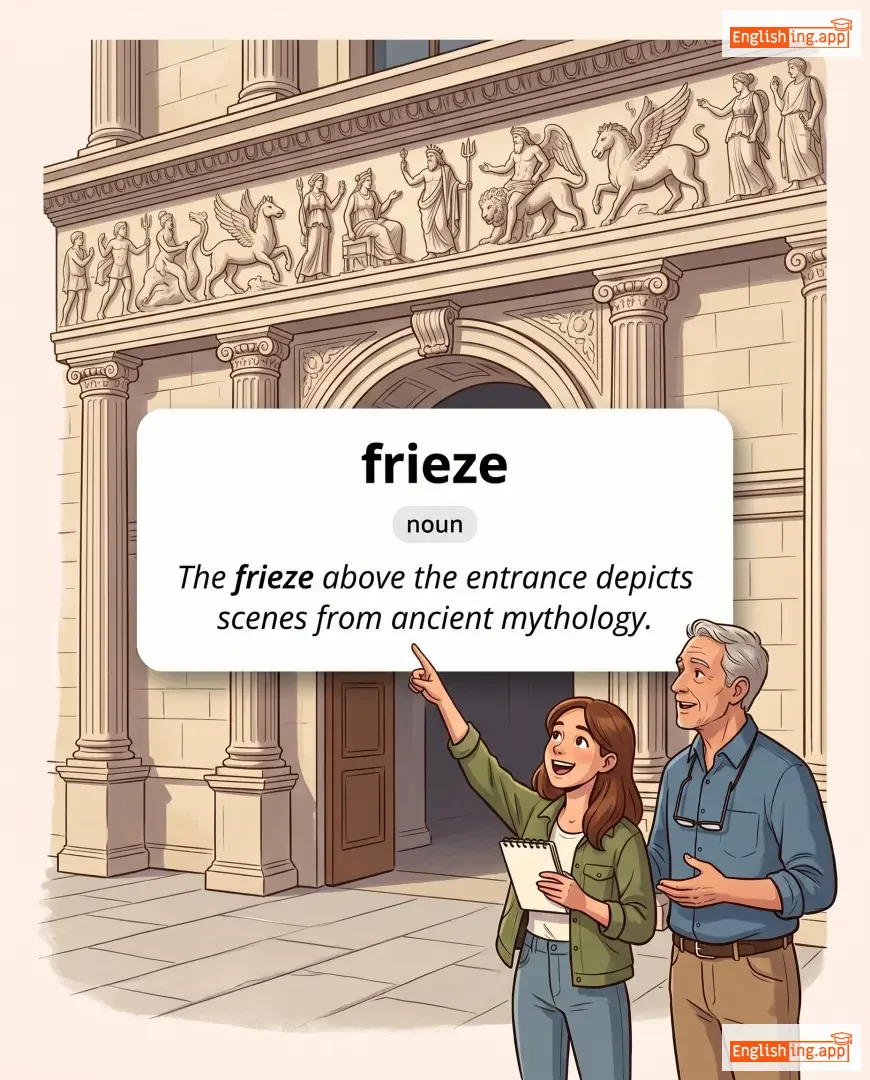
frieze definition card — visual illustration of the meaning
noun
/friːz/
friso (friso)

a decorative horizontal band, often sculpted or painted, usually on a wall near the ceiling

"The frieze above the entrance depicts scenes from ancient mythology."

"El friso sobre la entrada representa escenas de la mitología antigua." (El friso sobre la entrada representa escenas de la mitología antigua.)
noun
/fraɪt/
miedo; susto; pavor (miedo, susto, pavor)

a sudden intense feeling of fear; a shock or surprise that causes fear

"The loud thunder gave her such a fright that she dropped her coffee cup."

"El fuerte trueno le dio tal susto que dejó caer su taza de café." (El fuerte trueno le dio tal susto que dejo caer su taza de cafe.)
verb
/ˈfraɪtən/
asustar (asustar)

to cause fear or alarm in someone

"The loud noise frightened the child."

"El ruido fuerte asustó al niño." (El ruido fuerte asusto al nino)
adjective
/ˈfraɪtənd/
asustado (asustado)

feeling fear or anxiety; scared

"The child was frightened by the loud noise."

"El niño estaba asustado por el ruido fuerte." (El nino estaba asustado por el ruido fuerte)
adjective
/ˈfraɪtfəl/
espantoso (espantoso)

causing fear or horror; very unpleasant

"The hikers faced frightful weather conditions on the mountain."

"Los excursionistas enfrentaron condiciones climáticas espantosas en la montaña." (Los excursionistas enfrentaron condiciones climáticas espantosas en la montaña.)
adjective
/ˈfrɪdʒɪd/
extremadamente frío (extremadamente frio)

extremely cold in temperature; lacking warmth or friendliness

"The explorers endured frigid conditions in the Arctic."

"Los exploradores soportaron condiciones extremadamente frías en el Ártico." (Los exploradores soportaron condiciones extremadamente frías en el Ártico.)
noun
/ˌfrɪdʒɪˈdɛːriəm/
baño frío (bano frio)

a large cold pool in ancient Roman baths used for cooling off after hot baths

"The ruins of the Roman frigidarium are still visible today."

"Las ruinas del frigidarium romano todavía son visibles hoy en día." (Las ruinas del frigidarium romano todavia son visibles hoy en dia.)
noun
/frɪndʒ/
borde decorativo / orilla (borde decorativo / orilla)

A decorative border of threads; the outer edge or margin of something.

"The festival had a fringe of small independent performances."

"El festival tenía un borde de pequeñas actuaciones independientes." (El festival tenía un borde de pequeñas actuaciones independientes.)
verb
/frɪsk/
registrar (registrar)

To search a person by patting their clothing to check for concealed items.

"The security guard frisked the man at the entrance."

"El guardia de seguridad registró al hombre en la entrada." (El guardia de seguridad registró al hombre en la entrada.)
adjective
/ˈfrɪski/
vivaz; energético; juguetón; travieso (frisky)

lively; energetic; playful; mischievous

"The frisky puppy ran around the garden playfully."

"El cachorro juguetón corrió alrededor del jardín de manera juguetona." (El cachorro jugueton corrió alrededor del jardín de manera juguetona)
verb
/ˈfrɪtər/
desperdiciar (desperdiciar)

To waste time, money, or energy on trivial matters.

"He frittered away his savings on unnecessary gadgets."

"Él desperdició sus ahorros en gadgets innecesarios." (Él desperdició sus ahorros en gadgets innecesarios.)
noun
/frɪˈvɒləti/
frivolidad (frivolidad)

Lack of seriousness; silly or trivial behavior.

"The teacher discouraged frivolity during the exam."

"El profesor desalentó la frivolidad durante el examen." (El profesor desalento la frivolidad durante el examen.)
adjective
/ˈfrɪvələs/
frívolo (frivolo)

Not having any serious purpose or value; silly or unimportant.

"She dismissed the frivolous complaint quickly."

"Ella desestimó la queja frívola rápidamente." (Ella desestimó la queja frívola rápidamente.)
💇‍♀️

frizz (friz)

verb
/frɪz/
encrespar el cabello o hacerlo desordenado (encrespar el cabello o hacerlo desordenado)

to form into small, tight curls or cause hair to become fuzzy and tangled

"The humid weather caused her hair to frizz."

"El clima húmedo hizo que su cabello se encrespara." (El clima húmedo hizo que su cabello se encrespara.)
verb
/ˈfrɪzəl/
freír hasta que se vuelva crujiente y rizado (freir hasta que se vuelva crujiente y rizado)

to fry something until it becomes crisp and curled, or to make a sizzling noise

"The bacon began to frizzle in the pan."

"El tocino comenzó a chisporrotear en la sartén." (El tocino comenzo a chisporrotear en la sarten.)
noun
/frɒk/
un vestido de mujer o niña; una prenda exterior suelta (un vestido de mujer o niña; una prenda exterior suelta)

a woman's or girl's dress; a loose outer garment

"She wore a beautiful frock to the party."

"Ella llevaba un hermoso vestido a la fiesta." (Ella llevaba un hermoso vestido a la fiesta.)
noun
/frɒɡ/
rana (rana)

a tailless amphibian with a short squat body, moist smooth skin, and very long hind legs for leaping

"The frog jumped into the pond with a splash."

"La rana saltó al estanque con un salpicón." (La rana saltó al estanque con un salpicón.)
verb
/ˈfrɒlɪk/
jugar alegremente (jugar alegremente)

to play and move about cheerfully, energetically, or playfully

"The children frolicked in the garden all afternoon."

"Los niños jugaron alegremente en el jardín toda la tarde." (Los niños jugaron alegremente en el jardín toda la tarde.)
adjective
/ˈfrɒlɪksəm/
juguetón (jugueoton)

full of playful spirit; lively and fun-loving

"The frolicsome puppy kept everyone entertained."

"El cachorro juguetón mantuvo a todos entretenidos." (El cachorro jugueton mantuvo a todos entretenidos.)
preposition
/frəm/ or /frʌm/
de (de)

Used to indicate the starting point of a journey, action, or source.

"She came from Dhaka to visit her family."

"Ella vino de Dhaka para visitar a su familia." (Ella vino de Dhaka para visitar a su familia.)
noun
/frɒnd/
hoja (hoja)

A large, divided leaf of a fern, palm, or similar plant.

"The fern's frond stretched gracefully over the garden path."

"La hoja del helecho se estiró graciosamente sobre el camino del jardín." (La hoja del helecho se estiró graciosamente sobre el camino del jardín.)
noun
/frʌnt/
delante (delante)

the forward-facing part of something

"The house has a garden in front."

"La casa tiene un jardín delante." (La casa tiene un jardín delante.)
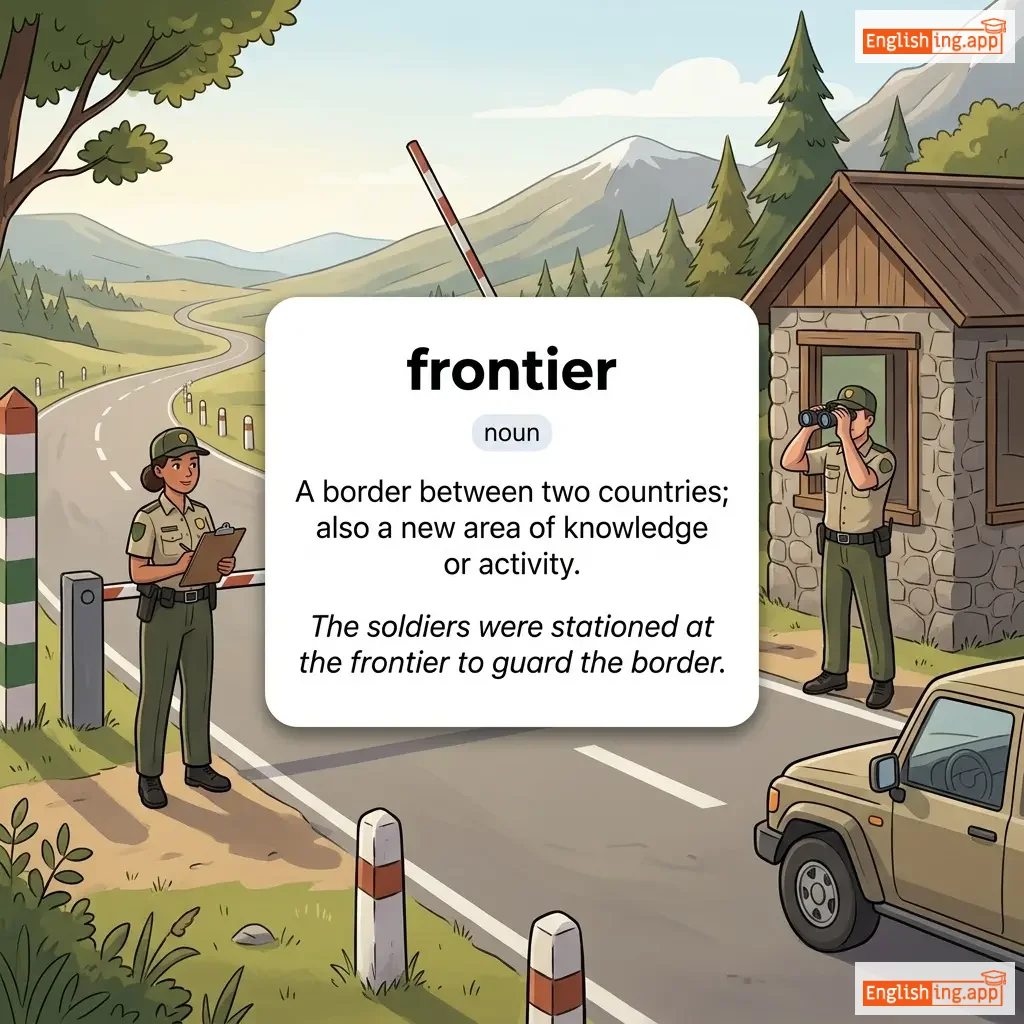
frontier definition card — visual illustration of the meaning
noun
/ˈfrʌntɪə(r)/
frontera (frontera)

A border between two countries; also a new area of knowledge or activity.

"The soldiers were stationed at the frontier to guard the border."

"Los soldados estaban estacionados en la frontera para proteger la frontera." (Los soldados estaban estacionados en la frontera para proteger la frontera.)
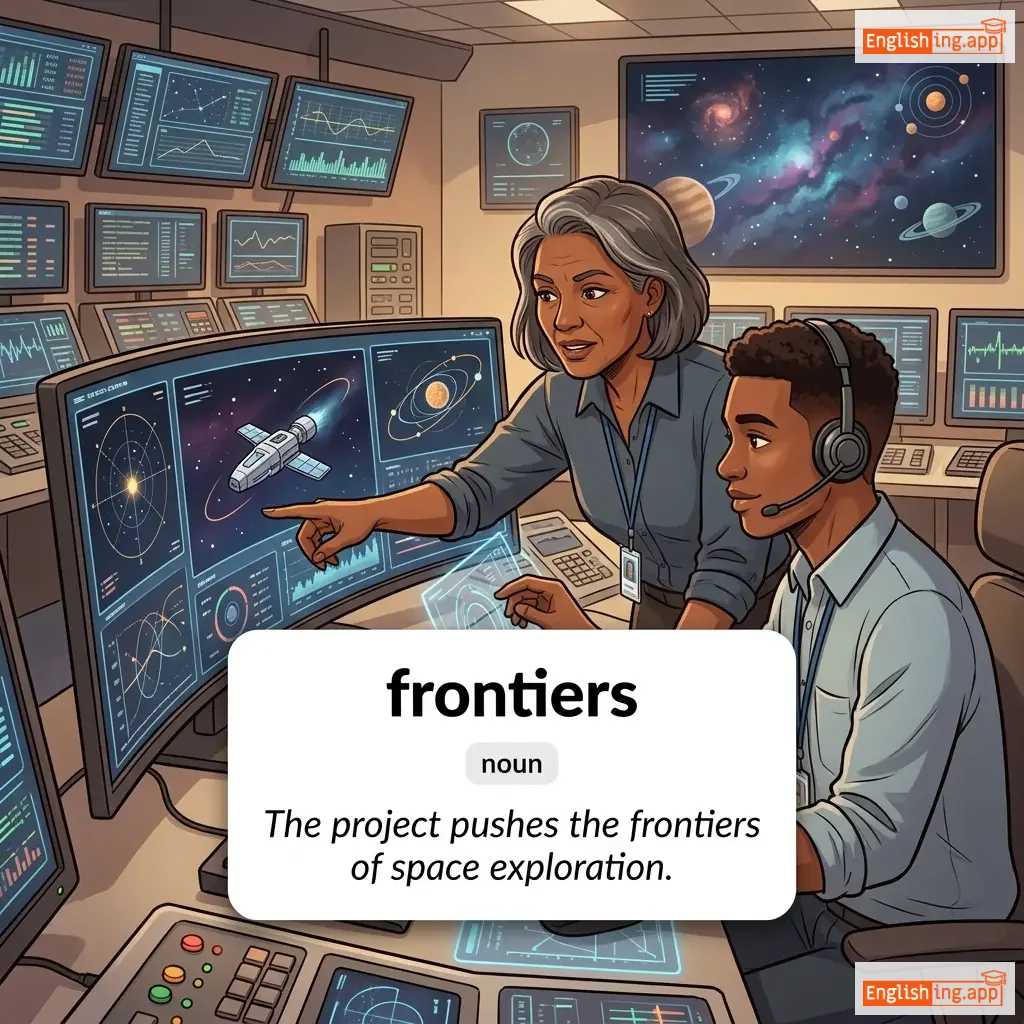
frontiers definition card — visual illustration of the meaning
noun
ˈfrʌn.tɪərz
fronteras (fronteras)

The extreme limit of settled land beyond which lies wilderness; the limits of knowledge or achievement in a particular field.

"The project pushes the frontiers of space exploration."

"El proyecto expande las fronteras de la exploración espacial." (El proyecto expande las fronteras de la exploración espacial.)
adjective
/ˈfrɒθi/
espumoso (espumoso)

Full of or covered with small bubbles; light and insubstantial.

"She ordered a cup of frothy cappuccino."

"Ella pidió una taza de capuchino espumoso." (Ella pidio una taza de capuchino espumoso.)
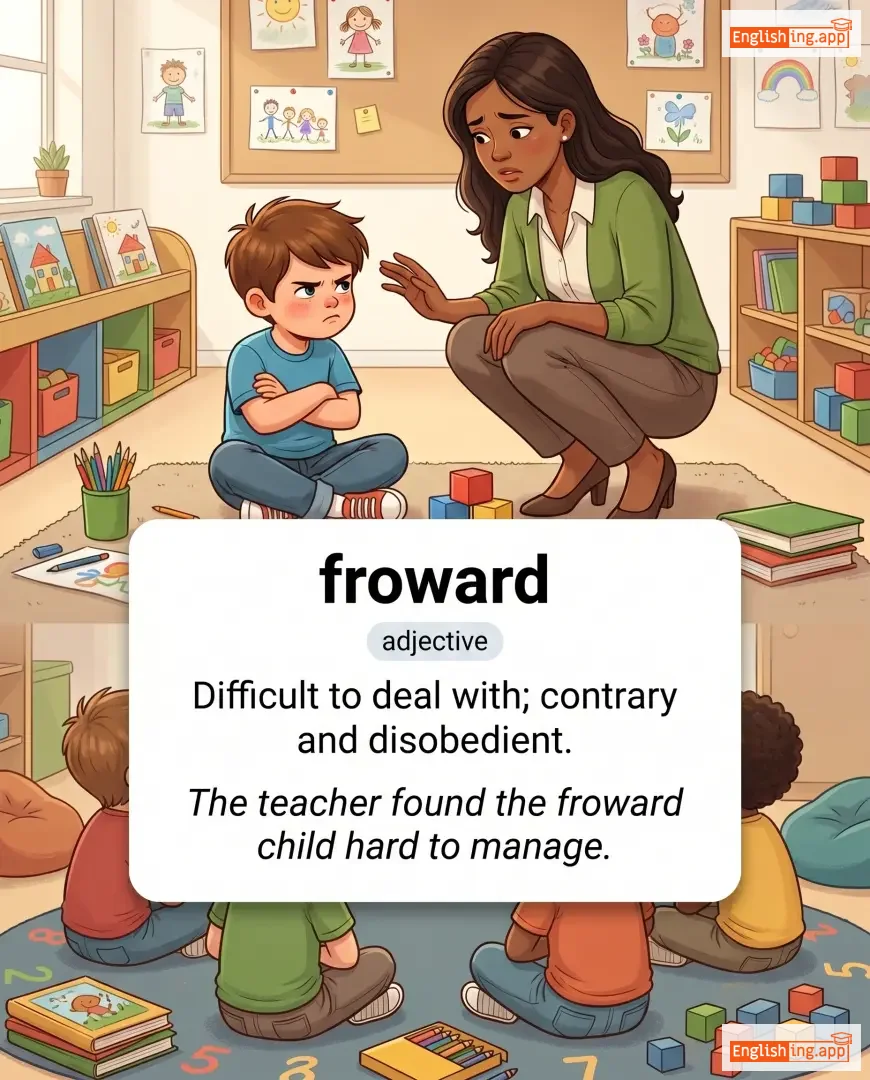
froward definition card — visual illustration of the meaning
adjective
/ˈfrəʊərd/
terco (terko)

Difficult to deal with; contrary and disobedient.

"The teacher found the froward child hard to manage."

"El maestro encontró al niño terco difícil de manejar." (El maestro encontró al niño terco difícil de manejar.)
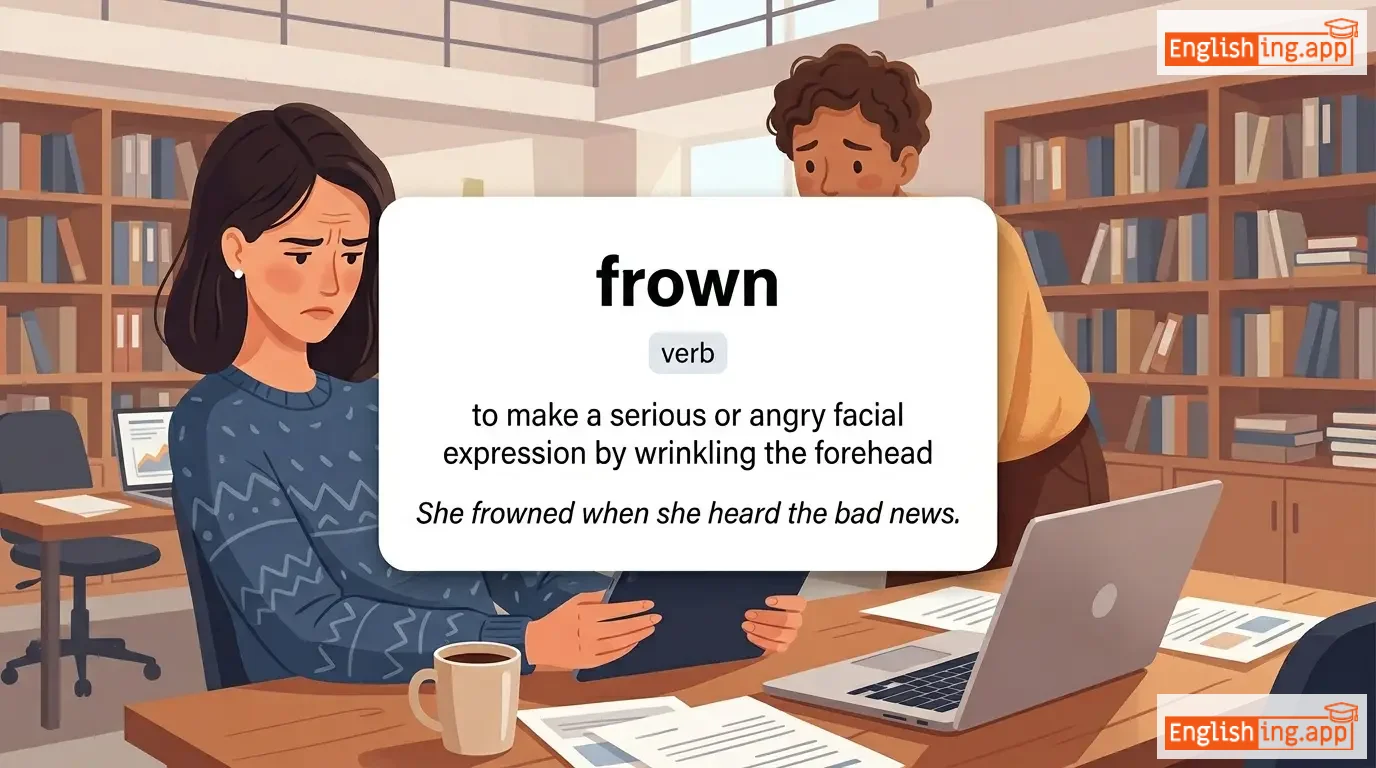
frown definition card — visual illustration of the meaning
verb
/fraʊn/
fruncir el ceño (fruncir el seno)

to make a serious or angry facial expression by wrinkling the forehead

"She frowned when she heard the bad news."

"Ella frunció el ceño cuando escuchó las malas noticias." (Ella fruncio el seno cuando escucho las malas noticias.)
adjective
/ˈfraʊzi/
desordenado (desordenado)

Scruffy and neglected in appearance; musty or stale in smell.

"He wore a frowsy old jacket that smelled of damp."

"Él llevaba una chaqueta desordenada y vieja que olía a humedad." (Él llevaba una chaqueta desordenada y vieja que olía a humedad.)
adjective
/ˈfraʊzi/
desaliñado (desalinhado)

Unkempt, messy, or having a musty, unpleasant smell.

"He entered the room with a frowzy appearance after sleeping on the couch."

"Entró en la habitación con una apariencia desaliñada después de dormir en el sofá." (Entró en la habitación con una apariencia desaliñada después de dormir en el sofá.)
adjective
/ˈfroʊzən/
congelado (congelado)

preserved by being made extremely cold; turned into ice

"The lake was completely frozen during winter."

"El lago estaba completamente congelado durante el invierno." (El lago estaba completamente congelado durante el invierno.)
verb
/ˈfrʌktɪˌfaɪ/
fructificar (fructificar)

To make fruitful or productive; to bear fruit.

"The new policies will help fructify the economic potential of the region."

"Las nuevas políticas ayudarán a fructificar el potencial económico de la región." (Las nuevas políticas ayudarán a fructificar el potencial económico de la región.)
adjective
/ˈfruːɡəl/
ahorrativo (ahorrativo)

Economical in use or expenditure; avoiding waste.

"She is very frugal and always saves a portion of her income."

"Ella es muy ahorrativa y siempre ahorra una parte de sus ingresos." (Ella es muy ahorrativa y siempre ahorra una parte de sus ingresos.)
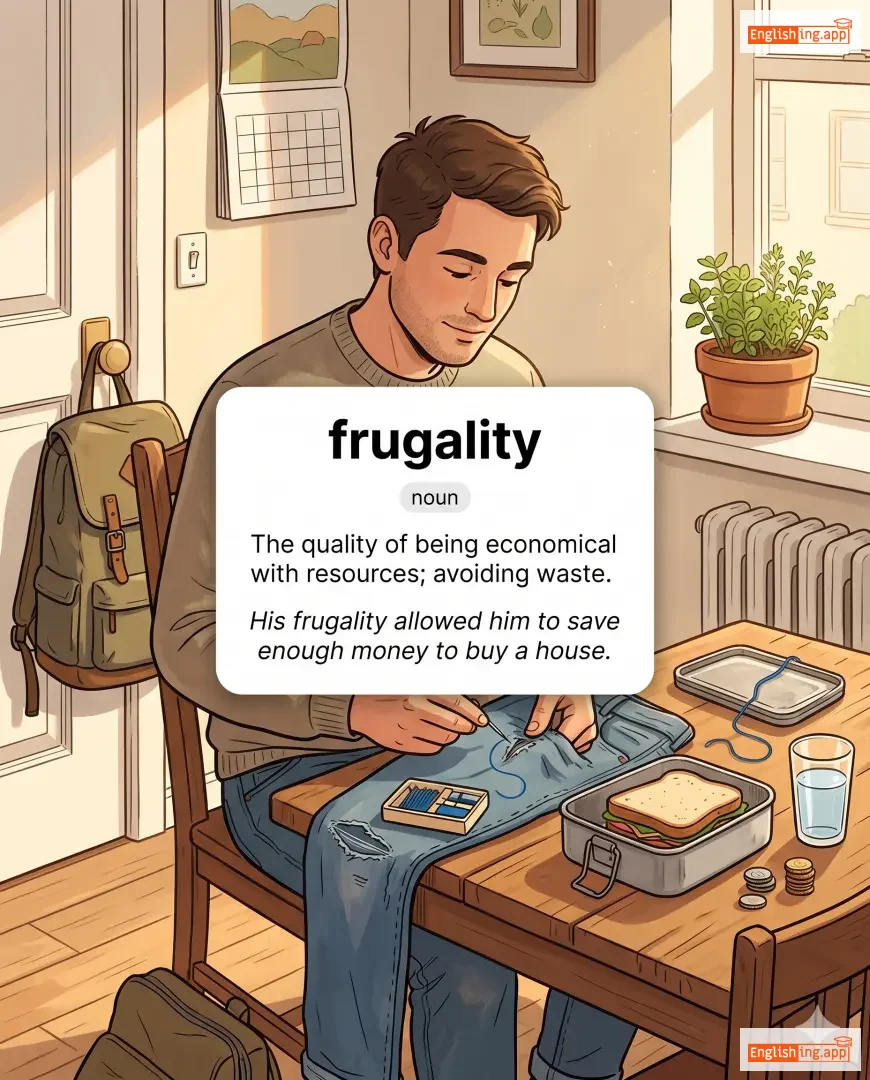
frugality definition card — visual illustration of the meaning
noun
/fruːˈɡæləti/
frugalidad (frugalidad)

The quality of being economical with resources; avoiding waste.

"His frugality allowed him to save enough money to buy a house."

"Su frugalidad le permitió ahorrar suficiente dinero para comprar una casa." (Su frugalidad le permitio ahorrar suficiente dinero para comprar una casa.)
noun
/fruːt/
fruta (fruta)

The sweet and fleshy product of a plant that contains seeds.

"Mango is my favorite fruit."

"El mango es mi fruta favorita." (El mango es mi fruta favorita.)
adjective
/ˈfruːtfəl/
productivo (productivo)

Producing good results or being productive.

"Their meeting was fruitful and led to many new ideas."

"Su reunión fue productiva y llevó a muchas ideas nuevas." (Su reunion fue productiva y llevo a muchas ideas nuevas.)
noun
/fruˈɪʃən/
cumplimiento (cumplimiento)

The realization or fulfillment of a plan, project, or desire.

"Her dream of becoming a doctor finally came to fruition."

"El sueño de convertirse en doctora finalmente se hizo realidad." (El sueno de convertirse en doctora finalmente se hizo realidad.)
adjective
/ˈfruːt.ləs/
infructuoso; inútil; fútil; (infructuoso; inutil; futil)

unsuccessful; futile; pointless;

"After hours of searching, their efforts proved fruitless."

"Después de horas de búsqueda, sus esfuerzos resultaron infructuosos." (Despues de horas de busqueda, sus esfuerzos resultaron infructuosos.)
verb
/ˈfrʌstreɪt/
frustrar (frustrar)

To prevent someone from accomplishing something; to cause feelings of annoyance or disappointment.

"The constant delays frustrated the team."

"Los retrasos constantes frustraron al equipo." (Los retrasos constantes frustraron al equipo.)
adjective
/ˈfrʌstreɪtɪd/
frustrado (frustrado)

feeling annoyed or upset because of inability to achieve something

"She felt frustrated after failing the exam."

"Ella se sintió frustrada después de reprobar el examen." (Ella se sintió frustrada después de reprobar el examen.)
adjective
/ˈfrʌstreɪtɪŋ/
frustrante (frustrante)

causing annoyance or dissatisfaction

"The slow internet connection was really frustrating."

"La conexión de internet lenta fue realmente frustrante." (La conexion de internet lenta fue realmente frustrante.)
noun
/frʌˈstreɪʃən/
frustración (frustracion)

The feeling of being upset or annoyed due to inability to achieve something.

"He felt deep frustration when his plans failed."

"Sintió una profunda frustración cuando sus planes fracasaron." (Sintio una profunda frustracion cuando sus planes fracasaron.)
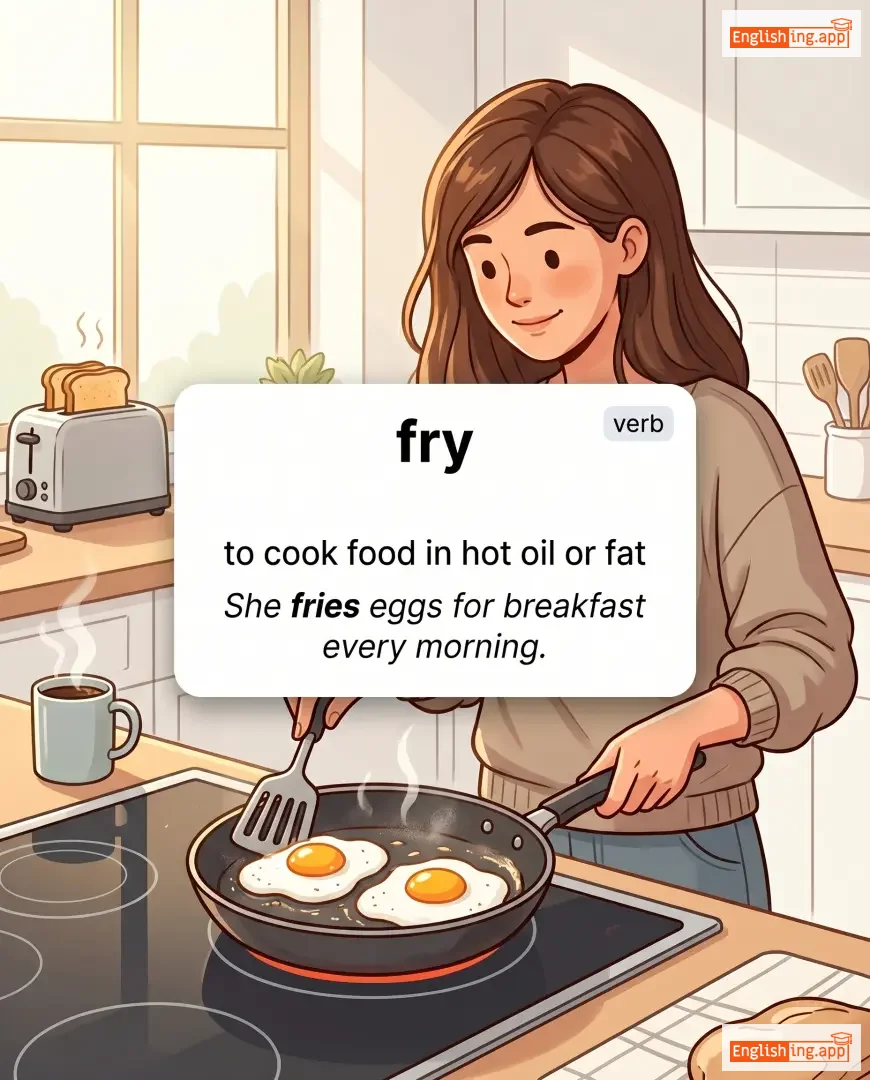
fry definition card — visual illustration of the meaning
noun
/fraɪ/
alevín (alevin)

young fish; small fish; to cook food in hot fat or oil

"The fisherman caught many small fry in his net."

"El pescador atrapó muchos alevines pequeños en su red." (el pescador atrapo muchos alevines pequenos en su red)
adjective, adverb (informal, vulgar)
/ˈfʌkɪŋ/
maldito (palabra vulgar para énfasis) (maldito (palabra vulgar para enfasis))

used for emphasis, often expressing anger or frustration (vulgar slang)

"It was a fucking disaster!"

"¡Fue un maldito desastre!" (¡Fue un maldito desastre!)
verb
/ˈfʌdəl/
confundir (confundir)

To confuse or stupefy, especially with alcohol or overwhelming information.

"The complicated instructions fuddled the new employees."

"Las instrucciones complicadas confundieron a los nuevos empleados." (Las instrucciones complicadas confundieron a los nuevos empleados.)
noun/verb
/ˈfjuːəl/
combustible (combustible)

A material such as coal, gas, or oil that is burned to produce energy; also to supply with energy or power.

"The car needs fuel to run efficiently."

"El coche necesita combustible para funcionar eficientemente." (El coche necesita combustible para funcionar eficientemente.)