Vocabularios

Descubra, aprenda y domine el vocabulario en inglés

verb
/ɪˈdʒɛkt/
echar fuera (echar fuera)

to force someone or something out, usually from a place or position

"The referee had to eject the player for unsportsmanlike behavior."

"El árbitro tuvo que ejectar al jugador por conducta antideportiva." (El árbitro tuvo que ejectar al jugador por conducta antideportiva.)
ejected definition card — visual illustration of the meaning
verb
/ɪˈdʒektɪd/
expulsar (expulsar)

to force someone or something to leave a place; to push or throw something out forcefully

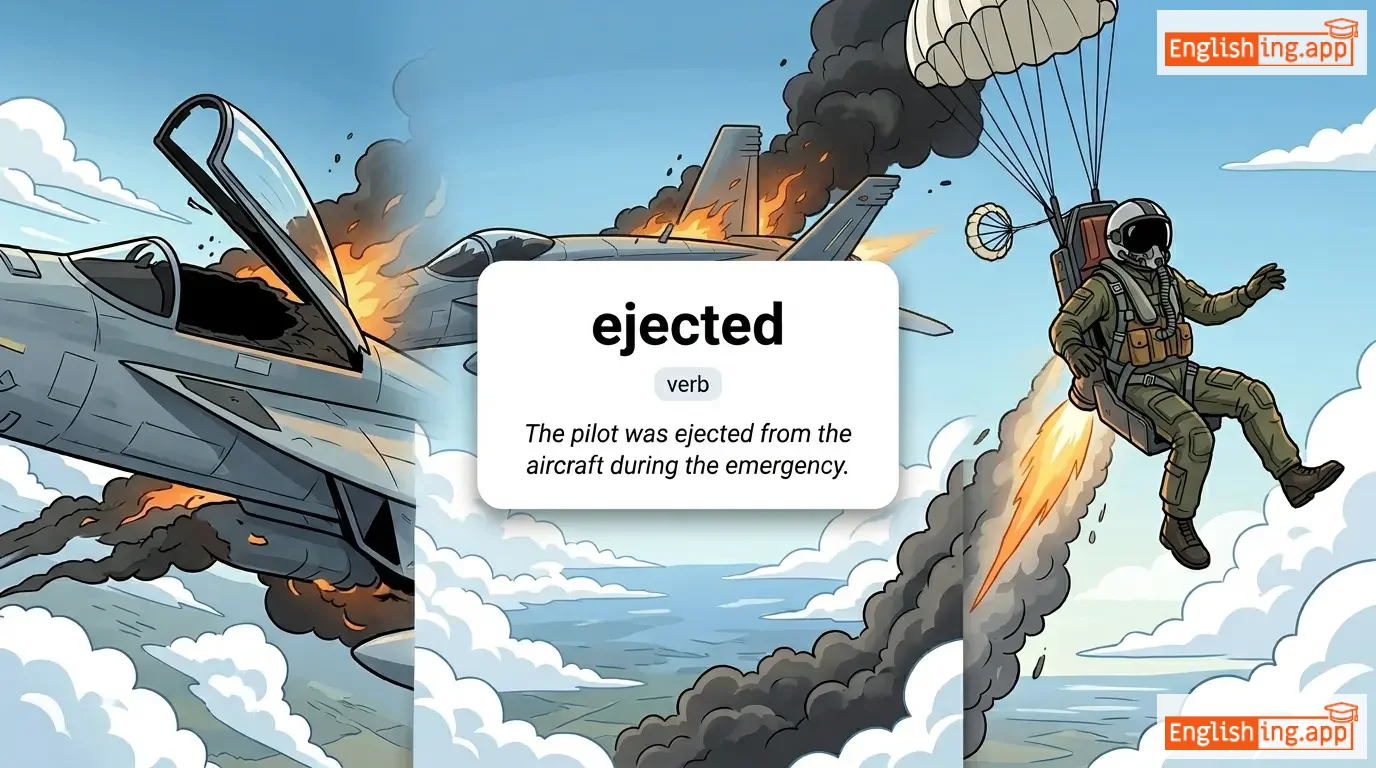
"The pilot was ejected from the aircraft during the emergency."

"El piloto fue expulsado del avión durante la emergencia." (El piloto fue expulsado del avión durante la emergencia.)
verb
/iːk/
hacer durar (hacer durar)

to make a small amount of something last longer by using it sparingly

"The family tried to eke out their savings during the tough months."

"La familia intentó hacer durar sus ahorros durante los meses difíciles." (La familia intentó hacer durar sus ahorros durante los meses difíciles.)
verb, adjective
/ɪˈlæbəreɪt/ (verb), /ɪˈlæbərət/ (adjective)
elaborar / detallado y complicado en diseño (elaborar / detallado y complicado en diseño)

verb: to explain something in detail; adjective: detailed and complicated in design

"She asked him to elaborate on his proposal."

"Ella le pidió que elaborara su propuesta." (Ella le pidió que elaborara su propuesta.)
noun
/ɪˌlæbəˈreɪʃən/
elaboración / explicación detallada (elaboracion / explicacion detallada)

the process of adding more detail or expanding on something

"The teacher appreciated the student's elaboration of the topic."

"El maestro apreció la elaboración del tema por parte del estudiante." (El maestro apreció la elaboración del tema por parte del estudiante.)
verb
/ɪˈlæps/
transcurrir (transcurrir)

to pass or go by, usually referring to time

"Several hours elapsed before he finally returned home."

"Pasaron varias horas antes de que él finalmente regresara a casa." (Pasaron varias horas antes de que él finalmente regresara a casa.)
adjective
/ɪˈlæstɪk/
elástico (elastiko)

Able to return to its original shape or size after being stretched or compressed.

"The waistband of the pants is made of elastic material."

"La cintura de los pantalones está hecha de material elástico." (La cintura de los pantalones esta hecha de material elastico.)
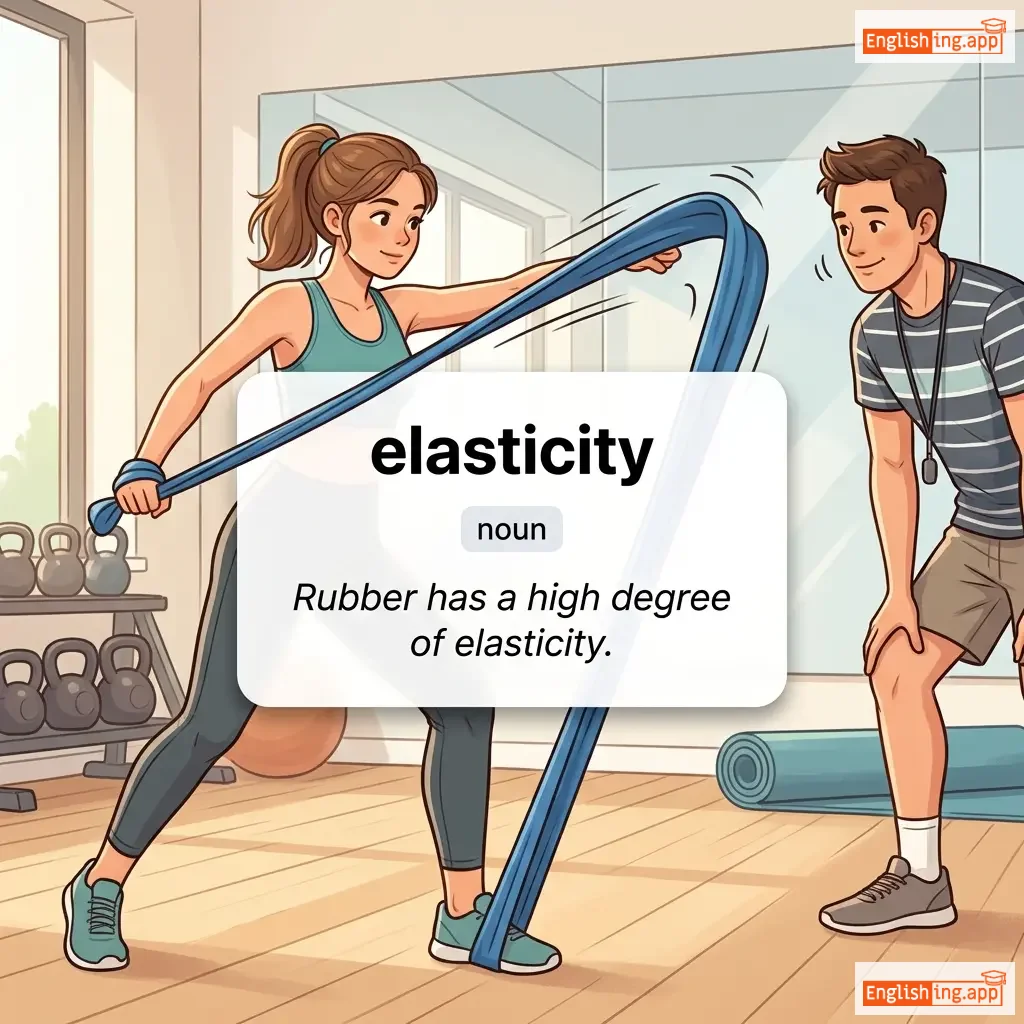
elasticity definition card — visual illustration of the meaning
noun
/ɪˌlæˈstɪsɪti/
elasticidad (elasticidad)

The ability of an object or material to resume its normal shape after being stretched or compressed.

"Rubber has a high degree of elasticity."

"El caucho tiene un alto grado de elasticidad." (El caucho tiene un alto grado de elasticidad)
verb
/ɪˈleɪt/
alegrar (alegrar)

To make someone very happy or proud.

"The success of the project elated the whole team."

"El éxito del proyecto alegró a todo el equipo." (El éxito del proyecto alegró a todo el equipo.)
adjective
/ɪˈleɪtɪd/
extremadamente feliz (extremadamente feliz)

Extremely happy and excited.

"She was elated when she heard the good news."

"Estaba extremadamente feliz cuando escuchó las buenas noticias." (Estaba extremadamente feliz cuando escuchó las buenas noticias.)
noun
/ɪˈleɪʃən/
éxtasis (extasis)

A feeling of great happiness and excitement.

"His elation was evident after winning the championship."

"Su éxtasis era evidente después de ganar el campeonato." (Su extasis era evidente despues de ganar el campeonato.)
noun/verb
/ˈɛl.boʊ/
codo (kodo)

The joint connecting the forearm and the upper arm; as a verb, to push aside using the elbow.

"He accidentally hit the table with his elbow."

"Él accidentalmente golpeó la mesa con su codo." (El accidentalmente golpeo la mesa con su kodo.)
noun
/ˈɛldər/
anciano (anciano)

a person who is older or has higher rank; an older person in a family or community

"We should always respect our elders."

"Siempre debemos respetar a nuestros mayores." (Siempre debemos respetar a nuestros mayores.)
adjective
/ˈɛldərli/
anciano (anciano)

Being old or advanced in years.

"The elderly man walks slowly across the street."

"El anciano camina lentamente por la calle." (El anciano camina lentamente por la calle.)
verb
/ɪˈlɛkt/
elegir (elegir)

To choose someone for a position or office by voting.

"The citizens elected a new president."

"Los ciudadanos eligieron a un nuevo presidente." (Los ciudadanos eligieron a un nuevo presidente.)
noun
/ɪˈlɛkʃən/
elección (eleccion)

The process of choosing someone for public office by voting.

"The election will be held next month."

"La elección se celebrará el próximo mes." (La eleccion se celebrara el proximo mes.)
adjective
/ɪˈlɛktərəl/
electoral (electoral)

related to elections or voting

"The electoral process in the country has been reformed in recent years."

"El proceso electoral en el país ha sido reformado en los últimos años." (El proceso electoral en el pais ha sido reformado en los ultimos anos.)
adjective
/ɪˈlɛktrɪk/
eléctrico (electrico)

Relating to or operated by electricity.

"The room was lit by an electric lamp."

"La habitación estaba iluminada por una lámpara eléctrica." (La habitacion estaba iluminada por una lampara electrica.)
noun
/ɪˈlɛktrɪk drɪl/
taladro eléctrico (taladro electrico)

A power tool used for drilling holes in various materials

"He used an electric drill to make holes in the wall for hanging pictures."

"Usó un taladro eléctrico para hacer agujeros en la pared para colgar cuadros." (Uso un taladro electrico para hacer agujeros en la pared para colgar cuadros.)
noun
/ɪˈlek.trɪk fæn/
ventilador eléctrico (ventilador electrico)

a device with rotating blades that creates airflow to cool or ventilate a room

"The electric fan keeps the room cool during hot summer days."

"El ventilador eléctrico mantiene la habitación fresca durante los días calurosos de verano." (El ventilador electrico mantiene la habitacion fresca durante los dias calurosos de verano.)
noun
/ɪˈlɛktrɪk ˈkɛtəl/
tetera eléctrica (tetera electrica)

An electrical appliance that heats water quickly using electricity

"The electric kettle automatically turns off when the water starts boiling."

"La tetera eléctrica se apaga automáticamente cuando el agua comienza a hervir." (La tetera electrica se apaga automaticamente cuando el agua comienza a hervir.)
adjective
/ɪˈlɛktrɪkəl/
eléctrico (electrico)

related to electricity or the use of electrical power

"The electrical system in the house needs repair."

"El sistema eléctrico de la casa necesita reparación." (El sistema electrico de la casa necesita reparacion.)
noun
/ɪˌlɛkˈtrɪsɪti/
electricidad (electricidad)

A form of energy resulting from the existence of charged particles.

"The storm caused a power cut and we had no electricity."

"La tormenta causó un corte de energía y no teníamos electricidad." (La tormenta causo un corte de energia y no teniamos electricidad.)
verb
/ɪˈlɛktrɪfaɪ/
electrificar; emocionar (electrificar; emocionar)

to charge with electricity; to excite or thrill intensely

"The speaker's speech electrified the audience."

"El discurso del orador emocionó intensamente a la audiencia." (El discurso del orador emociono intensamente a la audiencia)
noun
/ɪˌlɛkˈtrɑː.lə.sɪs/
electrólisis (electrolisis)

A chemical decomposition produced by passing an electric current through a liquid or solution.

"Electrolysis is used to separate hydrogen from water."

"Se utiliza la electrólisis para separar el hidrógeno del agua." (Se utiliza la electrolisis para separar el hidrogeno del agua.)
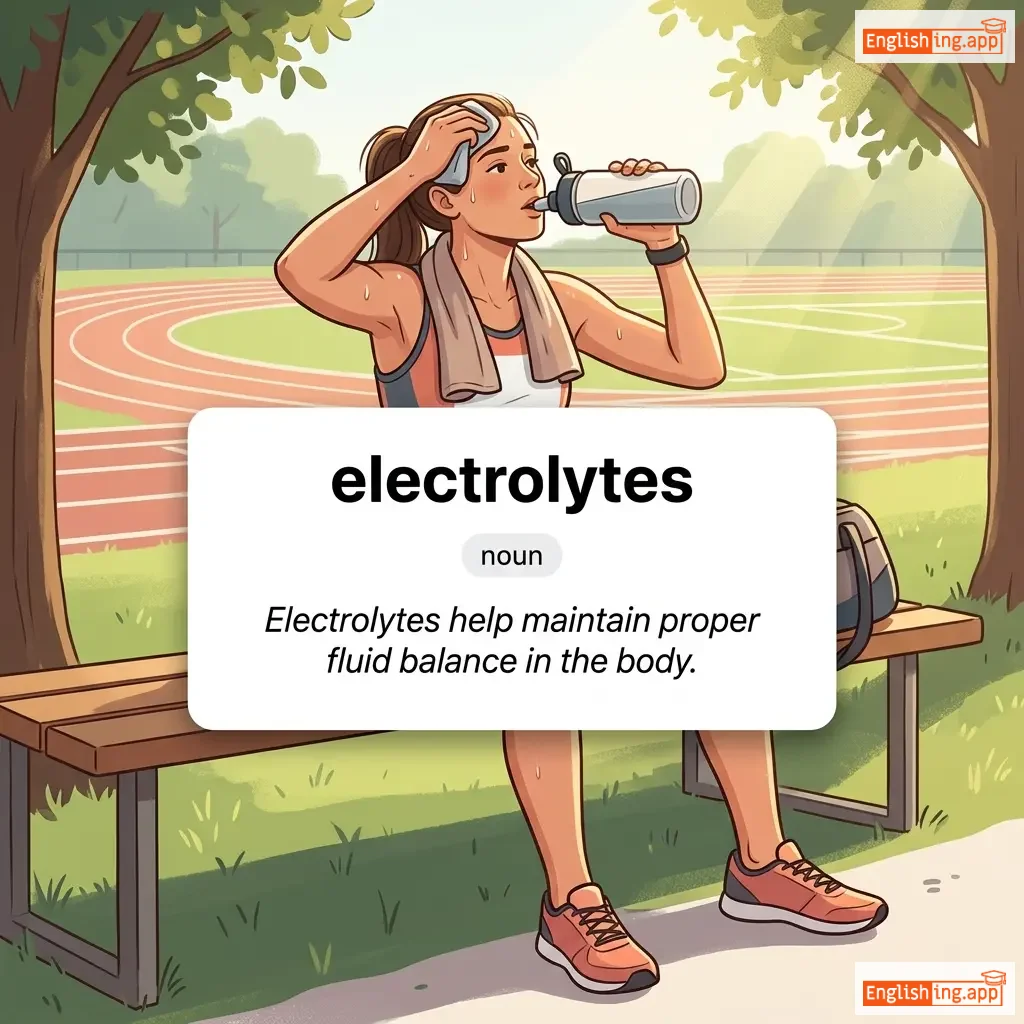
electrolytes definition card — visual illustration of the meaning
noun
/ɪˈlɛk.trəʊ.laɪts/
electrolitos (electrolitos)

Minerals in body fluids that carry an electric charge and are essential for many bodily functions.

"Electrolytes help maintain proper fluid balance in the body."

"Los electrolitos ayudan a mantener el equilibrio adecuado de líquidos en el cuerpo." (Los electrolitos ayudan a mantener el equilibrio adecuado de líquidos en el cuerpo.)
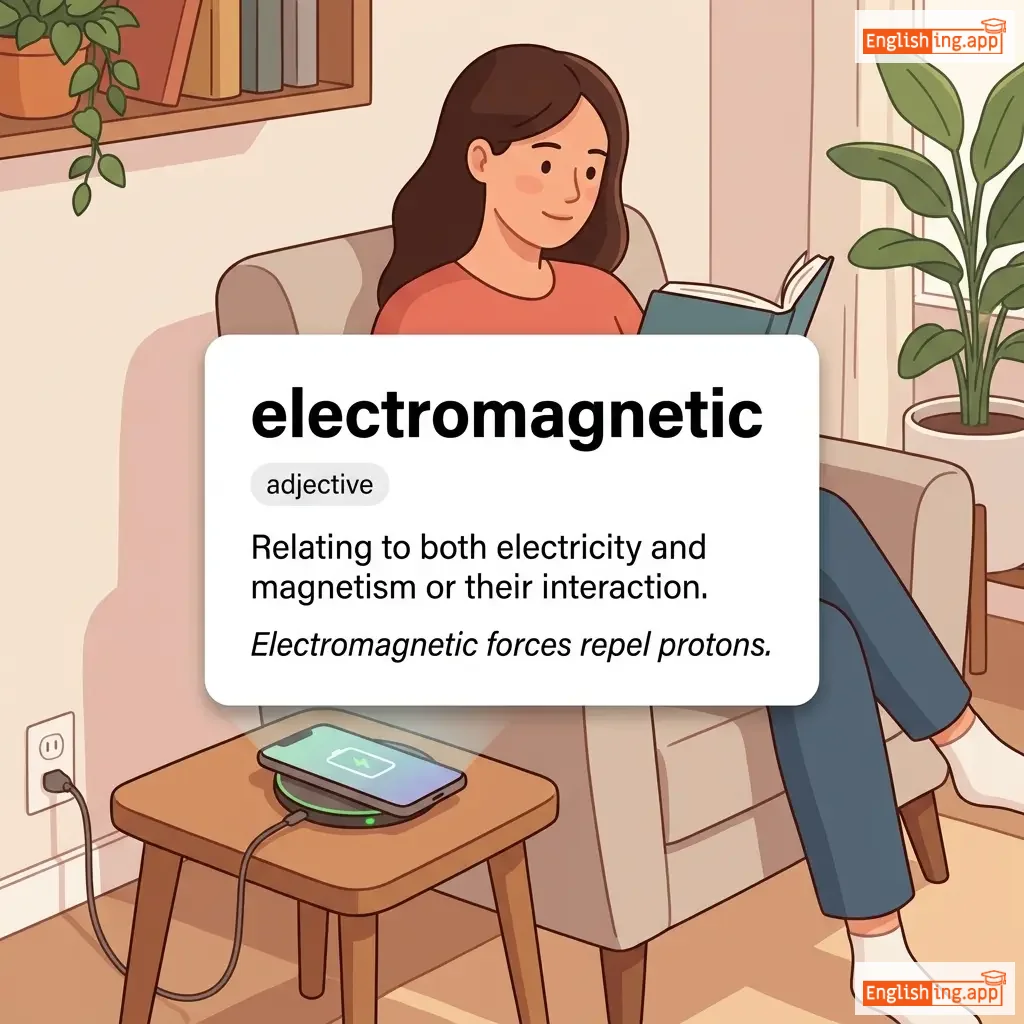
electromagnetic definition card — visual illustration of the meaning
adjective
ɪˌlektrəʊmæɡˈnetɪk
electromagnético (electromagnetico)

Relating to both electricity and magnetism or their interaction.

"Electromagnetic forces repel protons."

"Las fuerzas electromagnéticas repelen los protones." (Las fuerzas electromagneticas repelen los protones.)
adjective
/ɪˌlɛkˈtrɒnɪk/
electrónico (electronico)

Operating with or produced by the use of electronic devices.

"She bought an electronic keyboard for her music lessons."

"Ella compró un teclado electrónico para sus lecciones de música." (Ella compro un teclado electronico para sus lecciones de musica.)
noun
/ɪˌlɛkˈtrɒnɪks/
electrónica (electronica)

the branch of physics and technology dealing with circuits and devices using transistors, microchips, and other components

"He studied electronics at university."

"Estudió electrónica en la universidad." (Estudió electronica en la universidad.)
noun
/ɪˈlɛk.trə.taɪp/
electrotipo (electrotipo)

A duplicate printing plate made by electroplating a mold of the original.

"The printer used an electrotype to produce multiple copies of the page."

"El impresor utilizó un electrotipo para producir múltiples copias de la página." (El impresor utilizó un electrotipo para producir múltiples copias de la página.)
adjective
/ˌɛl.ɪˈmɑː.səˌnɛr.i/
caritativo (caritativo)

Relating to charity; dependent on or supported by charity.

"The hospital was founded as an eleemosynary institution."

"El hospital fue fundado como una institución caritativa." (El hospital fue fundado como una institucion caritativa.)
adjective
/ˈɛlɪɡənt/
elegante y refinado (elegante y refinado)

pleasingly graceful and stylish in appearance or manner

"She looked elegant in her evening gown."

"Ella se veía elegante en su vestido de noche." (Ella se veía elegante en su vestido de noche.)
adjective
/ˌɛl.ɪˈdʒaɪ.ək/
elegíaco (elegiaco)

Expressing sorrow, often for something past; resembling an elegy.

"The novel ends on an elegiac note, mourning the lost era."

"La novela termina con una nota elegíaca, lamentando la era perdida." (La novela termina con una nota elegiaca, lamentando la era perdida.)
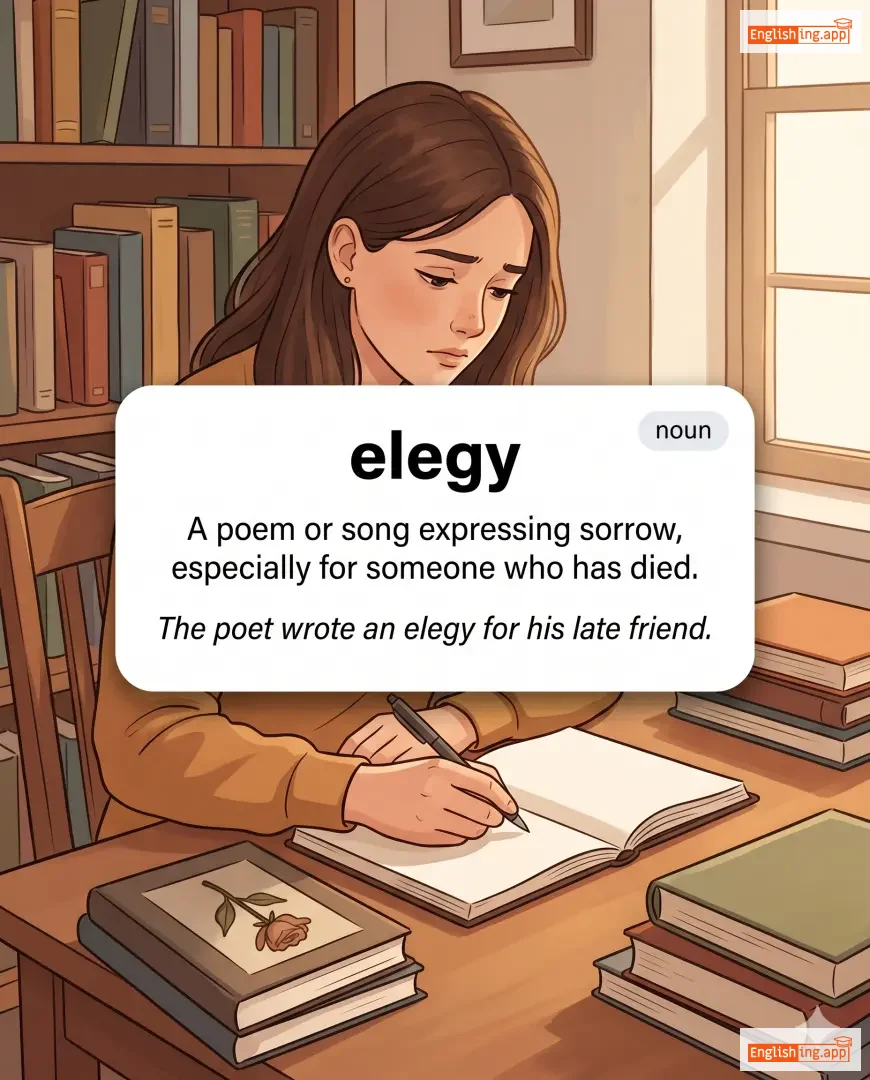
elegy definition card — visual illustration of the meaning
noun
/ˈɛlɪdʒi/
elegía (elegia)

A poem or song expressing sorrow, especially for someone who has died.

"The poet wrote an elegy for his late friend."

"El poeta escribió una elegía para su amigo fallecido." (El poeta escribio una elegia para su amigo fallecido.)
noun
/ˈɛlɪmənt/
elemento (elemento)

A basic or essential part of something; a simple substance that cannot be broken down further.

"Trust is a key element of any strong relationship."

"La confianza es un elemento clave de cualquier relación fuerte." (La confianza es un elemento clave de cualquier relacion fuerte.)
adjective
/ˌɛlɪˈmɛntəri/
elemental (elemental)

Relating to the basic or fundamental aspects of something; simple or easy to understand.

"She gave an elementary explanation of the problem."

"Ella dio una explicación elemental del problema." (Ella dio una explicación elemental del problema.)
noun
/ˈɛlɪfənt/
felicidad (felicidad)

a very large animal with a trunk, long curved tusks, and thick gray skin, found in Africa and Asia

"The elephant sprayed water over itself with its trunk."

"Ella no pudo ocultar su felicidad cuando recibió el premio." (Ella no pudo ocultar su felicidad cuando recibio el premio.)
noun
/ˈel.ɪ.fənt ˈæp.əl/
manzana elefante (manzana elefante)

a tropical fruit with a hard shell and acidic flesh

"Elephant apple is used to make delicious jams and pickles."

"La manzana elefante se utiliza para hacer deliciosas mermeladas y encurtidos." (La manzana elefante se utiliza para hacer deliciosas mermeladas y encurtidos.)
adjective
/ˌɛlɪˈfæntaɪn/
elefantino (elefantino)

Huge, clumsy, or resembling an elephant in size or movement.

"The man moved with an elephantine grace."

"El hombre se movió con una gracia elefantiina." (El hombre se movió con una gracia elefantiina.)
elevate definition card — visual illustration of the meaning
verb
/ˈɛlɪveɪt/
elevar (elevar)

To raise or lift something to a higher position; to improve in status, mood, or quality.

"Good music can elevate your mood instantly."

"La buena música puede elevar tu ánimo instantáneamente." (La buena música puede elevar tu ánimo instantáneamente.)
noun
/ˌɛlɪˈveɪʃən/
elevación (elevacion)

The act of raising something to a higher position or level.

"The hikers reached a high elevation after hours of climbing."

"Los excursionistas llegaron a una alta elevación después de horas de escalada." (Los excursionistas llegaron a una alta elevacion despues de horas de escalada.)
noun
/ˈɛləˌveɪtər/
ascensor (ascensor)

a machine that carries people or goods up and down between floors in a building

"We took the elevator to the tenth floor."

"Tomamos el ascensor hasta el décimo piso." (Tomamos el ascensor hasta el decimo piso.)
1️⃣1️⃣

eleven (eleven)

number
/ɪˈlɛvən/
once (once)

the number after ten and before twelve; 11

"There are eleven students in the classroom."

"Hay once estudiantes en el aula." (Hay once estudiantes en el aula.)
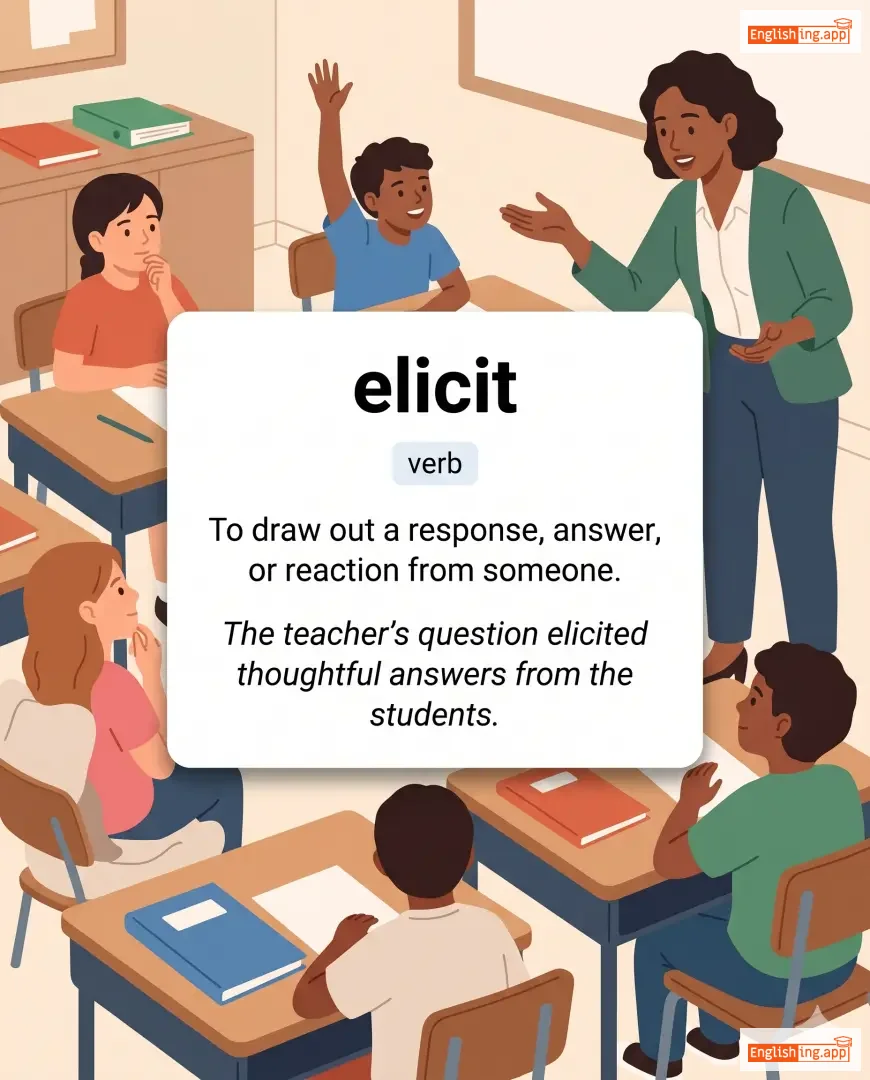
elicit definition card — visual illustration of the meaning
verb
/ɪˈlɪsɪt/
provocar (provocar)

To draw out a response, answer, or reaction from someone.

"The teacher’s question elicited thoughtful answers from the students."

"La pregunta del maestro elicita respuestas pensativas de los estudiantes." (La pregunta del maestro elicita respuestas pensativas de los estudiantes.)
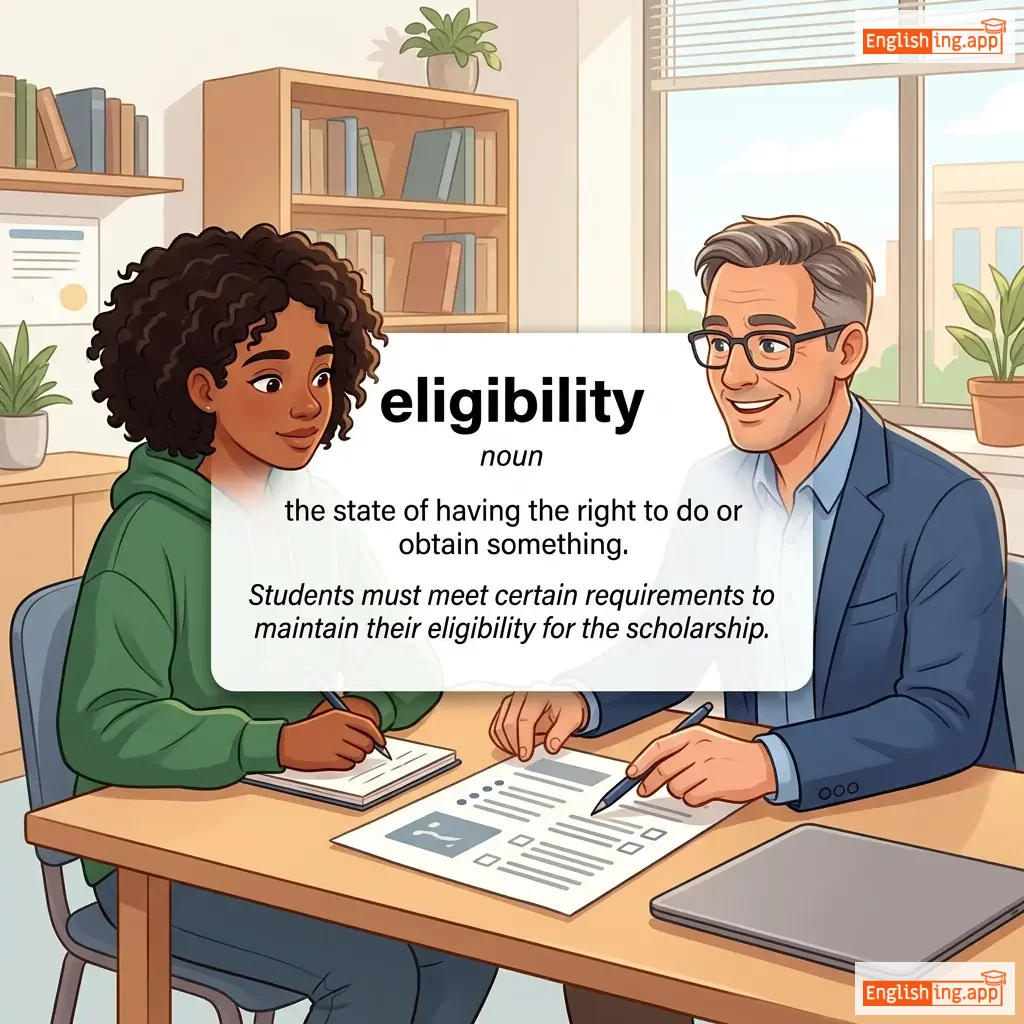
eligibility definition card — visual illustration of the meaning
noun
/ˌel.ɪ.dʒəˈbɪl.ə.ti/
elegibilidad (eligibilidad)

the state of having the right to do or obtain something

"Students must meet certain requirements to maintain their eligibility for the scholarship."

"Los estudiantes deben cumplir con ciertos requisitos para mantener su elegibilidad para la beca." (Los estudiantes deben cumplir con ciertos requisitos para mantener su elegibilidad para la beca.)
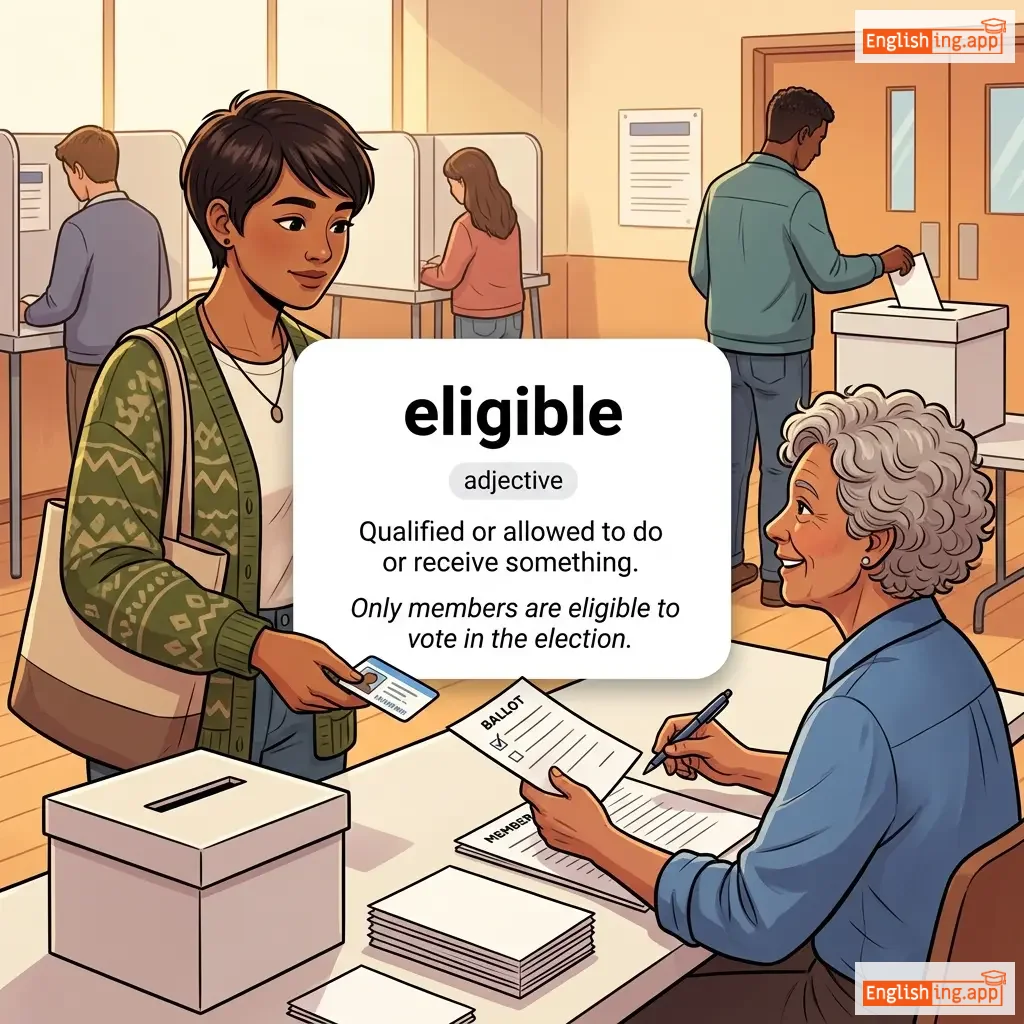
eligible definition card — visual illustration of the meaning
adjective
/ˈɛlɪdʒəbl/
elegible (elegible)

Qualified or allowed to do or receive something.

"Only members are eligible to vote in the election."

"Solo los miembros son elegibles para votar en las elecciones." (Solo los miembros son elegibles para votar en las elecciones.)
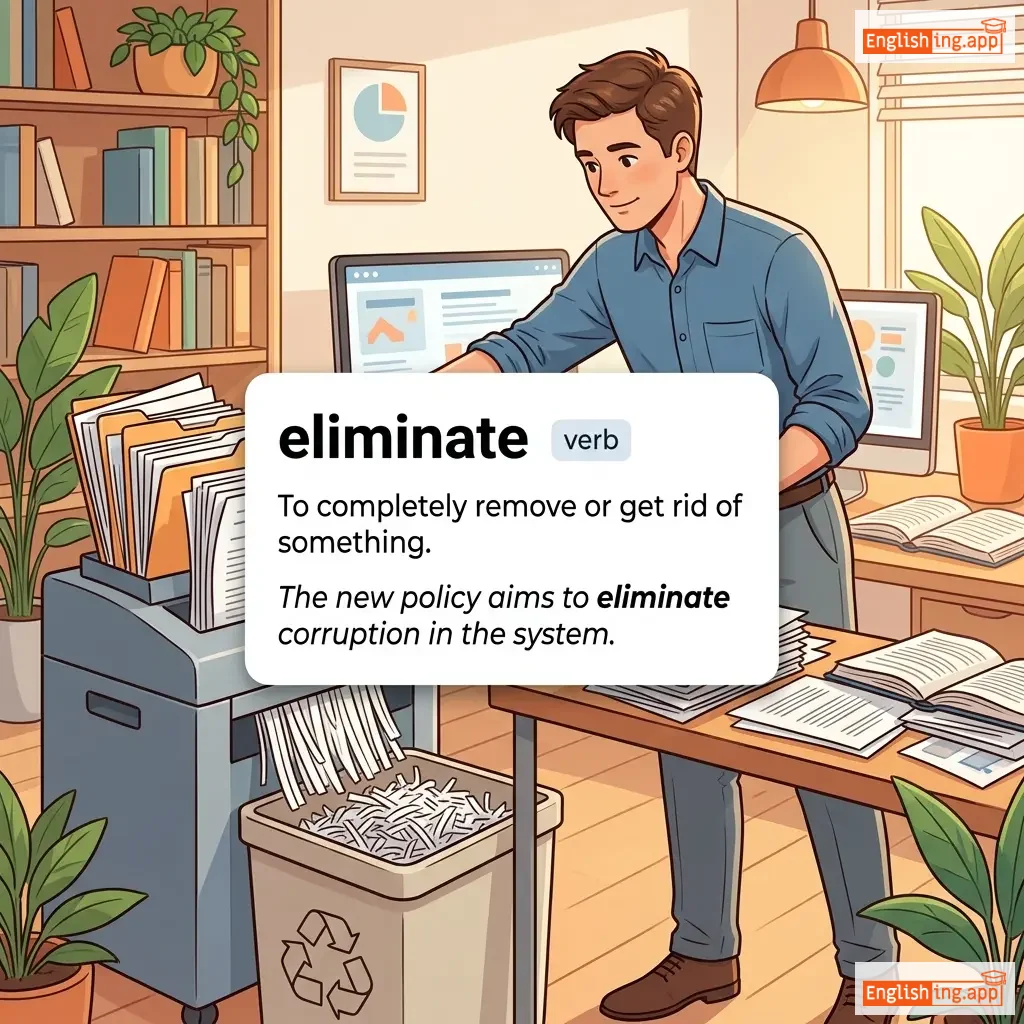
eliminate definition card — visual illustration of the meaning
verb
/ɪˈlɪməˌneɪt/
eliminar (eliminar)

To completely remove or get rid of something.

"The new policy aims to eliminate corruption in the system."

"La nueva política tiene como objetivo eliminar la corrupción en el sistema." (La nueva política tiene como objetivo eliminar la corrupción en el sistema.)
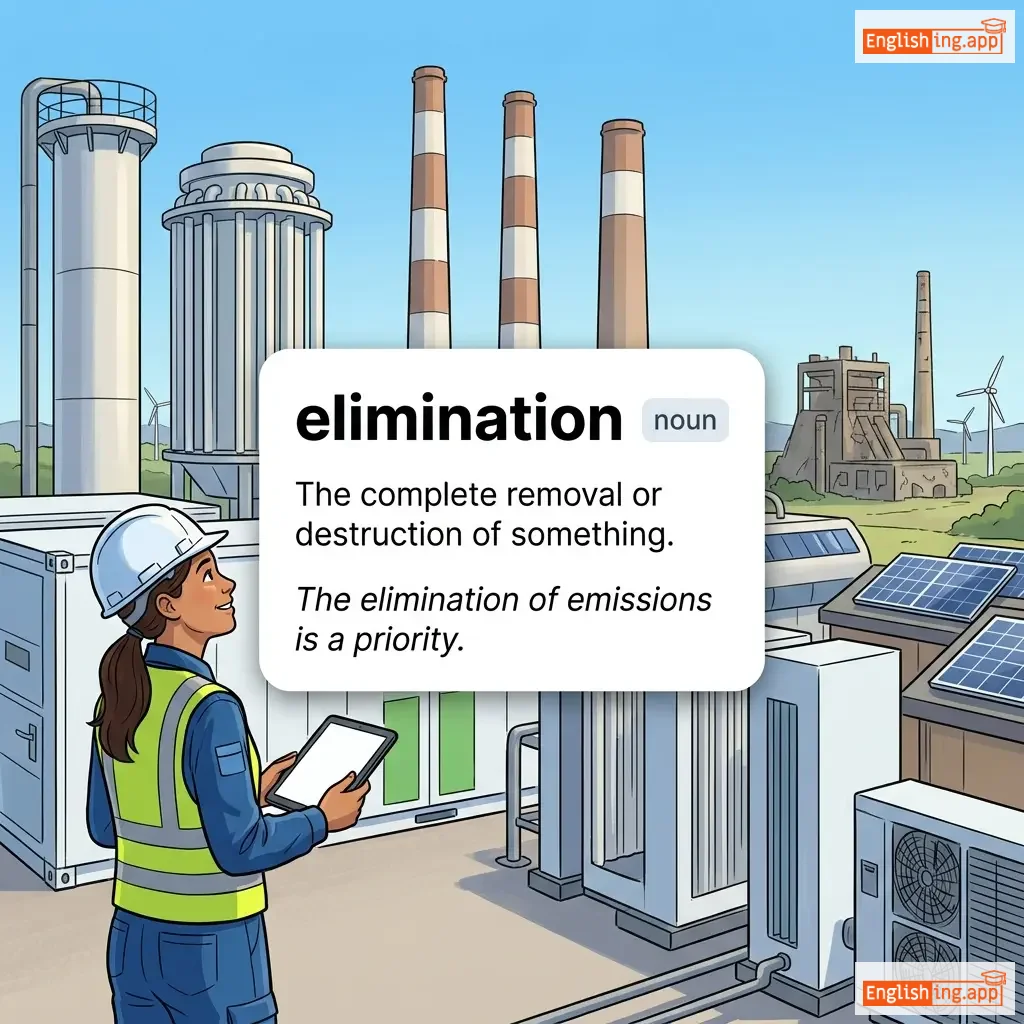
elimination definition card — visual illustration of the meaning
noun
ɪˌlɪm.ɪˈneɪ.ʃən
eliminación (eliminacion)

The complete removal or destruction of something.

"The elimination of emissions is a priority."

"La eliminación de emisiones es una prioridad." (La eliminacion de emisiones es una prioridad.)
noun
/ɪˈliːt/ or /eɪˈliːt/
élite (elite)

A select group that is superior in terms of ability or qualities.

"Only the elite were invited to the exclusive event."

"Solo la élite fue invitada al evento exclusivo." (Solo la elite fue invitada al evento exclusivo.)
noun/adjective
/ɪˈliːtɪst/
elitista (elitista)

A person who believes that a society should be led by an elite; showing preference for a privileged class.

"His elitist attitude made him unpopular among his peers."

"Su actitud elitista lo hizo impopular entre sus compañeros." (Su actitud elitista lo hizo impopular entre sus compañeros.)