Vocabularios

Descubra, aprenda y domine el vocabulario en inglés

noun
/ɪkˌspɒstjʊˈleɪʃən/
protesta (protesta)

the act of expressing protest or disagreement

"His expostulation against the unfair rules was ignored."

"Su protesta contra las reglas injustas fue ignorada." (Su protesta contra las reglas injustas fue ignorada.)
noun
/ɪkˈspəʊʒər/
exposición (exposicion)

the state of being exposed to contact with something, especially harmful

"Prolonged exposure to the sun can damage your skin."

"La exposición prolongada al sol puede dañar tu piel." (La exposicion prolongada al sol puede danar tu piel.)
verb
/ɪkˈspaʊnd/
exponer (exponer)

to present and explain in detail

"The professor expounded the theory in simple terms."

"El profesor expuso la teoría en términos simples." (El profesor expuso la teoría en términos simples.)
express definition card — visual illustration of the meaning
verb
/ɪkˈsprɛs/
expresar (expresar)

to convey a thought, feeling, or idea in words, actions, or other forms

"She expressed her gratitude with a warm smile."

"Ella expresó su gratitud con una cálida sonrisa." (Ella expresó su gratitud con una cálida sonrisa.)
noun
/ɪkˈspres treɪn/
tren expreso (tren expreso)

a fast train that travels between major stations with few or no intermediate stops

"The express train reached the destination in half the usual time."

"El tren expreso llegó a su destino en la mitad del tiempo habitual." (El tren expreso llegó a su destino en la mitad del tiempo habitual.)
noun
/ɪkˈsprɛʃən/
expresión (expresion)

the act of putting thoughts or feelings into words, actions, or facial gestures

"His facial expression showed surprise."

"La expresión de su rostro mostró sorpresa." (La expresion de su rostro mostro sorpresa.)
adjective
/ɪkˈsprɛsɪv/
expresivo (expresivo)

Effectively conveying thought or feeling.

"Her eyes were so expressive that no words were needed."

"Sus ojos eran tan expresivos que no se necesitaban palabras." (Sus ojos eran tan expresivos que no se necesitaban palabras.)
verb
/ɛksˈproʊprieɪt/
expropiar (ekspropiar)

To take property from its owner, especially by authority or for public use.

"The government decided to expropriate the land for a new highway."

"El gobierno decidió expropiar la tierra para una nueva carretera." (El gobierno decidió expropiar la tierra para una nueva carretera.)
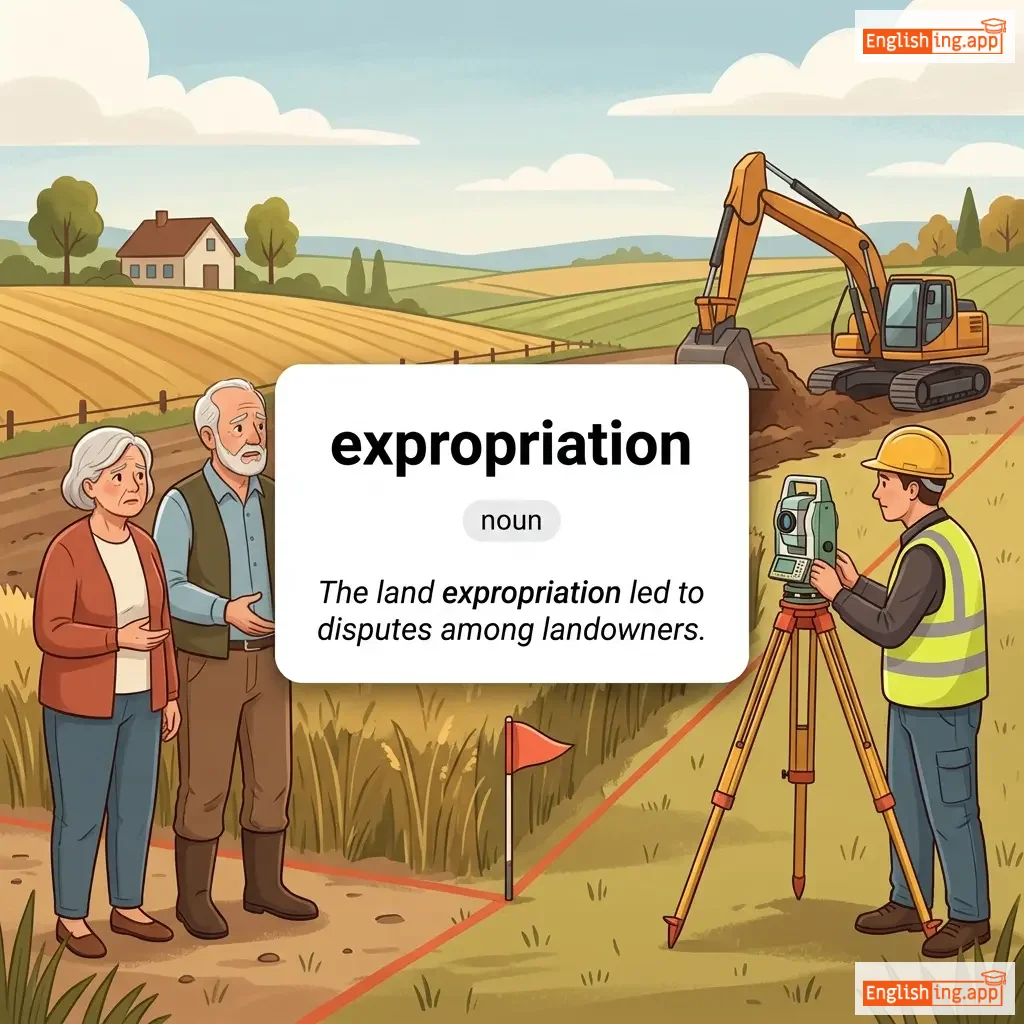
expropriation definition card — visual illustration of the meaning
noun
/ɪkˌsprəʊ.priˈeɪ.ʃən/
expropiación (expropiacion)

The act of government taking private property, also known as confiscation, nationalization, or seizure.

"The land expropriation led to disputes among landowners."

"La expropiación de tierras llevó a disputas entre los propietarios de tierras." (La expropiacion de tierras llevo a disputas entre los propietarios de tierras.)
noun
/ɪkˈspʌlʃən/
expulsión (expulsión)

The act of forcing someone to leave a place, especially a school or country.

"His constant misbehavior led to his expulsion from school."

"Su comportamiento constante llevó a su expulsión de la escuela." (Su comportamiento constante llevó a su expulsión de la escuela.)
verb
/ɪkˈspʌndʒ/
eliminar (eliminar)

To erase or remove completely, often something unwanted.

"He managed to expunge the embarrassing memory from his mind."

"Él logró eliminar el vergonzoso recuerdo de su mente." (El logro eliminar el vergonzoso recuerdo de su mente.)
verb
/ˈekspərˌɡeɪt/
expurgar (expurgar)

To remove offensive or objectionable parts from a text or speech.

"The publisher decided to expurgate the novel before reprinting it."

"El editor decidió expurgar la novela antes de volver a imprimirla." (el editor decidio expurgar la novela antes de volver a imprimirla)
exquisite definition card — visual illustration of the meaning
adjective
/ɪkˈskwɪzɪt/
exquisito (ekskwizito)

Extremely beautiful, delicate, or finely made.

"The bride wore an exquisite gown made of silk."

"La novia llevaba un hermoso vestido de seda." (La novia llevaba un hermoso vestido de seda.)
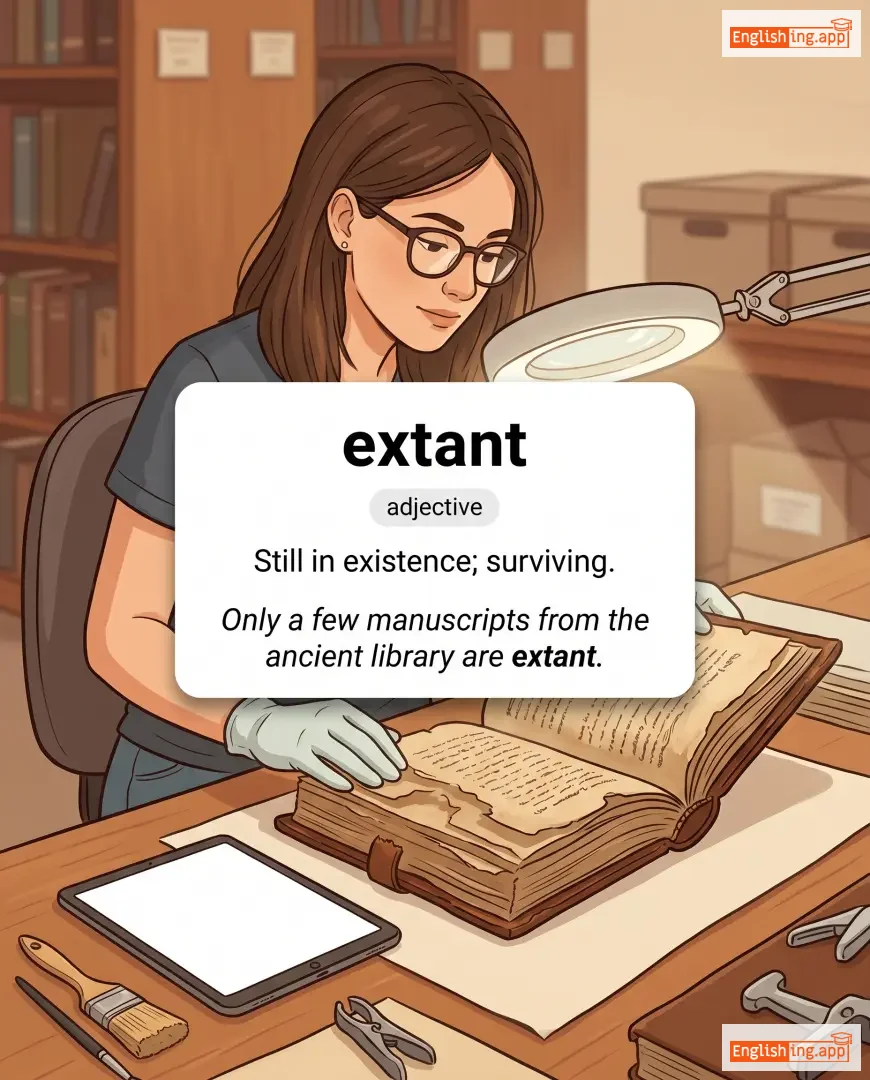
extant definition card — visual illustration of the meaning
adjective
/ˈɛkstənt/
existente (existente)

Still in existence; surviving.

"Only a few manuscripts from the ancient library are extant."

"Solo unos pocos manuscritos de la antigua biblioteca están extintos." (Solo unos pocos manuscritos de la antigua biblioteca están extintos.)
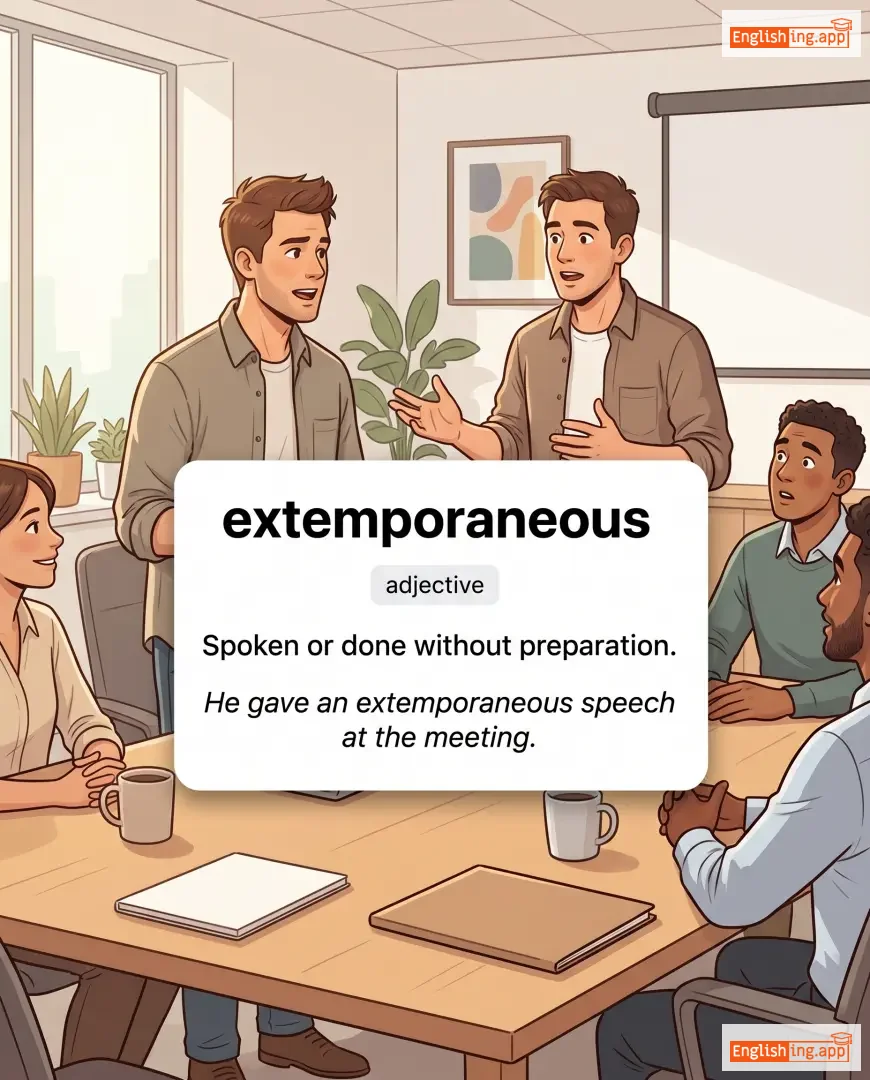
extemporaneous definition card — visual illustration of the meaning
adjective
/ɪkˌstɛmpəˈreɪniəs/
hecho sin preparación (hecho sin preparacion)

Spoken or done without preparation.

"He gave an extemporaneous speech at the meeting."

"Él dio un discurso extemporáneo en la reunión." (El dio un discurso extemporaneo en la reunion.)
adverb
/ɪkˈstɛmpəri/
sin preparación (sin preparacion)

Spoken or done without preparation; impromptu.

"She recited the poem extempore in class."

"Recitó el poema sin preparación en clase." (Recito el poema sin preparacion en clase.)
verb
/ɪkˈstɛmpəraɪz/
improvisar (improvisar)

To speak or perform without preparation; improvise.

"The actor had to extemporize when he forgot his lines."

"El actor tuvo que improvisar cuando olvidó sus líneas." (El actor tuvo que improvisar cuando olvidó sus líneas.)
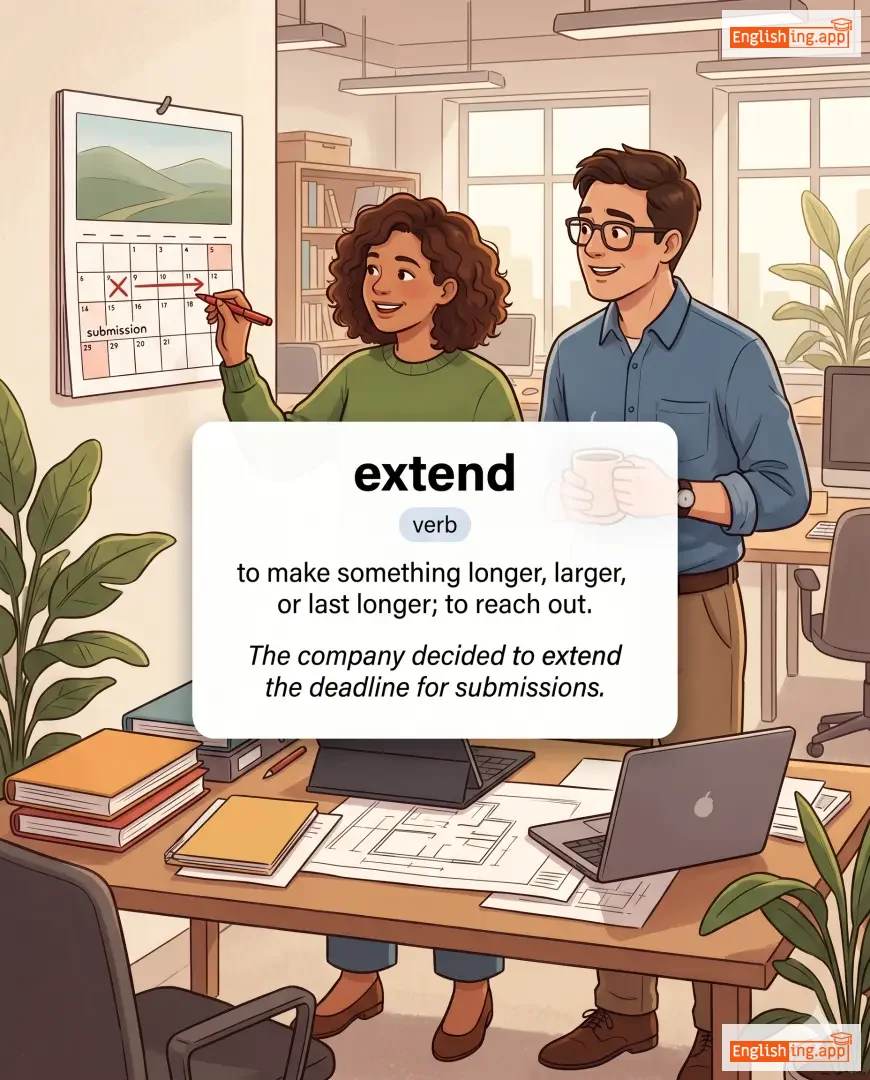
extend definition card — visual illustration of the meaning
verb
/ɪkˈstɛnd/
extender (extender)

to make something longer, larger, or last longer; to reach out.

"The company decided to extend the deadline for submissions."

"La empresa decidió extender la fecha límite para las presentaciones." (La empresa decidio extender la fecha limite para las presentaciones.)
adjective
/ɪkˈstendɪd/
ampliado (ampliado)

longer or larger than usual; continuing for a longer time

"They took an extended vacation in Europe this summer."

"Tomaron unas vacaciones ampliadas en Europa este verano." (Tomaron unas vacaciones ampliadas en Europa este verano.)
adjective
/ɪkˈstɛnsəbl/
expansible (expansible)

able to be extended; capable of expansion.

"The software is designed to be extensible with new features."

"El software está diseñado para ser expansible con nuevas funciones." (El software está diseñado para ser expansible con nuevas funciones.)
noun
/ɪkˈstɛnʃən/
extensión (extension)

a part that is added to something to make it longer or bigger; an increase in time.

"She asked for an extension on her assignment deadline."

"Ella pidió una extensión para la fecha límite de su tarea." (Ella pidio una extension para la fecha limite de su tarea.)
adjective
/ɪkˈstɛnsɪv/
extensivo (extensivo)

covering a large area or involving a lot; wide in range.

"The museum has an extensive collection of ancient artifacts."

"El museo tiene una colección extensa de artefactos antiguos." (El museo tiene una coleccion extensa de artefactos antiguos.)
adverb
/ɪkˈstɛnsɪvli/
extensivamente (extensivamente)

in a thorough or wide-ranging manner

"She traveled extensively across Europe for her research."

"Ella viajó extensivamente por Europa para su investigación." (Ella viajó extensivamente por Europa para su investigación.)
noun
/ɪkˈstɛnsər/
músculo extensor (musculo extensor)

a muscle that serves to extend or straighten a limb or part of the body.

"The extensor muscles in the arm help straighten the elbow."

"Los músculos extensores en el brazo ayudan a enderezar el codo." (Los musculos extensores en el brazo ayudan a enderezar el codo.)
noun
/ɪkˈstɛnt/
extensión (extension)

the area, degree, or scope of something

"The extent of the damage was greater than expected."

"La extensión del daño fue mayor de lo esperado." (La extension del dano fue mayor de lo esperado.)
verb
/ɪkˈstɛnjueɪt/
atenuar (atenuar)

to make an offense, fault, or situation seem less serious by providing an excuse or explanation

"The lawyer tried to extenuate his client's actions by highlighting his difficult childhood."

"El abogado trató de atenuar las acciones de su cliente destacando su difícil infancia." (El abogado trató de atenuar las acciones de su cliente destacando su difícil infancia.)
adjective
/ɪkˈstɛnjueɪtɪŋ/
atenuante (atenuante)

serving to make a fault or an offense seem less serious

"She asked for leniency due to extenuating circumstances."

"Ella pidió indulgencia debido a las circunstancias atenuantes." (Ella pidió indulgencia debido a las circunstancias atenuantes.)
noun/adjective
/ɪkˈstɪəriər/
parte exterior (parte exterior)

the outer surface or part of something; relating to the outside

"The exterior of the house was painted white."

"El exterior de la casa fue pintado de blanco." (El exterior de la casa fue pintado de blanco.)
adjective
/ɪkˈstɜrnəl/
externo (externo)

situated on or relating to the outside of something; coming from outside

"The external factors affected the company's growth."

"Los factores externos afectaron el crecimiento de la empresa." (Los factores externos afectaron el crecimiento de la empresa.)
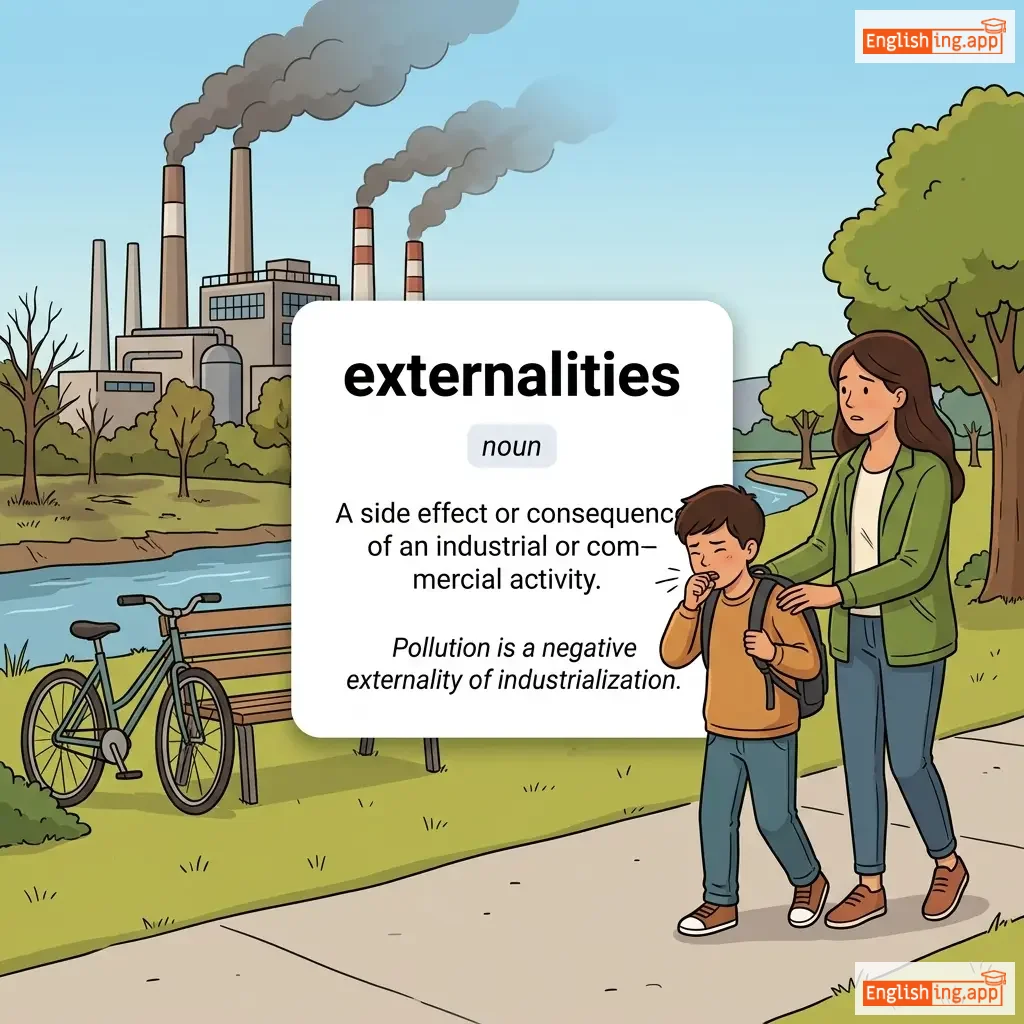
externalities definition card — visual illustration of the meaning
noun
ˌɛkstərˈnælɪtiz
externalidad (externalidad)

A side effect or consequence of an industrial or commercial activity.

"Pollution is a negative externality of industrialization."

"La contaminación es una externalidad negativa de la industrialización." (La contaminacion es una externalidad negativa de la industrializacion.)
adverb
/ɪkˈstɜrnəli/
externamente (externamente)

in a way that relates to the outer surface or outside appearance

"The building appeared externally modern, but inside it was quite old-fashioned."

"El edificio parecía externamente moderno, pero por dentro era bastante anticuado." (El edificio parecia externamente moderno, pero por dentro era bastante anticuado.)
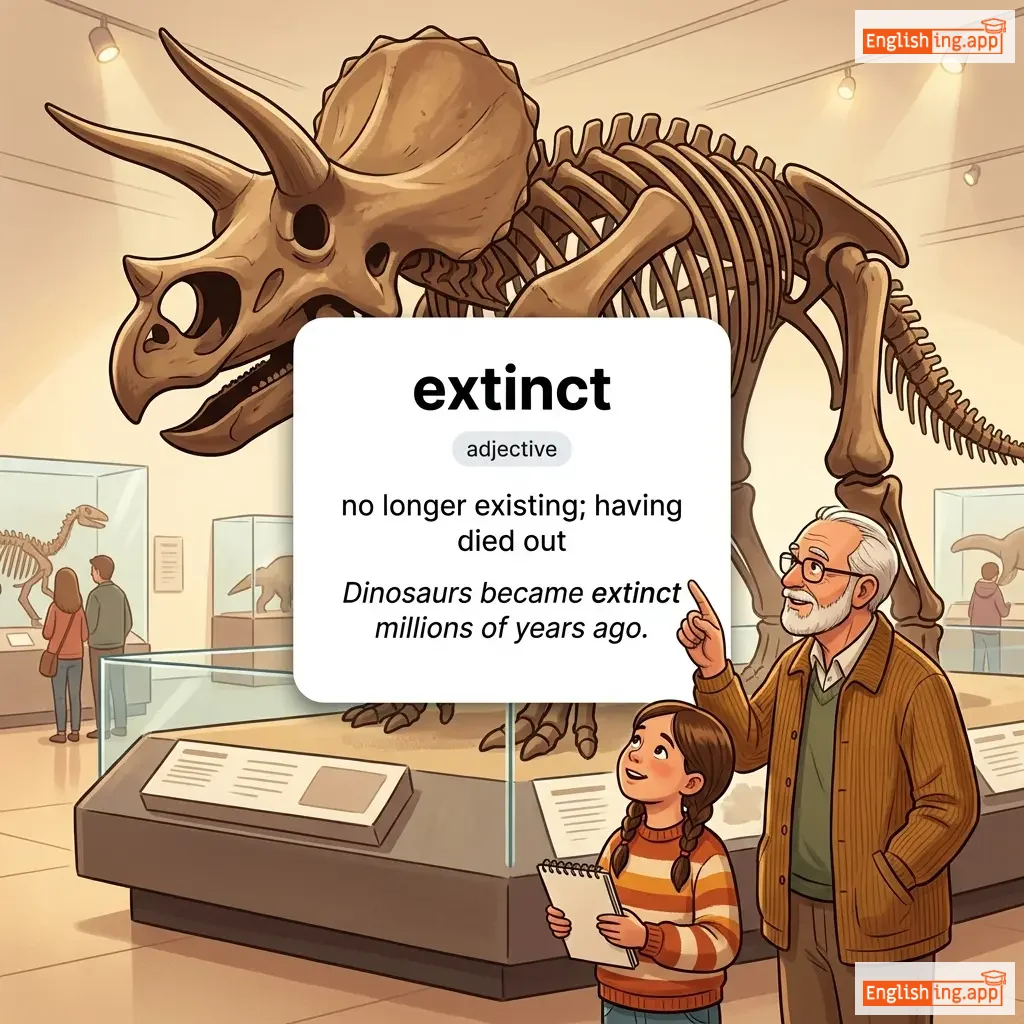
extinct definition card — visual illustration of the meaning
adjective
/ɪkˈstɪŋkt/
extinto (extinto)

no longer existing; having died out

"Dinosaurs became extinct millions of years ago."

"Los dinosaurios se extinguieron hace millones de años." (Los dinosaurios se extinguieron hace millones de años.)
verb
/ɪkˈstɪŋ.ɡwɪʃ/
apagar (apagar)

to put out a fire, light, or to end something

"The firefighters managed to extinguish the blaze within an hour."

"Los bomberos lograron apagar el fuego en una hora." (Los bomberos lograron apagar el fuego en una hora.)
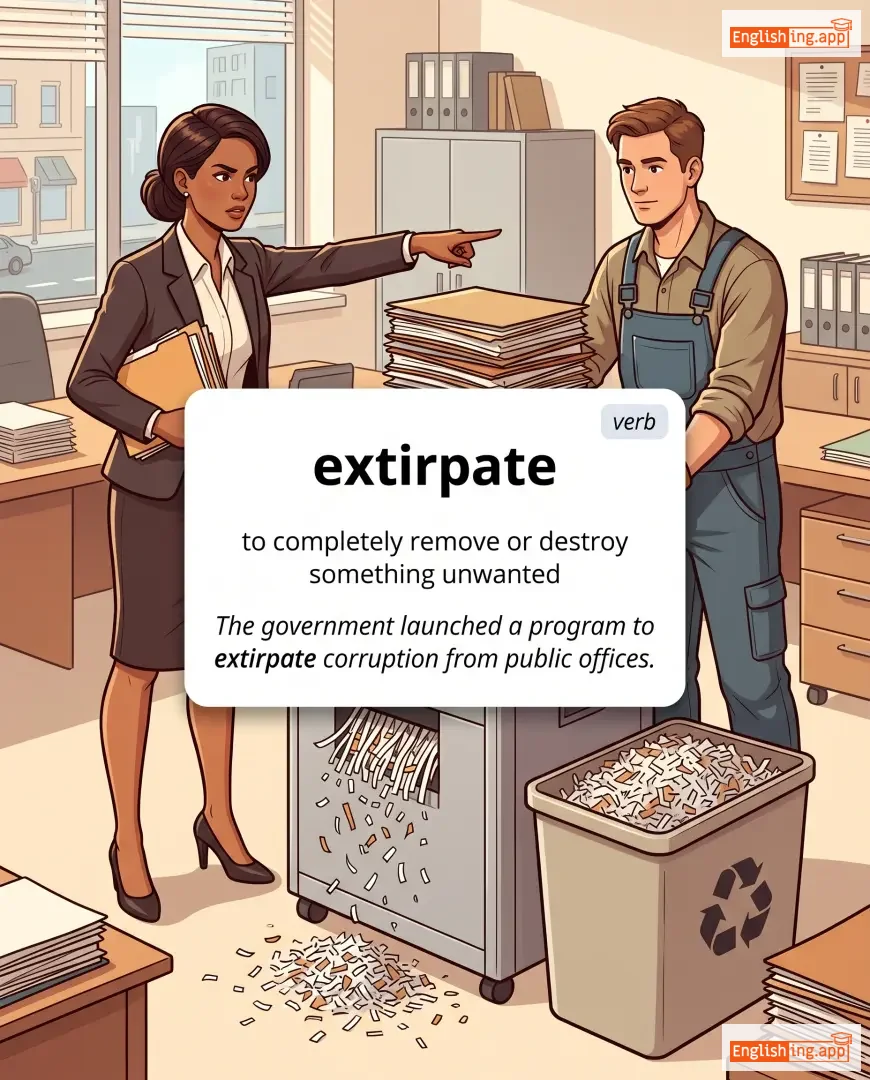
extirpate definition card — visual illustration of the meaning
verb
/ˈek.stər.peɪt/
extirpar (extirpar)

to completely remove or destroy something unwanted

"The government launched a program to extirpate corruption from public offices."

"El gobierno lanzó un programa para extirpar la corrupción de las oficinas públicas." (El gobierno lanzó un programa para extirpar la corrupción de las oficinas públicas.)
verb
/ɪkˈstoʊl/
alabar (alabar)

to praise enthusiastically and highly

"The teacher extolled the student's dedication and hard work."

"El maestro alabó la dedicación y el trabajo duro del estudiante." (El maestro alabó la dedicación y el trabajo duro del estudiante.)
verb
/ɪkˈstɔːrt/
extorsionar (extorsionar)

to obtain something, especially money, by force, threats, or unfair means

"The gang attempted to extort money from local shopkeepers."

"La pandilla intentó extorsionar dinero a los tenderos locales." (La pandilla intentó extorsionar dinero a los tenderos locales.)
noun
/ɪkˈstɔːr.ʃən/
extorsión (extorsion)

the practice of obtaining something, especially money, through force or threats

"The businessman was arrested for extortion after threatening his partner."

"El empresario fue arrestado por extorsión después de amenazar a su socio." (El empresario fue arrestado por extorsión después de amenazar a su socio.)
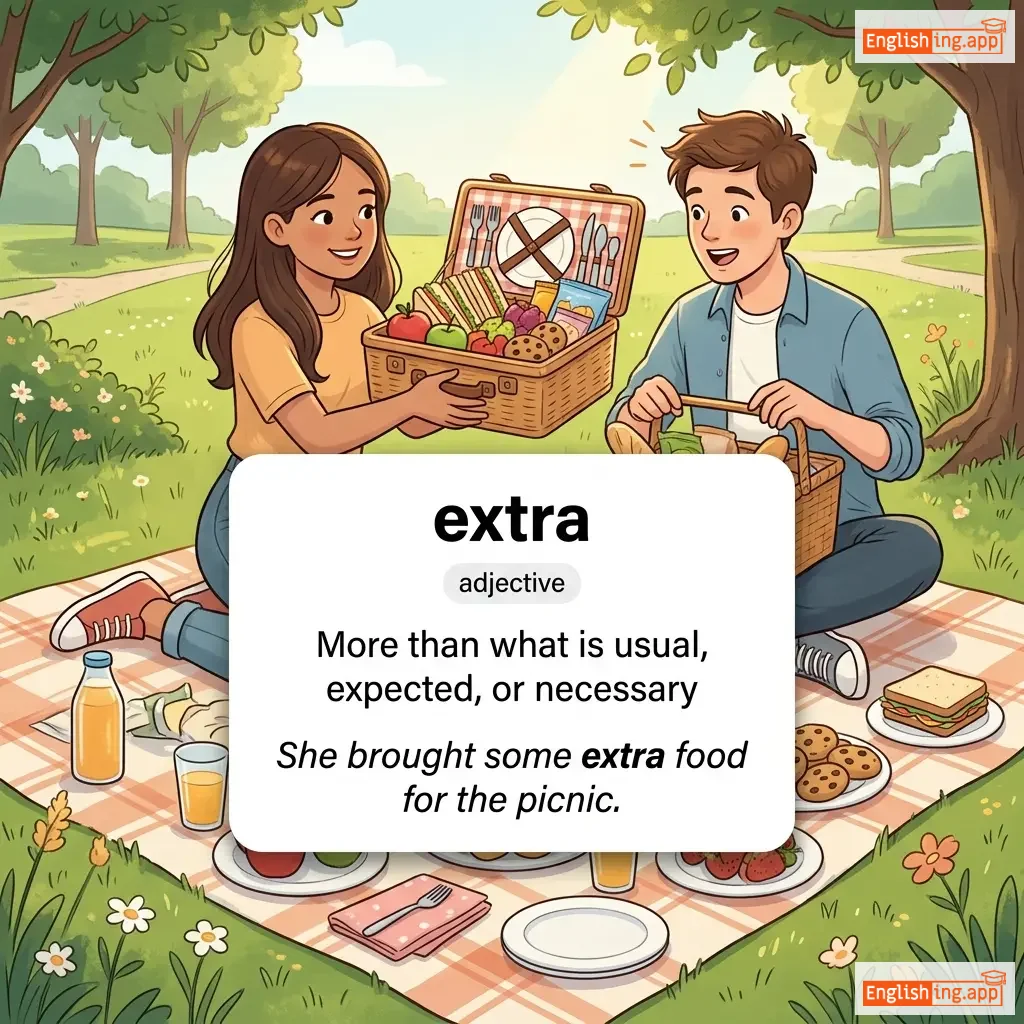
extra definition card — visual illustration of the meaning
adjective
/ˈɛkstrə/
extra (extra)

More than what is usual, expected, or necessary

"She brought some extra food for the picnic."

"Ella trajo comida extra para el picnic." (Ella trajo comida extra para el picnic.)
extract definition card — visual illustration of the meaning
verb
/ɪkˈstrækt/
extraer (extraer)

to remove or take out something, often with effort

"The dentist had to extract the damaged tooth."

"El dentista tuvo que extraer el diente dañado." (El dentista tuvo que extraer el diente dañado.)
noun
/ɪkˈstrækʃən/
extracción (extraccion)

the act of removing something, especially by pulling it out

"The extraction of oil from the ground requires special equipment."

"La extracción de petróleo del suelo requiere equipos especiales." (La extraccion de petroleo del suelo requiere equipos especiales.)
verb
/ˈɛkstrəˌdaɪt/
extraditar (extraditar)

to hand over a person accused or convicted of a crime to another country or state

"The government agreed to extradite the fugitive to his home country."

"El gobierno acordó extraditar al fugitivo a su país de origen." (El gobierno acordó extraditar al fugitivo a su país de origen.)
noun
/ˌɛkstrəˈdɪʃən/
extradición (extradicion)

the official process of sending someone accused of a crime to another country or state

"The extradition of the suspect was delayed due to legal issues."

"La extradición del sospechoso se retrasó debido a problemas legales." (La extradicion del sospechoso se retraso debido a problemas legales.)
adjective
/ˌɛkstrəˌdʒuːˈdɪʃəl/
extrajudicial (extrajudicial)

done outside the authority of the legal system or judicial process

"The activists condemned the extrajudicial killings."

"Los activistas condenaron los asesinatos extrajudiciales." (Los activistas condenaron los asesinatos extrajudiciales.)
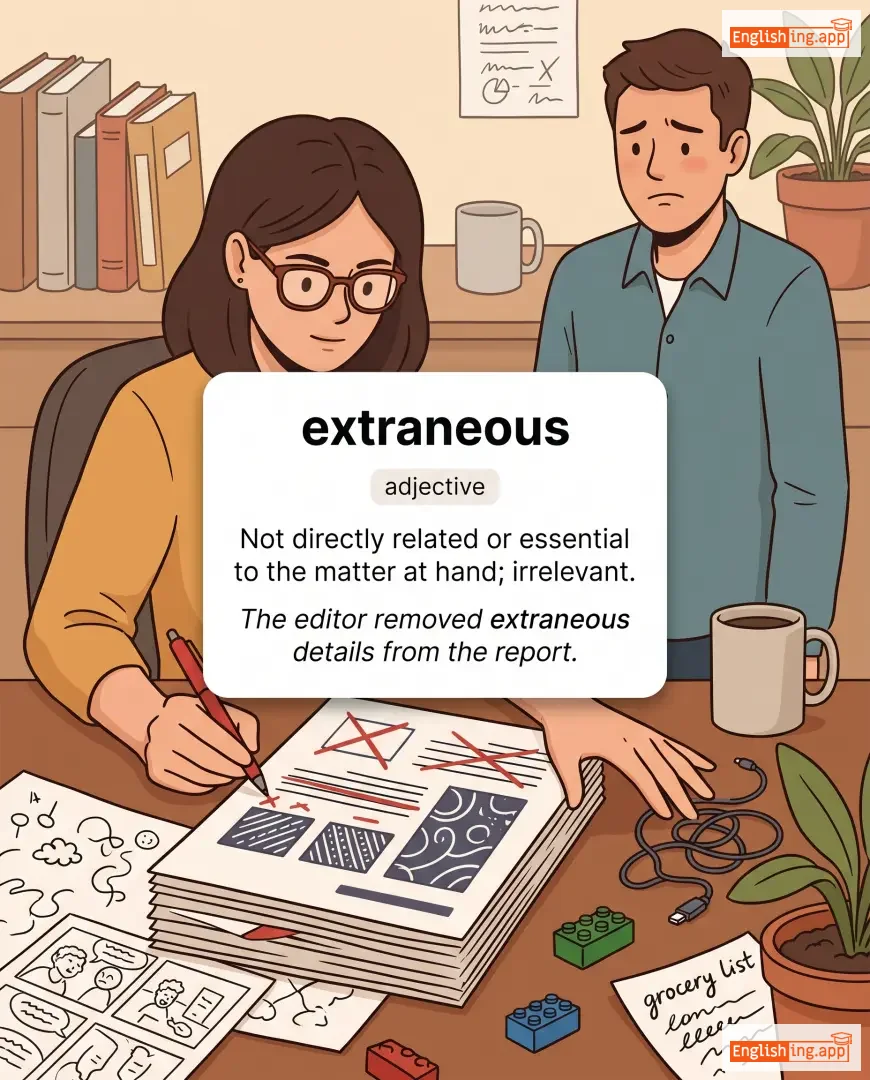
extraneous definition card — visual illustration of the meaning
adjective
/ɪkˈstreɪ.ni.əs/
irrelevante (irrelevante)

Not directly related or essential to the matter at hand; irrelevant.

"The editor removed extraneous details from the report."

"El editor eliminó detalles irrelevantes del informe." (El editor elimino detalles irrelevantes del informe.)
adjective
/ɪkˈstrɔːr.dəˌnɛr.i/
extraordinario (extraordinario)

Very unusual, remarkable, or exceptional.

"She showed extraordinary courage during the crisis."

"Ella mostró un coraje extraordinario durante la crisis." (Ella mostró un coraje extraordinario durante la crisis.)
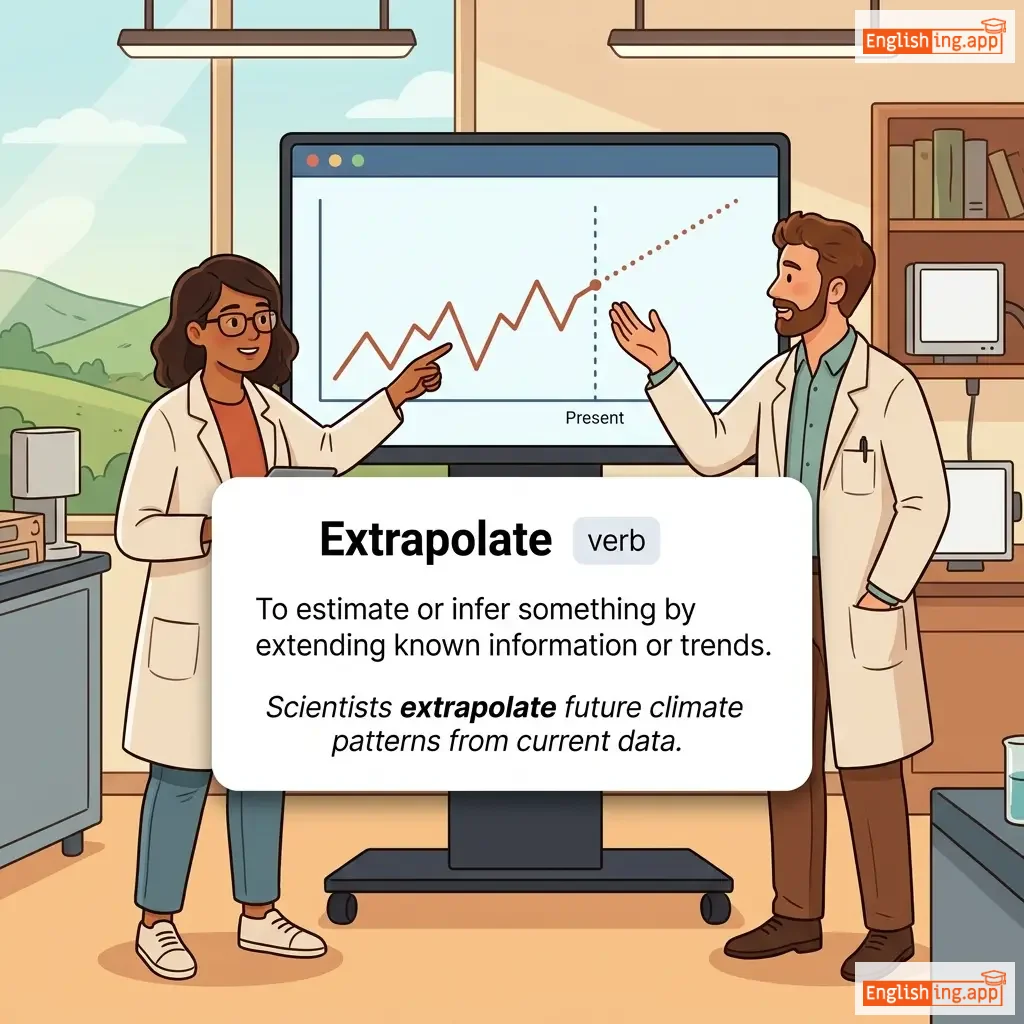
Extrapolate definition card — visual illustration of the meaning
verb
/ɪkˈstræp.əˌleɪt/
extrapolar (extrapolar)

To estimate or infer something by extending known information or trends.

"Scientists extrapolate future climate patterns from current data."

"Los científicos extrapolan patrones climáticos futuros a partir de los datos actuales." (Los científicos extrapolan patrones climáticos futuros a partir de los datos actuales.)
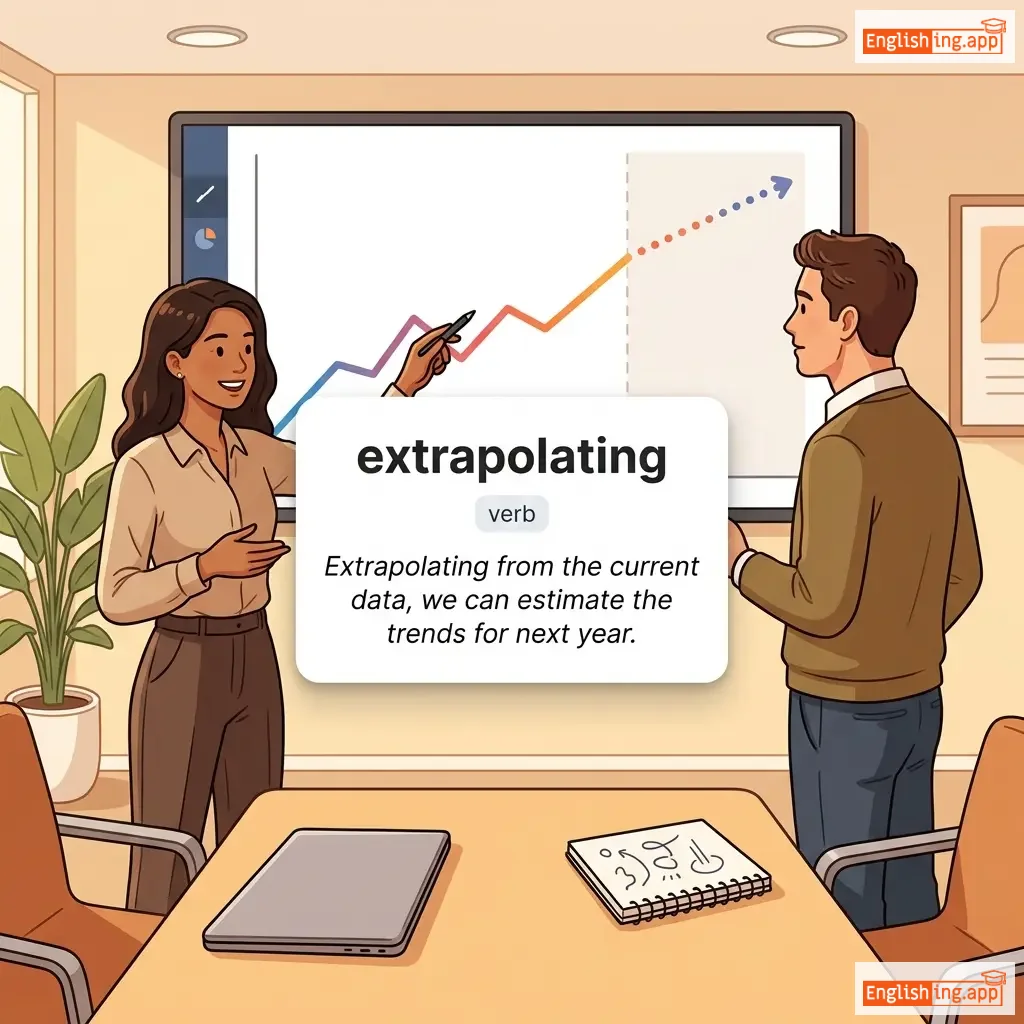
extrapolating definition card — visual illustration of the meaning
verb
/ɪkˈstræpəleɪtɪŋ/
extrapolar (extrapolar)

Extend the application of (a method or conclusion) to an unknown situation by assuming that existing trends will continue.

"Extrapolating from the current data, we can estimate the trends for next year."

"Extrapolando con los datos actuales, podemos estimar las tendencias para el próximo año." (Extrapolando con los datos actuales, podemos estimar las tendencias para el proximo año.)
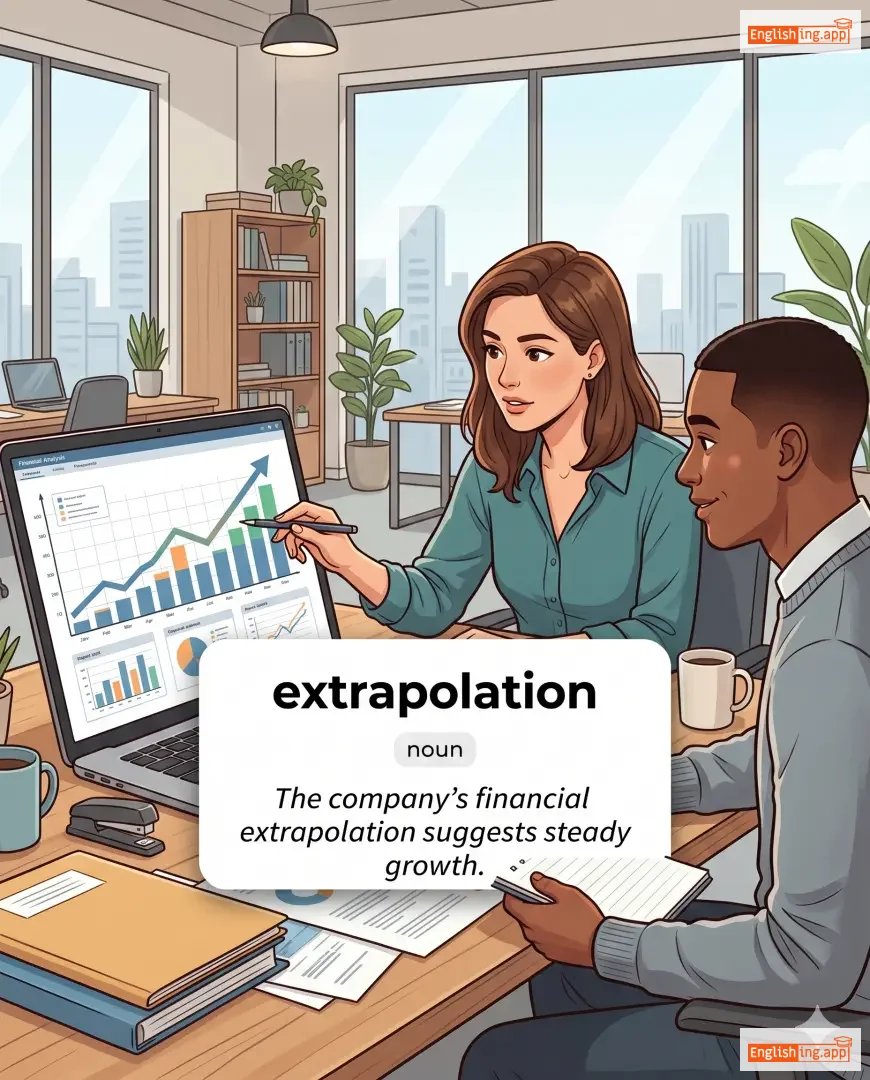
extrapolation definition card — visual illustration of the meaning
noun
/ɪkˌstræp.əˈleɪ.ʃən/
extrapolación (extrapolacion)

The process of estimating or predicting something based on extending known information.

"The company's financial extrapolation suggests steady growth."

"La extrapolación financiera de la empresa sugiere un crecimiento constante." (La extrapolacion financiera de la empresa sugiere un crecimiento constante.)
noun
/ɪkˈstræv.ə.ɡəns/
exceso (exceso)

Excessive spending or lack of restraint in using resources.

"His extravagance on luxury cars worried his family."

"Su extravagancia en autos de lujo preocupaba a su familia." (Su extravagancia en autos de lujo preocupaba a su familia.)
adjective
/ɪkˈstrævəɡənt/
extravagante (extravagante)

Spending or using more than is necessary; excessively elaborate or luxurious.

"She wore an extravagant dress to the party."

"Ella llevaba un vestido extravagante a la fiesta." (Ella llevaba un vestido extravagante a la fiesta.)