Vocabularios

Descubra, aprenda y domine el vocabulario en inglés

adjective
/ɛsˈθɛtɪk/
estético (estetico)

Concerned with beauty or the appreciation of beauty.

"The building’s esthetic design attracted many visitors."

"El diseño estético del edificio atrajo a muchos visitantes." (El diseno estetico del edificio atrajo a muchos visitantes.)
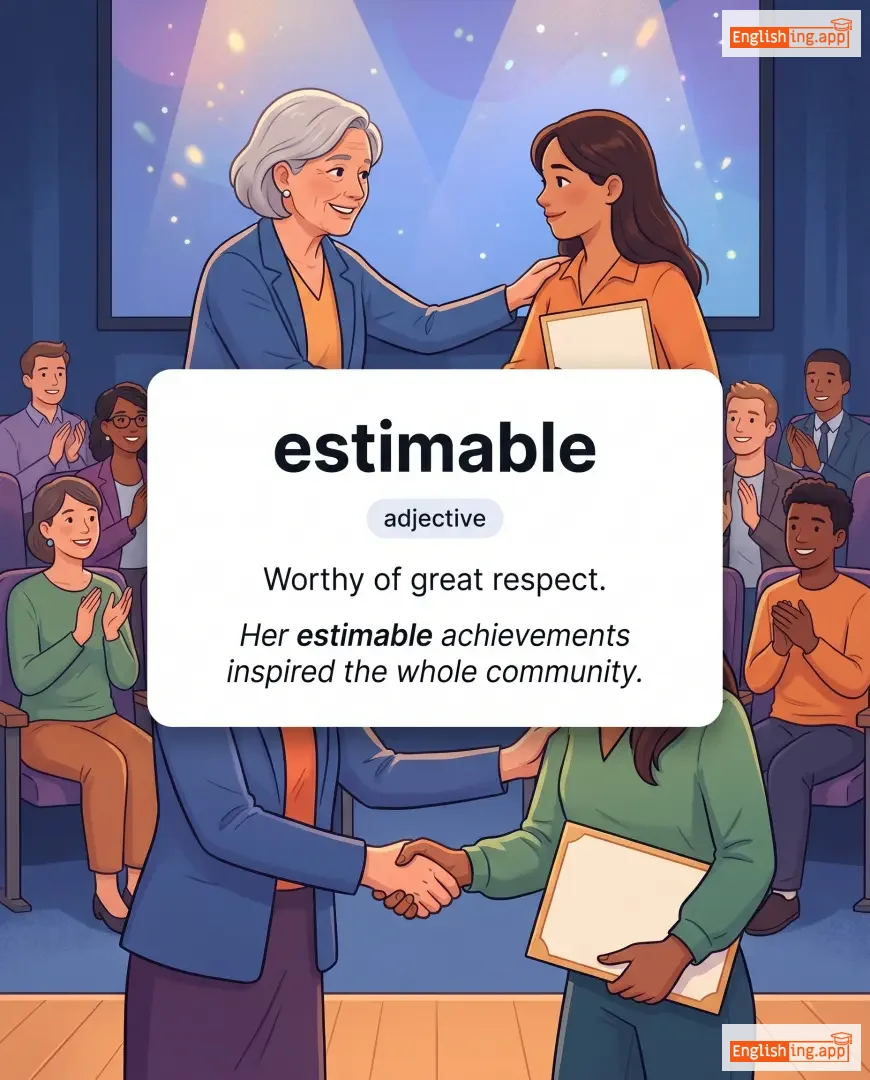
estimable definition card — visual illustration of the meaning
adjective
/ˈɛstɪməbl/
estimable (estimable)

Worthy of great respect.

"Her estimable achievements inspired the whole community."

"Sus logros estimables inspiraron a toda la comunidad." (Sus logros estimables inspiraron a toda la comunidad.)
verb
/ˈɛstɪˌmeɪt/
estimar (estimar)

To roughly calculate or judge the value, number, quantity, or extent of something.

"The engineer estimated the cost of the project at $5 million."

"El ingeniero estimó el costo del proyecto en 5 millones de dólares." (El ingeniero estimó el costo del proyecto en 5 millones de dólares.)
adjective
/ˈɛstɪmeɪtɪd/
estimado (estimado)

roughly calculated or judged; an approximate value or amount

"The estimated cost of the project is five million dollars."

"El costo estimado del proyecto es de cinco millones de dólares." (El costo estimado del proyecto es de cinco millones de dólares.)
verb
/ɪˈstreɪndʒ/
alienar (alienar)

to cause someone to no longer be close or affectionate; to alienate

"His constant criticism began to estrange him from his friends."

"Su constante crítica comenzó a alejarlo de sus amigos." (su constante crítica comenzó a alejarlo de sus amigos.)
adjective
/ɪˈstreɪndʒd/
distante (distante)

no longer close or affectionate with someone; alienated

"She felt estranged from her family after the long dispute."

"Ella se sintió distante de su familia después de la larga disputa." (Ella se sintió distante de su familia después de la larga disputa.)
noun
/ˈɛstjʊəri/
estuario (estuario)

the tidal mouth of a large river, where the tide meets the stream

"The city is located near the estuary of the river."

"La ciudad está ubicada cerca del estuario del río." (La ciudad está ubicada cerca del estuario del río.)
abbreviation
/ɛtˈsɛtərə/
etcétera (etcetera)

Used to indicate additional, similar items in a list that are not mentioned.

"The shop sells fruits, vegetables, dairy, etc."

"La tienda vende frutas, verduras, lácteos, etcétera." (La tienda vende frutas, verduras, lácteos, etcetera.)
adverb
/ɛtˈsɛtərə/
etcétera (etcetera)

used at the end of a list to indicate that other similar items are included

"She bought apples, oranges, bananas, etcetera from the market."

"Ella compró manzanas, naranjas, plátanos, etcétera en el mercado." (Ella compro manzanas, naranjas, platanos, etcetera en el mercado.)
verb
/ɛtʃ/
grabar (grabar)

to cut or carve a design onto a surface

"The artist etched her initials into the glass."

"La artista grabó sus iniciales en el vidrio." (La artista grabo sus iniciales en el vidrio.)
adjective
/ɪˈtɜːrnəl/
eterno (eterno)

lasting or existing forever; without end

"They pledged their eternal love for each other."

"Prometieron su amor eterno el uno al otro." (Prometieron su amor eterno el uno al otro.)
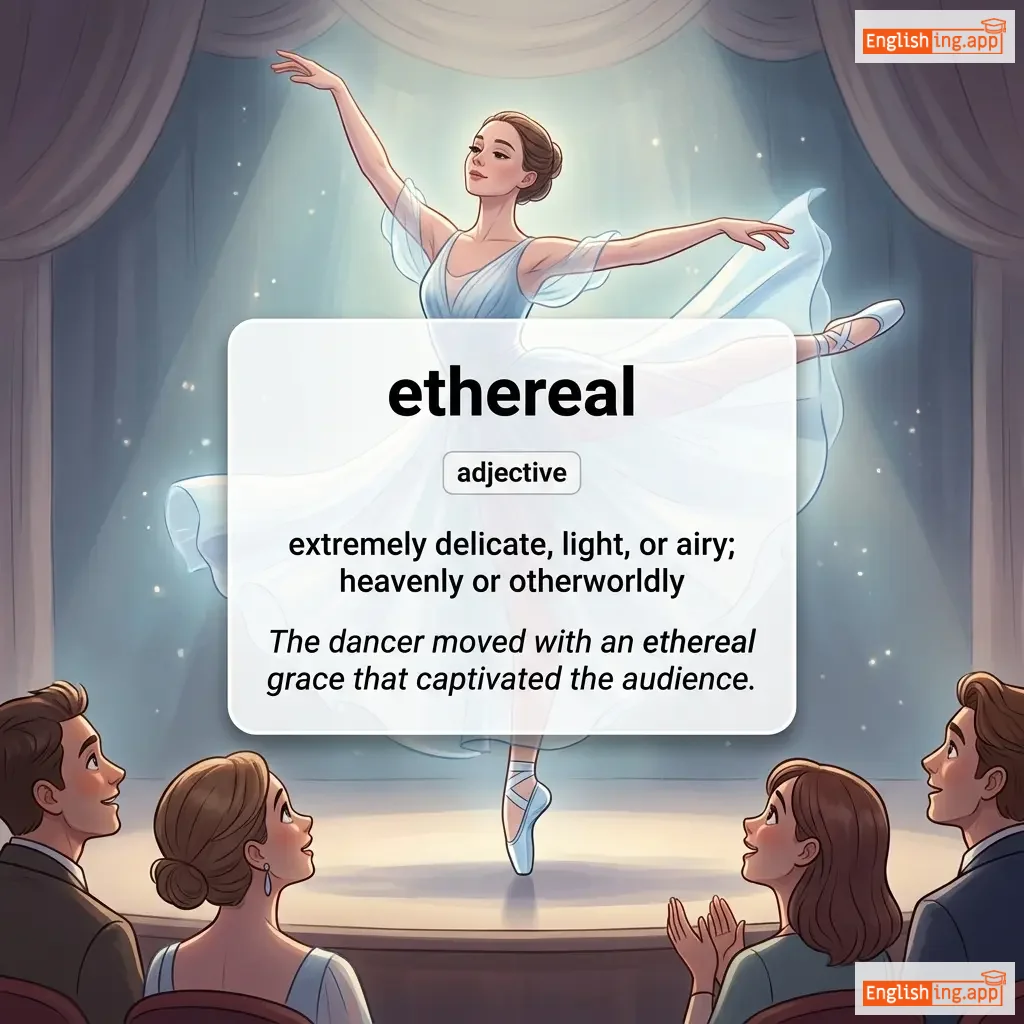
ethereal definition card — visual illustration of the meaning
adjective
/ɪˈθɪəriəl/
etéreo (etereo)

extremely delicate, light, or airy; heavenly or otherworldly

"The dancer moved with an ethereal grace that captivated the audience."

"La bailarina se movió con una gracia etérea que cautivó a la audiencia." (La bailarina se movió con una gracia etérea que cautivó a la audiencia.)
noun
/ˈɛθɪk/
ética (etica)

a set of moral principles, especially ones relating to a particular group, system, or profession

"He has a strong work ethic and always meets deadlines."

"Él tiene una fuerte ética de trabajo y siempre cumple con los plazos." (El tiene una fuerte etica de trabajo y siempre cumple con los plazos.)
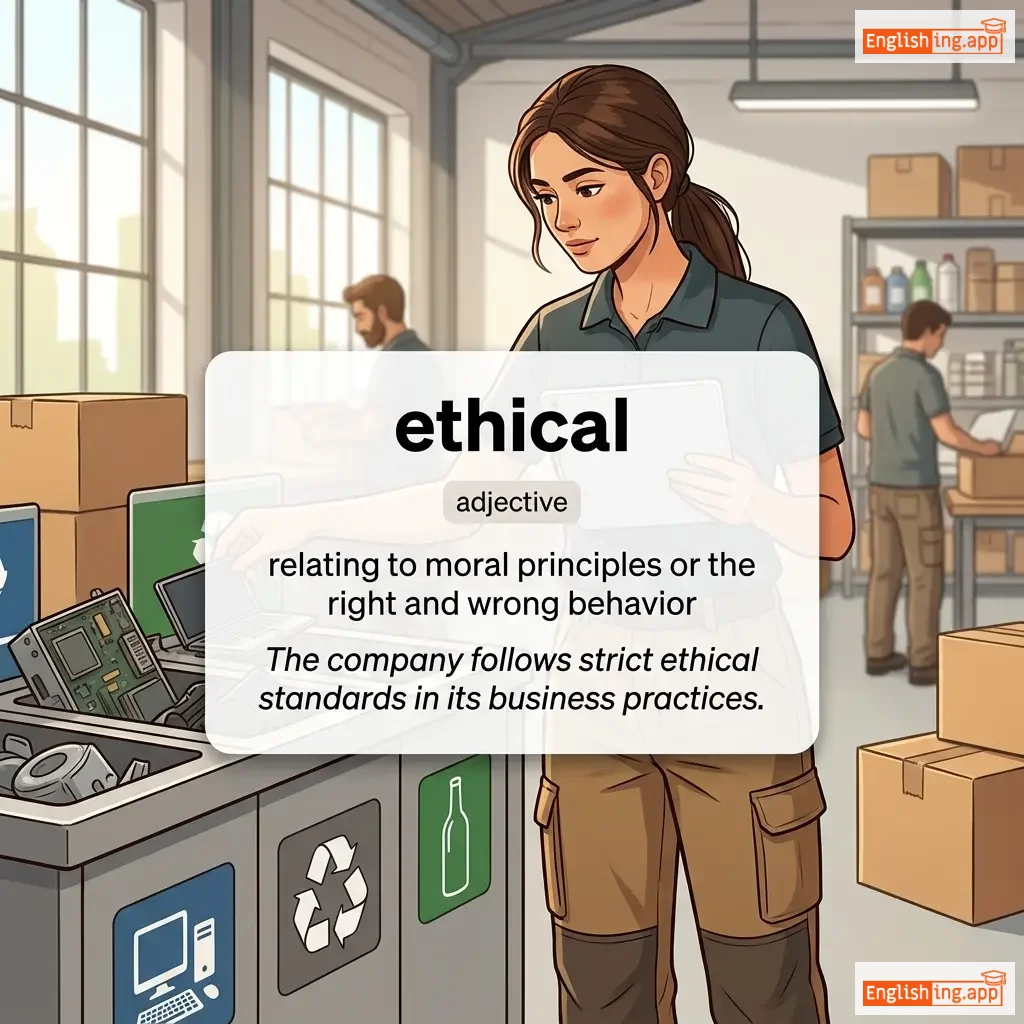
ethical definition card — visual illustration of the meaning
adjective
/ˈɛθɪkəl/
ético (etiko)

relating to moral principles or the right and wrong behavior

"The company follows strict ethical standards in its business practices."

"La empresa sigue estrictos estándares éticos en sus prácticas comerciales." (La empresa sigue estrictos estándares éticos en sus prácticas comerciales.)
noun
/ˈɛθɪks/
ética (etika)

moral principles that govern a person's behavior or the conduct of an activity

"Business ethics require companies to act fairly and responsibly."

"La ética empresarial requiere que las empresas actúen de manera justa y responsable." (La etika empresarial requiere que las empresas actúen de manera justa y responsable.)
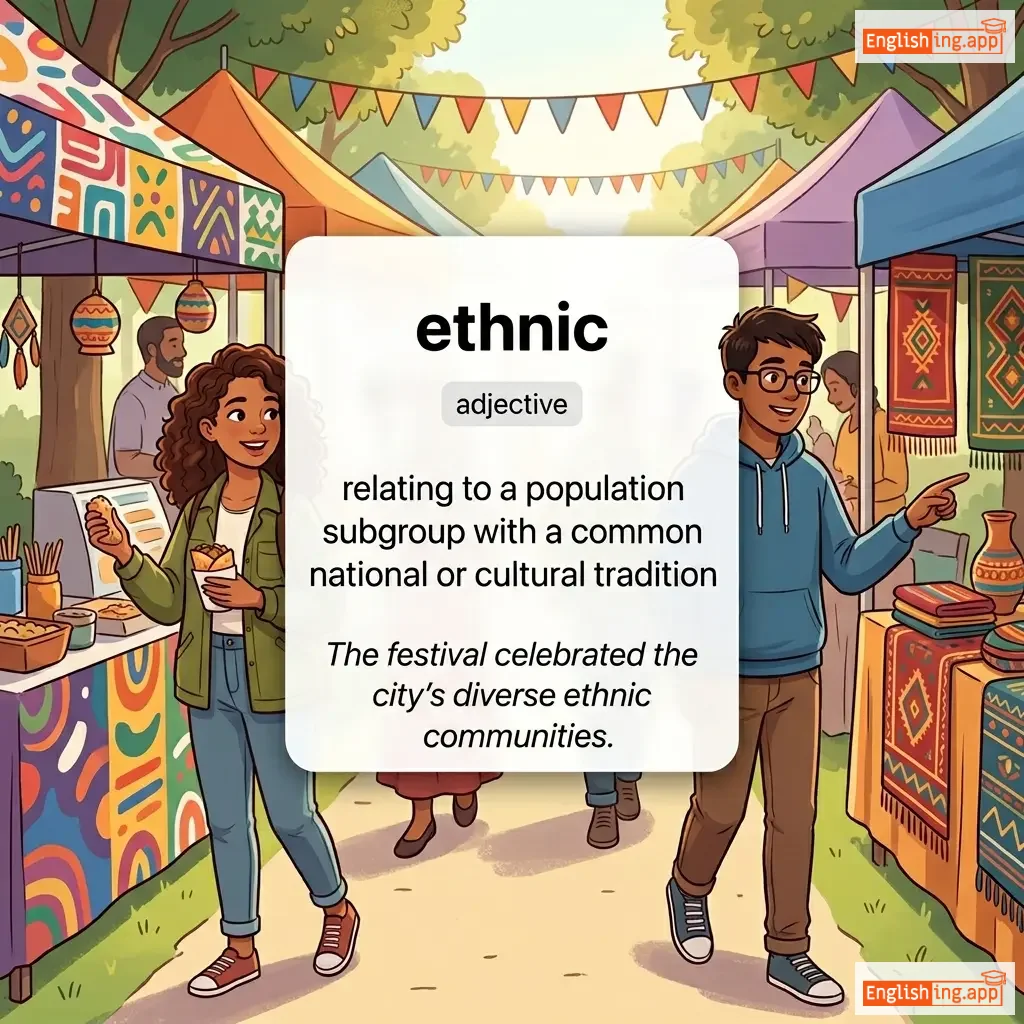
ethnic definition card — visual illustration of the meaning
adjective
/ˈɛθnɪk/
étnico (etniko)

relating to a population subgroup with a common national or cultural tradition

"The festival celebrated the city's diverse ethnic communities."

"El festival celebró las diversas comunidades étnicas de la ciudad." (El festival celebro las diversas comunidades etnicas de la ciudad.)
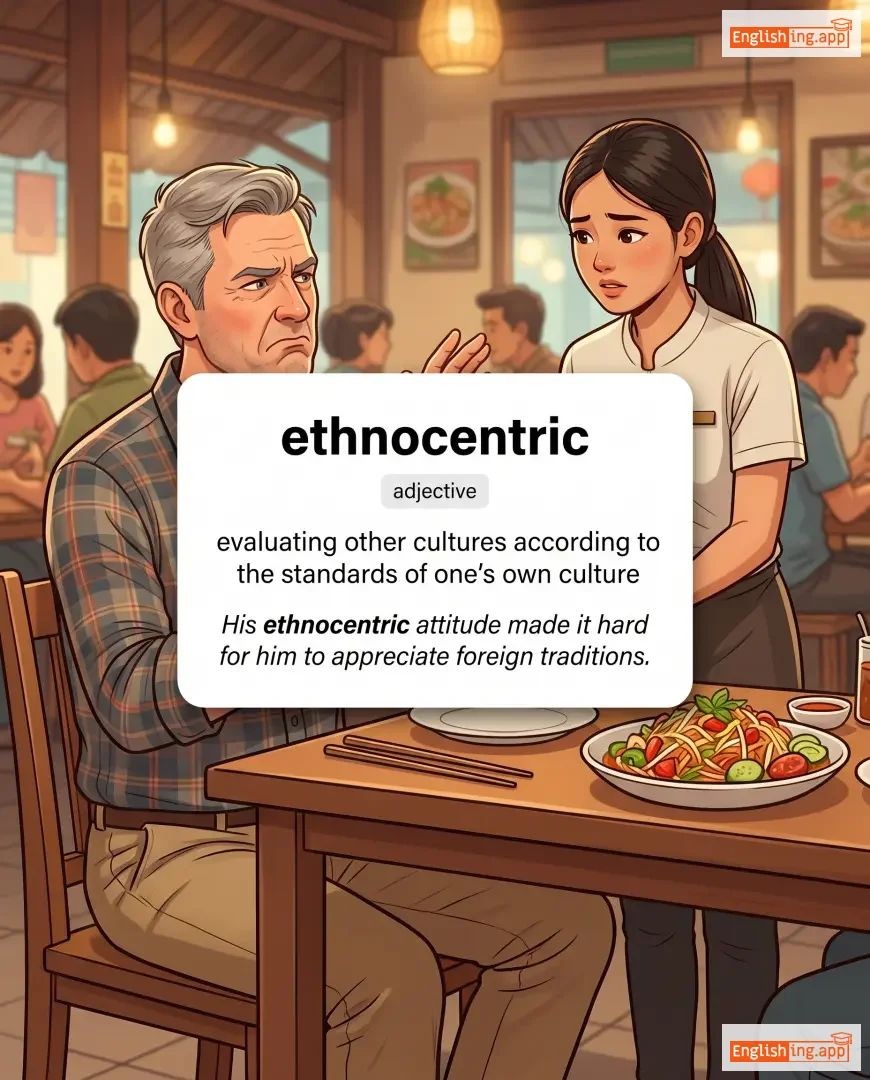
ethnocentric definition card — visual illustration of the meaning
adjective
/ˌeθ.noʊˈsen.trɪk/
etnocéntrico (etnocentrico)

evaluating other cultures according to the standards of one's own culture

"His ethnocentric attitude made it hard for him to appreciate foreign traditions."

"Su actitud etnocéntrica le dificultaba apreciar las tradiciones extranjeras." (Su actitud etnocentrica le dificultaba apreciar las tradiciones extranjeras.)
noun
/ɛθˈnɒlədʒi/
etnología (etnologia)

the study of the characteristics of different peoples and the differences and relationships between them

"She specialized in ethnology to better understand cultural diversity."

"Ella se especializó en etnología para entender mejor la diversidad cultural." (Ella se especializó en etnología para entender mejor la diversidad cultural.)
ethos definition card — visual illustration of the meaning
noun
/ˈiːθɒs/
ethos (ethos)

the characteristic spirit, values, or beliefs of a community, culture, or organization

"The company’s ethos emphasizes innovation and customer service."

"El ethos de la empresa enfatiza la innovación y el servicio al cliente." (El ethos de la empresa enfatiza la innovacion y el servicio al cliente.)
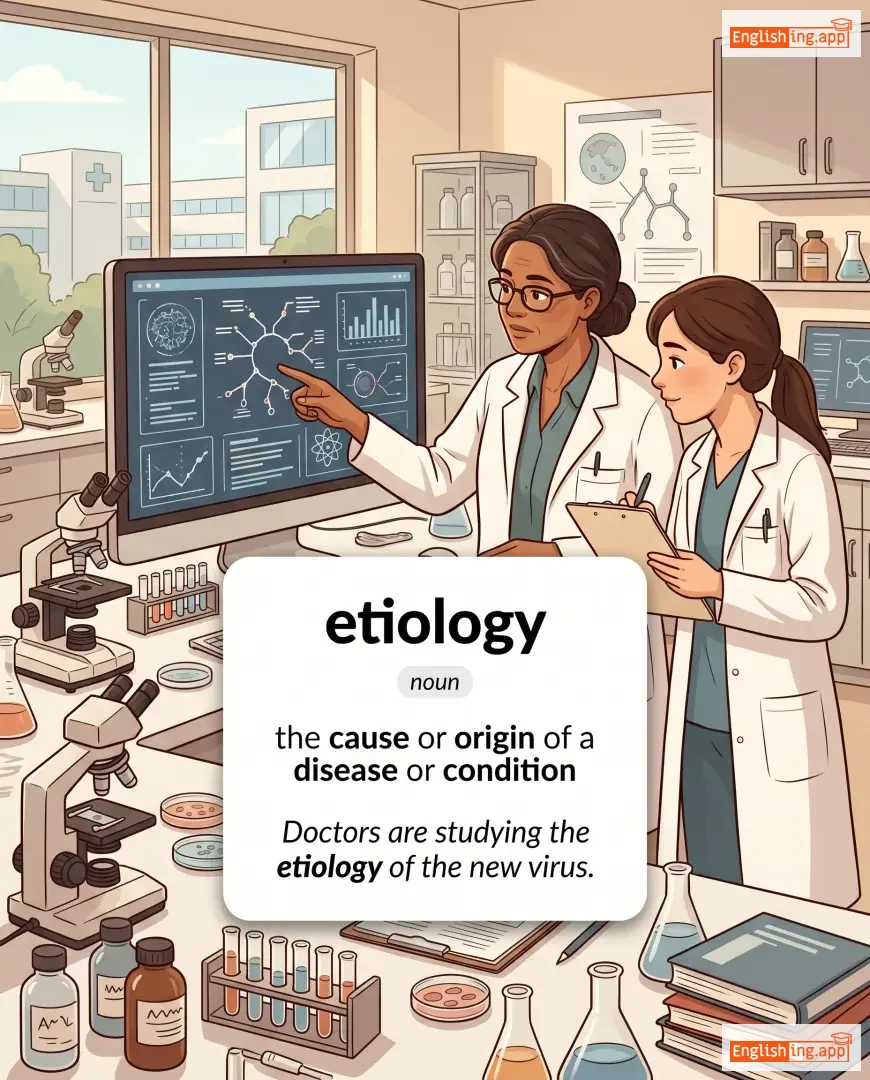
etiology definition card — visual illustration of the meaning
noun
/ˌiː.tiˈɒ.lə.dʒi/
etiología (etiologia)

the cause or origin of a disease or condition

"Doctors are studying the etiology of the new virus."

"Los médicos están estudiando la etiología del nuevo virus." (Los medicos estan estudiando la etiologia del nuevo virus.)
noun
/ˈet.ɪ.kət/
etiqueta (etiqueta)

the customary code of polite behavior in society or among members of a particular profession

"Proper etiquette requires standing when a lady enters the room."

"La etiqueta adecuada requiere ponerse de pie cuando una dama entra en la habitación." (La etiqueta adecuada requiere ponerse de pie cuando una dama entra en la habitacion.)
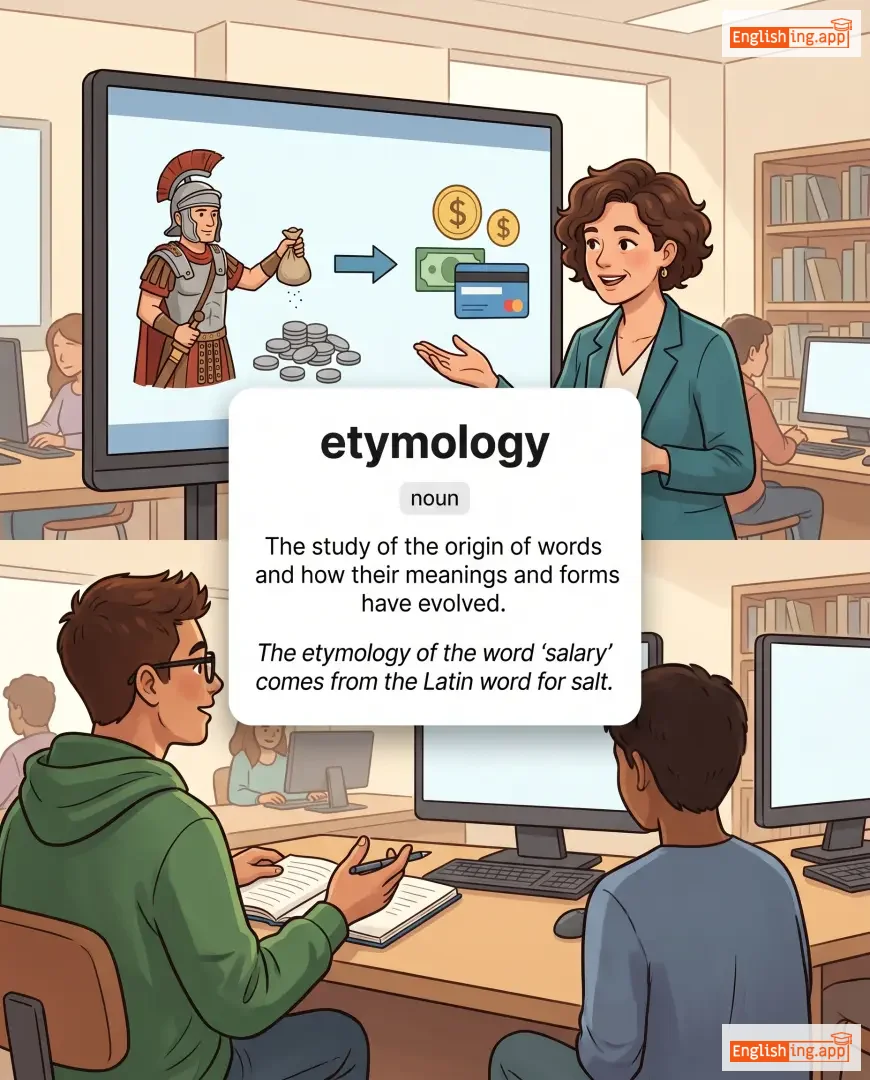
etymology definition card — visual illustration of the meaning
noun
/ˌɛtɪˈmɒlədʒi/
etimología (etimologia)

The study of the origin of words and how their meanings and forms have evolved.

"The etymology of the word 'salary' comes from the Latin word for salt."

"La etimología de la palabra 'salario' proviene de la palabra latina para sal." (La etimologia de la palabra 'salario' proviene de la palabra latina para sal.)
adjective
/juːˈdʒɛnɪk/
eugenésico (eugenesico)

Relating to or aiming at improving the genetic quality of a population.

"In the early 20th century, some scientists supported eugenic policies."

"A principios del siglo XX, algunos científicos apoyaron las políticas eugenésicas." (A principios del siglo XX, algunos científicos apoyaron las políticas eugenesicas.)
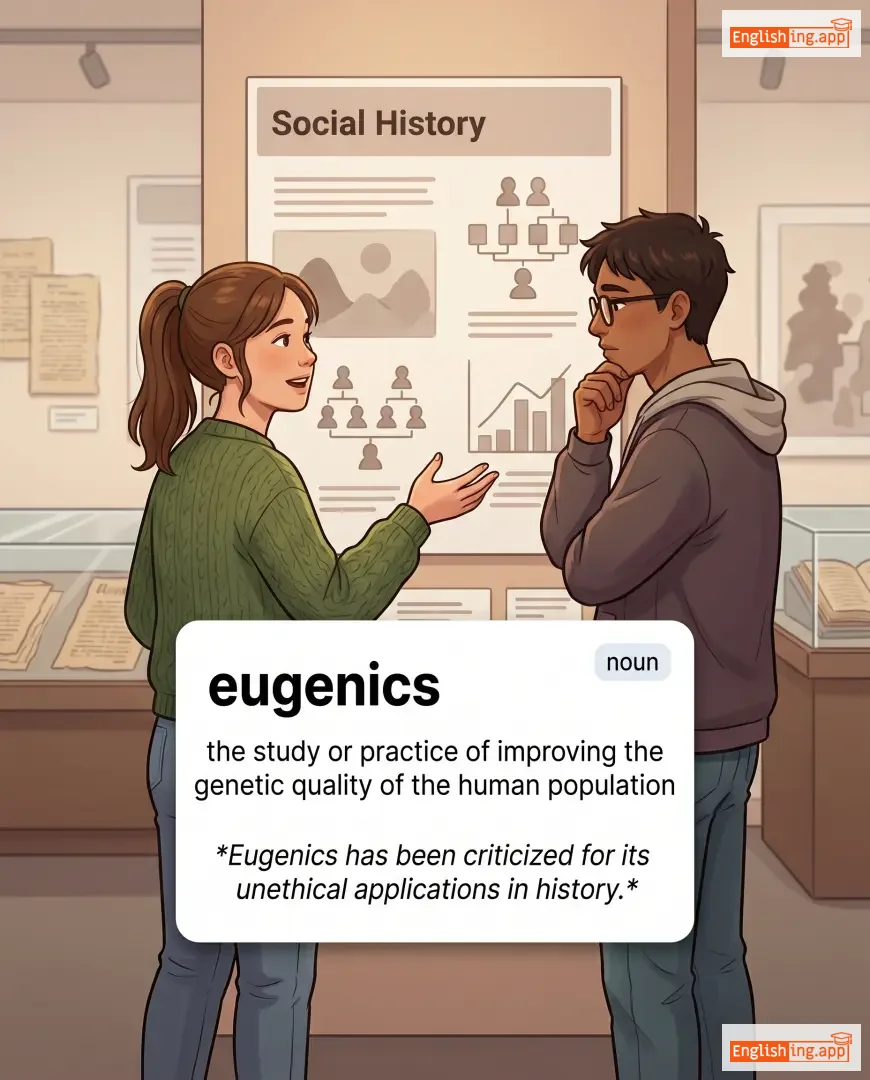
eugenics definition card — visual illustration of the meaning
noun
/juːˈdʒen.ɪks/
eugenesia (eugenesia)

the study or practice of improving the genetic quality of the human population

"Eugenics has been criticized for its unethical applications in history."

"La eugenesia ha sido criticada por sus aplicaciones no éticas en la historia." (La eugenesia ha sido criticada por sus aplicaciones no éticas en la historia.)
adjective
/ˌjuːləˈdʒɪstɪk/
elogioso (elogioso)

Expressing praise or admiration, often formally.

"The speaker gave a eulogistic account of the leader’s achievements."

"El orador dio una descripción elogiosa de los logros del líder." (El orador dio una descripción elogiosa de los logros del líder.)
verb
/ˈjuːləˌdʒaɪz/
elogiar (elogiar)

To praise highly in speech or writing, especially in honor of someone who has died.

"They gathered to eulogize their beloved teacher."

"Ellos se reunieron para elogiar a su querido maestro." (Ellos se reunieron para elogiar a su querido maestro.)
eulogy definition card — visual illustration of the meaning
noun
/ˈjuːlədʒi/
elogio (elogio)

A speech or piece of writing that praises someone, especially after their death.

"Her brother delivered a heartfelt eulogy at the funeral."

"Su hermano pronunció un sentido elogio en el funeral." (Su hermano pronunció un sentido elogio en el funeral.)
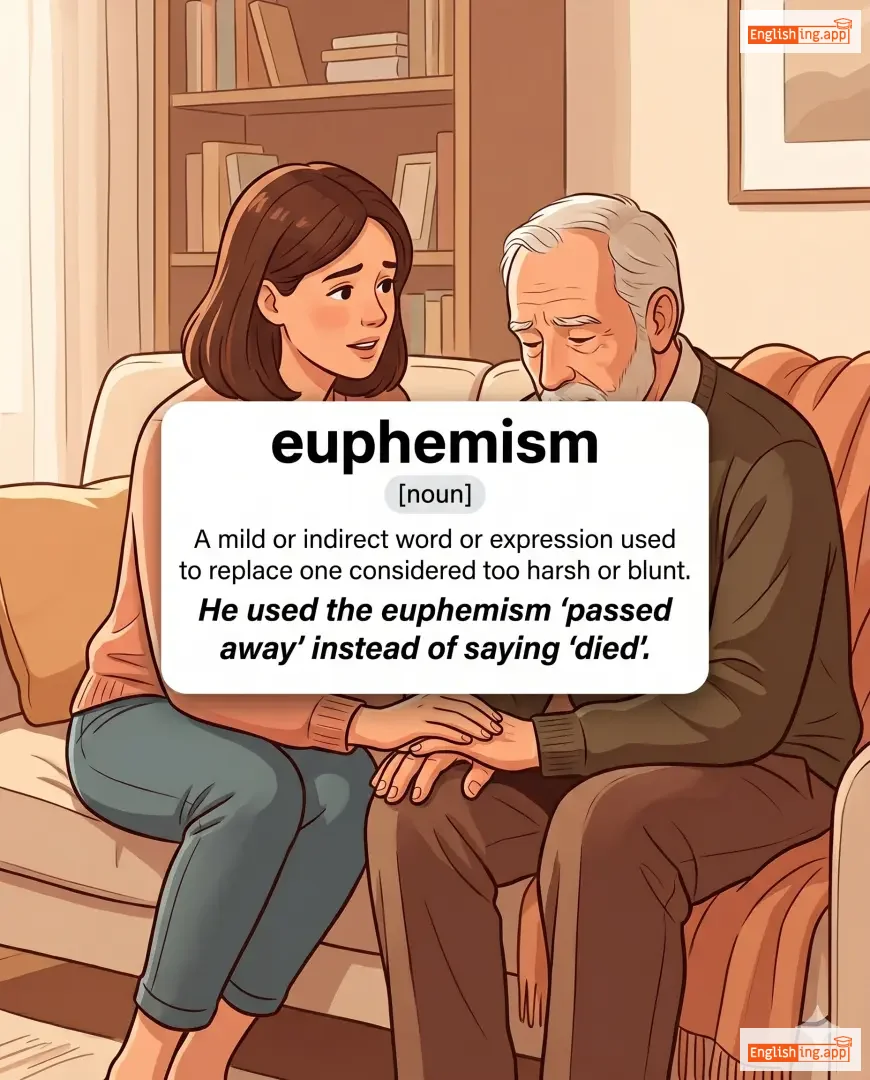
euphemism definition card — visual illustration of the meaning
noun
/ˈjuːfəmɪzəm/
eufemismo (eufemismo)

A mild or indirect word or expression used to replace one considered too harsh or blunt.

"He used the euphemism 'passed away' instead of saying 'died'."

"Él usó el eufemismo 'fallecer' en lugar de decir 'morir'." (Él usó el eufemismo 'fallecer' en lugar de decir 'morir'.)
adjective
/juːˈfoʊniəs/
sonido armonioso (sonido armonioso)

Pleasing to the ear; having a sweet sound.

"The poet's euphonious language made the verse a delight to read."

"El lenguaje eufónico del poeta hizo que el verso fuera un deleite para leer." (El lenguaje eufonico del poeta hizo que el verso fuera un deleite para leer.)
noun
/ˈjuːfəni/
eufonía (eufonia)

The quality of being pleasing to the ear, especially through harmonious combination of words.

"The orator's speech was full of euphony and rhythm."

"El discurso del orador estuvo lleno de eufonía y ritmo." (El discurso del orador estuvo lleno de eufonía y ritmo.)
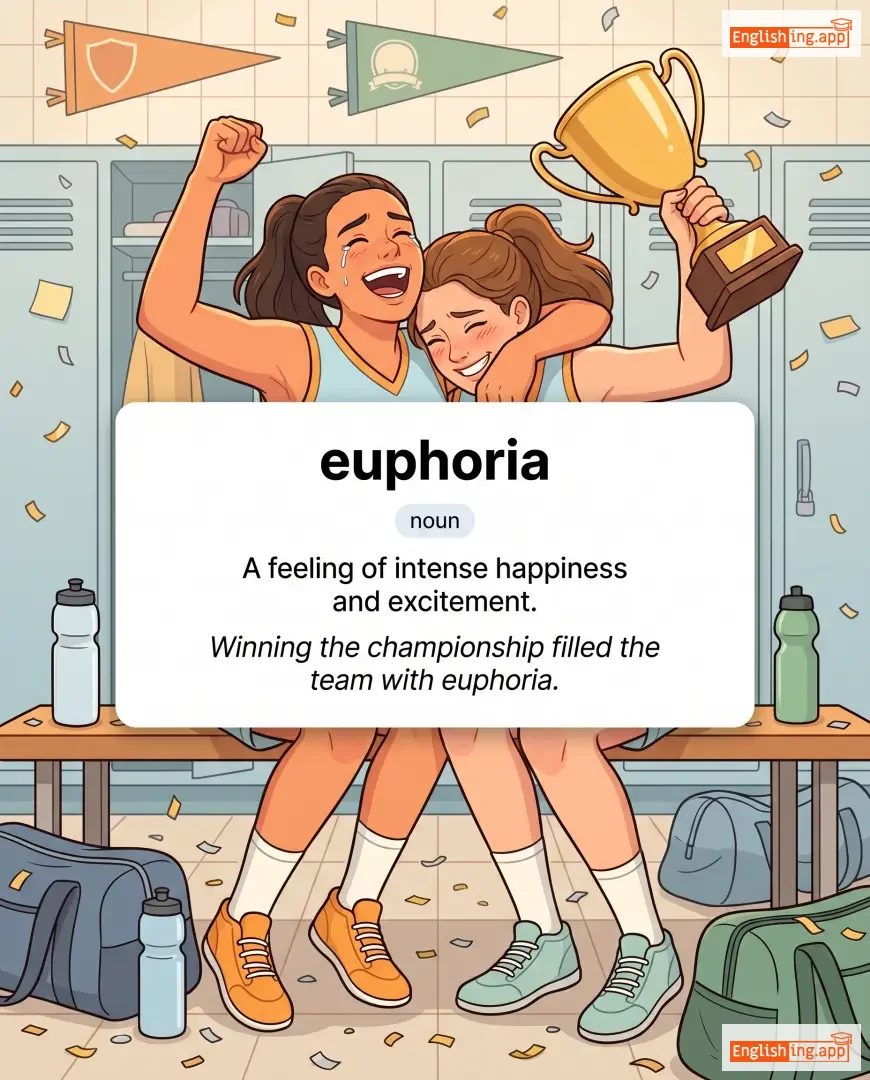
euphoria definition card — visual illustration of the meaning
noun
/juːˈfɔːriə/
euforia (euforia)

A feeling of intense happiness and excitement.

"Winning the championship filled the team with euphoria."

"Ganar el campeonato llenó al equipo de euforia." (Ganar el campeonato lleno al equipo de euforia.)
adjective
/juːˈfɔːrɪk/
eufórico (euforiko)

Characterized by or feeling intense excitement and happiness.

"The fans were euphoric after their team's victory."

"Los fanáticos estaban eufóricos después de la victoria de su equipo." (Los fanaticos estaban euforicos despues de la victoria de su equipo.)
exclamation
/juˈriːkə/
¡Eureka! (Eureka!)

An exclamation used to express a sudden discovery or realization.

"When the solution finally came to him, he shouted, 'Eureka!'"

"Cuando finalmente encontró la solución, gritó, '¡Eureka!'" (Cuando finalmente encontró la solución, gritó, '¡Eureka!')
adjective
/ˌjʊərəˈpiːən/
europeo (europeo)

Relating to Europe or its people.

"She studied European history at university."

"Estudió historia europea en la universidad." (Estudió historia europea en la universidad.)
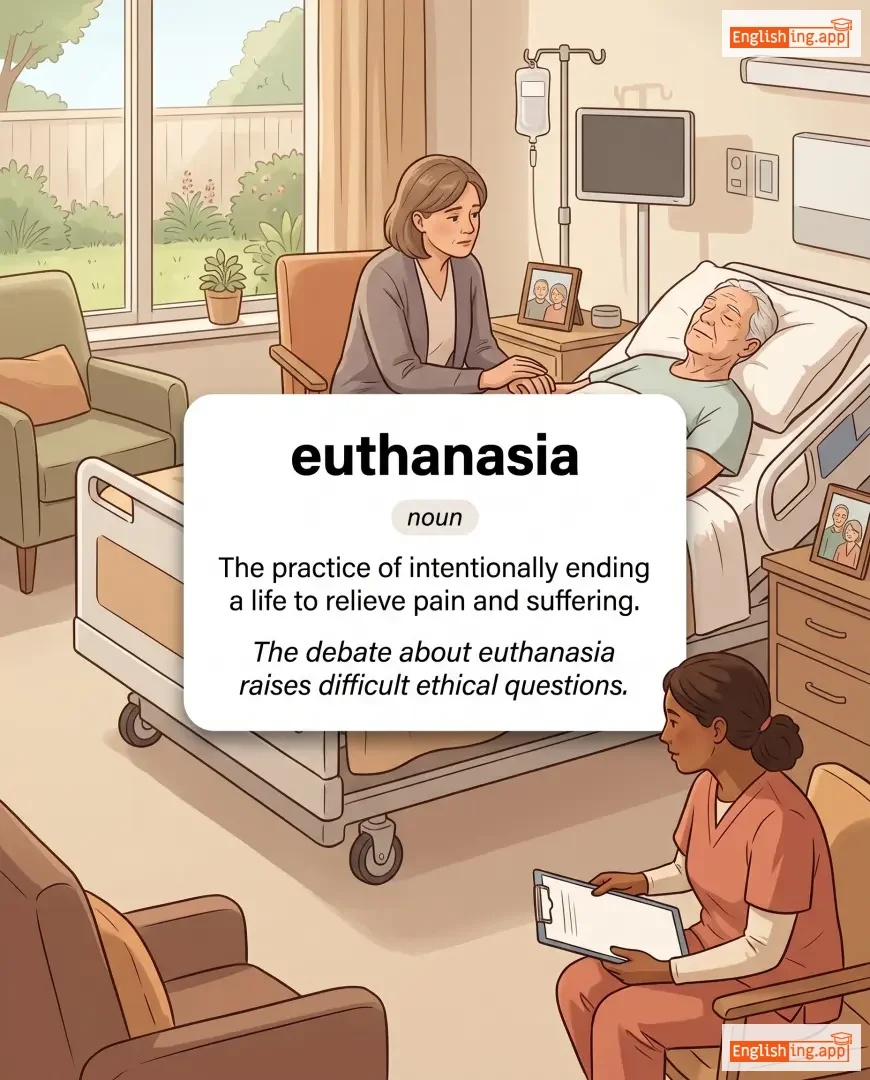
euthanasia definition card — visual illustration of the meaning
noun
/ˌjuːθəˈneɪʒə/
muerte asistida (muerte asistida)

The practice of intentionally ending a life to relieve pain and suffering.

"The debate about euthanasia raises difficult ethical questions."

"El debate sobre la eutanasia plantea preguntas éticas difíciles." (El debate sobre la eutanasia plantea preguntas éticas difíciles.)
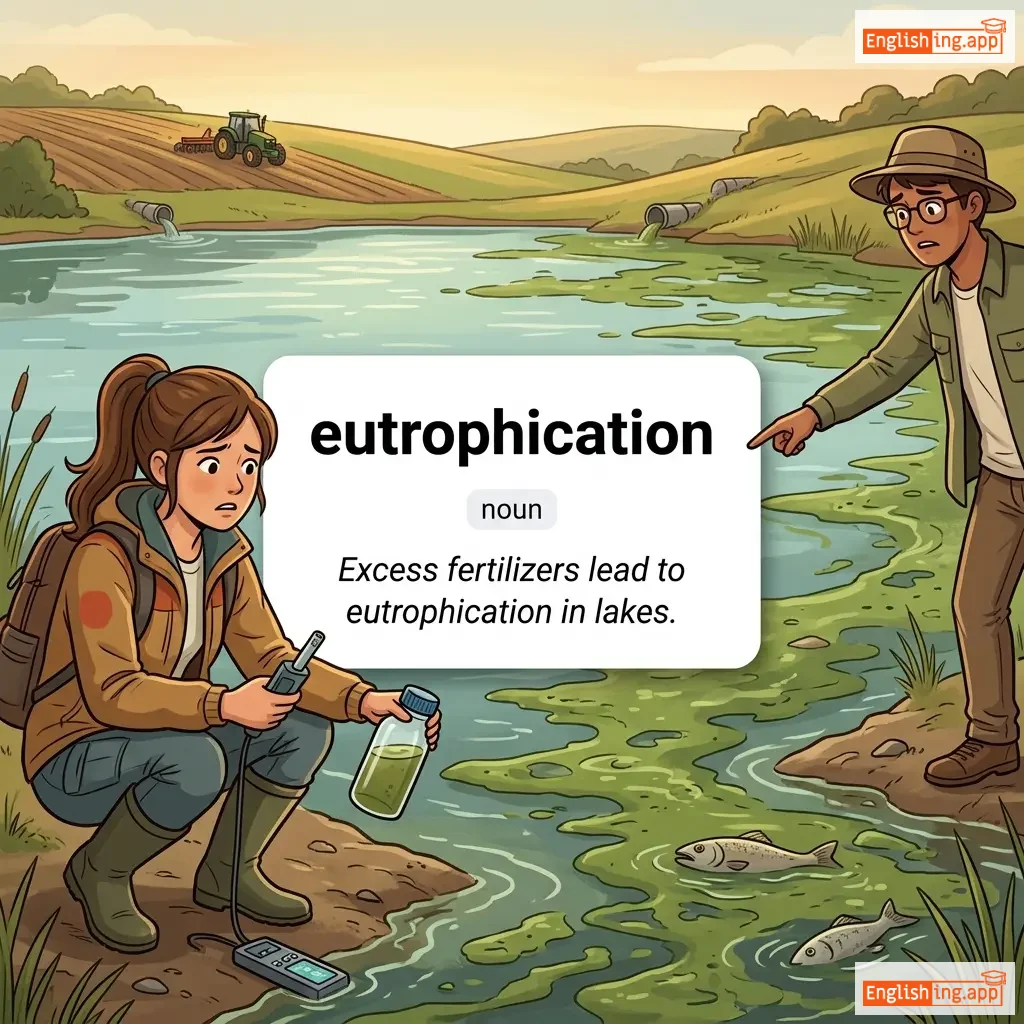
eutrophication definition card — visual illustration of the meaning
noun
/juːˌtrɑː.fɪˈkeɪ.ʃən/
exceso de nutrientes en un lago o cuerpo de agua (exceso de nutrientes en un lago o cuerpo de agua)

Excessive richness of nutrients in a lake or other body of water, frequently due to runoff from the land, which causes a dense growth of plant life and death of animal life from lack of oxygen.

"Excess fertilizers lead to eutrophication in lakes."

"Los fertilizantes excesivos provocan la eutrofización en los lagos." (Los fertilizantes excesivos provocan la eutrofización en los lagos.)
verb
/ɪˈvækjueɪt/
evacuar (evacuar)

To remove people from a dangerous place to safety.

"The residents were ordered to evacuate the building after the fire alarm."

"Los residentes fueron ordenados a evacuar el edificio después de la alarma de incendio." (Los residentes fueron ordenados a evacuar el edificio después de la alarma de incendio.)
verb
/ɪˈveɪd/
evadir (evadir)

To escape or avoid something, especially by cleverness or trickery.

"He tried to evade the question by changing the subject."

"Intentó evadir la pregunta cambiando de tema." (Intentó evadir la pregunta cambiando de tema.)
verb
/ɪˈvæljueɪt/
evaluar (evaluar)

To assess or judge the value, quality, or significance of something.

"The teacher will evaluate the students’ projects tomorrow."

"El maestro evaluará los proyectos de los estudiantes mañana." (El maestro evaluará los proyectos de los estudiantes mañana.)
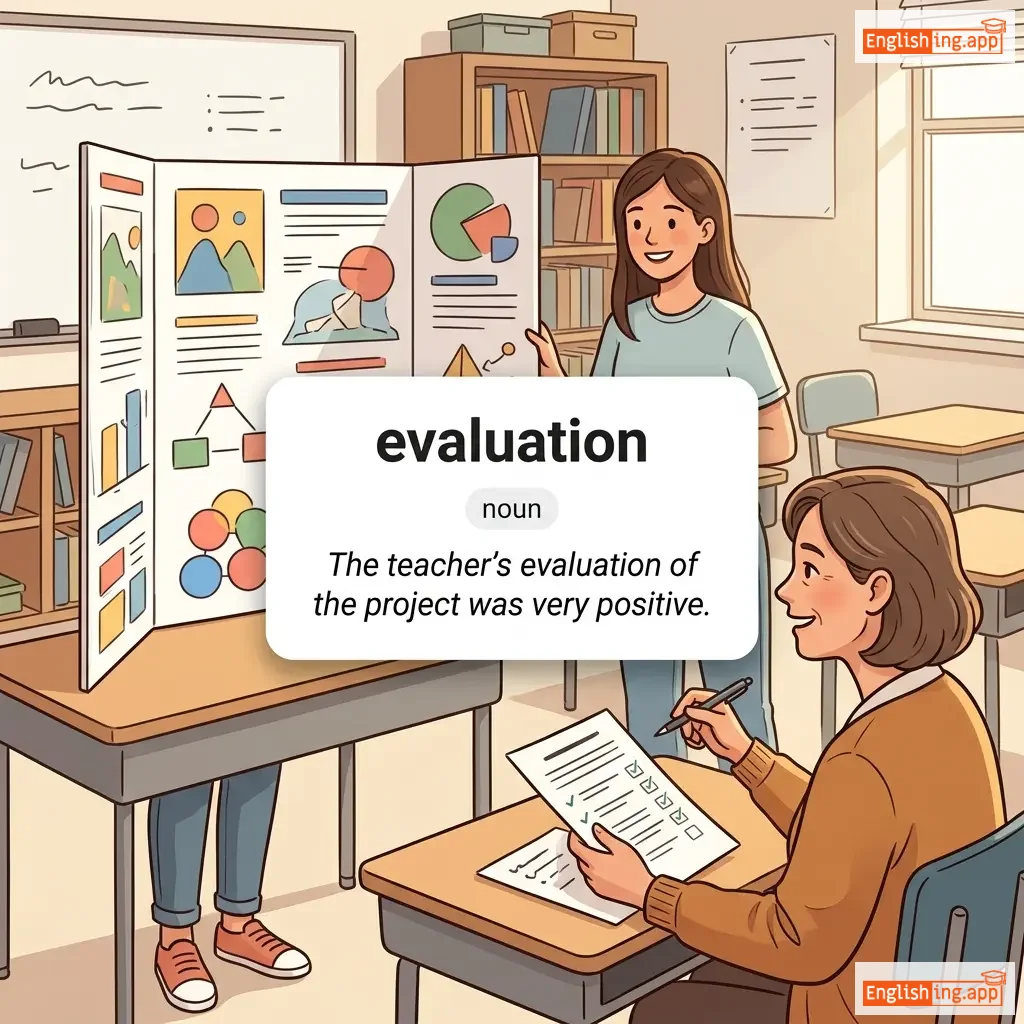
evaluation definition card — visual illustration of the meaning
noun
/ɪˌvæljʊˈeɪʃən/
evaluación (evaluacion)

The process of assessing or judging the value, quality, or importance of something.

"The teacher’s evaluation of the project was very positive."

"La evaluación del proyecto por parte del maestro fue muy positiva." (La evaluacion del proyecto por parte del maestro fue muy positiva.)
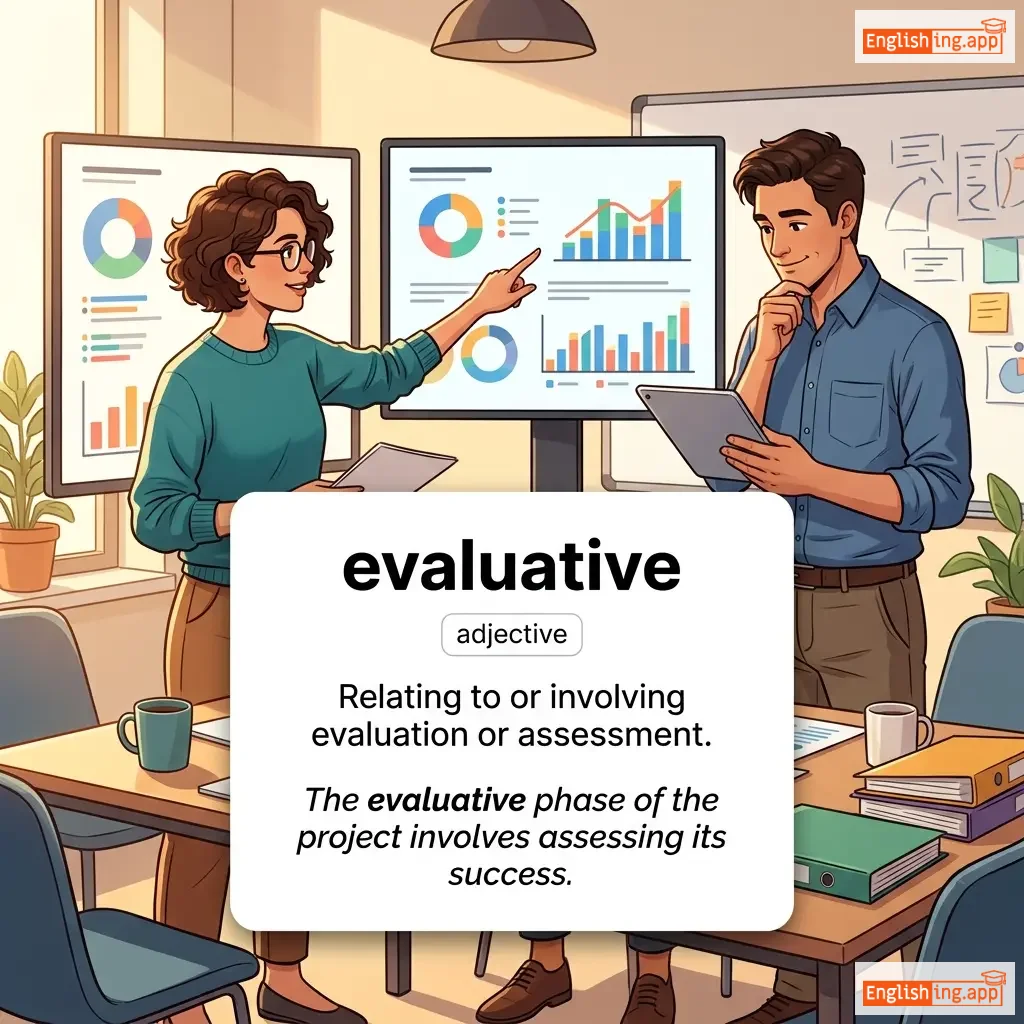
evaluative definition card — visual illustration of the meaning
adjective
/ɪˈvæljʊətɪv/
evaluativo (evaluativo)

Relating to or involving evaluation or assessment.

"The evaluative phase of the project involves assessing its success."

"La fase evaluativa del proyecto implica evaluar su éxito." (La fase evaluativa del proyecto implica evaluar su exito.)
verb
/ˌɛvəˈnɛs/
desvanecerse (desvanecerse)

To disappear gradually; to fade away.

"The mist began to evanesce as the sun rose higher."

"La niebla comenzó a desvanecerse a medida que el sol subía más alto." (La niebla comenzó a desvanecerse a medida que el sol subía más alto.)
adjective
/ˌɛvəˈnɛsənt/
efímero (efimero)

Quickly fading or disappearing; lasting for only a very short time.

"The beauty of the sunset was evanescent, fading within minutes."

"La belleza del atardecer fue efímera, desvaneciéndose en minutos." (La belleza del atardecer fue efimera, desvaneciendose en minutos.)
adjective
/ˌiːvænˈdʒɛlɪkəl/
evangélico (evangelico)

Relating to the Christian gospel, especially the teachings that emphasize personal faith and the authority of the Bible.

"She grew up in an evangelical church community."

"Ella creció en una comunidad de iglesia evangélica." (Ella creció en una comunidad de iglesia evangelica.)
noun
/ɪˈvændʒəlɪst/
evangelista (evangelista)

A person who seeks to convert others to the Christian faith, especially by public preaching.

"The evangelist traveled across the country spreading his message."

"El evangelista viajó por todo el país difundiendo su mensaje." (El evangelista viajó por todo el país difundiendo su mensaje.)
noun
/ɪˈvæp.ər.ə.tɪv ˈkuː.lər/
enfriador por evaporación (enfriador por evaporacion)

a cooling device that uses water evaporation to reduce air temperature

"The evaporative cooler works best in dry climates."

"El enfriador por evaporación funciona mejor en climas secos." (El enfriador por evaporacion funciona mejor en climas secos)
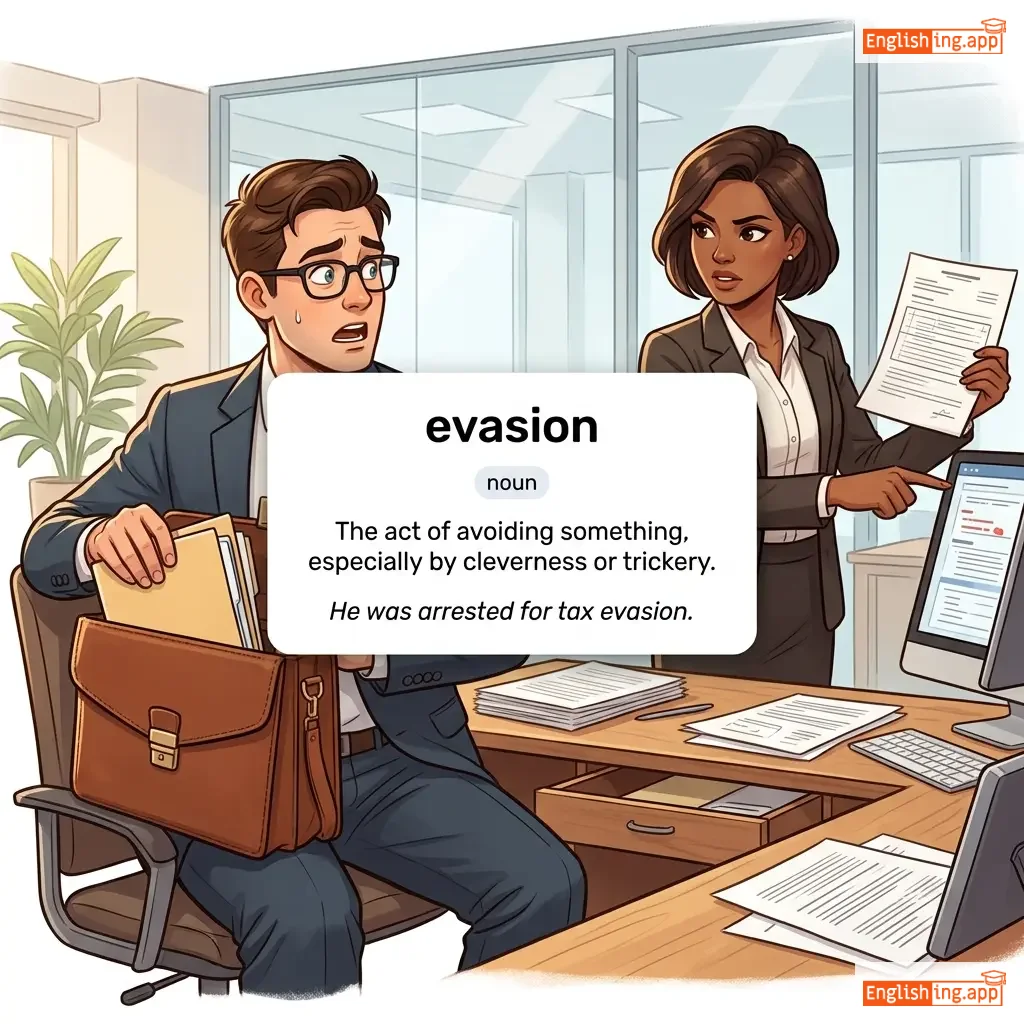
evasion definition card — visual illustration of the meaning
noun
/ɪˈveɪʒən/
evasión (evasión)

The act of avoiding something, especially by cleverness or trickery.

"He was arrested for tax evasion."

"Fue arrestado por evasión de impuestos." (Fue arrestado por evasión de impuestos.)
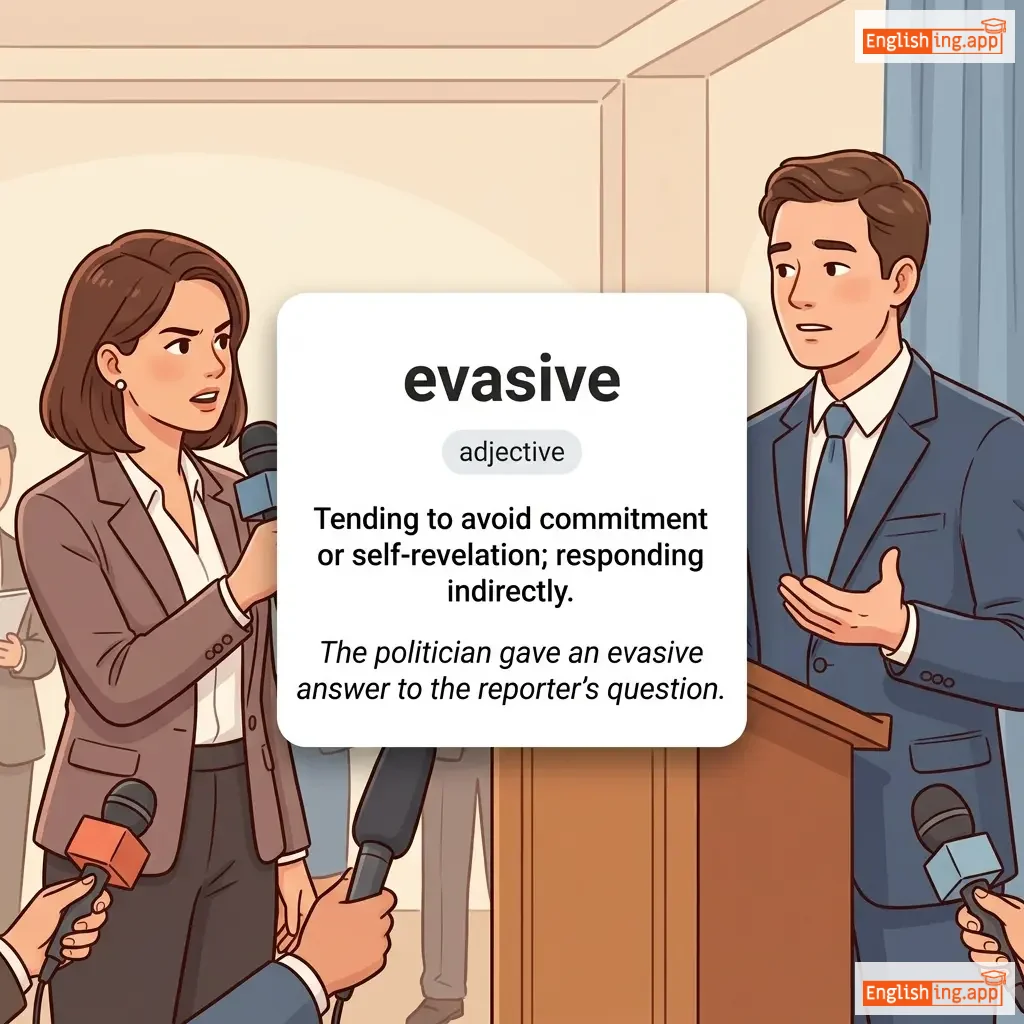
evasive definition card — visual illustration of the meaning
adjective
/ɪˈveɪsɪv/
evasivo (evasivo)

Tending to avoid commitment or self-revelation; responding indirectly.

"The politician gave an evasive answer to the reporter's question."

"El político dio una respuesta evasiva a la pregunta del reportero." (El político dio una respuesta evasiva a la pregunta del reportero.)
adjective, adverb
/ˈiː.vən/
nivelado (nivelado)

flat or smooth; equal in degree or amount; used to emphasize something surprising

"The road was surprisingly even after the storm."

"La carretera estaba sorprendentemente nivelada después de la tormenta." (La carretera estaba sorprendentemente nivelada después de la tormenta.)
adjective
/ˌiːvənˈhændɪd/
imparcial (imparcial)

Fair and impartial; showing no bias or favoritism.

"The judge was praised for her evenhanded approach to the case."

"El juez fue elogiado por su enfoque imparcial en el caso." (El juez fue elogiado por su enfoque imparcial en el caso.)