Vocabularios

Descubra, aprenda y domine el vocabulario en inglés

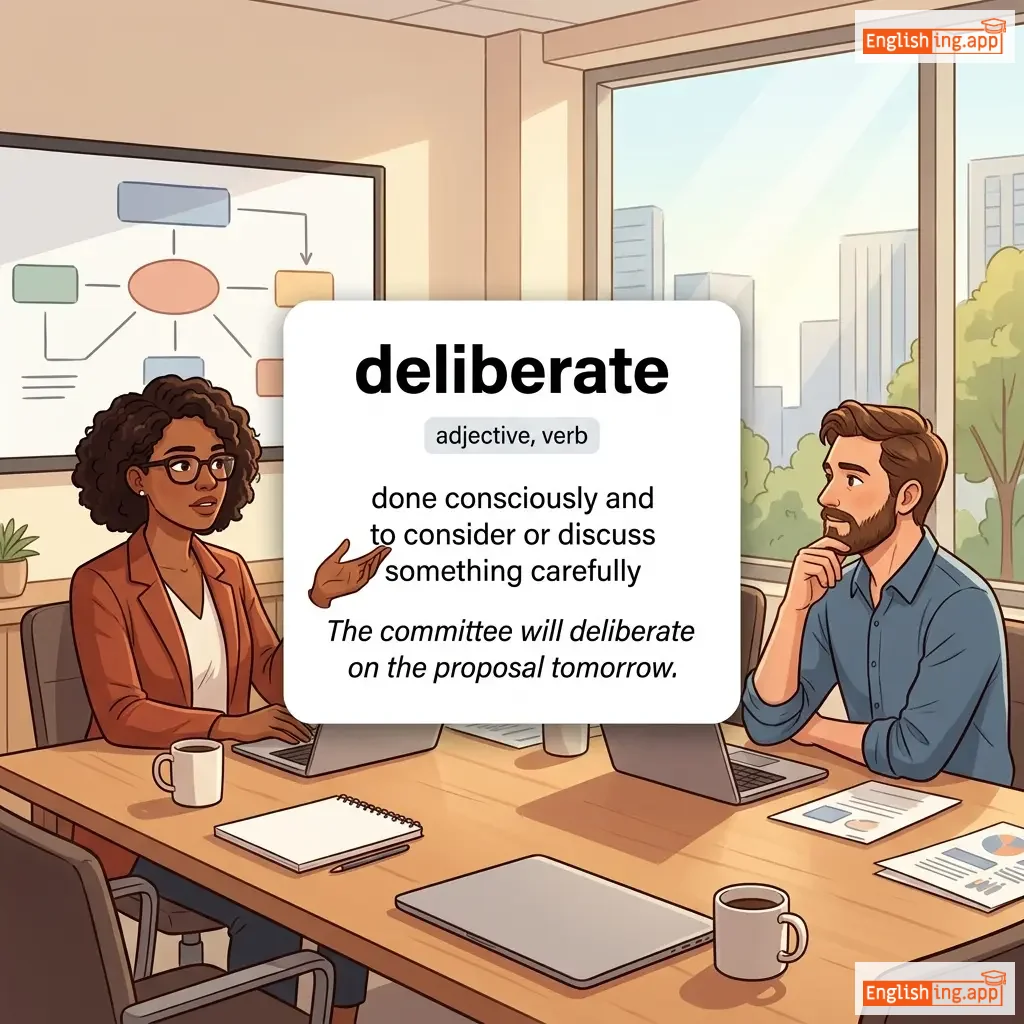
deliberate definition card — visual illustration of the meaning
adjective, verb
/dɪˈlɪbərət/ (adj), /dɪˈlɪbəreɪt/ (verb)
hecho conscientemente / considerar (hecho conscientemente / considerar)

done consciously and intentionally; to consider or discuss something carefully

"The committee will deliberate on the proposal tomorrow."

"El comité deliberará sobre la propuesta mañana." (El comité deliberará sobre la propuesta mañana.)
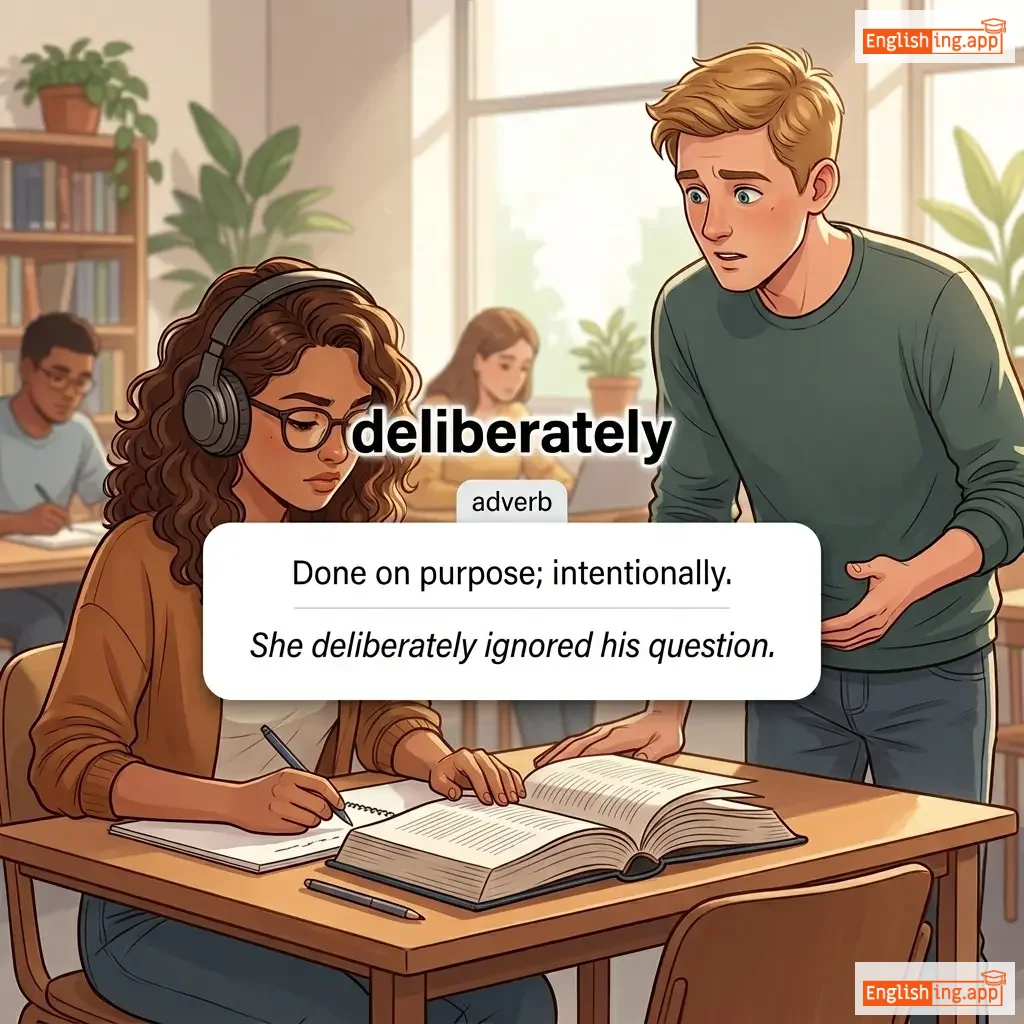
deliberately definition card — visual illustration of the meaning
adverb
/dɪˈlɪbərətli/
deliberadamente (deliberadamente)

Done on purpose; intentionally.

"She deliberately ignored his question."

"Ella ignoró deliberadamente su pregunta." (Ella ignoró deliberadamente su pregunta.)
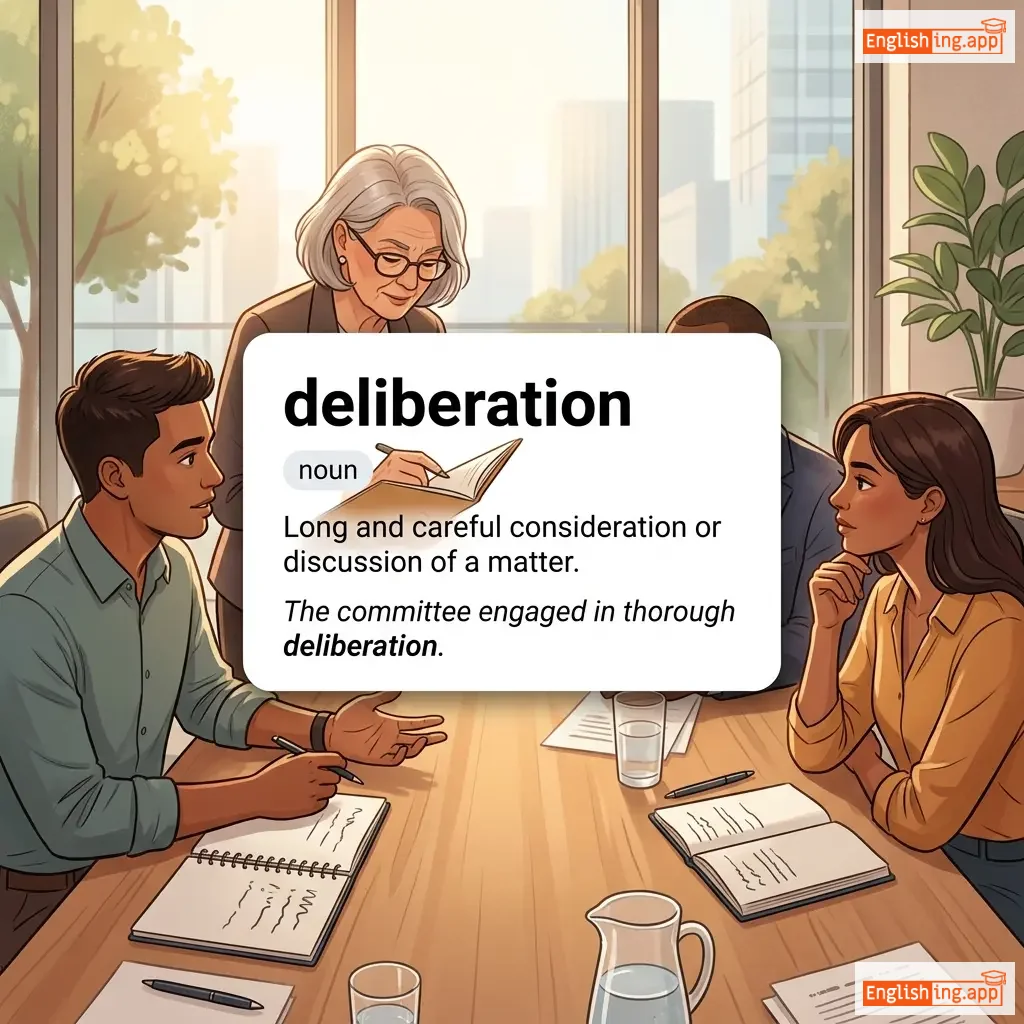
deliberation definition card — visual illustration of the meaning
noun
dɪˌlɪb.əˈreɪ.ʃən
deliberación (deliberacion)

Long and careful consideration or discussion of a matter.

"The committee engaged in thorough deliberation."

"El comité participó en una deliberación profunda." (El comite participo en una deliberacion profunda.)
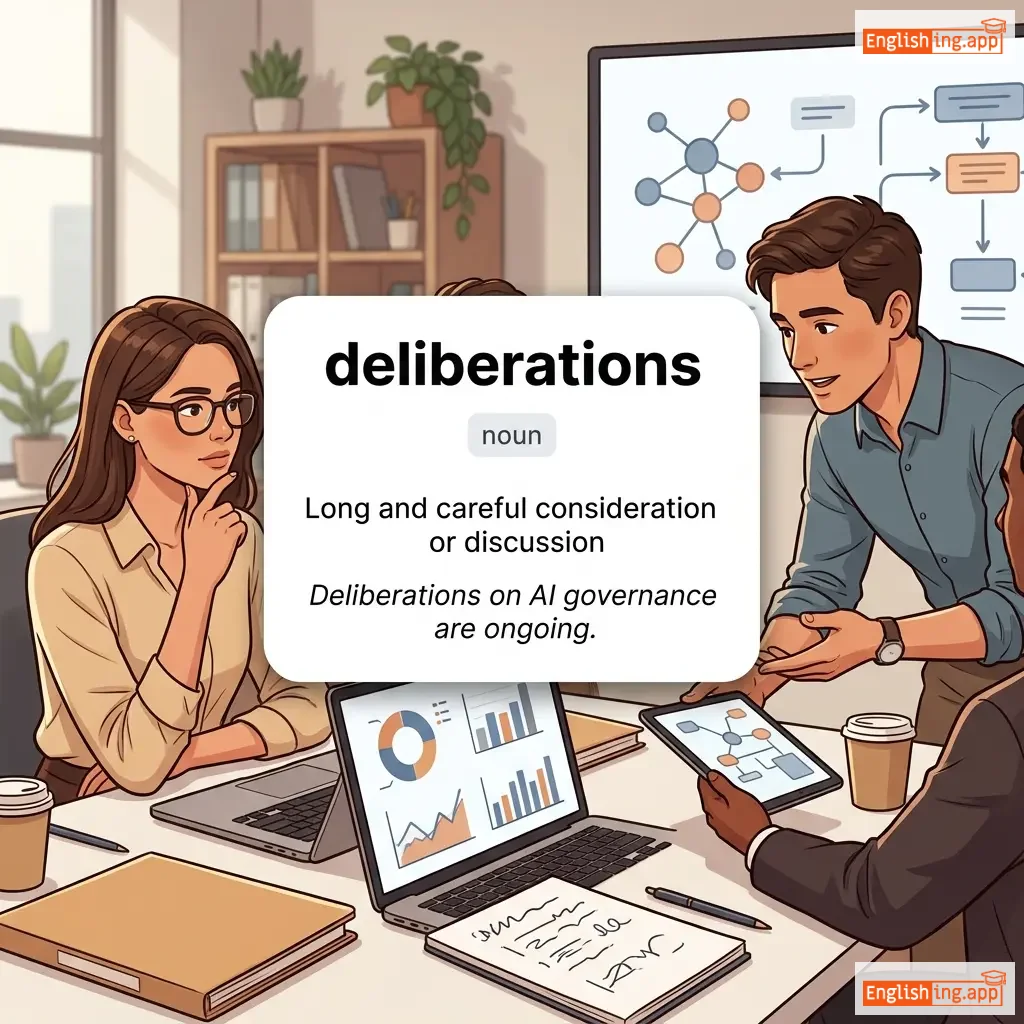
deliberations definition card — visual illustration of the meaning
noun
dɪˌlɪb.əˈreɪ.ʃənz
deliberaciones (deliberaciones)

Long and careful consideration or discussion

"Deliberations on AI governance are ongoing."

"Las deliberaciones sobre la gobernanza de la IA están en curso." (Las deliberaciones sobre la gobernanza de la IA están en curso.)
noun
/ˈdɛlɪkəsi/
delicadeza / manjar (delikadeza / manjar)

a rare or expensive food item; fineness or sensitivity

"Caviar is considered a delicacy in many countries."

"El caviar se considera un manjar en muchos países." (El caviar se considera un manjar en muchos países.)
adjective
/ˈdɛlɪkət/
delicado (delicado)

Easily broken or damaged; requiring careful handling.

"The vase is very delicate, so handle it with care."

"El jarrón es muy delicado, así que manéjalo con cuidado." (El jarron es muy delicado, asi que manejalo con cuidado.)
adjective
/dɪˈlɪʃəs/
felicidad (felicidad)

having a very pleasant taste or smell

"The cake was so delicious that everyone asked for a second slice."

"No pudo ocultar su felicidad cuando recibió el premio." (No pudo ocultar su felicidad cuando recibió el premio.)
noun, verb
/dɪˈlaɪt/
deleite (deleite)

great pleasure or joy; to give someone great pleasure

"The children were filled with delight when they saw the gifts."

"Los niños se llenaron de deleite cuando vieron los regalos." (Los ninyos se llenaron de deleite cuando vieron los regalos.)
adjective
/dɪˈlaɪtɪd/
encantado (encantado)

feeling or showing great pleasure and happiness

"She was delighted with the surprise gift."

"Ella estaba encantada con el regalo sorpresa." (Ella estaba encantada con el regalo sorpresa.)
verb
/diːˈlɪmɪt/
delimitar (delimitar)

to fix the boundaries or limits of something

"The treaty was signed to delimit the borders of the two countries."

"El tratado fue firmado para delimitar las fronteras de los dos países." (El tratado fue firmado para delimitar las fronteras de los dos paises.)
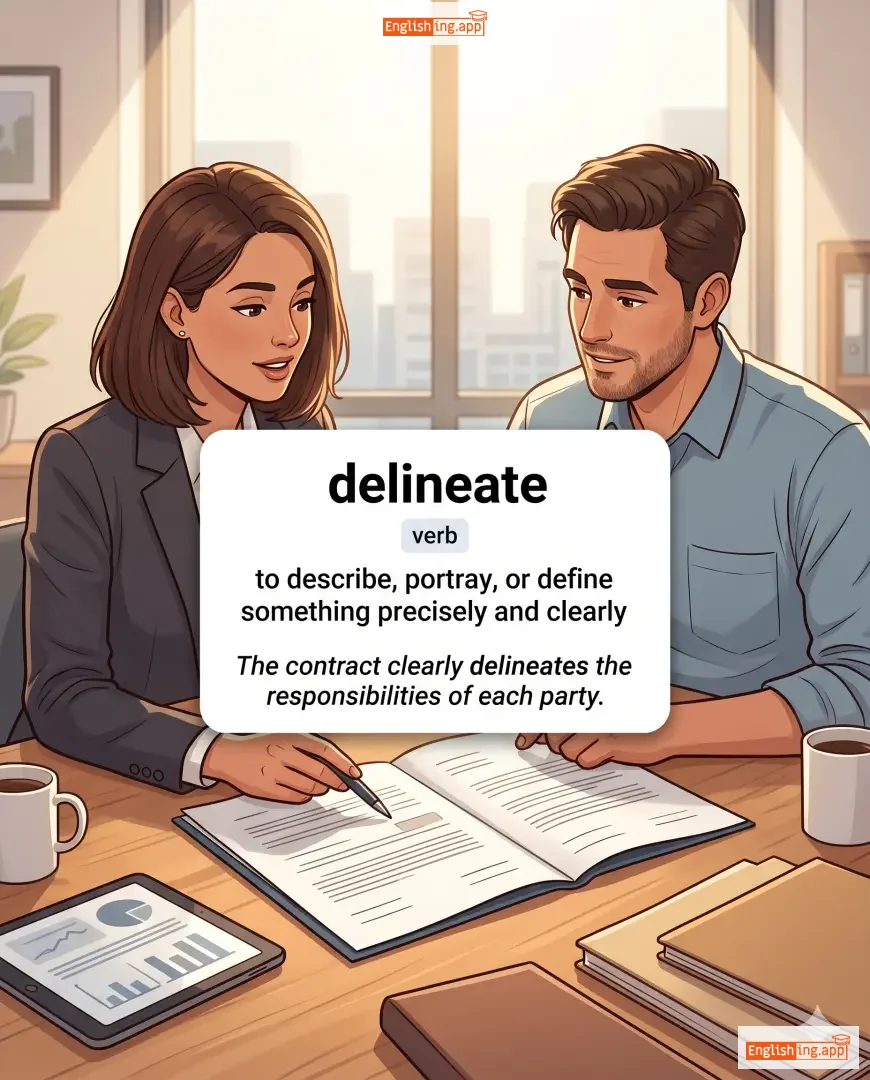
delineate definition card — visual illustration of the meaning
verb
/dɪˈlɪnieɪt/
delinear (delinear)

to describe, portray, or define something precisely and clearly

"The contract clearly delineates the responsibilities of each party."

"El contrato delimita claramente las responsabilidades de cada parte." (El contrato delimita claramente las responsabilidades de cada parte.)
noun
/dɪˌlɪniˈeɪʃən/
delimitación (delimitacion)

the precise description, drawing, or outlining of something

"The artist’s delineation of the landscape was remarkably accurate."

"La delimitación del paisaje por el artista fue notablemente precisa." (La delimitacion del paisaje por el artista fue notablemente precisa.)
verb
/ˌdɛlɪˈkwɛs/
volverse líquido al absorber humedad del aire (volverse liquido al absorber humedad del aire)

to become liquid by absorbing moisture from the air

"The salt began to deliquesce after being left in the humid room."

"La sal comenzó a deliquescer después de dejarla en la habitación húmeda." (La sal comenzo a deliquescer despues de dejarla en la habitacion humeda.)
adjective
/ˌdɛlɪˈkwɛsənt/
que se convierte en líquido al absorber humedad (ke se convierte en liquido al absorber humedad)

tending to become liquid by absorbing moisture from the air

"Sugar is not deliquescent, but salt can be."

"El azúcar no es deliquescente, pero la sal sí puede serlo." (El azucar no es deliquescente, pero la sal si puede serlo.)
adjective
/dɪˈlɪriəs/
delirante (delirante)

in an extremely disturbed or excited state of mind, often due to illness or emotion

"He was delirious with fever and kept muttering nonsense."

"Él estaba delirante con fiebre y seguía murmurando tonterías." (El estaba delirante con fiebre y seguía murmurando tonterías.)
noun
/dɪˈlɪriəm/
delirio (delirio)

An acutely disturbed state of mind characterized by restlessness, illusions, and incoherence.

"The patient experienced delirium after the surgery due to the strong medication."

"El paciente experimentó delirio después de la cirugía debido a los fuertes medicamentos." (El paciente experimento delirio despues de la cirugia debido a los fuertes medicamentos.)
verb
/dɪˈlɪvər/
entregar (entregar)

to bring or hand over something to the intended recipient

"The courier will deliver the package tomorrow."

"El mensajero entregará el paquete mañana." (El mensajero entregará el paquete mañana.)
noun
/dɪˈlɪvəri/
entrega (entrega)

the act of taking goods, letters, or packages to people's houses or places of work

"The delivery of fresh vegetables arrives every morning."

"La entrega de vegetales frescos llega todas las mañanas." (La entrega de vegetales frescos llega todas las mañanas.)
noun
/ˈdɛltə/
delta (delta)

A landform at the mouth of a river where it splits into several outlets.

"The Nile Delta is one of the most fertile regions in Egypt."

"El delta del Nilo es una de las regiones más fértiles de Egipto." (El delta del Nilo es una de las regiones mas fertiles de Egipto.)
deltaic landscape definition card — visual illustration of the meaning
noun
delˈteɪɪk ˈlændskeɪp
paisaje deltaico (paisaje deltaico)

A geographical area formed by sediment deposits at the mouth of a river, creating a triangular land formation.

"Bangladesh has a unique deltaic landscape."

"Bangladesh tiene un paisaje deltaico único." (Bangladesh tiene un paisaje deltaico unico.)
verb
/dɪˈluːd/
engañar (enganar)

To mislead someone into believing something that is not true.

"He deluded himself into thinking he could win the race without training."

"Él se engañó a sí mismo pensando que podía ganar la carrera sin entrenar." (Él se engañó a sí mismo pensando que podía ganar la carrera sin entrenar.)
noun
/ˈdɛljuːdʒ/
inundación (inundacion)

A severe flood; an overwhelming quantity of something.

"The town was hit by a deluge of rain in just a few hours."

"La ciudad fue golpeada por una inundación de lluvia en solo unas pocas horas." (La ciudad fue golpeada por una inundacion de lluvia en solo unas pocas horas.)
noun
/dɪˈluːʒən/
delirio (delirio)

A false belief or impression maintained despite being contradicted by reality.

"He lived under the delusion that he was invincible."

"Él vivía bajo la ilusión de que era invencible." (El vivia bajo la ilusion de que era invencible.)
adjective
/dɪˈluːsɪv/
engañoso (enganhoso)

Giving a false or misleading impression; deceptive.

"His promises turned out to be delusive and untrustworthy."

"Sus promesas resultaron ser engañosas y poco confiables." (Sus promesas resultaron ser enganosas y poco confiables.)
adjective
/dɪˈluːsəri/
ilusorio (ilusorio)

Based on illusion; not real.

"He was filled with delusory hopes of becoming famous overnight."

"Estaba lleno de falsas esperanzas de hacerse famoso de la noche a la mañana." (Estaba lleno de falsas esperanzas de hacerse famoso de la noche a la manana.)
verb
/dɛlv/
investigar a fondo (investigar a fondo)

To investigate deeply; to dig into a subject or area.

"The researcher delved into ancient manuscripts to find clues."

"El investigador investigó a fondo los manuscritos antiguos para encontrar pistas." (El investigador investigó a fondo los manuscritos antiguos para encontrar pistas.)
verb
/diːˈmæɡnɪtaɪz/
desmagnetizar (desmagnetizar)

To remove or reduce the magnetic properties of something.

"The technician demagnetized the old cassette tape."

"El técnico desmagnetizó la vieja cinta de casete." (El técnico desmagnetizó la vieja cinta de casete.)
noun
/ˈdɛməɡɒɡ/
líder demagógico (lider demagogico)

A political leader who seeks support by appealing to popular desires and prejudices rather than by using rational argument.

"The crowd was swayed by the fiery speeches of the demagogue."

"La multitud fue influenciada por los discursos apasionados del líder demagógico." (La multitud fue influenciada por los discursos apasionados del lider demagogico.)
noun, verb
/dɪˈmænd/
demanda (demanda)

to ask for something forcefully; the need or desire for goods or services

"Workers demanded better wages from the company."

"Los trabajadores exigieron mejores salarios a la empresa." (Los trabajadores exigieron mejores salarios a la empresa.)
adjective
/dɪˈmændɪŋ/
exigente (exijente)

requiring much effort, skill, or attention; difficult to satisfy

"The job is very demanding and requires long hours of work."

"El trabajo es muy exigente y requiere largas horas de trabajo." (El trabajo es muy exigente y requiere largas horas de trabajo.)
verb
/ˈdiːmɑːrˌkeɪt/
demarcar (demarkar)

to set the boundaries or limits of something

"The land was demarcated with fences to avoid disputes."

"La tierra fue demarcada con cercas para evitar disputas." (La tierra fue demarcada con cercas para evitar disputas.)
noun
/ˌdiː.mɑːˈkeɪ.ʃən/
demarcación (demarcacion)

the action of fixing the boundary or limits of something; separation or division

"The demarcation between public and private land was clearly marked."

"La demarcación entre tierras públicas y privadas estaba claramente marcada." (La demarcacion entre tierras publicas y privadas estaba claramente marcada.)
verb
/dɪˈmiːn/
despreciar (despreciar)

to cause someone to lose dignity or respect

"The manager demeaned his employees with rude remarks."

"El gerente descalificó a sus empleados con comentarios groseros." (El gerente descalifico a sus empleados con comentarios groseros.)
noun
/dɪˈmiːnər/
comportamiento (comportamiento)

a person's outward behavior or appearance

"Her calm demeanor impressed everyone at the meeting."

"Su comportamiento tranquilo impresionó a todos en la reunión." (Su comportamiento tranquilo impresionó a todos en la reunión.)
noun
/dɪˈmiːnər/
comportamiento (comportamiento)

a person's outward behavior or appearance

"Her calm demeanour impressed everyone during the meeting."

"Su comportamiento tranquilo impresionó a todos durante la reunión." (Su comportamiento tranquilo impresionó a todos durante la reunión.)
adjective
/dɪˈmɛntɪd/
demente / irracional (demente / irracional)

behaving irrationally due to mental illness or extreme excitement

"He looked demented after hearing the shocking news."

"Se veía demente después de escuchar la noticia impactante." (Se veía demente después de escuchar la noticia impactante.)
noun
/dɪˈmɛrɪt/
falta / punto de penalización (falta / punto de penalizacion)

A fault or disadvantage; a mark against a person for misconduct.

"He received a demerit for being late to class."

"Recibió una falta por llegar tarde a clase." (Recibió una falta por llegar tarde a clase.)
noun
/dɪˈmeɪn/
tierra vinculada a una mansión (tierra vinculada a una mansion)

Land attached to a manor and retained for the owner's use.

"The castle was surrounded by its vast demesne."

"El castillo estaba rodeado por su vasta tierra vinculada a una mansión." (El castillo estaba rodeado por su vasta tierra vinculada a una mansion.)
noun
/dɪˈmaɪz/
muerte / fin (muerte / fin)

Death or end of something, especially the end of an institution or system.

"The sudden demise of the company shocked investors."

"El repentino fin de la empresa sorprendió a los inversores." (El repentino fin de la empresa sorprendió a los inversores.)
verb
/diːˈmoʊbəlaɪz/
desmovilizar (desmovilizar)

To release from military service or to disband troops.

"The government decided to demobilize the army after the war."

"El gobierno decidió desmovilizar el ejército después de la guerra." (El gobierno decidió desmovilizar el ejército después de la guerra.)
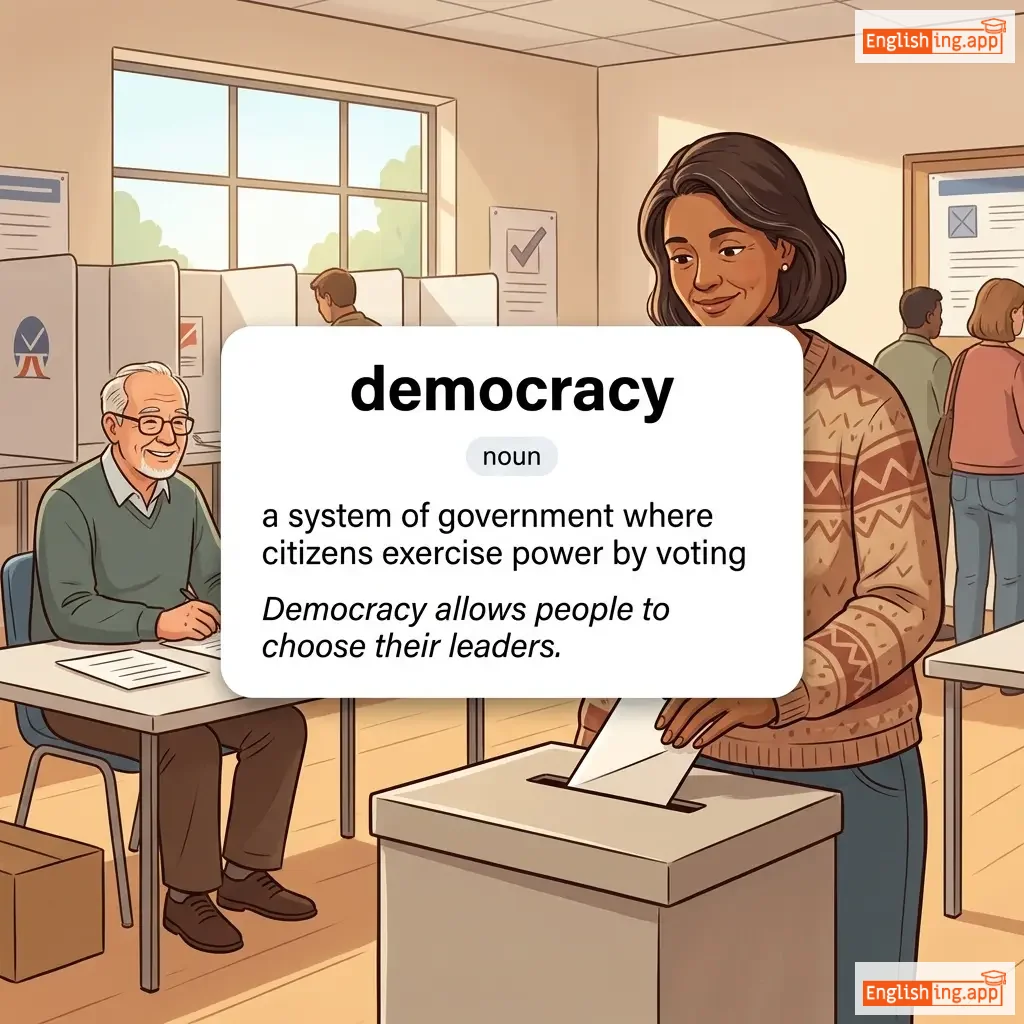
democracy definition card — visual illustration of the meaning
noun
/dɪˈmɑːkrəsi/
democracia (democracia)

a system of government where citizens exercise power by voting

"Democracy allows people to choose their leaders."

"La democracia permite a las personas elegir a sus líderes." (La democracia permite a las personas elegir a sus líderes.)
noun
/ˈdɛməˌkræt/
demócrata (demokrata)

a supporter of democracy or a member of the Democratic Party in the US

"He is a strong democrat who believes in equal rights."

"Él es un demócrata fuerte que cree en los derechos iguales." (Él es un demócrata fuerte que cree en los derechos iguales.)
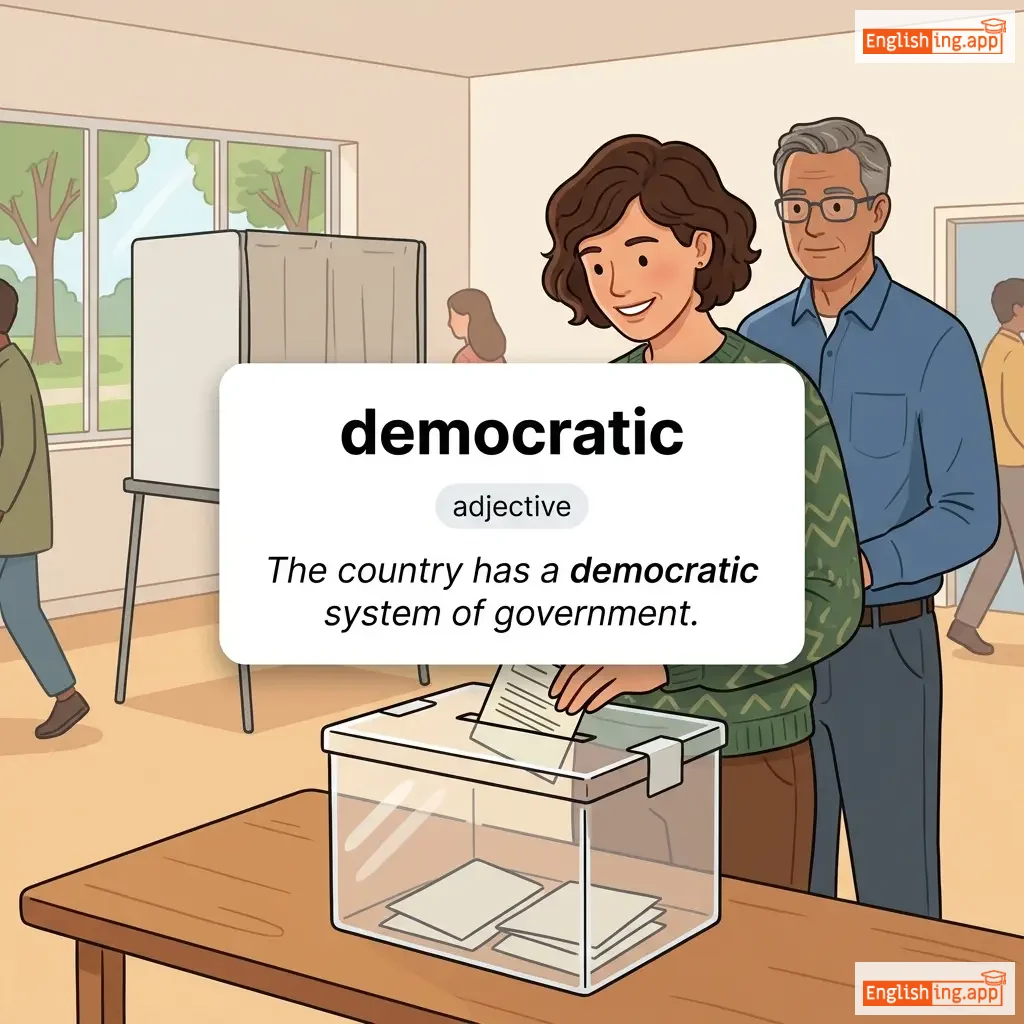
democratic definition card — visual illustration of the meaning
adjective
/ˌdɛməˈkrætɪk/
democrático (demokratiko)

relating to or supporting democracy or its principles; characterized by equality and freedom

"The country has a democratic system of government."

"El país tiene un sistema democrático de gobierno." (El pais tiene un sistema demokratiko de gobierno.)
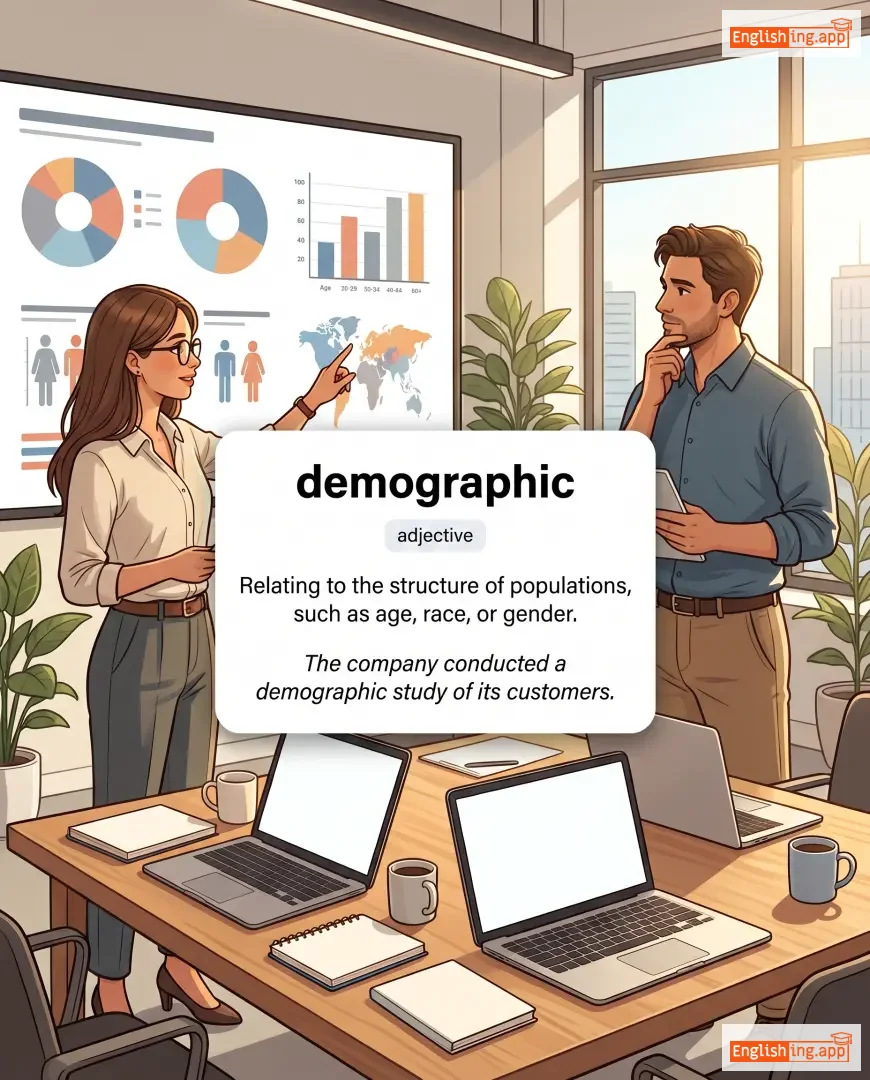
demographic definition card — visual illustration of the meaning
adjective
/ˌdɛməˈɡræfɪk/
demográfico (demografico)

Relating to the structure of populations, such as age, race, or gender.

"The company conducted a demographic study of its customers."

"La empresa realizó un estudio demográfico de sus clientes." (La empresa realizó un estudio demográfico de sus clientes.)
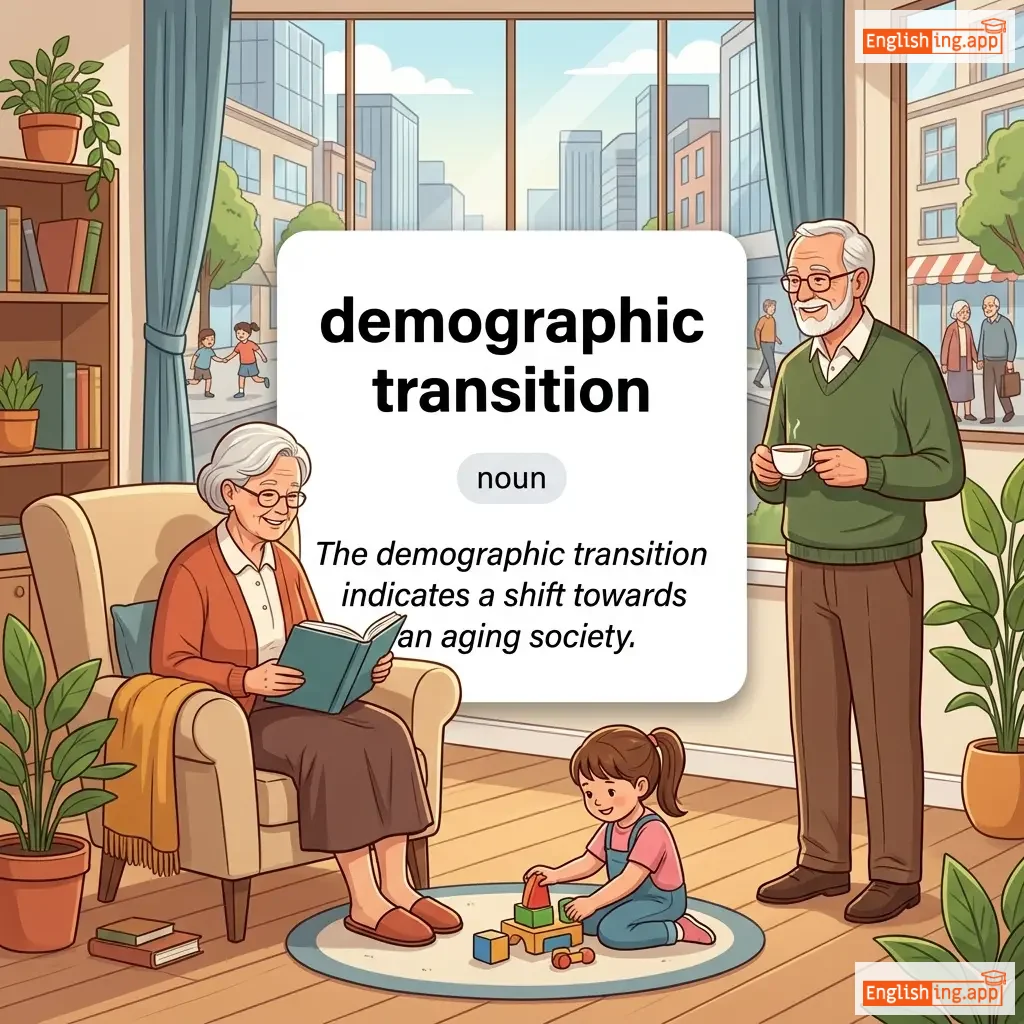
demographic transition definition card — visual illustration of the meaning
noun
ˌdɛməˈɡræfɪk trænˈzɪʃən
transición demográfica (transicion demografica)

A shift in population patterns from high birth and death rates to low birth and death rates as a country develops economically

"The demographic transition indicates a shift towards an aging society."

"La transición demográfica indica un cambio hacia una sociedad envejecida." (La transicion demografica indica un cambio hacia una sociedad envejecida.)
Demographics definition card — visual illustration of the meaning
noun
/ˌdɛm.əˈɡræf.ɪks/
Demografía (Demografia)

Statistical data relating to the population and particular groups within it.

"Demographics help in targeted advertising."

"La demografía ayuda en la publicidad dirigida." (La demografia ayuda en la publicidad dirigida.)
verb
/dɪˈmɒlɪʃ/
demoler (demoler)

to destroy completely, especially a building or structure

"The city decided to demolish the old stadium to build a new one."

"La ciudad decidió demoler el viejo estadio para construir uno nuevo." (La ciudad decidió demoler el viejo estadio para construir uno nuevo.)
noun
/ˌdɛməˈlɪʃən/
demolición (demolicion)

the act or process of destroying a building or structure

"The demolition of the old factory took several weeks."

"La demolición de la antigua fábrica tomó varias semanas." (La demolición de la antigua fábrica tomó varias semanas.)
noun
/ˈdiːmən/
demonio (demonio)

an evil spirit or devil

"The story was about a demon who haunted the village."

"La historia era sobre un demonio que aterrorizaba el pueblo." (La historia era sobre un demonio que aterrorizaba el pueblo.)
adjective
/dɪˈmoʊniˌæk/
demoníaco (demoniaco)

possessed, produced, or influenced by a demon; frenzied or violent

"The soldiers fought with demoniac fury."

"Los soldados lucharon con furia demoníaca." (Los soldados lucharon con furia demoníaca.)