Vocabularios

Descubra, aprenda y domine el vocabulario en inglés

adjective
/dɪˈstrɔːt/
desconcertado (desconcertado)

extremely upset and anxious, often to the point of being unable to think clearly

"She was distraught after losing her pet."

"Ella estaba desconcertada después de perder su mascota." (Ella estaba desconcertada después de perder su mascota.)
noun
/dɪsˈtrɛs/
angustia (angustia)

extreme anxiety, sorrow, or pain

"He felt a deep sense of distress when he heard the bad news."

"Sintió una gran angustia cuando escuchó las malas noticias." (Sintió una gran angustia cuando escuchó las malas noticias.)
adjective
/dɪˈstrɛst/
angustiado (angustiado)

feeling or showing extreme anxiety, sorrow, or pain

"She looked distressed after hearing the bad news."

"Ella se veía angustiada después de escuchar las malas noticias." (Ella se veía angustiada después de escuchar las malas noticias.)
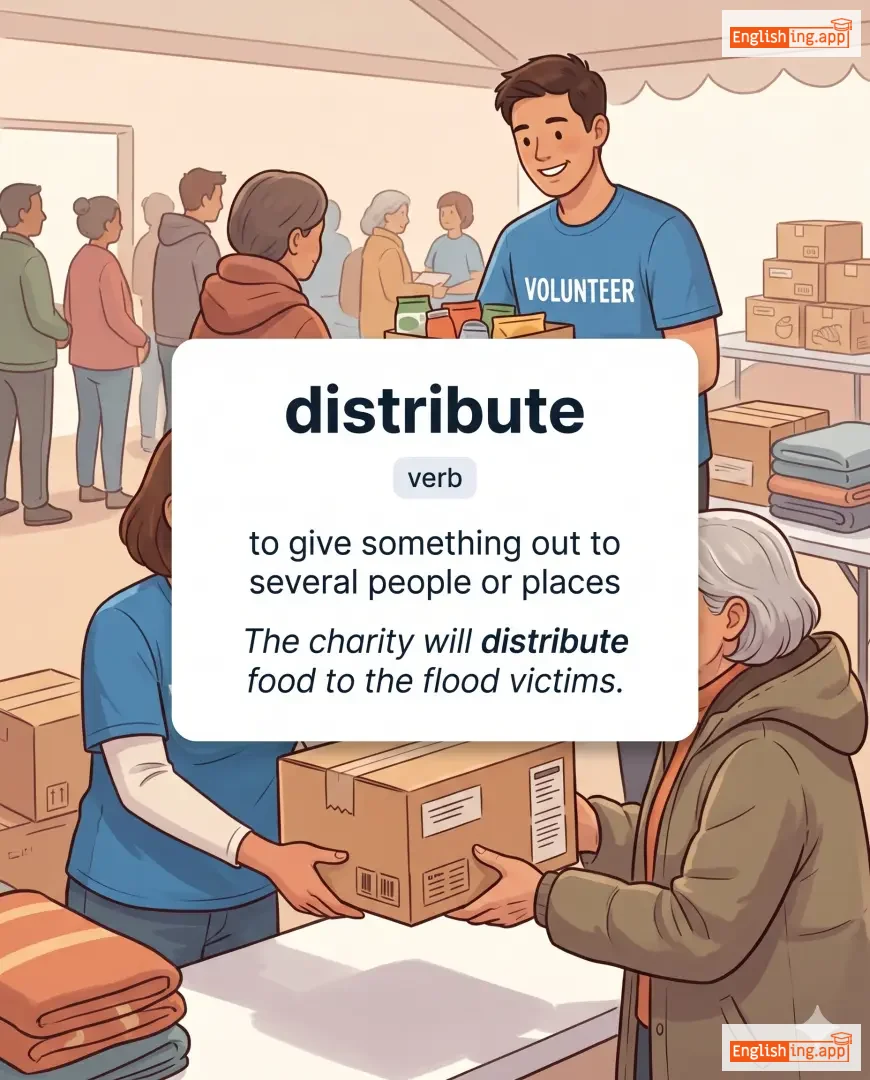
distribute definition card — visual illustration of the meaning
verb
/dɪˈstrɪbjuːt/
distribuir (distribuir)

to give something out to several people or places

"The charity will distribute food to the flood victims."

"La caridad distribuirá comida a las víctimas de las inundaciones." (La caridad distribuirá comida a las víctimas de las inundaciones.)
noun
/ˌdɪstrɪˈbjuːʃən/
distribución (distribucion)

the act of sharing or delivering something to multiple people or places

"The company manages the distribution of food supplies to rural areas."

"La empresa gestiona la distribución de suministros de alimentos a áreas rurales." (La empresa gestiona la distribucion de suministros de alimentos a areas rurales.)
noun
/ˈdɪstrɪkt/
distrito (distrito)

a specific area of a country, city, or town, often with official boundaries

"She lives in the northern district of the city."

"Ella vive en el distrito norte de la ciudad." (Ella vive en el distrito norte de la ciudad.)
verb
/dɪsˈtrʌst/
desconfiar (desconfiar)

to have no confidence or trust in someone or something

"Many people distrust politicians."

"Muchas personas desconfían de los políticos." (Muchas personas desconfían de los políticos.)
verb
/dɪsˈtɜːb/
molestar (molestar)

to interrupt or cause someone to stop what they are doing

"Please don’t disturb me while I’m studying."

"Por favor, no me moleste mientras estudio." (Por favor, no me moleste mientras estudio.)
noun
/dɪˈstɜː.bəns/
perturbación; disturbio; trastorno (perturbacion; disturbio; trastorno)

the interruption of a settled and peaceful condition; anxiety or mental uneasiness

"The loud music created a disturbance that bothered all the neighbors."

"La música alta causó una perturbación que molestó a todos los vecinos." (La musica alta causo una perturbacion que molesto a todos los vecinos.)
adjective
/dɪˈstɜː.bɪŋ/
perturbador (perturbador)

causing anxiety, worry, or emotional distress

"The news about the accident was deeply disturbing."

"La noticia sobre el accidente fue profundamente perturbadora." (La noticia sobre el accidente fue profundamente perturbadora.)
noun
/dɪsˈjuːnjən/
desunión (desunion)

the state of being separated or not united

"Civil wars often result from national disunion."

"Las guerras civiles a menudo resultan de la desunión nacional." (Las guerras civiles a menudo resultan de la desunion nacional.)
noun
/ˈdaɪˌsɪləbəl/
palabra disílaba (palabra disílaba)

a word consisting of two syllables

"The word 'happy' is a disyllable."

"La palabra ‘feliz’ es una palabra disílaba." (La palabra ‘feliz’ es una palabra disílaba.)
verb
/ˈdɪðər/
vacilar (vacilar)

to be indecisive or unable to make a decision

"He dithered for hours before choosing a restaurant."

"Él vaciló durante horas antes de elegir un restaurante." (El vaciló durante horas antes de elegir un restaurante.)
noun
/ˈdɪti/
canción corta (cancion corta)

a short, simple song or poem

"She sang a cheerful little ditty while cooking."

"Ella cantó una alegre canción corta mientras cocinaba." (Ella canto una alegre cancion corta mientras cocinaba.)
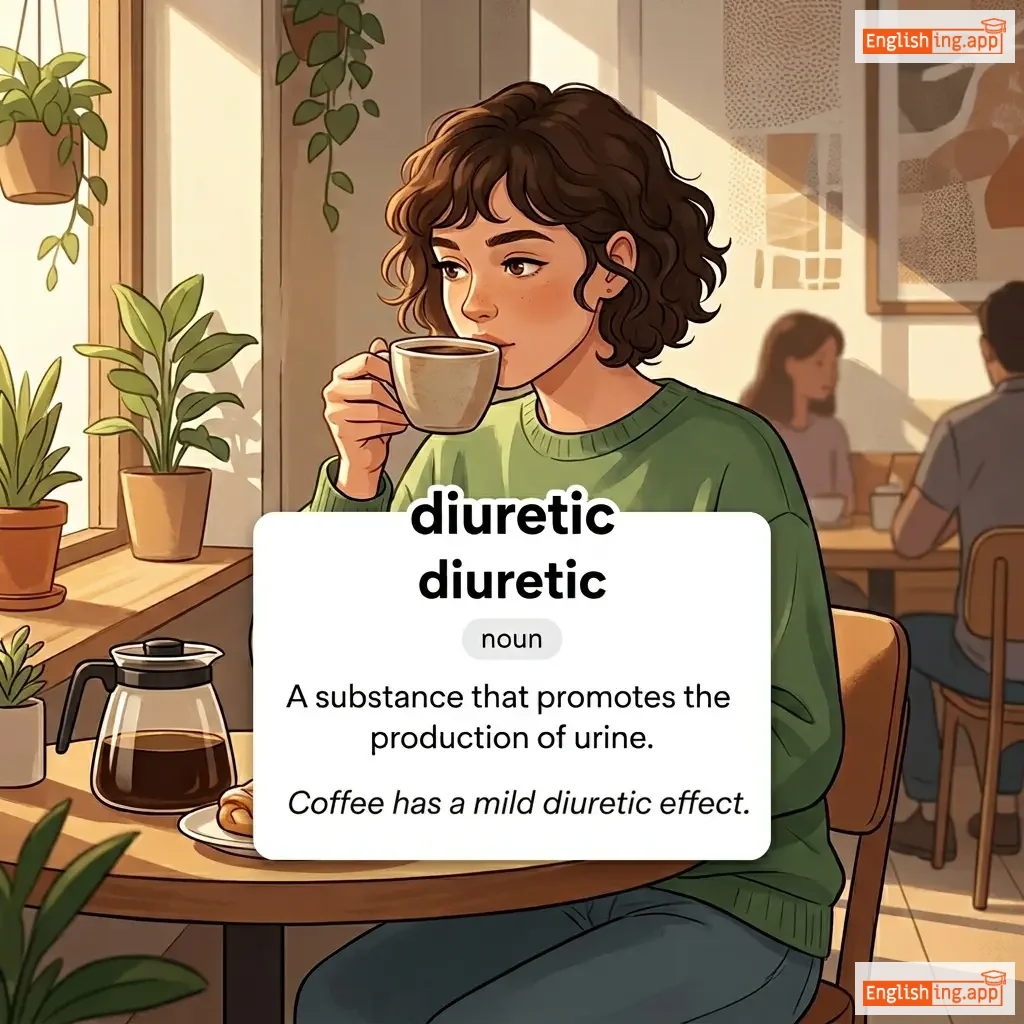
diuretic definition card — visual illustration of the meaning
noun
/ˌdaɪ.jʊˈret.ɪk/
diurético (diuretico)

A substance that promotes the production of urine.

"Coffee has a mild diuretic effect."

"El café tiene un leve efecto diurético." (El cafe tiene un leve efecto diuretico.)
adjective
/daɪˈɜːrnəl/
diurno (diurno)

active during the day; occurring daily

"Most birds are diurnal creatures, active in daylight hours."

"La mayoría de las aves son criaturas diurnas, activas durante las horas de luz." (La mayoria de las aves son criaturas diurnas, activas durante las horas de luz.)
noun
/ˈdiːvə/
cantante famosa (cantante famosa)

a famous female singer; a woman who is admired or behaves like a star

"The pop diva performed her latest hit to a cheering crowd."

"La diva del pop interpretó su último éxito frente a una multitud que aplaudía." (La diva del pop interpretó su último éxito frente a una multitud que aplaudía.)
noun
/ˌdaɪvəˈɡeɪʃən/
divagación (divagacion)

digression; wandering from a path or subject

"His lecture was full of divagation, making it hard to follow the main point."

"Su conferencia estuvo llena de divagaciones, lo que hizo difícil seguir el punto principal." (Su conferencia estuvo llena de divagaciones, lo que hizo dificil seguir el punto principal.)
verb
/daɪv/
zambullirse (zambullirse)

to plunge headfirst into water or another substance

"He decided to dive into the pool on a hot day."

"Él decidió zambullirse en la piscina en un día caluroso." (Él decidió zambullirse en la piscina en un día caluroso.)
noun
/ˈdaɪ.vər/
buceador (buceador)

a type of water bird that dives underwater to catch fish

"The diver disappeared beneath the surface to catch a fish."

"El buceador desapareció bajo la superficie para atrapar un pez." (El buceador desaparecio bajo la superficie para atrapar un pez.)
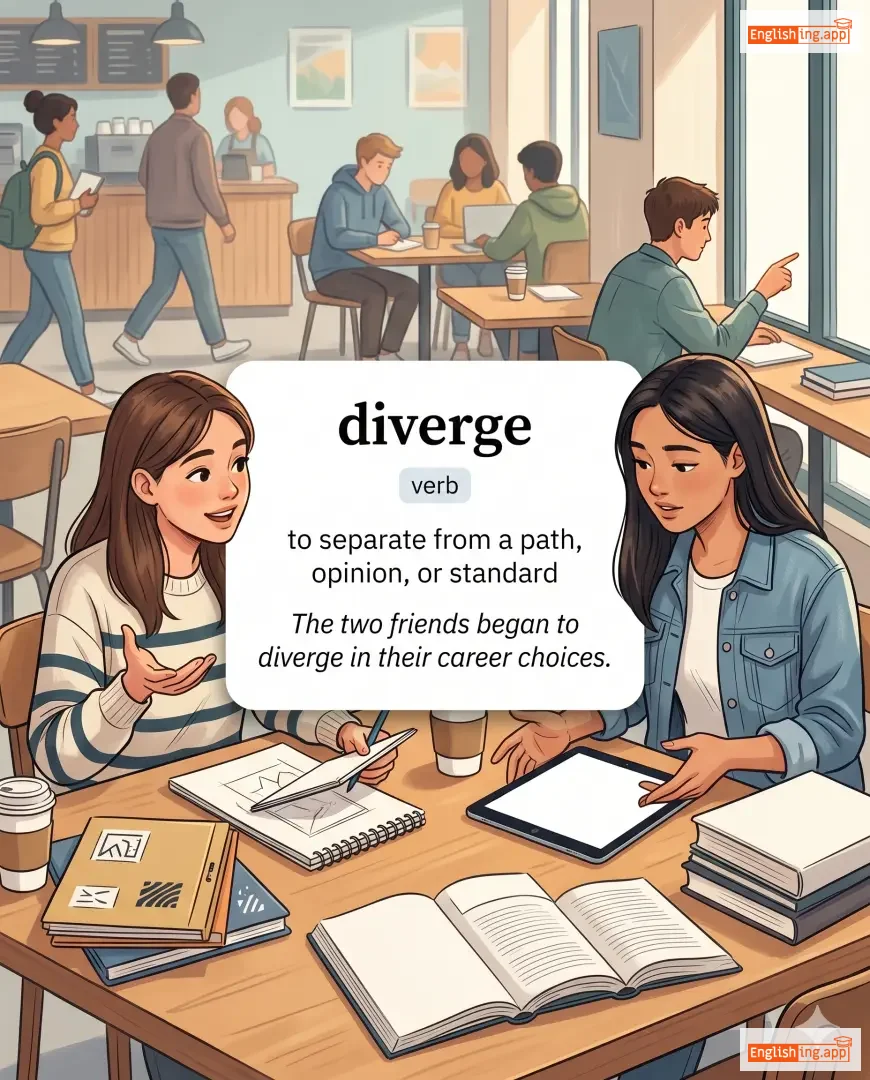
diverge definition card — visual illustration of the meaning
verb
/daɪˈvɜːrdʒ/
divergir (divergir)

to separate from a path, opinion, or standard

"The two friends began to diverge in their career choices."

"Los dos amigos comenzaron a divergir en sus elecciones de carrera." (Los dos amigos comenzaron a divergir en sus elecciones de carrera.)
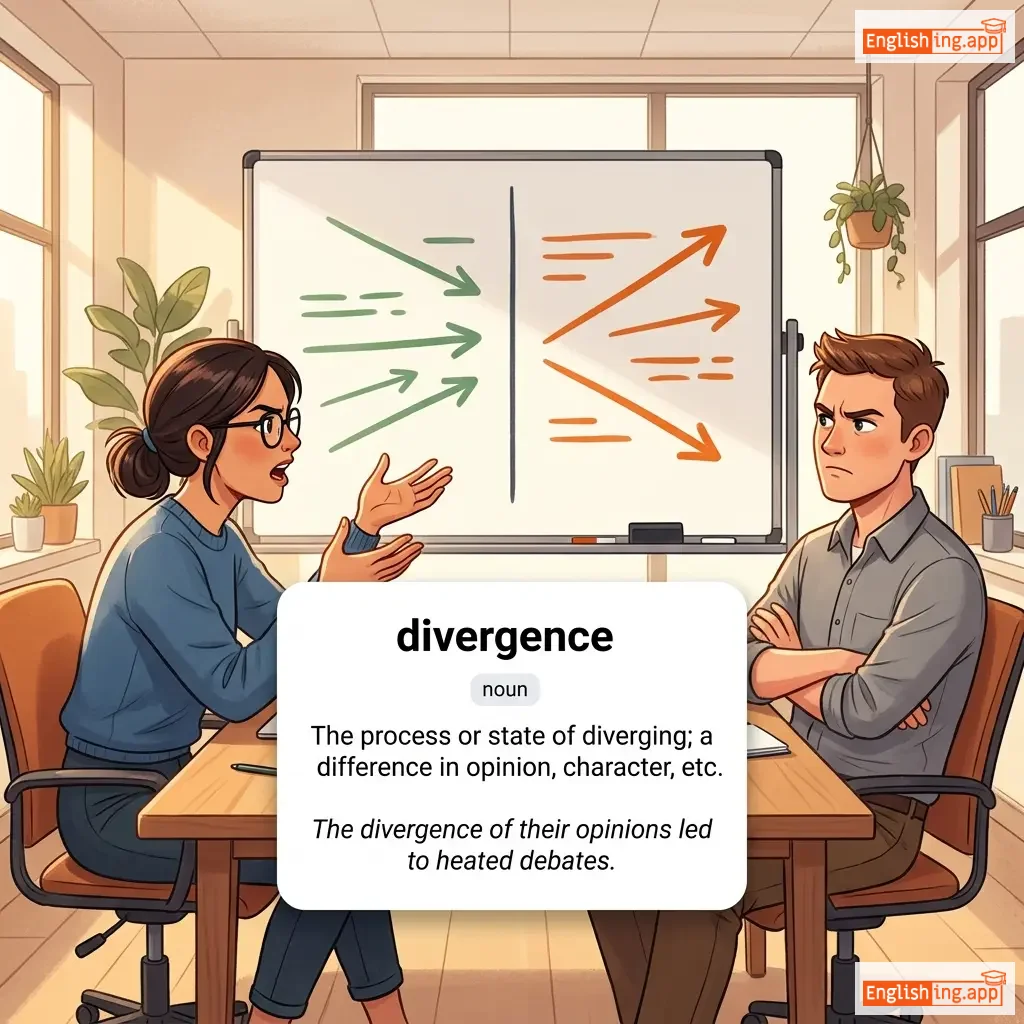
divergence definition card — visual illustration of the meaning
noun
daɪˈvɜː.dʒəns
divergencia (divergencia)

The process or state of diverging; a difference in opinion, character, etc.

"The divergence of their opinions led to heated debates."

"La divergencia de sus opiniones llevó a debates acalorados." (La divergencia de sus opiniones llevó a debates acalorados.)
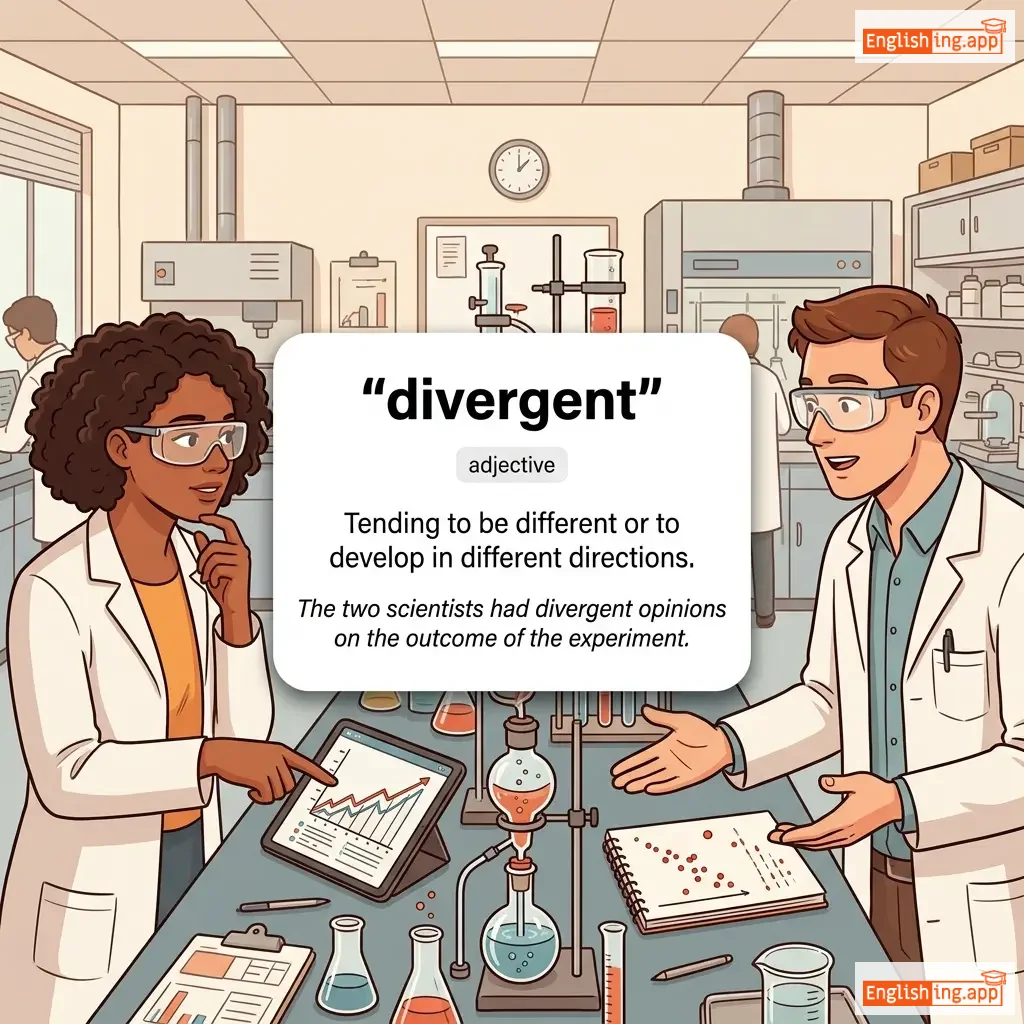
divergent definition card — visual illustration of the meaning
adjective
/daɪˈvɜːrdʒənt/
divergente (divergente)

Tending to be different or to develop in different directions.

"The two scientists had divergent opinions on the outcome of the experiment."

"Los dos científicos tenían opiniones divergentes sobre el resultado del experimento." (Los dos científicos tenían opiniones divergentes sobre el resultado del experimento.)
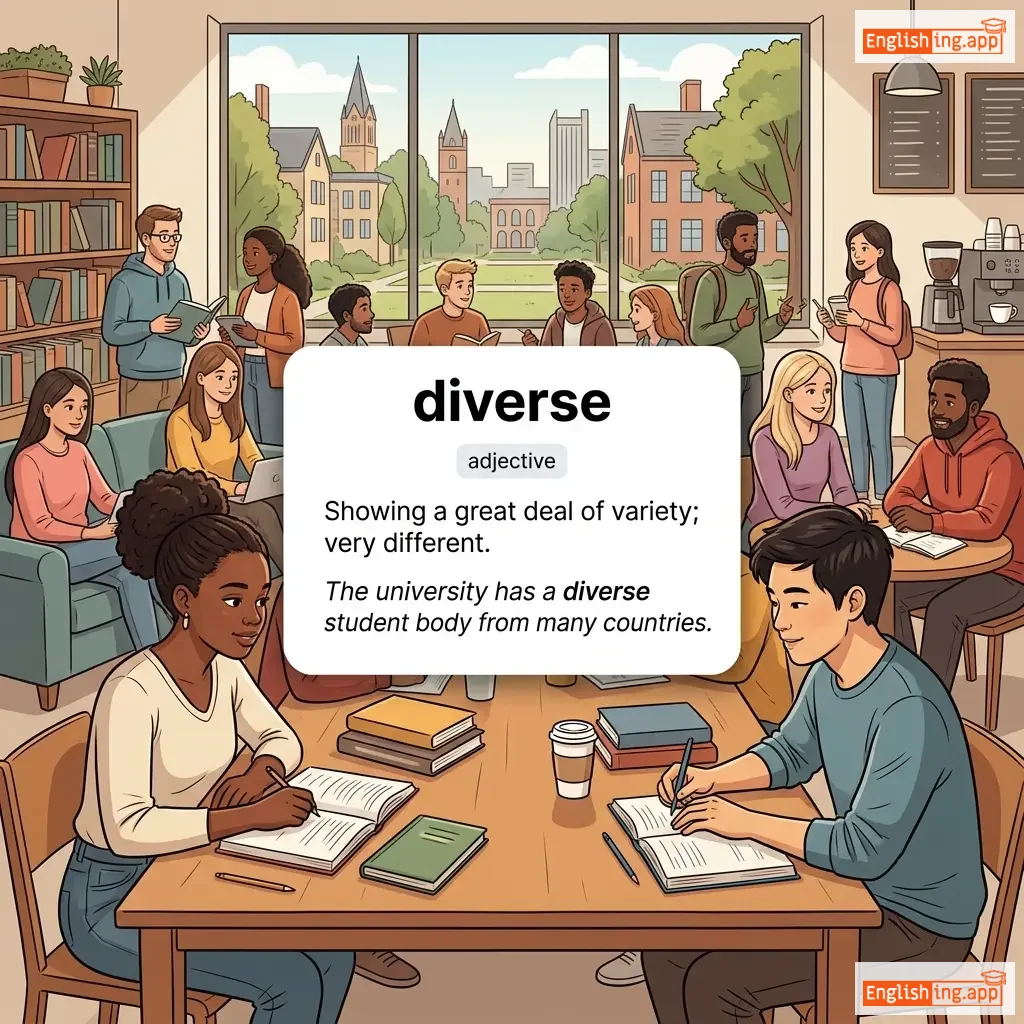
diverse definition card — visual illustration of the meaning
adjective
/daɪˈvɜːrs/
diverso (diverso)

Showing a great deal of variety; very different.

"The university has a diverse student body from many countries."

"La universidad tiene un cuerpo estudiantil diverso de muchos países." (La universidad tiene un cuerpo estudiantil diverso de muchos países.)
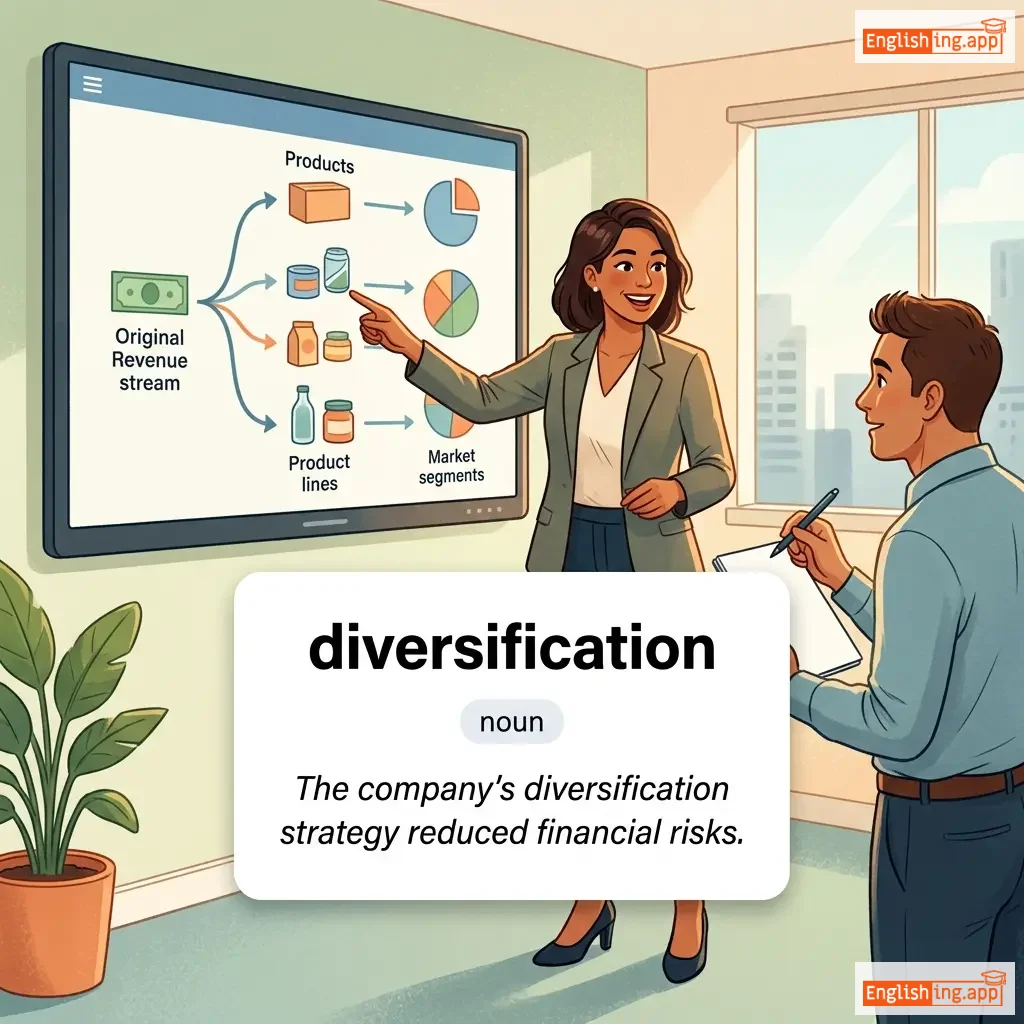
diversification definition card — visual illustration of the meaning
noun
/daɪˌvɜː.sɪ.fɪˈkeɪ.ʃən/
diversificación (diversificacion)

The process of a business expanding into different product lines or markets to spread risk and reduce dependence on a single source of income.

"The company's diversification strategy reduced financial risks."

"La estrategia de diversificación de la empresa redujo los riesgos financieros." (La estrategia de diversificación de la empresa redujo los riesgos financieros.)
adjective
/daɪˈvɜːrsɪfaɪd/
diversificado (diversificado)

Made or having variety in form, nature, or content.

"The company adopted a diversified business strategy to reduce risks."

"La empresa adoptó una estrategia empresarial diversificada para reducir los riesgos." (La empresa adoptó una estrategia empresarial diversificada para reducir los riesgos.)
noun
/daɪˈvɜːrʒən/
desvío (desvio)

The act of changing direction or being distracted; an activity that entertains.

"The road was closed, so we had to take a diversion through the village."

"La carretera estaba cerrada, así que tuvimos que tomar un desvío a través del pueblo." (La carretera estaba cerrada, asi que tuvimos que tomar un desvio a traves del pueblo.)
diversity definition card — visual illustration of the meaning
noun
/daɪˈvɜːrsəti/
diversidad (diversidad)

A range of different things or people; variety.

"Workplace diversity helps foster innovation and creativity."

"La diversidad en el lugar de trabajo ayuda a fomentar la innovación y la creatividad." (La diversidad en el lugar de trabajo ayuda a fomentar la innovación y la creatividad.)
verb
/daɪˈvɜːrt/
desviar (desviar)

to turn aside from a course; to redirect or entertain

"The police diverted traffic to a side road."

"La policía desvió el tráfico hacia una carretera lateral." (La policía desvió el tráfico hacia una carretera lateral.)
adjective
/daɪˈvɜːrtɪbəl/
desviable (desviable)

capable of being turned aside or redirected

"Funds from the budget are not legally divertible."

"Los fondos del presupuesto no se pueden desviar legalmente." (Los fondos del presupuesto no se pueden desviar legalmente.)
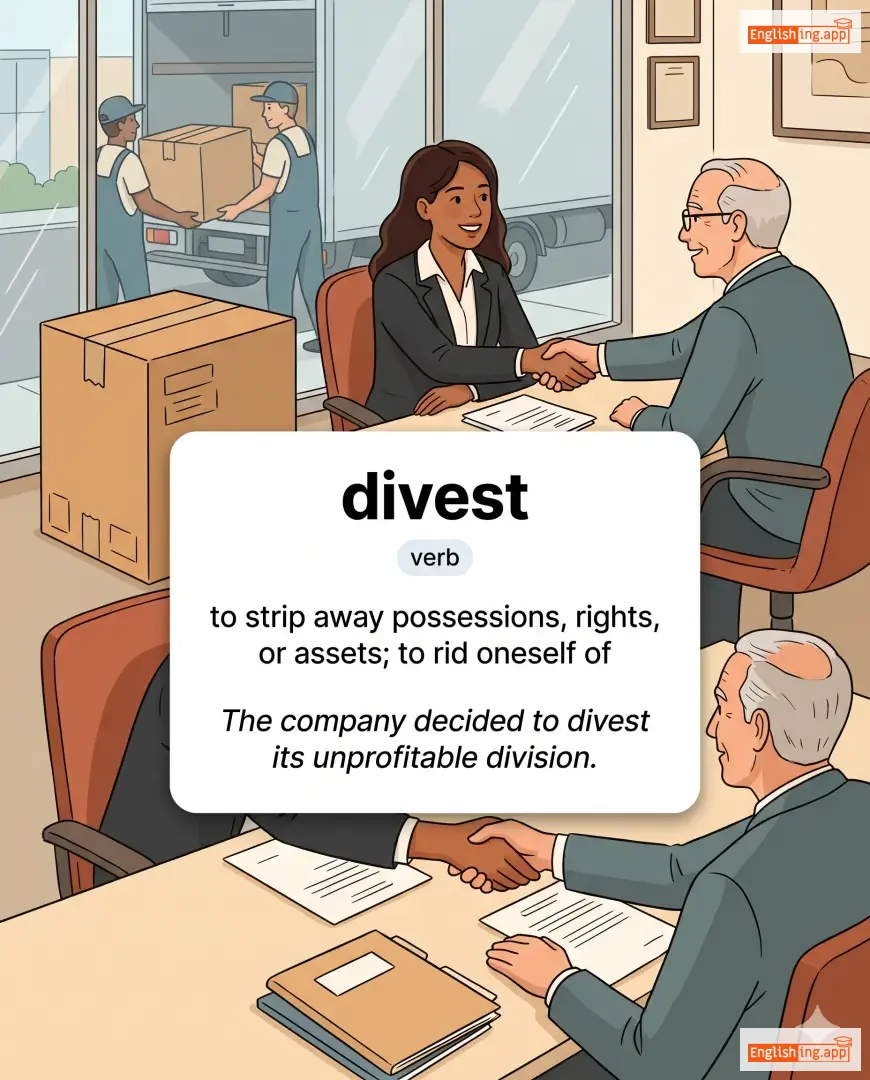
divest definition card — visual illustration of the meaning
verb
/daɪˈvɛst/
desinvertir (desinvertir)

to strip away possessions, rights, or assets; to rid oneself of

"The company decided to divest its unprofitable division."

"La empresa decidió desinvertir su división no rentable." (La empresa decidió desinvertir su división no rentable.)
noun
/daɪˈvɛstɪtʃər/
desinversión (desinversion)

the action of selling off or disposing of business interests or assets

"The divestiture of the subsidiary was completed last year."

"La desinversión de la filial se completó el año pasado." (La desinversion de la filial se completo el ano pasado.)
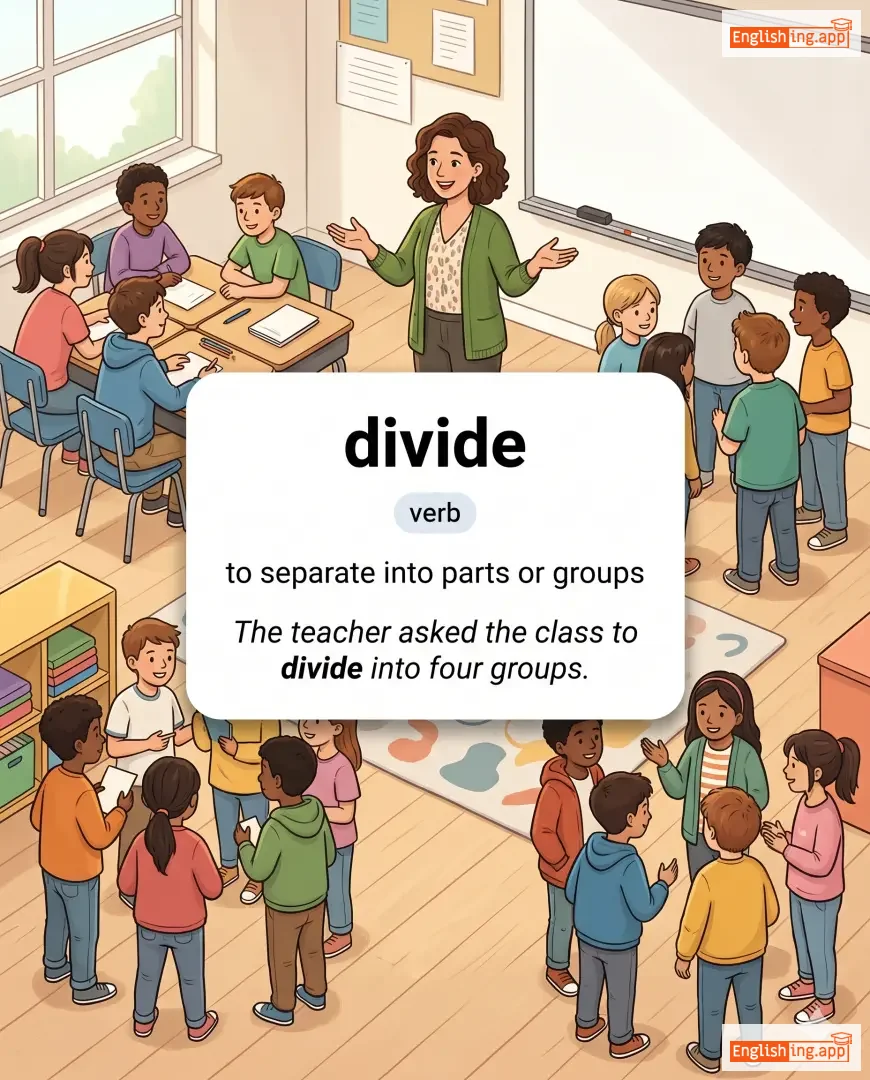
divide definition card — visual illustration of the meaning
verb
/dɪˈvaɪd/
dividir (dividir)

to separate into parts or groups

"The teacher asked the class to divide into four groups."

"El maestro pidió a la clase que se dividiera en cuatro grupos." (El maestro pidió a la clase que se dividiera en cuatro grupos.)
noun
/ˌdɪvɪˈneɪʃən/
adivinación (adivinacion)

the practice of seeking knowledge of the future or the unknown by supernatural means

"Ancient people often relied on divination to guide important decisions."

"Las personas antiguas a menudo dependían de la adivinación para tomar decisiones importantes." (Las personas antiguas a menudo dependían de la adivinación para tomar decisiones importantes.)
adjective, verb
/dɪˈvaɪn/
divino (divino)

Relating to God or a deity; exceptionally wonderful or pleasing; to discover or foresee by intuition or supernatural means.

"She believed the divine power guided her actions."

"Ella creyó que el poder divino guió sus acciones." (Ella creyó que el poder divino guió sus acciones.)
noun
/dɪˈvɪnɪti/
divinidad (divinidad)

The quality or state of being divine; a deity.

"The priest spoke about the divinity of the soul."

"El sacerdote habló sobre la divinidad del alma." (El sacerdote habló sobre la divinidad del alma.)
adjective
/dɪˈvɪzəbl/
divisible (divisible)

Capable of being divided by another number without leaving a remainder.

"Twelve is divisible by three and four."

"Doce es divisible por tres y cuatro." (Doce es divisible por tres y cuatro.)
noun
/dɪˈvɪʒən/
división (division)

the action of separating something into parts; or a large administrative unit

"The company has a separate division for research and development."

"La empresa tiene una división separada para investigación y desarrollo." (La empresa tiene una division separada para investigacion y desarrollo.)
noun
/dɪˈvaɪzər/
divisor (divisor)

A number by which another number is divided.

"In the equation 12 ÷ 3, the number 3 is the divisor."

"En la ecuación 12 ÷ 3, el número 3 es el divisor." (En la ecuacion 12 ÷ 3, el numero 3 es el divisor.)
noun/verb
/dɪˈvɔːrs/
divorcio (divorcio)

the legal ending of a marriage; to officially end a marriage

"After years of conflict, they decided to get a divorce."

"Después de años de conflicto, decidieron divorciarse." (Despues de anos de conflicto, decidieron divorciarse.)
adjective
/dɪˈvɔːrst/
divorciado (divorciado)

No longer married because the marriage has been legally dissolved.

"She has been divorced for five years."

"Ella ha estado divorciada durante cinco años." (Ella ha estado divorciada durante cinco años.)
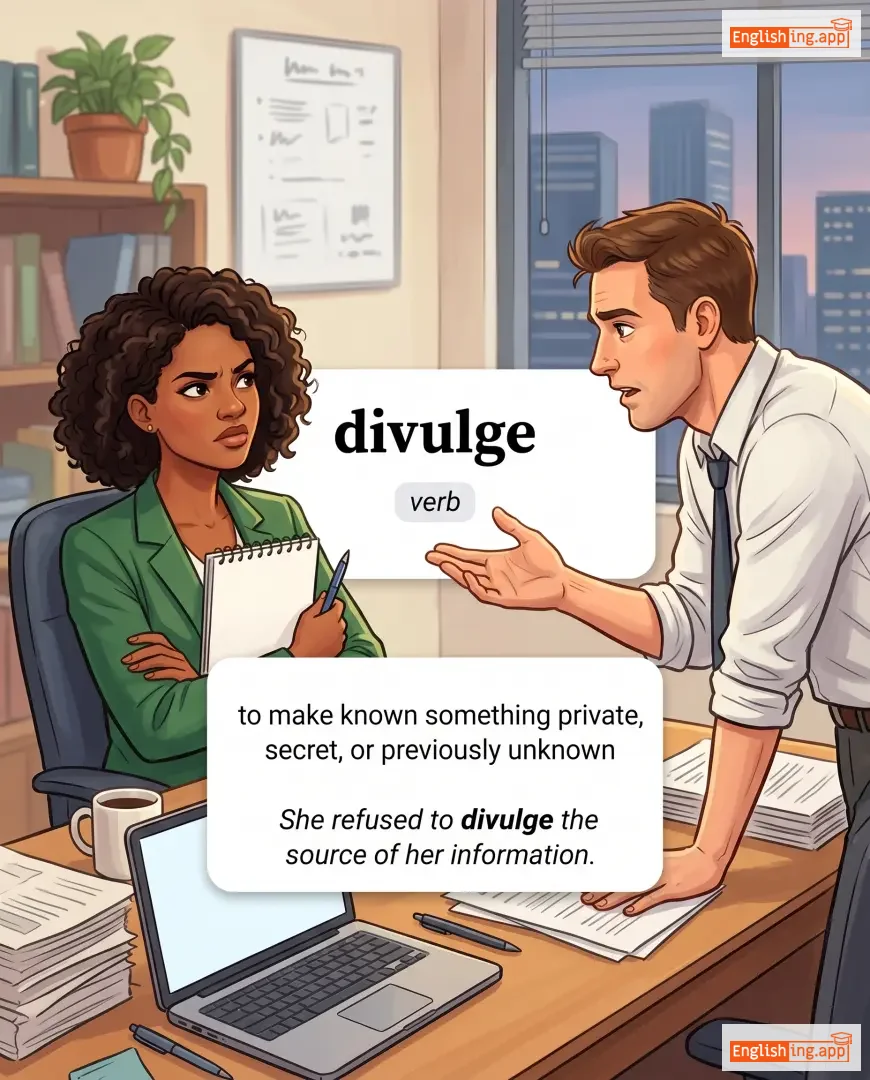
divulge definition card — visual illustration of the meaning
verb
/daɪˈvʌldʒ/
divulgar (divulgar)

to make known something private, secret, or previously unknown

"She refused to divulge the source of her information."

"Ella se negó a divulgar la fuente de su información." (Ella se nego a divulgar la fuente de su informacion.)
noun
/daɪˈvʌldʒəns/
divulgación (divulgacion)

the act of revealing or disclosing something secret or private

"The divulgence of company secrets caused a major scandal."

"La divulgación de secretos de la empresa causó un gran escándalo." (La divulgacion de secretos de la empresa causo un gran escandalo.)
noun
/ˌdiː.enˈeɪ/
Ácido desoxirribonucleico (DNA)

Deoxyribonucleic acid, the molecule that carries genetic information in living organisms.

"Scientists extracted DNA from the ancient bones."

"Los científicos extrajeron ADN de los huesos antiguos." (Los cientificos extrajeron ADN de los huesos antiguos.)
verb
/duː/
hacer (hacer)

To perform an action, task, or activity.

"I need to do my homework before dinner."

"Necesito hacer mi tarea antes de la cena." (Necesito hacer mi tarea antes de la cena.)
adjective
/ˈdɑːsəl/ or /ˈdəʊsaɪl/
docil (docil)

easily managed, taught, or controlled; submissive

"The docile puppy quickly learned new tricks."

"El cachorro dócil aprendió rápidamente nuevos trucos." (El cachorro docil aprendió rápidamente nuevos trucos.)
noun
/dɒk/
muelle (muelle)

a structure where ships are loaded, unloaded, or repaired

"The ship stayed at the dock for two days."

"El barco permaneció en el muelle durante dos días." (El barco permaneció en el muelle durante dos días.)
noun
/ˈdɒkɪt/
lista (lista)

a list or schedule of cases to be tried in a court or items to be done

"The judge reviewed the docket before starting the session."

"El juez revisó la lista antes de comenzar la sesión." (El juez revisó la lista antes de comenzar la sesión.)
noun
/ˈdɒktər/
médico (mediko)

A qualified medical professional who treats illnesses and injuries.

"The doctor prescribed medicine for the patient."

"El médico recetó medicamentos para el paciente." (El mediko receto medicamentos para el paciente.)
doctrinaire definition card — visual illustration of the meaning
adjective
/ˌdɒktrɪˈnɛər/
doctrinario (doctrinario)

stubbornly devoted to a theory or doctrine without regard to practical considerations

"His doctrinaire approach to politics alienated many supporters."

"Su enfoque doctrinario hacia la política alienó a muchos seguidores." (Su enfoque doctrinario hacia la politica alieno a muchos seguidores.)