Vocabularios

Descubra, aprenda y domine el vocabulario en inglés

verb
/ˌdɪfəˈrɛnʃieɪt/
diferenciar (diferenciar)

To recognize or make a distinction between things.

"It is important to differentiate between fact and opinion."

"Es importante diferenciar entre hecho y opinión." (Es importante diferenciar entre hecho y opinion.)
differentiation definition card — visual illustration of the meaning
noun
/ˌdɪf.ə.ren.ʃiˈeɪ.ʃən/
diferenciación, distinción, diferenciación entre (diferenciacion, distincion, diferenciacion entre)

The action or process of differentiating or distinguishing between two or more things or people.

"Strong differentiation sets brands apart from competitors."

"Una fuerte diferenciación hace que las marcas se destaquen de los competidores." (Una fuerte diferenciacion hace que las marcas se destaquen de los competidores.)
adverb
/ˈdɪfərəntli/
de manera diferente (de manera diferente)

in a way that is not the same as another or as expected

"She approached the problem differently than her colleagues."

"Ella abordó el problema de manera diferente que sus colegas." (Ella abordó el problema de manera diferente que sus colegas.)
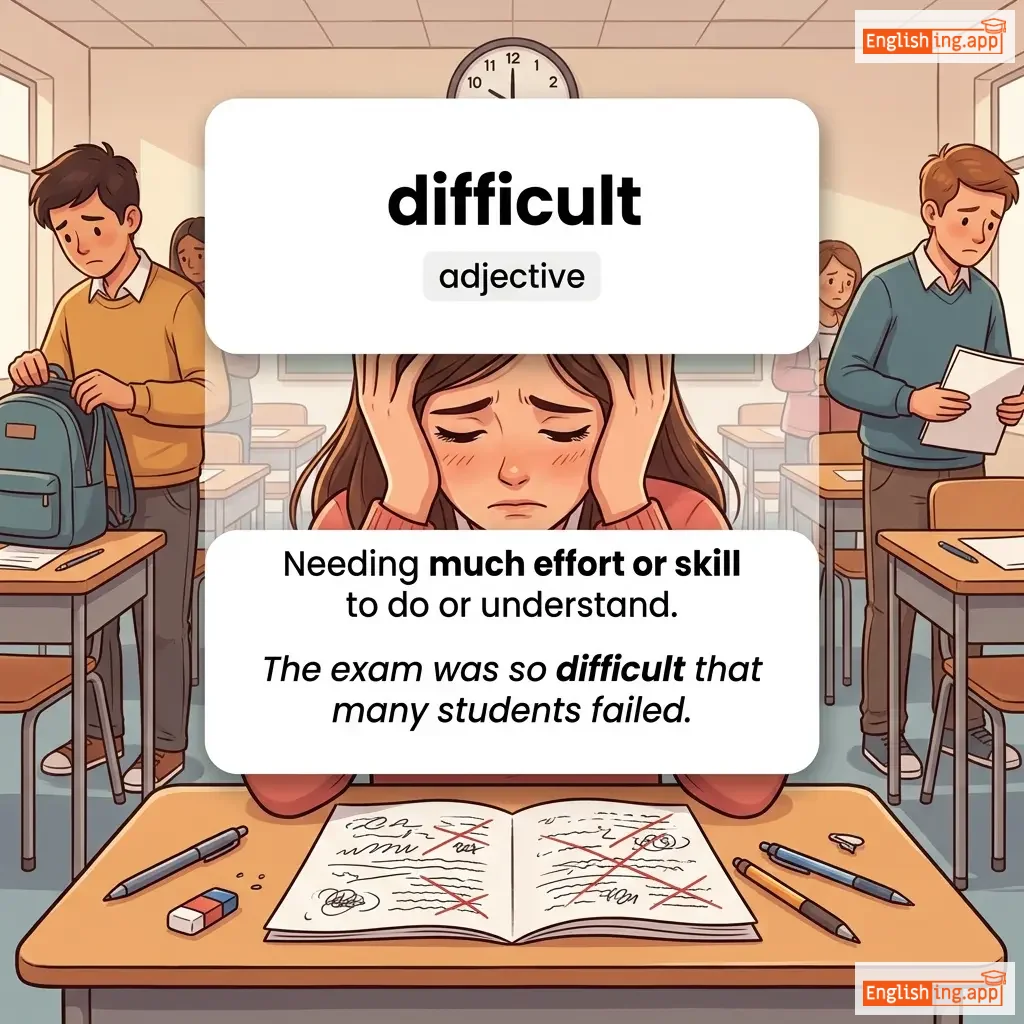
difficult definition card — visual illustration of the meaning
adjective
/ˈdɪf.ɪ.kəlt/
difícil (dificil)

Needing much effort or skill to do or understand.

"The exam was so difficult that many students failed."

"El examen fue tan difícil que muchos estudiantes fracasaron." (El examen fue tan dificil que muchos estudiantes fracasaron.)
noun
/ˈdɪfɪkəlti/

the state or condition of being hard to do, deal with, or understand

"He faced great difficulty in learning a new language."

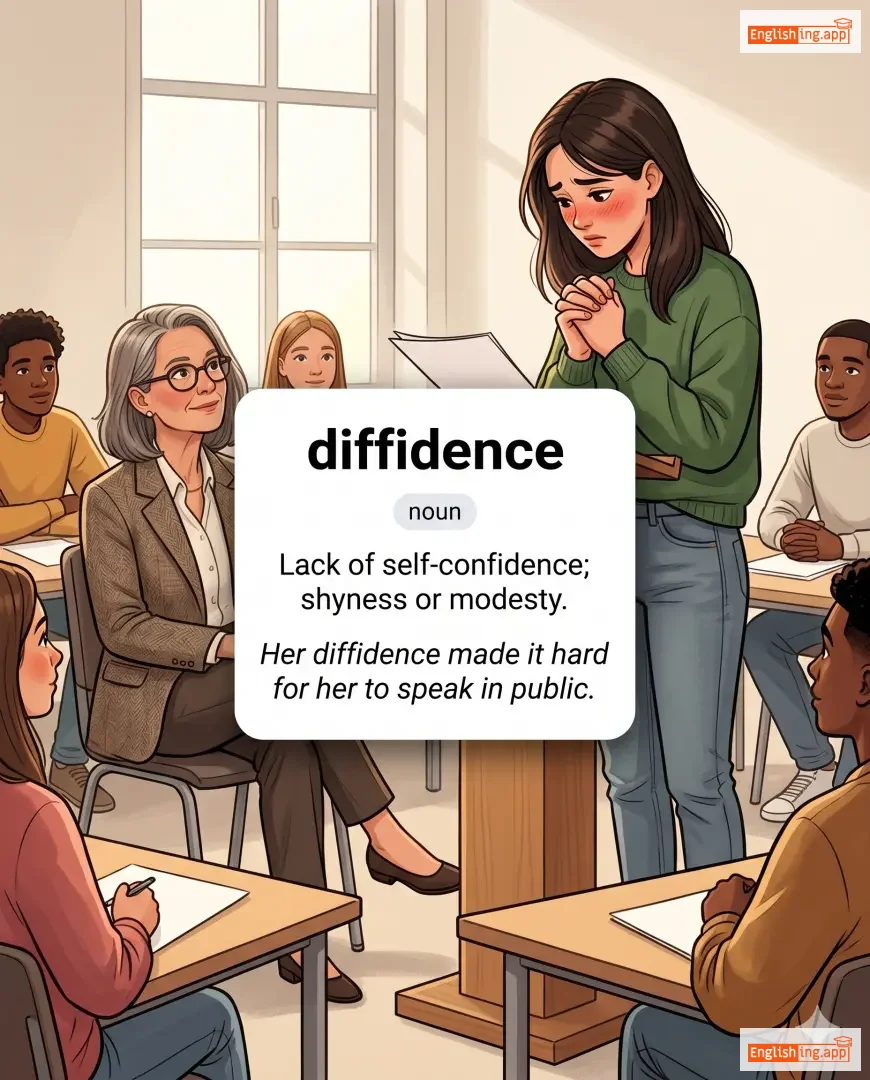
diffidence definition card — visual illustration of the meaning
noun
/ˈdɪfɪdəns/
falta de confianza en uno mismo (falta de confianza en uno mismo)

Lack of self-confidence; shyness or modesty.

"Her diffidence made it hard for her to speak in public."

"Su falta de confianza en sí misma le dificultaba hablar en público." (Su falta de confianza en si misma le dificultaba hablar en publico.)
adjective
/ˈdɪfɪdənt/
tímido (timido)

Shy or lacking confidence in one's own abilities.

"He was too diffident to ask a question in class."

"Era demasiado tímido para hacer una pregunta en la clase." (Era demasiado timido para hacer una pregunta en la clase.)
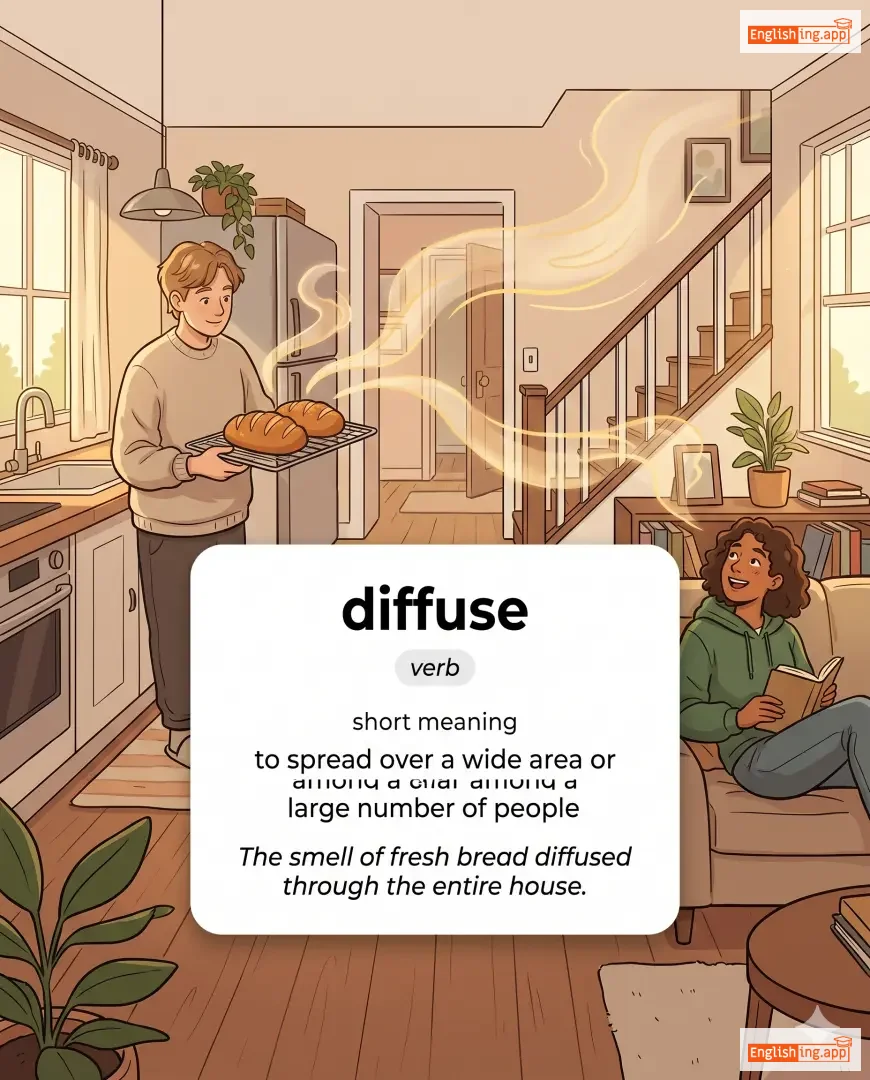
diffuse definition card — visual illustration of the meaning
verb
/dɪˈfjuːz/
difundir (difundir)

to spread over a wide area or among a large number of people

"The smell of fresh bread diffused through the entire house."

"El olor del pan recién hecho se difundió por toda la casa." (El olor del pan recién hecho se difundió por toda la casa.)
adjective
/dɪˈfjuːzəbl/
difundible (difundible)

able to spread or be spread through a medium

"Oxygen is diffusible through cell membranes."

"El oxígeno es difundible a través de las membranas celulares." (El oxígeno es difundible a traves de las membranas celulares.)
noun
/dɪˈfjuːʒən/
difusión (difusion)

the spreading of something more widely or the movement of particles from high to low concentration

"The diffusion of information on social media is rapid."

"La difusión de información en las redes sociales es rápida." (La difusion de informacion en las redes sociales es rapida.)
verb
/dɪɡ/
cavar (kavar)

to break up and move earth with a tool or machine, or with hands, paws, etc.

"They decided to dig a hole for the new tree."

"Ellos decidieron cavar un agujero para el nuevo árbol." (Ellos decidieron cavar un agujero para el nuevo árbol.)
digest definition card — visual illustration of the meaning
verb
/daɪˈdʒest/
digerir (digerir)

to break down food in the body; to think about and understand

"It takes time to digest a heavy meal."

"Toma tiempo digerir una comida pesada." (Toma tiempo digerir una comida pesada.)
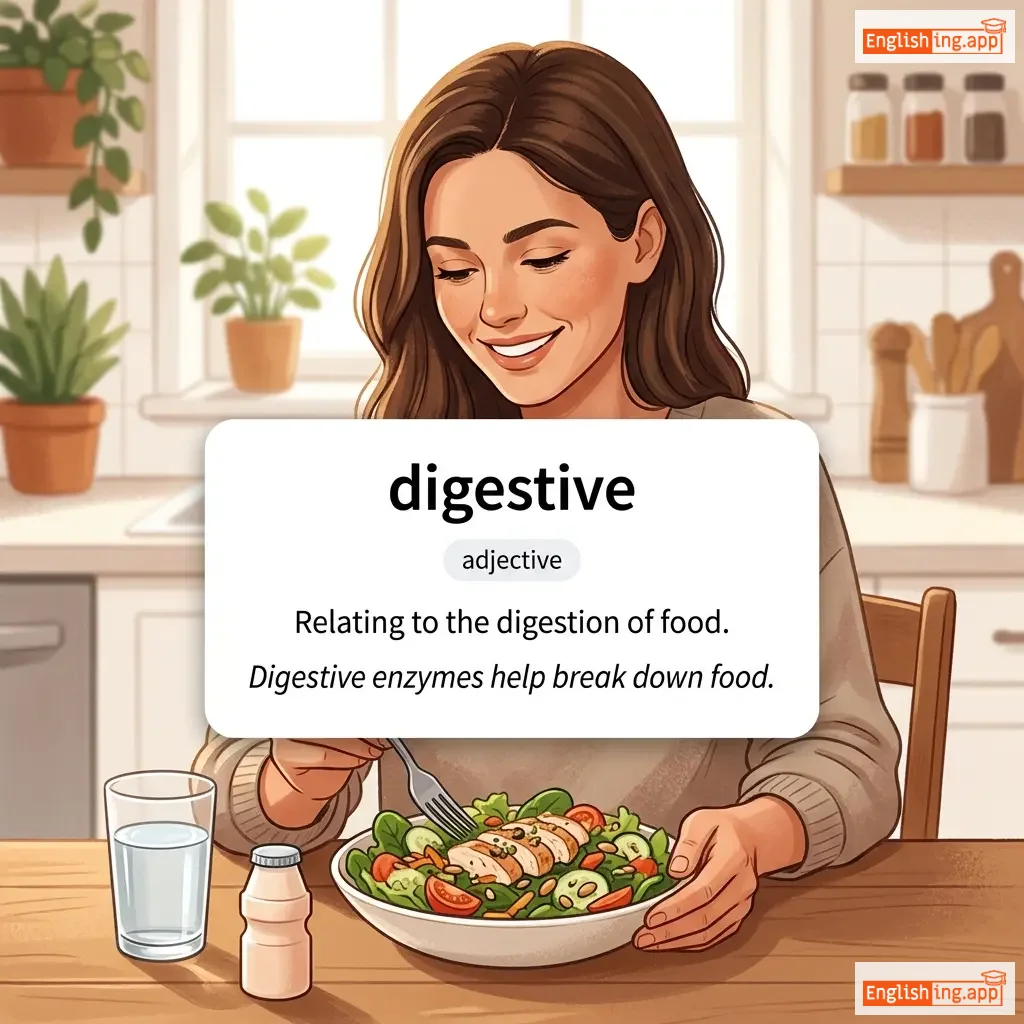
digestive definition card — visual illustration of the meaning
adjective
daɪˈdʒes.tɪv
digestivo (digestivo)

Relating to the digestion of food.

"Digestive enzymes help break down food."

"Las enzimas digestivas ayudan a descomponer los alimentos." (Las enzimas digestivas ayudan a descomponer los alimentos.)
noun
/ˈdɪdʒɪt/
dígito (dijit)

a numeral from 0 to 9; also a finger or toe

"You must enter a four-digit code to unlock the phone."

"Debes introducir un código de cuatro dígitos para desbloquear el teléfono." (debes introducir un codigo de cuatro digitos para desbloquear el telefono)
digital definition card — visual illustration of the meaning
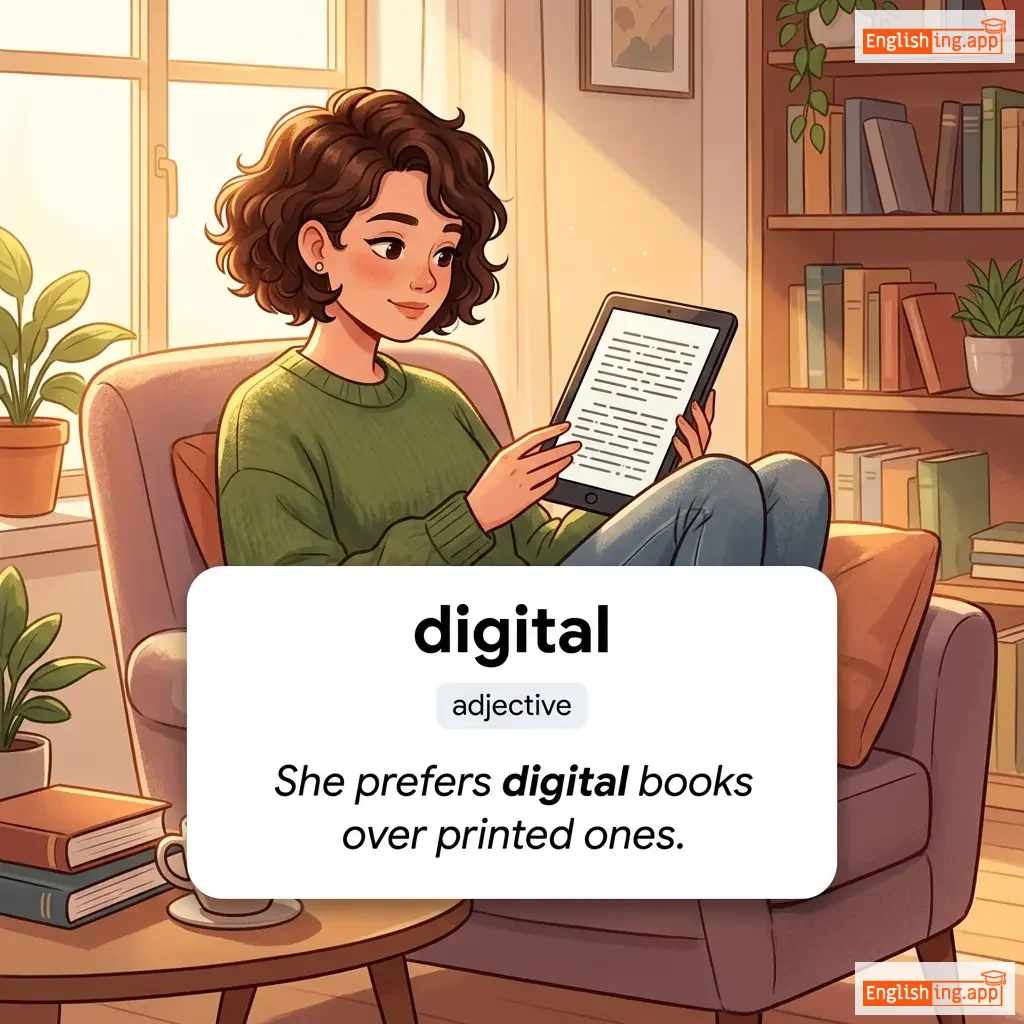
adjective
/ˈdɪdʒɪtl/
digital (digital)

relating to technology that uses signals or data in the form of numbers (0s and 1s)

"She prefers digital books over printed ones."

"Ella prefiere los libros digitales sobre los impresos." (Ella prefiere los libros digitales sobre los impresos.)
digital detox definition card — visual illustration of the meaning
noun
/ˈdɪdʒɪtl ˈdɛtɒks/
desintoxicación digital (desintoxicacion digital)

A period of time during which a person refrains from using electronic devices such as smartphones or computers, regarded as an opportunity to reduce stress or focus on social interaction in the physical world.

"A digital detox can help improve mental clarity and reduce stress."

"Una desintoxicación digital puede ayudar a mejorar la claridad mental y reducir el estrés." (Una desintoxicacion digital puede ayudar a mejorar la claridad mental y reducir el estres.)
Digital Format definition card — visual illustration of the meaning
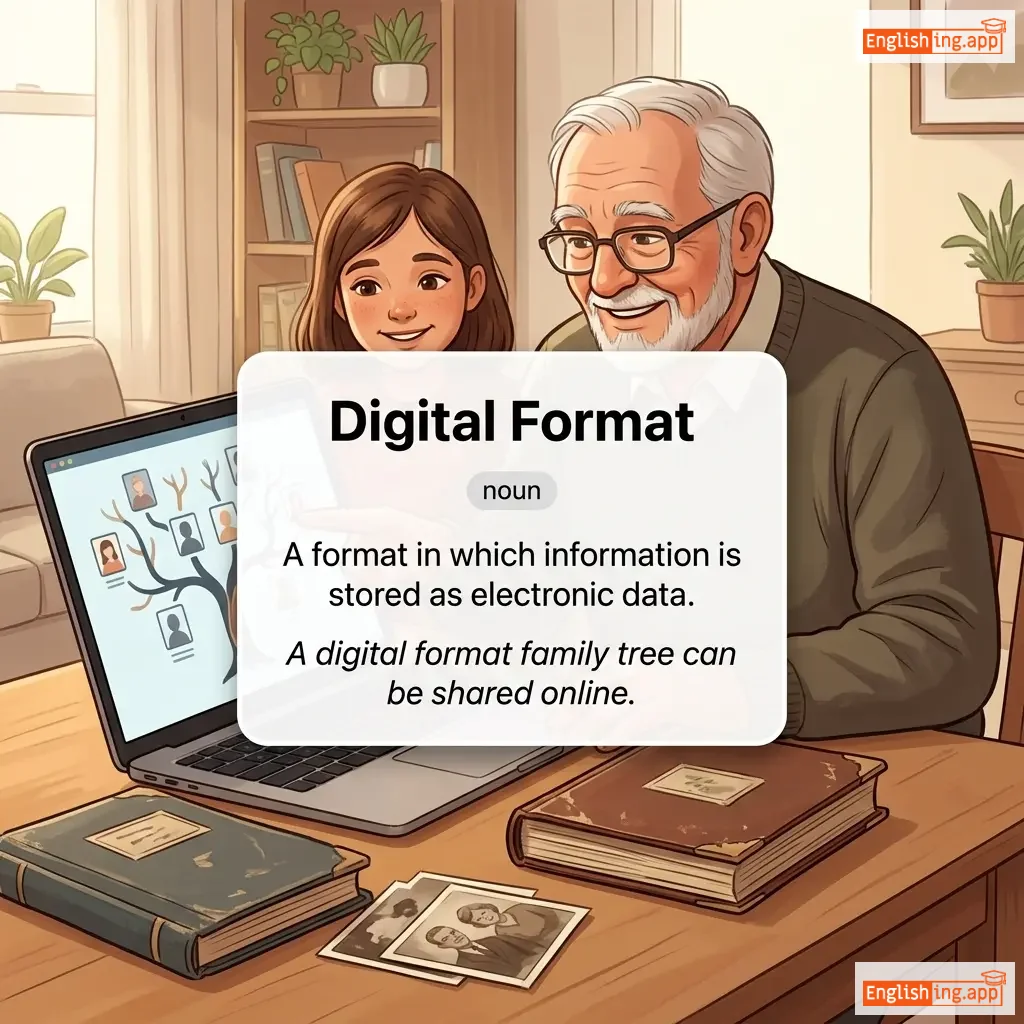
noun
ˈdɪdʒɪtəl ˈfɔːrmæt
formato digital (formato digital)

A format in which information is stored as electronic data.

"A digital format family tree can be shared online."

"Un árbol genealógico en formato digital se puede compartir en línea." (Un árbol genealógico en formato digital se puede compartir en línea.)
digital tools definition card — visual illustration of the meaning
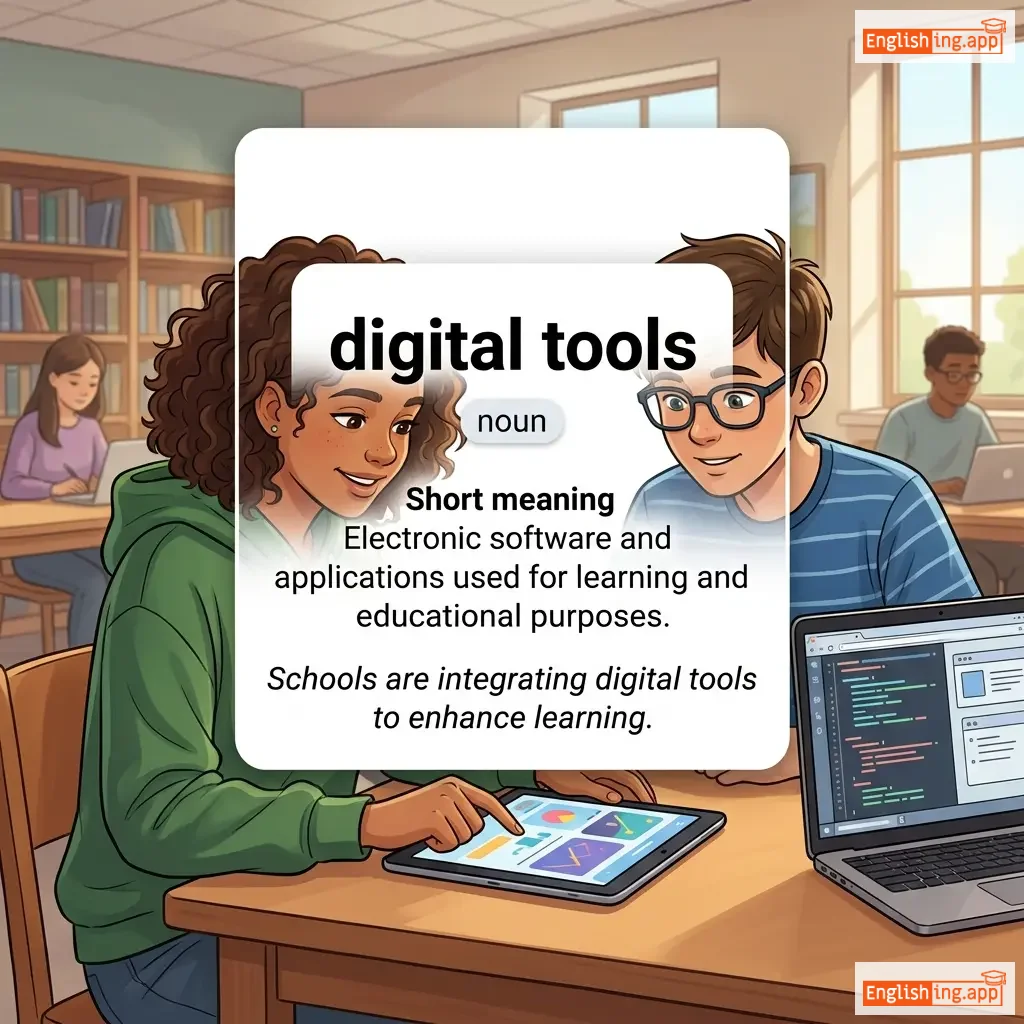
noun
ˈdɪdʒ.ɪ.təl tuːlz
herramientas digitales (herramientas digitales)

Electronic software and applications used for learning and educational purposes.

"Schools are integrating digital tools to enhance learning."

"Las escuelas están integrando herramientas digitales para mejorar el aprendizaje." (Las escuelas estan integrando herramientas digitales para mejorar el aprendizaje.)
noun
/ˈdɪɡnɪˌtɛri/
persona importante (persona importante)

a person considered to be important because of high rank or office

"Several foreign dignitaries attended the state banquet."

"Varios dignatarios extranjeros asistieron al banquete estatal." (Varios dignatarios extranjeros asistieron al banquete estatal.)
noun
/ˈdɪɡnəti/
dignidad (dignidad)

the state or quality of being worthy of respect or honor

"He faced the difficult situation with calm and dignity."

"Él enfrentó la situación difícil con calma y dignidad." (El enfrento la situacion dificil con calma y dignidad.)
noun
/ˈdaɪɡræf/
digrama (digrama)

A pair of letters representing a single sound, such as 'sh' in 'ship'.

"In the word 'phone', the letters 'ph' form a digraph."

"En la palabra 'teléfono', las letras 'ph' forman un digrama." (En la palabra 'telefono', las letras 'ph' forman un digrama.)
verb
/daɪˈɡrɛs/
apartarse temporalmente del tema principal (apartarse temporalmente del tema principal)

To leave the main subject temporarily in speech or writing.

"The professor began to digress from the main topic of the lecture."

"El profesor comenzó a digresar del tema principal de la conferencia." (El profesor comenzó a digresar del tema principal de la conferencia.)
digression definition card — visual illustration of the meaning
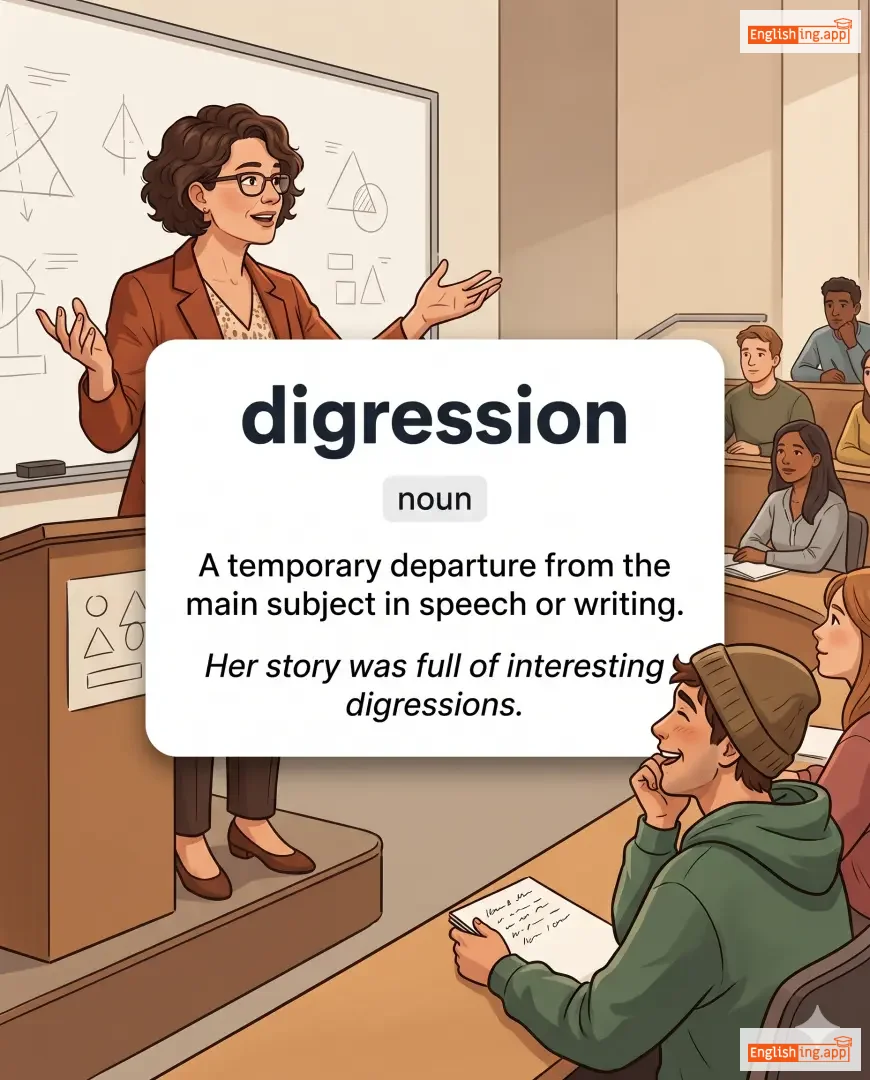
noun
/daɪˈɡrɛʃən/
digresión (digresion)

A temporary departure from the main subject in speech or writing.

"Her story was full of interesting digressions."

"Su historia estaba llena de interesantes digresiones." (Su historia estaba llena de interesantes digresiones.)
adjective
/daɪˈɡrɛsɪv/
tendencia a desviarse del tema principal (tendencia a desviarse del tema principal)

Tending to depart from the main subject in speech or writing.

"The speaker's digressive style made the lecture difficult to follow."

"El estilo digresivo del ponente hizo que la conferencia fuera difícil de seguir." (El estilo digresivo del ponente hizo que la conferencia fuera difícil de seguir.)
verb
/dɪˈlæpɪdeɪt/
deteriorar (deteriorar)

To cause something, especially a building, to fall into ruin or disrepair.

"The abandoned house began to dilapidate over the years."

"La casa abandonada comenzó a deteriorarse con los años." (La casa abandonada comenzo a deteriorarse con los anos.)
adjective
/dɪˈlæpɪˌdeɪtɪd/
deteriorado (deteriorado)

Fallen into disrepair or ruin due to neglect or age.

"The family lived in a dilapidated house at the edge of town."

"La familia vivía en una casa deteriorada al borde de la ciudad." (La familia vivía en una casa deteriorada al borde de la ciudad.)
noun
/dɪˌlæpɪˈdeɪʃən/
dilapidación (dilapidacion)

The state of disrepair or ruin as a result of neglect.

"The old temple was in a state of dilapidation."

"El antiguo templo estaba en un estado de dilapidación." (El antiguo templo estaba en un estado de dilapidación.)
verb
/daɪˈleɪt/
dilatar (dilatar)

To make wider, larger, or more open.

"The doctor used drops to dilate the patient's pupils."

"El doctor usó gotas para dilatar las pupilas del paciente." (El doctor uso gotas para dilatar las pupilas del paciente.)
adjective
/ˈdɪlətɔːri/
dilatorio (dilatorio)

Tending to cause delay; slow to act.

"The committee was criticized for its dilatory response to the crisis."

"El comité fue criticado por su respuesta dilatoria a la crisis." (El komité fue kritikao por su respuesta dilatoria a la krisis.)
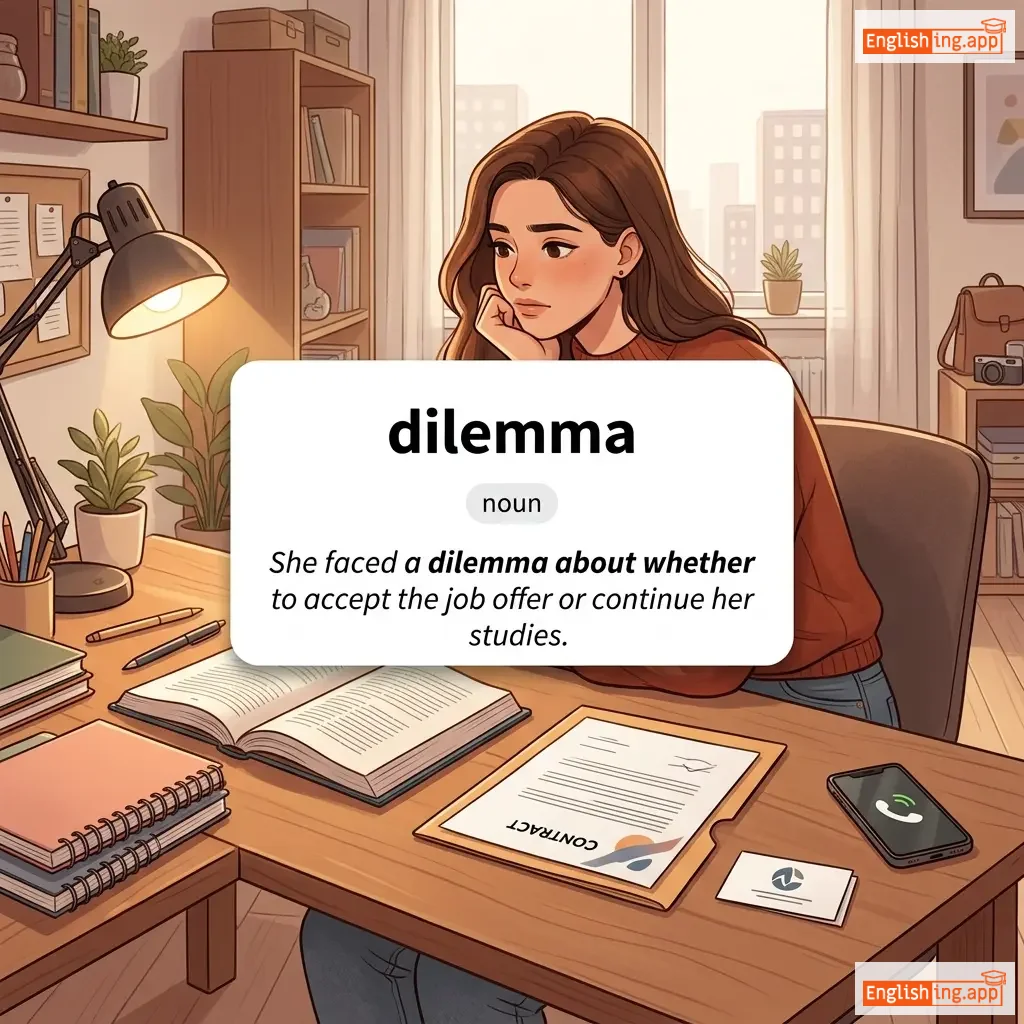
dilemma definition card — visual illustration of the meaning
noun
/daɪˈlɛmə/
dilema (dilema)

A situation in which a difficult choice has to be made between two or more alternatives.

"She faced a dilemma about whether to accept the job offer or continue her studies."

"Ella enfrentó un dilema sobre si aceptar la oferta de trabajo o continuar con sus estudios." (Ella enfrento un dilema sobre si aceptar la oferta de trabajo o continuar con sus estudios.)
noun
/ˌdɪləˈtænt/
aficionado (aficionado)

A person who takes up an art, activity, or subject merely for amusement, especially in a superficial way.

"He was dismissed as a dilettante in the art world because he lacked formal training."

"Fue despedido como un aficionado en el mundo del arte porque le faltaba formación formal." (Fue despedido como un aficionado en el mundo del arte porque le faltaba formación formal.)
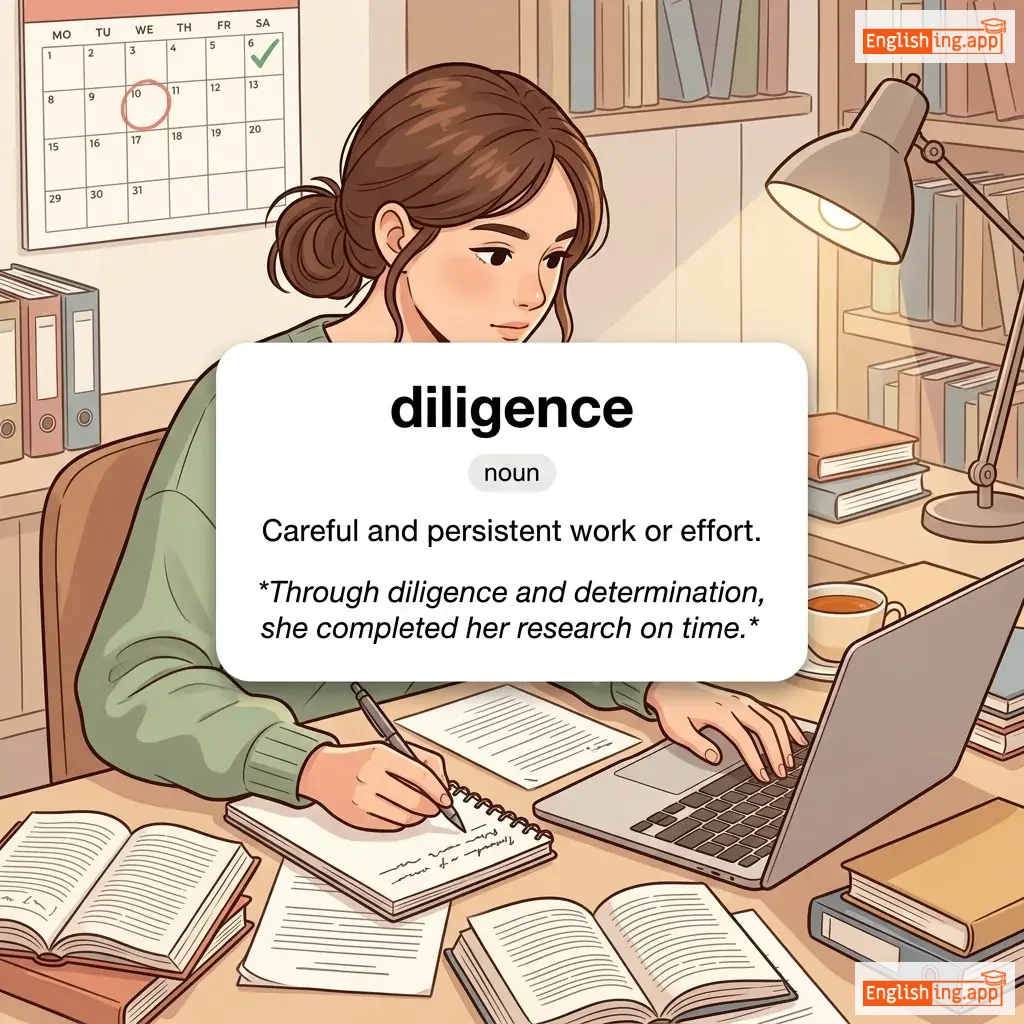
diligence definition card — visual illustration of the meaning
noun
/ˈdɪlɪdʒəns/
diligencia (diligencia)

Careful and persistent work or effort.

"Through diligence and determination, she completed her research on time."

"A través de la diligencia y determinación, completó su investigación a tiempo." (A traves de la diligencia y determinacion, completo su investigacion a tiempo.)
adjective
/ˈdɪlɪdʒənt/
diligente (diligente)

Showing care and conscientiousness in one's work or duties.

"She is a diligent student who always finishes her assignments on time."

"Ella es una estudiante diligente que siempre termina sus tareas a tiempo." (Ella es una estudiante diligente que siempre termina sus tareas a tiempo.)
verb
/daɪˈluːt/
diluir (diluir)

To make a liquid thinner or weaker by adding water or another solvent.

"You should dilute the juice with water before serving it to children."

"Debes diluir el jugo con agua antes de servirlo a los niños." (Debes diluir el jugo con agua antes de servirlo a los niños.)
adjective
/dɪm/
tenue (tenue)

not bright; having little light; not clearly visible

"The room was dim because the curtains were closed."

"La habitación estaba tenue porque las cortinas estaban cerradas." (La habitacion estaba tenue porque las cortinas estaban cerradas.)
noun
/daɪm/
moneda de diez centavos (moneda de diez centavos)

a small coin, especially a U.S. coin worth ten cents

"He gave me a dime for the phone call."

"Me dio una moneda de diez centavos para la llamada telefónica." (Me dio una moneda de diez centavos para la llamada telefonica.)
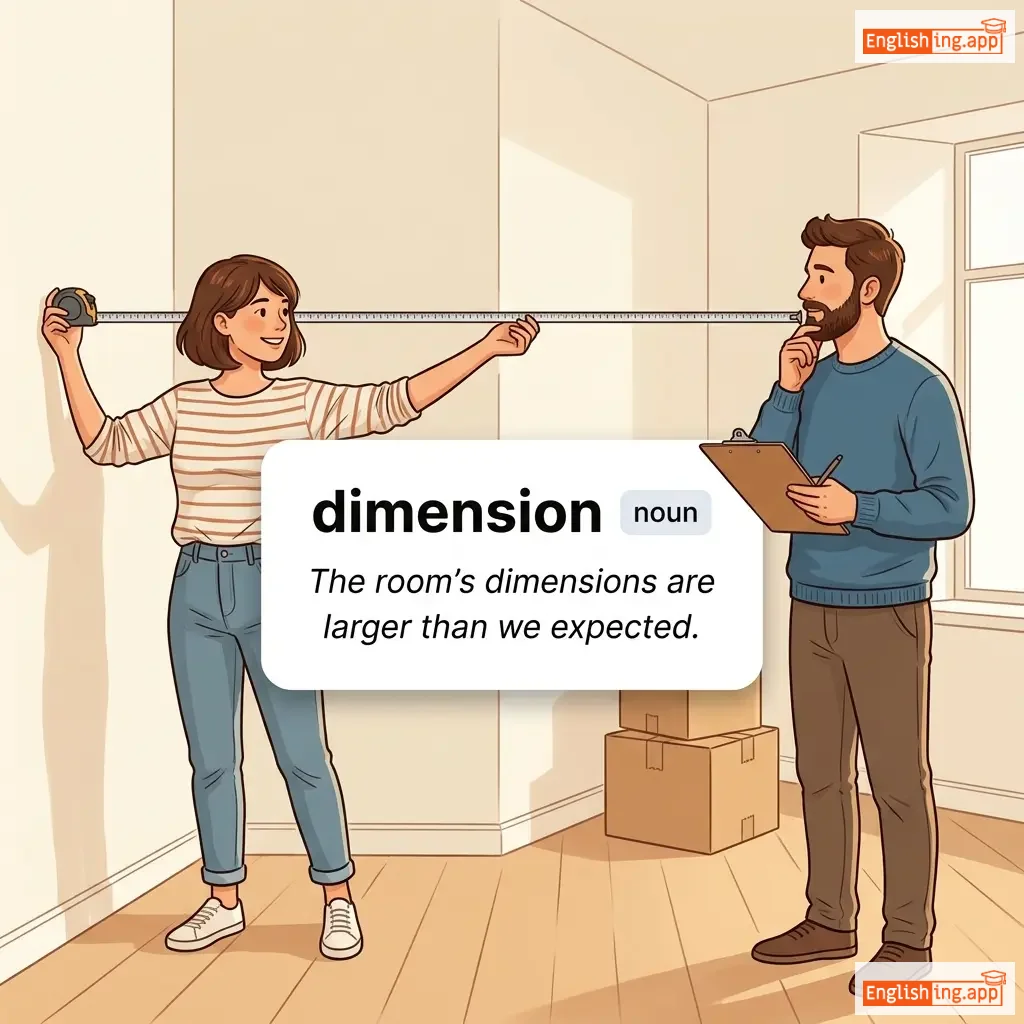
dimension definition card — visual illustration of the meaning
noun
/dɪˈmɛnʃən/
dimensión (dimencion)

A measurable extent of a particular kind, such as length, breadth, depth, or height.

"The room’s dimensions are larger than we expected."

"Las dimensiones de la habitación son más grandes de lo que esperábamos." (Las dimensiones de la habitacion son mas grandes de lo que esperabamos.)
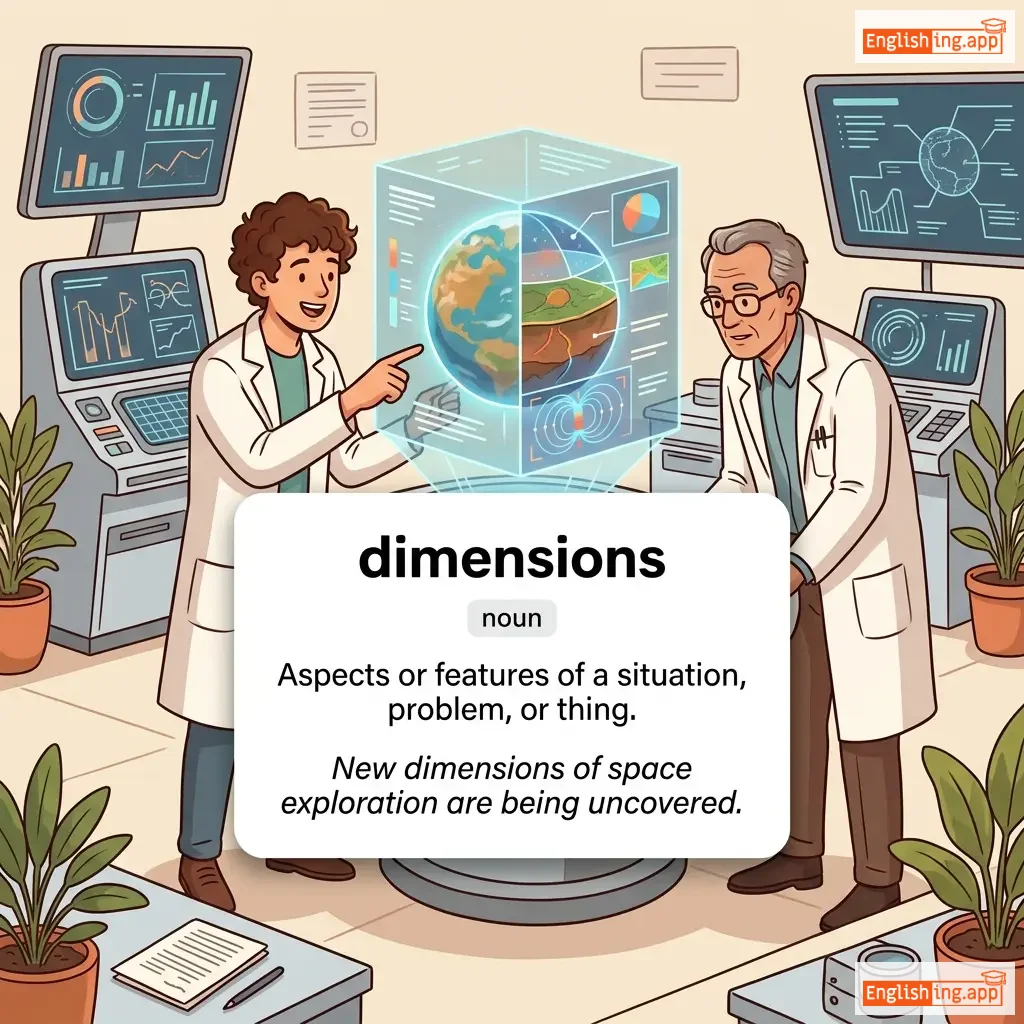
dimensions definition card — visual illustration of the meaning
noun
/daɪˈmen.ʃənz/
dimensiones (dimensiones)

Aspects or features of a situation, problem, or thing.

"New dimensions of space exploration are being uncovered."

"Se están descubriendo nuevas dimensiones de la exploración espacial." (Se están descubriendo nuevas dimensiones de la exploración espacial.)
verb
/dɪˈmɪnɪʃ/
disminuir (disminuir)

to make or become less; to reduce in size, importance, or value

"Over time, his influence in the company began to diminish."

"Con el tiempo, su influencia en la empresa comenzó a disminuir." (Con el tiempo, su influencia en la empresa comenzó a disminuir.)
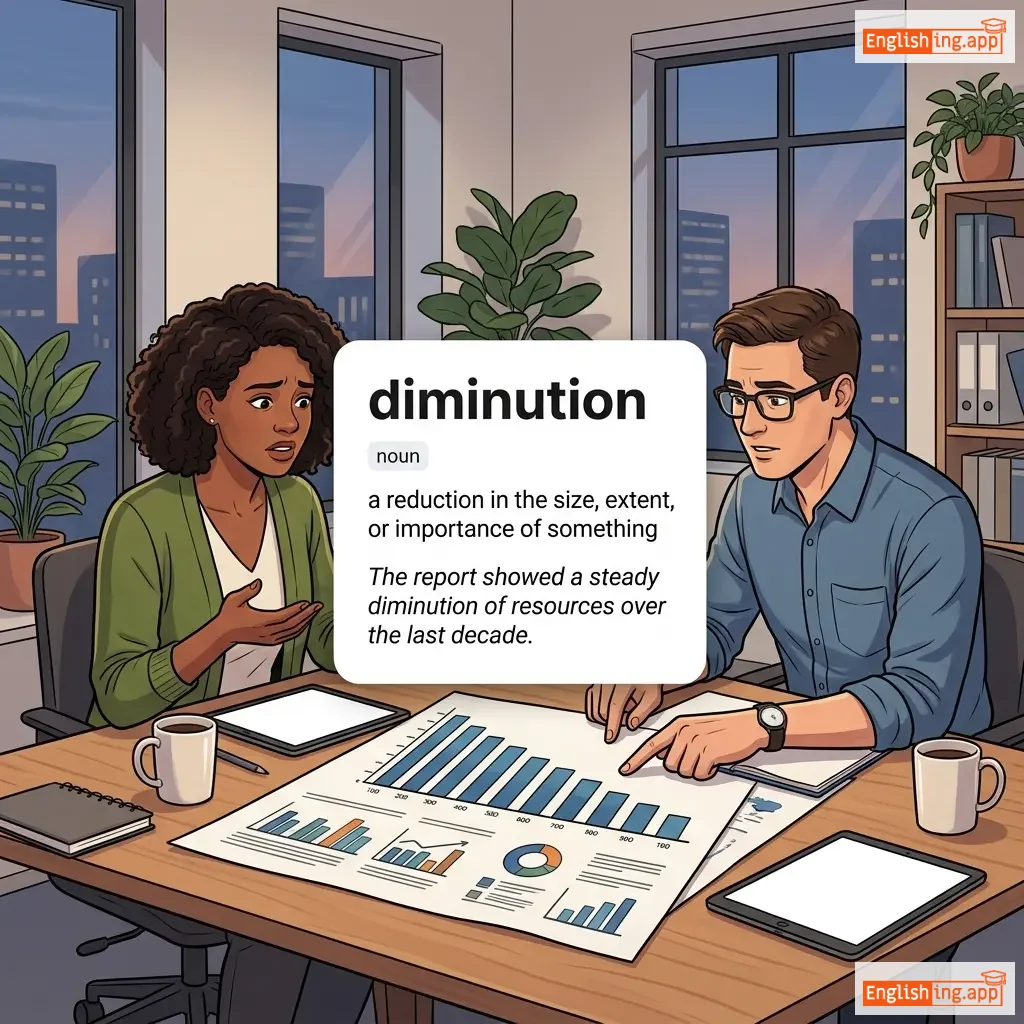
diminution definition card — visual illustration of the meaning
noun
/ˌdɪmɪˈnjuːʃən/

a reduction in the size, extent, or importance of something

"The report showed a steady diminution of resources over the last decade."

adjective
/dɪˈmɪnjətɪv/
diminuto (diminuto)

extremely or unusually small

"Despite his diminutive size, he was a powerful leader."

"A pesar de su tamaño diminuto, era un líder poderoso." (A pesar de su tamaño diminuto, era un líder poderoso.)
adverb
/ˈdɪmli/
débilmente (debilmente)

in a faint or unclear way; with little light

"The room was dimly lit by a single candle."

"La habitación estaba débilmente iluminada por una sola vela." (La habitacion estaba debilmente iluminada por una sola vela.)
noun
/ˈdɪm.pəl/
hoyuelo (hoyuelo)

a small depression in the flesh, either one that exists permanently or one that forms when smiling

"Her charming dimples appeared whenever she smiled at the children."

"Sus encantadores hoyuelos aparecían siempre que sonreía a los niños." (sus encantadores hoyuelos aparecian siempre que sonreia a los ninos.)
noun
/dɪn/
ruido (ruido)

a loud, unpleasant, and prolonged noise

"The din of traffic outside made it hard to concentrate."

"El ruido del tráfico afuera hacía difícil concentrarse." (El ruido del trafico afuera hacia dificil concentrarse.)
verb
/daɪn/
cenar (cenar)

to eat a meal, especially the main meal of the day

"We usually dine at seven o'clock in the evening."

"Normalmente cenamos a las siete de la tarde." (Normalmente cenamos a las siete de la tarde.)
noun
/ˈdɪŋɡi/
bote pequeño (bote pequeno)

a small boat, often carried or towed by a larger vessel, used for short trips or as a lifeboat

"They rowed the dinghy back to the yacht."

"Remaron el bote de remos de vuelta al yate." (Remaron el bote de remos de vuelta al yate.)
adjective
/ˈdɪndʒi/
sucio (sucio)

gloomy and drab; dirty or discolored

"The old hotel room looked dark and dingy."

"La antigua habitación del hotel se veía oscura y sucia." (La antigua habitacion del hotel se veia oscura y sucia.)
noun
/ˈdaɪnɪŋ/
cena (cena)

the act of eating a meal, especially in a formal setting

"We enjoyed fine dining at the new restaurant."

"Disfrutamos de una excelente cena en el nuevo restaurante." (Disfrutamos de una excelente cena en el nuevo restaurante.)
noun
/ˈdɪnər/
cena (sena)

the main meal of the day, usually eaten in the evening

"We had a lovely dinner at a new restaurant last night."

"Tuvimos una cena encantadora en un restaurante nuevo anoche." (Tuvimos una cena encantadora en un restaurante nuevo anoche.)
noun
/dɪnt/
esfuerzo, huella de un golpe (esfuerzo, huella de un golpe)

an impression or hollow made by a blow; force or power

"By dint of hard work, he achieved success."

"Por dint de trabajo duro, logró el éxito." (Por dint de trabajo duro, logró el éxito.)