Vocabularios

Descubra, aprenda y domine el vocabulario en inglés

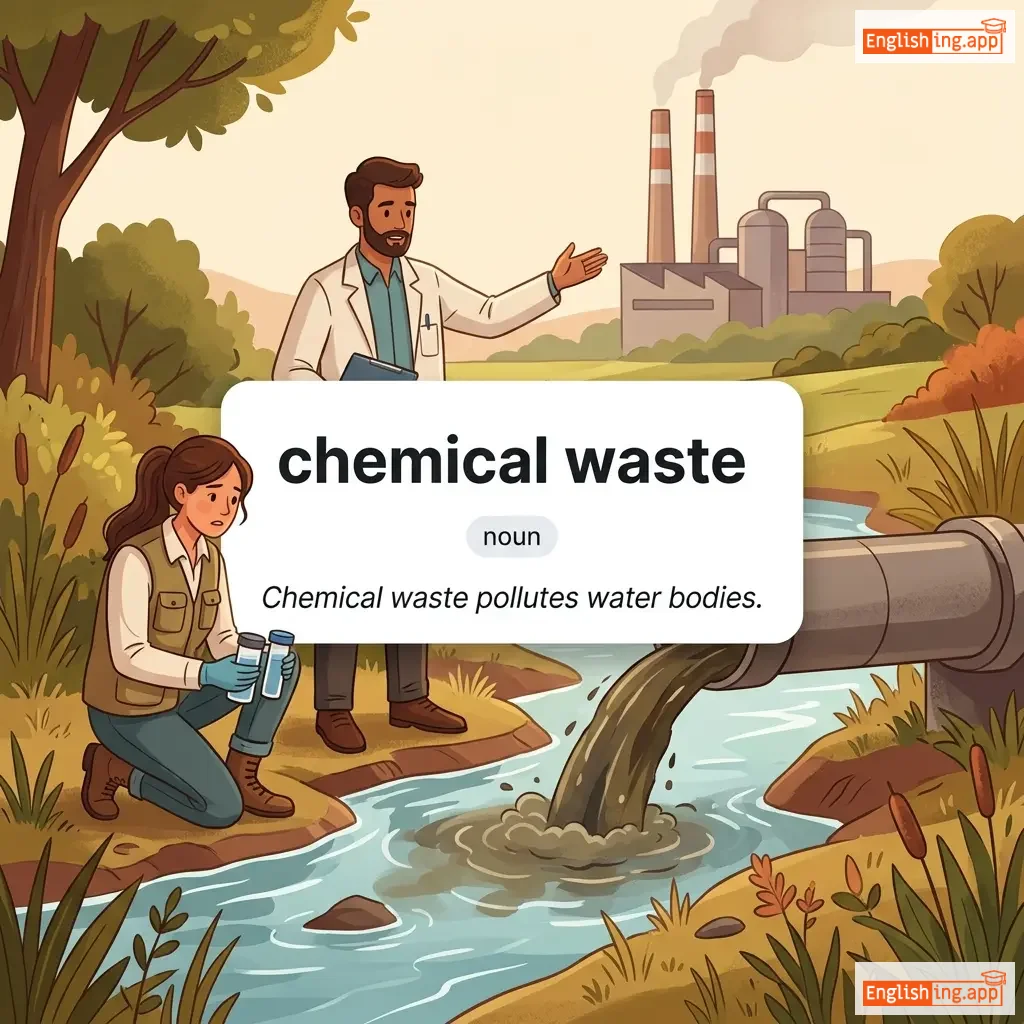
chemical waste definition card — visual illustration of the meaning
noun
ˈkɛmɪkəl weɪst
residuos químicos (residuos quimicos)

Waste material from industrial or laboratory processes that contains harmful chemicals.

"Chemical waste pollutes water bodies."

"Los residuos químicos contaminan los cuerpos de agua." (Los residuos quimicos contaminan los cuerpos de agua.)
noun
/ʃəˈmiːz/
camisa (camisa)

a woman's loose-fitting undergarment or dress hanging straight from the shoulders

"The vintage chemise was made of delicate lace and silk."

"La camisa vintage estaba hecha de delicado encaje y seda." (La camisa vintage estaba hecha de delicado encaje y seda.)
noun
/ˈkemɪst/
químico; farmacéutico (quimico; farmaceutico)

a scientist who studies chemistry; a person trained to prepare and dispense medicines

"The chemist analyzed the sample to determine its composition."

"El químico analizó la muestra para determinar su composición." (El quimico analizo la muestra para determinar su composicion)
noun
/ˈkɛmɪstri/
química (quimica)

the branch of science that studies substances and their interactions; also the emotional connection between people

"They have great chemistry and work well together."

"Tienen una gran química y trabajan bien juntos." (Tienen una gran quimica y trabajan bien juntos.)
adjective
/ˈtʃɛkərd/
a rayas (a rayas)

Having a pattern of squares, or marked by varied and contrasting experiences or periods.

"He had a chequered career with both great successes and failures."

"Tuvo una carrera a rayas con grandes éxitos y fracasos." (Tuvo una carrera a rayas con grandes exitos y fracasos.)
verb
/ˈtʃɛrɪʃ/
atesorar (atesorar)

To hold something dear, to love and protect, or to keep a hope or memory alive.

"She cherishes the memories of her childhood home."

"Ella atesora los recuerdos de su casa de la infancia." (Ella atesora los recuerdos de su casa de la infancia.)
noun
/ˈtʃer.i/
cereza (cereza)

a small round red or black fruit with a hard seed inside

"She picked fresh cherries from the tree in her garden."

"Ella recogió cerezas frescas del árbol en su jardín." (Ella recogio cerezas frescas del arbol en su jardin.)
noun
/ˈtʃer.i ˌblɒs.əm/
flor de cerezo (flor de cerezo)

the pink or white flowers of a cherry tree that bloom in spring

"The cherry blossoms bloom beautifully in April."

"Las flores de cerezo florecen hermosamente en abril." (Las flores de cerezo florecen hermosamente en abril.)
adjective
/tʃəˈruːbɪk/
angélico (angelico)

Innocent, sweet, and angelic, like a cherub.

"The baby had a cherubic smile that melted everyone’s heart."

"El bebé tenía una sonrisa angelical que derretía el corazón de todos." (El bebe tenia una sonrisa angelical que derretia el corazon de todos.)
noun
/tʃɛst/
pecho (pecho)

the front part of the human body between the neck and the stomach

"He felt a pain in his chest after running."

"Sintió un dolor en el pecho después de correr." (Sintió un dolor en el pecho después de correr.)
noun
/ˈʃɛvrən/
símbolo en forma de V (simbolo en forma de V)

A V-shaped pattern, often used in military insignia or design.

"The sergeant’s uniform displayed three chevrons on the sleeve."

"El uniforme del sargento mostraba tres chevrones en la manga." (El uniforme del sargento mostraba tres chevrones en la manga.)
verb
/tʃuː/
felicidad (felicidad)

to bite food into smaller pieces with your teeth before swallowing it

"You should chew your food properly to help with digestion."

"No pudo ocultar su felicidad cuando recibió el premio." (No pudo ocultar su felicidad cuando recibió el premio.)
noun
/kiˌɑːrəˈskjʊəroʊ/
contraste dramático entre luz y sombra (contraste dramatiko entre luz y sombra)

The use of strong contrasts between light and dark in art or literature to create a dramatic effect.

"The artist's painting used chiaroscuro to highlight the figure's face."

"La pintura del artista usó el claroscuro para resaltar la cara de la figura." (La pintura del artista uso el claroscuro para resaltar la cara de la figura.)
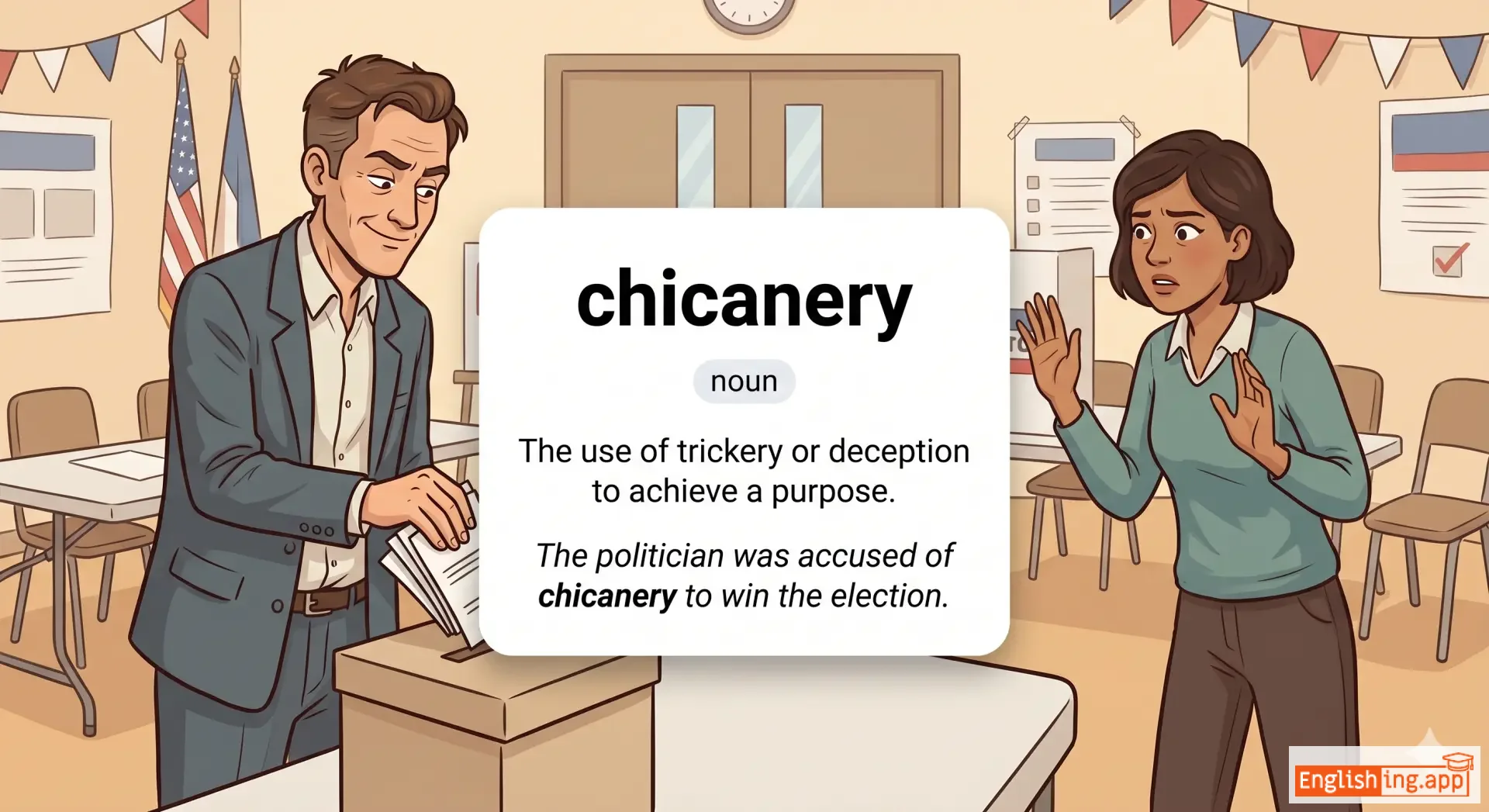
chicanery definition card — visual illustration of the meaning
noun
/ʃɪˈkeɪnəri/
engaño (engano)

The use of trickery or deception to achieve a purpose.

"The politician was accused of chicanery to win the election."

"Se acusó al político de engaño para ganar las elecciones." (Se acuso al politico de engano para ganar las elecciones.)
noun
/ˈtʃɪk piː/
garbanzo (garbanzo)

round beige legume; protein-rich pulse used in various dishes

"Soak the chick peas overnight before cooking them for better digestion."

"Remoja los garbanzos durante la noche antes de cocinarlos para una mejor digestión." (Remoja los garbanzos durante la noche antes de cocinarlos para una mejor digestión.)
noun
/ˈtʃɪkɪn/
pollo (pollo)

a domestic bird kept for its eggs or meat

"We had fried chicken for dinner."

"Tuvimos pollo frito para la cena." (Tuvimos pollo frito para la cena.)
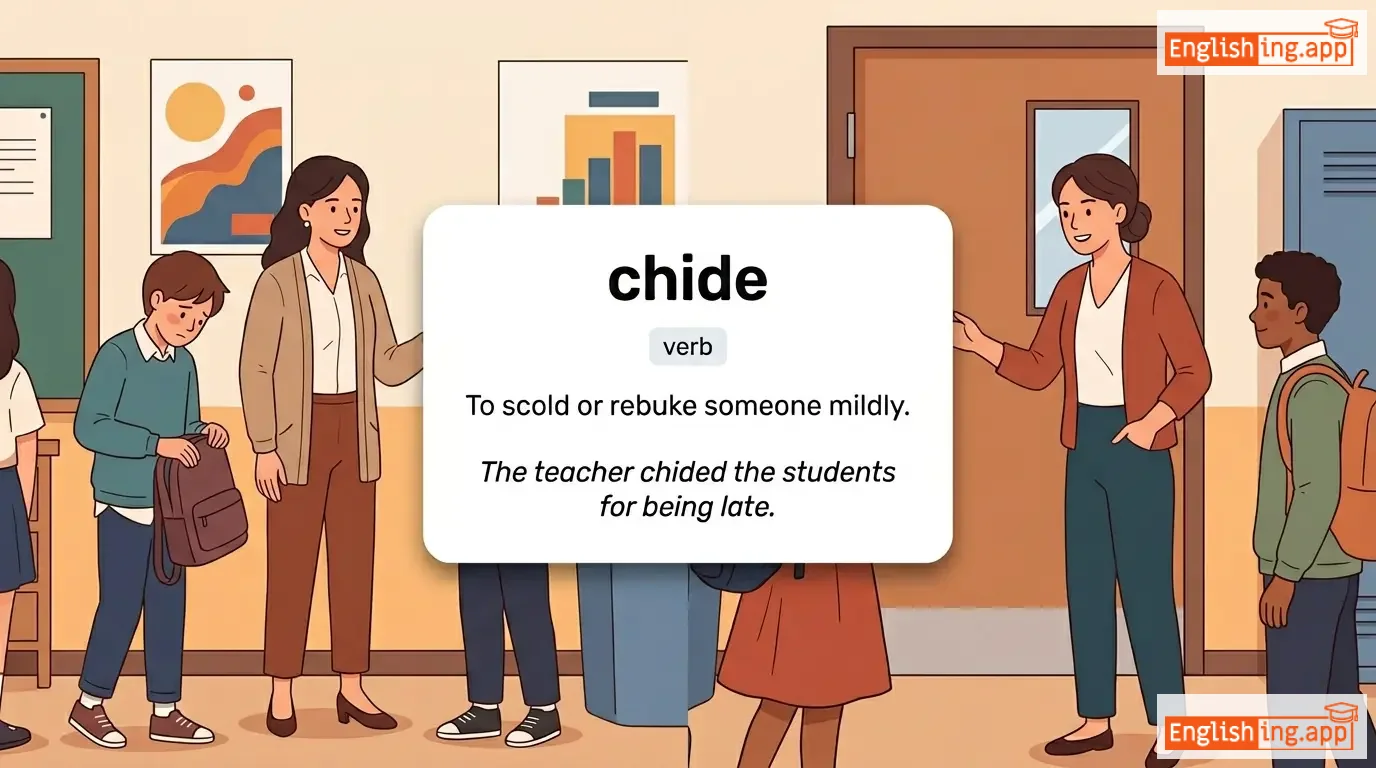
chide definition card — visual illustration of the meaning
👩‍🏫

chide (chaid)

verb
/tʃaɪd/
regañar (regañar)

To scold or rebuke someone mildly.

"The teacher chided the students for being late."

"La maestra regañó a los estudiantes por llegar tarde." (La maestra regañó a los estudiantes por llegar tarde.)
noun
/tʃiːf/
jefe (jefe)

a leader or person in charge of a group or organization

"The chief of the village made an important decision."

"El jefe del pueblo tomó una decisión importante." (El jefe del pueblo tomo una decision importante.)
adverb
/ˈtʃiːfli/
principalmente (principalmente)

mainly; primarily

"The festival is celebrated chiefly by young people."

"El festival se celebra principalmente por los jóvenes." (El festival se celebra principalmente por los jovenes.)
noun
/ʃɪˈfɒn/
chifón (chifon)

A lightweight, sheer fabric often used in dresses or scarves.

"She wore a beautiful chiffon dress at the party."

"Ella llevaba un hermoso vestido de chifón en la fiesta." (Ella llevaba un hermoso vestido de chifón en la fiesta.)
noun
/tʃaɪld/
niño (nino)

a young human being below the age of puberty or below the legal age of majority

"The child played happily in the park."

"El niño jugó felizmente en el parque." (El nino jugo felizmente en el parque.)
noun
/ˈtʃaɪldhʊd/
infancia (infancia)

the period of being a child

"She spent her childhood in a small village."

"Ella pasó su infancia en un pequeño pueblo." (Ella pasó su infancia en un pequeño pueblo.)
adjective
/ˈtʃaɪl.dɪʃ/
infantil; propio de un niño pero inapropiado para un adulto (infantil; propio de un niño pero inapropiado para un adulto)

immature and silly; behaving in a way that is typical of a child but inappropriate for an adult

"His childish behavior during the meeting was quite embarrassing."

"Su comportamiento infantil durante la reunión fue bastante embarazoso." (Su comportamiento infantil durante la reunión fue bastante embarazoso.)
adjective
/ˈtʃaɪld.laɪk/
como un niño; inocente y confiado; puro y simple (como un niño; inocente y confiado; puro y simple)

innocent and trusting like a child; having the good qualities of a child; pure and simple

"She maintained a childlike wonder about the world around her."

"Ella mantuvo una asombro infantil por el mundo a su alrededor." (ella mantuvo una asombro infantil por el mundo a su alrededor.)
verb
/tʃɪl/
enfriar / relajarse (enfriar / relajarse)

to make something cold or to relax and take it easy

"We decided to chill at home after a long day."

"Decidimos relajarnos en casa después de un largo día." (Decidimos relajarnos en casa después de un largo día.)
noun
/ˈtʃɪl.i ˈpaʊ.dər/
polvo de chile (polvo de chile)

a spice made from ground dried chili peppers, used to add heat and flavor to food

"Add two teaspoons of chilli powder to make the dish spicier."

"Agrega dos cucharaditas de polvo de chile para hacer el plato más picante." (Agrega dos cucharaditas de polvo de chile para hacer el plato más picante.)
adjective
/ˈtʃɪli/
frío (frio)

uncomfortably or unpleasantly cold

"It was a chilly morning in December."

"Fue una mañana fría en diciembre." (Fue una manana fria en diciembre.)
noun
/ˈtʃɪl.i/
frío; pimiento picante; (frio, pimiento picante)

noticeably cold; a hot-tasting pod of a variety of capsicum, used as a spice

"The chef added red chilli to make the curry spicier."

"El chef añadió chile rojo para hacer el curry más picante." (El chef añadió chile rojo para hacer el curry más picante.)
noun
/kaɪˈmɪərə/
quimera (kimera)

A mythical creature with parts from different animals; also used to mean a fanciful illusion or unattainable dream.

"The idea of a perfect society is often a chimera."

"La idea de una sociedad perfecta es a menudo una quimera." (La idea de una sociedad perfecta es a menudo una quimera.)
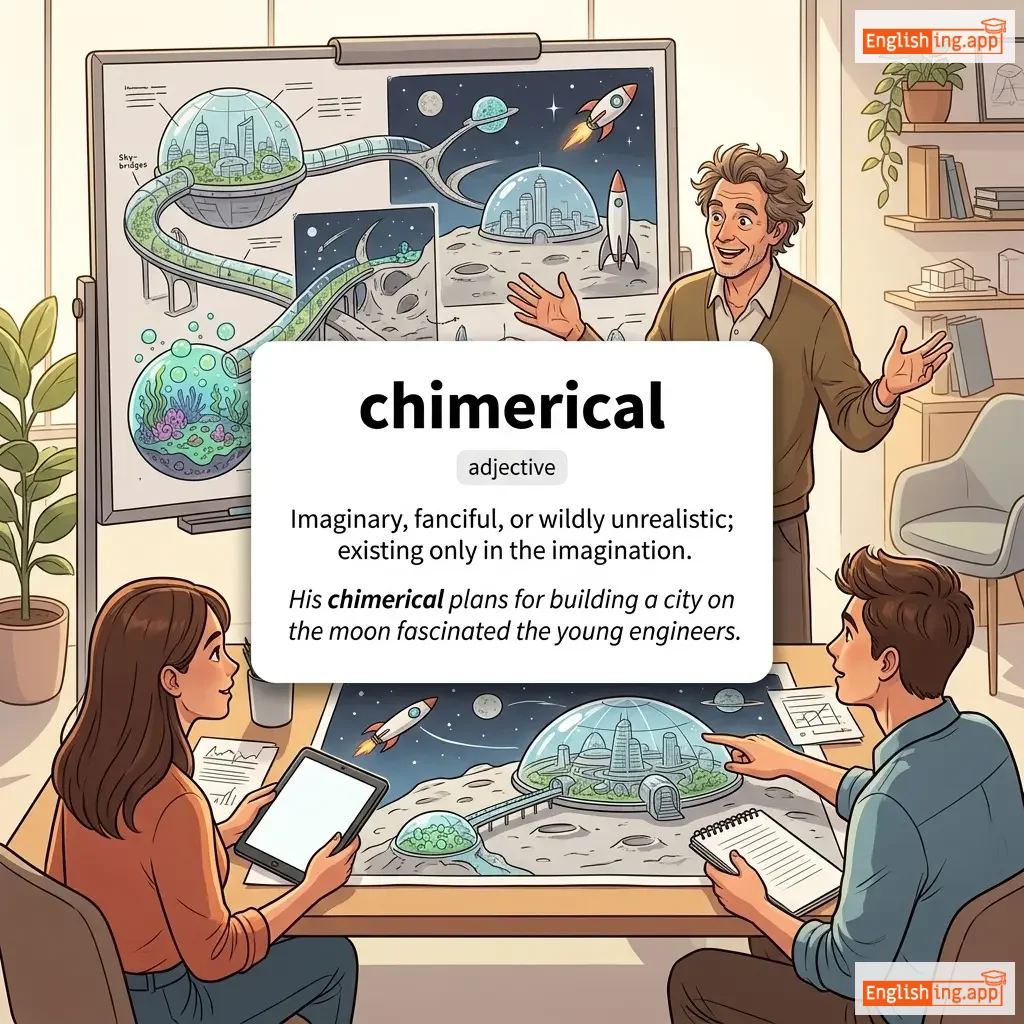
chimerical definition card — visual illustration of the meaning
adjective
/kaɪˈmɛrɪkəl/
quimérico (quimerico)

Imaginary, fanciful, or wildly unrealistic; existing only in the imagination.

"His chimerical plans for building a city on the moon fascinated the young engineers."

"Sus planes quiméricos para construir una ciudad en la luna cautivaron a los jóvenes ingenieros." (Sus planes quimericos para construir una ciudad en la luna cautivaron a los jovenes ingenieros.)
noun
/tʃɪn/
mentón (menton)

the part of the face below the mouth

"He rested his chin on his hand while thinking."

"Él descansaba su mentón en su mano mientras pensaba." (El descansaba su menton en su mano mientras pensaba.)
noun
/ˈtʃaɪ.nə bɑːks/
jazmín de naranja (jazmin de naranja)

a small evergreen shrub with tiny white fragrant flowers

"The China box plant produced clusters of small white flowers."

"La planta de jazmín de naranja produjo racimos de pequeñas flores blancas." (La planta de jazmin de naranja produjo racimos de pequenas flores blancas.)
noun
/ˈtʃaɪ.nə roʊz/
hibisco (hibisko)

a tropical flowering plant with large, showy flowers in various colors

"The bright red China-rose flowers decorated the entrance of the house."

"Las brillantes flores rojas de hibisco decoraban la entrada de la casa." (Las brijantes flores rohas de hibisko dekoraban la entrada de la kasa.)
noun
/ˈtʃaɪ.nə.weər/
porcelana (porcelana)

dishes, plates, cups, and other tableware made of porcelain or fine ceramic

"The expensive china-ware was displayed in the cabinet."

"Los costosos platos de porcelana fueron exhibidos en el gabinete." (los costosos platos de porcelana fueron exhibidos en el gabinete.)
adjective, noun
/tʃaɪˈniːz/
chino (cheeno)

relating to China, its people, or its language

"We went to a Chinese restaurant last night."

"Fuimos a un restaurante chino anoche." (Fuimos a un restaurante chino anoche.)
noun, verb
/tʃɪp/
trozo / pedazo roto (trozo / pedazo roto)

A small piece broken off from something; or to cut or break a small piece from something.

"He accidentally chipped the edge of the table."

"Él accidentalmente astilló el borde de la mesa." (El accidentalmente astillo el borde de la mesa.)
noun
/ˈkaɪrəˌmænsi/
quiromancia (kiromancia)

The practice of predicting the future by interpreting the lines on the palms of hands; palmistry.

"The old woman practiced chiromancy and told fortunes for travelers."

"La anciana practicaba la quiromancia y decía el futuro a los viajeros." (La anciana practicaba la quiromancia y decía el futuro a los viajeros.)
noun
/kɪˈrɒpədɪst/
podólogo (podologo)

A healthcare professional who diagnoses and treats foot problems.

"The chiropodist treated her painful corns and calluses."

"El podólogo trató sus dolorosos juanetes y callosidades." (El podologo trato sus dolorosos juanetes y callosidades.)
noun, verb
/ˈtʃɪzəl/
cincel (cinsel)

A tool with a sharp edge used for cutting or shaping hard materials; or to cut or carve with such a tool.

"The sculptor chiseled the marble into a beautiful statue."

"El escultor cinceló el mármol en una hermosa estatua." (El escultor cinceló el mármol en una hermosa estatua.)
noun
/tʃɪt/
nota, billete, recibo (nota, billete, recibo)

a short note, typically a brief informal letter; a voucher for a sum owed

"She left a chit on the table asking him to call her back."

"Ella dejó un chit en la mesa pidiéndole que la llamara de vuelta." (Ella dejo un chit en la mesa pidiendole que la llamara de vuelta.)
adjective
/ˈʃɪvəlrəs/
caballeroso (caballeroso)

Behaving in a courteous, gallant, and honorable way, especially toward women.

"He was chivalrous, always opening doors for others."

"Él era caballeroso, siempre abriendo puertas para los demás." (El era caballeroso, siempre abriendo puertas para los demás.)
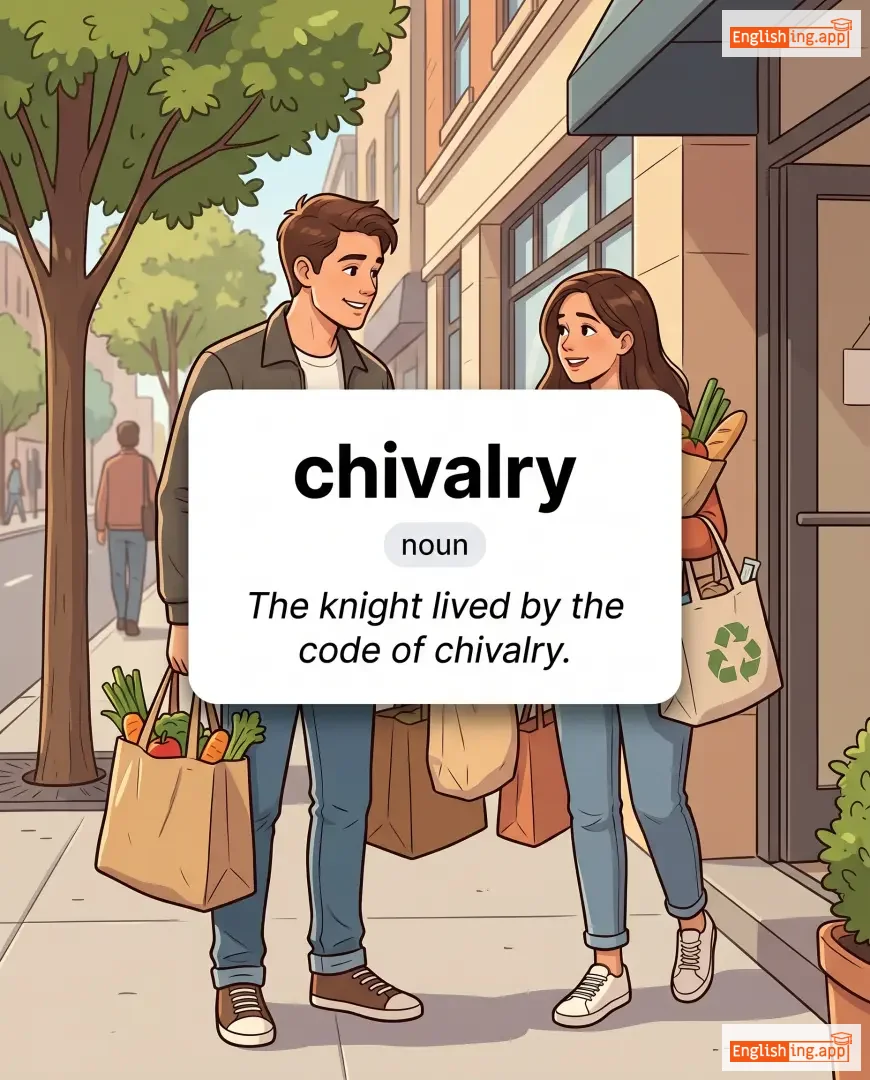
chivalry definition card — visual illustration of the meaning
noun
/ˈʃɪvəlri/
caballerosidad (caballerosidad)

The medieval knightly system with its moral, social, and religious code; courteous behavior, especially toward women.

"The knight lived by the code of chivalry."

"El caballero vivía según el código de la caballería." (El caballero vivía según el código de la caballería.)
noun
/ˈtʃɒklət/
chocolate (chocolate)

a sweet, brown food made from roasted cocoa beans

"She bought a bar of chocolate from the store."

"Ella compró una barra de chocolate en la tienda." (Ella compro una barra de chocolate en la tienda.)
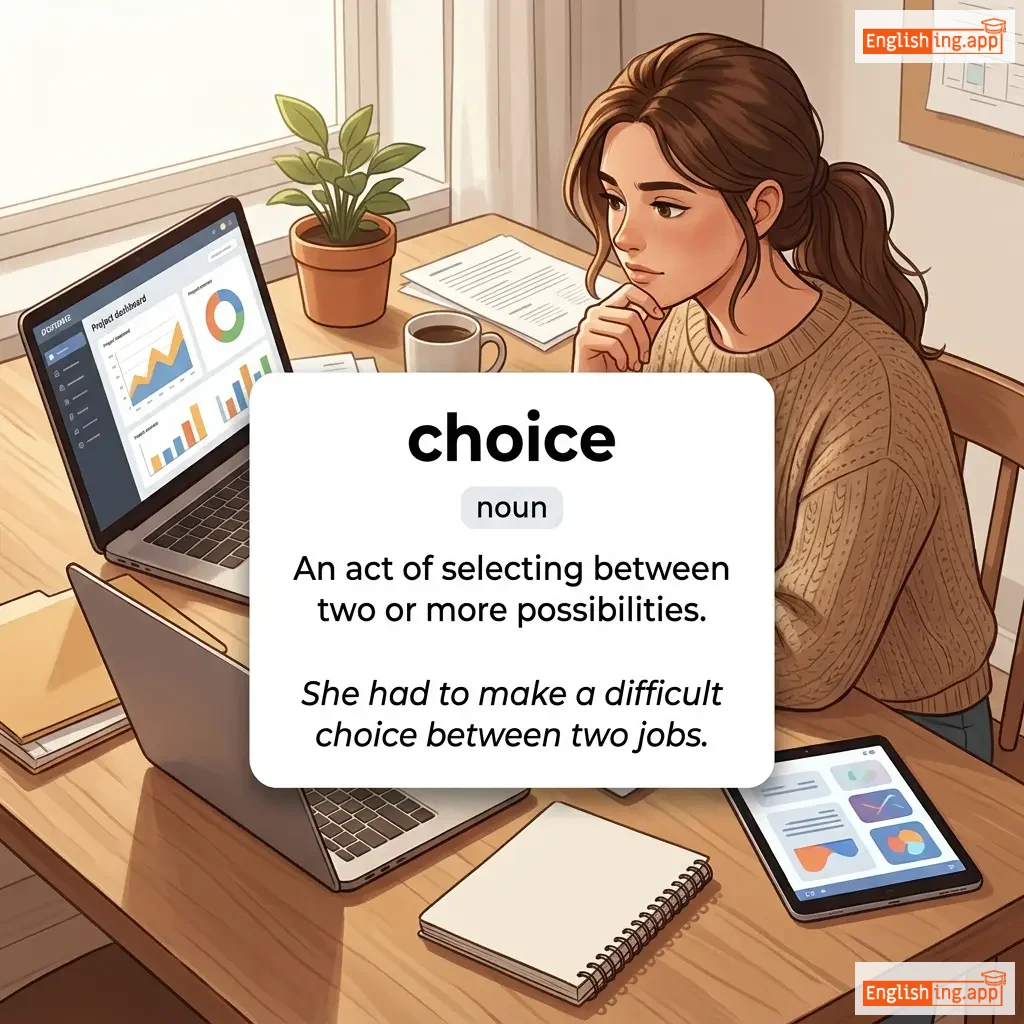
choice definition card — visual illustration of the meaning
noun
/tʃɔɪs/
elección (eleccion)

An act of selecting between two or more possibilities.

"She had to make a difficult choice between two jobs."

"Ella tuvo que hacer una difícil elección entre dos trabajos." (Ella tuvo que hacer una dificil eleccion entre dos trabajos.)
noun
/ˈkwaɪər/
coro (koro)

An organized group of singers, typically performing in church services or concerts.

"The choir sang beautifully during the ceremony."

"El coro cantó hermosamente durante la ceremonia." (El koro kanto hermosamente durante la ceremonia.)
noun
/ˈkɒlərə/
cólera (colera)

An infectious disease of the small intestine causing severe vomiting and diarrhea.

"The village suffered an outbreak of cholera after the flood."

"La aldea sufrió un brote de cólera tras la inundación." (La aldea sufrio un brote de colera tras la inundacion.)
adjective
/ˈkɒlərɪk/
colérico (colerico)

Easily angered; irritable and hot-tempered.

"His choleric nature often got him into arguments."

"Su naturaleza colérica a menudo lo metía en discusiones." (su naturaleza colerica a menudo lo metia en discusiones)
noun
/kəˈlɛstərɒl/
colesterol (colesterol)

a fatty substance found in the blood, high levels of which can cause health problems

"High cholesterol can increase the risk of heart disease."

"El colesterol alto puede aumentar el riesgo de enfermedades cardíacas." (El colesterol alto puede aumentar el riesgo de enfermedades cardíacas.)
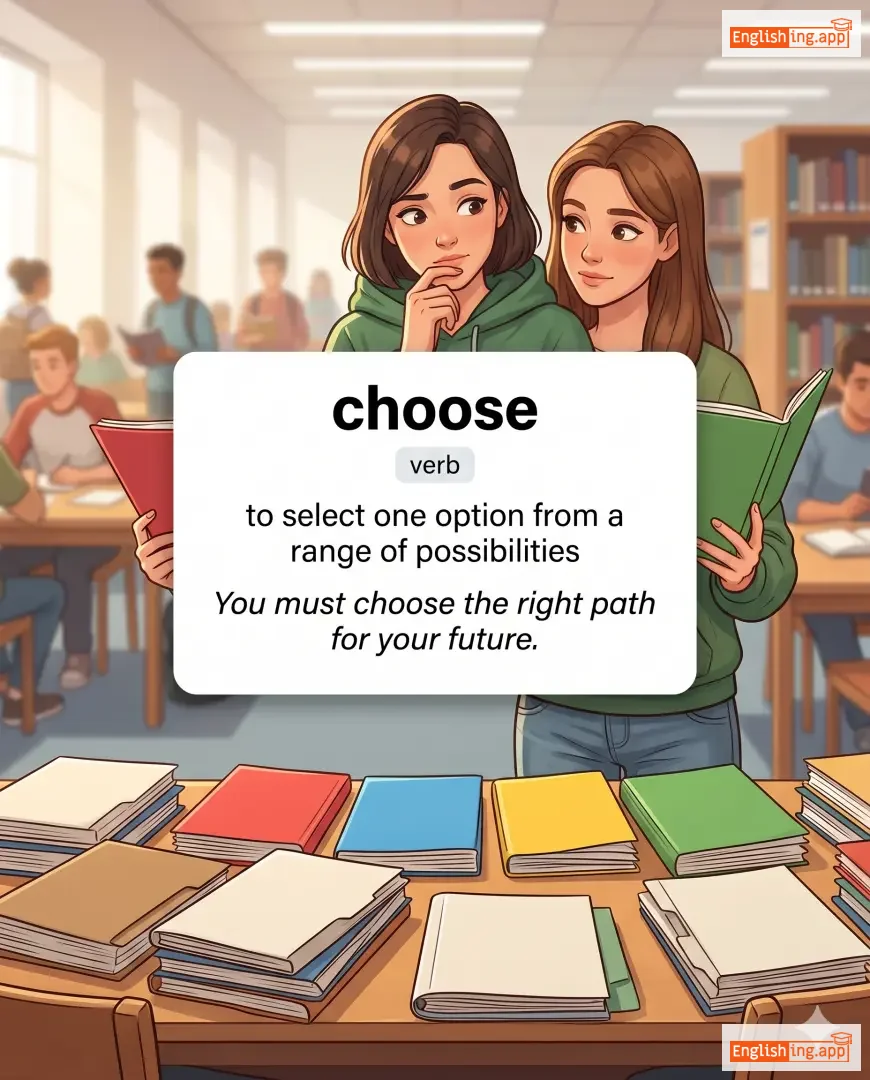
choose definition card — visual illustration of the meaning
verb
/tʃuːz/
elegir (elegir)

to select one option from a range of possibilities

"You must choose the right path for your future."

"Debes elegir el camino correcto para tu futuro." (Debes elegir el camino correcto para tu futuro.)
adjective
/ˈtʃuː.zi/
exigente; muy selectivo; particular sobre lo que le gusta o acepta (exigente)

very careful in choosing; selective; particular about what one likes or accepts

"He's very choosy about the restaurants where he eats."

"Es muy exigente con los restaurantes donde come." (Es muy exigente con los restaurantes donde come.)