Vocabularios

Descubra, aprenda y domine el vocabulario en inglés

noun
/sɛnˈtjʊəriən/
centurión (centurion)

A commander of a unit of one hundred soldiers in the ancient Roman army.

"The centurion led his men into battle with courage."

"El centurión lideró a sus hombres en la batalla con valentía." (El centurion lidero a sus hombres en la batalla con valentia.)
noun
/ˈsɛnʧəri/
siglo (siglo)

A period of one hundred years.

"The 20th century saw significant technological progress."

"El siglo XX vio un progreso tecnológico significativo." (El siglo veinte vio un progreso tecnologico significativo.)
noun
/ˌsiːiːˈoʊ/
director ejecutivo (director ejecutivo)

The highest-ranking person in a company, responsible for overall management.

"The CEO announced a new strategy for the company."

"El CEO anunció una nueva estrategia para la empresa." (El CEO anunció una nueva estrategia para la empresa.)
noun
/ˈsɪə.ri.əl/

a common breakfast food made from processed grains such as wheat, oats, or corn

"She eats a bowl of cereal every morning before work."

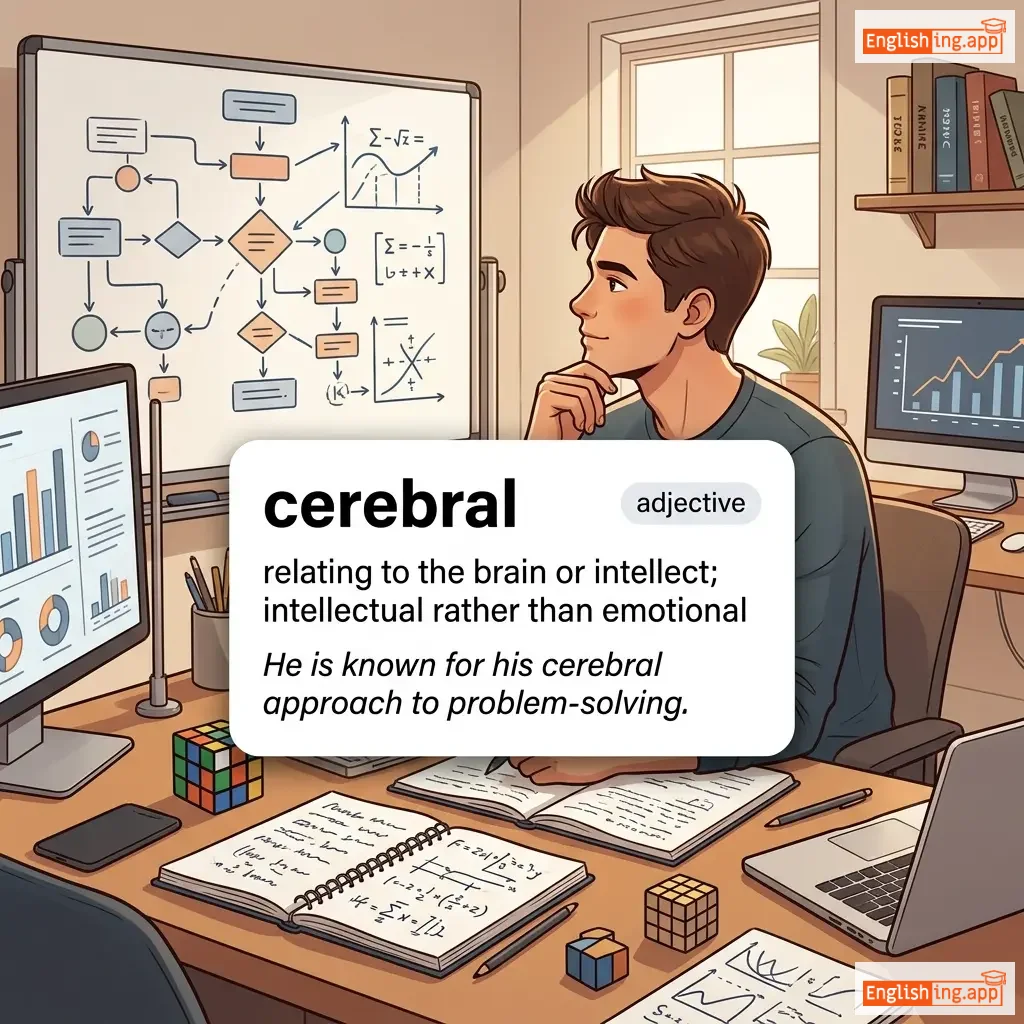
cerebral definition card — visual illustration of the meaning
adjective
/səˈriː.brəl/
cerebral (cerebral)

relating to the brain or intellect; intellectual rather than emotional

"He is known for his cerebral approach to problem-solving."

"Es conocido por su enfoque cerebral para resolver problemas." (Es conocido por su enfoque cerebral para resolver problemas.)
noun
/ˌser.əˈbreɪ.ʃən/
cerebración (cerebracion)

the process of thinking or using the brain actively

"The lecture sparked intense cerebration among the students."

"La conferencia provocó una intensa cerebración entre los estudiantes." (La conferencia provoco una intensa cerebracion entre los estudiantes.)
adjective
/ˌser.ɪˈməʊ.ni.əl/
ceremonial (ceremonial)

relating to or used in a ceremony or formal occasion

"The president wore a ceremonial robe during the inauguration."

"El presidente usó una túnica ceremonial durante la inauguración." (El presidente uso una tunica ceremonial durante la inauguracion.)
adjective
/ˌser.ɪˈməʊ.ni.əs/
ceremonioso y educado (ceremonioso y educado)

marked by formality, politeness, or strict observance of customs

"He gave her a ceremonious bow before entering the hall."

"Le dio una reverencia ceremoniosa antes de entrar al salón." (Le dio una reverencia ceremoniosa antes de entrar al salón.)
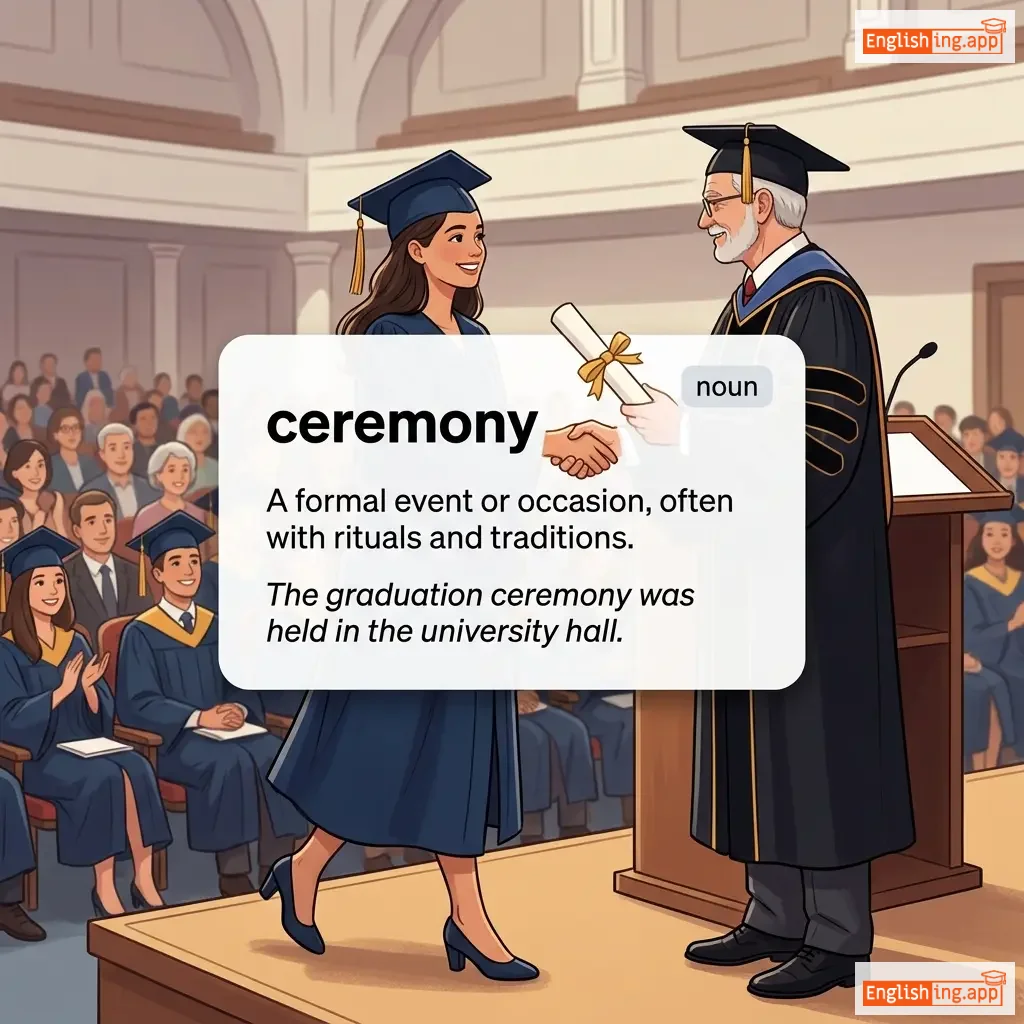
ceremony definition card — visual illustration of the meaning
noun
/ˈsɛrəˌmoʊni/
ceremonia (ceremonia)

A formal event or occasion, often with rituals and traditions.

"The graduation ceremony was held in the university hall."

"La ceremonia de graduación se llevó a cabo en el auditorio de la universidad." (La ceremonia de graduacion se llevo a cabo en el auditorio de la universidad.)
adjective
/ˈsɜːr.tən/
cierto (syerto)

Known for sure; having no doubt.

"I am certain that she will succeed."

"Estoy cierto de que ella tendrá éxito." (estoy syerto de ke eya tendra exito.)
adverb
/ˈsɜːrtənli/
ciertamente (ciertamente)

without doubt; surely; used to emphasize certainty

"I will certainly help you with your project."

"Yo ciertamente te ayudaré con tu proyecto." (Yo ciertamente te ayudaré con tu proyecto.)
noun
/ˈsɜːtənti/
certeza (certeza)

the state of being sure or confident about something

"There is no certainty about the weather tomorrow."

"No hay certeza sobre el clima de mañana." (No hay certeza sobre el clima de mañana.)
noun
/sərˈtɪfɪkət/
certificado (certificado)

a document serving as proof of achievement or qualification

"She received a certificate for completing the course."

"Ella recibió un certificado por completar el curso." (Ella recibió un certificado por completar el curso.)
noun
/ˌsɜːrtɪfɪˈkeɪʃən/
certificación (certificacion)

the process of officially recognizing or confirming that something or someone meets required standards; an official document proving qualification

"She received her professional certification after completing the training program."

"Recibió su certificación profesional después de completar el programa de formación." (recibio su certificacion profesional despues de completar el programa de formacion)
noun
/ˈsɜːrtɪˌtjuːd/
certeza (certeza)

Absolute certainty or conviction about something.

"She spoke with certitude about the outcome of the case."

"Ella habló con certeza sobre el resultado del caso." (Ella habló con certeza sobre el resultado del caso.)
noun
/sɛˈseɪʃən/
cesación (cesacion)

The fact or process of ending or being brought to an end.

"There was a temporary cessation of hostilities."

"Hubo una cesación temporal de las hostilidades." (Hubo una cesacion temporal de las hostilidades.)
noun
/ˈsɛʃən/
cesión de derechos o propiedad (cesion de derechos o propiedad)

The formal giving up of rights, property, or territory, especially by a state.

"The treaty resulted in the cession of land to the neighboring country."

"El tratado resultó en la cesión de tierras al país vecino." (El tratado resultó en la cesión de tierras al país vecino.)
noun
/ˈsɛtərə/
etcétera (etcetera)

Latin for 'the rest' or 'others'; commonly used in the phrase 'et cetera' meaning 'and so on'.

"We need to buy pens, paper, notebooks, et cetera."

"Necesitamos comprar bolígrafos, papel, cuadernos, etcétera." (Necesitamos comprar bolígrafos, papel, cuadernos, etcetera.)
verb
/ʧeɪf/
rozar (rothar)

To make or become sore by rubbing; to feel irritation or impatience.

"The tight shoes began to chafe his heels."

"Los zapatos apretados empezaron a rozar sus talones." (Los zapatos apretados empezaron a rozar sus talones.)
noun
/tʃæf/
cascarilla (cascarilla)

The husks of corn or other seed separated by winnowing or threshing; worthless or trivial matter.

"The farmer separated the wheat from the chaff."

"El agricultor separó el trigo de la cascarilla." (El agricultor separó el trigo de la cascarilla.)
verb
/ˈtʃæfɪŋ/
burlarse (burlarse)

Teasing or joking in a lighthearted way.

"They were chaffing each other during lunch."

"Ellos se estaban burlando el uno al otro durante el almuerzo." (Ellos se estaban burlando el uno al otro durante el almuerzo.)
verb
/ˈtʃeɪfɪŋ/
rozar hasta irritar (roza hasta irritar)

To make sore by rubbing; to become irritated.

"The rough shoes were chafing his heels."

"Los zapatos ásperos le estaban rozando los talones." (Los zapatos ásperos le estaban rozando los talones.)
noun
/ʃəˈɡrɪn/
desdén (desden)

Distress or embarrassment at having failed or been humiliated.

"She left the room in chagrin after forgetting her lines."

"Ella salió de la habitación con desdén después de olvidar sus líneas." (Ella salio de la habitacion con desden despues de olvidar sus lineas.)
noun
/tʃeɪn/
cadena (cadena)

a connected series of metal rings used for fastening or securing things; a series of connected events or businesses

"He wore a gold chain around his neck."

"Él llevaba una cadena de oro alrededor de su cuello." (El llevaba una cadena de oro alrededor de su cuello.)
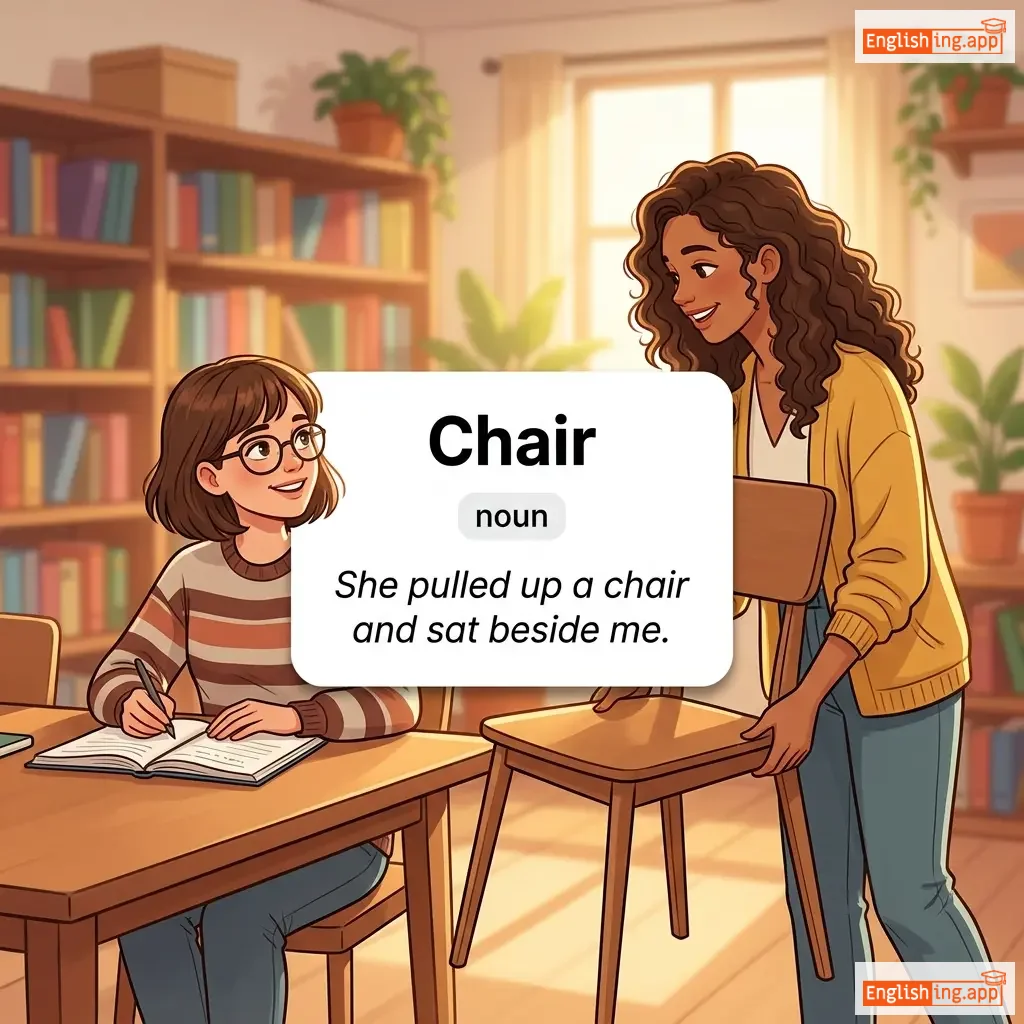
Chair definition card — visual illustration of the meaning
🪑

Chair

noun
/tʃɛr/

a piece of furniture for one person to sit on, typically having a back and four legs

"She pulled up a chair and sat beside me."

noun
/ˈtʃɛərmən/
felicidad (felicidad)

the leader or head of a meeting, committee, or organization

"The chairman opened the meeting with a short speech."

"Ella no pudo ocultar su felicidad cuando recibió el premio." (Ella no pudo ocultar su felicidad cuando recibió el premio.)
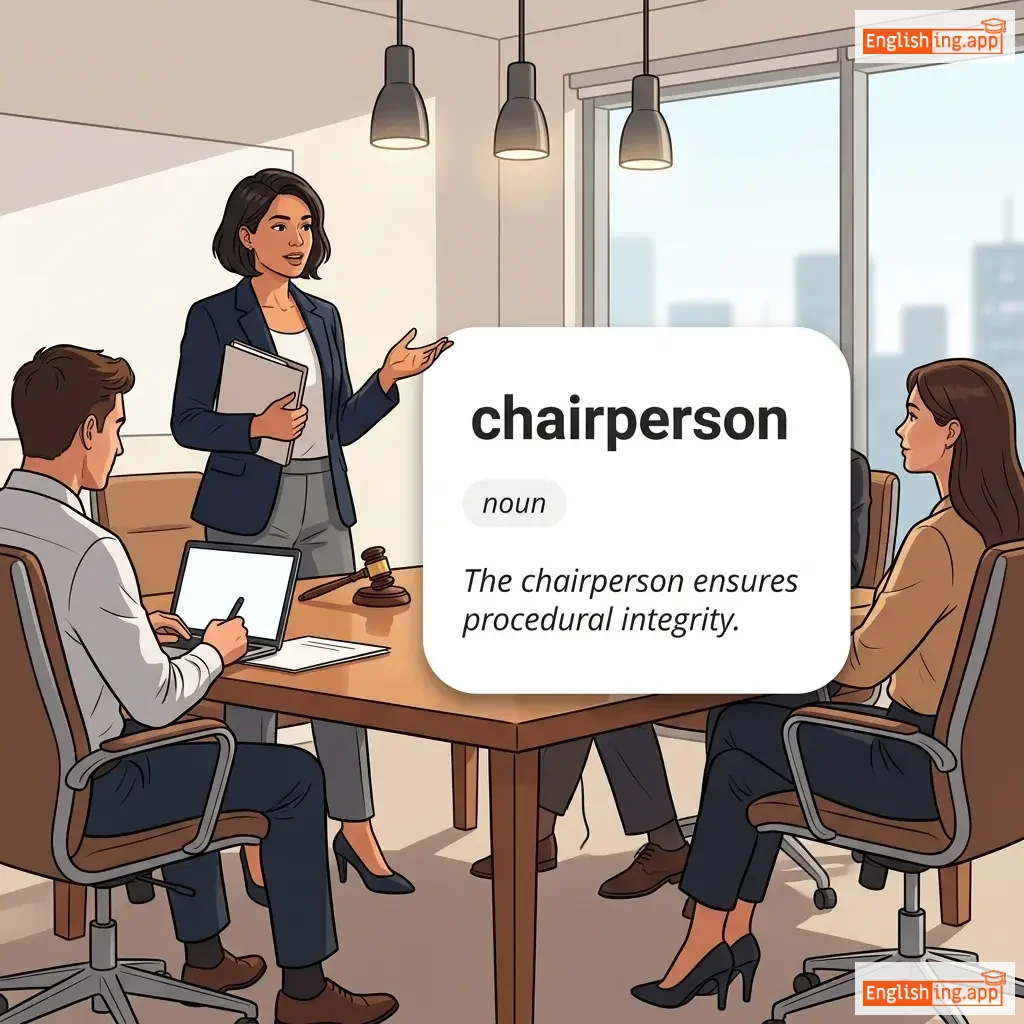
chairperson definition card — visual illustration of the meaning
noun
ˈtʃeə.pɜː.sən
presidente (presidente)

A person who is in charge of a meeting or organization; the presiding officer of a committee, board, or organization.

"The chairperson ensures procedural integrity."

"El presidente asegura la integridad del procedimiento." (El presidente asegura la integridad del procedimiento.)
noun
/ˈtʃɛərˌwʊmən/
presidenta (presidenta)

a woman who presides over a meeting, committee, or organization; a female leader of a board or council

"She was elected chairwoman of the company after years of experience."

"Fue elegida presidenta de la empresa tras años de experiencia." (Fue elegida presidenta de la empresa tras anos de experiencia)
noun
/ˈtʃælɪs/
cáliz (caliz)

A large cup or goblet, typically used for drinking wine in religious ceremonies.

"The priest lifted the golden chalice during the ceremony."

"El sacerdote levantó el cáliz dorado durante la ceremonia." (El sacerdote levanto el caliz dorado durante la ceremonia.)
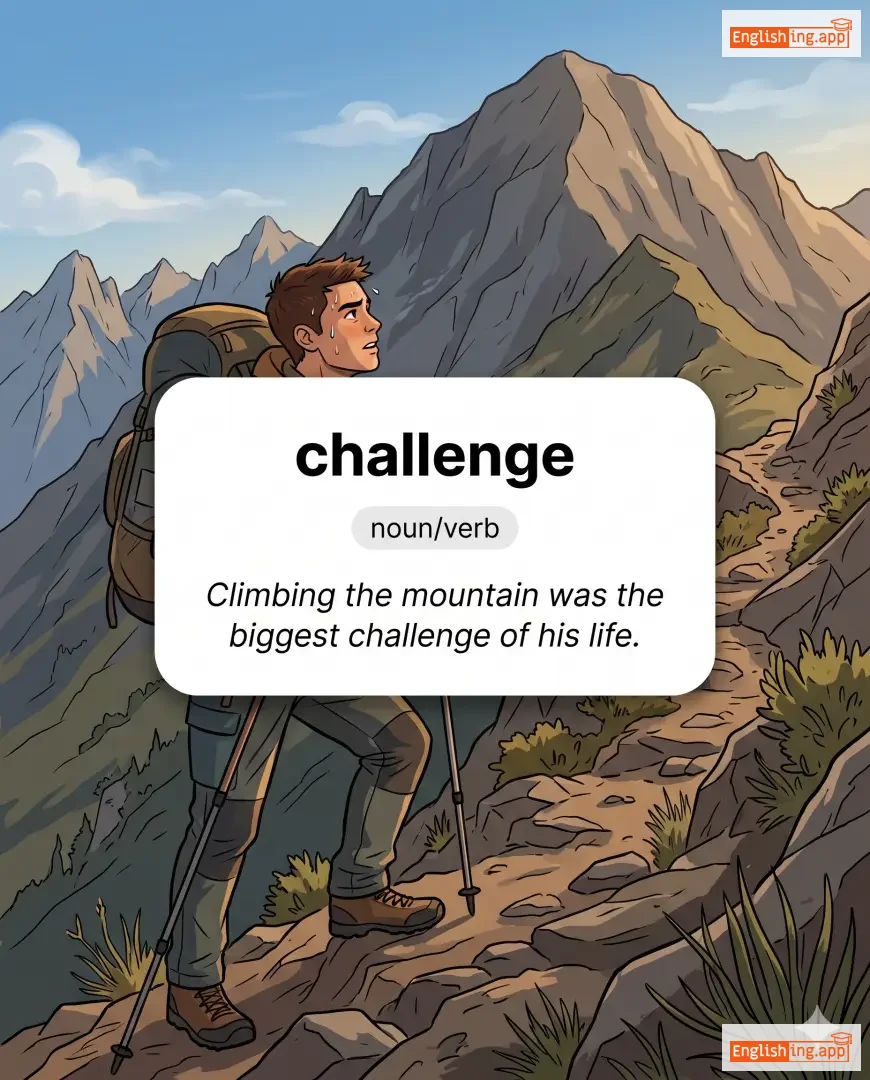
challenge definition card — visual illustration of the meaning
noun/verb
/ˈtʃælɪndʒ/
desafío (desafio)

a difficult task or problem that requires effort to overcome; to question or dispute

"Climbing the mountain was the biggest challenge of his life."

"Subir la montaña fue el mayor desafío de su vida." (Subir la montaña fue el mayor desafío de su vida.)
noun
/ˈtʃælɪndʒɪz/
desafíos (desafios)

Difficult tasks or situations that test someone's abilities or resources.

"Overcoming challenges is the key to personal growth."

"Superar los desafíos es la clave para el crecimiento personal." (Superar los desafios es la clave para el crecimiento personal.)
adjective
/ˈtʃælɪndʒɪŋ/
desafiante (desafiante)

difficult in a way that tests one's abilities

"The mountain climb was challenging but rewarding."

"La subida a la montaña fue desafiante pero gratificante." (La subida a la montaña fue desafiante pero gratificante.)
noun
/ˈtʃeɪmbər/
cámara (kamaara)

a large room used for formal or public events, or a private room.

"The king held meetings in his private chamber."

"El rey celebró reuniones en su cámara privada." (El rey celebró reuniones en su cámara privada.)
noun
/kəˈmiːliən/
camaleón (camaleon)

a lizard known for its ability to change color to blend with its surroundings.

"The chameleon changed its color to hide from predators."

"El camaleón cambió su color para esconderse de los depredadores." (El camaleon cambio su color para esconderse de los depredadores.)
noun
/tʃəˈmeɪ.li/
jazmín (jazmin)

a variety of jasmine flower with small white fragrant petals

"The chameli flowers are commonly used to make garlands and perfumes."

"Las flores de jazmín se usan comúnmente para hacer guirnaldas y perfumes." (las flores de jazmin se usan comunmente para hacer guirnaldas y perfumes.)
noun
/tʃæmp/
campeón / ganador (campeon / ganador)

an informal word for champion or winner.

"He is the new champ of the boxing tournament."

"Él es el nuevo campeón del torneo de boxeo." (El es el nuevo campeon del torneo de boxeo.)
noun
/ˈtʃæm.pæk/
champak (champak)

a fragrant yellow or white flower from a tree native to South Asia, used in perfumes and religious ceremonies

"The champak tree in the temple courtyard bloomed with golden flowers."

"El árbol de champak en el patio del templo floreció con flores doradas." (El arbol de champak en el patio del templo florecio con flores doradas.)
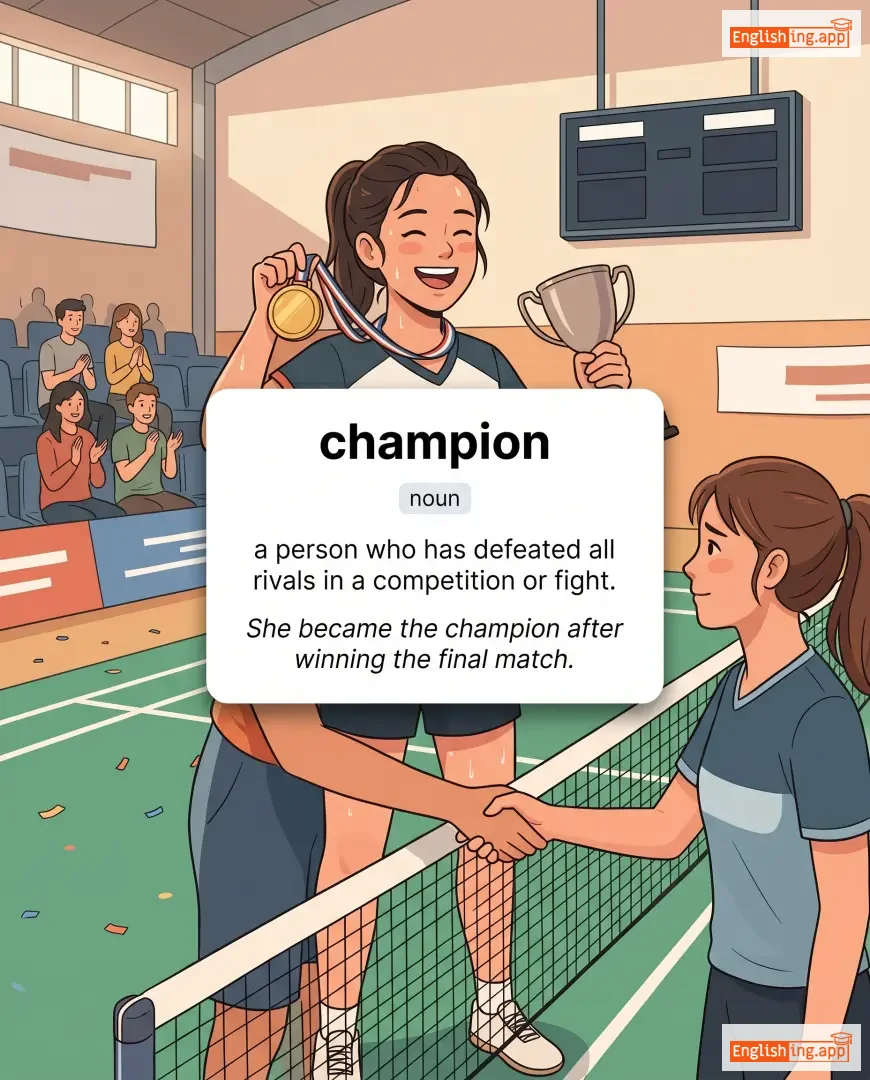
champion definition card — visual illustration of the meaning
noun
/ˈtʃæmpiən/
campeón (campeon)

a person who has defeated all rivals in a competition or fight.

"She became the champion after winning the final match."

"Ella se convirtió en la campeona después de ganar el partido final." (Ella se convirtio en la campeona despues de ganar el partido final.)
noun
/ˈtʃæmpiənʃɪp/
campeonato (campeonato)

a competition to decide who is the best in a particular sport or activity.

"The championship will be held next month."

"El campeonato se llevará a cabo el próximo mes." (El campeonato se llevará a cabo el próximo mes.)
noun
/tʃæns/
oportunidad (oportunidad)

An opportunity or possibility of something happening.

"He took a chance and applied for the job."

"Él tomó una oportunidad y aplicó para el trabajo." (El tomó una oportunidad y aplicó para el trabajo.)
noun
/ˈtʃænsələr/
canciller / rector (canciller / rector)

A senior state or legal official, or the head of a university.

"The chancellor delivered an inspiring speech at the graduation ceremony."

"El canciller pronunció un discurso inspirador en la ceremonia de graduación." (El canciller pronunció un discurso inspirador en la ceremonia de graduación.)
noun
/ˈtʃænsəri/
tribunal de chancillería (tribunal de chancilleria)

A court of equity or the office of a chancellor.

"The case was taken to the chancery court for resolution."

"El caso fue llevado al tribunal de chancillería para su resolución." (El caso fue llevado al tribunal de chancillería para su resolución.)
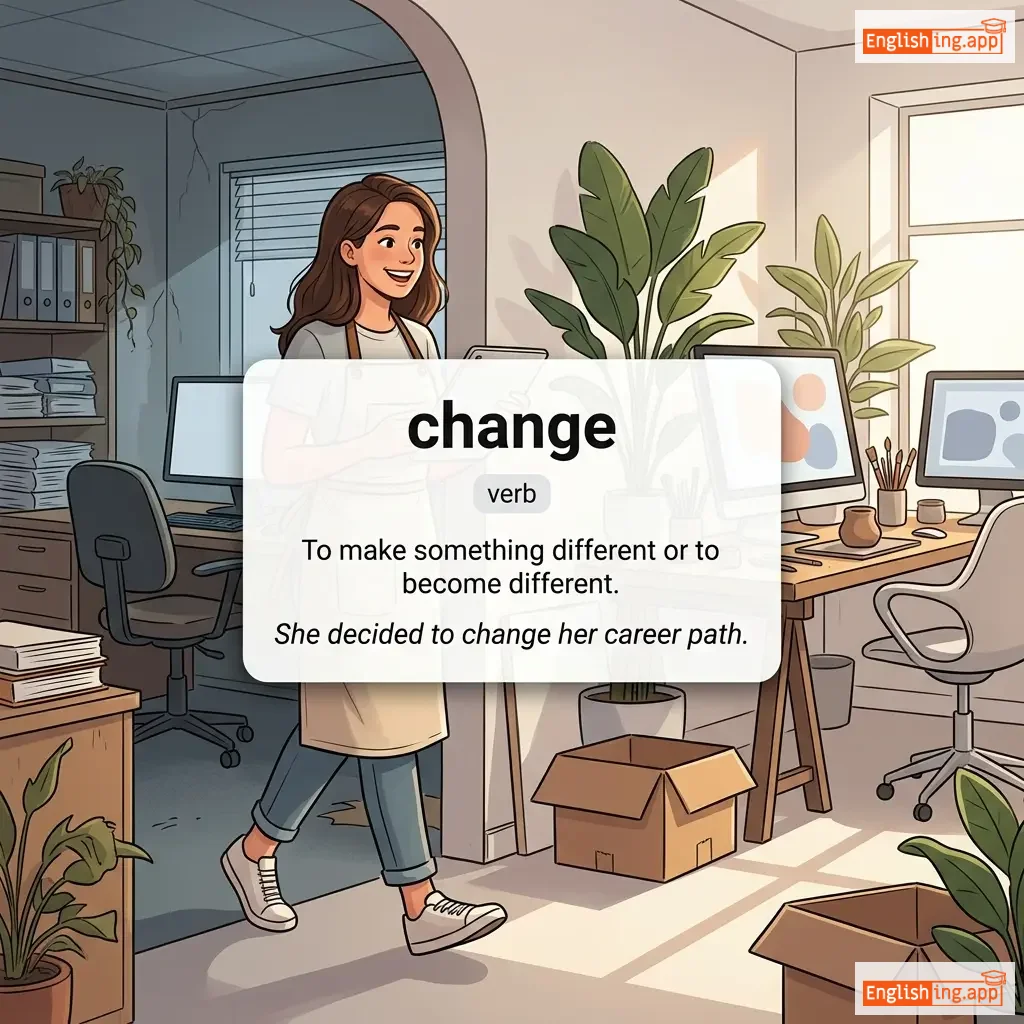
change definition card — visual illustration of the meaning
verb
/tʃeɪndʒ/
cambio (cambio)

To make something different or to become different.

"She decided to change her career path."

"Ella decidió cambiar su camino profesional." (Ella decidió cambiar su camino profesional.)
change management definition card — visual illustration of the meaning
noun
/ˈʃeɪndʒ ˈmænɪdʒmənt/
gestión del cambio (gestion del cambio)

The discipline that guides how we prepare, equip and support individuals, teams and organizations in making organizational change.

"Change management ensures smooth transitions."

"La gestión del cambio asegura transiciones suaves." (La gestion del cambio asegura transiciones suaves.)
adjective
/ˈtʃeɪn.dʒə.bəl/
cambiable; inestable (cambiable; inestable)

able to be changed; likely to change frequently

"The weather is very changeable in spring."

"El clima es muy cambiante en primavera." (El clima es muy cambiante en primavera.)
verb
/ˈtʃeɪndʒɪŋ/
cambio (cambio)

The act of becoming different; ongoing process of change.

"The weather is changing rapidly."

"El clima está cambiando rápidamente." (El clima está cambiando rápidamente.)
noun
/ˈtʃænəl/
canal / medio (canal / medio)

A means of communication, or a passage for water or information.

"They launched a new TV channel last year."

"Lanzaron un nuevo canal de televisión el año pasado." (Lanzaron un nuevo canal de television el ano pasado.)
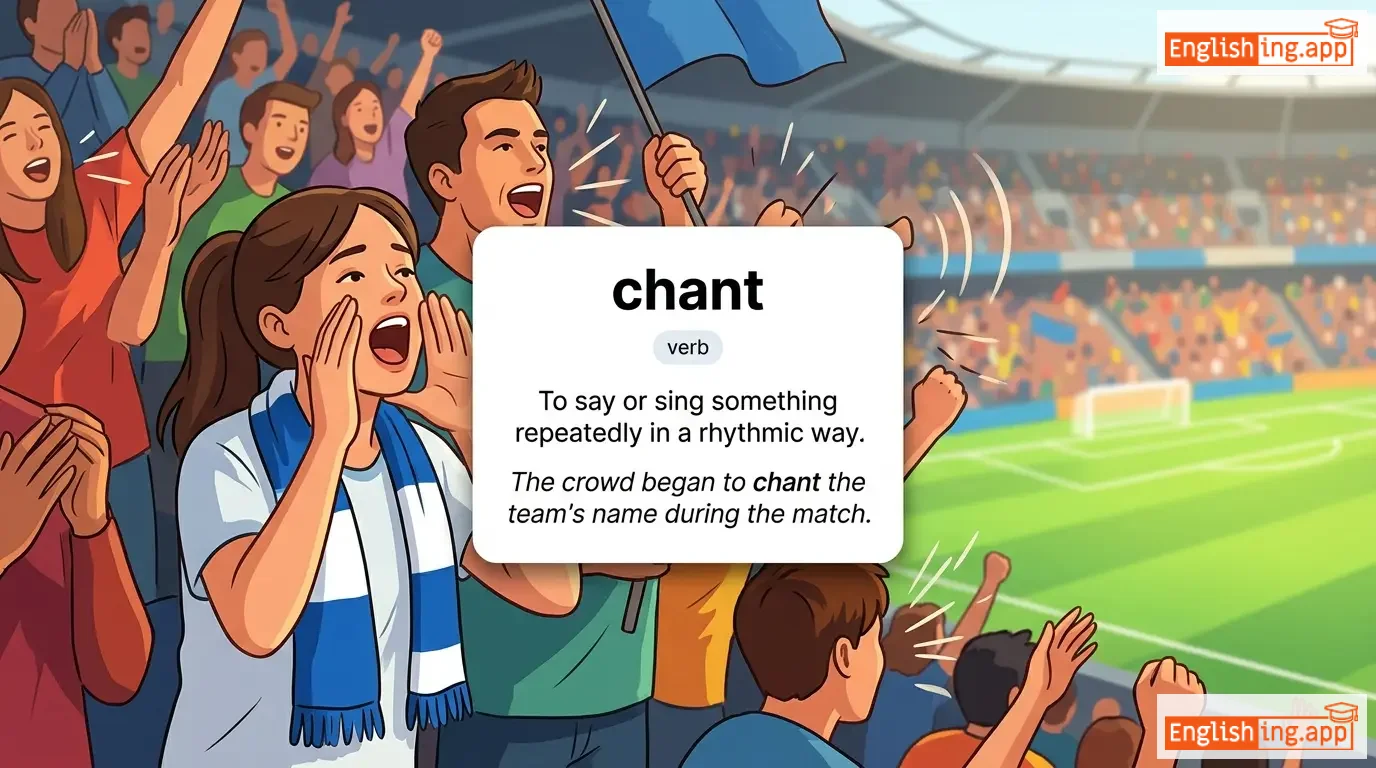
chant definition card — visual illustration of the meaning
verb
/tʃænt/
cantar eslóganes (cantar esloganes)

To say or sing something repeatedly in a rhythmic way.

"The crowd began to chant the team's name during the match."

"La multitud comenzó a cantar el nombre del equipo durante el partido." (La multitud comenzo a cantar el nombre del equipo durante el partido.)
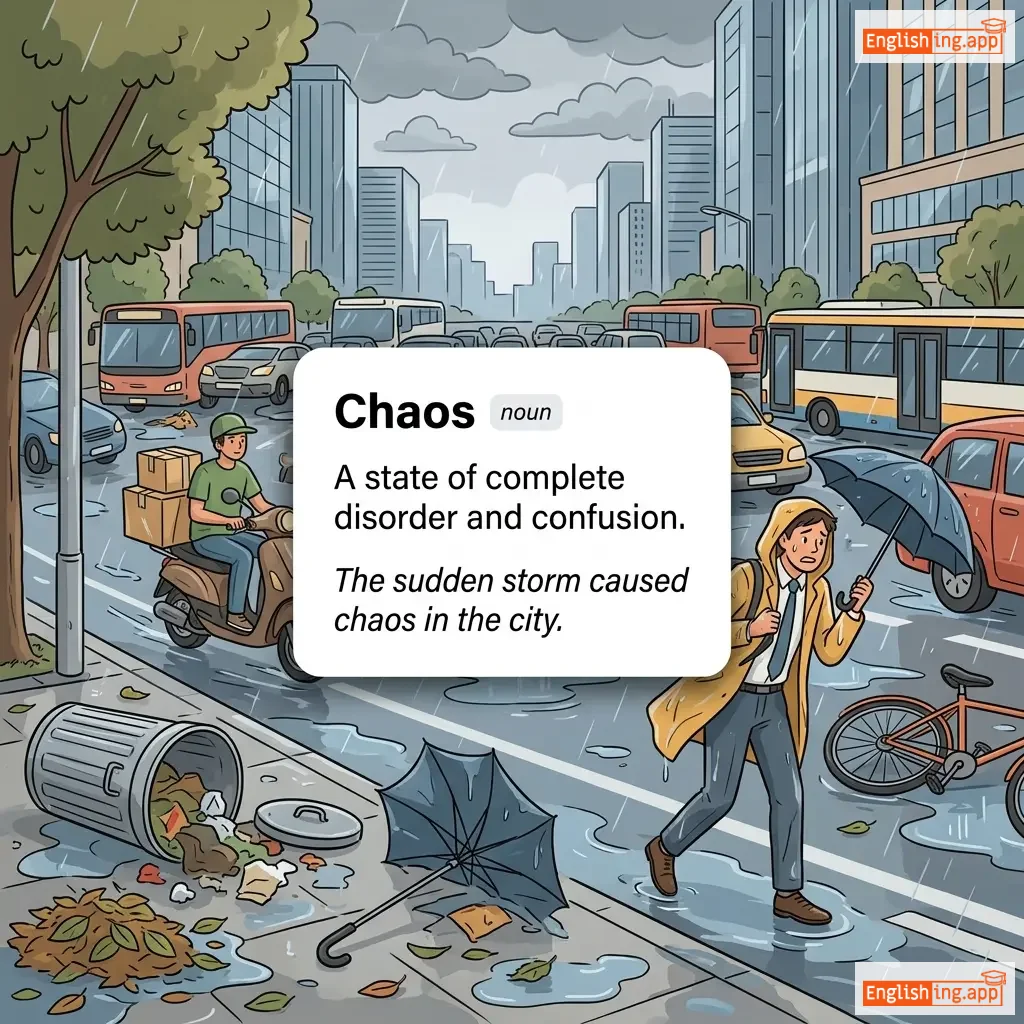
Chaos definition card — visual illustration of the meaning
noun
/ˈkeɪɒs/
caos (kaos)

A state of complete disorder and confusion.

"The sudden storm caused chaos in the city."

"La tormenta repentina causó caos en la ciudad." (La tormenta repentina causo caos en la ciudad.)
adjective
/keɪˈɒtɪk/
caótico (caotico)

Completely disordered or confusing.

"The classroom became chaotic when the teacher left."

"El aula se volvió caótica cuando el maestro se fue." (El aula se volvió caótica cuando el maestro se fue.)