Vocabularios

Descubra, aprenda y domine el vocabulario en inglés

verb
/kʌl/
seleccionar / eliminar (seleccionar / eliminar)

to select or remove from a larger group, often to reduce numbers

"The farmers decided to cull the sick animals from the herd."

"Los granjeros decidieron eliminar a los animales enfermos del rebaño." (Los granjeros decidieron eliminar a los animales enfermos del rebaño.)
culminate definition card — visual illustration of the meaning
verb
/ˈkʌl.mɪ.neɪt/
alcanzar el punto culminante (alcanzar el punto culminante)

to reach the highest point or final stage

"The negotiations culminated in a successful agreement."

"Las negociaciones culminaron en un acuerdo exitoso." (Las negociaciones culminaron en un acuerdo exitoso.)
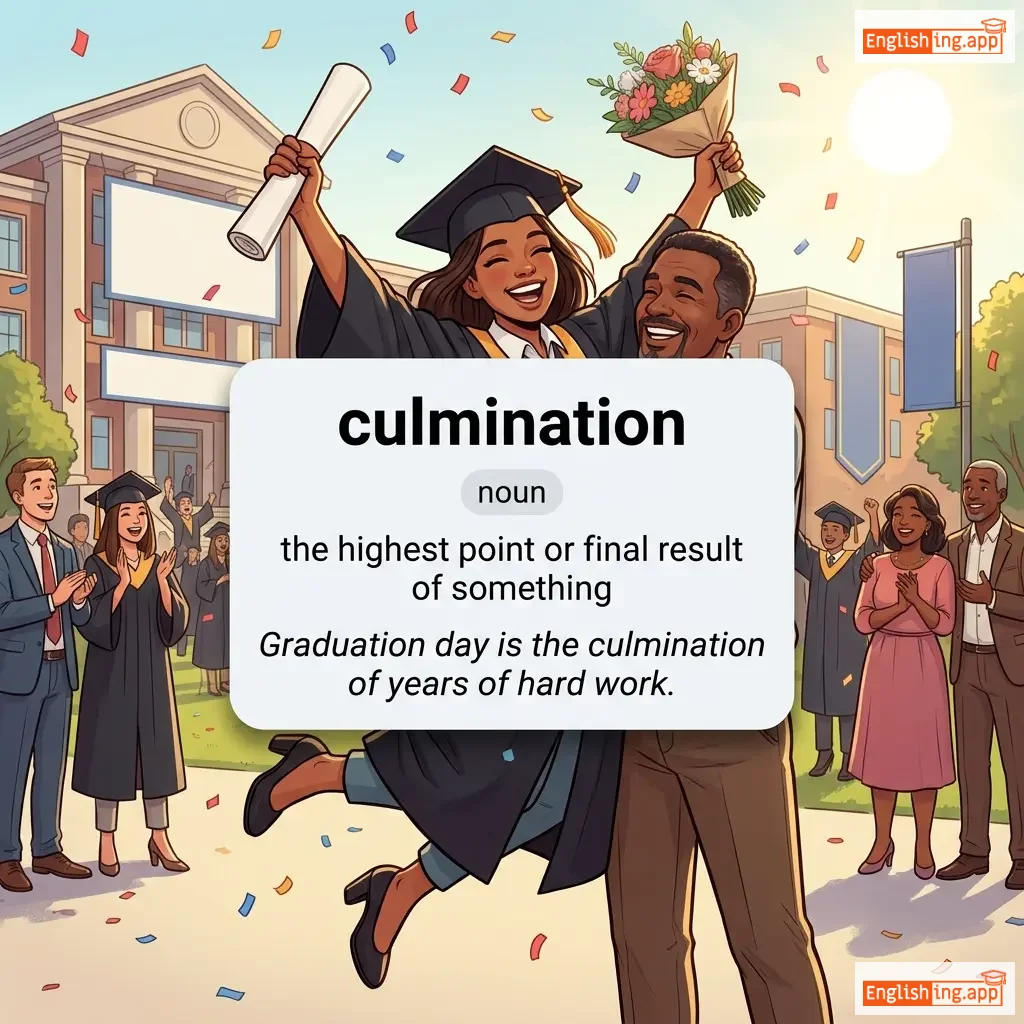
culmination definition card — visual illustration of the meaning
noun
/ˌkʌl.mɪˈneɪ.ʃən/
culminación (culminacion)

the highest point or final result of something

"Graduation day is the culmination of years of hard work."

"El día de graduación es la culminación de años de arduo trabajo." (El dia de graduacion es la culminacion de anos de arduo trabajo.)
noun
/ˌkʌl.pəˈbɪl.ɪ.ti/
culpabilidad (culpabilidad)

responsibility for a fault or wrong; blameworthiness

"The jury considered his level of culpability in the crime."

"El jurado consideró su nivel de culpabilidad en el crimen." (El jurado consideró su nivel de culpabilidad en el crimen.)
adjective
/ˈkʌlpəbl̩/
culpable (culpable)

deserving blame or responsibility for a wrongdoing

"The judge found him culpable for the accident."

"El juez lo consideró culpable del accidente." (El juez lo consideró culpable del accidente.)
noun
/ˈkʌlprɪt/
culpable (culpable)

a person who is responsible for a crime or misdeed

"The police caught the culprit behind the robbery."

"La policía atrapó al culpable detrás del robo." (La policía atrapó al culpable detrás del robo.)
noun
/kʌlt/
culto (kulto)

a system of religious veneration and devotion directed toward a particular figure or object

"The cult followed their leader with great devotion."

"El culto siguió a su líder con gran devoción." (El culto siguio a su lider con gran devocion.)
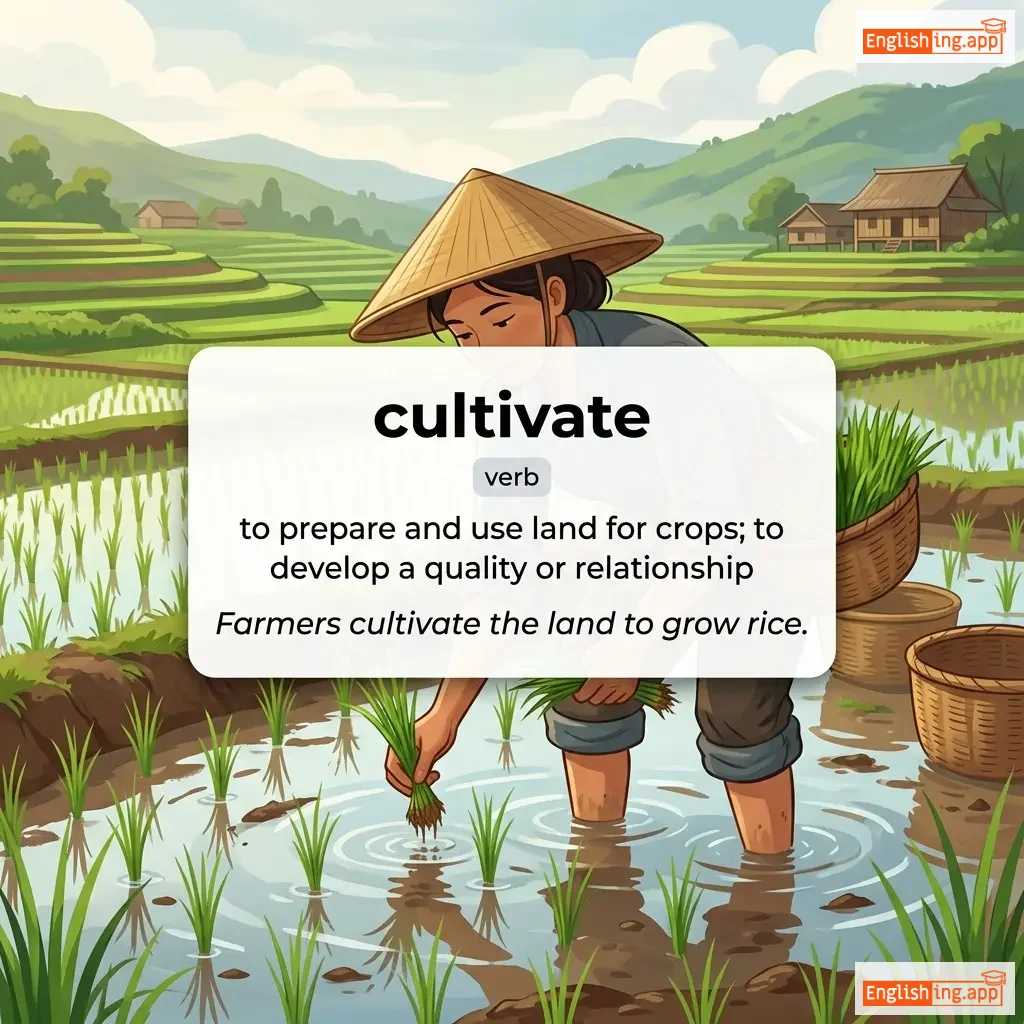
cultivate definition card — visual illustration of the meaning
verb
/ˈkʌltɪveɪt/
felicidad (felicidad)

to prepare and use land for crops; to develop a quality or relationship

"Farmers cultivate the land to grow rice."

"Ella no pudo ocultar su felicidad cuando recibió el premio." (Ella no pudo ocultar su felicidad cuando recibió el premio.)
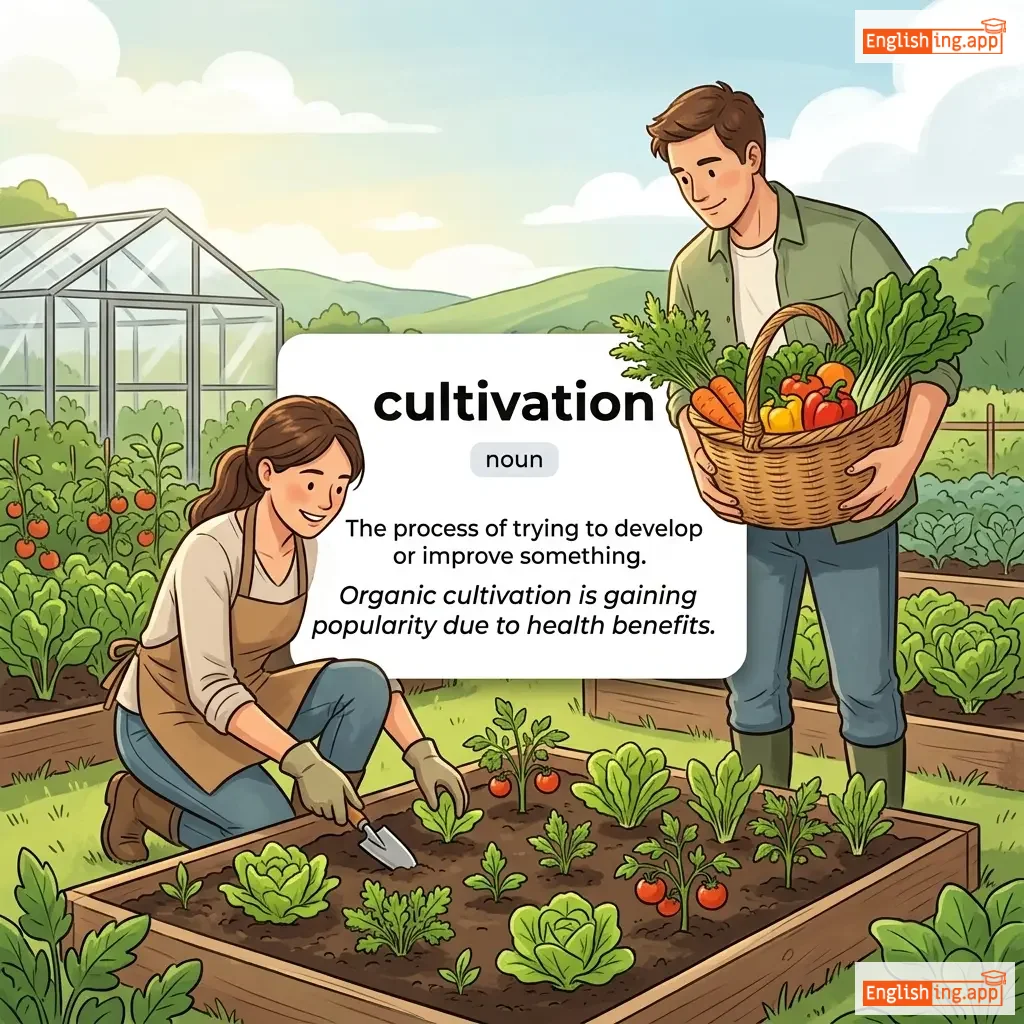
cultivation definition card — visual illustration of the meaning
noun
/ˌkʌl.tɪˈveɪ.ʃən/
cultivo (cultivo)

The process of trying to develop or improve something.

"Organic cultivation is gaining popularity due to health benefits."

"La cultivación orgánica está ganando popularidad debido a los beneficios para la salud." (La cultivación orgánica está ganando popularidad debido a los beneficios para la salud.)
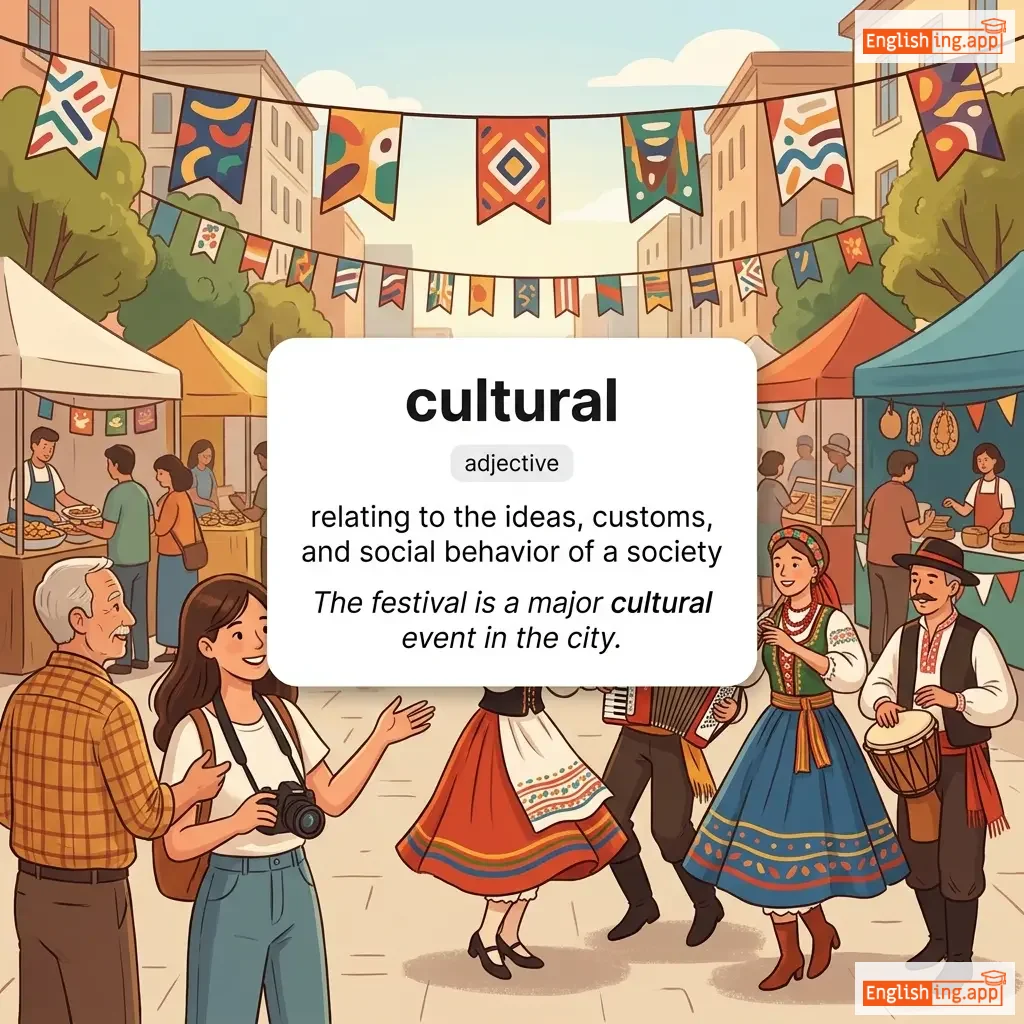
cultural definition card — visual illustration of the meaning
adjective
/ˈkʌltʃərəl/
cultural (cultural)

relating to the ideas, customs, and social behavior of a society

"The festival is a major cultural event in the city."

"El festival es un evento cultural importante en la ciudad." (El festival es un evento cultural importante en la ciudad.)
noun
/ˈkʌltʃər/
cultura (cultura)

the customs, arts, social institutions, and achievements of a particular people or society

"Japanese culture is admired all over the world."

"La cultura japonesa es admirada en todo el mundo." (La cultura japonesa es admirada en todo el mundo.)
adjective
/ˈkʌltʃəd/
culto (kulto)

characterized by refined taste, manners, and education

"She is a cultured woman who loves art and literature."

"Ella es una mujer culta que ama el arte y la literatura." (Ella es una mujer culta que ama el arte y la literatura.)
noun
/ˈkʌlvərt/
alcantarilla (alcantarilla)

a tunnel or drain that carries water under a road or railway

"The heavy rainwater flowed through the culvert under the bridge."

"El agua de lluvia pesada fluyó a través de la alcantarilla bajo el puente." (El agua de lluvia pesada fluyó a través de la alcantarilla bajo el puente.)
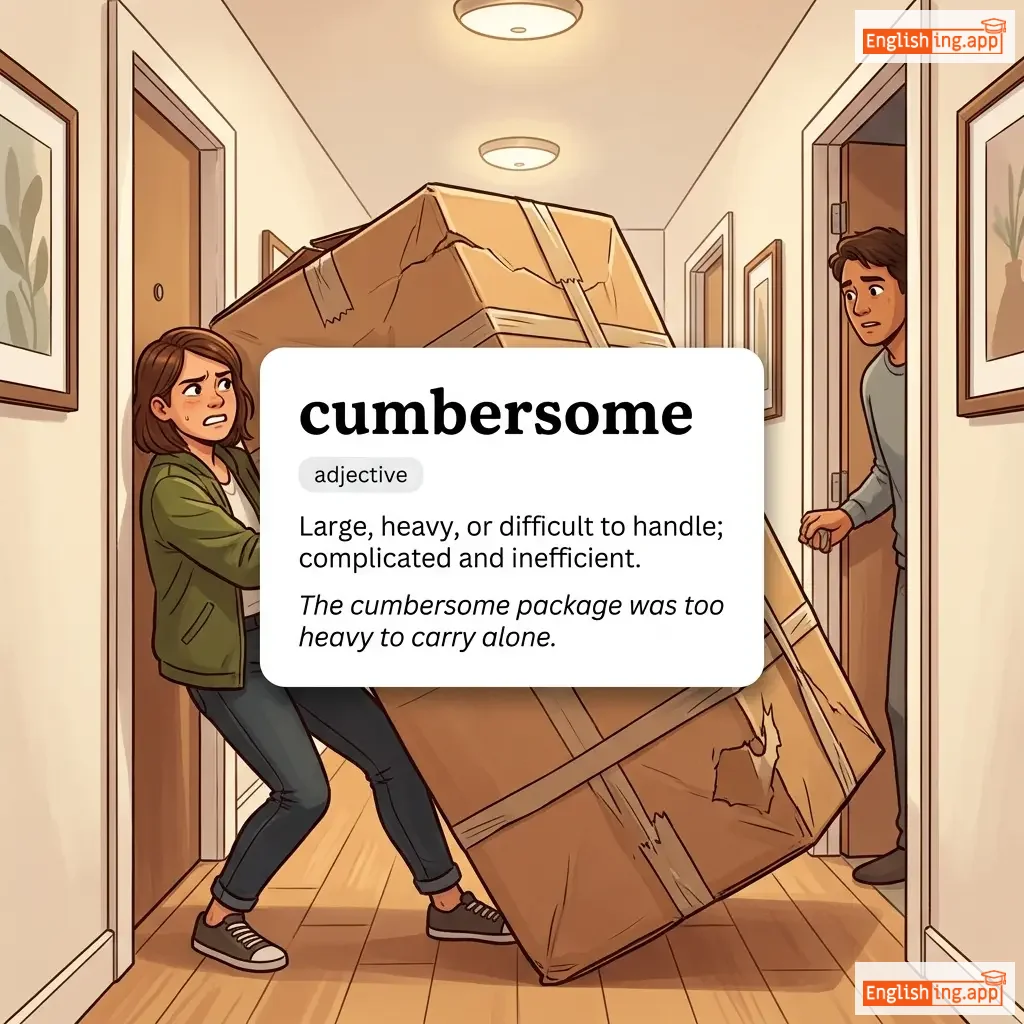
cumbersome definition card — visual illustration of the meaning
adjective
/ˈkʌmbərsəm/
engorroso (engorroso)

Large, heavy, or difficult to handle; complicated and inefficient.

"The cumbersome package was too heavy to carry alone."

"El paquete engorroso era demasiado pesado para cargarlo solo." (El paquete engorroso era demasiado pesado para cargarlo solo.)
noun
/ˈkjuːmɪn/
comino (comino)

A spice made from the dried seeds of a plant in the parsley family, with a warm earthy flavor

"Cumin is an essential spice in Indian and Middle Eastern cooking."

"El comino es una especia esencial en la cocina india y del Medio Oriente." (El comino es una especia esencial en la cocina india y del Medio Oriente.)
adjective
/ˈkjuːmjələtɪv/
cumulativo (cumulativo)

Increasing gradually by addition; growing in quantity, force, or effect.

"The cumulative effect of stress can harm your health."

"El efecto acumulativo del estrés puede dañar tu salud." (El efecto acumulativo del estrés puede dañar tu salud.)
adjective
/ˈkʌnɪŋ/
astuto (astuto)

Having or showing skill in achieving one's ends by deceit or evasion; cleverness in a tricky way.

"The cunning fox tricked the farmer."

"El astuto zorro engañó al granjero." (El astuto zorro engañó al granjero.)
noun
/kʌp/
taza (taza)

a small bowl-shaped container for drinking from, typically with a handle

"She drank a cup of tea in the morning."

"Ella bebió una taza de té por la mañana." (Ella bebio una taza de te por la manana.)
noun
/ˈkʌp.bɔːrd/
armario (armario)

a piece of furniture with doors and shelves for storing dishes, food, or clothes

"She stored all the plates and bowls in the kitchen cupboard."

"Ella guardó todos los platos y tazones en el armario de la cocina." (Ella guardó todos los platos y tazones en el armario de la cocina.)
noun
/kjuːˈpɪdəti/
codicia (codicia)

Excessive desire for wealth or possessions; greed.

"The king's downfall was caused by his cupidity."

"La caída del rey fue causada por su codicia." (La caída del rey fue causada por su codicia.)
adjective
/ˈkjʊərəbl/
curable (curable)

Able to be cured or healed.

"The doctor assured her that the disease was curable."

"El doctor le aseguró que la enfermedad era curable." (El doctor le aseguró que la enfermedad era curable.)
adjective
/ˈkjʊərətɪv/
curativo (curativo)

Able to cure disease or restore health.

"The doctor prescribed a curative treatment for the illness."

"El médico prescribió un tratamiento curativo para la enfermedad." (El medico prescribio un tratamiento curativo para la enfermedad.)
noun
/kjʊˈreɪtər/
curador (curador)

a person who is responsible for the care and management of a museum, gallery, or collection

"The curator organized a new exhibition of ancient artifacts."

"El curador organizó una nueva exposición de artefactos antiguos." (El curador organizó una nueva exposición de artefactos antiguos.)
verb
/kɜːrb/
frenar / controlar (frenar / controlar)

to restrain, control, or limit something

"The government took steps to curb inflation."

"El gobierno tomó medidas para frenar la inflación." (El gobierno tomó medidas para frenar la inflación.)
noun
/kɜːrd/
yogur (yogur)

a white dairy product made by coagulating milk; yogurt

"She added fresh curd to the salad for a tangy flavor."

"Añadió yogur fresco a la ensalada para darle un sabor ácido." (Añadió yogur fresco a la ensalada para darle un sabor ácido.)
verb
/kjʊər/
curar (kurar)

to make someone healthy again after an illness

"The new medicine cured her of the infection."

"La nueva medicina la curó de la infección." (La nueva medicina la kuro de la infeccion.)
noun
/ˈkɜːrfjuː/
toque de queda (toque de queda)

a rule requiring people to stay indoors after a certain time, usually at night

"The city imposed a curfew during the unrest."

"La ciudad impuso un toque de queda durante los disturbios." (La ciudad impuso un toque de queda durante los disturbios.)
noun
/ˈkjʊriˌoʊ/
objeto curioso (objeto curioso)

a small unusual or interesting object, often collected for its rarity

"She bought a curio from the antique shop."

"Ella compró un objeto curioso en la tienda de antigüedades." (Ella compro un objeto curioso en la tienda de antigüedades.)
noun
/ˌkjʊəriˈɒsɪti/
curiosidad (curiosidad)

a strong desire to know or learn something

"Children have a natural curiosity about the world around them."

"Los niños tienen una curiosidad natural sobre el mundo que los rodea." (Los niños tienen una curiosidad natural sobre el mundo que los rodea.)
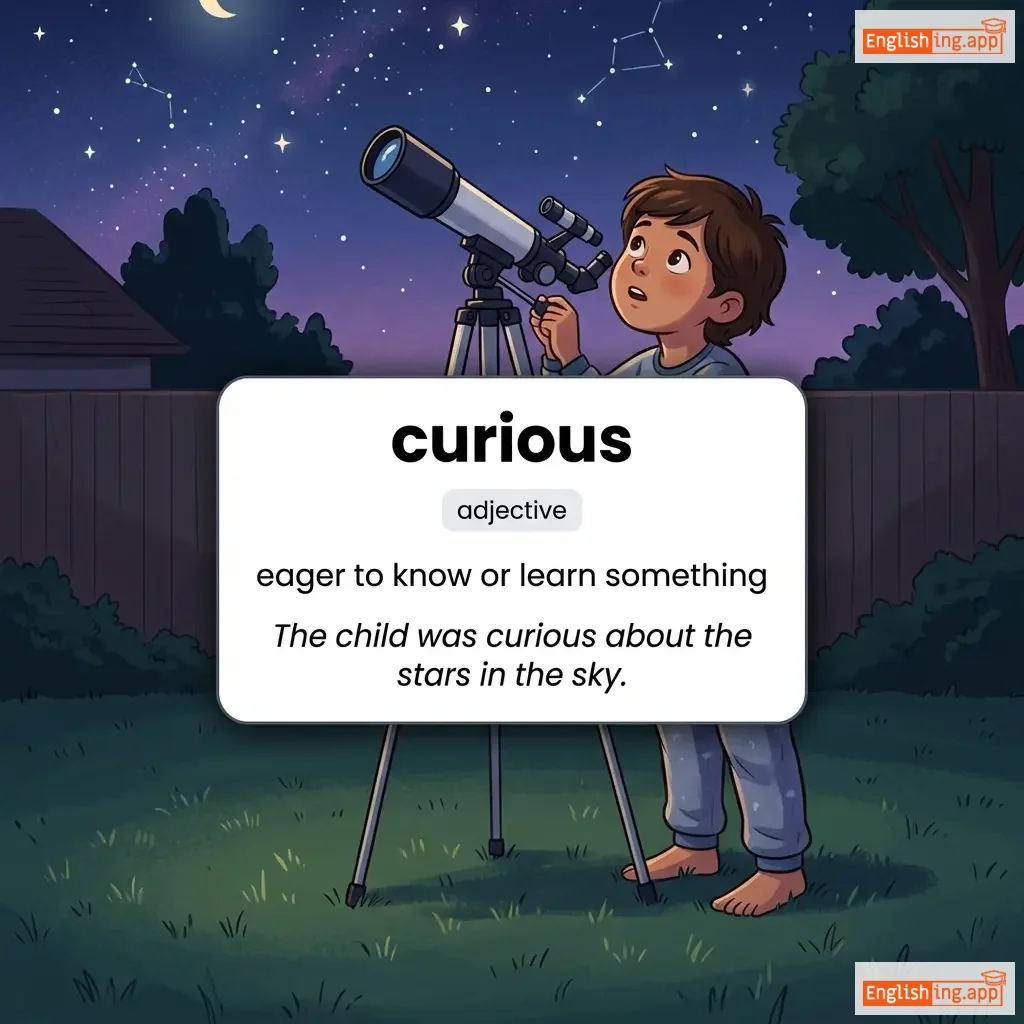
curious definition card — visual illustration of the meaning
adjective
/ˈkjʊəriəs/
curioso (curioso)

eager to know or learn something

"The child was curious about the stars in the sky."

"El niño estaba curioso acerca de las estrellas en el cielo." (El niño estaba curioso acerca de las estrellas en el cielo.)
noun
/kɜːrl/
rizo; espiral (rizo; espiral)

a piece of hair that curves or coils; something with a spiral or curved shape

"She had beautiful natural curls that framed her face perfectly."

"Ella tenía hermosos rizos naturales que enmarcaban su rostro perfectamente." (Ella tenía hermosos rizos naturales que enmarcaban su rostro perfectamente.)
💇‍♀️

curler (kɜːrlər)

noun
/ˈkɜːrlər/
rizador (rizador)

A small roller used for curling hair.

"She used a curler to style her hair for the party."

"Ella usó un rizador para estilizar su cabello para la fiesta." (Ella uso un rizador para estilizar su cabello para la fiesta.)
adjective
/ˈkɜːrli/
rizado (rizado)

having curls or waves; shaped with bends or coils

"She has naturally curly hair."

"Ella tiene el pelo naturalmente rizado." (Ella tiene el pelo naturalmente rizado)
noun
/kərˈmʌdʒən/
persona gruñona (persona gruñona)

a bad-tempered, cranky, or irritable person, usually old

"The old curmudgeon complained about everything in the neighborhood."

"El viejo gruñón se quejaba de todo en el vecindario." (El viejo gruñón se quejaba de todo en el vecindario.)
currency definition card — visual illustration of the meaning
noun
/ˈkʌrənsi/
moneda (moneda)

the system of money used in a particular country

"The U.S. dollar is the official currency of the United States."

"El dólar estadounidense es la moneda oficial de los Estados Unidos." (El dolar estadounidense es la moneda oficial de los Estados Unidos.)
adjective, noun
/ˈkʌrənt/
actual, corriente (actual, corriente)

belonging to the present time; a flow of water or electricity

"She is reading the current issue of the magazine."

"Ella está leyendo la edición actual de la revista." (Ella está leyendo la edición actual de la revista.)
adverb
/ˈkʌrəntli/
actualmente (actualmente)

at the present time; now

"He is currently working on a new project."

"Él está actualmente trabajando en un nuevo proyecto." (Él está actualmente trabajando en un nuevo proyecto.)
noun
/kəˈrɪkjələm/
currículo (curriculo)

The subjects comprising a course of study in a school, college, or university.

"The school updated its curriculum to include more digital literacy courses."

"La escuela actualizó su currículo para incluir más cursos de alfabetización digital." (La escuela actualizó su currículo para incluir más cursos de alfabetización digital.)
noun/verb
/ˈkʌri/
curry (curry)

A dish of meat, vegetables, etc., cooked in a sauce with spices; or to prepare food in such a style.

"She cooked a delicious chicken curry for dinner."

"Ella cocinó un delicioso curry de pollo para la cena." (Ella cocinó un delicioso curry de pollo para la cena.)
noun
/ˈkɜːr.i liːvz/
hojas de curry (hojas de curry)

aromatic leaves from the curry tree used in South Asian cooking

"Fresh curry leaves add authentic flavor to Indian dishes."

"Las hojas de curry frescas añaden un sabor auténtico a los platos indios." (Las hojas de curry frescas anaden un sabor autentico a los platos indios.)
noun, verb
/kɜːrs/
maldición (maldicion)

a solemn wish that harm or misfortune should befall someone; a rude or offensive word or phrase; to utter offensive words or wish harm upon someone

"He cursed loudly when he realized he had lost his wallet."

"Maldijo en voz alta cuando se dio cuenta de que había perdido su billetera." (Maldijo en voz alta cuando se dio cuenta de que habia perdido su billetera)
adjective/noun
/ˈkɜːrsɪv/
letra cursiva (letra cursiva)

Written with characters joined together in a flowing manner.

"The teacher asked students to write the essay in cursive handwriting."

"El maestro pidió a los estudiantes que escribieran el ensayo con letra cursiva." (El maestro pidió a los estudiantes que escribieran el ensayo con letra cursiva.)
adjective
/ˈkɜːrsəri/
superficial (superficial)

Hasty and therefore not thorough or detailed.

"He gave the report only a cursory glance before the meeting."

"Él echó un vistazo superficial al informe antes de la reunión." (Él echó un vistazo superficial al informe antes de la reunión.)
adjective
/kɜːrt/
ríspido (rispido)

Rudely brief in speech or manner.

"His curt reply made everyone uncomfortable."

"Su respuesta ríspida hizo que todos se sintieran incómodos." (Su respuesta rispida hizo que todos se sintieran incomodos.)
verb
/kɜːrˈteɪl/
reducir (reducir)

to reduce or limit something, especially something considered undesirable

"The company had to curtail its spending due to budget cuts."

"La compañía tuvo que reducir su gasto debido a los recortes presupuestarios." (La compañia tuvo que reducir su gasto debido a los recortes presupuestarios.)
noun
/ˈkɜː.tən/
cortina (cortina)

a piece of cloth that hangs down to cover a window or divide a room

"She pulled back the curtain to let the sunlight in."

"Ella abrió la cortina para dejar entrar la luz del sol." (Ella abrió la cortina para dejar entrar la luz del sol.)
🙇‍♀️

curtsy (kɜːrtsi)

noun/verb
/ˈkɜːrtsi/
reverencia (reverencia)

a respectful bow made by women by bending the knees with one foot in front of the other

"She gave a quick curtsy before leaving the stage."

"Ella dio una rápida reverencia antes de salir del escenario." (Ella dio una rapida reverencia antes de salir del escenario.)
noun
/kɜːv/
curva (curva)

a smooth, continuous line that bends without angles

"The road curved sharply to the left."

"La carretera giró bruscamente a la izquierda." (La carretera giro bruscamente a la izquierda.)
adjective
/ˈkʌsɪd/
terco (terco)

Annoyingly stubborn or difficult.

"He was too cussed to admit his mistake."

"Era demasiado terco para admitir su error." (Era demasiado terco para admitir su error.)
noun
/ˈkʌstərd ˈæpəl/
manzana de crema (manzana de crema)

a tropical fruit with sweet creamy white flesh and black seeds

"The custard apple has a sweet and creamy texture."

"La manzana de crema tiene una textura dulce y cremosa." (La manzana de crema tiene una textura dulce y cremosa.)