Vocabularios

Descubra, aprenda y domine el vocabulario en inglés

noun
/ˈkɒntrəbænd/
mercancías ilegales (mercancias ilegales)

goods that are illegal to import, export, or possess

"The police seized a shipment of contraband cigarettes."

"La policía incautó un cargamento de cigarrillos de contrabando." (La policía incautó un cargamento de cigarrillos de contrabando.)
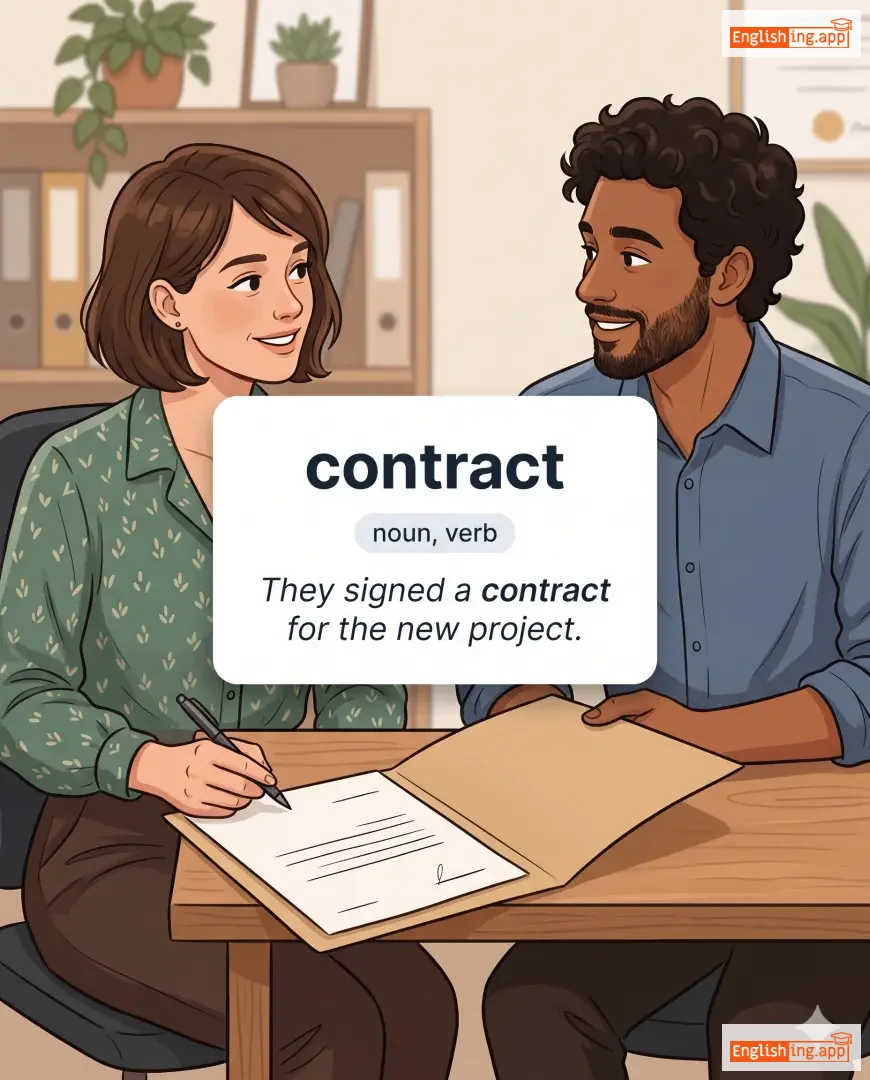
contract definition card — visual illustration of the meaning
noun, verb
/ˈkɒntrækt/
contrato, acuerdo escrito o hablado (contrato, acuerdo escrito o hablado)

noun: a written or spoken agreement; verb: to enter into an agreement or to reduce in size

"They signed a contract for the new project."

"Ellos firmaron un contrato para el nuevo proyecto." (Ellos firmaron un contrato para el nuevo proyecto.)
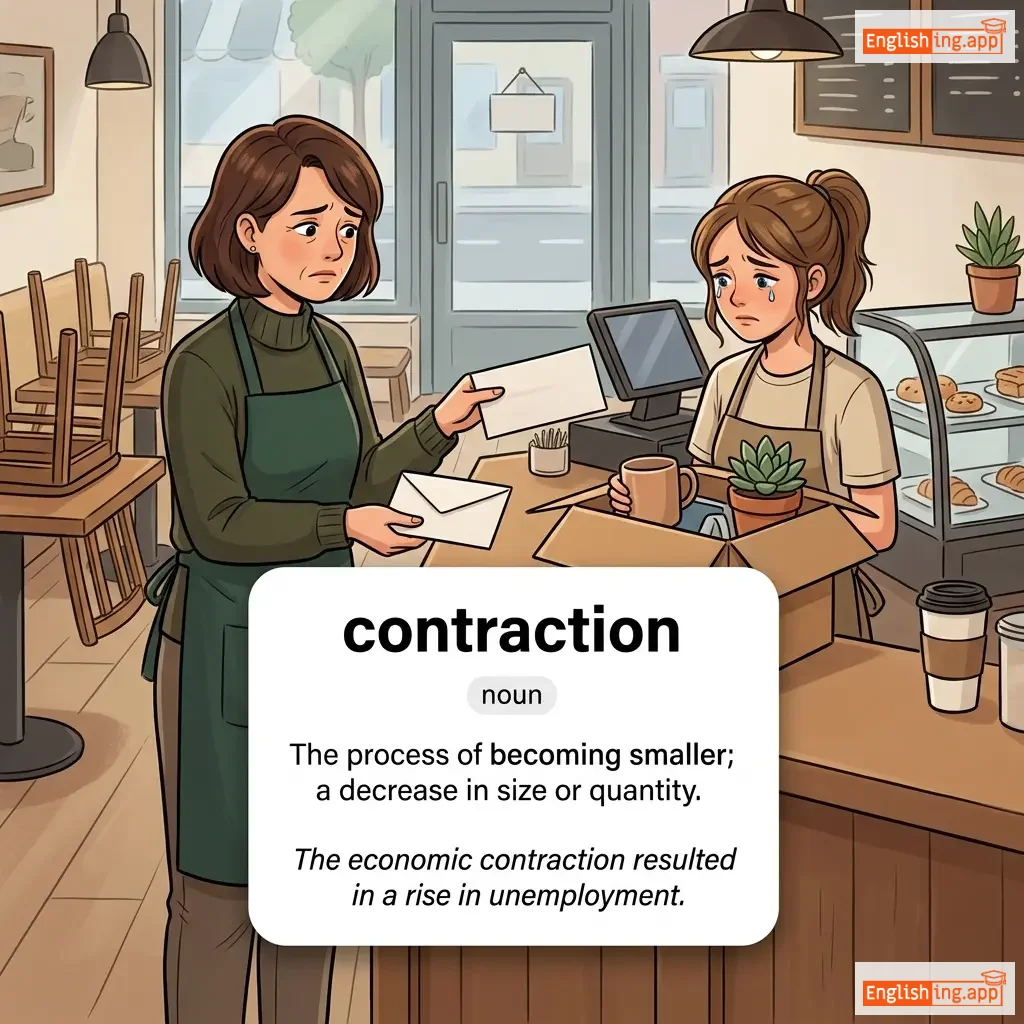
contraction definition card — visual illustration of the meaning
noun
kənˈtrækʃən
contracción (contractión)

The process of becoming smaller; a decrease in size or quantity.

"The economic contraction resulted in a rise in unemployment."

"La contracción económica resultó en un aumento en el desempleo." (La contracción económica resultó en un aumento en el desempleo.)
noun
/ˈkɒntræktər/
contratista (contractista)

a person or company that agrees to provide materials or labor to perform a service or do a job

"The contractor completed the building project on time."

"El contratista completó el proyecto de construcción a tiempo." (El contratista completo el proyecto de construccion a tiempo.)
verb
/ˌkɒn.trəˈdɪkt/
contradecir (contradecir)

to say or show the opposite of something that has been said or believed

"His actions contradict his words."

"Sus acciones contradicen sus palabras." (Sus acciones contradicen sus palabras.)
noun
/ˌkɒntrəˈdɪkʃən/
contradicción, inconsistencia (contradiccion, inconsistencia)

a statement or situation that is opposed to another, inconsistency

"Her actions are in clear contradiction to her words."

"Sus acciones están en clara contradicción con sus palabras." (Sus acciones estan en clara contradiccion con sus palabras.)
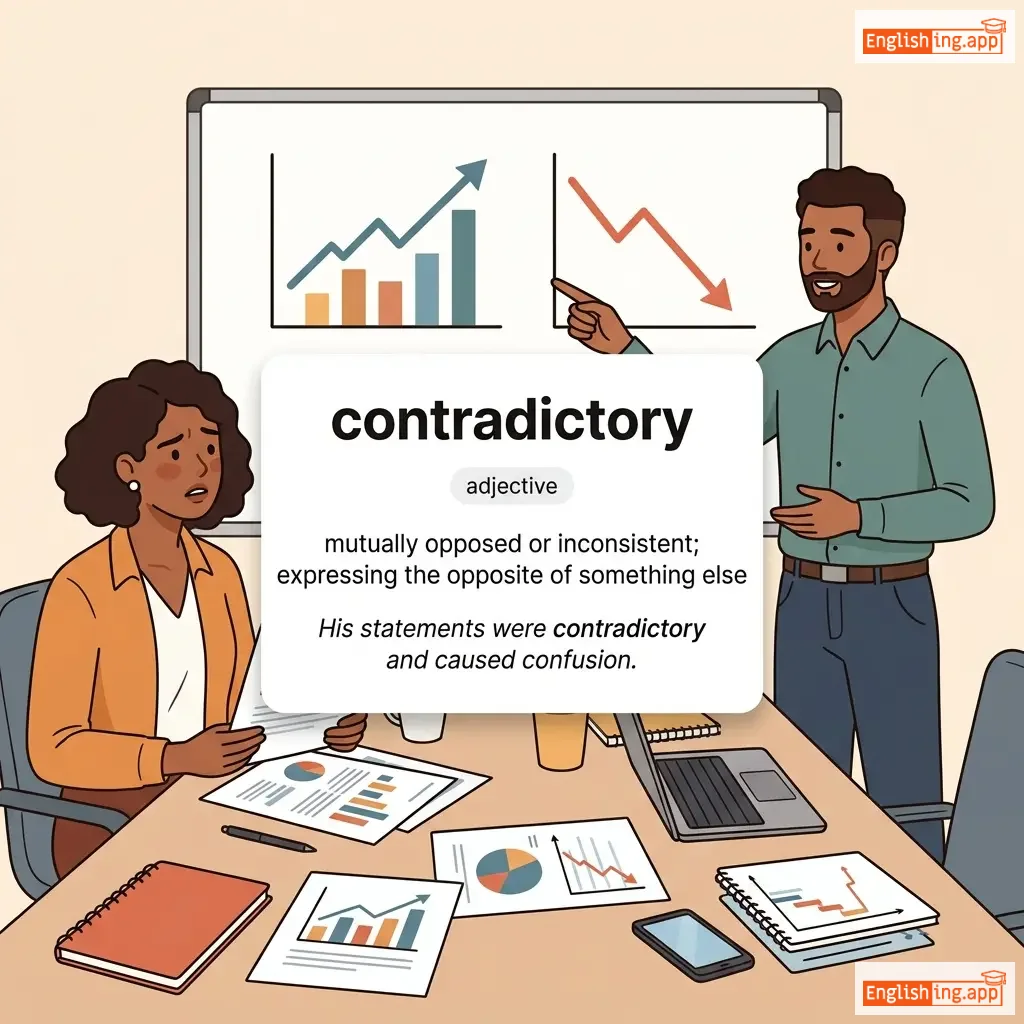
contradictory definition card — visual illustration of the meaning
adjective
/ˌkɒntrəˈdɪktəri/
contradictorio (contradictorio)

mutually opposed or inconsistent; expressing the opposite of something else

"His statements were contradictory and caused confusion."

"Sus declaraciones fueron contradictorias y causaron confusión." (Sus declaraciones fueron contradictorias y causaron confusión.)
noun
/ˌkɒntrəpəˈzɪʃən/
contraposición (contraposicion)

the act of placing two things in opposition for contrast or comparison

"The contraposition of the two theories highlighted their differences."

"La contraposición de las dos teorías destacó sus diferencias." (La contraposicion de las dos teorias destaco sus diferencias.)
noun
/ˈkɒntrəriz/
cosas opuestas (cosas opuestas)

things that are completely different or opposite to each other

"Freedom and slavery are contraries in every sense."

"La libertad y la esclavitud son contrarias en todos los sentidos." (La libertad y la esclavitud son contrarias en todos los sentidos.)
adjective
/ˈkɒn.trəri/
contrario (contrario)

opposite in nature, direction, or meaning

"Her views are contrary to mine."

"Sus opiniones son contrarias a las mías." (Sus opiniones son contrarias a las mías.)
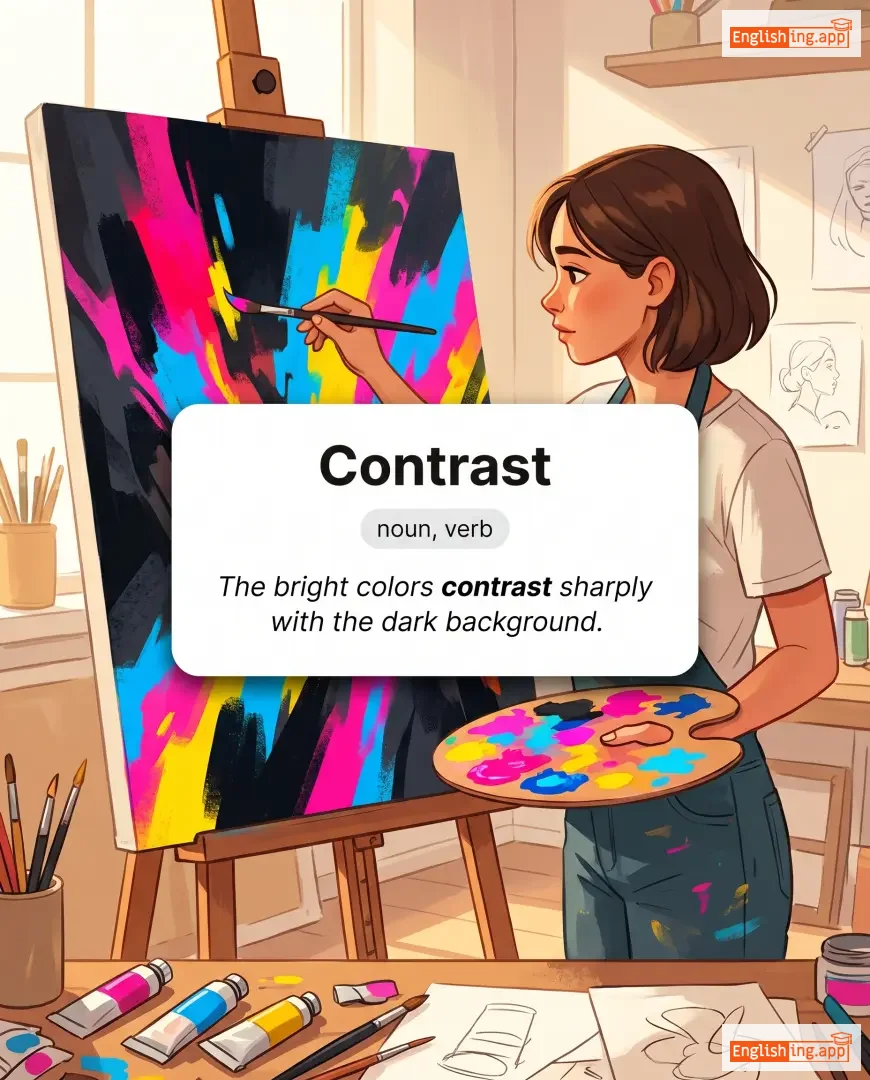
Contrast definition card — visual illustration of the meaning
noun, verb
/ˈkɒn.trɑːst/ (noun), /kənˈtræst/ (verb)
felicidad (felicidad)

A difference between two or more things; to compare two things to show how they are different.

"The bright colors contrast sharply with the dark background."

"No pudo ocultar su felicidad cuando recibió el premio." (No pudo ocultar su felicidad cuando recibio el premio.)
verb
/ˌkɒntrəˈviːn/
contravenir (contravenir)

to go against or act in opposition to a law, rule, or agreement

"He contravened the safety regulations and was fined."

"Él contravino las normas de seguridad y fue multado." (Él contravino las normas de seguridad y fue multado.)
noun
/ˈkɒntrətɑː̃/
desacuerdo inesperado (desacuerdo inesperado)

an unexpected and unfortunate event or disagreement; a minor dispute

"There was a small contretemps between the two colleagues during the meeting."

"Hubo un pequeño desacuerdo entre los dos colegas durante la reunión." (Hubo un pequeño desacuerdo entre los dos colegas durante la reunión.)
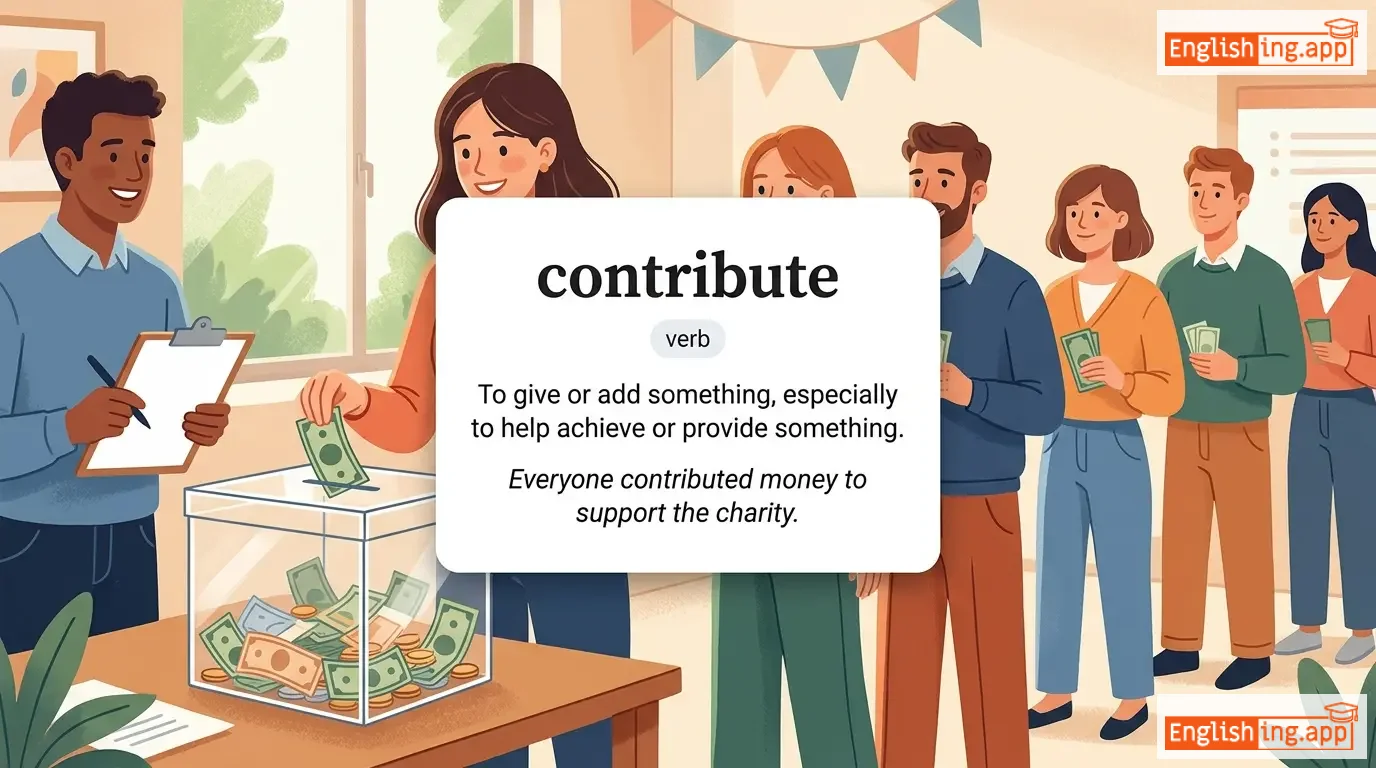
contribute definition card — visual illustration of the meaning
verb
/kənˈtrɪbjuːt/
contribuir (contribuir)

To give or add something, especially to help achieve or provide something.

"Everyone contributed money to support the charity."

"Todos contribuyeron dinero para apoyar a la caridad." (Todos contribuyeron dinero para apoyar a la caridad.)
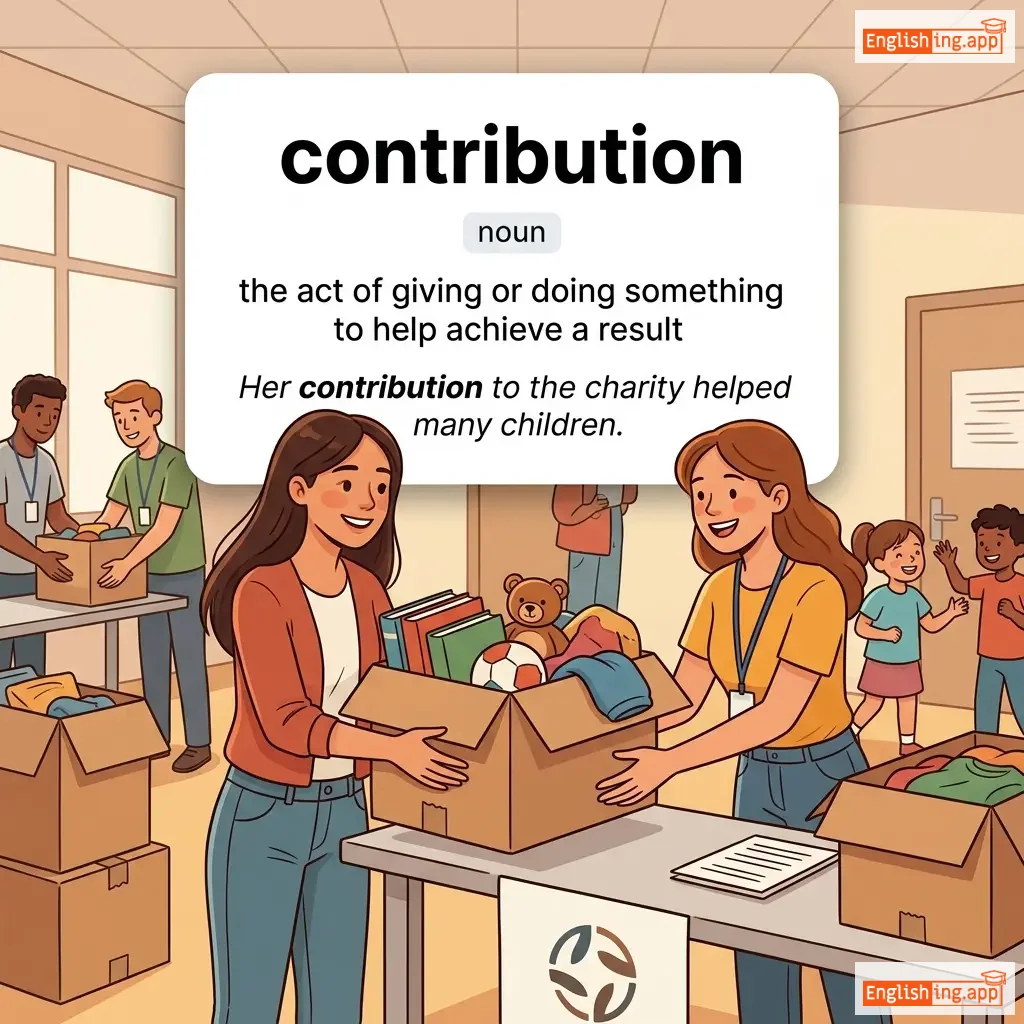
contribution definition card — visual illustration of the meaning
noun
/ˌkɒn.trɪˈbjuː.ʃən/
contribución (contribucion)

the act of giving or doing something to help achieve a result

"Her contribution to the charity helped many children."

"Su contribución a la caridad ayudó a muchos niños." (Su contribucion a la caridad ayudo a muchos niños.)
noun
/ˈkɒn.trɪ.bjʊ.tər/
contribuyente (contribuyente)

a person who gives something to help achieve a result

"He was a regular contributor to the local newspaper."

"Él era un contribuyente regular al periódico local." (Él era un contribuyente regular al periódico local.)
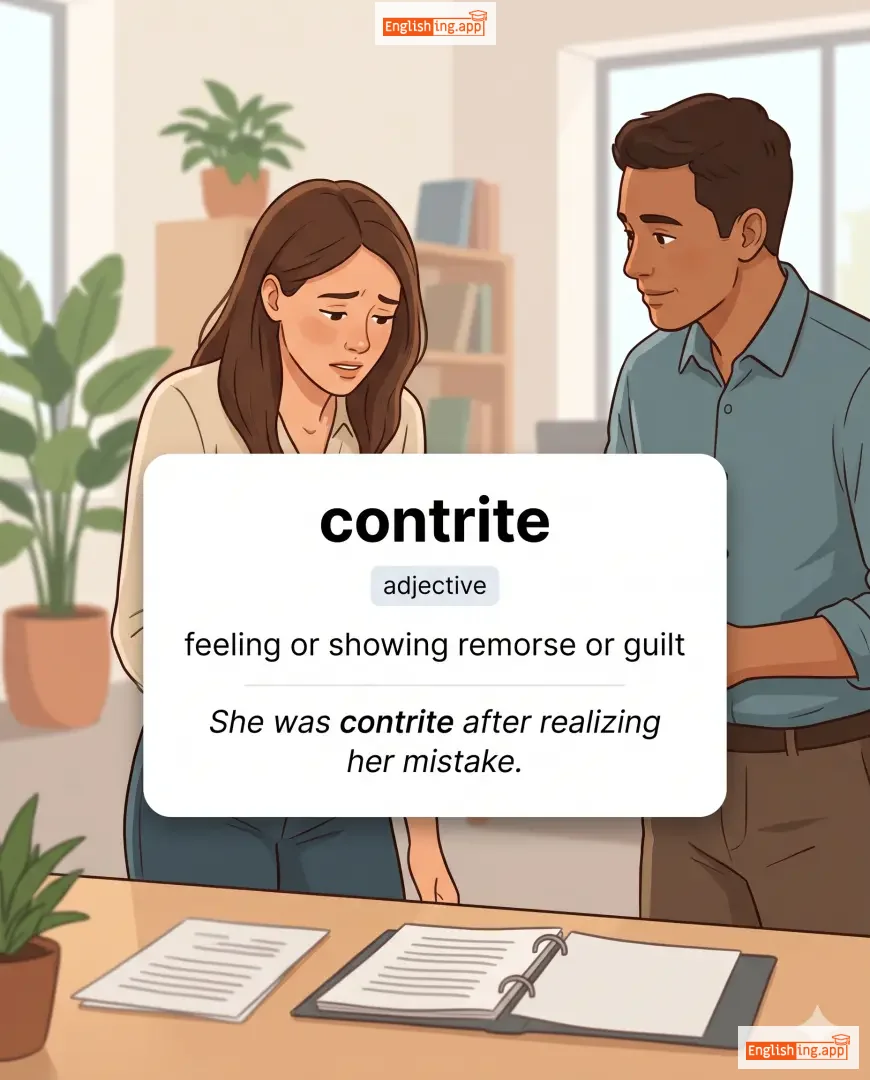
contrite definition card — visual illustration of the meaning
adjective
/kənˈtraɪt/
arrepentido (arrepentido)

feeling or showing remorse or guilt

"She was contrite after realizing her mistake."

"Ella estaba arrepentida después de darse cuenta de su error." (Ella estaba arrepentida después de darse cuenta de su error.)
noun
/kənˈtrɪʃ.ən/
contrición (contricion)

the state of feeling remorseful and repentant

"His contrition was evident after the apology."

"Su contrición fue evidente después de la disculpa." (Su contricion fue evidente despues de la disculpa.)
noun
/kənˈtraɪ.vəns/
artificio o plan (artificio o plan)

a device or plan that is cleverly or artificially created

"The clock was an intricate contrivance of gears and springs."

"El reloj era un intrincado artificio de engranajes y resortes." (El reloj era un intrincado artificio de engranajes y resortes.)
verb
/kənˈtraɪv/
idear (idear)

to plan or devise cleverly or skillfully

"She contrived a clever plan to surprise her friends."

"Ella ideó un plan ingenioso para sorprender a sus amigos." (Ella ideó un plan ingenioso para sorprender a sus amigos.)
adjective
/kənˈtraɪvd/
artificial o forzado; no natural ni espontáneo (artificial o forzado; no natural ni espontáneo)

artificial or forced; not natural or spontaneous

"The ending of the movie felt contrived and unrealistic."

"El final de la película se sintió forzado e irreal." (El final de la pelicula se sintió forzado e irreal.)
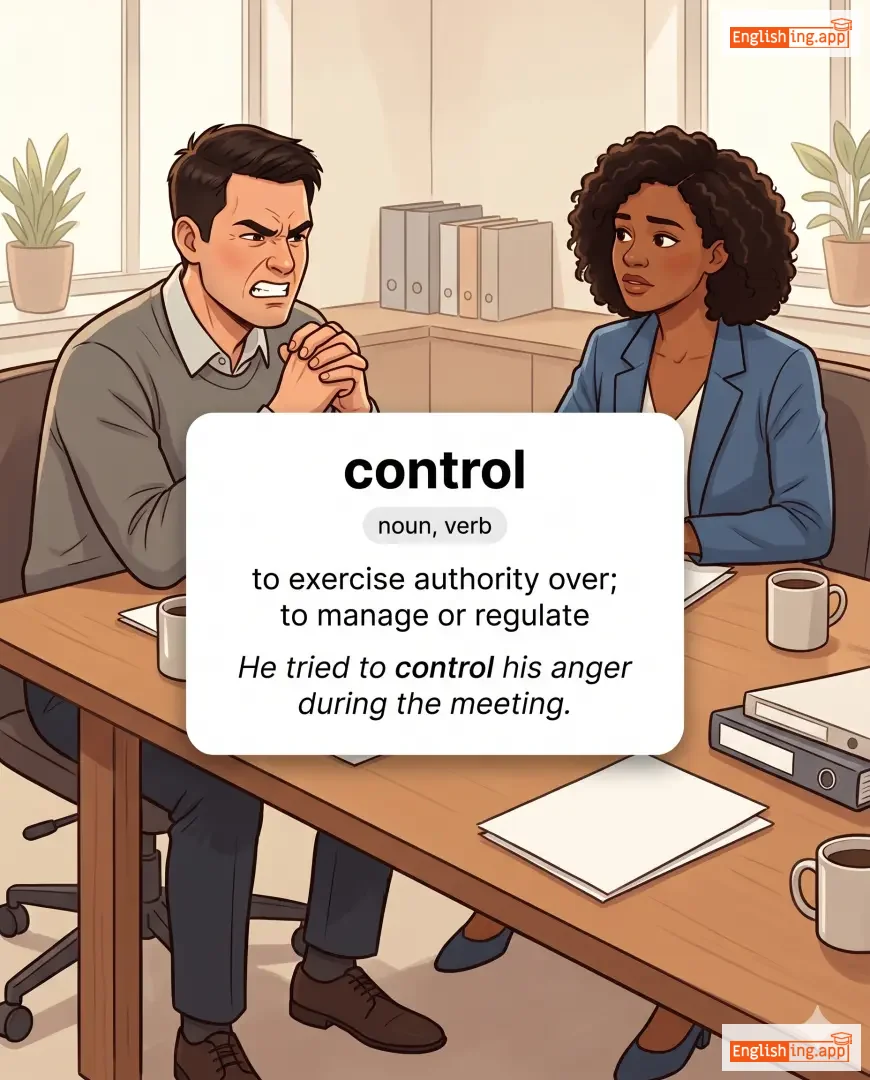
control definition card — visual illustration of the meaning
noun, verb
/kənˈtroʊl/
controlar (controlar)

to exercise authority over; to manage or regulate

"He tried to control his anger during the meeting."

"Trató de controlar su ira durante la reunión." (Trató de controlar su ira durante la reunión.)
adjective
/kənˈtroʊld/
controlado (controlado)

managed or regulated carefully; kept within limits

"The experiment was conducted in a controlled environment."

"El experimento se realizó en un entorno controlado." (El experimento se realizo en un entorno controlado)
noun
/kənˈtroʊlər/
controlador (controlador)

a person or device that manages, directs, or regulates something

"The game controller made it easy to play the video game."

"El controlador de juegos facilitó jugar el videojuego." (El controlador de juegos facilitó jugar el videojuego.)
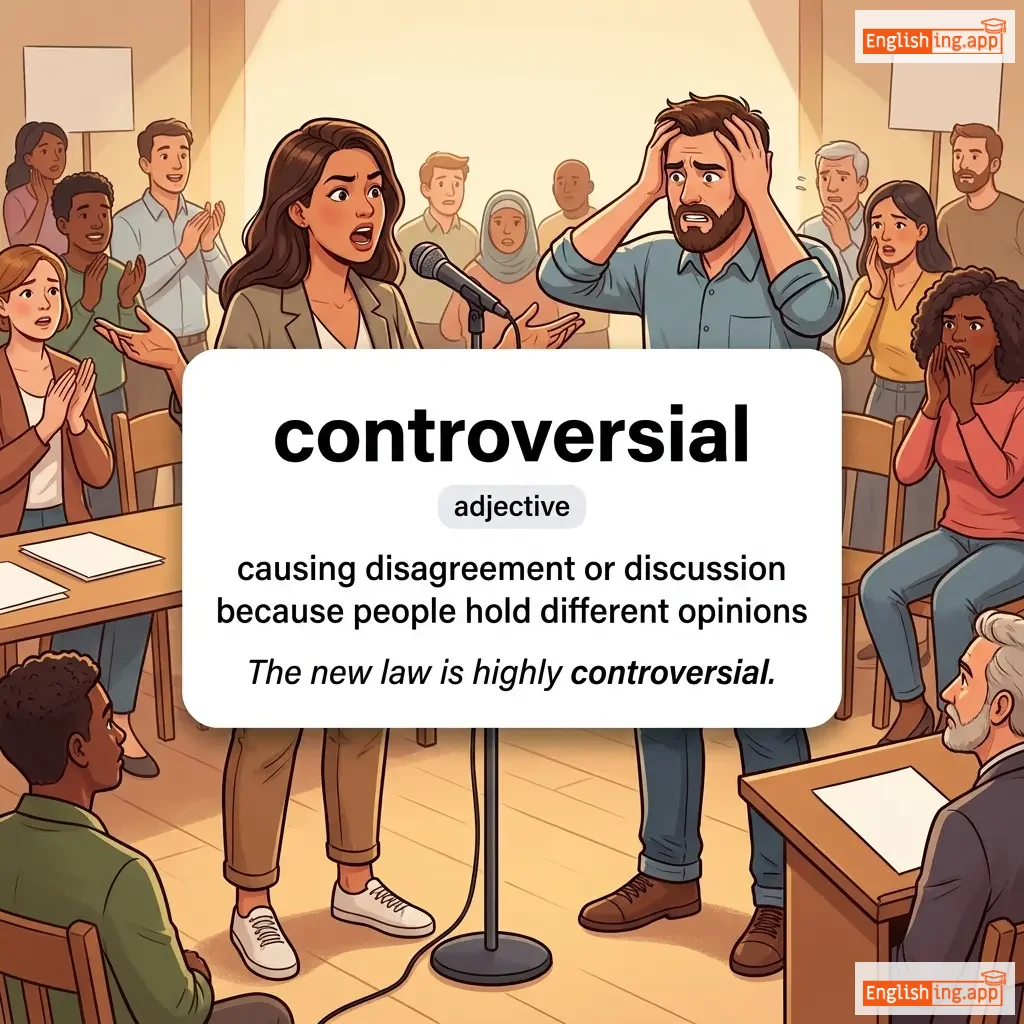
controversial definition card — visual illustration of the meaning
adjective
/ˌkɒn.trəˈvɜː.ʃəl/
controvertido (controvertido)

causing disagreement or discussion because people hold different opinions

"The new law is highly controversial."

"La nueva ley es altamente controvertida." (La nueva ley es altamente controvertida.)
noun
/ˈkɒn.trə.vɜːr.si/
controversia (controversia)

A prolonged public disagreement or heated discussion.

"The new policy sparked a major controversy."

"La nueva política desató una gran controversia." (La nueva política desató una gran controversia.)
verb
/ˌkɒntrəˈvɜːrt/
controvertir (controvertir)

to dispute or argue against; to contradict

"The scientist controversed the previous research findings."

"El científico controvirtió los hallazgos previos de la investigación." (El científico controvirtió los hallazgos previos de la investigación.)
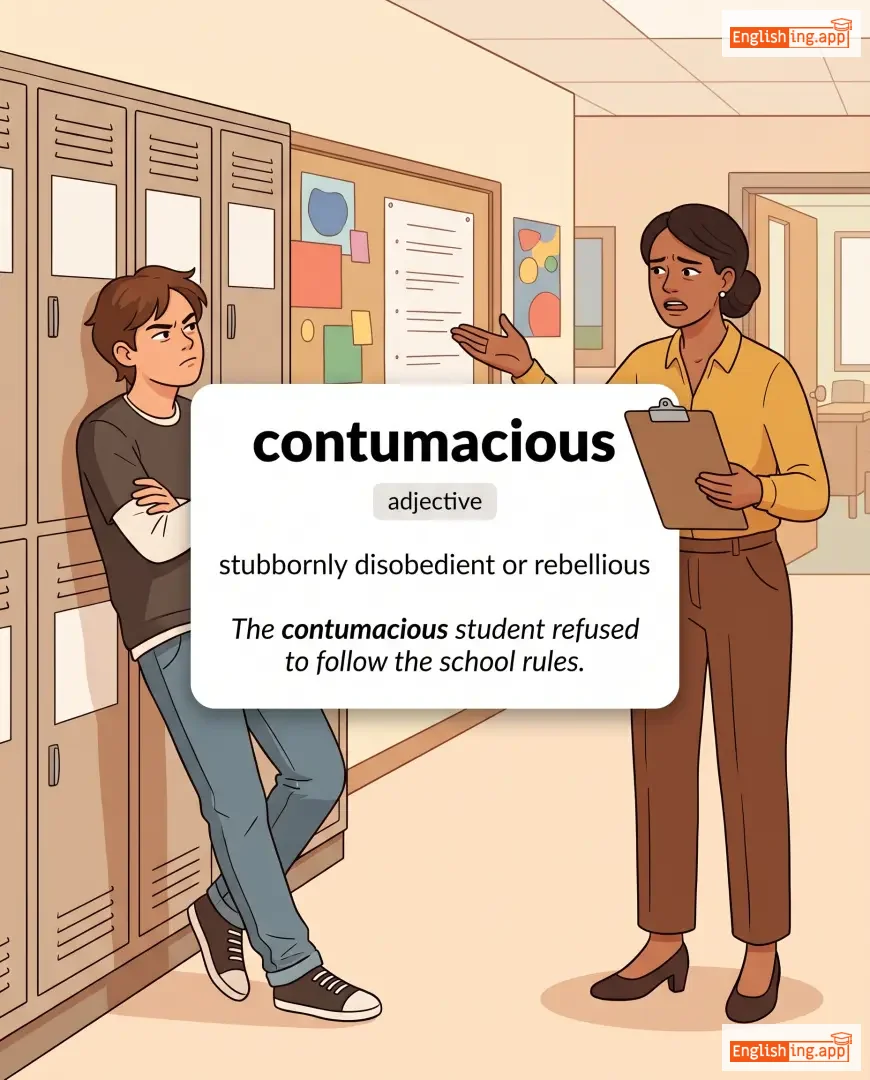
contumacious definition card — visual illustration of the meaning
adjective
/ˌkɒn.tjʊˈmeɪ.ʃəs/
rebelde, desobediente (rebelde, desobediente)

stubbornly disobedient or rebellious

"The contumacious student refused to follow the school rules."

"El estudiante rebelde se negó a seguir las reglas de la escuela." (El estudiante rebelde se negó a seguir las reglas de la escuela.)
noun
/ˈkɒn.tjʊ.mə.si/
desobediencia, terquedad (desobediencia, terquedad)

stubborn refusal to obey authority

"His contumacy led to his suspension from the council."

"Su desobediencia condujo a su suspensión del consejo." (Su desobediencia condujo a su suspensión del consejo.)
noun
/ˈkɒn.tjʊ.mə.li/
insulto, desdén (insulto, desdeen)

insulting or humiliating treatment

"He endured the contumely of his colleagues with patience."

"Él soportó el desdén de sus colegas con paciencia." (Él soportó el desdén de sus colegas con paciencia.)
verb
/kənˈtjuːz/
contundir (contundir)

to bruise by striking or hitting

"He contused his arm when he fell off the bike."

"Él se contusionó el brazo cuando se cayó de la bicicleta." (Él se contusionó el brazo cuando se cayó de la bicicleta.)
noun
/kənˈtjuː.ʒən/
moretón, contusión (moreton, contusion)

a bruise or injury without breaking the skin

"The boxer had several contusions after the match."

"El boxeador tenía varias contusiones después del partido." (El boxeador tenia varias contusiones despues del partido.)
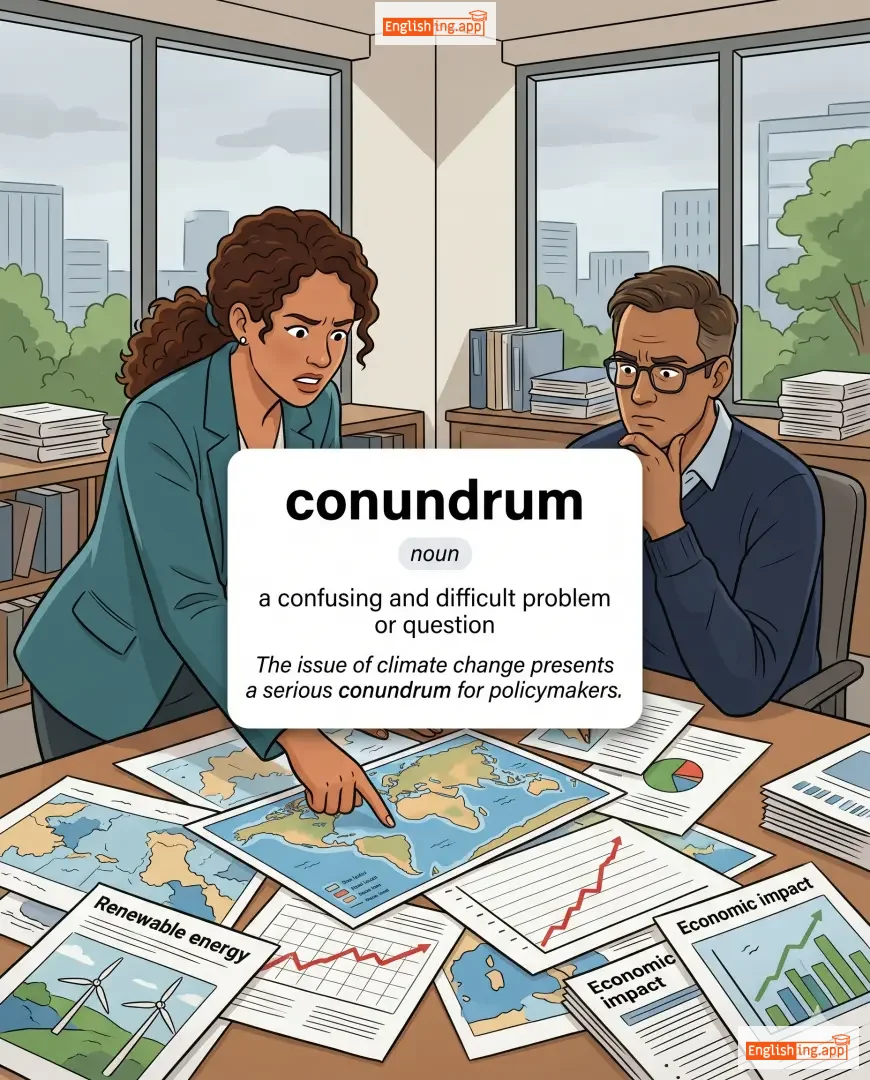
conundrum definition card — visual illustration of the meaning
noun
/kəˈnʌndrəm/
dilema (dilema)

a confusing and difficult problem or question

"The issue of climate change presents a serious conundrum for policymakers."

"El problema del cambio climático presenta un dilema serio para los responsables de las políticas." (El problema del cambio climático presenta un dilema serio para los responsables de las políticas.)
verb
/ˌkɒnvəˈlɛs/
recuperarse, recuperar salud y fuerza después de una enfermedad o tratamiento médico (recuperarse, recuperar salud y fuerza despues de una enfermedad o tratamiento medico)

to recover health and strength after illness or medical treatment

"After the surgery, she spent several weeks convalescing at home."

"Después de la cirugía, pasó varias semanas convaleciendo en casa." (Despues de la cirugia, paso varias semanas convaleciendo en casa.)
noun
/ˌkɒnvəˈlɛsns/
convalecencia (convalescencia)

the period of time spent recovering from an illness or medical treatment

"His convalescence lasted for almost two months after the accident."

"Su convalecencia duró casi dos meses después del accidente." (Su convalescencia duro casi dos meses despues del accidente.)
adjective
/ˌkɒnvəˈlɛsnt/
en recuperación, que se recupera de una enfermedad o tratamiento médico (en recuperacion, que se recupera de una enfermedad o tratamiento medico)

recovering from an illness or medical treatment

"The hospital has a special ward for convalescent patients."

"El hospital tiene una sala especial para los pacientes en recuperación." (El hospital tiene una sala especial para los pacientes en recuperacion.)
verb
/kənˈviːn/
reunirse, convocar una reunión o asamblea (reunirse, convocar una reunion o asamblea)

to come together or assemble, especially for a meeting or formal gathering

"The board will convene tomorrow to discuss the new policy."

"La junta se convocará mañana para discutir la nueva política." (La junta se convocara manana para discutir la nueva politica.)
noun
/kənˈviːniəns/
comodidad (comodidad)

the state of being able to do something easily or comfortably

"Online shopping offers great convenience for busy people."

"Las compras en línea ofrecen gran conveniencia para las personas ocupadas." (Las compras en línea ofrecen gran conveniencia para las personas ocupadas.)
adjective
/kənˈviː.ni.ənt/
conveniente (conveniente)

suitable or easy to use; fitting in well with one's needs

"This shop is convenient for my daily needs."

"Esta tienda es conveniente para mis necesidades diarias." (Esta tienda es conveniente para mis necesidades diarias.)
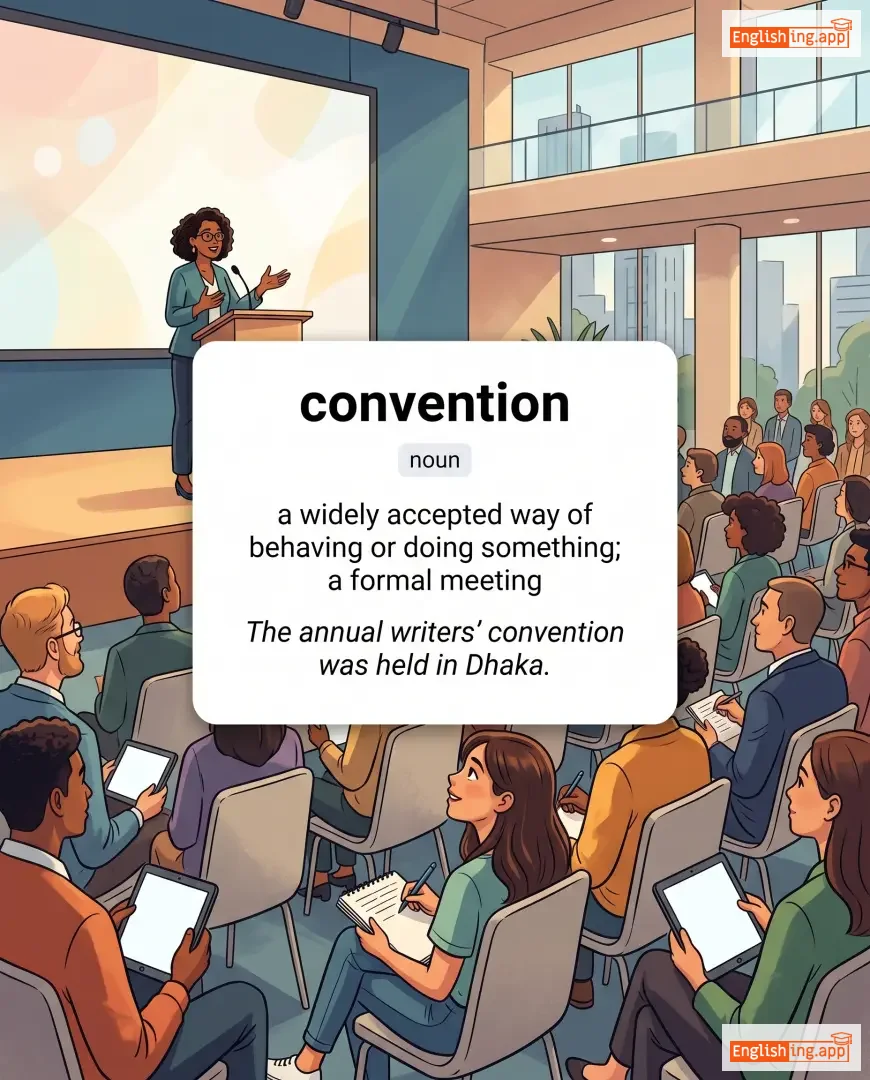
convention definition card — visual illustration of the meaning
noun
/kənˈvɛnʃən/
convención (convencion)

a widely accepted way of behaving or doing something; a formal meeting

"The annual writers' convention was held in Dhaka."

"La convención anual de escritores se celebró en Dhaka." (La convencion anual de escritores se celebro en Dhaka.)
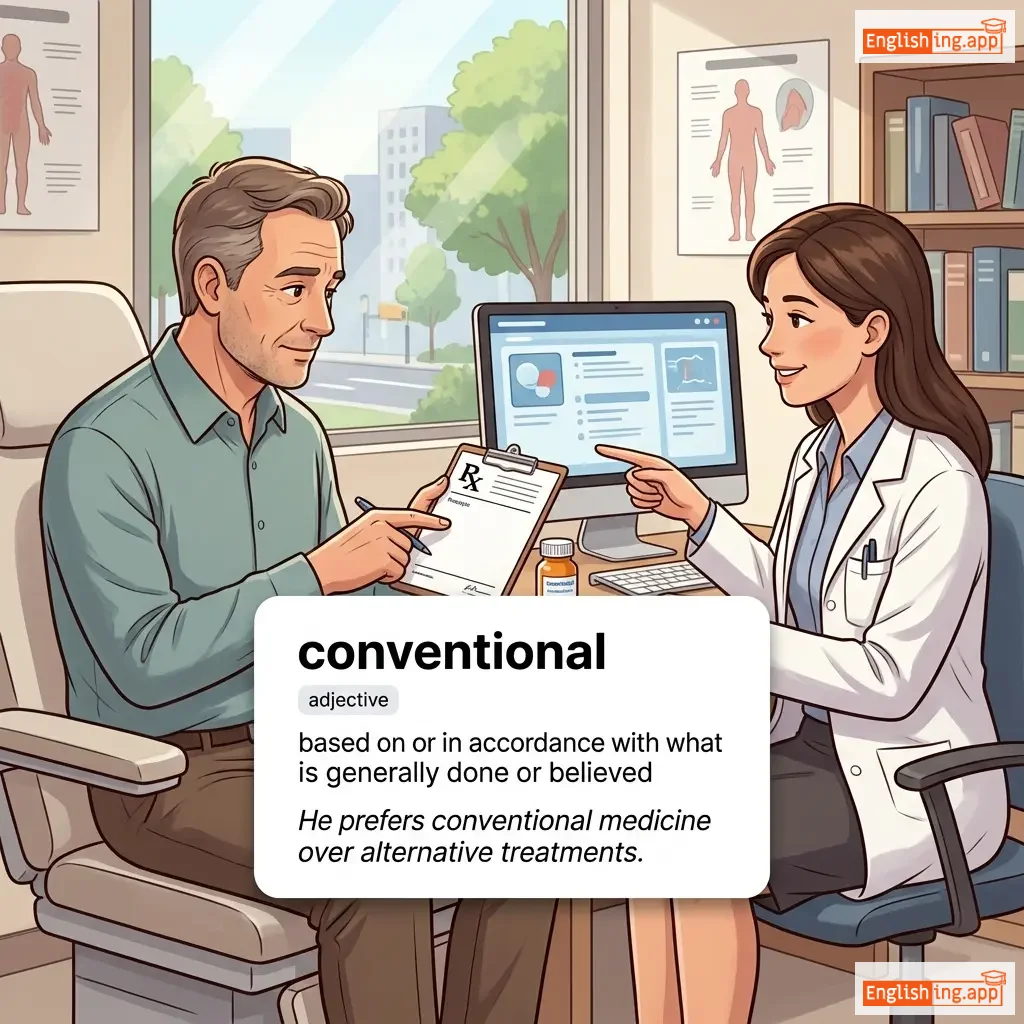
conventional definition card — visual illustration of the meaning
adjective
/kənˈvɛnʃənəl/
convencional (convencional)

based on or in accordance with what is generally done or believed

"He prefers conventional medicine over alternative treatments."

"Él prefiere la medicina convencional sobre los tratamientos alternativos." (Él prefiere la medicina convencional sobre los tratamientos alternativos.)
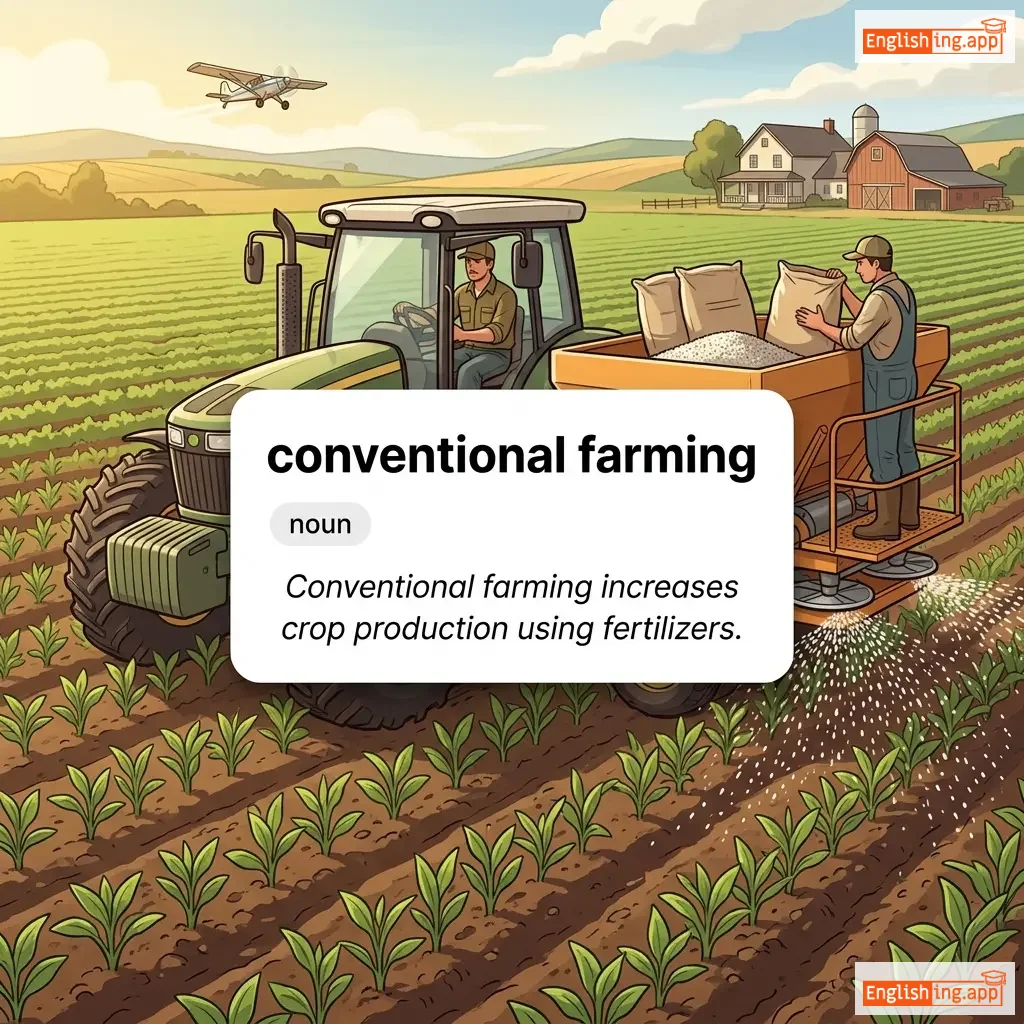
conventional farming definition card — visual illustration of the meaning
noun
/kənˈvɛn.ʃən.əl ˈfɑːr.mɪŋ/
agricultura convencional (agricultura convencional)

Traditional farming method using synthetic fertilizers, pesticides, and modern technology.

"Conventional farming increases crop production using fertilizers."

"La agricultura convencional aumenta la producción de cultivos utilizando fertilizantes." (La agricultura convencional aumenta la producción de cultivos utilizando fertilizantes.)
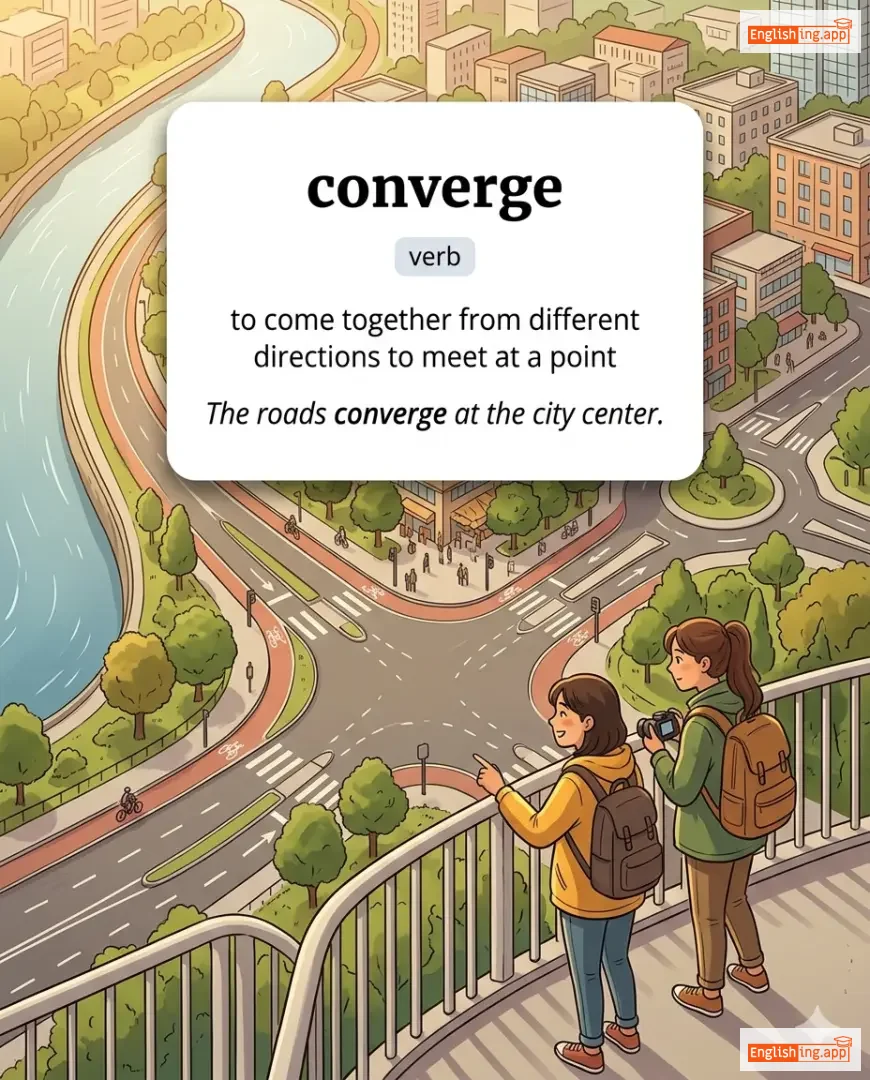
converge definition card — visual illustration of the meaning
verb
/kənˈvɜːrdʒ/
converger (converher)

to come together from different directions to meet at a point

"The roads converge at the city center."

"Las carreteras convergen en el centro de la ciudad." (Las carreteras convergen en el centro de la ciudad.)
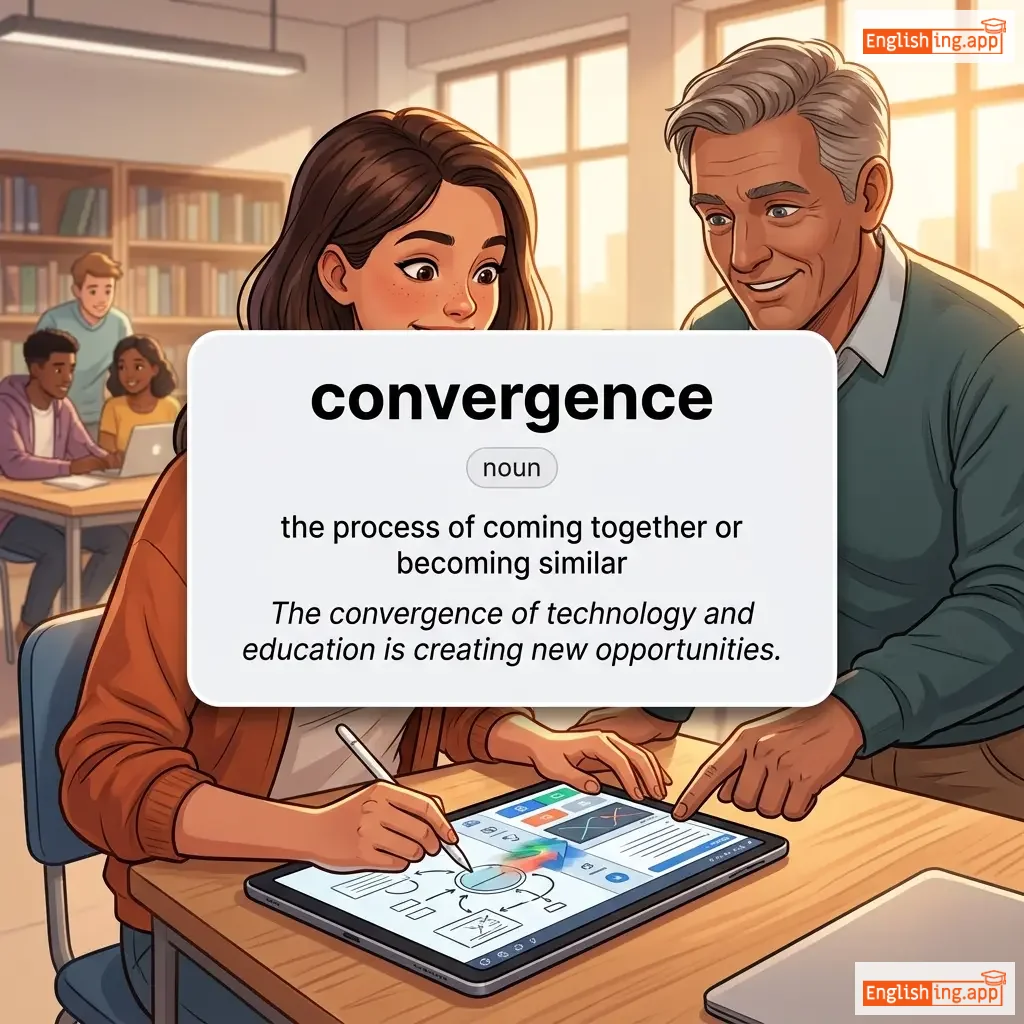
convergence definition card — visual illustration of the meaning
noun
/kənˈvɜː.dʒəns/
convergencia (convergencia)

the process of coming together or becoming similar

"The convergence of technology and education is creating new opportunities."

"La convergencia de la tecnología y la educación está creando nuevas oportunidades." (La convergencia de la tecnología y la educación está creando nuevas oportunidades.)
adjective
/kənˈvɜːrdʒənt/
convergente (convergente)

tending to move toward a common point or result

"The two rivers have a convergent path before entering the lake."

"Los dos ríos tienen un camino convergente antes de entrar al lago." (Los dos ríos tienen un camino convergente antes de entrar al lago.)
adjective
/kənˈvɜːrsənt/
familiarizado, conocedor (familiarizado, conocedor)

familiar with or knowledgeable about something

"She is conversant with the latest developments in technology."

"Ella está familiarizada con los últimos avances en tecnología." (Ella está familiarizada con los últimos avances en tecnología.)
noun
/ˌkɒnvəˈseɪʃn/
conversación (conversacion)

an informal talk between two or more people, in which ideas, feelings, and thoughts are exchanged

"We had a long conversation about future plans."

"Tuvimos una larga conversación sobre los planes futuros." (Tuvimos una larga conversacion sobre los planes futuros.)
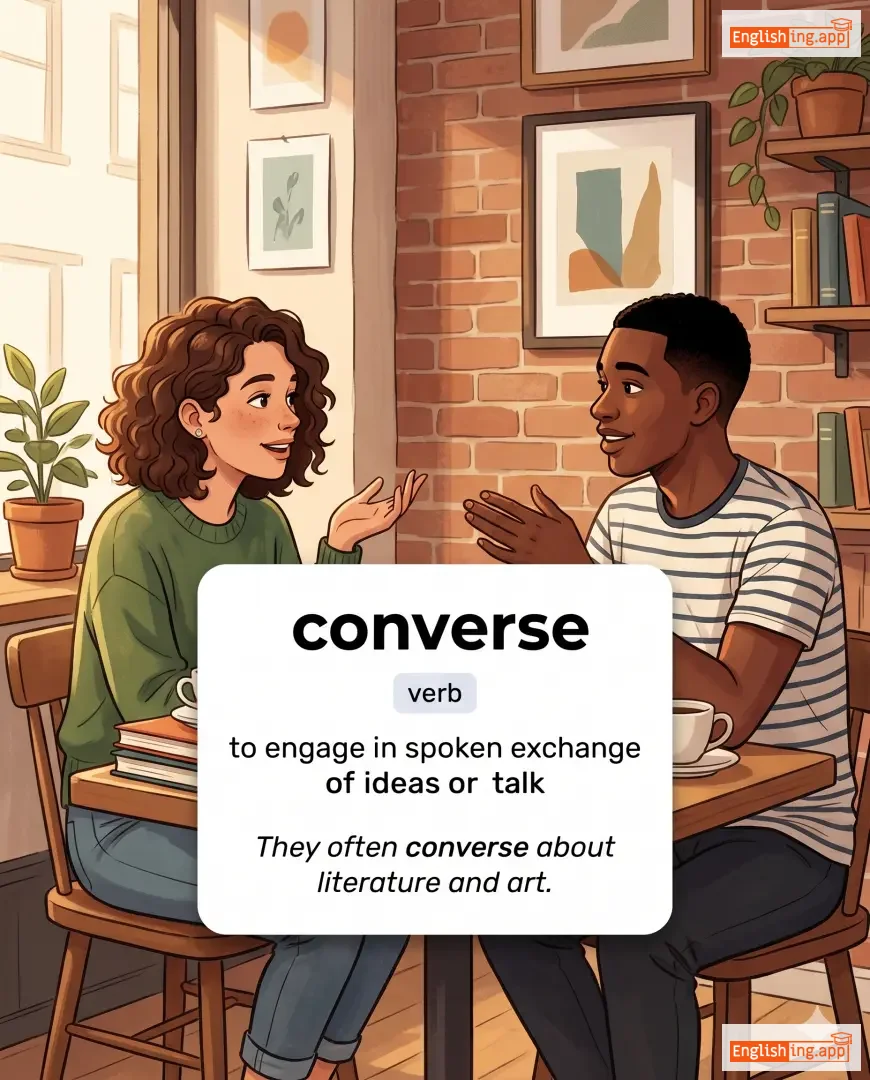
converse definition card — visual illustration of the meaning
verb
/kənˈvɜːrs/
conversar (conversar)

to engage in spoken exchange of ideas or talk

"They often converse about literature and art."

"Ellos conversan a menudo sobre literatura y arte." (Ellos conversan a menudo sobre literatura y arte.)
adverb
/kənˈvɜːrsli/
por el contrario (por el contrario)

in an opposite or contrary manner

"He is rich, conversely, his brother struggles financially."

"Él es rico, por el contrario, su hermano lucha financieramente." (Él es rico, por el contrario, su hermano lucha financieramente.)
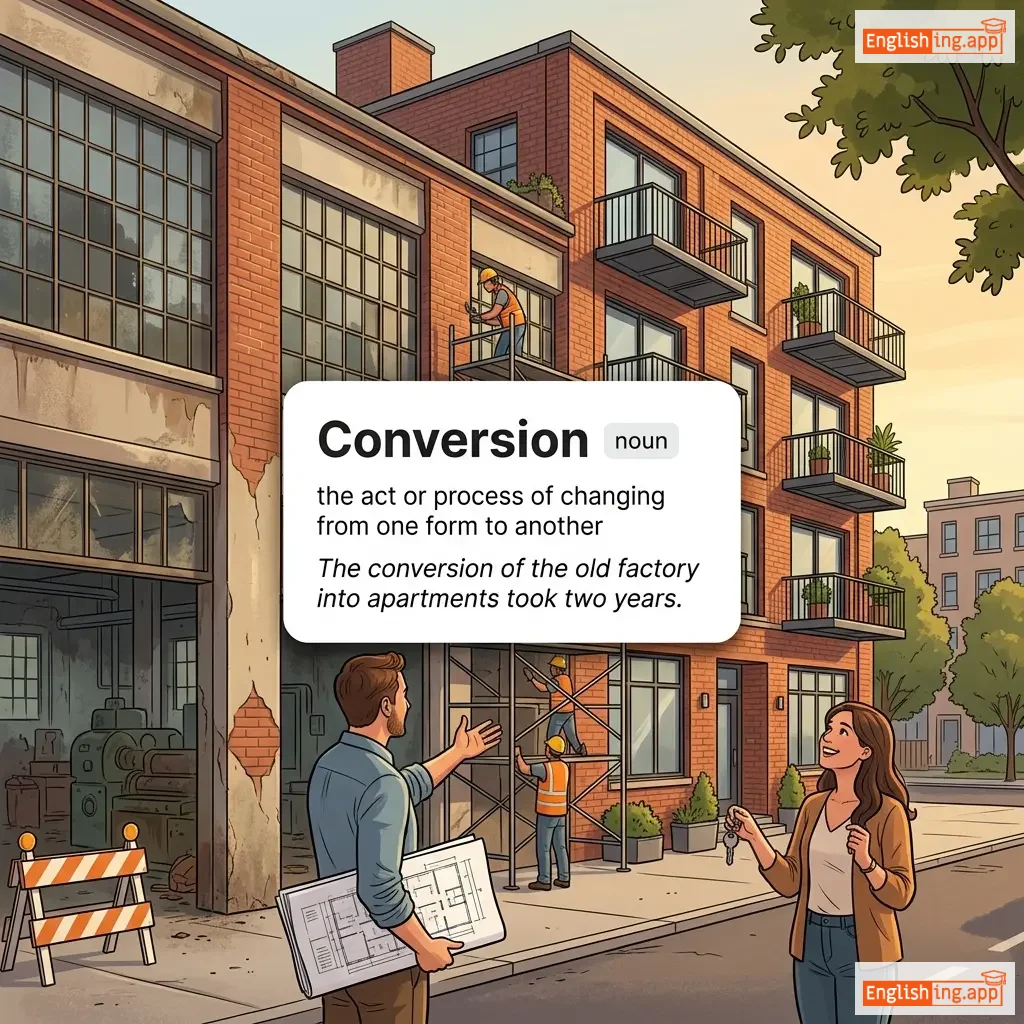
Conversion definition card — visual illustration of the meaning
noun
/kənˈvɜːrʒən/
conversión, cambio (conversion, cambio)

the act or process of changing from one form to another

"The conversion of the old factory into apartments took two years."

"La conversión de la vieja fábrica en apartamentos tardó dos años." (La conversion de la vieja fabrica en apartamentos tardo dos anos.)