Vocabularios

Descubra, aprenda y domine el vocabulario en inglés

Consumption definition card — visual illustration of the meaning
noun
/kənˈsʌmpʃən/
consumo (consumo)

The act of using up resources, goods, or energy; also refers to the eating or drinking of something.

"The consumption of electricity increases during the summer."

"El consumo de electricidad aumenta durante el verano." (El consumo de electricidad aumenta durante el verano.)
adjective
/kənˈsʌmptɪv/
consuntivo (consuntivo)

Relating to or characterized by consumption; historically used to describe someone suffering from tuberculosis.

"The doctor advised against consumptive habits."

"El doctor aconsejó evitar los hábitos consumptivos." (El doctor aconsejó evitar los hábitos consumptivos.)
noun/verb
/ˈkɒntækt/
contacto (contacto)

Communication or connection with someone.

"You should contact your doctor if symptoms persist."

"Deberías contactar a tu doctor si los síntomas persisten." (Deberías contactar a tu doctor si los síntomas persisten.)
noun
/kənˈteɪdʒən/
contagio (contagio)

The communication of disease from one person to another by close contact; also the spread of harmful ideas or behaviors.

"Fear spread like a contagion through the crowd."

"El miedo se extendió como un contagio entre la multitud." (El miedo se extendió como un contagio entre la multitud.)
adjective
/kənˈteɪdʒəs/
contagioso (kontajioso)

Able to be transmitted from one person to another, typically by direct contact; also used for emotions or attitudes that spread quickly.

"Her laughter was so contagious that everyone started laughing."

"Su risa era tan contagiosa que todos comenzaron a reír." (Su risa era tan contagiosa que todos comenzaron a reír.)
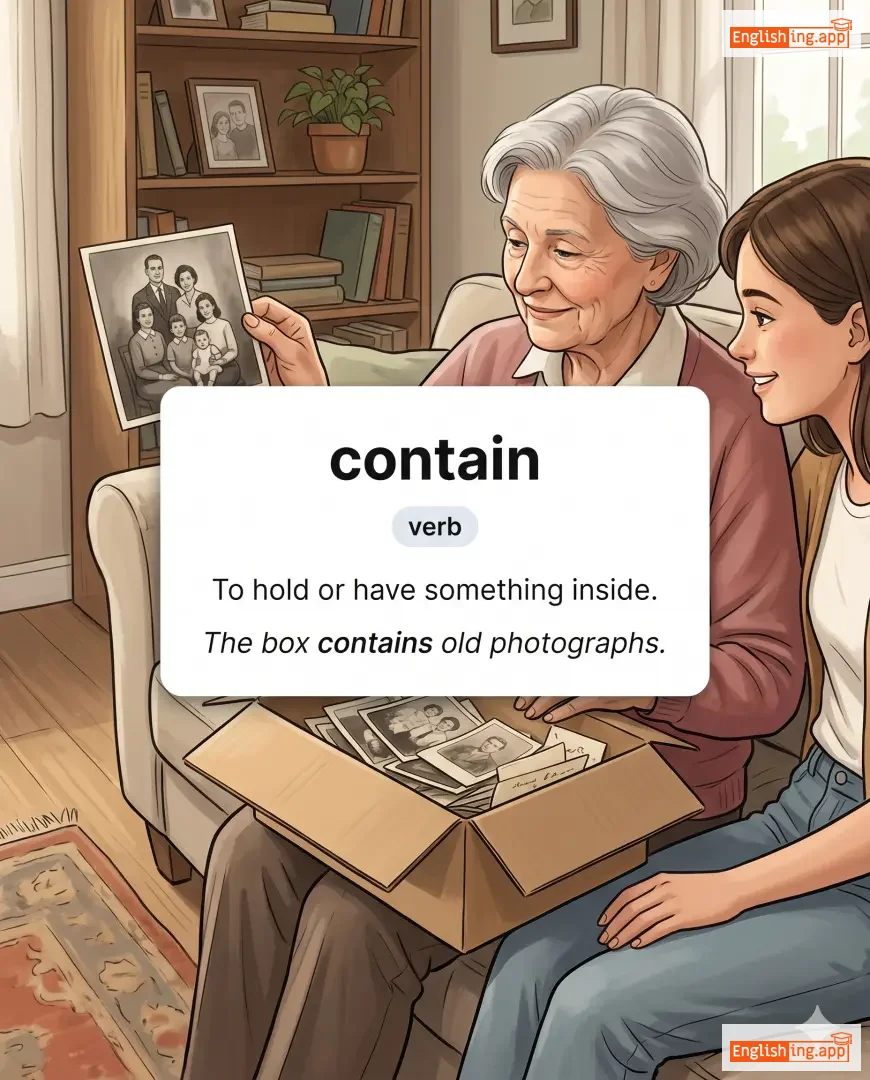
contain definition card — visual illustration of the meaning
verb
/kənˈteɪn/
contener (kontener)

To hold or have something inside.

"The box contains old photographs."

"La caja contiene fotos antiguas." (La caja contiene fotos antiguas.)
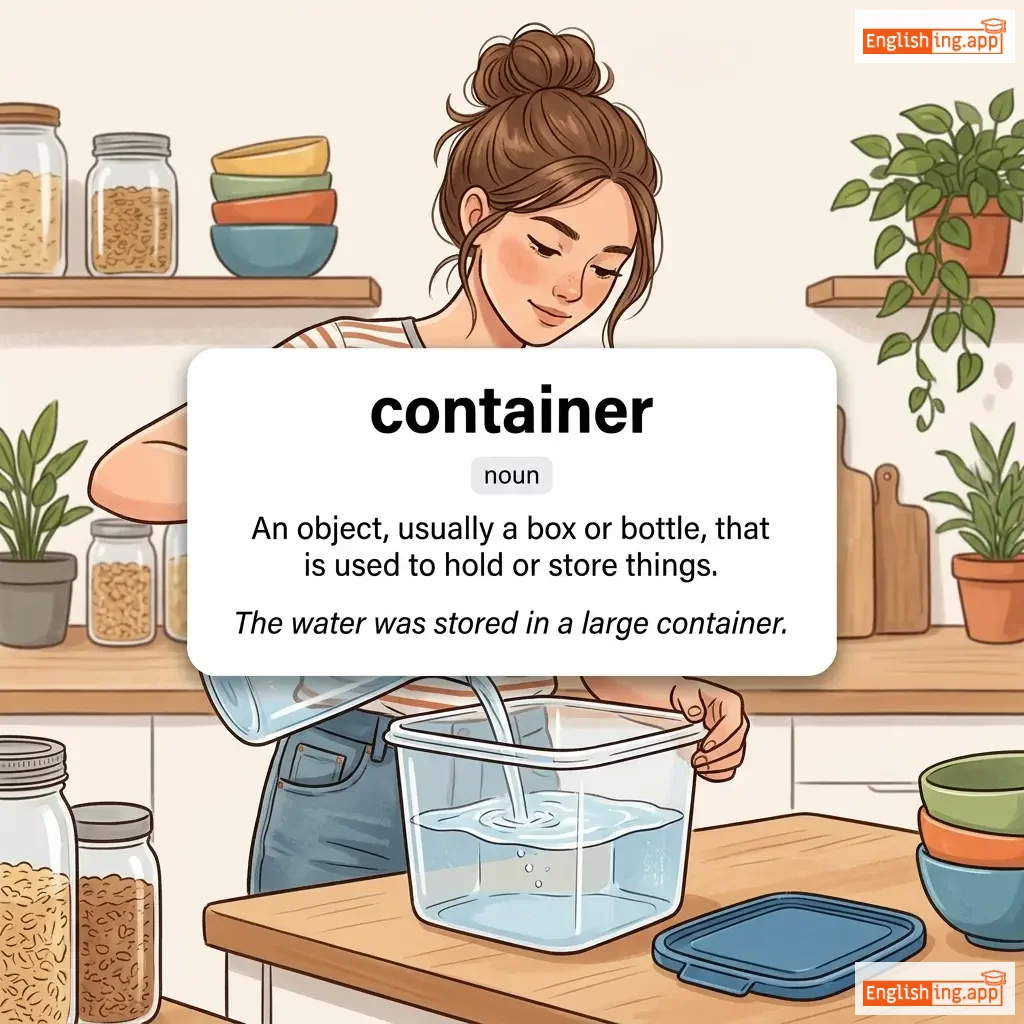
container definition card — visual illustration of the meaning
noun
/kənˈteɪnər/
contenedor (contenedor)

An object, usually a box or bottle, that is used to hold or store things.

"The water was stored in a large container."

"El agua se almacenó en un gran contenedor." (El agua se almacenó en un gran contenedor.)
verb
/kənˈtæmɪneɪt/
contaminar (contaminar)

To make something impure, dirty, or harmful by contact with a poisonous or polluting substance.

"The river was contaminated by industrial waste."

"El río fue contaminado por desechos industriales." (El río fue contaminado por desechos industriales.)
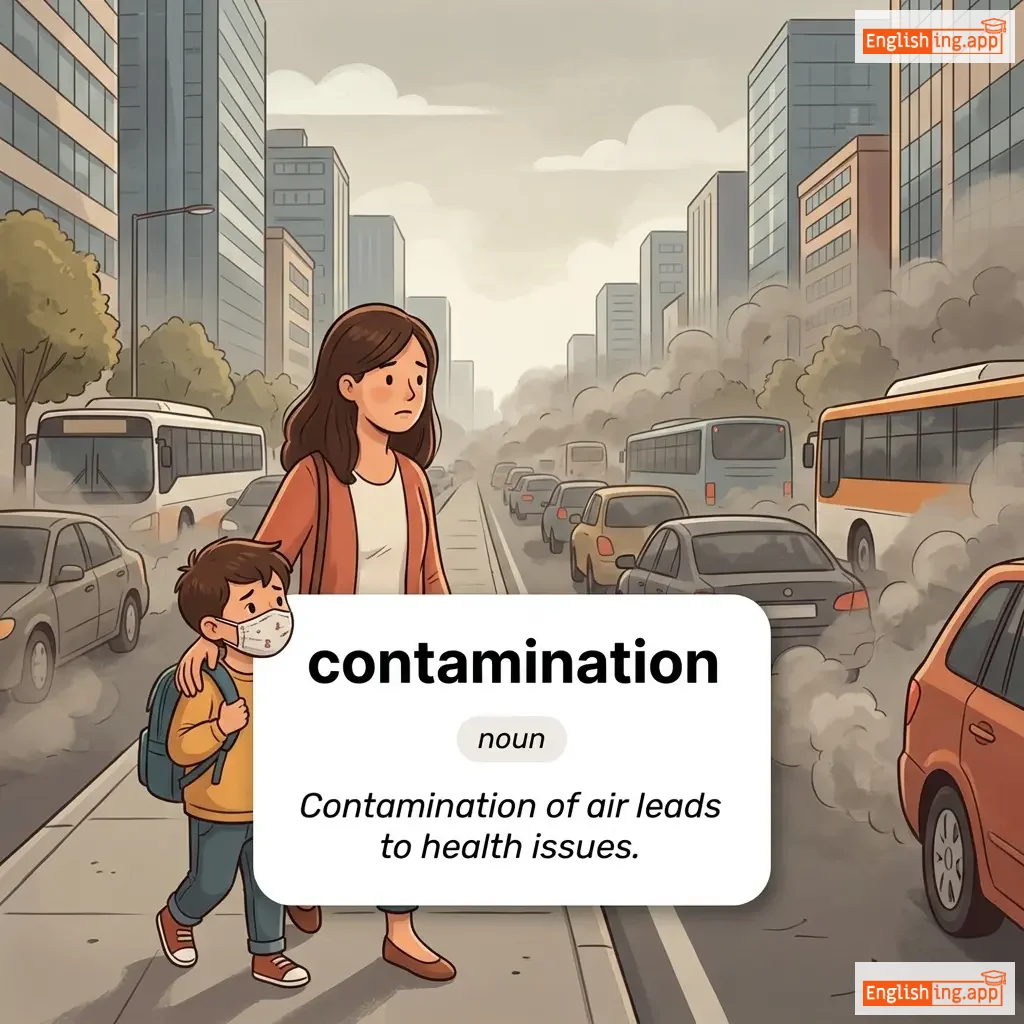
contamination definition card — visual illustration of the meaning
noun
kənˌtæm.ɪˈneɪ.ʃən
contaminación (kontaminacion)

The process of making something less pure by exposure to or addition of a poisonous or polluting substance.

"Contamination of air leads to health issues."

"La contaminación del aire provoca problemas de salud." (La contaminacion del aire provoca problemas de salud.)
verb
/kənˈtɛm/
despreciar (despreciar)

to treat or regard with disdain, scorn, or contempt

"He would never contemn honest work, no matter how humble."

"Él nunca despreciaría un trabajo honesto, sin importar cuán humilde fuera." (El nunca despreciaria un trabajo honesto, sin importar kwan humilde fuera.)
verb
/ˈkɒntəmpleɪt/
contemplar (contemplar)

to think deeply and carefully about something; to consider thoughtfully

"She sat quietly to contemplate her future plans."

"Ella se sentó en silencio para contemplar sus planes futuros." (Ella se sentó en silencio para contemplar sus planes futuros.)
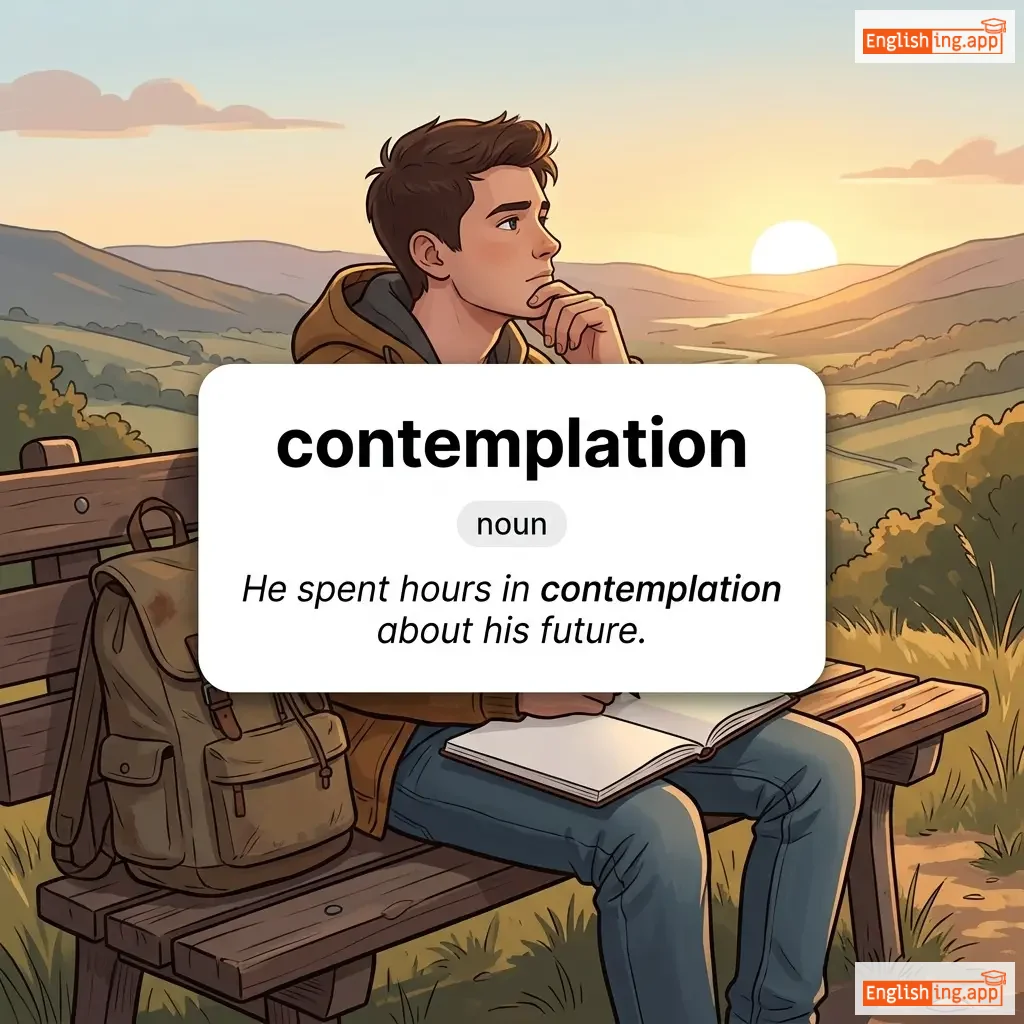
contemplation definition card — visual illustration of the meaning
noun
ˌkɒn.təmˈpleɪ.ʃən
contemplación, reflexión profunda (contemplacion, reflexion profunda)

The action of looking thoughtfully at something for a long time; deep reflective thought.

"He spent hours in contemplation about his future."

"Pasó horas en contemplación sobre su futuro." (Paso horas en contemplacion sobre su futuro.)
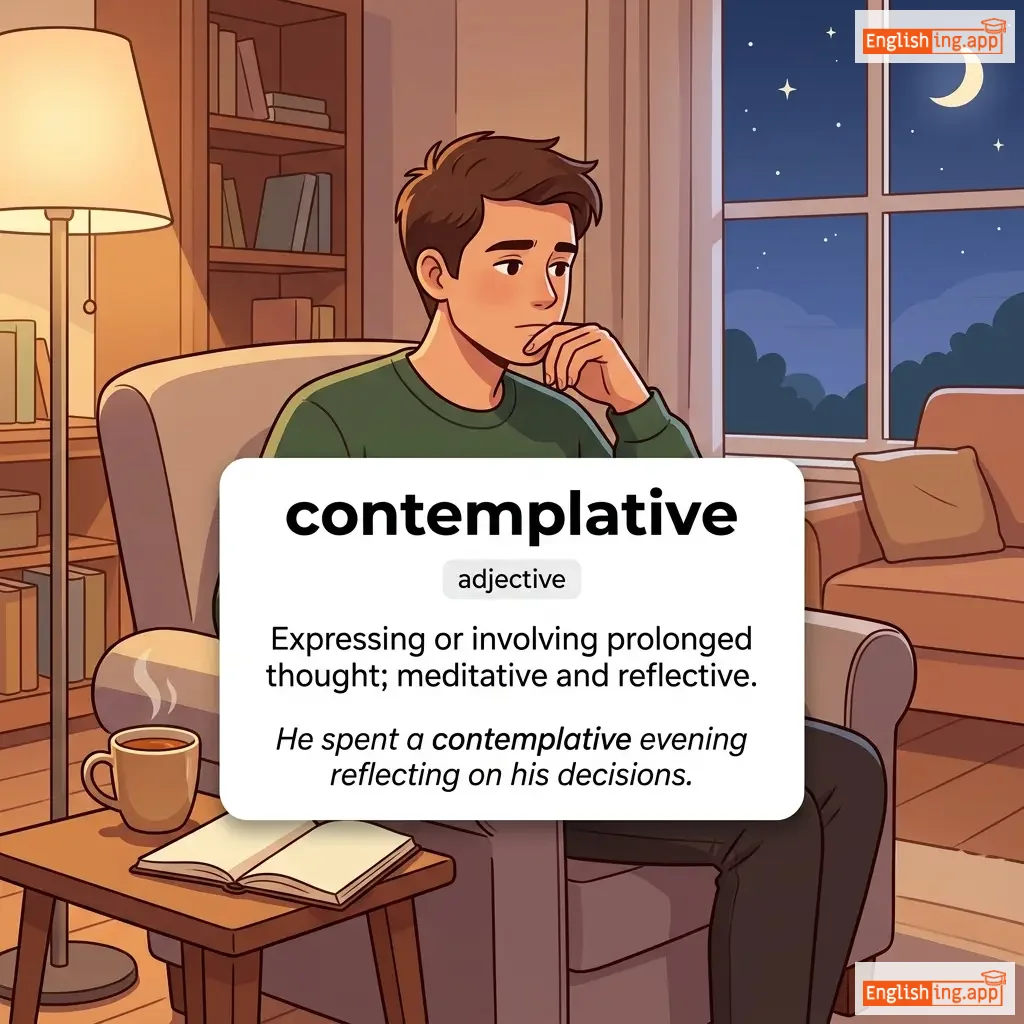
contemplative definition card — visual illustration of the meaning
adjective
ˈkɒn.təm.plə.tɪv
reflexivo o pensativo (reflexivo o pensativo)

Expressing or involving prolonged thought; meditative and reflective.

"He spent a contemplative evening reflecting on his decisions."

"Él pasó una tarde contemplativa reflexionando sobre sus decisiones." (Él pasó una tarde contemplativa reflexionando sobre sus decisiones.)
adjective
/kənˌtɛmpəˈreɪniəs/
contemporáneo (contemporaneo)

existing, happening, or occurring at the same time

"The two artists were contemporaneous and often influenced each other."

"Los dos artistas eran contemporáneos y a menudo se influenciaban mutuamente." (Los dos artistas eran contemporaneos y a menudo se influenciaban mutuamente.)
adjective
/kənˈtɛmpərɛri/
contemporáneo, moderno (contemporaneo, moderno)

belonging to the same time period; modern

"She enjoys contemporary art exhibitions."

"Ella disfruta de las exposiciones de arte contemporáneo." (Ella disfruta de las exposiciones de arte contemporáneo.)
noun
/kənˈtɛmpt/
desprecio, desdén (desprecio, desden)

a strong feeling of dislike and lack of respect towards someone or something

"He spoke with contempt about the corrupt officials."

"Él habló con desprecio acerca de los funcionarios corruptos." (El habló con desprecio acerca de los funcionarios corruptos.)
adjective
/kənˈtɛmptəbl/
despreciable, abominable (despreciable, abominable)

deserving of contempt; despicable

"His deceitful actions were truly contemptible."

"Sus acciones engañosas fueron verdaderamente despreciables." (Sus acciones enganosas fueron verdaderamente despreciables.)
adjective
/kənˈtɛmptʃuəs/
despectivo, desdeñoso (despectivo, desdeñoso)

showing or expressing contempt; scornful

"She gave him a contemptuous glance."

"Ella le dio una mirada desdeñosa." (Ella le dio una mirada desdeñosa.)
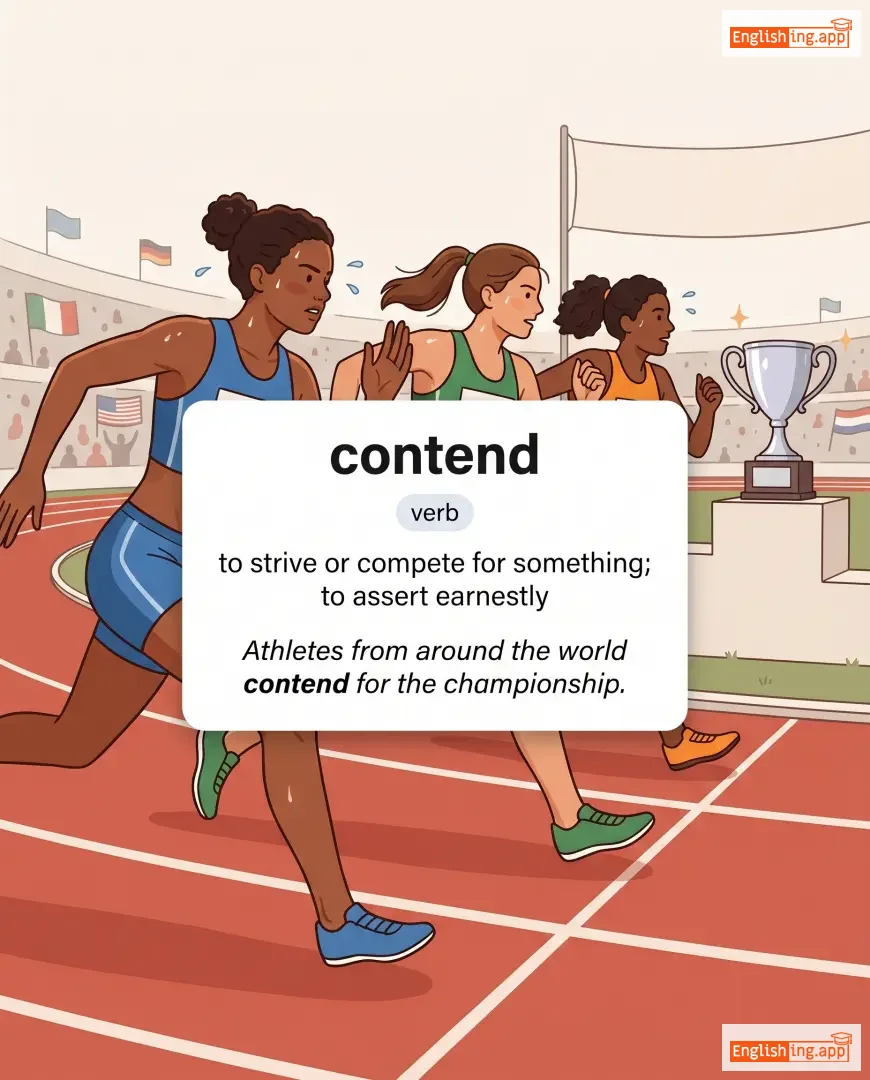
contend definition card — visual illustration of the meaning
verb
/kənˈtɛnd/
competir, afirmar (competir, afirmar)

to strive or compete for something; to assert earnestly

"Athletes from around the world contend for the championship."

"Los atletas de todo el mundo compiten por el campeonato." (Los atletas de todo el mundo compiten por el campeonato.)
noun
/kənˈtɛndər/
competidor, pretendiente (competidor, pretendiente)

a person or team competing for a title or prize

"She is a strong contender for the mayoral position."

"Ella es una fuerte contendiente para el cargo de alcaldesa." (Ella es una fuerte contendiente para el cargo de alcaldesa.)
adjective
/ˈkɒntɛnt/
satisfecho, contento (satisfecho, contento)

in a state of satisfaction; pleased

"He felt content after finishing his work."

"Se sintió contento después de terminar su trabajo." (Se sintió contento después de terminar su trabajo.)
adjective
/kənˈtɛntɪd/
satisfecho (satisfecho)

Feeling or expressing happiness and satisfaction.

"She was contented with her simple life."

"Ella estaba satisfecha con su vida simple." (Ella estaba satisfecha con su vida simple.)
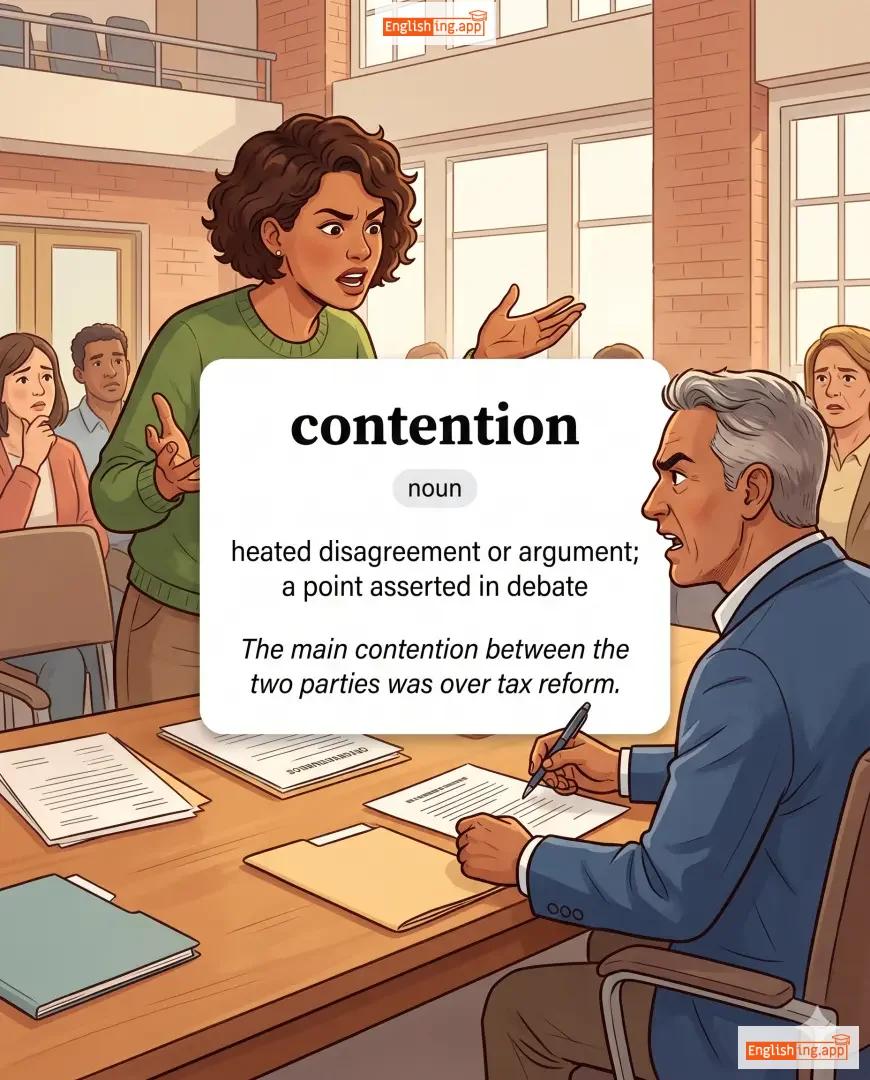
contention definition card — visual illustration of the meaning
noun
/kənˈtɛnʃən/
contienda, desacuerdo (contienda, desacuerdo)

heated disagreement or argument; a point asserted in debate

"The main contention between the two parties was over tax reform."

"La principal contienda entre las dos partes fue sobre la reforma fiscal." (La principal contienda entre las dos partes fue sobre la reforma fiscal.)
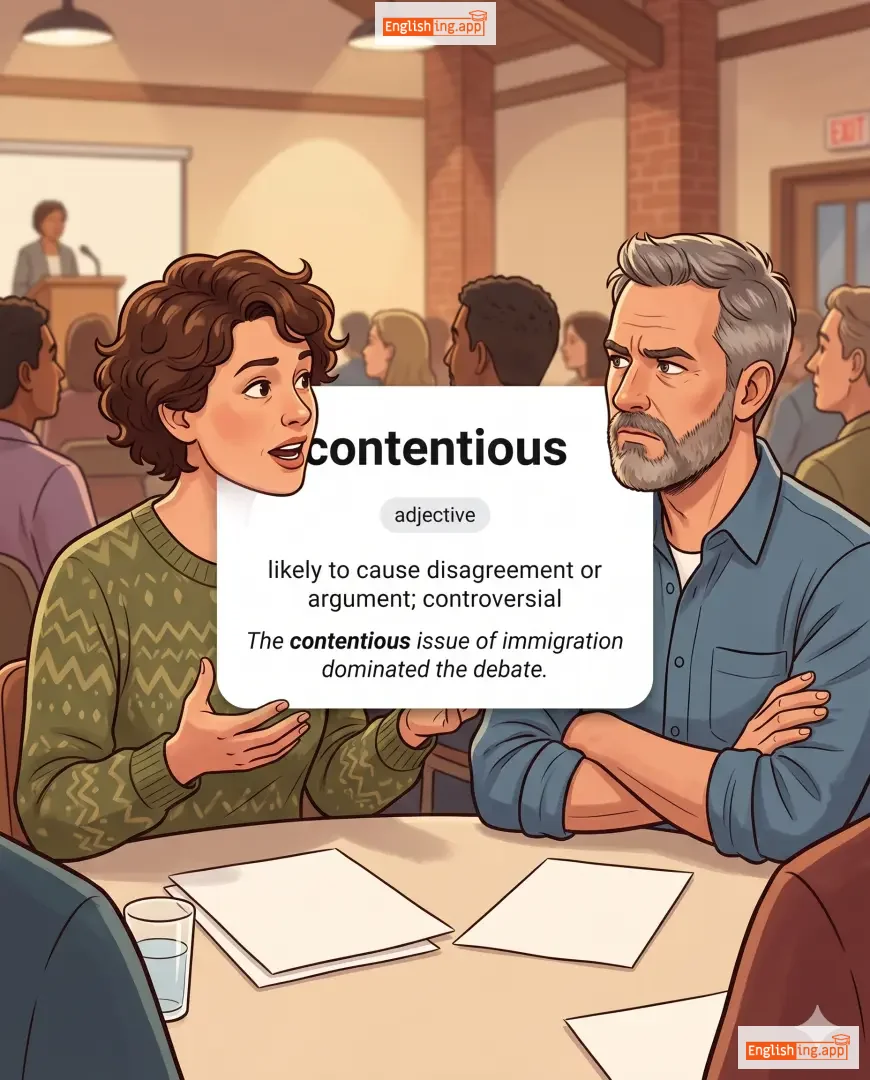
contentious definition card — visual illustration of the meaning
adjective
/kənˈtɛnʃəs/
controvertido (controvertido)

likely to cause disagreement or argument; controversial

"The contentious issue of immigration dominated the debate."

"El polémico tema de la inmigración dominó el debate." (El polémico tema de la inmigración dominó el debate.)
noun
/kənˈtentmənt/
satisfacción (satisfaccion)

a state of happiness and satisfaction with what one has

"She felt a deep sense of contentment after helping others."

"Sintió una profunda satisfacción después de ayudar a otros." (sintio una profunda satisfaccion despues de ayudar a otros)
verb, noun
/ˈkɒntɛst/
competir, desafiar (competir, desafiar)

verb: to compete or challenge; noun: a competition or dispute

"She decided to contest the election against the incumbent."

"Ella decidió disputar las elecciones contra el incumbente." (Ella decidió disputar las elecciones contra el incumbente.)
noun
/ˈkɒntɛkst/
contexto (contexto)

the circumstances or background relevant to an event, statement, or idea

"To understand the quote, you need to know the context in which it was said."

"Para entender la cita, necesitas conocer el contexto en el que se dijo." (Para entender la cita, necesitas conocer el contexto en el que se dijo.)
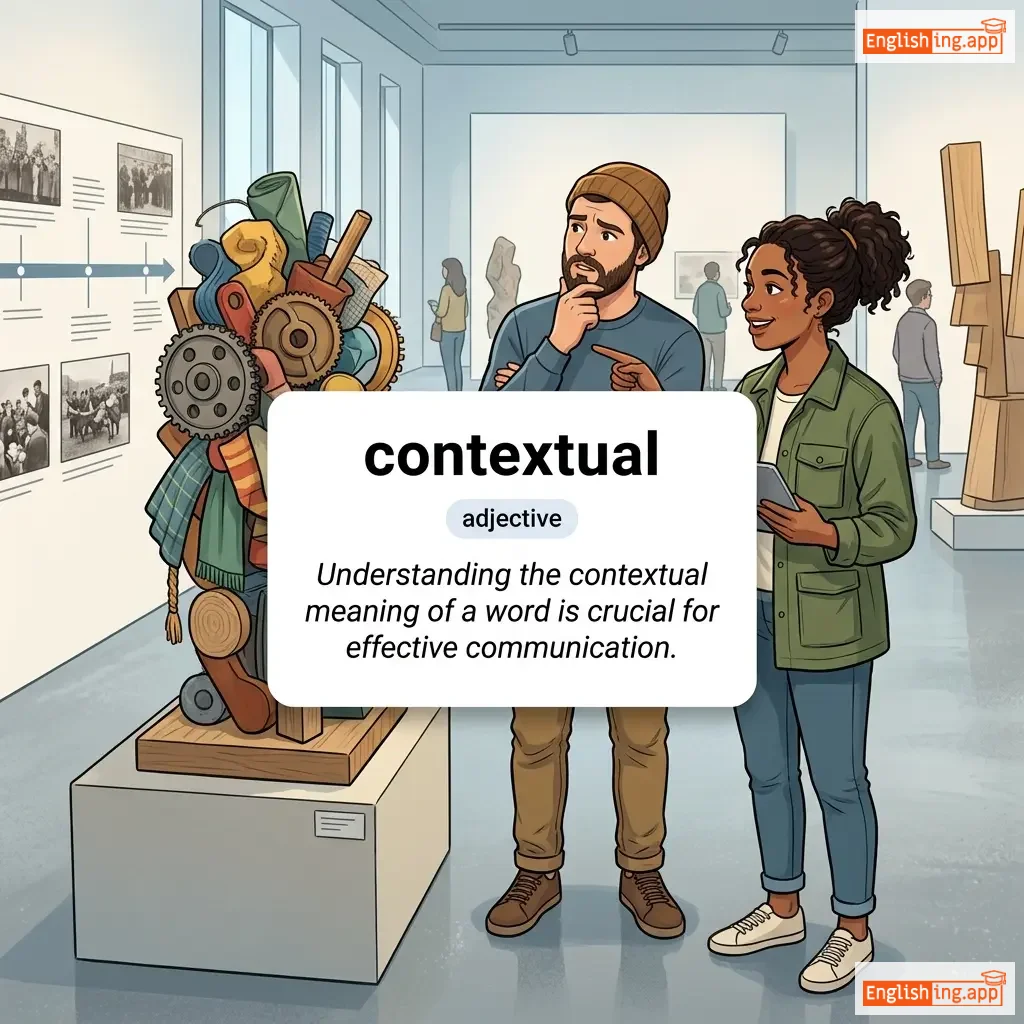
contextual definition card — visual illustration of the meaning
adjective
/kənˈtɛkstʃʊəl/
contextual, basado en el contexto (contextual, basado en el contexto)

Depending on or relating to the circumstances that form the setting for an event or statement.

"Understanding the contextual meaning of a word is crucial for effective communication."

"Entender el significado contextual de una palabra es crucial para una comunicación efectiva." (Entender el significado contextual de una palabra es crucial para una comunicación efectiva.)
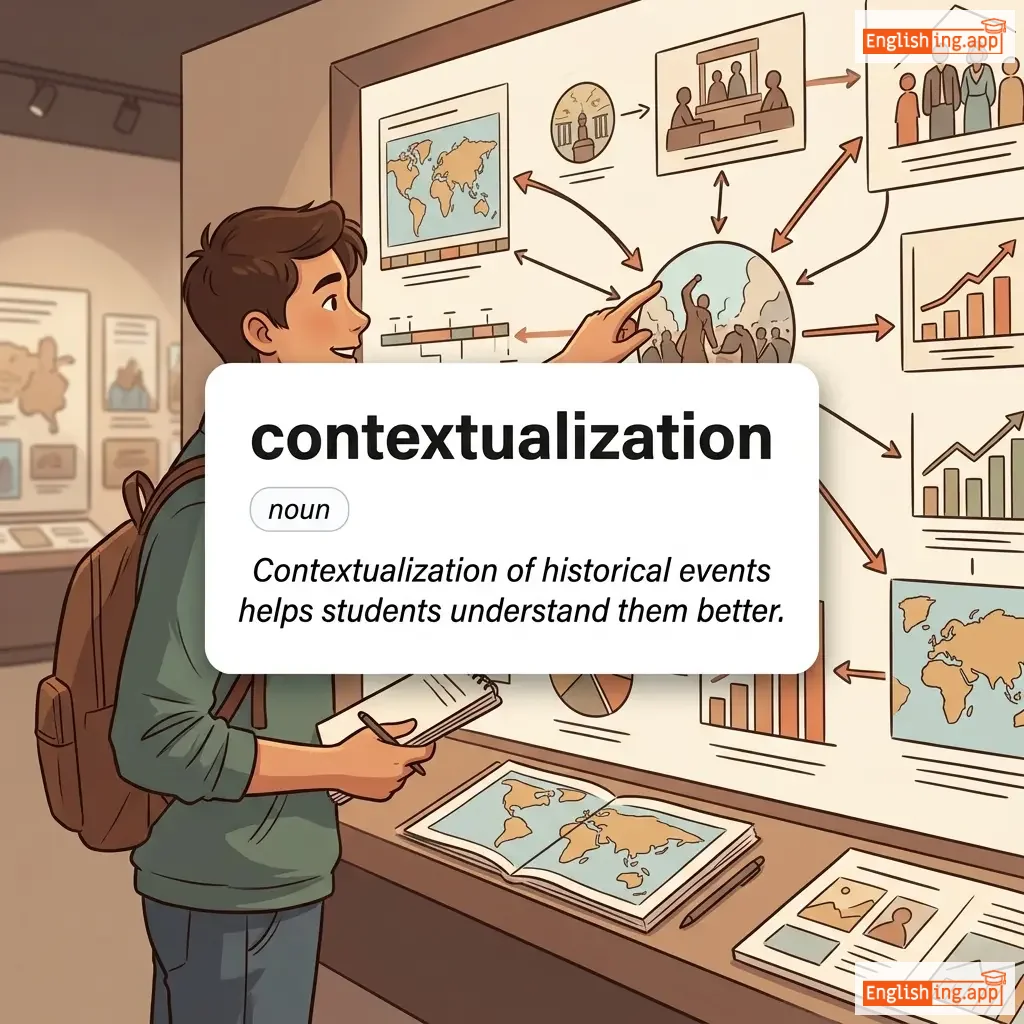
contextualization definition card — visual illustration of the meaning
noun
/kɒnˌtek.stʃu.ə.laɪˈzeɪ.ʃən/
contextualización (contextualizacion)

The process of placing something in its proper context or setting to understand it better.

"Contextualization of historical events helps students understand them better."

"La contextualización de los eventos históricos ayuda a los estudiantes a entenderlos mejor." (La contextualizacion de los eventos historicos ayuda a los estudiantes a entenderlos mejor.)
verb
/kənˈtɛkstʃuəlaɪz/
contextualizar (kontextualizar)

to place something in a context or interpret it in relation to its surroundings

"The teacher contextualized the historical event to make it more relevant for students."

"El maestro contextualizó el evento histórico para hacerlo más relevante para los estudiantes." (El maestro contextualizó el evento histórico para hacerlo más relevante para los estudiantes.)
noun
/kɒn.tɪˈɡjuː.ɪ.ti/
contigüidad (contigüidad)

the state of being in direct contact or next to each other

"The contiguity of the two countries facilitates trade."

"La contigüidad de los dos países facilita el comercio." (La contigüidad de los dos países facilita el comercio.)
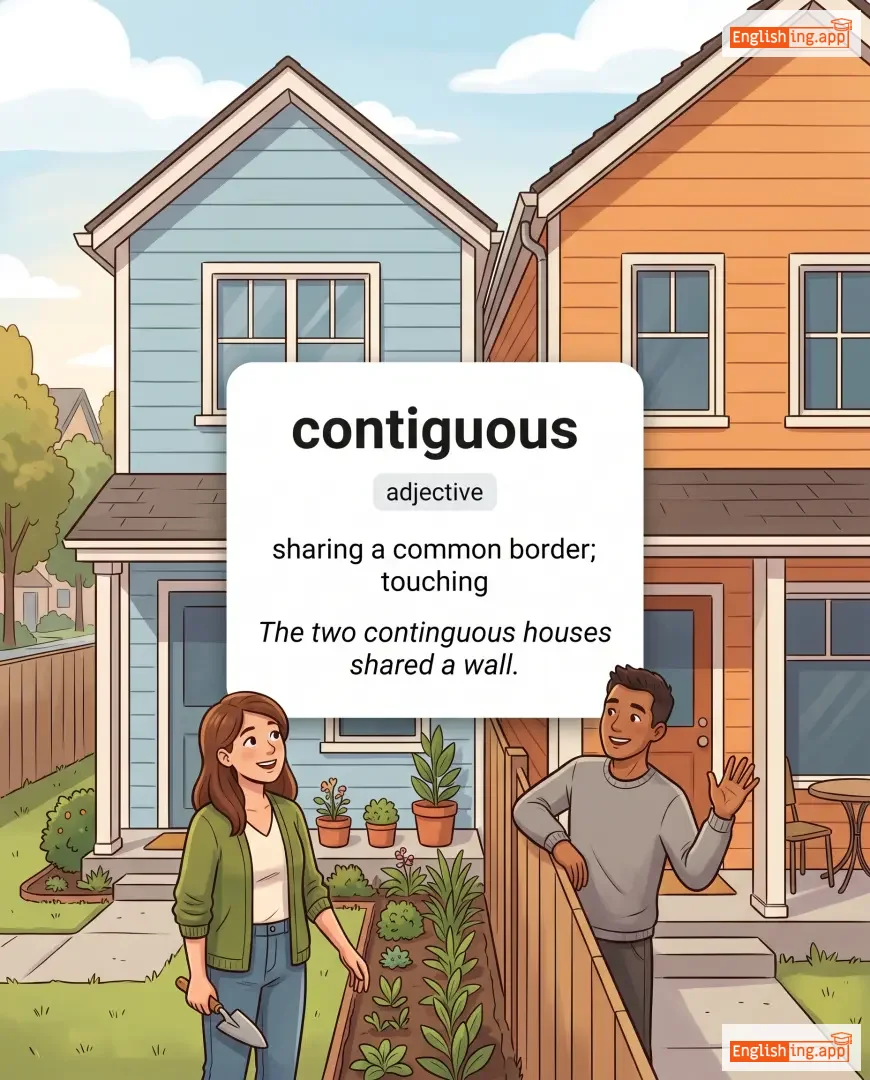
contiguous definition card — visual illustration of the meaning
adjective
/kənˈtɪɡ.ju.əs/
contiguo (contiguo)

sharing a common border; touching

"The two continguous houses shared a wall."

"Las dos casas contiguas compartieron una pared." (Las dos casas contiguas compartieron una pared.)
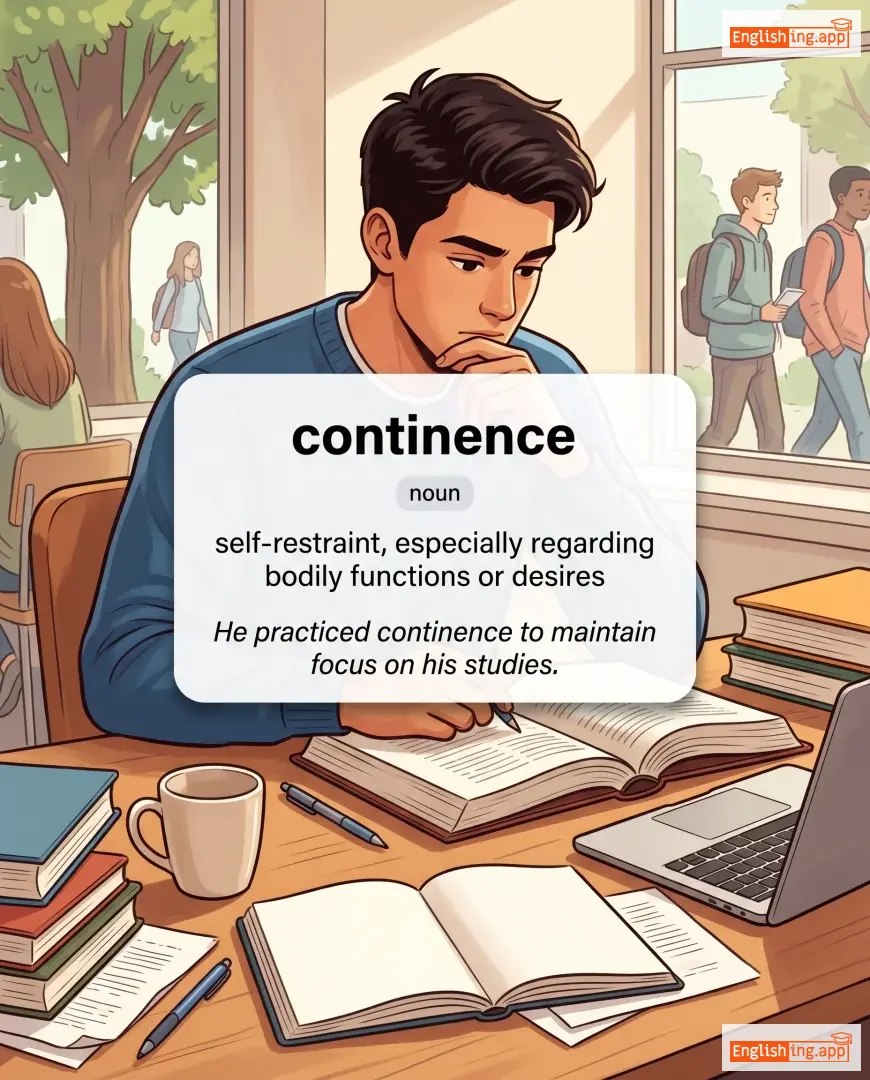
continence definition card — visual illustration of the meaning
noun
/ˈkɒn.tɪ.nəns/
continencia (continencia)

self-restraint, especially regarding bodily functions or desires

"He practiced continence to maintain focus on his studies."

"Él practicó la continencia para mantener el enfoque en sus estudios." (El practico la continencia para mantener el enfoque en sus estudios.)
noun
/ˈkɒntɪnənt/
continente (continente)

one of the large landmasses on Earth such as Asia, Africa, or Europe

"Asia is the largest continent in the world."

"Asia es el continente más grande del mundo." (Asia es el continente más grande del mundo.)
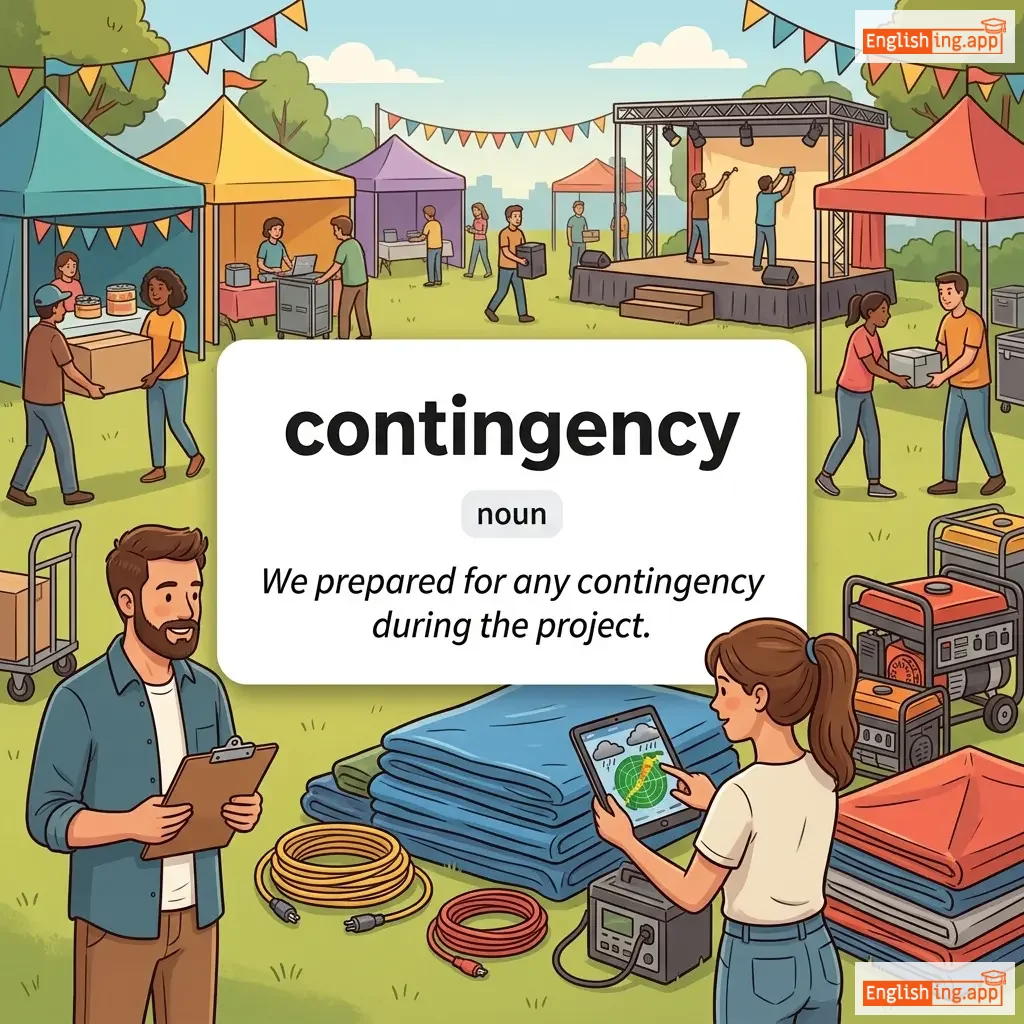
contingency definition card — visual illustration of the meaning
noun
/kənˈtɪn.dʒən.si/
contingencia (contingencia)

a future event or circumstance that is possible but cannot be predicted with certainty

"We prepared for any contingency during the project."

"Nos preparamos para cualquier contingencia durante el proyecto." (Nos preparamos para cualquier contingencia durante el proyecto.)
adjective,noun
/kənˈtɪn.dʒənt/
dependiente / contingente (dependiente / contingente)

dependent on something else; a group of people representing an organization

"Attendance is contingent on prior registration. / A contingent of students attended the conference."

"La asistencia depende de la inscripción previa. / Un contingente de estudiantes asistió a la conferencia." (La asistencia depende de la inscripción previa. / Un contingente de estudiantes asistió a la conferencia.)
adjective
/kənˈtɪn.ju.əl/
continuo; ininterrumpido; (continuo; ininterrumpido;)

happening repeatedly over a long period of time; constant and uninterrupted

"The continual noise from the construction site was very annoying."

"El ruido continuo del sitio de construcción era muy molesto." (El ruido continuo del sitio de construcción era muy molesto.)
adverb
/kənˈtɪnjuəli/
continuamente (continuamente)

in a continuous and uninterrupted way

"The rain has been falling continually for hours."

"La lluvia ha estado cayendo continuamente durante horas." (La lluvia ha estado cayendo continuamente durante horas.)
noun
/kənˈtɪn.ju.əns/
continuidad (continuidad)

the state of continuing or being prolonged; persistence

"The continuance of the project depended on securing additional funding."

"La continuación del proyecto dependía de asegurar fondos adicionales." (La continuacion del proyecto dependia de asegurar fondos adicionales.)
noun
/kənˌtɪn.juˈeɪ.ʃən/
continuidad (continuidad)

the action of carrying something on over time; extension

"The continuation of the series was announced after the finale."

"Se anunció la continuidad de la serie después del final." (Se anuncio la continuidad de la serie despues del final.)
verb
/kənˈtɪnjuː/
continuar (continuar)

To keep happening, existing, or doing something without stopping.

"The rain will continue throughout the night."

"La lluvia continuará durante la noche." (La lluvia continuará durante la noche.)
verb
/kənˈtɪn.juːd/
continuado (continuado)

Kept happening or carried on without stopping.

"She continued working despite the challenges."

"Ella continuó trabajando a pesar de los desafíos." (Ella continuo trabajando a pesar de los desafíos.)
verb
/kənˈtɪnjuɪŋ/
continuando (continuando)

to keep doing something without stopping

"They are continuing their journey despite the rain."

"Ellos están continuando su viaje a pesar de la lluvia." (Ellos están continuando su viaje a pesar de la lluvia.)
noun
/ˌkɒn.tɪˈnjuː.ɪ.ti/
continuidad (continuidad)

the state of being continuous or connected; consistency over time

"Maintaining continuity in leadership is essential for organizational stability."

"Mantener la continuidad en el liderazgo es esencial para la estabilidad organizacional." (Mantener la continuidad en el liderazgo es esencial para la estabilidad organizacional.)
adjective
/kənˈtɪn.ju.əs/
continuo (continuo)

forming an unbroken whole; without interruption

"The factory operates on a continuous 24-hour schedule."

"La fábrica opera con un horario continuo de 24 horas." (La fabrica opera con un horario continuo de 24 horas.)
adverb
/kənˈtɪnjuəsli/
continuamente; de manera continua; sin interrupción (continuamente; de manera continua; sin interrupcion)

without interruption; in an unbroken sequence

"The machine operates continuously for 24 hours."

"La máquina funciona continuamente durante 24 horas." (La maquina funciona continuamente durante 24 horas)
noun
/kənˈtɪnjuəm/
continuo (continuo)

A continuous sequence in which adjacent elements are not perceptibly different from each other, but the extremes are quite distinct.

"Life and death are often seen as part of the same continuum."

"La vida y la muerte a menudo se ven como parte del mismo continuo." (La vida y la muerte a menudo se ven como parte del mismo continuo.)
verb
/kənˈtɔːrt/
torcer (torcer)

to twist or bend out of the normal shape

"She contorted her face in pain after the injury."

"Ella contorsionó su cara de dolor después de la lesión." (Ella contorsionó su cara de dolor después de la lesión.)
noun
/kənˈtɔːrʃən/
una forma torcida o doblada; el acto de torcerse fuera de la forma normal (una forma torcida o doblada; el acto de torcerse fuera de la forma normal)

a twisted or bent shape; the act of twisting out of the normal shape

"The gymnast's contortion amazed the audience."

"La contorsión del gimnasta asombró a la audiencia." (La contorsión del gimnasta asombró a la audiencia.)
noun
/kənˈtɔːrʃənz/
plural de contorsión; formas dobladas o retorcidas múltiples (plural de contorsión; formas dobladas o retorcidas múltiples)

plural form of contortion; multiple twisted or bent shapes

"The magician's contortions left the crowd in awe."

"Las contorsiones del mago dejaron a la multitud asombrada." (Las contorsiones del mago dejaron a la multitud asombrada.)