Vocabularios

Descubra, aprenda y domine el vocabulario en inglés

noun
/kəmˈpænjən/
compañero (companero)

a person or animal you spend time with or travel with

"He was my companion during the long journey."

"Él fue mi compañero durante el largo viaje." (El fue mi companero durante el largo viaje.)
noun
/ˈkʌm.pə.ni/
empresa (empresa)

a business organization; the presence of other people

"She started her own company to sell handmade products."

"Ella comenzó su propia empresa para vender productos hechos a mano." (Ella comenzo su propia empresa para vender productos hechos a mano.)
adjective
/ˈkɒmp(ə)rəbl/
comparable (comparable)

Able to be likened to something else in size, amount, or quality.

"The two products are comparable in quality but differ in price."

"Los dos productos son comparables en calidad pero difieren en precio." (los dos productos son comparables en calidad pero difieren en precio)
adjective
/kəmˈpærətɪv/
comparativo (comparativo)

Measured or considered by comparison; relative.

"She lives in comparative comfort after moving to the city."

"Ella vive en comodidad comparativa después de mudarse a la ciudad." (eya vive en comodidad comparativa despues de mudarse a la ciudad)
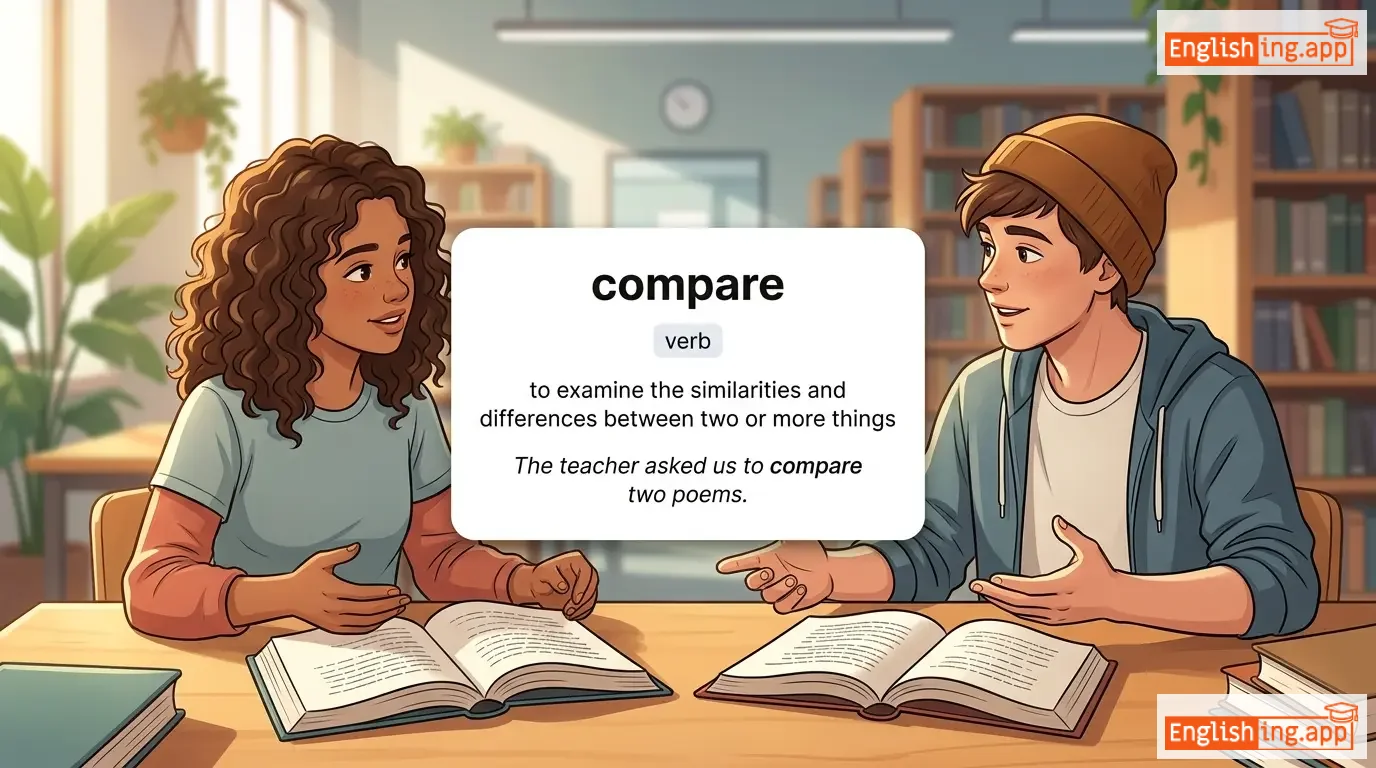
compare definition card — visual illustration of the meaning
verb
/kəmˈpeər/
comparar (comparar)

to examine the similarities and differences between two or more things

"The teacher asked us to compare two poems."

"El profesor nos pidió comparar dos poemas." (El profesor nos pidió comparar dos poemas.)
noun
/kəmˈpærɪsən/
comparación (comparacion)

The act or process of examining the similarities and differences between things.

"A comparison of the two reports shows several inconsistencies."

"Una comparación de los dos informes muestra varias inconsistencias." (Una comparacion de los dos informes muestra varias inconsistencias)
noun
/kəmˈpɑːtmənt/
compartimiento (compartimiento)

A separate section or space within a larger structure, such as a train or a container.

"He kept his passport in a small compartment of his bag."

"Él guardó su pasaporte en un pequeño compartimiento de su bolso." (El guardo su pasaporte en un pequeno compartimiento de su bolso.)
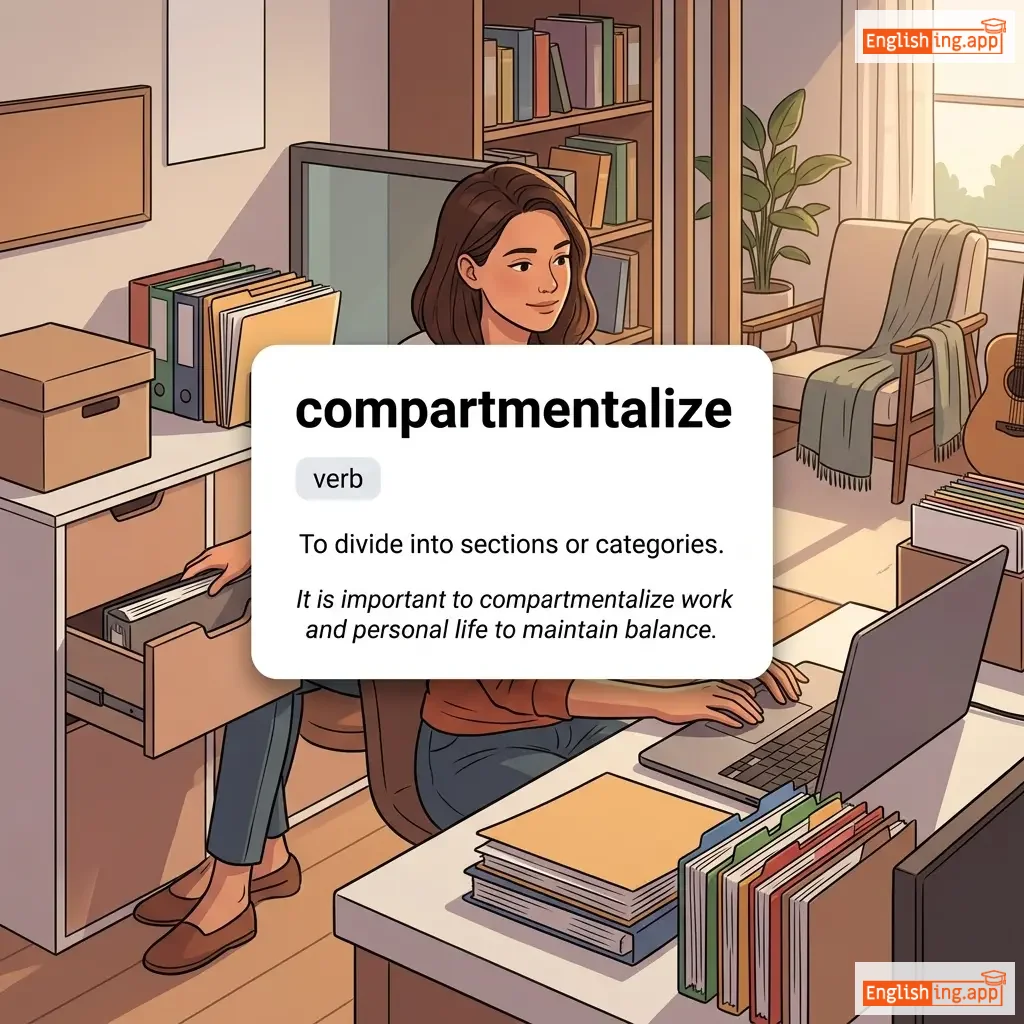
compartmentalize definition card — visual illustration of the meaning
verb
/kəmˈpɑːtməntəˌlaɪz/
compartimentar (compartimentar)

To divide into sections or categories.

"It is important to compartmentalize work and personal life to maintain balance."

"Es importante compartimentar el trabajo y la vida personal para mantener el equilibrio." (Es importante compartimentar el trabajo y la vida personal para mantener el equilibrio.)
noun
/ˈkʌm.pəs/
brújula (bruju-la)

an instrument for finding direction with a magnetic needle pointing to magnetic north

"The hiker used a compass to find the right direction."

"El excursionista usó una brújula para encontrar la dirección correcta." (El excursionista uso una brujula para encontrar la direccion correcta)
noun
/kəmˈpæʃən/
compasión (compasion)

Sympathetic concern for the sufferings or misfortunes of others.

"The nurse treated the patients with great compassion."

"La enfermera trató a los pacientes con gran compasión." (La enfermera trato a los pacientes con gran compasion.)
adjective
/kəmˈpæʃənət/
compasivo; solidario (compasivo; solidario)

feeling or showing sympathy and concern for others who are suffering

"The compassionate nurse took extra time to comfort the worried patients."

"La enfermera compasiva dedicó tiempo extra para consolar a los pacientes preocupados." (La enfermera compasiva dedicó tiempo extra para consolar a los pacientes preocupados.)
adjective
/kəmˈpætəbl/
compatible (compatible)

Able to exist or work together without conflict; harmonious.

"This software is compatible with both Windows and Mac systems."

"Este software es compatible con ambos sistemas, Windows y Mac." (Este software es compatible con ambos sistemas, Windows y Mac.)
verb
/kəmˈpɛl/
obligar (obli-gar)

To force or drive someone to do something.

"The law compels citizens to pay taxes."

"La ley obliga a los ciudadanos a pagar impuestos." (La ley obliga a los ciudadanos a pagar impuestos.)
adjective
/kəmˈpɛlɪŋ/
impresionante (impresionante)

Evoking interest, attention, or admiration in a powerful way.

"She gave a compelling speech about climate change."

"Ella dio un discurso impresionante sobre el cambio climático." (Ella dio un discurso impresionante sobre el cambio climático.)
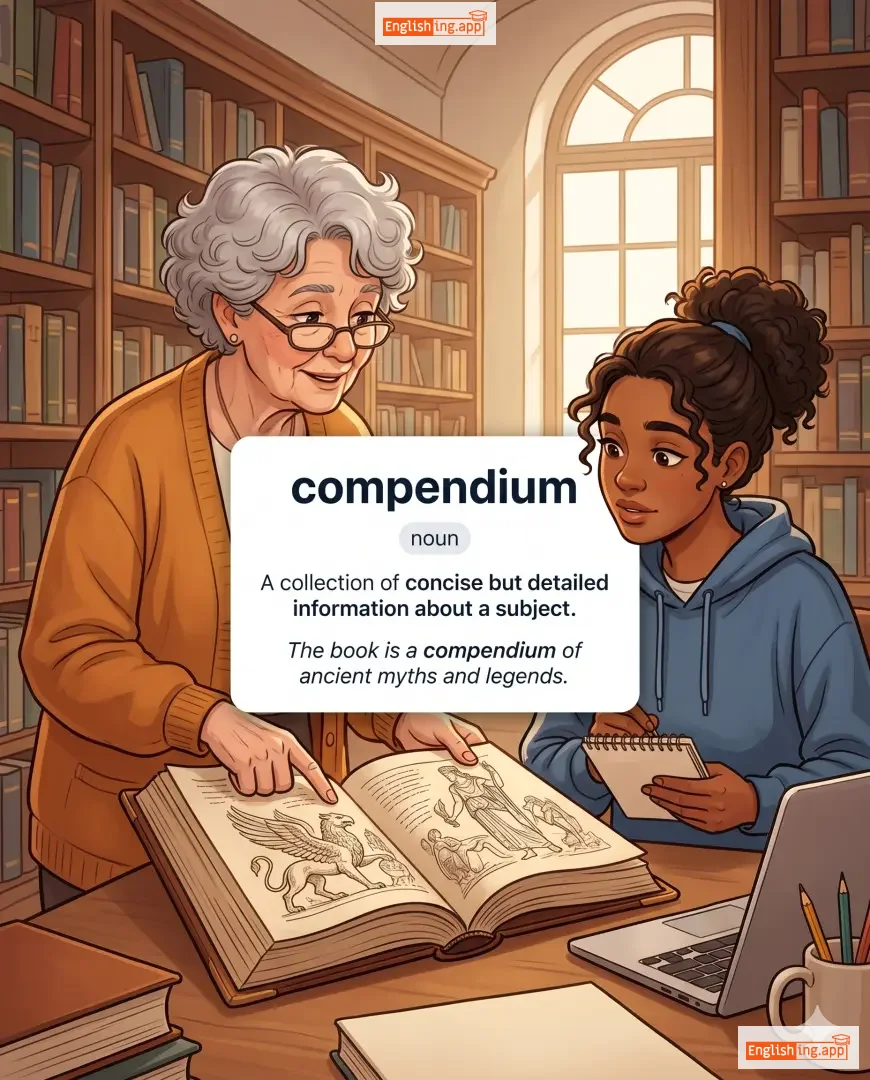
compendium definition card — visual illustration of the meaning
noun
/kəmˈpɛndiəm/
compendio (compendio)

A collection of concise but detailed information about a subject.

"The book is a compendium of ancient myths and legends."

"El libro es un compendio de mitos y leyendas antiguas." (El libro es un compendio de mitos y leyendas antiguas.)
verb
/ˈkɒmpənseɪt/
compensar (kompensar)

To give something, typically money, in recognition of loss, suffering, or work done.

"The company compensated the worker for his injury."

"La compañía compensó al trabajador por su lesión." (La compania compensó al trabajador por su lesion.)
verb
/ˈkɒmpənseɪtɪd/
compensado (kompensado)

to have been given something, typically money, as a recompense for loss, suffering, or work done

"The workers were compensated for their overtime hours."

"Los trabajadores fueron compensados por sus horas extras." (Los trabajadores fueron compensados por sus horas extras.)
noun
/ˌkɒmpənˈseɪʃən/
compensación (compensacion)

something, typically money, given to make up for loss, injury, or work done

"She received financial compensation for the accident."

"Ella recibió compensación financiera por el accidente." (Ella recibio compensacion financiera por el accidente.)
adjective
/kəmˈpensətɔːri/
compensatorio (compensatorio)

serving to make up for a loss, damage, or injury

"The court awarded him compensatory damages."

"El tribunal le otorgó daños compensatorios." (El tribunal le otorgó danos compensatorios.)
verb
/kəmˈpiːt/
competir (competir)

to try to win or be more successful than others in a contest or activity

"Several companies compete for dominance in the market."

"Varias empresas compiten por la dominancia en el mercado." (Varias empresas compiten por la dominancia en el mercado.)
noun
/ˈkɒmpɪtəns/
competencia (competencia)

the ability to do something successfully or efficiently

"Her competence as a manager impressed the board."

"Su competencia como gerente impresionó a la junta." (Su competencia como gerente impresionó a la junta.)
adjective
/ˈkɒmpɪtənt/
competente (kompetente)

having the necessary ability, knowledge, or skill to do something successfully

"He is a competent driver who rarely makes mistakes."

"Él es un conductor competente que rara vez comete errores." (Él es un conductor competente que rara vez comete errores.)
competition definition card — visual illustration of the meaning
noun
/ˌkɒmpəˈtɪʃən/
competencia (competencia)

a situation in which people or organizations try to be more successful than others

"The competition in the tech industry is very intense."

"La competencia en la industria tecnológica es muy intensa." (La competencia en la industria tecnologica es muy intensa.)
adjective
/kəmˈpetətɪv/
competitivo (competitivo)

relating to or characterized by competition; having a strong desire to win or be more successful

"She has a competitive spirit that drives her to excel."

"Ella tiene un espíritu competitivo que la impulsa a sobresalir." (Ella tiene un espíritu competitivo que la impulsa a sobresalir.)
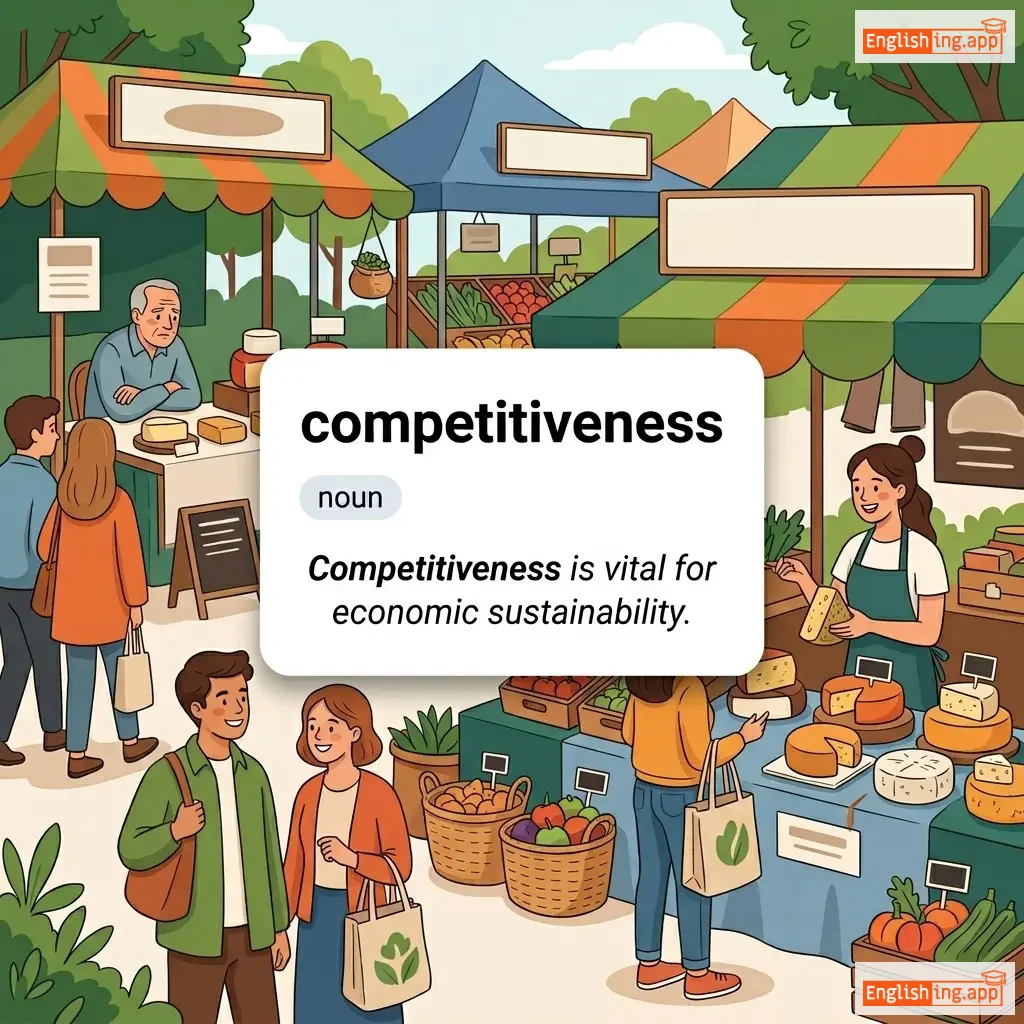
competitiveness definition card — visual illustration of the meaning
noun
kəmˈpet.ɪ.tɪv.nəs
competitividad (competitividad)

The quality of being as good as or better than others of a comparable nature; the ability to compete successfully.

"Competitiveness is vital for economic sustainability."

"La competitividad es vital para la sostenibilidad económica." (La competitividad es vital para la sostenibilidad económica.)
noun
/kəmˈpɛtɪtər/
competidor (competidor)

a person, team, or company that competes with others

"The company lowered its prices to beat its main competitor."

"La empresa redujo sus precios para vencer a su principal competidor." (La empresa redujo sus precios para vencer a su principal competidor.)
noun
/ˌkɒmpɪˈleɪʃən/
compilación (compilacion)

a collection of things, especially pieces of writing or music, gathered together

"The book is a compilation of his best essays."

"El libro es una compilación de sus mejores ensayos." (El libro es una compilacion de sus mejores ensayos.)
verb
/kəmˈpaɪl/
recopilar (recopilar)

to collect information or material and put it together in a list, report, or book

"She compiled the research data into a detailed report."

"Ella recopiló los datos de investigación en un informe detallado." (Ella recopiló los datos de investigación en un informe detallado.)
noun
/kəmˈpleɪsəns/
complacencia (kompleisens)

a feeling of quiet pleasure or self-satisfaction, often without awareness of potential danger

"His complacence prevented him from noticing the risks."

"Su complacencia le impidió notar los riesgos." (Su complacencia le impidio notar los riesgos.)
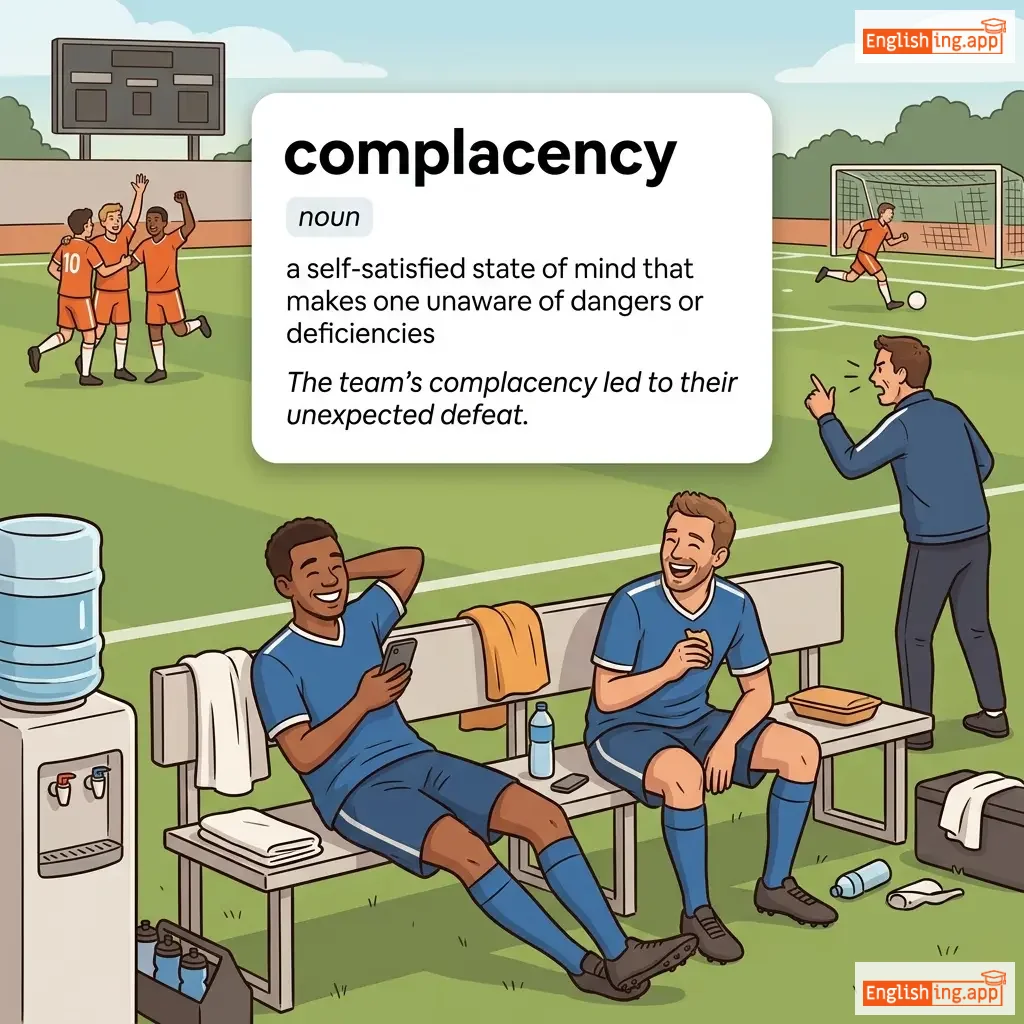
complacency definition card — visual illustration of the meaning
noun
/kəmˈpleɪsənsi/
autocomplacencia (autocomplacencia)

a self-satisfied state of mind that makes one unaware of dangers or deficiencies

"The team's complacency led to their unexpected defeat."

"La autocomplacencia del equipo condujo a su derrota inesperada." (La autocomplacencia del equipo condujo a su derrota inesperada.)
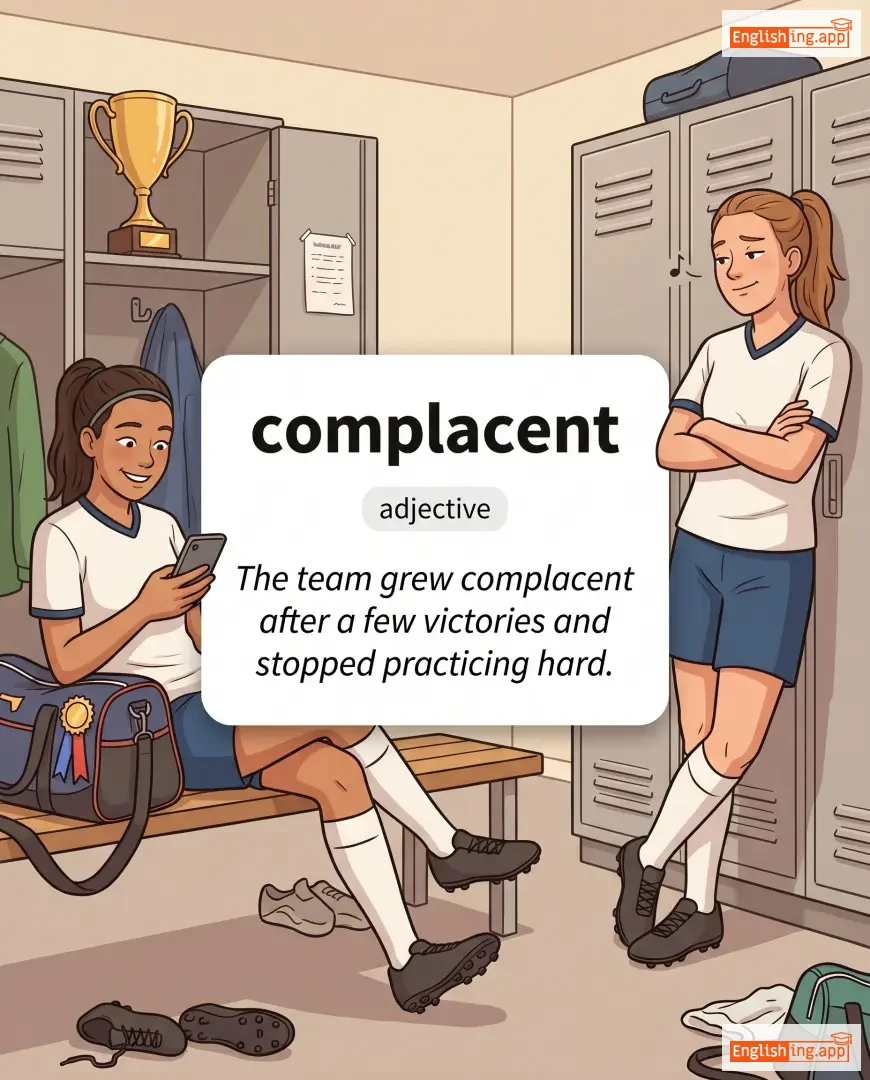
complacent definition card — visual illustration of the meaning
adjective
/kəmˈpleɪsənt/
complaciente (complaciente)

showing self-satisfaction and a lack of concern about potential dangers or problems

"The team grew complacent after a few victories and stopped practicing hard."

"El equipo se volvió complaciente después de unas victorias y dejó de practicar duro." (El equipo se volvió complaciente después de unas victorias y dejó de practicar duro.)
verb
/kəmˈpleɪn/
quejarse (quejarse)

to express dissatisfaction or annoyance about something

"He often complains about the noise in the neighborhood."

"Él a menudo se queja del ruido en el vecindario." (El a menudo se queja del ruido en el vecindario.)
noun
/kəmˈpleɪnt/
queja (keja)

a statement that something is wrong or not satisfactory

"The manager received a complaint from a customer about poor service."

"El gerente recibió una queja de un cliente sobre el mal servicio." (El gerente recibio una queja de un cliente sobre el mal servicio.)
noun
/kəmˈpleɪsəns/
complacencia (complacencia)

willingness to please others; courteous compliance

"Her complaisance made her popular among her colleagues."

"Su complacencia la hizo popular entre sus compañeros de trabajo." (Su complacencia la hizo popular entre sus compañeros de trabajo.)
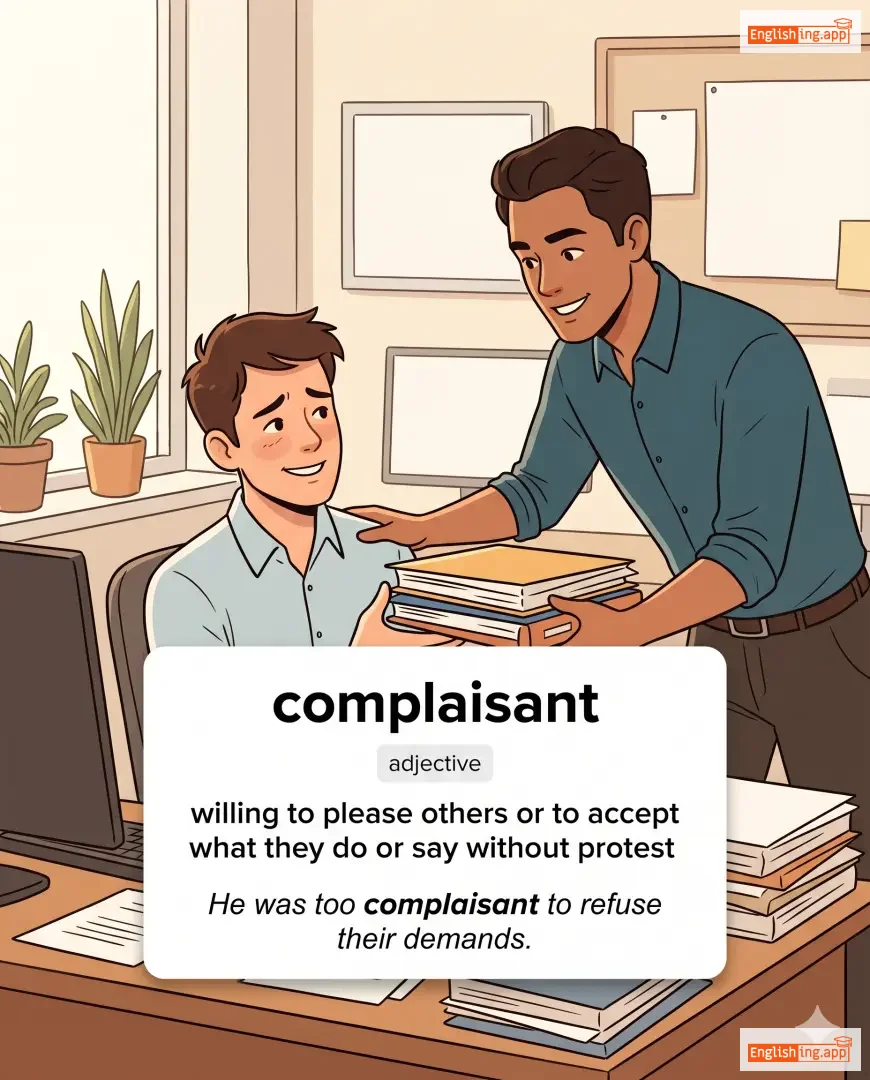
complaisant definition card — visual illustration of the meaning
adjective
/kəmˈpleɪzənt/
demasiado complaciente (demasiado complaciente)

willing to please others or to accept what they do or say without protest

"He was too complaisant to refuse their demands."

"Era demasiado complaciente para rechazar sus demandas." (Era demasiado complaciente para rechazar sus demandas.)
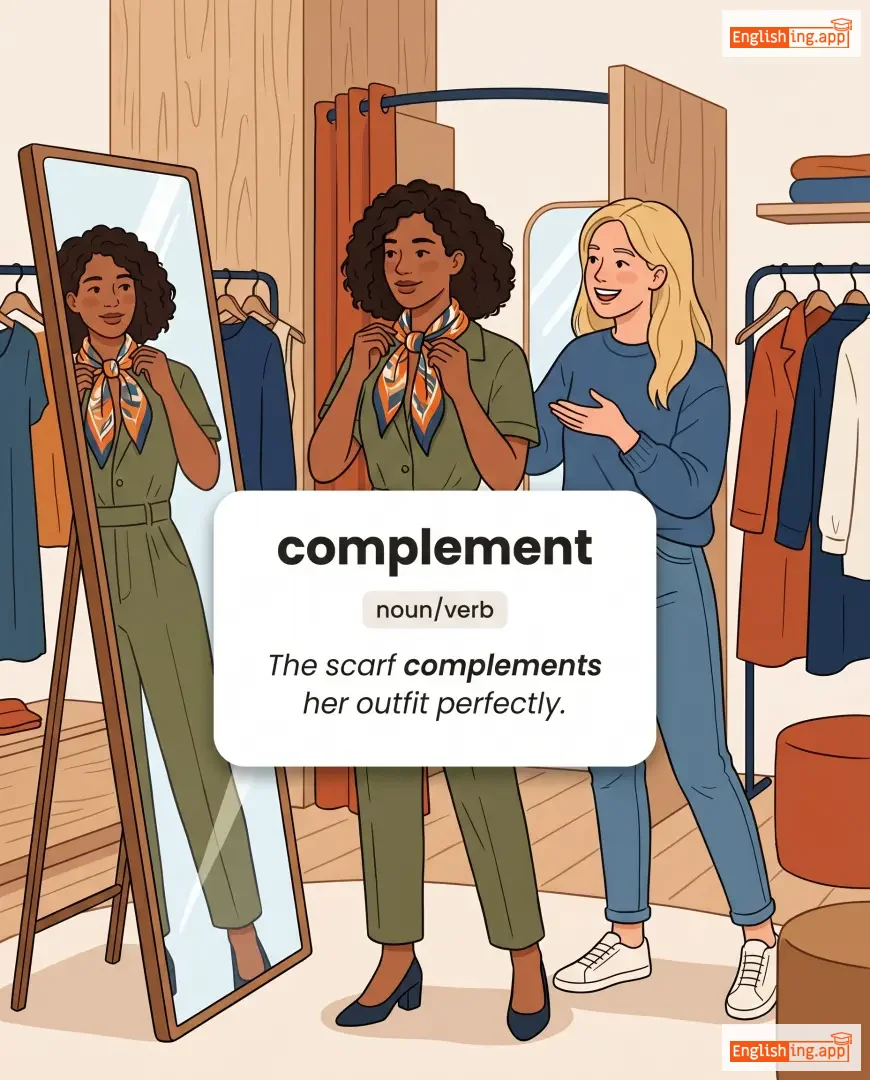
complement definition card — visual illustration of the meaning
noun/verb
/ˈkɒmplɪmənt/
complemento (complemento)

something that completes or goes well with something; to add something that enhances or improves

"The scarf complements her outfit perfectly."

"la bufanda complementa su atuendo perfectamente." (la bufanda complementa su atuendo perfectamente.)
adjective
/ˌkɒmplɪˈmɛntəri/
complementario (complementario)

combining in such a way as to enhance or emphasize the qualities of each other

"The two partners have complementary skills."

"Los dos socios tienen habilidades complementarias." (Los dos socios tienen habilidades complementarias.)
verb
/kəmˈpliːt/
completar (completar)

to finish making or doing something; to bring something to an end

"She managed to complete the project on time."

"Ella logró completar el proyecto a tiempo." (Ella logró completar el proyecto a tiempo.)
adverb
/kəmˈpliːtli/
completamente (completamente)

totally; in every way possible

"The room was completely silent."

"La habitación estaba completamente silenciosa." (La habitacion estaba completamente silenciosa.)
noun
/kəmˈpliːʃən/
finalización (finalizacion)

the action or process of finishing something

"The completion of the project will take another few weeks."

"La finalización del proyecto tomará algunas semanas más." (La finalizacion del proyecto tomara algunas semanas mas.)
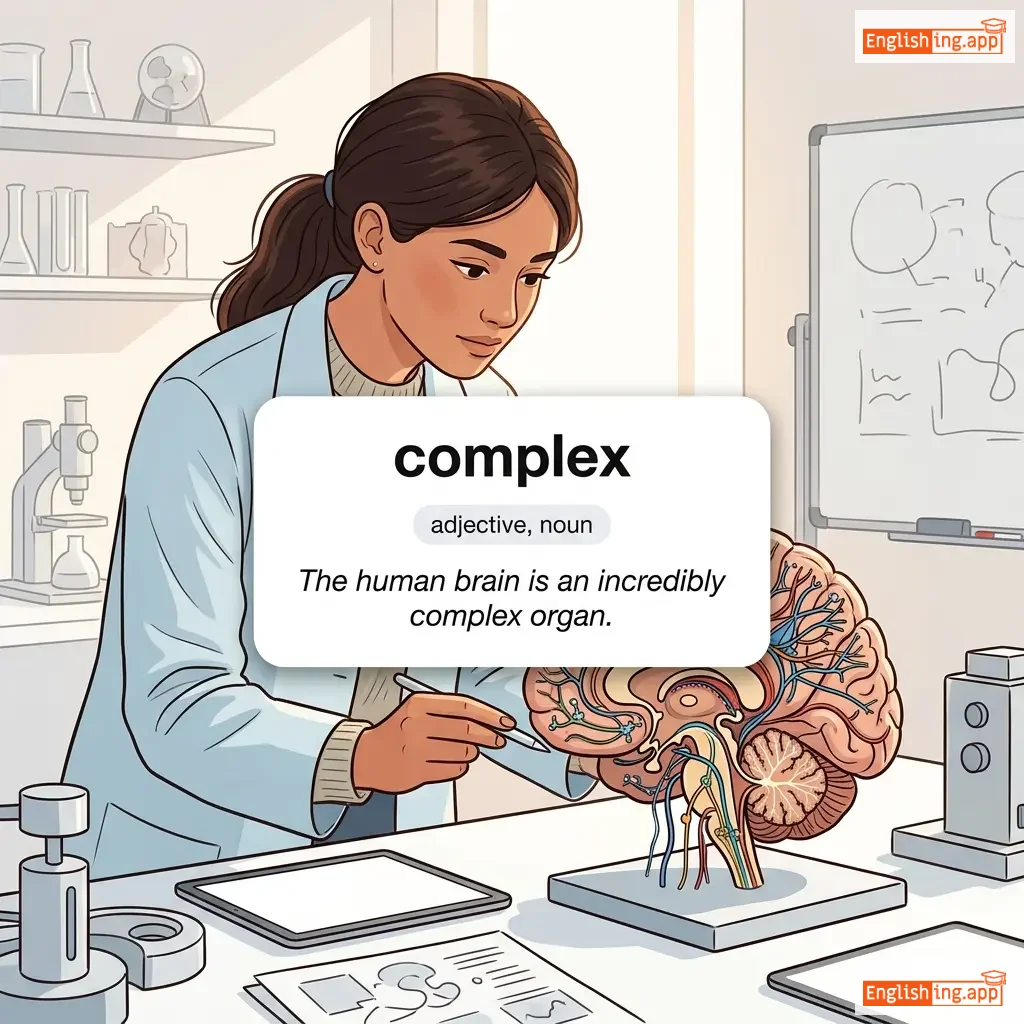
complex definition card — visual illustration of the meaning
adjective, noun
/ˈkɒm.pleks/
complejo (complejo)

Consisting of many different and connected parts; not easy to understand or analyze.

"The human brain is an incredibly complex organ."

"El cerebro humano es un órgano increíblemente complejo." (El cerebro humano es un órgano increíblemente complejo.)
noun
/kəmˈplek.ʃən/
complexión (complexion)

the natural color, texture, and appearance of a person's skin, especially on the face

"Her fair complexion glowed beautifully in the morning sunlight."

"Su tez clara brillaba hermosamente bajo la luz del sol de la mañana." (Su tez clara brillaba hermosamente bajo la luz del sol de la mañana.)
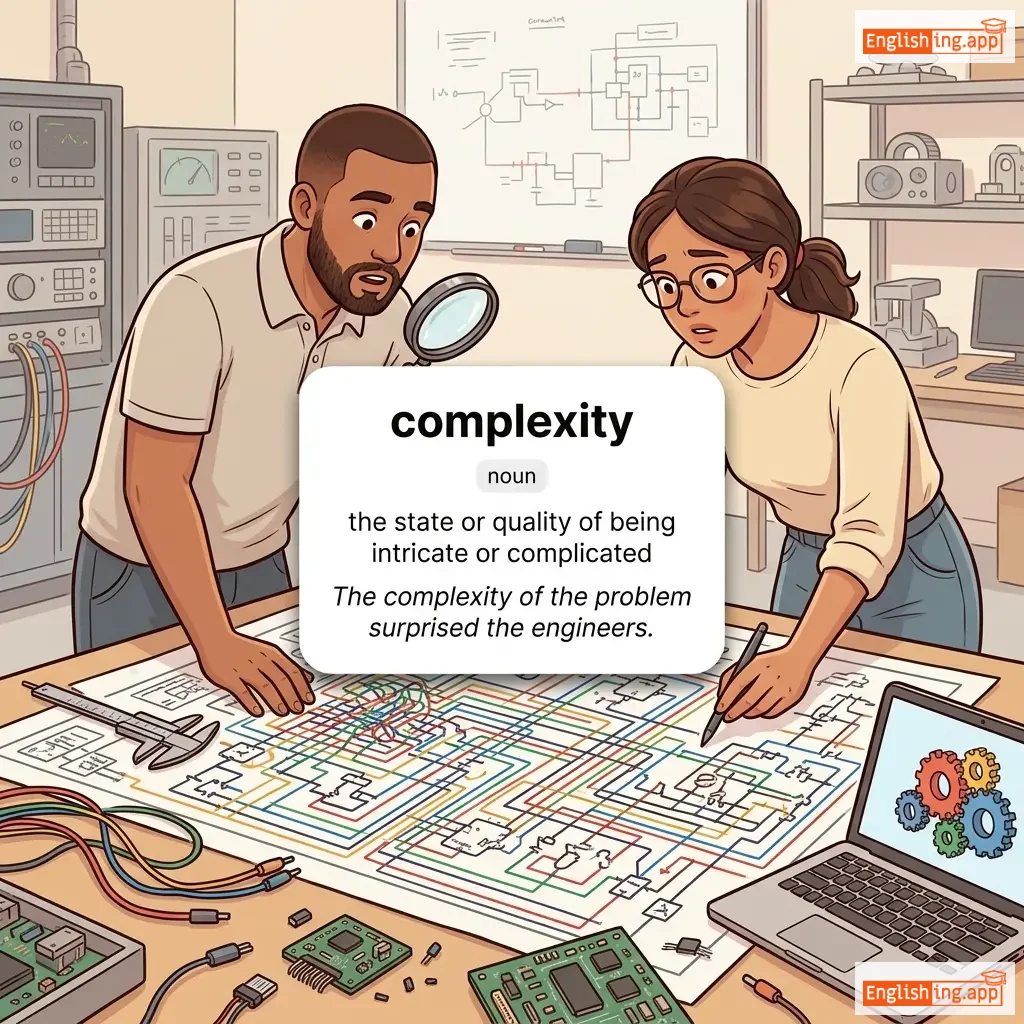
complexity definition card — visual illustration of the meaning
noun
/kəmˈplɛksɪti/
complejidad (complejidad)

the state or quality of being intricate or complicated

"The complexity of the problem surprised the engineers."

"La complejidad del problema sorprendió a los ingenieros." (La complejidad del problema sorprendió a los ingenieros.)
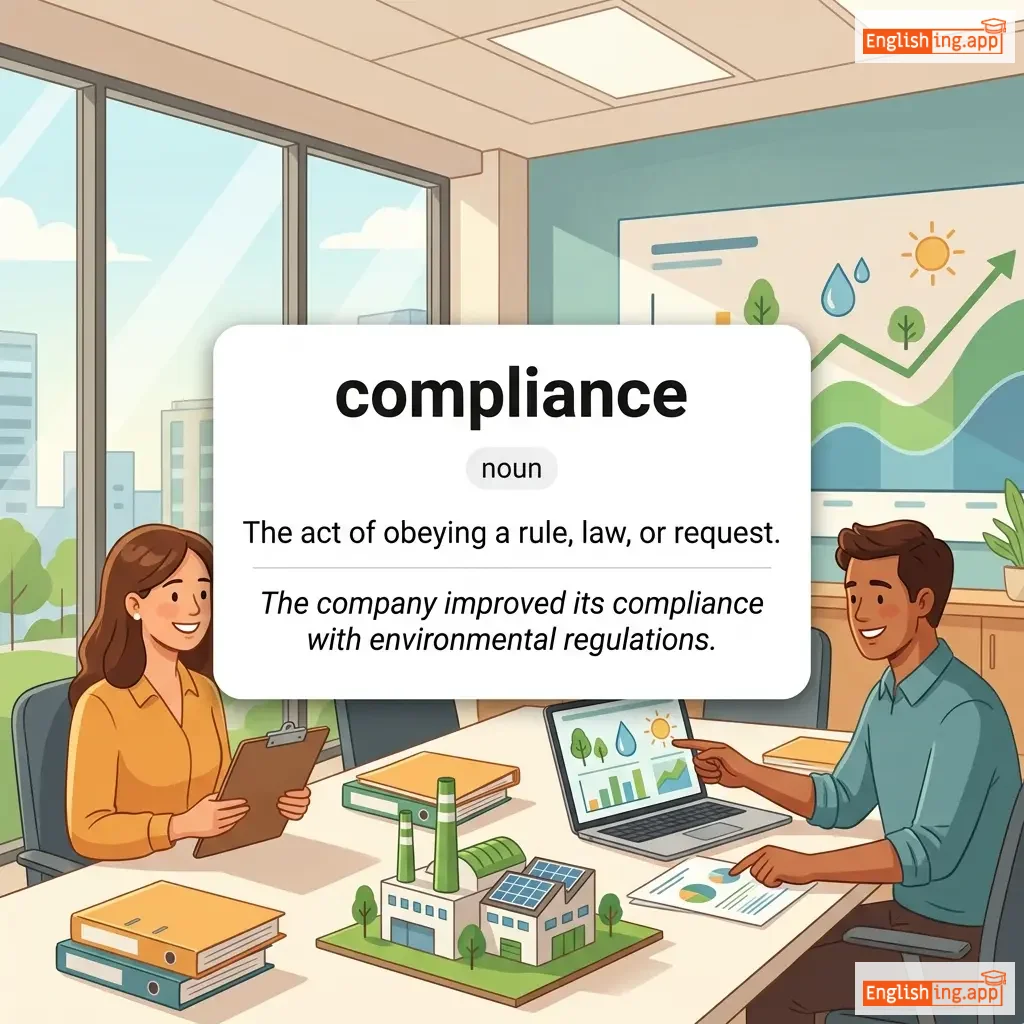
compliance definition card — visual illustration of the meaning
noun
/kəmˈplaɪəns/
cumplimiento (cumplimiento)

The act of obeying a rule, law, or request.

"The company improved its compliance with environmental regulations."

"La empresa mejoró su cumplimiento con las regulaciones ambientales." (La empresa mejoró su cumplimiento con las regulaciones ambientales.)
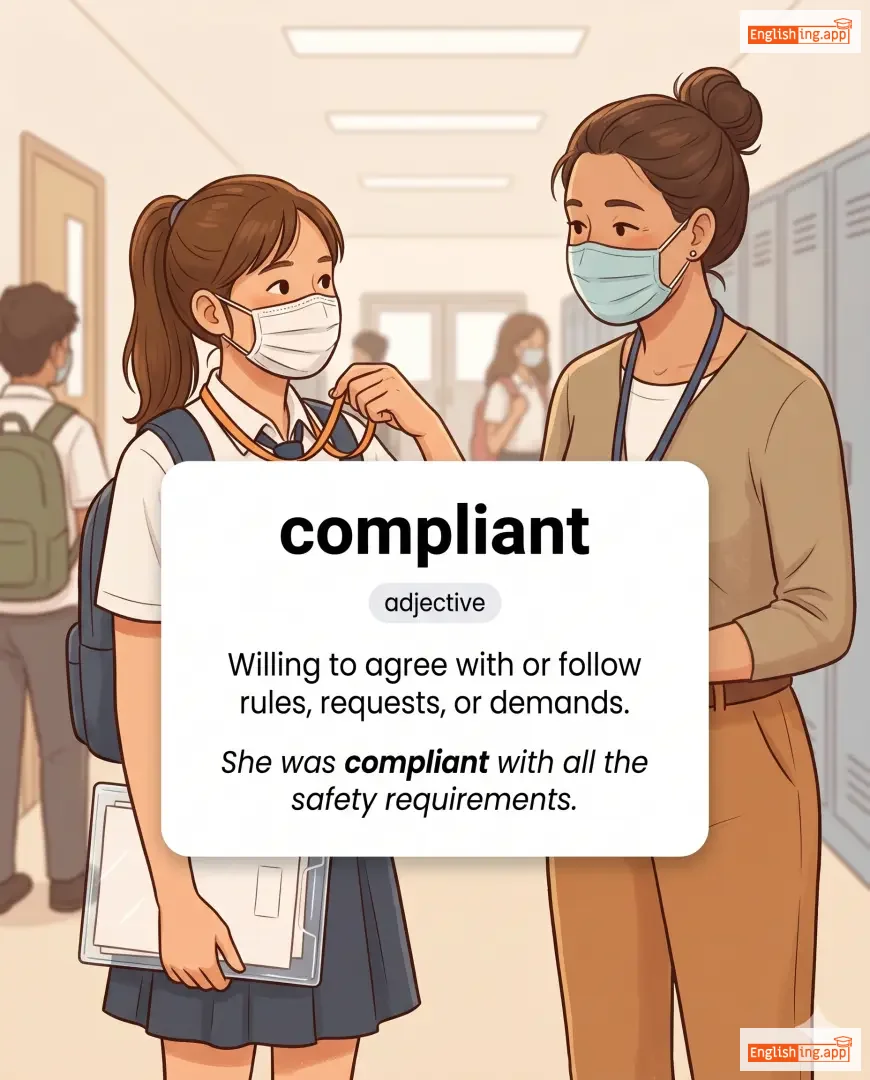
compliant definition card — visual illustration of the meaning
adjective
/kəmˈplaɪənt/
conforme (conforme)

Willing to agree with or follow rules, requests, or demands.

"She was compliant with all the safety requirements."

"Ella estaba conforme con todos los requisitos de seguridad." (Ella estaba conforme con todos los requisitos de seguridad.)
verb
/ˈkɒm.plɪ.keɪt/
complicar (complicar)

To make something more difficult or confusing.

"The new rules will only complicate the process."

"Las nuevas reglas solo complicarán el proceso." (Las nuevas reglas solo complicarán el proceso.)
adjective
/ˈkɒmplɪˌkeɪtɪd/
complicado (complicado)

consisting of many interconnected parts; difficult to understand

"The instructions for the machine are too complicated to follow."

"Las instrucciones de la máquina son demasiado complicadas para seguir." (Las instrucciones de la maquina son demasiado complicadas para seguir.)
noun
/ˌkɒmplɪˈkeɪʃən/
complicación (complicacion)

A problem or difficulty that makes a situation harder to deal with.

"His illness led to serious complications after surgery."

"Su enfermedad causó complicaciones graves después de la cirugía." (Su enfermedad causó complicaciones graves después de la cirugía.)
adjective
/kəmˈplɪsɪt/
cómplice (en un crimen) (complice (en un crimen))

involved with others in an illegal activity or wrongdoing

"He was found complicit in the crime."

"Él fue encontrado cómplice en el crimen." (Él fue encontrado cómplice en el crimen.)
noun
/kəmˈplɪsəti/
complicidad (complicidad)

the state of being involved with others in an illegal activity or wrongdoing

"The court revealed his complicity in the fraud scheme."

"El tribunal reveló su complicidad en el esquema de fraude." (El tribunal reveló su complicidad en el esquema de fraude.)