Vocabularios

Descubra, aprenda y domine el vocabulario en inglés

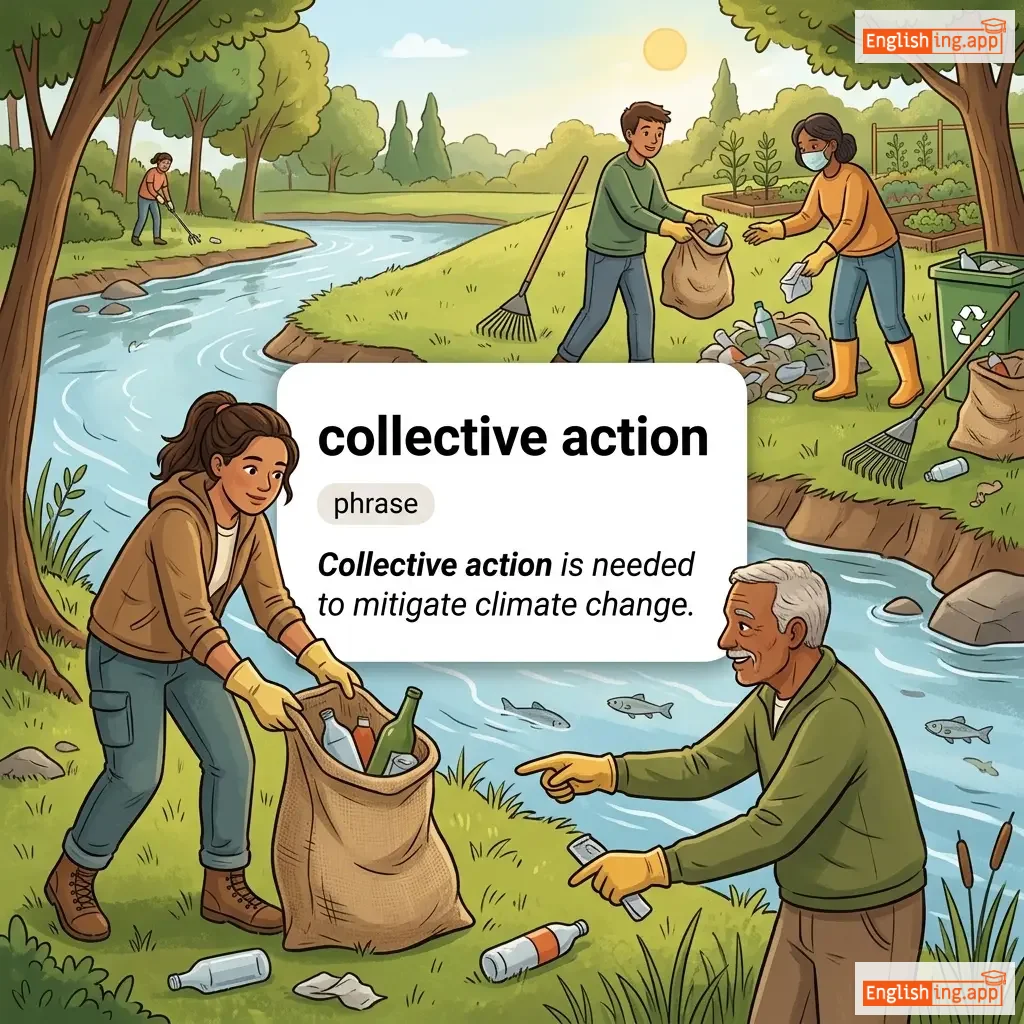
collective action definition card — visual illustration of the meaning
phrase
kəˈlek.tɪv ˈæk.ʃən
acción colectiva (accion colectiva)

Action taken by a group of people working together toward a common goal or purpose.

"Collective action is needed to mitigate climate change."

"Se necesita acción colectiva para mitigar el cambio climático." (Se necesita accion colectiva para mitigar el cambio climatico.)
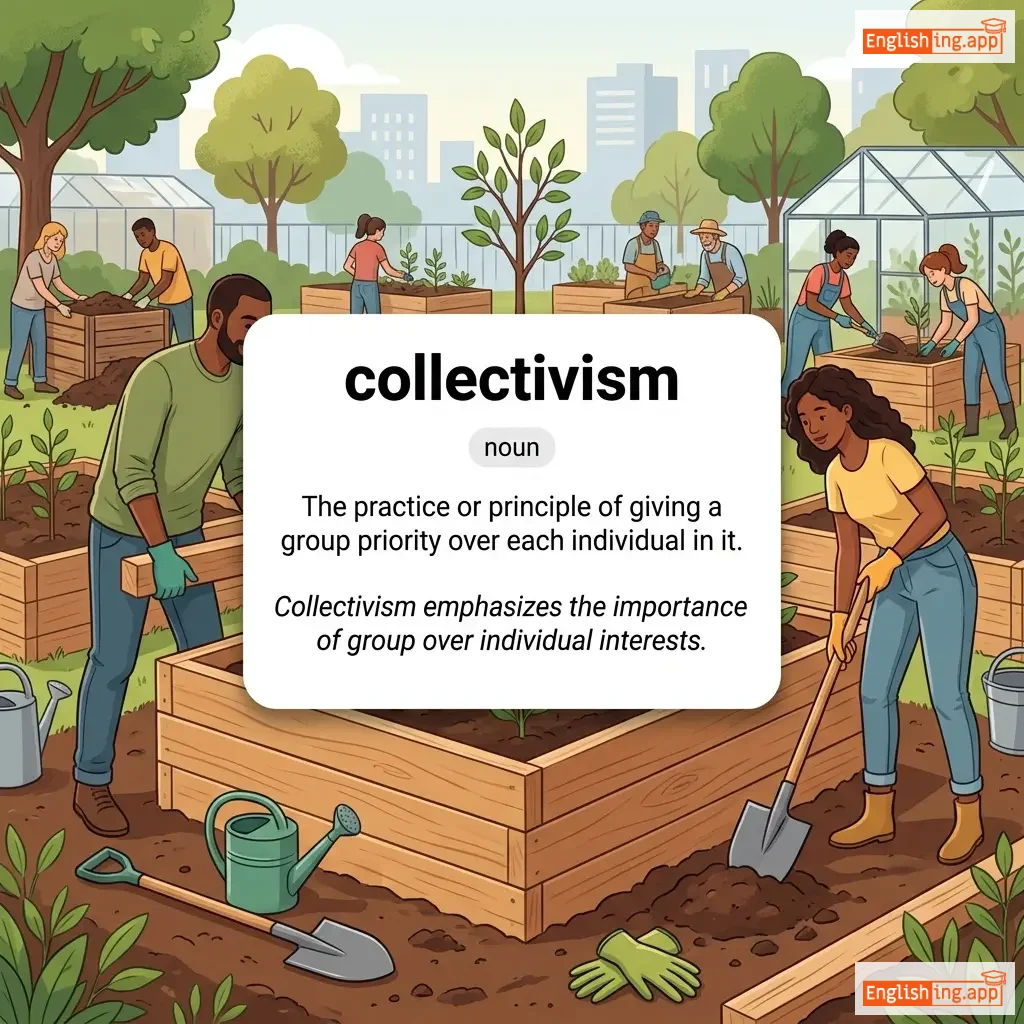
collectivism definition card — visual illustration of the meaning
noun
kəˈlɛktɪvɪzəm
colectivismo (colectivismo)

The practice or principle of giving a group priority over each individual in it.

"Collectivism emphasizes the importance of group over individual interests."

"El colectivismo enfatiza la importancia del grupo sobre los intereses individuales." (El colectivismo enfatiza la importancia del grupo sobre los intereses individuales.)
noun
/kəˈlɛktər/
coleccionista (coleccionista)

a person who collects things as a hobby or job

"He is a stamp collector with thousands of rare items."

"Él es un coleccionista de sellos con miles de artículos raros." (El es un coleccionista de sellos con miles de artículos raros.)
noun
/ˈkɒlɪdʒ/
universidad (universidad)

An educational institution where students study for degrees or professional qualifications.

"She hopes to attend college in the city next year."

"Ella espera asistir a la universidad en la ciudad el próximo año." (Ella espera asistir a la universidad en la ciudad el proximo año.)
noun
/kəˈliːdʒən/
estudiante universitario (estudiante universitario)

a student of a college

"The collegians were preparing for the cultural festival."

"Los colegiales se estaban preparando para el festival cultural." (Los colegiales se estaban preparando para el festival cultural.)
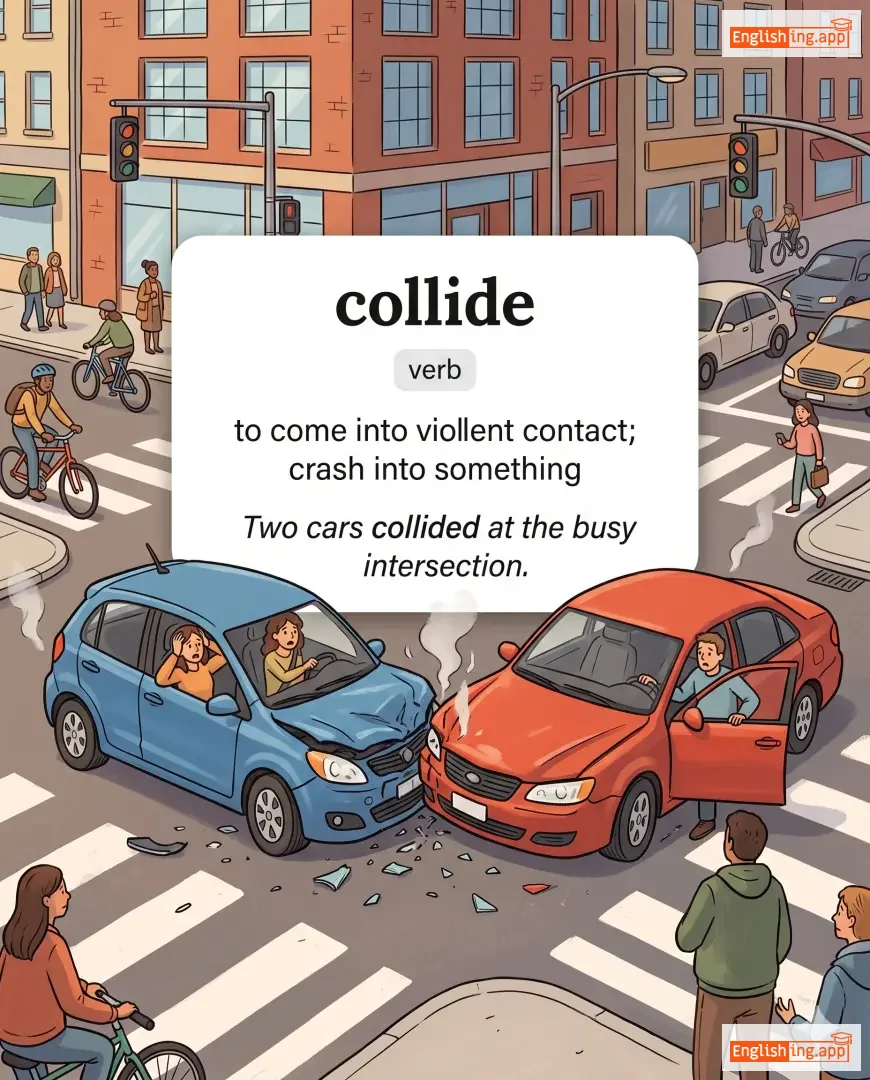
collide definition card — visual illustration of the meaning
verb
/kəˈlaɪd/
chocar (chocar)

to come into violent contact; crash into something

"Two cars collided at the busy intersection."

"Dos coches colisionaron en la intersección concurrida." (Dos coches colisionaron en la intersección concurrida.)
noun
/ˈkɒliər/
minero de carbón (minero de carbon)

a person who works in coal mines or a ship carrying coal

"The collier spent long hours underground extracting coal."

"El minero de carbón pasó largas horas bajo tierra extrayendo carbón." (El minero de carbon paso largas horas bajo tierra extrayendo carbon.)
noun
/kəˈlɪʒən/
colisión (colision)

an instance of two or more objects crashing into each other

"The collision on the highway caused a major traffic jam."

"La colisión en la autopista causó un gran atasco de tráfico." (La colision en la autopista causo un gran atasco de trafico.)
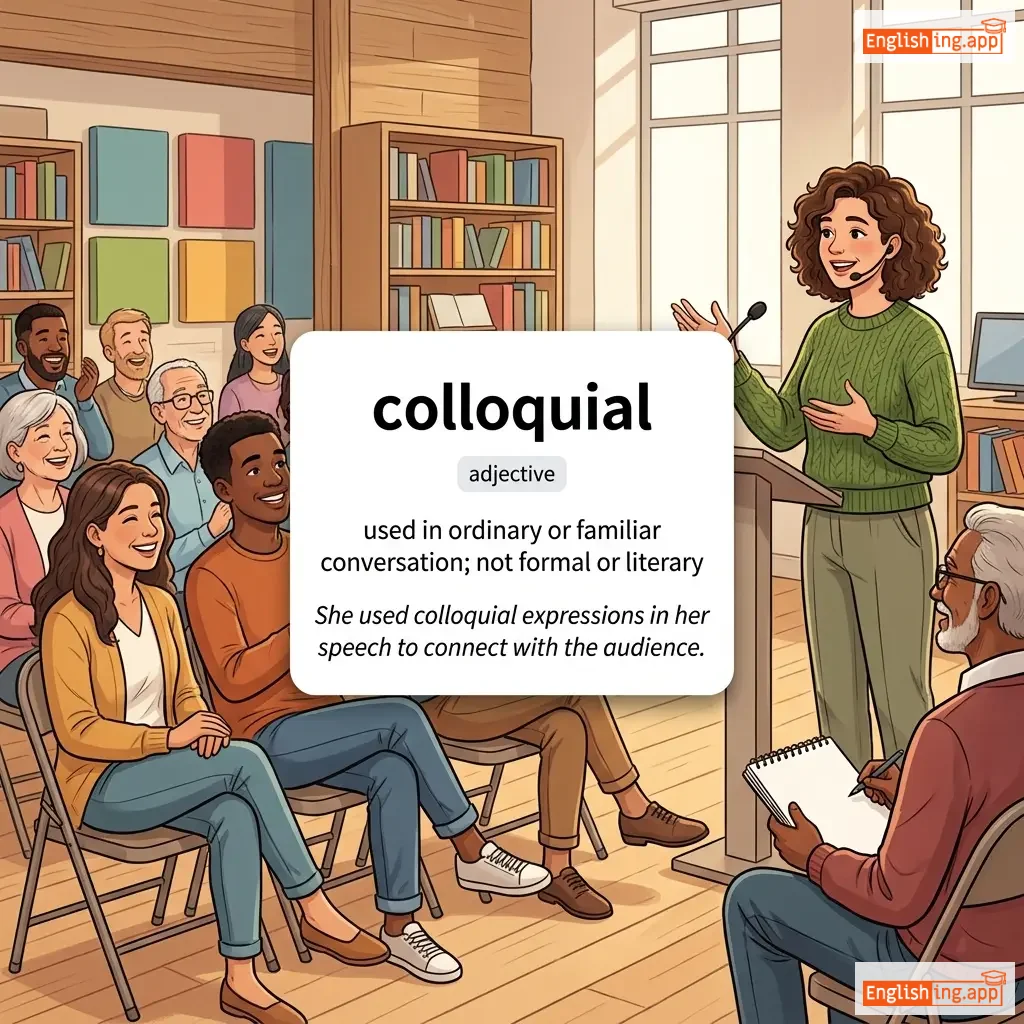
colloquial definition card — visual illustration of the meaning
adjective
/kəˈloʊkwiəl/
coloquial (coloquial)

used in ordinary or familiar conversation; not formal or literary

"She used colloquial expressions in her speech to connect with the audience."

"Ella usó expresiones coloquiales en su discurso para conectar con la audiencia." (Ella uso expresiones coloquiales en su discurso para conectar con la audiencia.)
noun
/kəˈloʊkwiəˌlɪzəm/
coloquialismo (coloquialismo)

a word or phrase used in informal speech or writing

"The novel is full of regional colloquialisms."

"La novela está llena de coloquialismos regionales." (La novela esta llena de coloquialismos regionales.)
noun
/ˈkɒl.ə.kwi/
conversación formal (conversacion formal)

A formal conversation or dialogue, often on serious or academic topics.

"The professors engaged in a deep colloquy about the future of education."

"Los profesores participaron en una profunda conversación sobre el futuro de la educación." (Los profesores participaron en una profunda conversacion sobre el futuro de la educacion.)
verb
/kəˈluːd/
conspirar (conspirar)

To secretly cooperate or conspire with others, often for a deceitful purpose.

"The two companies colluded to fix prices in the market."

"Las dos empresas conspiraron para fijar los precios en el mercado." (Las dos empresas conspiraron para fijar los precios en el mercado.)
noun
/kəˈluːʒən/
colusión (colusion)

A secret agreement or cooperation, especially for an illegal or dishonest purpose.

"There was evidence of collusion between the officials and the contractors."

"Había evidencia de colusión entre los funcionarios y los contratistas." (Había evidencia de colusión entre los funcionarios y los contratistas.)
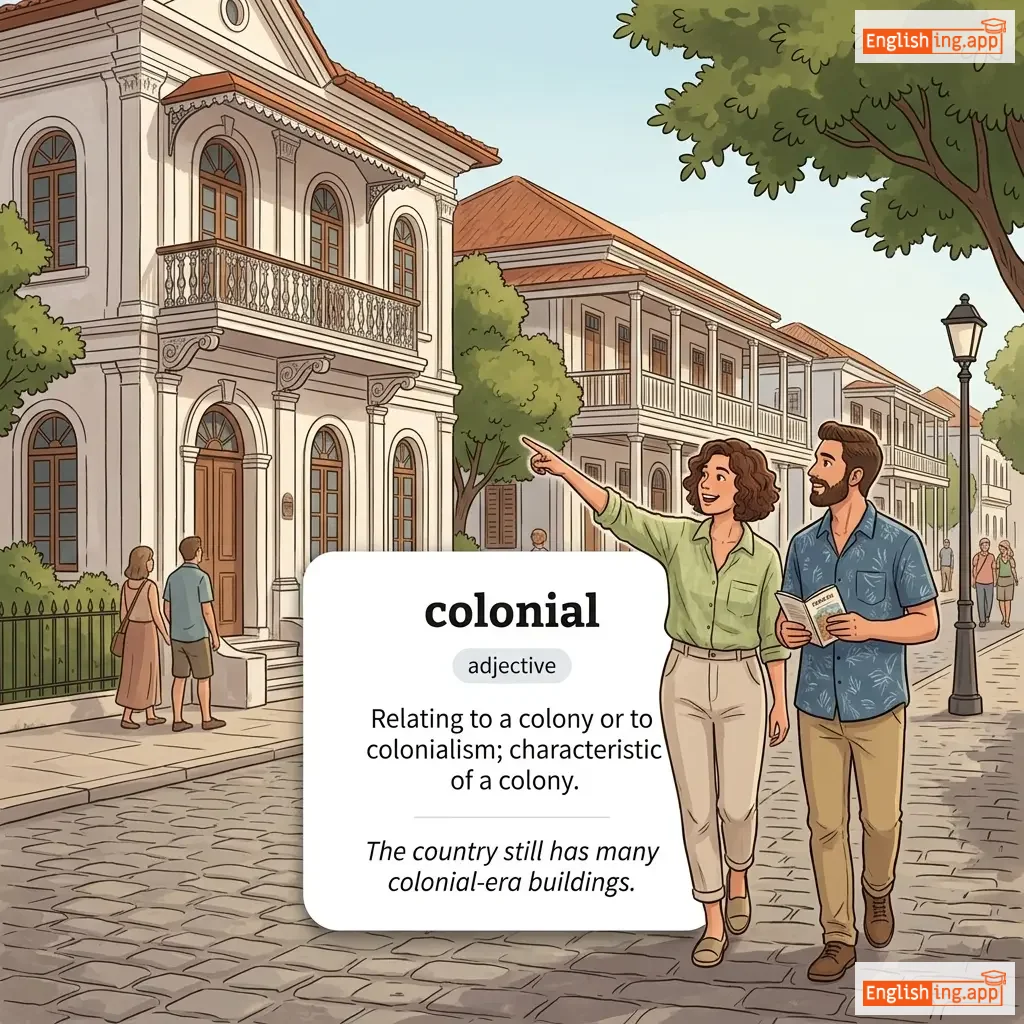
colonial definition card — visual illustration of the meaning
adjective
/kəˈloʊniəl/
colonial (kolonial)

Relating to a colony or to colonialism; characteristic of a colony.

"The country still has many colonial-era buildings."

"El país todavía tiene muchos edificios de la época colonial." (El pais todavia tiene muchos edificios de la epoca colonial.)
noun
/ˌkɒl.əˈneɪd/
columnata (columnata)

A row of evenly spaced columns supporting a roof, often in classical architecture.

"The visitors admired the grand colonnade at the entrance of the temple."

"Los visitantes admiraron la gran columnata en la entrada del templo." (Los visitantes admiraron la gran columnata en la entrada del templo.)
noun
/ˈkɒləni/
colonia (colonia)

a territory or community controlled by another country or group of people

"India was once a British colony."

"India fue una vez una colonia británica." (India fue una vez una colonia britanica.)
noun
/ˈkʌl.ər/
color (color)

The property possessed by an object of producing different sensations on the eye as a result of the way it reflects or emits light.

"Blue is her favorite color."

"El azul es su color favorito." (El azul es su color favorito.)
adjective
/ˈkʌlərfəl/
colorido (colorido)

having bright colors; full of variety or interest

"The festival was full of colorful decorations."

"El festival estaba lleno de decoraciones coloridas." (El festival estaba lleno de decoraciones coloridas.)
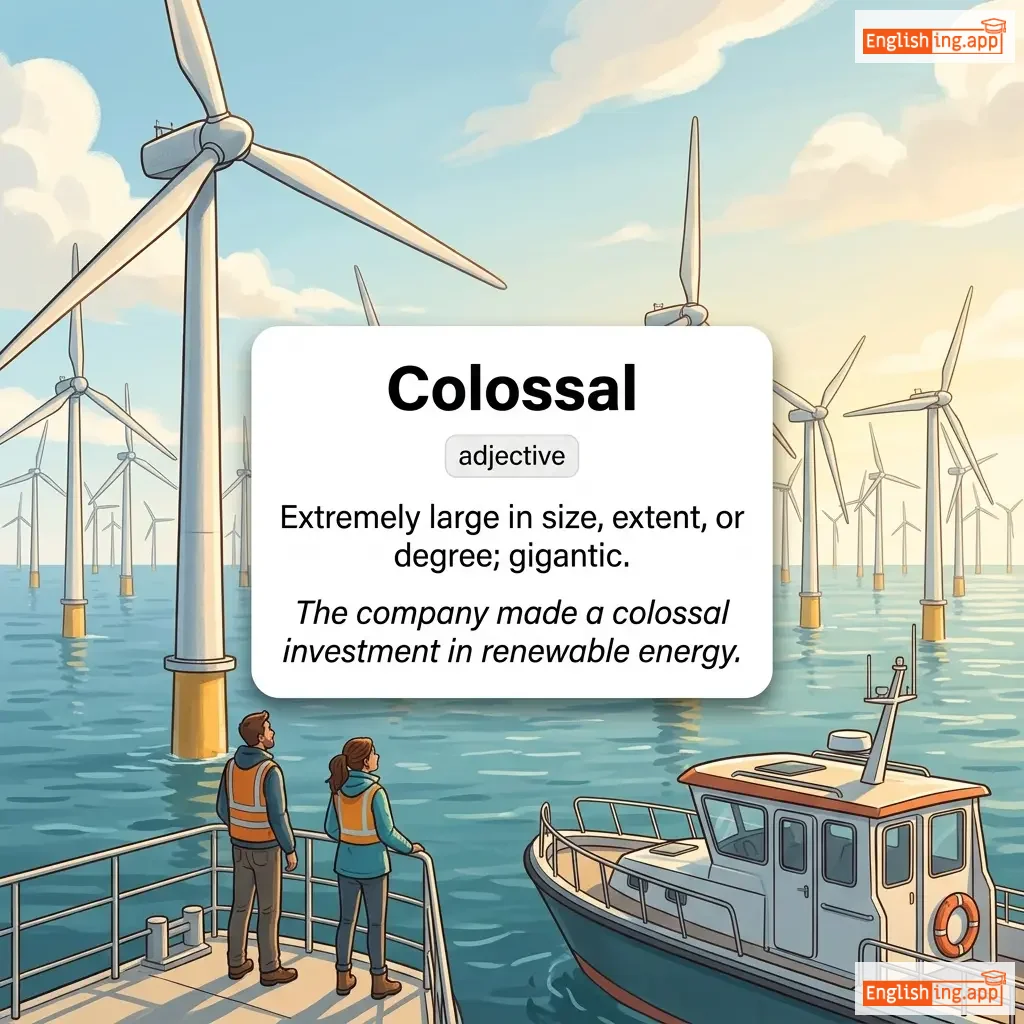
Colossal definition card — visual illustration of the meaning
adjective
/kəˈlɒsəl/
colosal (colosal)

Extremely large in size, extent, or degree; gigantic.

"The company made a colossal investment in renewable energy."

"La compañía hizo una inversión colosal en energía renovable." (La compañía hizo una inversión colosal en energía renovable.)
noun
/kəˈlɒsəs/
coloso (coloso)

A person or thing of enormous size, importance, or ability.

"Einstein was a colossus in the world of science."

"Einstein fue un coloso en el mundo de la ciencia." (Einstein fue un coloso en el mundo de la ciencia.)
noun
/ˈkʌl.ər/
color (color)

the property possessed by an object of producing different sensations on the eye as a result of the way it reflects light; hue, tint, shade

"What is your favorite colour for painting the bedroom walls?"

"¿Cuál es tu color favorito para pintar las paredes del dormitorio?" (¿Cuál es tu color favorito para pintar las paredes del dormitorio?)
noun
/koʊlt/
potro (potro)

a young male horse, especially one under four years old

"The farmer trained the young colt to accept a saddle."

"El granjero entrenó al joven potro para aceptar una silla de montar." (El granjero entrenó al joven potro para aceptar una silla de montar.)
adjective
/ˈkoʊltɪʃ/
juguetón (jugueton)

Playful, energetic, and not fully mature or disciplined.

"The coltish boy ran around the field without a care."

"El chico juguetón corrió por el campo sin preocuparse." (El chico jugueton corrio por el campo sin preocuparse.)
noun
/ˈkɒləm/
columna (columna)

A vertical structure that supports a building; also a section of text arranged vertically in a newspaper or table.

"The ancient temple had tall marble columns."

"El antiguo templo tenía altas columnas de mármol." (El antiguo templo tenía altas columnas de mármol.)
noun
/ˈkɒləmnɪst/
columnista (columnista)

a journalist who regularly writes articles or opinions for a newspaper or magazine

"The columnist wrote an article about climate change."

"El columnista escribió un artículo sobre el cambio climático." (El columnista escribio un articulo sobre el cambio climatico.)
noun
/ˈkoʊmə/
coma (koma)

A deep state of prolonged unconsciousness caused by illness or injury.

"The patient remained in a coma for several weeks."

"El paciente permaneció en coma durante varias semanas." (El paciente permaneció en koma durante varias semanas.)
adjective
/ˈkoʊməˌtoʊs/
comatoso (comatoso)

In a state of deep unconsciousness, resembling or related to coma.

"The comatose patient was kept under constant observation."

"El paciente comatoso fue mantenido bajo constante observación." (El paciente comatoso fue mantenido bajo constante observación.)
noun
/koʊm/
peine (peine)

a toothed device for arranging or cleaning the hair

"She used a comb to style her hair before the party."

"Ella usó un peine para peinar su cabello antes de la fiesta." (ella uso un peine para peinar su cabello antes de la fiesta)
verb
/ˈkɒmbæt/
combatir (combatir)

to fight against something, especially to reduce or stop it

"The government is taking steps to combat corruption."

"El gobierno está tomando medidas para combatir la corrupción." (El gobierno está tomando medidas para combatir la corrupción.)
noun
/ˌkɒmbɪˈneɪʃən/
combinación / mezcla (combinacion / mezcla)

The act of joining or mixing two or more things together.

"This dish is a perfect combination of sweet and spicy flavors."

"Este plato es una combinación perfecta de sabores dulces y picantes." (Este plato es una combinacion perfecta de sabores dulces y picantes.)
verb
/kəmˈbaɪn/
combinar (combinar)

To bring two or more things together to form a single unit.

"They decided to combine their resources for the project."

"Ellos decidieron combinar sus recursos para el proyecto." (Ellos decidieron combinar sus recursos para el proyecto.)
adjective
/kəmˈbaɪnd/
combinado (combinado)

formed by bringing together separate parts or elements

"The combined effort of the team led to success."

"El esfuerzo combinado del equipo llevó al éxito." (El esfuerzo combinado del equipo llevó al éxito.)
adjective
/kəmˈbʌstɪbəl/
combustible (combustible)

Capable of catching fire and burning easily.

"Dry leaves are highly combustible."

"Las hojas secas son altamente combustibles." (Las hojas secas son altamente combustibles.)
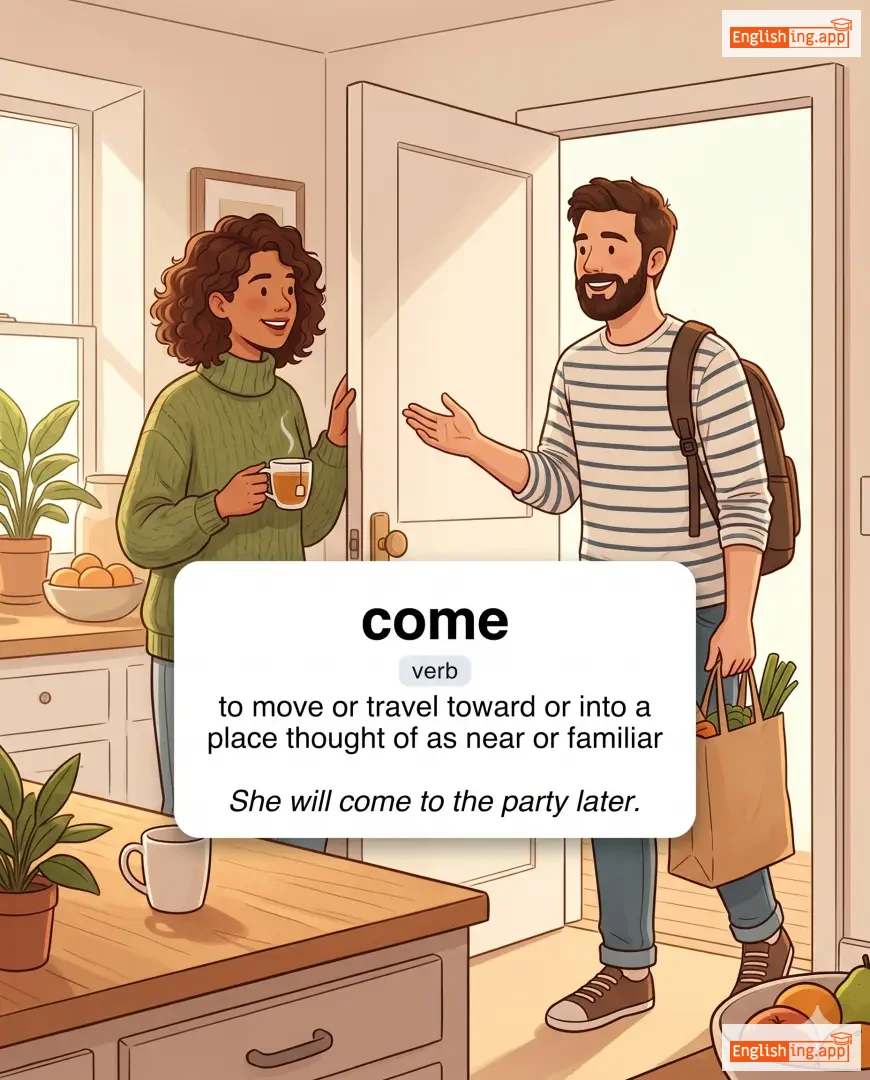
come definition card — visual illustration of the meaning
verb
/kʌm/
felicidad (felicidad)

to move or travel toward or into a place thought of as near or familiar

"She will come to the party later."

"Ella no pudo ocultar su felicidad cuando recibió el premio." (Ella no pudo ocultar su felicidad cuando recibió el premio.)
noun
/ˈkʌmbæk/
regreso (regreso)

A return to a former status or success after a period of decline.

"The singer made a remarkable comeback after years of silence."

"El cantante hizo un regreso notable después de años de silencio." (El cantante hizo un regreso notable despues de anos de silencio.)
noun
/ˈkɒmədi/
comedia (comedia)

A type of entertainment that is intended to make people laugh.

"We watched a hilarious comedy at the theater."

"Vimos una comedia divertida en el teatro." (Vimos una comedia divertida en el teatro.)
adjective
/ˈkʌmli/
hermosa (hermosa)

Attractive or pleasant in appearance.

"The actress was known for her comely features."

"La actriz era conocida por sus hermosas características." (La actriz era conocida por sus hermosas características.)
noun
/kəˈmɛstɪbəl/
comestible (comestible)

An item of food that can be eaten.

"The picnic basket was full of delicious comestibles."

"La canasta de picnic estaba llena de deliciosos comestibles." (La canasta de picnic estaba llena de deliciosos comestibles.)
noun
/ˈkɒm.ɪt/
cometa (cometa)

a celestial object consisting of ice and dust that develops a tail when approaching the sun

"Halley's Comet appears in the sky every 76 years."

"El cometa de Halley aparece en el cielo cada 76 años." (El cometa de Halley aparece en el cielo cada 76 años.)
noun
/ˌkʌmˈʌpəns/
castigo merecido (castigo merecido)

A deserved punishment or fate; just deserts.

"The corrupt official finally got his comeuppance in court."

"El funcionario corrupto finalmente recibió su castigo merecido en el tribunal." (El funcionario corrupto finalmente recibió su castigo merecido en el tribunal.)
noun
/ˈkʌmfərt/
comodidad (comodidad)

a state of physical ease and freedom from pain or distress

"The soft chair gave him great comfort."

"La silla suave le dio una gran comodidad." (La silla suave le dio una gran comodidad.)
comfortable definition card — visual illustration of the meaning
adjective
/ˈkʌmf.tə.bəl/
cómodo (komodo)

providing physical ease and relaxation; free from stress or worry

"This chair is so comfortable that I could sit here all day."

"Esta silla es tan cómoda que podría quedarme aquí todo el día." (Esta silla es tan cómoda que podría quedarme aquí todo el día.)
adverb
/ˈkʌmftəbli/
cómodamente (comodamente)

in a comfortable manner; without difficulty or effort; with ease

"She was sitting comfortably in her favorite chair."

"Ella estaba sentada cómodamente en su silla favorita." (Ella estaba sentada cómodamente en su silla favorita.)
adjective
/ˈkɒmɪk/
cómico (comico)

causing or meant to cause laughter

"The movie had several comic scenes."

"La película tenía varias escenas cómicas." (La pelicula tenia varias escenas comicas.)
adjective
/ˈkɒmɪkəl/
cómico (comico)

Funny in a strange or silly way; amusing.

"His comical expressions made everyone laugh."

"Sus expresiones cómicas hicieron reír a todos." (Sus expresiones cómicas hicieron reír a todos.)
adjective
/ˈkʌmɪŋ/
próximo (proximo)

approaching or happening soon

"We are preparing for the coming festival."

"Estamos preparando para el próximo festival." (Estamos preparando para el proximo festival.)
noun
/ˈkɒmɪti/
cortesía, respeto mutuo (cortesía, respeto mutuo)

Courtesy and considerate behavior towards others; mutual respect.

"The meeting was conducted with comity and respect."

"La reunión se realizó con cortesía y respeto." (La reunión se realizó con cortesía y respeto.)
verb
/kəˈmænd/
orden (orden)

to give an order authoritatively; to control or direct

"The general commanded the soldiers to move forward."

"El general ordenó a los soldados avanzar." (El general ordenó a los soldados avanzar.)
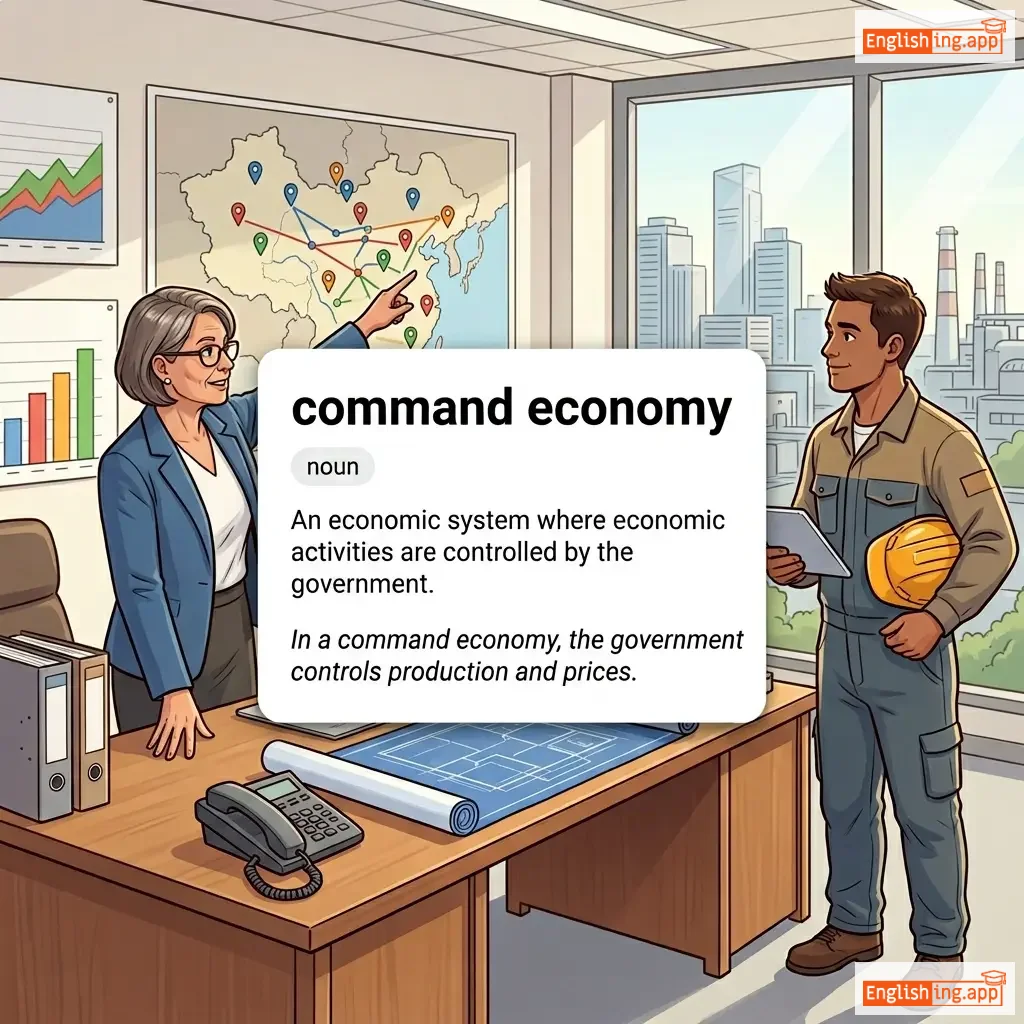
command economy definition card — visual illustration of the meaning
noun
kəˈmɑːnd ɪˈkɒn.ə.mi
economía planificada (economia planificada)

An economic system where economic activities are controlled by the government.

"In a command economy, the government controls production and prices."

"En una economía planificada, el gobierno controla la producción y los precios." (En una economia planificada, el gobierno controla la produccion y los precios.)
verb
/ˌkɒmənˈdɪə/
tomar por la fuerza (tomar por la fuerza)

To take control or possession of something, often by force or authority.

"The soldiers commandeered the villagers’ homes during the war."

"Durante la guerra, los soldados tomaron por la fuerza las casas de los aldeanos." (Durante la guerra, los soldados tomaron por la fuerza las casas de los aldeanos.)