Vocabularios

Descubra, aprenda y domine el vocabulario en inglés

noun, verb
/klɒt/
coágulo (coagulo)

a thick mass of coagulated liquid, especially blood; to form such a mass.

"The doctor removed a blood clot from the patient."

"El doctor removió un coágulo de sangre del paciente." (El doctor removió un coágulo de sangre del paciente.)
noun
/klɒθ/
tela (tela)

fabric or material made by weaving or knitting fibers

"The table was covered with a white cloth."

"La mesa estaba cubierta con un tela blanca." (La mesa estaba cubierta con un tela blanca.)
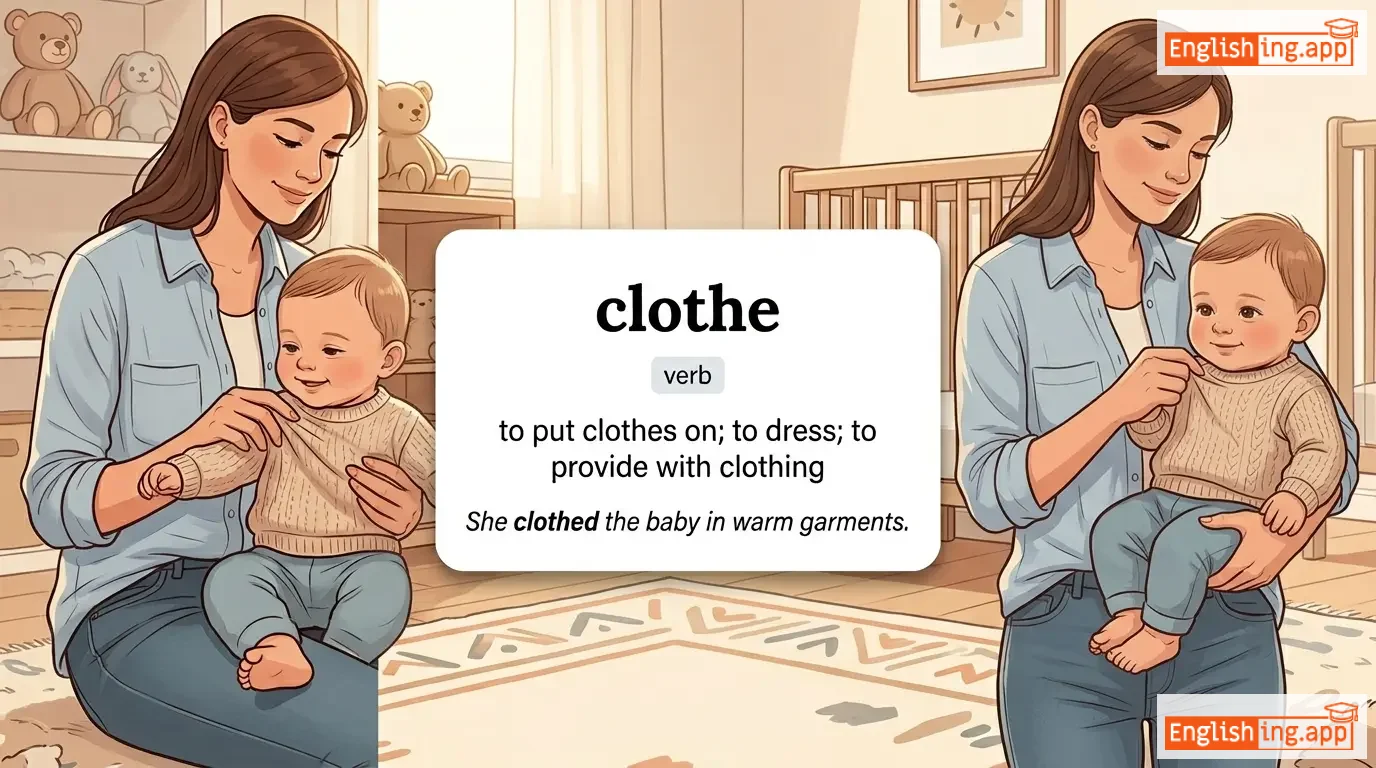
clothe definition card — visual illustration of the meaning
verb
/kloʊð/
vestir (vestir)

to put clothes on; to dress; to provide with clothing

"She clothed the baby in warm garments."

"Ella vistió al bebé con ropa cálida." (Ella vistió al bebé con ropa cálida.)
noun
/kloʊðz/
ropa (ropa)

garments worn on the body

"She bought new clothes for the party."

"Ella compró ropa nueva para la fiesta." (Ella compro ropa nueva para la fiesta.)
noun
/kloʊðz ˈaɪərn/
plancha de ropa (plancha de ropa)

An electric appliance used to remove wrinkles from clothes by applying heat and pressure

"I need to use the clothes iron to make my shirt look neat for the meeting."

"Necesito usar la plancha de ropa para hacer que mi camisa luzca ordenada para la reunión." (Necesito usar la plancha de ropa para hacer que mi camisa luzca ordenada para la reunion.)
noun
/ˈkloʊðiər/
comerciante de ropa (comerciante de ropa)

a person or company that makes, sells, or deals in clothes.

"The town’s clothier displayed fine suits in his shop window."

"El comerciante de ropa de la ciudad exhibió trajes elegantes en la ventana de su tienda." (El comerciante de ropa de la ciudad exhibió trajes elegantes en la ventana de su tienda.)
noun
/ˈkloʊðɪŋ/
ropa (ropa)

items worn to cover the body; apparel collectively

"Warm clothing is essential in winter."

"La ropa abrigada es esencial en invierno." (La ropa abrigada es esencial en invierno.)
noun
/ˈkloʊtʃər/
procedimiento de cierre (procedimiento de cierre)

a procedure for ending a debate and taking a vote.

"The Senate invoked cloture to end the lengthy debate."

"El Senado invocó el cierre para terminar el largo debate." (El Senado invocó el cierre para terminar el largo debate.)
noun, verb
/klaʊd/
nube (nube)

a visible mass of condensed water vapor in the sky; to make something less clear

"Dark clouds gathered before the storm."

"Las nubes oscuras se agruparon antes de la tormenta." (Las nubes oscuras se agruparon antes de la tormenta.)
noun
/ˈklaʊdˌbɜːrst/
lluvia torrencial repentina (lluvia torrencial repentina)

a sudden and very heavy rainfall

"The picnic was ruined by a sudden cloudburst."

"El picnic fue arruinado por una lluvia torrencial repentina." (El picnic fue arruinado por una lluvia torrencial repentina.)
noun
/klaʊt/
influencia (influencia)

influence or power, especially in politics or business

"The businessman has a lot of political clout."

"El hombre de negocios tiene mucha influencia política." (El hombre de negocios tiene mucha influencia política.)
noun
/kloʊv/
clavo (clavo)

aromatic flower buds of a tree in the family Myrtaceae, used as a spice

"She added a few cloves to the mulled wine for extra flavor."

"Ella agregó algunos clavos al vino caliente para darle más sabor." (Ella agregó algunos clavos al vino caliente para darle más sabor.)
noun
/klaʊn/
payaso (payaso)

a comic entertainer who wears funny clothes and makeup

"The clown made the children laugh with his tricks."

"El payaso hizo reír a los niños con sus trucos." (El payaso hizo reír a los niños con sus trucos.)
adjective
/ˈklɔɪ.ɪŋ/
empalagoso (empalagoso)

too sweet, rich, or sentimental, making it unpleasant

"The dessert was so cloying that I couldn't finish it."

"El postre estaba tan empalagoso que no pude terminarlo." (El postre estaba tan empalagoso que no pude terminarlo.)
noun
/klʌb/
club (club)

an organization of people with a common interest; also a place for social gatherings or entertainment

"He joined the local tennis club to meet new people."

"Se unió al club local de tenis para conocer gente nueva." (Se unio al club local de tenis para conocer gente nueva.)
noun
/kluː/
pista (pista)

a piece of evidence or information used in the detection of a crime or solving a puzzle

"The detective found a clue near the window."

"El detective encontró una pista cerca de la ventana." (El detective encontro una pista cerca de la ventana.)
adjective
/ˈklʌm.zi/
torpe (torpe)

awkward in movement or lacking skill

"He is so clumsy that he drops things all the time."

"Él es tan torpe que siempre deja caer cosas." (Él es tan torpe que siempre deja caer cosas.)
noun
/ˈklʌstər/
racimo (racimo)

a group of similar things or people positioned close together

"The grapes grew in a tight cluster."

"Las uvas crecieron en un racimo apretado." (Las uvas crecieron en un racimo apretado.)
noun
/ˌkovuːɪɡˈzɪs.təns/
coexistencia (coexistencia)

the state of existing together at the same time or in the same place; peaceful cohabitation

"The peaceful co-existence of different cultures makes this city unique."

"La coexistencia pacífica de diferentes culturas hace que esta ciudad sea única." (La coexistencia pacífica de diferentes culturas hace que esta ciudad sea única.)
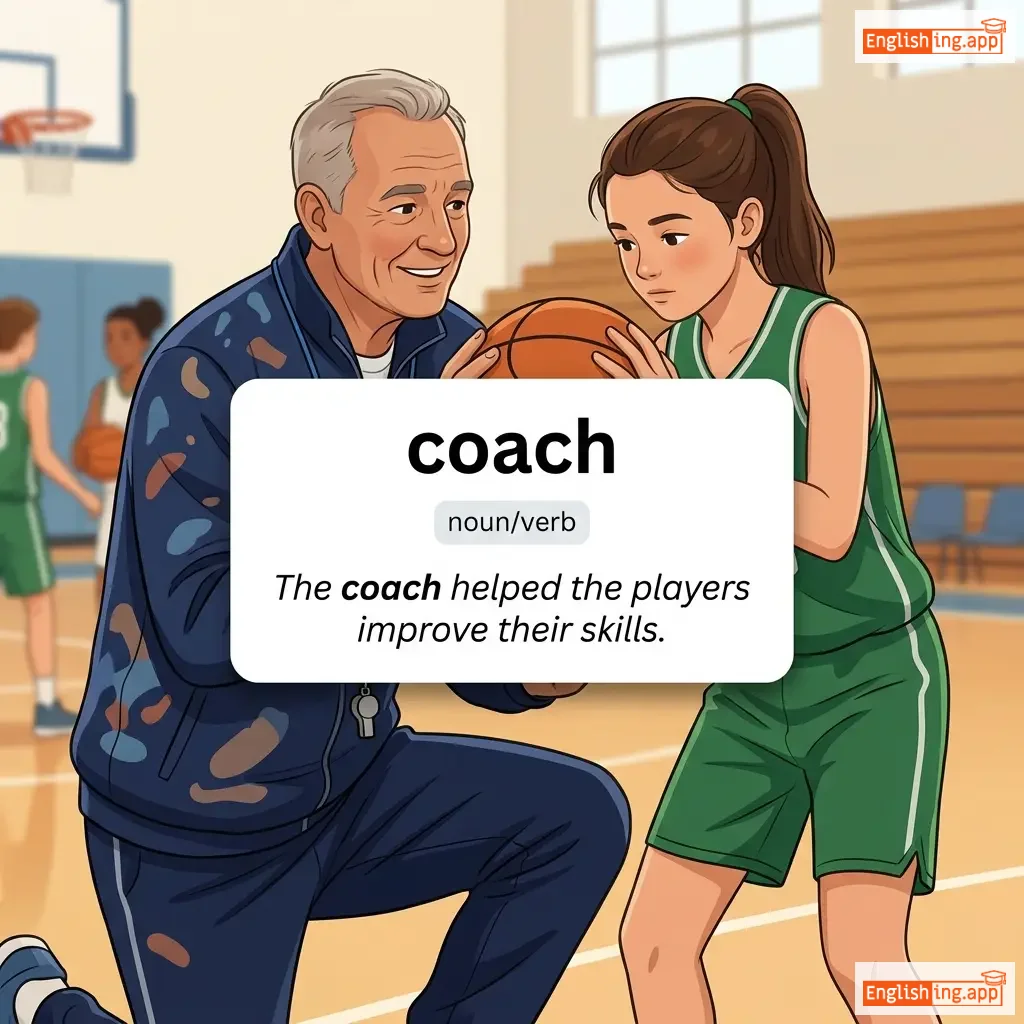
coach definition card — visual illustration of the meaning
noun/verb
/koʊtʃ/
entrenador (entrenador)

a person who trains or instructs others in a sport or skill; or to give training to someone

"The coach helped the players improve their skills."

"El entrenador ayudó a los jugadores a mejorar sus habilidades." (El entrenador ayudó a los jugadores a mejorar sus habilidades.)
🚗👨‍💼

Coachman (kóʧman)

noun
/ˈkoʊtʃ.mən/
cochero (cochero)

a person who drives a horse-drawn carriage or coach

"The coachman skillfully guided the horses through the busy streets."

"El cochero guió hábilmente los caballos a través de las calles concurridas." (El cochero guió hábilmente los caballos a través de las calles concurridas.)
noun
/koʊˈædʒətər/
auxiliar (auxiliar)

a person who helps or assists another, especially in a religious or official capacity

"The bishop appointed a coadjutor to assist him with his duties."

"El obispo nombró a un auxiliar para que lo asistiera con sus deberes." (El obispo nombro a un auxiliar para que lo asistiera con sus deberes.)
noun
/koʊˈæɡjələnt/
coagulante (coagulante)

a substance that causes blood or another liquid to clot

"The doctor applied a coagulant to stop the bleeding quickly."

"El doctor aplicó un coagulante para detener la hemorragia rápidamente." (El doctor aplico un coagulante para detener la hemorragia rapidamente.)
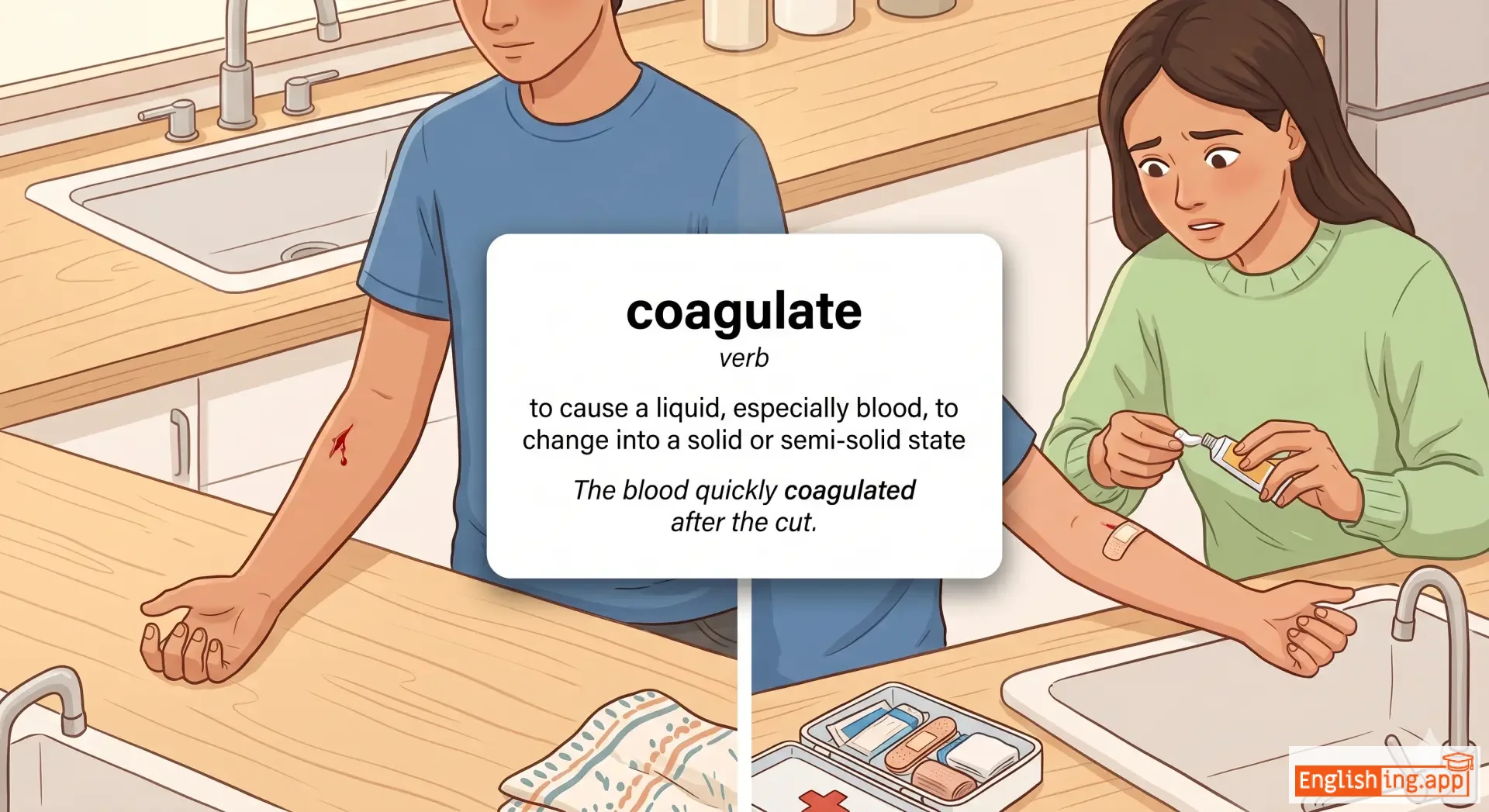
coagulate definition card — visual illustration of the meaning
verb
/koʊˈæɡjəˌleɪt/
coagular (coagular)

to cause a liquid, especially blood, to change into a solid or semi-solid state

"The blood quickly coagulated after the cut."

"La sangre se coaguló rápidamente después del corte." (La sangre se coaguló rapidamente después del corte.)
noun
/koʊl/
carbón (carbon)

a black or dark brown rock used as fuel, formed from decomposed plant matter

"The factory still uses coal as its main source of energy."

"La fábrica aún usa carbón como su principal fuente de energía." (La fabrica aun usa carbon como su principal fuente de energia.)
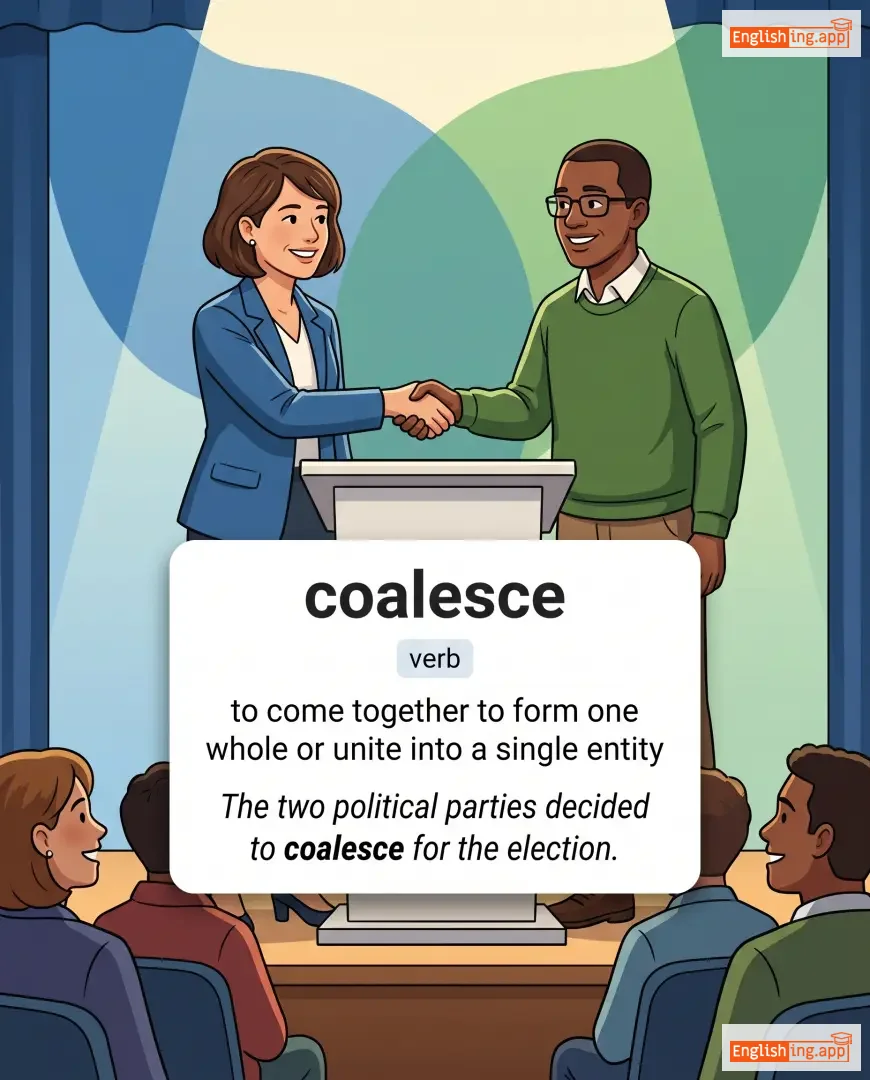
coalesce definition card — visual illustration of the meaning
verb
/ˌkoʊəˈlɛs/
coaligarse (coaligarse)

to come together to form one whole or unite into a single entity

"The two political parties decided to coalesce for the election."

"Las dos partes políticas decidieron coaligarse para las elecciones." (Las dos partes políticas decidieron coaligarse para las elecciones.)
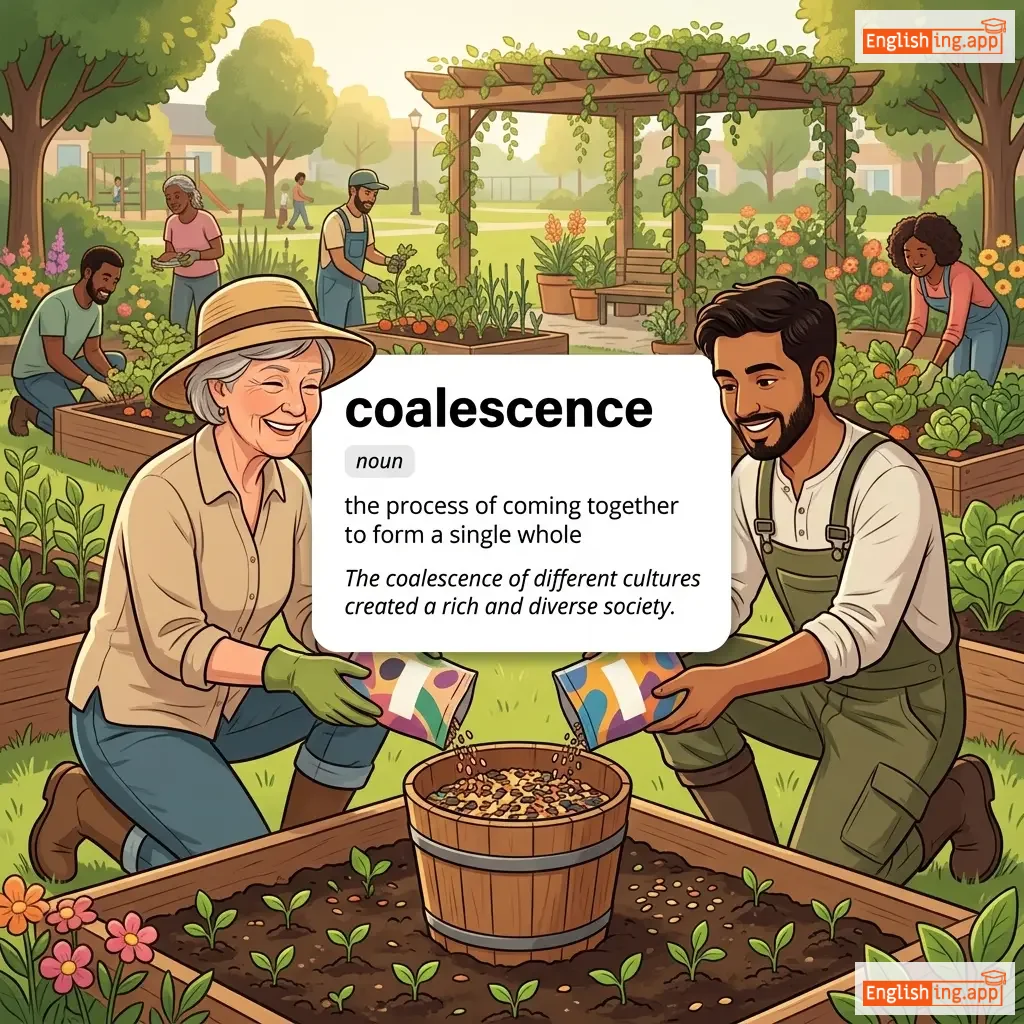
coalescence definition card — visual illustration of the meaning
noun
/ˌkoʊəˈlɛsəns/
fusión (fusion)

the process of coming together to form a single whole

"The coalescence of different cultures created a rich and diverse society."

"La fusión de diferentes culturas creó una sociedad rica y diversa." (La fusion de diferentes culturas creo una sociedad rica y diversa.)
noun
/ˌkoʊəˈlɪʃən/
coalición (coalicion)

a temporary alliance of distinct parties, persons, or states for joint action

"Several parties formed a coalition to pass the new law."

"Varios partidos formaron una coalición para aprobar la nueva ley." (Varios partidos formaron una coalición para aprobar la nueva ley.)
adjective
/kɔːrs/
áspero, rugoso (aspero, rugoso)

Rough in texture or manner; not smooth or refined.

"The fabric felt coarse to the touch."

"El tejido se sentía áspero al tacto." (El tejido se sentía aspero al tacto.)
noun, verb
/koʊst/
costa (costa)

noun: the land along the edge of the sea; verb: to move easily without effort or power

"They walked along the coast enjoying the sea breeze."

"Ellos caminaban a lo largo de la costa disfrutando de la brisa marina." (Ellos caminaban a lo largo de la costa disfrutando de la brisa marina.)
adjective
/ˈkəʊstəl/
costero (kostero)

relating to or near a coast or shoreline

"They built a resort in a coastal area."

"Construyeron un resort en una zona costera." (Construyeron un resort en una zona costera.)
noun/verb
/koʊt/
felicidad (felicidad)

an outer garment worn outdoors, or a layer covering something

"She wore a red coat to keep warm in the winter."

"Ella no pudo ocultar su felicidad cuando recibió el premio." (Ella no pudo ocultar su felicidad cuando recibió el premio.)
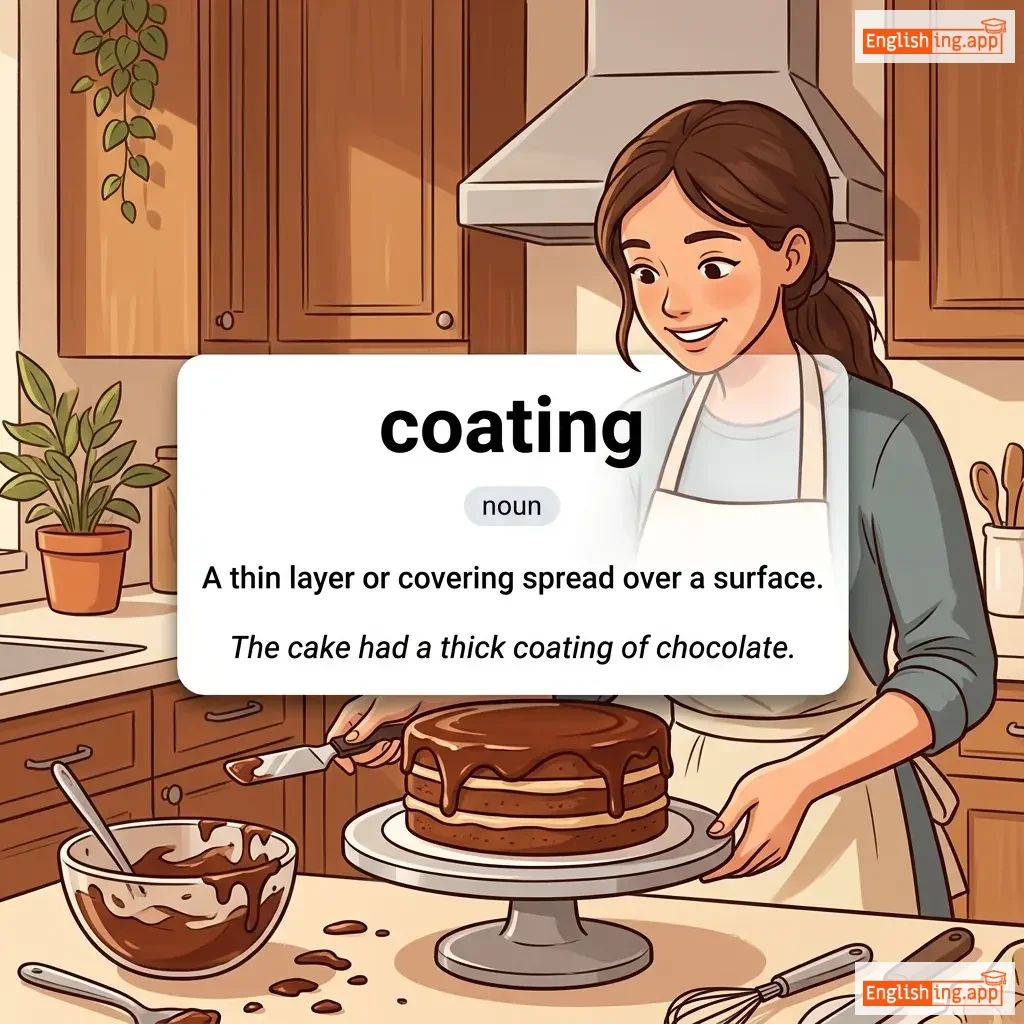
coating definition card — visual illustration of the meaning
noun
/ˈkoʊ.tɪŋ/
cobertura (cobertura)

A thin layer or covering spread over a surface.

"The cake had a thick coating of chocolate."

"El pastel tenía una capa gruesa de chocolate." (El pastel tenía una capa gruesa de chocolate.)
verb
/koʊks/
persuadir (persuadir)

to persuade someone gently or gradually to do something

"She managed to coax the cat out of the tree with some food."

"Ella logró convencer al gato para que bajara del árbol con algo de comida." (Ella logró convencer al gato para que bajara del árbol con algo de comida.)
noun
/ˈkɒb.lər/
zapatero (zapatero)

a person who repairs shoes and other leather goods

"The cobbler fixed my broken shoes perfectly."

"El zapatero arregló mis zapatos rotos perfectamente." (El zapatero arreglo mis zapatos rotos perfectamente.)
noun
/ˈkoʊ.brə/
cobra (cobra)

a venomous snake with a hood that can be spread when threatened

"The cobra raised its hood and hissed at the intruder."

"La cobra levantó su capucha y siseó al intruso." (La cobra levanto su capucha y siseo al intruso)
noun
/kəˈkeɪn/
cocaína (una droga) (cocaina)

a powerful and addictive illegal drug made from coca leaves

"He was arrested for possessing cocaine."

"Fue arrestado por poseer cocaína." (Fue arrestado por poseer cocaina.)
noun
/kɒk/
gallo (gallo)

an adult male chicken

"The cock crowed loudly at dawn to wake everyone up."

"El gallo cantó fuerte al amanecer para despertar a todos." (El gallo canto fuerte al amanecer para despertar a todos.)
noun
/kɒˈkeɪd/
cinta decorativa (cinta decorativa)

a rosette or knot of ribbon, usually worn on a hat as a badge of office or party

"The soldier wore a red cockade on his cap."

"El soldado llevaba una cinta decorativa roja en su gorra." (El soldado llevaba una cinta decorativa roja en su gorra.)
noun
/ˌkɒk.əˈtuː/
cóctel (cokatel)

a large parrot with a prominent crest that can be raised or lowered

"The white cockatoo raised its beautiful crest."

"El cóctel blanco levantó su hermosa cresta." (El coktel blanco levanto su hermosa cresta)
noun
/ˈkɒk.roʊtʃ/
cucaracha (cucaracha)

a flat brown insect that is commonly found in kitchens and other warm places

"A cockroach ran across the kitchen floor quickly."

"Una cucaracha corrió rápidamente por el piso de la cocina." (Una cucaracha corrio rapidamente por el piso de la cocina.)
noun
/ˈkɒkskoʊm/
flor de cresta de gallo (flor de cresta de gallo)

a tropical plant with bright, velvety flowers that resemble a rooster's comb

"The bright red cockscomb flowers added vibrant color to the garden bed."

"Las flores de cresta de gallo rojas y brillantes añadieron color vibrante al lecho del jardín." (Las flores de cresta de gallo rojas y brillantes añadieron color vibrante al lecho del jardín)
noun
/ˈkɒkˌteɪl/
cóctel (coctel)

a mixed drink typically containing alcohol and other ingredients.

"She ordered a cocktail at the bar."

"Ella pidió un cóctel en el bar." (Ella pidio un coctel en el bar.)
noun
/ˈkoʊkənʌt/
coco (kokonut)

a large brown seed with hard shell containing white flesh and coconut water

"We drank coconut water directly from the coconut."

"Bebimos agua de coco directamente del coco." (Bebimos agua de coco directamente del coco.)
noun
/kɒd fɪʃ/
bacalao (bakalao)

A large marine fish with white flesh, commonly used for food

"The fisherman caught a large cod fish in the North Atlantic."

"El pescador atrapó un gran bacalao en el Atlántico Norte." (el pescador atrapo un gran bakalao en el atlantiko norte)
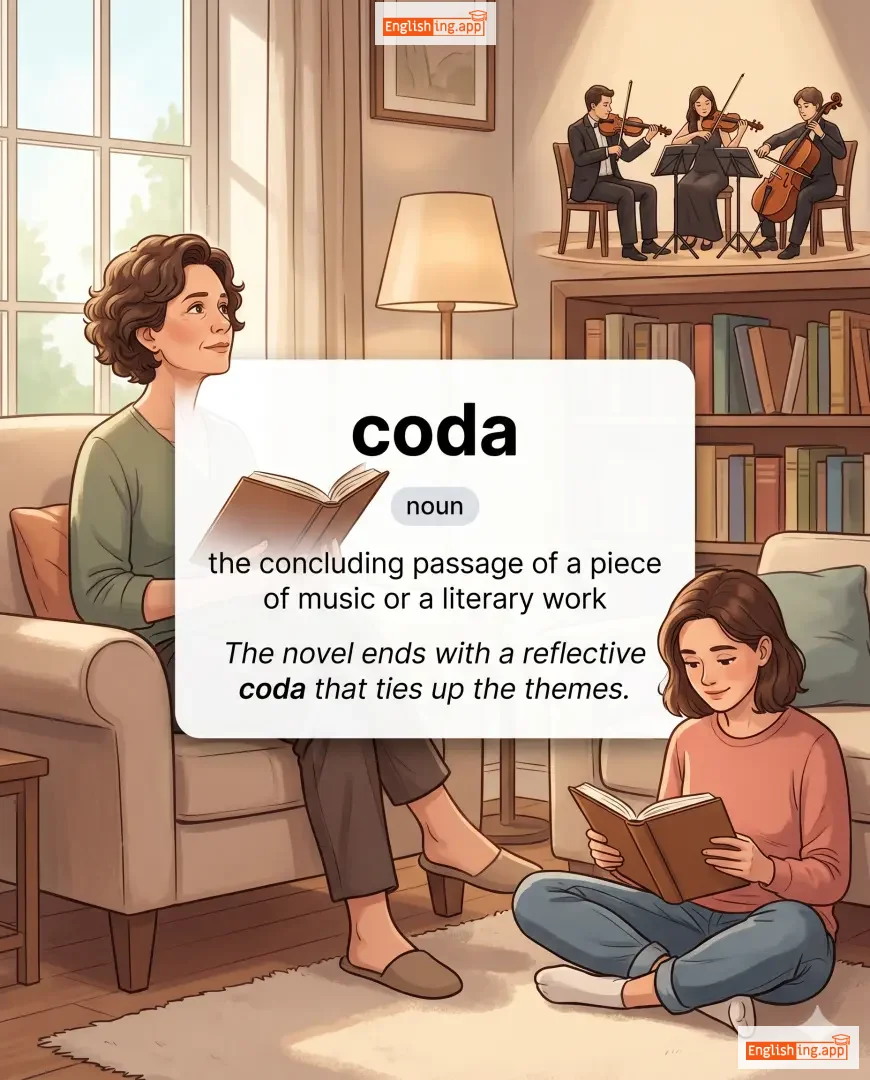
coda definition card — visual illustration of the meaning
noun
/ˈkoʊdə/
coda (coda)

the concluding passage of a piece of music or a literary work

"The novel ends with a reflective coda that ties up the themes."

"La novela termina con una coda reflexiva que une los temas." (La novela termina con una coda reflexiva que une los temas.)
verb
/ˈkɒd.l̩/
mimar en exceso (mimar en exceso)

to treat someone with excessive care or kindness, often in a way that is overprotective

"Parents should support their children without coddling them."

"Los padres deberían apoyar a sus hijos sin mimarlos." (Los padres deberían apoyar a sus hijos sin mimarlos.)
noun/verb
/koʊd/
código (codigo)

a system of words, letters, or symbols used to represent information or instructions

"He wrote a code to solve the problem on the computer."

"Escribió un código para resolver el problema en la computadora." (Escribió un código para resolver el problema en la computadora.)
noun
/ˈkɒd.ɪ.sɪl/
codicilio (codicilio)

a legal document that makes changes or additions to an existing will

"He added a codicil to his will to include his granddaughter."

"Él agregó un codicilio a su testamento para incluir a su nieta." (El agrego un codicilio a su testamento para incluir a su nieta.)
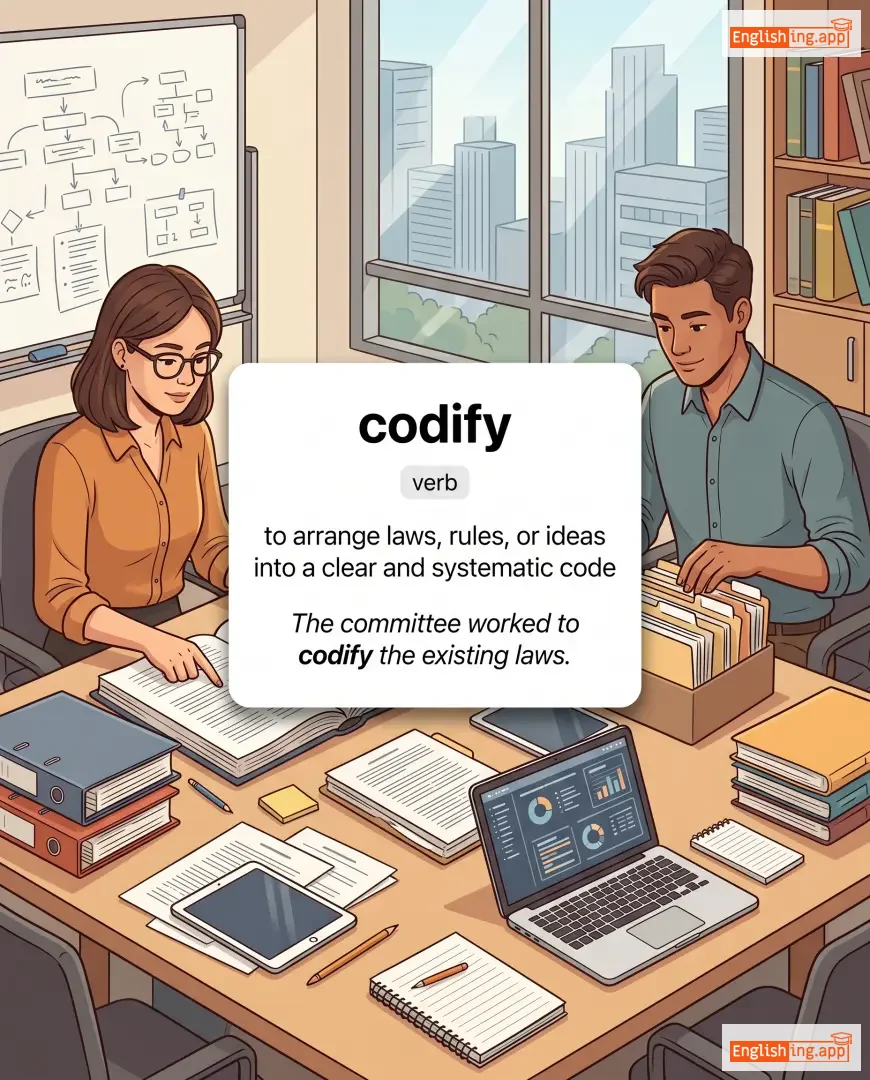
codify definition card — visual illustration of the meaning
verb
/ˈkəʊ.dɪ.faɪ/
codificar (codificar)

to arrange laws, rules, or ideas into a clear and systematic code

"The committee worked to codify the existing laws."

"El comité trabajó para codificar las leyes existentes." (El comité trabajó para codificar las leyes existentes.)