Vocabularios

Descubra, aprenda y domine el vocabulario en inglés

noun
/klɔː/
garra (garra)

sharp curved nail on the foot of an animal or bird

"The cat extended its sharp claws to climb the tree."

"El gato extendió sus garras afiladas para trepar al árbol." (El gato extendió sus garras afiladas para trepar al árbol.)
noun
/kleɪ/
arcilla (arcilla)

a natural material made of fine earth that becomes hard when baked, used for making pottery

"The artist molded the wet clay into a beautiful vase."

"El artista moldeó la arcilla mojada en un hermoso jarrón." (El artista moldeó la arcilla mojada en un hermoso jarrón.)
verb
/kliːn/
limpiar (limpiar)

To make something free from dirt, marks, or mess.

"She cleaned the kitchen before the guests arrived."

"Ella limpió la cocina antes de que llegaran los invitados." (Ella limpió la cocina antes de que llegaran los invitados.)
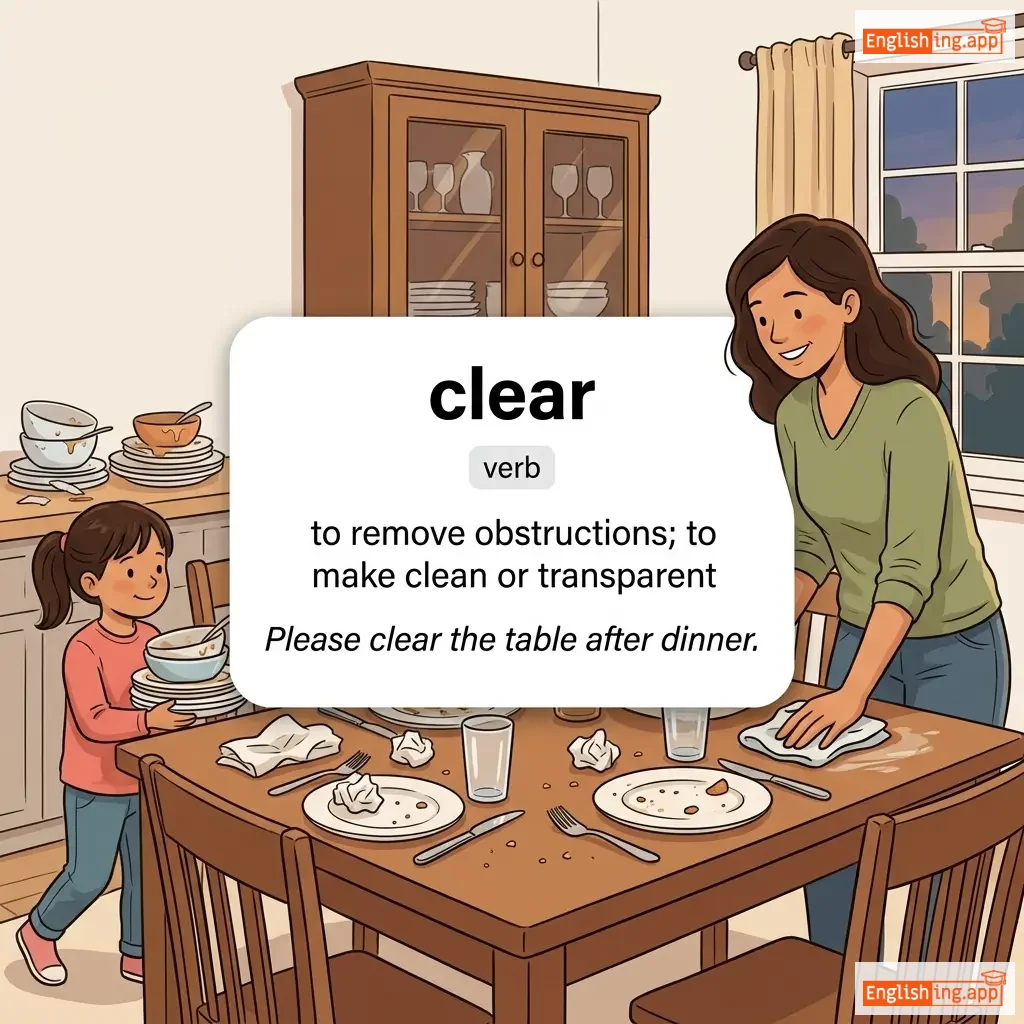
clear definition card — visual illustration of the meaning
adjective
/klɪr/
claro (claro)

Easy to perceive, understand, or see through.

"It was a clear day with no clouds in the sky."

"Era un día claro sin nubes en el cielo." (Era un día claro sin nubes en el cielo.)
noun
/ˈklɪərəns/
autorización / permiso (autorizacion / permiso)

official permission or authorization; the removal of something unwanted; the distance between two objects

"The pilot received clearance to land the plane."

"El piloto recibió autorización para aterrizar el avión." (El piloto recibio autorizacion para aterrizar el avion.)
adverb
/ˈklɪrli/
claramente (claramente)

In a way that is easy to perceive, understand, or see.

"She spoke clearly so that everyone could understand."

"Ella habló claramente para que todos pudieran entender." (Ella habló claramente para que todos pudieran entender.)
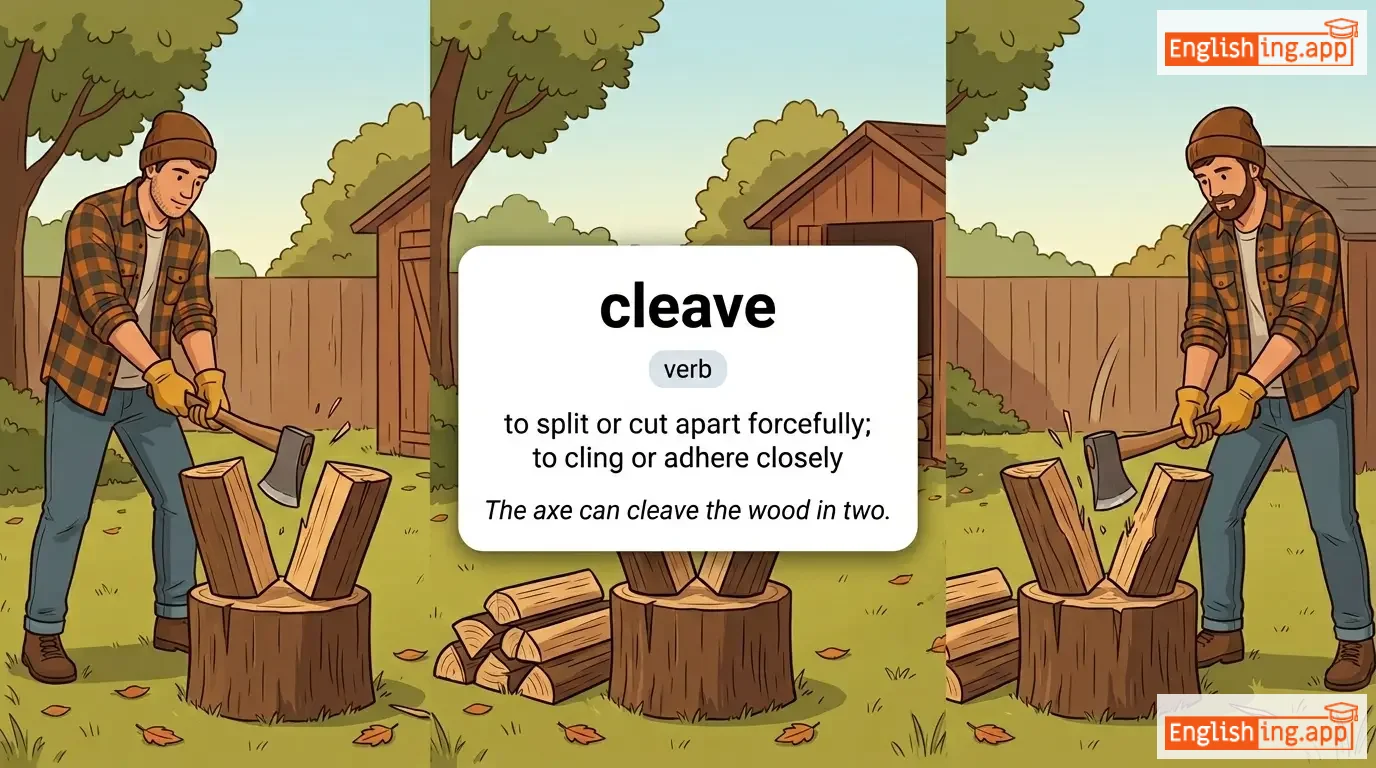
cleave definition card — visual illustration of the meaning
verb
/kliːv/
cortar / adherirse (cortar / adherirse)

to split or cut apart forcefully; to cling or adhere closely

"The axe can cleave the wood in two."

"El hacha puede cortar la madera en dos." (El hacha puede cortar la madera en dos.)
noun
/ˈkliː.vər/
cuchillo grande (cuchillo grande)

a heavy knife with a broad blade used for chopping meat or vegetables

"The chef used a cleaver to chop the chicken bones."

"El chef usó un cuchillo grande para cortar los huesos del pollo." (El chef uso un cuchillo grande para cortar los huesos del pollo.)
noun/adjective
/klɛft/
grieta (grieta)

a split or crack; a space or opening made by cleavage

"The goat disappeared into a cleft in the rocks."

"La cabra desapareció en una grieta en las rocas." (La cabra desapareció en una grieta en las rocas.)
noun
/ˈklɛmənsi/
clemencia (clemencia)

mercy, leniency, or forgiveness shown towards someone

"The judge showed clemency and reduced his sentence."

"El juez mostró clemencia y redujo su sentencia." (El juez mostro clemencia y redujo su sentencia.)
adjective
/ˈklɛmənt/
clemente / suave (clemente / suave)

mild or merciful; describing weather as mild and pleasant

"The prisoners hoped for a clement judge."

"Los prisioneros esperaban un juez clemente." (Los prisioneros esperaban un juez clemente.)
noun
/klɑːrk/
empleado (empleado)

A person employed in an office or bank to keep records, accounts, and undertake other routine administrative duties.

"The clerk helped me find the correct form."

"El empleado me ayudó a encontrar el formulario correcto." (El empleado me ayudó a encontrar el formulario correcto.)
adjective
/ˈklɛvər/
astuto, inteligente (astuto, inteligente)

Quick to understand, learn, and devise ideas or solutions; intelligent.

"She is clever enough to solve the puzzle quickly."

"Ella es lo suficientemente astuta para resolver el rompecabezas rápidamente." (Ella es lo suficientemente astuta para resolver el rompecabezas rápidamente.)
noun
/kliːˈʃeɪ/
cliché (cliche)

An overused expression or idea that has lost its originality or impact.

"The speech was filled with old clichés that failed to inspire the audience."

"El discurso estaba lleno de viejos clichés que no lograron inspirar a la audiencia." (El discurso estaba lleno de viejos cliches que no lograron inspirar a la audiencia.)
verb
/klɪk/
hacer clic (hacer clic)

to press a button on a computer mouse or similar device

"She clicked the link to open the website."

"Ella hizo clic en el enlace para abrir el sitio web." (Ella hizo clic en el enlace para abrir el sitio web.)
noun
/ˈklaɪənt/
cliente (kliente)

A person or organization using the services of a professional or company.

"The lawyer met with her client to discuss the case."

"El abogado se reunió con su cliente para discutir el caso" (El abogado se reunio con su cliente para discutir el caso)
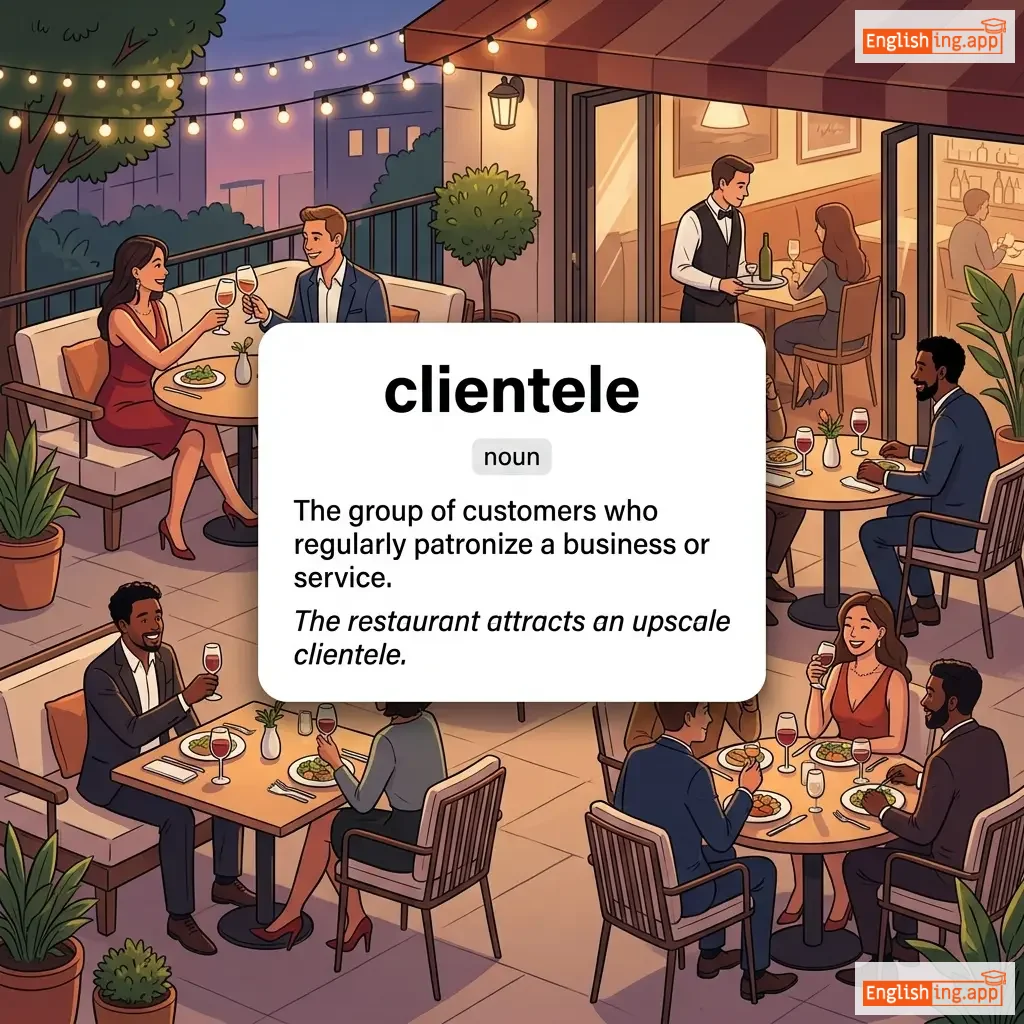
clientele definition card — visual illustration of the meaning
noun
/ˌklaɪənˈtɛl/
clientela (clientela)

The group of customers who regularly patronize a business or service.

"The restaurant attracts an upscale clientele."

"El restaurante atrae a una clientela de alto nivel." (El restaurante atrae a una clientela de alto nivel.)
noun
/klɪf/
acantilado (acantilado)

a high, steep face of rock or earth

"The waves crashed against the bottom of the cliff."

"Las olas chocaron contra la base del acantilado." (Las olas chocaron contra la base del acantilado.)
adjective
/klaɪˈmæktɪk/
climático (climatico)

Relating to the most exciting or important moment of something.

"The film ended with a climactic battle scene."

"La película terminó con una escena de batalla climática." (La película terminó con una escena de batalla climática.)
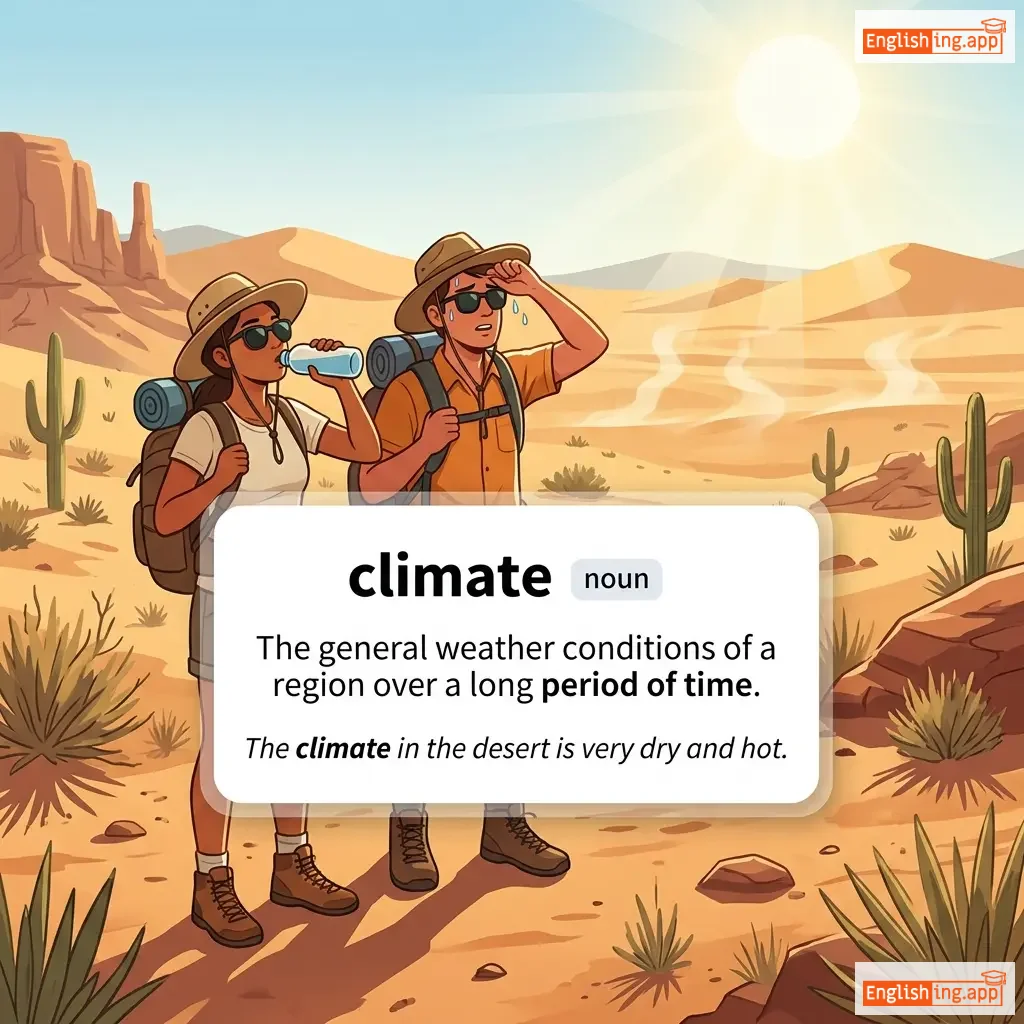
climate definition card — visual illustration of the meaning
noun
/ˈklaɪ.mət/
clima (clima)

The general weather conditions of a region over a long period of time.

"The climate in the desert is very dry and hot."

"El clima en el desierto es muy seco y caluroso." (El clima en el desierto es muy seco y caluroso.)
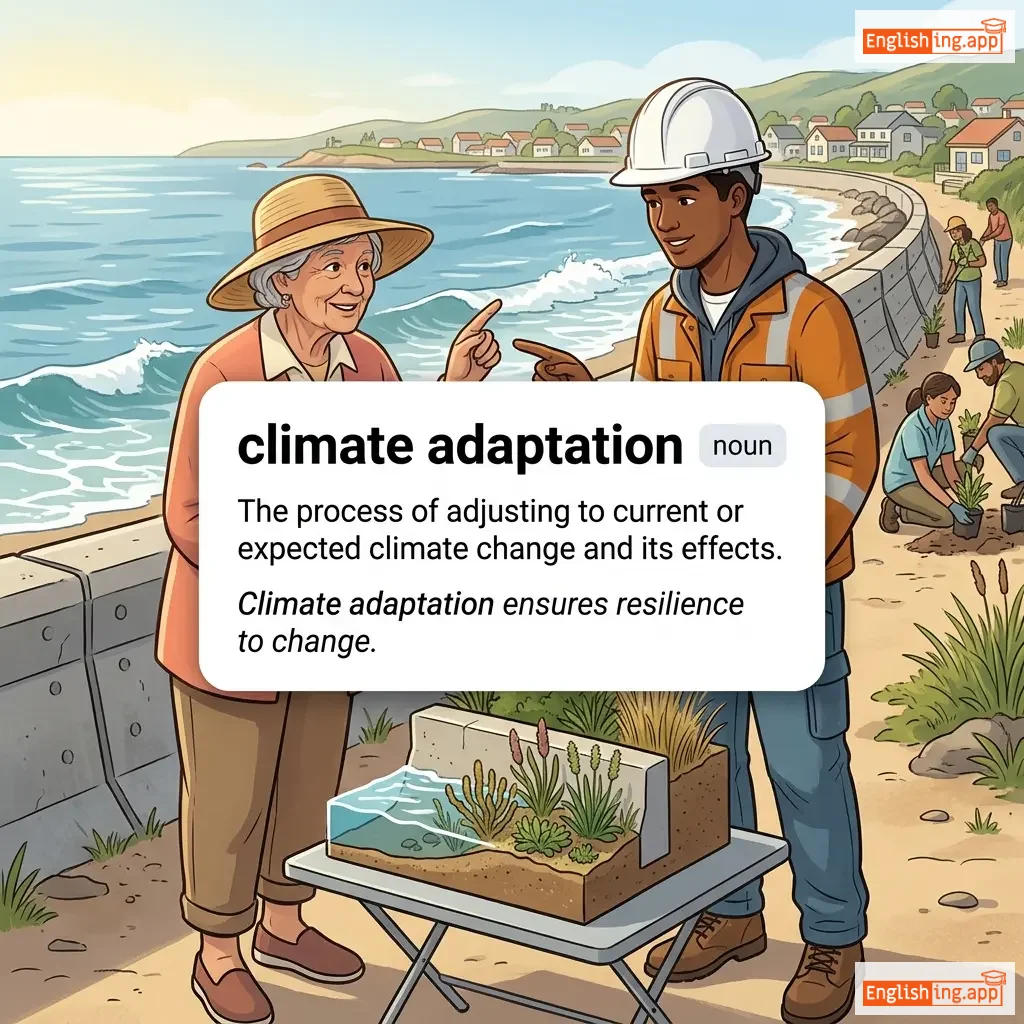
climate adaptation definition card — visual illustration of the meaning
noun
/ˈklaɪ.mət əˌdæp.teɪ.ʃən/
adaptación climática (adaptacion climatica)

The process of adjusting to current or expected climate change and its effects.

"Climate adaptation ensures resilience to change."

"La adaptación climática garantiza la resiliencia al cambio." (La adaptacion climatica garantiza la resiliencia al cambio.)
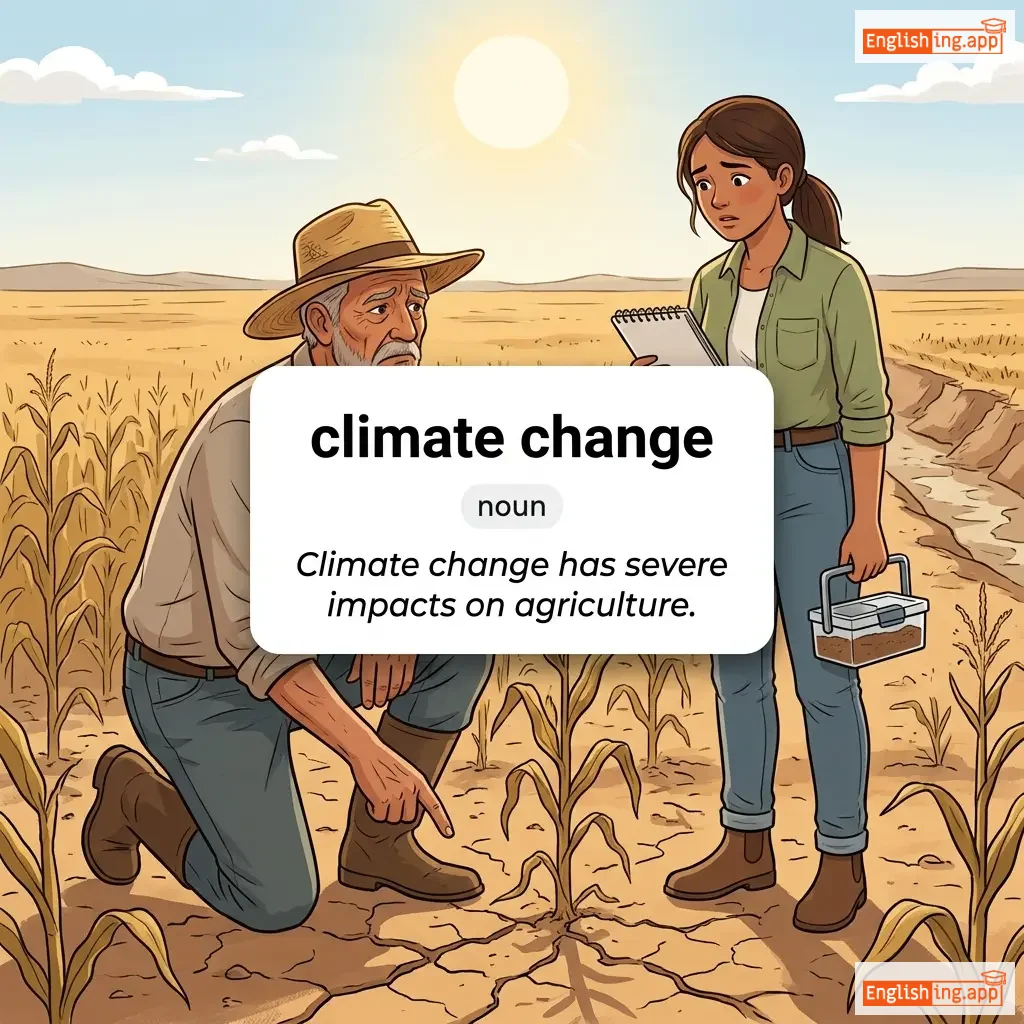
climate change definition card — visual illustration of the meaning
noun
ˈklaɪ.mət tʃeɪndʒ
cambio climático (cambio climatico)

Long-term changes in global or regional climate patterns, primarily caused by human activities.

"Climate change has severe impacts on agriculture."

"El cambio climático tiene impactos severos en la agricultura." (El cambio climático tiene impactos severos en la agricultura.)
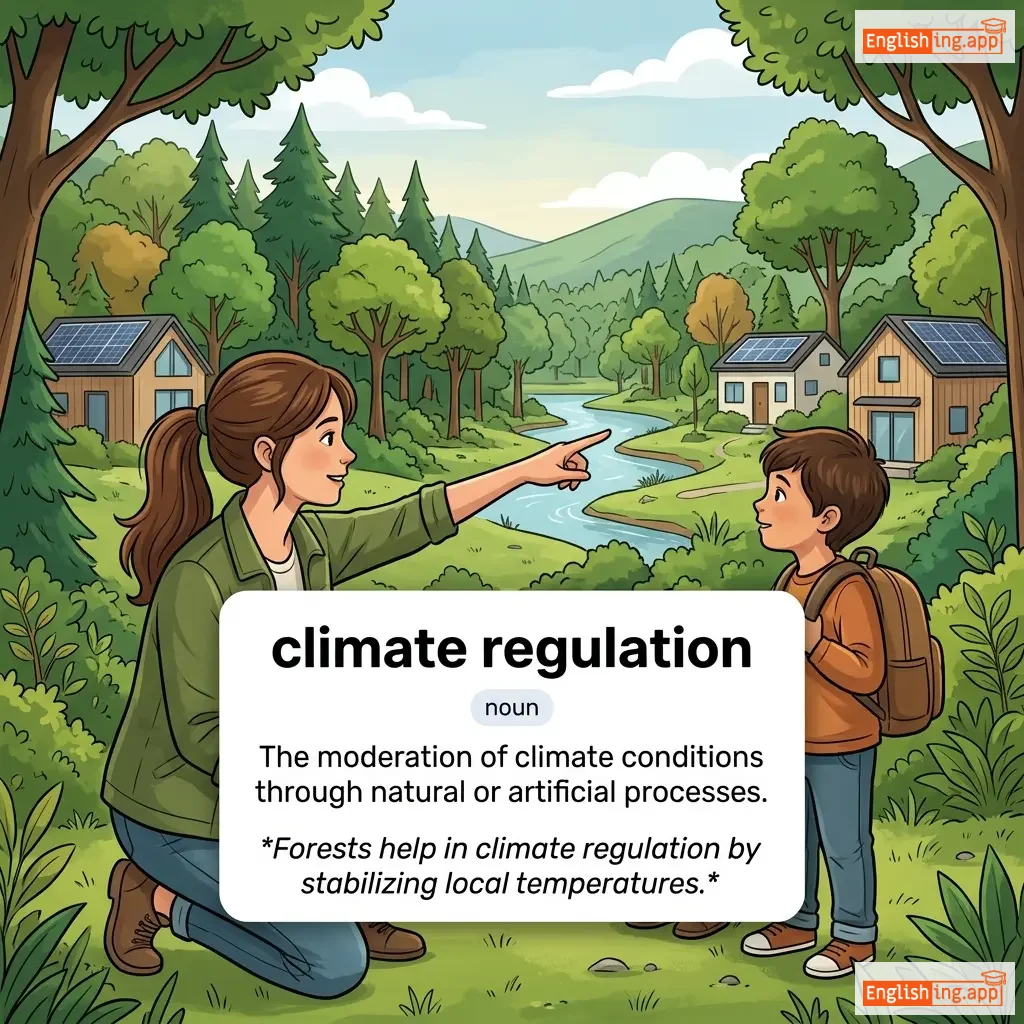
climate regulation definition card — visual illustration of the meaning
noun
ˈklaɪmət ˌrɛɡjʊˈleɪʃən
regulación del clima (regulacion del clima)

The moderation of climate conditions through natural or artificial processes.

"Forests help in climate regulation by stabilizing local temperatures."

"Los bosques ayudan a la regulación del clima estabilizando las temperaturas locales." (Los bosques ayudan a la regulacion del clima estabilizando las temperaturas locales.)
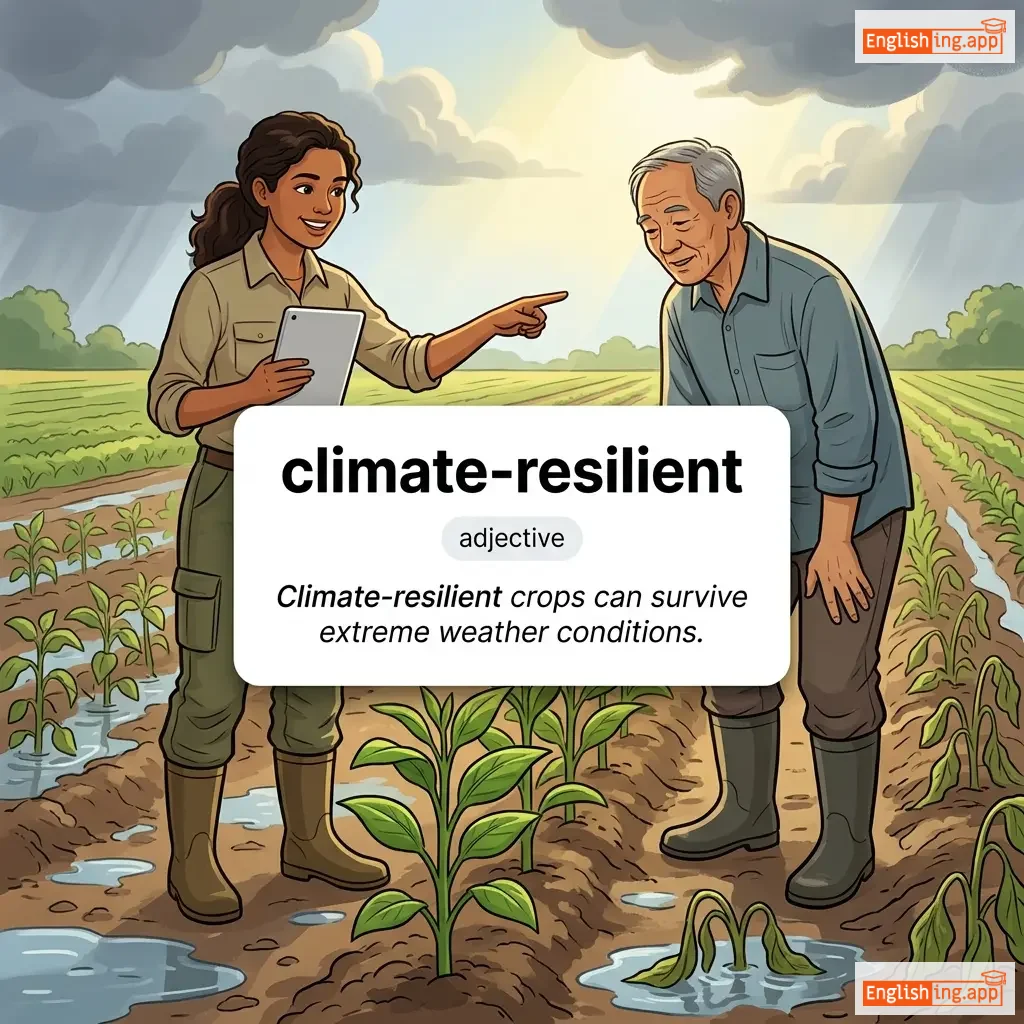
climate-resilient definition card — visual illustration of the meaning
adjective
ˈklaɪ.mət rɪˈzɪl.i.ənt
resistente al clima (resistente al clima)

Able to cope with the adverse effects of climate change; sustainable and adaptable.

"Climate-resilient crops can survive extreme weather conditions."

"Los cultivos resistentes al clima pueden sobrevivir a condiciones meteorológicas extremas." (Los cultivos resistentes al clima pueden sobrevivir a condiciones meteorologicas extremas)
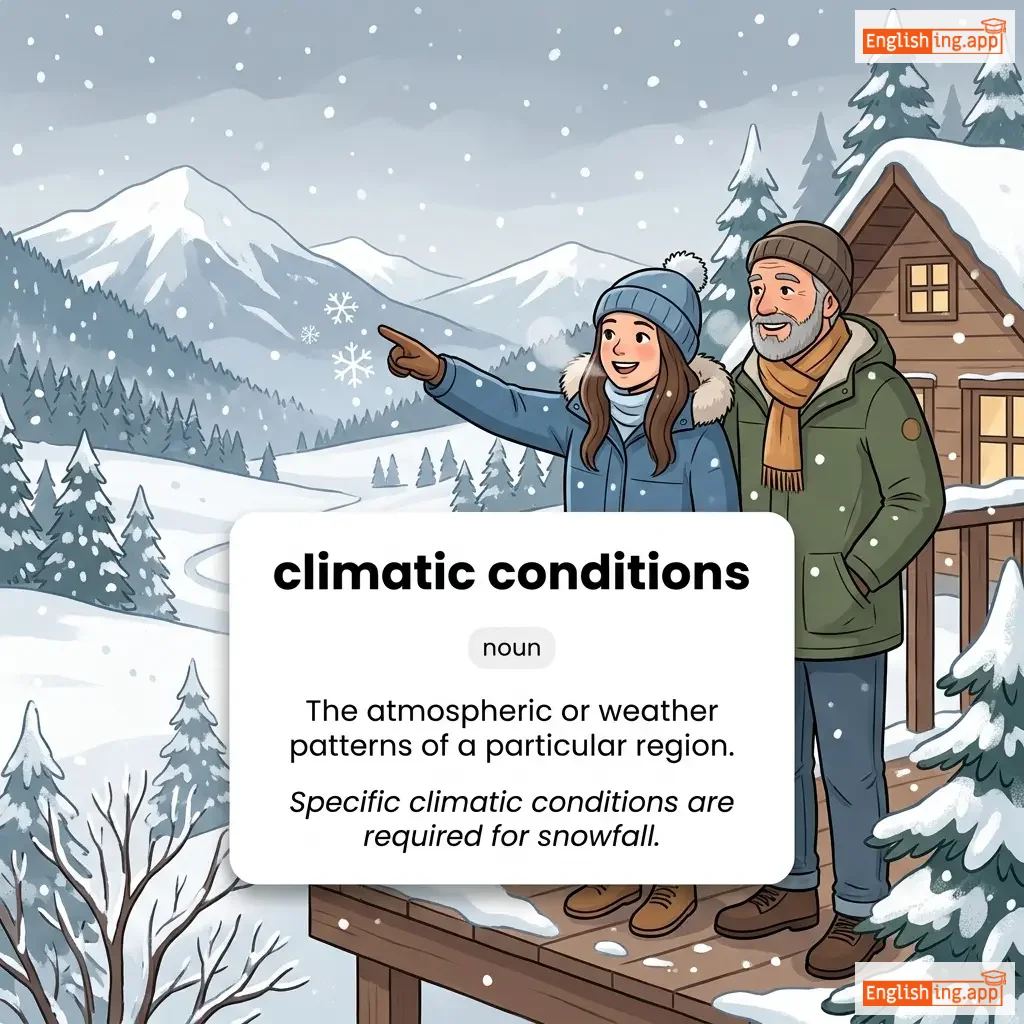
climatic conditions definition card — visual illustration of the meaning
noun
ক্লাইম্যাটিক কন্ডিশন্স
condiciones climáticas (condiciones climaticas)

The atmospheric or weather patterns of a particular region.

"Specific climatic conditions are required for snowfall."

"Se requieren condiciones climáticas específicas para la nieve." (Se requieren condiciones climaticas especificas para la nieve.)
noun
/ˈklaɪ.mæks/
punto culminante (punto culminante)

the most intense, exciting, or important point of something; the highest or most intense point in a process

"The movie reached its climax during the final battle scene."

"La película alcanzó su punto culminante durante la escena de la batalla final." (La pelicula alcanzo su punto culminante durante la escena de la batalla final.)
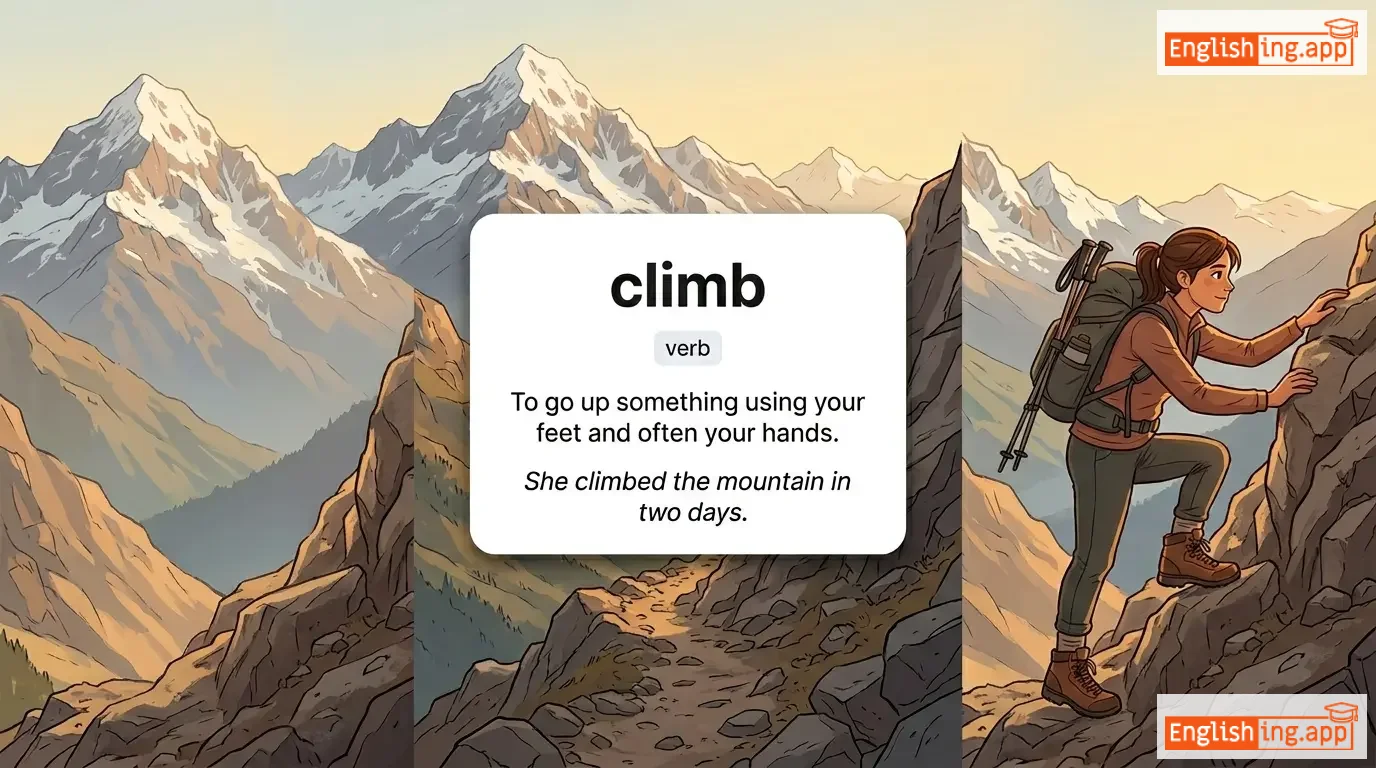
climb definition card — visual illustration of the meaning
verb
/klaɪm/
escalar (escalar)

To go up something using your feet and often your hands.

"She climbed the mountain in two days."

"Ella escaló la montaña en dos días." (Ella escaló la montaña en dos días.)
noun
/ˈklaɪ.mɪŋ læŋ læŋ/
planta trepadora lang lang (planta trepadora lang lang)

a climbing plant with fragrant flowers native to tropical regions

"The climbing lang lang vine produces beautiful fragrant flowers."

"La planta trepadora lang lang produce hermosas flores fragantes." (La planta trepadora lang lang produce hermosas flores fragantes.)
noun
/ˈklaɪmɪŋ fɪʃ/
pez trepador (pez trepador)

a type of fish that can climb trees and survive out of water for short periods

"The climbing-fish can move from one pond to another by climbing trees."

"El pez trepador puede moverse de un estanque a otro trepando árboles." (El pez trepador puede moverse de un estanque a otro trepando arboles)
noun
/klaɪm/
clima (klima)

A region defined by its climate.

"He traveled to warmer climes during the winter."

"Viajó a climas más cálidos durante el invierno." (Viajó a climas más cálidos durante el invierno.)
verb
/klɪntʃ/
asegurar (asegurar)

To secure or settle something decisively; to grasp tightly.

"The team clinched the championship with a last-minute goal."

"El equipo aseguró el campeonato con un gol en el último minuto." (El equipo aseguró el campeonato con un gol en el último minuto.)
verb
/klɪŋ/
felicidad (felicidad)

to hold on tightly to someone or something

"The child clung to his mother in fear."

"Ella no pudo esconder su felicidad cuando recibió el premio." (Ella no pudo esconder su felicidad cuando recibió el premio.)
noun
/ˈklɪn.ɪk/
clínica (clinica)

A place where people receive medical treatment without staying overnight.

"She went to the clinic for a health check-up."

"Ella fue a la clínica para un chequeo de salud." (Ella fue a la clínica para un chequeo de salud.)
adjective
/ˈklɪn.ɪ.kəl/
clínico (clinico)

Related to the observation and treatment of patients rather than theoretical study.

"The doctor conducted a clinical examination."

"El doctor realizó un examen clínico." (El doctor realizó un examen clínico.)
verb, noun
/klɪp/
cortar / clip (cortar / clip)

to cut or trim something; a short extract from a film, broadcast, or recording

"She clipped the coupon from the newspaper."

"Ella cortó el cupón del periódico." (Ella corto el cupon del periodico.)
noun
/ˈklɪpər/
cortapelos / barco veloz del siglo XIX (cortapelos / barco veloz del siglo diecinueve)

a tool used for cutting, or a fast sailing ship of the 19th century

"The barber used clippers to trim his hair."

"El barbero usó la máquina para cortar su cabello." (El barbero uso la maquina para cortar su cabello.)
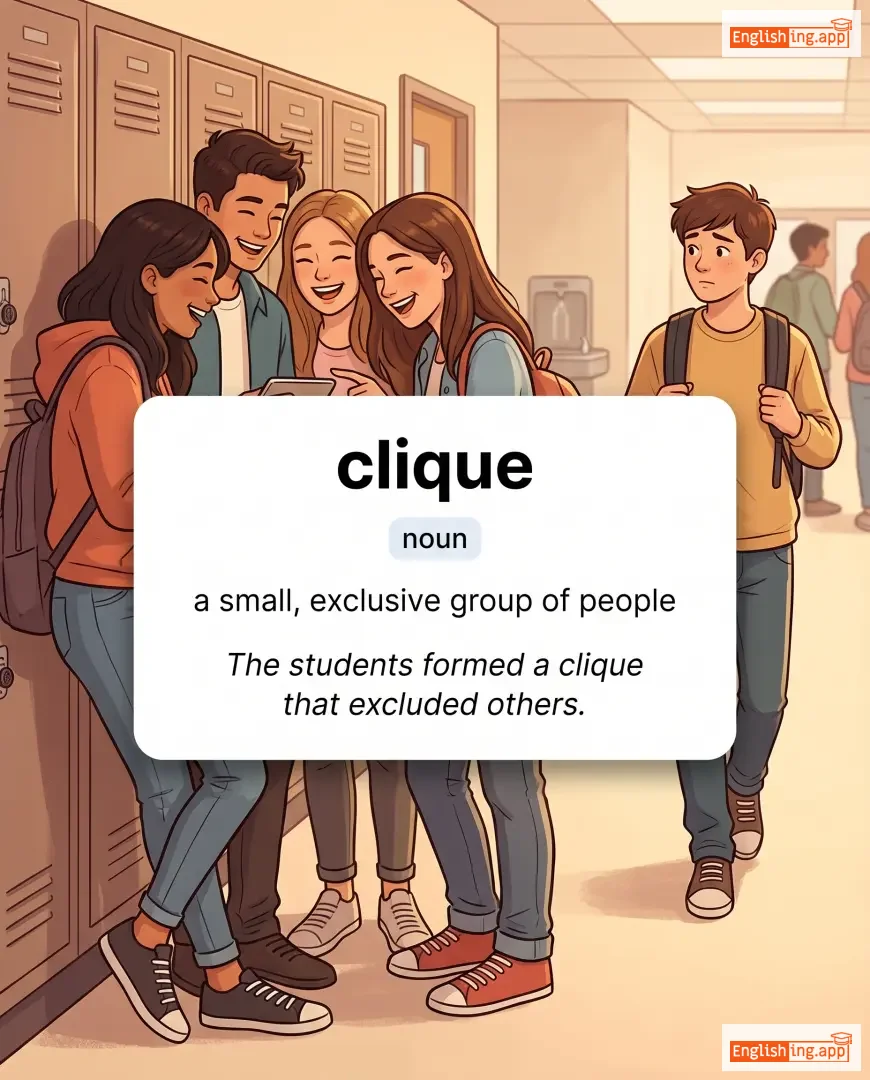
clique definition card — visual illustration of the meaning
noun
/kliːk/
clique (clique)

a small, exclusive group of people

"The students formed a clique that excluded others."

"Los estudiantes formaron una clique que excluía a los demás." (Los estudiantes formaron una clique que excluía a los demás.)
noun, verb
/kloʊk/
capa (capa)

a loose outer garment; to cover, hide, or disguise

"The spy cloaked his identity with a false name."

"El espía cubrió su identidad con un falso nombre." (El espía cubrió su identidad con un falso nombre.)
noun
/klɒk/
reloj (reloj)

An instrument used to measure and show time.

"The clock on the wall shows the correct time."

"El reloj en la pared muestra la hora correcta." (El reloj en la pared muestra la hora correcta.)
adverb
/ˈklɒkwaɪz/
en el sentido de las agujas del reloj (en el sentido de las agujas del reloj)

in the direction that clock hands move; in a circular direction from left to right

"Turn the valve clockwise to tighten it."

"Gire la válvula en el sentido de las agujas del reloj para apretarla." (Gire la valvula en el sentido de las agujas del reloj para apretarla.)
verb, noun
/klɑːɡ/
obstruir / zapato de madera (obstruir / zapato de madera)

to block or become blocked; a type of heavy wooden shoe

"The sink was clogged with food waste."

"El fregadero estaba obstruido con desperdicios de comida." (El fregadero estaba obstruido con desperdicios de comida.)
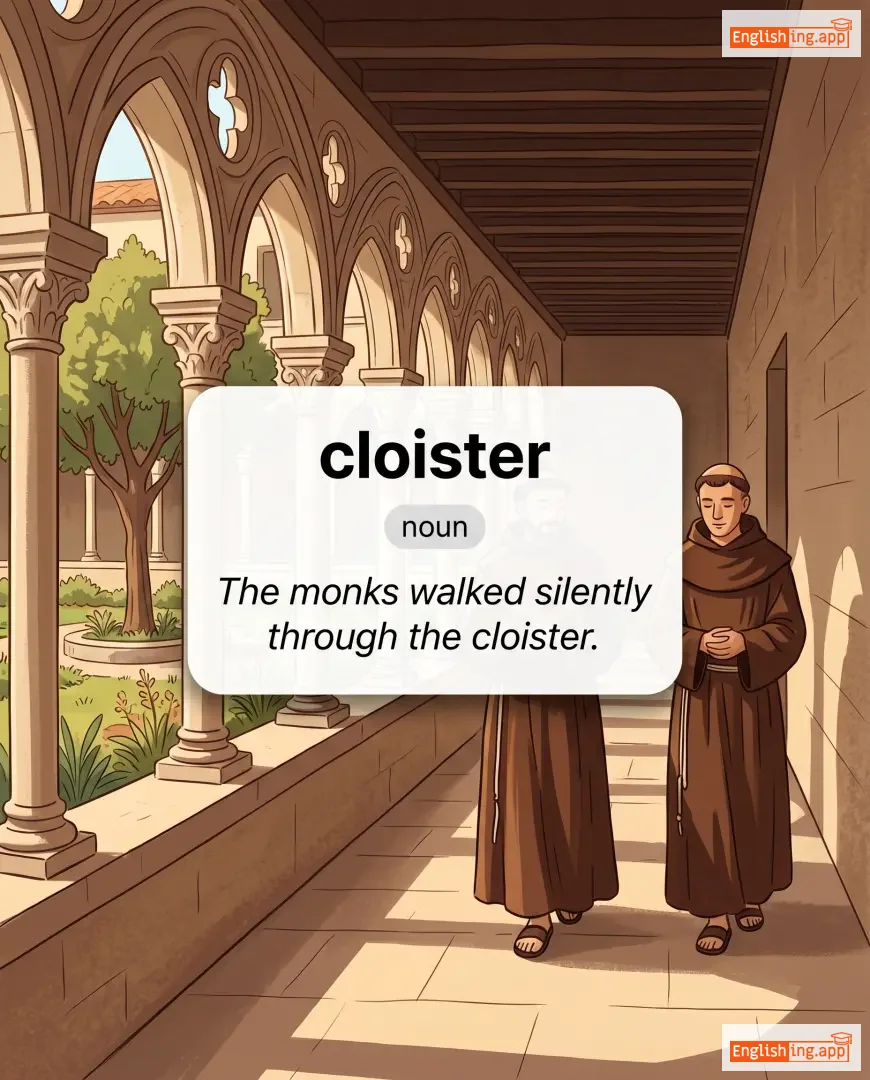
cloister definition card — visual illustration of the meaning
noun
/ˈklɔɪstər/
claustro (claustro)

a covered walk in a convent, monastery, or cathedral, typically with a wall on one side and a colonnade open to a quadrangle on the other.

"The monks walked silently through the cloister."

"Los monjes caminaron en silencio a través del claustro." (Los monjes caminaron en silencio a través del claustro.)
verb, adjective
/kloʊz/ (verb), /kloʊs/ (adjective)
cerrar, cerca (cerrar, cerca)

To shut something (verb); near in space or relationship (adjective).

"Please close the door when you leave."

"Por favor, cierre la puerta cuando se vaya." (por favor, cierre la puerta cuando se vaya.)
adjective
/ˌkloʊs ˈhɔːld/
navegar lo más cerca posible del viento (navegar lo mas cerca posible del viento)

of a sailing ship, sailing as nearly as possible towards the direction from which the wind is blowing.

"The yacht was close-hauled as it cut through the waves."

"El yate estaba navegando lo más cerca posible del viento mientras cortaba las olas." (El yate estaba navegando lo mas cerca posible del viento mientras cortaba las olas.)
adjective
/kloʊzd/
cerrado (cerrado)

not open; shut

"The store is closed on Fridays."

"La tienda está cerrada los viernes." (La tienda está cerrada los viernes.)
adverb
/ˈkloʊsli/
felicidad (felicidad)

in a way that is very near in space, time, or relationship; carefully and attentively

"The detective examined the evidence closely."

"No pudo esconder su felicidad cuando recibió el premio." (No pudo esconder su felicidad cuando recibió el premio.)
adjective, noun
/ˈkloʊsər/
más cerca, finalizador (mas cerca, finalizador)

more near in distance or relationship; someone or something that concludes an activity

"She moved closer to the window."

"Ella se acercó más a la ventana." (Ella se acerco mas a la ventana.)
adjective
/ˈkloʊ.sɪst/
más cercano (mas cercano)

nearest in distance or relationship

"He is my closest friend."

"Él es mi amigo más cercano." (El es mi amigo mas cercano.)
noun
/ˈklɒzɪt/
armario (armario)

a small room or enclosed space used for storing clothes or other things

"She keeps her winter coats in the closet near the door."

"Ella guarda sus abrigos de invierno en el armario cerca de la puerta." (Ella guarda sus abrigos de invierno en el armario cerca de la puerta.)
noun
/ˈkloʊʒər/
cierre (cierre)

the action or process of closing something, or the sense of finality or resolution.

"The closure of the company left many employees without jobs."

"El cierre de la empresa dejó a muchos empleados sin trabajo." (El syerre de la empressa dejo a muchos empleados sin trabakho.)