Vocabularios

Descubra, aprenda y domine el vocabulario en inglés

adjective
/ˈtʃuːzi/
exigente (exigente)

very careful in choosing; selective

"She is very choosy about the clothes she wears."

"Ella es muy exigente con la ropa que usa." (Ella es muy exigente con la ropa que usa.)
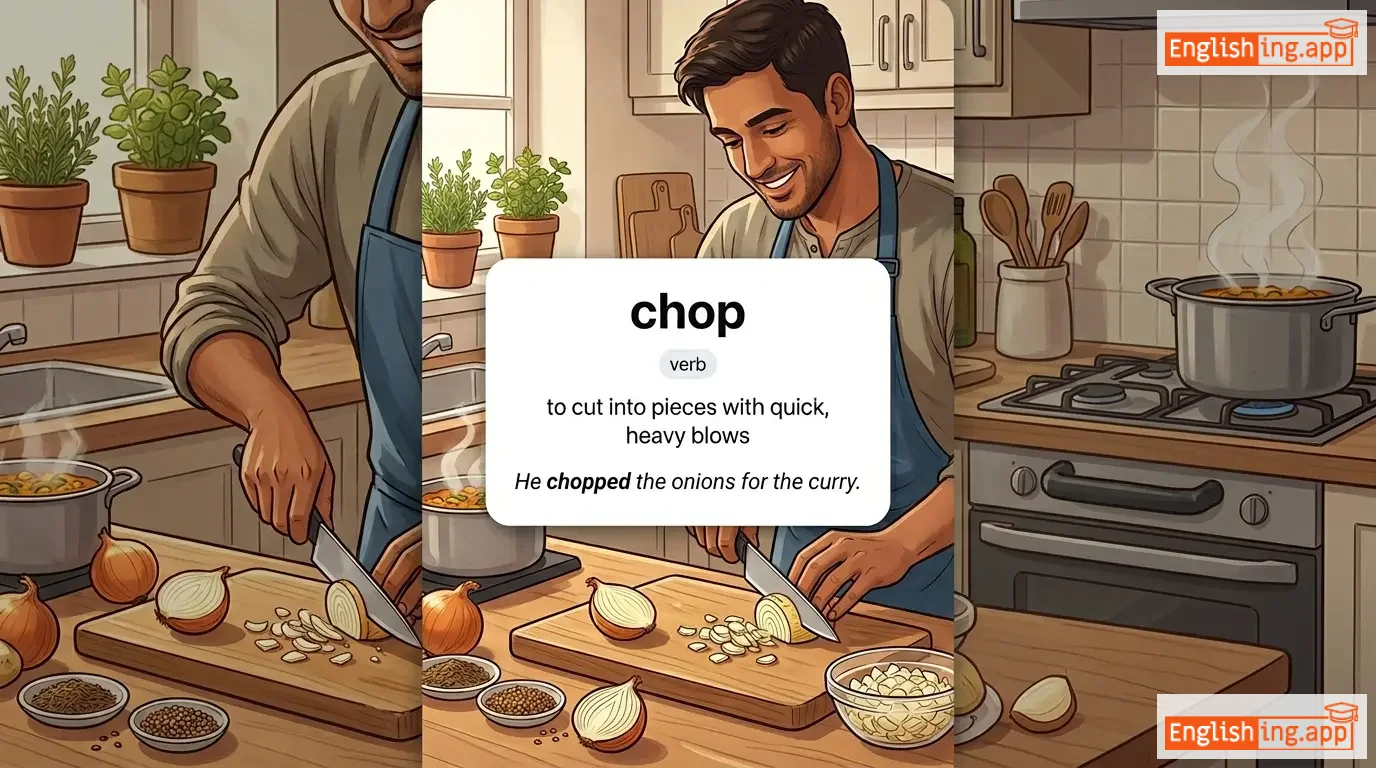
chop definition card — visual illustration of the meaning
verb
/tʃɒp/
cortar (cortar)

to cut into pieces with quick, heavy blows

"He chopped the onions for the curry."

"Él cortó las cebollas para el curry." (El corto las cebollas para el curry.)
noun
/ˈtʃɒp.ər/
hacha (hacha)

a tool with a heavy blade for chopping wood; a helicopter

"The lumberjack swung the chopper to cut down the tree."

"El leñador balanceó el hacha para cortar el árbol." (El leñador balanceó el hacha para cortar el árbol.)
adjective
/ˈkɔːrəl/
relacionado con el coro (relacionado con el coro)

Relating to, written for, or performed by a choir or chorus.

"The church hosted a choral performance on Sunday."

"La iglesia organizó una actuación coral el domingo." (La iglesia organizó una actuación coral el domingo.)
noun
/kɔːrd/
acorde musical (acorde musical)

A group of musical notes played or sung together; also a straight line segment joining two points on a curve.

"She strummed a simple chord on the guitar."

"Ella rasgueó un acorde simple en la guitarra." (Ella rasgueó un acorde simple en la guitarra.)
noun
/tʃɔːr/
tarea (tarea)

A routine task, especially a household duty.

"Washing the dishes is my least favorite chore."

"Lavar los platos es mi tarea menos favorita." (Lavar los platos es mi tarea menos favorita.)
noun
/ˌkɔːriˈɒɡrəfi/
coreografía (coreografia)

The art of designing and arranging dances and movements.

"The choreography of the ballet was breathtaking."

"La coreografía del ballet fue impresionante." (La coreografia del ballet fue impresionante.)
verb
/ˈtʃɔːrtl/
reírse con alegría (reirse con alegria)

to laugh in a breathy, gleeful way

"The audience chortled at the comedian's witty remarks."

"La audiencia se rió con alegría ante los comentarios ingeniosos del comediante." (La audiencia se rio con alegria ante los comentarios ingeniosos del comediante.)
noun
/ˈkɔːrəs/
coro/estribillo (korus)

a group of singers or the part of a song that is repeated

"The children sang the chorus loudly."

"Los niños cantaron el estribillo en voz alta." (Los ninos cantaron el estribillo en voz alta.)
noun
/kraɪst/
Cristo (Cristo)

the title given to Jesus, considered the Messiah in Christianity

"Christ is central to Christian faith."

"Cristo es central para la fe cristiana." (Cristo es central para la fe cristiana.)
verb
/ˈkrɪsən/
bautizar (bautizar)

to give a name to someone at baptism or to name something officially

"They christened the ship after the queen."

"Ellos bautizaron el barco después de la reina." (Ellos bautizaron el barco después de la reina.)
noun
/ˈkrɪsəndəm/
cristiandad (cristiandad)

the worldwide body or community of Christians

"The news spread quickly across Christendom."

"La noticia se extendió rápidamente por toda la cristiandad." (La noticia se extendió rápidamente por toda la cristiandad.)
noun, adjective
/ˈkrɪstʃən/
cristiano (cristiano)

a person who follows the religion based on the teachings of Jesus Christ

"She is a devoted Christian who attends church every Sunday."

"Ella es una cristiana devota que asiste a la iglesia cada domingo." (Ella es una cristiana devota que asiste a la iglesia cada domingo.)
noun
/ˌkrɪstiˈænɪti/
cristianismo (cristianismo)

the religion based on the teachings of Jesus Christ

"Christianity has millions of followers around the world."

"El cristianismo tiene millones de seguidores en todo el mundo." (El cristianismo tiene millones de seguidores en todo el mundo.)
noun
/ˈkrɪsməs/
Navidad (Navidad)

an annual festival celebrating the birth of Jesus Christ, observed on December 25

"Families gather to celebrate Christmas with joy and love."

"Las familias se reúnen para celebrar la Navidad con alegría y amor." (Las familias se reúnen para celebrar la Navidad con alegría y amor.)
adjective
/krəˈmætɪk/
cromático (cromatico)

Relating to colors or, in music, notes outside the standard scale.

"The artist used a chromatic palette to create vibrant contrasts."

"El artista usó una paleta cromática para crear contrastes vibrantes." (El artista uso una paleta cromatica para crear contrastes vibrantes.)
adjective
/ˈkrɒnɪk/
crónico (cronico)

Lasting for a long time or constantly recurring, often describing illness.

"She suffers from chronic back pain."

"Ella sufre de dolor crónico en la espalda." (Ella sufre de dolor crónico en la espalda.)
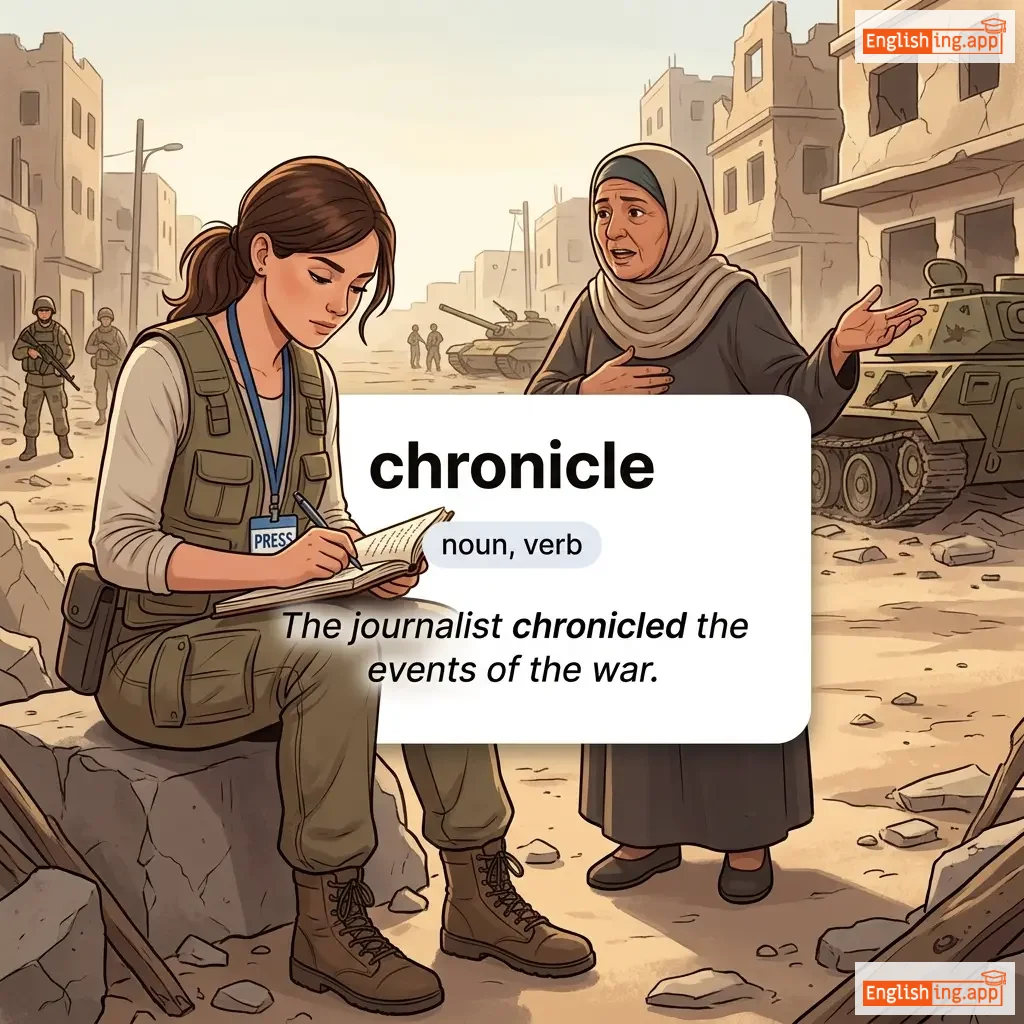
chronicle definition card — visual illustration of the meaning
noun, verb
/ˈkrɒnɪkəl/
crónica (cronika)

A factual written account of important events in order of time; to record such events.

"The journalist chronicled the events of the war."

"El periodista cronicó los eventos de la guerra." (El periodista cronico los eventos de la guerra.)
adjective
/ˌkrɒnəˈlɒdʒɪkəl/
cronológico (kronologico)

Arranged in the order in which events happened.

"The events were listed in chronological order."

"Los eventos fueron listados en orden cronológico." (Los eventos fueron listados en orden cronológico.)
noun
/krəˈnɒlədʒi/
cronología (kronologia)

The arrangement of events or dates in the order of their occurrence.

"The chronology of the dynasty was carefully studied by historians."

"La cronología de la dinastía fue cuidadosamente estudiada por los historiadores." (La cronologia de la dinastia fue cuidadosamente estudiada por los historiadores.)
noun
/krəˈnɒmɪtər/
cronómetro (cronometro)

An instrument for measuring time precisely, especially used in navigation.

"The sailor relied on the chronometer to determine his position at sea."

"El marinero confió en el cronómetro para determinar su posición en el mar." (El marinero confio en el cronometro para determinar su posicion en el mar.)
adjective
/ˈtʃʌbi/
relleno (relleno)

slightly fat in a way that looks healthy and pleasant

"The baby has chubby cheeks."

"El bebé tiene mejillas rellenas." (El bebe tiene mejillas rellenas.)
verb
/ˈtʃʌkəl/
reír en silencio (reir en silencio)

To laugh quietly or to oneself.

"She chuckled at the joke her friend told."

"Ella se rió suavemente del chiste que le contó su amiga." (Ella se rió suavemente del chiste que le contó su amiga.)
noun
/tʃʌŋk/
trozo / pedazo (trozo / pedazo)

a thick or solid piece of something

"She cut the cake into large chunks."

"Ella cortó el pastel en grandes trozos." (Ella corto el pastel en grandes trozos.)
noun
/tʃɜːrtʃ/
iglesia (iglesia)

a building used for public Christian worship

"The old church in the village was built in the 18th century."

"La iglesia antigua en el pueblo fue construida en el siglo XVIII." (La iglesia antigua en el pueblo fue construida en el siglo XVIII.)
noun
/tʃɜːrl/
grosero (churl)

A rude, boorish, or ill-mannered person.

"The waiter was such a churl that customers left unhappy."

"El camarero era tan grosero que los clientes se fueron descontentos." (El camarero era tan grosero que los clientes se fueron descontentos.)
churlish definition card — visual illustration of the meaning
adjective
/ˈtʃɜːrlɪʃ/
grosero (grosero)

Rude in a mean-spirited and surly way.

"It would be churlish to refuse her kind invitation."

"Sería grosero rechazar su amable invitación." (Seria grosero rechazar su amable invitación.)
noun
/ˈtʃɜː.nɪŋ stɪk/
bastón de batir (baston de batir)

a wooden stick used for stirring and churning butter, milk, or other liquids

"Grandmother used a churning stick to make fresh butter."

"La abuela usó un bastón de batir para hacer mantequilla fresca." (La abuela uso un baston de batir para hacer mantequilla fresca.)
noun
/ˈsɪɡəˌrɛt/
cigarrillo (cigarrillo)

a small roll of finely cut tobacco wrapped in paper for smoking

"He lit a cigarette after dinner."

"Él encendió un cigarrillo después de la cena." (El encendió un cigarrillo después de la cena.)
adjective
/ˈsɪlieɪtɪd/
con cilios (con cilios)

Having minute hairlike projections (cilia) on the surface of cells or organisms.

"The ciliated cells in the respiratory tract help move mucus out of the lungs."

"Las células ciliadas en el tracto respiratorio ayudan a mover el moco fuera de los pulmones." (Las células ciliadas en el tracto respiratorio ayudan a mover el moco fuera de los pulmones.)
noun
/ˈsɪniæst/
cineasta (cineasta)

A film enthusiast or filmmaker; a person deeply interested in cinema.

"As a true cineast, she spends most weekends watching classic films."

"Como una verdadera cineasta, pasa la mayoría de los fines de semana viendo películas clásicas." (Como una verdadera cineasta, pasa la mayoria de los fines de semana viendo peliculas clasicas.)
noun
/ˈsɪnəmə/
cine (cine)

a place where films are shown to the public; the art or industry of making and showing films

"We went to the cinema to watch a new movie."

"Fuimos al cine para ver una película nueva." (fuimos al cine para ver una pelicula nueva)
noun
/ˈsɪnəmən/
canela (canela)

aromatic spice obtained from the inner bark of several tree species

"Cinnamon is often used in baking and desserts."

"La canela se usa a menudo en la repostería y los postres." (La canela se usa a menudo en la reposteria y los postres.)
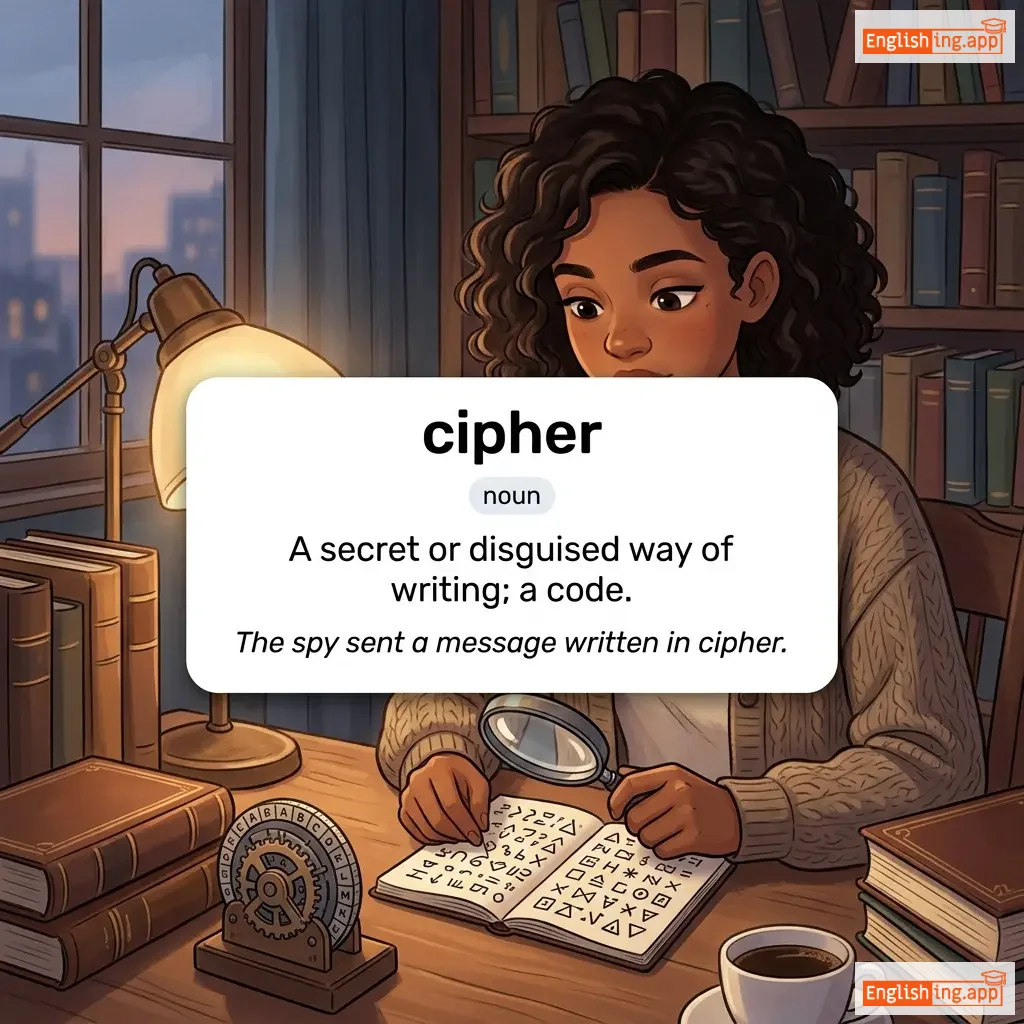
cipher definition card — visual illustration of the meaning
noun
/ˈsaɪfər/
código secreto (codigo secreto)

A secret or disguised way of writing; a code.

"The spy sent a message written in cipher."

"El espía envió un mensaje escrito en cifrado." (El espía envió un mensaje escrito en cifrado.)
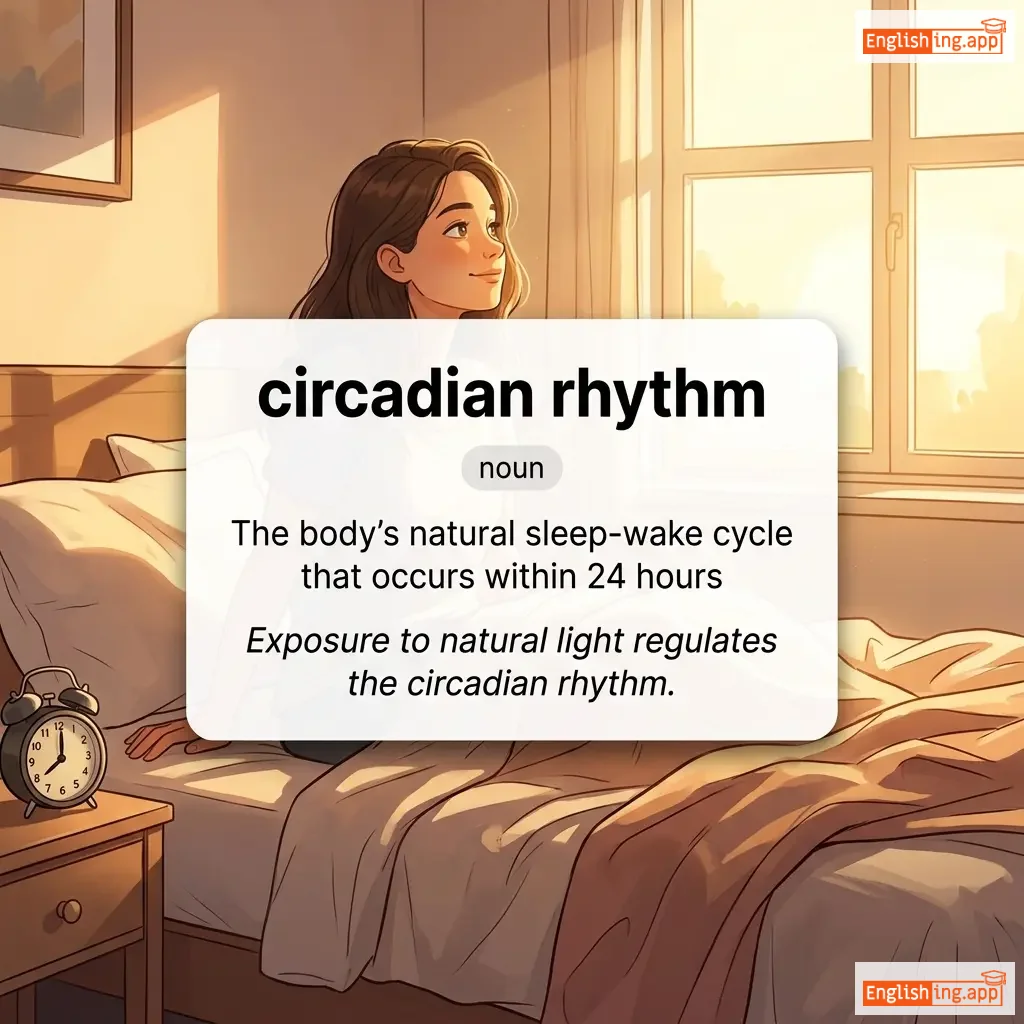
circadian rhythm definition card — visual illustration of the meaning
noun
sɜːrˈkeɪdiən ˈrɪðəm
ritmo circadiano (ritmo circadiano)

The body's natural sleep-wake cycle that occurs within 24 hours

"Exposure to natural light regulates the circadian rhythm."

"La exposición a la luz natural regula el ritmo circadiano." (La exposicion a la luz natural regula el ritmo circadiano.)
noun/verb
/ˈsɜːrkəl/
círculo (circulo)

a round shape; to move all the way around something

"The children sat in a circle."

"Los niños se sentaron en un círculo." (Los niños se sentaron en un círculo.)
noun
/ˈsɜːrklət/

A small circular band, typically worn as an ornament on the head.

"The princess wore a golden circlet on her forehead."

noun
/ˈsɜːrkɪt/
circuito / camino eléctrico (circuito / camino electrico)

A roughly circular line, route, or movement that starts and ends at the same place; also an electrical pathway.

"The runners completed the circuit around the park."

"Los corredores completaron el circuito alrededor del parque." (Los corredores completaron el circuito alrededor del parque.)
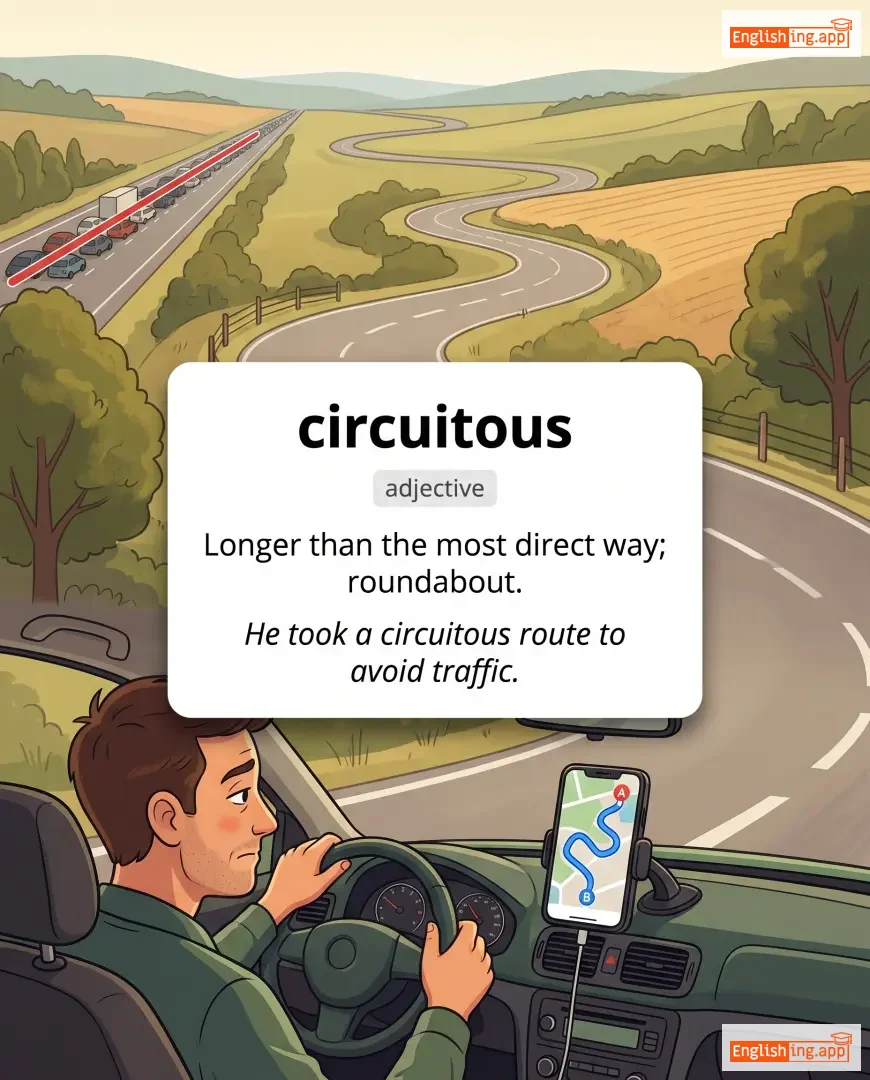
circuitous definition card — visual illustration of the meaning
adjective
/sərˈkjuːɪtəs/
ruta indirecta (ruta indirecta)

Longer than the most direct way; roundabout.

"He took a circuitous route to avoid traffic."

"Tomó una ruta indirecta para evitar el tráfico." (Tomó una ruta indirecta para evitar el tráfico.)
adjective
/ˈsɜːrkjələr/
circular (circular)

shaped like a circle; round in form

"The kids sat in a circular arrangement around the campfire."

"Los niños se sentaron en una disposición circular alrededor de la fogata." (Los niños se sentaron en una disposición circular alrededor de la fogata.)
circular economy definition card — visual illustration of the meaning
noun
ˈsɜːrkjələr ɪˈkɒnəmi
economía circular (economia circular)

An economic system aimed at eliminating waste and the continual use of resources through reuse, sharing, repair, refurbishment, remanufacturing and recycling.

"Adopting a circular economy can reduce waste."

"Adoptar una economía circular puede reducir los residuos." (Adoptar una economia circular puede reducir los residuos.)
verb
/ˈsɜːrkjəˌleɪt/
circular, mover (circular, mover)

to move continuously or freely through a closed system or area

"Air circulated freely in the open hall."

"El aire circulaba libremente en el pasillo abierto." (El aire circulaba libremente en el pasillo abierto.)
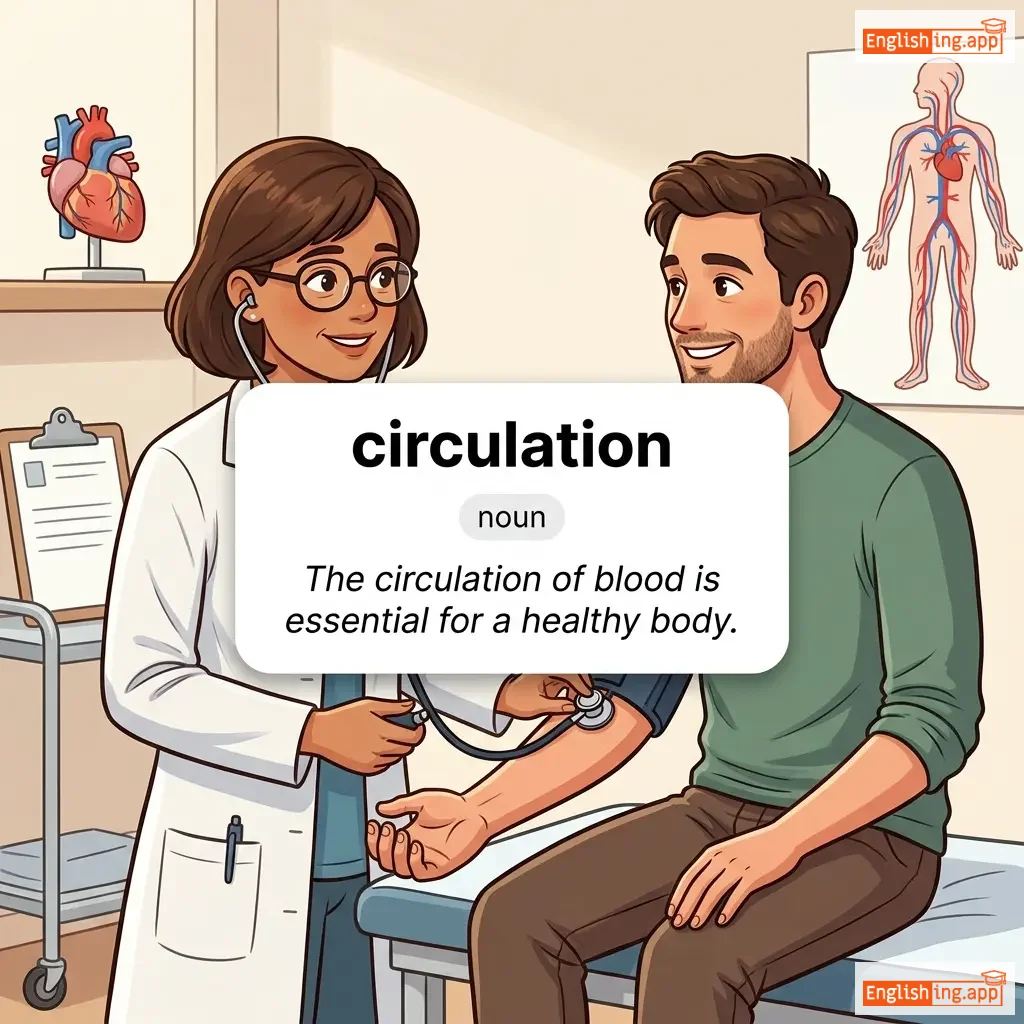
circulation definition card — visual illustration of the meaning
noun
/ˌsɜːr.kjʊˈleɪ.ʃən/
circulación (circulacion)

the movement of something (like blood, air, or information) through a system or area.

"The circulation of blood is essential for a healthy body."

"La circulación de la sangre es esencial para un cuerpo saludable." (La circulacion de la sangre es esencial para un cuerpo saludable.)
noun
/sərˈkʌmfərəns/
circunferencia (circunferencia)

the distance around the edge of a circle

"The teacher asked us to calculate the circumference of the circle."

"La profesora nos pidió calcular la circunferencia del círculo." (La profesora nos pidió calcular la circunferencia del círculo.)
noun
/ˌsɜːrkəmləˈkjuːʃn/
circunloquio (circunloquio)

the use of many words when fewer would do, especially to avoid stating something directly

"The politician's speech was filled with circumlocution."

"El discurso del político estaba lleno de circunloquios." (El discurso del politico estaba lleno de circunloquios.)
verb
/ˌsɜːrkəmˈnævɪɡeɪt/
circunnavegar (circunnavegar)

to travel all the way around something, especially the earth

"Magellan was the first to circumnavigate the globe."

"Magallanes fue el primero en circunnavegar el globo." (Magallanes fue el primero en circunnavegar el globo.)
verb
/ˈsɜːrkəmskraɪb/
circunscribir (circunscribir)

to limit or restrict something within boundaries

"The rules circumscribe the powers of the committee."

"Las reglas circunscriben los poderes del comité." (Las reglas circunscriben los poderes del comité.)
adjective
/ˈsɜːrkəmskraɪbd/
circunscrito (circunscrito)

restricted or limited in scope or freedom

"Her freedom of choice was circumscribed by social rules."

"Su libertad de elección estaba circunscrita por las reglas sociales." (Su libertad de elección estaba circunscrita por las reglas sociales.)
circumspect definition card — visual illustration of the meaning
adjective
/ˈsɜːrkəmspekt/
prudente (prudente)

careful and unwilling to take risks; cautious

"He was circumspect in his business dealings."

"Él fue prudente en sus tratos comerciales." (Él fue prudente en sus tratos comerciales.)
circumspection definition card — visual illustration of the meaning
noun
ˌsɜːkəmˈspekʃən
precaución, evitar riesgos (precaucion, evitar riesgos)

The quality of being wary and unwilling to take risks; prudence.

"His circumspection ensured no mistakes were made."

"Su precaución garantizó que no se cometieran errores." (Su precaucion garantizo que no se cometieran errores.)