Vocabularios

Descubra, aprenda y domine el vocabulario en inglés

noun
/əˌɡlɒməˈreɪʃən/
aglomeración (aglomeracion)

A mass or collection of things, sometimes clustered together.

"The city is an agglomeration of diverse cultures and communities."

"La ciudad es una aglomeración de diversas culturas y comunidades." (La ciudad es una aglomeracion de diversas culturas y comunidades.)
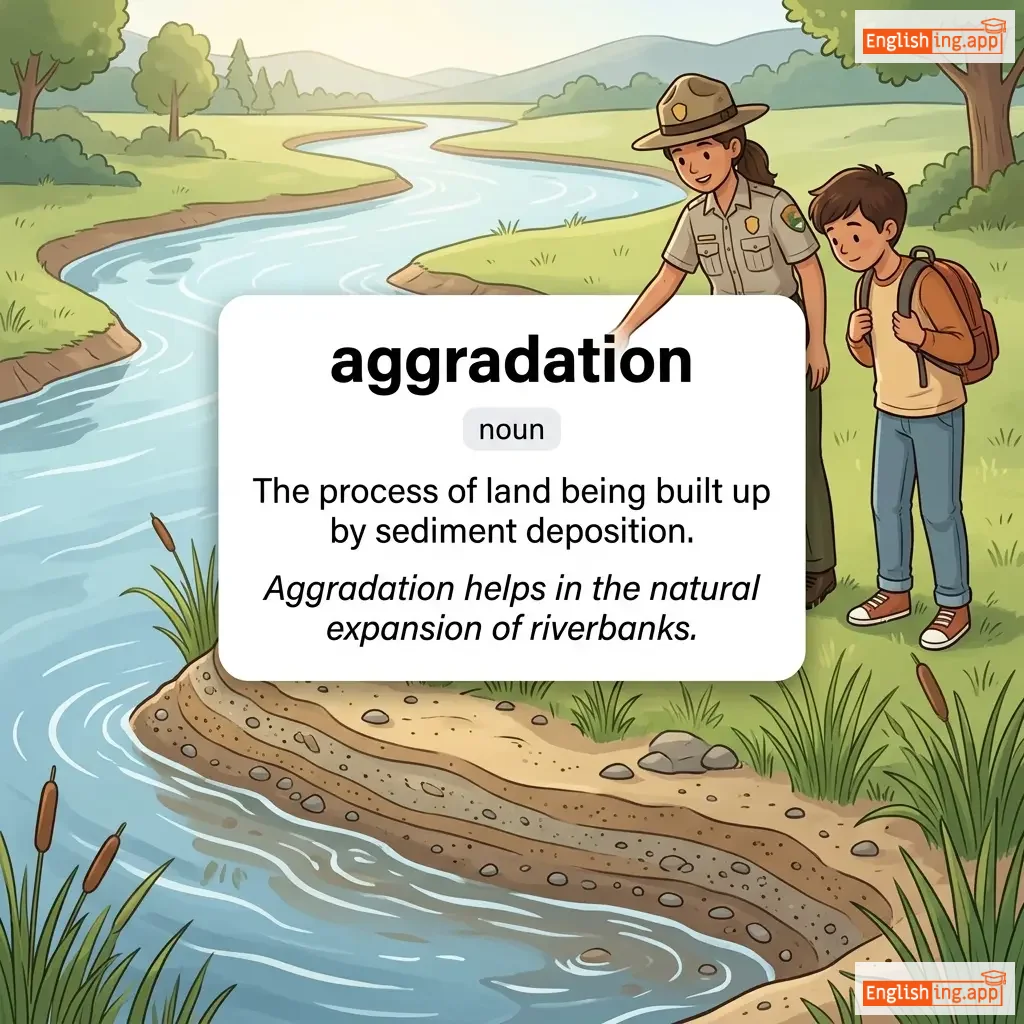
aggradation definition card — visual illustration of the meaning
noun
/ˌæɡ.rəˈdeɪ.ʃən/
proceso de construcción de tierra por depósito de sedimentos (proceso de construccion de tierra por deposito de sedimentos)

The process of land being built up by sediment deposition.

"Aggradation helps in the natural expansion of riverbanks."

"La aggradación ayuda en la expansión natural de las orillas de los ríos." (La aggradacion ayuda en la expansion natural de las orillas de los rios)
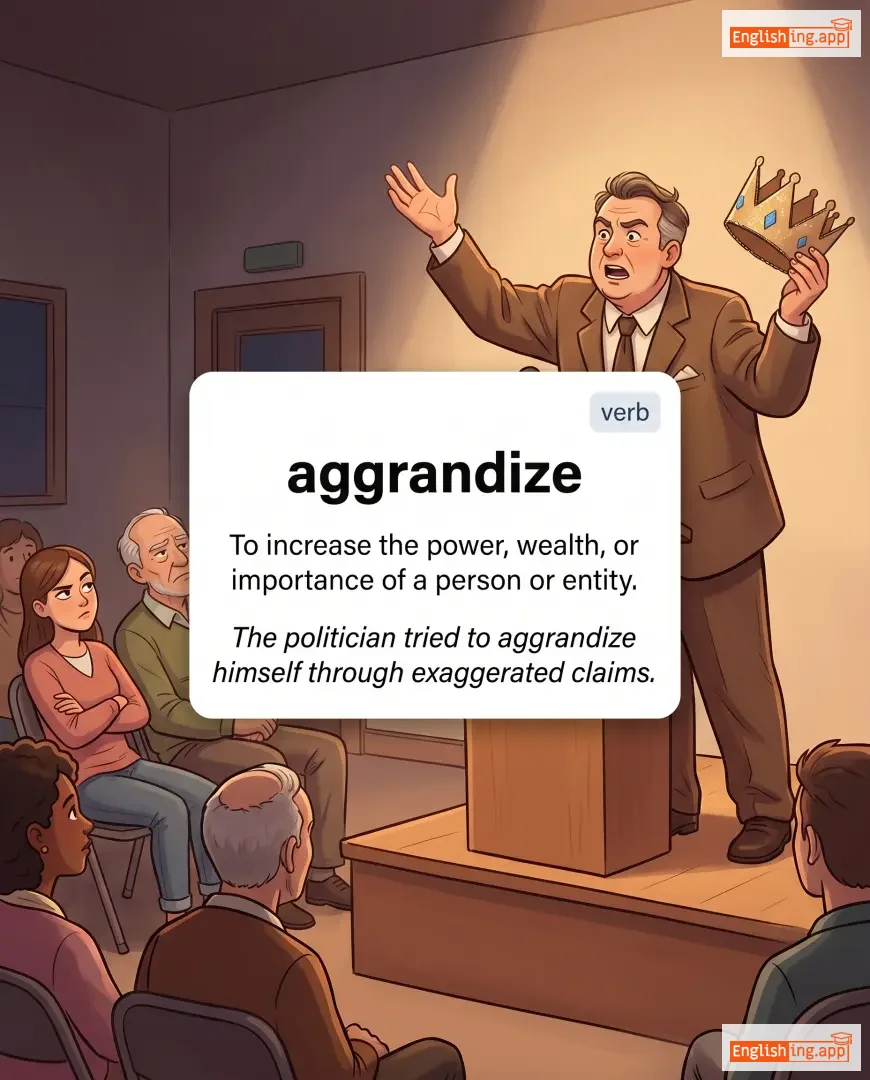
aggrandize definition card — visual illustration of the meaning
verb
/əˈɡræn.daɪz/
engrandecer (engrandecer)

To increase the power, wealth, or importance of a person or entity.

"The politician tried to aggrandize himself through exaggerated claims."

"El político trató de engrandecerse a sí mismo a través de afirmaciones exageradas." (El político trató de engrandecerse a sí mismo a través de afirmaciones exageradas.)
verb
/ˈæɡ.rə.veɪt/
agravar (agravar)

To make a situation worse or more serious.

"Scratching the rash will only aggravate the condition."

"Rascar la erupción solo agravará la condición." (Rascar la erupcion solo agravara la condicion.)
noun
/ˌæɡ.rəˈveɪ.ʃən/
agravamiento, empeoramiento (agravacion)

The act of making a situation worse or the state of being worsened.

"The delay caused great aggravation for the passengers."

"El retraso causó gran agravio para los pasajeros." (El retraso causo gran agravio para los pasajeros.)
aggregate definition card — visual illustration of the meaning
noun, verb, adjective
/ˈæɡ.rɪ.ɡət/ (noun/adjective), /ˈæɡ.rɪ.ɡeɪt/ (verb)
agregado, conjunto (agregado, conjunto)

A whole formed by combining several elements; to combine into a total.

"The data was aggregated to provide a clearer picture of the market."

"Los datos fueron agregados para proporcionar una imagen más clara del mercado." (Los datos fueron agregados para proporcionar una imagen más clara del mercado.)
verb
/əˈɡrɛs/
agredir (agredir)

to initiate an attack or show hostile behavior

"The army chose not to aggress without provocation."

"El ejército decidió no agredir sin provocación." (El ejército decidió no agredir sin provocación.)
noun
/əˈɡrɛʃən/
agresión (agresion)

hostile or violent behavior towards others

"His sudden aggression surprised everyone in the meeting."

"Su repentina agresión sorprendió a todos en la reunión." (Su repentina agresion sorprendio a todos en la reunion.)
adjective
/əˈɡrɛsɪv/
agresivo (agresivo)

ready or likely to attack or confront; forceful

"The salesman used an aggressive strategy to close the deal."

"El vendedor utilizó una estrategia agresiva para cerrar el trato." (El vendedor utilizó una estrategia agresiva para cerrar el trato.)
verb
/əˈɡriːv/
agraviar (agraviar)

to cause distress or make someone feel resentful

"She felt aggrieved by the unfair decision."

"Ella se sintió agraviada por la decisión injusta." (Ella se sintió agraviada por la decisión injusta.)
adjective
/əˈɡæst/
estupefacto (estupefacto)

filled with shock or horror

"The audience was aghast at the tragic scene."

"La audiencia estaba estupefacta ante la escena trágica." (La audiencia estaba estupefacta ante la escena tragica.)
adjective
/ˈædʒ.aɪl/
rápido y flexible (rapido y flexible)

able to move quickly and easily; quick and adaptable in thinking or action

"The startup team was agile in responding to market changes."

"El equipo de la startup fue ágil al responder a los cambios del mercado." (El equipo de la startup fue ágil al responder a los cambios del mercado.)
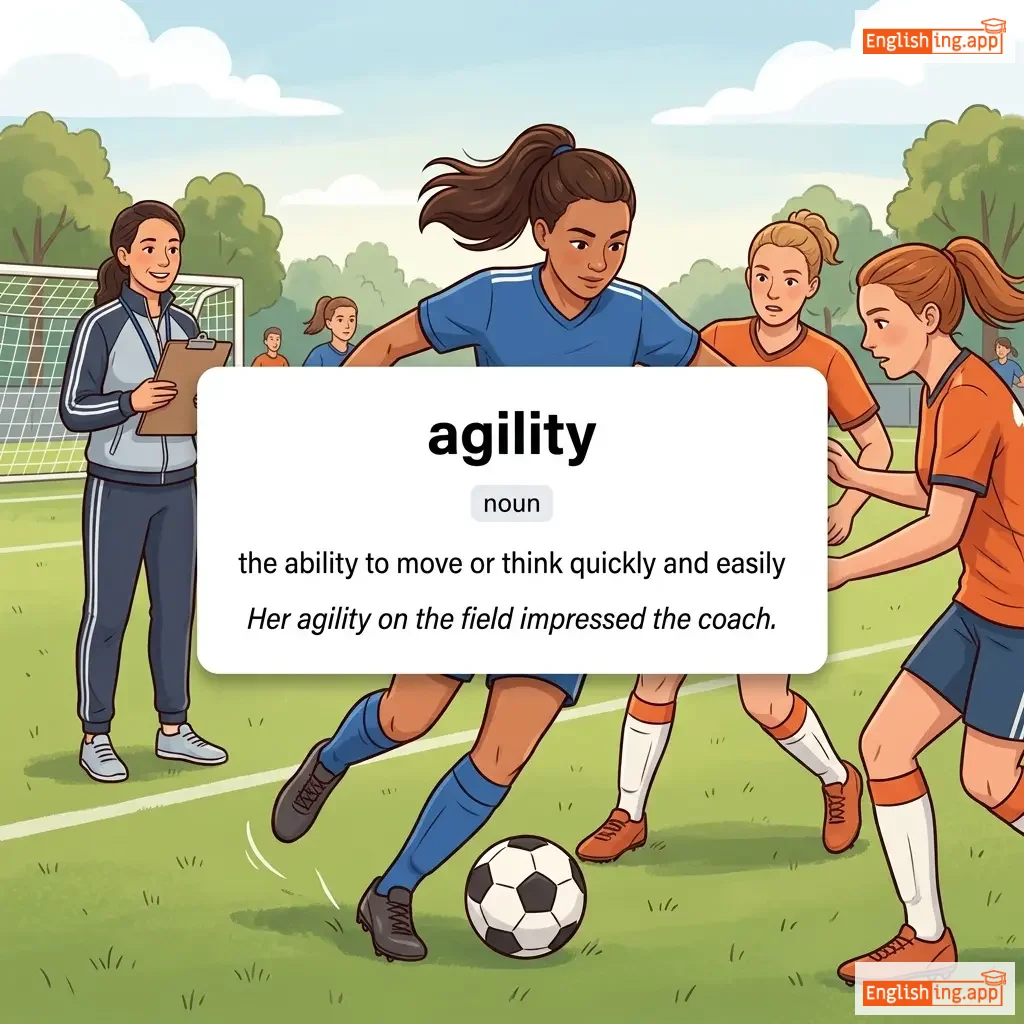
agility definition card — visual illustration of the meaning
noun
/əˈdʒɪl.ə.ti/
agilidad (agilidad)

the ability to move or think quickly and easily

"Her agility on the field impressed the coach."

"Su agilidad en el campo impresionó al entrenador." (Su agilidad en el campo impresiono al entrenador.)
verb
/ˈædʒ.ɪ.teɪt/
agitar, provocar (agitar, provocar)

to stir up feelings or disturb; to campaign for change

"The protesters agitated for better working conditions."

"Los manifestantes agitaron por mejores condiciones laborales." (Los manifestantes agitaron por mejores condiciones laborales.)
adjective
/ˈædʒɪteɪtɪd/
agitado; inquieto; nervioso; excitado de manera negativa (ajitado; inquieto; nervioso; excitado de manera negativa)

disturbed; anxious; restless; excited in a negative way

"He became agitated when he heard the bad news."

"Se agitou cuando escuchó las malas noticias." (Se agito cuando escucho las malas noticias.)
noun
/ˌædʒ.ɪˈteɪ.ʃən/
agitación (agitación)

a state of nervousness, excitement, or unrest; or action of stirring up public concern

"There was visible agitation among the crowd."

"Hubo agitación visible entre la multitud." (Hubo agitación visible entre la multitud.)
noun
/æɡˈnɒs.tɪk/
agnóstico (agnostiko)

a person who believes that nothing is known or can be known about the existence of God; uncertain in belief

"He described himself as an agnostic rather than an atheist."

"Se describió a sí mismo como un agnóstico en lugar de un ateo." (Se describió a sí mismo como un agnóstico en lugar de un ateo.)
adverb
/əˈɡoʊ/
hace (hase)

Used to indicate how long before the present something happened.

"I met her two years ago."

"La conocí hace dos años." (La conoci hase dos anos.)
adjective
/əˈɡɒɡ/
emocionado (emocionado)

Highly excited by eagerness, curiosity, or anticipation.

"The children were agog with excitement as they waited for the magician to appear."

"Los niños estaban muy emocionados mientras esperaban que apareciera el mago." (Los ninos estaban muy emocionados mientras esperaban que apareciera el mago.)
verb
/ˈæɡənaɪz/
agonizar (agonizar)

To suffer extreme physical or mental pain; to spend time worrying.

"She agonized for days over whether she had made the right decision."

"Ella agonizó durante días sobre si había tomado la decisión correcta." (Ella agonizó durante días sobre si había tomado la decisión correcta.)
noun
/ˈæɡ.ə.ni/
sufrimiento extremo físico o mental; dolor intenso (sufrimiento extremo fisico o mental; dolor intenso)

extreme physical or mental suffering; intense pain

"He was in agony after the accident."

"Estaba en agonía después del accidente." (estaba en agonia despues del accidente.)
adjective
/əˈɡrɛəriən/
agrícola (agricola)

Related to farming, agriculture, or rural land.

"The country’s economy is still largely agrarian."

"La economía del país sigue siendo en gran parte agrícola." (La economia del pais sigue siendo en gran parte agricola.)
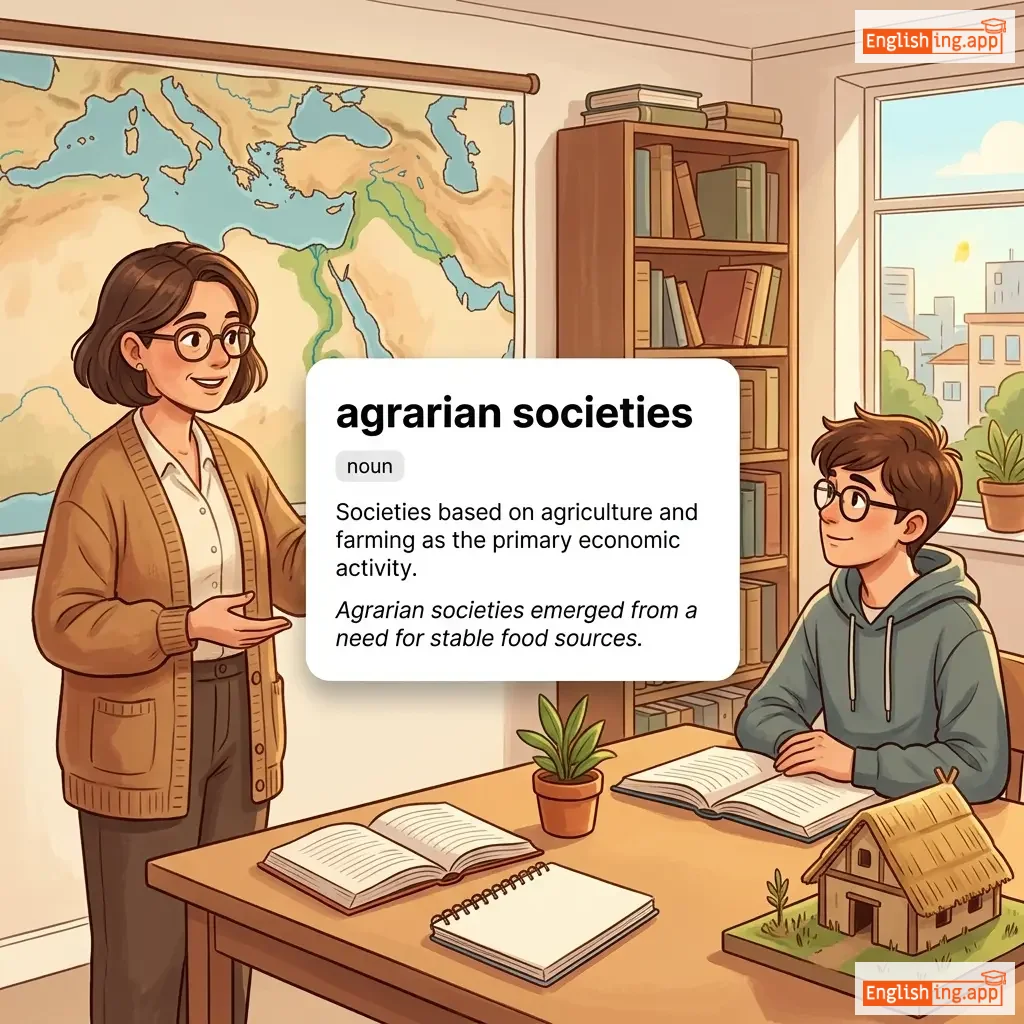
agrarian societies definition card — visual illustration of the meaning
noun
əˈɡrɛriən səˈsaɪətiz
sociedades agrarias (sociedades agrarias)

Societies based on agriculture and farming as the primary economic activity.

"Agrarian societies emerged from a need for stable food sources."

"Las sociedades agrarias surgieron por la necesidad de fuentes estables de alimentos." (Las sociedades agrarias surgieron por la necesidad de fuentes estables de alimentos.)
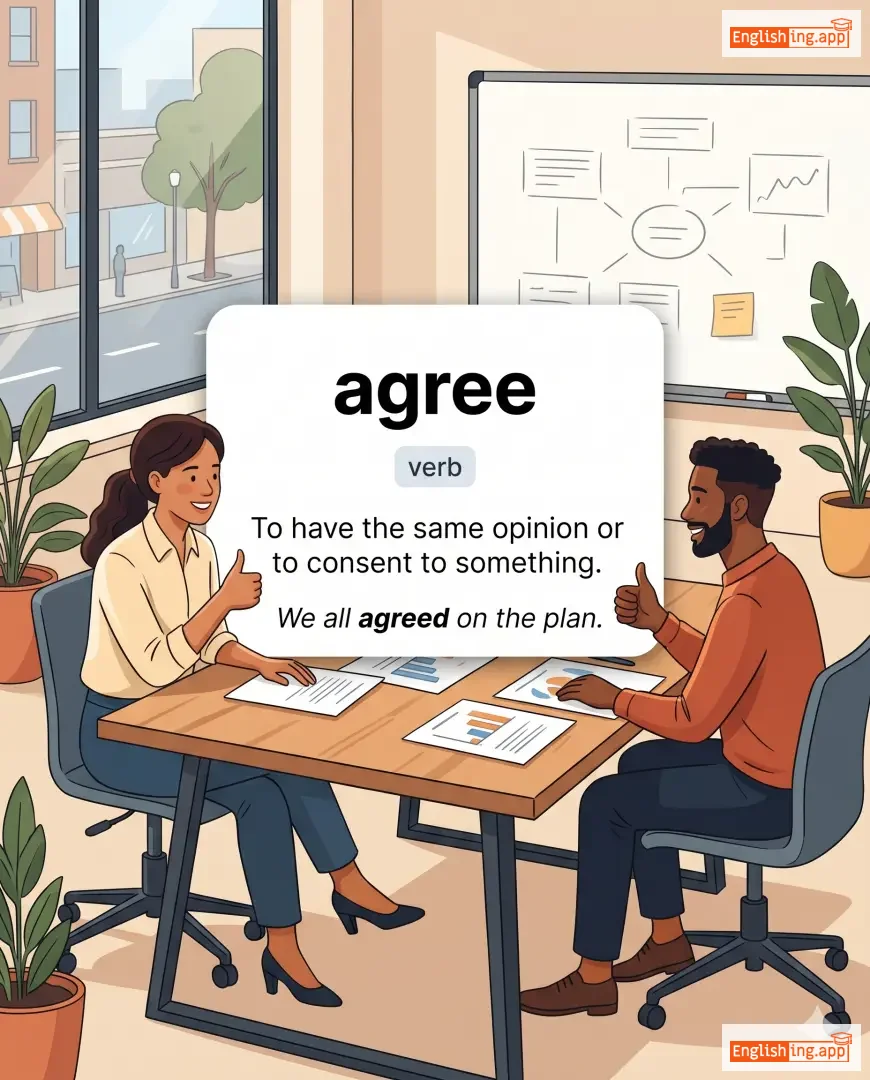
agree definition card — visual illustration of the meaning
verb
/əˈɡriː/
acordar (acordar)

To have the same opinion or to consent to something.

"We all agreed on the plan."

"Todos estuvimos de acuerdo con el plan." (Todos estuvimos de acuerdo con el plan.)
adjective
/əˈɡriːəbl/
agradable; placentero; encantador; dispuesto a estar de acuerdo (agradable; placentero; encantador; dispuesto a estar de acuerdo)

pleasant; enjoyable; delightful; willing to agree

"The weather is very agreeable today."

"El clima es muy agradable hoy." (El clima es muy agradable hoy.)
agreement definition card — visual illustration of the meaning
noun
/əˈɡriː.mənt/
acuerdo (acuerdo)

A mutual understanding or arrangement between two or more parties.

"They signed an agreement to work together."

"Firmaron un acuerdo para trabajar juntos." (Firmaron un acuerdo para trabajar juntos.)
agreements definition card — visual illustration of the meaning
noun
/əˈɡriː.mənts/
acuerdos (acuerdos)

Formal arrangements or understandings between two or more parties.

"Agreements strengthen partnerships."

"Los acuerdos fortalecen las asociaciones." (Los acuerdos fortalecen las asociaciones.)
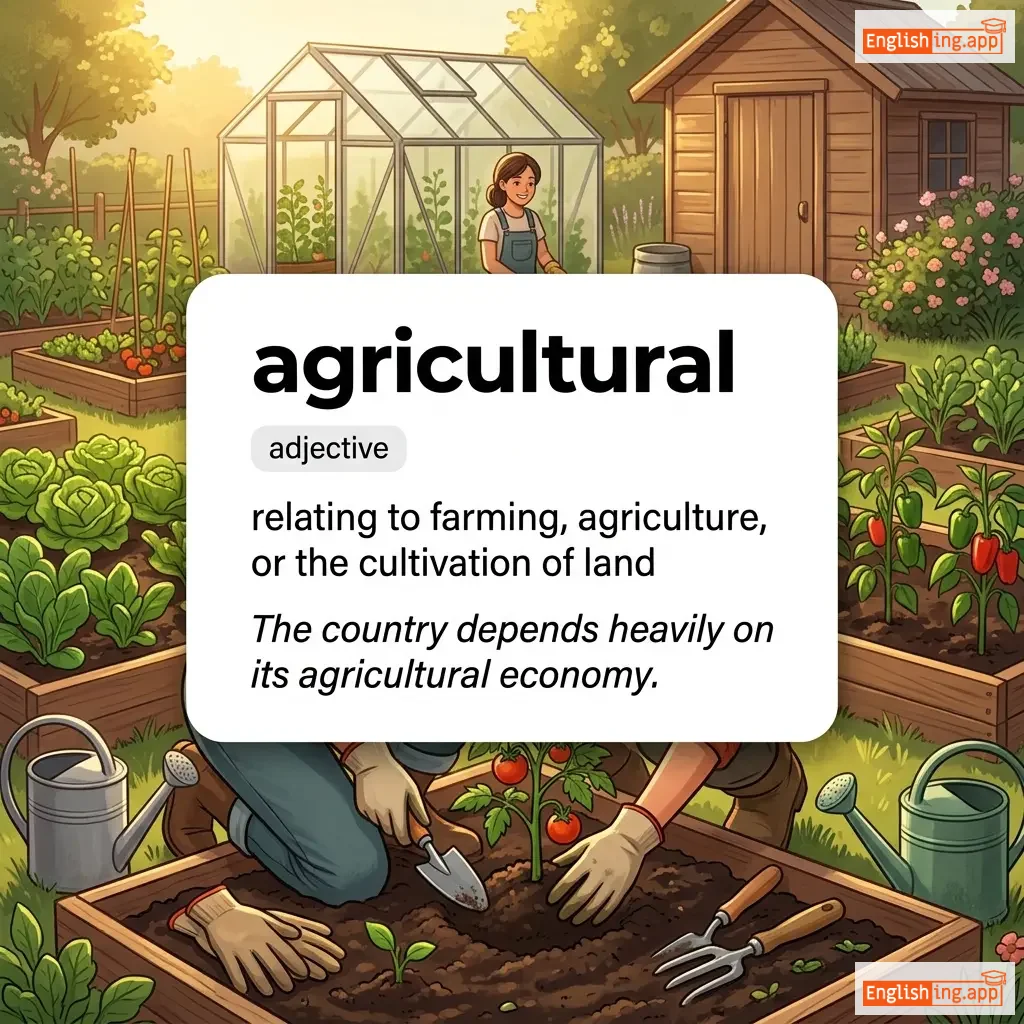
agricultural definition card — visual illustration of the meaning
adjective
/ˌæɡ.rɪˈkʌl.tʃər.əl/
agrícola (agricola)

relating to farming, agriculture, or the cultivation of land

"The country depends heavily on its agricultural economy."

"El país depende en gran medida de su economía agrícola." (El pais depende en gran medida de su economia agricola.)
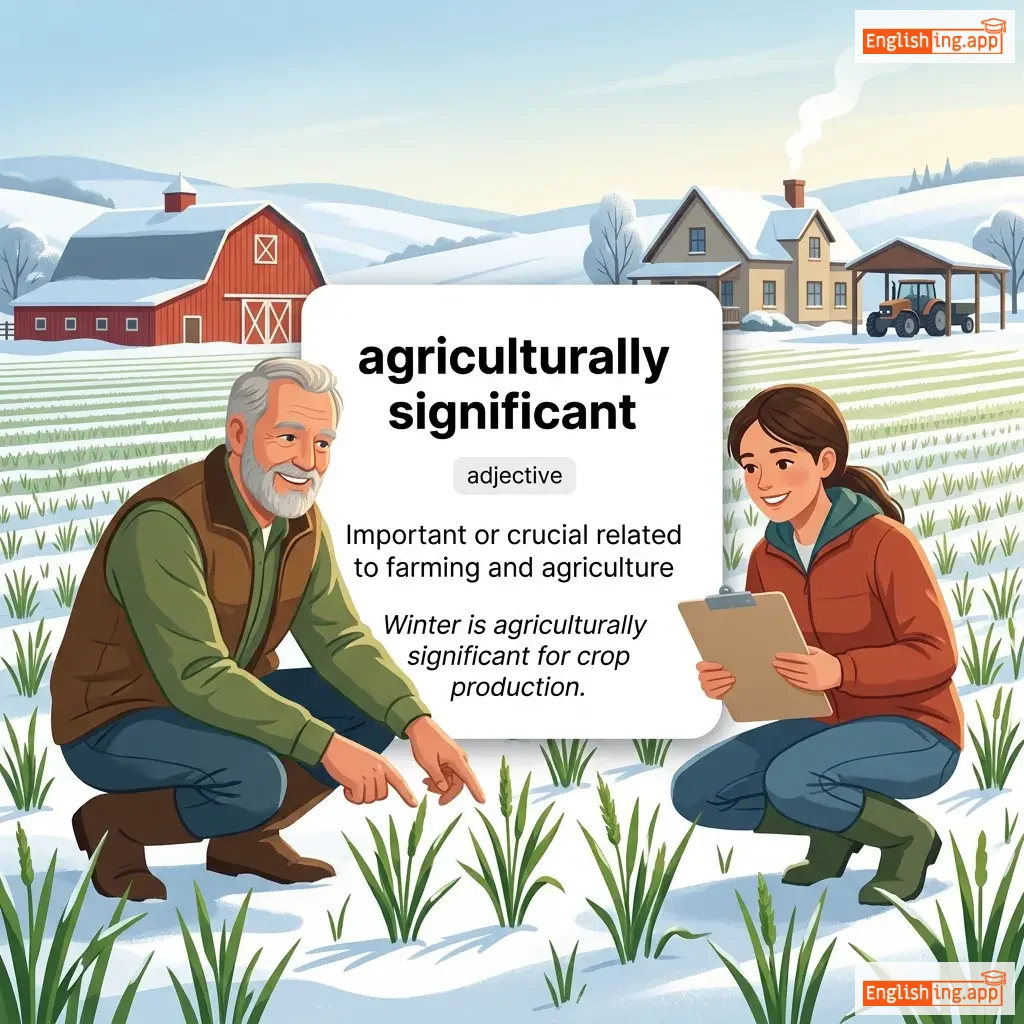
agriculturally significant definition card — visual illustration of the meaning
adjective
ˌæɡrɪˈkʌltʃərəli sɪɡˈnɪfɪkənt
importante relacionado con la agricultura (importante relacionado con la agricultura)

Important or crucial related to farming and agriculture

"Winter is agriculturally significant for crop production."

"El invierno es importante para la producción de cultivos." (El invierno es importante para la producción de cultivos.)
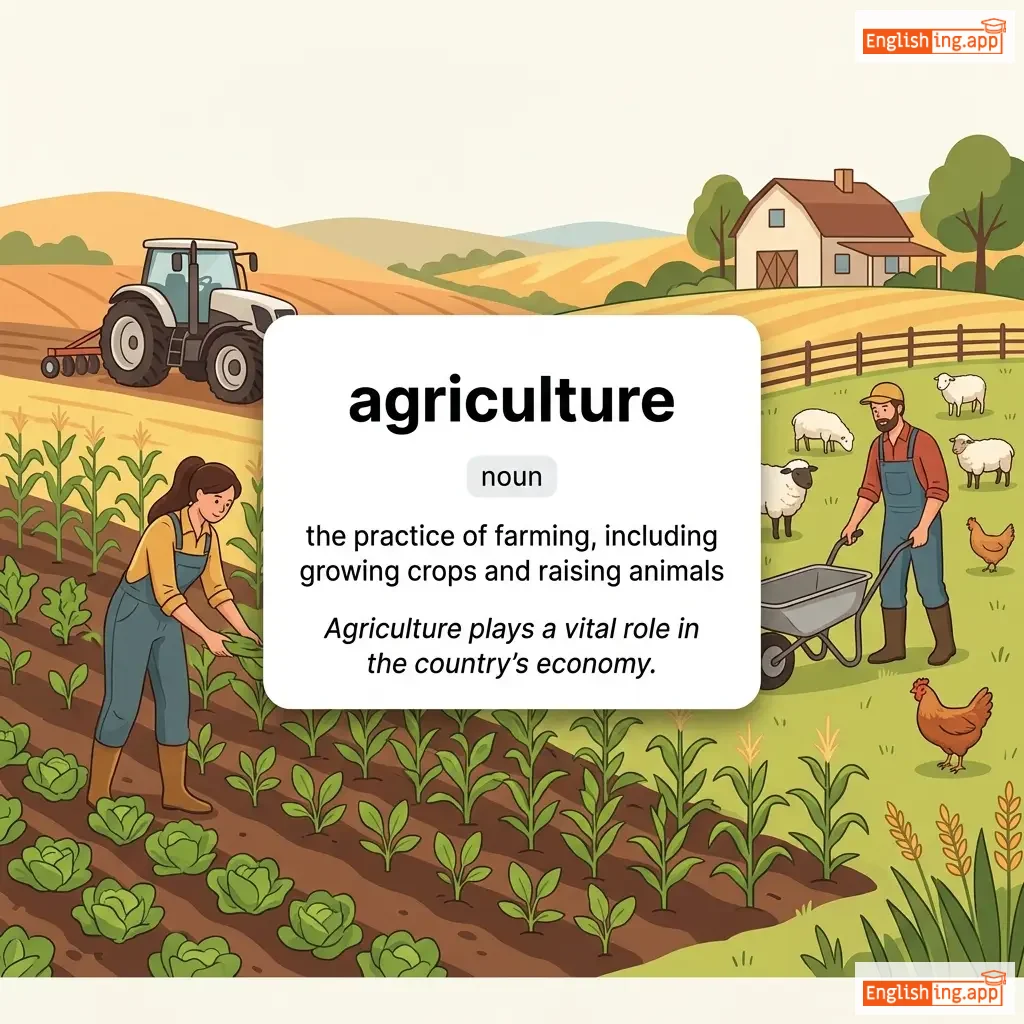
agriculture definition card — visual illustration of the meaning
noun
/ˈæɡrɪˌkʌltʃər/
agricultura (agricultura)

the practice of farming, including growing crops and raising animals

"Agriculture plays a vital role in the country's economy."

"La agricultura juega un papel vital en la economía del país." (La agricultura juega un papel vital en la economia del pais.)
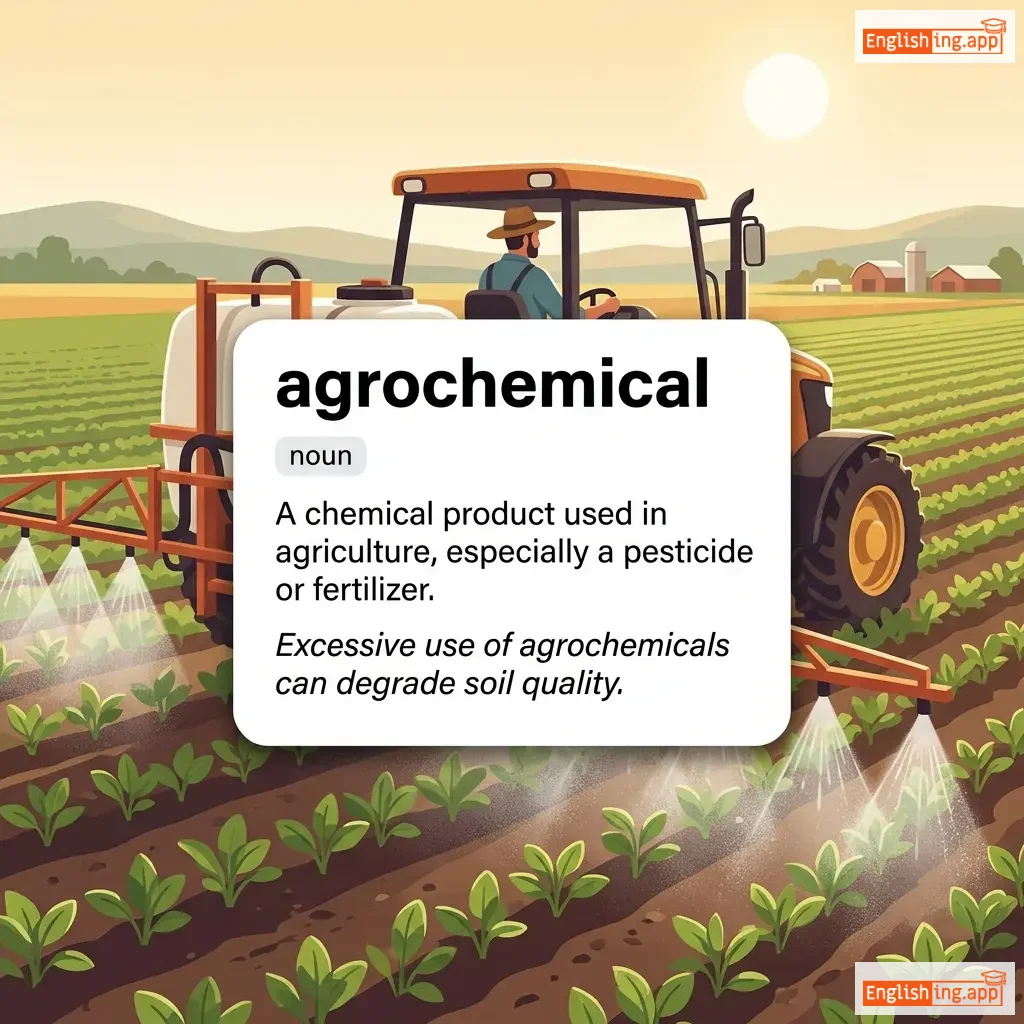
agrochemical definition card — visual illustration of the meaning
noun
ˌæɡ.rəʊˈkem.ɪ.kəl
agroquímico (agrokimiko)

A chemical product used in agriculture, especially a pesticide or fertilizer.

"Excessive use of agrochemicals can degrade soil quality."

"El uso excesivo de agroquímicos puede degradar la calidad del suelo." (el uso excesivo de agrokimikos puede degradar la calidad del suelo)
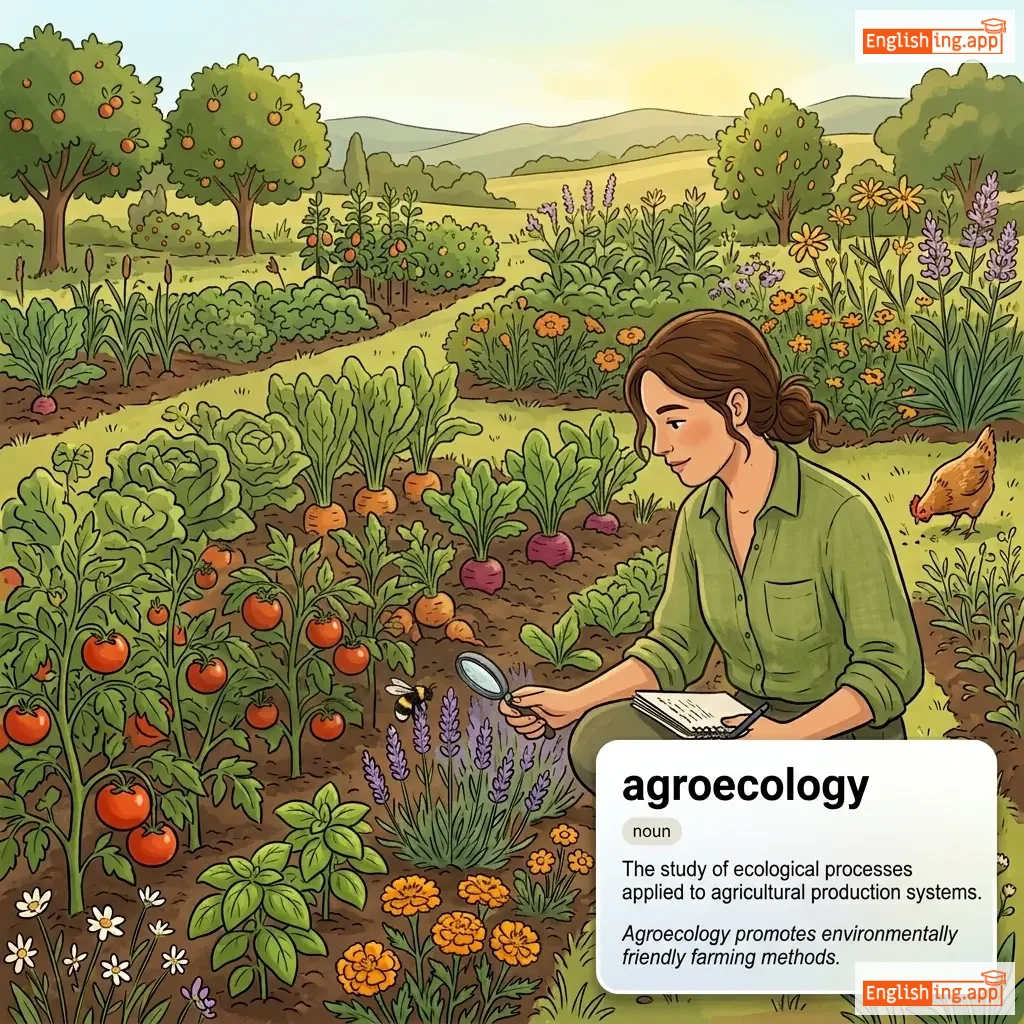
agroecology definition card — visual illustration of the meaning
noun
/ˌæɡ.roʊ.iˈkɑː.lə.dʒi/
agroecología (agroecologia)

The study of ecological processes applied to agricultural production systems.

"Agroecology promotes environmentally friendly farming methods."

"La agroecología promueve métodos agrícolas ecológicos." (La agroecologia promueve metodos agricolas ecologicos.)
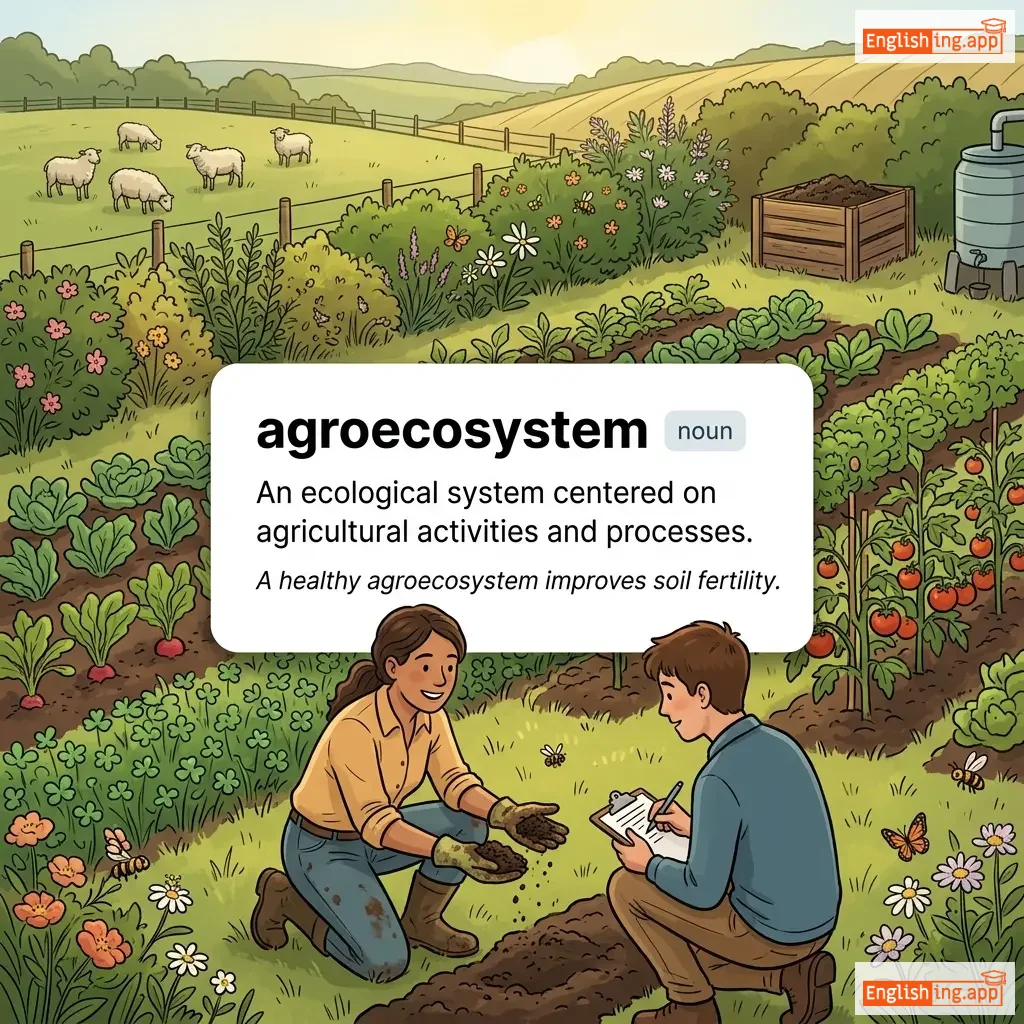
agroecosystem definition card — visual illustration of the meaning
noun
ˌæɡ.roʊˈiː.koʊˌsɪs.təm
agroecosistema (agroecosistema)

An ecological system centered on agricultural activities and processes.

"A healthy agroecosystem improves soil fertility."

"Un agroecosistema saludable mejora la fertilidad del suelo." (Un agroecosistema saludable mejora la fertilidad del suelo.)
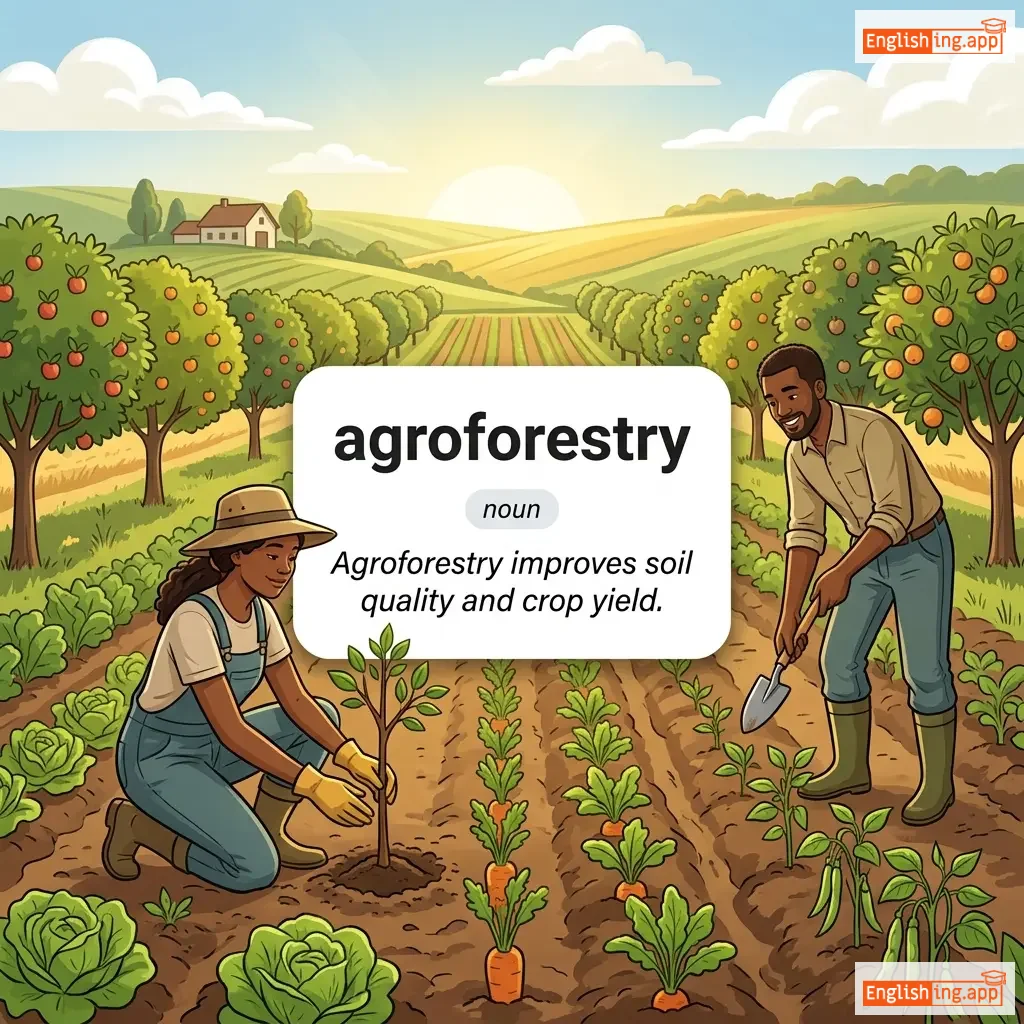
agroforestry definition card — visual illustration of the meaning
noun
ˌæɡ.roʊˈfɔːr.ɪ.stri
agroforestería (agroforesteria)

A land use management system in which trees or shrubs are grown around or among crops or pastureland.

"Agroforestry improves soil quality and crop yield."

"La agroforestería mejora la calidad del suelo y el rendimiento de los cultivos." (La agroforesteria mejora la calidad del suelo y el rendimiento de los cultivos.)
noun
/əˈɡrɒnəmɪst/
agronomo (agronomo)

A scientist who studies soil management and crop production.

"The agronomist suggested new methods to improve rice yields."

"El agrónomo sugirió nuevos métodos para mejorar los rendimientos del arroz." (El agronomo sugirio nuevos metodos para mejorar los rendimientos del arroz.)
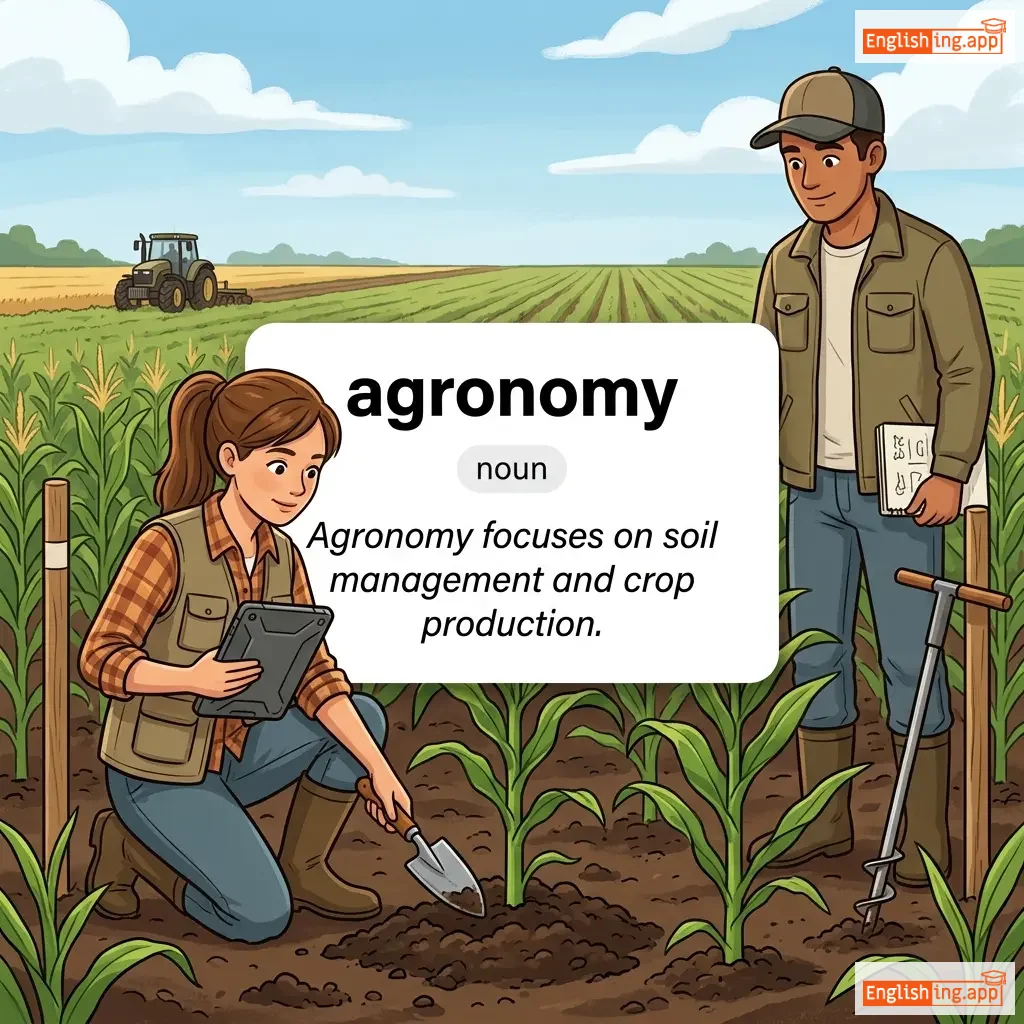
agronomy definition card — visual illustration of the meaning
noun
/əˈɡrɒnəmi/
Agronomía (agronomia)

The science and practice of soil management and crop production, focusing on the principles of plant and soil science to optimize agricultural productivity.

"Agronomy focuses on soil management and crop production."

"La agronomía se enfoca en la gestión del suelo y la producción de cultivos." (La agronomía se enfoca en la gestión del suelo y la producción de cultivos.)
interjection
/ɑː/
ah (ah)

used to express realization, surprise, or relief

"Ah, now I understand what you mean."

"¡Ah, ahora entiendo lo que quieres decir!" (¡Ah, ahora entiendo lo que quieres decir!)
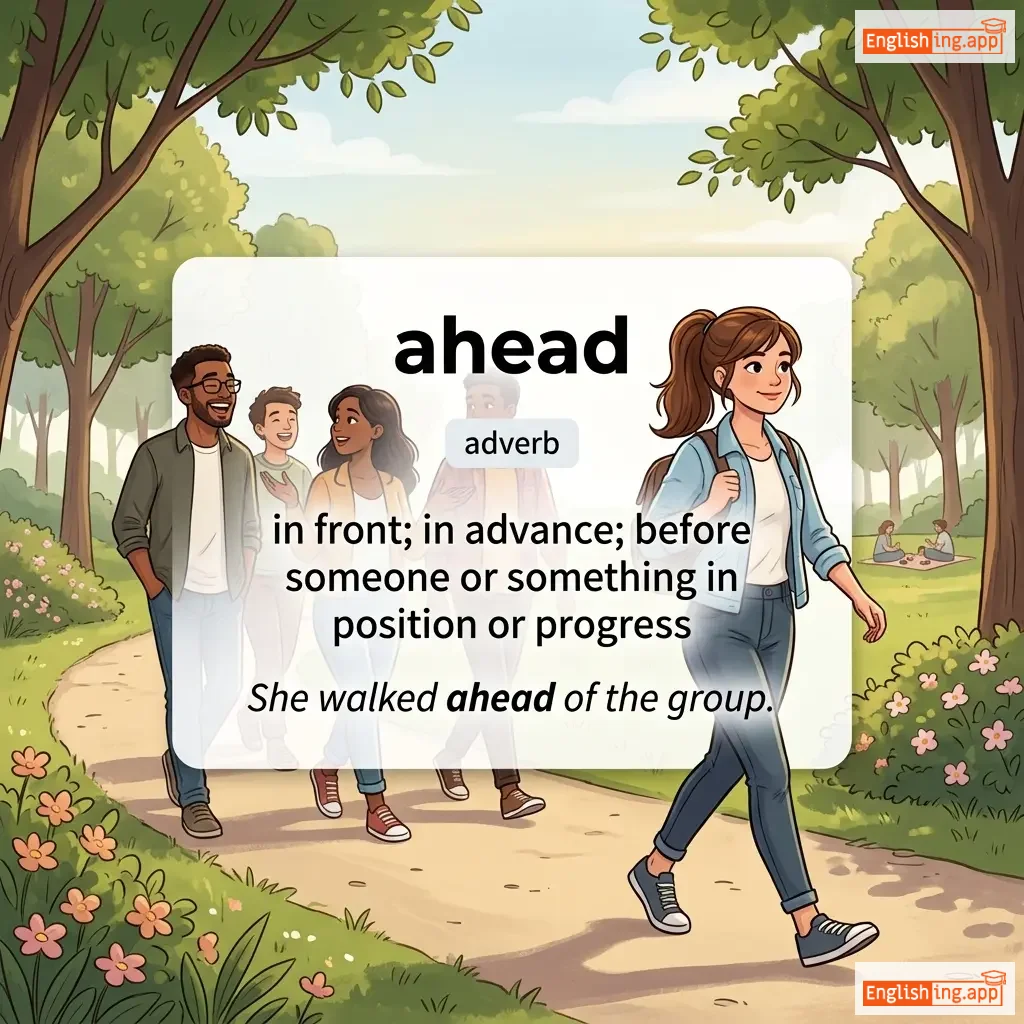
ahead definition card — visual illustration of the meaning
adverb
/əˈhɛd/
adelante (adelante)

in front; in advance; before someone or something in position or progress

"She walked ahead of the group."

"Ella caminó adelante del grupo." (Ella camino adelante del grupo.)
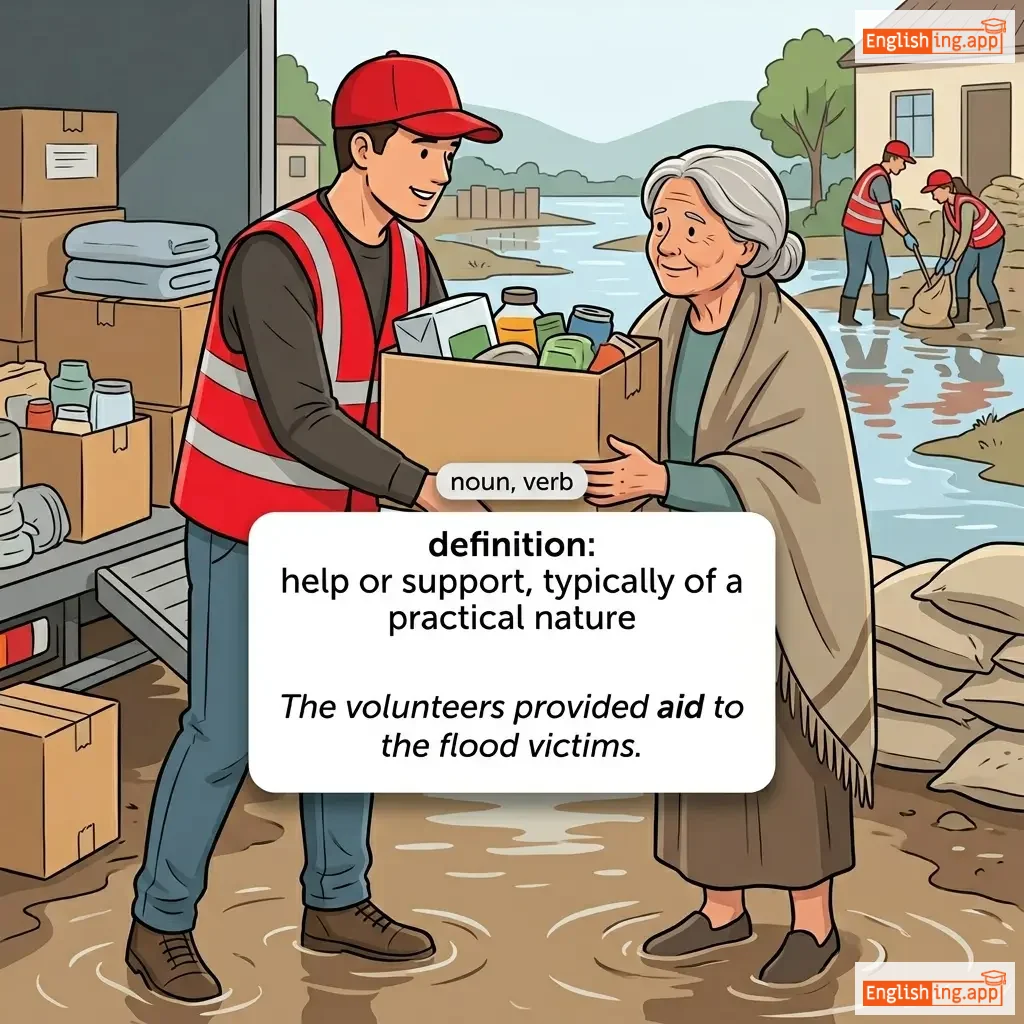
aid definition card — visual illustration of the meaning
noun, verb
/eɪd/
ayuda (ayuda)

help or support, typically of a practical nature

"The volunteers provided aid to the flood victims."

"Los voluntarios proporcionaron ayuda a las víctimas de la inundación." (Los voluntarios proporcionaron ayuda a las víctimas de la inundación.)
🧑‍💼

aide (eid)

noun
/eɪd/
asistente (asistente)

An assistant or helper, especially to an important person.

"The senator’s aide organized the meeting with journalists."

"El asistente del senador organizó la reunión con los periodistas." (El asistente del senador organizó la reunión con los periodistas.)
noun
/ˌeɪd də ˈkæmp/
oficial militar que actúa como asistente confidencial de un oficial superior (oficial militar que actua como asistente confidencial de un oficial superior)

A military officer acting as a confidential assistant to a senior officer.

"The general was accompanied by his aide-de-camp during the ceremony."

"El general estuvo acompañado por su aide-de-camp durante la ceremonia." (El general estuvo acompañado por su aide-de-camp durante la ceremonia.)
noun
/eɪdz/
sida (sida)

Acquired Immune Deficiency Syndrome, a disease of the immune system caused by HIV

"AIDS is a major global health concern."

"El SIDA es una gran preocupación de salud mundial." (El SIDA es una gran preocupacion de salud mundial.)
verb
/eɪl/
padecer una enfermedad (padecer una enfermedad)

to be ill or suffer from a physical or mental problem; to trouble or afflict

"She has been ailing since last winter."

"Ella ha estado enferma desde el invierno pasado." (ella ha estado enferma desde el invierno pasado)
adjective, verb
/ˈeɪlɪŋ/
enfermo (enfermo)

suffering from illness or poor health; experiencing problems or decline

"The ailing patient slowly began to recover after treatment."

"El paciente enfermo comenzó a recuperarse lentamente después del tratamiento." (El paciente enfermo comenzo a recuperarse lentamente despues del tratamiento)
noun
/ˈeɪlmənt/
enfermedad (enfermedad)

An illness, typically a minor one.

"He went to the doctor for a minor stomach ailment."

"Fue al médico por una leve enfermedad estomacal." (Fue al medico por una leve enfermedad estomacal.)
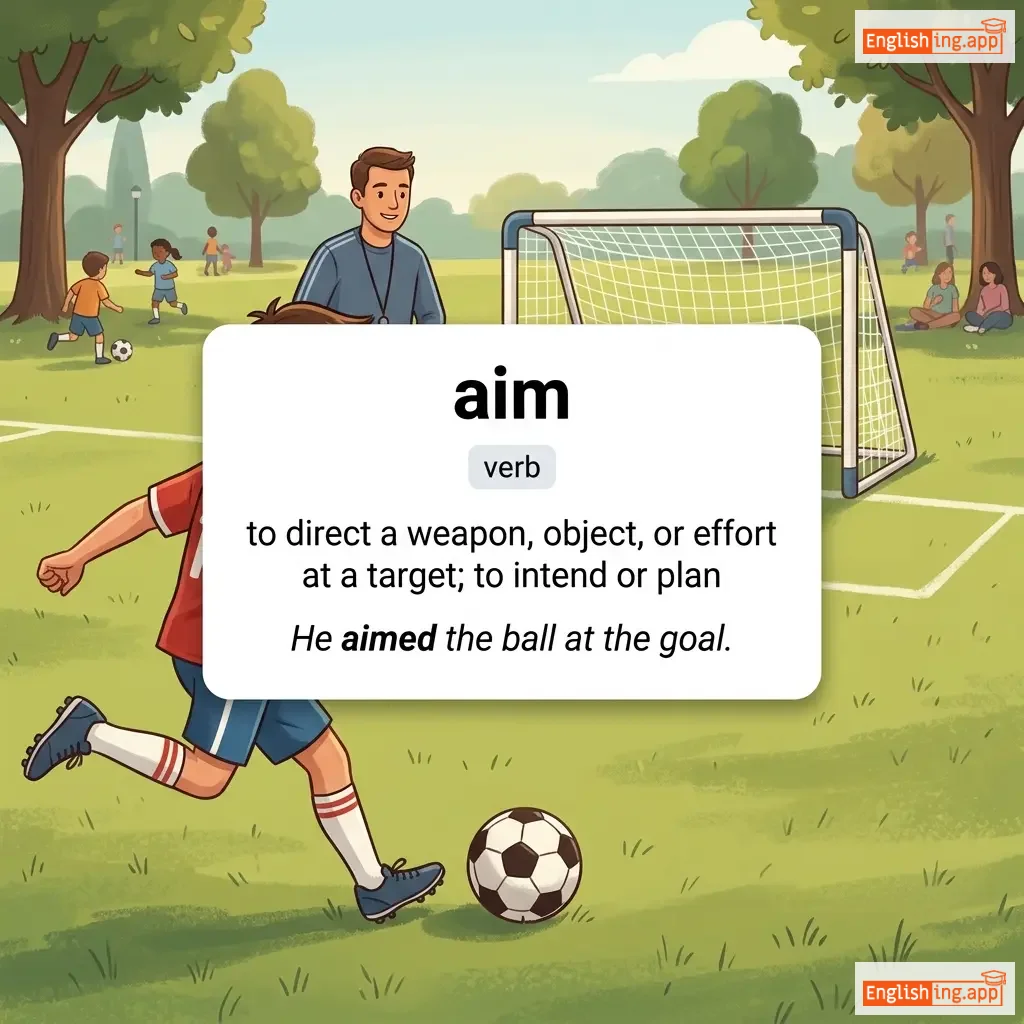
aim definition card — visual illustration of the meaning
verb
/eɪm/
apuntar (apuntar)

to direct a weapon, object, or effort at a target; to intend or plan

"He aimed the ball at the goal."

"Él apuntó la pelota hacia la meta." (El apuntó la pelota hacia la meta.)
adjective
/ˈeɪmləs/
sin rumbo; sin objetivo (aimles)

without purpose or direction; lacking a goal

"He wandered around the city in an aimless manner."

"Él caminaba por la ciudad de manera sin rumbo." (El caminaba por la ciudad de manera sin rumbo.)
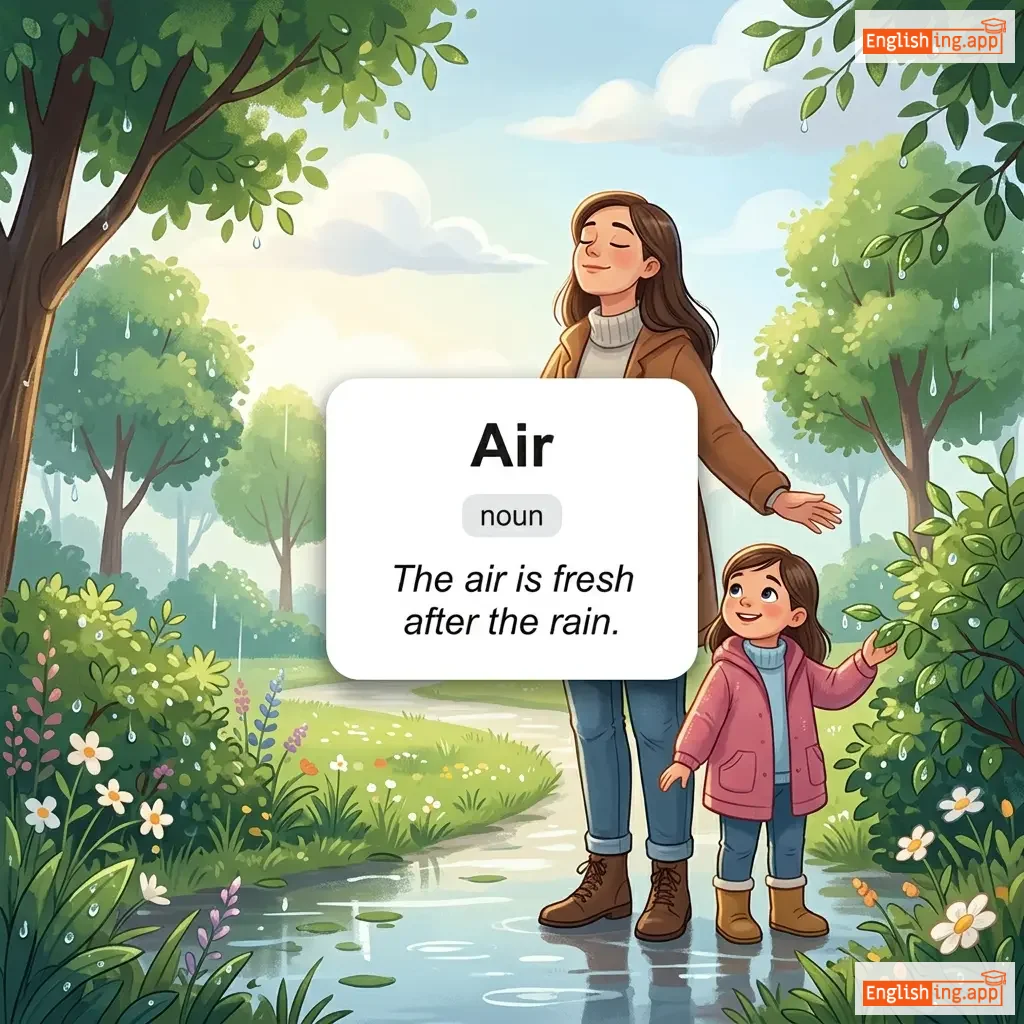
Air definition card — visual illustration of the meaning
noun
/ɛər/
aire (aire)

The invisible mixture of gases that surrounds the earth and is breathed in by people and animals.

"The air is fresh after the rain."

"El aire está fresco después de la lluvia." (El aire está fresco después de la lluvia.)
noun
/ˈeər kənˈdɪʃ.ən.ər/
aire acondicionado (aire acondicionado)

a system that controls the temperature, humidity, and air quality in a building or room

"We turned on the air conditioner because it was too hot outside."

"Encendimos el aire acondicionado porque hacía demasiado calor afuera." (Encendimos el aire acondicionado porque hacia demasiado calor afuera)
noun
/ˈeər fɔːrs/
fuerza aérea (fuerza aerea)

the military organization of a country that uses aircraft for fighting

"The air force conducted a training exercise over the mountains."

"La fuerza aérea realizó un ejercicio de entrenamiento sobre las montañas." (La fuerza aerea realizo un ejercicio de entrenamiento sobre las montanas.)