Vocabularios

Descubra, aprenda y domine el vocabulario en inglés

aesthetics definition card — visual illustration of the meaning
noun
esˈθet.ɪks
estética (estetica)

A set of principles concerned with the nature and appreciation of beauty, especially in art and design.

"Interior design focuses on aesthetics and functionality."

"El diseño de interiores se centra en la estética y funcionalidad." (El diseno de interiores se centra en la estetica y funcionalidad.)
adjective
/ˈæfəbəl/
afable (afable)

friendly, easy to talk to, and pleasant in manner

"He is such an affable host that everyone feels comfortable at his parties."

"Es un anfitrión tan afable que todos se sienten cómodos en sus fiestas." (Es un anfitrion tan afable que todos se sienten comodos en sus fiestas.)
noun
/əˈfɛər/
asunto / relación (asunto / relacion)

an event, situation, or relationship, often one that is private or romantic

"The scandal became the most talked-about affair of the year."

"El escándalo se convirtió en el asunto más comentado del año." (El escandalo se convirtio en el asunto mas comentado del ano.)
verb
/əˈfɛkt/
afectar (afectar)

to influence or make a difference to something

"The weather can greatly affect our mood."

"El clima puede afectar mucho nuestro estado de ánimo." (El clima puede afectar mucho nuestro estado de ánimo.)
noun
/ˌæfɛkˈteɪʃən/
afectación (afectacion)

an unnatural behavior or speech intended to impress others

"Her British accent was just an affectation to sound sophisticated."

"Su acento británico era solo una afectación para sonar sofisticado." (Su acento britanico era solo una afectacion para sonar sofisticado.)
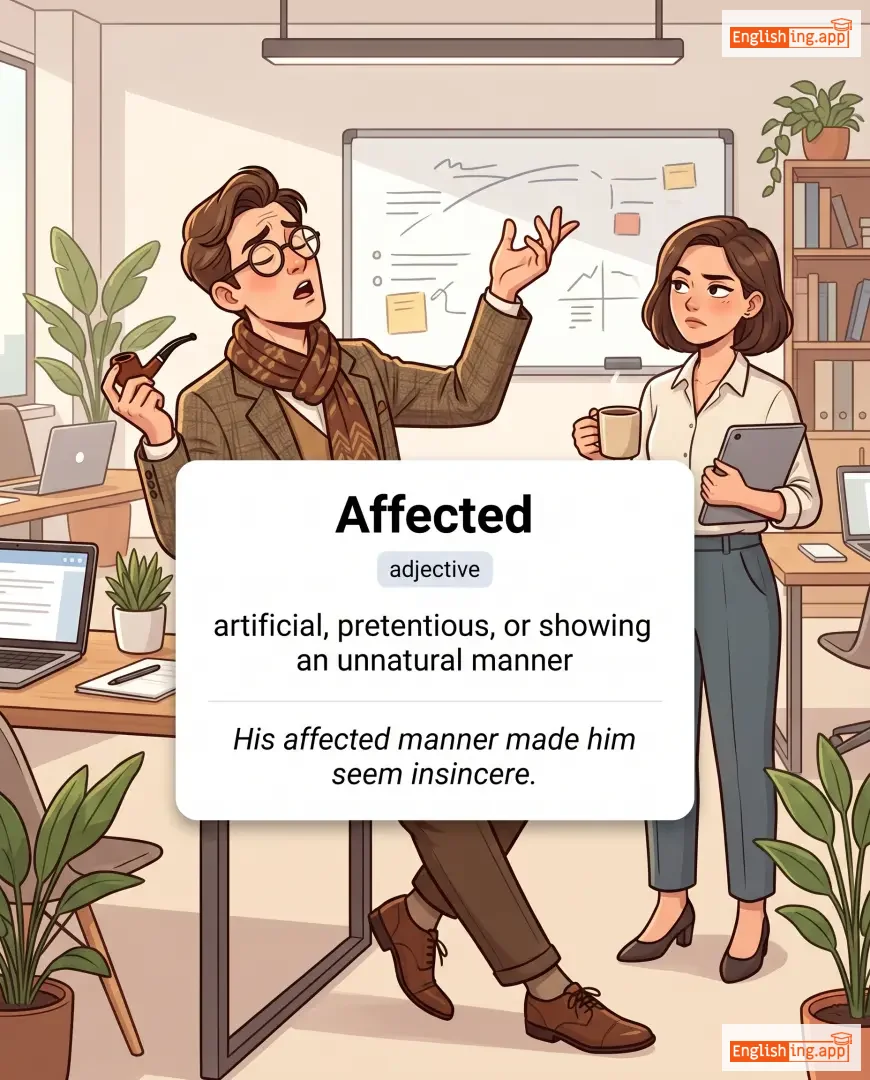
Affected definition card — visual illustration of the meaning
adjective
/əˈfɛktɪd/
afectado (afectado)

artificial, pretentious, or showing an unnatural manner

"His affected manner made him seem insincere."

"Su manera afectada lo hacía parecer insincero." (Su manera afectada lo hacía parecer insincero.)
noun
/əˈfɛkʃən/
afecto (afekto)

a gentle feeling of fondness or liking

"She showed great affection for her younger brother."

"Ella mostró un gran afecto por su hermano menor." (Ella mostro un gran afecto por su hermano menor.)
adjective
/əˈfekʃənət/
afectuoso; cariñoso; tierno; que muestra afecto (afectuoso; carinoso; tierno; que muestra afecto)

loving; caring; tender; showing affection

"She is very affectionate towards her children."

"Ella es muy cariñosa con sus hijos." (Ella es muy carinyosa con sus hijos.)
adverb
/əˈfek.ʃən.ət.li/
afectuosamente (afectuosamente)

in a way that shows feelings of liking or love; with fondness and care

"She hugged her grandmother affectionately."

"Ella abrazó a su abuela afectuosamente." (Ella abrazo a su abuela afectuosamente.)
adjective
/ˈæfərənt/
aferente (aferente)

carrying impulses toward a central organ or part, especially toward the brain or spinal cord

"Afferent nerves carry signals from the body to the brain."

"Los nervios aferentes llevan señales desde el cuerpo al cerebro." (Los nervios aferentes llevan señales desde el cuerpo al cerebro.)
verb
/əˈfaɪəns/
prometerse (prometerse)

to promise or pledge marriage; to formally engage

"They decided to affiance after years of friendship."

"Decidieron prometerse después de años de amistad." (Decidieron prometerse despues de anos de amistad)
noun
/ˌæfəˈdeɪvɪt/
declaración jurada (declaracion jurada)

a written statement confirmed by oath or affirmation, used as evidence in court

"The witness submitted an affidavit to the court."

"El testigo presentó un affidavit ante el tribunal." (El testigo presento un affidavit ante el tribunal.)
verb
/əˈfɪliˌeɪt/
afiliar (afiliar)

to officially attach or connect (a group or organization) to a larger body

"The school is affiliated with the local university."

"La escuela está afiliada a la universidad local." (La escuela esta afiliada a la universidad local.)
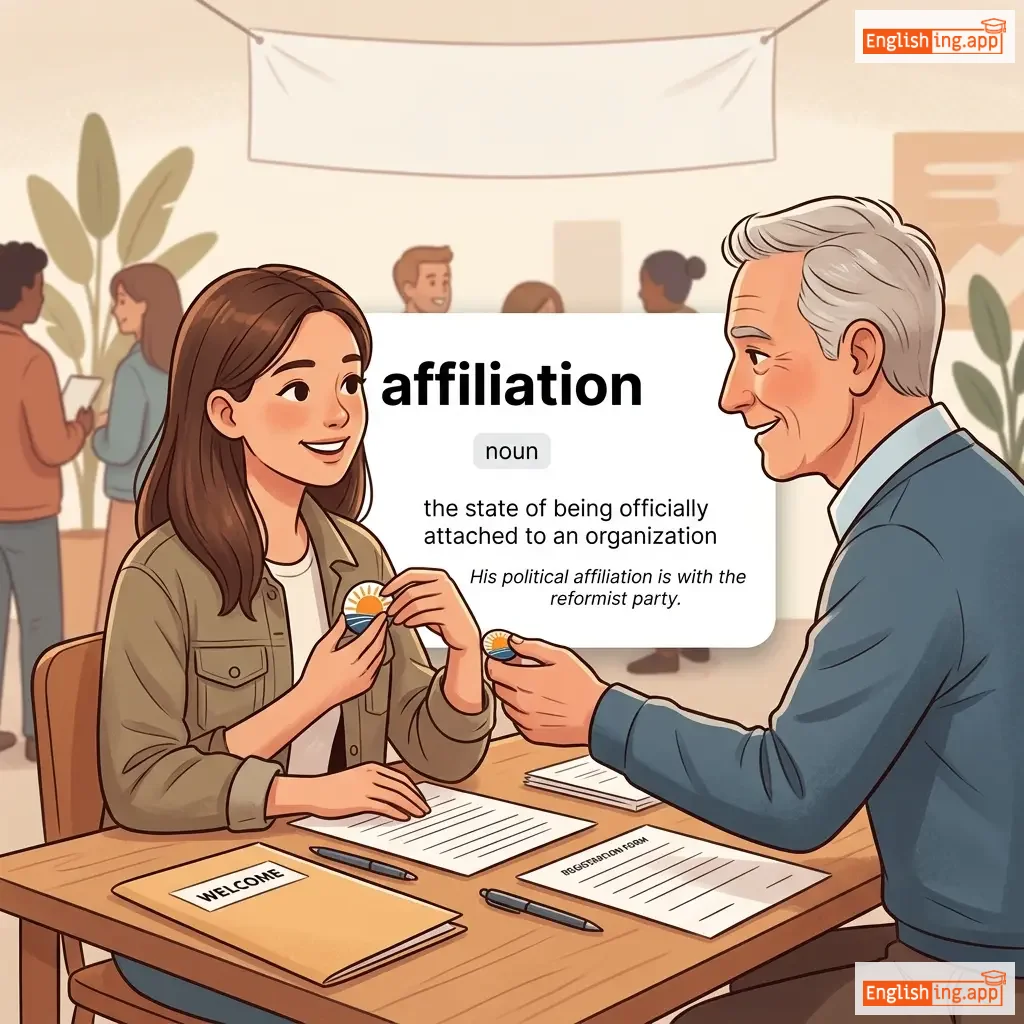
affiliation definition card — visual illustration of the meaning
noun
/əˌfɪliˈeɪʃən/
afiliación (afiliacion)

the state of being officially attached to an organization

"His political affiliation is with the reformist party."

"Su afiliación política es con el partido reformista." (Su afiliacion politica es con el partido reformista.)
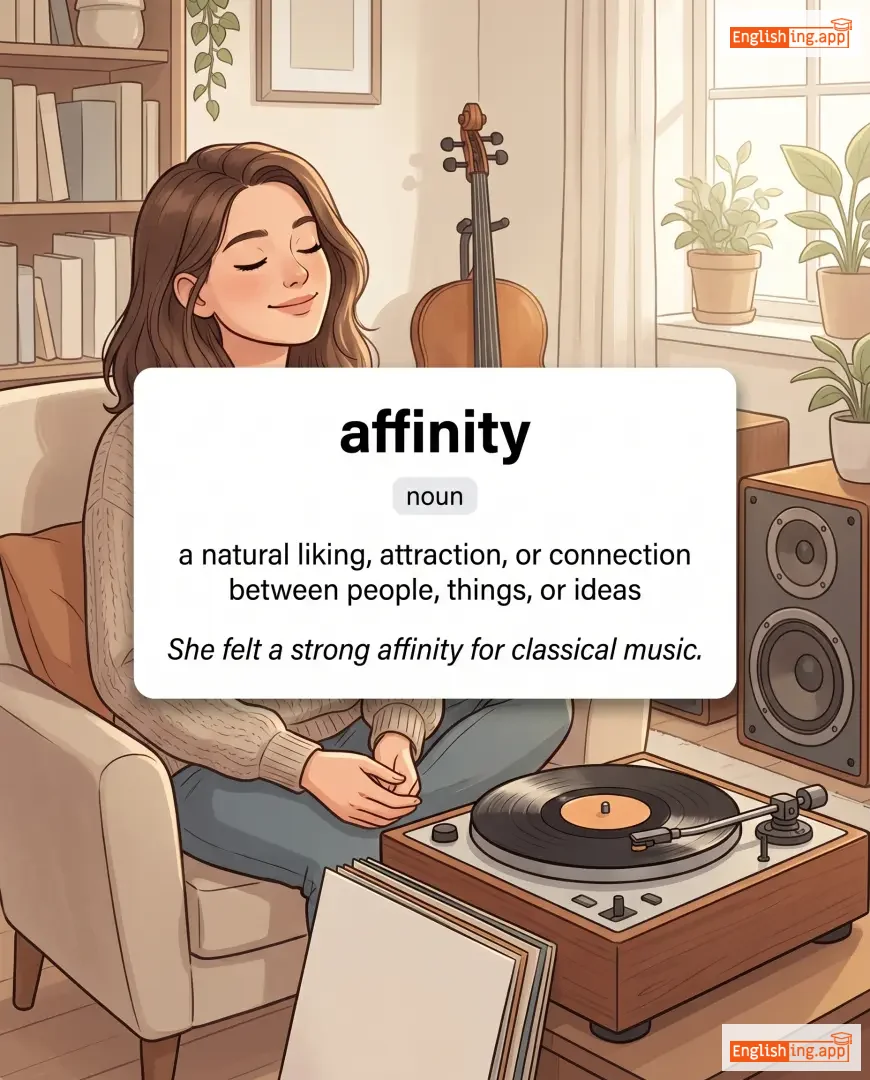
affinity definition card — visual illustration of the meaning
noun
/əˈfɪnɪti/
afinidad (afinidad)

a natural liking, attraction, or connection between people, things, or ideas

"She felt a strong affinity for classical music."

"Sintió una fuerte afinidad por la música clásica." (Sintió una fuerte afinidad por la música clásica.)
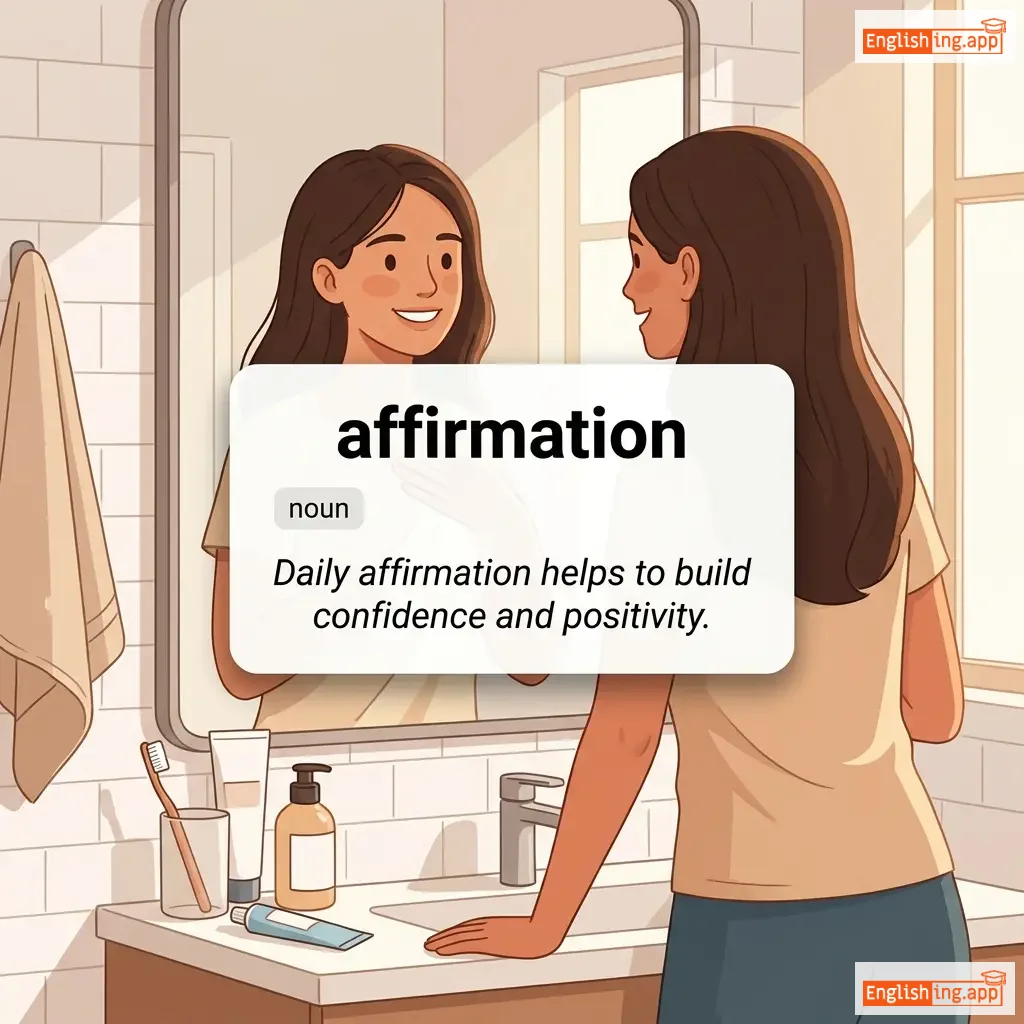
affirmation definition card — visual illustration of the meaning
noun
/ˌæfərˈmeɪʃən/
afirmación (afirmacion)

the act of confirming or stating something positively; a declaration of support or belief

"Daily affirmation helps to build confidence and positivity."

"La afirmación diaria ayuda a construir confianza y positividad." (La afirmacion diaria ayuda a construir confianza y positividad.)
adjective
/əˈfɜːrmətɪv/
afirmativo (afirmativo)

expressing agreement, approval, or a positive response

"She gave an affirmative answer to the proposal."

"Ella dio una respuesta afirmativa a la propuesta." (Ella dio una respuesta afirmativa a la propuesta.)
verb
/əˈfɪks/
adjuntar / pegar (adjuntar / pegar)

to attach or stick something firmly to another thing

"Please affix the stamp to the envelope."

"Por favor, adjunte el sello al sobre." (Por favor, adjunte el sello al sobre.)
noun
/əˈfleɪtəs/
inspiración divina (inspiracion divina)

a sudden divine inspiration or creative impulse

"The poet wrote the verses under a sudden afflatus of inspiration."

"El poeta escribió los versos bajo una súbita inspiración divina." (El poeta escribio los versos bajo una subita inspiracion divina.)
verb
/əˈflɪkt/
afligir (afligir)

to cause pain, suffering, or distress to someone or something

"Many people are afflicted by seasonal allergies."

"Muchas personas están afligidas por alergias estacionales." (Muchas personas están afligidas por alergias estacionales.)
noun
/əˈflɪkʃən/
aflicción (afliccion)

a state of pain, suffering, or distress

"Poverty is a common affliction in many parts of the world."

"La pobreza es una aflicción común en muchas partes del mundo." (La pobreza es una afliccion comun en muchas partes del mundo.)
affluence definition card — visual illustration of the meaning
noun
/ˈæfluəns/
afluencia (afluencia)

the state of having a great deal of money or wealth

"His lifestyle shows signs of great affluence."

"Su estilo de vida muestra señales de gran afluencia." (Su estilo de vida muestra señales de gran afluencia.)
adjective
/ˈæfluənt/
adinerado (adinerado)

having a great deal of money; wealthy

"She grew up in an affluent neighborhood."

"Ella creció en un vecindario adinerado." (Ella creció en un vecindario adinerado.)
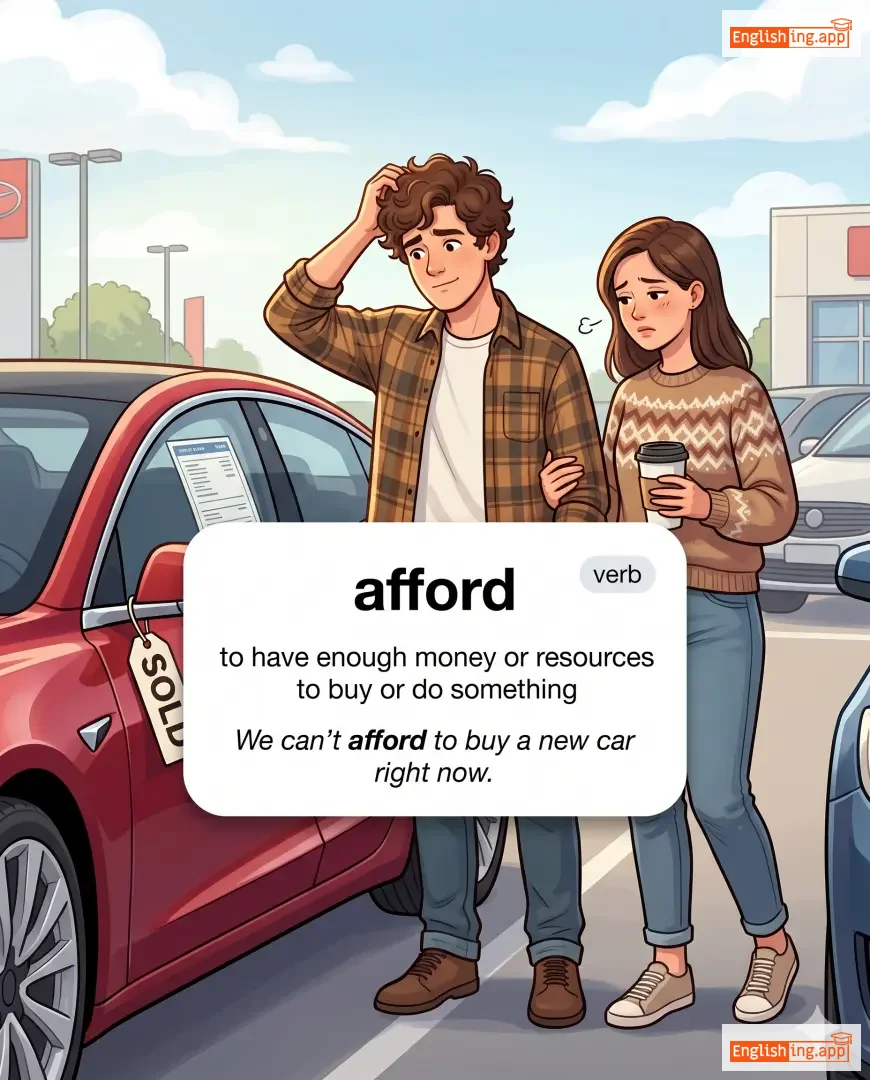
afford definition card — visual illustration of the meaning
verb
/əˈfɔːrd/
poder permitirse (poder permitirse)

to have enough money or resources to buy or do something

"We can’t afford to buy a new car right now."

"No podemos permitirnos comprar un coche nuevo ahora mismo." (No podemos permitirnos comprar un coche nuevo ahora mismo.)
adjective
/əˈfɔːdəbl/
asequible (asequible)

inexpensive and within one's financial means

"This restaurant offers affordable meals for families."

"Este restaurante ofrece comidas asequibles para las familias." (Este restaurante ofrece comidas asequibles para las familias.)
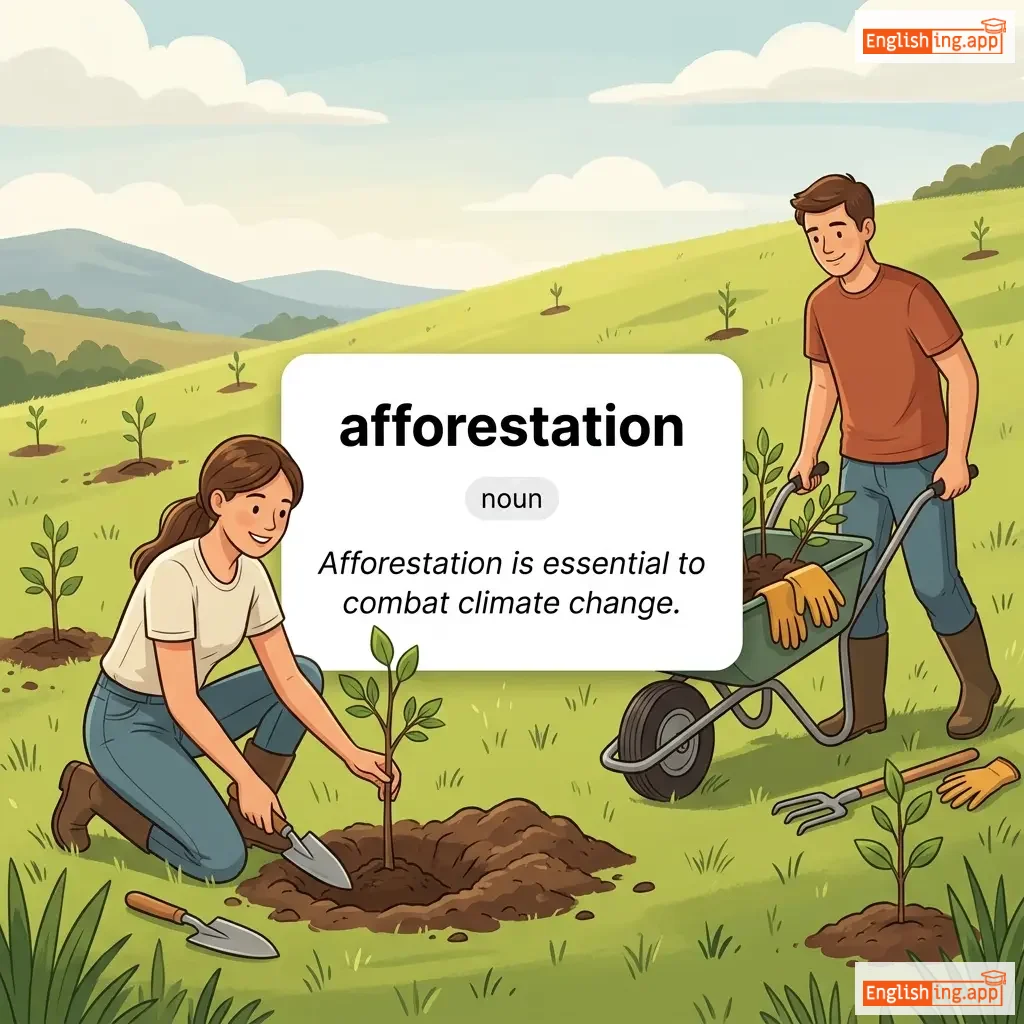
afforestation definition card — visual illustration of the meaning
noun
ˌæfɔːˈreɪʃən
reforestación (reforestacion)

The process of establishing a forest, especially on land that was not recently forested.

"Afforestation is essential to combat climate change."

"La reforestación es esencial para combatir el cambio climático." (La reforestacion es esencial para combatir el cambio climatico.)
noun
/əˈfreɪ/
pelea pública (pelea publica)

A public fight or noisy disturbance that causes alarm.

"The police were called to break up an affray outside the stadium."

"La policía fue llamada para romper una pelea afuera del estadio." (La policia fue llamada para romper una pelea afuera del estadio.)
noun, verb
/əˈfrʌnt/
afrenta (afrenta)

An action or remark that causes outrage or offense.

"He took her criticism as a personal affront."

"Él tomó su crítica como una afrenta personal." (El tomo su critica como una afrenta personal.)
adjective, adverb
/əˈfʊt/
en marcha (en marcha)

In progress; happening or being prepared.

"There are several new projects afoot in the company."

"Hay varios proyectos nuevos en marcha en la empresa." (Hay varios proyectos nuevos en marcha en la empresa.)
adjective
/əˈfɔːrˌsɛd/
mencionado anteriormente (mencionado anteriormente)

Mentioned earlier; previously stated.

"The aforesaid conditions must be met before the contract is signed."

"Las condiciones mencionadas anteriormente deben cumplirse antes de firmar el contrato." (Las condiciones mencionadas anteriormente deben cumplirse antes de firmar el contrato.)
adjective
/əˈfreɪd/
temeroso (temeroso)

feeling fear or anxiety; worried that something undesirable will happen

"She was afraid of the dark."

"Ella tenía miedo de la oscuridad." (Ella tenía miedo de la oscuridad.)
adverb
/əˈfrɛʃ/
de nuevo (de nuevo)

From the beginning, in a new way.

"After the failure, they started the project afresh."

"Después del fracaso, comenzaron el proyecto de nuevo." (Despues del fracaso, comenzaron el proyecto de nuevo.)
adjective
/ˈæfrɪkən/
africano (afrīkano)

relating to Africa or its people

"She studied African culture in university."

"Ella estudió la cultura africana en la universidad." (Ella estudió la cultura africana en la universidad.)
noun/adjective
/ˌæfrɪkən əˈmɛrɪkən/
afroamericano (afroamericano)

A person of African descent living in or originating from the United States; relating to such people.

"She is proud of her African-American heritage."

"Ella está orgullosa de su herencia afroamericana." (Ella está orgullosa de su herencia afroamericana.)
preposition, conjunction, adverb
/ˈæftər/
después (despues)

in the time following an event or another action

"We went for ice cream after the movie."

"Fuimos a comer helado después de la película." (Fuimos a comer helado despues de la pelicula.)
noun
/ˈæftərˌlaɪf/
el más allá (afterlaif)

Life or existence that some believe continues after physical death.

"Many cultures have different beliefs about the afterlife."

"Muchas culturas tienen creencias diferentes sobre el más allá." (Muchas culturas tienen creencias diferentes sobre el mas alla.)
noun
/ˈɑːftərmɑːθ/
consecuencias (consecuencias)

the consequences or aftereffects of an event or situation, especially a disastrous one

"The aftermath of the earthquake was devastating."

"Las consecuencias del terremoto fueron devastadoras." (Las consecuencias del terremoto fueron devastadoras.)
noun
/ˌæftərˈnuːn/
tarde (tarde)

The part of the day between noon and evening.

"We met in the afternoon for coffee."

"Nos encontramos por la tarde para tomar café." (Nos encontramos por la tarde para tomar cafe.)
noun
/ˈæftərˌθɔːt/
un añadido (afterthawt)

Something added or considered later than originally planned.

"The gift seemed like an afterthought rather than a genuine gesture."

"El regalo parecía un detalle de última hora más que un gesto genuino." (El regalo parecia un detalle de ultima hora mas que un gesto genuino.)
adverb
/ˈɑːftərwərd/
después (despues)

at a later or subsequent time

"She went home afterward."

"Ella fue a casa después." (Ella fue a casa despues.)
adverb
/ˈɑːf.tə.wərdz/
después; luego; más tarde (despues; luego; mas tarde)

at a later time; after an event or time that has already been mentioned

"We had dinner and afterwards we watched a movie."

"Tuvimos la cena y luego vimos una película." (Tuvimos la cena y luego vimos una pelicula.)
adverb
/əˈɡɛn/ or /əˈɡeɪn/
de nuevo (de nuevo)

Once more; another time.

"She read the book again to understand it better."

"Ella leyó el libro de nuevo para entenderlo mejor." (Ella leyo el libro de nuevo para entenderlo mejor.)
preposition
/əˈɡɛnst/ or /əˈɡeɪnst/
contra (uhgaynst)

In opposition to; contrary to; touching or resting on.

"They voted against the proposal."

"Votaron en contra de la propuesta" (Votaron en contra de la propuesta)
adjective
/əˈɡeɪp/ or /əˈɡɑːp/
boquiabierto (boquiabierto)

With the mouth wide open in surprise or wonder.

"She stood agape at the breathtaking view."

"Ella se quedó boquiabierta ante la vista impresionante." (Ella se quedó boquiabierta ante la vista impresionante.)
noun/verb
/eɪdʒ/
edad (edad)

The length of time that a person has lived; to grow older.

"She asked his age politely."

"Ella preguntó su edad educadamente." (Ella preguntó su edad educadamente.)
adjective
/eɪdʒd/
anciano (ansiano)

having lived for a specified number of years; old

"The aged man sat in the park, watching the children play."

"El anciano estaba sentado en el parque, mirando a los niños jugar." (El ansiano estaba sentado en el parque, mirando a los ninos jugar.)
noun
/ˈeɪ.dʒən.si/
agencia (agencia)

An organization or business that provides a particular service.

"She works at a travel agency."

"Ella trabaja en una agencia de viajes." (Ella trabaja en una agencia de viajes.)
noun
/əˈdʒɛndə/
agenda (agenda)

A list of items to be discussed or acted upon in a meeting or plan.

"The manager reviewed the agenda before the meeting began."

"El gerente revisó la agenda antes de que la reunión comenzara." (El gerente reviso la agenda antes de que la reunion comenzara.)
noun
/ˈeɪ.dʒənt/
agente (agente)

A person who acts on behalf of another person or organization.

"The real estate agent showed us several houses."

"El agente inmobiliario nos mostró varias casas." (El agente inmobiliario nos mostró varias casas.)
verb
/əˈɡlɒməˌreɪt/
aglutinar (aglutinhar)

To collect or form into a mass or group.

"The dust particles began to agglomerate into larger clusters."

"Las partículas de polvo comenzaron a aglomerarse en grupos más grandes." (Las partículas de polvo comenzaron a aglomerarse en grupos más grandes.)