Vocabularios

Descubra, aprenda y domine el vocabulario en inglés

noun
/əˈsɛnʃən/
ascensión (ascension)

The act of rising or going up, often to an important position or a higher place.

"His rapid ascension in the company surprised everyone."

"Su rápida ascensión en la empresa sorprendió a todos." (Su rápida ascensión en la empresa sorprendió a todos.)
noun
/əˈsɛnt/
ascenso, elevación (ascenso, elevacion)

The act of rising or climbing to a higher position or level.

"The climbers began their ascent to the mountain peak at dawn."

"Los alpinistas comenzaron su ascenso hacia la cima de la montaña al amanecer." (Los alpinistas comenzaron su ascenso hacia la cima de la montaña al amanecer.)
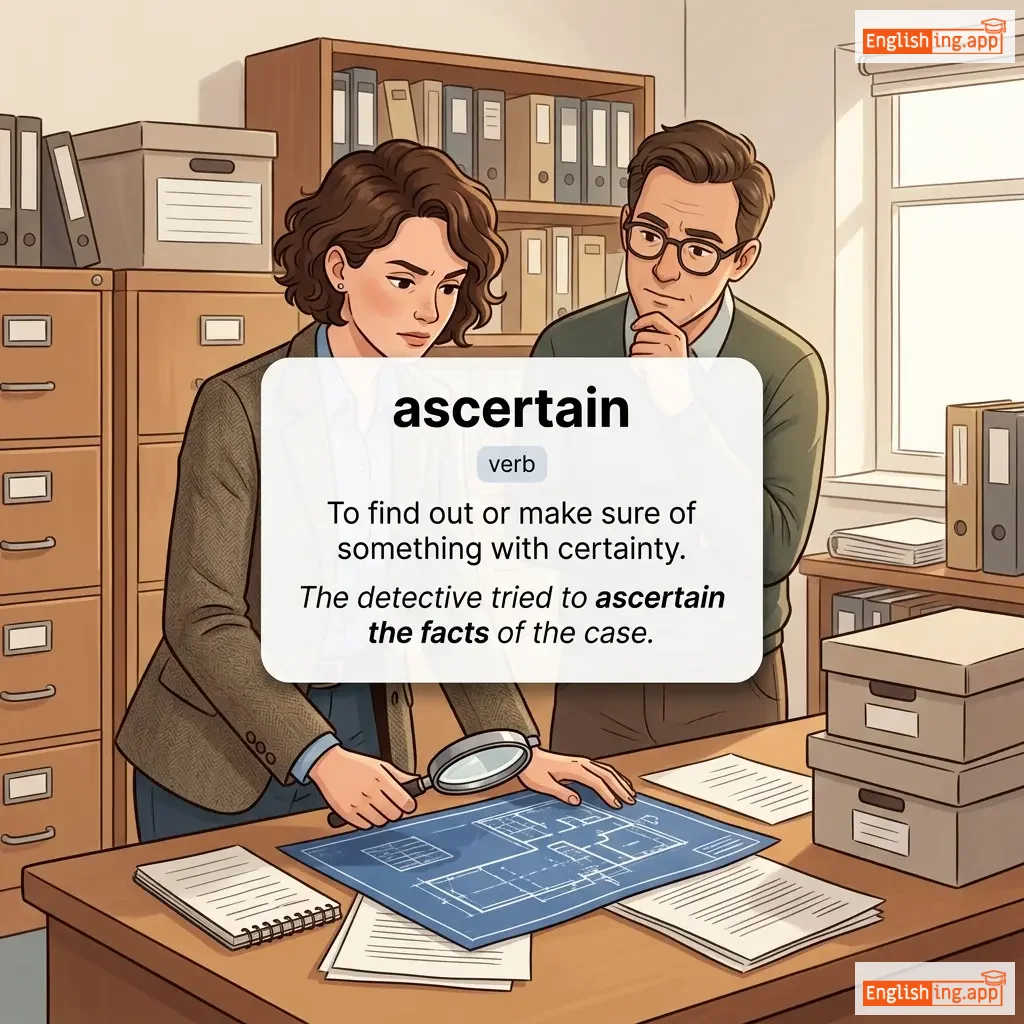
ascertain definition card — visual illustration of the meaning
verb
/ˌæs.ərˈteɪn/
asegurar, determinar (asegurar, determinar)

To find out or make sure of something with certainty.

"The detective tried to ascertain the facts of the case."

"El detective trató de asegurar los hechos del caso." (El detective trato de asegurar los hechos del caso.)
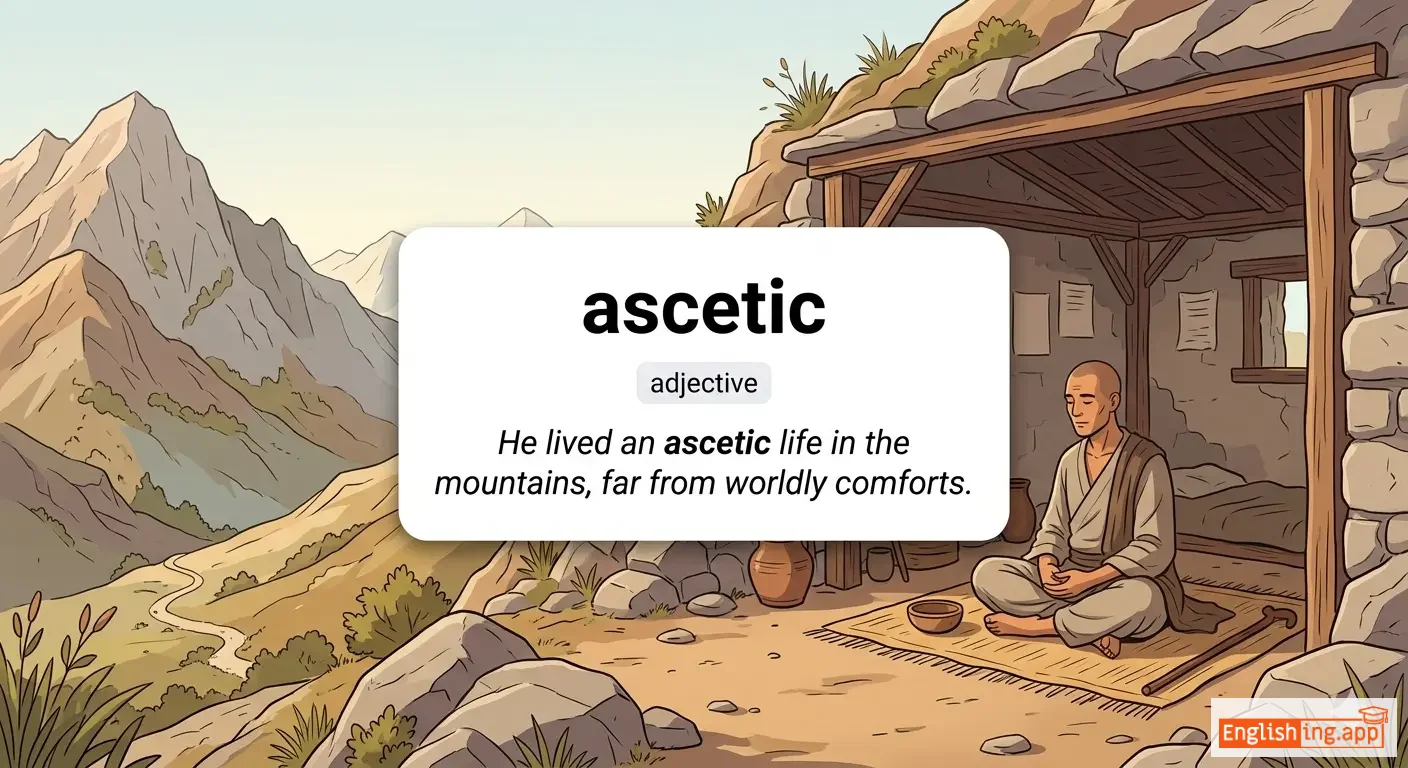
ascetic definition card — visual illustration of the meaning
adjective
/əˈsɛt.ɪk/
ascético (ascetico)

Practicing strict self-denial and abstaining from worldly pleasures, often for religious reasons.

"He lived an ascetic life in the mountains, far from worldly comforts."

"Vivió una vida ascética en las montañas, alejado de las comodidades mundanas." (Vivió una vida ascética en las montañas, alejado de las comodidades mundanas.)
noun
/əˈsɛt.ɪˌsɪz.əm/
ascetismo, autodisciplina (ascetismo, autodisciplina)

The practice of severe self-discipline and abstaining from indulgence, typically for religious or spiritual reasons.

"Asceticism has been a part of many religious traditions throughout history."

"El ascetismo ha sido parte de muchas tradiciones religiosas a lo largo de la historia." (El ascetismo ha sido parte de muchas tradiciones religiosas a lo largo de la historia.)
verb
/əˈskraɪb/
atribuir, asignar (atribuir, asignar)

To attribute something to a cause, source, or person.

"Many scholars ascribe the poem to an unknown author."

"Muchos eruditos atribuyen el poema a un autor desconocido." (Muchos eruditos atribuyen el poema a un autor desconocido.)
adjective
/eɪˈsɛptɪk/
libre de gérmenes (libre de germenes)

Free from contamination caused by harmful microorganisms; sterile.

"Surgeons must work in an aseptic environment to prevent infection."

"Los cirujanos deben trabajar en un ambiente aséptico para prevenir infecciones." (Los cirujanos deben trabajar en un ambiente aséptico para prevenir infecciones.)
adjective
/ˌeɪˈsɛkʃuəl/
asexual (asexual)

Without sexual feelings, associations, or reproduction through sex.

"Many plants reproduce through asexual methods like budding or splitting."

"Muchas plantas se reproducen mediante métodos asexuales como la gemación o la división." (Muchas plantas se reproducen mediante metodos asexuales como la gemacion o la division.)
noun
/æʃ/
ceniza (ceniza)

the powdery residue left after the burning of a substance

"After the fire, only ash remained of the house."

"Después del fuego, solo quedó ceniza de la casa." (Despues del fuego, solo quedo ceniza de la casa.)
noun
/ˈæʃ.treɪ/
cenicero (cenicero)

a receptacle for tobacco ash and cigarette butts

"Please use the ash tray for your cigarette."

"Por favor, usa el cenicero para tu cigarrillo." (Por favor, usa el cenicero para tu cigarrillo.)
adjective
/æʃ ˈkʌl.ər/
color ceniza (color ceniza)

a grayish color resembling ash

"The old building had ash-colour walls that needed painting."

"El edificio viejo tenía paredes de color ceniza que necesitaban pintura." (El edificio viejo tenia paredes de color ceniza que necesitaban pintura)
adjective
/əˈʃeɪmd/
avergonzado (avergonzado)

feeling embarrassed or guilty because of one's actions

"He was ashamed of his poor performance."

"Él estaba avergonzado de su bajo rendimiento." (El estaba avergonzado de su bajo rendimiento.)
adjective
/ˈæʃən/
pálido (palido)

Very pale in appearance, often due to shock, fear, or illness.

"His face turned ashen when he heard the terrible news."

"Su rostro se volvió pálido cuando escuchó la terrible noticia." (Su rostro se volvio palido cuando escucho la terrible noticia.)
adjective, noun
/ˈeɪʒən/
asiático (asiatico)

relating to Asia or its people

"She loves Asian culture."

"A ella le encanta la cultura asiática." (A ella le encanta la cultura asiática.)
noun
/ˈeɪʒən siː bæs/
lubina asiática (lubina asiatica)

a large predatory fish found in coastal waters and estuaries of the Indo-Pacific region, prized for its white meat

"Asian sea bass is highly valued in aquaculture for its fast growth."

"La lubina asiática es muy valorada en la acuicultura por su rápido crecimiento." (la lubina asiatica es muy valorada en la acuicultura por su rapido crecimiento)
noun
/ˈeɪʒən swɒmp iːl/
anguila de pantano asiática (anguila de pantano asiatica)

a snake-like freshwater fish that can survive in muddy waters and is considered a delicacy in South Asian cuisine

"Asian swamp eel can breathe air and survive in shallow muddy waters."

"La anguila de pantano asiática puede respirar aire y sobrevivir en aguas fangosas poco profundas." (la anguila de pantano asiatica puede respirar aire y sobrevivir en aguas fangosas poco profundas)
adverb, noun
/əˈsaɪd/
a un lado (a un lado)

to or on one side; a remark not intended for everyone

"He stepped aside to let her pass."

"Él se apartó para dejarla pasar." (Él se apartó para dejarla pasar.)
adjective
/ˈæsɪnaɪn/
asinado (asinado)

Extremely foolish or stupid.

"It was an asinine idea to drive into the storm without checking the weather."

"Fue una idea asina conducir hacia la tormenta sin revisar el clima." (Fue una idea asina conducir hacia la tormenta sin revisar el clima.)
verb
/æsk/
preguntar (preguntar)

to request information or seek an answer

"She asked him about his new job."

"Ella le preguntó sobre su nuevo trabajo." (Ella le pregunto sobre su nuevo trabajo.)
adverb
/əˈskæns/
despectivamente (despectivamente)

With suspicion, mistrust, or disapproval.

"She looked askance at his unusual proposal."

"Ella miró despectivamente su propuesta inusual." (Ella miro despectivamente su propuesta inusual.)
adjective
/əˈskjuː/
torcido (torcido)

Not in a straight or level position; crooked or tilted.

"The picture on the wall hung slightly askew."

"El cuadro en la pared estaba colgado ligeramente torcido." (El cuadro en la pared estaba colgado ligeramente torcido.)
adjective
/əˈsliːp/
dormido (dormido)

in a state of sleep

"The baby is fast asleep."

"El bebé está profundamente dormido." (El bebe esta profundamente dormido.)
noun
/əˈspær.ə.ɡəs biːn/
judía de espárragos (judia de esparragos)

a long, thin green vegetable pod that grows on vines; also known as yard-long bean

"The asparagus bean grows up to three feet long and is commonly used in Asian cooking."

"La judía de espárragos crece hasta tres pies de largo y se utiliza comúnmente en la cocina asiática." (la judia de esparragos crece hasta tres pies de largo y se utiliza comunmente en la cocina asiatica.)
noun
/ˈæs.pekt/
aspecto (aspecto)

A particular part, feature, or view of something.

"One important aspect of health is regular exercise."

"Un aspecto importante de la salud es el ejercicio regular." (Un aspecto importante de la salud es el ejercicio regular.)
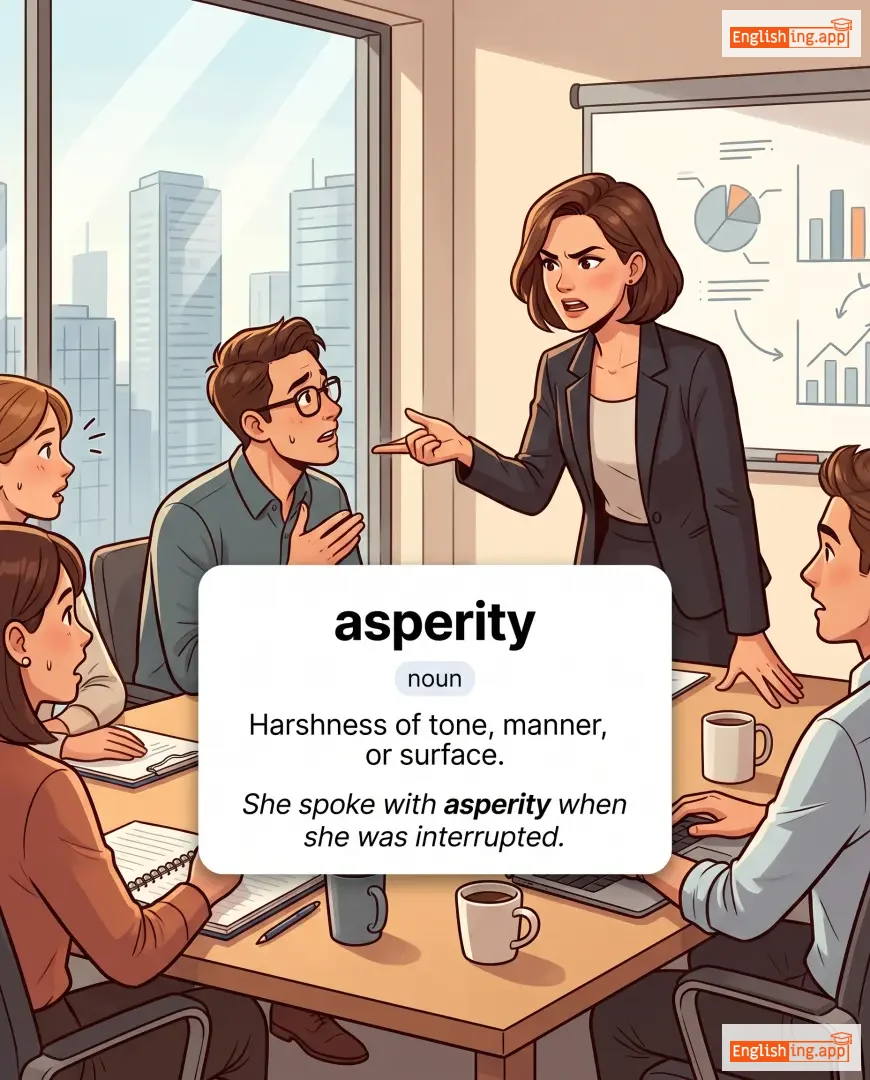
asperity definition card — visual illustration of the meaning
noun
/əˈsper.ɪ.ti/
asperidad (asperidad)

Harshness of tone, manner, or surface.

"She spoke with asperity when she was interrupted."

"Habló con aspereza cuando la interrumpieron." (Hablo con aspereza cuando la interrumpieron.)
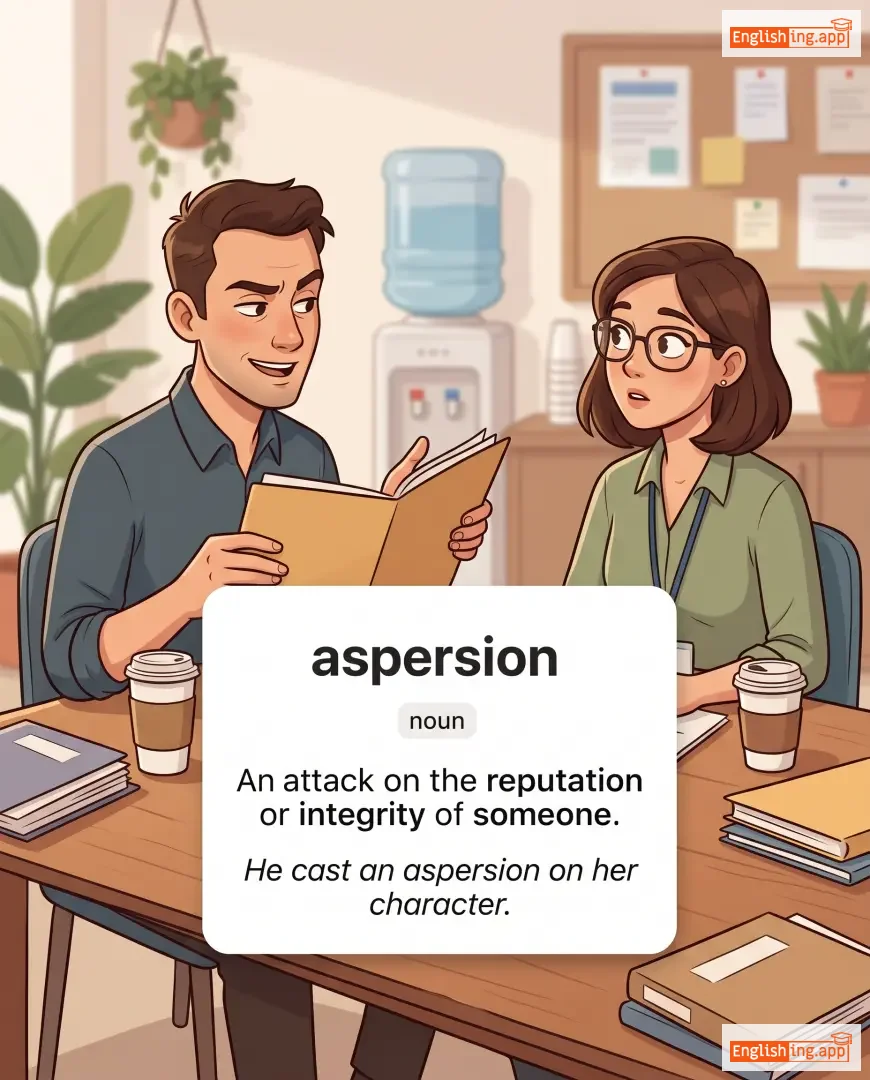
aspersion definition card — visual illustration of the meaning
noun
/əˈspɜːr.ʒən/
calumnia (kalumnia)

An attack on the reputation or integrity of someone.

"He cast an aspersion on her character."

"Él lanzó una calumnia sobre su carácter." (Él lanzó una kalumnia sobre su carácter.)
noun (plural)
/əˈspɜːr.ʒənz/
aspersión (aspersión)

Critical or slanderous remarks; multiple attacks on reputation.

"The politician rejected the aspersions cast against him."

"El político rechazó las aspersiones lanzadas contra él." (El político rechazó las aspersiones lanzadas contra él.)
noun
/ˈæspɪrənt/
aspirante (aspirante)

a person who seeks or hopes to achieve a position of honor or advancement

"She is an aspirant for the university's top scholarship."

"Ella es una aspirante a la beca más alta de la universidad." (Ella es una aspirante a la beca mas alta de la universidad.)
aspiration definition card — visual illustration of the meaning
noun
/ˌæspəˈreɪʃən/
aspiración (aspiracion)

a strong desire to achieve something; ambition

"Her aspiration is to become a doctor."

"Su aspiración es convertirse en doctora." (Su aspiracion es convertirse en doctora.)
verb
/əˈspaɪər/
aspirar (aspirar)

to have a strong desire to achieve something

"Many students aspire to study abroad."

"Muchos estudiantes aspiran a estudiar en el extranjero." (Muchos estudiantes aspiran a estudiar en el extranjero.)
noun
/æs/
burro (burro)

a donkey; also an informal term for a foolish person or one's buttocks

"He acted like an ass during the meeting."

"Se comportó como un burro durante la reunión." (Se comportó como un burro durante la reunión.)
verb
/əˈseɪl/
atacar (atacar)

to attack violently, either physically or with words

"The politician was assailed with difficult questions."

"El político fue asaltado con preguntas difíciles." (El político fue asaltado con preguntas difíciles.)
noun
/əˈseɪlənt/
agresor (agresor)

a person who attacks another

"The police arrested the assailant at the scene."

"La policía arrestó al agresor en el lugar del crimen." (La policía arrestó al agresor en el lugar del crimen.)
noun
/əˈsæsɪn/
asesino (asesino)

A person who kills someone, usually for political or religious reasons, often secretly.

"The assassin fled the scene after carrying out the attack."

"El asesino huyó del lugar después de llevar a cabo el ataque." (El asesino huyo del lugar despues de llevar a cabo el ataque.)
verb
/əˈsæsɪneɪt/
asesinar (asesinar)

To murder someone important, often a political or religious leader, usually by surprise attack.

"The rebels planned to assassinate the king."

"Los rebeldes planearon asesinar al rey." (Los rebeldes planearon asesinar al rey.)
noun
/əˌsæsɪˈneɪʃən/
asesinato (asesinato)

The act of killing someone important, often for political or ideological reasons.

"The assassination of the president shocked the nation."

"El asesinato del presidente conmocionó a la nación." (El asesinato del presidente conmocionó a la nación.)
noun, verb
/əˈsɔːlt/
asalto (asalto)

a physical attack or to attack someone violently

"He was charged with assault after the fight."

"Fue acusado de asalto después de la pelea." (Fue acusado de asalto después de la pelea.)
noun, verb
/ˈæseɪ/
ensayo (ensayo)

To test or analyze the quality, purity, or content of a substance; the act of such testing.

"The scientists assayed the mineral sample for gold content."

"Los científicos analizaron la muestra mineral para el contenido de oro." (Los cientificos analizaron la muestra mineral para el contenido de oro.)
verb
/əˈsɛmbəl/
reunir (reunir)

to gather or bring together in one place

"The students assembled in the hall for the meeting."

"los estudiantes se reunieron en el salón para la reunión." (los estudiantes se reunieron en el salón para la reunión.)
noun
/əˈsɛmbli/
asamblea (asamblea)

a group of people gathered together for a common purpose or the act of putting parts together to form something

"The school held an assembly to discuss the new rules."

"La escuela celebró una asamblea para discutir las nuevas reglas." (La escuela celebro una asamblea para discutir las nuevas reglas.)
assembly session definition card — visual illustration of the meaning
noun
/əˈsem.bli ˈseʃ.ən/
sesión de asamblea (sesion de asamblea)

A formal meeting where representatives gather to discuss and make decisions on important matters.

"The assembly session discussed global challenges."

"La sesión de asamblea discutió los desafíos globales." (La sesion de asamblea discutio los desafios globales.)
noun, verb
/əˈsɛnt/
asentimiento (asentimiento)

To agree to something, especially after careful consideration; an expression of approval.

"She nodded her head in silent assent."

"Ella asintió con la cabeza en silencio." (Ella asintió con la cabeza en silencio.)
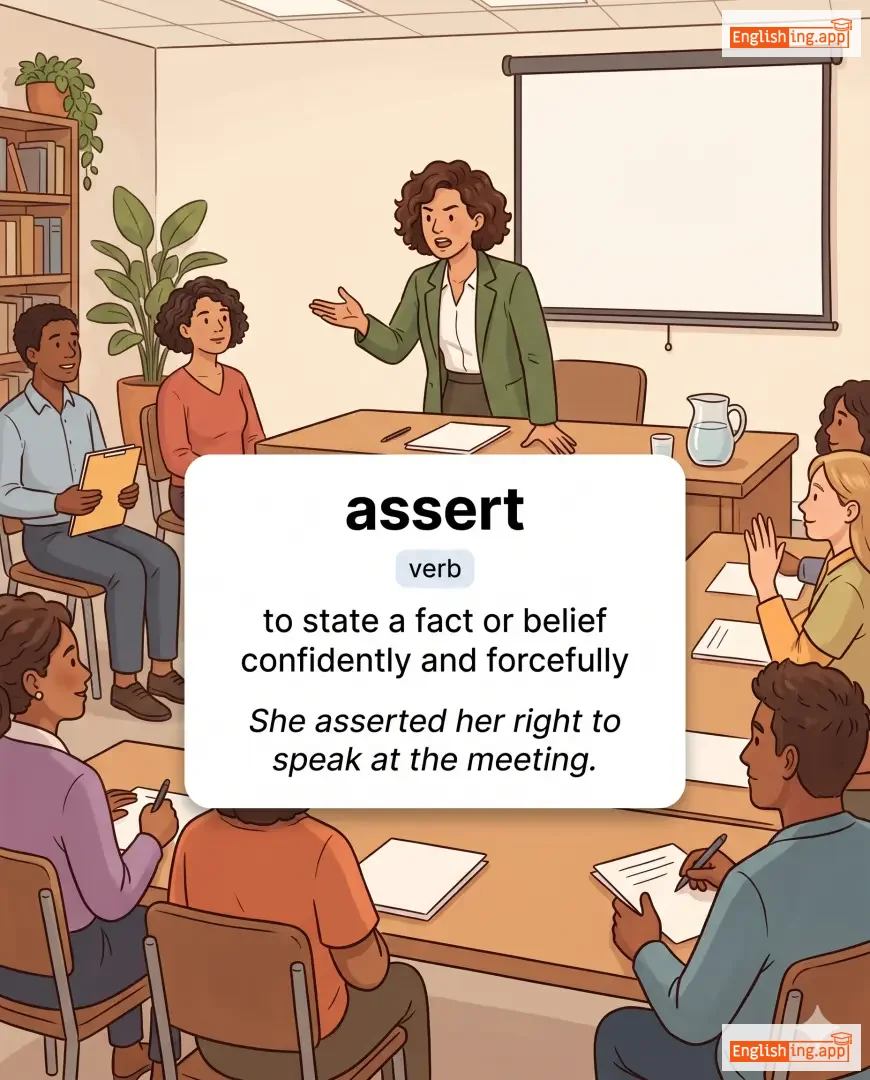
assert definition card — visual illustration of the meaning
verb
/əˈsɜːrt/
afirmar (afirmar)

to state a fact or belief confidently and forcefully

"She asserted her right to speak at the meeting."

"Ella afirmó su derecho a hablar en la reunión." (Ella afirmó su derecho a hablar en la reunión.)
noun
/əˈsɜːʃən/
afirmación (afirmacion)

a confident and forceful statement of fact or belief

"Her assertion that she was right was met with silence."

"Su afirmación de que tenía razón fue recibida con silencio." (Su afirmacion de que tenia razon fue recibida con silencio.)
adjective
/əˈsɜːrtɪv/
asertivo (asertivo)

having or showing a confident and forceful personality

"He is very assertive in expressing his opinions."

"Es muy asertivo al expresar sus opiniones." (Es muy asertivo al expresar sus opiniones.)
verb
/əˈsɛs/
evaluar (evaluar)

to evaluate or estimate the nature, ability, or quality of something

"The teacher assessed the students' progress."

"El maestro evaluó el progreso de los estudiantes." (El maestro evaluó el progreso de los estudiantes.)
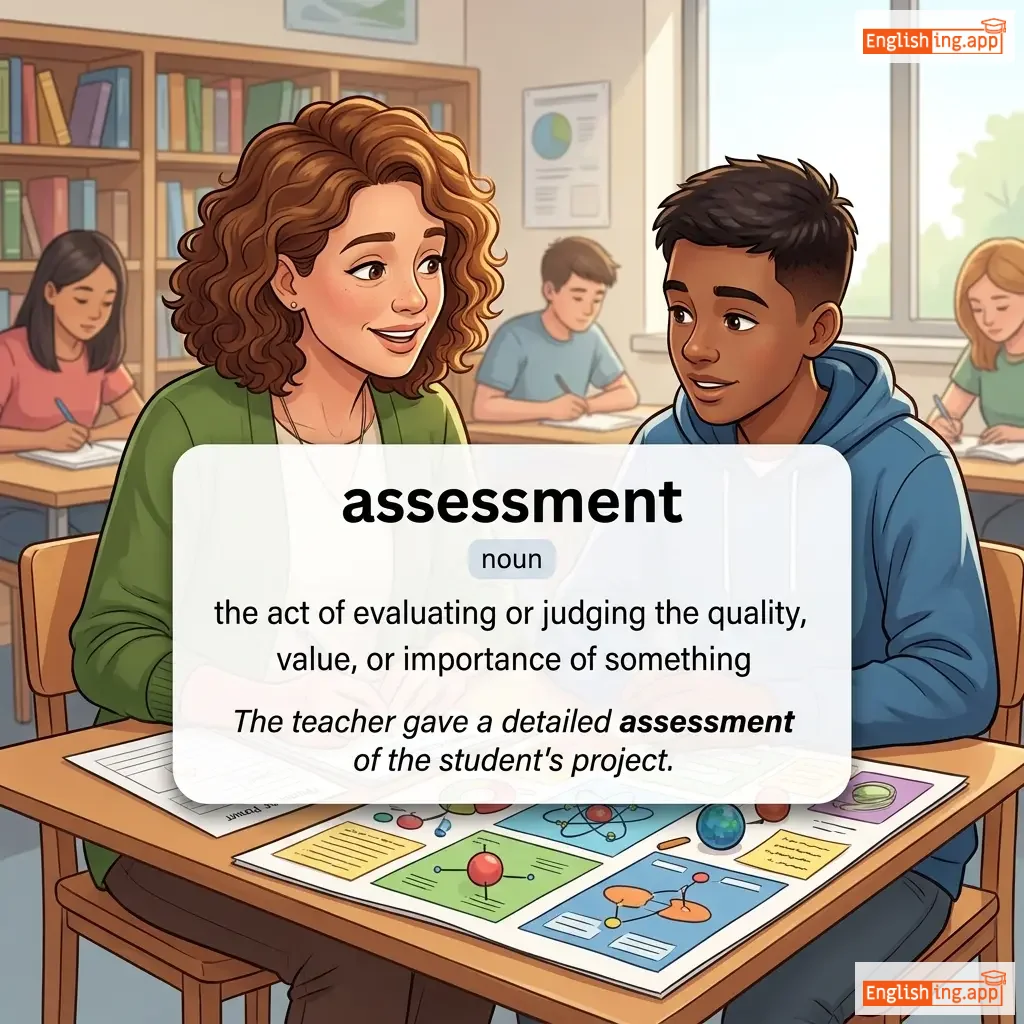
assessment definition card — visual illustration of the meaning
noun
/əˈsɛsmənt/
evaluación (evaluacion)

the act of evaluating or judging the quality, value, or importance of something

"The teacher gave a detailed assessment of the student's project."

"El maestro dio una evaluación detallada del proyecto del estudiante." (El maestro dio una evaluacion detallada del proyecto del estudiante.)
noun
/əˈsɛsər/
evaluador (evaluador)

a person who evaluates or estimates the nature, ability, or quality of something

"An external assessor reviewed the project report."

"Un evaluador externo revisó el informe del proyecto." (Un evaluador externo revisó el informe del proyecto.)
asset definition card — visual illustration of the meaning
noun
/ˈæsɛt/
activo (activo)

a valuable person, skill, or resource; something owned that has value

"Her communication skills are a great asset to the company."

"Sus habilidades de comunicación son un gran activo para la empresa." (Sus habilidades de comunicación son un gran activo para la empresa.)
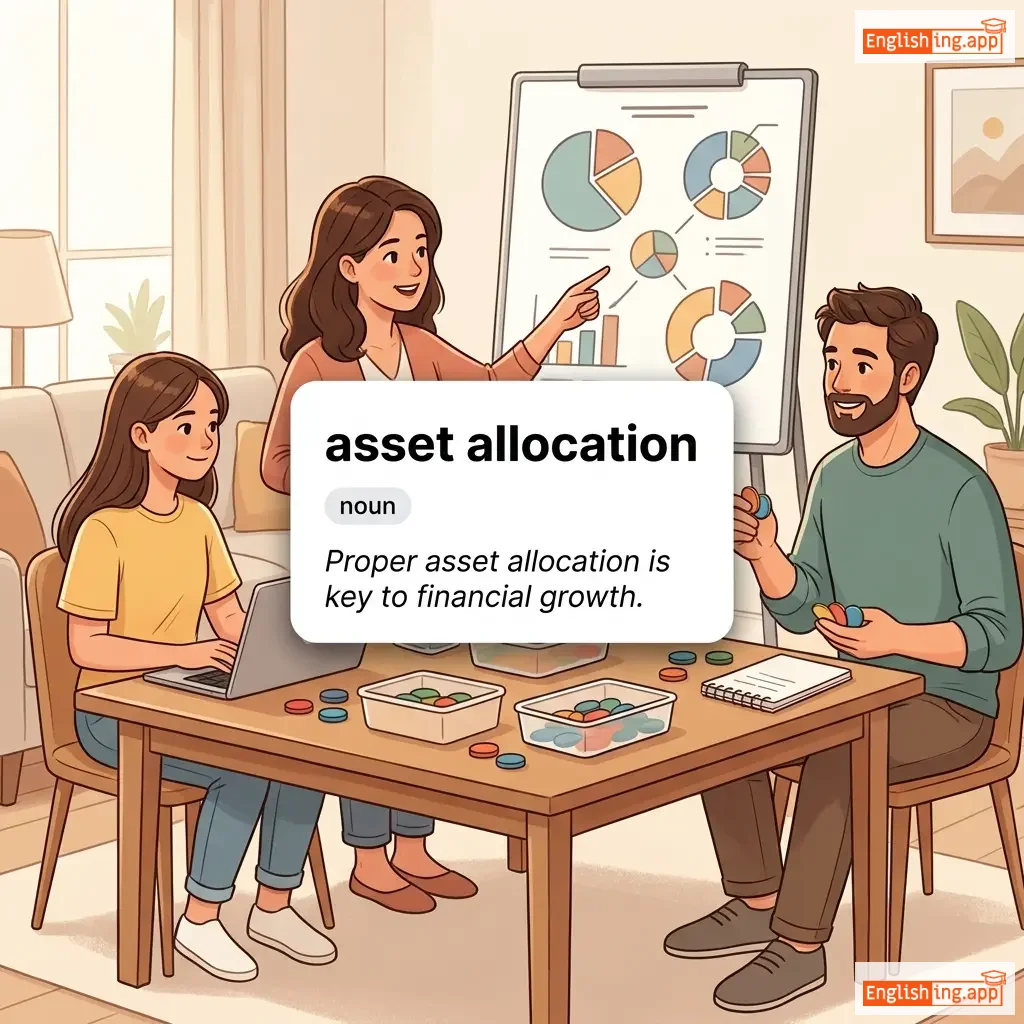
asset allocation definition card — visual illustration of the meaning
noun
ˈæ.sɛt ˌæl.əˈkeɪ.ʃən
asignación de activos (asignacion de activos)

An investment strategy that aims to balance risk and reward by apportioning a portfolio's assets according to an individual's goals, risk tolerance, and investment horizon.

"Proper asset allocation is key to financial growth."

"Una correcta asignación de activos es clave para el crecimiento financiero." (Una correcta asignacion de activos es clave para el crecimiento financiero.)