Vocabularios

Descubra, aprenda y domine el vocabulario en inglés

noun
/ˈæpərtʃər/
abertura / agujero (abertura / agujero)

an opening, hole, or gap, especially one that lets in light

"Light entered through the small aperture in the wall."

"La luz entró a través de la pequeña abertura en la pared." (La luz entró a través de la pequeña abertura en la pared.)
apex definition card — visual illustration of the meaning
noun
/ˈeɪ.pɛks/
cima (seema)

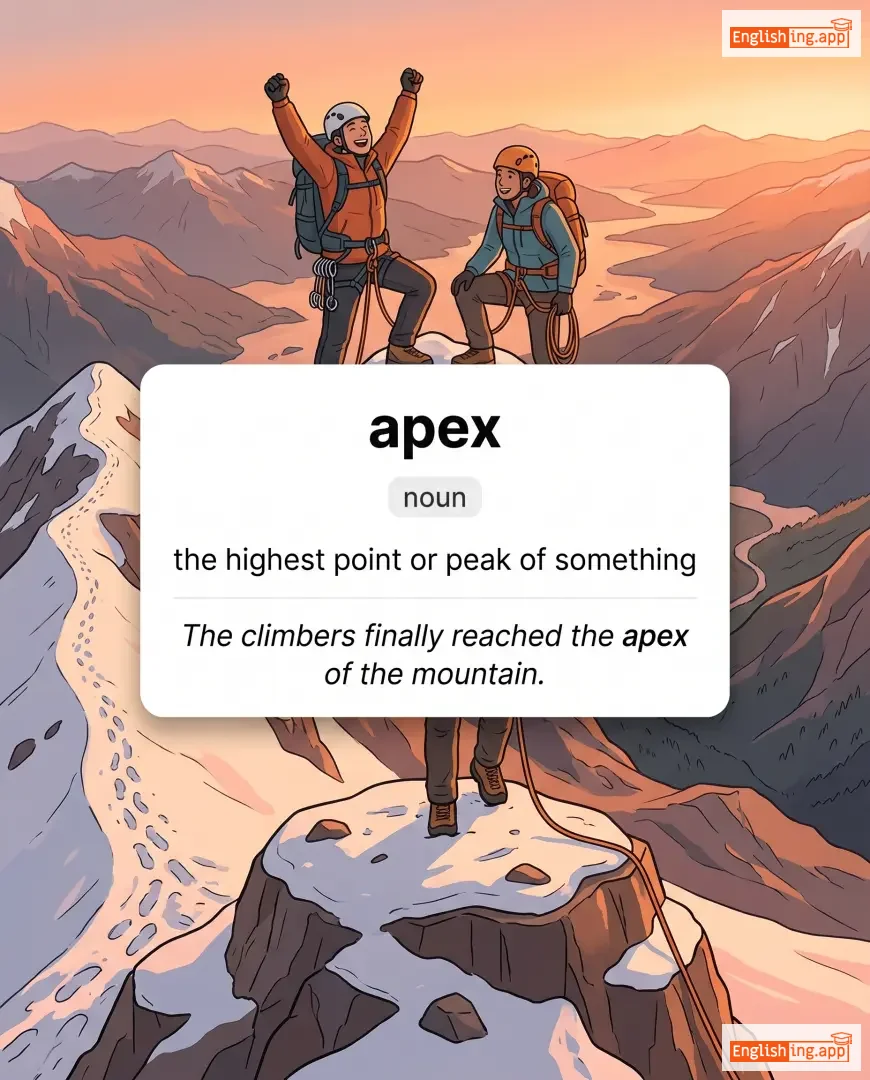
the highest point or peak of something

"The climbers finally reached the apex of the mountain."

"Los escaladores finalmente llegaron a la cima de la montaña." (Los escaladores finalmente llegaron a la cima de la montaña.)
noun
/əˈfeɪ.ʒə/
afasia (afasia)

a medical condition that causes loss of ability to speak or understand language

"After the stroke, she was diagnosed with aphasia."

"Después del derrame cerebral, le diagnosticaron afasia." (Despues del derrame cerebral, le diagnosticaron afasia.)
noun
/ˈæf.ə.rɪ.zəm/
aforismo (aforismo)

a short, witty saying that expresses a general truth or principle

"He began his speech with an aphorism about life and success."

"Él comenzó su discurso con un aforismo sobre la vida y el éxito." (El comenzo su discurso con un aforismo sobre la vida y el exito.)
adjective
/ˌæf.əˈrɪs.tɪk/
estilo aforístico (estilo aforistico)

expressed in the style of a short, witty saying

"Her writing style is concise and aphoristic."

"Su estilo de escritura es conciso y aforístico." (Su estilo de escritura es conciso y aforistico.)
noun
/ˈeɪ.pi.ə.rɪst/
apicultor (apicultor)

a person who keeps and tends bees for honey production

"The apiarist collected fresh honey from the hives."

"El apicultor recogió miel fresca de las colmenas." (El apicultor recogio miel fresca de las colmenas.)
noun
/ˈeɪ.pi.ˌɛr.i/
colmenar (colmenar)

A place where beehives are kept, especially for commercial purposes.

"The farmer built a new apiary to produce organic honey."

"El agricultor construyó un nuevo colmenar para producir miel orgánica." (El agricultor construyó un nuevo colmenar para producir miel orgánica.)
noun
/ˈæp.ɪˌkʌl.tʃər/
apicultura (apicultura)

The practice of keeping and raising bees for honey and other products.

"Apiculture plays a vital role in agriculture by supporting pollination."

"La apicultura juega un papel vital en la agricultura al apoyar la polinización." (La apicultura juega un papel vital en la agricultura al apoyar la polinizacion.)
noun
/əˈplɒm/
aplomo (aplomo)

Complete and confident self-assurance or poise.

"She handled the difficult questions with aplomb."

"Ella manejó las preguntas difíciles con aplomo." (Ella manejo las preguntas dificiles con aplomo.)
adjective
/əˌpɒk.əˈlɪp.tɪk/
apocalíptico (apocaliptico)

Describing the end of the world, or something catastrophic and disastrous.

"The movie depicts an apocalyptic future after a nuclear war."

"La película describe un futuro apocalíptico después de una guerra nuclear." (La pelicula describe un futuro apocaliptico despues de una guerra nuclear.)
adjective
/əˈpɒ.krɪ.fəl/
dudoso (dudoso)

Of doubtful authenticity, though widely circulated as true.

"The story about him saving the village is probably apocryphal."

"La historia de él salvando el pueblo probablemente es dudosa." (La historia de él salvando el pueblo probablemente es dudosa.)
apogee definition card — visual illustration of the meaning
noun
/ˈæpədʒiː/
ápice (apice)

the highest or most distant point; the climax or peak of something

"The empire reached its apogee during the 18th century."

"El imperio alcanzó su ápice durante el siglo XVIII." (El imperio alcanzo su apice durante el siglo dieciocho.)
adjective
/ˌeɪpəˈlɪtɪkəl/
apolítico (apolitico)

not interested in or not connected with politics

"She prefers to stay apolitical and focus on her work."

"Ella prefiere mantenerse apolítica y concentrarse en su trabajo." (Ella prefiere mantenerse apolitica y concentrarse en su trabajo.)
noun
/əˈpɒlədʒɪst/
defensor (defensor)

a person who defends or justifies something, often a controversial belief or institution

"He is known as an apologist for authoritarian regimes."

"Él es conocido como un defensor de los regímenes autoritarios." (El es conocido como un defensor de los regimenes autoritarios.)
verb
/əˈpɒlədʒaɪz/
disculparse (disculparse)

to say sorry for something wrong you have done

"He apologized for being late to the meeting."

"Él se disculpó por llegar tarde a la reunión." (Él se disculpó por llegar tarde a la reunión.)
noun
/ˈæpəˌlɔːɡ/
cuento moral (cuento moral)

a short moral story or fable intended to teach a lesson

"The teacher used an old apologue to explain honesty to the children."

"El maestro usó un viejo cuento moral para explicar la honestidad a los niños." (El maestro usó un viejo cuento moral para explicar la honestidad a los niños.)
noun
/əˈpɒlədʒi/
disculpa (dis-kul-pah)

a statement expressing regret for something wrong or hurtful

"He offered an apology for being late to the meeting."

"Él ofreció una disculpa por llegar tarde a la reunión." (El ofrecio una disculpa por llegar tarde a la reunion.)
noun
/əˈpɒfəsɪs/
apofasis (apofasis)

A rhetorical device where the speaker brings up a subject by denying it or pretending to pass over it.

"The politician used apophasis by saying, 'I won’t even mention my opponent’s scandals.'"

"El político usó la apofasis al decir: 'Ni siquiera mencionaré los escándalos de mi oponente'." (El politico uso la apofasis al decir: 'Ni siquiera mencionare los escandalos de mi oponente'.)
noun
/ˈæpəfθɛm/
dicho o refrán corto, ingenioso y educativo (apofzem)

A short, pithy, and instructive saying or maxim.

"She always had a witty apophthegm to share at meetings."

"Ella siempre tenía un apofema ingenioso para compartir en las reuniones." (Ella siempre tenía un apofema ingenioso para compartir en las reuniones.)
adjective
/ˌæpəˈplɛktɪk/
apoplético (apoplectico)

Extremely angry; furious.

"He was apoplectic when he heard about the unfair decision."

"Estaba apoplético cuando escuchó sobre la decisión injusta." (Estaba apopletico cuando escucho sobre la decision injusta.)
noun
/ˈæpəplɛksi/
Pérdida súbita de conciencia o control debido a un derrame cerebral o rabia extrema (apoplexia)

A sudden loss of consciousness or control due to stroke or extreme anger.

"The old man nearly had apoplexy when he heard the shocking news."

"El anciano casi sufrió apoplejía cuando escuchó la noticia impactante." (El anciano casi sufrio apoplejia cuando escucho la noticia impactante.)
noun
/əˈpɒstəsi/
apostasía (apostasia)

The abandonment or renunciation of a religious or political belief.

"His public apostasy shocked his followers."

"Su apostasía pública sorprendió a sus seguidores." (Su apostasía pública sorprendió a sus seguidores.)
noun
/ˈæpəˌsteɪt/
apóstata (apostata)

A person who renounces a religious or political belief or principle.

"He was labeled an apostate after abandoning the faith of his community."

"Fue etiquetado como apóstata después de abandonar la fe de su comunidad." (Fue etiquetado como apóstata después de abandonar la fe de su comunidad.)
noun
/əˈpɒsəl/
apóstol, defensor (apostol, defensor)

A vigorous and pioneering advocate or supporter of a particular cause, often used for the early Christian disciples.

"He became an apostle of environmental protection."

"Él se convirtió en un apóstol de la protección del medio ambiente." (Él se convirtió en un apóstol de la protección del medio ambiente.)
noun
/əˈpɒstrəfi/
apóstrofe (apostrofe)

A punctuation mark (') used to indicate possession or the omission of letters or numbers.

"You need an apostrophe in the word 'children’s'."

"Necesitas un apóstrofe en la palabra 'children’s'." (Necesitas un apostrofe en la palabra 'children’s'.)
noun
/əˈpɒθəˌkɛri/
boticario (boticario)

A historical term for a person who prepared and sold medicines and drugs.

"The village apothecary provided remedies for many common illnesses."

"El boticario del pueblo proporcionó remedios para muchas enfermedades comunes." (El boticario del pueblo proporciono remedios para muchas enfermedades comunes.)
apothegm definition card — visual illustration of the meaning
noun
/ˈæpəˌθɛm/
máxima, dicho (maxima, dicho)

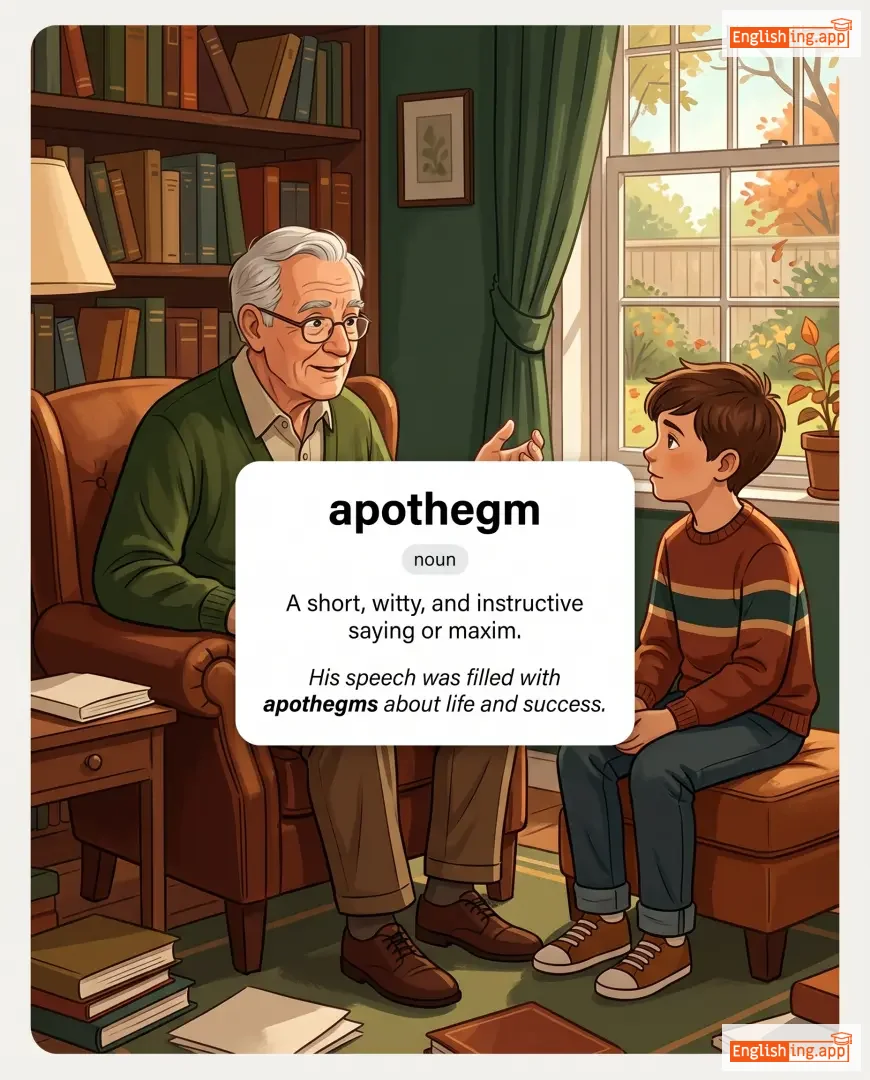
A short, witty, and instructive saying or maxim.

"His speech was filled with apothegms about life and success."

"Su discurso estaba lleno de máximas sobre la vida y el éxito." (Su discurso estaba lleno de máximas sobre la vida y el éxito.)
noun
/əˌpɒθiˈoʊsɪs/
apoteosis, el punto más alto (apoteosis, el punto mas alto)

The highest point of development; the perfect example of something; the elevation of someone to divine status.

"Many see the Renaissance as the apotheosis of art and culture in Europe."

"Muchos ven el Renacimiento como la apoteosis del arte y la cultura en Europa." (Muchos ven el Renacimiento como la apoteosis del arte y la cultura en Europa.)
verb
/əˈpɔːl/
impactar (impactar)

To shock or horrify someone with something unpleasant or bad.

"The cruelty of the crime appalled the entire community."

"La crueldad del crimen impactó a toda la comunidad." (La crueldad del crimen impactó a toda la comunidad.)
apparatus definition card — visual illustration of the meaning
noun
/ˌæpəˈreɪtəs/
aparato (aparato)

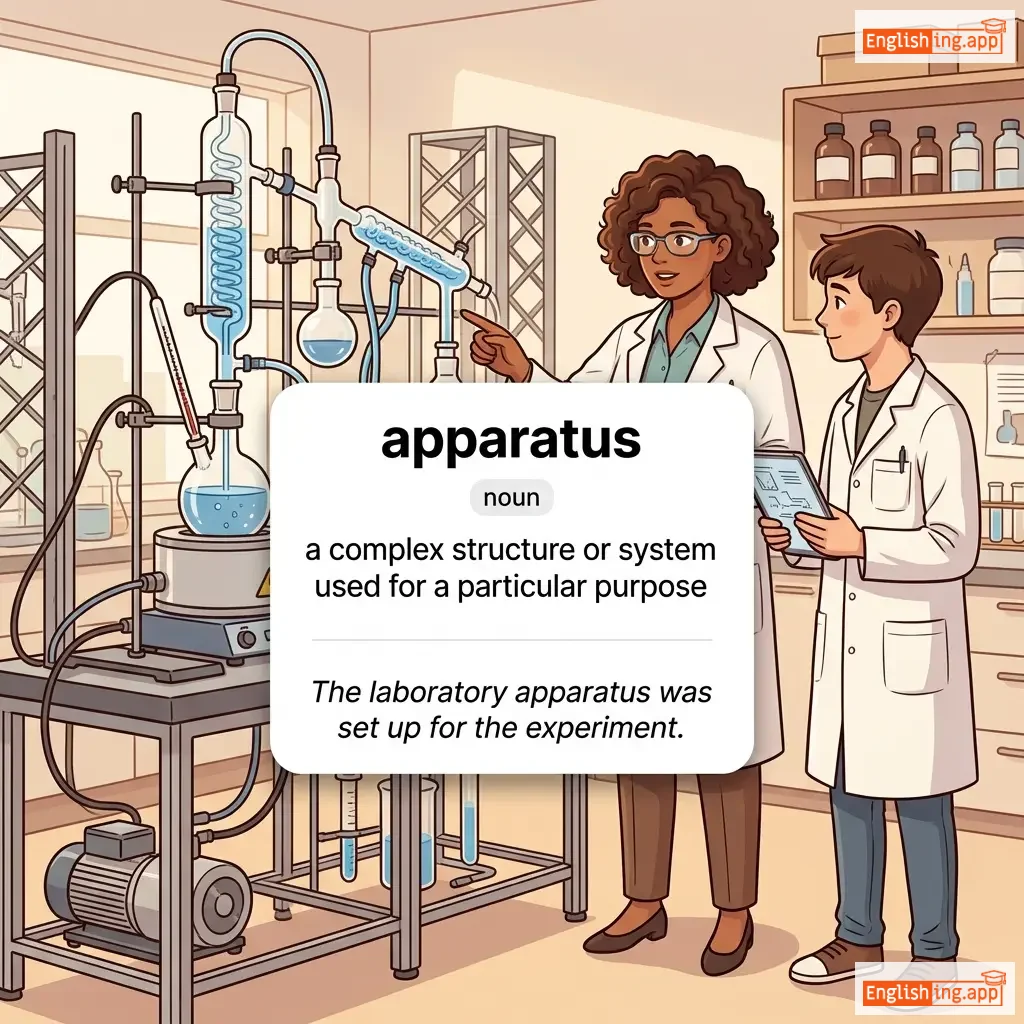
a complex structure or system used for a particular purpose

"The laboratory apparatus was set up for the experiment."

"El aparato de laboratorio se configuró para el experimento." (El aparato de laboratorio se configuró para el experimento.)
noun
/əˈpærəl/
ropa (ropa)

Clothing, especially formal or special clothes.

"The store specializes in wedding apparel."

"La tienda se especializa en ropa de boda." (La tienda se especializa en ropa de boda.)
adjective
/əˈpærənt/
aparente (aparente)

Clearly visible or understood; obvious.

"It soon became apparent that he was not telling the truth."

"Pronto quedó claro que no estaba diciendo la verdad." (Pronto quedo claro que no estaba diciendo la verdad.)
adverb
/əˈpærəntli/
aparentemente (aparentemente)

as far as one knows or can see; seemingly

"Apparently, she forgot about the meeting."

"Aparentemente, ella olvidó la reunión." (Aparentemente, ella olvido la reunion.)
noun
/ˌæpəˈrɪʃən/
aparición fantasmagórica (aparicion fantasmagorica)

A ghostly figure or an unusual or unexpected appearance.

"The children were frightened by the sudden apparition in the old house."

"Los niños se asustaron por la repentina aparición en la casa vieja." (Los ninos se asustaron por la repentina aparicion en la casa vieja.)
verb, noun
/əˈpiːl/
apelación / atractivo (apelacion / atractivo)

to make a serious request; to be attractive or interesting; a formal request to a higher authority for a decision to be changed

"The charity appealed to the public for donations."

"La caridad apeló al público por donaciones." (La caridad apelo al publico por donaciones.)
adjective
/əˈpiːlɪŋ/
atractivo (apiling)

attractive or interesting

"The design of the house is very appealing."

"El diseño de la casa es muy atractivo." (El diseno de la casa es muy atractivo)
verb
/əˈpɪə/
aparecer (aparecer)

to become visible or come into sight; to seem

"She appeared suddenly at the door."

"Ella apareció de repente en la puerta." (Ella apareció de repente en la puerta.)
noun
/əˈpɪərəns/
apariencia (apariencia)

the way that someone or something looks

"His sudden appearance surprised everyone."

"Su repentina aparición sorprendió a todos." (Su repentina aparición sorprendió a todos.)
appease definition card — visual illustration of the meaning
verb
/əˈpiːz/
apaciguar / satisfacer (apaciguar / satisfacer)

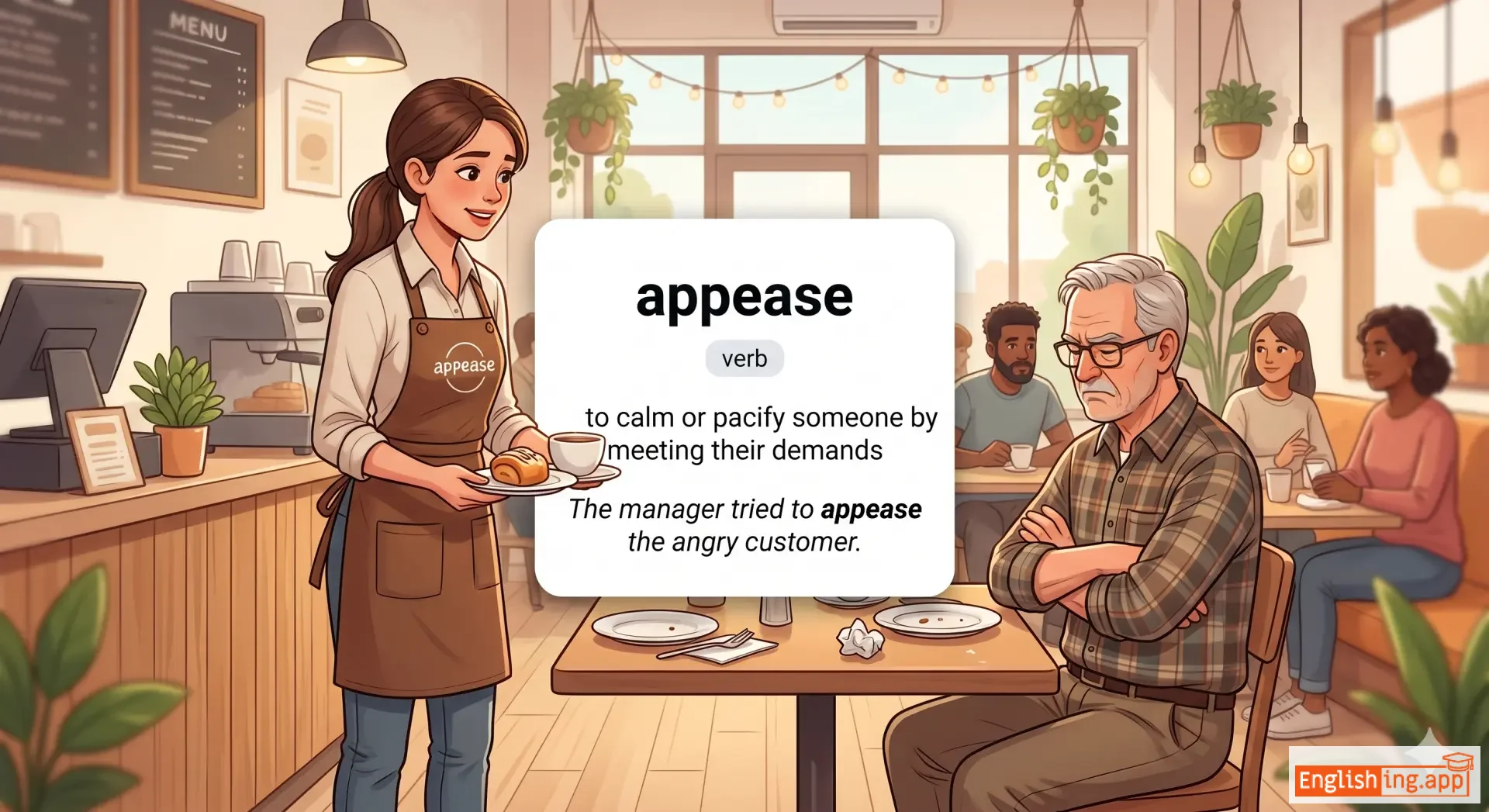
to calm or pacify someone by meeting their demands

"The manager tried to appease the angry customer."

"El gerente intentó apaciguar al cliente enojado." (El gerente intentó apaciguar al cliente enojado.)
adjective
/ˈæpəˌleɪt/
relacionado con apelaciones (relacionado con apelaciones)

relating to appeals in a court of law

"The case was taken to an appellate court."

"El caso fue llevado a un tribunal de apelaciones." (El caso fue llevado a un tribunal de apelaciones.)
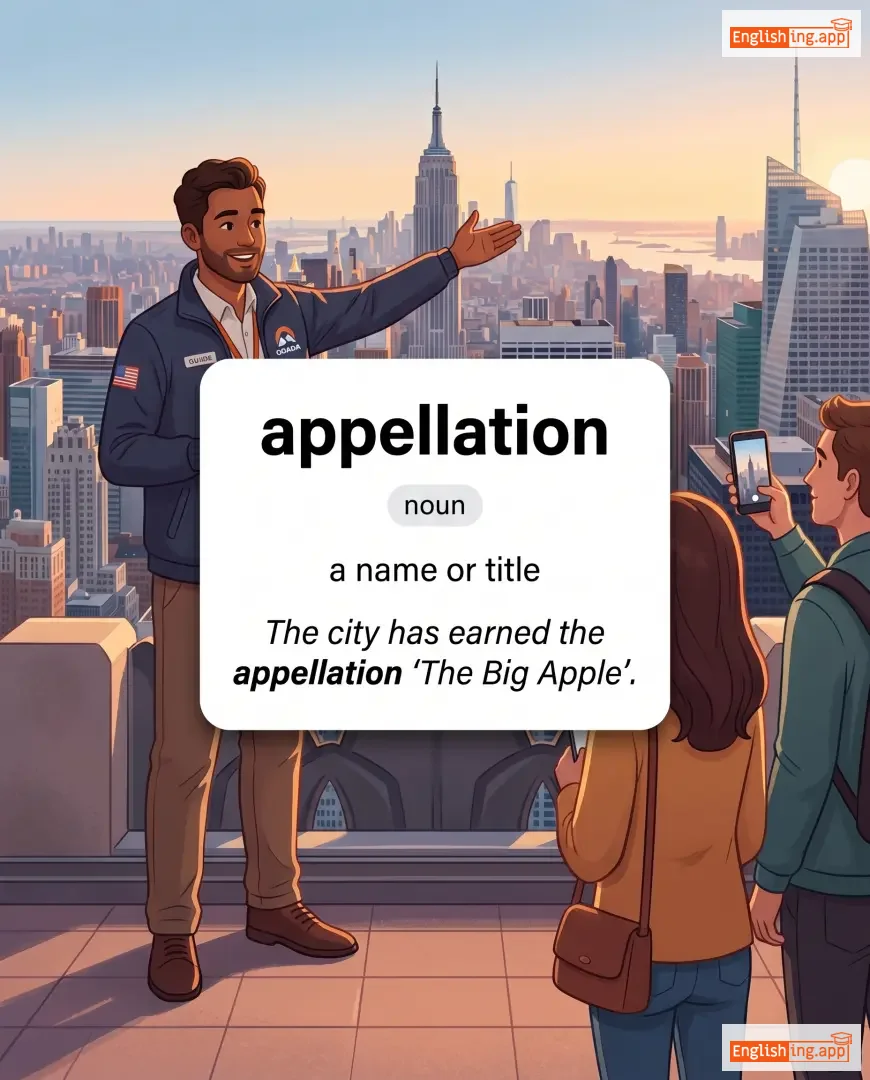
appellation definition card — visual illustration of the meaning
noun
/ˌæpəˈleɪʃən/
título / nombre (titulo / nombre)

a name or title

"The city has earned the appellation 'The Big Apple'."

"La ciudad ha ganado el título 'La Gran Manzana'." (La ciudad ha ganado el titulo 'La Gran Manzana'.)
verb
/əˈpɛnd/
agregar (agregar)

to add something as an attachment or supplement, usually at the end of a document or list

"She decided to append a note to the end of the report."

"Ella decidió agregar una nota al final del informe." (Ella decidió agregar una nota al final del informe.)
verb
/ˌæpərˈteɪn/
pertenecer (pertenecer)

to relate to or be connected with something

"The rules only appertain to members of the club."

"Las reglas solo pertenecen a los miembros del club." (Las reglas solo pertenecen a los miembros del club.)
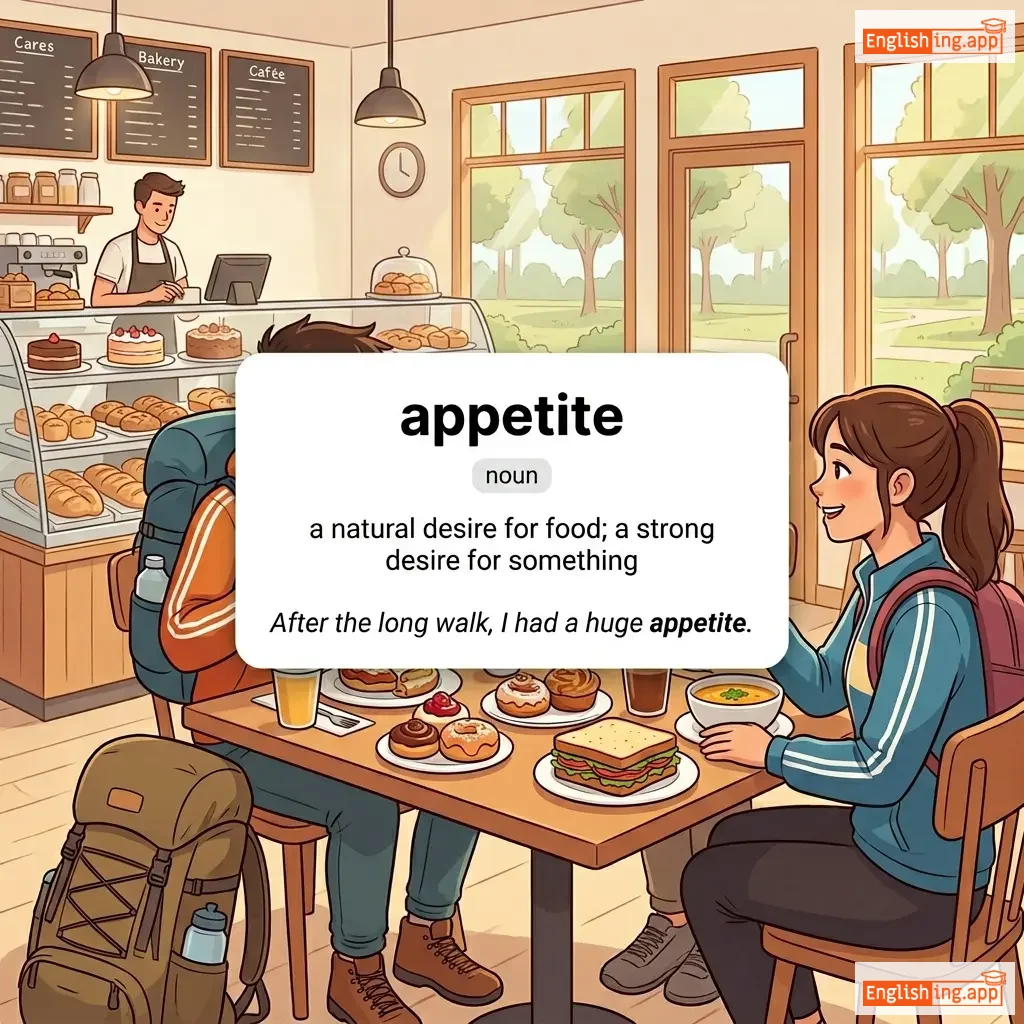
appetite definition card — visual illustration of the meaning
noun
/ˈæpɪtaɪt/
apetito (apetito)

a natural desire for food; a strong desire for something

"After the long walk, I had a huge appetite."

"Después de la larga caminata, tenía un gran apetito." (Después de la larga caminata, tenía un gran apetito.)
verb
/ˈæpɪtaɪz/
estimular el apetito (estimular el apetito)

to stimulate the appetite; to make someone eager or interested

"The aroma of fresh bread will appetize the guests before dinner."

"El aroma del pan fresco estimulará el apetito de los invitados." (El aroma del pan fresco estimulara el apetito de los invitados)
verb
/əˈplɔːd/
aplaudir (aplaudir)

to show approval by clapping or expressing admiration

"The audience applauded the performance."

"La audiencia aplaudió la actuación." (La audiencia aplaudió la actuación.)
noun
/əˈplɔːz/
aplausos (aplausos)

the sound of people clapping their hands to show approval or enjoyment

"The actor received loud applause after his performance."

"El actor recibió un fuerte aplauso después de su actuación." (El actor recibio un fuerte aplauso despues de su actuacion.)
noun
/ˈæpəl/
manzana (manzana)

a round fruit with red, green, or yellow skin

"She ate a red apple for breakfast."

"Ella comió una manzana roja para el desayuno." (Ella comió una manzana roja para el desayuno.)
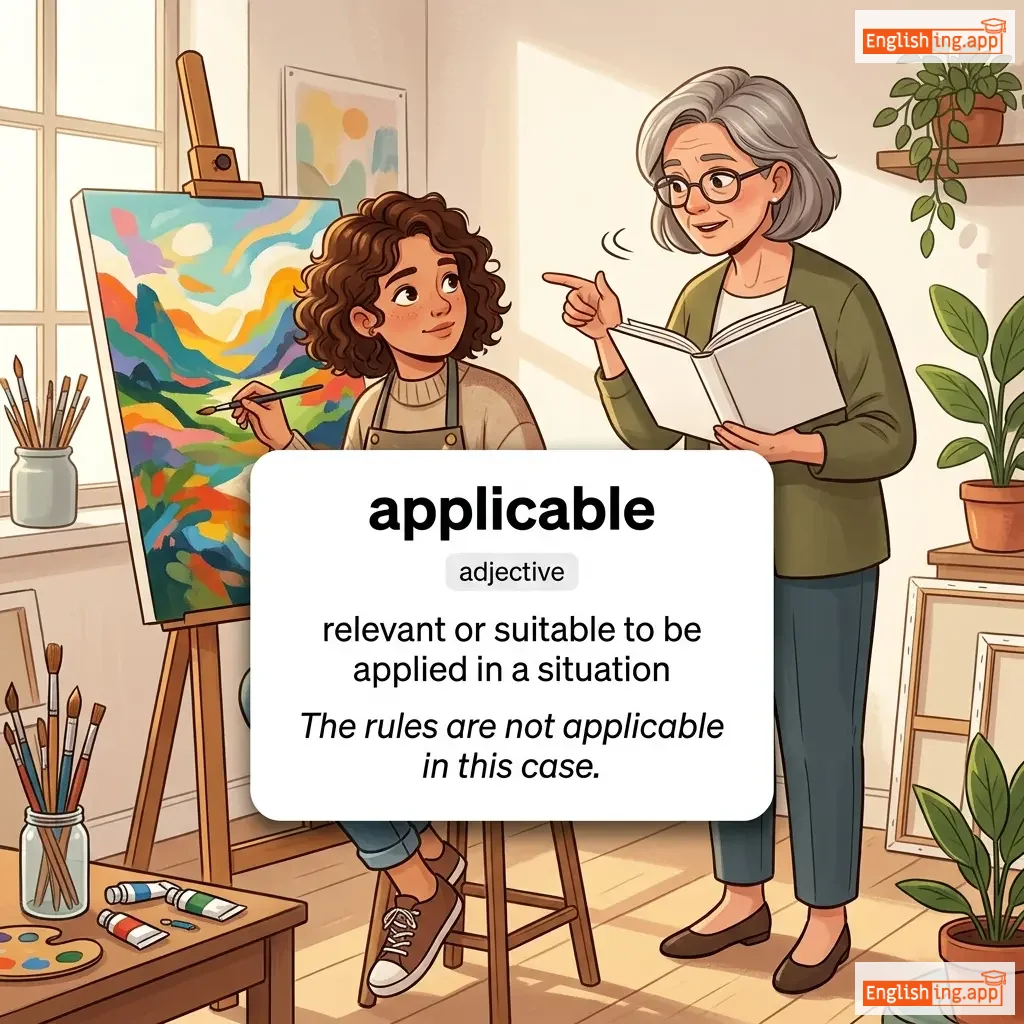
applicable definition card — visual illustration of the meaning
adjective
/ˈæplɪkəbl/
aplicable (aplicable)

relevant or suitable to be applied in a situation

"The rules are not applicable in this case."

"Las reglas no son aplicables en este caso." (Las reglas no son aplicables en este caso.)
noun
/ˈæplɪkənt/
solicitante (solicitante)

a person who applies for something, such as a job or a position

"The applicant was interviewed for the position."

"El solicitante fue entrevistado para el puesto." (El solicitante fue entrevistado para el puesto.)