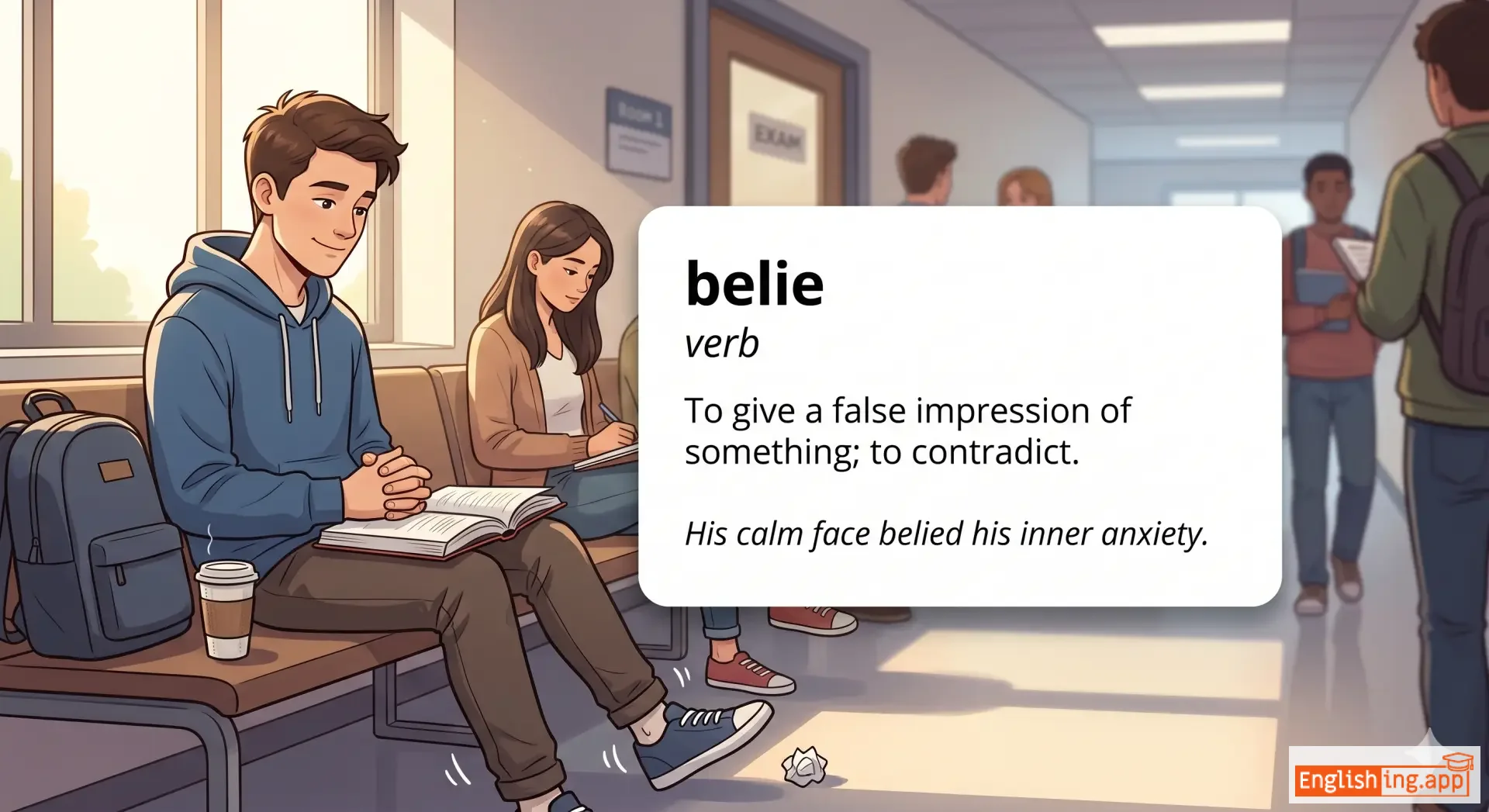
🎭belie (biri)

verb
/bɪˈlaɪ/
偽る (itsuwaru)

意味

To give a false impression of something; to contradict.
意味の翻訳
何かに対して誤った印象を与えること、または矛盾すること。
nanika ni taishite ayamatta inshō o ataeru koto, mata wa mujun suru koto.

例文

His calm face belied his inner anxiety.

彼の落ち着いた顔は彼の内なる不安を偽っていた。
Kare no ochitsuita kao wa kare no uchi naru fuan o itsuwatte ita.

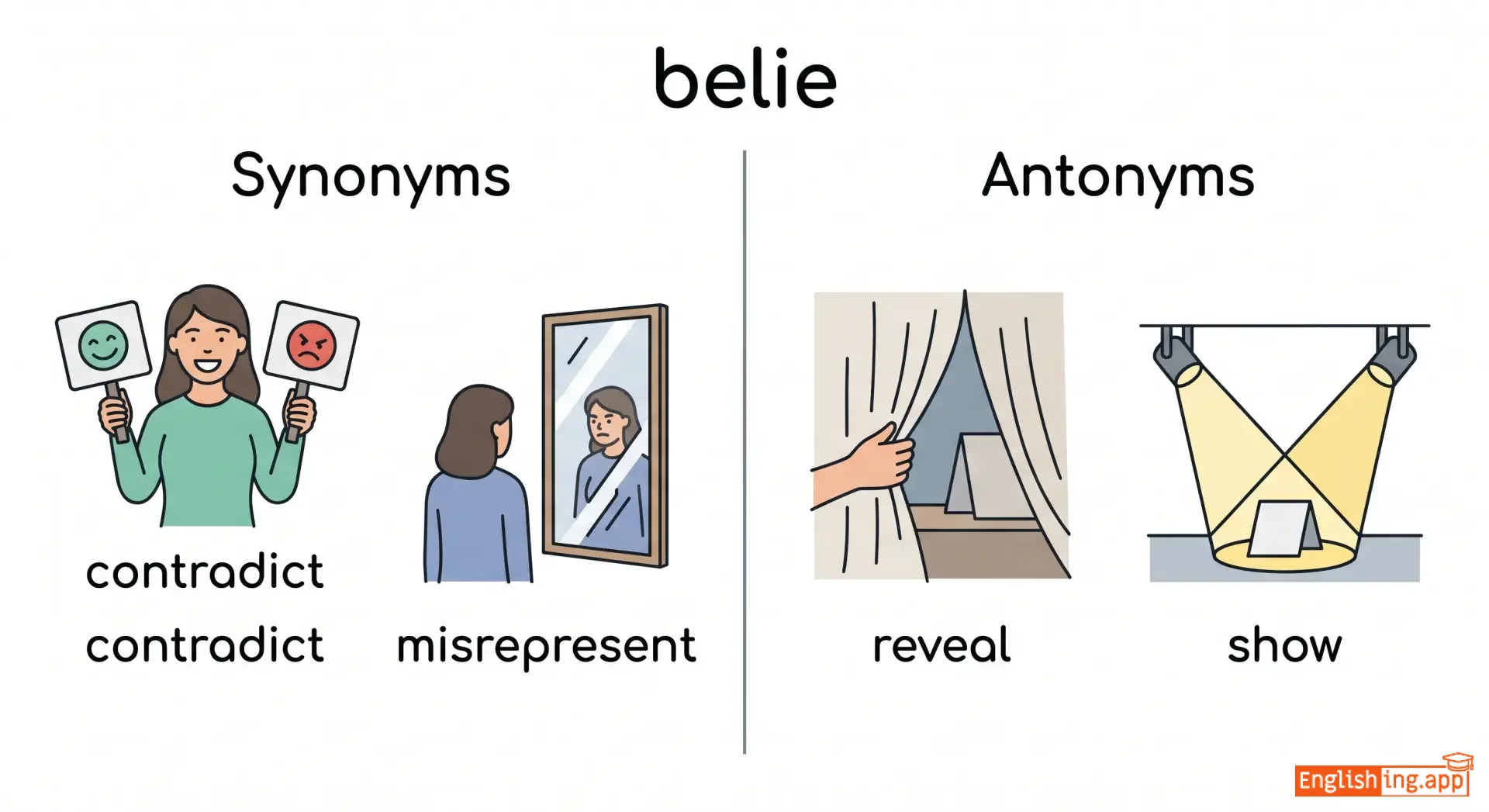
同義語

contradict, misrepresent, disguise, falsify, distort

対義語

reveal, show, represent

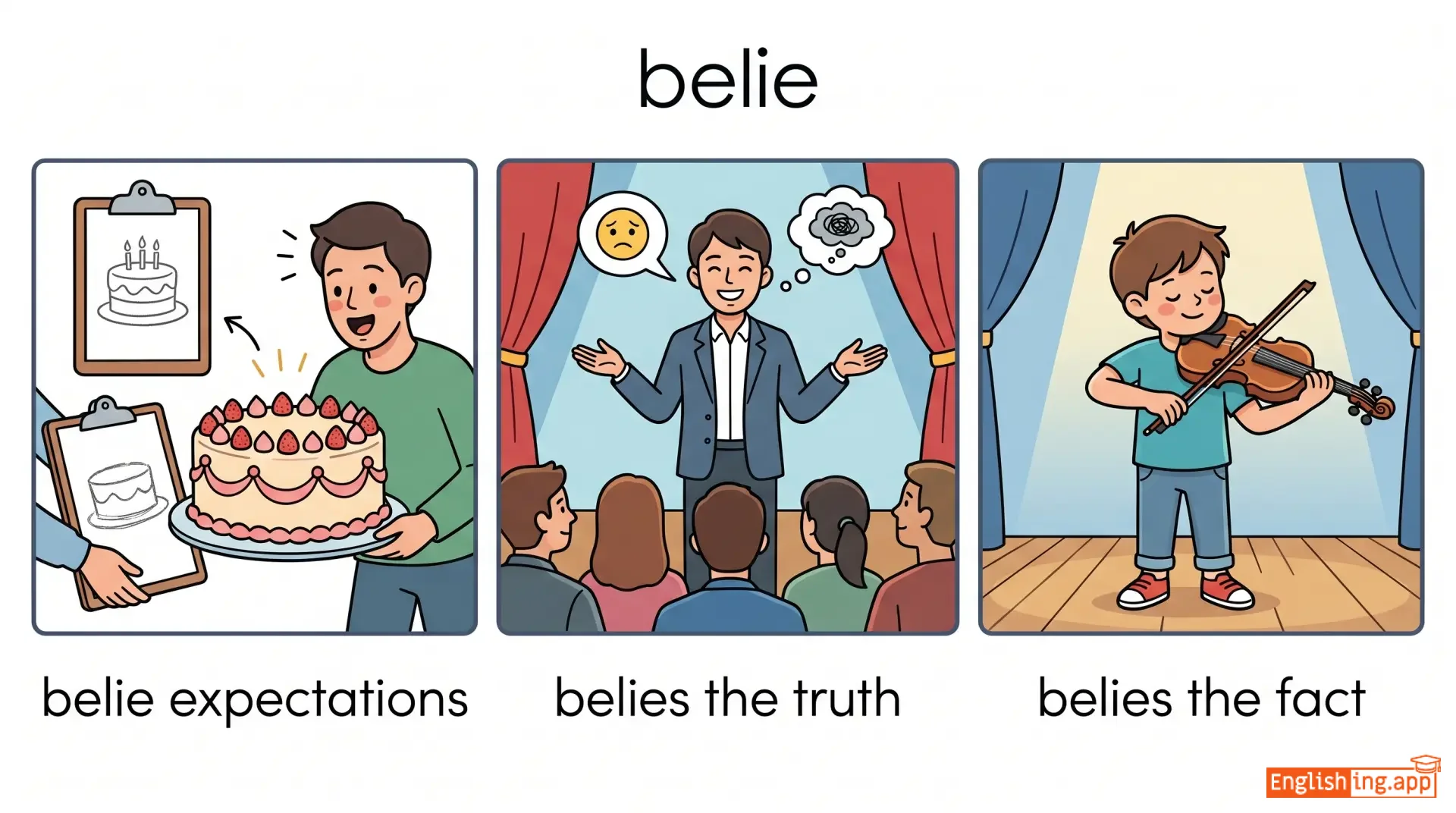
コロケーション

belie expectations, belies the truth, belies the fact, belied his nature

その他の例文

I can’t believe this story.

私はこの話を信じられません。
Watashi wa kono hanashi o shinjiraremasen.

I believe you are a genius.

私はあなたが天才だと信じています。
Watashi wa anata ga tensai da to shinjiteimasu.

I believe you are very talented.

私はあなたが非常に才能があると信じています。
Watashi wa anata ga hijou ni sainou ga aru to shinjiteimasu.

We are too shocked to believe it.

私たちはショックすぎて信じられません。
Watashitachi wa shokku sugite shinjiraremasen.

They came to believe the story was true.

彼らはその話が本当だと信じるようになりました。
Karera wa sono hanashi ga hontou da to shinjiru you ni narimashita.

They were too shocked to believe the news.

彼らは驚きすぎてそのニュースを信じられませんでした。
Karera wa odoroki sugite sono nyuusu o shinjiraremasen deshita.

A girl wins a drawing contest at her school by creating a colorful picture of a sunset over the ocean with a small sailboat that impressed all the judges because of the detail and creativity and her artwork is displayed in the hallway where students and parents stop to admire it and her art teacher encourages her to enter more competitions helping her believe that her talent can take her far in the future.

少女が細部と創造性ゆえにすべての審査員を感銘させた小さなヨットのある海に沈む夕日のカラフルな絵を描くことによって学校の絵画コンテストで優勝し、彼女の作品は生徒や保護者が足を止めて称賛する廊下に展示され、美術教師は彼女にもっとコンテストに参加するように励まし、彼女の才能が将来彼女を遠くまで連れて行ってくれると信じるのを助ける。
Shoujo ga saibu to souzousei yue ni subete no shinsain wo kanmei saseta chiisana yacht no aru umi ni shizumu yuuhi no colorful na e wo kaku koto ni yotte gakkou no kaiga contest de yuushou shi, kanojo no sakuhin wa seito ya hogosha ga ashi wo tomete shousan suru rouka ni tenji sare, bijutsu kyoushi wa kanojo ni motto contest ni sanka suru you ni hagemashi, kanojo no sainou ga shourai kanojo wo tooku made tsurete itte kureru to shinjiru no wo tasukeru.

A woman visits a farmers market every Sunday morning in the town square near the old church where local farmers sell fresh fruits and vegetables along with honey, cheese, and homemade bread and she enjoys walking between the colorful stalls chatting with the vendors she has known for years and carefully choosing the best produce for the week because she believes fresh, local food tastes better than anything from a supermarket

毎週日曜日の朝、女性が古い教会の近くの町の広場にあるファーマーズマーケットを訪れ、そこでは地元の農家が新鮮な果物や野菜と一緒に蜂蜜、チーズ、自家製パンを販売しており、彼女は色とりどりの屋台の間を歩きながら、長年知っている店主たちとおしゃべりし、その週のための最高の食材を慎重に選ぶことを楽しんでいる。彼女は、新鮮な地元の食材はスーパーマーケットのどの商品よりも美味しいと信じているからだ
Maishuu nichiyoubi no asa, josei ga furui kyoukai no chikaku no machi no hiroba ni aru faamaazu maaketto wo otozure, sokode wa jimoto no nouka ga shinsen na kudamono ya yasai to issho ni hachimitsu, chiizu, jikasei pan wo hanbai shiteori, kanojo wa irotoridori no yatai no aida wo arukinagara, naganen shitteiru tenshutachi to oshaberi shi, sono shuu no tame no saikou no shokuzai wo shinchou ni erabu koto wo tanoshindeiru. Kanojo wa, shinsen na jimoto no shokuzai wa suupaamaaketto no dono shouhin yorimo oishii to shinjiteiru kara da

A student submits a late assignment to her professor after staying up all night to finish it because she was sick for three days and could not concentrate on her work so she writes an apology email explaining the situation and attaches a medical certificate as proof hoping the professor will accept it without penalty and give her a fair grade based on the quality of her work which she believes reflects her true understanding of the topic.

学生が彼女は3日間病気で仕事に集中できなかったのでそれを終わらせるために徹夜した後、教授に課題を遅れて提出し、だから彼女は状況を説明する謝罪メールを書き、そして証拠として診断書を添付し、教授が罰則なしでそれを受け入れてくれて、そして彼女の仕事の質に基づいて公正な成績を彼女に与えることを願うが、それは彼女がそのトピックに対する彼女の真の理解を反映していると信じている。
Gakusei ga kanojo wa mikkakan byouki de shigoto ni shuuchuu dekinakatta node sore wo owaraseru tame ni tetsuya shita ato, kyouju ni kadai wo okurete teishutsu shi, dakara kanojo wa joukyou wo setsumei suru shazai email wo kaki, soshite shouko toshite shindansho wo tenpu shi, kyouju ga bassoku nashi de sore wo ukeirete kurete, soshite kanojo no shigoto no shitsu ni motodzuite kousei na seiseki wo kanojo ni ataeru koto wo negau ga, sore wa kanojo ga sono topic ni taisuru kanojo no shin no rikai wo han'ei shite iru to shinjite iru.

A woman visits a farmers market every Sunday morning in the town square near the old church where local farmers sell fresh fruits and vegetables along with honey, cheese, and homemade bread and she enjoys walking between the colorful stalls chatting with the vendors she has known for years and carefully choosing the best produce for the week because she believes fresh, local food tastes better than anything from a supermarket and supporting small farmers is something she feels strongly about.

毎週日曜日の朝、女性が古い教会の近くの町の広場にあるファーマーズマーケットを訪れ、そこでは地元の農家が新鮮な果物や野菜と一緒に蜂蜜、チーズ、自家製パンを販売しており、彼女は色とりどりの屋台の間を歩きながら、長年知っている店主たちとおしゃべりし、その週のための最高の食材を慎重に選ぶことを楽しんでいる。彼女は、新鮮な地元の食材はスーパーマーケットのどの商品よりも美味しいと信じており、小規模農家を支援することは彼女が強く感じていることだからだ。
Maishuu nichiyoubi no asa, josei ga furui kyoukai no chikaku no machi no hiroba ni aru faamaazu maaketto wo otozure, sokode wa jimoto no nouka ga shinsen na kudamono ya yasai to issho ni hachimitsu, chiizu, jikasei pan wo hanbai shiteori, kanojo wa irotoridori no yatai no aida wo arukinagara, naganen shitteiru tenshutachi to oshaberi shi, sono shuu no tame no saikou no shokuzai wo shinchou ni erabu koto wo tanoshindeiru. Kanojo wa, shinsen na jimoto no shokuzai wa suupaamaaketto no dono shouhin yorimo oishii to shinjiteori, shoukibo nouka wo shien suru koto wa kanojo ga tsuyoku kanjiteiru koto dakara da

関連語彙

to say something suddenly and without careful consideration
to calm someone down; to bring peace to a situation
to hinder or impede the movement or progress of
to shorten a text without losing its meaning
to get possession of; to carry or bring with oneself
to include as a necessary part, or to engage someone in an activity

さらに探索