|
絵文字
|
単語 | Images | 翻訳 | 過去 | 過去分詞 | 三人称単数 | 動名詞 | 意味 | 例文 | 例文の翻訳 | 表現例 | 表現例の意味 | 表現例の翻訳 | 同義語 | 対義語 | コロケーション | ニーモニック |
|---|---|---|---|---|---|---|---|---|---|---|---|---|---|---|---|---|---|
|
📁
••••••
|
/pɔːrtˈfoʊlioʊ/
noun
(ポートフォリオ)
••••••
|

|
ポートフォリオ
pōtoforio
••••••
|
- •••••• | - •••••• | - •••••• | - •••••• |
A collection of financial investments, artworks, or documents presented as a body of work.
••••••
|
The designer showcased her portfolio during the interview.
デザイナーはインタビュー中に彼女のポートフォリオを展示しました。
••••••
|
デザイナーはインタビュー中に彼女のポートフォリオを展示しました。
Dezainā wa intabyū chū ni kanojo no pōtoforio o tenji shimashita.
••••••
|
diversified portfolio
多様化されたポートフォリオ
••••••
|
A variety of different investments held to reduce risk.
••••••
|
多様化されたポートフォリオ
Tayōka sareta pōtoforio
••••••
|
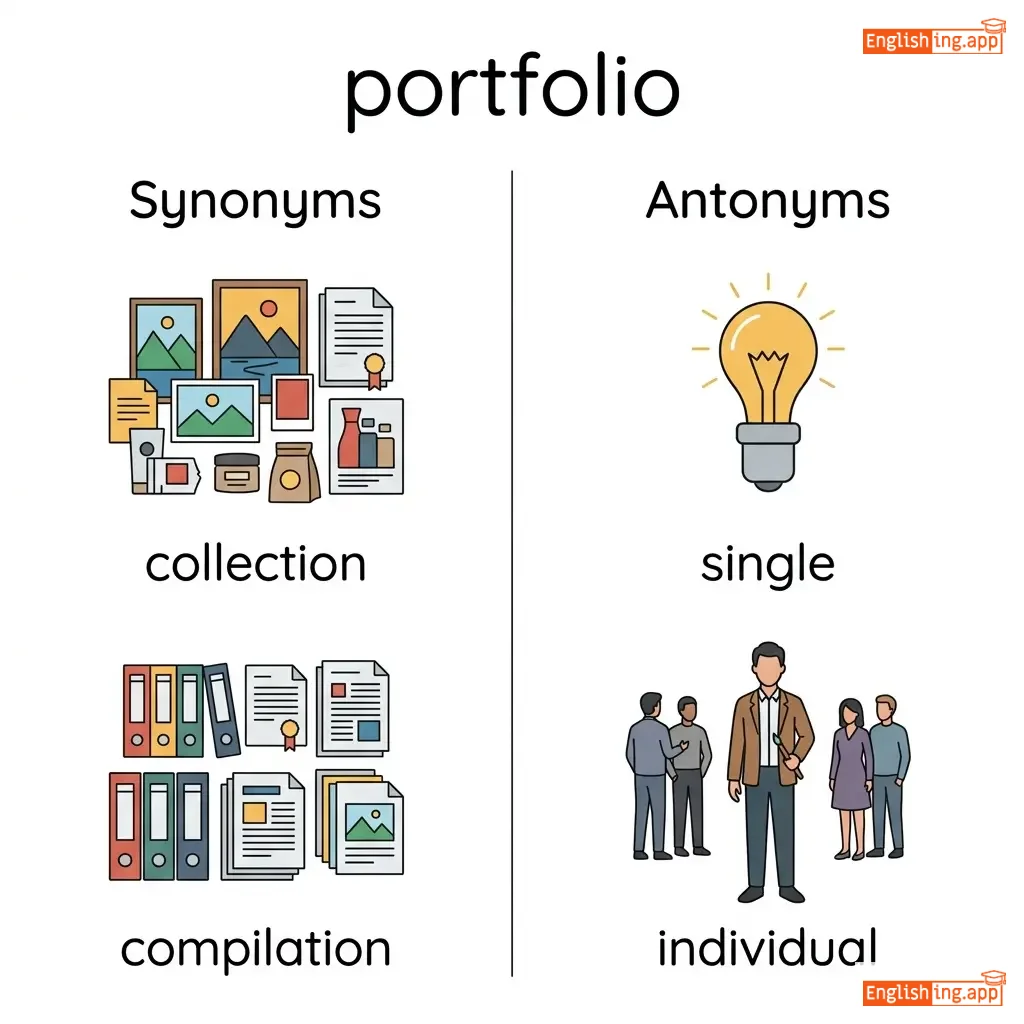
collection, compilation, dossier, folder, assortment
••••••
|
single, individual
••••••
|
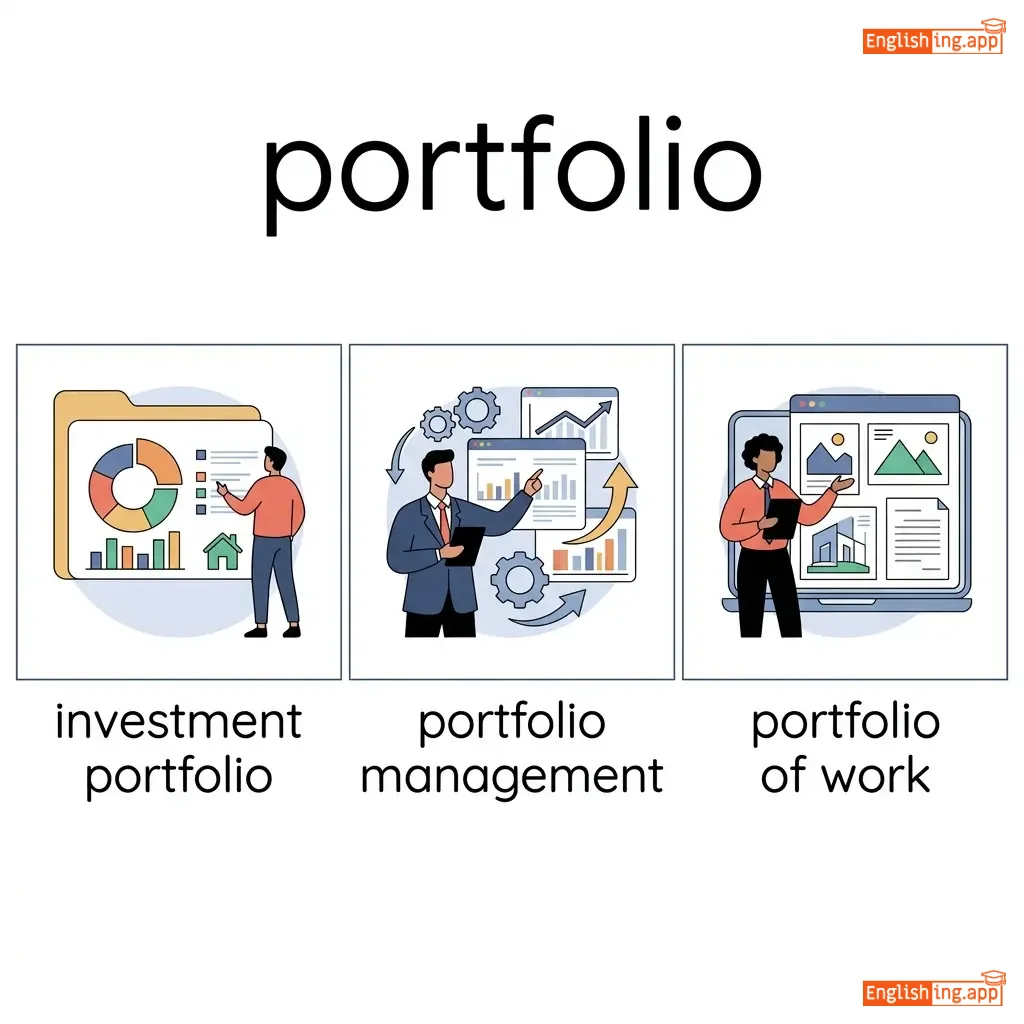
investment portfolio, portfolio management, portfolio of work, portfolio strategy
••••••
|
ポートフォリオ = すべての投資と創作を一つにまとめる場所。
••••••
|
|
🖼️
••••••
|
/ˈpɔːtrət/
noun
(ポートレート)
••••••
|
- •••••• |
ポートレート
pōtorēto
••••••
|
- •••••• | - •••••• | - •••••• | - •••••• |
a painting, drawing, photograph, or engraving of a person, especially one showing the face
••••••
|
The artist painted a beautiful portrait of his wife.
ジ アーティスト ペインテッド ア ビューティフル ポートレート オブ ヒズ ワイフ
••••••
|
アーティストは妻の美しいポートレートを描きました。
Ātisuto wa tsuma no utsukushī pōtorēto o kakimashita.
••••••
|
- •••••• | - •••••• | - •••••• |
likeness, image, representation, depiction
••••••
|
landscape, abstract
••••••
|
family portrait, painted portrait, formal portrait, self-portrait
••••••
|
ポートレートは人物の顔を強調する絵で、顔がしっかり描かれることが特徴です。
••••••
|
|
📸
••••••
|
/poʊz/
verb
(happiness)
••••••
|
- •••••• |
幸せ
shiawase
••••••
|
posed
••••••
|
posed
••••••
|
poses
••••••
|
posing
••••••
|
To assume a particular position, especially for a photograph or display; to present a problem or question.
••••••
|
She posed for a picture in front of the monument. |
彼女は賞を受け取ったとき、幸せを隠すことができませんでした。
Kanojo wa shō o uketotta toki, shiawase o kakusu koto ga dekimasen deshita.
••••••
|
pose a threat |
To present a danger or risk.
••••••
|
幸せの追求
shiawase no tsuikyū
••••••
|
position, posture, present, represent, display
••••••
|
ignore, neglect
••••••
|
pose a question, pose a threat, pose for photos
••••••
|
幸せは人生の中での最も大切な目標です。
••••••
|
|
📍
••••••
|
/pəˈzɪʃən/
noun
(ポジション)
••••••
|


|
ポジション / 位置
pojishon / ichi
••••••
|
- •••••• | - •••••• | - •••••• | - •••••• |
A place, job, or status; the way in which someone or something is placed or arranged.
••••••
|
She applied for a teaching position at the university. |
彼女は大学の教職に応募しました。
Kanojo wa daigaku no kyōshoku ni ōbo shimashita.
••••••
|
in a strong position |
having an advantage or being in control of a situation
••••••
|
強い位置にいる
tsuyoi ichi ni iru
••••••
|
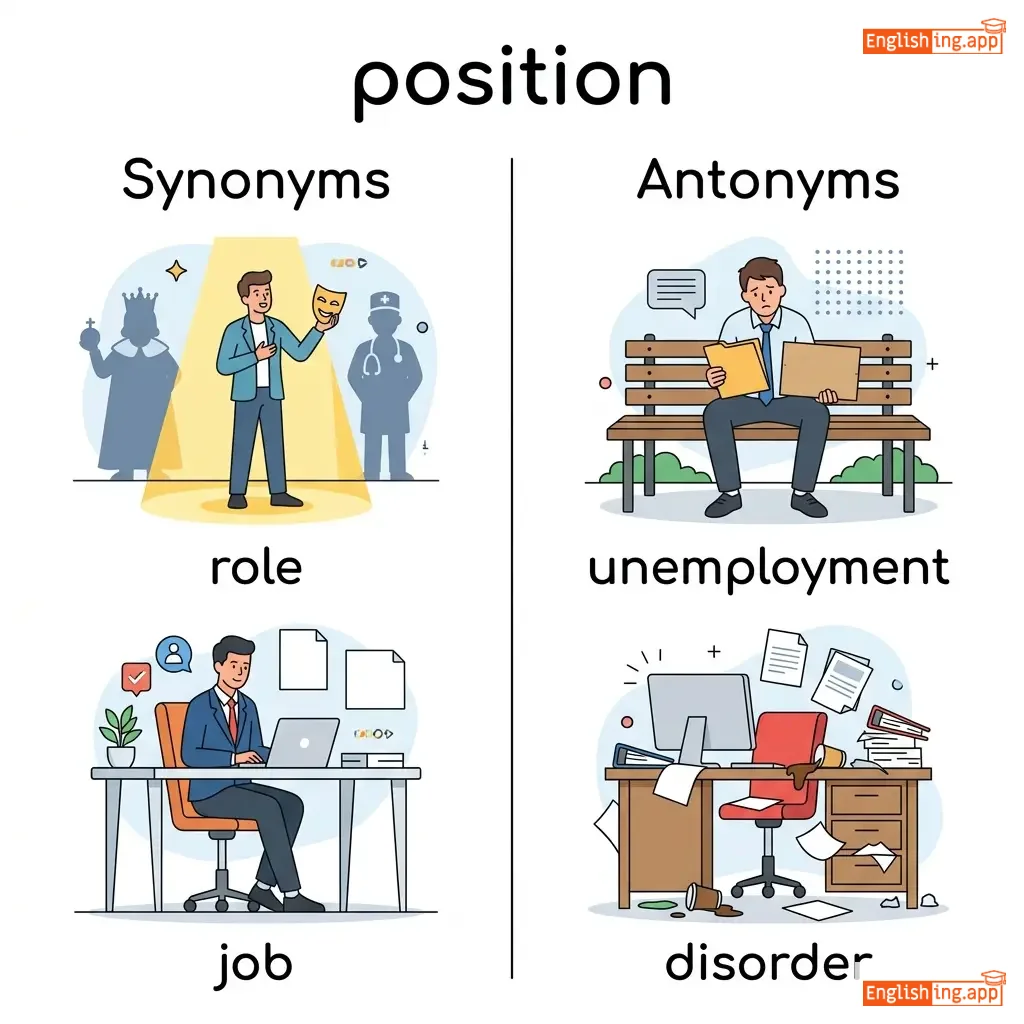
role, job, post, situation, placement
••••••
|
unemployment, disorder, disadvantage
••••••
|
job position, official position, social position, strong position, managerial position
••••••
|
Position(ポジション)という言葉は位置にも使うので、いつでもいいポジションに立とう!📍
••••••
|
|
➕
••••••
|
/ˈpɒzɪtɪv/
adjective
(pozitibu)
••••••
|
|
ポジティブ
pojitibu
••••••
|
- •••••• | - •••••• | - •••••• | - •••••• |
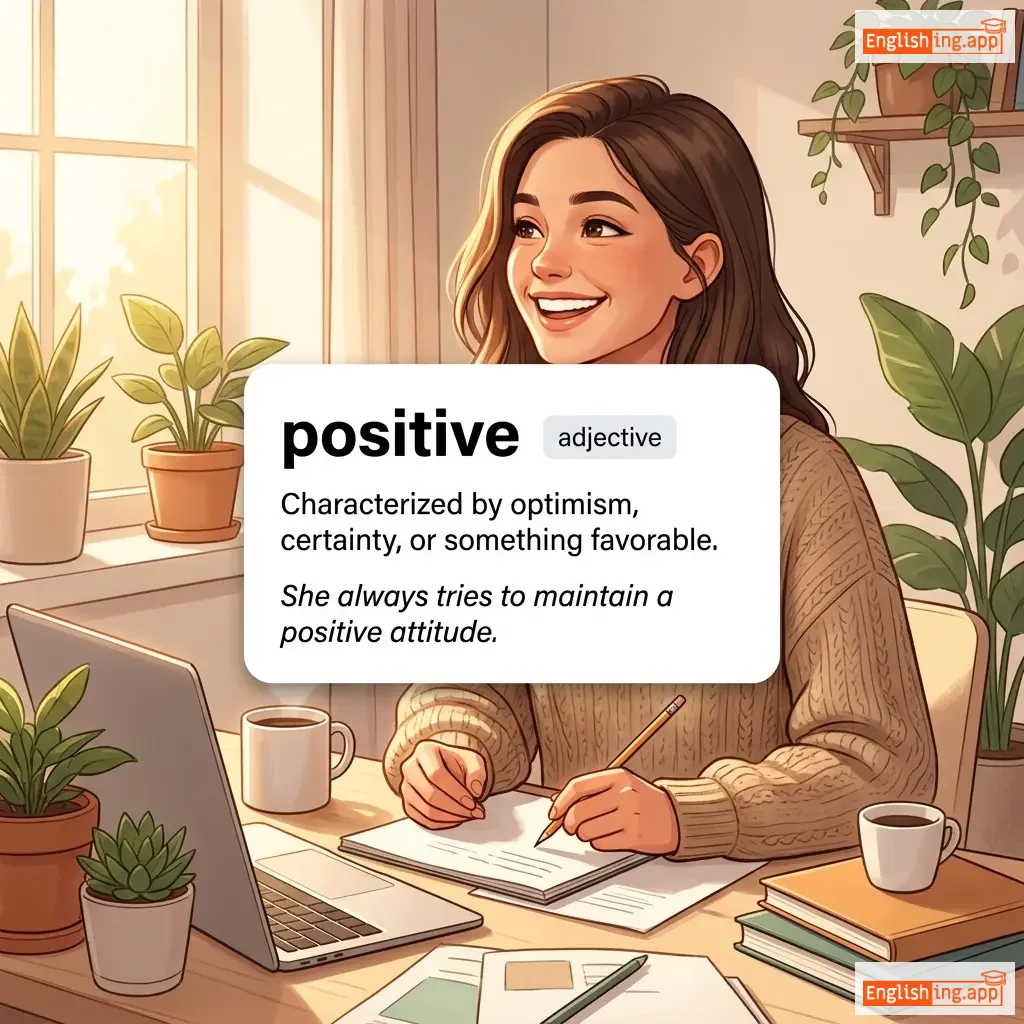
Characterized by optimism, certainty, or something favorable.
••••••
|
She always tries to maintain a positive attitude. |
彼女はいつもポジティブな態度を保とうとしています。
Kanojo wa itsumo pojitibu na taido o tamotsu to shiteimasu.
••••••
|
positive thinking |
focusing on the good aspects and expecting favorable outcomes
••••••
|
ポジティブシンキング
pojitibu shinkingu
••••••
|
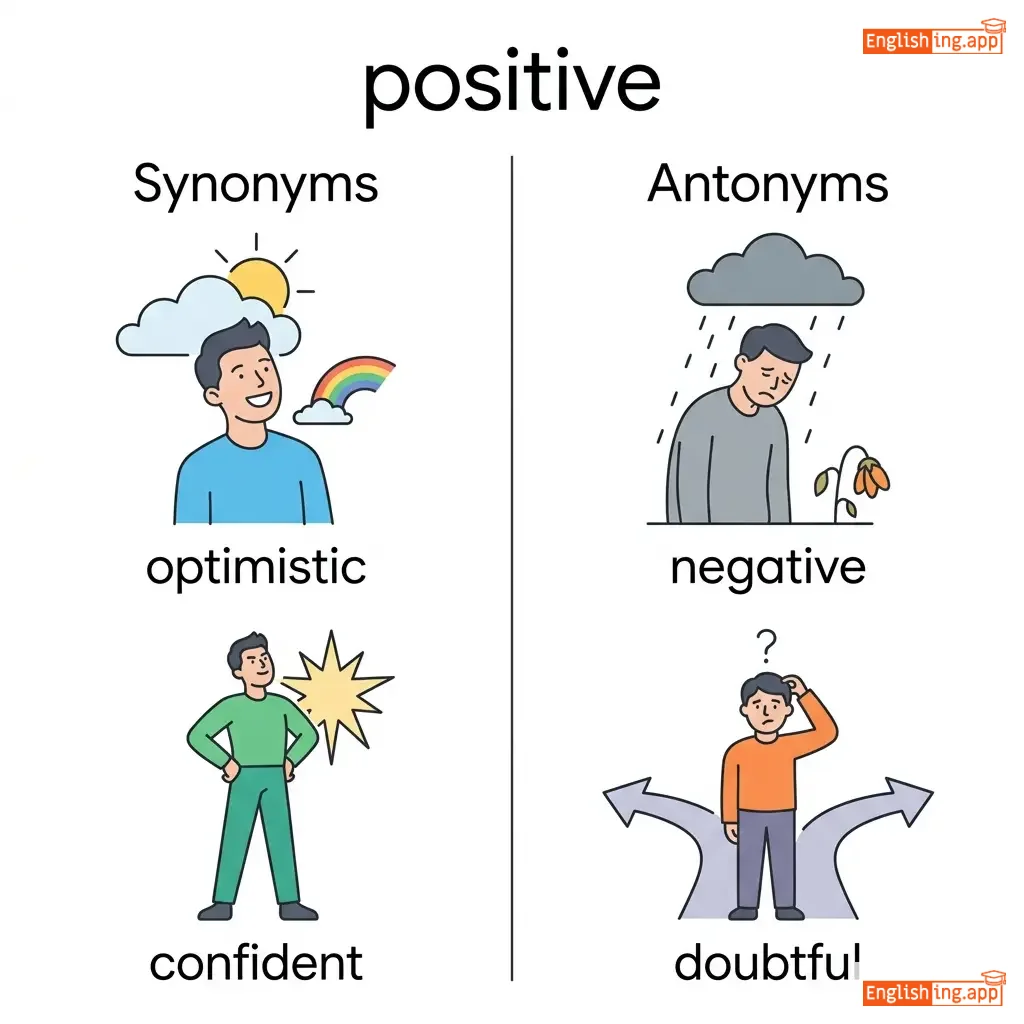
optimistic, confident, assured, constructive, certain
••••••
|
negative, doubtful, pessimistic
••••••
|
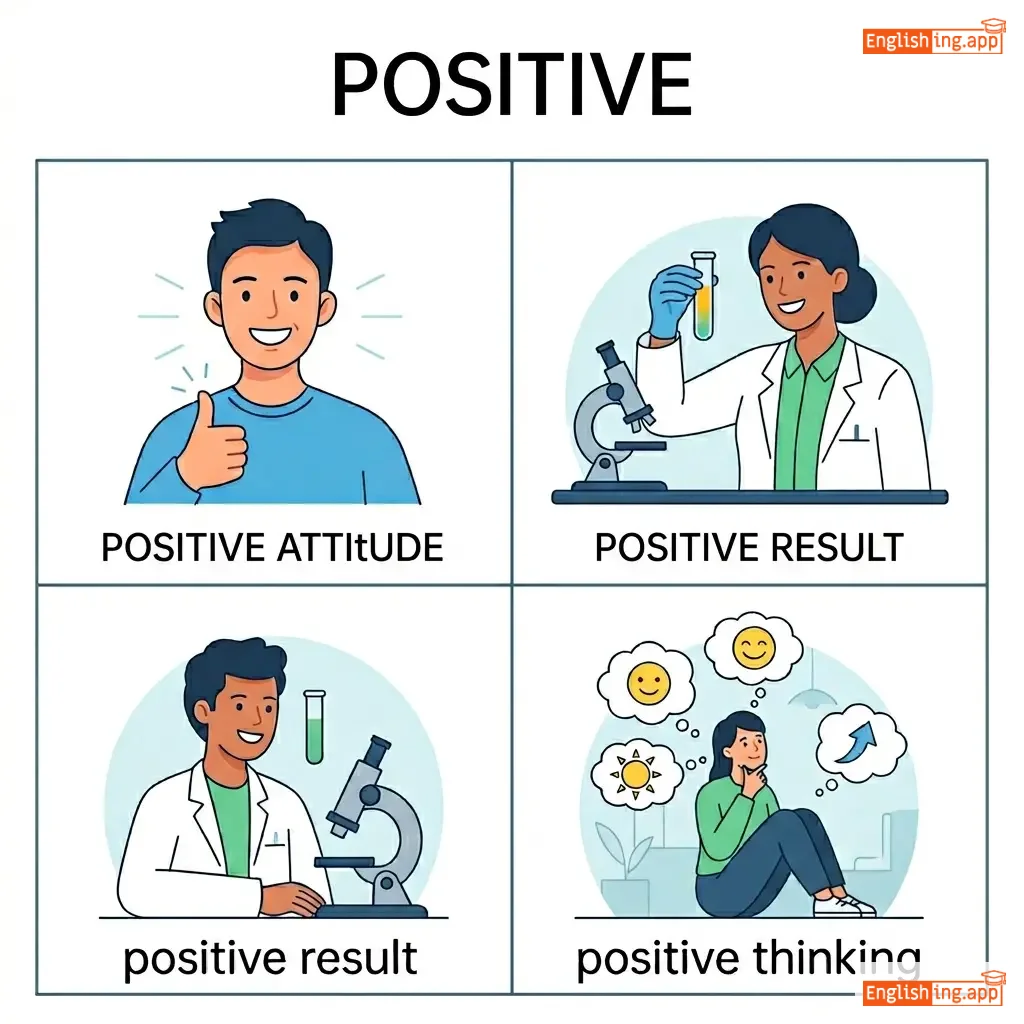
positive attitude, positive result, positive thinking, positive feedback, positive impact
••••••
|
ポジティブは良い結果を生む!何事もポジティブに考えて前向きに!
••••••
|
|
👐
••••••
|
/pəˈzɛs/
verb
(ポゼス)
••••••
|
- •••••• |
持つ / 所有する
motsu / shoyuu suru
••••••
|
possessed
ポゼスド
••••••
|
possessed
ポゼスド
••••••
|
possesses
ポゼセス
••••••
|
possessing
ポゼシング
••••••
|
To have or own something; to hold a quality or characteristic.
••••••
|
She possesses great talent in music.
シー ポゼセス グレート タレント イン ミュージック。
••••••
|
彼女は音楽において素晴らしい才能を持っています。
Kanojo wa ongaku ni oite subarashii sainou wo motteimasu.
••••••
|
possess yourself of
ポゼス ヨアセルフ オフ
••••••
|
to gain control of or acquire something
••••••
|
自分を手に入れる
jibun wo te ni ireru
••••••
|
own, hold, maintain, control, acquire
••••••
|
lack, lose, surrender
••••••
|
possess talent, possess property, possess knowledge, possess rights
••••••
|
持つ = 得る。才能や所有物を持つ。
••••••
|
|
📦
••••••
|
/pəˈzɛʃən/
noun
(ポゼッション)
••••••
|
- •••••• |
所有
shoyū
••••••
|
- •••••• | - •••••• | - •••••• | - •••••• |
The state of owning, controlling, or holding something.
••••••
|
The ring was her most valuable possession. |
その指輪は彼女の最も貴重な所有物でした。
Sono yubiwa wa kanojo no mottomo kichōna shoyūbutsu deshita.
••••••
|
in possession of |
having something in one's ownership or control
••••••
|
所有している
shoyū shite iru
••••••
|
ownership, control, property, asset, holding
••••••
|
loss, absence, dispossession
••••••
|
valuable possession, personal possession, in possession of, lose possession
••••••
|
所有 = 自分のものを手に入れる。
••••••
|
|
🔮
••••••
|
/ˌpɒsəˈbɪləti/
noun
(ポスビリティ)
••••••
|
- •••••• |
可能性
kanousei
••••••
|
- •••••• | - •••••• | - •••••• | - •••••• |
something that may happen or be the case; a chance that something exists or might occur
••••••
|
There is a strong possibility of rain tomorrow. |
明日は雨の強い可能性があります。
Ashita wa ame no tsuyoi kanousei ga arimasu.
••••••
|
endless possibilities |
having many potential opportunities or outcomes
••••••
|
無限の可能性
mugen no kanousei
••••••
|
chance, likelihood, probability, opportunity, option
••••••
|
impossibility, certainty
••••••
|
real possibility, strong possibility, endless possibilities, possibility of success
••••••
|
可能性 = 何かが可能であること
••••••
|
|
✨
••••••
|
/ˈpɒsəbl̩/
adjective
(ポッシブル)
••••••
|
- •••••• |
可能
kanou
••••••
|
- •••••• | - •••••• | - •••••• | - •••••• |
Able to be done or achieved.
••••••
|
Anything is possible if you work hard.
一生懸命働けば、何でも可能です。
••••••
|
一生懸命働けば、何でも可能です。
Isshoukenmei hataraakeba, nandemo kanou desu.
••••••
|
make it possible
それを可能にする
••••••
|
To cause something to happen or be achievable.
••••••
|
それを可能にする
sore wo kanou ni suru
••••••
|
feasible, achievable, attainable, doable
••••••
|
impossible, unachievable, unattainable
••••••
|
as soon as possible, possible solution, possible outcome
••••••
|
Possibleは日本語で「可能」, 頑張れば何でも可能!
••••••
|
|
🤔
••••••
|
/ˈpɒs.ə.bli/
adverb
(ポッシブリ)
••••••
|
- •••••• |
おそらく; もしかしたら;
osoraku; moshikashitara;
••••••
|
- •••••• | - •••••• | - •••••• | - •••••• |
perhaps; maybe; it may be the case that
••••••
|
It will possibly rain tomorrow. |
明日おそらく雨が降るかもしれません。
Ashita osoraku ame ga furu kamoshiremasen.
••••••
|
- •••••• | - •••••• | - •••••• |
maybe, perhaps, potentially, conceivably
••••••
|
definitely, certainly, impossibly
••••••
|
possibly true, possibly wrong, quite possibly
••••••
|
Picture a Japanese person saying 'おそらく' while preparing an umbrella for a rainy day.
••••••
|
|
📮
••••••
|
/pəʊst/
noun, verb
(ポスト)
••••••
|
- •••••• |
ポスト
posuto
••••••
|
posted
ポステッド
••••••
|
posted
ポステッド
••••••
|
posts
ポストス
••••••
|
posting
ポスティング
••••••
|
a job or position, or to send something by mail
••••••
|
She posted a letter to her friend yesterday.
彼女は昨日友達に手紙をポストした。
••••••
|
彼女は昨日友達に手紙をポストした。
Kanojo wa kinō tomodachi ni tegami o posuto shita.
••••••
|
post a letter
手紙をポストする
••••••
|
to send a letter via the postal service
••••••
|
手紙を送る
tegami o okuru
••••••
|
mail, dispatch, send, job
••••••
|
receive, accept
••••••
|
post a letter, job post, post online, post a message
••••••
|
Postは何かを送ることや行うことを意味します、手紙をポストするように!
••••••
|
|
📮
••••••
|
/ˈpoʊst ˌɒfɪs/
noun
(ポスト オフィス)
••••••
|
- •••••• |
郵便局
yuubinkyoku
••••••
|
- •••••• | - •••••• | - •••••• | - •••••• |
a public building or agency where mail is sent, received, and other postal services are provided
••••••
|
I went to the post office to mail a package.
アイ ウェント トゥ ザ ポスト オフィス トゥ メイル ア パッケージ
••••••
|
私は荷物を送るために郵便局へ行きました。
watashi wa nimotsu o okuru tame ni yuubinkyoku e ikimashita
••••••
|
post office box (P.O. box)
ポスト オフィス ボックス
••••••
|
a locked mailbox at the post office used to receive mail
••••••
|
私書箱
shishobako
••••••
|
mail office, postal office, post, postal facility
••••••
|
home, private residence
••••••
|
local post office, main post office, post office box, post office hours, post office counter
••••••
|
ポスト = post, 局 = office
••••••
|
|
🕊️
••••••
|
/ˌpoʊstˈwɔːr/
adjective
(ポストウォー)
••••••
|
- •••••• |
戦後の
sengo no
••••••
|
- •••••• | - •••••• | - •••••• | - •••••• |
relating to the period after a war has ended
••••••
|
The country experienced rapid economic growth in the post-war years.
その国はポストウォーの時代に急成長した。
••••••
|
その国は戦後の時代に急速な経済成長を遂げた。
sono kuni wa sengo no jidai ni kyuusoku na keizai seichou o togeta
••••••
|
post-war era
ポストウォー時代
••••••
|
the historical period following a war
••••••
|
戦後時代
sengo jidai
••••••
|
after-war, postconflict, peacetime, postbellum
••••••
|
wartime, pre-war
••••••
|
post-war period, post-war economy, post-war society, post-war reconstruction
••••••
|
post = 後, war = 戦争 → 戦後
••••••
|
|
⏳
••••••
|
/pəʊs(t)ˈpəʊn/
verb
(ポストポーン)
••••••
|
- •••••• |
延期する
enki suru
••••••
|
postponed
ポストポンド
••••••
|
postponed
ポストポンド
••••••
|
postpones
ポストポンズ
••••••
|
postponing
ポストポーニング
••••••
|
to delay something to a later time
••••••
|
The meeting was postponed until next week.
会議は来週に延期されました。
••••••
|
会議は来週に延期されました。
Kaigi wa raishū ni enki saremashita.
••••••
|
- •••••• | - •••••• | - •••••• |
delay, defer, put off, reschedule
••••••
|
advance, hasten, expedite
••••••
|
postpone a meeting, postpone an event, postpone the decision
••••••
|
Post + pon (point) + e - 延期, like moving the time later.
••••••
|
|
🍲
••••••
|
/pɒt/
noun
(ポット)
••••••
|
- •••••• |
ポット
potto
••••••
|
- •••••• | - •••••• | - •••••• | - •••••• |
a container, typically round and deep, used for cooking or holding plants
••••••
|
She put the soup in a pot and set it on the stove. |
彼女はスープをポットに入れ、それをストーブの上に置きました。
Kanojo wa sūpu o potto ni irete, sore o sutōbu no ue ni okimashita.
••••••
|
- •••••• | - •••••• | - •••••• |
container, vessel, jar, crock
••••••
|
lid, cover
••••••
|
flower pot, cooking pot, clay pot, pot of soup
••••••
|
ポットは料理や植物を入れる容器として使われます!
••••••
|
|
🥔
••••••
|
/pəˈteɪtoʊ/
noun
(ポテト)
••••••
|
- •••••• |
ジャガイモ
jagaimo
••••••
|
- •••••• | - •••••• | - •••••• | - •••••• |
a starchy plant tuber that is a staple food around the world
••••••
|
We had mashed potato with our dinner. |
私たちは夕食にマッシュポテトを食べました。
Watashitachi wa yūshoku ni masshu poteto o tabemashita.
••••••
|
- •••••• | - •••••• | - •••••• |
spud, tuber, yam
••••••
|
none
••••••
|
boiled potato, baked potato, mashed potato, potato salad
••••••
|
ポテトはジャガイモのように見えて、食事に必ず登場します。
••••••
|
|
🌱
••••••
|
/pəˈtɛnʃəl/
noun, adjective
(ポテンシャル)
••••••
|
|
可能性
kanousei
••••••
|
- •••••• | - •••••• | - •••••• | - •••••• |
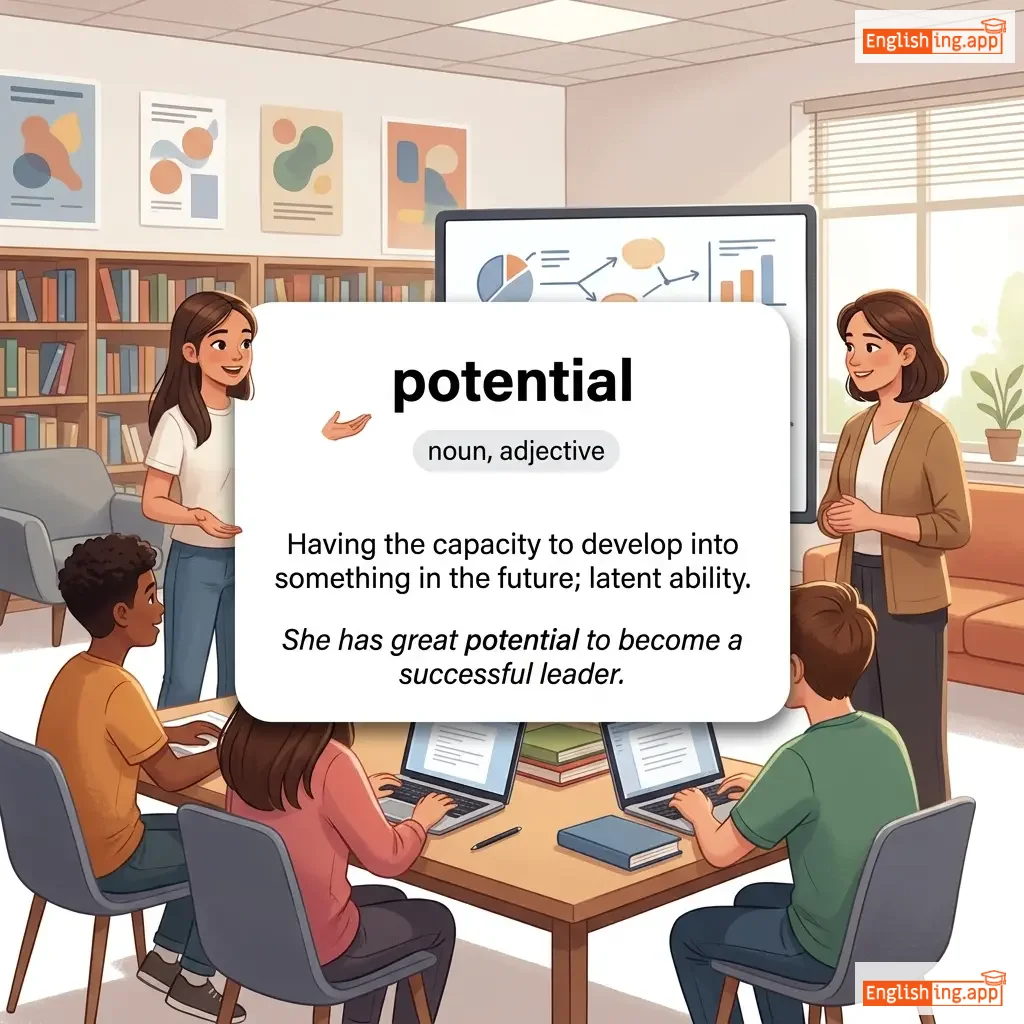
Having the capacity to develop into something in the future; latent ability.
••••••
|
She has great potential to become a successful leader. |
彼女には成功したリーダーになる大きな可能性がある。
Kanojo ni wa seikō shita rīdā ni naru ōkina kanōsei ga aru.
••••••
|
untapped potential |
Unused or unrecognized ability or capacity.
••••••
|
未開拓の可能性
Mikai-taku no kanōsei
••••••
|
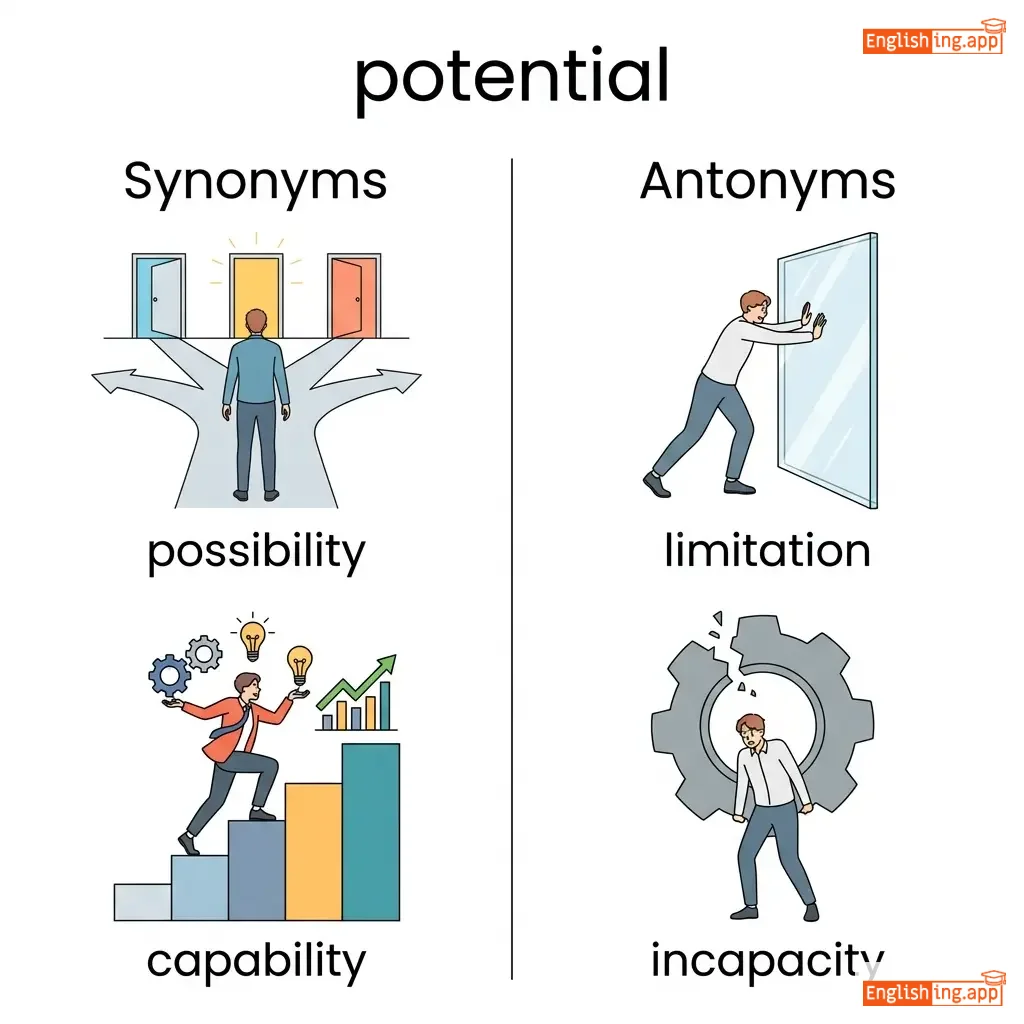
possibility, capability, capacity, promise, ability
••••••
|
limitation, incapacity, inability
••••••
|
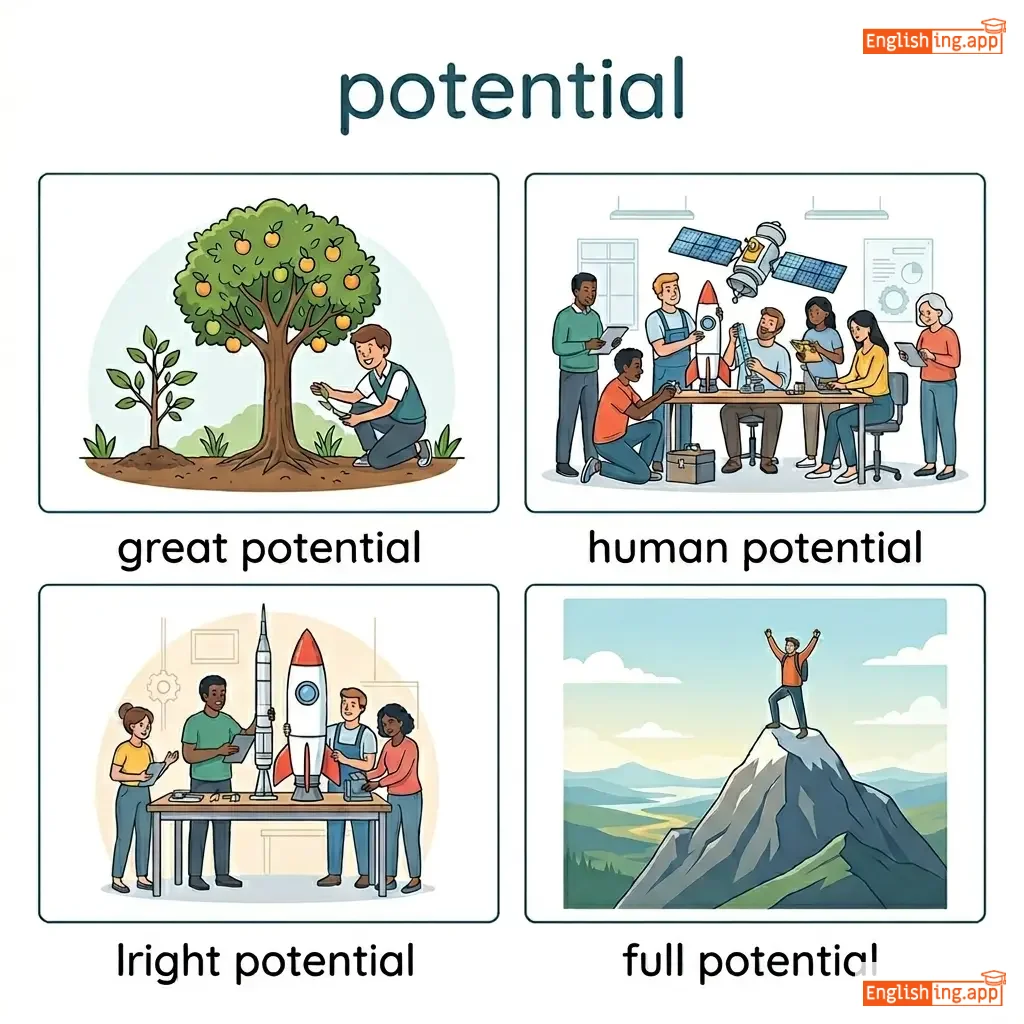
great potential, human potential, full potential, untapped potential
••••••
|
Potentialは未来に発展する力🌱 種が木になるように。
••••••
|
|
🤔
••••••
|
/pəˈtɛnʃəli/
adverb
(ポテンシャリー)
••••••
|
- •••••• |
潜在的に
senzai-teki ni
••••••
|
- •••••• | - •••••• | - •••••• | - •••••• |
with the possibility of becoming something in the future
••••••
|
This project is potentially a huge success.
このプロジェクトはポテンシャリー大きな成功になるかもしれません。
••••••
|
このプロジェクトはポテンシャリー大きな成功になるかもしれません。
Kono purojekuto wa potensharī ōkina seikō ni naru kamoshiremasen.
••••••
|
- •••••• | - •••••• | - •••••• |
possibly, maybe, conceivably
••••••
|
impossibly, unlikely
••••••
|
potentially dangerous, potentially successful, potentially harmful
••••••
|
ポテンシャリーは未来に向かう可能性を示している
••••••
|
|
💷
••••••
|
/paʊnd/
noun, verb
(パウンド)
••••••
|
- •••••• |
ポンド
pondo
••••••
|
pounded
パウンデッド
••••••
|
pounded
パウンデッド
••••••
|
pounds
パウンズ
••••••
|
pounding
パウンディング
••••••
|
a unit of weight equal to 16 ounces or a unit of currency
••••••
|
The price of the book is five pounds.
その本の価格は5ポンドです。
••••••
|
その本の価格は5ポンドです。
Sono hon no kakaku wa go pondo desu.
••••••
|
- •••••• | - •••••• | - •••••• |
lb (pound as weight), sterling (pound as currency)
••••••
|
ounce
••••••
|
pound of meat, pound sterling, pound weight, pound cake
••••••
|
ポンドは、重さとお金の単位です!
••••••
|
|
🌊
••••••
|
/pɔːr/
verb
(ポア)
••••••
|
- •••••• |
注ぐ
sosogu
••••••
|
poured
ポード
••••••
|
poured
ポード
••••••
|
pours
ポアーズ
••••••
|
pouring
ポアリング
••••••
|
to flow or cause to flow in a steady stream; to rain heavily
••••••
|
Please pour the water into the glass carefully.
水をグラスに慎重に注いでください。
••••••
|
水をグラスに慎重に注いでください。
Mizu wo gurasu ni shinchou ni sosogite kudasai.
••••••
|
- •••••• | - •••••• | - •••••• |
flow, stream, spill, tip
••••••
|
stop, contain, hold, retain
••••••
|
pour out, pour into, pour carefully, pour slowly
••••••
|
No •••••• |
|
🌾
••••••
|
/ˈpaʊdər/
noun
(パウダー)
••••••
|
- •••••• |
粉
kona
••••••
|
- •••••• | - •••••• | - •••••• | - •••••• |
a fine, dry substance made of very tiny particles
••••••
|
She sprinkled some powder on the cake.
彼女はケーキに粉をふりかけました。
••••••
|
彼女はケーキに粉をふりかけました。
Kanojo wa kēki ni kona o furikakemashita.
••••••
|
- •••••• | - •••••• | - •••••• |
dust, flour, granules, particles
••••••
|
liquid, solid
••••••
|
baby powder, face powder, baking powder, talcum powder
••••••
|
粉は細かい粒子からできていて、植物に由来しています。
••••••
|
|
⚡
••••••
|
/ˈpaʊər/
noun
(パワー)
••••••
|
|
力
chikara
••••••
|
- •••••• | - •••••• | - •••••• | - •••••• |
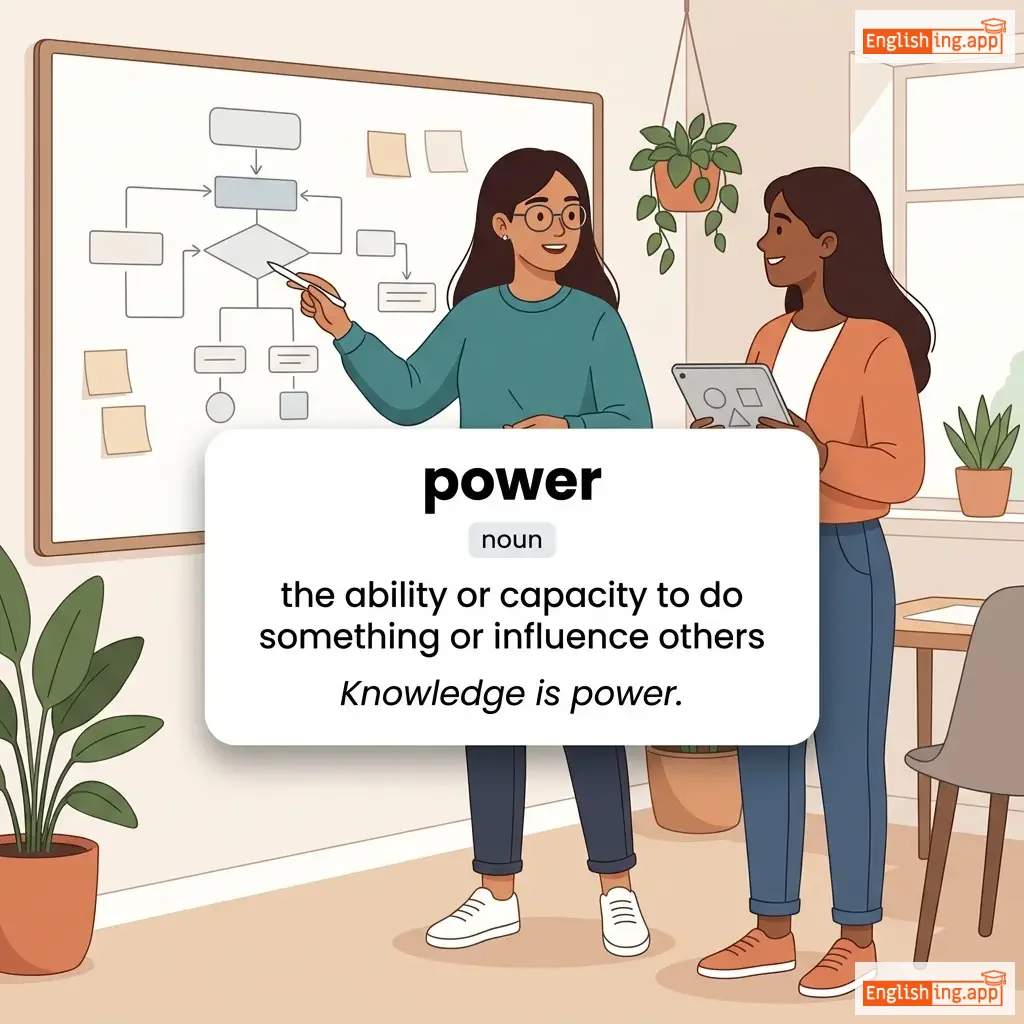
the ability or capacity to do something or influence others
••••••
|
Knowledge is power.
知識は力です。
••••••
|
知識は力です。
Chishiki wa chikara desu.
••••••
|
absolute power
絶対的な力
••••••
|
complete authority without limits
••••••
|
絶対的な力
zettaiteki na chikara
••••••
|
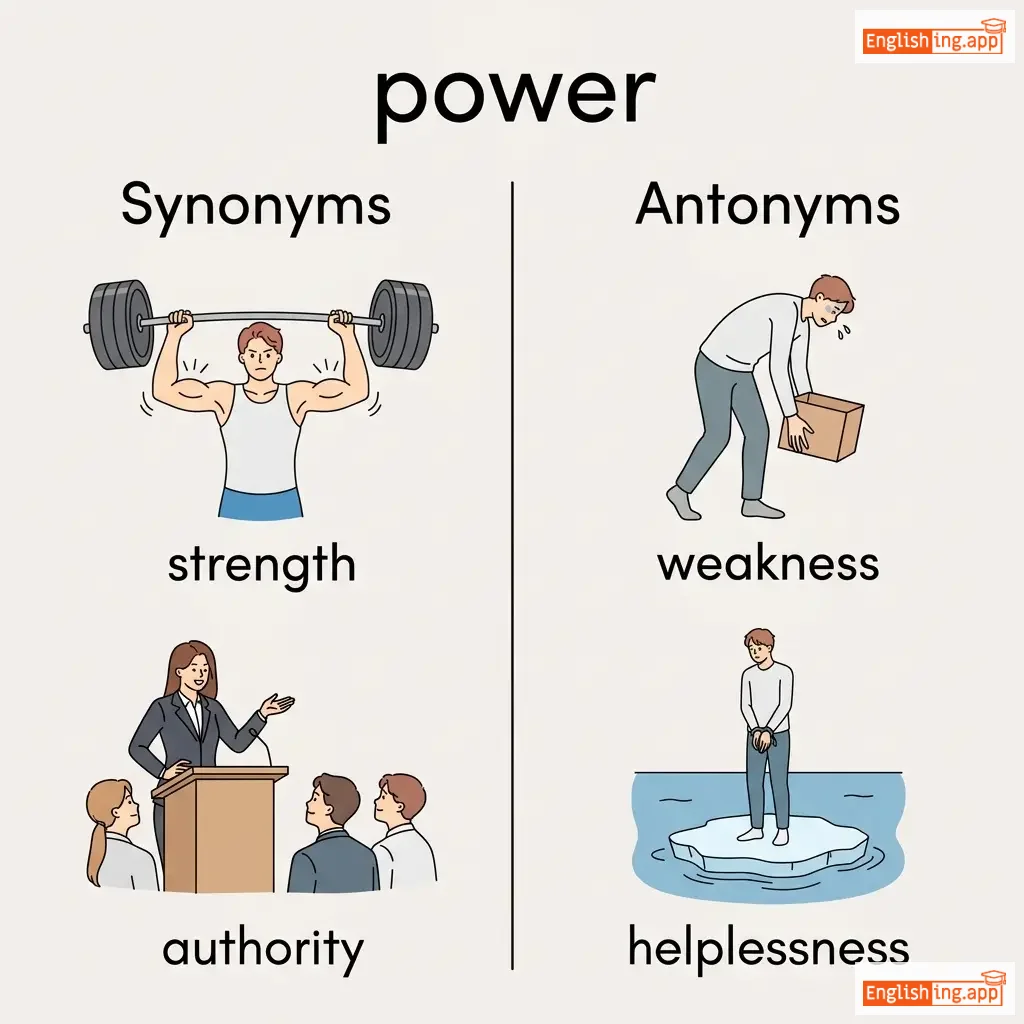
strength, authority, control, energy, force
••••••
|
weakness, helplessness
••••••
|
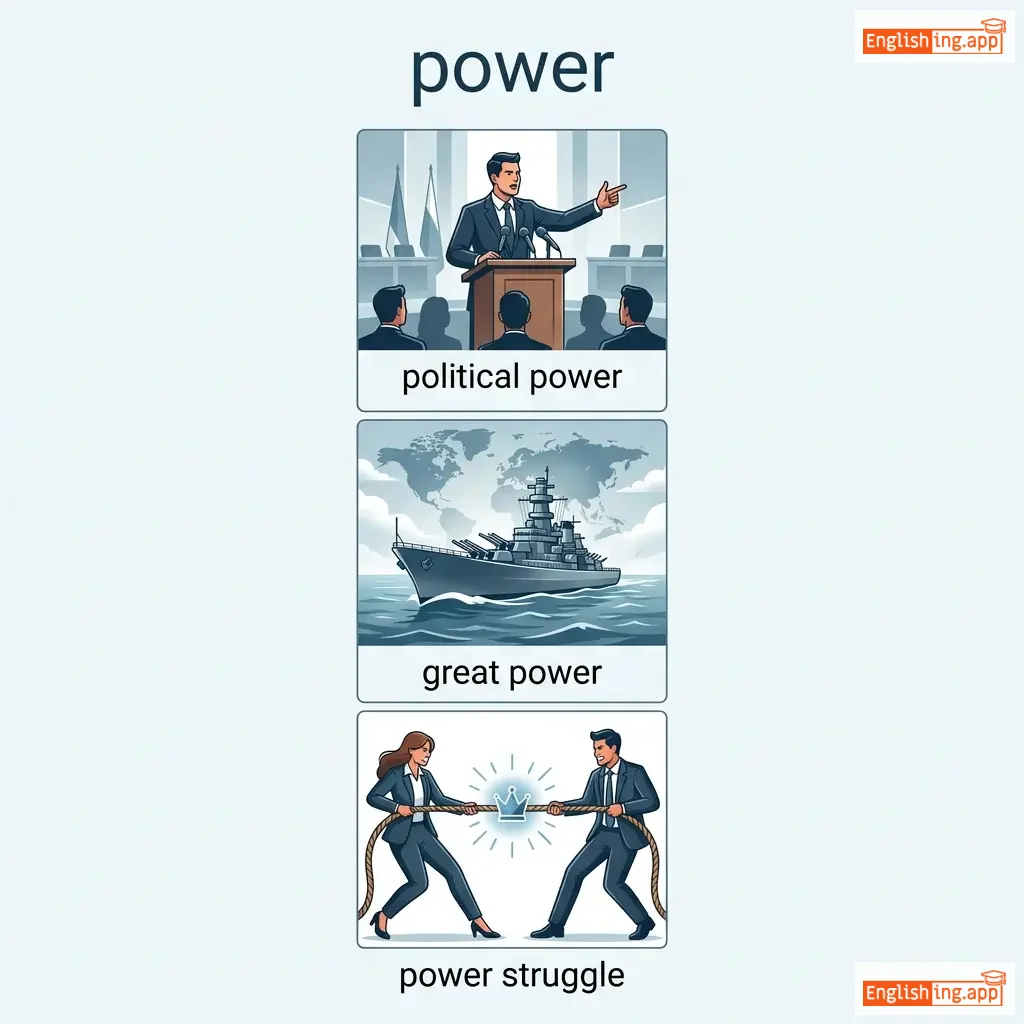
political power, great power, power struggle, power supply
••••••
|
Power = 力, まるでスーパーヒーローの力のように。
••••••
|
|
💪
••••••
|
/ˈpaʊərfəl/
adjective
(パワフル)
••••••
|

|
強力な
kyōryokuna
••••••
|
- •••••• | - •••••• | - •••••• | - •••••• |
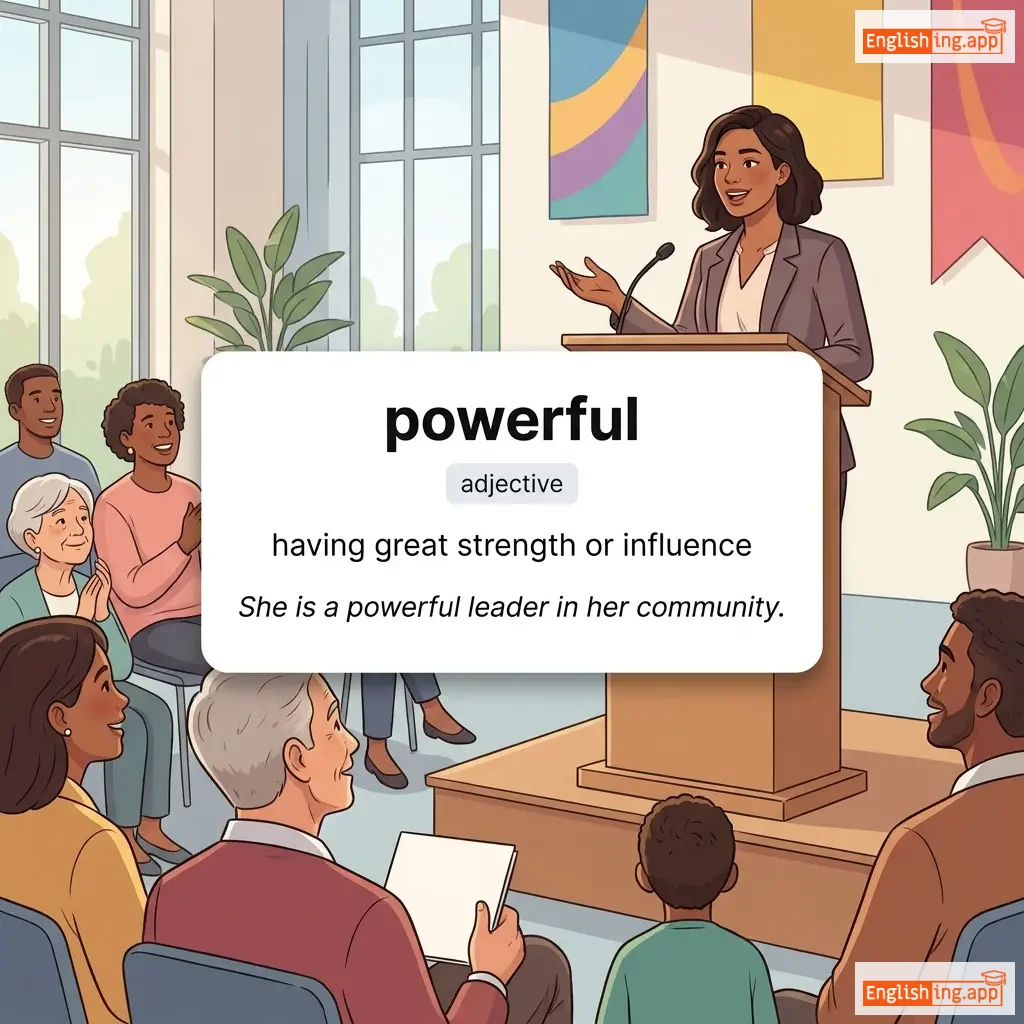
having great strength or influence
••••••
|
She is a powerful leader in her community. |
彼女はコミュニティで強力なリーダーです。
Kanojo wa komyuniti de kyōryokuna rīdā desu.
••••••
|
- •••••• | - •••••• | - •••••• |
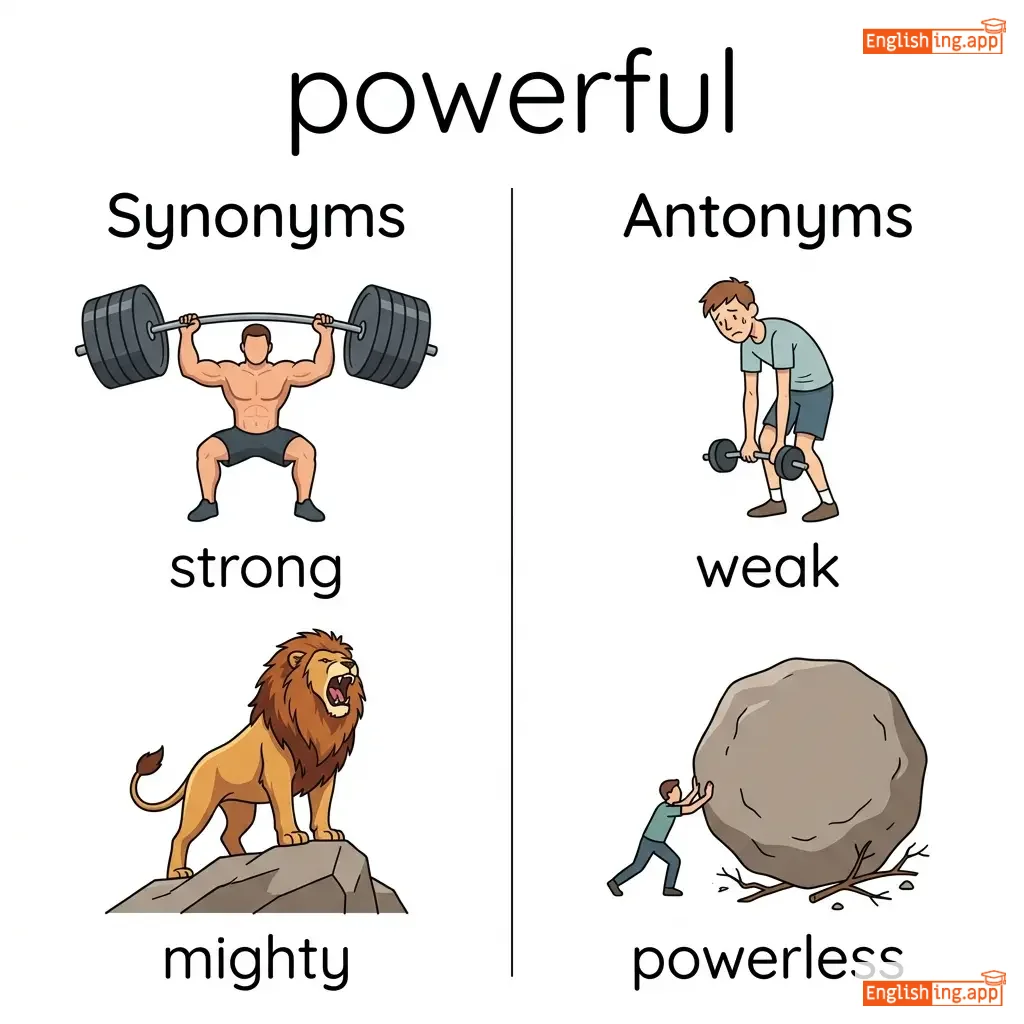
strong, mighty, influential, dominant
••••••
|
weak, powerless
••••••
|
powerful voice, powerful impact, powerful influence, powerful leader
••••••
|
Powerful means strong like a mighty leader.
••••••
|
|
🔧
••••••
|
/ˈpræk.tɪ.kəl/
adjective
(プラクティカル)
••••••
|
|
実用的な
jitsuyō-teki na
••••••
|
- •••••• | - •••••• | - •••••• | - •••••• |
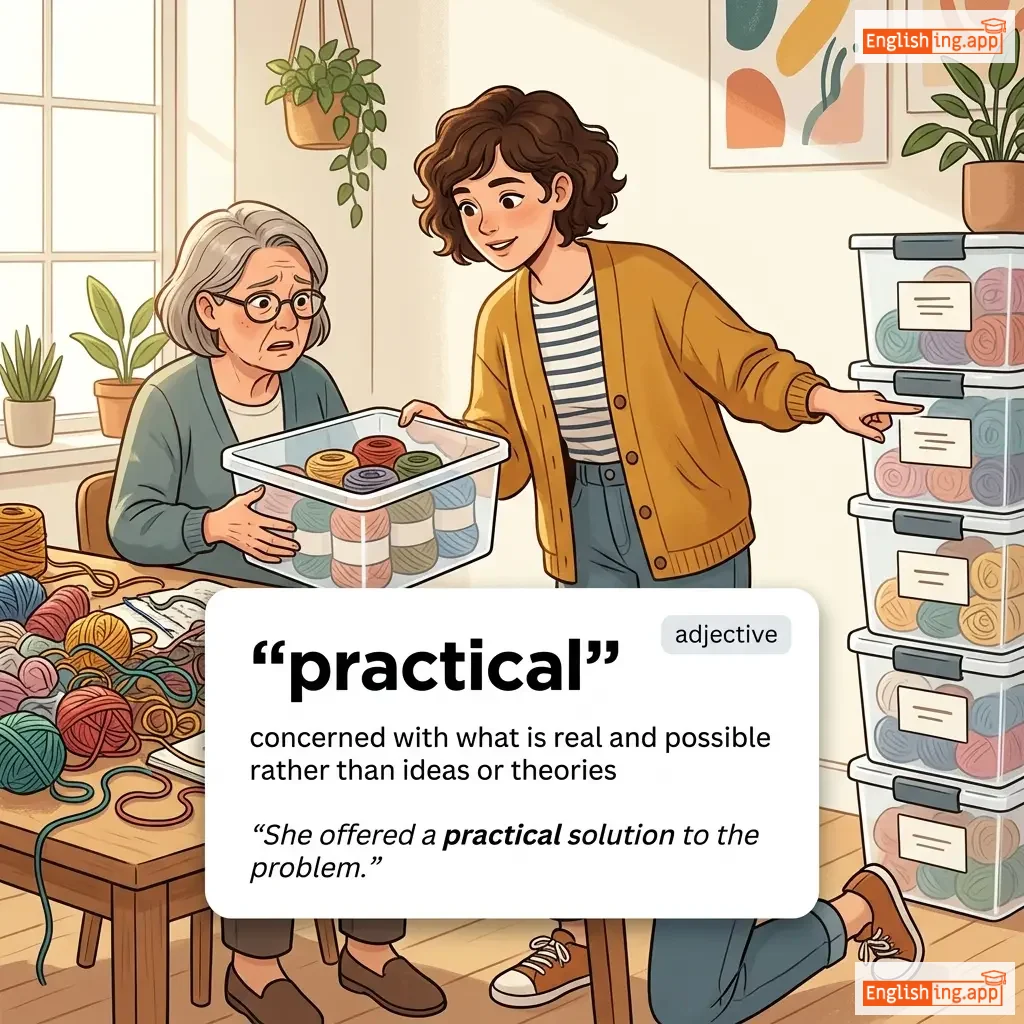
concerned with what is real and possible rather than ideas or theories
••••••
|
She offered a practical solution to the problem. |
彼女は問題に対して実用的な解決策を提供しました。
Kanojo wa mondai ni taishite jitsuyō-teki na kaiketsu-saku o teikyō shimashita.
••••••
|
practice makes perfect |
the more you practice something, the better you become at it
••••••
|
練習が完璧を作る
renshū ga kanpeki o tsukuru
••••••
|
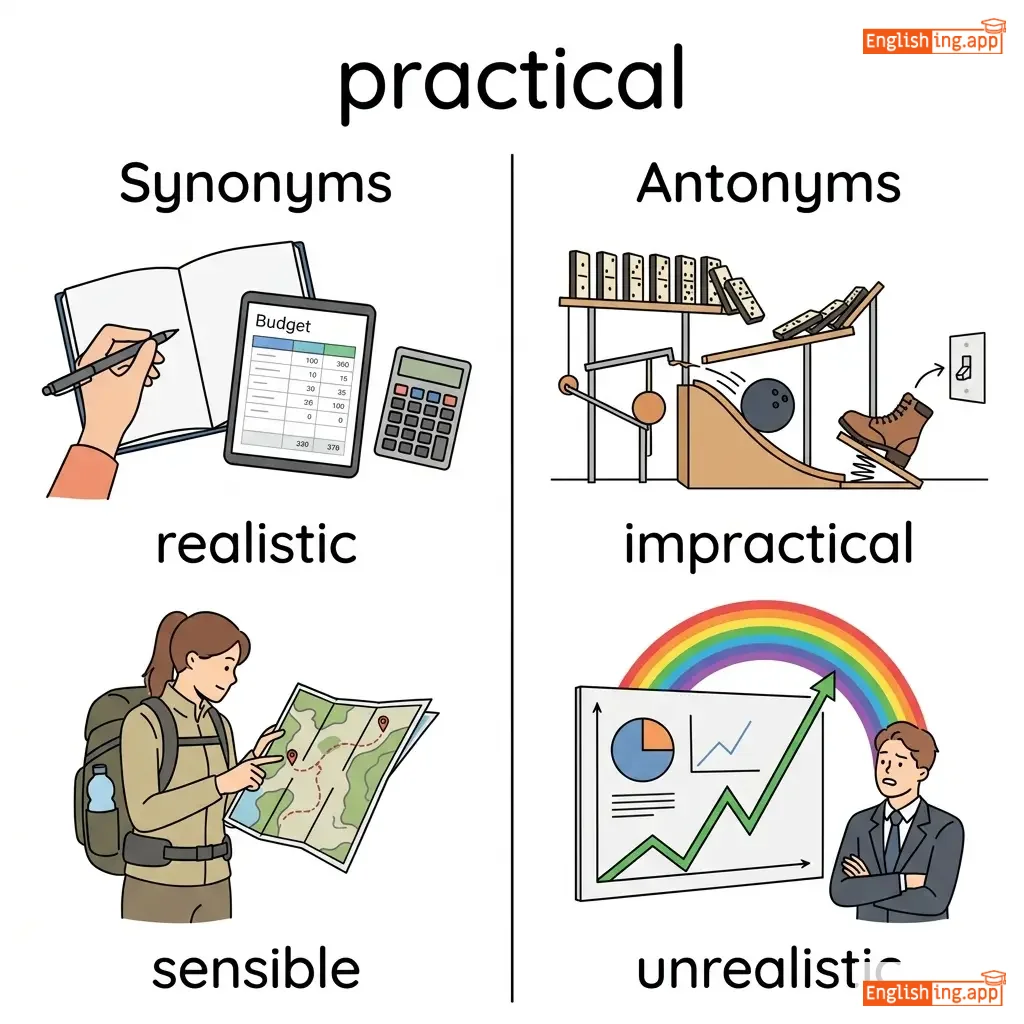
realistic, sensible, useful, logical, pragmatic
••••••
|
impractical, unrealistic, theoretical
••••••
|
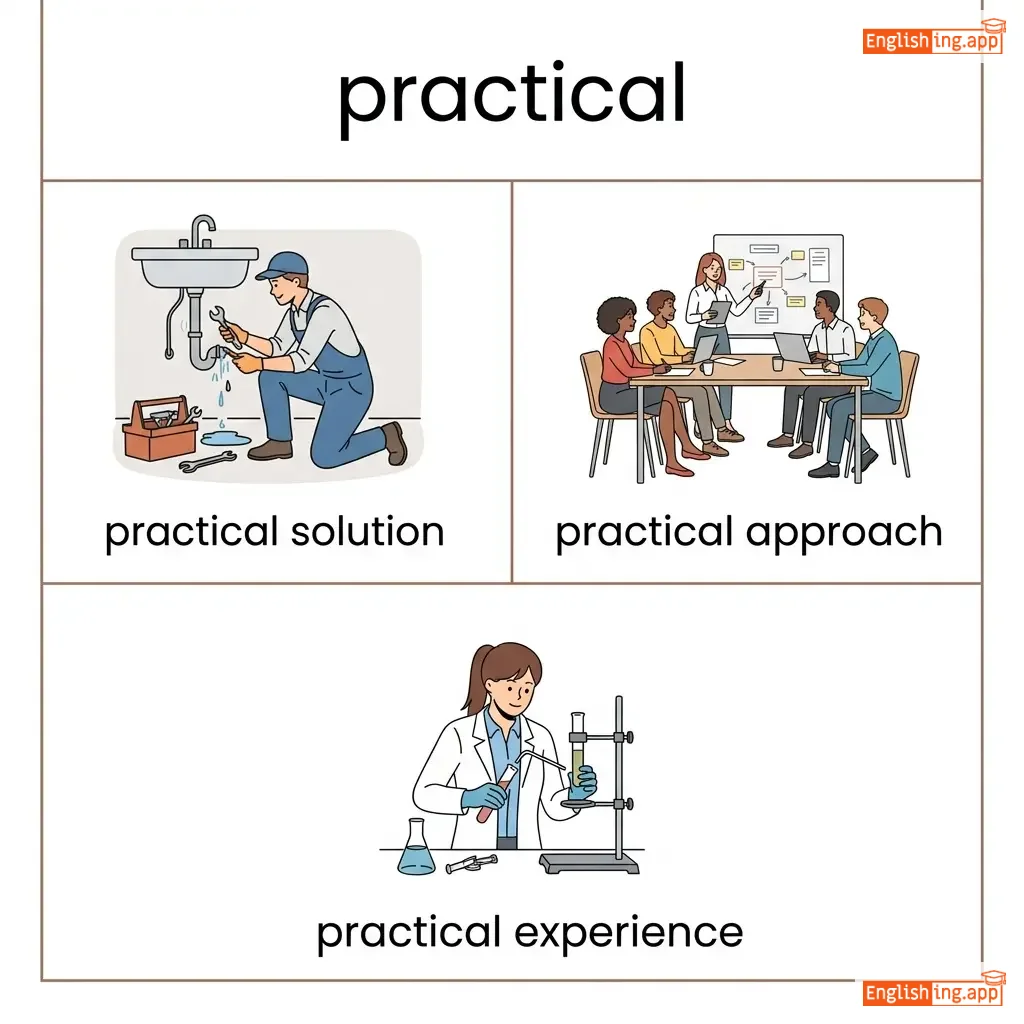
practical solution, practical approach, practical experience, practical advice
••••••
|
実用的なことは理論ではなく、実際に行動すること
••••••
|
|
🎻
••••••
|
/ˈpræk.tɪs/
noun/verb
(プラクティス)
••••••
|
|
練習
renshuu
••••••
|
practiced
プラクティスド
••••••
|
practiced
プラクティスド
••••••
|
practices
プラクティセズ
••••••
|
practicing
プラクティシング
••••••
|
the act of doing something repeatedly to improve skill, or the actual application of an idea
••••••
|
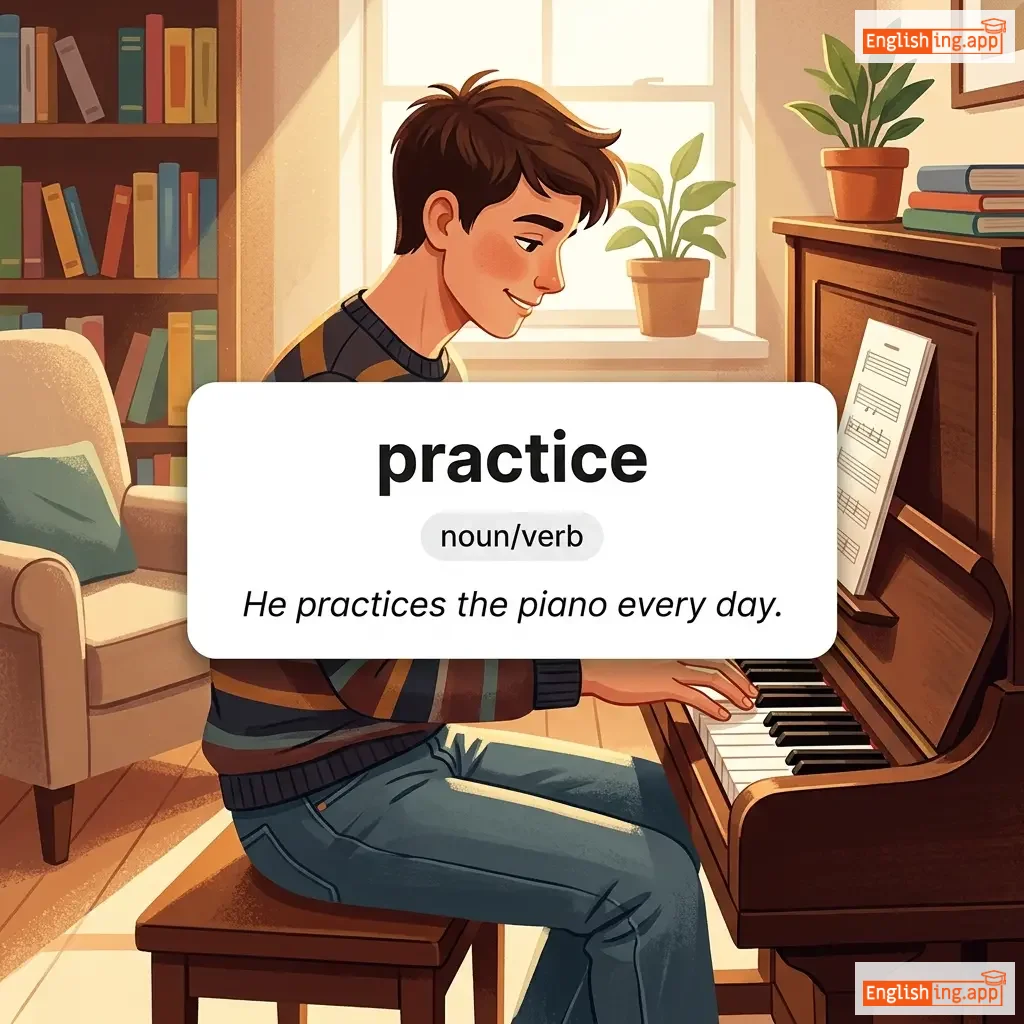
He practices the piano every day.
彼は毎日ピアノを練習します。
••••••
|
彼は毎日ピアノを練習します。
Kare wa mainichi piano wo renshuu shimasu.
••••••
|
in practice
実際には
••••••
|
in reality, as opposed to theory
••••••
|
実際には
jissai ni wa
••••••
|
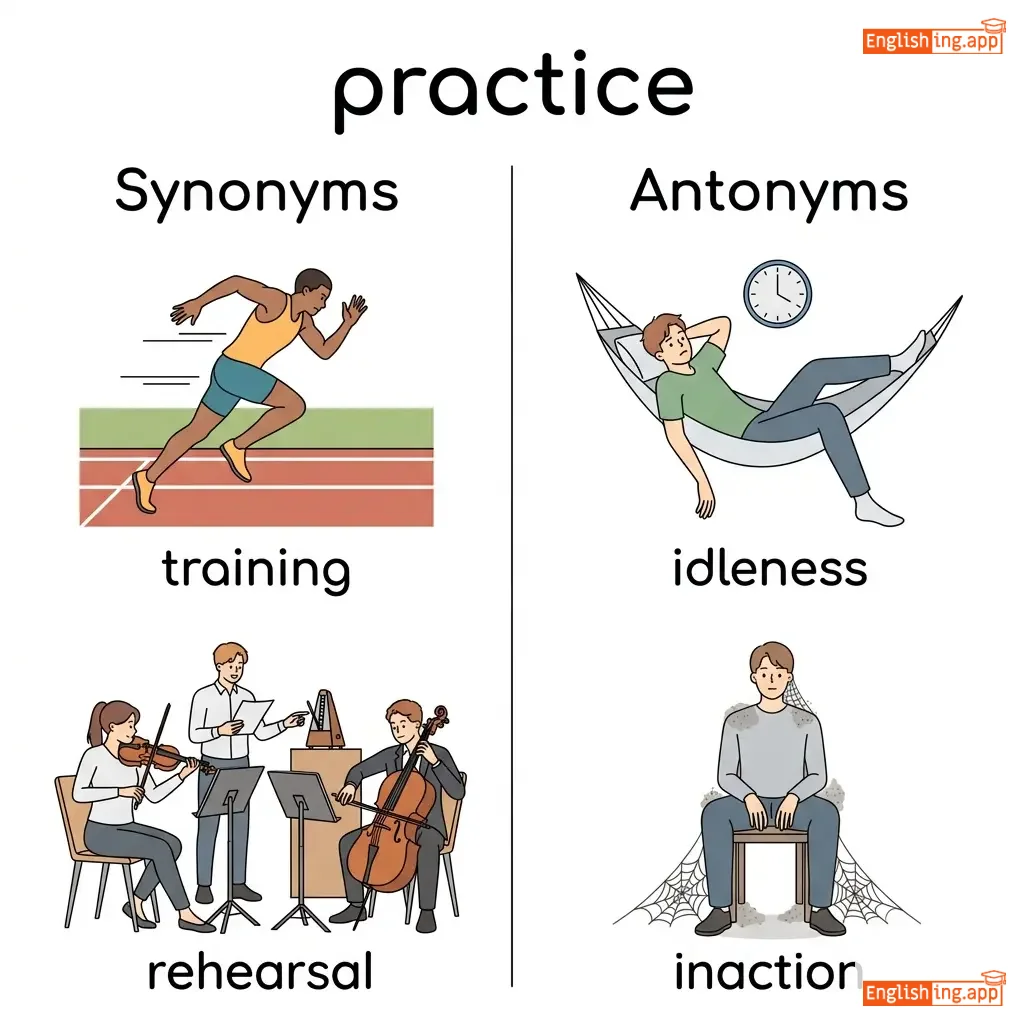
training, rehearsal, exercise, habit, application
••••••
|
idleness, inaction, neglect
••••••
|
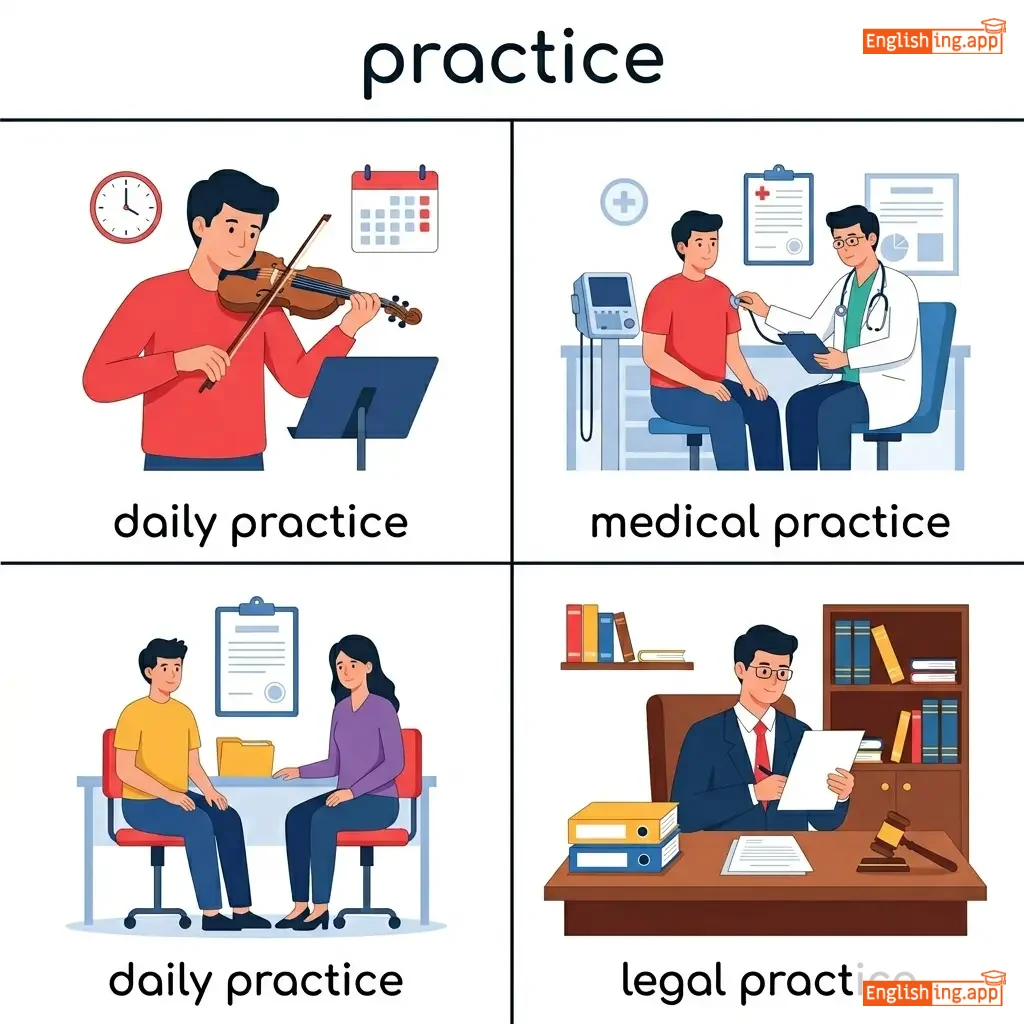
daily practice, medical practice, legal practice, practice session
••••••
|
練習で完璧になる - 'Practice makes perfect'
••••••
|
|
👩⚕️
••••••
|
/prækˈtɪʃ.ən.ər/
noun
(プラクティショナー)
••••••
|
- •••••• |
実務家
jitsumuka
••••••
|
- •••••• | - •••••• | - •••••• | - •••••• |
a person actively engaged in a profession, especially medicine or law
••••••
|
She is a skilled medical practitioner. |
彼女は優れた医療実務家です。
Kanojo wa sugureta iryō jitsumuka desu.
••••••
|
- •••••• | - •••••• | - •••••• |
professional, specialist, expert, clinician, doctor
••••••
|
amateur, novice, layman
••••••
|
legal practitioner, medical practitioner, experienced practitioner
••••••
|
Practitioner はその職業を実践している人で、医者や弁護士のような人です。
••••••
|
|
👏
••••••
|
/preɪz/
verb
(preizu)
••••••
|
|
賛美する
sanbi suru
••••••
|
praised
preizudo
••••••
|
praised
preizudo
••••••
|
praises
preizuzu
••••••
|
praising
preizingu
••••••
|
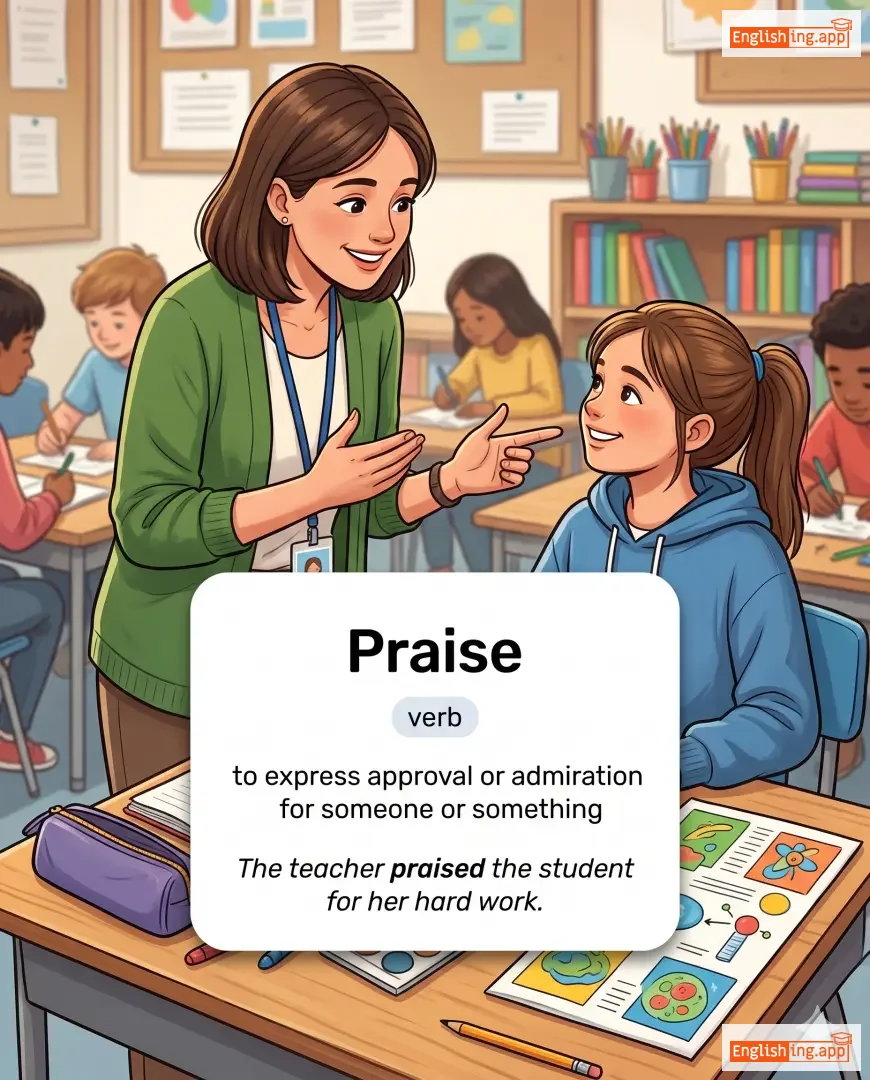
to express approval or admiration for someone or something
••••••
|
The teacher praised the student for her hard work.
先生は学生の努力を称賛しました。
••••••
|
先生は学生の努力を称賛しました。
Sensei wa gakusei no doryoku o shousan shimashita.
••••••
|
sing someone’s praises
誰かを称賛する
••••••
|
to enthusiastically talk about how good someone is
••••••
|
誰かを称賛する
dareka o shousan suru
••••••
|
commend, compliment, applaud, admire, honor
••••••
|
criticize, blame, condemn
••••••
|
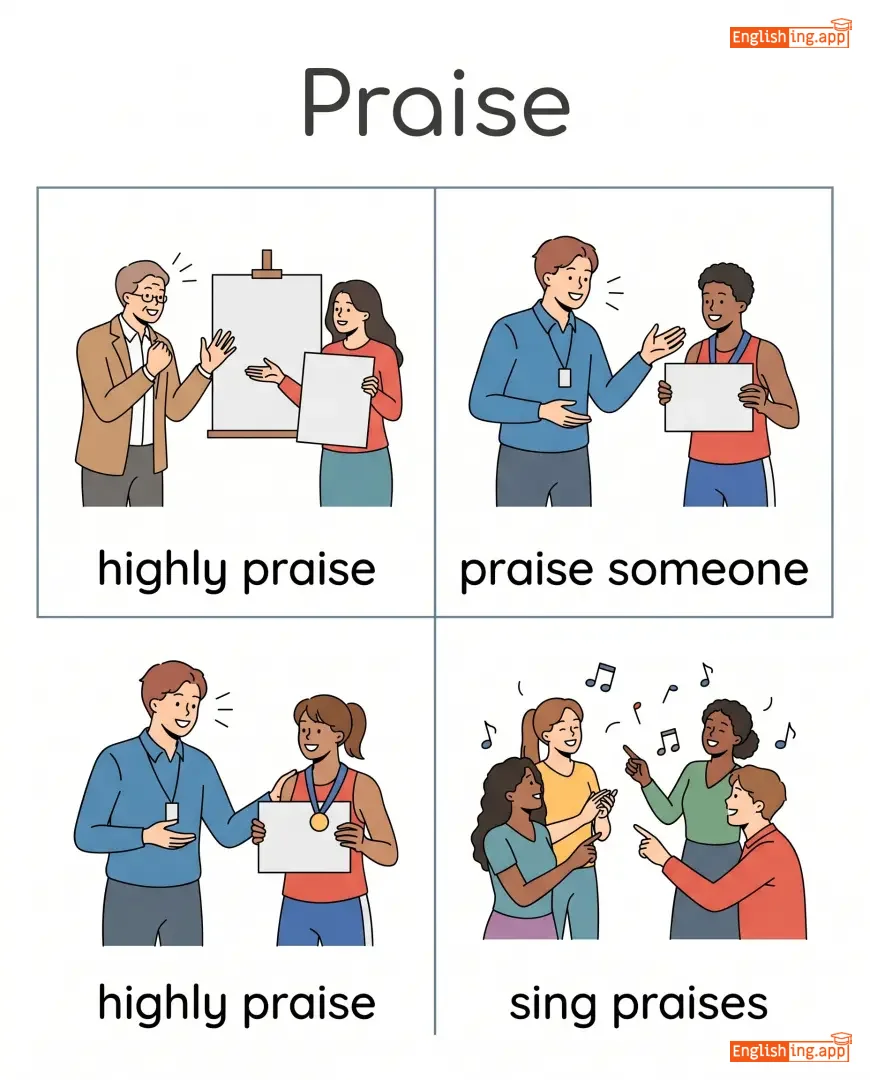
highly praise, praise someone, sing praises, praise for efforts
••••••
|
Sanbi suru は称賛する — クラスで良いことをするとみんな 'サンビ' するよ!
••••••
|
|
🎭
••••••
|
/præŋk/
noun
(プランク)
••••••
|
- •••••• |
いたずら
itazura
••••••
|
- •••••• | - •••••• | - •••••• | - •••••• |
A trick that is intended to be funny but not harmful.
••••••
|
They played a harmless prank on their friend during the party.
彼らはパーティーで友達と無害ないたずらをしました。
••••••
|
彼らはパーティーで友達と無害ないたずらをしました。
Karera wa pātii de tomodachi to mugai na itazura o shimashita.
••••••
|
play a prank
いたずらをする
••••••
|
To trick someone in a playful and humorous way.
••••••
|
いたずらをする
itazura o suru
••••••
|
joke, trick, practical joke, stunt, gag
••••••
|
seriousness, sincerity
••••••
|
harmless prank, play a prank, school prank
••••••
|
Prankはいたずら。笑いを提供する軽いイタズラ。
••••••
|
|
🙏
••••••
|
/preɪ/
verb
(purei)
••••••
|
|
祈る
inoru
••••••
|
prayed
pureido
••••••
|
prayed
pureido
••••••
|
prays
pureizu
••••••
|
praying
pureingu
••••••
|
to speak to a deity, especially for help or thanks
••••••
|
Every night, she prays for her family’s safety.
毎晩、彼女は家族の安全を祈ります。
••••••
|
毎晩、彼女は家族の安全を祈ります。
Maiban, kanojo wa kazoku no anzen o inorimasu.
••••••
|
say your prayers
祈りを言う
••••••
|
to pray, especially before bed
••••••
|
祈りを言う
Inori o iu
••••••
|
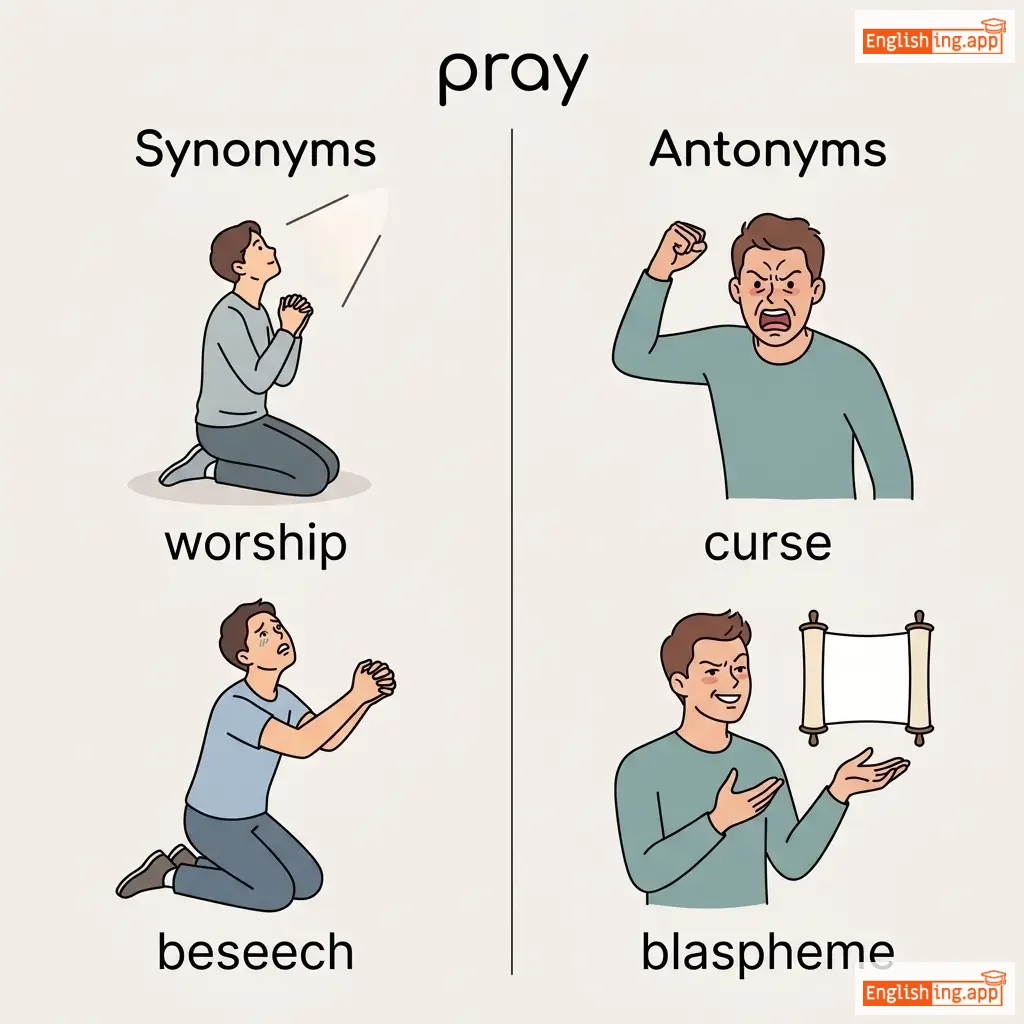
worship, beseech, implore, petition
••••••
|
curse, blaspheme
••••••
|
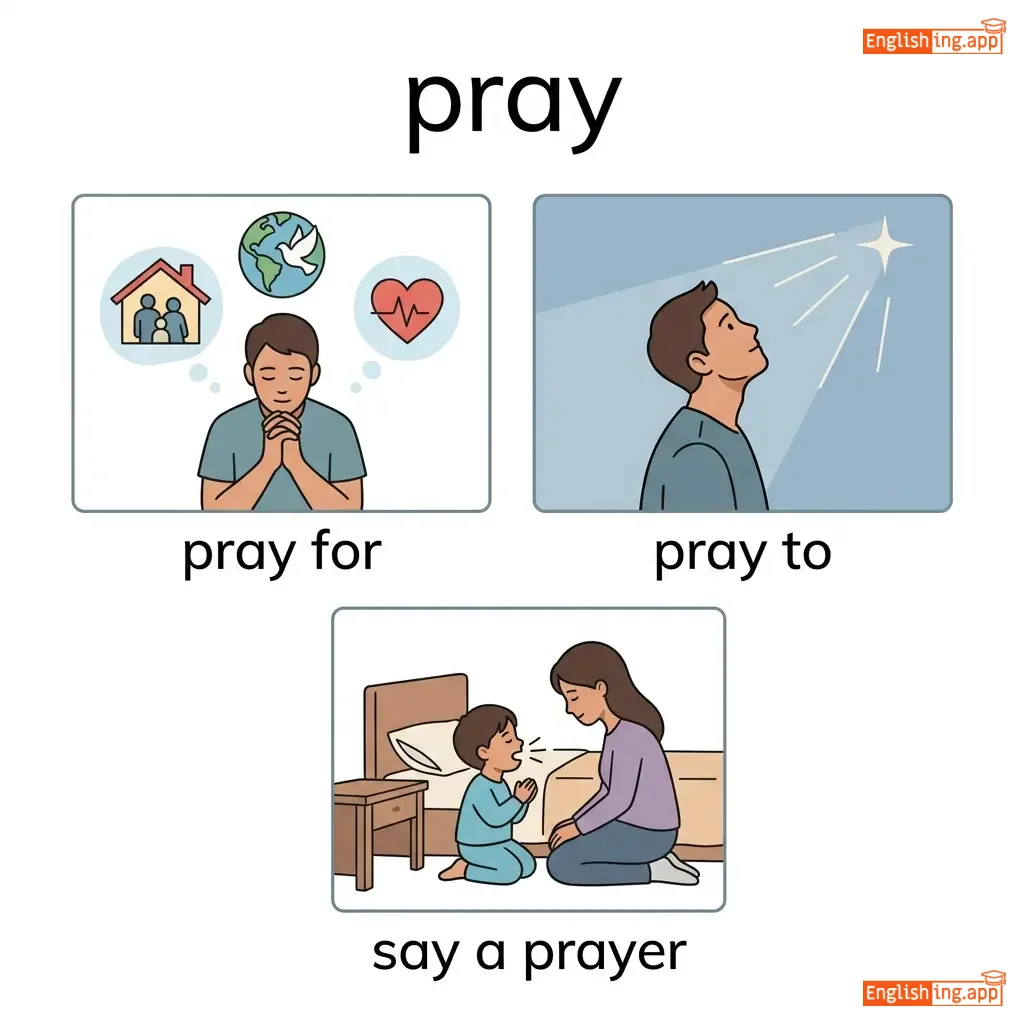
pray for, pray to, say a prayer, praying hands
••••••
|
Pray for safety, pray at night - Night is the time to pray.
••••••
|
|
🕊️
••••••
|
/ˈprɛər/
noun
(purea)
••••••
|
- •••••• |
祈り
inori
••••••
|
- •••••• | - •••••• | - •••••• | - •••••• |
a solemn request for help or expression of thanks addressed to God or another deity
••••••
|
She recited a prayer before the meal. |
彼女は食事の前に祈りを捧げました。
Kanojo wa shokuji no mae ni inori o sasagemashita.
••••••
|
answer one's prayer |
to fulfill a person's request made in prayer
••••••
|
誰かの祈りに応える
Dareka no inori ni kotaeru
••••••
|
supplication, devotion, plea, invocation
••••••
|
curse, blasphemy
••••••
|
say a prayer, prayer meeting, prayer time
••••••
|
夜に祈りを捧げ、願いが叶うように。
••••••
|
|
🙏
••••••
|
/priːtʃ/
verb
(puriichi)
••••••
|
- •••••• |
説教する
sekkyou suru
••••••
|
preached
puriichido
••••••
|
preached
puriichido
••••••
|
preaches
puriichesu
••••••
|
preaching
puriichingu
••••••
|
to deliver a religious or moral talk, often in a church setting
••••••
|
The pastor preached about forgiveness and kindness.
牧師は許しと親切について説教しました。
••••••
|
牧師は許しと親切について説教しました。
Bokusha wa yurushi to shinsetsu ni tsuite sekkyou shimashita.
••••••
|
practice what you preach
説教したことを実践する
••••••
|
to behave in the way you encourage others to behave
••••••
|
説教したことを実践する
sekkyou shita koto o jissen suru
••••••
|
sermonize, exhort, evangelize, lecture, instruct
••••••
|
ignore, neglect, conceal
••••••
|
preach forgiveness, preach love, preach tolerance, preach against
••••••
|
説教するとは、あなたが説教することをすることです。
••••••
|
|
⏮️
••••••
|
/prɪˈsiːd/
verb
••••••
|
|
- •••••• |
preceded
••••••
|
preceded
••••••
|
precedes
••••••
|
preceding
••••••
|
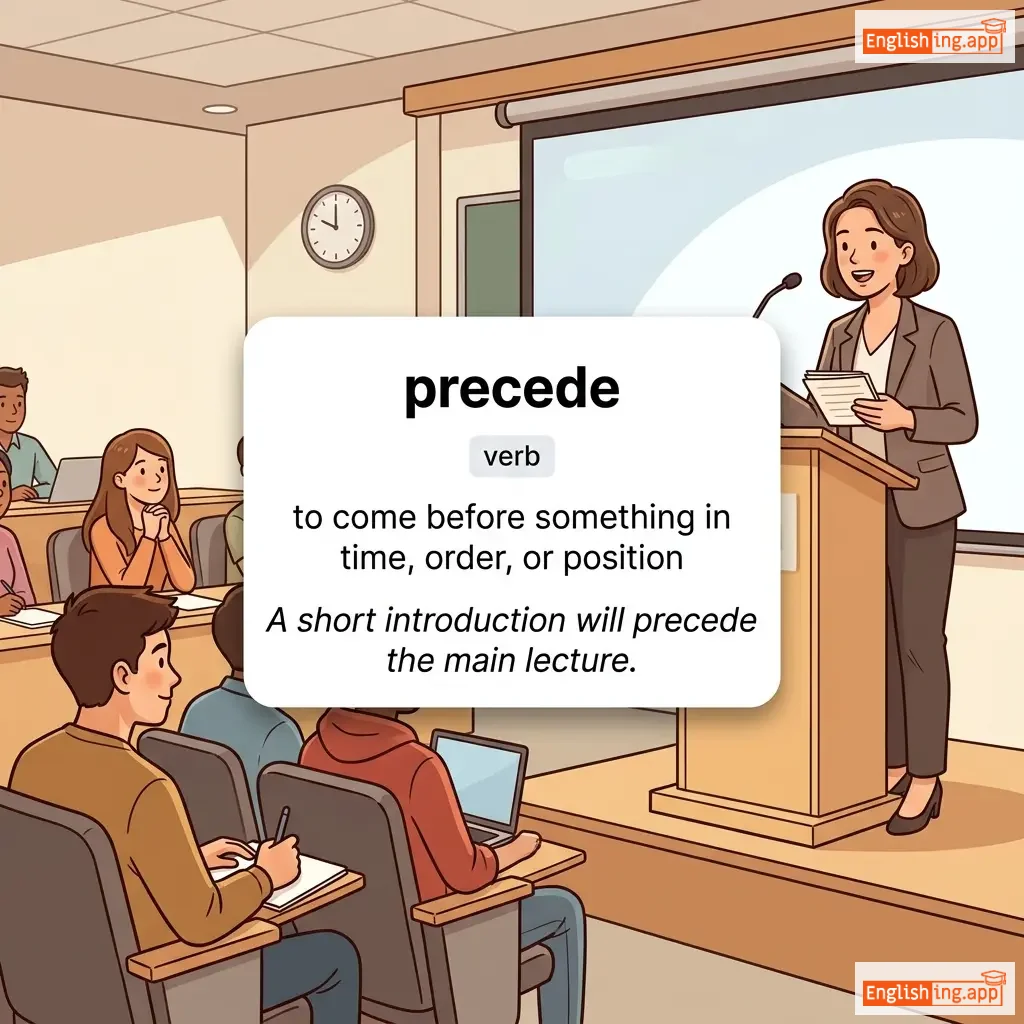
to come before something in time, order, or position
••••••
|
A short introduction will precede the main lecture. |
- •••••• |
precede by |
to happen before something else
••••••
|
- •••••• |
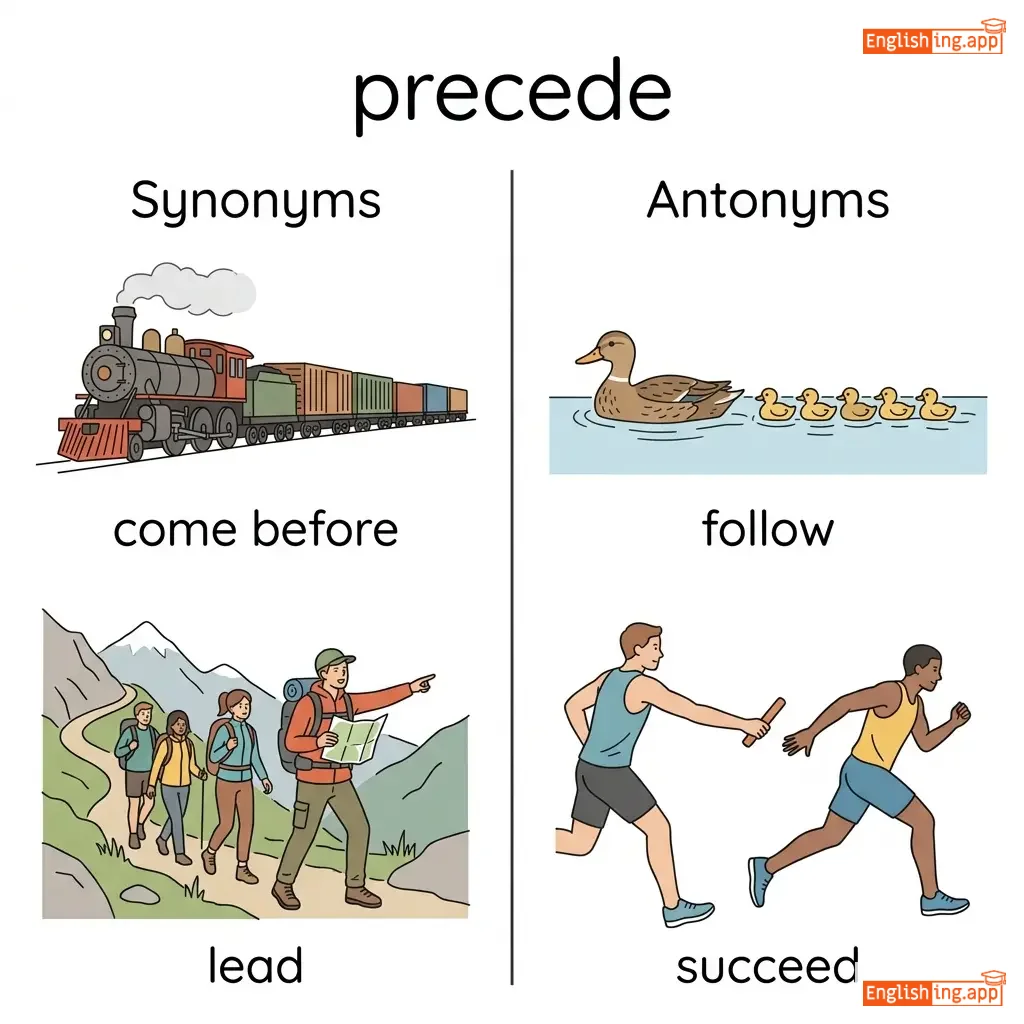
come before, lead, pave the way, herald
••••••
|
follow, succeed
••••••
|
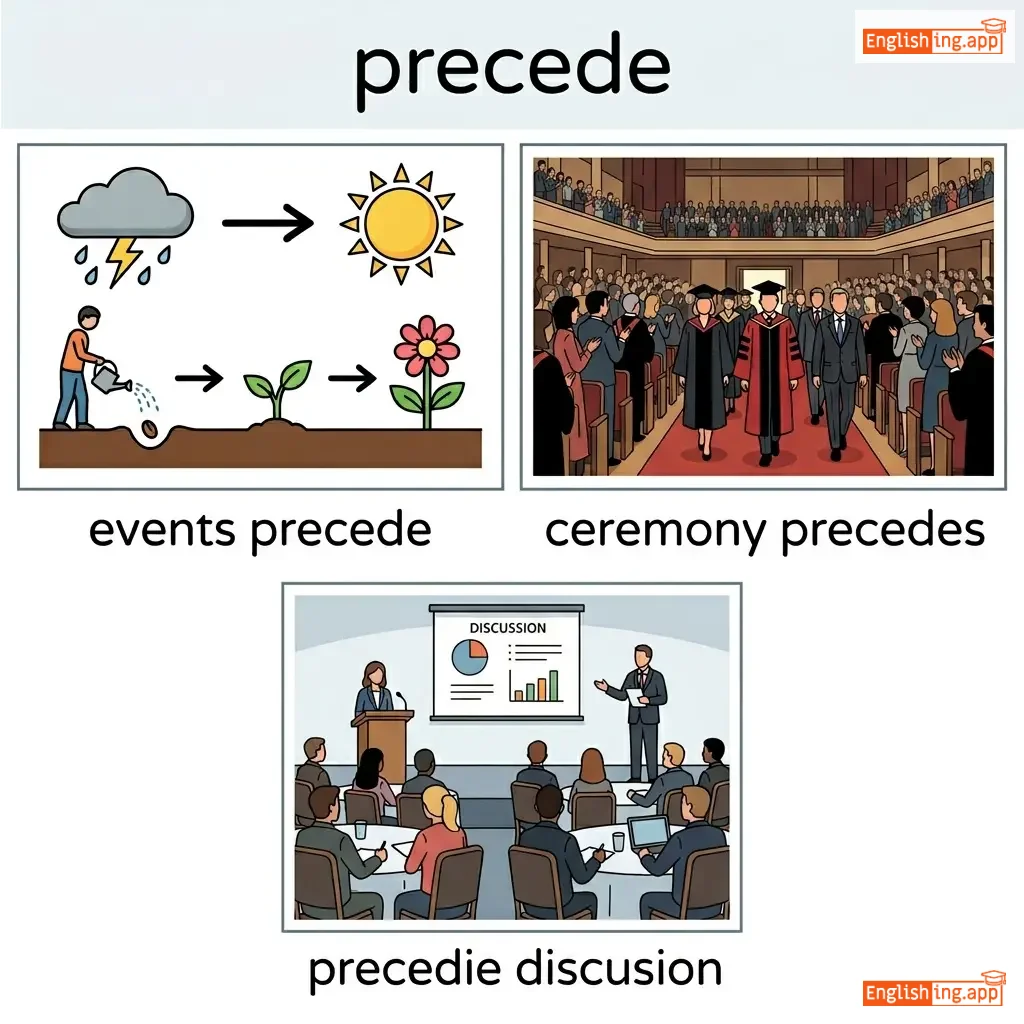
events precede, ceremony precedes, precede discussion, precede statement
••••••
|
No •••••• |
|
⚖️
••••••
|
/ˈprɛsɪdənt/
noun
(プレジデント)
••••••
|
- •••••• |
前例
zenrei
••••••
|
- •••••• | - •••••• | - •••••• | - •••••• |
An earlier event or decision that serves as a guide or example for future similar situations.
••••••
|
The judge’s ruling set a new precedent for similar cases. |
裁判官の判決は、同様の事件のための新たな前例を設定した。
Saibankan no hanketsu wa, douyou no jiken no tame no aratana zenrei o settei shita.
••••••
|
set a precedent |
to establish a pattern or example to be followed in the future
••••••
|
前例を作る
Zenrei o tsukuru
••••••
|
example, model, standard, pattern, instance
••••••
|
subsequent, follower, outcome
••••••
|
legal precedent, set a precedent, historical precedent, establish precedent
••••••
|
前例は、過去に起こったことが未来の規範となることを意味します — 以前の前例がその後の行動に影響を与えます。
••••••
|
|
💎
••••••
|
/ˈprɛʃəs/
adjective
(ぷれしあす)
••••••
|
- •••••• |
貴重な
kichōna
••••••
|
- •••••• | - •••••• | - •••••• | - •••••• |
of great value; highly esteemed or cherished
••••••
|
This ring is very precious to my grandmother.
この指輪は祖母にとってとても貴重です。
••••••
|
この指輪は祖母にとってとても貴重です。
Kono yubiwa wa sobo ni totte totemo kichō desu.
••••••
|
precious time
貴重な時間
••••••
|
time that is highly valuable and should not be wasted
••••••
|
貴重な時間
kichōna jikan
••••••
|
valuable, treasured, beloved, priceless, dear
••••••
|
worthless, cheap, common
••••••
|
precious stone, precious memory, precious little, precious time
••••••
|
Preciousは💎貴重な、覚えておいて — precious stoneはいつも貴重な石
••••••
|
|
🎯
••••••
|
/prɪˈsaɪs/
adjective
(プリサイス)
••••••
|
- •••••• |
正確な
seikaku na
••••••
|
- •••••• | - •••••• | - •••••• | - •••••• |
Marked by exactness and accuracy of expression or detail.
••••••
|
She gave precise instructions for the experiment. |
彼女は実験のために正確な指示を与えた。
Kanojo wa jikken no tame ni seikaku na shiji o ataeta.
••••••
|
to be precise |
used to give exact details or clarify something
••••••
|
正確に言えば
seikaku ni ieba
••••••
|
exact, accurate, specific, clear, definite
••••••
|
imprecise, vague, inaccurate
••••••
|
precise instructions, precise details, precise measurements, precise meaning
••••••
|
正確な、目標のように 🎯
••••••
|
|
📏
••••••
|
/prɪˈsaɪsli/
adverb
(プレサイスリ)
••••••
|
|
正確に
seikaku ni
••••••
|
- •••••• | - •••••• | - •••••• | - •••••• |
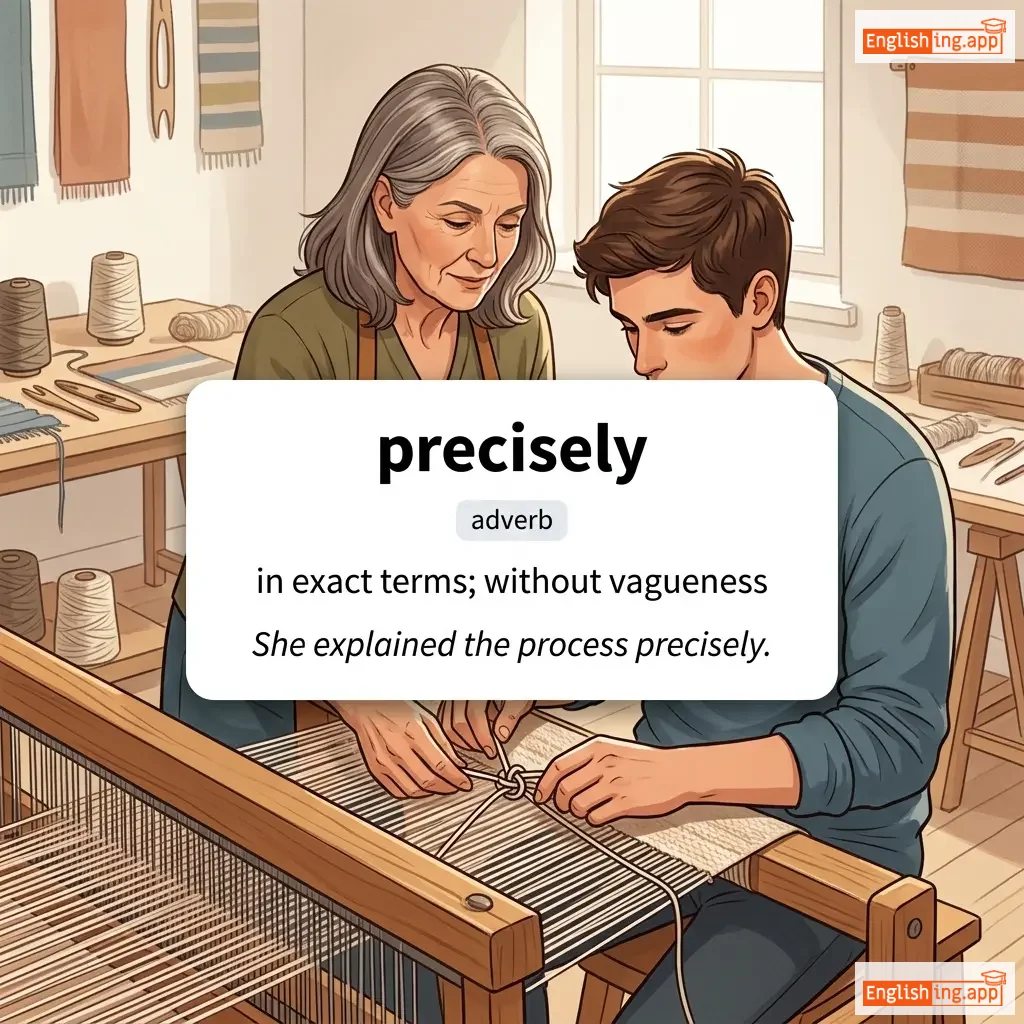
in exact terms; without vagueness
••••••
|
She explained the process precisely.
彼女はそのプロセスを正確に説明しました。
••••••
|
彼女はそのプロセスを正確に説明しました。
Kanojo wa sono purosesu o seikaku ni setsumei shimashita.
••••••
|
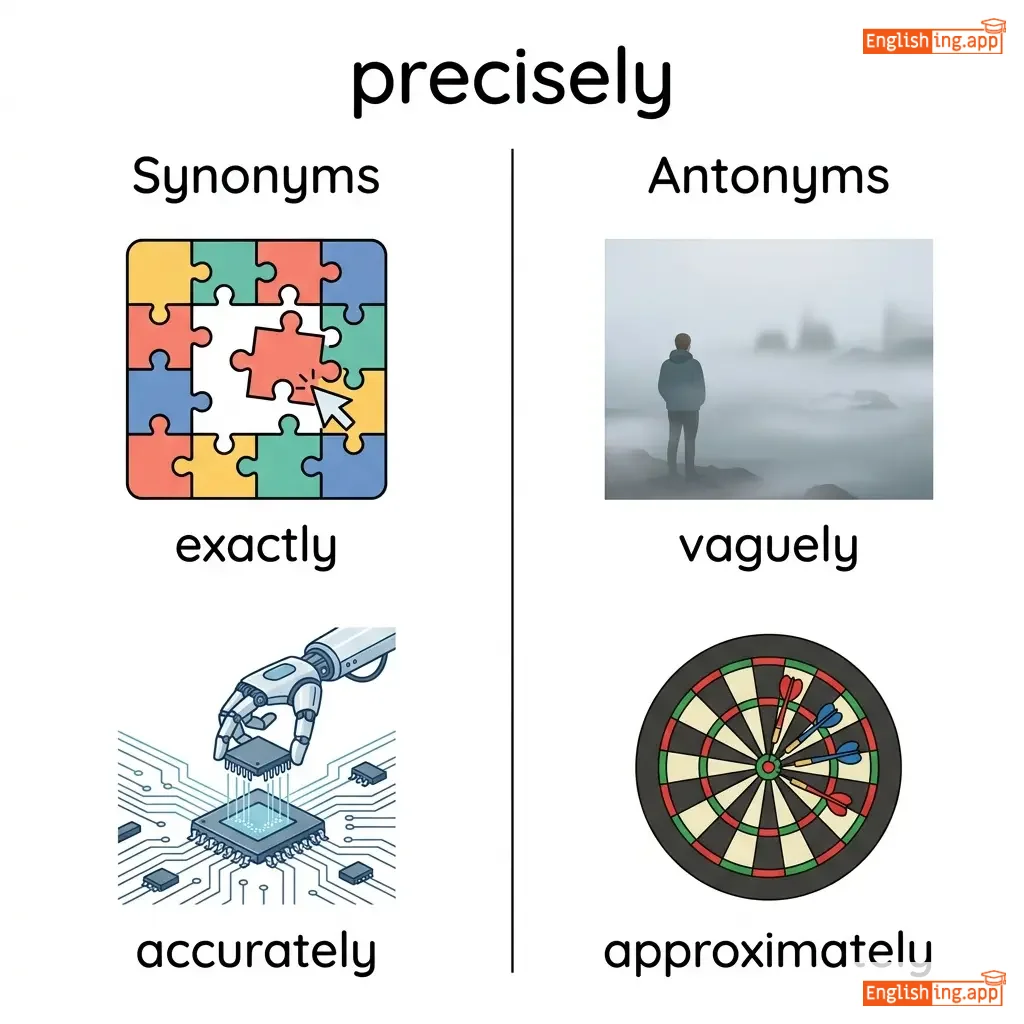
- •••••• | - •••••• | - •••••• |
exactly, accurately, specifically, strictly
••••••
|
vaguely, approximately
••••••
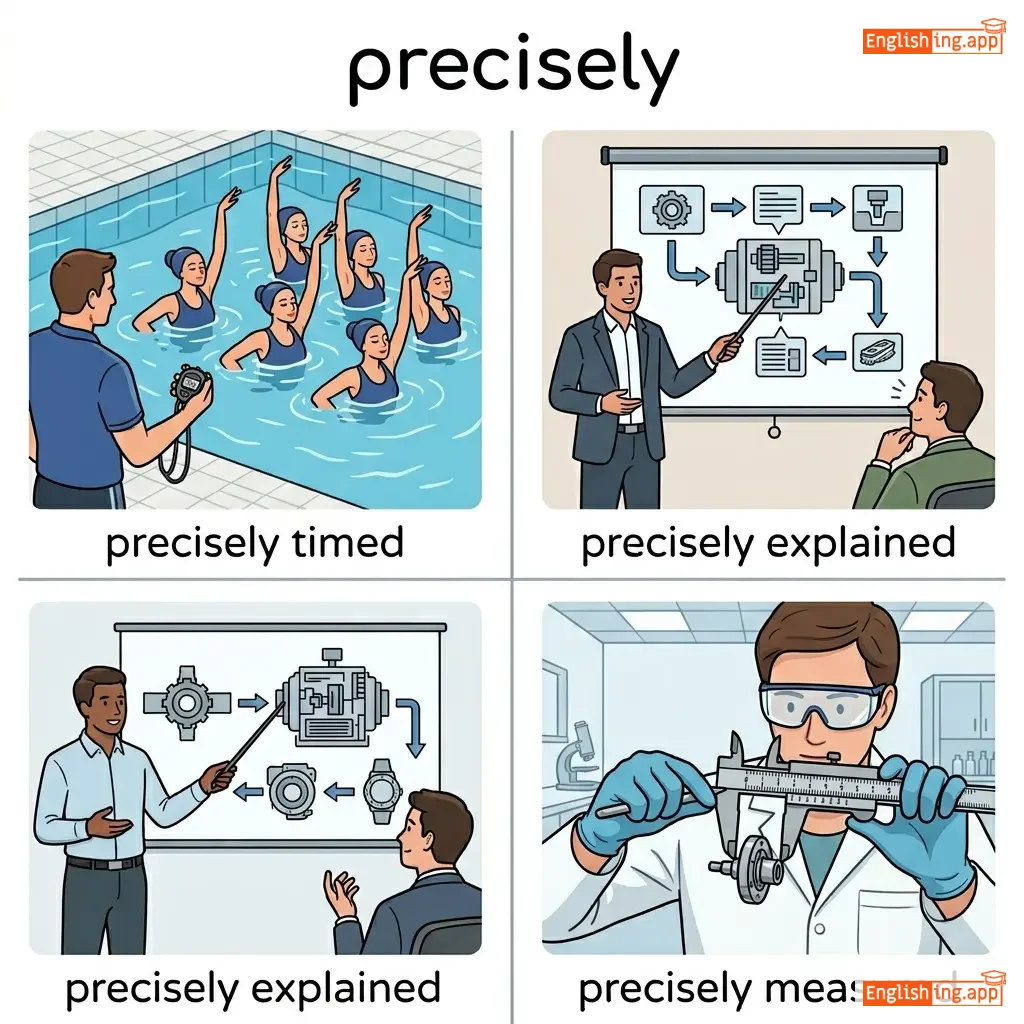
|
precisely timed, precisely explained, precisely measured
••••••
|
Precisely = No errors, only clarity!
••••••
|
|
⚖️
••••••
|
/prɪˈsɪʒən/
noun
(プレシジョン)
••••••
|
|
精度
seido
••••••
|
- •••••• | - •••••• | - •••••• | - •••••• |
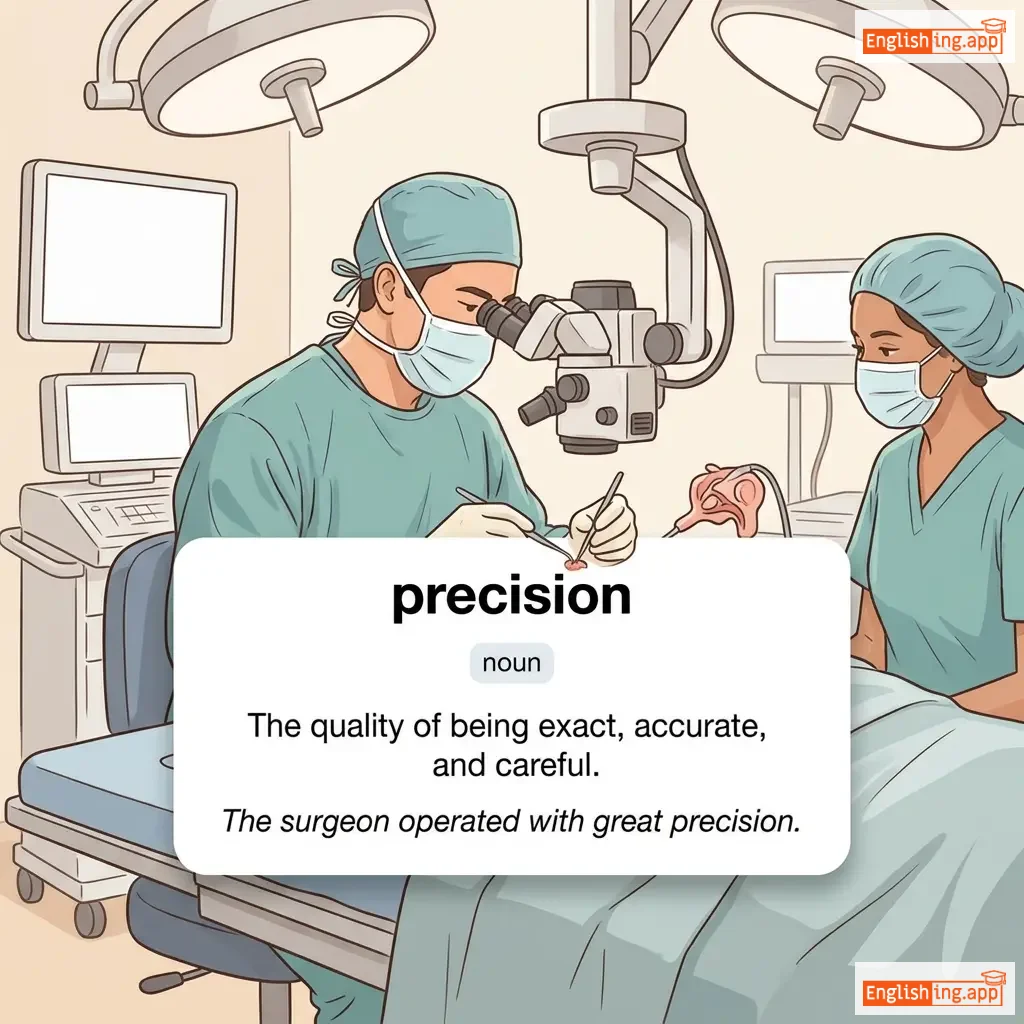
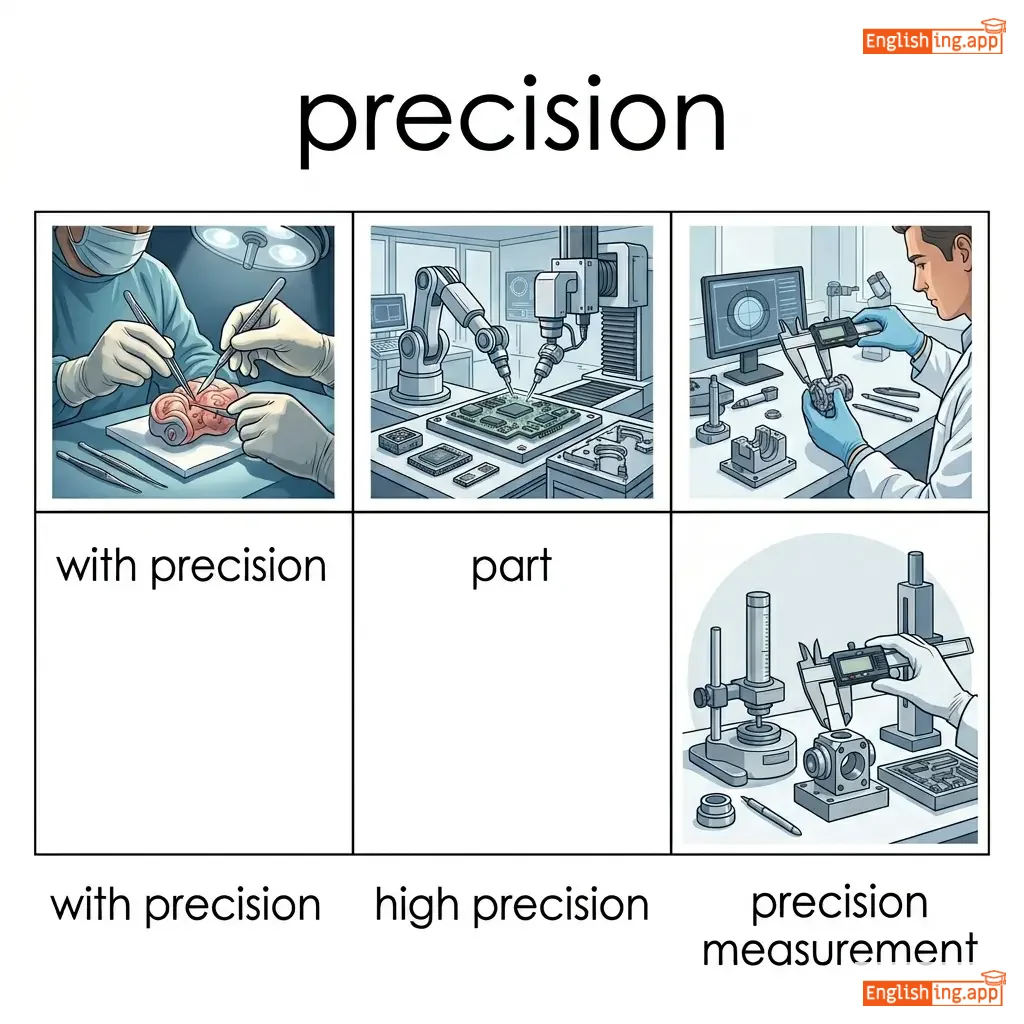
The quality of being exact, accurate, and careful.
••••••
|
The surgeon operated with great precision.
外科医は高い精度で手術を行った。
••••••
|
外科医は高い精度で手術を行った。
geka-i wa takai seido de shujutsu o okonatta.
••••••
|
precision work
精密作業
••••••
|
work requiring great accuracy and attention to detail
••••••
|
精度を要する作業
seido o yōsuru sagyō
••••••
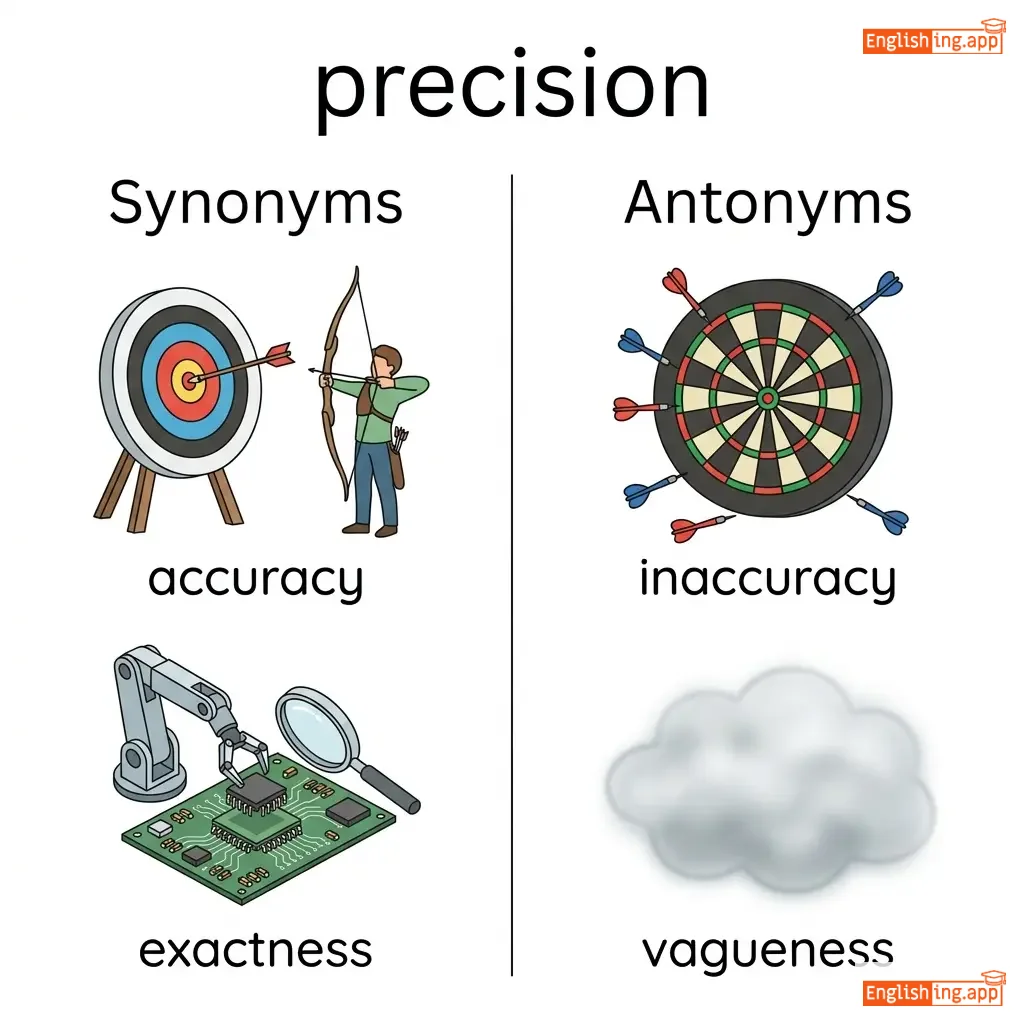
|
accuracy, exactness, correctness, meticulousness
••••••
|
inaccuracy, vagueness, imprecision
••••••
|
with precision, high precision, precision measurement, precision engineering
••••••
|
精度は精密な仕事を意味します - 外科医は精度で切ります ⚖️
••••••
|
|
🦁
••••••
|
/ˈprɛdətər/
noun
(プレデター)
••••••
|
- •••••• |
捕食者
hoshokusha
••••••
|
- •••••• | - •••••• | - •••••• | - •••••• |
An animal that hunts and kills other animals for food.
••••••
|
Lions are powerful predators in the savannah. |
ライオンはサバンナで強力な捕食者です。
Raion wa sabanna de kyōryokuna hoshokusha desu.
••••••
|
- •••••• | - •••••• | - •••••• |
hunter, carnivore, killer, stalker
••••••
|
prey, victim
••••••
|
apex predator, natural predator, predator species
••••••
|
Predator - '捕食' する動物 – 捕食者。
••••••
|
|
👤
••••••
|
/ˈpred.ə.ses.ər/
noun
(プレデセッサー)
••••••
|
- •••••• |
前任者
zenjinsha
••••••
|
- •••••• | - •••••• | - •••••• | - •••••• |
a person who held a job or office before the current holder; something that came before another thing
••••••
|
The new manager learned from his predecessor's mistakes. |
新しいマネージャーは前任者のミスから学びました。
atarashī manējā wa zenjinsha no misu kara manabimashita.
••••••
|
- •••••• | - •••••• | - •••••• |
forerunner, antecedent, previous holder, former
••••••
|
successor, follower, descendant
••••••
|
immediate predecessor, worthy predecessor, predecessor company, predecessor's legacy
••••••
|
前任者: 以前の人、あなたの昔の先生のように。
••••••
|
|
🔮
••••••
|
/prɪˈdɪkt/
verb
(プリディクト)
••••••
|
- •••••• |
予測する
yosoku suru
••••••
|
predicted
予測された
••••••
|
predicted
予測された
••••••
|
predicts
予測する
••••••
|
predicting
予測する
••••••
|
to say what will happen in the future based on knowledge or reasoning
••••••
|
Experts predict a rise in fuel prices.
専門家たちは燃料価格の上昇を予測しています。
••••••
|
専門家たちは燃料価格の上昇を予測しています。
Senmonka-tachi wa nenryō kakaku no jōshō o yosoku shiteimasu.
••••••
|
predict the future
未来を予測する
••••••
|
to foresee what will happen in the future
••••••
|
未来を予測する
mirai o yosoku suru
••••••
|
forecast, foresee, anticipate, prophesy, project
••••••
|
ignore, overlook, doubt
••••••
|
predict accurately, predict outcome, predict result, predict the future
••••••
|
Predict = 予測, 予測未来
••••••
|
|
🔮
••••••
|
/prɪˈdɪktəbəl/
adjective
(プリディクタブル)
••••••
|
- •••••• |
予測可能
yosoku kanou
••••••
|
- •••••• | - •••••• | - •••••• | - •••••• |
able to be predicted or foreseen
••••••
|
His reactions were predictable based on his past behavior.
彼の反応は過去の行動に基づいて予測可能でした。
••••••
|
彼の反応は過去の行動に基づいて予測可能でした。
Kare no hannou wa kako no koudou ni motozuite yosoku kanou deshita.
••••••
|
- •••••• | - •••••• | - •••••• |
foreseeable, expected, certain, inevitable
••••••
|
unpredictable, uncertain, surprising
••••••
|
predictable behavior, predictable outcome, predictable pattern
••••••
|
Predict + able = 未来の結果のように予測可能です!
••••••
|
|
🔮
••••••
|
/prɪˈdɪkʃən/
noun
(プレディクション)
••••••
|
- •••••• |
予測
yosoku
••••••
|
- •••••• | - •••••• | - •••••• | - •••••• |
A statement about what will happen in the future based on knowledge or evidence.
••••••
|
Her prediction about the weather turned out to be accurate.
彼女の天気予報は正確だと証明されました。
••••••
|
彼女の天気予報は正確だと証明されました。
Kanojo no tenki yohō wa seikaku da to shōmei saremashita.
••••••
|
make a prediction
予測をする
••••••
|
to state what you think will happen in the future
••••••
|
予測をする
yosoku o suru
••••••
|
forecast, prophecy, prognosis, projection, guess
••••••
|
retrospection, hindsight
••••••
|
accurate prediction, weather prediction, make a prediction, prediction model
••••••
|
Predictionは未来を予測する – 何が起こるかを予想する。
••••••
|
|
🌍
••••••
|
/prɪˈdɒmɪnəntli/
adverb
(プレドミナントリー)
••••••
|
- •••••• |
主に
omoni
••••••
|
- •••••• | - •••••• | - •••••• | - •••••• |
mainly; for the most part
••••••
|
The population in the city is predominantly young.
その都市の人口は主に若いです。
••••••
|
その都市の人口は主に若いです。
Sono toshi no jinkou wa omoni wakai desu.
••••••
|
- •••••• | - •••••• | - •••••• |
primarily, mainly, chiefly, mostly
••••••
|
minimally, partly
••••••
|
predominantly young, predominantly urban, predominantly male
••••••
|
主に (mainly) - それが最も一般的です!
••••••
|
|
👍
••••••
|
/prɪˈfɜːr/
verb
(プリファー)
••••••
|
|
好む
konomu
••••••
|
preferred
プリファード
••••••
|
preferred
プリファード
••••••
|
prefers
プリファーズ
••••••
|
preferring
プリファリング
••••••
|
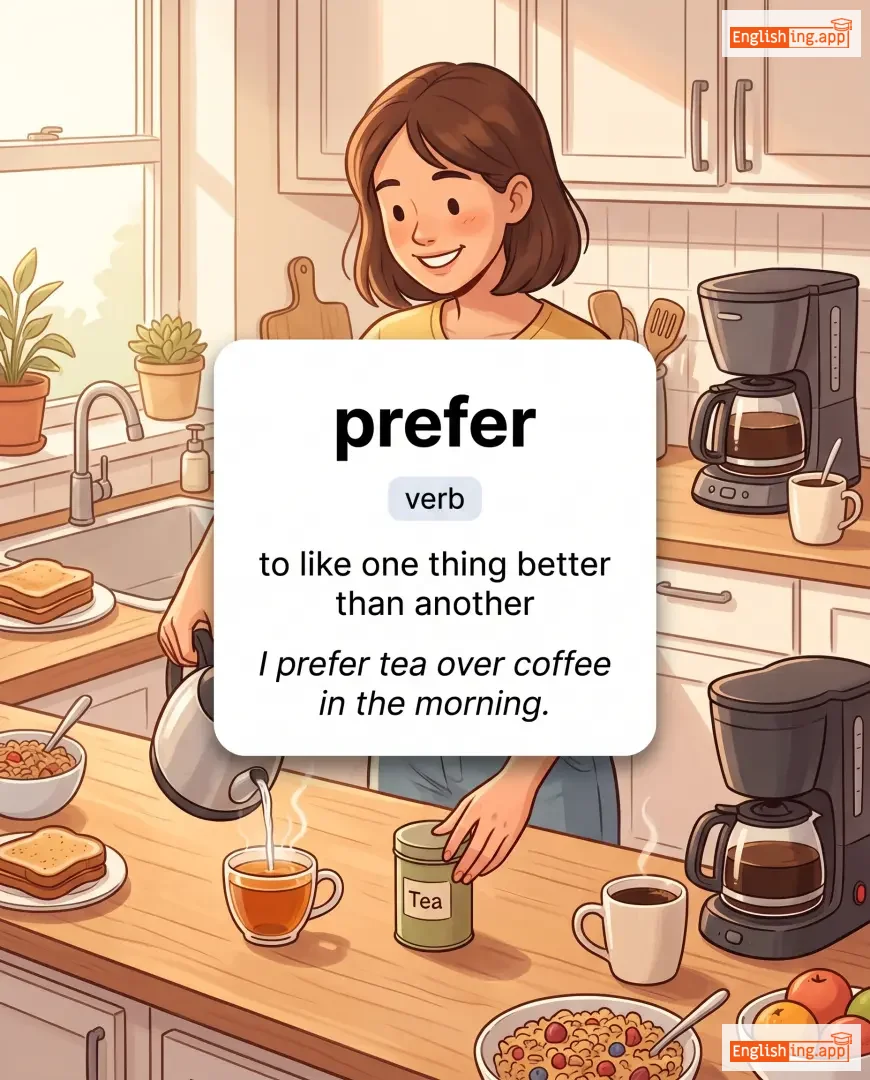
to like one thing better than another
••••••
|
I prefer tea over coffee in the morning.
私は朝にコーヒーよりもお茶を好みます。
••••••
|
私は朝にコーヒーよりもお茶を好みます。
Watashi wa asa ni kōhī yori mo ocha o konomimasu.
••••••
|
prefer not to say
言わないほうがいい
••••••
|
to avoid giving an answer or sharing information
••••••
|
言わないほうがいい
Iwanai hō ga ii
••••••
|
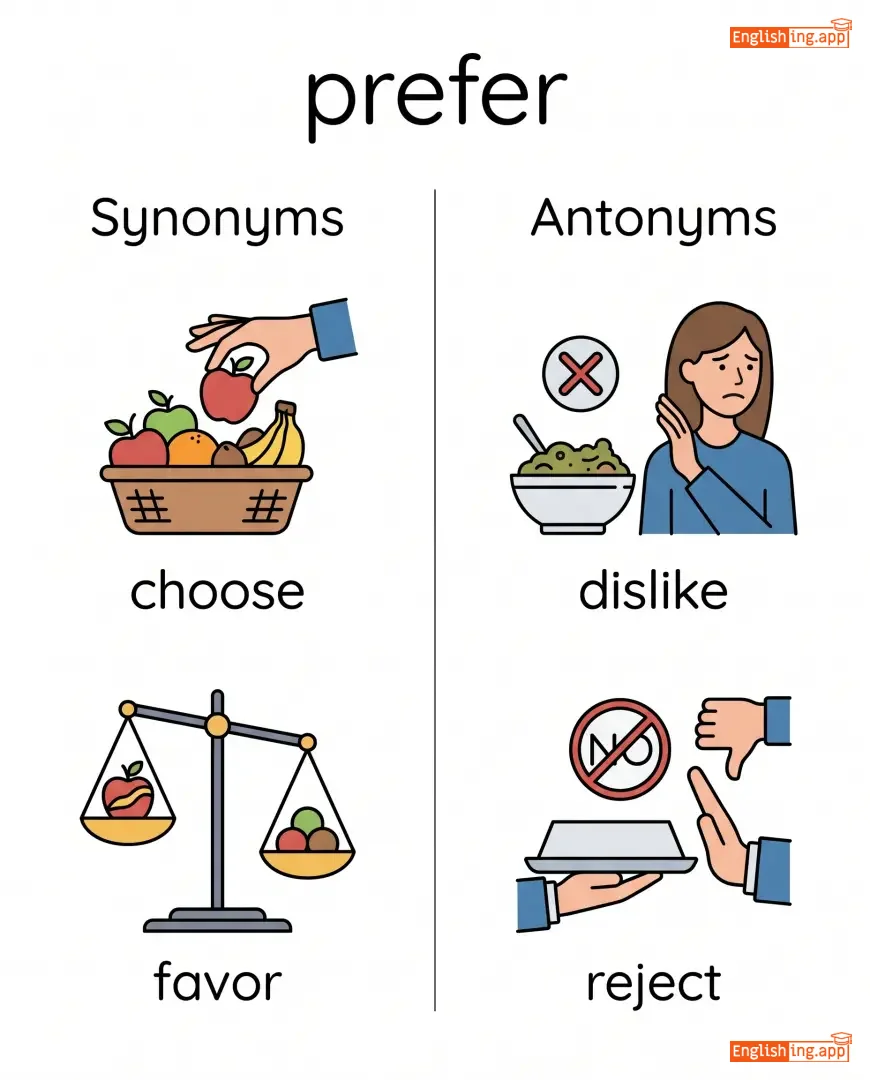
choose, favor, like, favor over
••••••
|
dislike, reject, avoid
••••••
|
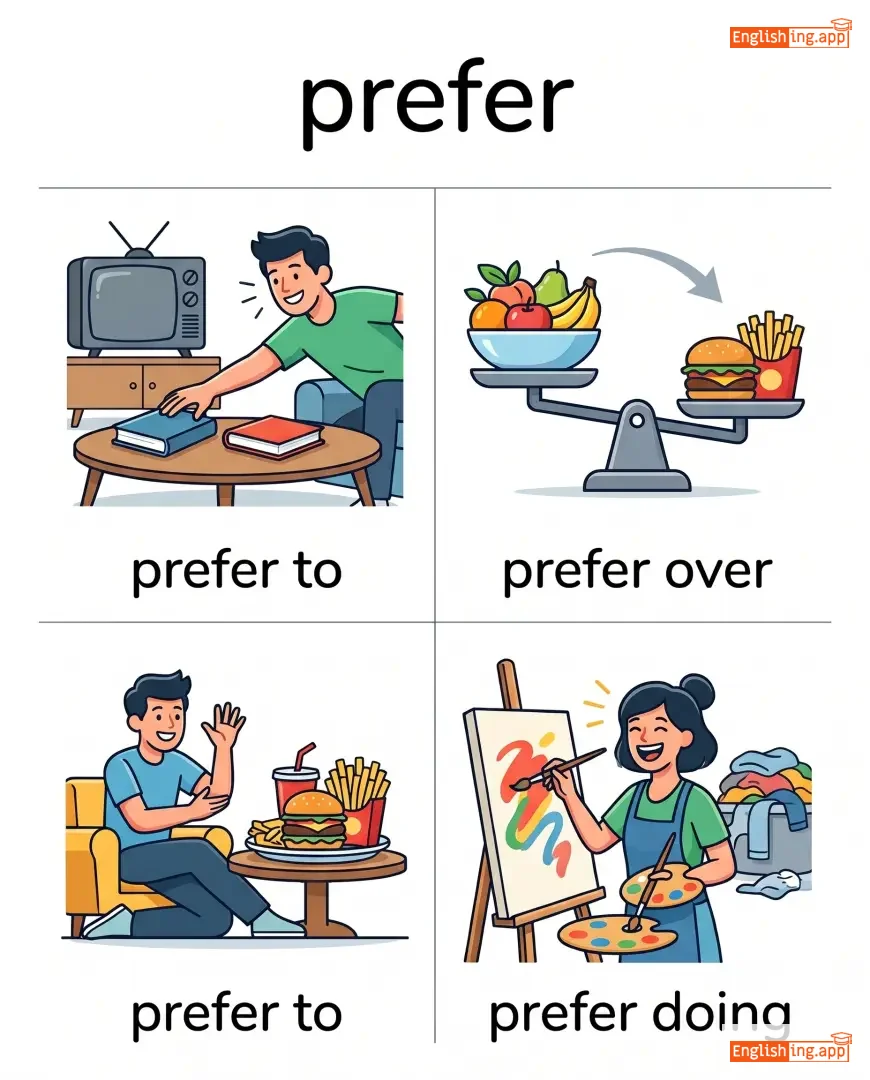
prefer to, prefer over, prefer doing
••••••
|
好むは何かを選ぶことで、優先することを意味します
••••••
|
|
☕
••••••
|
/ˈprɛf(ə)rəns/
noun
(プリファレンス)
••••••
|
- •••••• |
好み
konomi
••••••
|
- •••••• | - •••••• | - •••••• | - •••••• |
a greater liking for one alternative over another
••••••
|
She has a preference for tea over coffee. |
彼女はコーヒーよりもお茶を好む。
Kanojo wa kōhī yori mo ocha o konomu.
••••••
|
personal preference |
an individual's own choice or taste
••••••
|
個人的な好み
kodoteki na konomi
••••••
|
choice, liking, taste, inclination, option
••••••
|
dislike, aversion, indifference
••••••
|
show preference, strong preference, personal preference, preference order
••••••
|
好みは「好み」を意味します – お茶かコーヒーを選んでください。
••••••
|
|
🤰
••••••
|
/ˈprɛɡnənsi/
noun
(プレグナンシー)
••••••
|
- •••••• |
妊娠
ninshin
••••••
|
- •••••• | - •••••• | - •••••• | - •••••• |
the condition of being pregnant; the period during which a woman carries a developing fetus
••••••
|
Her pregnancy was carefully monitored by her doctor.
彼女の妊娠は慎重に医師によって監視されていました。
••••••
|
彼女の妊娠は慎重に医師によって監視されていました。
Kanojo no ninshin wa shinchou ni ishi ni yotte kanshi sareteimashita.
••••••
|
- •••••• | - •••••• | - •••••• |
gestation, expectancy, childbirth, maternity
••••••
|
infertility, sterility
••••••
|
pregnancy test, pregnancy symptoms, unexpected pregnancy
••••••
|
妊娠-新しい命の始まり!
••••••
|

