|
表情符号
|
单词 | Images | 翻译 | 过去时 | 过去分词 | 第三人称单数 | 动名词 | 含义 | 例句 | 例句翻译 | 示例表达 | 示例表达含义 | 示例表达翻译 | 同义词 | 反义词 | 搭配词 | 助记符 |
|---|---|---|---|---|---|---|---|---|---|---|---|---|---|---|---|---|---|
|
📁
••••••
|
/pɔːrtˈfoʊlioʊ/
noun
(pòtuōfóliò)
••••••
|

|
投资组合
tóuzī zǔhé
••••••
|
- •••••• | - •••••• | - •••••• | - •••••• |
A collection of financial investments, artworks, or documents presented as a body of work.
••••••
|
The designer showcased her portfolio during the interview.
设计师在面试中展示了她的作品集。
••••••
|
设计师在面试中展示了她的作品集。
Shèjìshī zài miànshì zhōng zhǎnshìle tā de zuòpǐn jí.
••••••
|
diversified portfolio
多元化的投资组合
••••••
|
A variety of different investments held to reduce risk.
••••••
|
多元化的投资组合
Duōyuán huà de tóuzī zǔhé
••••••
|
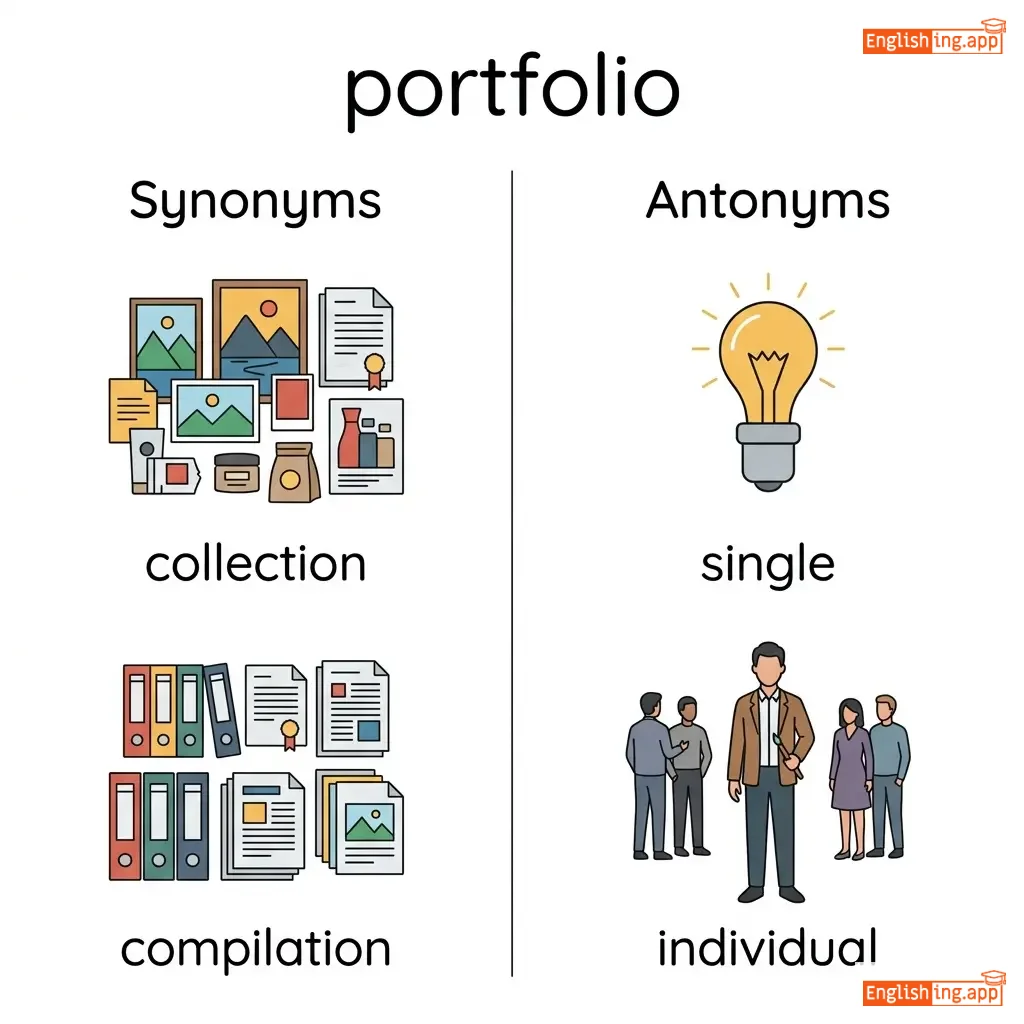
collection, compilation, dossier, folder, assortment
••••••
|
single, individual
••••••
|
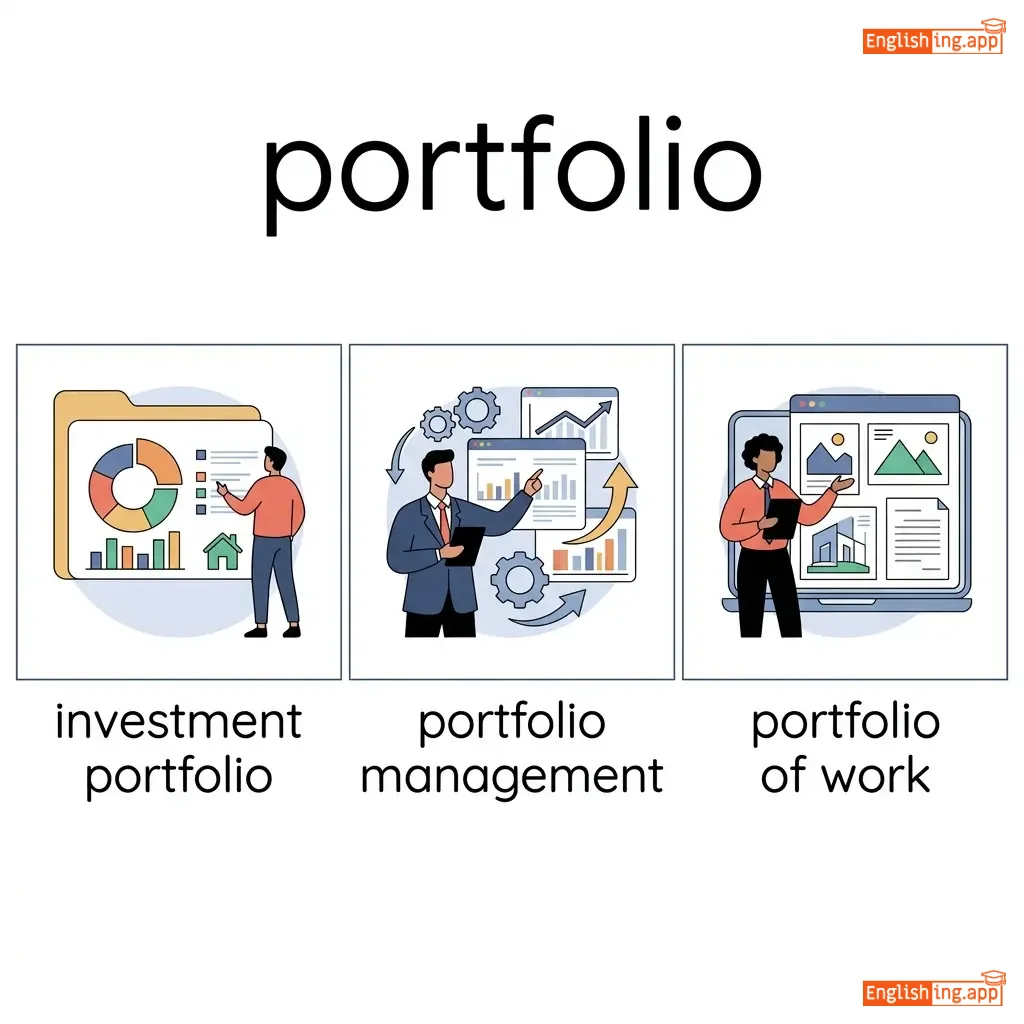
investment portfolio, portfolio management, portfolio of work, portfolio strategy
••••••
|
Portfolio = 文件夹,集成所有投资和创作的地方。
••••••
|
|
🖼️
••••••
|
/ˈpɔːtrət/
noun
(pɔːtrət)
••••••
|
- •••••• |
肖像
xiàoxiàng
••••••
|
- •••••• | - •••••• | - •••••• | - •••••• |
a painting, drawing, photograph, or engraving of a person, especially one showing the face
••••••
|
The artist painted a beautiful portrait of his wife.
ðə ˈɑːtɪst ˈpeɪntɪd ə bjuːtɪfəl ˈpɔːtrət əv hɪz waɪf
••••••
|
艺术家画了一幅他妻子的美丽肖像。
Yìshùjiā huàle yī fú tā qīzǐ de měilì xiàoxiàng.
••••••
|
- •••••• | - •••••• | - •••••• |
likeness, image, representation, depiction
••••••
|
landscape, abstract
••••••
|
family portrait, painted portrait, formal portrait, self-portrait
••••••
|
肖像画就是展示一个人面孔的画作,像是照片中的面部特写。
••••••
|
|
📸
••••••
|
/poʊz/
verb
(happiness)
••••••
|
- •••••• |
幸福
xìng fú
••••••
|
posed
••••••
|
posed
••••••
|
poses
••••••
|
posing
••••••
|
To assume a particular position, especially for a photograph or display; to present a problem or question.
••••••
|
She posed for a picture in front of the monument. |
她在收到奖项时,无法隐藏她的幸福。
Tā zài shōu dào jiǎngxiàng shí, wúfǎ yǐncáng tā de xìngfú.
••••••
|
pose a threat |
To present a danger or risk.
••••••
|
追求幸福
zhuī qiú xìng fú
••••••
|
position, posture, present, represent, display
••••••
|
ignore, neglect
••••••
|
pose a question, pose a threat, pose for photos
••••••
|
幸福是每个人一生中的追求。
••••••
|
|
📍
••••••
|
/pəˈzɪʃən/
noun
(职位)
••••••
|


|
职位 / 位置
zhiwei / weizhi
••••••
|
- •••••• | - •••••• | - •••••• | - •••••• |
A place, job, or status; the way in which someone or something is placed or arranged.
••••••
|
She applied for a teaching position at the university. |
她申请了大学的教学职位。
Tā shēnqǐngle dàxué de jiàoxué zhíwèi.
••••••
|
in a strong position |
having an advantage or being in control of a situation
••••••
|
在一个强势位置
zài yīgè qiángshì wèizhì
••••••
|
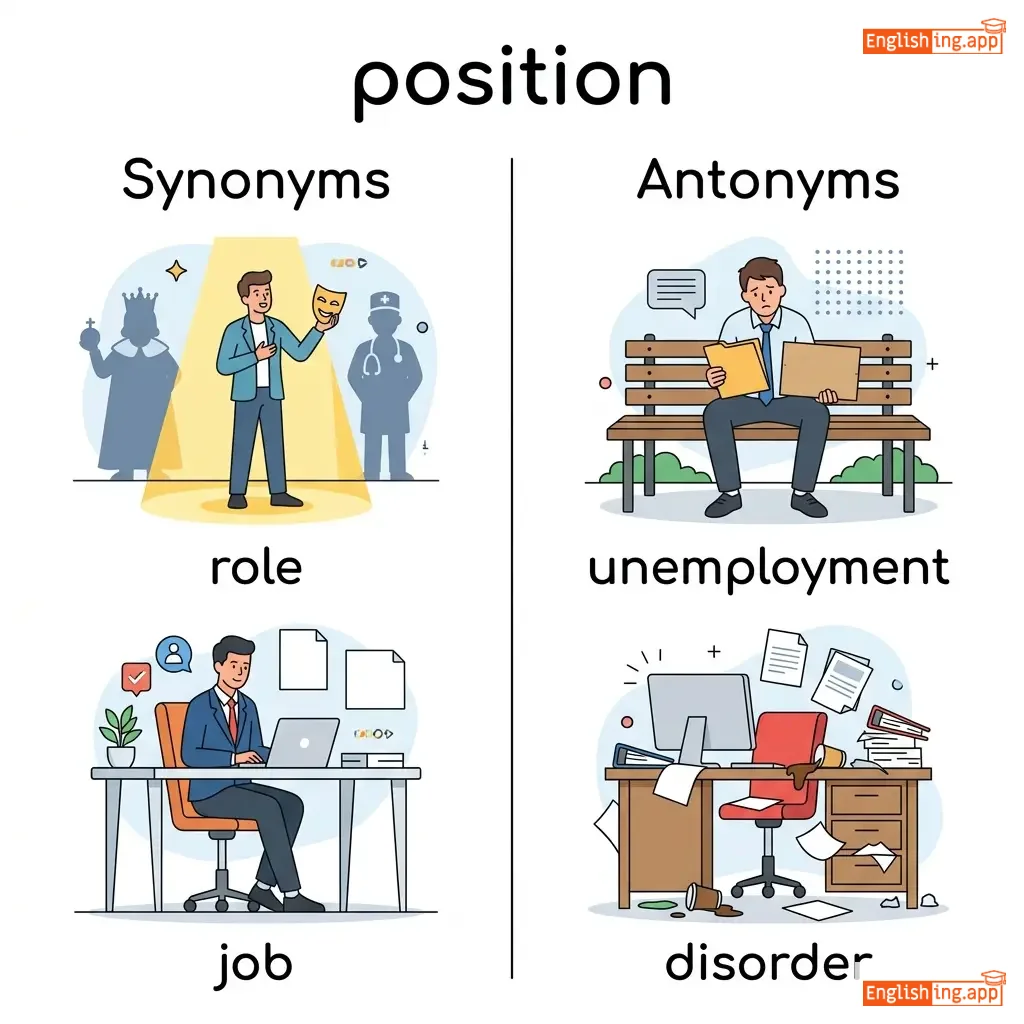
role, job, post, situation, placement
••••••
|
unemployment, disorder, disadvantage
••••••
|
job position, official position, social position, strong position, managerial position
••••••
|
Position 在中文中也是职位,站在最佳位置!📍
••••••
|
|
➕
••••••
|
/ˈpɒzɪtɪv/
adjective
(pozitiv)
••••••
|

|
积极的
jī jí de
••••••
|
- •••••• | - •••••• | - •••••• | - •••••• |
Characterized by optimism, certainty, or something favorable.
••••••
|
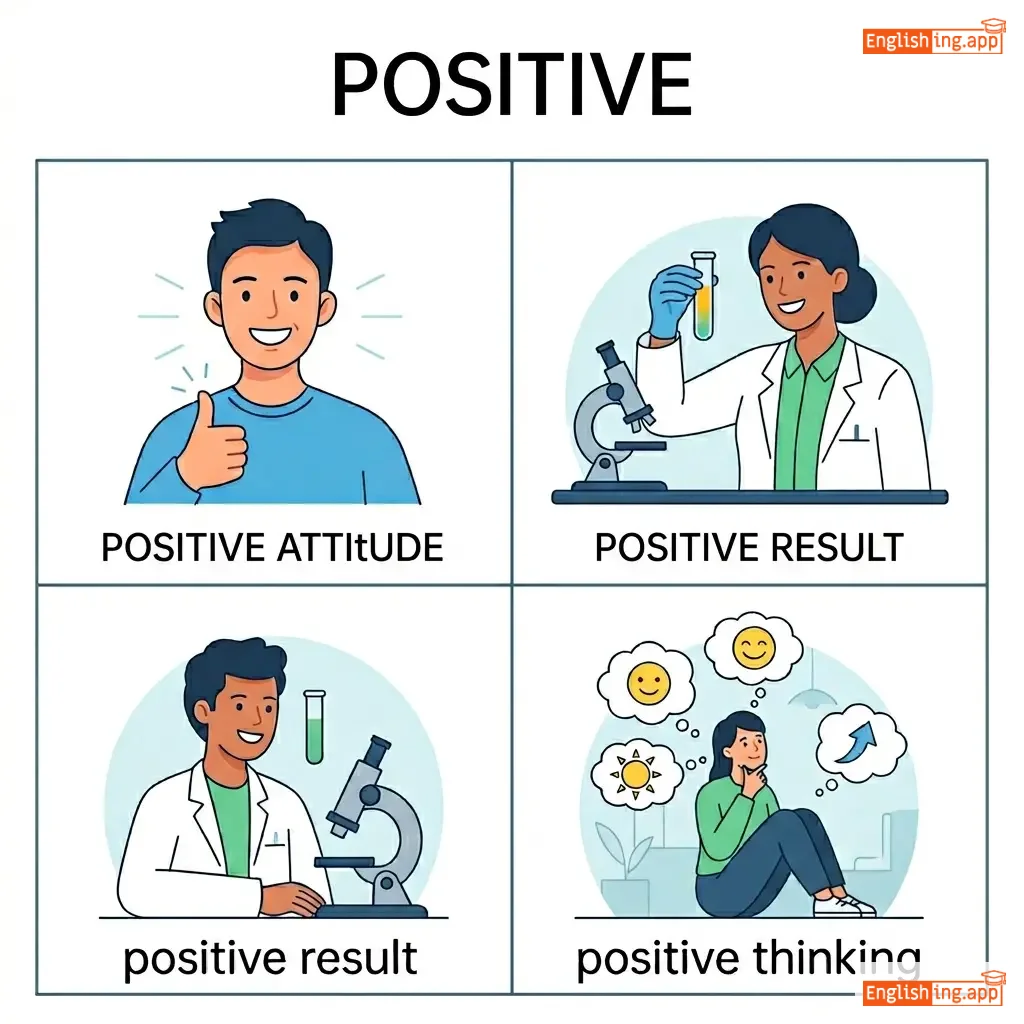
She always tries to maintain a positive attitude. |
她总是尽力保持积极的态度。
Tā zǒng shì jìnlì bǎochí jījí de tàidù.
••••••
|
positive thinking |
focusing on the good aspects and expecting favorable outcomes
••••••
|
积极思考
jījí sīkǎo
••••••
|
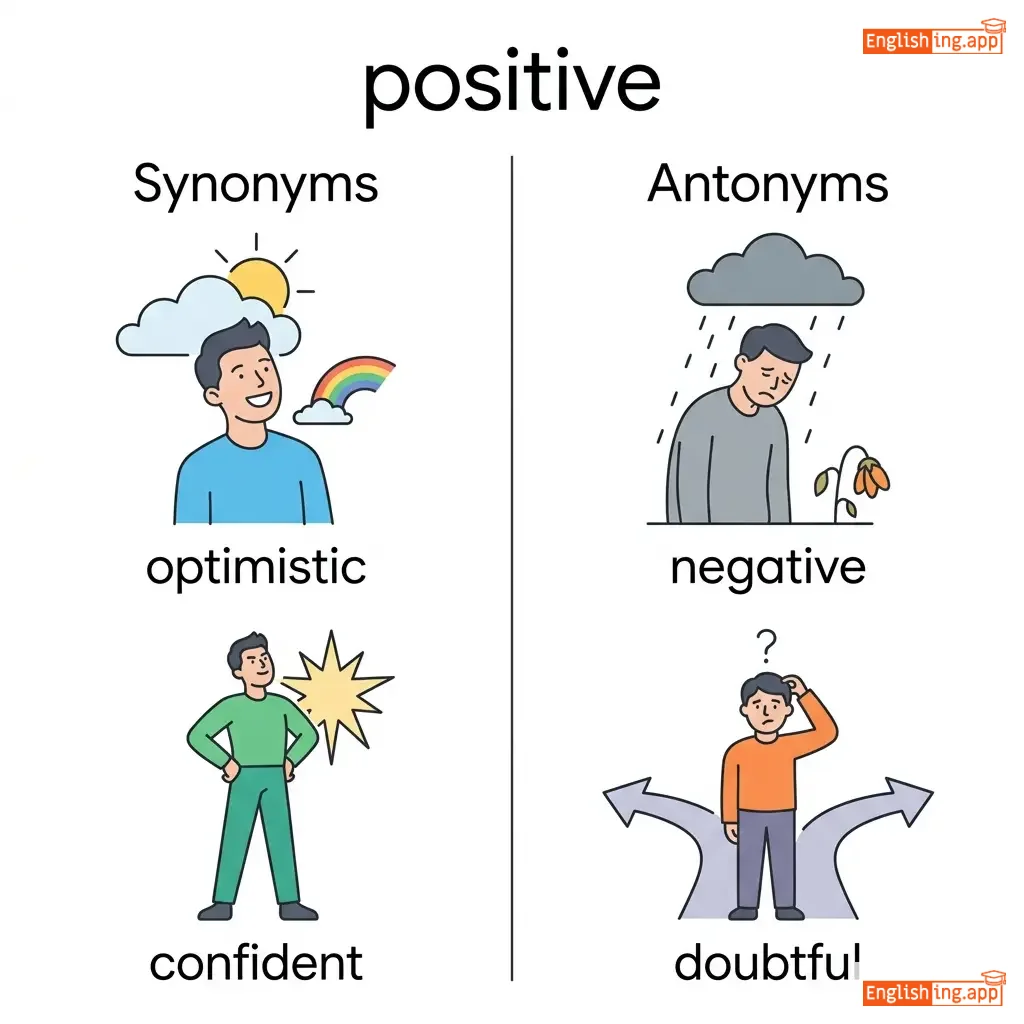
optimistic, confident, assured, constructive, certain
••••••
|
negative, doubtful, pessimistic
••••••
|
positive attitude, positive result, positive thinking, positive feedback, positive impact
••••••
|
积极的心态,向前看,必定有好的结果!
••••••
|
|
👐
••••••
|
/pəˈzɛs/
verb
(pó zè sī)
••••••
|
- •••••• |
拥有 / 拥有
yǒng yǒu / yǒng yǒu
••••••
|
possessed
pó zè sī de
••••••
|
possessed
pó zè sī de
••••••
|
possesses
pó zè sī sī
••••••
|
possessing
pó zè sī jīng
••••••
|
To have or own something; to hold a quality or characteristic.
••••••
|
She possesses great talent in music.
tā duōyǒu mùzhī cóng yīnyuè zhōng huòdé dà liàng de cǎiliàng.
••••••
|
她在音乐上拥有巨大的天赋。
Tā zài yīnyuè shàng yǒng yǒu jù dà de tiānfù.
••••••
|
possess yourself of
huò dé zìjǐ de shì
••••••
|
to gain control of or acquire something
••••••
|
控制自己
kòngzhì zìjǐ
••••••
|
own, hold, maintain, control, acquire
••••••
|
lack, lose, surrender
••••••
|
possess talent, possess property, possess knowledge, possess rights
••••••
|
拥有 = 得到。像拥有才能或财产。
••••••
|
|
📦
••••••
|
/pəˈzɛʃən/
noun
(pó-zè-xiǎn)
••••••
|
- •••••• |
拥有
yǒng yǒu
••••••
|
- •••••• | - •••••• | - •••••• | - •••••• |
The state of owning, controlling, or holding something.
••••••
|
The ring was her most valuable possession. |
那枚戒指是她最珍贵的财富。
Nà méi jiè zhǐ shì tā zuì zhēn guì de cáifù.
••••••
|
in possession of |
having something in one's ownership or control
••••••
|
拥有…
yǒng yǒu
••••••
|
ownership, control, property, asset, holding
••••••
|
loss, absence, dispossession
••••••
|
valuable possession, personal possession, in possession of, lose possession
••••••
|
拥有 = 控制你所拥有的一切。
••••••
|
|
🔮
••••••
|
/ˌpɒsəˈbɪləti/
noun
(可能性)
••••••
|
- •••••• |
可能性
kenengxing
••••••
|
- •••••• | - •••••• | - •••••• | - •••••• |
something that may happen or be the case; a chance that something exists or might occur
••••••
|
There is a strong possibility of rain tomorrow. |
明天有强烈的降雨可能性。
Mingtian you qianglie de jiangyu kenengxing.
••••••
|
endless possibilities |
having many potential opportunities or outcomes
••••••
|
无尽的可能性
wujin de kenengxing
••••••
|
chance, likelihood, probability, opportunity, option
••••••
|
impossibility, certainty
••••••
|
real possibility, strong possibility, endless possibilities, possibility of success
••••••
|
可能性 = 有可能的事情
••••••
|
|
✨
••••••
|
/ˈpɒsəbl̩/
adjective
(pɔsɪbl)
••••••
|
- •••••• |
可能
keneng
••••••
|
- •••••• | - •••••• | - •••••• | - •••••• |
Able to be done or achieved.
••••••
|
Anything is possible if you work hard.
如果你努力工作,一切皆有可能。
••••••
|
如果你努力工作,一切皆有可能。
Ruguo ni nuli gongzuo, yiqie jie you keneng.
••••••
|
make it possible
让它变得可能
••••••
|
To cause something to happen or be achievable.
••••••
|
让它变得可能
rang ta biande keneng
••••••
|
feasible, achievable, attainable, doable
••••••
|
impossible, unachievable, unattainable
••••••
|
as soon as possible, possible solution, possible outcome
••••••
|
可能就是 '可 - 能',只要你努力,就一切皆有可能。
••••••
|
|
🤔
••••••
|
/ˈpɒs.ə.bli/
adverb
(pòu xī bù lì)
••••••
|
- •••••• |
可能; 或许;
kěnéng; huòxǔ;
••••••
|
- •••••• | - •••••• | - •••••• | - •••••• |
perhaps; maybe; it may be the case that
••••••
|
It will possibly rain tomorrow. |
明天可能会下雨。
míngtiān kěnéng huì xià yǔ.
••••••
|
- •••••• | - •••••• | - •••••• |
maybe, perhaps, potentially, conceivably
••••••
|
definitely, certainly, impossibly
••••••
|
possibly true, possibly wrong, quite possibly
••••••
|
Imagine a Chinese speaker saying '可能' while checking a weather app on their phone.
••••••
|
|
📮
••••••
|
/pəʊst/
noun, verb
(pòusī)
••••••
|
- •••••• |
邮寄
yóujì
••••••
|
posted
pòusīde
••••••
|
posted
pòusīde
••••••
|
posts
pòusī
••••••
|
posting
pòusīng
••••••
|
a job or position, or to send something by mail
••••••
|
She posted a letter to her friend yesterday.
tā zuótiān bǎ yī fēng xìn tōngzhī gěi tā de péngyǒu.
••••••
|
她昨天给她的朋友邮寄了一封信。
tā zuótiān gěi tā de péngyǒu yóujìle yī fēng xìn.
••••••
|
post a letter
tōngzhī yī fēng xìn
••••••
|
to send a letter via the postal service
••••••
|
邮寄信件
Yóujìxìn
••••••
|
mail, dispatch, send, job
••••••
|
receive, accept
••••••
|
post a letter, job post, post online, post a message
••••••
|
Post 可以被认为是发送文件或工作,想想邮寄一个信
••••••
|
|
📮
••••••
|
/ˈpoʊst ˌɒfɪs/
noun
(波斯特 奥菲斯)
••••••
|
- •••••• |
邮局
youju
••••••
|
- •••••• | - •••••• | - •••••• | - •••••• |
a public building or agency where mail is sent, received, and other postal services are provided
••••••
|
I went to the post office to mail a package.
艾 文 特 图 德 波斯特 奥菲斯 图 梅尔 阿 帕凯基
••••••
|
我去邮局寄了一个包裹。
wo qu youju ji le yi ge baoguo
••••••
|
post office box (P.O. box)
波斯特 奥菲斯 博克斯
••••••
|
a locked mailbox at the post office used to receive mail
••••••
|
邮政信箱
youzheng xinxiang
••••••
|
mail office, postal office, post, postal facility
••••••
|
home, private residence
••••••
|
local post office, main post office, post office box, post office hours, post office counter
••••••
|
邮=mail,局=office
••••••
|
|
🕊️
••••••
|
/ˌpoʊstˈwɔːr/
adjective
(波斯特-沃)
••••••
|
- •••••• |
战后
zhanhou
••••••
|
- •••••• | - •••••• | - •••••• | - •••••• |
relating to the period after a war has ended
••••••
|
The country experienced rapid economic growth in the post-war years.
该国在波斯特-沃时期经济迅速增长。
••••••
|
该国在战后时期经历了快速的经济增长。
gai guo zai zhanhou shiqi jingli le kuaishu de jingji zengzhang
••••••
|
post-war era
波斯特-沃时代
••••••
|
the historical period following a war
••••••
|
战后时代
zhanhou shidai
••••••
|
after-war, postconflict, peacetime, postbellum
••••••
|
wartime, pre-war
••••••
|
post-war period, post-war economy, post-war society, post-war reconstruction
••••••
|
post = 之后, war = 战争 → 战后
••••••
|
|
⏳
••••••
|
/pəʊs(t)ˈpəʊn/
verb
(póu sī tī páng)
••••••
|
- •••••• |
推迟
tuīchí
••••••
|
postponed
póu sī tī páng de
••••••
|
postponed
póu sī tī páng de
••••••
|
postpones
póu sī tī páng sī
••••••
|
postponing
póu sī tī páng xíng
••••••
|
to delay something to a later time
••••••
|
The meeting was postponed until next week.
会议被推迟到下周。
••••••
|
会议被推迟到下周。
Huìyì bèi tuīchí dào xià zhōu.
••••••
|
- •••••• | - •••••• | - •••••• |
delay, defer, put off, reschedule
••••••
|
advance, hasten, expedite
••••••
|
postpone a meeting, postpone an event, postpone the decision
••••••
|
Post + pon (point) + e - 推迟, like moving the time forward.
••••••
|
|
🍲
••••••
|
/pɒt/
noun
(锅)
••••••
|
- •••••• |
锅
guo
••••••
|
- •••••• | - •••••• | - •••••• | - •••••• |
a container, typically round and deep, used for cooking or holding plants
••••••
|
She put the soup in a pot and set it on the stove. |
她把汤放进锅里并把它放在炉子上。
Tā bǎ tāng fàng jìn guō lǐ bìng bǎ tā fàng zài lúzi shàng.
••••••
|
- •••••• | - •••••• | - •••••• |
container, vessel, jar, crock
••••••
|
lid, cover
••••••
|
flower pot, cooking pot, clay pot, pot of soup
••••••
|
锅用来煮食物,像烹饪的容器!
••••••
|
|
🥔
••••••
|
/pəˈteɪtoʊ/
noun
(pò-tè-tóu)
••••••
|
- •••••• |
土豆
tudou
••••••
|
- •••••• | - •••••• | - •••••• | - •••••• |
a starchy plant tuber that is a staple food around the world
••••••
|
We had mashed potato with our dinner. |
我们晚餐吃了土豆泥。
Wǒmen wǎncān chīle tǔdòu ní.
••••••
|
- •••••• | - •••••• | - •••••• |
spud, tuber, yam
••••••
|
none
••••••
|
boiled potato, baked potato, mashed potato, potato salad
••••••
|
土豆就像是地下的宝藏,吃了就饱。
••••••
|
|
🌱
••••••
|
/pəˈtɛnʃəl/
noun, adjective
(潜力)
••••••
|

|
潜力
qianli
••••••
|
- •••••• | - •••••• | - •••••• | - •••••• |
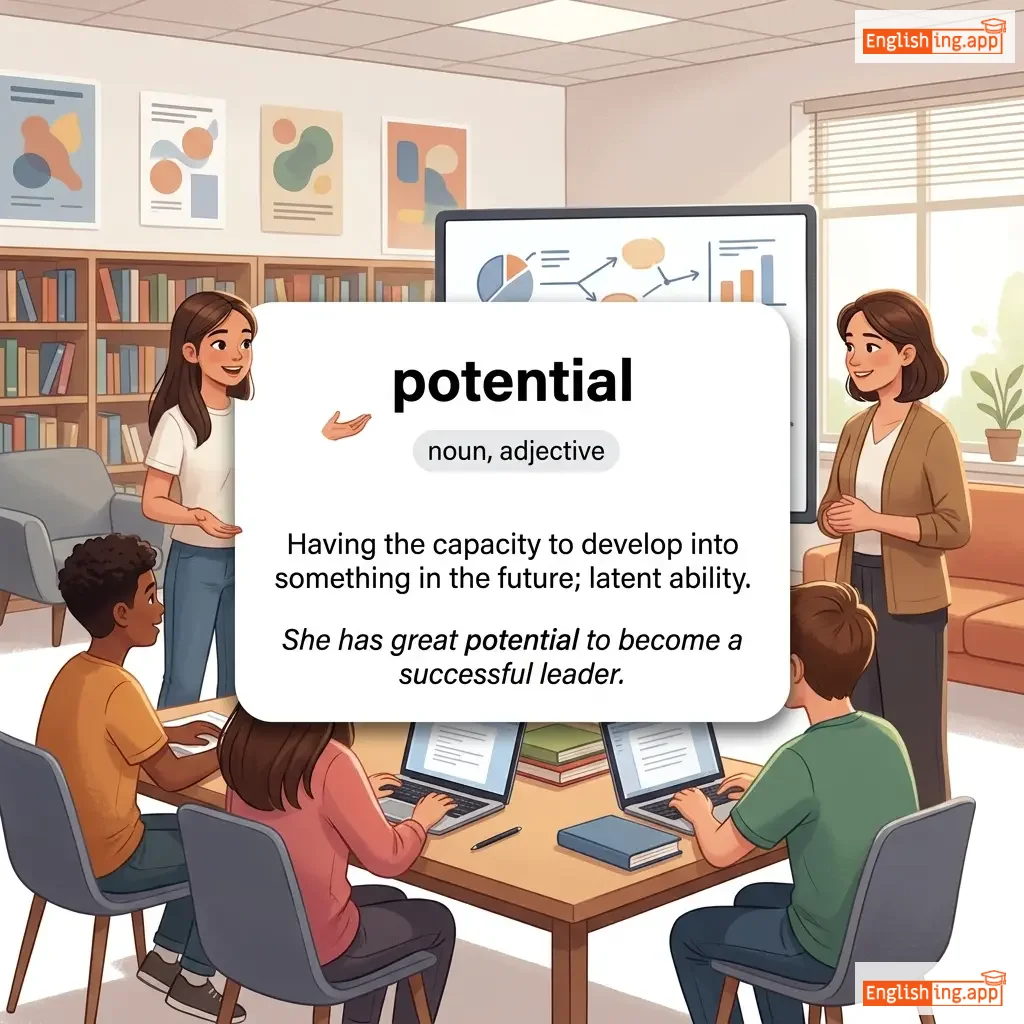
Having the capacity to develop into something in the future; latent ability.
••••••
|
She has great potential to become a successful leader. |
她有成为成功领导者的巨大潜力。
Tā yǒu chéngwéi chénggōng lǐngdǎo zhě de jùdà qiánlì.
••••••
|
untapped potential |
Unused or unrecognized ability or capacity.
••••••
|
未开发的潜力
Wèi kāifā de qiánlì
••••••
|
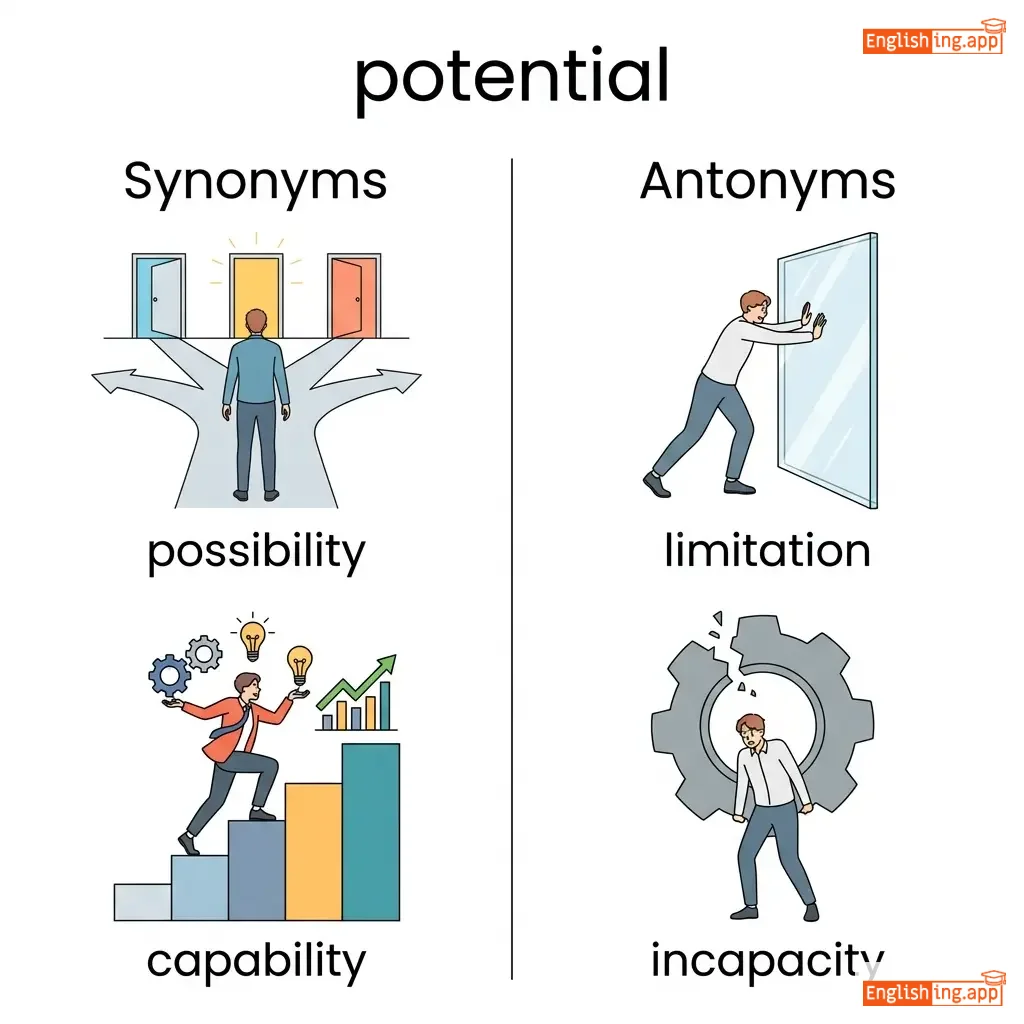
possibility, capability, capacity, promise, ability
••••••
|
limitation, incapacity, inability
••••••
|
great potential, human potential, full potential, untapped potential
••••••
|
Potential意味着有发展成大事物的能力 🌱 就像种子长成树。
••••••
|
|
🤔
••••••
|
/pəˈtɛnʃəli/
adverb
(潜在地)
••••••
|
- •••••• |
潜在地
qiánzài de
••••••
|
- •••••• | - •••••• | - •••••• | - •••••• |
with the possibility of becoming something in the future
••••••
|
This project is potentially a huge success.
这个项目潜在地可能是一个巨大的成功。
••••••
|
这个项目潜在地可能是一个巨大的成功。
Zhège xiàngmù qiánzài de kěnéng shì yīgè jùdà de chénggōng.
••••••
|
- •••••• | - •••••• | - •••••• |
possibly, maybe, conceivably
••••••
|
impossibly, unlikely
••••••
|
potentially dangerous, potentially successful, potentially harmful
••••••
|
潜在地, 就像未来的希望一样
••••••
|
|
💷
••••••
|
/paʊnd/
noun, verb
(pāo'ēnd)
••••••
|
- •••••• |
英镑
yīng bàng
••••••
|
pounded
pāo'ēnded
••••••
|
pounded
pāo'ēnded
••••••
|
pounds
pāo'ēnds
••••••
|
pounding
pāo'ēnding
••••••
|
a unit of weight equal to 16 ounces or a unit of currency
••••••
|
The price of the book is five pounds.
这本书的价格是五英镑。
••••••
|
这本书的价格是五英镑。
Zhè běn shū de jiàgé shì wǔ yīng bàng.
••••••
|
- •••••• | - •••••• | - •••••• |
lb (pound as weight), sterling (pound as currency)
••••••
|
ounce
••••••
|
pound of meat, pound sterling, pound weight, pound cake
••••••
|
英镑:Pound 用来衡量重量和货币!
••••••
|
|
🌊
••••••
|
/pɔːr/
verb
(波尔)
••••••
|
- •••••• |
倒
dao
••••••
|
poured
波德
••••••
|
poured
波德
••••••
|
pours
波尔斯
••••••
|
pouring
波林
••••••
|
to flow or cause to flow in a steady stream; to rain heavily
••••••
|
Please pour the water into the glass carefully.
请小心地把水倒入玻璃杯。
••••••
|
请小心地把水倒入玻璃杯。
Qing xiaoxinde ba shui dao ru boli bei.
••••••
|
- •••••• | - •••••• | - •••••• |
flow, stream, spill, tip
••••••
|
stop, contain, hold, retain
••••••
|
pour out, pour into, pour carefully, pour slowly
••••••
|
No •••••• |
|
🌾
••••••
|
/ˈpaʊdər/
noun
(paʊdər)
••••••
|
- •••••• |
粉末
fenmo
••••••
|
- •••••• | - •••••• | - •••••• | - •••••• |
a fine, dry substance made of very tiny particles
••••••
|
She sprinkled some powder on the cake.
她在蛋糕上撒了一些粉。
••••••
|
她在蛋糕上撒了一些粉。
Ta zai dangao shang sa le yixie fen.
••••••
|
- •••••• | - •••••• | - •••••• |
dust, flour, granules, particles
••••••
|
liquid, solid
••••••
|
baby powder, face powder, baking powder, talcum powder
••••••
|
粉末像细小颗粒一样,来源于植物。
••••••
|
|
⚡
••••••
|
/ˈpaʊər/
noun
(paʊər)
••••••
|
|
力量
lìliàng
••••••
|
- •••••• | - •••••• | - •••••• | - •••••• |
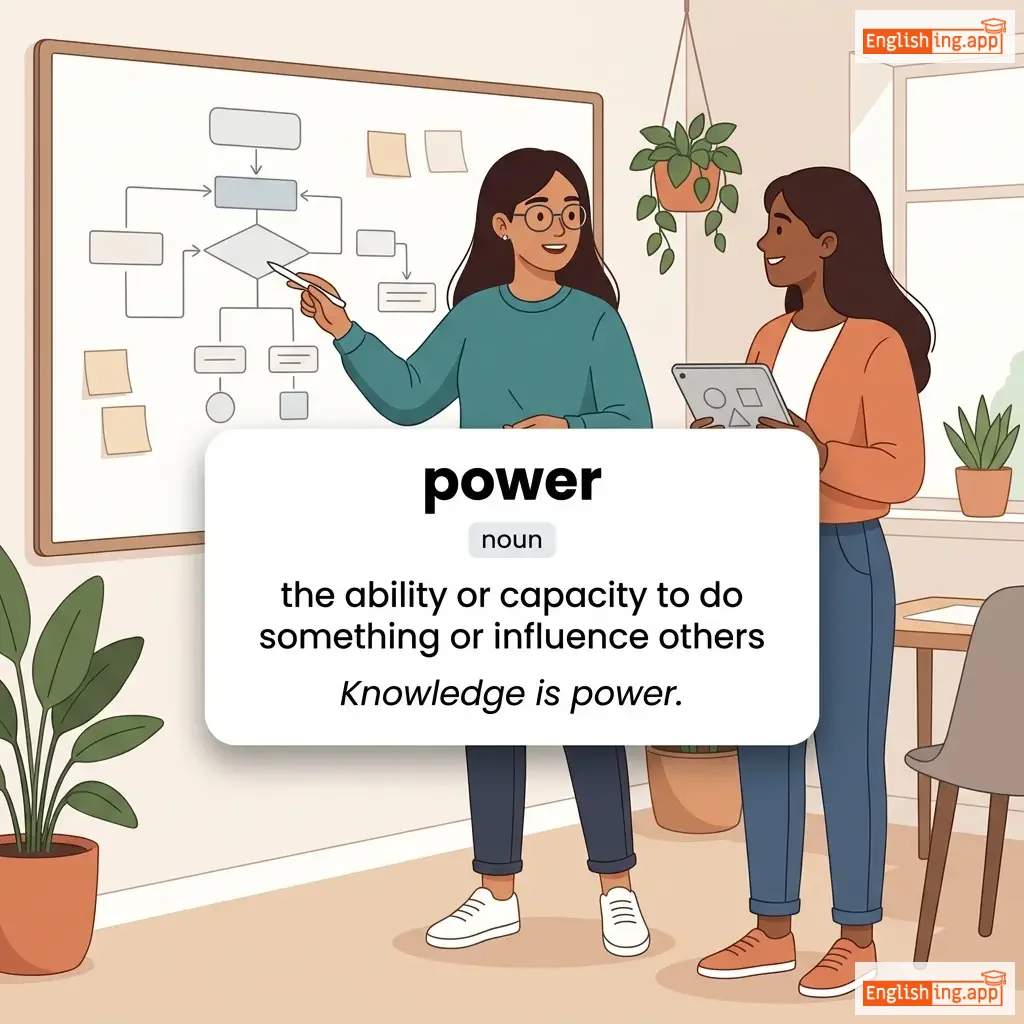
the ability or capacity to do something or influence others
••••••
|
Knowledge is power.
知识就是力量。
••••••
|
知识就是力量。
Zhīshì jiùshì lìliàng.
••••••
|
absolute power
绝对的力量
••••••
|
complete authority without limits
••••••
|
绝对的力量
juéduì de lìliàng
••••••
|
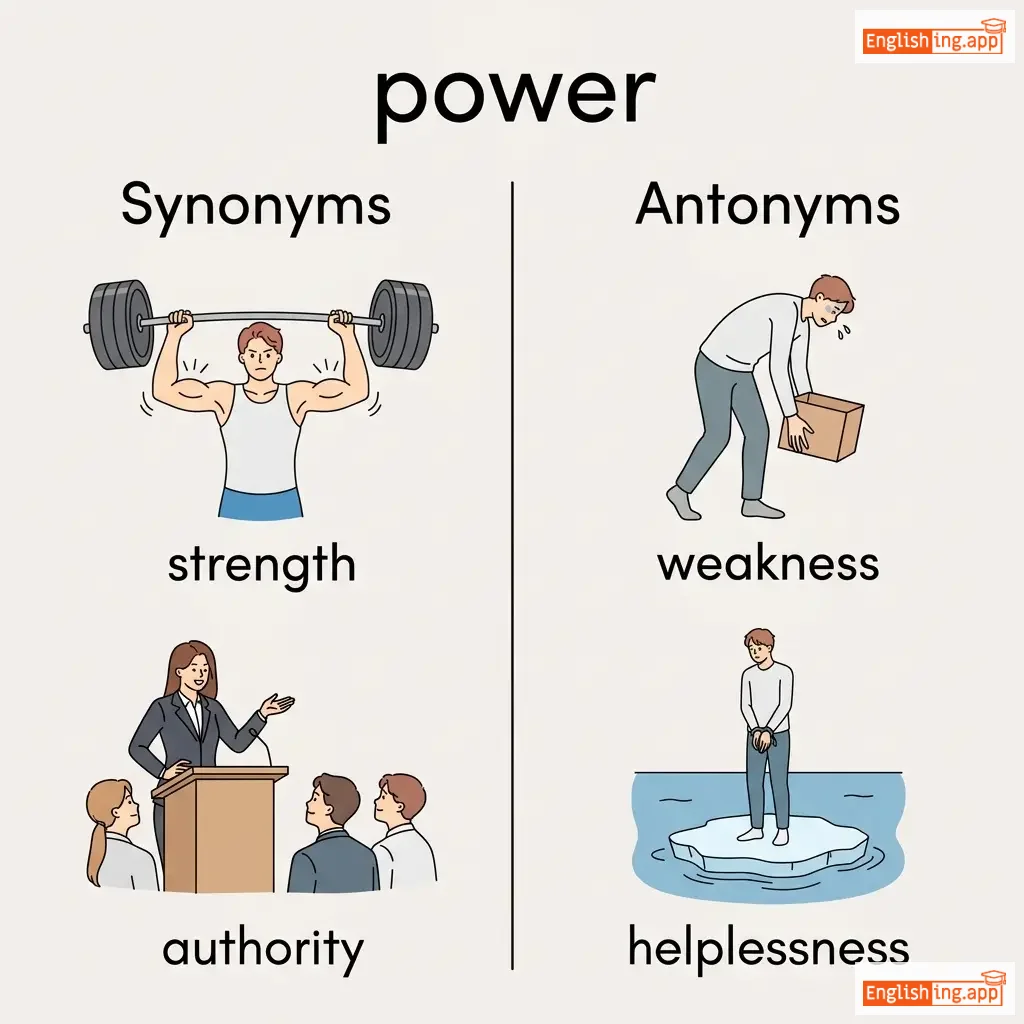
strength, authority, control, energy, force
••••••
|
weakness, helplessness
••••••
|
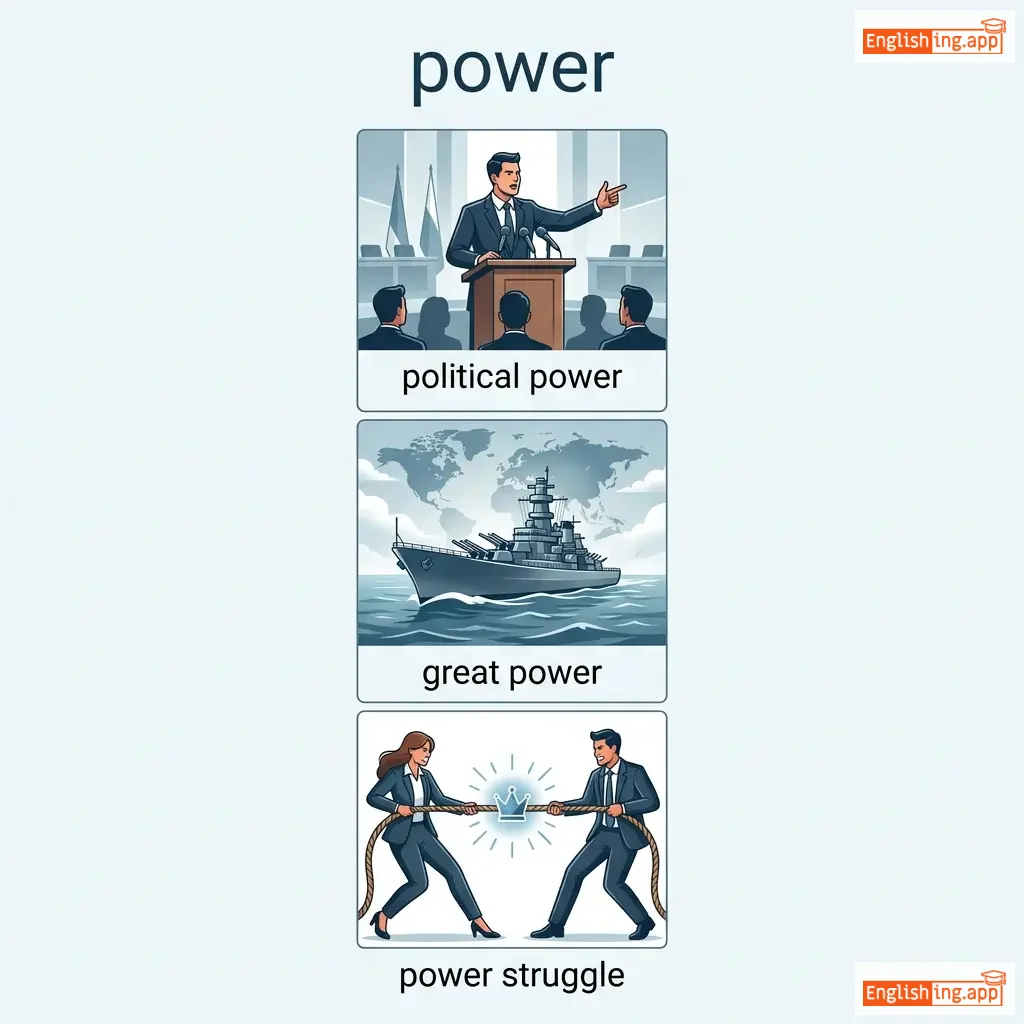
political power, great power, power struggle, power supply
••••••
|
Power = 力量, 就像电池中的力量。
••••••
|
|
💪
••••••
|
/ˈpaʊərfəl/
adjective
(强大)
••••••
|


|
强大的
qiángdà de
••••••
|
- •••••• | - •••••• | - •••••• | - •••••• |
having great strength or influence
••••••
|
She is a powerful leader in her community. |
她是她社区中的一个强大领导者。
Tā shì tā shèqū zhōng de yīgè qiángdà lǐngdǎo zhě.
••••••
|
- •••••• | - •••••• | - •••••• |
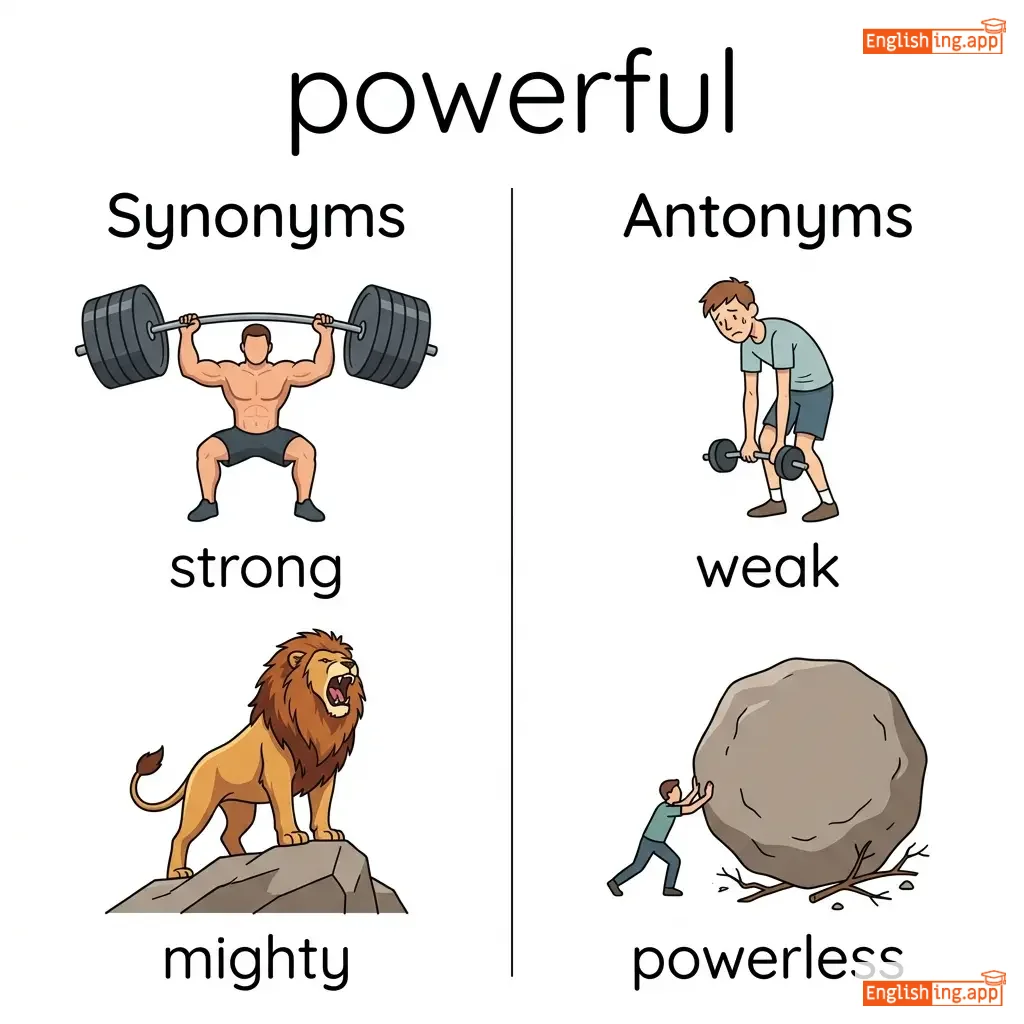
strong, mighty, influential, dominant
••••••
|
weak, powerless
••••••
|
powerful voice, powerful impact, powerful influence, powerful leader
••••••
|
Powerful means strength, and strength leads to influence.
••••••
|
|
🔧
••••••
|
/ˈpræk.tɪ.kəl/
adjective
(pùlìkè)
••••••
|
|
实用的
shiyong de
••••••
|
- •••••• | - •••••• | - •••••• | - •••••• |
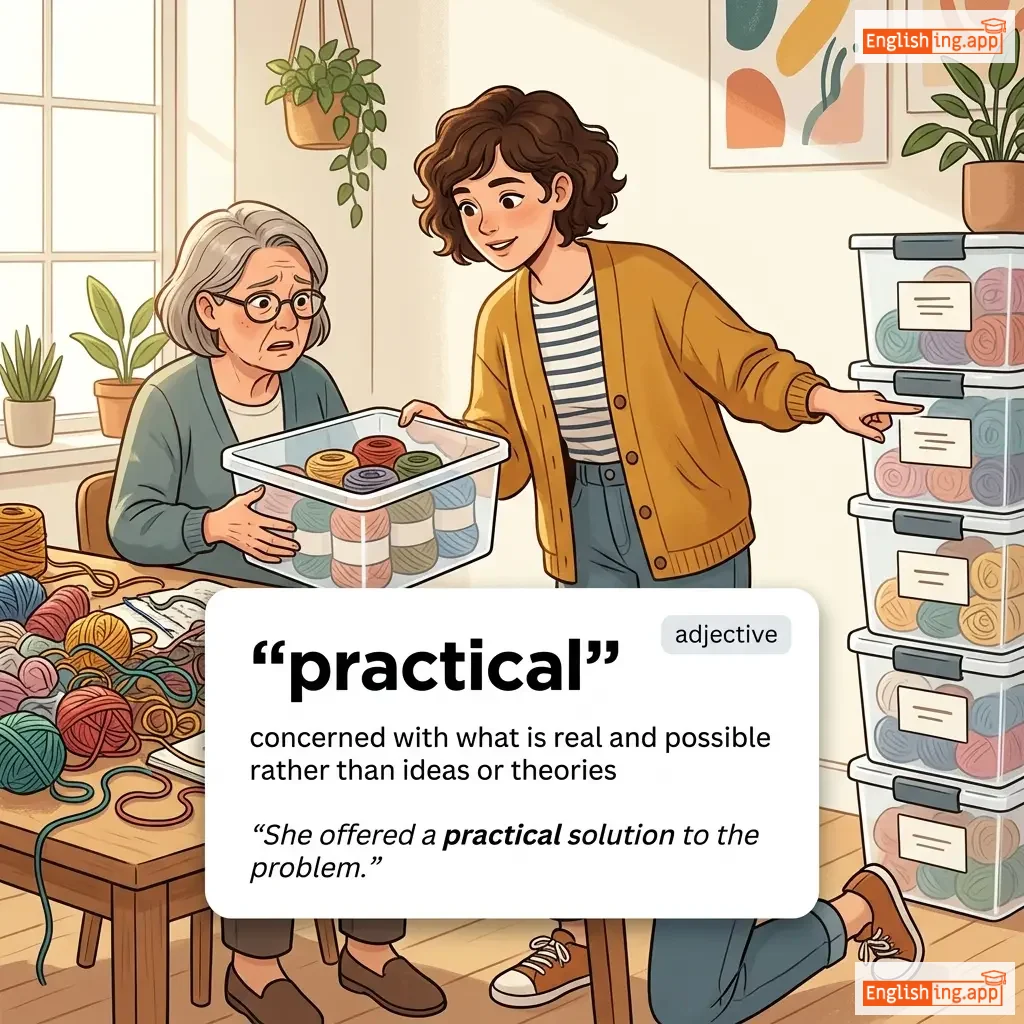
concerned with what is real and possible rather than ideas or theories
••••••
|
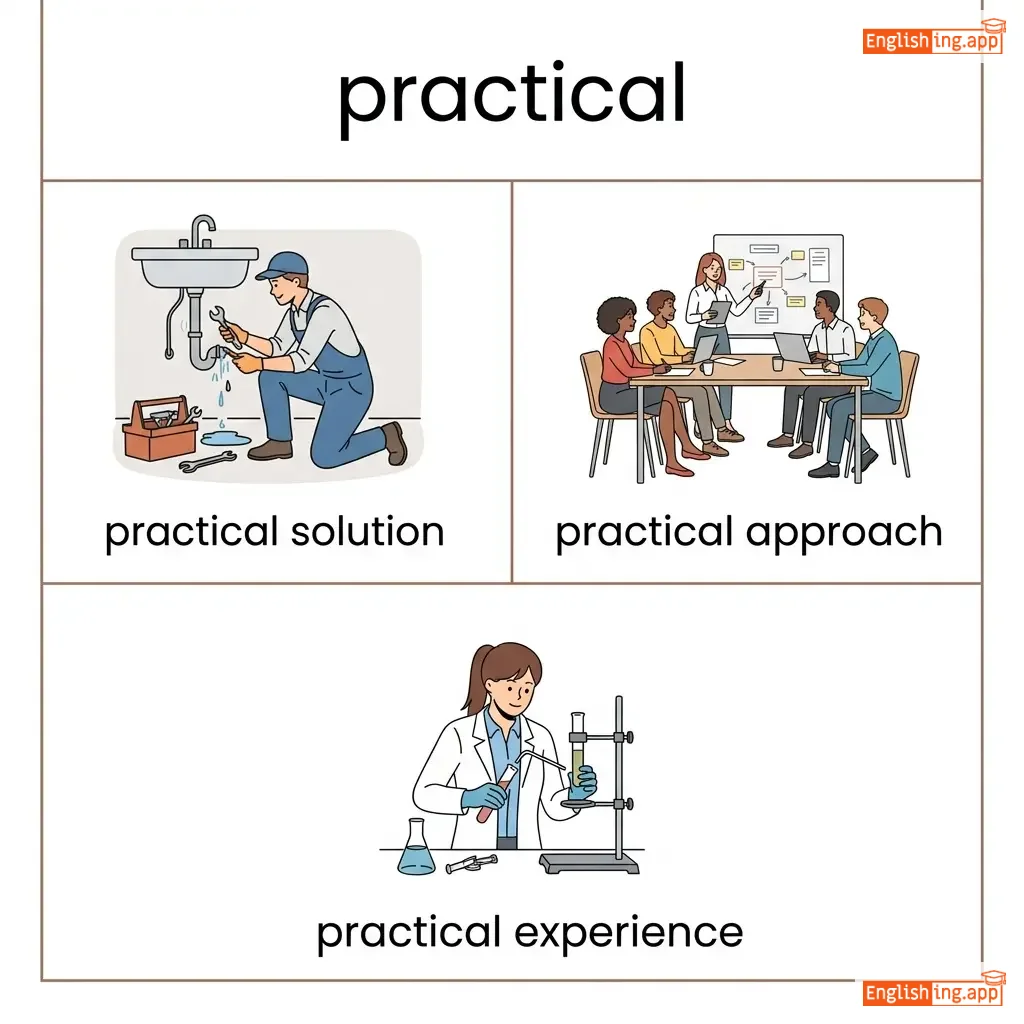
She offered a practical solution to the problem. |
她提供了一个实际的解决方案。
Ta tigongle yige shiji de jiejue fang'an.
••••••
|
practice makes perfect |
the more you practice something, the better you become at it
••••••
|
熟能生巧
shuneng shengqiao
••••••
|
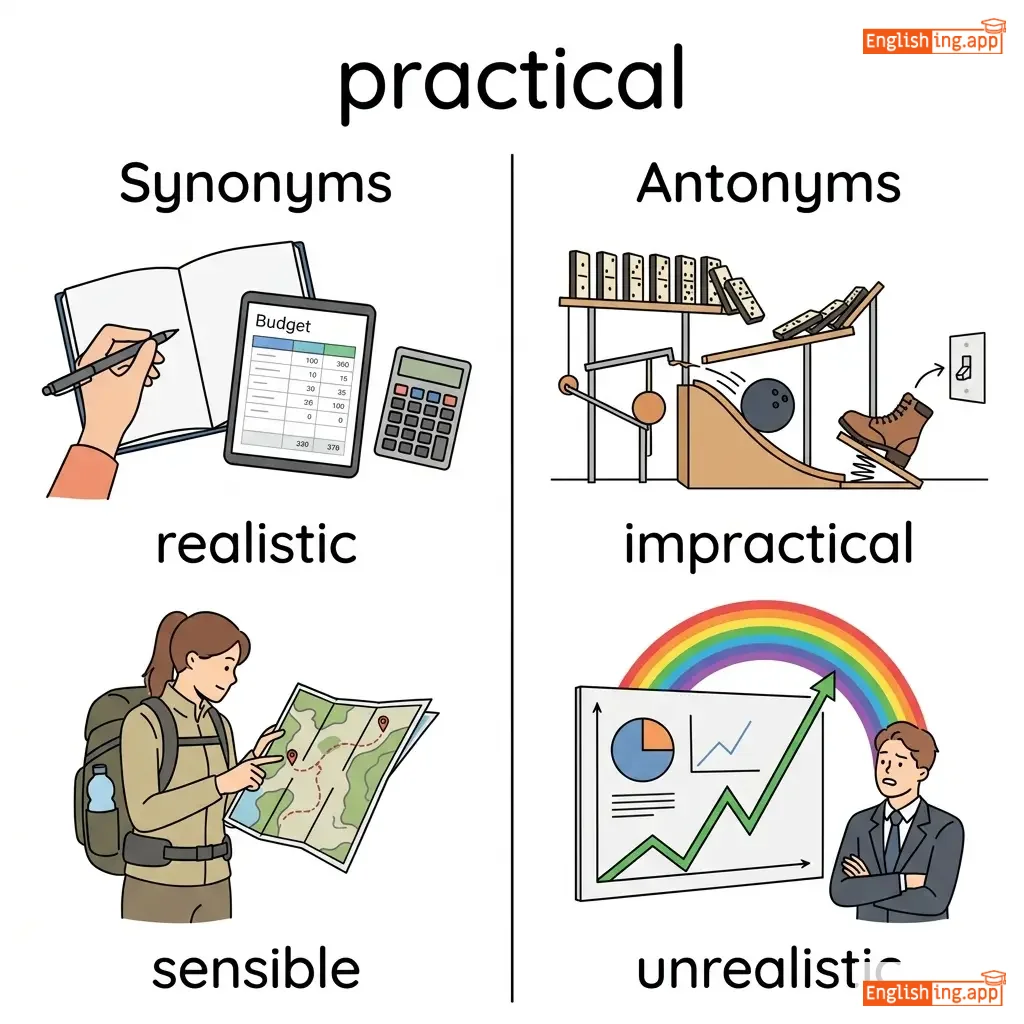
realistic, sensible, useful, logical, pragmatic
••••••
|
impractical, unrealistic, theoretical
••••••
|
practical solution, practical approach, practical experience, practical advice
••••••
|
实用的意味着做真实的事情,而不是理论
••••••
|
|
🎻
••••••
|
/ˈpræk.tɪs/
noun/verb
(实践)
••••••
|

|
练习
lianxi
••••••
|
practiced
实践过
••••••
|
practiced
实践过
••••••
|
practices
实践
••••••
|
practicing
实践中
••••••
|
the act of doing something repeatedly to improve skill, or the actual application of an idea
••••••
|
He practices the piano every day.
他每天练习钢琴。
••••••
|
他每天练习钢琴。
Ta mei tian lianxi gangqin.
••••••
|
in practice
在实践中
••••••
|
in reality, as opposed to theory
••••••
|
在实践中
zai shijian zhong
••••••
|
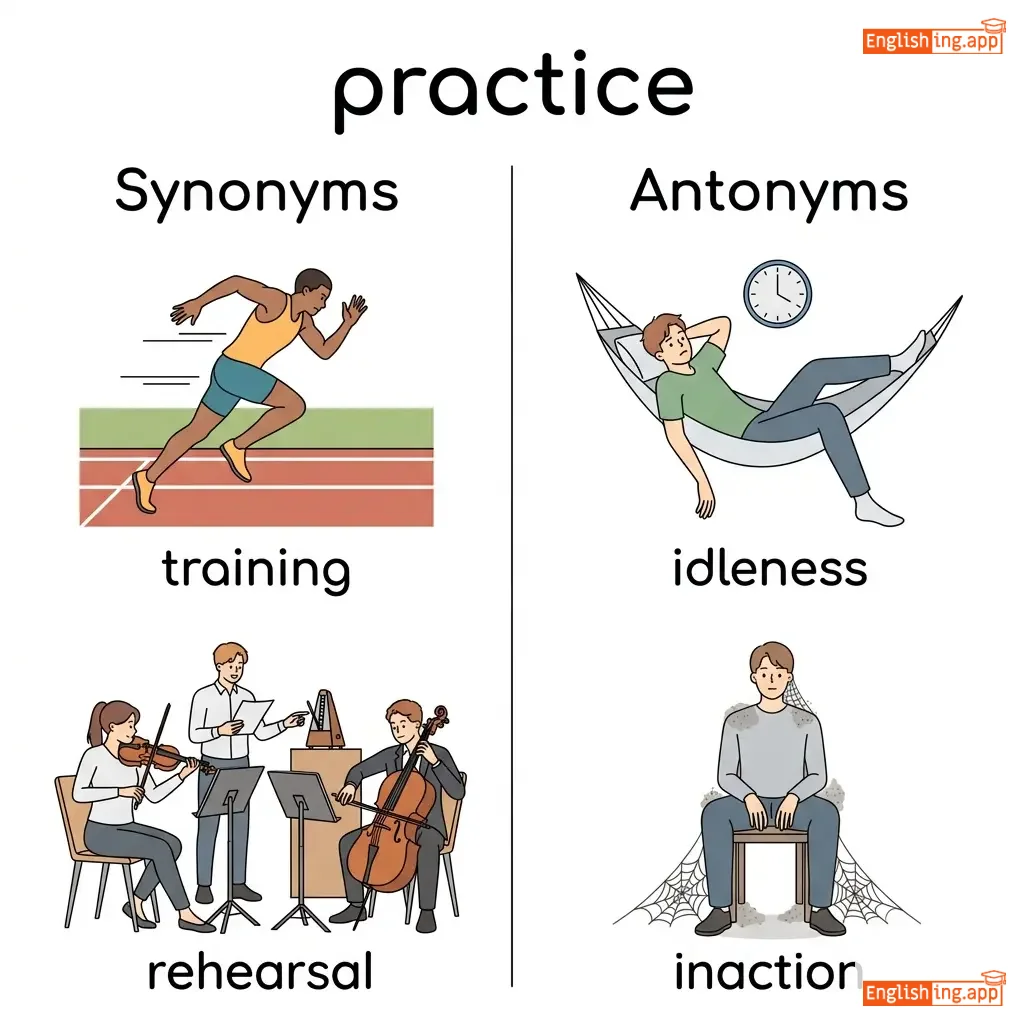
training, rehearsal, exercise, habit, application
••••••
|
idleness, inaction, neglect
••••••
|
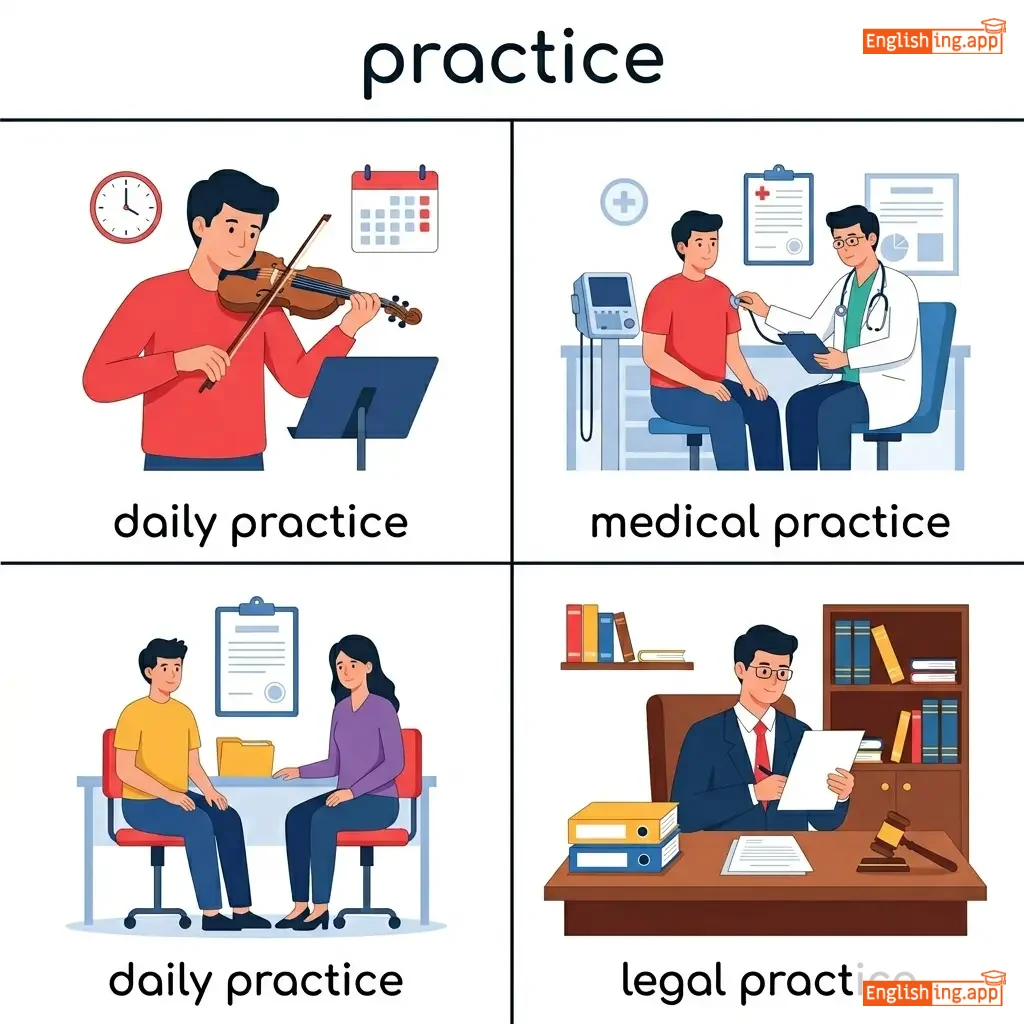
daily practice, medical practice, legal practice, practice session
••••••
|
练习使完美 - 'Practice makes perfect'
••••••
|
|
👩⚕️
••••••
|
/prækˈtɪʃ.ən.ər/
noun
(pɹækˈtɪʃənər)
••••••
|
- •••••• |
从业者
congyè zhě
••••••
|
- •••••• | - •••••• | - •••••• | - •••••• |
a person actively engaged in a profession, especially medicine or law
••••••
|
She is a skilled medical practitioner. |
她是一位合格的医学从业者。
Tā shì yī wèi hégé de yīxué cóngyè zhě.
••••••
|
- •••••• | - •••••• | - •••••• |
professional, specialist, expert, clinician, doctor
••••••
|
amateur, novice, layman
••••••
|
legal practitioner, medical practitioner, experienced practitioner
••••••
|
Practitioner 是指从事某一职业的人,像医生或律师。
••••••
|
|
👏
••••••
|
/preɪz/
verb
(preiz)
••••••
|

|
称赞
chengzan
••••••
|
praised
preizd
••••••
|
praised
preizd
••••••
|
praises
preizes
••••••
|
praising
preizing
••••••
|
to express approval or admiration for someone or something
••••••
|
The teacher praised the student for her hard work.
老师表扬了学生的辛勤工作。
••••••
|
老师表扬了学生的辛勤工作。
Laoshi biaoyang le xuesheng de xinqin gongzuo.
••••••
|
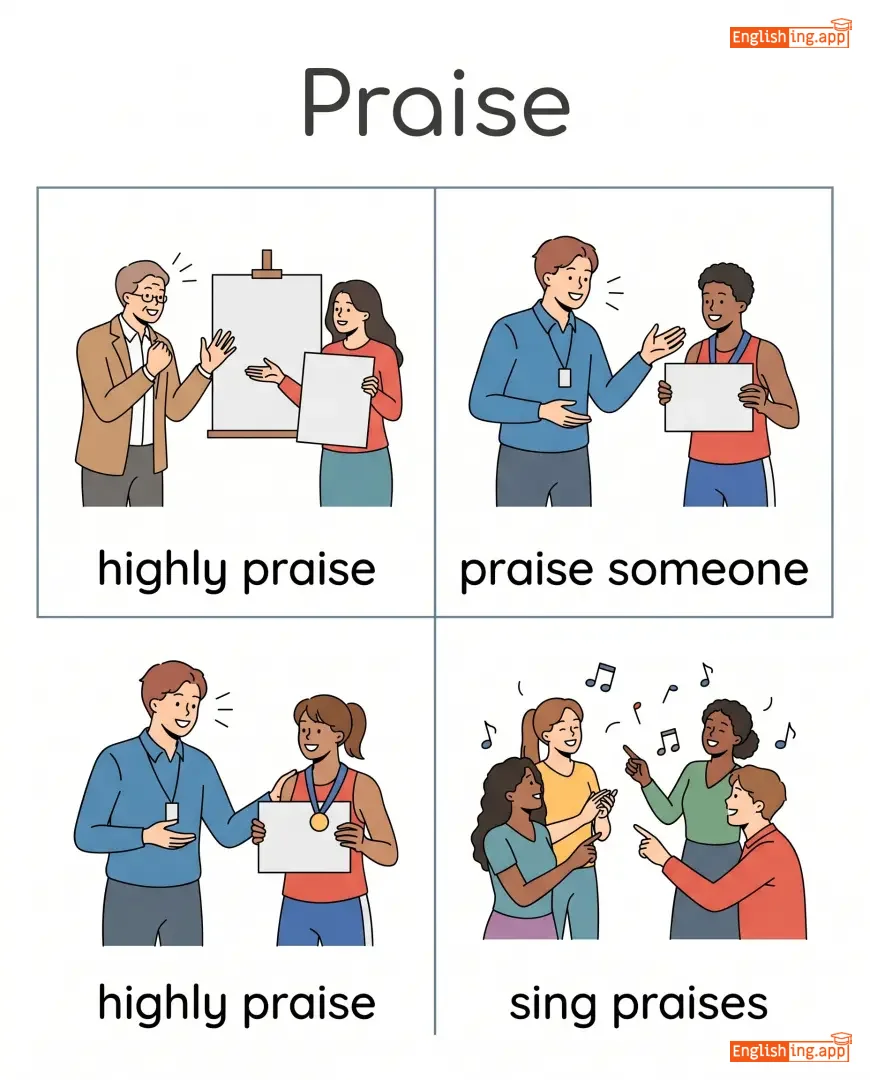
sing someone’s praises
为某人唱赞歌
••••••
|
to enthusiastically talk about how good someone is
••••••
|
为某人唱赞歌
wei mou ren chang zangge
••••••
|
commend, compliment, applaud, admire, honor
••••••
|
criticize, blame, condemn
••••••
|
highly praise, praise someone, sing praises, praise for efforts
••••••
|
Chengzan 意味着称赞 — 如果你做得好,大家都会说 '称赞!'
••••••
|
|
🎭
••••••
|
/præŋk/
noun
(prank)
••••••
|
- •••••• |
恶作剧
èzuòjù
••••••
|
- •••••• | - •••••• | - •••••• | - •••••• |
A trick that is intended to be funny but not harmful.
••••••
|
They played a harmless prank on their friend during the party.
他们在派对上和朋友玩了一个无害的恶作剧。
••••••
|
他们在派对上和朋友玩了一个无害的恶作剧。
Tāmen zài pàiduì shàng hé péngyǒu wánle yīgè wúhài de èzuòjù.
••••••
|
play a prank
开玩笑
••••••
|
To trick someone in a playful and humorous way.
••••••
|
开玩笑
kāi wánxiào
••••••
|
joke, trick, practical joke, stunt, gag
••••••
|
seriousness, sincerity
••••••
|
harmless prank, play a prank, school prank
••••••
|
Prank就像是恶作剧,用轻松的方式让大家开心。
••••••
|
|
🙏
••••••
|
/preɪ/
verb
(pulei)
••••••
|

|
祈祷
qidao
••••••
|
prayed
puleid
••••••
|
prayed
puleid
••••••
|
prays
puleiz
••••••
|
praying
puleing
••••••
|
to speak to a deity, especially for help or thanks
••••••
|
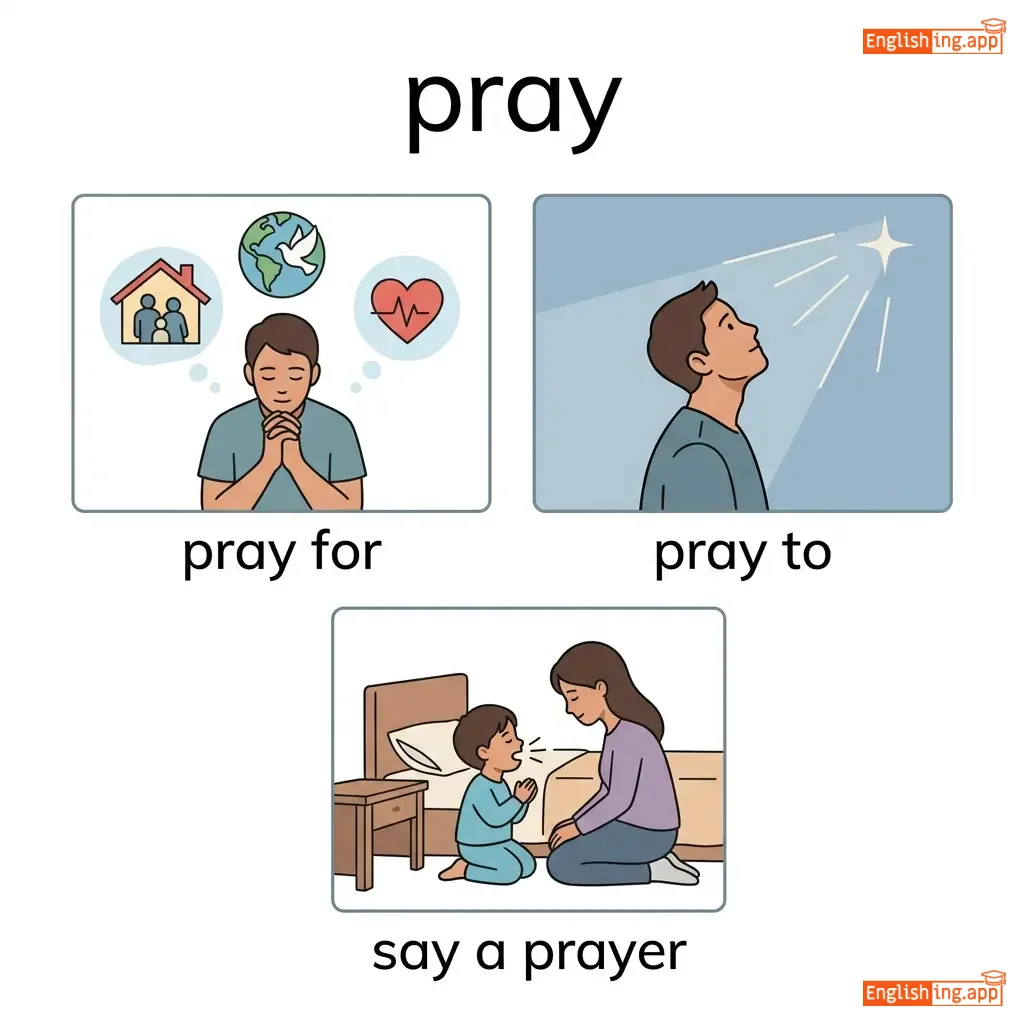
Every night, she prays for her family’s safety.
每晚,她为家人的安全祈祷。
••••••
|
每晚,她为家人的安全祈祷。
Měi wǎn, tā wèi jiārén de ānquán qídǎo.
••••••
|
say your prayers
说你的祈祷
••••••
|
to pray, especially before bed
••••••
|
说你的祈祷
Shuō nǐ de qídǎo
••••••
|
worship, beseech, implore, petition
••••••
|
curse, blaspheme
••••••
|
pray for, pray to, say a prayer, praying hands
••••••
|
Pray for safety, pray at night - Night is the time to pray.
••••••
|
|
🕊️
••••••
|
/ˈprɛər/
noun
(prèir)
••••••
|
- •••••• |
祈祷
qidao
••••••
|
- •••••• | - •••••• | - •••••• | - •••••• |
a solemn request for help or expression of thanks addressed to God or another deity
••••••
|
She recited a prayer before the meal. |
她在饭前念了祈祷词。
Ta zai fan qian nian le qidao ci.
••••••
|
answer one's prayer |
to fulfill a person's request made in prayer
••••••
|
回答某人的祈祷
Huidao mou ren de qidao
••••••
|
supplication, devotion, plea, invocation
••••••
|
curse, blasphemy
••••••
|
say a prayer, prayer meeting, prayer time
••••••
|
在晚上祈祷,祈愿你的愿望成真。
••••••
|
|
🙏
••••••
|
/priːtʃ/
verb
(pǔ lǐ qí)
••••••
|
- •••••• |
宣讲
xuān jiǎng
••••••
|
preached
pǔ lǐ qí de
••••••
|
preached
pǔ lǐ qí de
••••••
|
preaches
pǔ lǐ qí
••••••
|
preaching
pǔ lǐ qí zhōng
••••••
|
to deliver a religious or moral talk, often in a church setting
••••••
|
The pastor preached about forgiveness and kindness.
牧师讲解了宽恕与善良。
••••••
|
牧师宣讲了宽恕与善良。
Mùshī xuānjiǎng le kuānshù yǔ shànliáng.
••••••
|
practice what you preach
实践你所讲的
••••••
|
to behave in the way you encourage others to behave
••••••
|
实践你所讲的
shíjiàn nǐ suǒ jiǎng de
••••••
|
sermonize, exhort, evangelize, lecture, instruct
••••••
|
ignore, neglect, conceal
••••••
|
preach forgiveness, preach love, preach tolerance, preach against
••••••
|
宣讲意味着做你所宣讲的。
••••••
|
|
⏮️
••••••
|
/prɪˈsiːd/
verb
••••••
|
|
- •••••• |
preceded
••••••
|
preceded
••••••
|
precedes
••••••
|
preceding
••••••
|
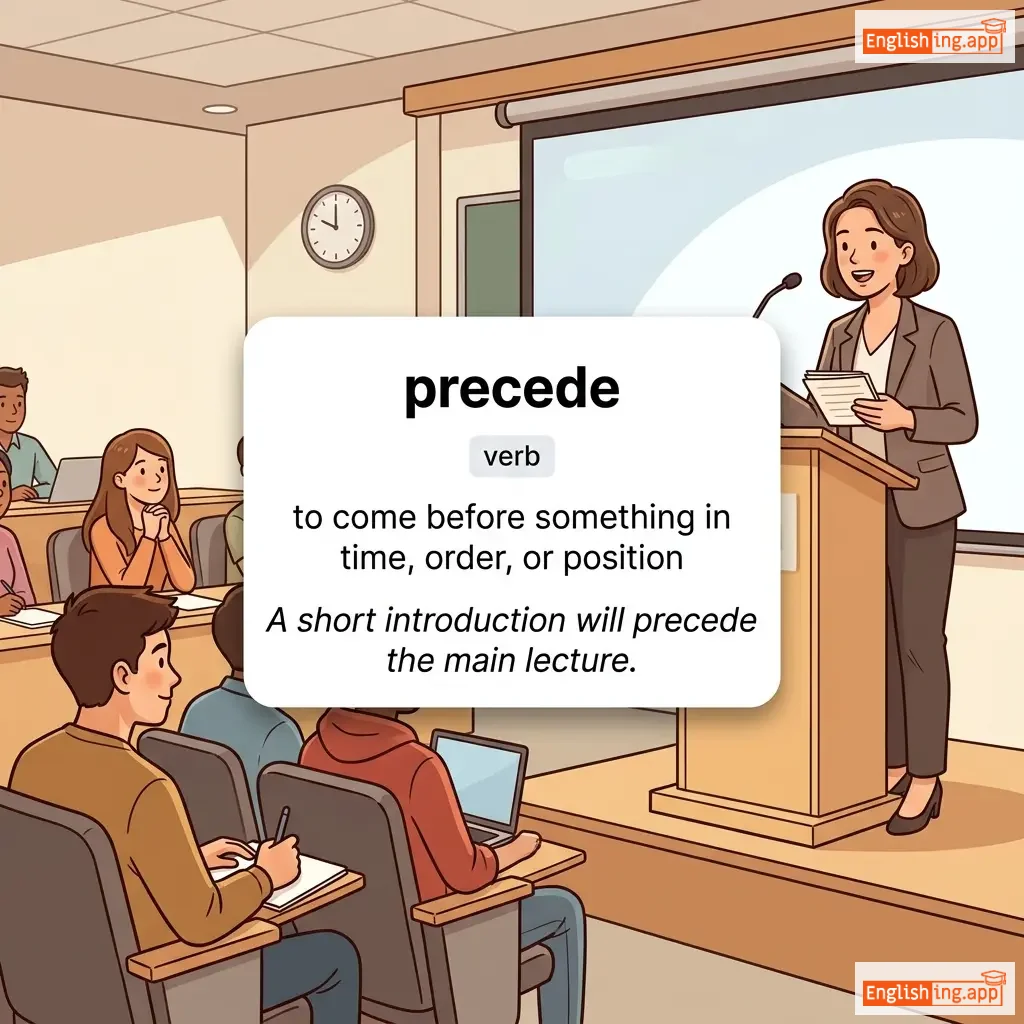
to come before something in time, order, or position
••••••
|
A short introduction will precede the main lecture. |
- •••••• |
precede by |
to happen before something else
••••••
|
- •••••• |
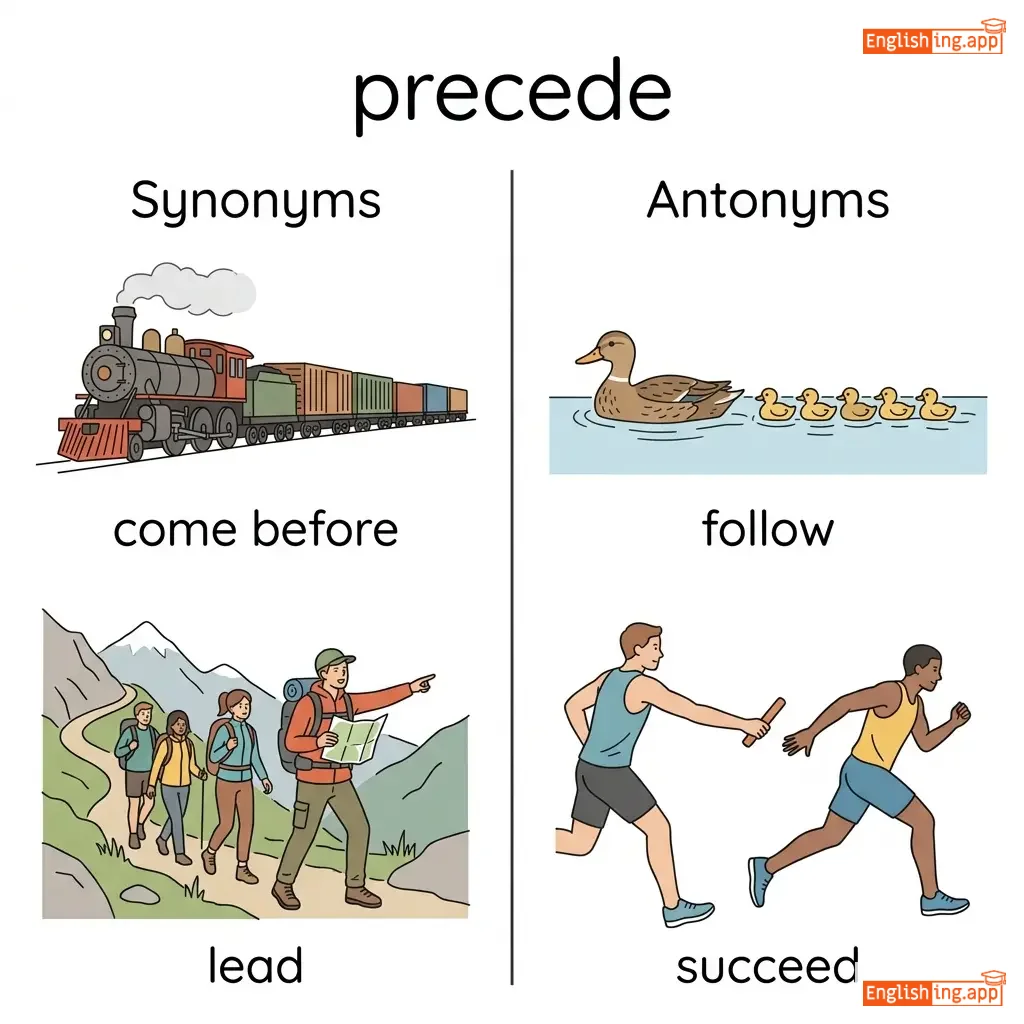
come before, lead, pave the way, herald
••••••
|
follow, succeed
••••••
|
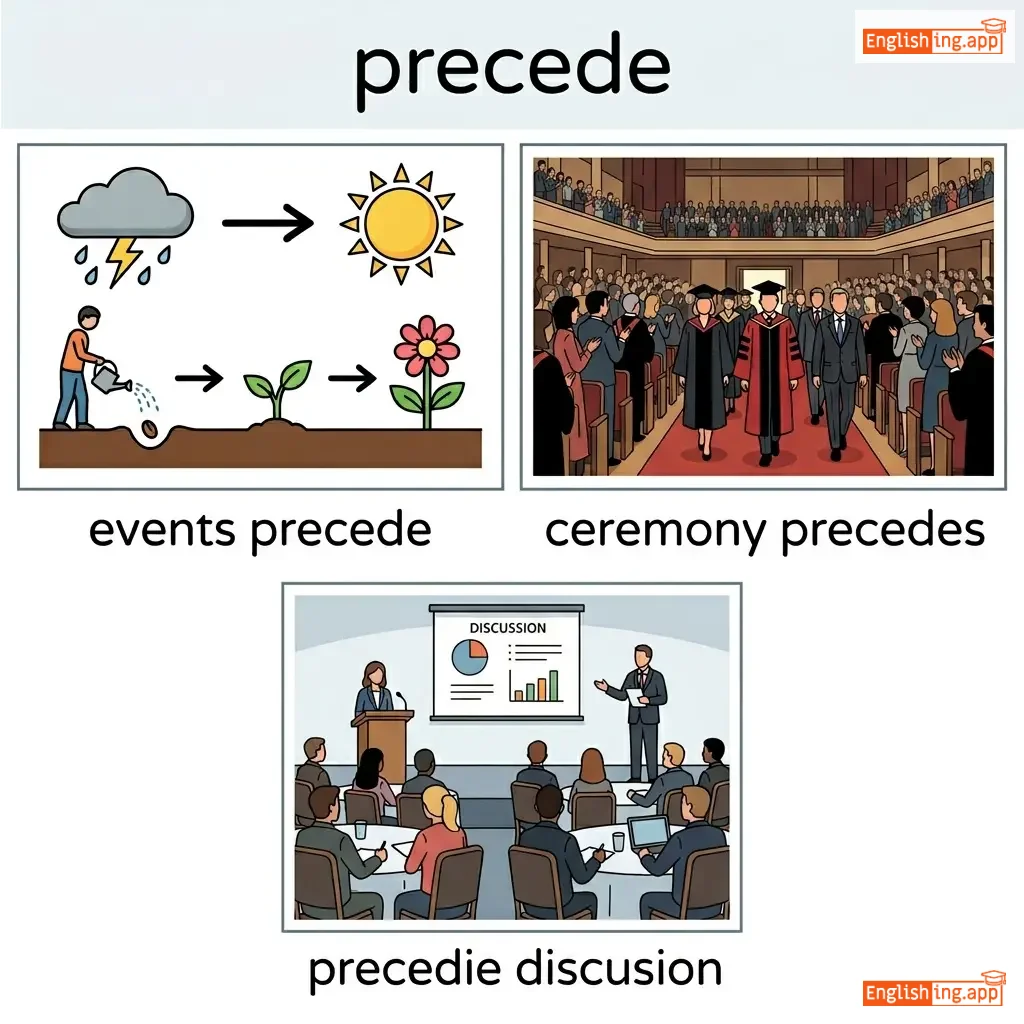
events precede, ceremony precedes, precede discussion, precede statement
••••••
|
No •••••• |
|
⚖️
••••••
|
/ˈprɛsɪdənt/
noun
(普雷西登特)
••••••
|
- •••••• |
先例
xianli
••••••
|
- •••••• | - •••••• | - •••••• | - •••••• |
An earlier event or decision that serves as a guide or example for future similar situations.
••••••
|
The judge’s ruling set a new precedent for similar cases. |
法官的裁决为类似案件设立了一个新的先例。
Faguan de caijue wei leixi anjian sheli le yi ge xin de xianli.
••••••
|
set a precedent |
to establish a pattern or example to be followed in the future
••••••
|
设立先例
Sheli xianli
••••••
|
example, model, standard, pattern, instance
••••••
|
subsequent, follower, outcome
••••••
|
legal precedent, set a precedent, historical precedent, establish precedent
••••••
|
先例意味着先前发生的事情成为未来的规范 — 过去的先例,成为未来的呈现。
••••••
|
|
💎
••••••
|
/ˈprɛʃəs/
adjective
(prēshī'əs)
••••••
|
- •••••• |
珍贵的
zhēn guì de
••••••
|
- •••••• | - •••••• | - •••••• | - •••••• |
of great value; highly esteemed or cherished
••••••
|
This ring is very precious to my grandmother.
这枚戒指对我奶奶来说非常珍贵。
••••••
|
这枚戒指对我奶奶来说非常珍贵。
Zhè méi jièzhǐ duì wǒ nǎinai lái shuō fēicháng zhēnguì.
••••••
|
precious time
宝贵的时间
••••••
|
time that is highly valuable and should not be wasted
••••••
|
宝贵的时间
bǎoguì de shíjiān
••••••
|
valuable, treasured, beloved, priceless, dear
••••••
|
worthless, cheap, common
••••••
|
precious stone, precious memory, precious little, precious time
••••••
|
Precious 是💎珍贵的,记住 — 珍贵的石头就叫 precious stone
••••••
|
|
🎯
••••••
|
/prɪˈsaɪs/
adjective
(pɹɪˈsaɪs)
••••••
|
- •••••• |
精确的
jingque de
••••••
|
- •••••• | - •••••• | - •••••• | - •••••• |
Marked by exactness and accuracy of expression or detail.
••••••
|
She gave precise instructions for the experiment. |
她为实验提供了精确的指示。
Ta wei shiyan tigong le jingque de zhishi.
••••••
|
to be precise |
used to give exact details or clarify something
••••••
|
准确地说
zhunquede shuo
••••••
|
exact, accurate, specific, clear, definite
••••••
|
imprecise, vague, inaccurate
••••••
|
precise instructions, precise details, precise measurements, precise meaning
••••••
|
精确的像目标一样 🎯
••••••
|
|
📏
••••••
|
/prɪˈsaɪsli/
adverb
(精确地)
••••••
|
|
精确地
jingque de
••••••
|
- •••••• | - •••••• | - •••••• | - •••••• |
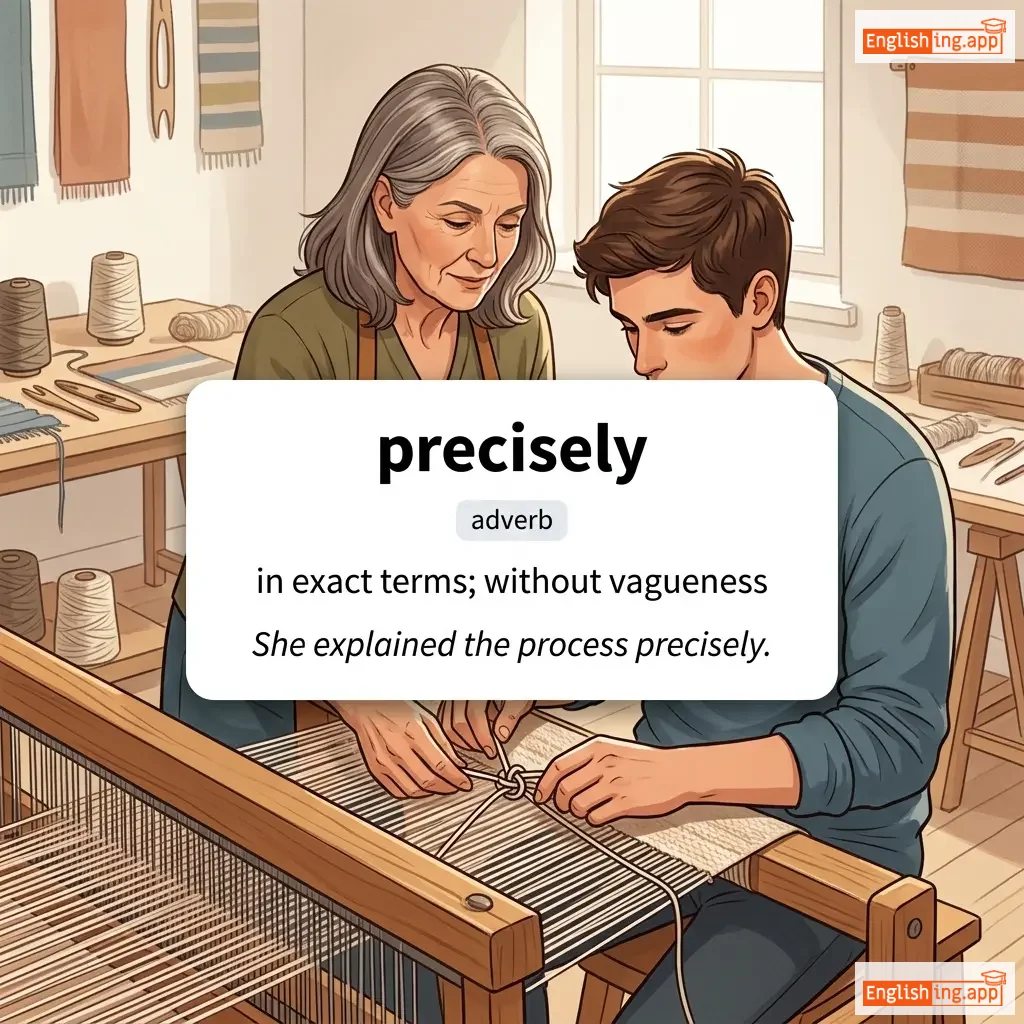
in exact terms; without vagueness
••••••
|
She explained the process precisely.
她精确地解释了这个过程。
••••••
|
她精确地解释了这个过程。
Ta jingque de jiexi le zhege guocheng.
••••••
|
- •••••• | - •••••• | - •••••• |
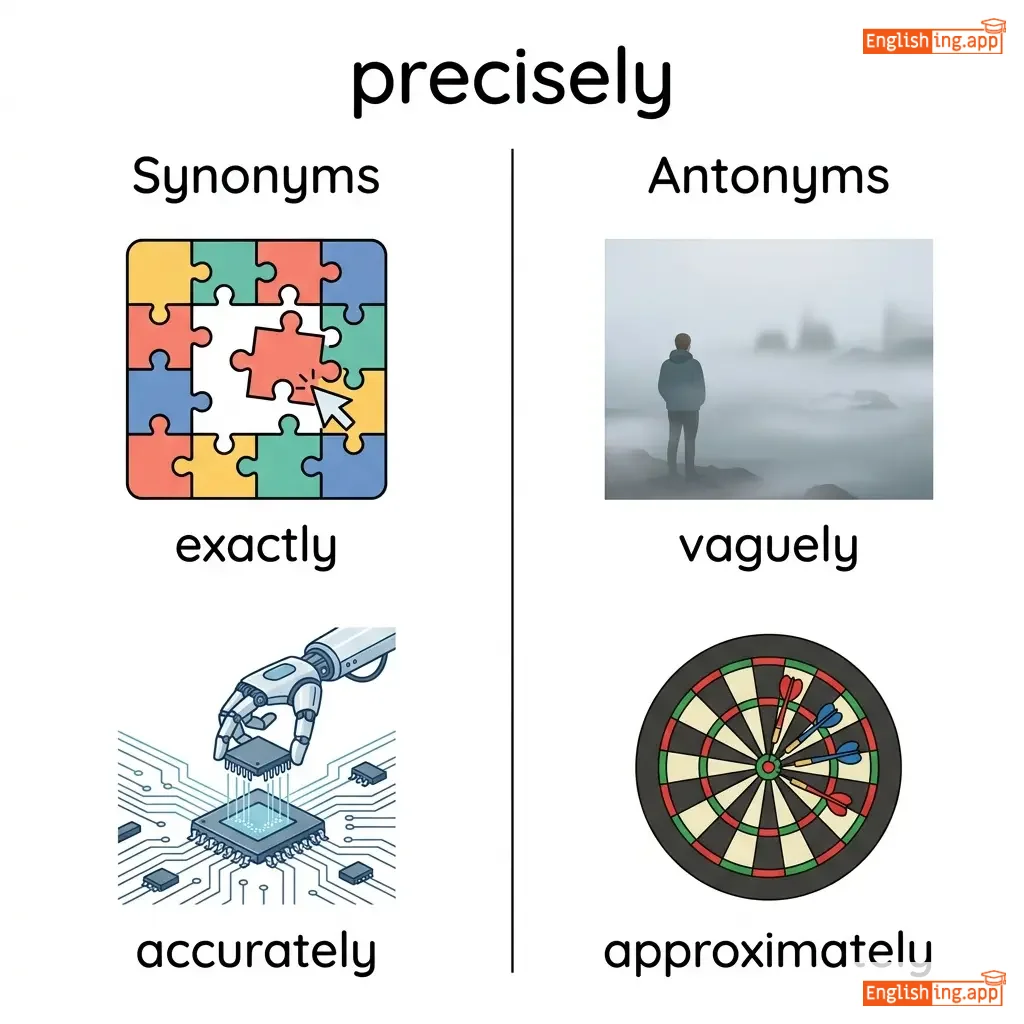
exactly, accurately, specifically, strictly
••••••
|
vaguely, approximately
••••••
|
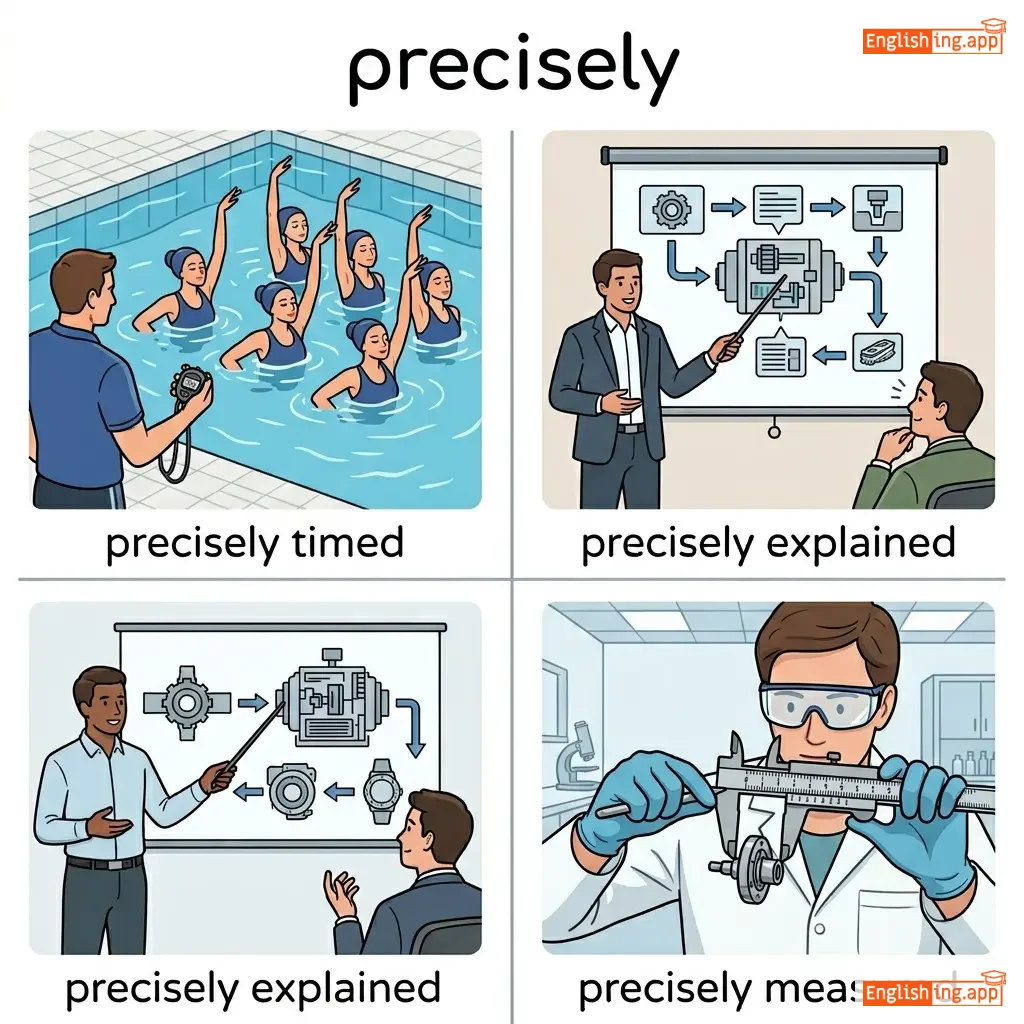
precisely timed, precisely explained, precisely measured
••••••
|
Precisely = Pinpoint accuracy!
••••••
|
|
⚖️
••••••
|
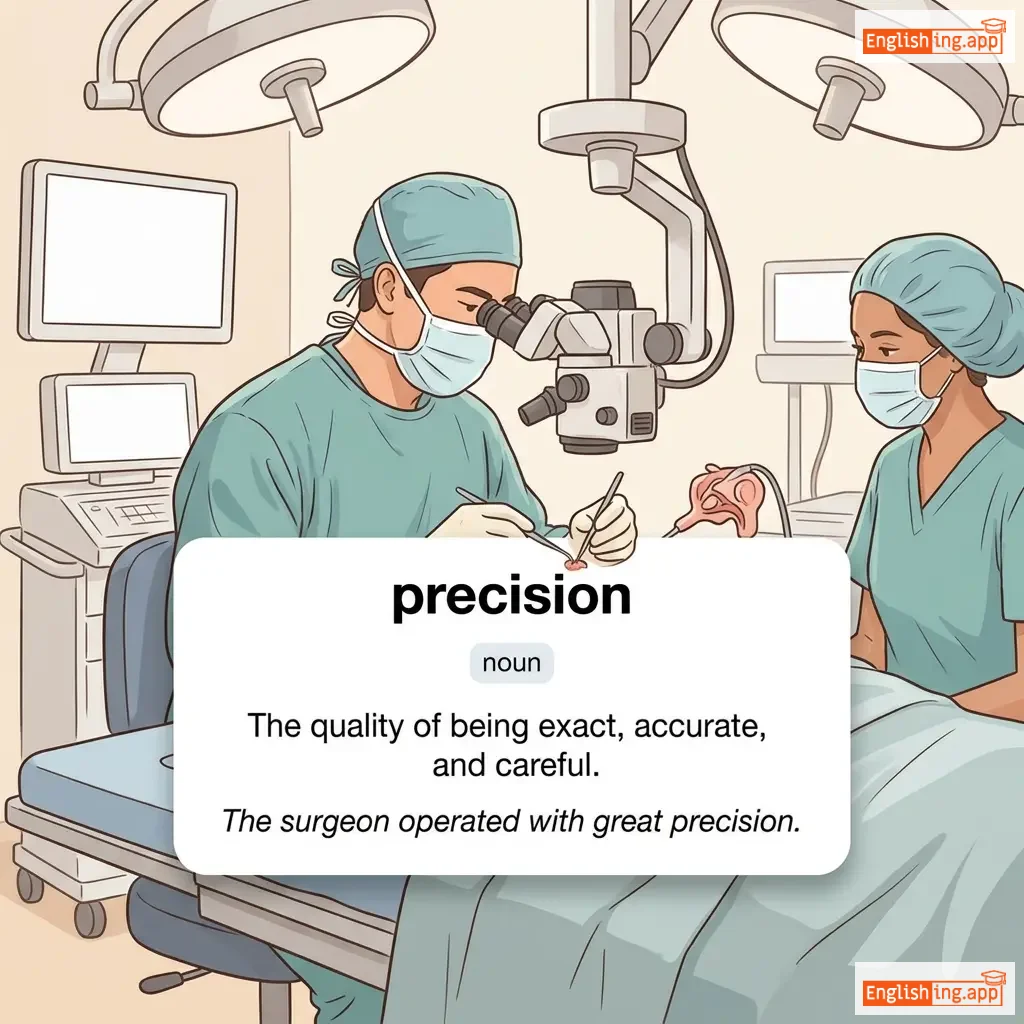
/prɪˈsɪʒən/
noun
(精准)
••••••
|
|
精准
jingzhun
••••••
|
- •••••• | - •••••• | - •••••• | - •••••• |
The quality of being exact, accurate, and careful.
••••••
|
The surgeon operated with great precision.
外科医生以极高的精准度进行手术。
••••••
|
外科医生以极高的精准度进行手术。
Wàikē yīshēng yǐ jí gāo de jīngzhǔn dù jìnxíng shǒushù.
••••••
|
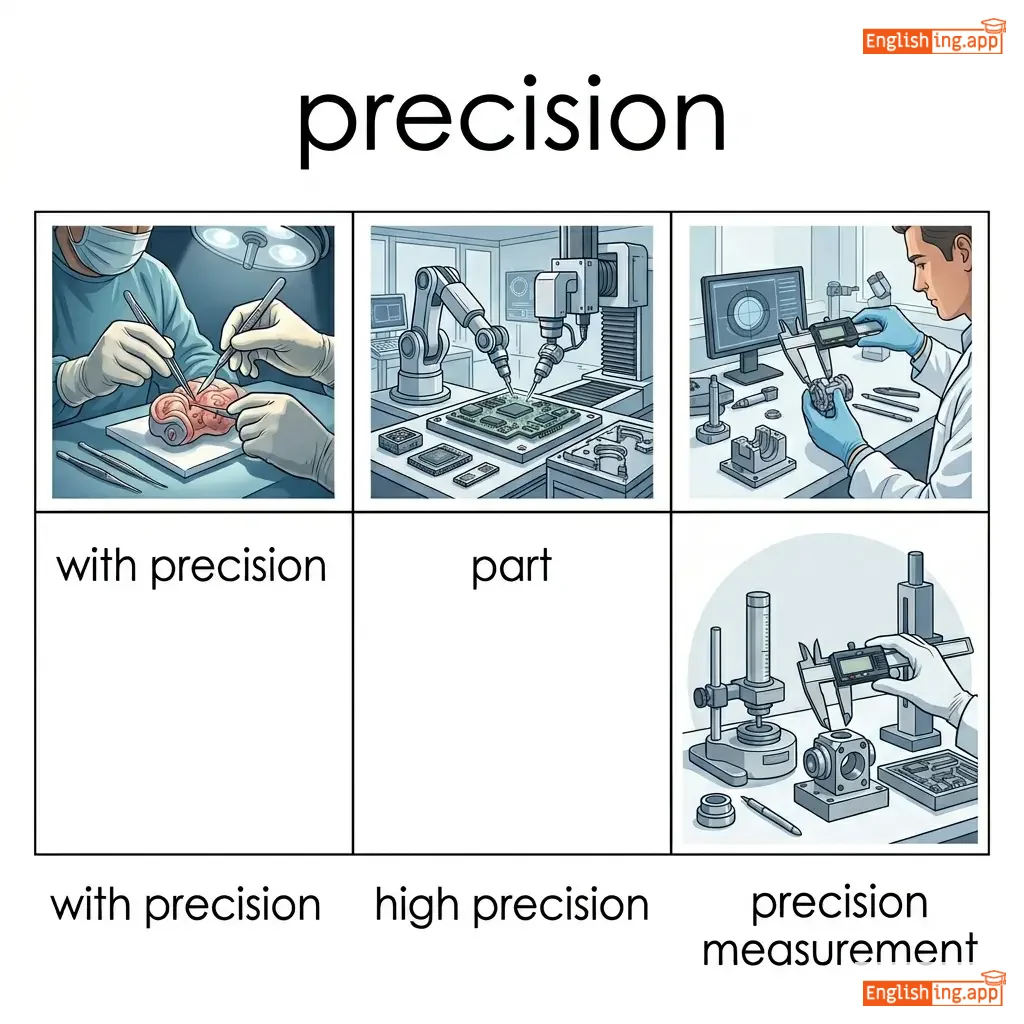
precision work
精准工作
••••••
|
work requiring great accuracy and attention to detail
••••••
|
需要高度精准的工作
xūyào gāodù jīngzhǔn de gōngzuò
••••••
|
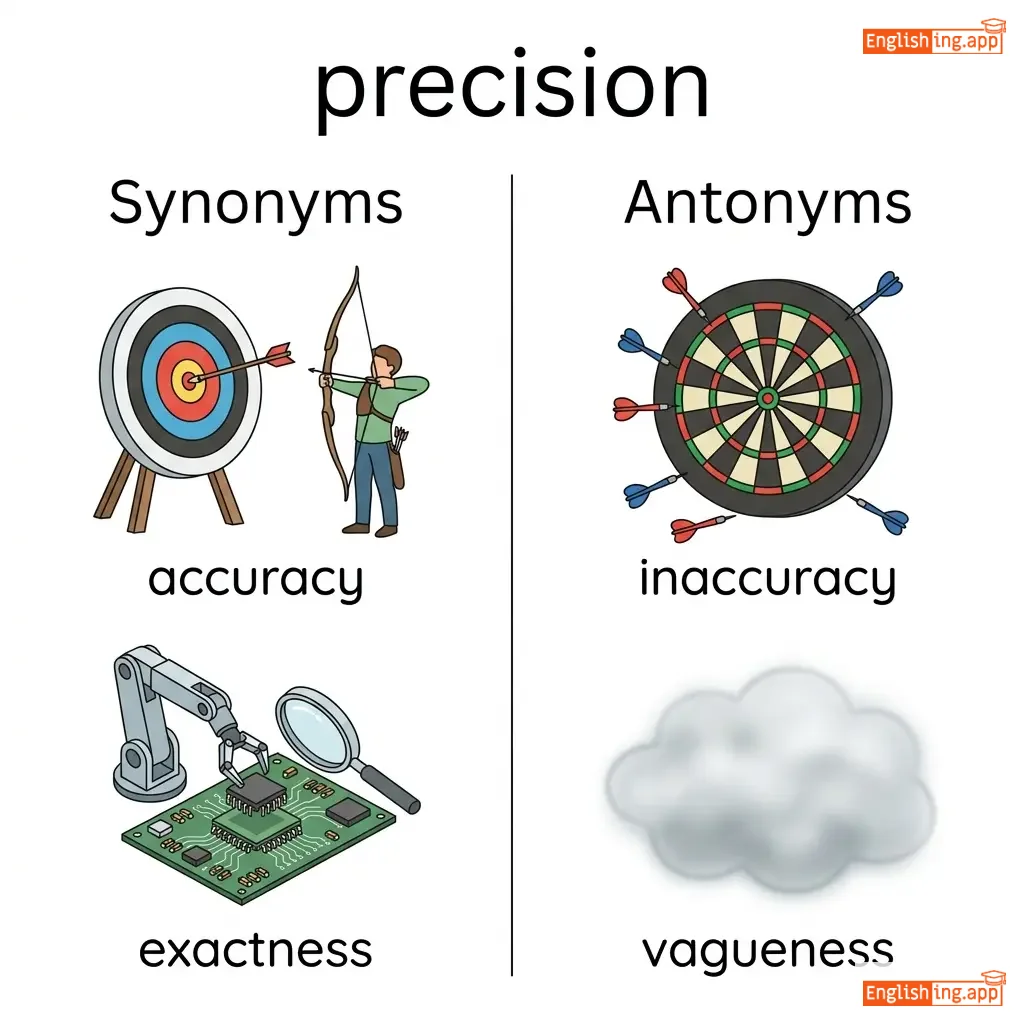
accuracy, exactness, correctness, meticulousness
••••••
|
inaccuracy, vagueness, imprecision
••••••
|
with precision, high precision, precision measurement, precision engineering
••••••
|
精准意味着精准的工作 - 外科医生用精准切割 ⚖️
••••••
|
|
🦁
••••••
|
/ˈprɛdətər/
noun
(掠食者)
••••••
|
- •••••• |
掠食者
lüè shí zhě
••••••
|
- •••••• | - •••••• | - •••••• | - •••••• |
An animal that hunts and kills other animals for food.
••••••
|
Lions are powerful predators in the savannah. |
狮子是草原上强大的掠食者。
Shīzi shì cǎoyuán shàng qiángdà de lüè shí zhě.
••••••
|
- •••••• | - •••••• | - •••••• |
hunter, carnivore, killer, stalker
••••••
|
prey, victim
••••••
|
apex predator, natural predator, predator species
••••••
|
Predator - '掠食' 吃掉猎物 – 掠食者。
••••••
|
|
👤
••••••
|
/ˈpred.ə.ses.ər/
noun
(前任)
••••••
|
- •••••• |
前任
qiánrèn
••••••
|
- •••••• | - •••••• | - •••••• | - •••••• |
a person who held a job or office before the current holder; something that came before another thing
••••••
|
The new manager learned from his predecessor's mistakes. |
新经理从他的前任的错误中学习。
xīn jīnglǐ cóng tā de qiánrèn de cuòwù zhōng xuéxí.
••••••
|
- •••••• | - •••••• | - •••••• |
forerunner, antecedent, previous holder, former
••••••
|
successor, follower, descendant
••••••
|
immediate predecessor, worthy predecessor, predecessor company, predecessor's legacy
••••••
|
前任:曾经是,像你以前的老师。
••••••
|
|
🔮
••••••
|
/prɪˈdɪkt/
verb
(普雷迪克特)
••••••
|
- •••••• |
预测
yù cè
••••••
|
predicted
预言
••••••
|
predicted
预言
••••••
|
predicts
预言
••••••
|
predicting
预言
••••••
|
to say what will happen in the future based on knowledge or reasoning
••••••
|
Experts predict a rise in fuel prices.
专家预测燃料价格将会上涨。
••••••
|
专家预测燃料价格将会上涨。
Zhuānjiā yùcè ránliào jiàgé jiāng huì shàng zhǎng.
••••••
|
predict the future
预测未来
••••••
|
to foresee what will happen in the future
••••••
|
预测未来
yù cè wèi lái
••••••
|
forecast, foresee, anticipate, prophesy, project
••••••
|
ignore, overlook, doubt
••••••
|
predict accurately, predict outcome, predict result, predict the future
••••••
|
Predict = 预测, 预言未来
••••••
|
|
🔮
••••••
|
/prɪˈdɪktəbəl/
adjective
(预见的)
••••••
|
- •••••• |
可预测的
kě yù cè de
••••••
|
- •••••• | - •••••• | - •••••• | - •••••• |
able to be predicted or foreseen
••••••
|
His reactions were predictable based on his past behavior.
他的反应是可以预测的,基于他的过去行为。
••••••
|
他的反应是可以预测的,基于他的过去行为。
Tā de fǎnyìng shì kě yùcè de, jīyú tā de guòqù xíngwéi.
••••••
|
- •••••• | - •••••• | - •••••• |
foreseeable, expected, certain, inevitable
••••••
|
unpredictable, uncertain, surprising
••••••
|
predictable behavior, predictable outcome, predictable pattern
••••••
|
Predict + able = 这可以预测,就像未来的结果!
••••••
|
|
🔮
••••••
|
/prɪˈdɪkʃən/
noun
(预测)
••••••
|
- •••••• |
预测
yùcè
••••••
|
- •••••• | - •••••• | - •••••• | - •••••• |
A statement about what will happen in the future based on knowledge or evidence.
••••••
|
Her prediction about the weather turned out to be accurate.
她关于天气的预测被证明是准确的。
••••••
|
她关于天气的预测被证明是准确的。
Tā guānyú tiāngāo de yùcè bèi zhèngmíng shì zhǔnquè de.
••••••
|
make a prediction
做出预测
••••••
|
to state what you think will happen in the future
••••••
|
做出预测
zuò chū yùcè
••••••
|
forecast, prophecy, prognosis, projection, guess
••••••
|
retrospection, hindsight
••••••
|
accurate prediction, weather prediction, make a prediction, prediction model
••••••
|
Prediction 是预测未来,猜测即将发生的事。
••••••
|
|
🌍
••••••
|
/prɪˈdɒmɪnəntli/
adverb
(普雷多米南特利)
••••••
|
- •••••• |
主要
zhuyao
••••••
|
- •••••• | - •••••• | - •••••• | - •••••• |
mainly; for the most part
••••••
|
The population in the city is predominantly young.
这个城市的人口主要是年轻人。
••••••
|
这个城市的人口主要是年轻人。
Zhege chengshi de renkou zhuyao shi nianqing ren.
••••••
|
- •••••• | - •••••• | - •••••• |
primarily, mainly, chiefly, mostly
••••••
|
minimally, partly
••••••
|
predominantly young, predominantly urban, predominantly male
••••••
|
主要 (mainly) - 这是最常见的事物!
••••••
|
|
👍
••••••
|
/prɪˈfɜːr/
verb
(普雷费尔)
••••••
|
|
更喜欢
gèng xǐ huān
••••••
|
preferred
普雷费尔德
••••••
|
preferred
普雷费尔德
••••••
|
prefers
普雷费尔斯
••••••
|
preferring
普雷费林
••••••
|
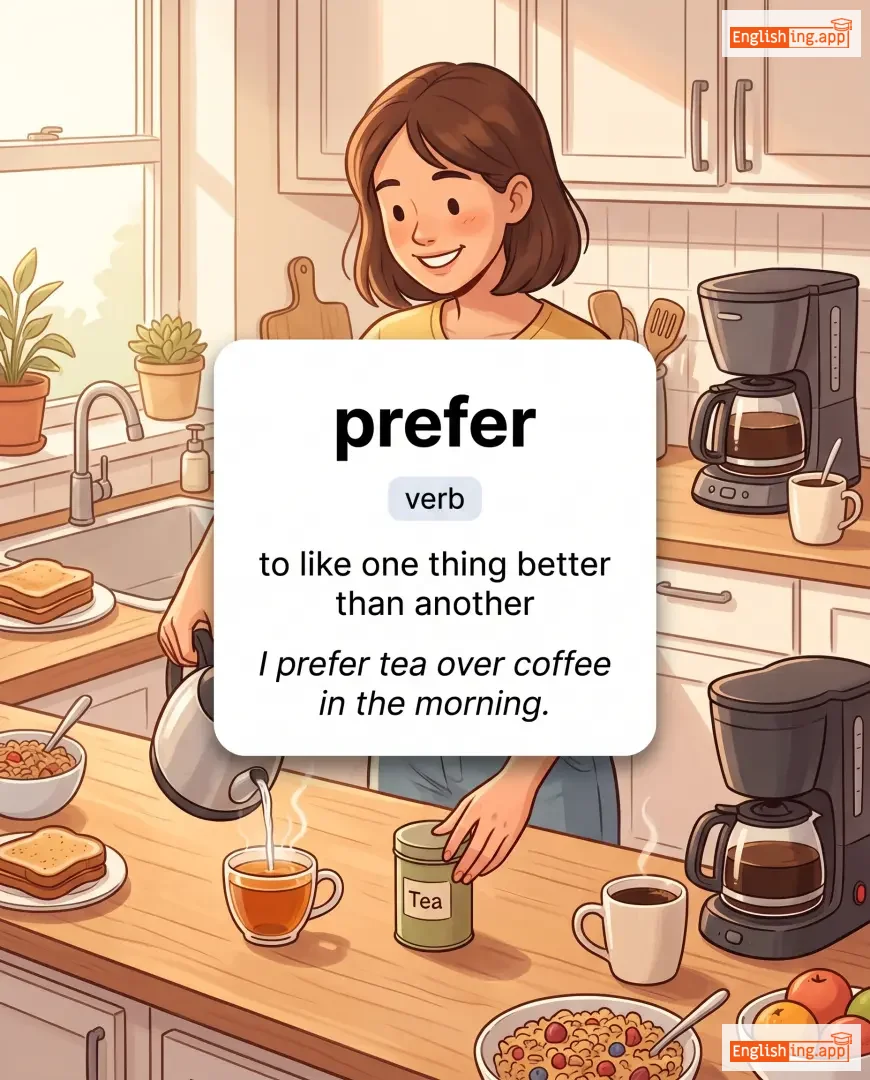
to like one thing better than another
••••••
|
I prefer tea over coffee in the morning.
我早上更喜欢喝茶而不是咖啡。
••••••
|
我早上更喜欢喝茶而不是咖啡。
Wǒ zǎo shang gèng xǐ huān hē chá ér bù shì kā fēi.
••••••
|
prefer not to say
更喜欢不说
••••••
|
to avoid giving an answer or sharing information
••••••
|
更喜欢不说
gèng xǐ huān bù shuō
••••••
|
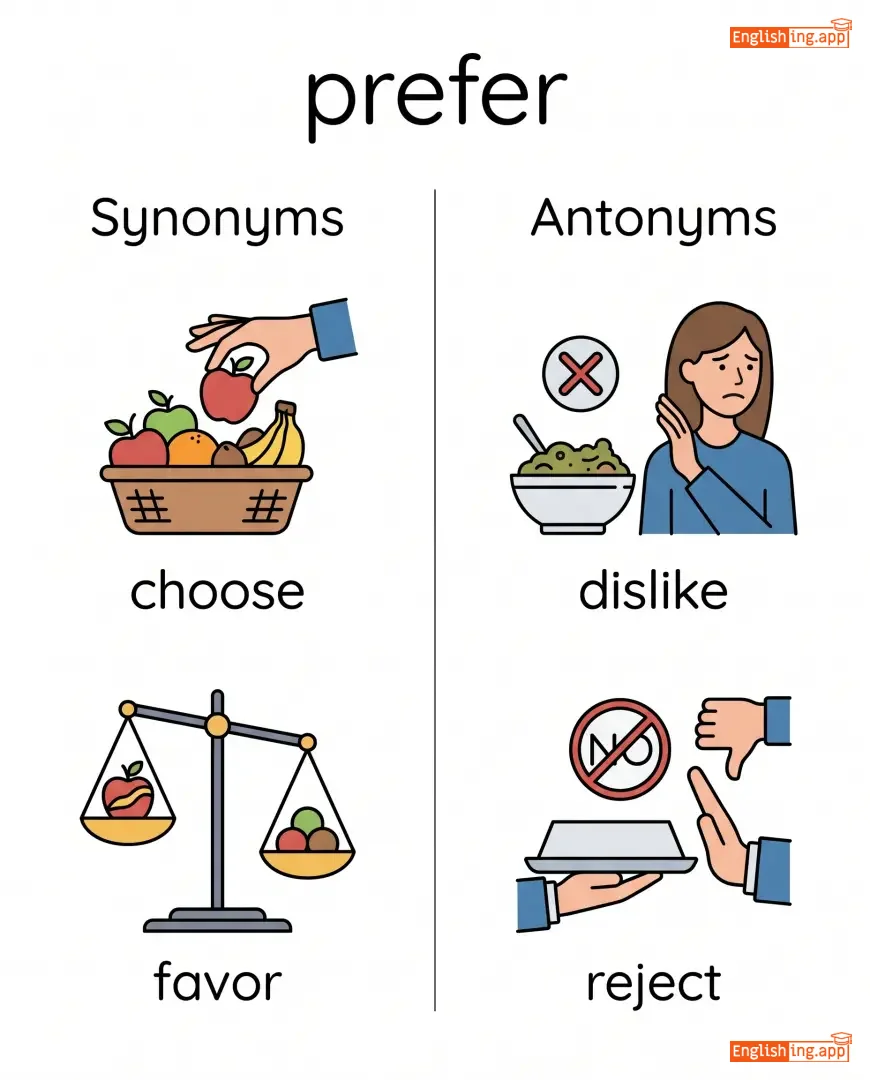
choose, favor, like, favor over
••••••
|
dislike, reject, avoid
••••••
|
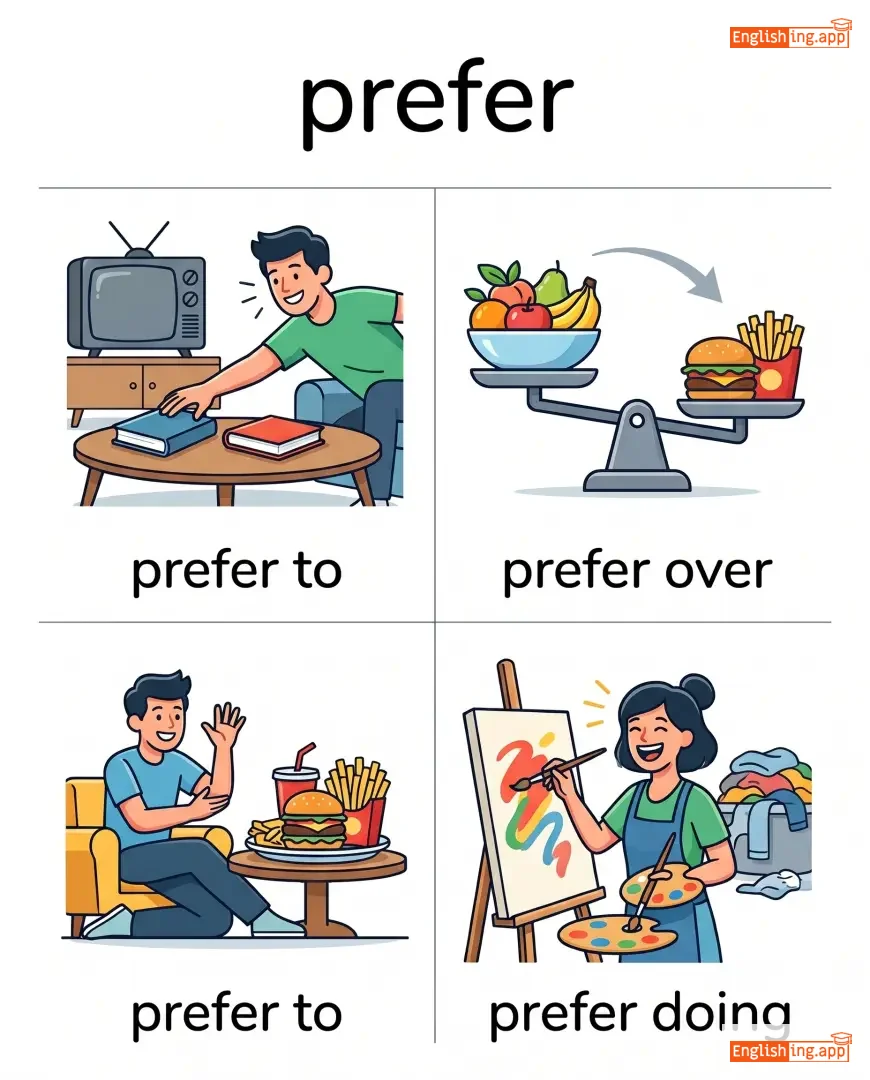
prefer to, prefer over, prefer doing
••••••
|
更喜欢就是先挑出自己最爱的那个
••••••
|
|
☕
••••••
|
/ˈprɛf(ə)rəns/
noun
(普雷弗伦斯)
••••••
|
- •••••• |
偏好
pianhao
••••••
|
- •••••• | - •••••• | - •••••• | - •••••• |
a greater liking for one alternative over another
••••••
|
She has a preference for tea over coffee. |
她更喜欢茶而不是咖啡。
Tā gèng xǐhuān chá ér bù shì kāfēi.
••••••
|
personal preference |
an individual's own choice or taste
••••••
|
个人偏好
gèrén piānhào
••••••
|
choice, liking, taste, inclination, option
••••••
|
dislike, aversion, indifference
••••••
|
show preference, strong preference, personal preference, preference order
••••••
|
偏好意味着 '偏好' – 选择茶或咖啡。
••••••
|
|
🤰
••••••
|
/ˈprɛɡnənsi/
noun
(pregnancy)
••••••
|
- •••••• |
怀孕
huaiyun
••••••
|
- •••••• | - •••••• | - •••••• | - •••••• |
the condition of being pregnant; the period during which a woman carries a developing fetus
••••••
|
Her pregnancy was carefully monitored by her doctor.
她的怀孕状况由医生仔细监测。
••••••
|
她的怀孕状况由医生仔细监测。
Ta de huaiyun zhuangtai you yisheng zixi jiance.
••••••
|
- •••••• | - •••••• | - •••••• |
gestation, expectancy, childbirth, maternity
••••••
|
infertility, sterility
••••••
|
pregnancy test, pregnancy symptoms, unexpected pregnancy
••••••
|
怀孕-幸福的怀抱中的成长!
••••••
|

