|
絵文字
|
単語 | Images | 翻訳 | 過去 | 過去分詞 | 三人称単数 | 動名詞 | 意味 | 例文 | 例文の翻訳 | 表現例 | 表現例の意味 | 表現例の翻訳 | 同義語 | 対義語 | コロケーション | ニーモニック |
|---|---|---|---|---|---|---|---|---|---|---|---|---|---|---|---|---|---|
|
🎮
••••••
|
/pleɪ/
verb
(プレイ)
••••••
|
|
遊ぶ
asobu
••••••
|
played
プレイド
••••••
|
played
プレイド
••••••
|
plays
プレイズ
••••••
|
playing
プレイング
••••••
|
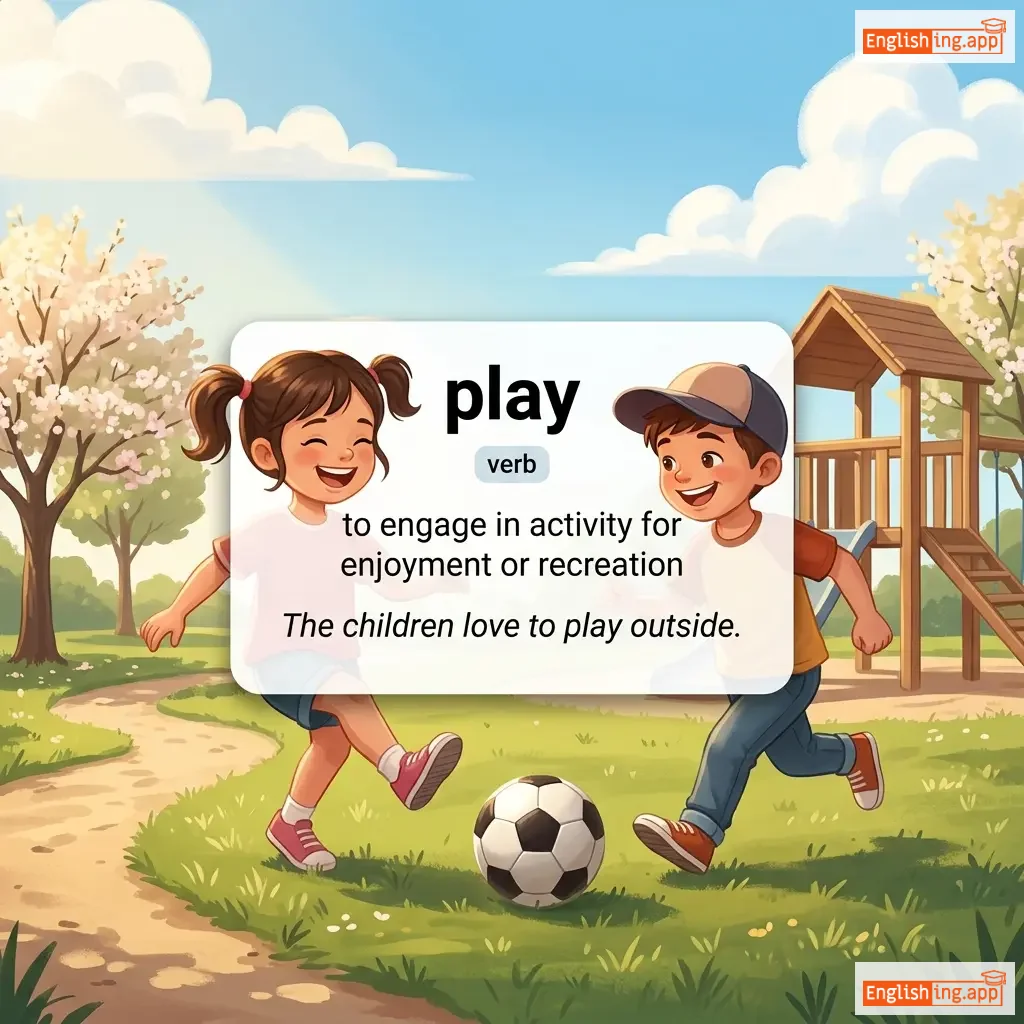
to engage in games or sports; to perform music
••••••
|
Children love to play in the park.
子供たちは公園で遊ぶのが大好きです。
••••••
|
子供たちは公園で遊ぶのが大好きです。
Kodomotachi wa kōen de asobu no ga daisuki desu.
••••••
|
- •••••• | - •••••• | - •••••• |
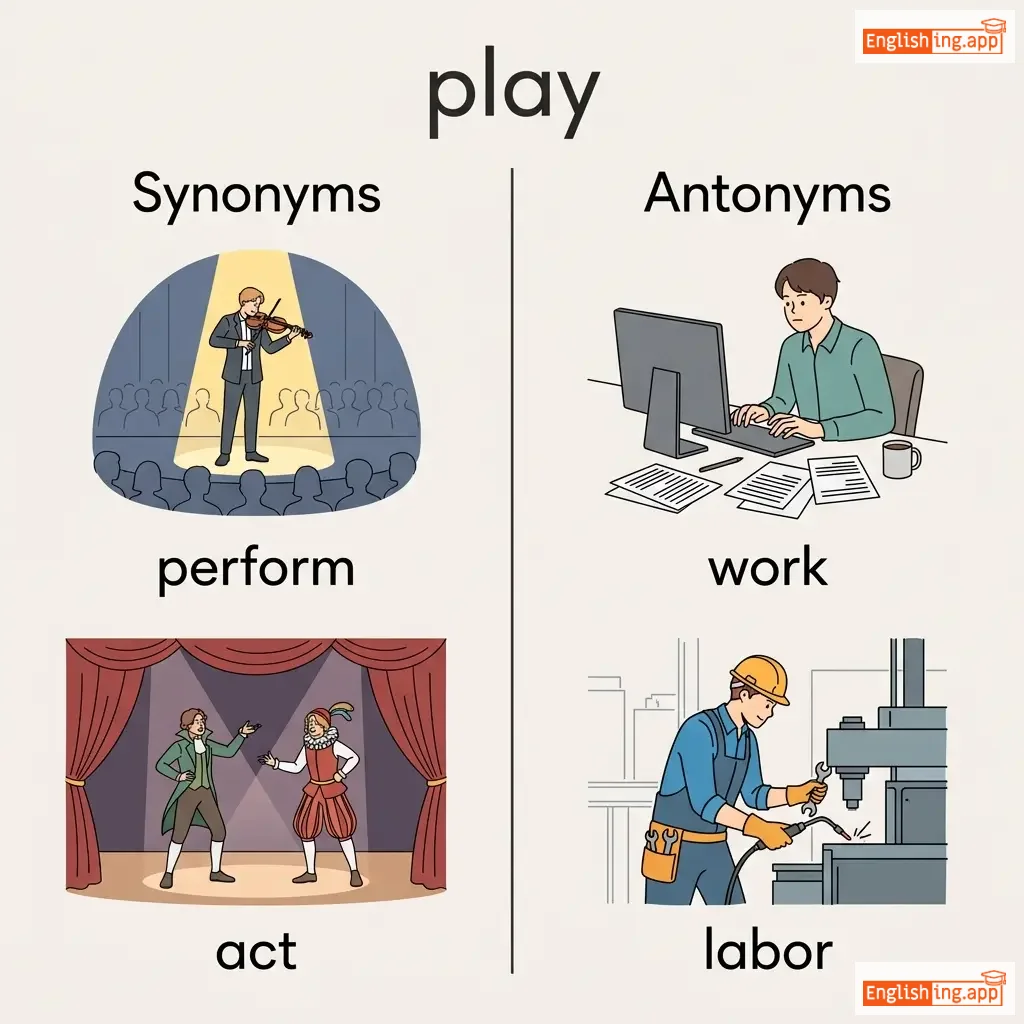
perform, compete, entertain, act
••••••
|
work, study, stop, rest
••••••
|
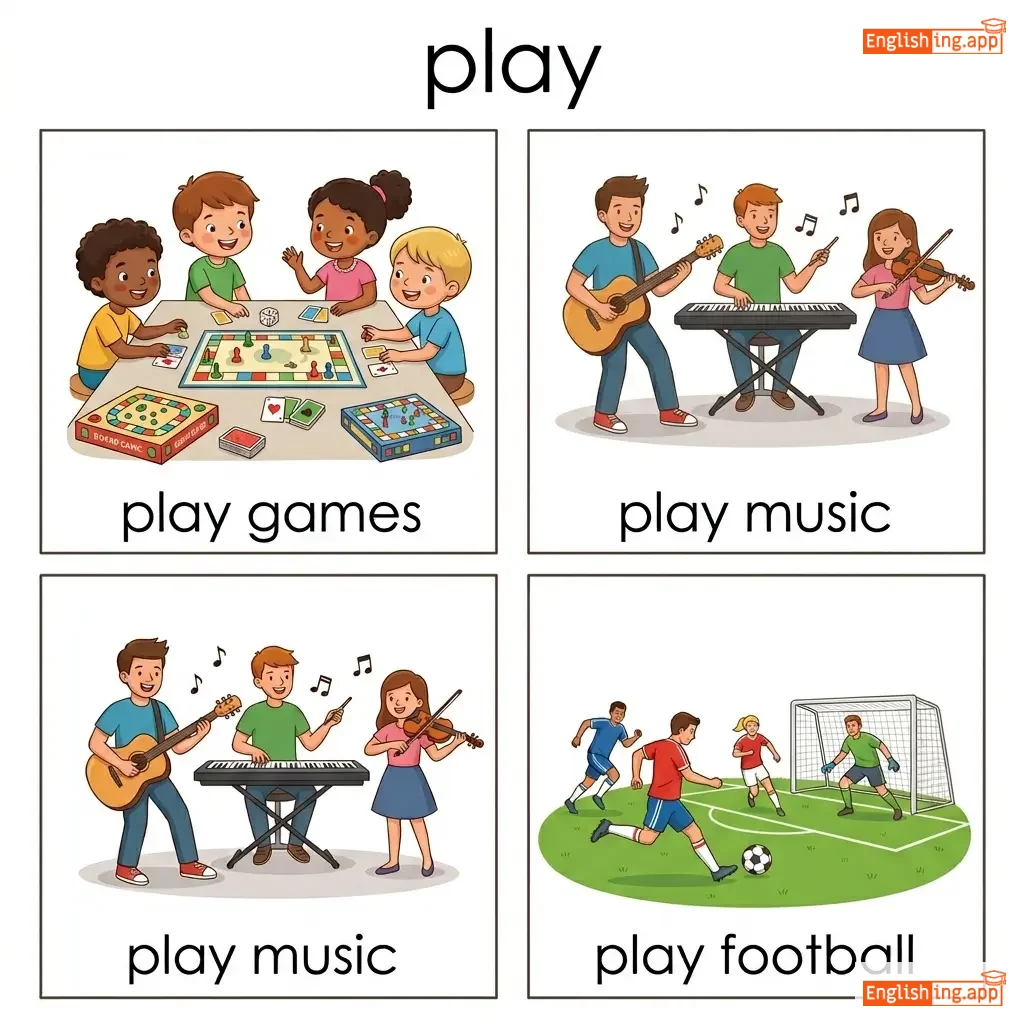
play games, play music, play sports, play together, play outside
••••••
|
遊ぶ means playing, just like 'play' in English!
••••••
|
|
🏅
••••••
|
/ˈpleɪər/
noun
(プレイヤー)
••••••
|
- •••••• |
選手
senshu
••••••
|
- •••••• | - •••••• | - •••••• | - •••••• |
a person who participates in a game or sport
••••••
|
The player scored the winning goal. |
選手は決勝ゴールを決めました。
Senshu wa kesshō gōru o kimemashita.
••••••
|
- •••••• | - •••••• | - •••••• |
athlete, competitor, participant, sportsperson
••••••
|
non-player, spectator
••••••
|
professional player, skilled player, football player, basketball player
••••••
|
Player = プレイ (play) + ヤー (ya), プレイヤーはスポーツをプレイする人
••••••
|
|
🙏
••••••
|
/pliː/
noun
(プリー)
••••••
|
- •••••• |
請願; 要求; 弁明
seigan; youkyuu; benmei
••••••
|
- •••••• | - •••••• | - •••••• | - •••••• |
an urgent and emotional request; a defendant's formal response to a criminal charge; an excuse or justification
••••••
|
She made a plea for help during the emergency. |
緊急時に彼女は助けを求める請願をした。
Kinkyuuji ni kanojo wa tasuke o motomeru seigan o shita.
••••••
|
- •••••• | - •••••• | - •••••• |
appeal, request, petition, entreaty
••••••
|
demand, command, order, refusal
••••••
|
guilty plea, emotional plea, plea bargain
••••••
|
Pleaは‘お願い’として覚えられる。
••••••
|
|
🙏
••••••
|
/pliːd/
verb
(purīdo)
••••••
|


|
嘆願する
tengansuru
••••••
|
pleaded
purīdedo
••••••
|
pleaded
purīdedo
••••••
|
pleads
purīdz
••••••
|
pleading
purīdingu
••••••
|
to make an emotional appeal; to present a case in court
••••••
|
She pleaded for mercy.
彼女は慈悲を乞いました。
••••••
|
彼女は慈悲を乞いました。
Kanojo wa jihi o koi-mashita.
••••••
|
- •••••• | - •••••• | - •••••• |
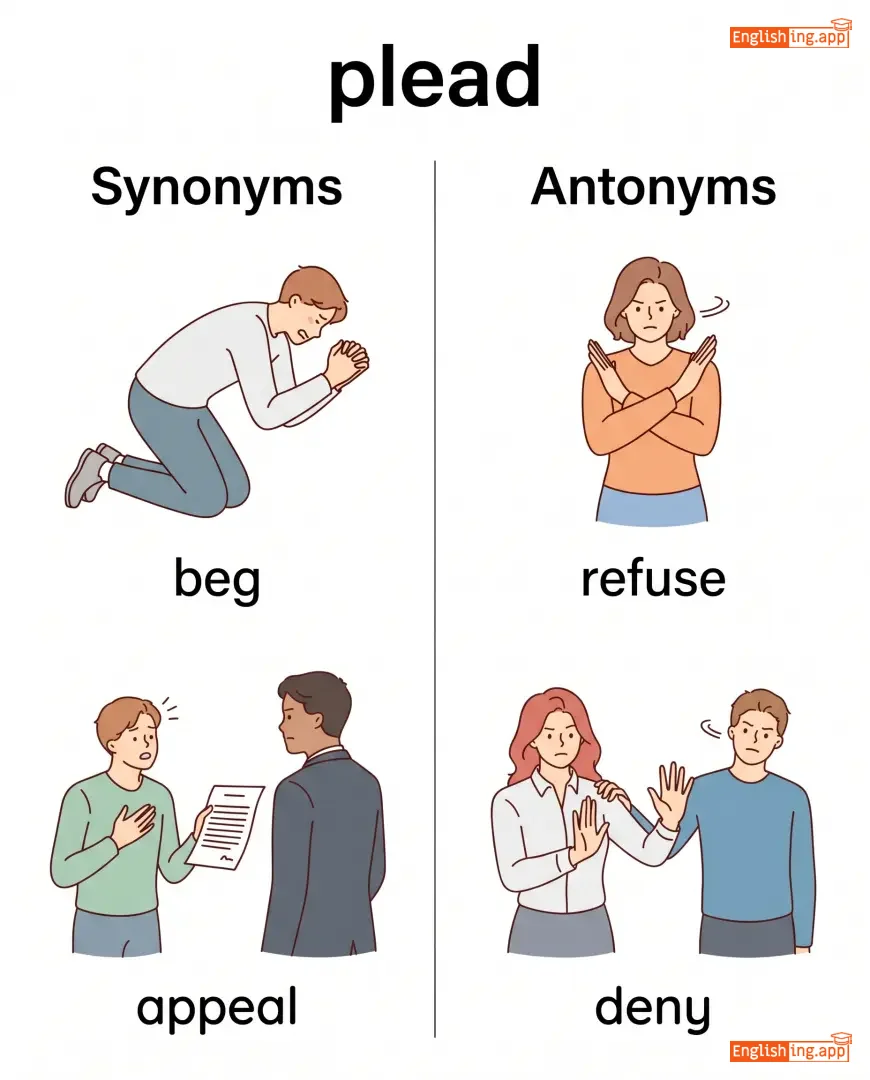
beg, entreat, implore, appeal
••••••
|
demand, order, command
••••••
|
plead guilty, plead for, earnestly plead, plead case
••••••
|
Imagine pleading in court as 'tengansuru' for mercy.
••••••
|
|
😊
••••••
|
/ˈplɛzənt/
adjective
(プレゼント)
••••••
|
- •••••• |
楽しい、快適な
tanoshii, kaitekina
••••••
|
- •••••• | - •••••• | - •••••• | - •••••• |
giving a sense of happiness, enjoyment, or satisfaction
••••••
|
We had a pleasant evening at the park.
私たちは公園で楽しい夜を過ごしました。
••••••
|
私たちは公園で楽しい夜を過ごしました。
Watashitachi wa kōen de tanoshī yoru o sugoshimashita.
••••••
|
- •••••• | - •••••• | - •••••• |
agreeable, enjoyable, delightful, nice
••••••
|
unpleasant, disagreeable
••••••
|
pleasant weather, pleasant surprise, pleasant experience
••••••
|
Pleasant は 'Please sent' のように聞こえる - 楽しく快適なこと
••••••
|
|
😊
••••••
|
/pliːz/
verb
(purīzu)
••••••
|
- •••••• |
喜ばせる
yorokobaseru
••••••
|
pleased
purīzudo
••••••
|
pleased
purīzudo
••••••
|
pleases
purīzesu
••••••
|
pleasing
purīzingu
••••••
|
to make someone happy or satisfied; used as a polite request
••••••
|
His performance pleased the audience.
彼のパフォーマンスは観客を喜ばせました。
••••••
|
彼のパフォーマンスは観客を喜ばせました。
Kare no pafōmansu wa kankyaku o yorokobasemashita.
••••••
|
- •••••• | - •••••• | - •••••• |
satisfy, delight, gratify, content
••••••
|
displease, annoy, upset, offend
••••••
|
please everyone, hard to please, please customers, try to please
••••••
|
あなたが'喜ばせる'と言うとき、それは誰かを幸せにしようとしていることです。
••••••
|
|
😊
••••••
|
/pliːzd/
adjective
(purīzudo)
••••••
|
- •••••• |
満足
manzoku
••••••
|
- •••••• | - •••••• | - •••••• | - •••••• |
feeling happy or satisfied with something
••••••
|
She was pleased with her exam results. |
彼女は試験の結果に満足していました。
Kanojo wa shiken no kekka ni manzoku shiteimashita.
••••••
|
pleased as punch |
extremely pleased or delighted
••••••
|
非常に満足
hijō ni manzoku
••••••
|
delighted, happy, satisfied, content, glad
••••••
|
unhappy, disappointed
••••••
|
pleased with, pleased to meet, very pleased, pleased about
••••••
|
満足しているときはpleaseと言う — だからpleasedは満足または幸せという意味です。
••••••
|
|
😊
••••••
|
/ˈplɛʒər/
noun
(プレジャー)
••••••
|
- •••••• |
喜び
yorokobi
••••••
|
- •••••• | - •••••• | - •••••• | - •••••• |
a feeling of happiness or enjoyment
••••••
|
It was a pleasure to meet you.
会えて嬉しかったです。
••••••
|
お会いできて嬉しかったです。
Oai dekite ureshikatta desu.
••••••
|
- •••••• | - •••••• | - •••••• |
delight, joy, enjoyment, satisfaction
••••••
|
displeasure, discomfort
••••••
|
great pleasure, immense pleasure, pleasure to meet, take pleasure
••••••
|
Pleasure = プレイ (purei) + 喜び, ゲームをして楽しむ
••••••
|
|
🤝
••••••
|
/pledʒ/
noun
(プレッジ)
••••••
|
- •••••• |
誓約; 約束; 保証;
seiyaku; yakusoku; hoshou;
••••••
|
- •••••• | - •••••• | - •••••• | - •••••• |
a solemn promise or undertaking; something given as security for a loan; a commitment or guarantee
••••••
|
He made a pledge to donate money to charity. |
彼はチャリティーにお金を寄付する誓約をした。
Kare wa charitī ni okane o kifu suru seiyaku o shita.
••••••
|
- •••••• | - •••••• | - •••••• |
promise, vow, commitment, oath
••••••
|
breach, violation, betrayal, denial
••••••
|
pledge allegiance, campaign pledge, pledge drive
••••••
|
誓約は約束や保証の一形態であり、重要な約束が含まれます。
••••••
|
|
🌾
••••••
|
/ˈplen.ti/
noun
(プレンティ)
••••••
|
- •••••• |
豊富; 十分
hōfu; jūbun
••••••
|
- •••••• | - •••••• | - •••••• | - •••••• |
a large or sufficient amount; abundance
••••••
|
There is plenty of food for everyone at the party.
パーティーには皆に十分な食べ物があります。
••••••
|
パーティーには皆に十分な食べ物があります。
Pātī ni wa mina ni jūbun na tabemono ga arimasu.
••••••
|
- •••••• | - •••••• | - •••••• |
abundance, ample, sufficient, lots
••••••
|
scarcity, shortage, lack, insufficient
••••••
|
plenty of time, plenty of money, plenty to eat
••••••
|
Plentyは豊富な食べ物を意味し、'パーティーには皆に十分な食べ物があります'。
••••••
|
|
🗺️
••••••
|
/plɑːt/
verb
(プロット)
••••••
|
|
陰謀を企てる
inbō o kudateru
••••••
|
plotted
プロッテッド
••••••
|
plotted
プロッテッド
••••••
|
plots
プロッツ
••••••
|
plotting
プロッティング
••••••
|
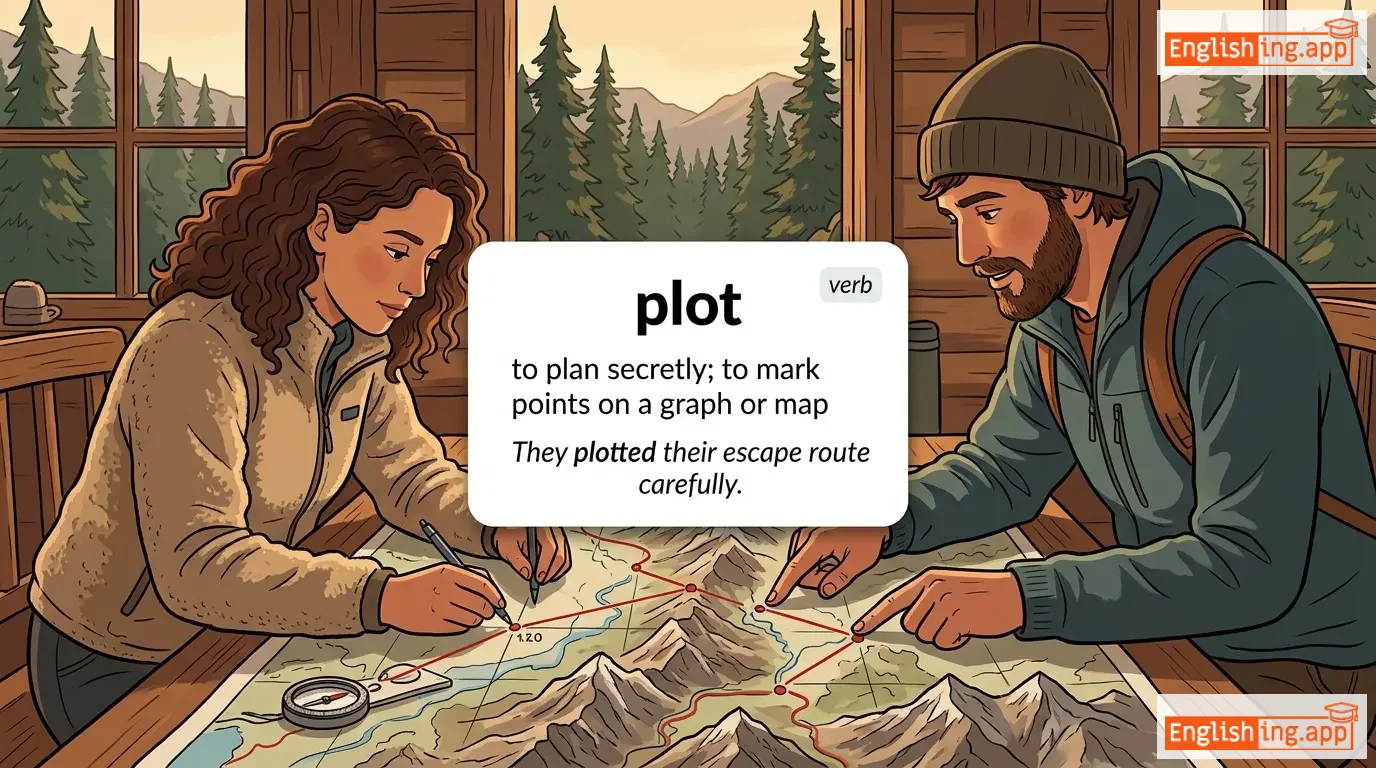
to plan secretly; to mark points on a graph or map
••••••
|
They plotted their escape route carefully.
彼らは慎重に脱出ルートを計画した。
••••••
|
彼らは慎重に脱出ルートを計画した。
Karera wa shinchou ni dasshutsu rūto o keikaku shita.
••••••
|
- •••••• | - •••••• | - •••••• |
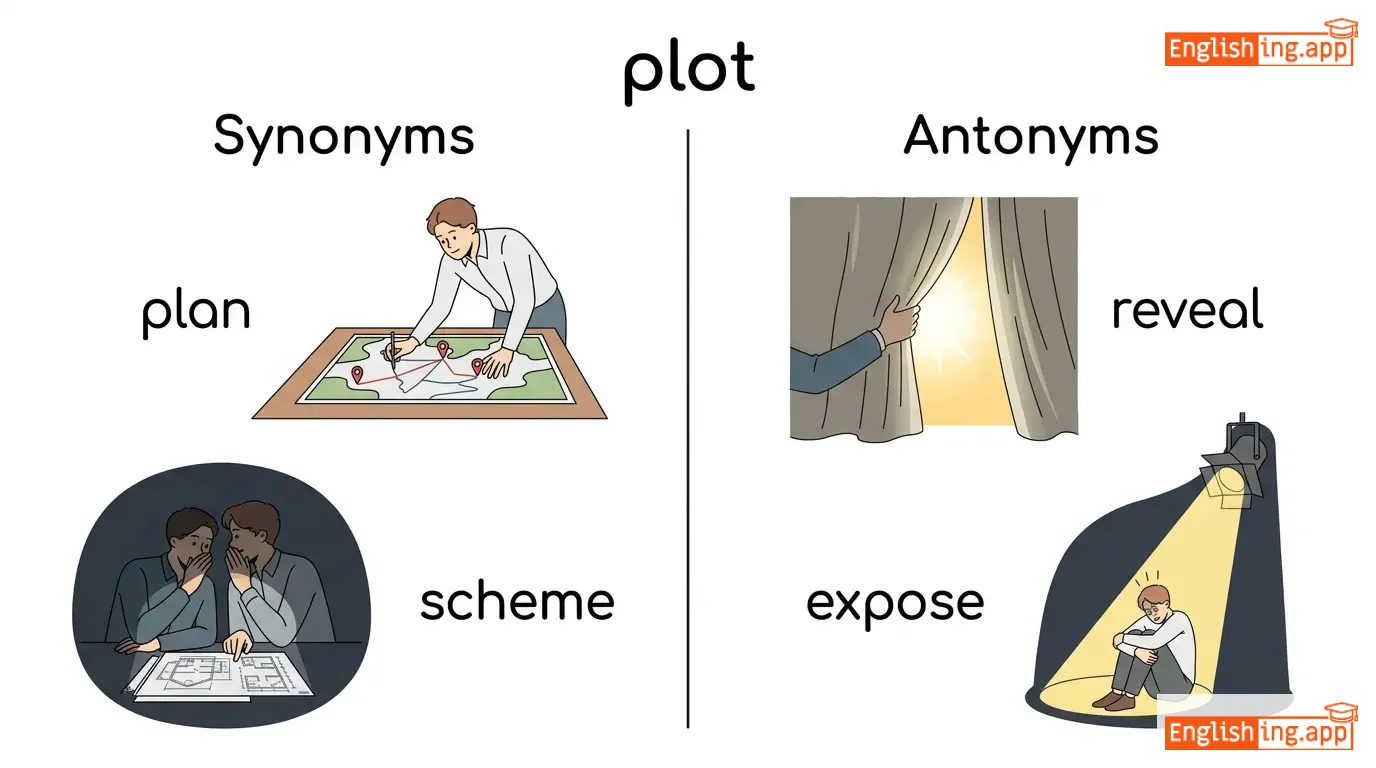
plan, scheme, chart, map
••••••
|
reveal, expose, disclose, abandon
••••••
|
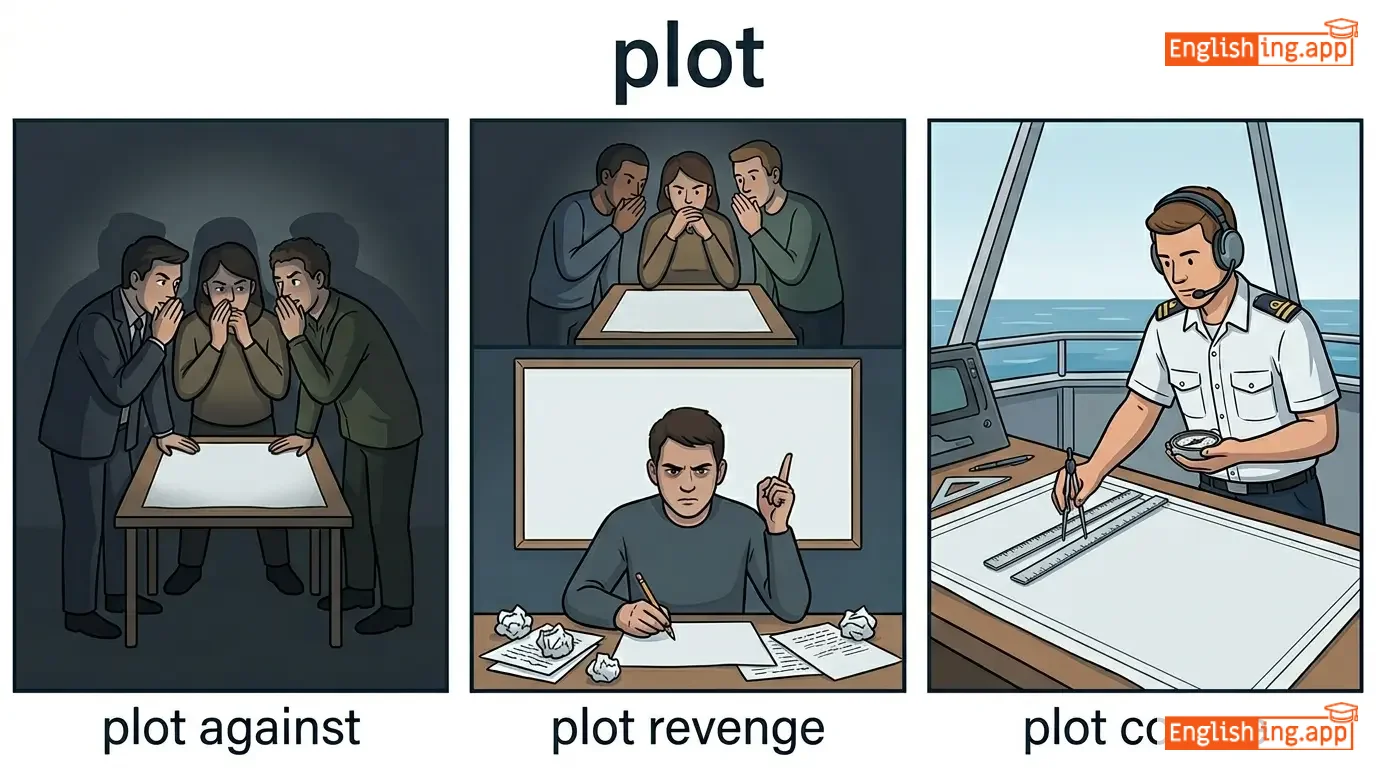
plot against, plot revenge, plot course, plot graph, plot twist, secret plot
••••••
|
陰謀を企てる前に、計画を確認してください。
••••••
|
|
🔌
••••••
|
/plʌɡ/
noun
(プラグ)
••••••
|
- •••••• |
プラグ
puragu
••••••
|
- •••••• | - •••••• | - •••••• | - •••••• |
a device used to connect or block an opening
••••••
|
She inserted the plug into the socket. |
彼女はソケットにプラグを差し込みました。
Kanojo wa soketto ni puragu o sashikomimashita.
••••••
|
- •••••• | - •••••• | - •••••• |
stopper, cap, connector, switch
••••••
|
hole, gap, opening
••••••
|
plug into, power plug, plug the hole
••••••
|
プラグで力を接続!
••••••
|
|
🏊
••••••
|
/plʌndʒ/
verb
(puranju)
••••••
|
- •••••• |
素早く飛び込む; 急激に落ちる
subayaku tobikomu; kyūgeki ni ochiru
••••••
|
plunged
puranjudo
••••••
|
plunged
puranjudo
••••••
|
plunges
puranjisu
••••••
|
plunging
puranjingu
••••••
|
to jump or dive quickly; to fall sharply
••••••
|
She plunged into the swimming pool.
彼女はプールに飛び込んだ。
••••••
|
彼女はプールに飛び込んだ。
Kanojo wa pūru ni tobikonda.
••••••
|
take the plunge
一歩踏み出す
••••••
|
to decide to do something important or risky
••••••
|
リスクを取る決断をする
risuku o toru ketsudan o suru
••••••
|
dive, jump, fall, descend
••••••
|
rise, ascend, climb
••••••
|
plunge into, plunge headfirst, market plunge
••••••
|
水に飛び込む決心をする - 飛び込む勇気
••••••
|
|
➕
••••••
|
/plʌs/
preposition/conjunction/noun/adjective
(プラス)
••••••
|
- •••••• |
プラス/利点
purasu/riten
••••••
|
- •••••• | - •••••• | - •••••• | - •••••• |
in addition to; a positive aspect or advantage
••••••
|
She received an A plus on her exam. |
彼女は試験でAプラスを取った。
Kanojo wa shiken de A purasu o totta.
••••••
|
- •••••• | - •••••• | - •••••• |
and, in addition, advantage, benefit
••••••
|
minus, disadvantage
••••••
|
plus sign, plus point, plus factor, plus side
••••••
|
PLUS 記号は何かを追加することを示唆しています - think of addition
••••••
|
|
🕒
••••••
|
/piːˈɛm/
noun
••••••
|
- •••••• | - •••••• | - •••••• | - •••••• | - •••••• | - •••••• |
abbreviation for post meridiem; after midday
••••••
|
The meeting is scheduled at 3 pm. |
- •••••• | - •••••• | - •••••• | - •••••• |
afternoon, afternoon time
••••••
|
am, morning
••••••
|
pm time, 3 pm, 5 pm
••••••
|
No •••••• |
|
👖
••••••
|
/ˈpɒkɪt/
noun
••••••
|
- •••••• | - •••••• | - •••••• | - •••••• | - •••••• | - •••••• |
a small, enclosed space in clothing for carrying items
••••••
|
He put his phone in his pocket. |
- •••••• | - •••••• | - •••••• | - •••••• |
compartment, pouch, bag
••••••
|
open space, outside
••••••
|
pocket size, shirt pocket, pocket money
••••••
|
No •••••• |
|
📜
••••••
|
/ˈpoʊɪm/
noun
(ポエム)
••••••
|
- •••••• |
詩
shi
••••••
|
- •••••• | - •••••• | - •••••• | - •••••• |
a piece of writing that expresses ideas, feelings, or tells a story in a distinct form, often using rhyme or meter
••••••
|
She wrote a beautiful poem for her mother. |
彼女は母親のために美しい詩を書きました。
Kanojo wa hahaoya no tame ni utsukushii shi o kakimashita.
••••••
|
- •••••• | - •••••• | - •••••• |
verse, sonnet, rhyme
••••••
|
prose, essay
••••••
|
write a poem, read a poem, beautiful poem
••••••
|
詩はあなたの心に触れるようなストーリーです!
••••••
|
|
✍️
••••••
|
/ˈpoʊɪt/
noun
(ポエト)
••••••
|
- •••••• |
詩人
shijin
••••••
|
- •••••• | - •••••• | - •••••• | - •••••• |
a person who writes poems
••••••
|
The poet wrote about love and nature. |
詩人は愛と自然について書いた。
Shijin wa ai to shizen ni tsuite kaita.
••••••
|
- •••••• | - •••••• | - •••••• |
verse-maker, bard, author
••••••
|
prose writer
••••••
|
great poet, famous poet, modern poet
••••••
|
A poet creates magic with the power of words!
••••••
|
|
📚
••••••
|
/ˈpoʊɪtri/
noun
(ポエトリー)
••••••
|
- •••••• |
詩
shi
••••••
|
- •••••• | - •••••• | - •••••• | - •••••• |
a literary form that uses rhythmic and metaphorical language to express emotions or ideas
••••••
|
She loves reading poetry in her free time. |
彼女は自由時間に詩を読むのが好きです。
Kanojo wa jiyuu jikan ni shi o yomu no ga suki desu.
••••••
|
- •••••• | - •••••• | - •••••• |
verse, rhymes, ballads
••••••
|
prose, narrative
••••••
|
read poetry, write poetry, modern poetry
••••••
|
Poetry is the bridge between heart and words.
••••••
|
|
👉
••••••
|
/pɔɪnt/
noun
(ポイント)
••••••
|
- •••••• |
ポイント; 詳細; 目的
pointo
••••••
|
- •••••• | - •••••• | - •••••• | - •••••• |
a particular detail, idea, or fact; the sharp end of something
••••••
|
What's the point of arguing about this issue?
この問題について議論する意味は何ですか?
••••••
|
この問題について議論する意味は何ですか?
Kono mondai ni tsuite giron suru imi wa nan desu ka?
••••••
|
- •••••• | - •••••• | - •••••• |
detail, fact, idea, tip
••••••
|
whole, entirety, generality
••••••
|
main point, key point, turning point
••••••
|
ポイントを探し、最終的な目的を達成する
••••••
|
|
☠️
••••••
|
/ˈpɔɪ.zən/
noun
(ポイズン)
••••••
|
- •••••• |
毒
poizun
••••••
|
- •••••• | - •••••• | - •••••• | - •••••• |
a substance that is capable of causing death or illness
••••••
|
The snake's bite contains deadly poison.
蛇の咬傷には致命的な毒が含まれている。
••••••
|
蛇の咬傷には致命的な毒が含まれている。
Hebi no koushou ni wa chimeiteki na doku ga fukumarete iru.
••••••
|
- •••••• | - •••••• | - •••••• |
toxin, venom, toxic substance
••••••
|
antidote, cure, medicine, remedy
••••••
|
deadly poison, rat poison, poison control
••••••
|
POI ZEN DOKU: a visual of ポイズン written in a Zen garden next to the kanji 毒 (doku), linking poison to doku.
••••••
|
|
☠️
••••••
|
/ˈpɔɪzənəs/
adjective
(ポイズナス)
••••••
|
- •••••• |
有毒な
yūdokuna
••••••
|
- •••••• | - •••••• | - •••••• | - •••••• |
Containing poison; capable of causing illness or death.
••••••
|
Some mushrooms are highly poisonous. |
いくつかのキノコは非常に有毒です。
Ikutsuka no kinoko wa hijō ni yūdokudesu.
••••••
|
poisonous atmosphere |
a hostile or harmful environment
••••••
|
有毒な雰囲気
yūdokuna fun'iki
••••••
|
toxic, venomous, harmful, noxious, deadly
••••••
|
harmless, safe, nontoxic
••••••
|
poisonous gas, poisonous snake, poisonous plant
••••••
|
有毒な = 毒を含んでいる、蛇の毒のように 🐍
••••••
|
|
⚪
••••••
|
/poʊl/
noun
(ポール)
••••••
|
- •••••• |
柱
hashira
••••••
|
- •••••• | - •••••• | - •••••• | - •••••• |
a long, slender, vertical object or structure, typically made of wood, metal, or another material
••••••
|
They placed the flag on top of the pole. |
彼らは旗をポールの上に置きました。
Karera wa hata o pōru no ue ni okimashita.
••••••
|
- •••••• | - •••••• | - •••••• |
post, column, mast, stake
••••••
|
base, ground
••••••
|
flag pole, telephone pole, light pole
••••••
|
ポールを覚えて、旗がそこに掲げられている!
••••••
|
|
👮
••••••
|
/pəˈliːs/
noun
(ポリス)
••••••
|
- •••••• |
警察
keisatsu
••••••
|
- •••••• | - •••••• | - •••••• | - •••••• |
a body of officers representing the civil authority of government
••••••
|
The police arrived quickly to investigate the scene.
警察はすぐに現場に到着して調査を行いました。
••••••
|
警察はすぐに現場に到着して調査を行いました。
Keisatsu wa sugu ni genba ni tōchaku shite chōsa o okonaimashita.
••••••
|
- •••••• | - •••••• | - •••••• |
law enforcement, constabulary, cops, authorities
••••••
|
criminals, offenders
••••••
|
police officer, police station, police force
••••••
|
警察が守る、'ケイ' のポリス!
••••••
|
|
📋
••••••
|
/ˈpɒl.ə.si/
noun
(ポリシー)
••••••
|

|
方針
hōshin
••••••
|
- •••••• | - •••••• | - •••••• | - •••••• |
a course of action adopted by a government, organization, or individual
••••••
|
The company has a strict policy against smoking. |
その会社は喫煙に対して厳格な方針を持っています。
Sono kaisha wa kitsuen ni taishite genkaku na hōshin o motteimasu.
••••••
|
- •••••• | - •••••• | - •••••• |
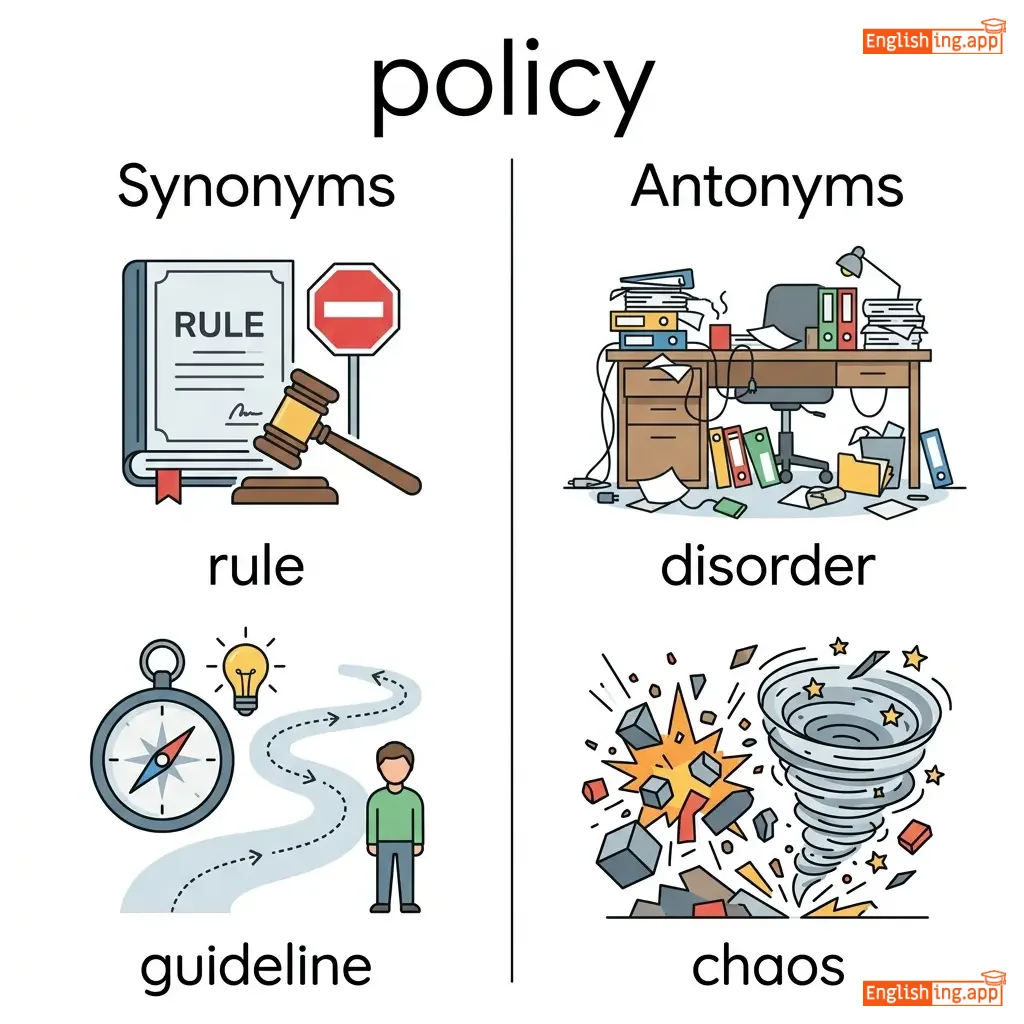
strategy, plan, procedure, guidelines
••••••
|
chaos, disorder, improvisation
••••••
|
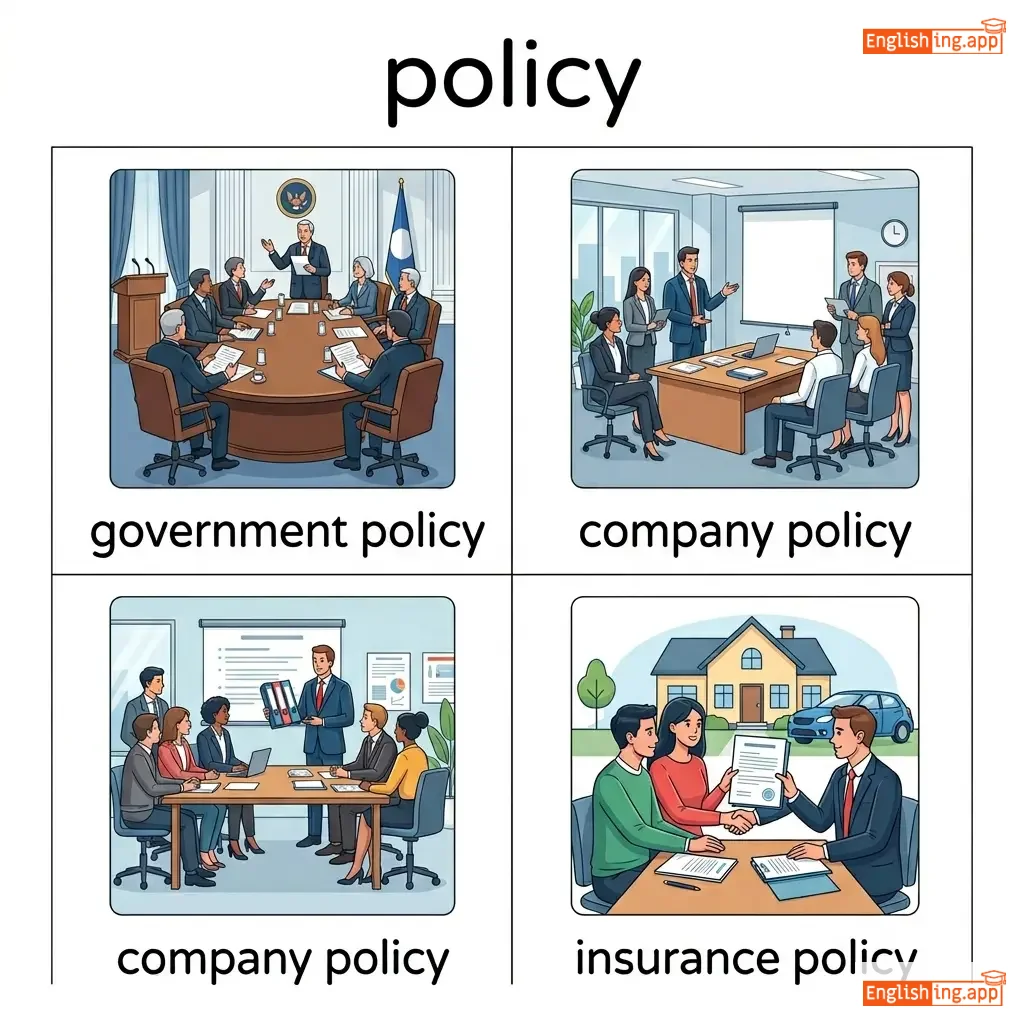
foreign policy, company policy, insurance policy
••••••
|
方針 (hōshin) - Think of the policy like a rule book guiding the actions of a business.
••••••
|
|
🙏
••••••
|
/pəˈlaɪt/
adjective
(ハピネス)
••••••
|
- •••••• |
幸福
kōfuku
••••••
|
- •••••• | - •••••• | - •••••• | - •••••• |
Showing good manners and respect towards others.
••••••
|
He was very polite to the elderly woman. |
彼女は賞を受け取ったとき、幸せを隠すことができなかった。
Kanojo wa shō o uketotta toki, kōfuku o kakusu koto ga dekinakatta.
••••••
|
polite society |
the upper social class considered refined
••••••
|
幸福の追求
kōfuku no tsuikyū
••••••
|
courteous, respectful, civil, gracious, well-mannered
••••••
|
rude, impolite, disrespectful
••••••
|
polite smile, polite request, polite conversation
••••••
|
Kōfuku = Kōji (行け! 幸福)
••••••
|
|
🙏
••••••
|
/pəˈlaɪt.li/
adverb
(ポライトリー)
••••••
|
- •••••• |
丁寧に;
teinei ni
••••••
|
- •••••• | - •••••• | - •••••• | - •••••• |
in a respectful and considerate manner; courteously; with good manners
••••••
|
She politely declined the invitation because she had other commitments.
彼女は他の約束があったので、丁寧に招待を断った。
••••••
|
彼女は他の約束があったので、丁寧に招待を断った。
Kanojo wa hoka no yakusoku ga atta node, teinei ni shōtai o kotowatta.
••••••
|
- •••••• | - •••••• | - •••••• |
courteously, respectfully, civilly, tactfully, graciously
••••••
|
rudely, impolitely, disrespectfully, inconsiderately, harshly
••••••
|
politely decline, politely ask, politely refuse, speak politely
••••••
|
丁寧に、英語の'politely'の意味と同じように
••••••
|
|
🏛️
••••••
|
/pəˈlɪtɪkəl/
adjective
(ポリティカル)
••••••
|
|
政治的
seijiteki
••••••
|
- •••••• | - •••••• | - •••••• | - •••••• |
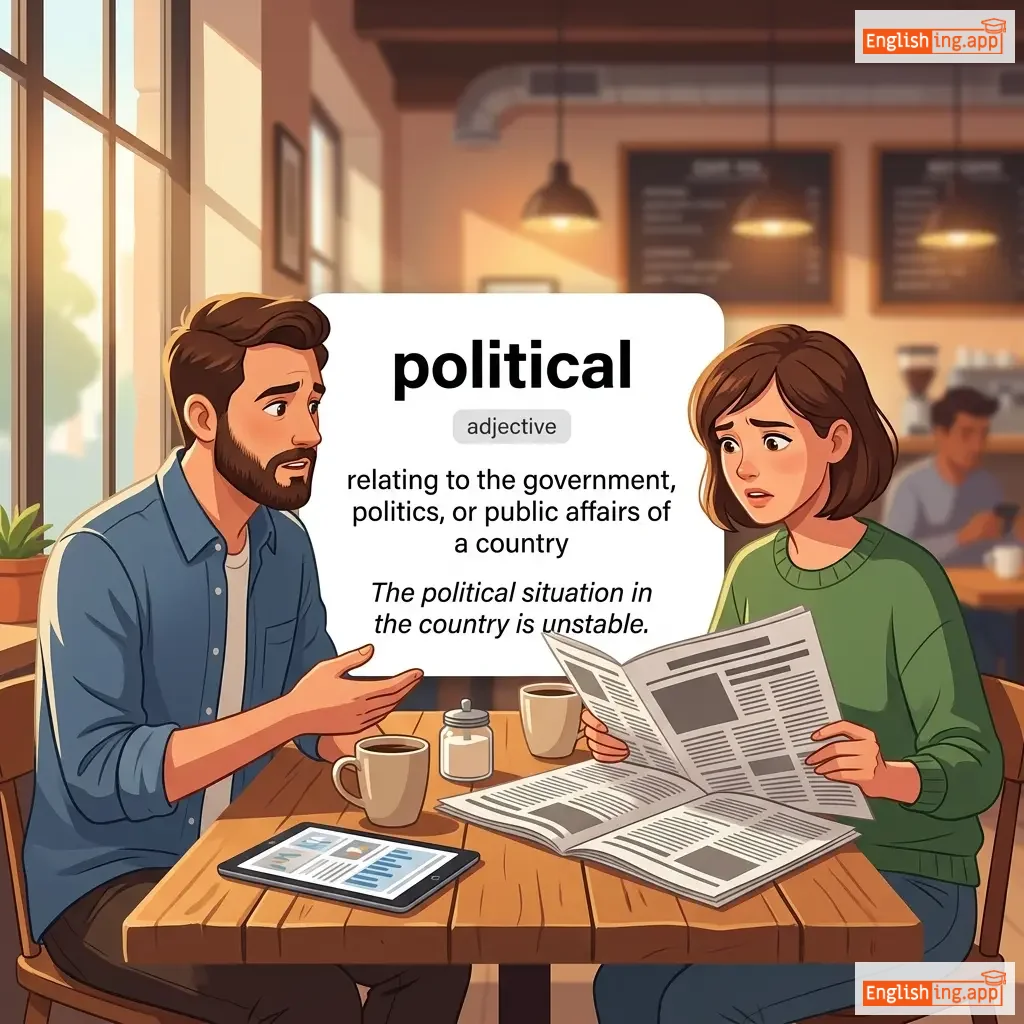
relating to the government, politics, or public affairs of a country
••••••
|
The political situation in the country is unstable. |
その国の政治状況は不安定です。
Sono kuni no seiji jōkyō wa fuantei desu.
••••••
|
- •••••• | - •••••• | - •••••• |
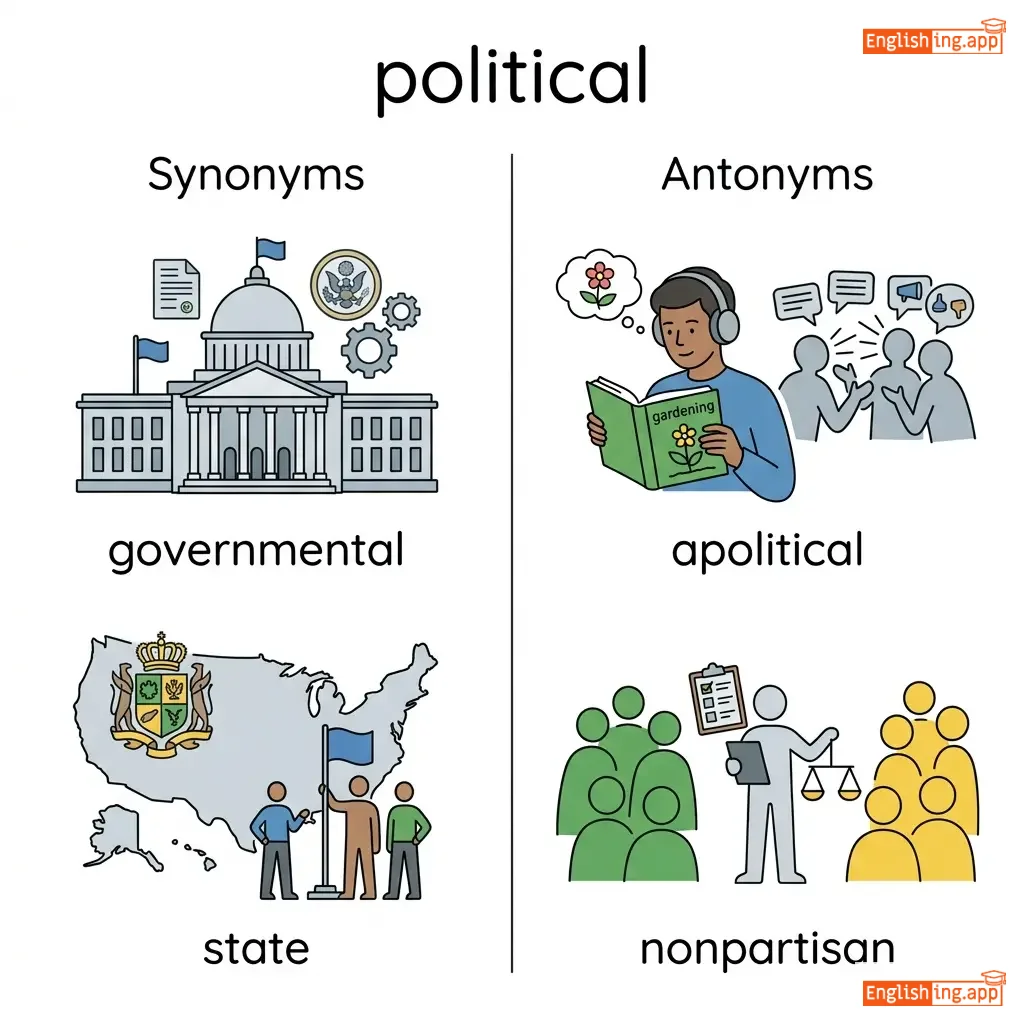
governmental, state, civic, public
••••••
|
apolitical, nonpartisan
••••••
|
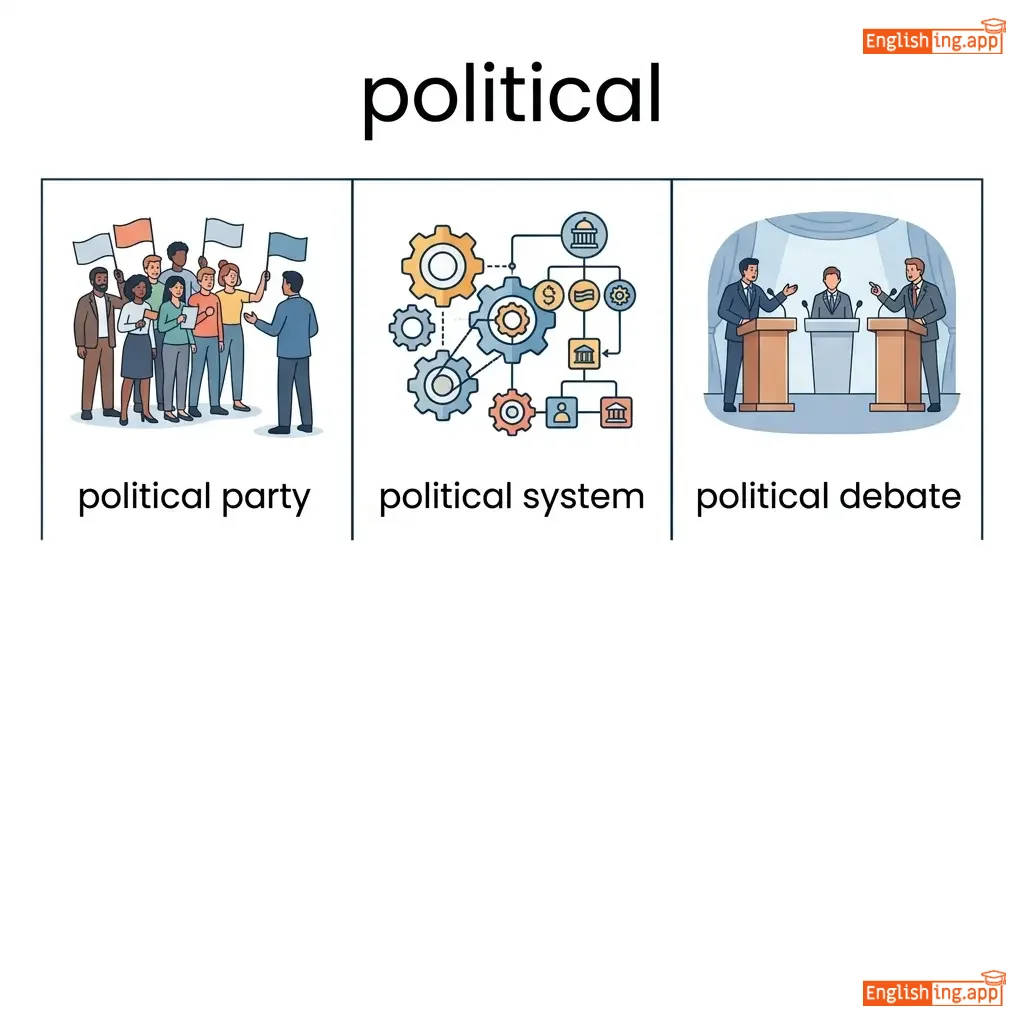
political party, political system, political debate
••••••
|
政治的な決定が国を動かす!
••••••
|
|
⚖️
••••••
|
/pəˈlɪtɪkəli/
adverb
(政治的に)
••••••
|
- •••••• |
政治的に
seijiteki ni
••••••
|
- •••••• | - •••••• | - •••••• | - •••••• |
in a way that relates to politics or government
••••••
|
The country is politically divided between two major parties.
その国は二つの主要な政党の間で政治的に分裂しています。
••••••
|
その国は二つの主要な政党の間で政治的に分裂しています。
Sono kuni wa futatsu no shuyōna seito no aida de seijiteki ni bunretsu shiteimasu.
••••••
|
- •••••• | - •••••• | - •••••• |
governmentally, civically, socially
••••••
|
apolitically
••••••
|
politically active, politically correct, politically charged
••••••
|
政治的に考え、二つの政党の間で分裂している国を想像してください。
••••••
|
|
👨💼
••••••
|
/pəˈlɪtɪʃən/
noun
(ポリティシャン)
••••••
|
- •••••• |
政治家
seijika
••••••
|
- •••••• | - •••••• | - •••••• | - •••••• |
a person who is involved in politics, especially as a profession
••••••
|
The politician promised to improve the economy. |
政治家は経済改善を約束しました。
Seijika wa keizai kaizen o yakusoku shimashita.
••••••
|
- •••••• | - •••••• | - •••••• |
statesman, lawmaker, representative, public servant
••••••
|
citizen, layman
••••••
|
politician career, influential politician, corrupt politician
••••••
|
Politicians create policies to improve the economy.
••••••
|
|
⚖️
••••••
|
/ˈpɒlɪtɪks/
noun
(ポリティクス)
••••••
|
- •••••• |
政治
seiji
••••••
|
- •••••• | - •••••• | - •••••• | - •••••• |
activities related to the governance of a country or area, especially the debate between parties having power
••••••
|
Politics often involves making difficult decisions. |
政治はしばしば難しい決定を下すことを伴います。
Seiji wa shibashiba muzukashī kettei o kudasu koto o tomonai masu.
••••••
|
- •••••• | - •••••• | - •••••• |
government, diplomacy, statecraft, policy
••••••
|
apoliticism, non-partisanship
••••••
|
politics of power, national politics, political debate
••••••
|
POLIticians engage in POLItics.
••••••
|
|
🗳️
••••••
|
/pəʊl/
noun/verb
(ポール)
••••••
|
- •••••• |
世論調査
seron chosa
••••••
|
polled
ポールド
••••••
|
polled
ポールド
••••••
|
polls
ポールズ
••••••
|
polling
ポーリング
••••••
|
a survey of public opinion or voting in an election
••••••
|
The poll revealed that most people favored the new policy.
The poll revealed that most people favored the new policy.
••••••
|
世論調査ではほとんどの人が新しい政策を支持していることが明らかになった。
Seron chōsa de wa hotondo no hito ga atarashī seisaku o shiji shite iru koto ga akiraka ni natta.
••••••
|
- •••••• | - •••••• | - •••••• |
survey, vote, referendum, ballot
••••••
|
consensus, agreement
••••••
|
opinion poll, public poll, exit poll, conduct a poll
••••••
|
Polls gather public opinion like a survey!
••••••
|
|
🏭
••••••
|
/pəˈluːt/
verb
(ポリュート)
••••••
|
|
汚染する
osen suru
••••••
|
polluted
ポリューテッド
••••••
|
polluted
ポリューテッド
••••••
|
pollutes
ポリューツ
••••••
|
polluting
ポリューティング
••••••
|
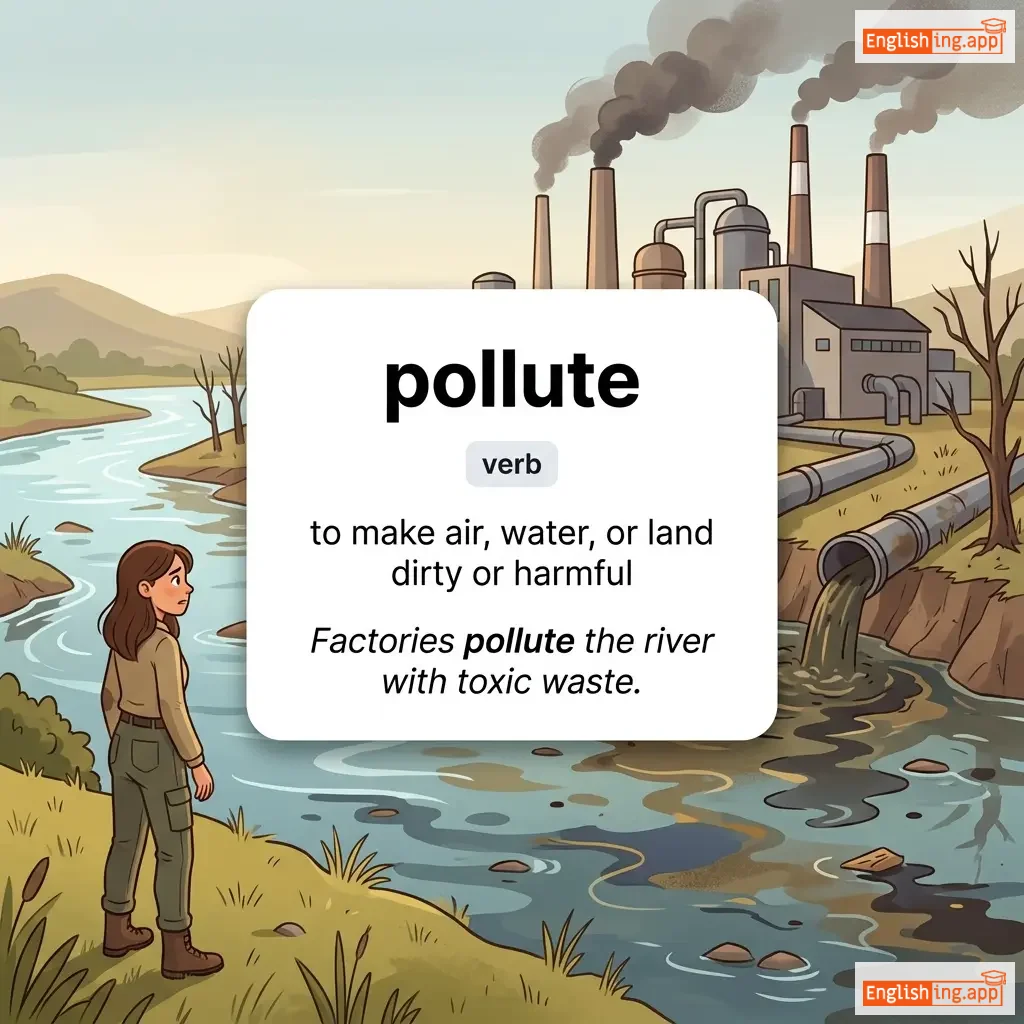
to make air, water, or land dirty and harmful to people, animals, and plants
••••••
|
Factories pollute the environment with toxic chemicals.
ファクトリーズ ポリュート ザ エンバイロンメント ウィズ トキシック ケミカルズ。
••••••
|
工場は有害な化学物質で環境を汚染します。
koujou wa yuugai na kagakubusshitsu de kankyou o osen shimasu
••••••
|
- •••••• | - •••••• | - •••••• |
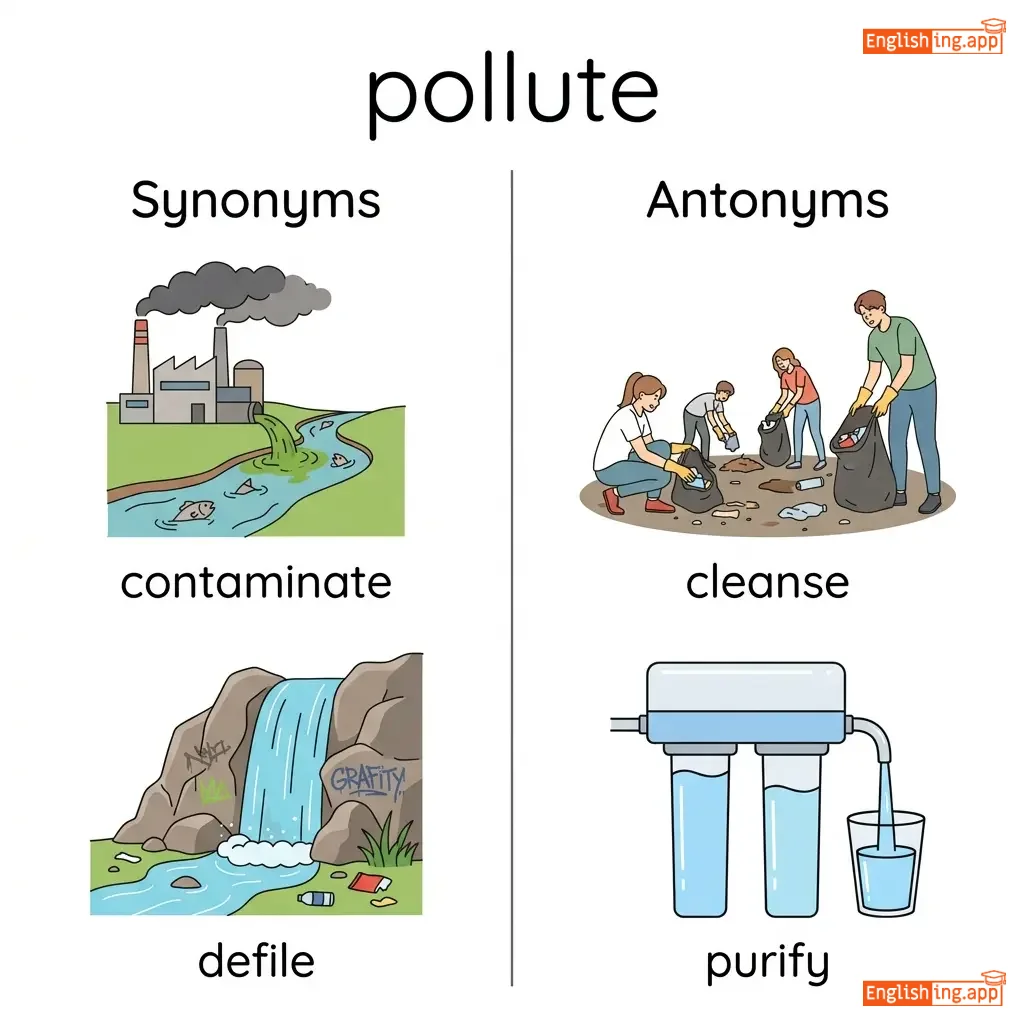
contaminate, dirty, taint, poison
••••••
|
purify, clean, cleanse
••••••
|
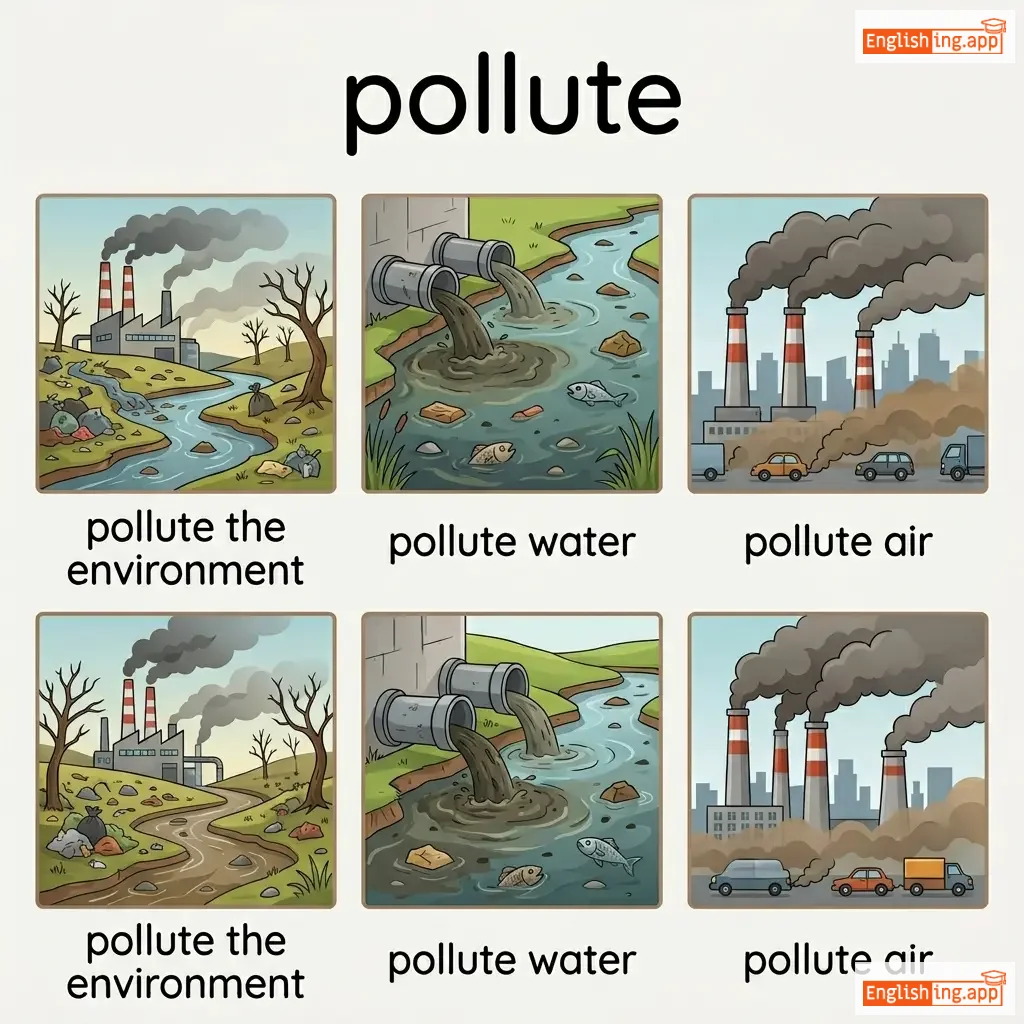
pollute environment, pollute air, pollute water, heavily pollute, pollute atmosphere
••••••
|
Pollute → 汚染する (osen suru) — think 'Oh! Sense' when something smells bad!
••••••
|
|
🌍
••••••
|
/pəˈlʊʃən/
noun
(ポリューション)
••••••
|
|
汚染
osen
••••••
|
- •••••• | - •••••• | - •••••• | - •••••• |
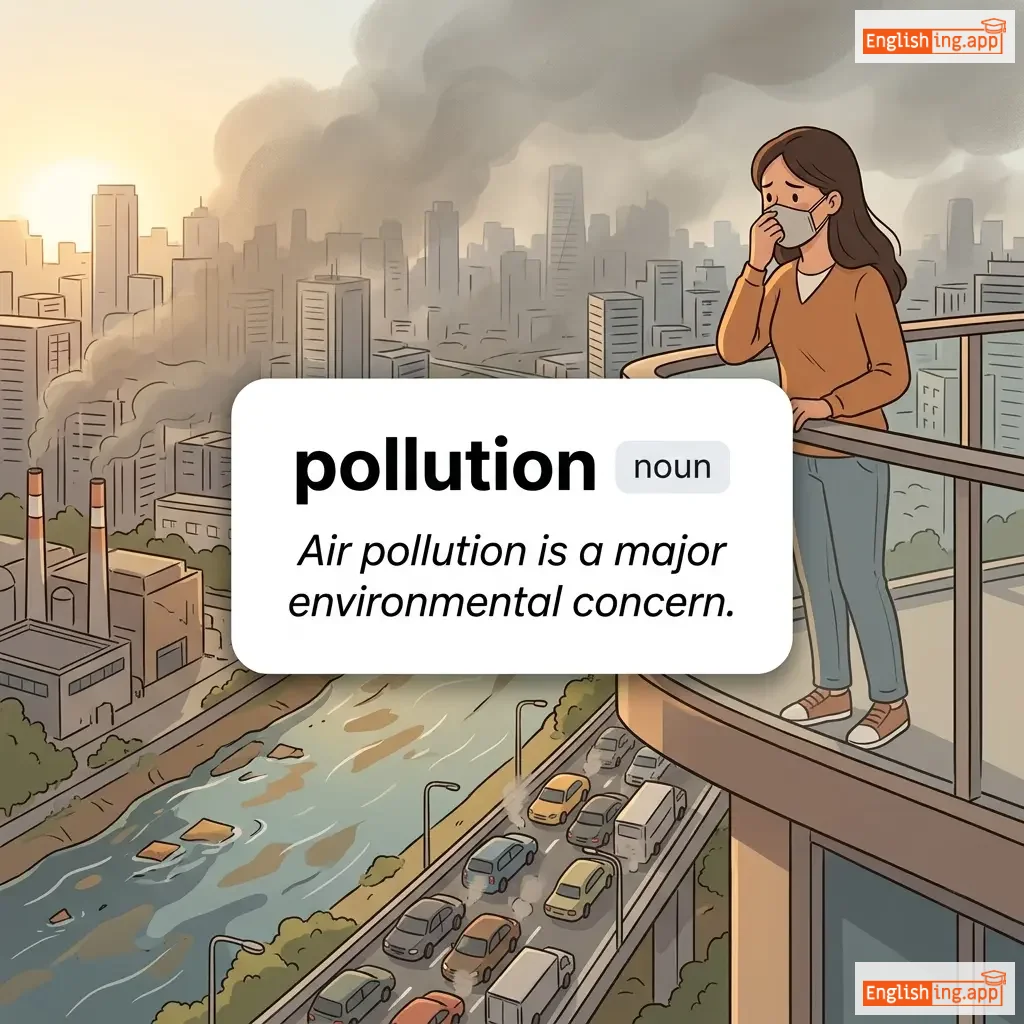
the presence of harmful substances in the environment, especially the air, water, or soil
••••••
|
Air pollution is a major environmental concern.
大気汚染は重要な環境問題です。
••••••
|
大気汚染は重要な環境問題です。
Taiki osen wa juuyo na kankyo mondai desu.
••••••
|
- •••••• | - •••••• | - •••••• |
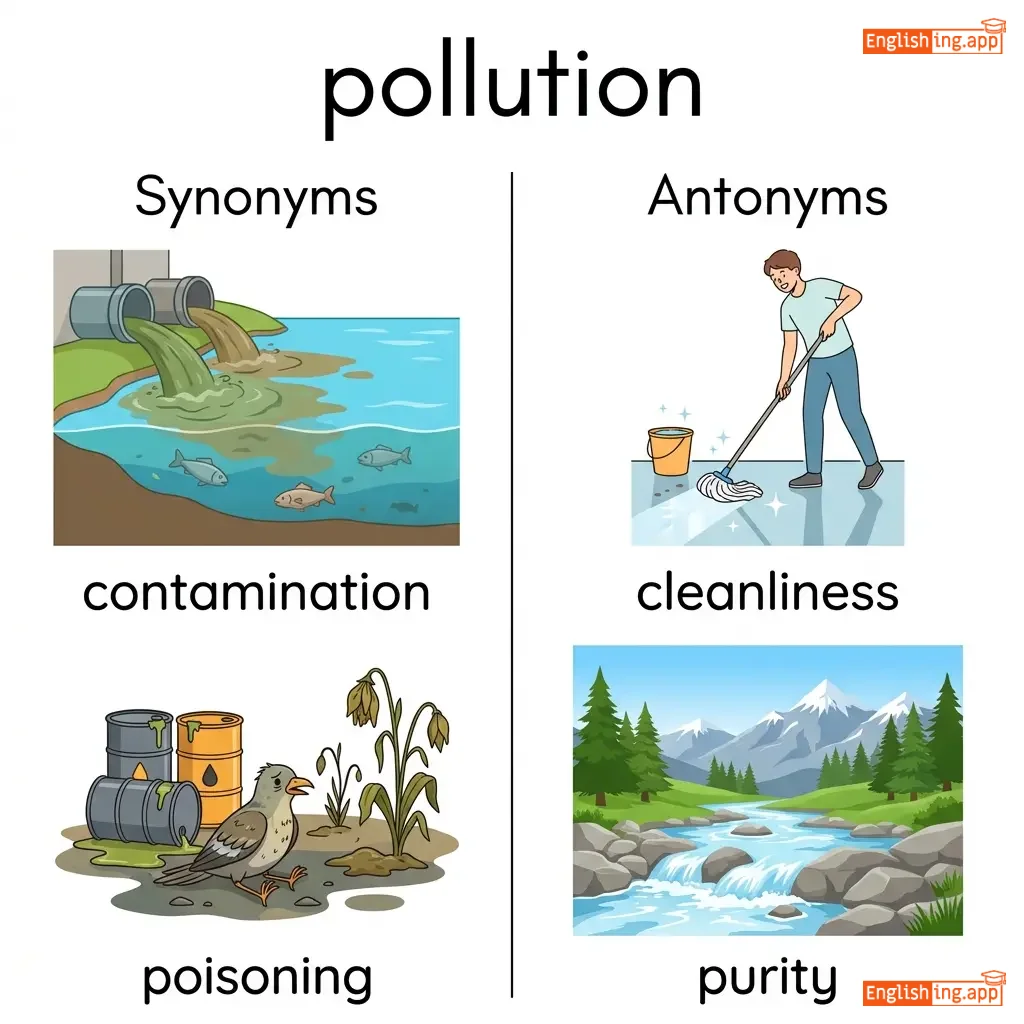
contamination, poisoning, impurity, dirt
••••••
|
cleanliness, purity
••••••
|
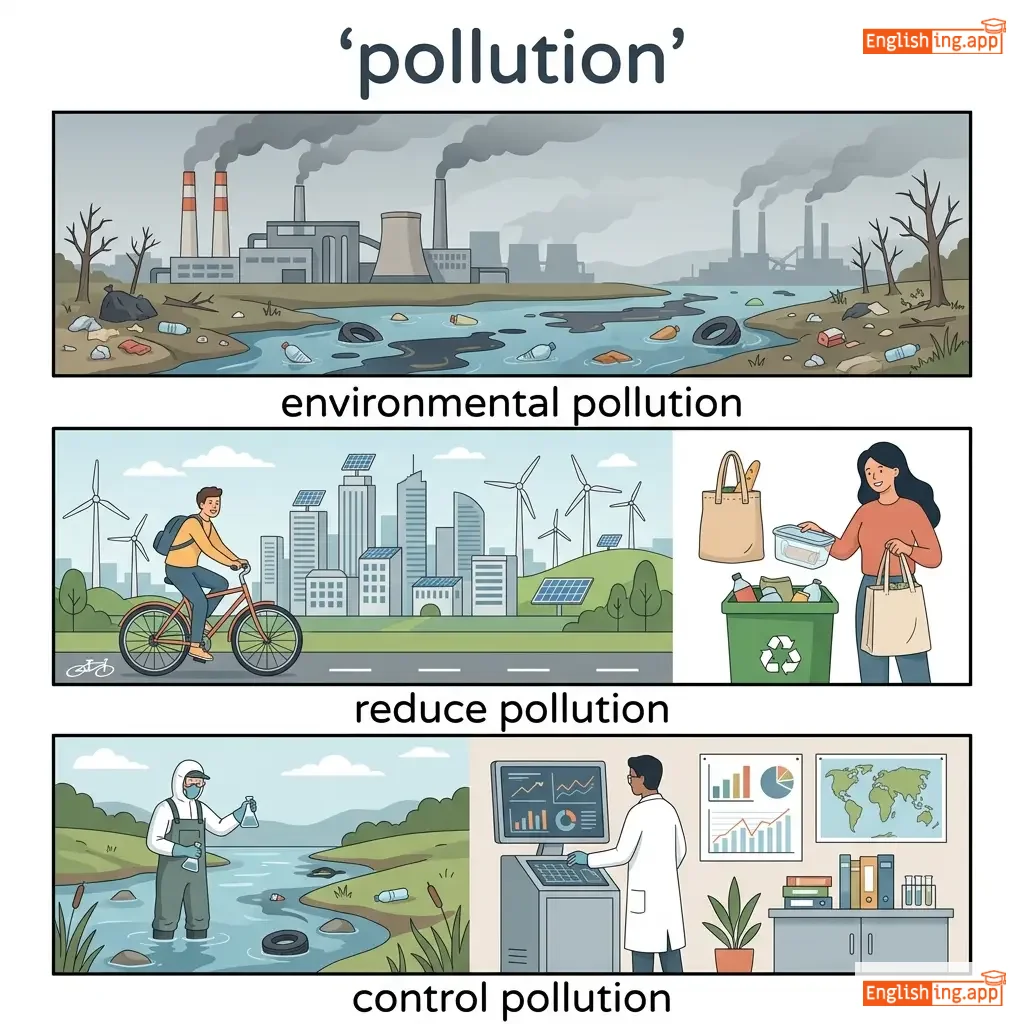
environmental pollution, reduce pollution, control pollution, pollution levels
••••••
|
Pollution is polluting our planet!
••••••
|
|
🏞️
••••••
|
/pɒnd/
noun
(ポンド)
••••••
|
- •••••• |
池
ike
••••••
|
- •••••• | - •••••• | - •••••• | - •••••• |
a small area of still water, smaller than a lake
••••••
|
The children were feeding ducks at the pond. |
子供たちは池でアヒルに餌をあげていた。
Kodomotachi wa ike de ahiru ni esa o agete ita.
••••••
|
a big fish in a small pond |
an important person in a small or limited group
••••••
|
小さな池の大きな魚
Chiisana ike no ōkina sakana
••••••
|
pool, lagoon, waterhole, reservoir
••••••
|
desert, dry land
••••••
|
fish pond, garden pond, pond water
••••••
|
Pond = 池, そこにいるアヒルが泳いでいる!
••••••
|
|
🏊
••••••
|
/puːl/
noun/verb
(プール)
••••••
|
- •••••• |
プール
puuru
••••••
|
pooled
プールド
••••••
|
pooled
プールド
••••••
|
pools
プールス
••••••
|
pooling
プーリング
••••••
|
a small body of still water, or a game played in a rectangular table with balls
••••••
|
The children swam in the pool all afternoon.
子供たちは午後ずっとプールで泳いでいました。
••••••
|
子供たちは午後ずっとプールで泳いでいました。
Kodomotachi wa gogo zutto pūru de oyoideimashita.
••••••
|
- •••••• | - •••••• | - •••••• |
pond, reservoir, swimming pool, game
••••••
|
dry, empty
••••••
|
swimming pool, pool party, pool table, pool of water
••••••
|
プールは泳ぐための最適な場所です!
••••••
|
|
🥺
••••••
|
/pʊr/ or /pɔːr/
adjective
(プア)
••••••
|
- •••••• |
貧しい
mazushii
••••••
|
- •••••• | - •••••• | - •••••• | - •••••• |
Lacking sufficient money, resources, or quality.
••••••
|
The poor family struggled to buy food. |
貧しい家族は食料を買うのに苦しんでいました。
mazushii kazoku wa shokuryō o kau noni kurushinde imashita.
••••••
|
poor health |
a state of not being healthy
••••••
|
悪い健康
warui kenkō
••••••
|
needy, impoverished, destitute, weak, inferior
••••••
|
rich, wealthy, strong
••••••
|
poor condition, poor performance, poor quality, poor family
••••••
|
貧しいというのは、ほとんど何も持っていないことです。
••••••
|
|
🎈
••••••
|
/pɒp/
verb
(ポップ)
••••••
|
- •••••• |
弾ける
hikeru
••••••
|
popped
ポップド
••••••
|
popped
ポップド
••••••
|
pops
ポップス
••••••
|
popping
ポッピング
••••••
|
to make a short, sharp sound, or to burst or break with such a sound
••••••
|
The balloon popped when I accidentally pricked it with a pin.
風船は、私が間違ってピンで刺したときに破裂しました。
••••••
|
風船は、私が間違ってピンで刺したときに破裂しました。
Fūsen wa, watashi ga machigatte pin de sashita toki ni hakiretsu shimashita.
••••••
|
- •••••• | - •••••• | - •••••• |
burst, explode, snap, crack
••••••
|
quiet, silence
••••••
|
pop the balloon, pop the cork, pop up, pop out
••••••
|
Pop the balloon, ちょうど 'ポップ' (poppu) 風船を破裂させるように!
••••••
|
|
👥
••••••
|
/ˈpɒp.jʊ.lər/
adjective
(ポピュラー)
••••••
|
- •••••• |
人気のある
ninki no aru
••••••
|
- •••••• | - •••••• | - •••••• | - •••••• |
liked or admired by many people; well-known and widely accepted
••••••
|
This restaurant is very popular among young people. |
このレストランは若者の間でとても人気があります。
Kono resutoran wa wakamono no aida de totemo ninki ga arimasu.
••••••
|
- •••••• | - •••••• | - •••••• |
famous, well-liked, favored, trendy
••••••
|
unpopular, disliked, unfashionable
••••••
|
popular culture, popular opinion, popular choice
••••••
|
人気のあるように、アニメのヒーロー
••••••
|
|
⭐
••••••
|
/ˌpɒp.jəˈlær.ə.ti/
noun
(ポピュラリティ)
••••••
|
- •••••• |
人気
ninki
••••••
|
- •••••• | - •••••• | - •••••• | - •••••• |
the state of being liked, admired, or supported by many people
••••••
|
The singer's popularity has grown rapidly this year.
歌手の人気は今年急速に増加しました。
••••••
|
歌手の人気は今年急速に増加しました。
Kashu no ninki wa kotoshi kyūsoku ni zōka shimashita.
••••••
|
- •••••• | - •••••• | - •••••• |
fame, recognition, acclaim, acceptance
••••••
|
unpopularity, obscurity, rejection, dislike
••••••
|
growing popularity, widespread popularity, peak popularity
••••••
|
スターのように人気が急上昇
••••••
|
|
👥
••••••
|
/ˌpɑːp.jəˈleɪ.ʃən/
noun
(ポピュレーション)
••••••
|
|
人口
jinkō
••••••
|
- •••••• | - •••••• | - •••••• | - •••••• |
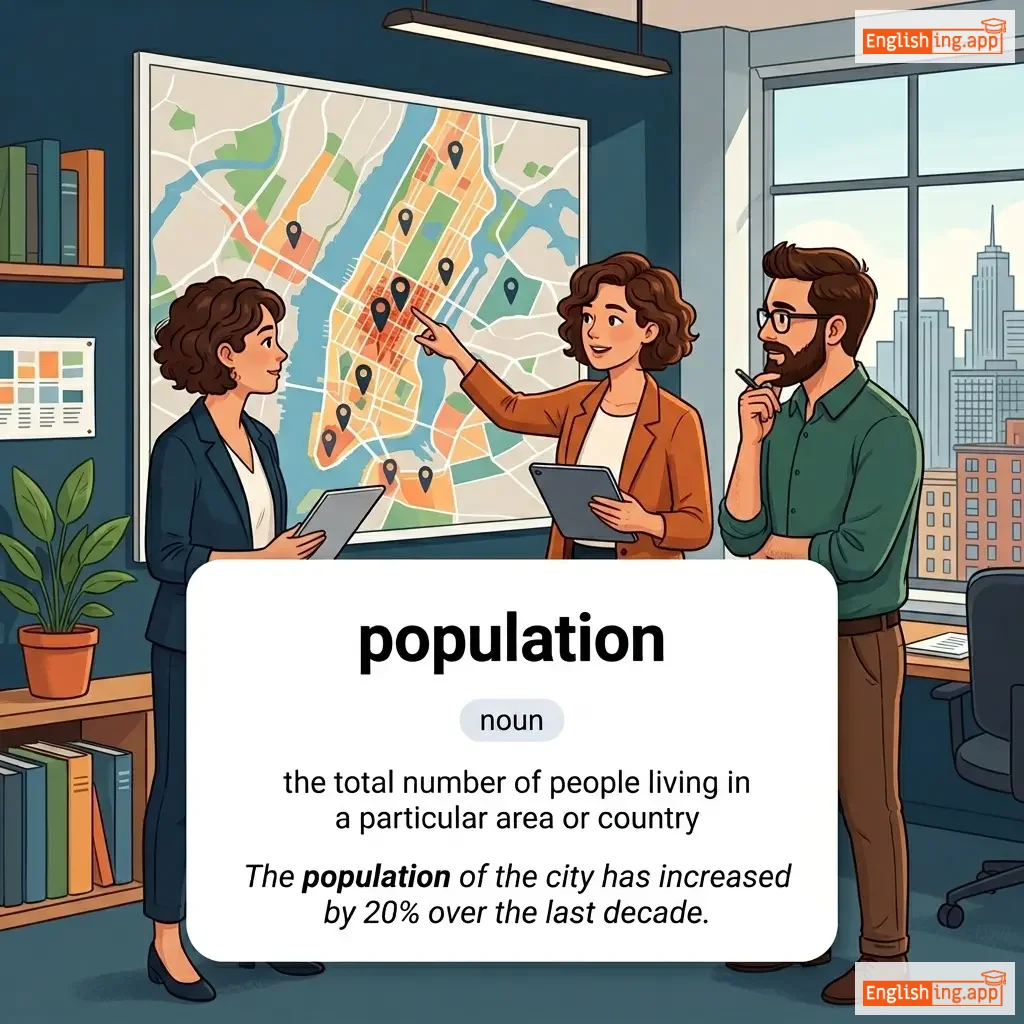
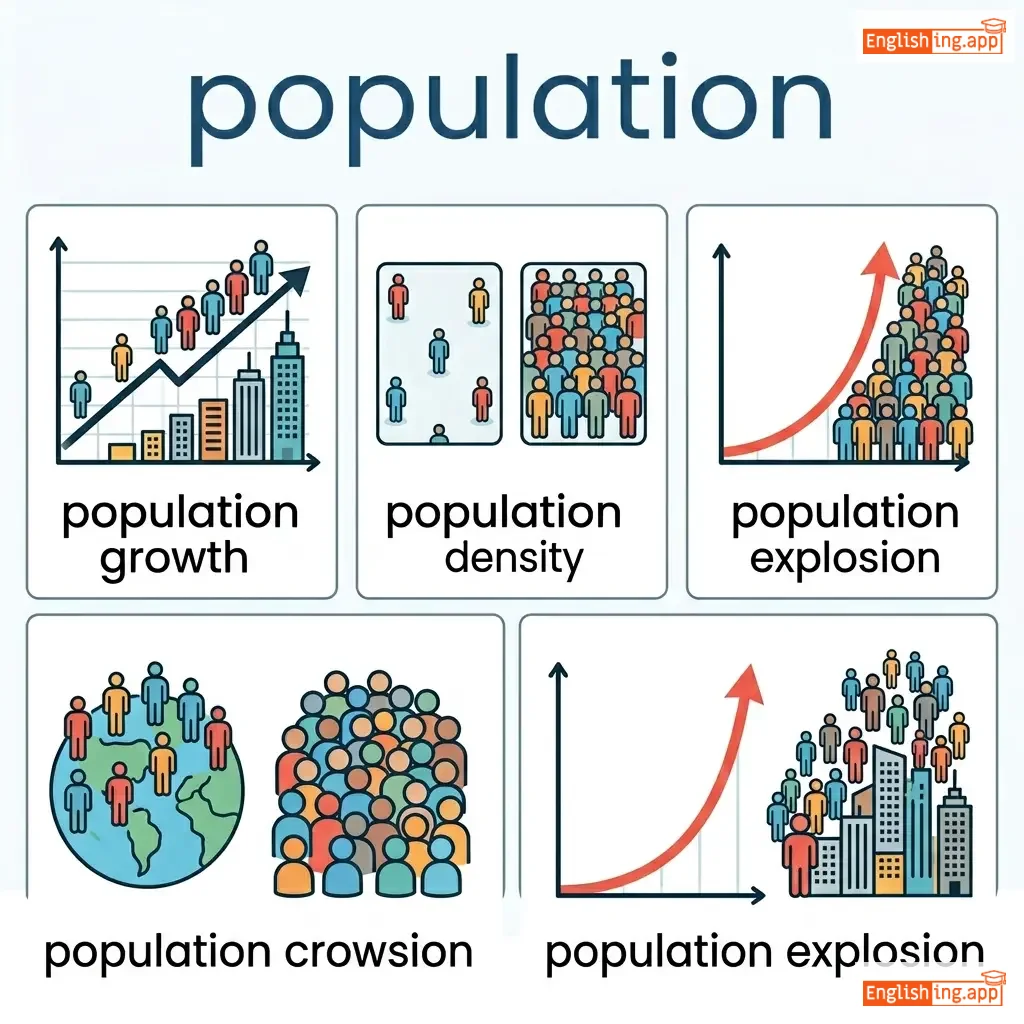
the number of people living in a particular area; all the inhabitants of a particular place
••••••
|
The population of this city has grown rapidly in recent years. |
この都市の人口は最近急速に増加しています。
Kono toshi no jinkō wa saikin kyūsoku ni zōka shiteimasu.
••••••
|
- •••••• | - •••••• | - •••••• |
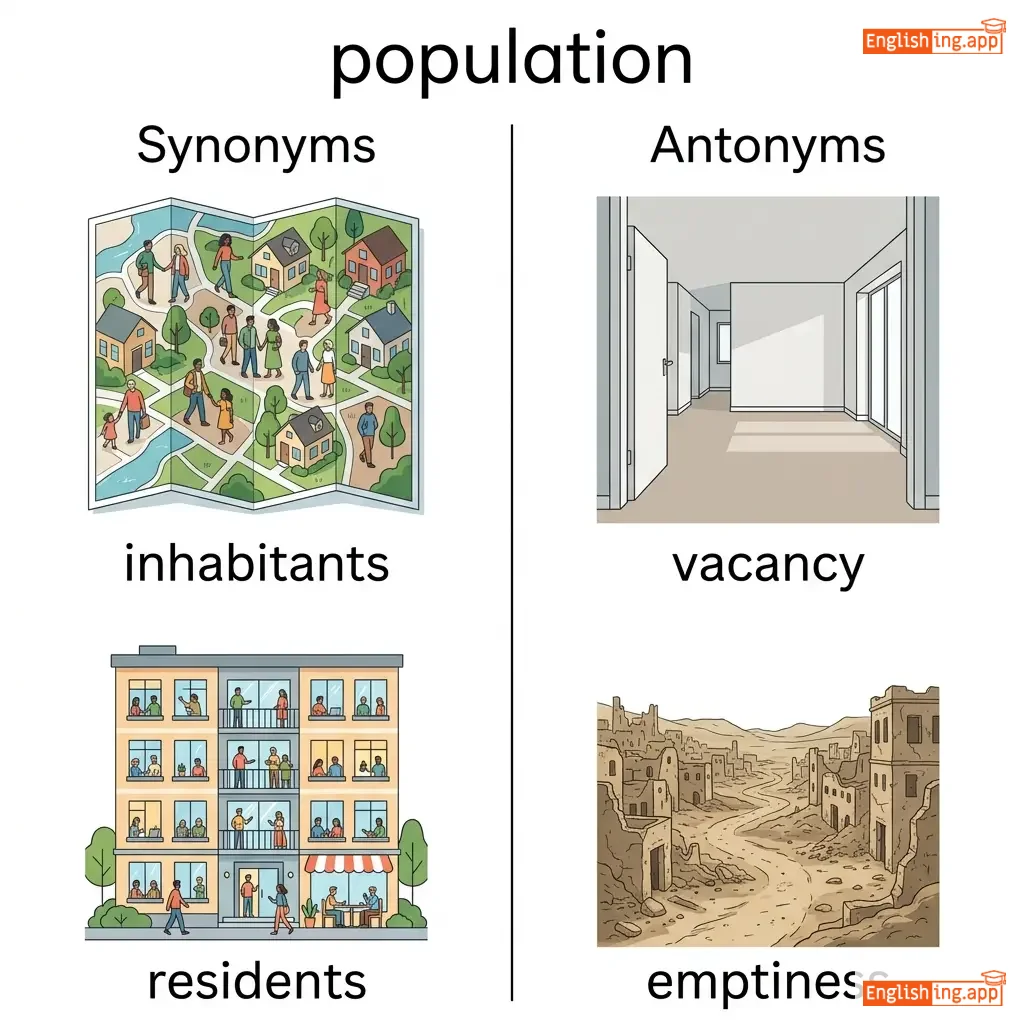
inhabitants, residents, citizens, people
••••••
|
depopulation, evacuation
••••••
|
population growth, population density, aging population, urban population
••••••
|
‘人口’ looks like 'Jinko' – imagine a busy city full of people!
••••••
|
|
🏡
••••••
|
/pɔːrtʃ/
noun
(ポーチ)
••••••
|
- •••••• |
ポーチ
pōchi
••••••
|
- •••••• | - •••••• | - •••••• | - •••••• |
a covered area at the entrance of a building, often with a roof and open sides
••••••
|
We sat on the porch and enjoyed the evening breeze. |
私たちはポーチに座って、夕方の風を楽しみました。
Watashitachi wa pōchi ni suwatte, yūgata no kaze o tanoshimimashita.
••••••
|
- •••••• | - •••••• | - •••••• |
veranda, balcony, terrace, entryway
••••••
|
indoor, interior
••••••
|
front porch, back porch, porch swing, sitting on the porch
••••••
|
The porch is like 'ポーチ' (pōchi) where you relax.
••••••
|
|
⚓
••••••
|
/pɔːrt/
noun
••••••
|
|
- •••••• | - •••••• | - •••••• | - •••••• | - •••••• |
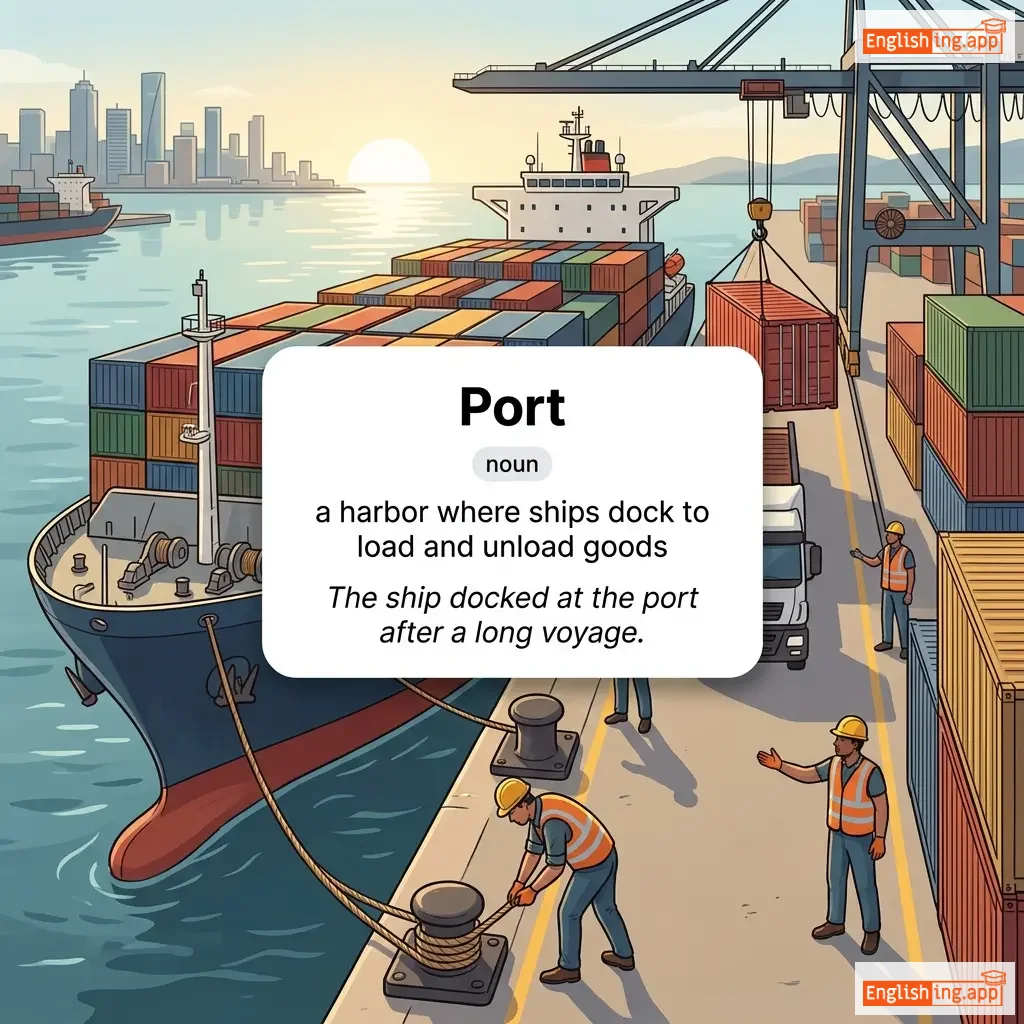
a harbor where ships dock to load and unload goods
••••••
|
The ship docked at the port after a long voyage. |
- •••••• | - •••••• | - •••••• | - •••••• |
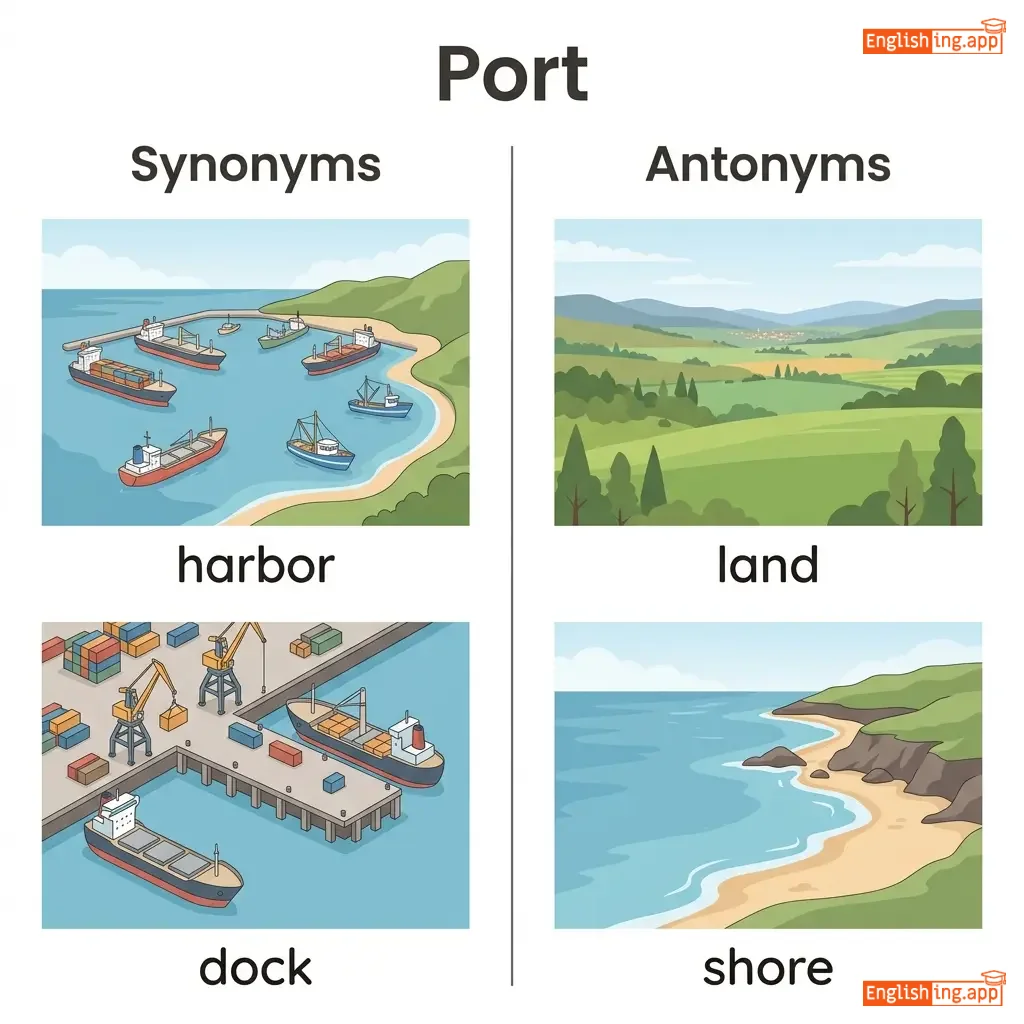
harbor, dock, quay, marina
••••••
|
land, shore
••••••
|
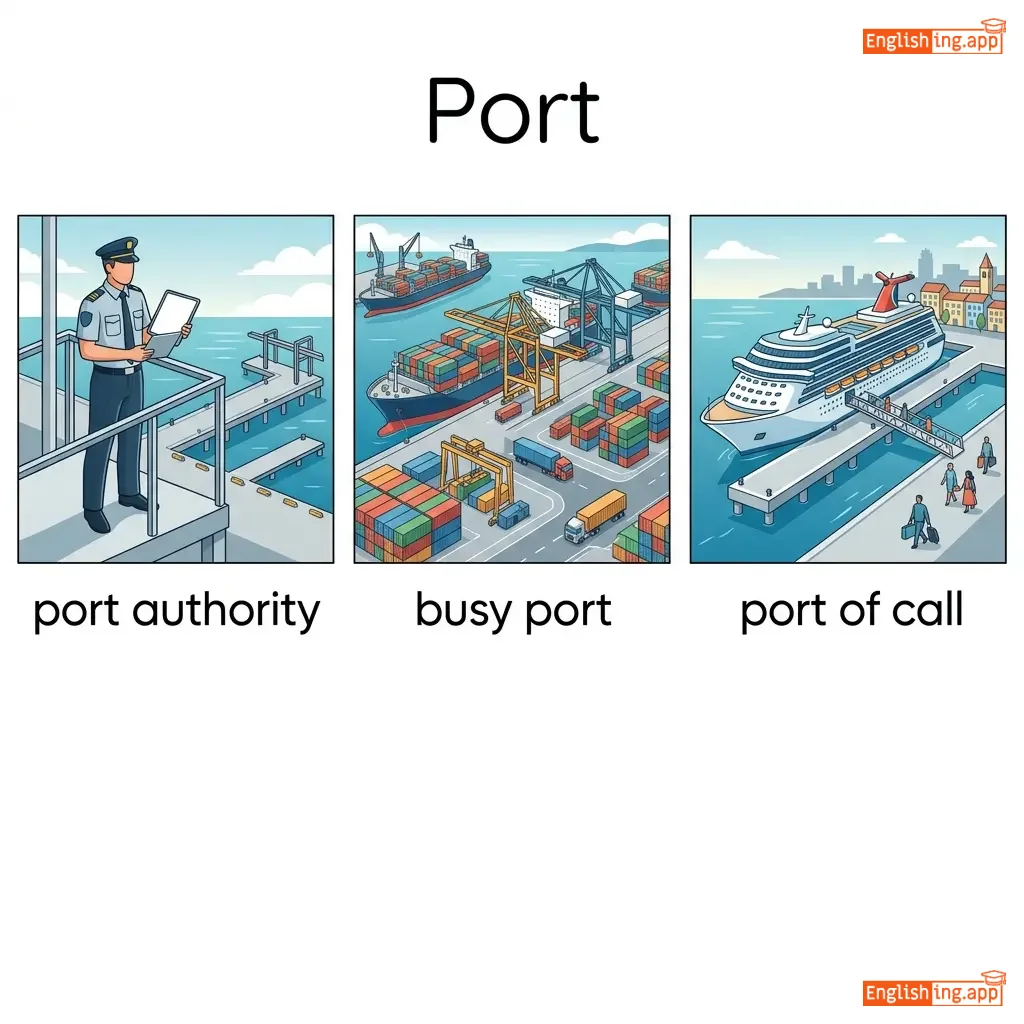
port authority, busy port, port of call, shipping port
••••••
|
No •••••• |
|
🍽️
••••••
|
/ˈpɔːrʃən/
noun
(ポーション)
••••••
|
- •••••• |
部分
bubun
••••••
|
- •••••• | - •••••• | - •••••• | - •••••• |
A part or share of something.
••••••
|
She ate only a small portion of the meal.
彼女は食事のほんの一部を食べました。
••••••
|
彼女は食事のほんの一部を食べました。
Kanojo wa shokuji no honno ichibu o tabemashita.
••••••
|
a fair portion
公平な部分
••••••
|
a reasonable or equal share
••••••
|
公平な部分
kōhei na bubun
••••••
|
part, share, section, division, piece
••••••
|
whole, entirety
••••••
|
portion size, large portion, small portion, portion control
••••••
|
Portion は食事の一部を意味します
••••••
|

