|
絵文字
|
単語 | Images | 翻訳 | 過去 | 過去分詞 | 三人称単数 | 動名詞 | 意味 | 例文 | 例文の翻訳 | 表現例 | 表現例の意味 | 表現例の翻訳 | 同義語 | 対義語 | コロケーション | ニーモニック |
|---|---|---|---|---|---|---|---|---|---|---|---|---|---|---|---|---|---|
|
🎩
••••••
|
/ɪˈluːʒən/
noun
(イリュージョン)
••••••
|
- •••••• |
錯覚
sakkaku
••••••
|
- •••••• | - •••••• | - •••••• | - •••••• |
a false idea or belief; a deceptive appearance
••••••
|
The magician created the illusion of a floating woman. |
魔法使いは浮かぶ女性の錯覚を作り出しました。
Mahōtsukai wa ukabu josei no sakkaku o tsukuridashimashita.
••••••
|
under an illusion |
to have a false belief or impression
••••••
|
錯覚の中で
sakkaku no naka de
••••••
|
delusion, fantasy, mirage, hallucination, trick
••••••
|
reality, truth
••••••
|
create an illusion, optical illusion, under an illusion, shattered illusion
••••••
|
錯覚 = '見た目は真実でも実際は違う'。
••••••
|
|
🖼️
••••••
|
/ˈɪl.ə.streɪt/
verb
(イラストレート)
••••••
|
- •••••• |
説明する
setsumei suru
••••••
|
illustrated
イラストレイテッド
••••••
|
illustrated
イラストレイテッド
••••••
|
illustrates
イラストレーツ
••••••
|
illustrating
イラストレイティング
••••••
|
to explain or make something clear by using examples, pictures, or comparisons
••••••
|
The teacher used diagrams to illustrate the concept.
先生はその概念を説明するために図を使いました。
••••••
|
先生はその概念を説明するために図を使いました。
Sensei wa sono gainen o setsumei suru tame ni zu o tsukaimashita.
••••••
|
to illustrate the point
ポイントを説明する
••••••
|
to make an idea clearer with an example
••••••
|
ポイントを説明する
Pointo o setsumei suru
••••••
|
explain, demonstrate, clarify, depict, exemplify
••••••
|
confuse, obscure
••••••
|
illustrate clearly, illustrate example, illustrate concept
••••••
|
イラストレートは図で説明すること—'Illustrate = イラストで説明'
••••••
|
|
🖼️
••••••
|
/ˈɪmɪdʒ/
noun
(イメージ)
••••••
|
- •••••• |
画像
gazo
••••••
|
- •••••• | - •••••• | - •••••• | - •••••• |
A visual representation of something, such as a picture or likeness.
••••••
|
The magazine published a clear image of the celebrity.
雑誌は有名人の鮮明な画像を公開しました。
••••••
|
雑誌は有名人の鮮明な画像を公開しました。
Zasshi wa yūmeijin no senmei na gazō o kōkai shimashita.
••••••
|
public image
パブリックイメージ
••••••
|
the perception that people have of a person or organization
••••••
|
公共のイメージ
kōkyō no imēji
••••••
|
picture, photo, likeness, representation, figure
••••••
|
reality, truth
••••••
|
digital image, mental image, image quality, image editing
••••••
|
画像 = 見るもの、覚えておいてね!
••••••
|
|
🎨
••••••
|
/ˈɪmɪdʒəri/
noun
(imejiri)
••••••
|
- •••••• |
イメージ
imeji
••••••
|
- •••••• | - •••••• | - •••••• | - •••••• |
visually descriptive or figurative language, especially in a literary work
••••••
|
The poet's use of imagery brought the scene to life.
詩人のイメージの使用は、シーンに命を吹き込みました。
••••••
|
詩人のイメージの使用は、シーンに命を吹き込みました。
Shijin no imeji no shiyou wa, shīn ni inochi o fukikomi mashita.
••••••
|
- •••••• | - •••••• | - •••••• |
pictures, symbols, representations, depictions
••••••
|
literal, plain
••••••
|
vivid imagery, rich imagery, descriptive imagery
••••••
|
イメージを詩の中に描く。
••••••
|
|
💭
••••••
|
/ɪˈmædʒɪnəbl/
adjective
(イマジナブル)
••••••
|
- •••••• |
想像できる
souzou dekiru
••••••
|
- •••••• | - •••••• | - •••••• | - •••••• |
Capable of being imagined or conceived.
••••••
|
They offered every imaginable type of food at the festival.
彼らはフェスティバルであらゆる想像できるタイプの食べ物を提供しました。
••••••
|
彼らはフェスティバルであらゆる想像できるタイプの食べ物を提供しました。
Karera wa fesutibaru de arayuru souzou dekiru taipu no tabemono wo teikyou shimashita.
••••••
|
- •••••• | - •••••• | - •••••• |
conceivable, possible, thinkable, potential
••••••
|
unimaginable, inconceivable
••••••
|
every imaginable, all imaginable, imaginable situation
••••••
|
想像できるとは、想像することができるもの、無限に続く食べ物のようなもの!
••••••
|
|
💭
••••••
|
/ɪˈmædʒ.ɪ.nər.i/
adjective
(イマジナリー)
••••••
|
- •••••• |
想像上の; 虚構の; 現実でない
imajinary
••••••
|
- •••••• | - •••••• | - •••••• | - •••••• |
existing only in imagination; not real; fictional
••••••
|
The child had an imaginary friend who she talked to every day.
その子は毎日話す想像上の友達がいました。
••••••
|
その子は毎日話す想像上の友達がいました。
Sono ko wa mainichi hanasu sozojo no tomodachi ga imashita.
••••••
|
- •••••• | - •••••• | - •••••• |
fictional, fantasy, make-believe, unreal
••••••
|
real, actual, concrete, tangible
••••••
|
imaginary friend, imaginary world, imaginary number
••••••
|
頭の中だけにいる想像上の友達
••••••
|
|
🌈
••••••
|
/ɪˌmædʒɪˈneɪʃən/
noun
(イマジネーション)
••••••
|
- •••••• |
想像力
souzouryoku
••••••
|
- •••••• | - •••••• | - •••••• | - •••••• |
The ability of the mind to create ideas or pictures not present to the senses.
••••••
|
Children often use their imagination while playing. |
子供たちは遊んでいるときによく想像力を使います。
Kodomotachi wa asonde iru toki ni yoku souzouryoku o tsukaimasu.
••••••
|
wild imagination |
an ability to think of ideas or scenarios that are unusual or unrealistic
••••••
|
豊かな想像力
yutakana souzouryoku
••••••
|
creativity, fantasy, vision, invention, ingenuity
••••••
|
reality, fact
••••••
|
use imagination, vivid imagination, spark imagination, fertile imagination
••••••
|
想像力 = imagination 🌈, 'Image in nation' とは国の中に画像を想像することを意味します。
••••••
|
|
🤔
••••••
|
/ɪˈmædʒ.ɪn/
verb
••••••
|
|
- •••••• |
imagined
••••••
|
imagined
••••••
|
imagines
••••••
|
imagining
••••••
|
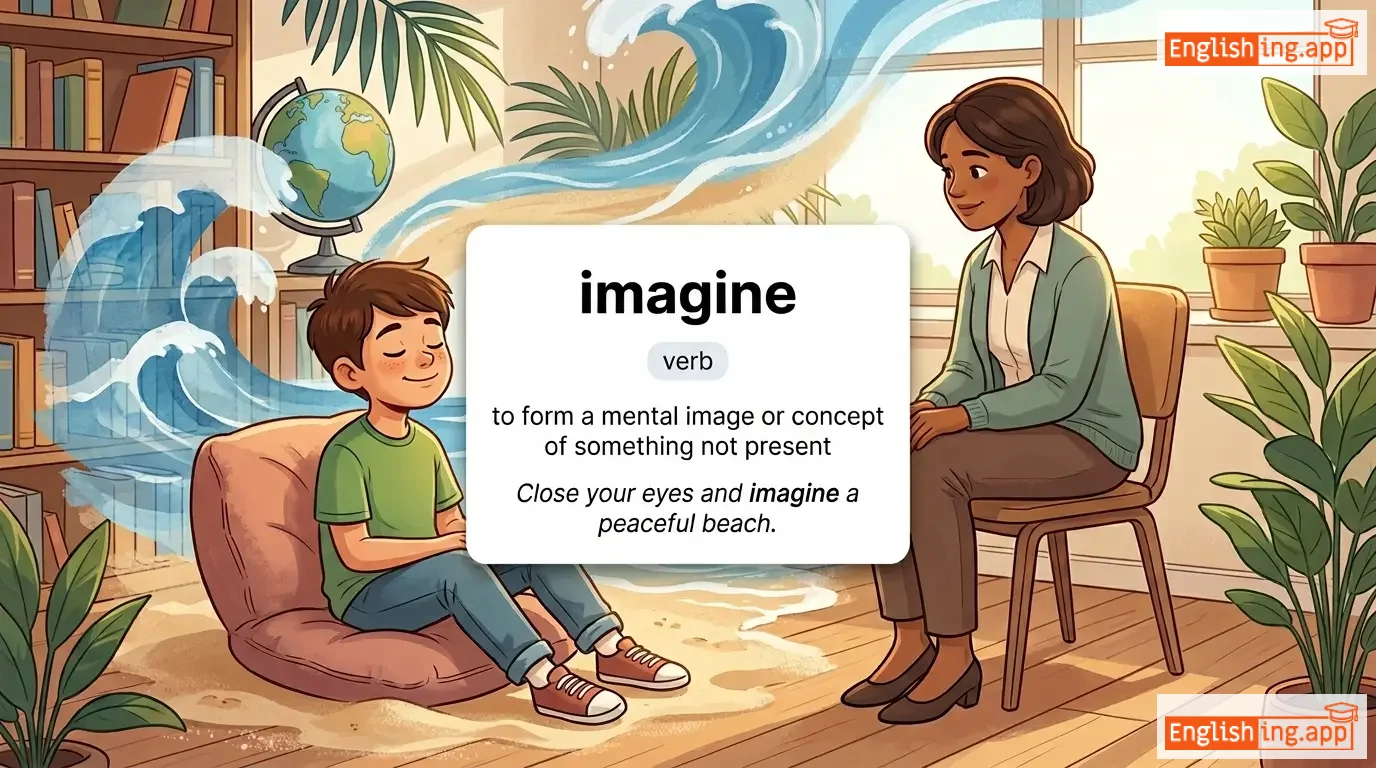
to form a mental image or concept of something not present
••••••
|
Close your eyes and imagine a peaceful beach. |
- •••••• |
imagine that |
used to express surprise or disbelief
••••••
|
- •••••• |
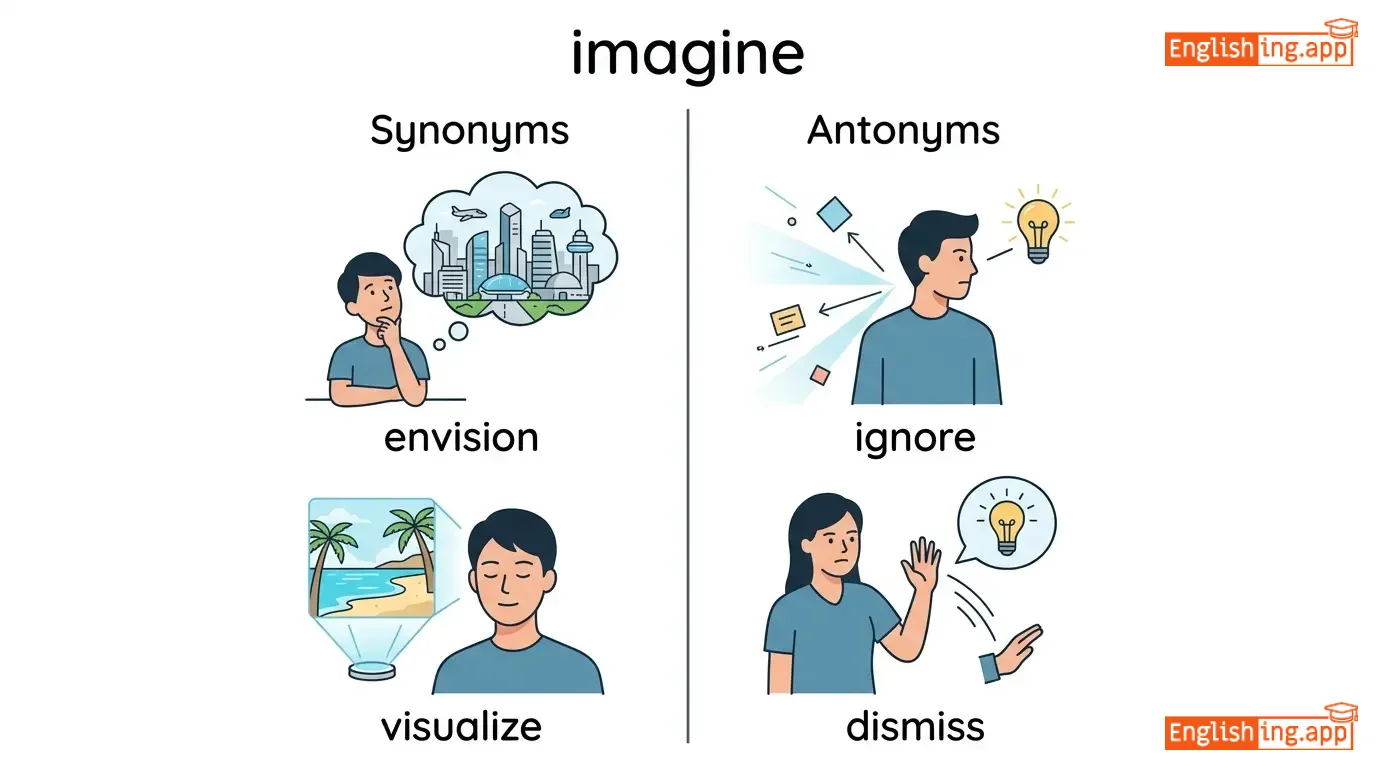
envision, visualize, picture, dream, conceive
••••••
|
ignore, dismiss
••••••
|
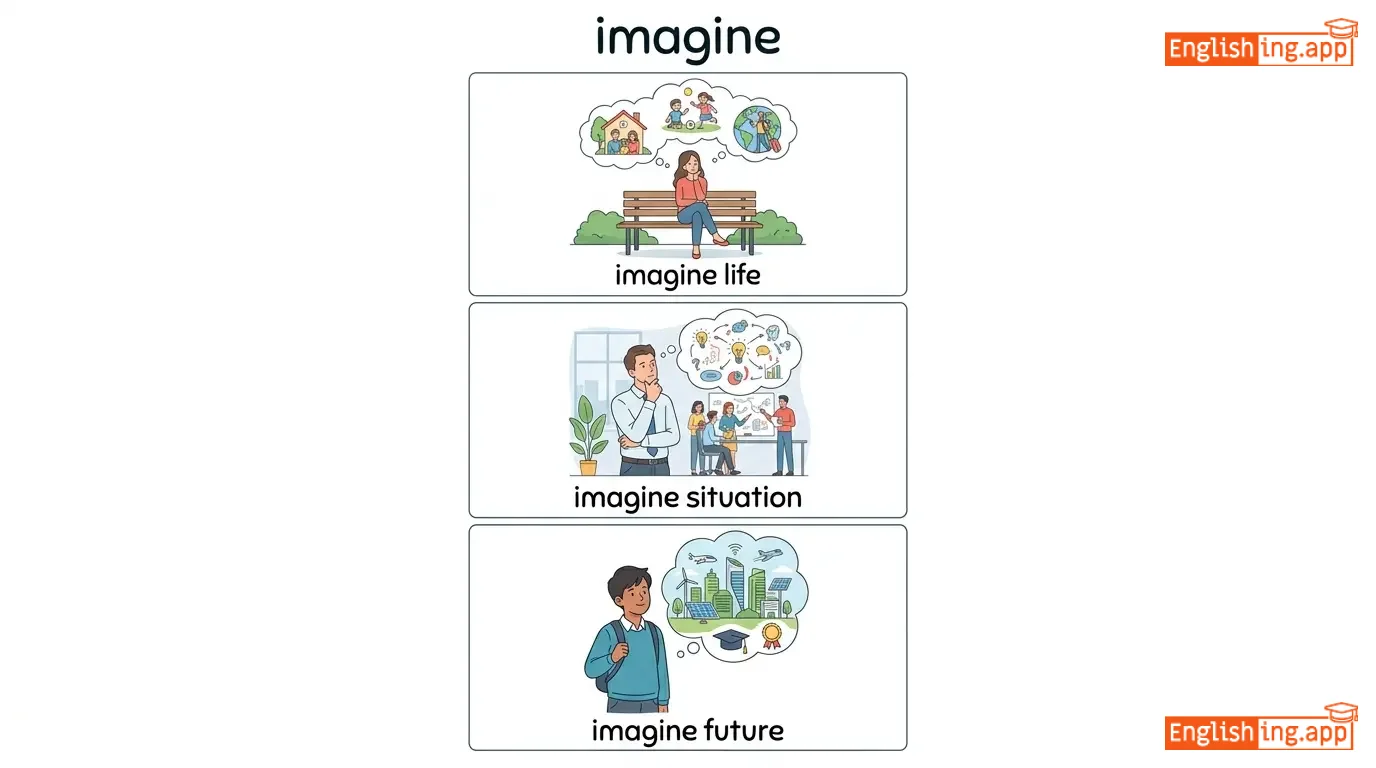
imagine life, imagine situation, imagine future
••••••
|
No •••••• |
|
⚖️
••••••
|
/ɪmˈbæləns/
noun
(インバランス)
••••••
|
- •••••• |
不均衡
fukinou
••••••
|
- •••••• | - •••••• | - •••••• | - •••••• |
A lack of balance; a state of inequality or disproportion.
••••••
|
The imbalance of power led to conflict. |
権力の不均衡が対立を引き起こした。
Kenryoku no fukinou ga tairitsu wo hikiokoshita.
••••••
|
imbalance of power |
A situation where one group holds more power than another, creating inequality.
••••••
|
権力の不均衡
Kenryoku no fukinou
••••••
|
disproportion, inequality, instability, disparity
••••••
|
balance, equality, stability
••••••
|
imbalance of power, trade imbalance, hormonal imbalance
••••••
|
Imbalance はバランスがないという意味です — 不均衡は不平等を意味します。
••••••
|
|
⚖️
••••••
|
/ˌɪməˈtɪəriəl/
adjective
(イマテリアル)
••••••
|
- •••••• |
無関係
mukankei
••••••
|
- •••••• | - •••••• | - •••••• | - •••••• |
Not important or relevant; lacking physical substance.
••••••
|
The judge ruled that the argument was immaterial to the case.
裁判官はその議論が事件に関係ないと判断しました。
••••••
|
裁判官はその議論が事件に関係ないと判断しました。
Saibankan wa sono giron ga jiken ni kankei nai to handan shimashita.
••••••
|
- •••••• | - •••••• | - •••••• |
irrelevant, insignificant, unimportant, trivial, inconsequential
••••••
|
relevant, significant, important
••••••
|
immaterial fact, immaterial issue, immaterial evidence, considered immaterial
••••••
|
Im + Materialは '物質がない' という意味 → だから事件に無関係
••••••
|
|
🧒
••••••
|
/ɪˈmætʃʊr/
adjective
(イマチュア)
••••••
|
- •••••• |
未熟; 完全に発達していない; 子供っぽい
mijuku; kanzen ni hattatsu shite inai; kodomoppoi
••••••
|
- •••••• | - •••••• | - •••••• | - •••••• |
not fully developed; lacking emotional or intellectual development; childish
••••••
|
His immature behavior during the meeting disappointed everyone.
会議中の彼の未熟な行動は、皆を失望させました。
••••••
|
会議中の彼の未熟な行動は、皆を失望させました。
kaigi chū no kare no mijuku na kōdō wa, mina o shitsubō sasemashita
••••••
|
- •••••• | - •••••• | - •••••• |
childish, juvenile, undeveloped, infantile
••••••
|
mature, developed, adult, sophisticated
••••••
|
immature behavior, emotionally immature, immature attitude
••••••
|
未熟な行動は会議中の子供のように見える。
••••••
|
|
🧒
••••••
|
/ˌɪməˈtjʊərəti/
noun
(イマチュリティ)
••••••
|
- •••••• |
未熟さ
mijukusa
••••••
|
- •••••• | - •••••• | - •••••• | - •••••• |
the state of not being fully developed emotionally, mentally, or physically; lack of maturity
••••••
|
His immaturity made it difficult for him to handle responsibility.
ヒズ イマチュリティ メイド イット ディフィカルト フォー ヒム トゥ ハンドル リスポンシビリティ。
••••••
|
彼の未熟さは責任を果たすことを難しくした。
kare no mijukusa wa sekinin o hatasu koto o muzukashiku shita
••••••
|
emotional immaturity
エモーショナル イマチュリティ
••••••
|
lack of emotional development or control
••••••
|
感情的な未熟さ
kanjoteki na mijukusa
••••••
|
childishness, naivety, juvenility, irresponsibility
••••••
|
maturity, adulthood, wisdom
••••••
|
emotional immaturity, mental immaturity, signs of immaturity, display immaturity
••••••
|
未熟 = immature → immaturity
••••••
|
|
∞
••••••
|
/ɪˈmeʒərəbəl/
adjective
(インムージャラブル)
••••••
|
- •••••• |
計り知れない
inmujaraburu
••••••
|
- •••••• | - •••••• | - •••••• | - •••••• |
too large or extensive to measure; boundless
••••••
|
The immeasurable love of a mother knows no bounds.
母の計り知れない愛には限界がない。
••••••
|
母の計り知れない愛には限界がない。
Haha no hakari shirenai ai ni wa genkai ga nai.
••••••
|
- •••••• | - •••••• | - •••••• |
infinite, boundless, limitless, vast
••••••
|
measurable, limited, finite, bounded
••••••
|
immeasurable joy, immeasurable wealth, immeasurable distance
••••••
|
Ima wa hakari shirenai: imagine a huge sea you cannot measure
••••••
|
|
⚡
••••••
|
/ɪˈmiːdiət/
adjective
(イミディエイト)
••••••
|
- •••••• |
即時
sokujī
••••••
|
- •••••• | - •••••• | - •••••• | - •••••• |
happening or done without delay
••••••
|
The doctor gave her immediate attention.
医者は彼女に即時の注意を与えました。
••••••
|
医者は彼女に即時の注意を与えました。
Isha wa kanojo ni sokujī no chūi o ataemashita.
••••••
|
in the immediate future
近い将来に
••••••
|
very soon, without delay
••••••
|
近い将来に
chikai shōrai ni
••••••
|
instant, prompt, direct, urgent, swift
••••••
|
delayed, gradual, postponed
••••••
|
immediate action, immediate effect, immediate response, immediate family
••••••
|
即時はすぐに ⚡ 例えば '即時に今!'
••••••
|
|
⚡
••••••
|
/ɪˈmiːdiətli/
adverb
(イミディアトリー)
••••••
|
- •••••• |
直ちに
tadachini
••••••
|
- •••••• | - •••••• | - •••••• | - •••••• |
at once; without delay
••••••
|
She responded immediately to the emergency call. |
彼女は緊急の電話に直ちに応答した。
Kanojo wa kinkyū no denwa ni tadachini ōtō shita.
••••••
|
immediately after |
right after something happens
••••••
|
直ちに後
tadachini ato
••••••
|
instantly, promptly, directly, quickly, right away
••••••
|
later, eventually, afterward
••••••
|
respond immediately, happen immediately, immediately after, immediately before
••••••
|
直ちにとは遅れることなく、直ちに対応すること。
••••••
|
|
🏔️
••••••
|
/ɪˈmens/
adjective
(imensu)
••••••
|
- •••••• |
巨大な; 膨大な; 非常に大きい
kyodaina; bōdaina; hijō ni ōkii
••••••
|
- •••••• | - •••••• | - •••••• | - •••••• |
extremely large or great; huge
••••••
|
The immense mountain range stretched across the horizon. |
その巨大な山脈は地平線を越えて広がっていました。
Sono kyodaina sanmyaku wa chiheisen o koete hirogatte imashita.
••••••
|
- •••••• | - •••••• | - •••••• |
huge, enormous, vast, colossal
••••••
|
tiny, small, minute, insignificant
••••••
|
immense pressure, immense wealth, immense popularity
••••••
|
巨大な幸せの波が私を包み込んでいく。
••••••
|
|
🧳
••••••
|
/ˈɪmɪɡrənt/
noun
(イミグラント)
••••••
|
- •••••• |
移民
imin
••••••
|
- •••••• | - •••••• | - •••••• | - •••••• |
a person who comes to live permanently in a foreign country
••••••
|
The city has welcomed many new immigrants this year. |
今年、市は多くの新しい移民を迎えました。
Kotoshi, shi wa ōku no atarashī imin o mukaemashita.
••••••
|
- •••••• | - •••••• | - •••••• |
settler, newcomer, migrant, expatriate
••••••
|
native, local
••••••
|
illegal immigrant, immigrant community, immigrant worker, immigrant family
••••••
|
Immigrant は移民を意味します。'in my grant' – 海外で助成金を得て移住することを想像してください。
••••••
|
|
🛂
••••••
|
/ˌɪmɪˈɡreɪʃən/
noun
(イミグレーション)
••••••
|
- •••••• |
移民
imin
••••••
|
- •••••• | - •••••• | - •••••• | - •••••• |
the action of coming to live permanently in a foreign country
••••••
|
Immigration policies vary from country to country.
移民政策は国によって異なります。
••••••
|
移民政策は国によって異なります。
Imin seisaku wa kuni ni yotte kotonari masu.
••••••
|
illegal immigration
不法移民
••••••
|
the act of entering a country without legal permission
••••••
|
不法移民
fuhō imin
••••••
|
migration, settlement, relocation, entry
••••••
|
emigration, deportation
••••••
|
immigration policy, immigration law, illegal immigration, mass immigration
••••••
|
移民は「移」+「民」- 他の国に移住すること
••••••
|
|
⚡
••••••
|
/ˈɪmɪnənt/
adjective
(イミネント)
••••••
|
- •••••• |
差し迫った
さしせまった
••••••
|
- •••••• | - •••••• | - •••••• | - •••••• |
About to happen; likely to occur very soon.
••••••
|
Dark clouds signaled that a storm was imminent.
暗い雲は嵐が迫っていることを示していた。
••••••
|
暗い雲は嵐が迫っていることを示していた。
Kurai kumo wa arashi ga sematte iru koto o shimeshite ita.
••••••
|
imminent danger
差し迫った危険
••••••
|
A threat or risk that is about to happen very soon.
••••••
|
差し迫った危険
さしせまったきけん
••••••
|
forthcoming, approaching, looming, impending, near
••••••
|
distant, remote, unlikely
••••••
|
imminent threat, imminent arrival, imminent danger, imminent change
••••••
|
Imminent は日本語の差し迫ったのように、危険がすぐそこにあります。
••••••
|
|
🪑
••••••
|
/ɪˈmoʊbəl/
adjective
(イモバイル)
••••••
|
- •••••• |
動けない
ugokenai
••••••
|
- •••••• | - •••••• | - •••••• | - •••••• |
unable to move or be moved
••••••
|
After the accident, he was immobile for weeks. |
事故の後、彼は数週間動けなかった。
Jiko no ato, kare wa suushukan ugokenakatta.
••••••
|
- •••••• | - •••••• | - •••••• |
motionless, still, stationary, inactive
••••••
|
mobile, moving, active
••••••
|
remain immobile, immobile state, completely immobile, become immobile
••••••
|
Mobileは動ける、imobileは動けない。 🪑
••••••
|
|
😏
••••••
|
/ɪˈmɒdɪst/
adjective
(イモデスト)
••••••
|
- •••••• |
傲慢 / 不適切
ouman / futekisetsu
••••••
|
- •••••• | - •••••• | - •••••• | - •••••• |
lacking humility or decency; excessively proud or improper
••••••
|
His immodest remarks offended the audience. |
彼の傲慢な発言は観客を不快にさせた。
Kare no ouman na hatsugen wa kankyaku o fukai ni saseta.
••••••
|
- •••••• | - •••••• | - •••••• |
arrogant, boastful, indecent, shameless
••••••
|
modest, humble, decent
••••••
|
immodest behavior, immodest dress, immodest remarks, immodest attitude
••••••
|
Immodest = 謙遜がない = 高慢
••••••
|
|
🙈
••••••
|
/ɪˈmɒdəsti/
noun
(イモデスティ)
••••••
|
- •••••• |
不謹慎
fukinshin
••••••
|
- •••••• | - •••••• | - •••••• | - •••••• |
lack of modesty or decency; behavior or attitude that is overly bold or improper
••••••
|
The article was criticized for its tone of immodesty.
ザ アーティクル ワズ クリティサイズド フォー イッツ トーン オブ イモデスティ。
••••••
|
その記事は不謹慎な語調で批判された。
sono kiji wa fukinshin na gochou de hihansareta
••••••
|
- •••••• | - •••••• | - •••••• |
indecency, shamelessness, boldness, impropriety
••••••
|
modesty, decency, humility
••••••
|
act of immodesty, charge of immodesty, perceived immodesty, social immodesty
••••••
|
im + modesty = 謙虚じゃない → 不謹慎
••••••
|
|
🚫
••••••
|
/ɪˈmɒrəl/
adjective
(イモラル)
••••••
|
- •••••• |
不道徳な
fudōtoku na
••••••
|
- •••••• | - •••••• | - •••••• | - •••••• |
Not conforming to accepted standards of morality; unethical or wicked.
••••••
|
He was fired for his immoral behavior. |
彼は不道徳な行動で解雇されました。
Kare wa fudōtoku na kōdō de kaiko saremashita.
••••••
|
immoral act |
An action that is considered wrong or unethical.
••••••
|
不道徳な行為
fudōtoku na kōi
••••••
|
unethical, wicked, corrupt, sinful
••••••
|
moral, virtuous, ethical
••••••
|
immoral behavior, immoral act, immoral lifestyle, immoral conduct
••••••
|
Moralは倫理的、不道徳はその反対。簡単に覚えられます!
••••••
|
|
⚠️
••••••
|
/ˌɪməˈrælɪti/
noun
(イモラリティ)
••••••
|
- •••••• |
不道徳
fudotoku
••••••
|
- •••••• | - •••••• | - •••••• | - •••••• |
the quality of being immoral; behavior that violates accepted moral standards
••••••
|
The community condemned the immorality of the corrupt officials.
ザ コミュニティ コンデムド ザ イモラリティ オブ ザ コラプト オフィシャルズ
••••••
|
地域社会は腐敗した役人の不道徳を非難した。
Chiiki shakai wa fuhai shita yakunin no fudotoku o hinan shita
••••••
|
- •••••• | - •••••• | - •••••• |
corruption, depravity, wickedness, vice, unethicality
••••••
|
morality, virtue, righteousness
••••••
|
moral immorality, sexual immorality, public immorality, social immorality
••••••
|
不 (fu = not) + 道徳 (moral) = 不道徳
••••••
|
|
♾️
••••••
|
/ɪˈmɔːrtl/
adjective; noun
(イモータル)
••••••
|
- •••••• |
不死の
fushi no
••••••
|
- •••••• | - •••••• | - •••••• | - •••••• |
living forever; never dying; lasting forever in fame or memory
••••••
|
Legends often describe heroes as immortal beings who never die.
伝説では英雄はイモータルだとされる。
••••••
|
伝説では英雄は不死の存在だとされる。
densetsu dewa eiyuu wa fushi no sonzai da to sareru
••••••
|
immortal fame
不滅の名声
••••••
|
fame that lasts forever
••••••
|
不滅の名声
fumetsu no meisei
••••••
|
eternal, everlasting, undying, deathless, perennial
••••••
|
mortal, perishable, transient
••••••
|
immortal soul, immortal being, immortal fame, immortal legend
••••••
|
不死 = 死なない = immortal
••••••
|
|
♾️
••••••
|
/ˌɪmɔːrˈtæləti/
noun
(イモータリティ)
••••••
|
- •••••• |
不死; 永遠の命
fushi; eien no inochi
••••••
|
- •••••• | - •••••• | - •••••• | - •••••• |
the state of living forever; eternal life or lasting fame beyond death
••••••
|
Many ancient cultures believed that heroes could achieve immortality through great deeds.
many ancient cultures believed that heroes could achieve immortality through great deeds
••••••
|
多くの古代文化では、英雄が偉業によって不死を得られると信じられていた。
ooku no kodai bunka dewa eiyuu ga igyou ni yotte fushi o erareru to shinjirarete ita
••••••
|
immortality of the soul
immortality of the soul
••••••
|
the belief that the soul lives forever after the body dies
••••••
|
魂の不滅
tamashii no fumetsu
••••••
|
eternity, eternal life, endlessness, imperishability, perpetuity
••••••
|
mortality, death, perishability
••••••
|
seek immortality, achieve immortality, promise immortality, spiritual immortality
••••••
|
不死 (fushi) = not die → immortality
••••••
|
|
🛡️
••••••
|
/ɪˈmjuːn/
adjective
(イミューン)
••••••
|
- •••••• |
免疫の
men'eki no
••••••
|
- •••••• | - •••••• | - •••••• | - •••••• |
protected from disease or from the effects of something
••••••
|
Children who are vaccinated are immune to many diseases. |
予防接種を受けた子供たちは多くの病気に免疫があります。
Yobou sesshu wo uketa kodomotachi wa ooku no byouki ni men'eki ga arimasu.
••••••
|
immune to criticism |
not affected by criticism
••••••
|
批判に免疫がある
hihan ni men'eki ga aru
••••••
|
resistant, protected, safe, shielded
••••••
|
vulnerable, susceptible
••••••
|
immune system, immune response, immune to, immune deficiency
••••••
|
免疫は病気を防ぐ力、あなたを守る盾のようです。
••••••
|
|
💥
••••••
|
/ˈɪmpækt/
noun, verb
(インパクト)
••••••
|
|
影響
eikyou
••••••
|
impacted
インパクトされた
••••••
|
impacted
インパクトされた
••••••
|
impacts
インパクトする
••••••
|
impacting
インパクトしている
••••••
|
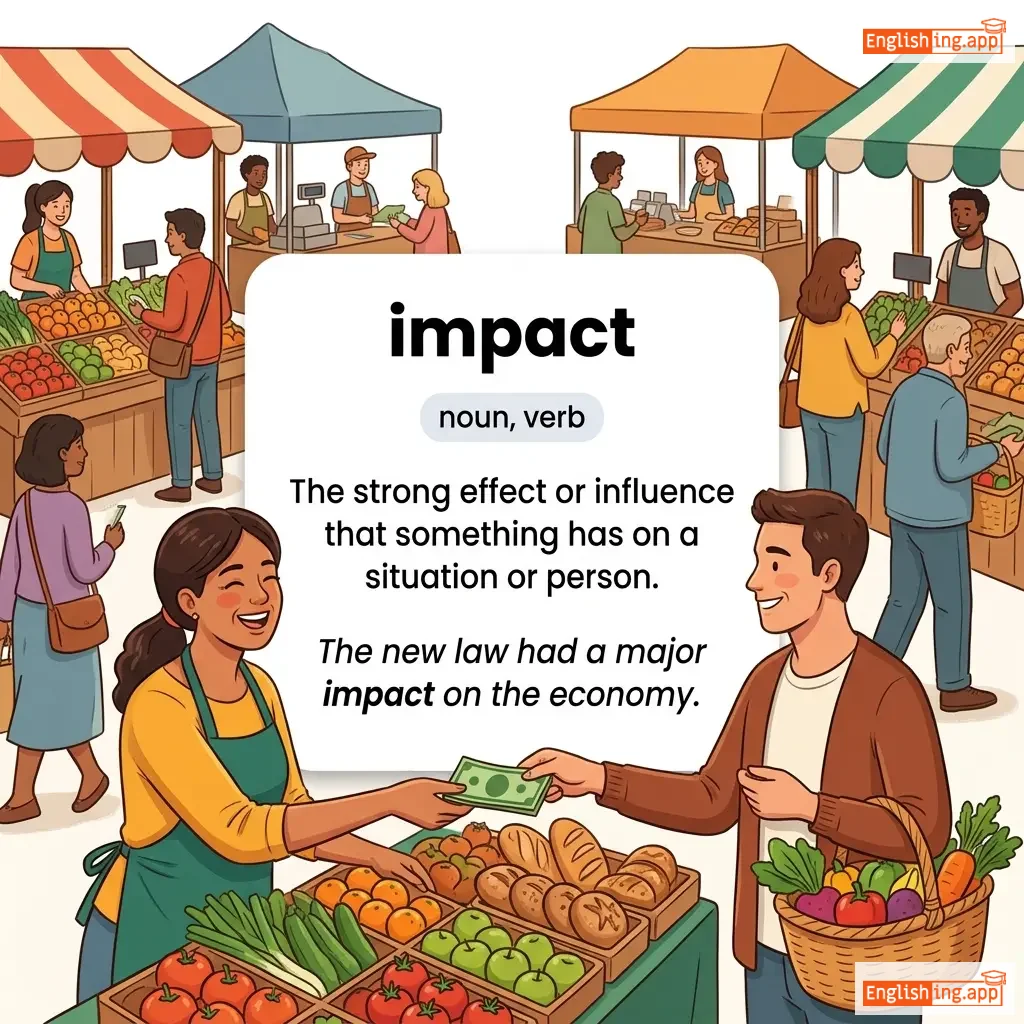
The strong effect or influence that something has on a situation or person.
••••••
|
The new law had a major impact on the economy.
新しい法律は経済に大きな影響を与えました。
••••••
|
新しい法律は経済に大きな影響を与えました。
Atarashii houritsu wa keizai ni ookina eikyou wo ataemashita.
••••••
|
make an impact
インパクトを与える
••••••
|
To have a strong effect or impression on someone or something.
••••••
|
インパクトを与える
Inpakuto wo ataeru
••••••
|
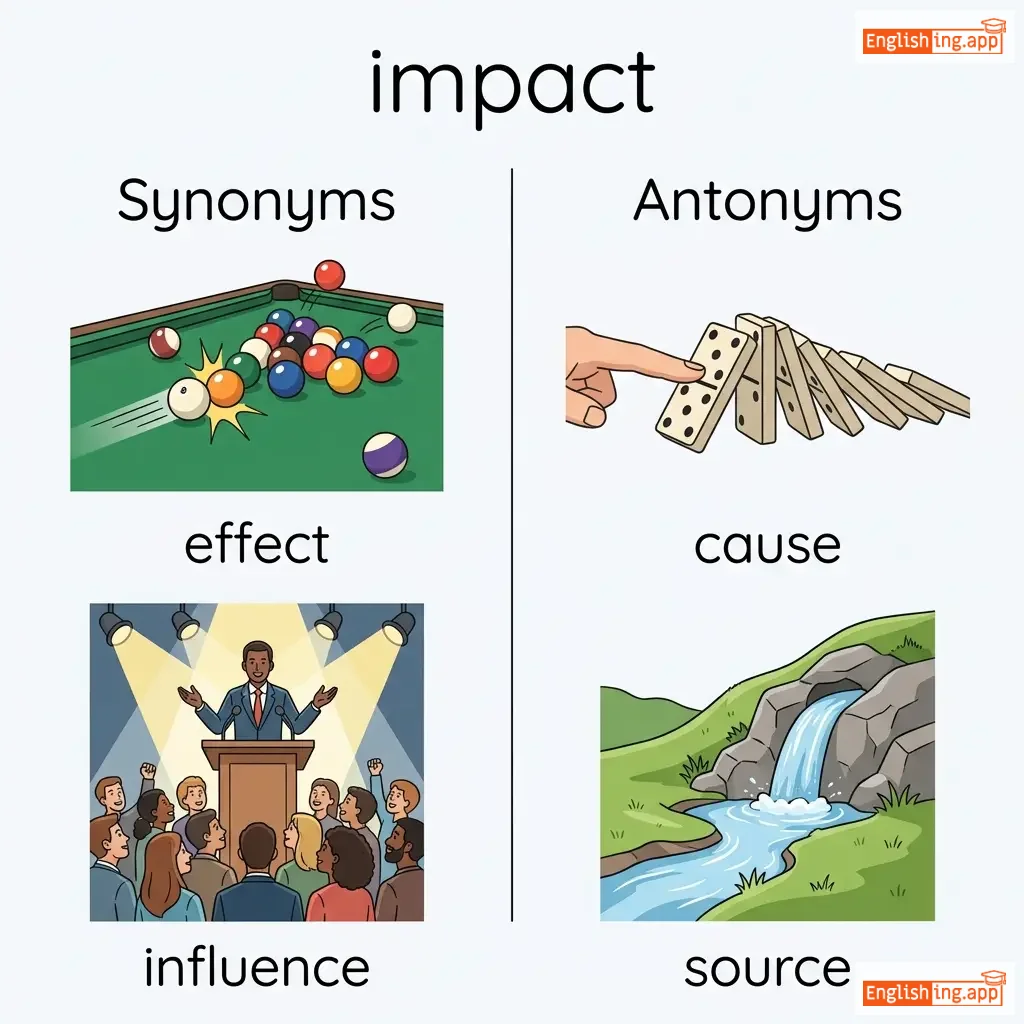
effect, influence, impression, shock, consequence
••••••
|
cause, source
••••••
|
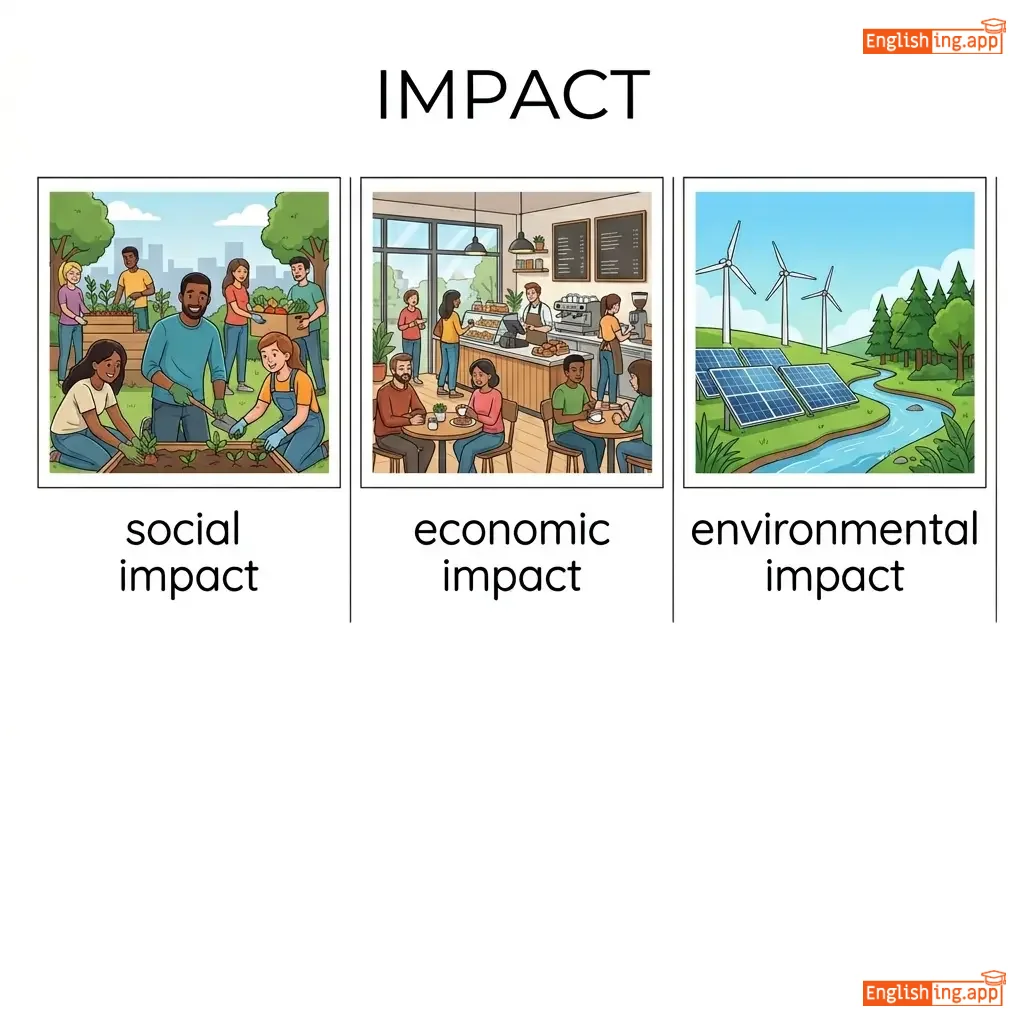
social impact, economic impact, environmental impact, significant impact
••••••
|
Impactは日本語で影響。大きな力が周りに変化をもたらすイメージ。
••••••
|
|
⚖️
••••••
|
/ɪmˈpɑːrʃəl/
adjective
(インパーシャル)
••••••
|
- •••••• |
公正; 中立的
kousei; chuuritsuteki
••••••
|
- •••••• | - •••••• | - •••••• | - •••••• |
treating all sides fairly; unbiased; neutral
••••••
|
A good judge must remain impartial throughout the trial.
優れた裁判官は裁判中に公正を保たなければなりません。
••••••
|
優れた裁判官は裁判中に公正を保たなければなりません。
Sugureta saibankan wa saiban-chuu ni kousei o tamotanakereba narimasen.
••••••
|
- •••••• | - •••••• | - •••••• |
neutral, unbiased, fair, objective
••••••
|
biased, partial, prejudiced, unfair
••••••
|
impartial judge, impartial observer, impartial decision
••••••
|
公正な裁判官は常に中立的な決定を下します。
••••••
|
|
⏳
••••••
|
/ɪmˈpeɪʃəns/
noun
(インペイシェンス)
••••••
|
- •••••• |
忍耐力不足
nintairyoku fusoku
••••••
|
- •••••• | - •••••• | - •••••• | - •••••• |
The state of being quickly irritated or unable to wait calmly.
••••••
|
His impatience grew as the meeting dragged on. |
会議が長引くにつれて、彼の忍耐力不足が増しました。
Kaigi ga nagabiku ni tsurete, kare no nintairyoku fusoku ga mashimashita.
••••••
|
lose patience |
to become annoyed or unable to tolerate something any longer
••••••
|
忍耐を失う
nintai o ushinau
••••••
|
restlessness, irritation, eagerness, frustration
••••••
|
patience, calmness, composure
••••••
|
show impatience, grow in impatience, with impatience
••••••
|
Im-Patience = 忍耐力なし、つまり忍耐力不足
••••••
|
|
⏳
••••••
|
/ɪmˈpeɪʃənt/
adjective
(インペイシェント)
••••••
|
- •••••• |
イライラ
iraira
••••••
|
- •••••• | - •••••• | - •••••• | - •••••• |
Not able to wait calmly; restless and eager for something to happen.
••••••
|
She grew impatient while waiting in the long queue.
彼女は長い列で待っている間にイライラしてきた。
••••••
|
彼女は長い列で待っている間にイライラしてきた。
Kanojo wa nagai retsu de matteru aida ni iraira shite kita.
••••••
|
impatient to do something
何かをするのが待ちきれない
••••••
|
Eager and restless to start doing something quickly.
••••••
|
何かをするのが待ちきれない
nanika o suru noga machikirenai
••••••
|
restless, eager, anxious, irritable, hasty
••••••
|
patient, calm, tolerant
••••••
|
be impatient, sound impatient, impatient look, impatient sigh
••••••
|
Impatientはイライラすること、時計がどんどん進んで、もう待てない状態を想像してみて。
••••••
|
|
⏳
••••••
|
/ɪmˈpeɪʃəntli/
adverb
(インペイシェントリー)
••••••
|
- •••••• |
いらいらして
iraira shite
••••••
|
- •••••• | - •••••• | - •••••• | - •••••• |
in a manner showing annoyance or restlessness due to delay or waiting
••••••
|
She tapped her fingers impatiently while waiting for the reply.
彼女は返事を待ちながらインペイシェントリーと指を叩いた。
••••••
|
彼女は返事を待ちながらいらいらして指を叩いていた。
kanojo wa henji o machinagara iraira shite yubi o tataite ita
••••••
|
- •••••• | - •••••• | - •••••• |
restlessly, anxiously, irritably, hastily, eagerly
••••••
|
patiently, calmly, placidly
••••••
|
wait impatiently, look impatiently, tap impatiently, speak impatiently
••••••
|
impatiently = iraira → いらいらして
••••••
|
|
🌱
••••••
|
/ɪmˈpɜːrfɪkt/
adjective
(インパーフェクト)
••••••
|
- •••••• |
不完全
fukanzen
••••••
|
- •••••• | - •••••• | - •••••• | - •••••• |
Not perfect; having faults or flaws.
••••••
|
The painting was beautiful despite being imperfect.
その絵は美しかったが、完璧ではなかった。
••••••
|
その絵は美しかったが、完璧ではなかった。
Sono e wa utsukushikatta ga, kanpeki dewa nakatta.
••••••
|
- •••••• | - •••••• | - •••••• |
flawed, defective, incomplete, faulty, blemished
••••••
|
perfect, flawless, complete
••••••
|
imperfect system, imperfect knowledge, imperfect solution, imperfect world
••••••
|
不完全は完璧でないことを意味します – 🌱 小さな植物のように、完璧ではないけれども美しいです。
••••••
|
|
🔍
••••••
|
/ˌɪmpərˈfɛkʃən/
noun
(インパーフェクション)
••••••
|
- •••••• |
不完全
fukanzen
••••••
|
- •••••• | - •••••• | - •••••• | - •••••• |
a flaw, defect, or weakness; the state of being imperfect
••••••
|
She accepted her imperfection as part of being human.
シー アクセプテッド ハー インパーフェクション アズ パート オブ ビーイング ヒューマン。
••••••
|
彼女は人間であることの一部として自分の不完全さを受け入れた。
kanojo wa ningen de aru koto no ichibu to shite jibun no fukanzensa o ukeireta
••••••
|
- •••••• | - •••••• | - •••••• |
flaw, defect, weakness, blemish, fault
••••••
|
perfection, flawlessness, completeness
••••••
|
human imperfection, minor imperfection, structural imperfection, accept imperfection
••••••
|
perfect এর উল্টো imperfect → 不完全
••••••
|
|
⚙️
••••••
|
/ˈɪmplɪˌmɛnt/
verb
(インプリメント)
••••••
|
|
実施する
jisshi suru
••••••
|
implemented
インプリメンテッド
••••••
|
implemented
インプリメンテッド
••••••
|
implements
インプリメンツ
••••••
|
implementing
インプリメンティング
••••••
|
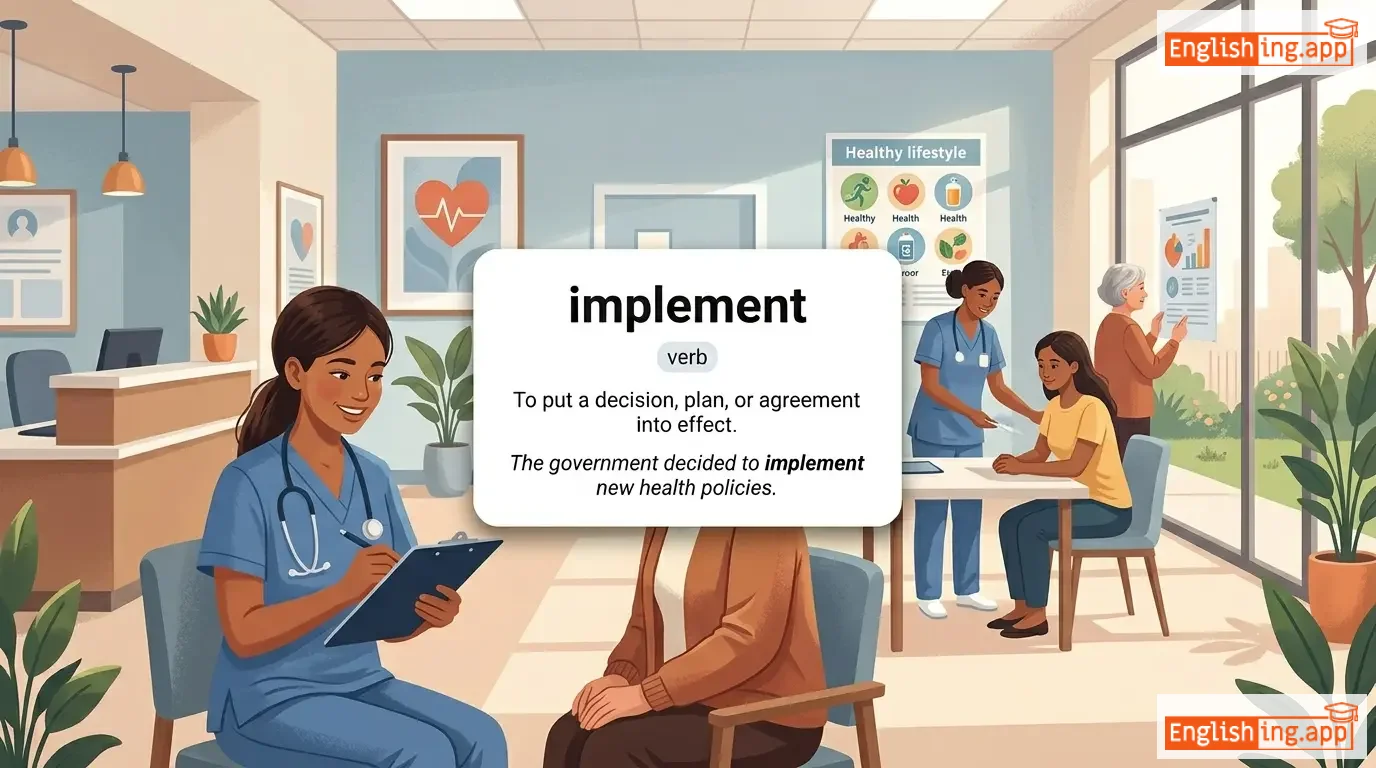
To put a decision, plan, or agreement into effect.
••••••
|
The government decided to implement new health policies.
政府は新しい健康政策を実施することに決定しました。
••••••
|
政府は新しい健康政策を実施することに決定しました。
Seifu wa atarashii kenko seisaku wo jisshi suru koto ni kettei shimashita.
••••••
|
implement a plan
計画を実行する
••••••
|
To carry out a plan in practice.
••••••
|
計画を実行する
Keikaku wo jikkou suru
••••••
|
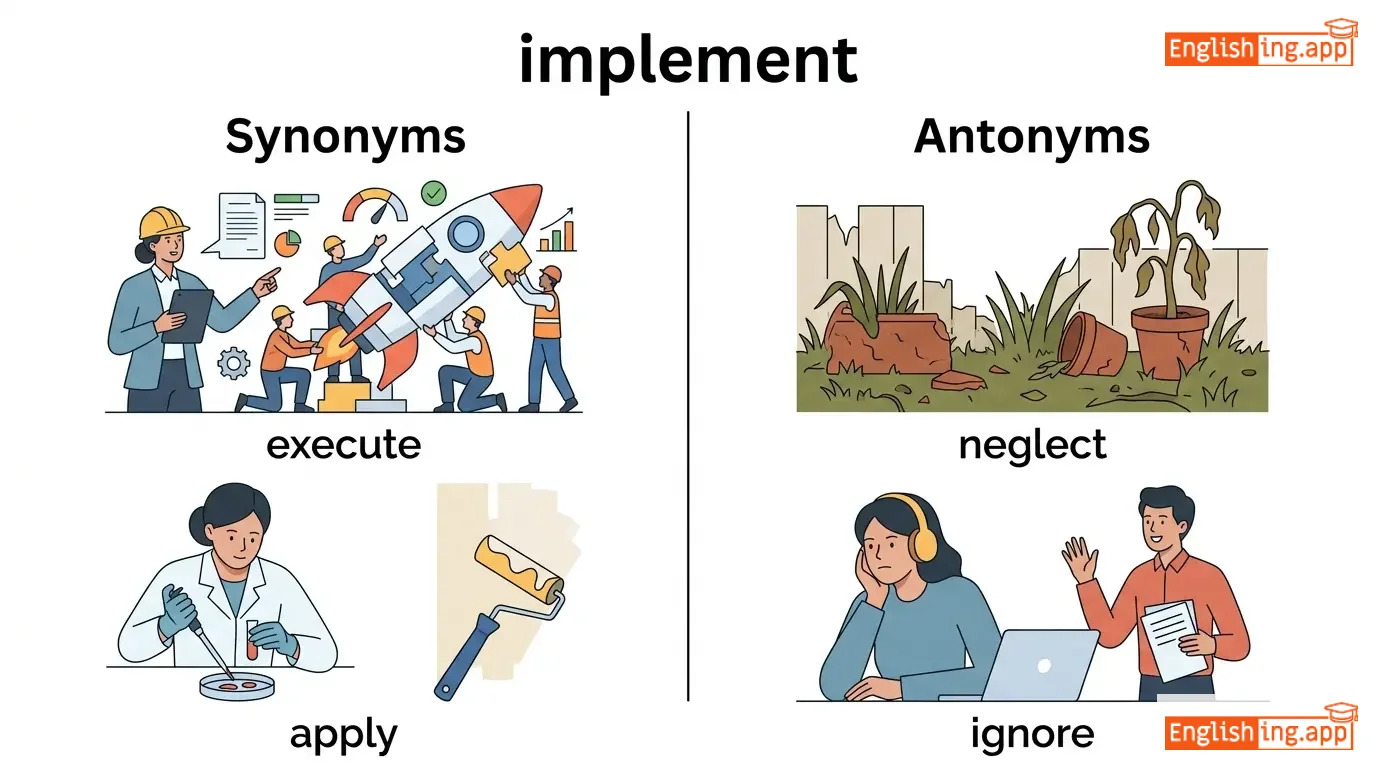
execute, apply, enforce, realize, perform
••••••
|
neglect, ignore, abandon
••••••
|
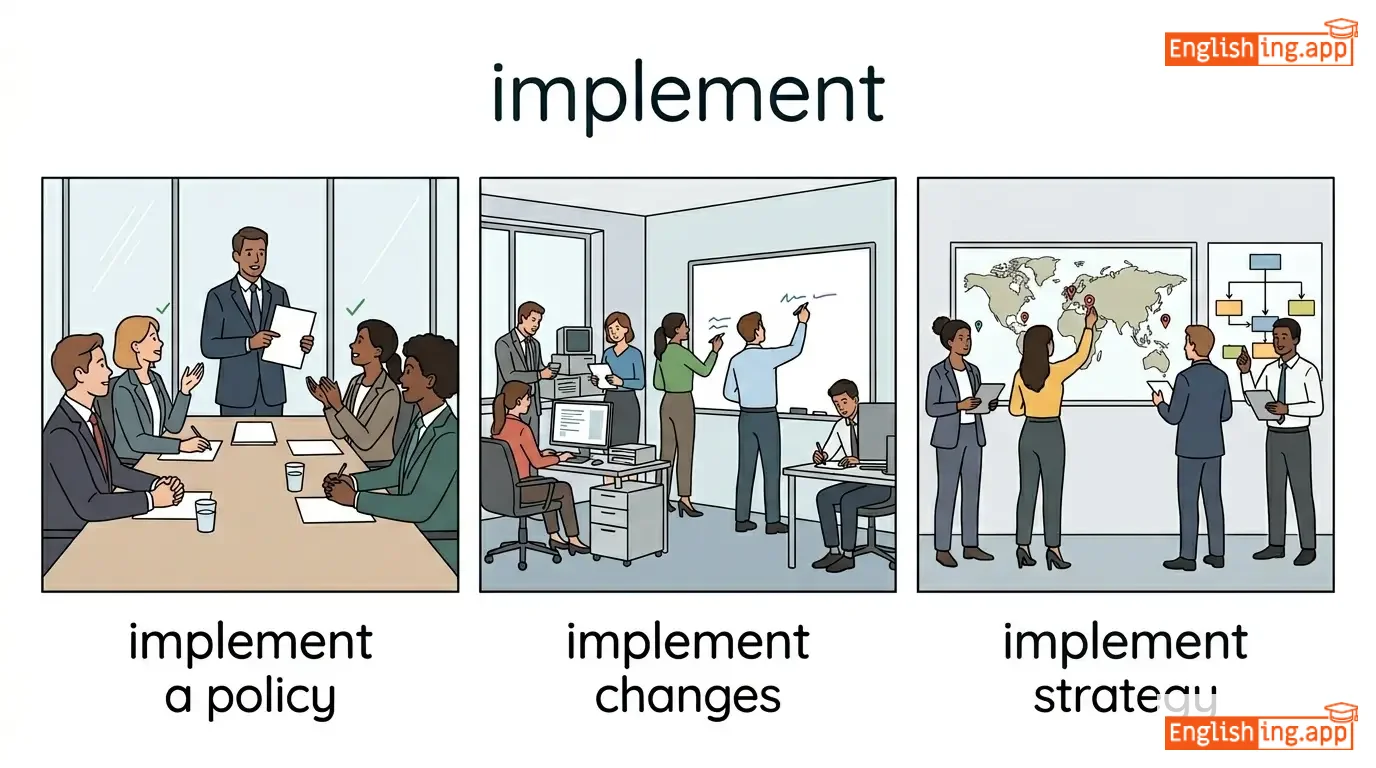
implement a policy, implement changes, implement strategy, implement decision
••••••
|
実施するは計画を現実にすることです。
••••••
|
|
⚙️
••••••
|
/ˌɪmplɪmenˈteɪʃən/
noun
(インプリメンテーション)
••••••
|
|
実施
jisshi
••••••
|
- •••••• | - •••••• | - •••••• | - •••••• |
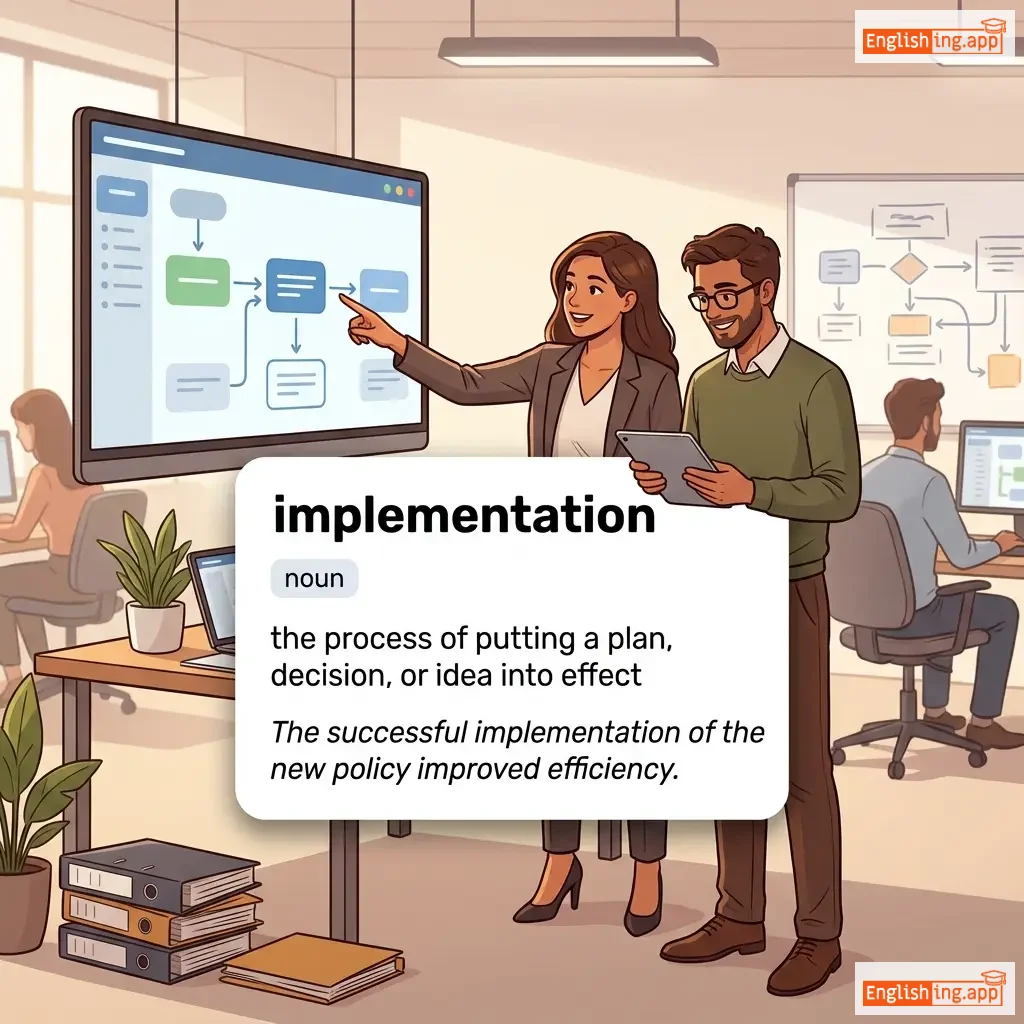
the process of putting a plan, decision, or idea into effect
••••••
|
The successful implementation of the new policy improved efficiency. |
新しい方針の実施が効率を向上させました。
Atarashii houshin no jisshi ga kōritsu o kōjō sasenomashita.
••••••
|
plan implementation |
the act of executing a planned action
••••••
|
計画の実施
keikaku no jisshi
••••••
|
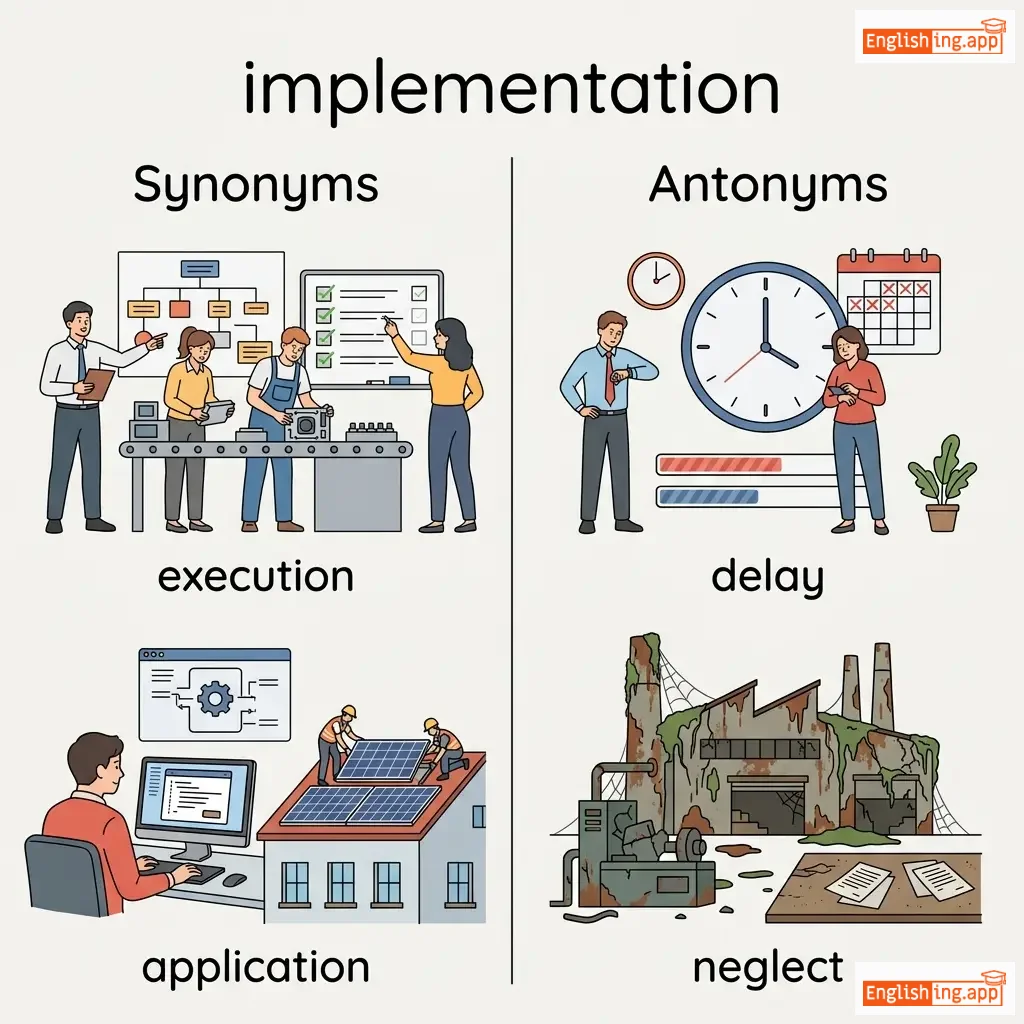
execution, application, realization, deployment, enforcement
••••••
|
delay, neglect, failure
••••••
|
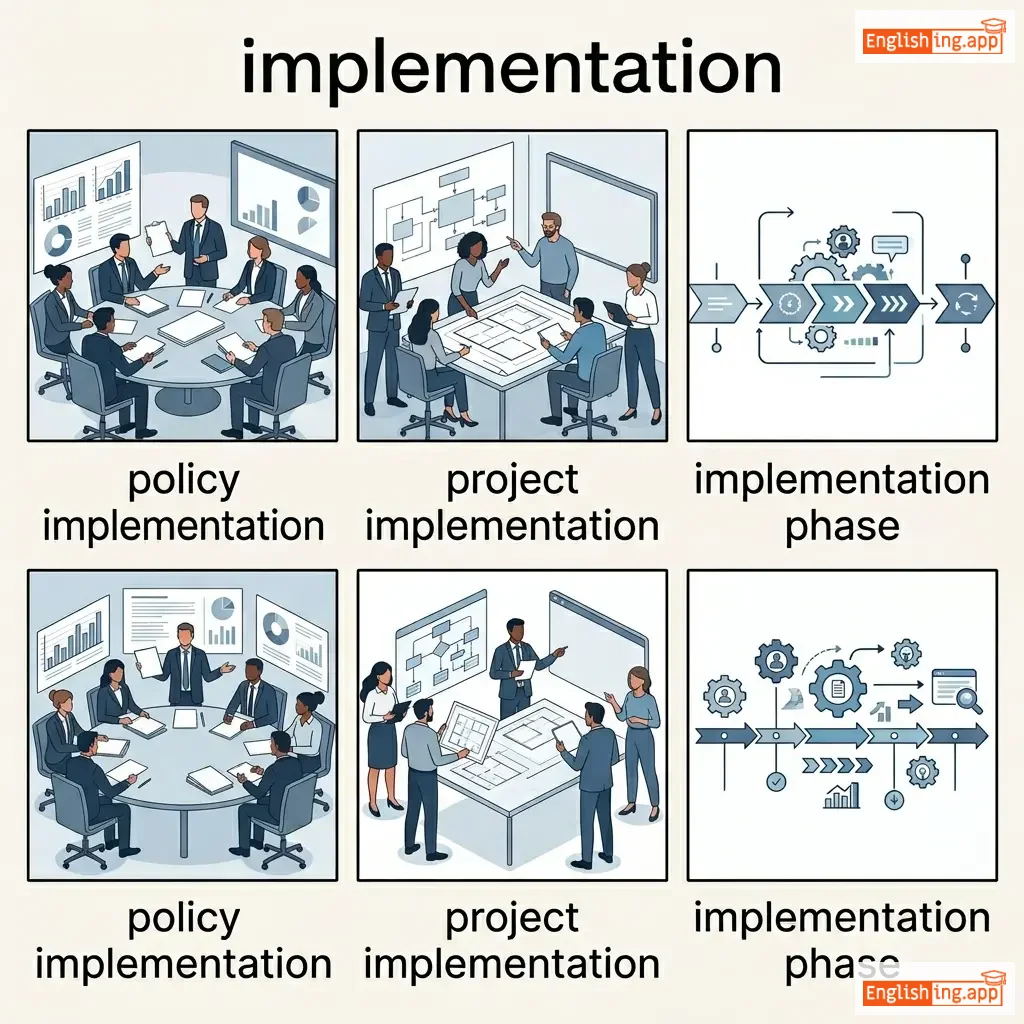
policy implementation, project implementation, implementation phase, strategy implementation
••••••
|
Implementは実行するという意味、実施はそのプロセスを示します。
••••••
|
|
📌
••••••
|
/ˌɪmplɪˈkeɪʃən/
noun
(インプリケーション)
••••••
|
|
含意, 影響
gani, eikyō
••••••
|
- •••••• | - •••••• | - •••••• | - •••••• |
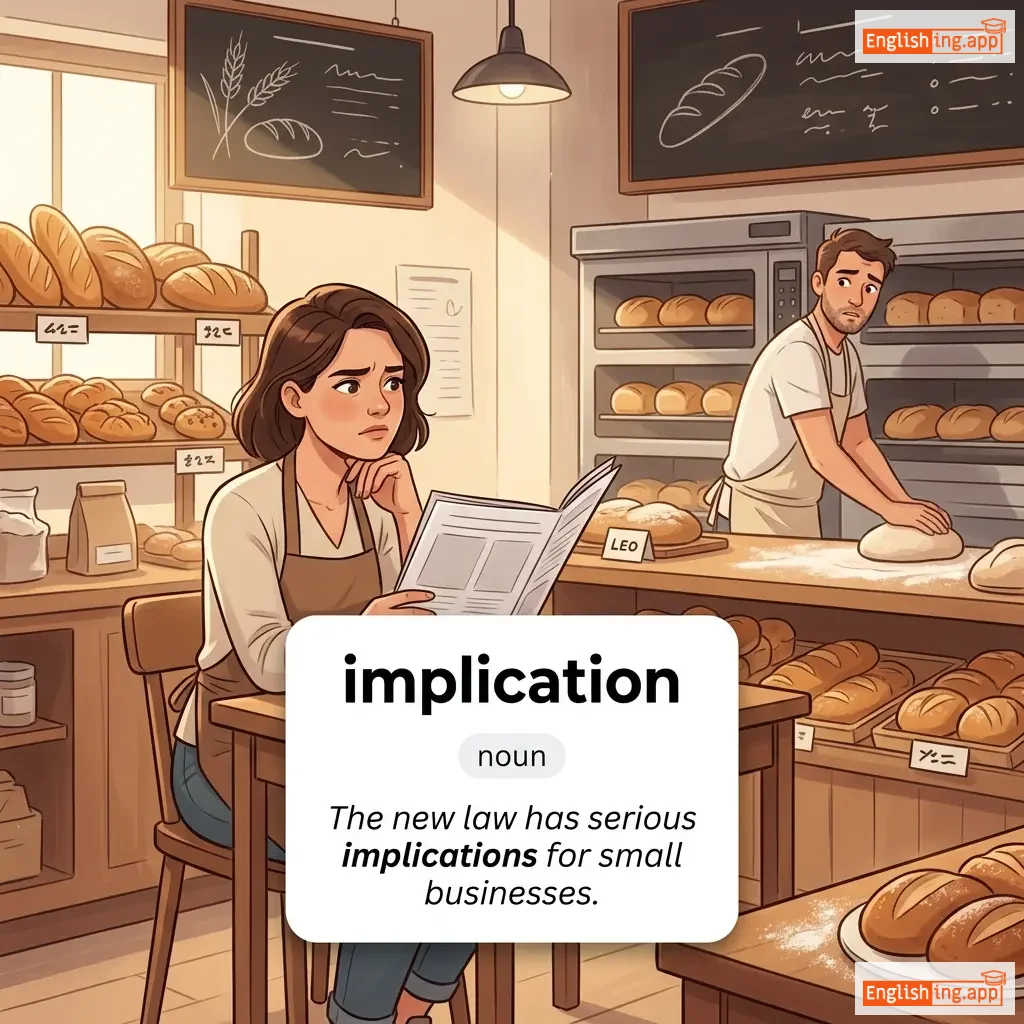
A possible effect or result of an action or decision; something suggested without being stated directly.
••••••
|
The new law has serious implications for small businesses. |
新しい法律は小規模企業に重大な影響を及ぼしています。
Atarashī hōritsu wa shōkibo kigyō ni jūdaina eikyō o oyoboshiteimasu.
••••••
|
by implication |
Indirectly or by consequence.
••••••
|
含意による
ganei ni yoru
••••••
|
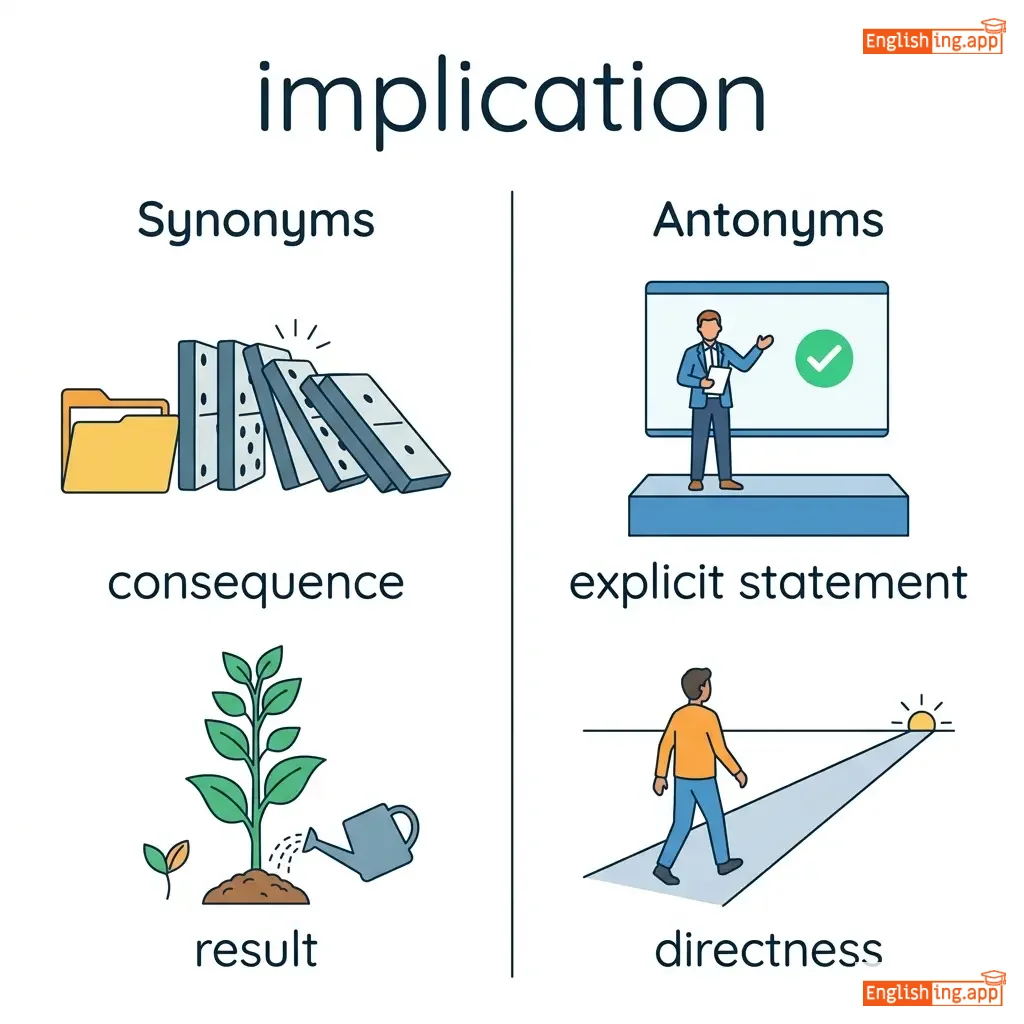
consequence, result, suggestion, inference, indication
••••••
|
explicit statement, directness
••••••
|
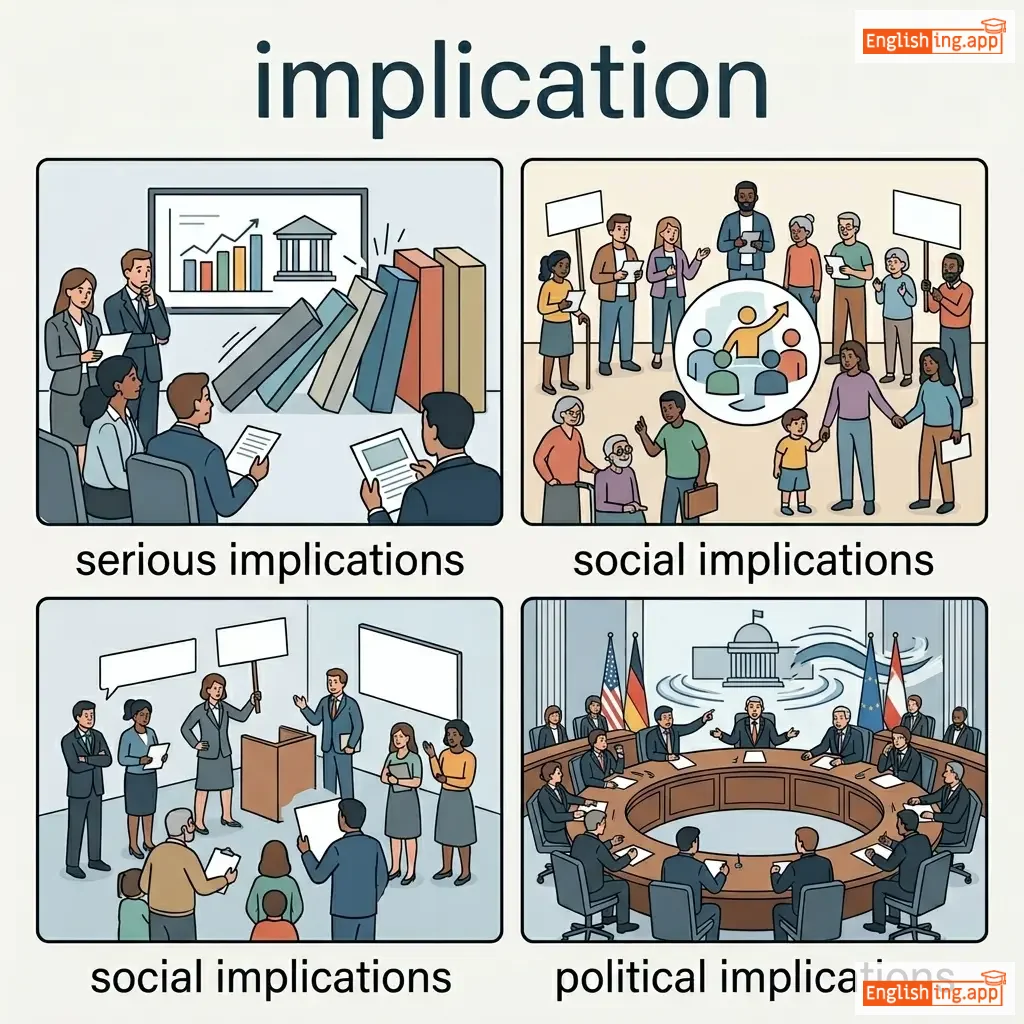
serious implications, social implications, political implications, economic implications
••••••
|
Implicationは結果や影響を意味します。それは含意として知られています。
••••••
|
|
💡
••••••
|
/ɪmˈplaɪ/
verb
(インプライ)
••••••
|
- •••••• |
暗示する
anshi suru
••••••
|
implied
インプライド
••••••
|
implied
インプライド
••••••
|
implies
インプライズ
••••••
|
implying
インプライング
••••••
|
To suggest something without directly stating it.
••••••
|
Her tone seemed to imply that she was upset.
彼女の口調は、彼女が怒っていることを示唆しているようでした。
••••••
|
彼女の口調は、彼女が怒っていることを示唆しているようでした。
Kanojo no kuchou wa, kanojo ga okotte iru koto o shisa shite iru you deshita.
••••••
|
imply meaning
インプライ意味
••••••
|
To indicate or suggest what something means indirectly.
••••••
|
意味を暗示する
imi o anshi suru
••••••
|
suggest, indicate, hint, signify
••••••
|
state, declare, express
••••••
|
imply strongly, imply indirectly, imply something
••••••
|
'Imply' は何かを直接言わずに示唆するという意味です。覚えておいてください、'暗示する' は間接的に示唆することです。
••••••
|
|
🙅
••••••
|
/ˌɪmpəˈlaɪt/
adjective
(インポライト)
••••••
|
- •••••• |
無礼
burei
••••••
|
- •••••• | - •••••• | - •••••• | - •••••• |
Not showing good manners; rude.
••••••
|
It is impolite to interrupt someone while they are speaking.
誰かが話しているときに邪魔をするのは失礼です。
••••••
|
誰かが話しているときに邪魔をするのは失礼です。
Dareka ga hanashite iru toki ni jama o suru no wa shitsurei desu.
••••••
|
- •••••• | - •••••• | - •••••• |
rude, disrespectful, discourteous, ill-mannered, inconsiderate
••••••
|
polite, courteous, respectful
••••••
|
impolite remark, impolite behavior, impolite tone, impolite gesture
••••••
|
Impoliteは無礼という意味です。考えてみてください、邪魔をするのは無礼です。
••••••
|
|
🙄
••••••
|
/ɪmˈpɒlɪtli/
adverb
(インポライトリー)
••••••
|
- •••••• |
無礼に
burei ni
••••••
|
- •••••• | - •••••• | - •••••• | - •••••• |
in a rude or discourteous manner; without showing respect or proper manners
••••••
|
He spoke impolitely to the waiter despite the polite service.
ヒー スポーク インポライトリー トゥ ザ ウェイター。
••••••
|
丁寧なサービスにもかかわらず、彼は無礼にウェイターに話した。
teinei na saabisu ni mo kakawarazu kare wa burei ni weitaa ni hanashita
••••••
|
- •••••• | - •••••• | - •••••• |
rudely, discourteously, ungraciously, impudently, bluntly
••••••
|
politely, courteously, respectfully
••••••
|
speak impolitely, behave impolitely, respond impolitely, act impolitely
••••••
|
im + polite → ポライトじゃない → 無礼
••••••
|
|
😒
••••••
|
/ɪmˈpɒlɪtnəs/
noun
(インポライトネス)
••••••
|
- •••••• |
無礼さ
bureisa
••••••
|
- •••••• | - •••••• | - •••••• | - •••••• |
lack of good manners or courtesy; rude behavior
••••••
|
His impoliteness towards the guests shocked everyone.
ヒズ インポライトネス トゥワーズ ザ ゲスツ ショックド エブリワン。
••••••
|
彼の客に対する無礼さは皆を驚かせた。
kare no kyaku ni taisuru bureisa wa mina o odorokaseta
••••••
|
- •••••• | - •••••• | - •••••• |
rudeness, discourtesy, disrespect, incivility, impertinence
••••••
|
politeness, courtesy, civility
••••••
|
act of impoliteness, social impoliteness, perceived impoliteness
••••••
|
Impoliteness は polite じゃない → 無礼さ。
••••••
|
|
📦
••••••
|
/ˈɪmpɔːrt/
verb
(インポート)
••••••
|

|
輸入
yunyuu
••••••
|
imported
インポートした
••••••
|
imported
インポートした
••••••
|
imports
インポートする
••••••
|
importing
インポートしている
••••••
|
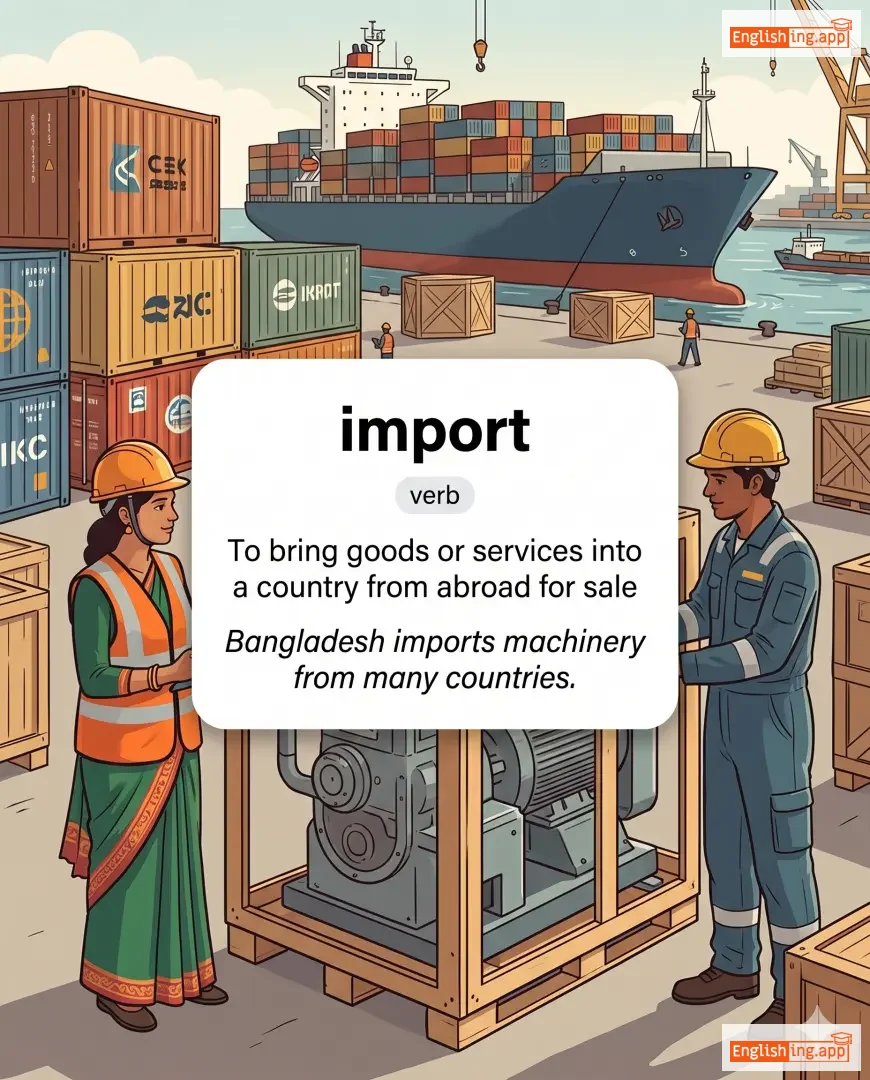
To bring goods or services into a country from abroad for sale
••••••
|
Bangladesh imports machinery from many countries.
バングラデシュは多くの国から機械をインポートしています。
••••••
|
バングラデシュは多くの国から機械をインポートしています。
Banguradeshu wa ooku no kuni kara kikai wo inpo-to shiteimasu.
••••••
|
import duty
インポート税
••••••
|
a tax imposed on goods brought into a country
••••••
|
輸入税
yunyuuzei
••••••
|
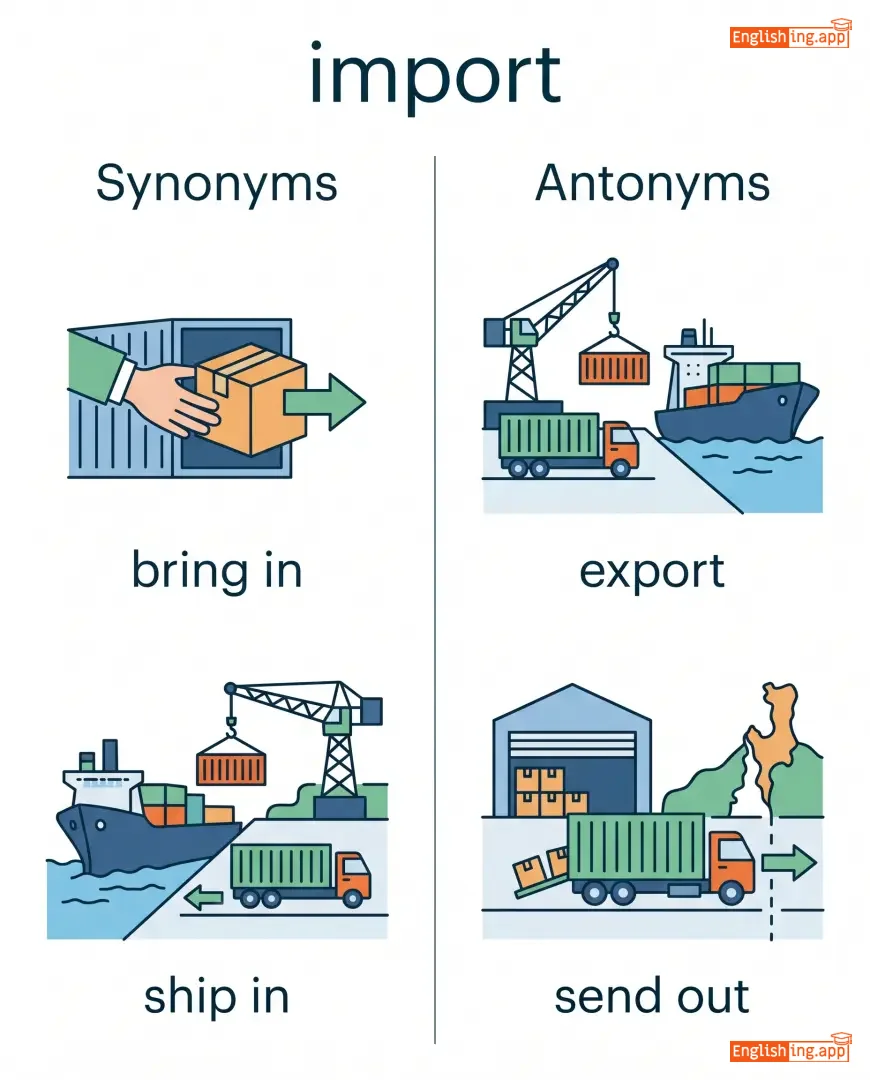
bring in, ship in, trade, purchase, transport
••••••
|
export, send out, sell abroad
••••••
|
import goods, import products, import services, import duty
••••••
|
インポート(輸入)は外から物を持ち込むこと。インポートで機械を持ち込むことを想像してください。
••••••
|
|
⭐
••••••
|
/ɪmˈpɔːrtəns/
noun
(インポータンス)
••••••
|
|
重要性
jūyō-sei
••••••
|
- •••••• | - •••••• | - •••••• | - •••••• |
the state or fact of being of great significance or value
••••••
|
She stressed the importance of honesty in all relationships. |
彼女はすべての関係における誠実の重要性を強調しました。
Kanojo wa subete no kankei ni okeru seijitsu no jūyō-sei o kyōchō shimashita.
••••••
|
of great importance |
extremely valuable or significant
••••••
|
非常に重要
hijō ni jūyō
••••••
|
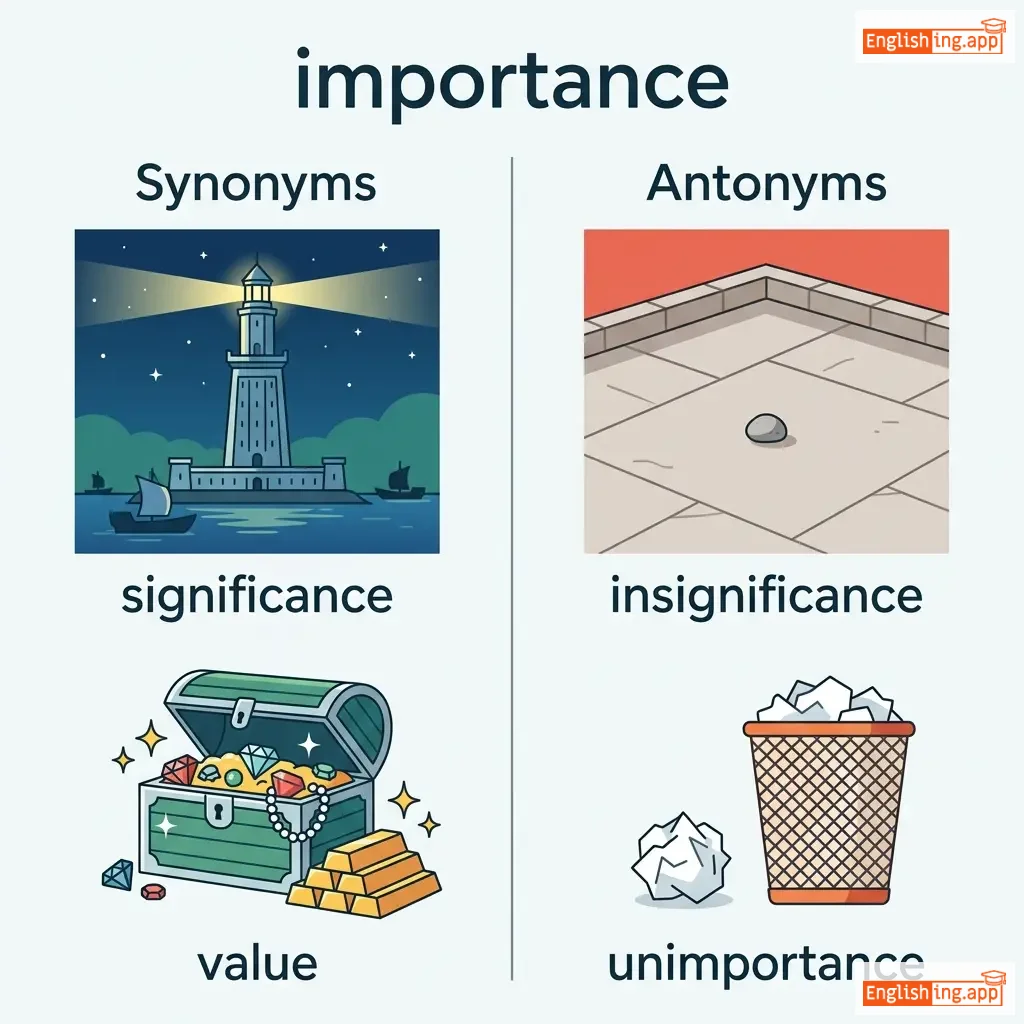
significance, value, weight, relevance, consequence
••••••
|
insignificance, unimportance
••••••
|
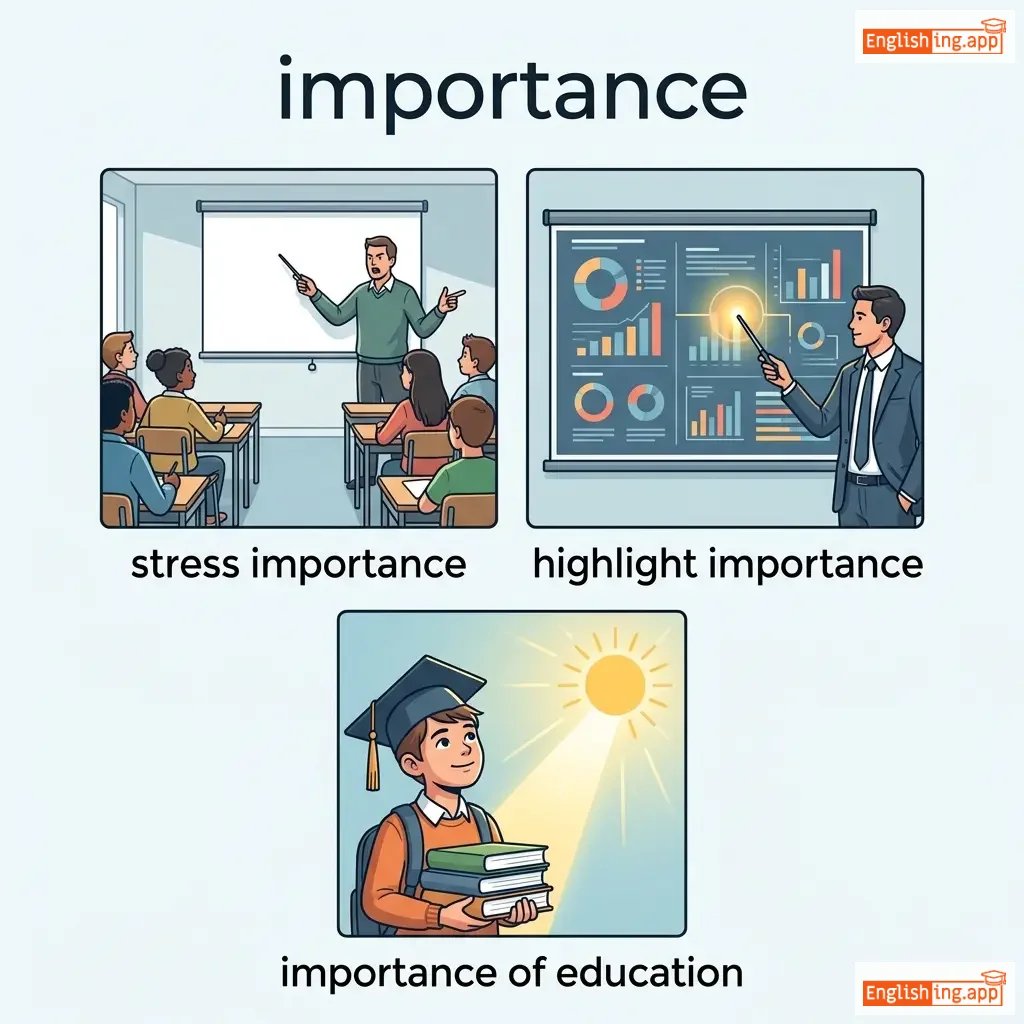
stress importance, highlight importance, importance of education, importance of health
••••••
|
重要性 = Importance, 忘れないでね! 🌟
••••••
|
|
⭐
••••••
|
/ɪmˈpɔːrtənt/
adjective
(インポータント)
••••••
|
|
重要
jūyō
••••••
|
- •••••• | - •••••• | - •••••• | - •••••• |
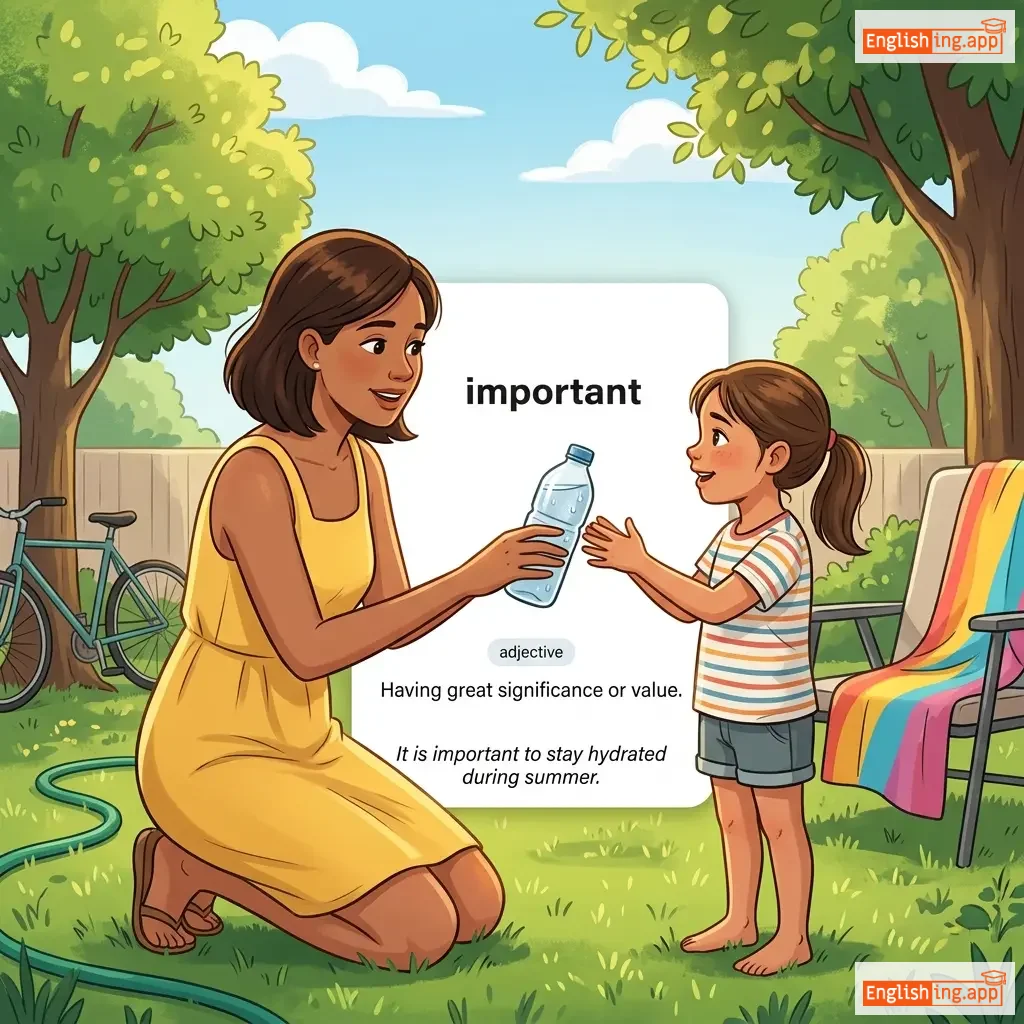
Having great significance or value.
••••••
|
It is important to stay hydrated during summer.
夏の間は水分補給が重要です。
••••••
|
夏の間は水分補給が重要です。
Natsu no aida wa suibun hokyū ga jūyō desu.
••••••
|
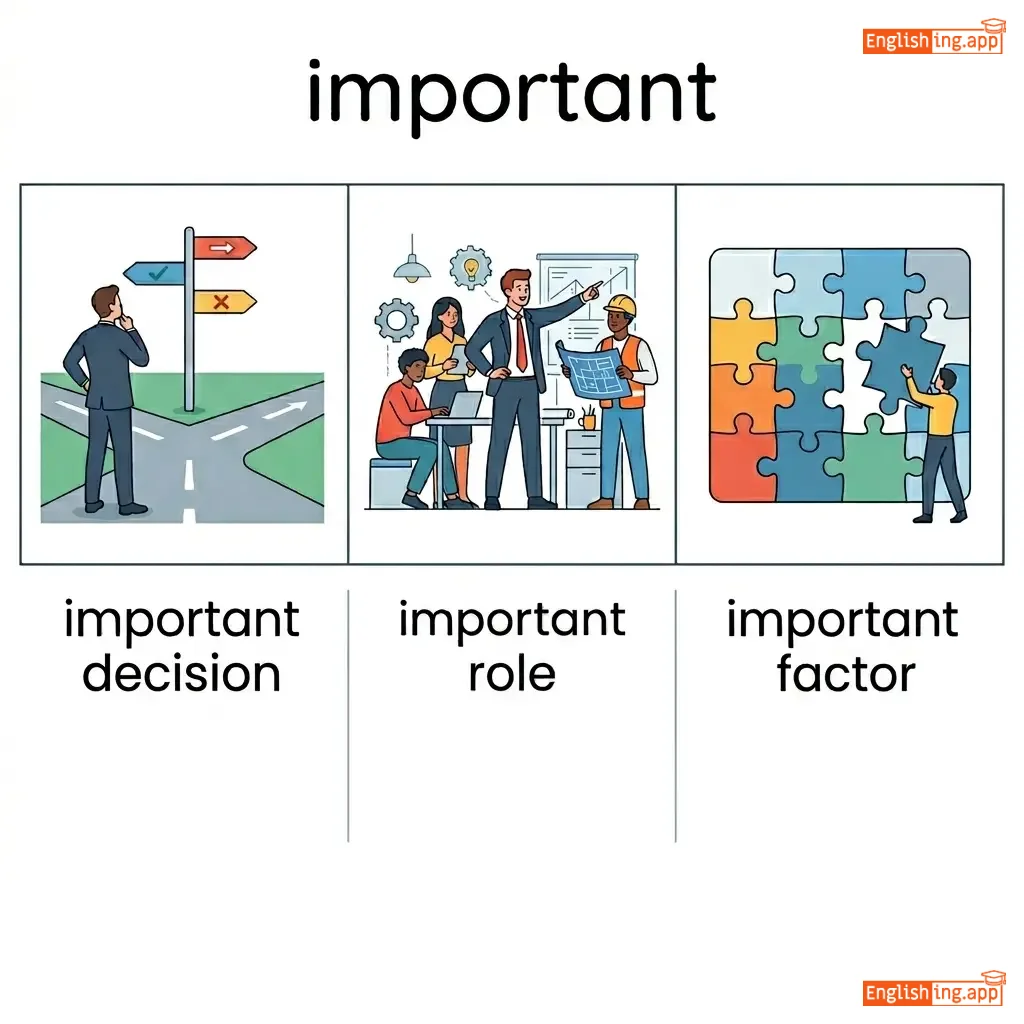
important role
重要な役割
••••••
|
a crucial part in a process or situation
••••••
|
重要な役割
jūyōna yakuwari
••••••
|
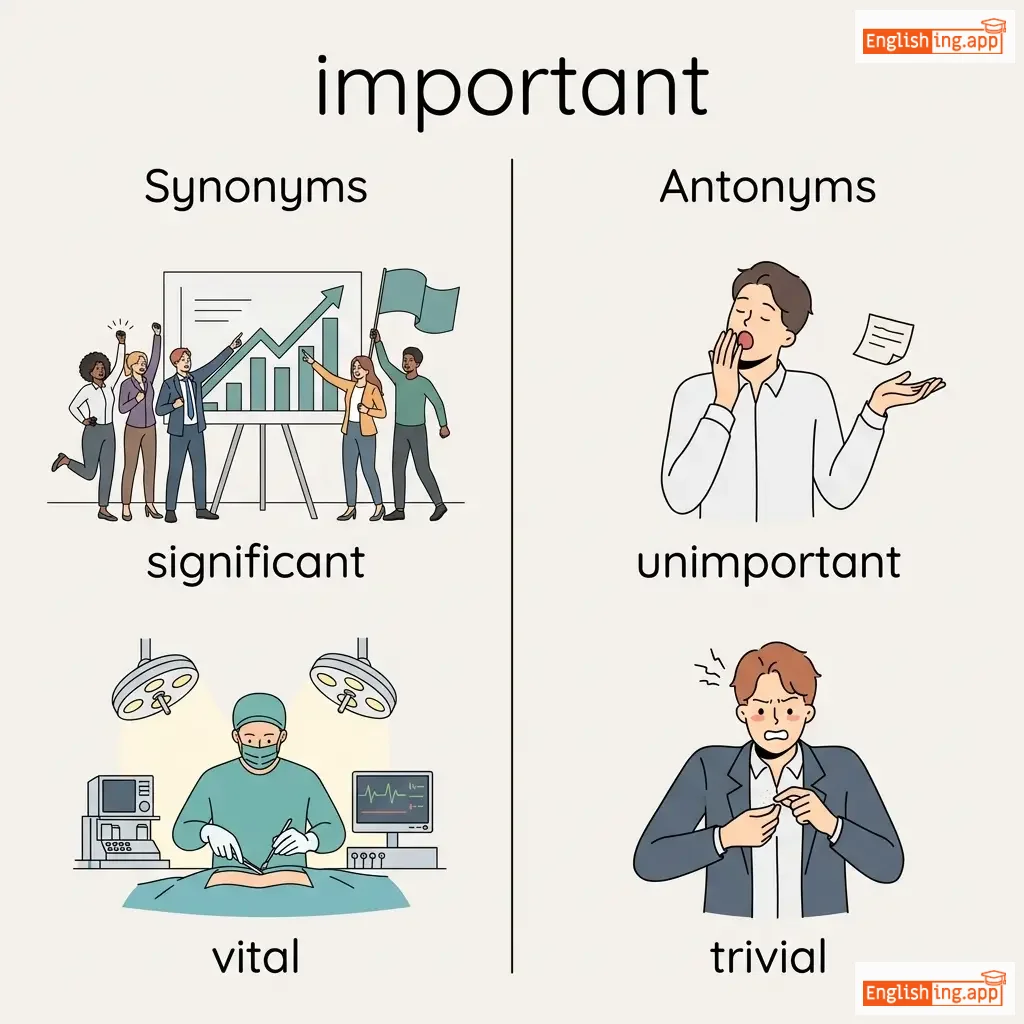
significant, vital, crucial, essential, meaningful
••••••
|
unimportant, trivial, minor
••••••
|
important decision, important role, important factor, important issue
••••••
|
重要は成功のために必要なもの、例えば夏の水分補給が重要です。
••••••
|
|
⚡
••••••
|
/ɪmˈpɔːtəntli/
adverb
(インポータントリー)
••••••
|
- •••••• |
重要な方法で
jūyōna hōhō de
••••••
|
- •••••• | - •••••• | - •••••• | - •••••• |
in a way that is of great significance or value
••••••
|
Importantly, the report highlights the need for immediate action. |
重要な方法で、報告書は即時の行動の必要性を強調しました。
Jūyōna hōhō de, hōkokusho wa sokujitsu no kōdō no hitsuyō-sei o kyōchō shimashita.
••••••
|
- •••••• | - •••••• | - •••••• |
significantly, notably, crucially, essentially, vitally
••••••
|
insignificantly, trivially, unimportantly
••••••
|
importantly, more importantly, very importantly, most importantly
••••••
|
Importantlyという言葉は、重要な方法で何かを強調するときに使います。
••••••
|
|
📜
••••••
|
/ɪmˈpoʊz/
verb
(インポーズ)
••••••
|
|
課す
kasu
••••••
|
imposed
インポーズド
••••••
|
imposed
インポーズド
••••••
|
imposes
インポーズズ
••••••
|
imposing
インポージング
••••••
|
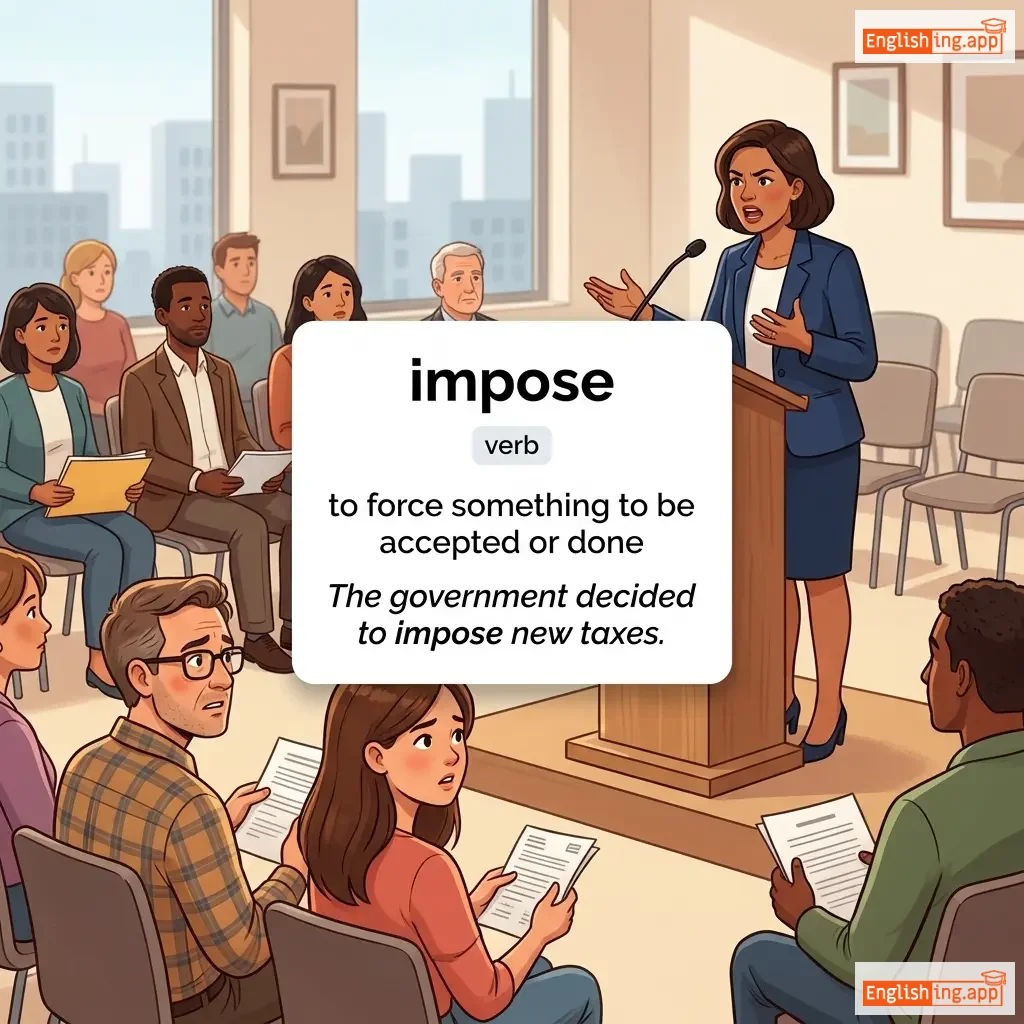
to force something to be accepted or done
••••••
|
The government decided to impose new taxes.
政府は新しい税金を課すことを決定した。
••••••
|
政府は新しい税金を課すことを決定した。
Seifu wa atarashī zeikin o kasu koto o kettei shita.
••••••
|
impose a ban
禁止を課す
••••••
|
to officially prohibit something
••••••
|
禁止を課す
kinshi o kasu
••••••
|
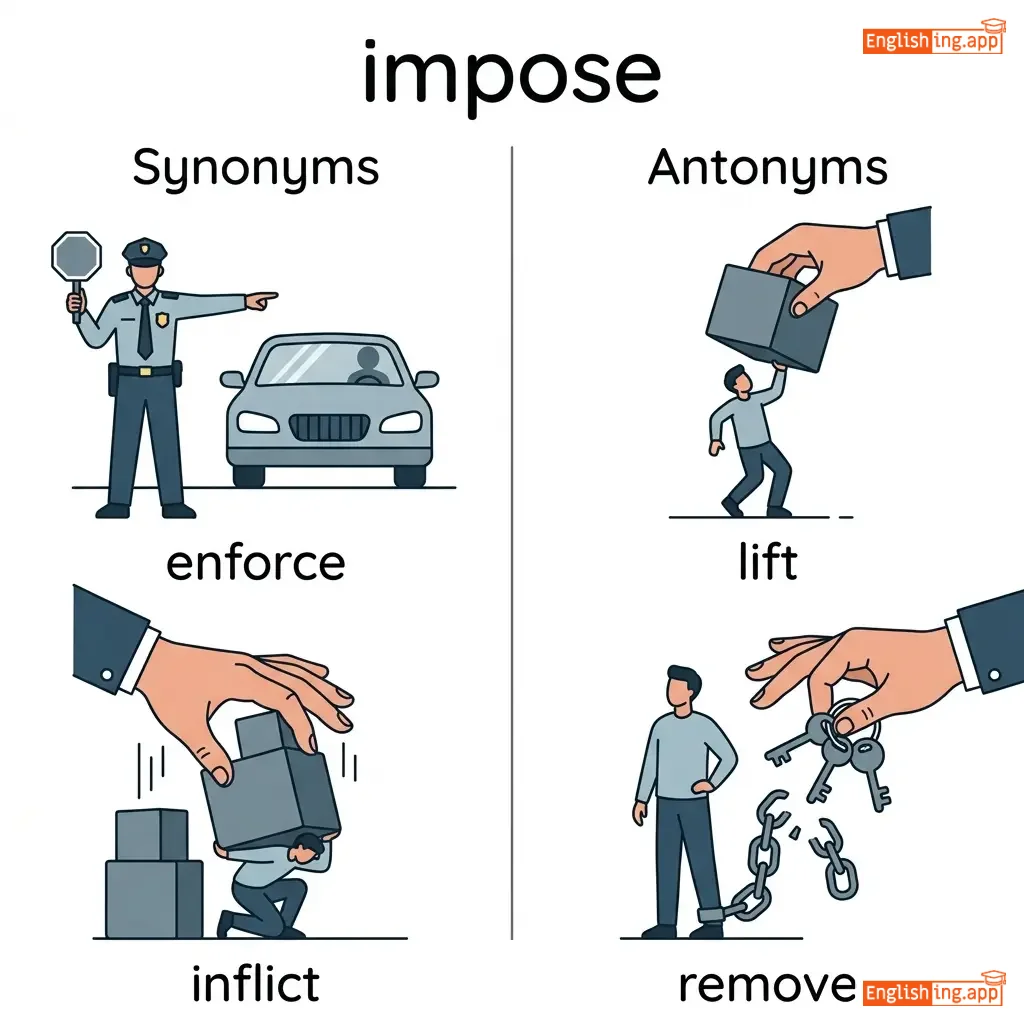
enforce, inflict, apply, establish, dictate
••••••
|
lift, remove, withdraw
••••••
|
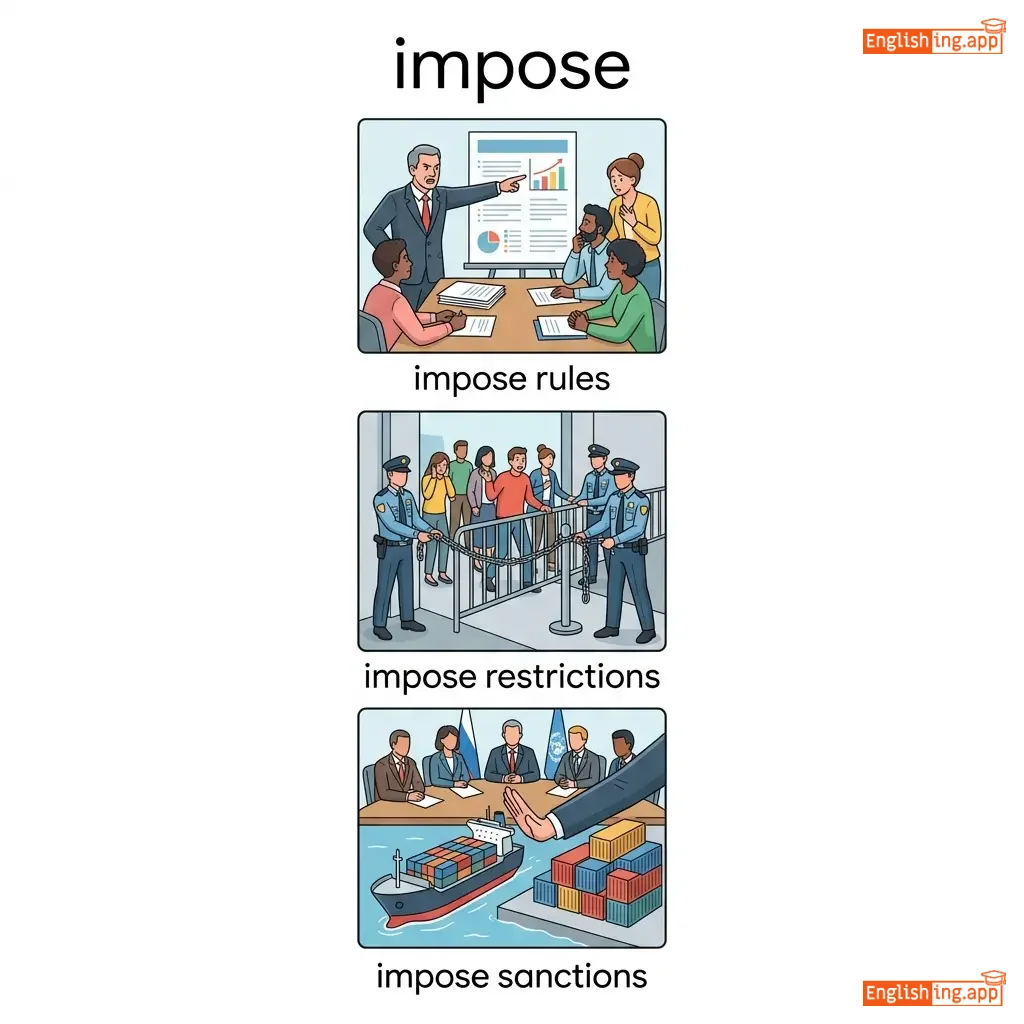
impose rules, impose restrictions, impose sanctions, impose fines
••••••
|
Imposeは課すです - 法律を課す、制限を課す!
••••••
|
|
🚫
••••••
|
/ɪmˌpɒsəˈbɪlɪti/
noun
(インポッシビリティ)
••••••
|
- •••••• |
不可能性
fukanousei
••••••
|
- •••••• | - •••••• | - •••••• | - •••••• |
the state or fact of being impossible; something that cannot be done or achieved
••••••
|
Finishing the project in one day was an impossibility.
一日でそのプロジェクトを終えるのは不可能だった。
••••••
|
一日でそのプロジェクトを終えるのは不可能だった。
ichinichi de sono purojekuto wo oeru no wa fukanou datta
••••••
|
an utter impossibility
完全な不可能
••••••
|
something that is completely impossible
••••••
|
完全な不可能
kanzen na fukanou
••••••
|
impracticability, unfeasibility, infeasibility, hopelessness
••••••
|
possibility, feasibility, likelihood
••••••
|
sheer impossibility, practical impossibility, absolute impossibility
••••••
|
Impossible → 不可能 → 不可能性
••••••
|
|
🚫
••••••
|
/ɪmˈpɑːsəbl/
adjective
(インポッシブル)
••••••
|
- •••••• |
不可能
fukanou
••••••
|
- •••••• | - •••••• | - •••••• | - •••••• |
not able to occur, exist, or be done
••••••
|
It is impossible to finish this work in one day.
この仕事を1日で終わらせるのは不可能です。
••••••
|
この仕事を1日で終わらせるのは不可能です。
Kono shigoto wo ichinichi de owaraseru no wa fukanou desu.
••••••
|
nothing is impossible
何事も不可能ではない
••••••
|
everything can be achieved with effort
••••••
|
何事も不可能ではない
Nanikoto mo fukanou de wa nai
••••••
|
unachievable, unattainable, hopeless, impracticable
••••••
|
possible, achievable, feasible
••••••
|
seem impossible, make impossible, impossible task, impossible mission
••••••
|
不可能、それは挑戦することを意味します!💪
••••••
|
|
✨
••••••
|
/ɪmˈprɛs/
verb
(インプレッス)
••••••
|
- •••••• |
感動させる
kandō saseru
••••••
|
impressed
インプレスト
••••••
|
impressed
インプレスト
••••••
|
impresses
インプレッシズ
••••••
|
impressing
インプレッシング
••••••
|
to cause someone to feel admiration or respect
••••••
|
Her speech managed to impress the audience.
彼女のスピーチは聴衆を感動させました。
••••••
|
彼女のスピーチは聴衆を感動させました。
Kanojo no supīchi wa chōshū o kandō sasemashita.
••••••
|
make an impression
印象を残す
••••••
|
to have a strong effect on someone
••••••
|
印象を残す
inshō o nokosu
••••••
|
amaze, astonish, inspire, move, influence
••••••
|
bore, disappoint, discourage
••••••
|
impress deeply, impress someone, impress with, fail to impress
••••••
|
インプレッスする時にみんなが言う 'インプレッシブ!' – 感動させる
••••••
|
|
🖼️
••••••
|
/ɪmˈprɛʃən/
noun
(インプレッション)
••••••
|
- •••••• |
印象, 概念
inpuresshon, gainen
••••••
|
- •••••• | - •••••• | - •••••• | - •••••• |
an idea, feeling, or opinion about something or someone
••••••
|
The book gave me a good first impression. |
その本は私に良い最初の印象を与えました。
Sono hon wa watashi ni yoi saisho no inshou o ataemashita.
••••••
|
leave an impression |
to have a lasting effect on someone
••••••
|
印象を残す
inshou o nokosu
••••••
|
impact, effect, influence, perception, opinion
••••••
|
ignorance, indifference
••••••
|
first impression, strong impression, lasting impression, overall impression
••••••
|
First impression is last impression – 最初の印象が大切
••••••
|

