|
絵文字
|
単語 | Images | 翻訳 | 過去 | 過去分詞 | 三人称単数 | 動名詞 | 意味 | 例文 | 例文の翻訳 | 表現例 | 表現例の意味 | 表現例の翻訳 | 同義語 | 対義語 | コロケーション | ニーモニック |
|---|---|---|---|---|---|---|---|---|---|---|---|---|---|---|---|---|---|
|
👨👩👧👦
••••••
|
/ˈhaʊshoʊld/
noun
(ハウスホールド)
••••••
|
- •••••• |
家庭
katei
••••••
|
- •••••• | - •••••• | - •••••• | - •••••• |
All the people living together in one house, considered as a unit.
••••••
|
There are five people in our household. |
私たちの家庭には五人います。
Watashitachi no katei ni wa gonin imasu.
••••••
|
household name |
a person or brand that is very well known
••••••
|
有名な名前
yūmei na namae
••••••
|
family, home, residents, occupants, domestic unit
••••••
|
outsiders, strangers
••••••
|
household chores, household income, household goods, household members
••••••
|
家庭は家を意味します、覚えておいて 'House + All → 家にみんな'
••••••
|
|
🏠
••••••
|
/ˈhaʊswaɪf/
noun
(ハウスワイフ)
••••••
|
- •••••• |
主婦
shufu
••••••
|
- •••••• | - •••••• | - •••••• | - •••••• |
a married woman who manages a household and whose main occupation is caring for her family and home
••••••
|
She chose to work as a housewife while raising her children.
シー チョーズ トゥ ワーク アズ ア ハウスワイフ ワイル レイジング ハー チルドレン。
••••••
|
彼女は子どもを育てるために主婦になることを選びました。
Kanojo wa kodomo o sodateru tame ni shufu ni naru koto o erabimashita
••••••
|
- •••••• | - •••••• | - •••••• |
homemaker, stay-at-home wife, domestic manager, homemaker woman
••••••
|
career woman, working woman
••••••
|
traditional housewife, full-time housewife, become a housewife, role of a housewife
••••••
|
Housewife = ハウス + 主婦
••••••
|
|
🏠
••••••
|
/ˈhaʊzɪŋ/
noun
(ハウジング)
••••••
|
- •••••• |
住宅
jūtaku
••••••
|
- •••••• | - •••••• | - •••••• | - •••••• |
buildings or structures where people live; accommodation
••••••
|
The government is working to provide affordable housing for everyone. |
政府はすべての人々に手頃な住宅を提供するために努力しています。
Seifu wa subete no hitobito ni tegorona jūtaku o teikyō suru tame ni doryoku shiteimasu.
••••••
|
public housing |
housing provided by the government for low-income families
••••••
|
公共住宅
kōkyō jūtaku
••••••
|
accommodation, residence, dwelling, shelter, lodging
••••••
|
homelessness, eviction
••••••
|
affordable housing, housing project, housing policy, housing shortage
••••••
|
Housingは住む場所、住宅、つまり住まいのこと。
••••••
|
|
❓
••••••
|
/haʊ/
adverb
(ハウ)
••••••
|
- •••••• |
どう
dou
••••••
|
- •••••• | - •••••• | - •••••• | - •••••• |
in what way or manner; by what means
••••••
|
How do you solve this problem?
この問題をどう解決しますか?
••••••
|
この問題をどう解決しますか?
Kono mondai o dou kaiketsu shimasu ka?
••••••
|
how come
どうしてそうなったのですか?
••••••
|
used to ask why something has happened
••••••
|
どうしてそうなったのですか?
Doushite sou natta no desu ka?
••••••
|
in what way, by what means, in what manner
••••••
|
why not, never
••••••
|
how often, how much, how many, how long
••••••
|
Howは日本語でどう、覚えておいてね、何かを尋ねるときに使う言葉。
••••••
|
|
⚖️
••••••
|
/haʊˈɛvər/
adverb, conjunction
(ハウエヴァー)
••••••
|
- •••••• |
しかし
shikashi
••••••
|
- •••••• | - •••••• | - •••••• | - •••••• |
used to introduce a statement that contrasts with or seems to contradict something previously said
••••••
|
The journey was long; however, it was enjoyable. |
旅は長かった; しかし、それは楽しかった。
Tabi wa nagakatta; shikashi, sore wa tanoshikatta.
••••••
|
- •••••• | - •••••• | - •••••• |
nevertheless, but, still, yet
••••••
|
therefore, thus
••••••
|
however hard, however much, however difficult
••••••
|
However は日本語で しかし と言います。長い旅だったけど、でも楽しかった!
••••••
|
|
🗻
••••••
|
/hjuːdʒ/
adjective
(hyuj)
••••••
|
- •••••• |
巨大な
kyodaina
••••••
|
- •••••• | - •••••• | - •••••• | - •••••• |
extremely large in size or amount
••••••
|
The stadium was filled with a huge crowd. |
スタジアムは巨大な群衆で埋め尽くされていました。
sutajiamu wa kyodaina gunshū de umetsukusarete imashita.
••••••
|
make a huge difference |
to have a significant effect on something
••••••
|
大きな違いを生む
ōkina chigai o umu
••••••
|
enormous, massive, gigantic, vast, colossal
••••••
|
tiny, small, little
••••••
|
huge success, huge amount, huge crowd, huge impact
••••••
|
Hugeは巨大な意味、巨大な群衆 = 巨大な集まり
••••••
|
|
🧑
••••••
|
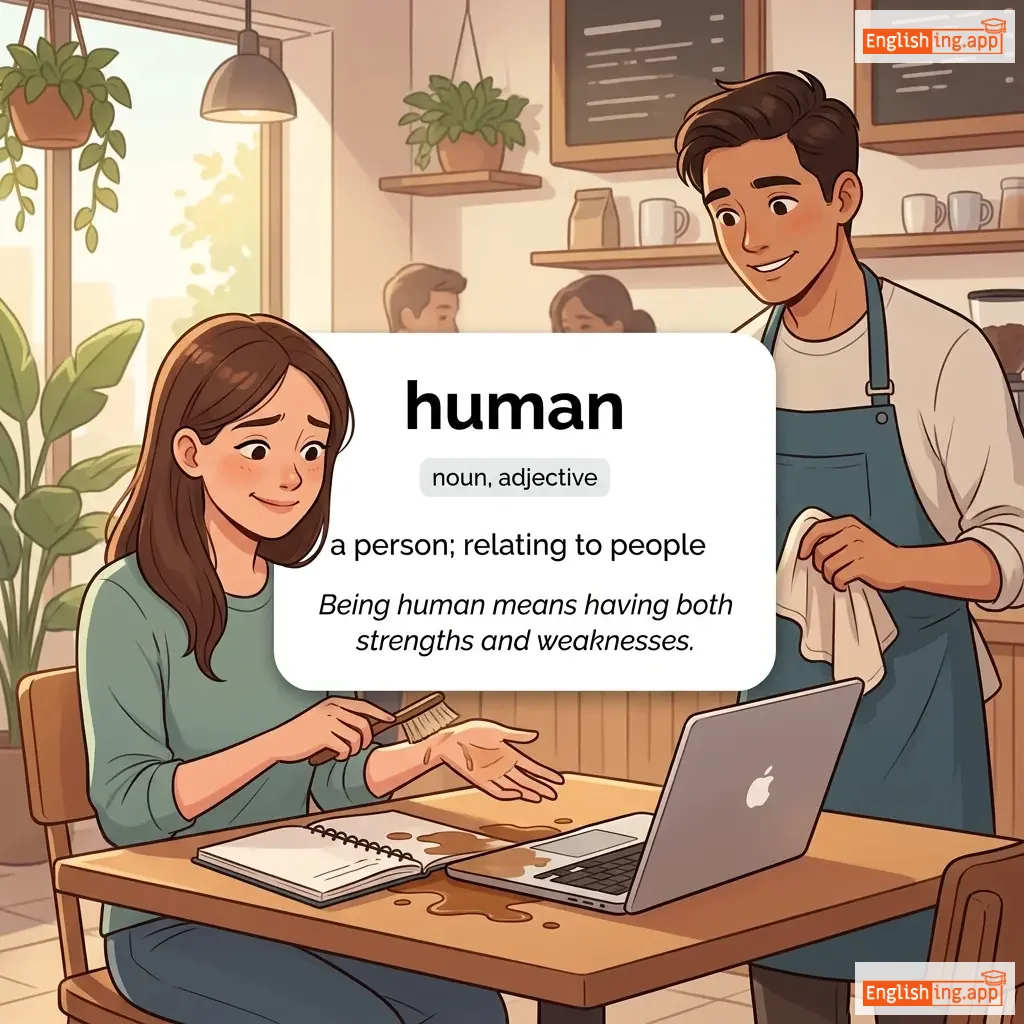
/ˈhjuːmən/
noun, adjective
(ヒューマン)
••••••
|
|
人間
ningen
••••••
|
- •••••• | - •••••• | - •••••• | - •••••• |
a person; relating to people
••••••
|
Being human means having both strengths and weaknesses. |
人間であることは、強さと弱さの両方を持つことを意味します。
Ningen de aru koto wa, tsuyo-sa to yowa-sa no ryōhō o motsu koto o imi shimasu.
••••••
|
to err is human |
making mistakes is a natural part of being human
••••••
|
過ちは人間の本性
ayamani wa ningen no honshō
••••••
|
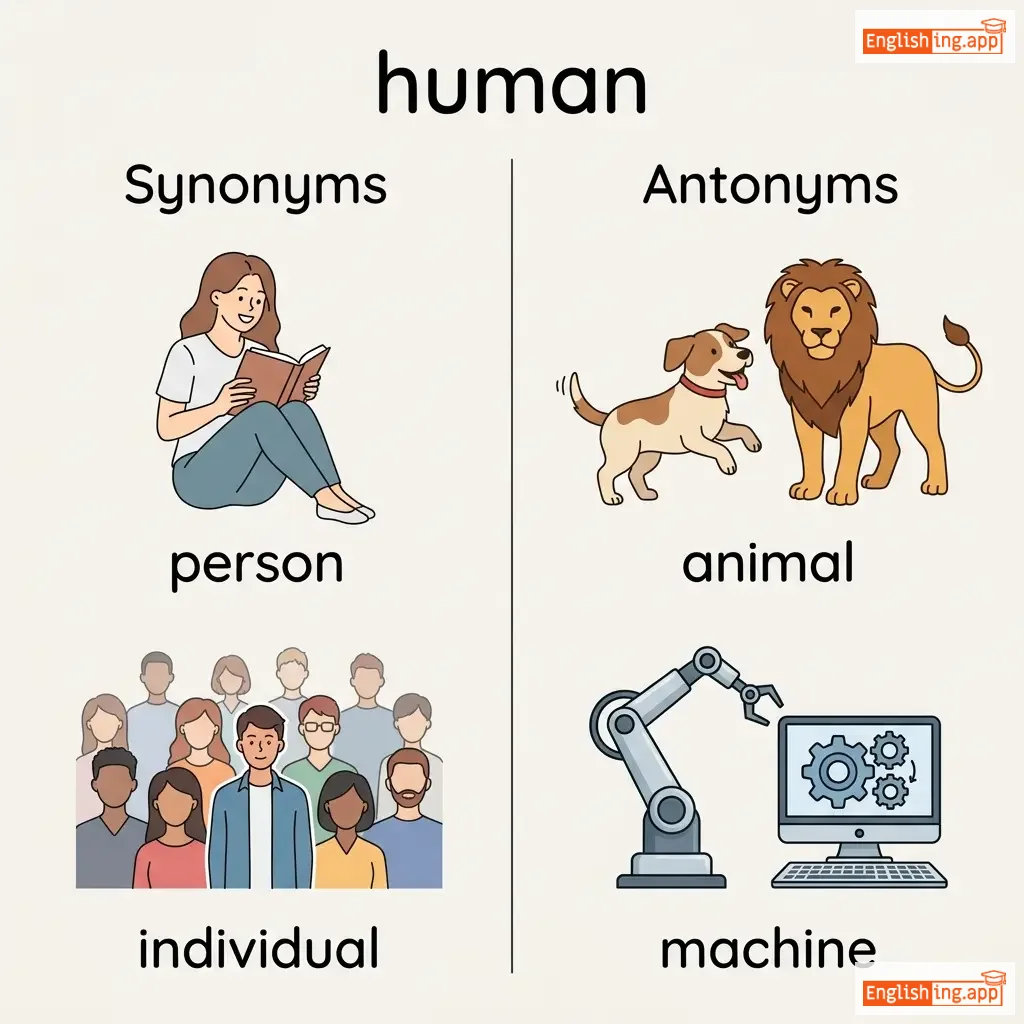
person, individual, mortal, man, woman
••••••
|
animal, machine, robot
••••••
|
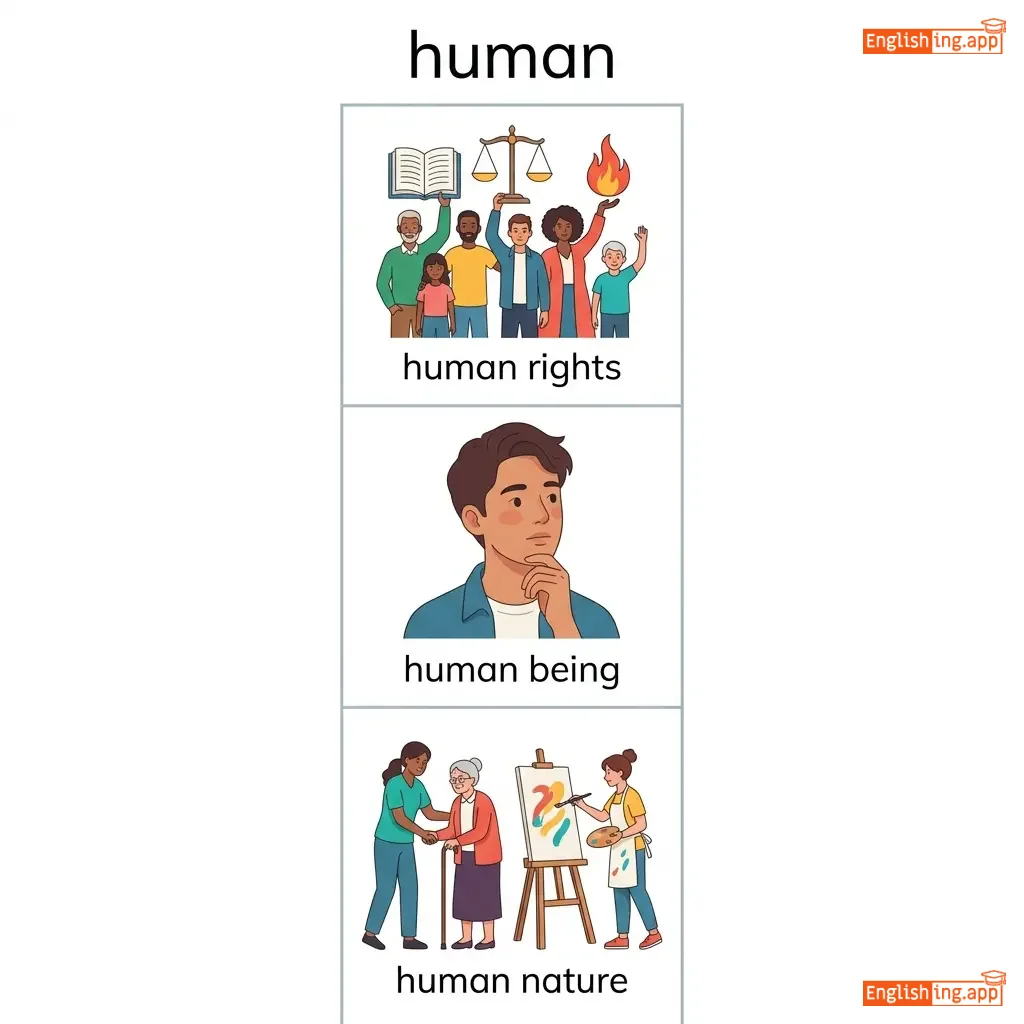
human rights, human being, human nature, human body
••••••
|
Human = 'ningen' (人間) → それは人間が持つ特性です。
••••••
|
|
🌍
••••••
|
/hjuːˌmænɪˈtɛəriən/
noun, adjective
(ヒューマニタリアン)
••••••
|
- •••••• |
人道主義者
jindou shugi-sha
••••••
|
- •••••• | - •••••• | - •••••• | - •••••• |
A person who seeks to promote human welfare, or something relating to human welfare and compassion.
••••••
|
The organization provides humanitarian aid to disaster victims. |
その組織は災害の被害者に人道的支援を提供します。
Sono soshiki wa saigai no higai-sha ni jindou-teki shien wo teikyoushimasu.
••••••
|
humanitarian crisis |
A large-scale situation where people's basic needs are not being met, often due to war or natural disaster.
••••••
|
人道的危機
jindou-teki kiki
••••••
|
philanthropic, benevolent, charitable, altruistic, compassionate
••••••
|
selfish, cruel, inhumane
••••••
|
humanitarian aid, humanitarian mission, humanitarian crisis, humanitarian assistance
••••••
|
人道主義者は人道+主義者 — 他人を助ける人。
••••••
|
|
🌍
••••••
|
/hjuːˈmænɪti/
noun
(ヒューマニティ)
••••••
|
- •••••• |
人間性
ningen-sei
••••••
|
- •••••• | - •••••• | - •••••• | - •••••• |
the quality of being human; kindness or compassion towards others; all human beings collectively
••••••
|
Kindness is one of the greatest expressions of humanity. |
優しさは人間性の最も偉大な表現の一つです。
Yasashisa wa ningen-sei no mottomo idaina hyōgen no hitotsu desu.
••••••
|
crimes against humanity |
serious offenses that harm large groups of people
••••••
|
人道に対する罪
Jindō ni taisuru tsumi
••••••
|
mankind, humankind, compassion, benevolence, kindness
••••••
|
cruelty, inhumanity, brutality
••••••
|
show humanity, act with humanity, crimes against humanity, humanity and compassion
••••••
|
人間性は人間の本質、思いやりと優しさに表れる。
••••••
|
|
🙏
••••••
|
/ˈhʌmbəl/
adjective, verb
••••••
|
- •••••• | - •••••• |
humbled
••••••
|
humbled
••••••
|
humbles
••••••
|
humbling
••••••
|
Having or showing a modest view of one's importance; to lower pride or status.
••••••
|
Despite his success, he remained humble. |
- •••••• |
eat humble pie |
To admit one's mistake and apologize humbly.
••••••
|
- •••••• |
modest, meek, unassuming, respectful
••••••
|
arrogant, proud, boastful
••••••
|
humble beginning, humble attitude, humble request
••••••
|
No •••••• |
|
😂
••••••
|
/ˈhjuː.mər/
noun
••••••
|
- •••••• | - •••••• | - •••••• | - •••••• | - •••••• | - •••••• |
The quality of being amusing or entertaining.
••••••
|
His sense of humor always lightens the mood. |
- •••••• |
good sense of humor |
The ability to be funny and understand jokes.
••••••
|
- •••••• |
wit, comedy, fun, amusement, joviality
••••••
|
seriousness, gloom
••••••
|
sense of humor, dry humor, dark humor, use humor
••••••
|
No •••••• |
|
😄
••••••
|
/ˈhjuː.mər.əs/
adjective
(ヒューマラス)
••••••
|
- •••••• |
ユーモアのある; 面白い; 笑いを引き起こす;
yūmoa no aru; omoshiroi; warai o hikiokosu;
••••••
|
- •••••• | - •••••• | - •••••• | - •••••• |
funny; amusing; causing laughter;
••••••
|
His humorous stories always make everyone laugh. |
彼のユーモラスな話はいつも皆を笑わせる。
Kare no yūmorasuna hanashi wa itsumo mina o warawaseru.
••••••
|
- •••••• | - •••••• | - •••••• |
funny, amusing, witty, comical
••••••
|
serious, solemn, grave, humorless
••••••
|
humorous story, humorous person, humorous remark
••••••
|
ユーモアのある話で笑わせよう
••••••
|
|
💯
••••••
|
/ˈhʌndrəd/
noun, numeral
(handoreddo)
••••••
|
- •••••• |
百
hyaku
••••••
|
- •••••• | - •••••• | - •••••• | - •••••• |
the number 100
••••••
|
There are a hundred students in the hall. |
ホールには百人の学生がいます。
Hōru ni wa hyaku-nin no gakusei ga imasu.
••••••
|
hundred percent |
completely; fully
••••••
|
百分の百
hyaku bun no hyaku
••••••
|
century, 100, large number
••••••
|
zero, none
••••••
|
one hundred, hundred percent, hundred times
••••••
|
百 = 100、百分の百は完全に。
••••••
|
|
🍽️
••••••
|
/ˈhʌŋɡər/
noun
(ハンガー)
••••••
|
- •••••• |
飢餓
kiga
••••••
|
- •••••• | - •••••• | - •••••• | - •••••• |
the feeling of discomfort caused by lack of food
••••••
|
The child cried out of hunger. |
その子供は飢えで泣いていました。
Sono kodomo wa ue de naite imashita.
••••••
|
hunger for success |
a strong desire to achieve success
••••••
|
成功への飢え
seikou e no ue
••••••
|
starvation, appetite, craving, emptiness
••••••
|
satisfaction, fullness
••••••
|
die of hunger, hunger strike, hunger for power, hunger relief
••••••
|
Hunger = 飢餓, Hungry = 飢えた
••••••
|
|
🍽️
••••••
|
/ˈhʌŋɡri/
adjective
(ハングリー)
••••••
|
- •••••• |
空腹
kuufuku
••••••
|
- •••••• | - •••••• | - •••••• | - •••••• |
feeling or showing the need for food
••••••
|
The children were hungry after playing outside all day. |
子供たちは一日中外で遊んだ後、空腹だった。
Kodomotachi wa ichinichijuu soto de asonda ato, kuufuku datta.
••••••
|
hungry for success |
eager or ambitious to achieve something
••••••
|
成功への飢え
seikou e no ue
••••••
|
starving, famished, ravenous, peckish
••••••
|
full, satisfied, stuffed
••••••
|
very hungry, feel hungry, go hungry, hungry eyes
••••••
|
Hungry は空腹を意味する — 空腹時に腹が鳴る音が 'ハングリー' という感じ。
••••••
|
|
🏹
••••••
|
/hʌnt/
verb
(hant)
••••••
|
|
狩り
kari
••••••
|
hunted
hanted
••••••
|
hunted
hanted
••••••
|
hunts
hants
••••••
|
hunting
hanting
••••••
|
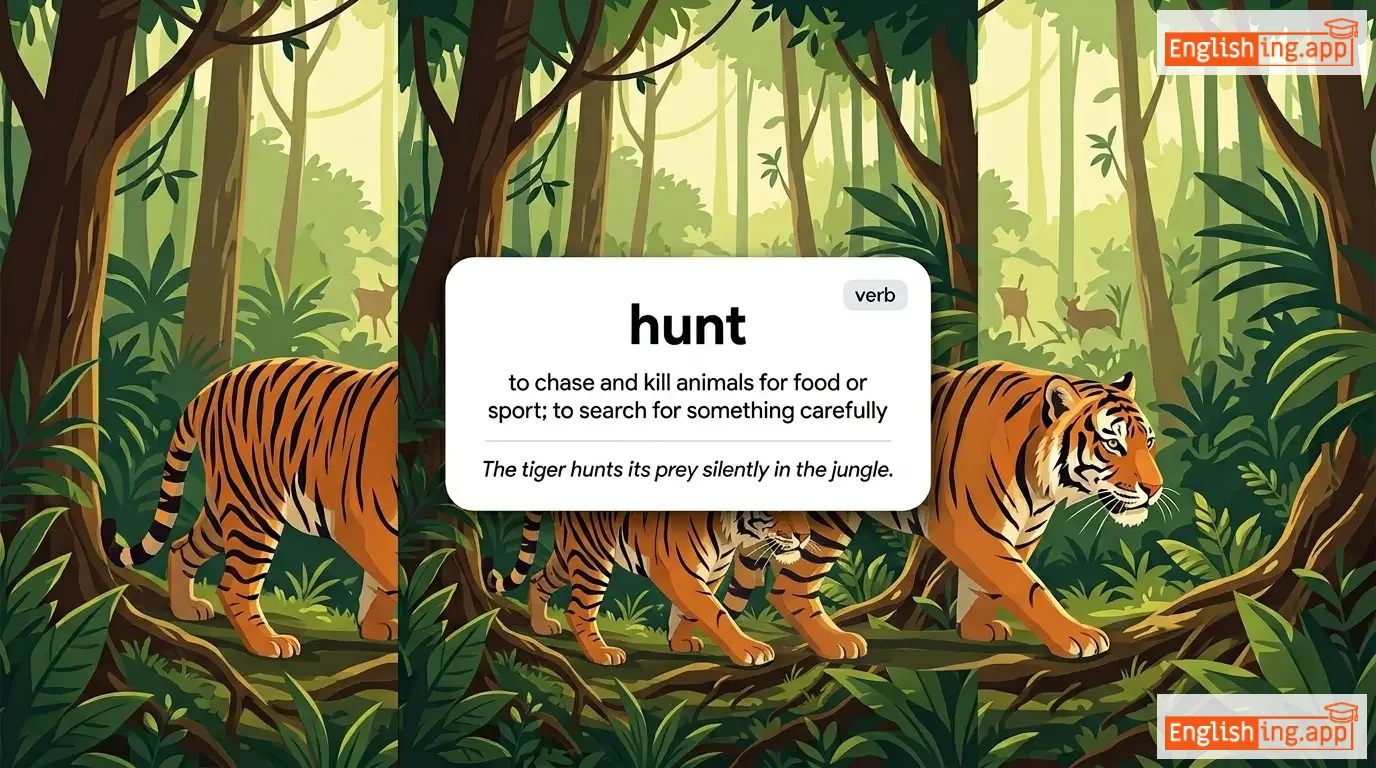
to chase and kill animals for food or sport; to search for something carefully
••••••
|
The tiger hunts its prey silently in the jungle.
トラはジャングルで静かに獲物を狩ります。
••••••
|
トラはジャングルで静かに獲物を狩ります。
Tora wa janguru de shizuka ni emono o karimasu.
••••••
|
on the hunt for
獲物を求めて
••••••
|
actively searching for something or someone
••••••
|
探し中
sagashichū
••••••
|
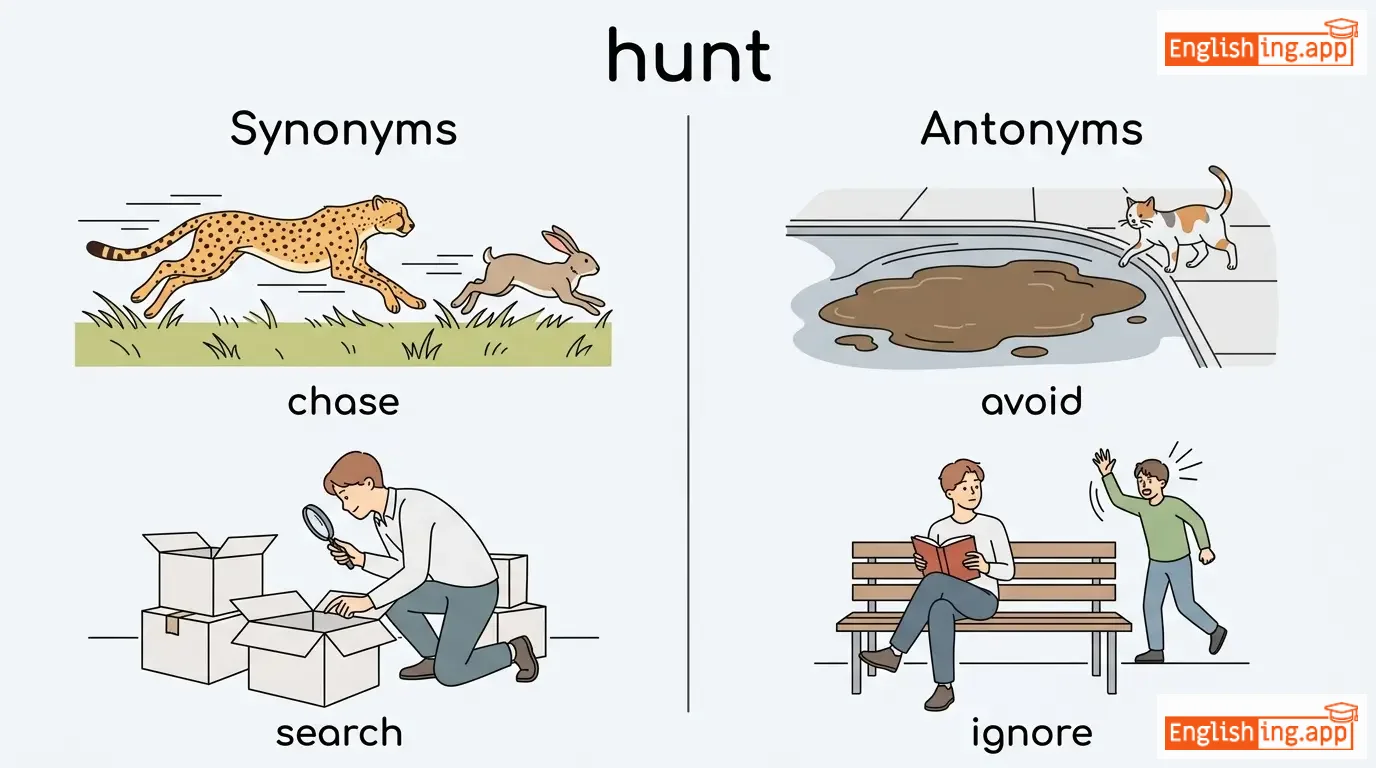
chase, search, track, pursue, seek
••••••
|
avoid, ignore, escape
••••••
|
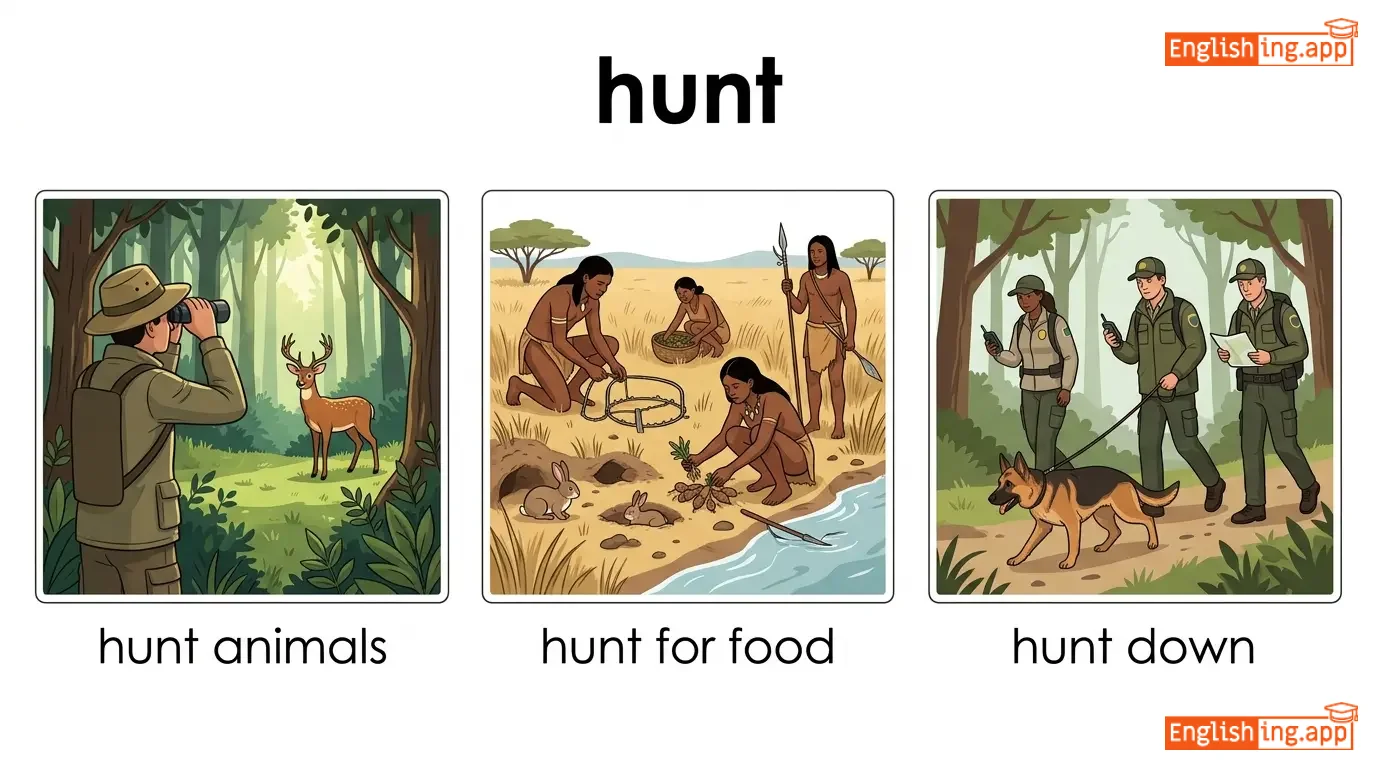
hunt animals, hunt for food, hunt down, go hunting
••••••
|
狩りに行く、目標を見つけよう!
••••••
|
|
🏹
••••••
|
/ˈhʌntər/
noun
(ハンター)
••••••
|
- •••••• |
ハンター
hantā
••••••
|
- •••••• | - •••••• | - •••••• | - •••••• |
a person or animal that hunts animals for food or sport
••••••
|
The hunter tracked the deer through the forest.
ハンターは森を通って鹿を追跡しました。
••••••
|
ハンターは森を通って鹿を追跡しました。
Hantā wa mori o tōtte shika o tsuiseki shimashita.
••••••
|
- •••••• | - •••••• | - •••••• |
trapper, chaser, pursuer, stalker
••••••
|
prey, victim
••••••
|
skilled hunter, deer hunter, big-game hunter
••••••
|
Hunterは狩人を意味します - 食べ物やスポーツのために狩る。
••••••
|
|
🎯
••••••
|
/ˈhʌntɪŋ/
noun/verb
(ハンティング)
••••••
|
- •••••• |
狩猟
shuryou
••••••
|
- •••••• | - •••••• |
hunts
ハンツ
••••••
|
hunting
ハンティング
••••••
|
the activity of chasing and killing wild animals
••••••
|
Hunting is strictly regulated in many countries.
狩猟は多くの国で厳格に規制されています。
••••••
|
狩猟は多くの国で厳格に規制されています。
Shuryou wa ooku no kuni de genkaku ni kisei sareteimasu.
••••••
|
house-hunting
家探し
••••••
|
the act of searching for a house to live in
••••••
|
家探し
ie sagashi
••••••
|
pursuing, tracking, chasing, stalking
••••••
|
protecting, preserving
••••••
|
go hunting, hunting season, hunting ground
••••••
|
Hunting とは狩猟 — Hunt とは狩猟。
••••••
|
|
🏃
••••••
|
/ˈhʌri/
verb
(ハリー)
••••••
|
|
急ぐ
isogu
••••••
|
hurried
ハリード
••••••
|
hurried
ハリード
••••••
|
hurries
ハリーズ
••••••
|
hurrying
ハリーング
••••••
|
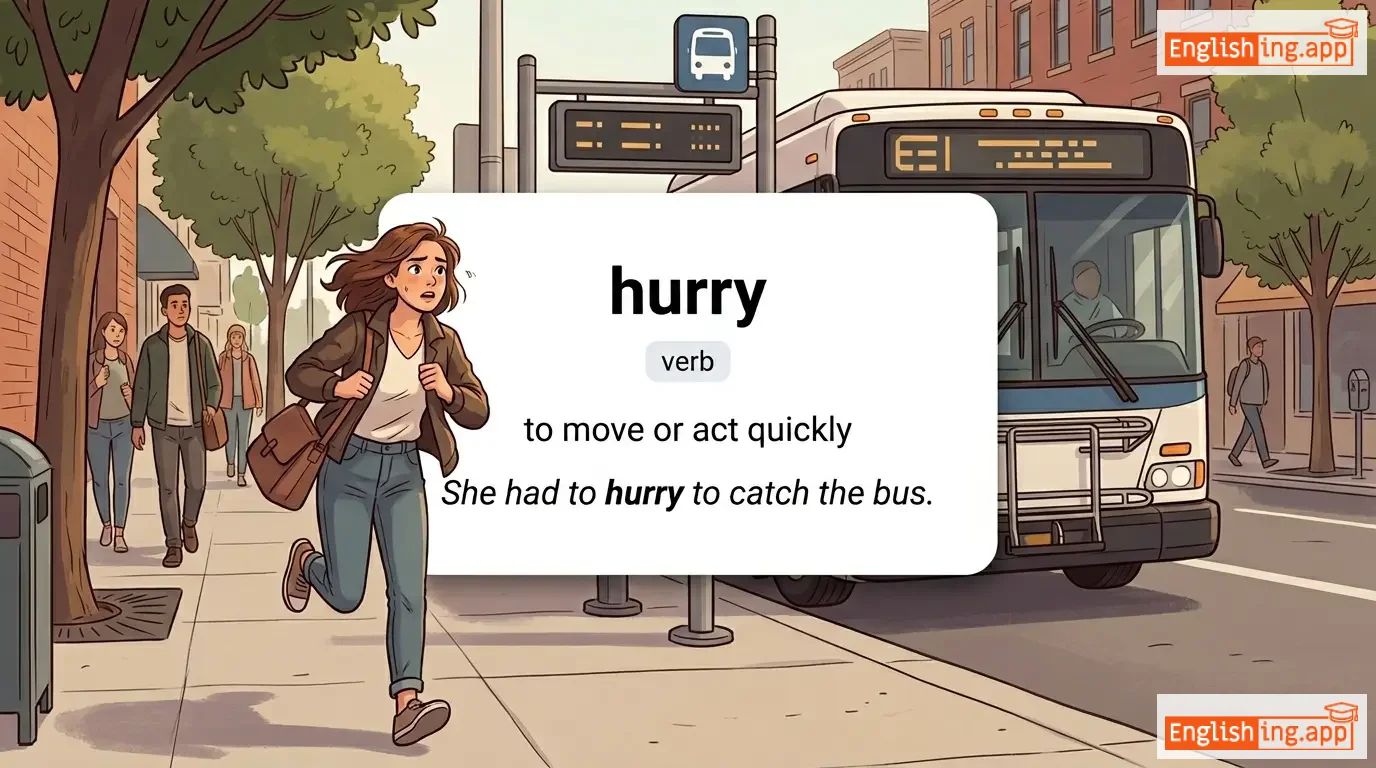
to move or act quickly
••••••
|
She had to hurry to catch the bus.
彼女はバスに乗るためにハリーをしなければならなかった。
••••••
|
彼女はバスに乗るために急がなければならなかった。
Kanojo wa basu ni noru tame ni isoganakereba naranakatta.
••••••
|
in a hurry
急いで
••••••
|
rushing or pressed for time
••••••
|
急いで
isoide
••••••
|
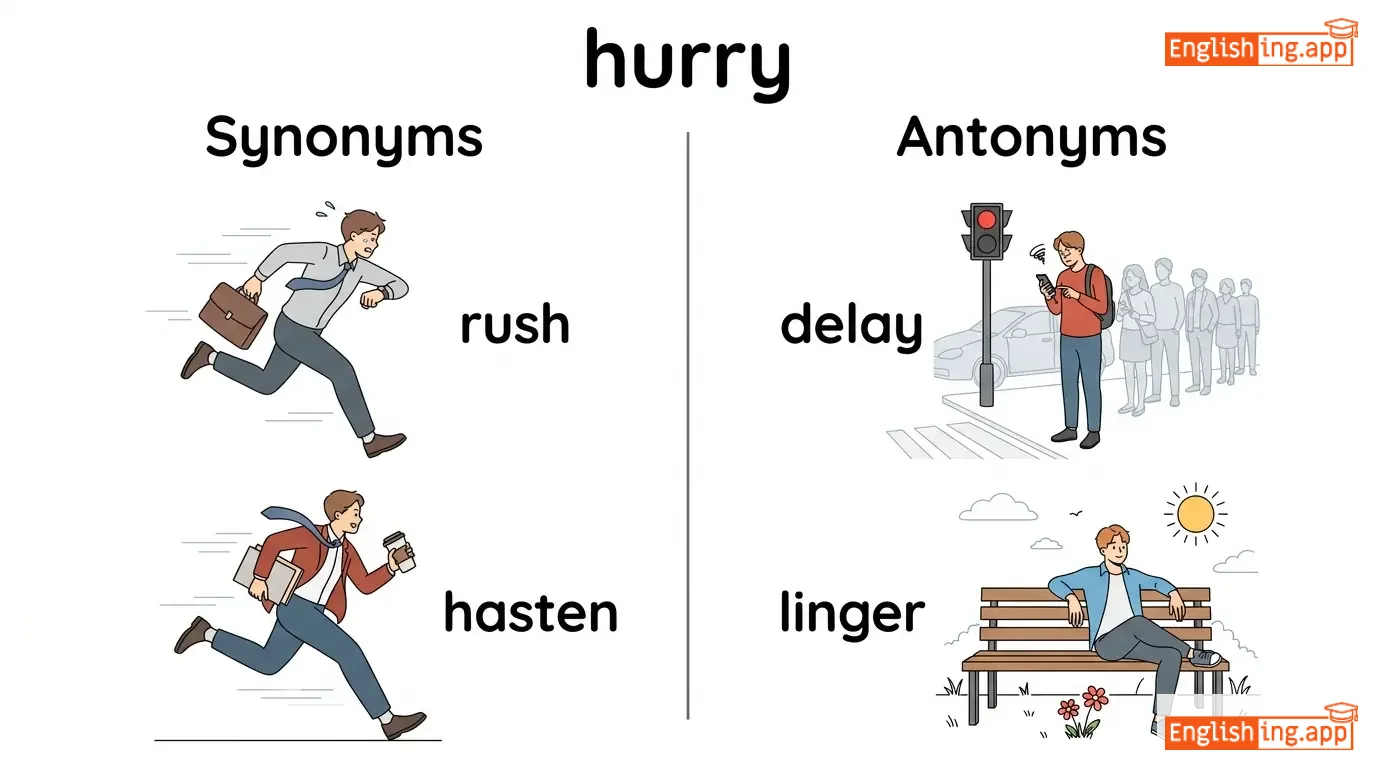
rush, hasten, speed, scurry, dash
••••••
|
delay, linger, wait
••••••
|
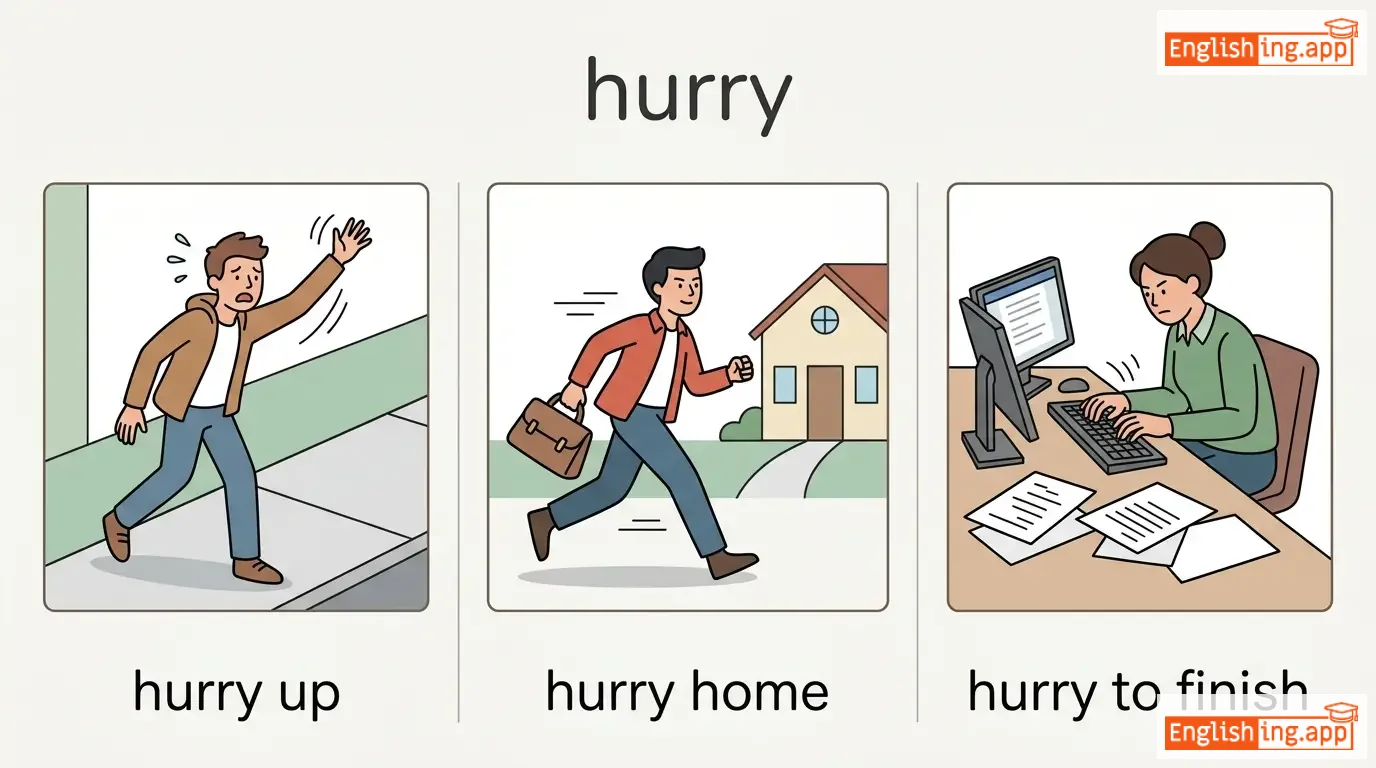
hurry up, hurry home, hurry to finish, hurry back
••••••
|
Hurryは '急ぐ' を意味します – 速く動く
••••••
|
|
🤕
••••••
|
/hɜːrt/
verb/adjective
(ハート)
••••••
|
- •••••• |
傷つける
kizutsukeru
••••••
|
hurt
ハート
••••••
|
hurt
ハート
••••••
|
hurts
ハーツ
••••••
|
hurting
ハーティング
••••••
|
to cause pain or injury; to feel pain
••••••
|
He hurt his knee while playing football.
ヒー ハート ヒズ ニー ワイル プレイング フットボール。
••••••
|
彼はサッカーをしている時に膝を傷つけた。
Kare wa sakkā o shite iru toki ni hiza o kizutsuketa.
••••••
|
hurt feelings
ハート フィーリングス
••••••
|
emotional pain caused by someone's words or actions
••••••
|
傷ついた感情
kizutsuita kanjō
••••••
|
injure, wound, damage, bruise
••••••
|
heal, comfort, soothe
••••••
|
hurt badly, hurt someone, hurt feelings
••••••
|
Hurtは傷つけること — 心も体も痛くなる。
••••••
|
|
👨👩👧
••••••
|
/ˈhʌzbənd/
noun
(ハズバンド)
••••••
|
- •••••• |
夫
otto
••••••
|
- •••••• | - •••••• | - •••••• | - •••••• |
A married man regarded in relation to his spouse.
••••••
|
Her husband is very supportive of her career. |
彼女の夫は彼女のキャリアを非常に支援しています。
Kanojo no otto wa kanojo no kyaria o hijō ni shien shiteimasu.
••••••
|
good husband |
A caring, responsible, and supportive spouse.
••••••
|
良い夫
yoi otto
••••••
|
spouse, partner, mate, groom, consort
••••••
|
wife, bachelor, single
••••••
|
loving husband, devoted husband, husband and wife
••••••
|
Husbandは 'House Band' という意味 - 夫が家をまとめる役割を持つ。
••••••
|
|
🏚️
••••••
|
/hʌt/
noun
(ハット)
••••••
|
- •••••• |
小屋
koya
••••••
|
- •••••• | - •••••• | - •••••• | - •••••• |
a small simple shelter or house
••••••
|
They lived in a small wooden hut near the river. |
彼らは川の近くの小さな木の小屋に住んでいました。
Karera wa kawa no chikaku no chiisana ki no koya ni sunde imashita.
••••••
|
- •••••• | - •••••• | - •••••• |
shack, cabin, cottage, shelter
••••••
|
mansion, palace
••••••
|
wooden hut, mountain hut, small hut, hut village
••••••
|
Hutは小屋という意味で、寒い風から逃れるための簡単な避難所です。
••••••
|
|
💧
••••••
|
/ˈhaɪdrədʒən/
noun
(水素)
••••••
|
- •••••• |
水素
suiso
••••••
|
- •••••• | - •••••• | - •••••• | - •••••• |
a colorless, odorless, highly flammable gas that is the lightest and most abundant chemical element in the universe
••••••
|
Hydrogen is used as a clean fuel in many energy systems. |
水素は多くのエネルギーシステムでクリーンな燃料として使用されています。
Suiso wa ooku no enerugii shisutemu de kuriin na nenryou toshite shiyou sareteimasu.
••••••
|
- •••••• | - •••••• | - •••••• |
H2, fuel, gas
••••••
|
oxygen, carbon dioxide
••••••
|
hydrogen gas, hydrogen fuel, hydrogen bond
••••••
|
Hydrogen = 水素 = 地球を飛ばせる軽いガス!
••••••
|
|
🔬
••••••
|
/haɪˈpɒθəsɪs/
noun
••••••
|
- •••••• | - •••••• | - •••••• | - •••••• | - •••••• | - •••••• |
a proposed explanation made on the basis of limited evidence as a starting point for further investigation.
••••••
|
The scientist tested her hypothesis through multiple experiments. |
- •••••• |
working hypothesis |
a provisional idea assumed for the sake of argument or investigation
••••••
|
- •••••• |
assumption, theory, proposition, supposition, premise
••••••
|
fact, proof, certainty
••••••
|
form a hypothesis, test a hypothesis, reject a hypothesis, confirm a hypothesis
••••••
|
No •••••• |
|
🙋
••••••
|
/aɪ/
pronoun
(アイ)
••••••
|
- •••••• |
私
watashi
••••••
|
- •••••• | - •••••• | - •••••• | - •••••• |
used by a speaker to refer to himself or herself
••••••
|
I am learning English every day. |
私は毎日英語を学んでいます。
Watashi wa mainichi eigo o manandeimasu.
••••••
|
- •••••• | - •••••• | - •••••• |
me, myself
••••••
|
you, they
••••••
|
I think, I know, I want, I am
••••••
|
I は私 — 'アイ' は '私' に似ています。
••••••
|
|
🧊
••••••
|
/aɪs/
noun
(aisu)
••••••
|
- •••••• |
氷
kōri
••••••
|
- •••••• | - •••••• | - •••••• | - •••••• |
frozen water, a solid form of water
••••••
|
The lake was covered with thick ice in winter. |
湖は冬に厚い氷で覆われていた。
Mizuumi wa fuyu ni atsui kōri de ōwarete ita.
••••••
|
break the ice |
to start a conversation in a social situation
••••••
|
氷を破る
kōri o yaburu
••••••
|
frost, snow, glacier, icicle
••••••
|
heat, fire
••••••
|
ice cubes, ice cream, ice skating, thin ice
••••••
|
Ice = 氷、アイスクリームのようなもの 🍦
••••••
|
|
🍦
••••••
|
/ˈaɪs kriːm/
noun
(アイスクリーム)
••••••
|
- •••••• |
アイスクリーム
aisukurīmu
••••••
|
- •••••• | - •••••• | - •••••• | - •••••• |
a frozen sweet dessert made from dairy products, usually served cold
••••••
|
Children love to eat ice-cream on hot summer days.
子供たちは暑い夏の日にアイスクリームを食べるのが好きです。
••••••
|
子供たちは暑い夏の日にアイスクリームを食べるのが好きです。
Kodomotachi wa atsui natsu no hi ni aisukurīmu o taberu no ga suki desu.
••••••
|
- •••••• | - •••••• | - •••••• |
frozen dessert, gelato, sorbet
••••••
|
hot dessert, warm pudding
••••••
|
vanilla ice-cream, ice-cream cone, ice-cream parlor
••••••
|
アイスクリームは夏の暑さを和らげる。
••••••
|
|
⭐
••••••
|
/ˈaɪkɒn/
noun
(アイコン)
••••••
|
- •••••• |
アイコン, 象徴
aikon, shouchou
••••••
|
- •••••• | - •••••• | - •••••• | - •••••• |
A person or thing regarded as a symbol of something, or a graphic symbol on a screen.
••••••
|
The singer became a cultural icon. |
その歌手は文化的なアイコンとなった。
Sono kashu wa bunkateki na aikon to natta.
••••••
|
pop icon |
A famous person admired widely in popular culture.
••••••
|
ポップアイコン
poppu aikon
••••••
|
symbol, idol, emblem, figure, legend
••••••
|
unknown, ordinary
••••••
|
cultural icon, fashion icon, national icon, religious icon
••••••
|
アイコンは象徴 → 画面の中の小さな象徴や大きなスター。
••••••
|
|
🪪
••••••
|
/aɪˈdiː/
noun
(アイディー)
••••••
|
- •••••• |
身分証明書
mibun shomeisho
••••••
|
- •••••• | - •••••• | - •••••• | - •••••• |
identification; a document or number used to prove who someone is
••••••
|
Please show your ID at the entrance.
プリーズ ショー ユア アイディー アット ザ エントランス。
••••••
|
入口で身分証明書を提示してください。
iriguchi de mibun shomeisho o teiji shite kudasai
••••••
|
show your ID
ショー ユア アイディー
••••••
|
to present identification for verification
••••••
|
身分証明書を見せる
mibun shomeisho o miseru
••••••
|
identification, identity, ID card, credentials
••••••
|
anonymity, unknown
••••••
|
photo ID, government ID, valid ID, student ID
••••••
|
ID=アイディー、身分証で自分を証明
••••••
|
|
💡
••••••
|
/aɪˈdiːə/
noun
(アイデア)
••••••
|
- •••••• |
アイデア
idea
••••••
|
- •••••• | - •••••• | - •••••• | - •••••• |
A thought, plan, or suggestion about what to do.
••••••
|
She had a brilliant idea for a new business. |
彼女は新しいビジネスのために素晴らしいアイデアを持っていました。
Kanojo wa atarashii bijinesu no tame ni subarashii idea wo motte imashita.
••••••
|
bright idea |
a clever or creative thought or solution
••••••
|
良いアイデア
yoi idea
••••••
|
concept, notion, plan, thought, suggestion
••••••
|
ignorance, misunderstanding
••••••
|
good idea, brilliant idea, bad idea, business idea, creative idea
••••••
|
アイデアは頭の中で光る電球💡のようなものです
••••••
|
|
✨
••••••
|
/aɪˈdiːəl/
adjective
(アイディアル)
••••••
|
- •••••• |
理想的な
risōtekina
••••••
|
- •••••• | - •••••• | - •••••• | - •••••• |
the best possible; perfect for a situation
••••••
|
This place is ideal for a picnic. |
この場所はピクニックに理想的です。
Kono basho wa pikunikku ni risōteki desu.
••••••
|
- •••••• | - •••••• | - •••••• |
perfect, excellent, optimal, model, flawless
••••••
|
imperfect, flawed, unsuitable
••••••
|
ideal situation, ideal choice, ideal candidate, ideal time
••••••
|
理想的なは完璧という意味、例えば‘理想的な仕事’は完璧な仕事。
••••••
|
|
👯
••••••
|
/aɪˈdentɪkl/
adjective
(アイデンティカル)
••••••
|
- •••••• |
同一の
dōitsu no
••••••
|
- •••••• | - •••••• | - •••••• | - •••••• |
Exactly the same in every detail.
••••••
|
The twins wore identical clothes. |
双子は同一の服を着ていた。
Futago wa dōitsu no fuku o kite ita.
••••••
|
identical twin |
one of two twins who look exactly the same
••••••
|
同一の双子
dōitsu no futago
••••••
|
same, indistinguishable, equal, duplicate
••••••
|
different, distinct, varied
••••••
|
identical clothes, identical result, almost identical, virtually identical
••••••
|
Identicalは日本語で'同一の'、まるで同じように見える双子のようです。
••••••
|
|
🪪
••••••
|
/aɪˌdɛntɪfɪˈkeɪʃən/
noun
(アイデンティフィケーション)
••••••
|
- •••••• |
身分証明
minbun shoumei
••••••
|
- •••••• | - •••••• | - •••••• | - •••••• |
the process of recognizing or proving who or what someone or something is
••••••
|
You need proper identification to enter the building. |
ビルに入るには適切な身分証明が必要です。
Biru ni hairu ni wa tekisetsu na minbun shoumei ga hitsuyou desu.
••••••
|
- •••••• | - •••••• | - •••••• |
recognition, verification, authentication, validation
••••••
|
misidentification, confusion
••••••
|
identity card, identification number, personal identification, photo identification
••••••
|
Identification は日本語で身分証明書。IDカードを見せれば覚えやすい!
••••••
|
|
🔍
••••••
|
/aɪˈdɛntɪfaɪ/
verb
(アイデンティファイ)
••••••
|
|
識別する
shikibetsu suru
••••••
|
identified
アイデンティファイド
••••••
|
identified
アイデンティファイド
••••••
|
identifies
アイデンティファイズ
••••••
|
identifying
アイデンティファイイング
••••••
|
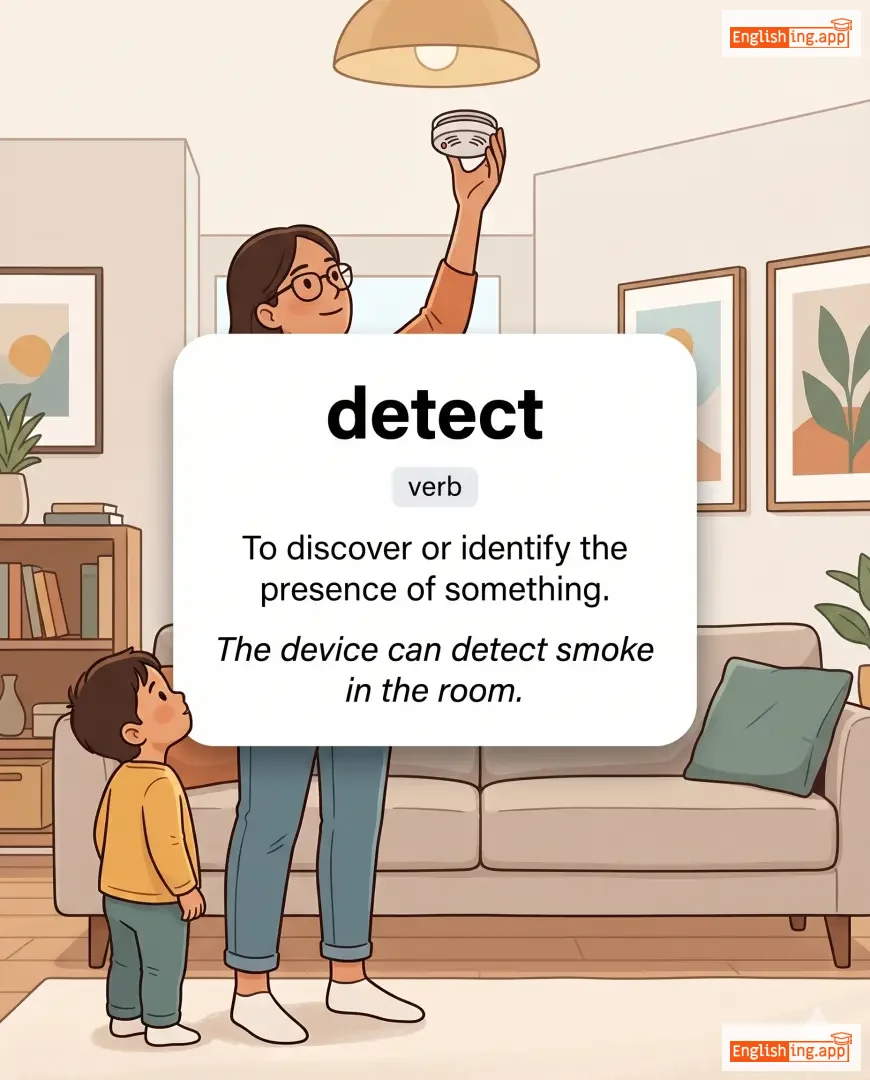
to recognize or establish what something or someone is
••••••
|
The police could not identify the suspect.
警察は容疑者を識別できませんでした。
••••••
|
警察は容疑者を識別できませんでした。
keisatsu wa yougisha o shikibetsu dekimasen deshita.
••••••
|
identify with
同一視する
••••••
|
to feel that you understand someone because you have had similar experiences
••••••
|
共感する
kyoukan suru
••••••
|
recognize, detect, determine, distinguish, verify
••••••
|
confuse, misidentify
••••••
|
identify problems, identify needs, identify the source, identify correctly
••••••
|
識別はIDのように認識すること。
••••••
|
|
🪪
••••••
|
/aɪˈdɛntɪti/
noun
(アイデンティティ)
••••••
|
|
アイデンティティ
aidentiti
••••••
|
- •••••• | - •••••• | - •••••• | - •••••• |
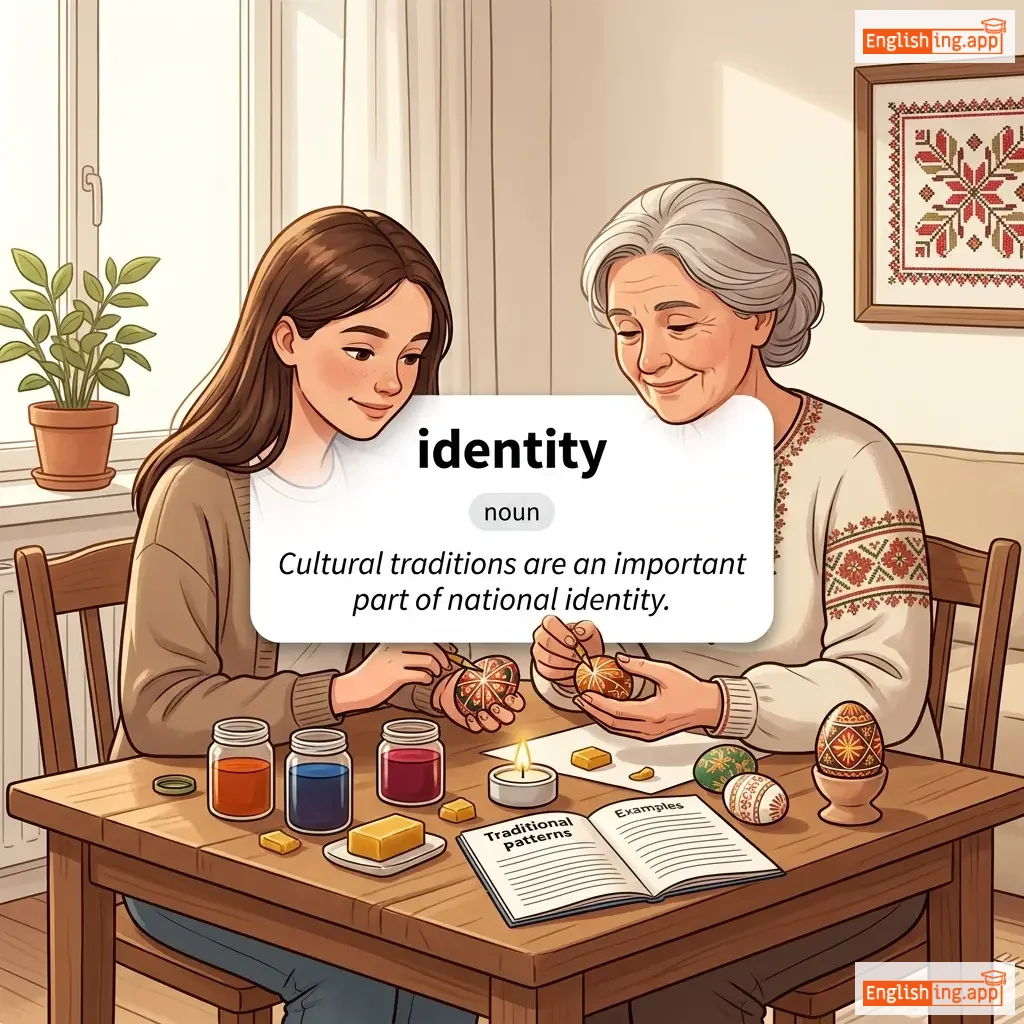
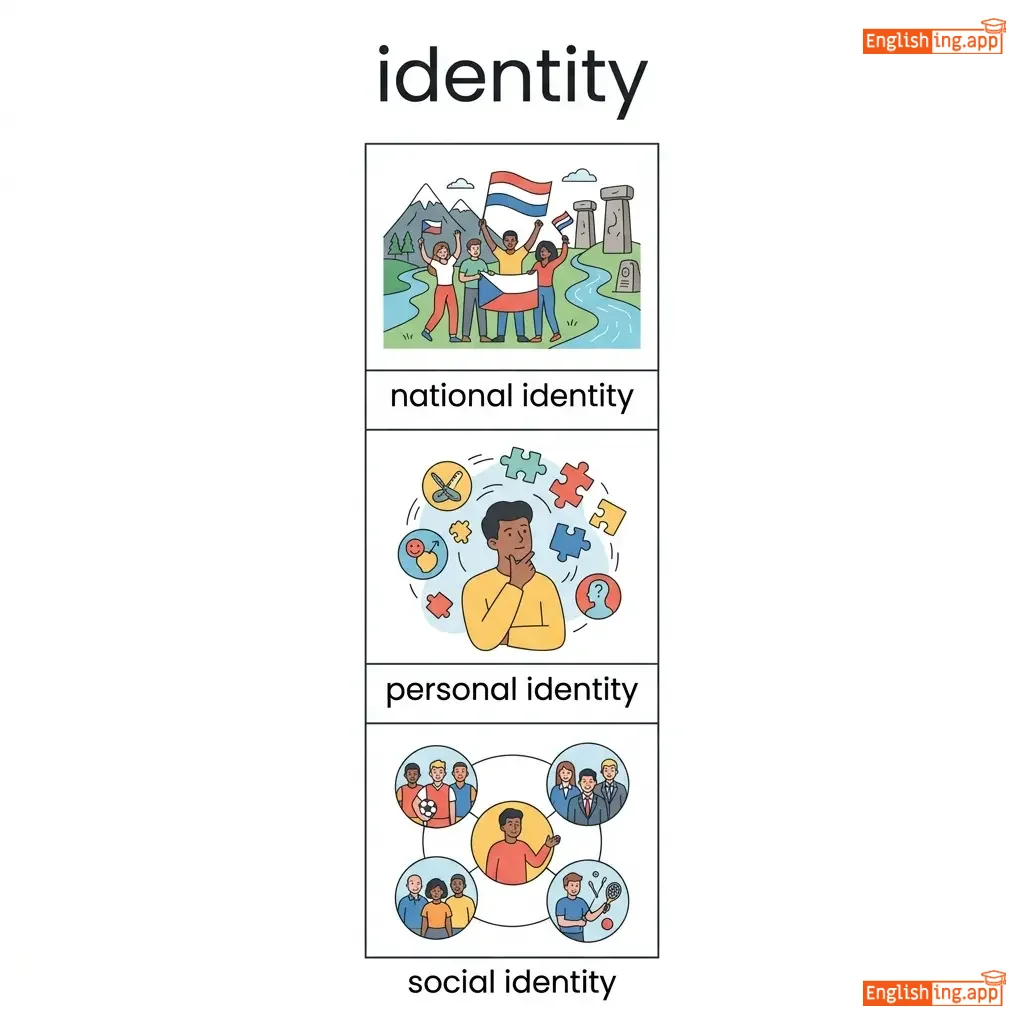
the characteristics, feelings, or beliefs that make a person or group different from others
••••••
|
Cultural traditions are an important part of national identity. |
文化的な伝統は、国のアイデンティティの重要な部分です。
bunkateki na dentou wa, kuni no aidentiti no juuyou na bubun desu
••••••
|
identity crisis |
a period of uncertainty about one's sense of self
••••••
|
アイデンティティ危機
aidentiti kiki
••••••
|
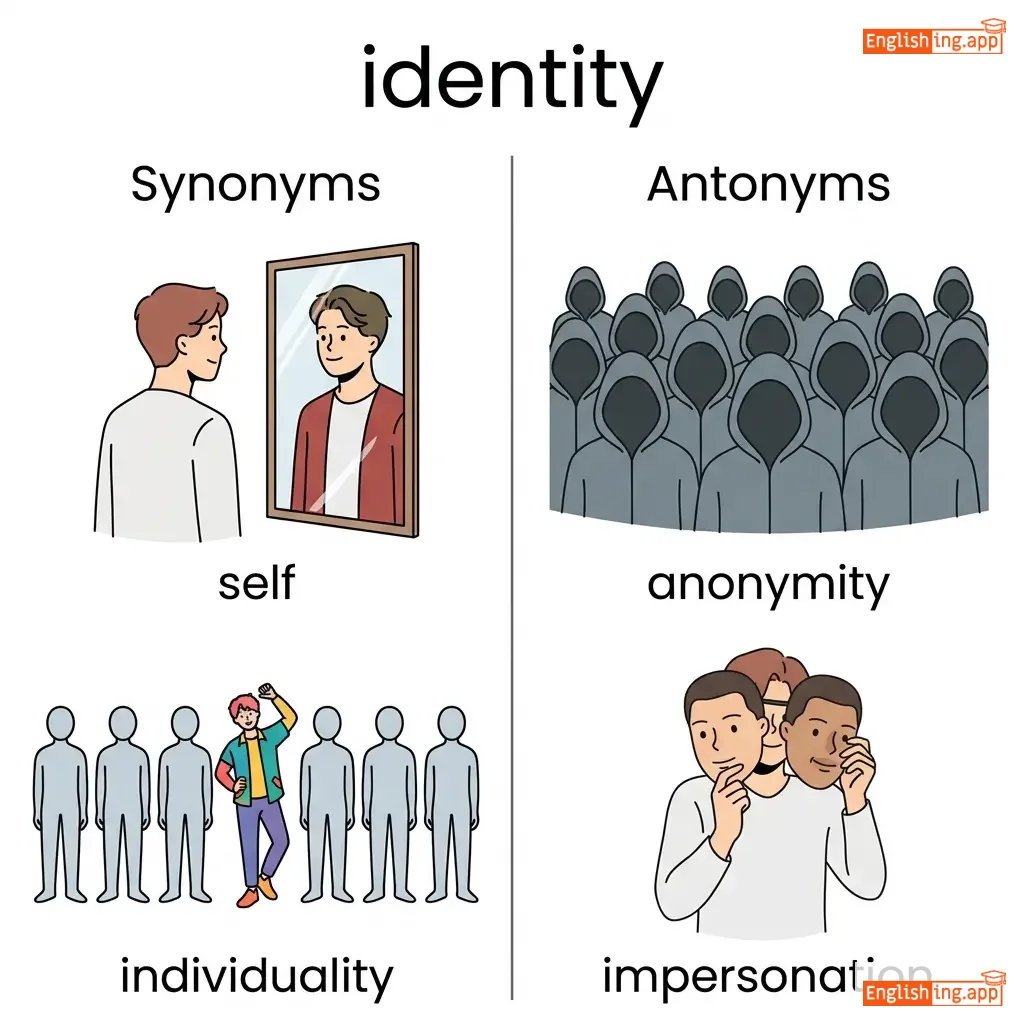
self, individuality, character, personality
••••••
|
anonymity, impersonation
••••••
|
national identity, personal identity, social identity, identity card
••••••
|
アイデンティティはアイデンティティです - 身分証明書でアイデンティティが証明されます
••••••
|
|
📚
••••••
|
/ˌaɪ.di.əˈlɒdʒ.ɪ.kəl/
adjective
(アイディオロジカル)
••••••
|
- •••••• |
イデオロギー的
ideorogī-teki
••••••
|
- •••••• | - •••••• | - •••••• | - •••••• |
Relating to or based on a system of ideas or beliefs.
••••••
|
The two parties are divided by deep ideological differences. |
二つの党は深いイデオロギー的な違いによって分裂している。
Futatsu no tō wa fukai ideorogī-teki na chigai ni yotte bunretsu shite iru.
••••••
|
- •••••• | - •••••• | - •••••• |
philosophical, doctrinal, theoretical, political
••••••
|
practical, realistic
••••••
|
ideological debate, ideological conflict, ideological differences
••••••
|
Ideology から ideorogī-teki – 思想や信念に関連
••••••
|
|
🤪
••••••
|
/ˈɪdɪət/
noun
(イディオット)
••••••
|
- •••••• |
バカ
baka
••••••
|
- •••••• | - •••••• | - •••••• | - •••••• |
a person who acts in a way that is considered very stupid or foolish
••••••
|
He acted like an idiot at the party last night.
彼は昨晩のパーティーでイディオットのように振る舞った。
••••••
|
彼は昨晩のパーティーでイディオットのように振る舞った。
Kare wa sakuban no pātī de idotto no yō ni furumatta.
••••••
|
- •••••• | - •••••• | - •••••• |
fool, imbecile, moron, simpleton
••••••
|
genius, intellect, savant
••••••
|
complete idiot, stupid idiot, act like an idiot
••••••
|
Idiot = バカ = いつもバカなことをする人!
••••••
|
|
❓
••••••
|
/ɪf/
conjunction
(イフ)
••••••
|
- •••••• |
もし
moshi
••••••
|
- •••••• | - •••••• | - •••••• | - •••••• |
used to introduce a condition or supposition
••••••
|
If it rains tomorrow, we will stay home. |
もし明日雨が降ったら、私たちは家にいます。
Moshi ashita ame ga futtara, watashitachi wa ie ni imasu.
••••••
|
if only |
used to express a wish or regret
••••••
|
もし...なら
moshi...nara
••••••
|
provided that, assuming, in case, supposing
••••••
|
certainly, definitely
••••••
|
if necessary, if possible, if only, if so
••••••
|
もしはもし—'If 雨が降る' は 'Moshi ame ga furu'
••••••
|
|
🤷
••••••
|
/ˈɪɡ.nər.əns/
noun
(イグノランス)
••••••
|
- •••••• |
無知
muchi
••••••
|
- •••••• | - •••••• | - •••••• | - •••••• |
lack of knowledge or information; the state of being uninformed about something
••••••
|
His ignorance about basic computer skills made it difficult for him to find a job. |
基本的なコンピュータースキルに関する彼の無知は、彼が仕事を見つけるのを難しくしました。
Kihonteki na konpyuutaa sukiru ni kansuru kare no muchi wa, kare ga shigoto o mitsukeru no o muzukashiku shimashita.
••••••
|
- •••••• | - •••••• | - •••••• |
unawareness, lack of knowledge, illiteracy, inexperience
••••••
|
knowledge, awareness, education, understanding
••••••
|
willful ignorance, profound ignorance, ignorance about
••••••
|
In Japanese, '無知' (muchi) perfectly represents 'ignorance' and is easy to remember.
••••••
|
|
🙉
••••••
|
/ɪɡˈnɔːr/
verb
(イグノア)
••••••
|
|
無視する
mushi suru
••••••
|
ignored
イグノアード
••••••
|
ignored
イグノアード
••••••
|
ignores
イグノアーズ
••••••
|
ignoring
イグノアリング
••••••
|
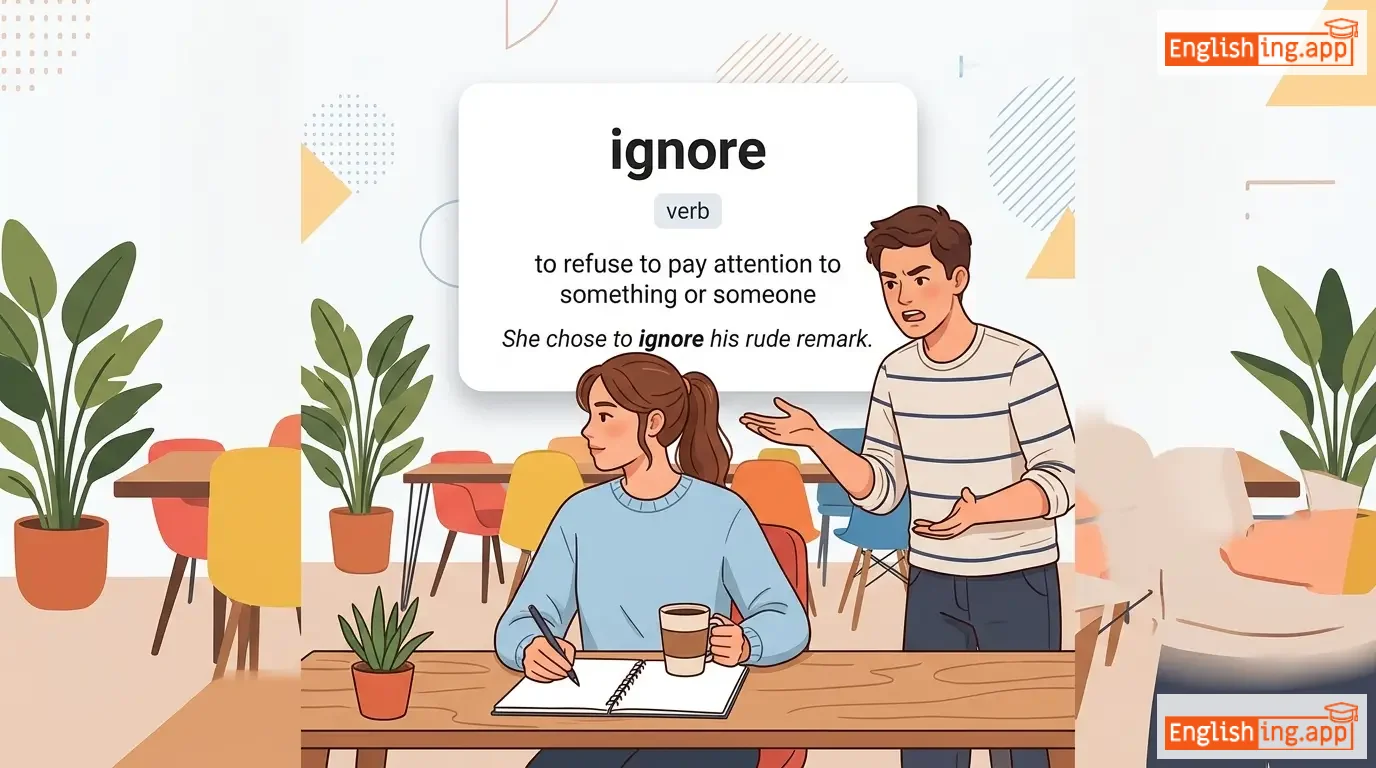
to refuse to pay attention to something or someone
••••••
|
She chose to ignore his rude remark.
彼女は彼の失礼なコメントを無視することを選んだ。
••••••
|
彼女は彼の失礼なコメントを無視することを選んだ。
Kanojo wa kare no shitsurei na komento o mushi suru koto o eranda.
••••••
|
ignore the elephant in the room
部屋の中の象を無視する
••••••
|
to deliberately avoid talking about a major issue
••••••
|
部屋の中の象を無視する
Heya no naka no zō o mushi suru
••••••
|
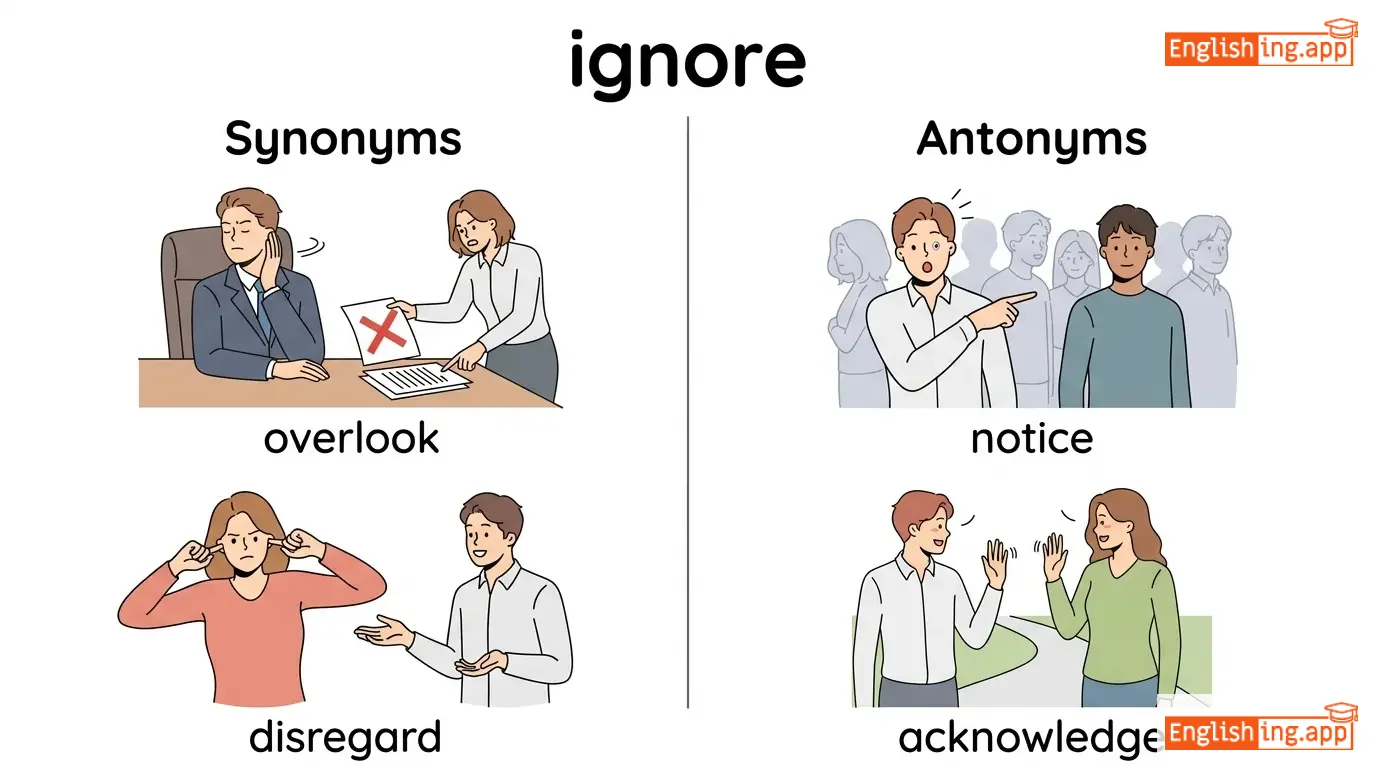
overlook, disregard, neglect, avoid, dismiss
••••••
|
notice, acknowledge, recognize
••••••
|
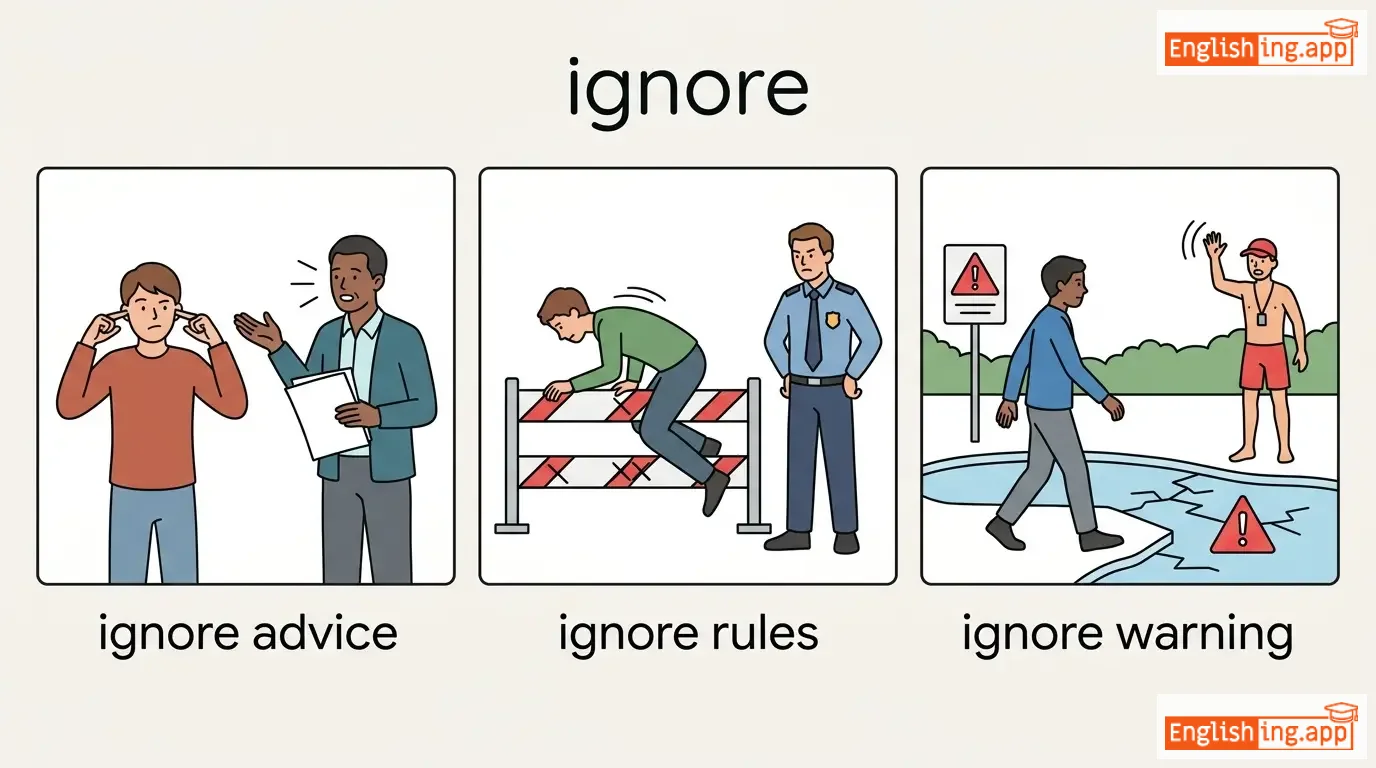
ignore advice, ignore rules, ignore warning
••••••
|
無視するは'無視!'と言って無視すること
••••••
|
|
🤒
••••••
|
/ɪl/
adjective
(イル)
••••••
|
- •••••• |
病気
byouki
••••••
|
- •••••• | - •••••• | - •••••• | - •••••• |
Not in good health; sick or unwell.
••••••
|
He has been feeling ill since yesterday. |
彼は昨日から体調が悪いです。
Kare wa kinou kara taichou ga warui desu.
••••••
|
ill at ease |
feeling uncomfortable or uneasy
••••••
|
不快
fukai
••••••
|
sick, unwell, unhealthy, ailing
••••••
|
healthy, well, fine
••••••
|
feel ill, fall ill, ill health, ill effects
••••••
|
Ill は病気を意味します。覚えておいて、 'ill' は病気です 🤒.
••••••
|
|
🚫
••••••
|
/ɪˈliː.ɡəl/
adjective
(イリーガル)
••••••
|
- •••••• |
違法
ihou
••••••
|
- •••••• | - •••••• | - •••••• | - •••••• |
Not allowed by law; unlawful.
••••••
|
It is illegal to drive without a valid license. |
有効な免許なしで運転することは違法です。
Yūkō na menkyo nashi de unten suru koto wa ihō desu.
••••••
|
- •••••• | - •••••• | - •••••• |
unlawful, criminal, forbidden, prohibited, illicit
••••••
|
legal, lawful, legitimate
••••••
|
illegal activity, illegal trade, illegal immigrant, illegal action
••••••
|
illegal は法律で許可されていない、したがって → 違法。
••••••
|
|
✍️
••••••
|
/ɪˌledʒ.əˈbɪl.ə.ti/
noun
(イレジビリティ)
••••••
|
- •••••• |
読みにくさ
yomnikusa
••••••
|
- •••••• | - •••••• | - •••••• | - •••••• |
the quality of being impossible or difficult to read; unclear writing or print
••••••
|
The doctor's handwriting was famous for its illegibility among the pharmacy staff. |
医者の手書きは薬局のスタッフの間でその読みにくさで有名でした。
Isha no tegaki wa yakkyoku no sutaffu no aida de sono yomnikusa de yūmei deshita.
••••••
|
- •••••• | - •••••• | - •••••• |
unreadability, unclear writing, indecipherability, obscurity
••••••
|
legibility, clarity, readability, clear writing
••••••
|
handwriting illegibility, complete illegibility, famous illegibility
••••••
|
医者の字が読みにくいと、それは読みにくさです!
••••••
|
|
✍️
••••••
|
/ɪˈledʒ.ə.bəl/
adjective
(イレジブル)
••••••
|
- •••••• |
読めない
yomenai
••••••
|
- •••••• | - •••••• | - •••••• | - •••••• |
Not clear enough to be read; unreadable.
••••••
|
The doctor’s handwriting was almost illegible. |
医者の手書きはほとんど読めなかった。
Isha no tegaki wa hotondo yomenakatta.
••••••
|
- •••••• | - •••••• | - •••••• |
unreadable, unclear, indecipherable, obscure
••••••
|
legible, readable, clear
••••••
|
illegible handwriting, illegible text, illegible note, illegible document
••••••
|
illegible は読めないという意味 → 読めない
••••••
|
|
🚷
••••••
|
/ɪˈlɪbərəl/
adjective
(イリベラル)
••••••
|
- •••••• |
非リベラル
hi riberaru
••••••
|
- •••••• | - •••••• | - •••••• | - •••••• |
Opposed to liberal principles; restricting freedom of thought or behavior.
••••••
|
The government was criticized for its illiberal policies.
政府はその非リベラルな政策について批判された。
••••••
|
政府はその非リベラルな政策について批判された。
Seifu wa sono hi riberaru na seisaku ni tsuite hihan sareta.
••••••
|
- •••••• | - •••••• | - •••••• |
narrow-minded, intolerant, authoritarian, repressive
••••••
|
liberal, tolerant, open-minded
••••••
|
illiberal regime, illiberal policies, illiberal attitude, illiberal practices
••••••
|
Illiberal は liberal とは反対なので、非リベラル。
••••••
|
|
📚
••••••
|
/ɪˈlɪtərəsi/
noun
(イリテラシー)
••••••
|
|
識字率の低さ
shikijiritsu no hikusa
••••••
|
- •••••• | - •••••• | - •••••• | - •••••• |
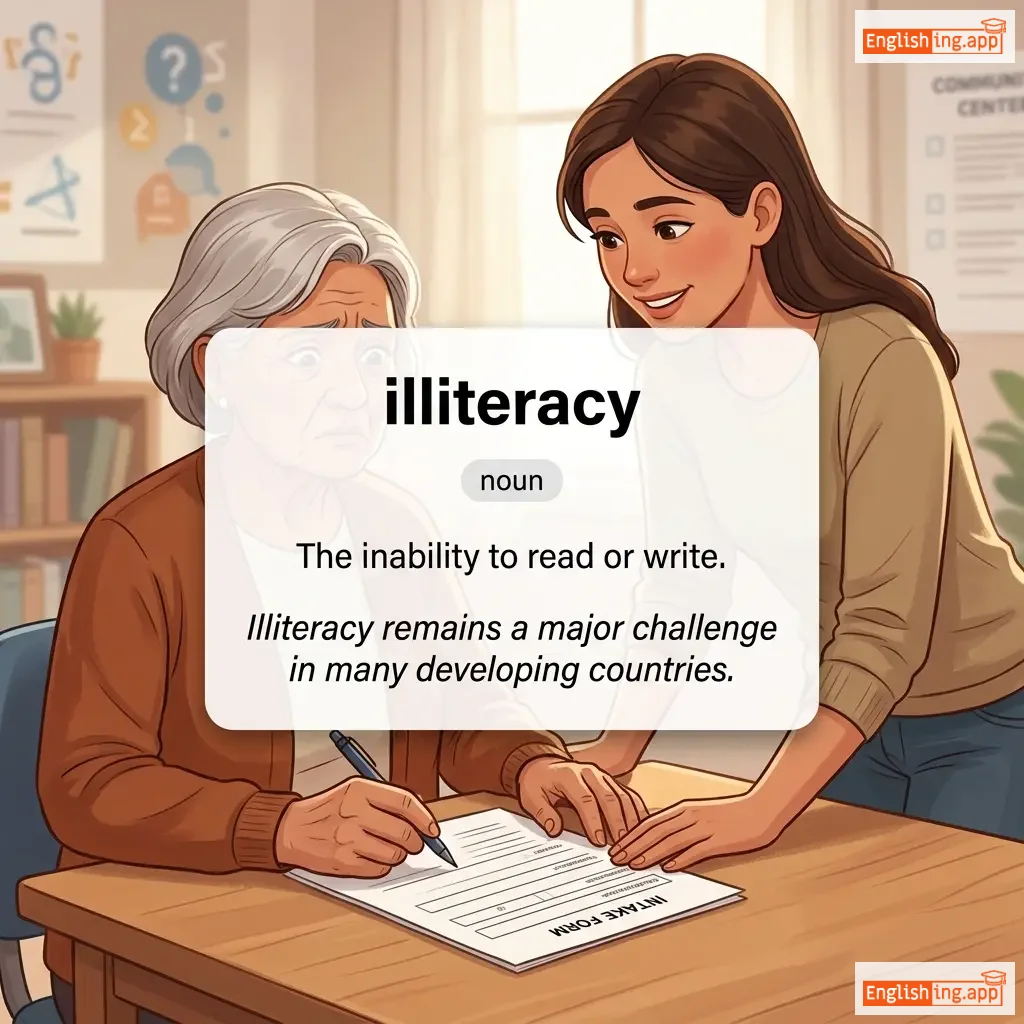
The inability to read or write.
••••••
|
Illiteracy remains a major challenge in many developing countries. |
識字率の低さは、多くの発展途上国において重要な課題のままである。
Shikijiritsu no hikusa wa, ooku no hatten tojoukoku ni oite juuyou na kadai no mama de aru.
••••••
|
- •••••• | - •••••• | - •••••• |
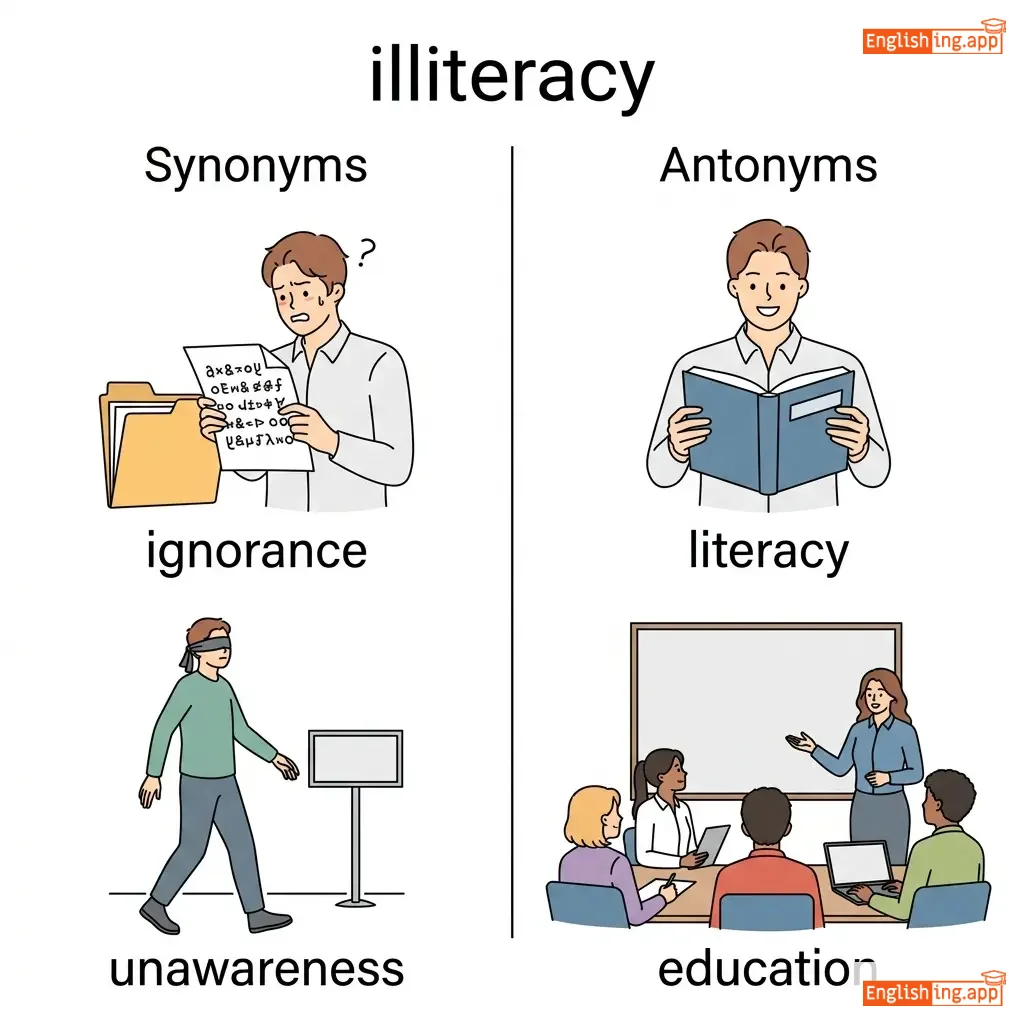
ignorance, unawareness, ill-education, illiterateness
••••••
|
literacy, education, knowledge
••••••
|
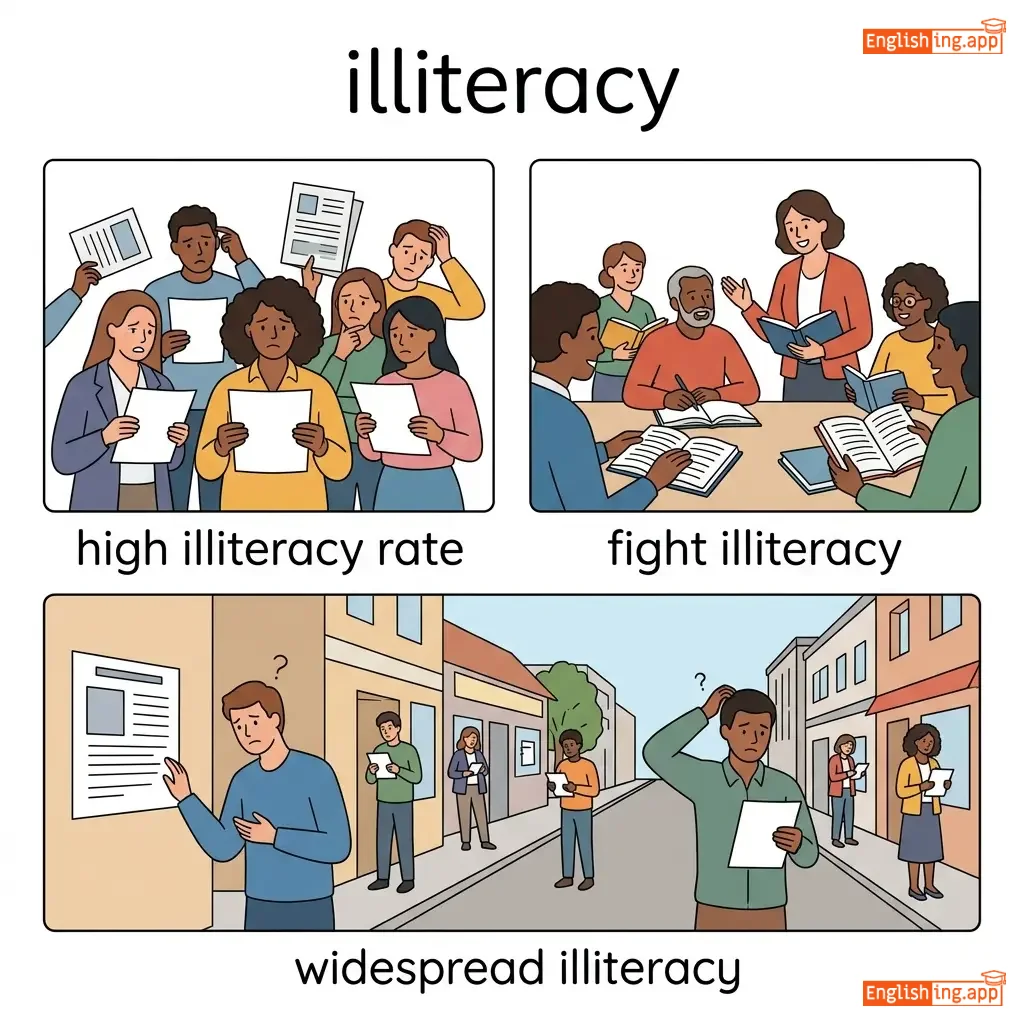
high illiteracy rate, fight illiteracy, widespread illiteracy, adult illiteracy
••••••
|
Illiterate とは読むことや書くことができないこと → Illiteracy = 識字率の低さ
••••••
|
|
🙈
••••••
|
/ɪˈlɪtərət/
adjective
(イリテレート)
••••••
|
- •••••• |
読み書きできない
yomikaki dekinai
••••••
|
- •••••• | - •••••• | - •••••• | - •••••• |
Unable to read or write.
••••••
|
Many villagers were still illiterate in the past. |
多くの村人たちは過去に読み書きできないままでした。
Ooku no murabito tachi wa kako ni yomikaki dekinai mamadeshita.
••••••
|
computer illiterate |
Lacking basic knowledge or skill in using computers
••••••
|
コンピュータ無知
konpyu-ta muchi
••••••
|
uneducated, unread, ignorant, unschooled
••••••
|
literate, educated, knowledgeable
••••••
|
illiterate person, remain illiterate, largely illiterate, computer illiterate
••••••
|
読み書きできない = イリテレート → 読み書きできない
••••••
|
|
🩺
••••••
|
/ˈɪlnəs/
noun
(irunesu)
••••••
|
- •••••• |
病気
byōki
••••••
|
- •••••• | - •••••• | - •••••• | - •••••• |
A condition of being unwell or suffering from a disease.
••••••
|
She missed school due to a serious illness.
彼女は深刻な病気のため学校を休んだ。
••••••
|
彼女は深刻な病気のため学校を休んだ。
Kanojo wa shinkoku na byōki no tame gakkō o yasunda.
••••••
|
- •••••• | - •••••• | - •••••• |
sickness, disease, ailment, disorder
••••••
|
health, wellness
••••••
|
chronic illness, mental illness, recover from illness, illness symptoms
••••••
|
Illness = 病気。 'Ill' と 'ness' は病気になること。
••••••
|
|
🤔❌
••••••
|
/ɪˈlɒdʒ.ɪ.kəl/
adjective
••••••
|
- •••••• |
非論理的
Hironriteki
••••••
|
- •••••• | - •••••• | - •••••• | - •••••• |
not reasonable or sensible; lacking logic
••••••
|
It would be illogical to go swimming in such cold weather. |
こんなに寒い天気で泳ぐのは非論理的です。
Konna ni samui tenki de oyogu no wa hironriteki desu
••••••
|
- •••••• | - •••••• | - •••••• |
irrational, unreasonable, senseless, absurd
••••••
|
logical, rational, reasonable, sensible
••••••
|
illogical argument, illogical thinking, illogical conclusion
••••••
|
非論理的 - それが論理的でない場合、それは非論理的です。
••••••
|

