Получите неограниченный доступ ко всем словам с подпиской Pro
Обновить до ProПолучите неограниченный доступ ко всем предложениям с подпиской Pro
Обновить до Pro|
Эмодзи
|
Слово | Images | Перевод | Прошедшее | Причастие прошедшего времени | Третье лицо единственного числа | Герундий | Значение | Пример предложения | Перевод примера предложения | Пример выражения | Значение примера выражения | Перевод примера выражения | Синонимы | Антонимы | Коллокации | Мнемоника |
|---|---|---|---|---|---|---|---|---|---|---|---|---|---|---|---|---|---|
|
👨👩👧👦
••••••
|
/ˈhaʊshoʊld/
noun
(хаусхолд)
••••••
|
- •••••• |
домохозяйство
domokhozyaystvo
••••••
|
- •••••• | - •••••• | - •••••• | - •••••• |
All the people living together in one house, considered as a unit.
••••••
|
There are five people in our household. |
В нашем домохозяйстве пять человек.
V nashem domokhozyaystve pyat' chelovek.
••••••
|
household name |
a person or brand that is very well known
••••••
|
известное имя
izvestnoe imya
••••••
|
family, home, residents, occupants, domestic unit
••••••
|
outsiders, strangers
••••••
|
household chores, household income, household goods, household members
••••••
|
Домохозяйство — это дом, вспомни 'House + All → Все дома'
••••••
|
|
🏠
••••••
|
/ˈhaʊswaɪf/
noun
(хаусвайф)
••••••
|
- •••••• |
домохозяйка
domokhozyayka
••••••
|
- •••••• | - •••••• | - •••••• | - •••••• |
a married woman who manages a household and whose main occupation is caring for her family and home
••••••
|
She chose to work as a housewife while raising her children.
Ши чоуз ту ворк эз а хаусвайф уайл рейзинг хёр чилдрен.
••••••
|
Она решила быть домохозяйкой, воспитывая детей.
Ona reshila byt domokhozyaykoy vospityvaya detey
••••••
|
- •••••• | - •••••• | - •••••• |
homemaker, stay-at-home wife, domestic manager, homemaker woman
••••••
|
career woman, working woman
••••••
|
traditional housewife, full-time housewife, become a housewife, role of a housewife
••••••
|
Дом = house → домохозяйка
••••••
|
|
🏠
••••••
|
/ˈhaʊzɪŋ/
noun
(haʊzɪŋ)
••••••
|
- •••••• |
жилище
zhilishche
••••••
|
- •••••• | - •••••• | - •••••• | - •••••• |
buildings or structures where people live; accommodation
••••••
|
The government is working to provide affordable housing for everyone. |
Правительство работает над тем, чтобы предоставить доступное жилье для всех.
Pravitel'stvo rabotayet nad tem, chtoby predostavit' dostupnoye zhilye dlya vsekh.
••••••
|
public housing |
housing provided by the government for low-income families
••••••
|
государственное жилье
gosudarstvennoye zhilye
••••••
|
accommodation, residence, dwelling, shelter, lodging
••••••
|
homelessness, eviction
••••••
|
affordable housing, housing project, housing policy, housing shortage
••••••
|
Housing, это жилье, место для жизни.
••••••
|
|
❓
••••••
|
/haʊ/
adverb
(хау)
••••••
|
- •••••• |
как
kak
••••••
|
- •••••• | - •••••• | - •••••• | - •••••• |
in what way or manner; by what means
••••••
|
How do you solve this problem?
Как ты решаешь эту проблему?
••••••
|
Как ты решаешь эту проблему?
Kak ty reshayesh etu problemu?
••••••
|
how come
Как так?
••••••
|
used to ask why something has happened
••••••
|
Как так?
Kak tak?
••••••
|
in what way, by what means, in what manner
••••••
|
why not, never
••••••
|
how often, how much, how many, how long
••••••
|
How на русском - как. Помни, как ты спрашиваешь о чём-то.
••••••
|
|
⚖️
••••••
|
/haʊˈɛvər/
adverb, conjunction
(хауэвэр)
••••••
|
- •••••• |
однако
odnako
••••••
|
- •••••• | - •••••• | - •••••• | - •••••• |
used to introduce a statement that contrasts with or seems to contradict something previously said
••••••
|
The journey was long; however, it was enjoyable. |
Путешествие было долгим; однако оно было приятным.
Puteshestviye bylo dolgim; odnako ono bylo priyatnym.
••••••
|
- •••••• | - •••••• | - •••••• |
nevertheless, but, still, yet
••••••
|
therefore, thus
••••••
|
however hard, however much, however difficult
••••••
|
However на русском это однако, представь долгую поездку, но все равно приятную.
••••••
|
|
🗻
••••••
|
/hjuːdʒ/
adjective
(hyuj)
••••••
|
- •••••• |
огромный
ogromnyy
••••••
|
- •••••• | - •••••• | - •••••• | - •••••• |
extremely large in size or amount
••••••
|
The stadium was filled with a huge crowd. |
Стадион был заполнен огромной толпой.
Stadion byl zapolnen ogromnoy tolpoy.
••••••
|
make a huge difference |
to have a significant effect on something
••••••
|
сделать огромную разницу
sdelat' ogromnuyu raznitsu
••••••
|
enormous, massive, gigantic, vast, colossal
••••••
|
tiny, small, little
••••••
|
huge success, huge amount, huge crowd, huge impact
••••••
|
Huge означает огромный, как огромная толпа = огромное скопление
••••••
|
|
🧑
••••••
|
/ˈhjuːmən/
noun, adjective
(хьюмэн)
••••••
|
|
человечество
chelovechestvo
••••••
|
- •••••• | - •••••• | - •••••• | - •••••• |
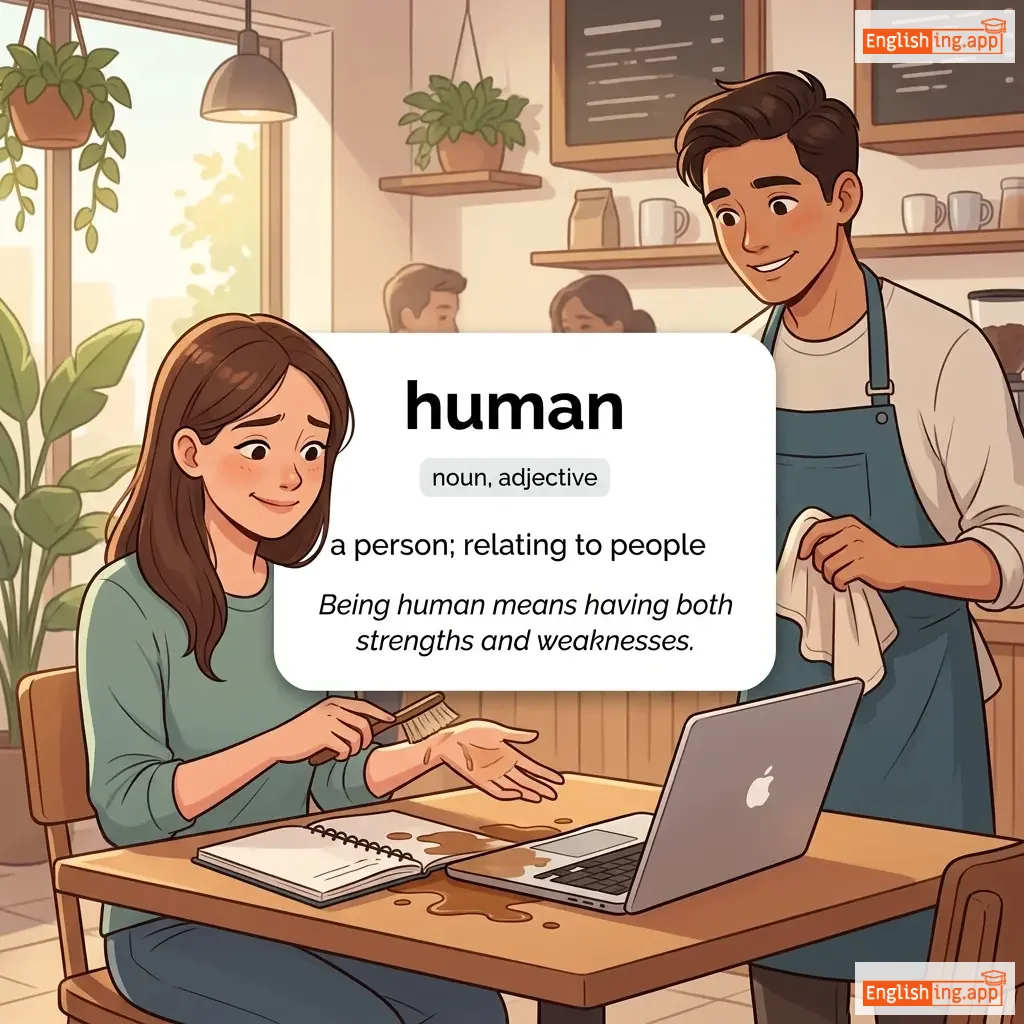
a person; relating to people
••••••
|
Being human means having both strengths and weaknesses. |
Быть человеком означает иметь как силы, так и слабости.
Byt' chelovekom oznachayet imet' kak sily, tak i slabosti.
••••••
|
to err is human |
making mistakes is a natural part of being human
••••••
|
ошибаться — это по-человечески
oshibatsya — eto po-chelovecheski
••••••
|
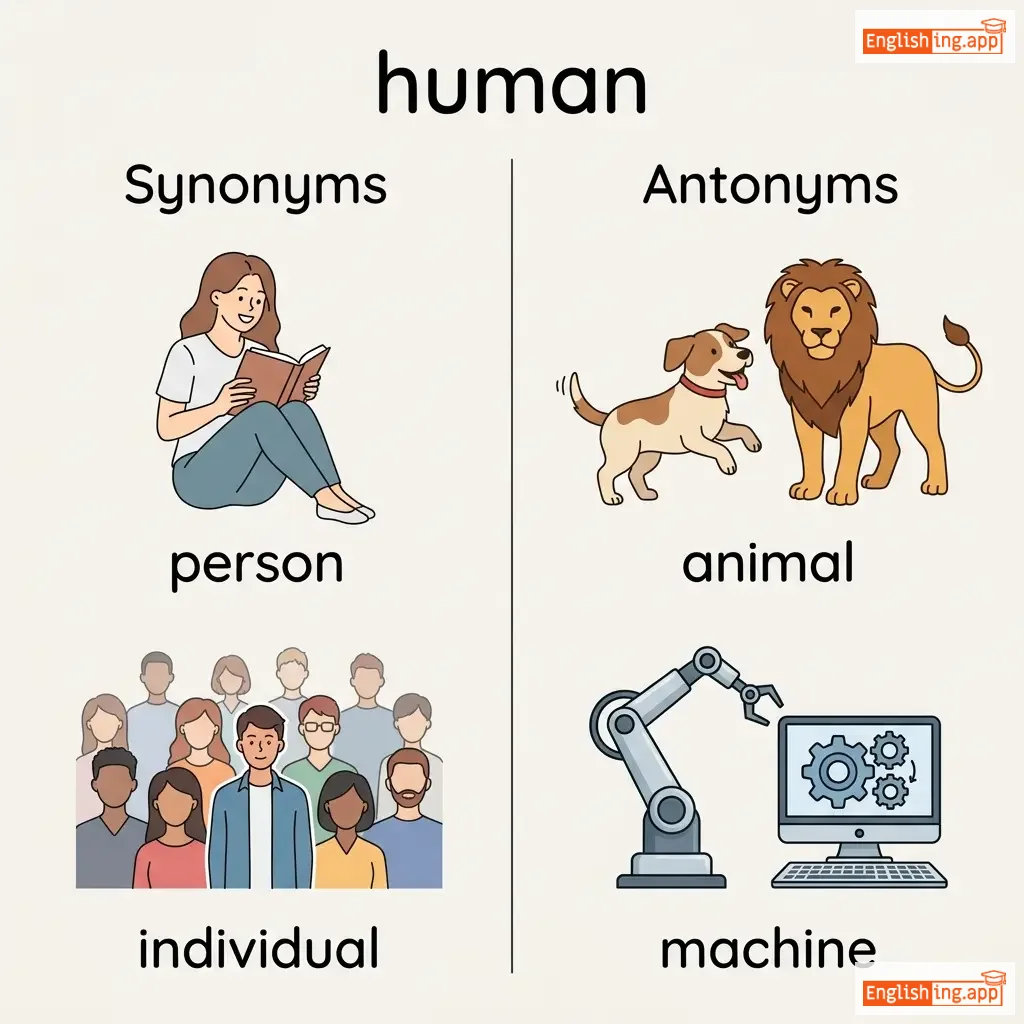
person, individual, mortal, man, woman
••••••
|
animal, machine, robot
••••••
|
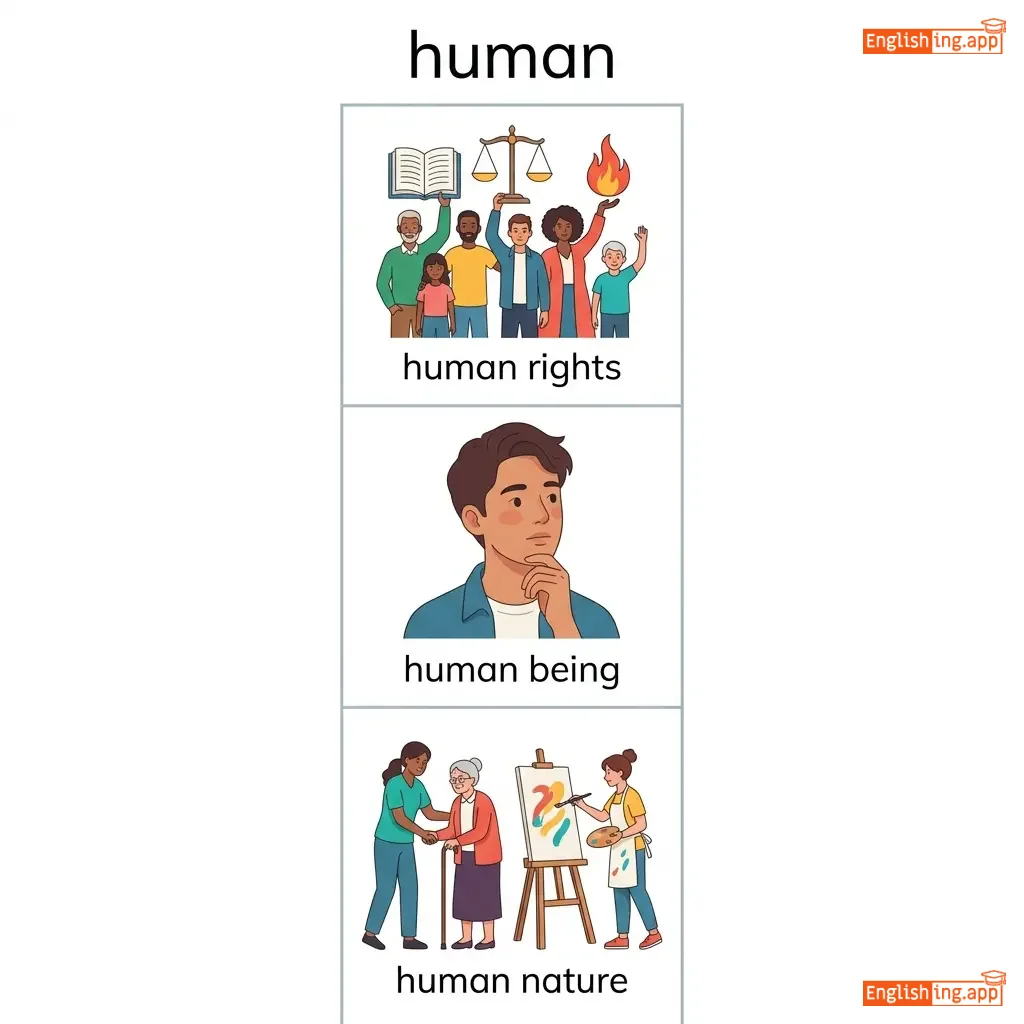
human rights, human being, human nature, human body
••••••
|
Human = 'chelovek' (человек) + 'stvo' (человечество) → как человек, так и его общество.
••••••
|
|
🌍
••••••
|
/hjuːˌmænɪˈtɛəriən/
noun, adjective
(хьюːˌмэниˈтэриэн)
••••••
|
- •••••• |
гуманитарный
gumanitarnyy
••••••
|
- •••••• | - •••••• | - •••••• | - •••••• |
A person who seeks to promote human welfare, or something relating to human welfare and compassion.
••••••
|
The organization provides humanitarian aid to disaster victims. |
Организация оказывает гуманитарную помощь жертвам бедствий.
Organizatsiya okazyvayet gumanitarnuyu pomoshch' zhertvam bedstvi.
••••••
|
humanitarian crisis |
A large-scale situation where people's basic needs are not being met, often due to war or natural disaster.
••••••
|
гуманитарный кризис
gumanitarnyy krizis
••••••
|
philanthropic, benevolent, charitable, altruistic, compassionate
••••••
|
selfish, cruel, inhumane
••••••
|
humanitarian aid, humanitarian mission, humanitarian crisis, humanitarian assistance
••••••
|
Гуманитарный – человек, который помогает другим людям.
••••••
|
|
🌍
••••••
|
/hjuːˈmænɪti/
noun
(хьюːˈмэнити)
••••••
|
- •••••• |
человечность
chelovechnost
••••••
|
- •••••• | - •••••• | - •••••• | - •••••• |
the quality of being human; kindness or compassion towards others; all human beings collectively
••••••
|
Kindness is one of the greatest expressions of humanity. |
Доброта — одно из величайших проявлений человечности.
Dobrota — odno iz velichayshikh proyavleniy chelovechnosti.
••••••
|
crimes against humanity |
serious offenses that harm large groups of people
••••••
|
преступления против человечности
prestupleniya protiv chelovechnosti
••••••
|
mankind, humankind, compassion, benevolence, kindness
••••••
|
cruelty, inhumanity, brutality
••••••
|
show humanity, act with humanity, crimes against humanity, humanity and compassion
••••••
|
Человечность - это суть человечества, доброта и сострадание.
••••••
|
|
🙏
••••••
|
/ˈhʌmbəl/
adjective, verb
••••••
|
- •••••• | - •••••• |
humbled
••••••
|
humbled
••••••
|
humbles
••••••
|
humbling
••••••
|
Having or showing a modest view of one's importance; to lower pride or status.
••••••
|
Despite his success, he remained humble. |
- •••••• |
eat humble pie |
To admit one's mistake and apologize humbly.
••••••
|
- •••••• |
modest, meek, unassuming, respectful
••••••
|
arrogant, proud, boastful
••••••
|
humble beginning, humble attitude, humble request
••••••
|
No •••••• |
|
😂
••••••
|
/ˈhjuː.mər/
noun
(юмор)
••••••
|
- •••••• |
юмор
yumor
••••••
|
- •••••• | - •••••• | - •••••• | - •••••• |
The quality of being amusing or entertaining.
••••••
|
His sense of humor always lightens the mood.
Его чувство юмора всегда поднимает настроение.
••••••
|
Его чувство юмора всегда поднимает настроение.
Ego chuvstvo yumora vsegda podnimayet nastroenie.
••••••
|
good sense of humor
хорошее чувство юмора
••••••
|
The ability to be funny and understand jokes.
••••••
|
Хорошее чувство юмора
khoroshee chuvstvo yumora
••••••
|
wit, comedy, fun, amusement, joviality
••••••
|
seriousness, gloom
••••••
|
sense of humor, dry humor, dark humor, use humor
••••••
|
Yumor = юмор: представить yum как вкус и or как выбор — вкус смеха и юмора.
••••••
|
|
😄
••••••
|
/ˈhjuː.mər.əs/
adjective
(хюмэрэс)
••••••
|
- •••••• |
забавный; смешной; вызывающий смех;
zabavnyy; smeshnoy; vyzyvayushchiy smekh;
••••••
|
- •••••• | - •••••• | - •••••• | - •••••• |
funny; amusing; causing laughter;
••••••
|
His humorous stories always make everyone laugh. |
Его забавные истории всегда заставляют всех смеяться.
Yego zabavnye istorii vsegda zastavlyayut vsekh smeyat'sya.
••••••
|
- •••••• | - •••••• | - •••••• |
funny, amusing, witty, comical
••••••
|
serious, solemn, grave, humorless
••••••
|
humorous story, humorous person, humorous remark
••••••
|
Забавные истории вызывают смех.
••••••
|
|
💯
••••••
|
/ˈhʌndrəd/
noun, numeral
(hundret)
••••••
|
- •••••• |
сто
sto
••••••
|
- •••••• | - •••••• | - •••••• | - •••••• |
the number 100
••••••
|
There are a hundred students in the hall. |
В зале сто студентов.
V zale sto studentov.
••••••
|
hundred percent |
completely; fully
••••••
|
сто процентов
sto protsentov
••••••
|
century, 100, large number
••••••
|
zero, none
••••••
|
one hundred, hundred percent, hundred times
••••••
|
Сто = 100, сто процентов = полностью.
••••••
|
|
🍽️
••••••
|
/ˈhʌŋɡər/
noun
(хангэр)
••••••
|
- •••••• |
голод
golit
••••••
|
- •••••• | - •••••• | - •••••• | - •••••• |
the feeling of discomfort caused by lack of food
••••••
|
The child cried out of hunger. |
Ребёнок плакал от голода.
Rebyonok plakal ot goloda.
••••••
|
hunger for success |
a strong desire to achieve success
••••••
|
голод к успеху
golod k uspekhu
••••••
|
starvation, appetite, craving, emptiness
••••••
|
satisfaction, fullness
••••••
|
die of hunger, hunger strike, hunger for power, hunger relief
••••••
|
Hunger = голод, Hungry = голодный
••••••
|
|
🍽️
••••••
|
/ˈhʌŋɡri/
adjective
(хʌŋɡри)
••••••
|
- •••••• |
голодный
golodny
••••••
|
- •••••• | - •••••• | - •••••• | - •••••• |
feeling or showing the need for food
••••••
|
The children were hungry after playing outside all day. |
Дети были голодны после того, как играли на улице весь день.
Deti byli golodny posle togo, kak igrali na ulitse ves' den'.
••••••
|
hungry for success |
eager or ambitious to achieve something
••••••
|
голодный до успеха
golodny do uspekha
••••••
|
starving, famished, ravenous, peckish
••••••
|
full, satisfied, stuffed
••••••
|
very hungry, feel hungry, go hungry, hungry eyes
••••••
|
Hungry значит голодный — когда ты голоден, твой живот урчит, как 'голодный'.
••••••
|
|
🏹
••••••
|
/hʌnt/
verb
(khant)
••••••
|
|
охотиться
okhotitsya
••••••
|
hunted
khanted
••••••
|
hunted
khanted
••••••
|
hunts
khants
••••••
|
hunting
khanting
••••••
|
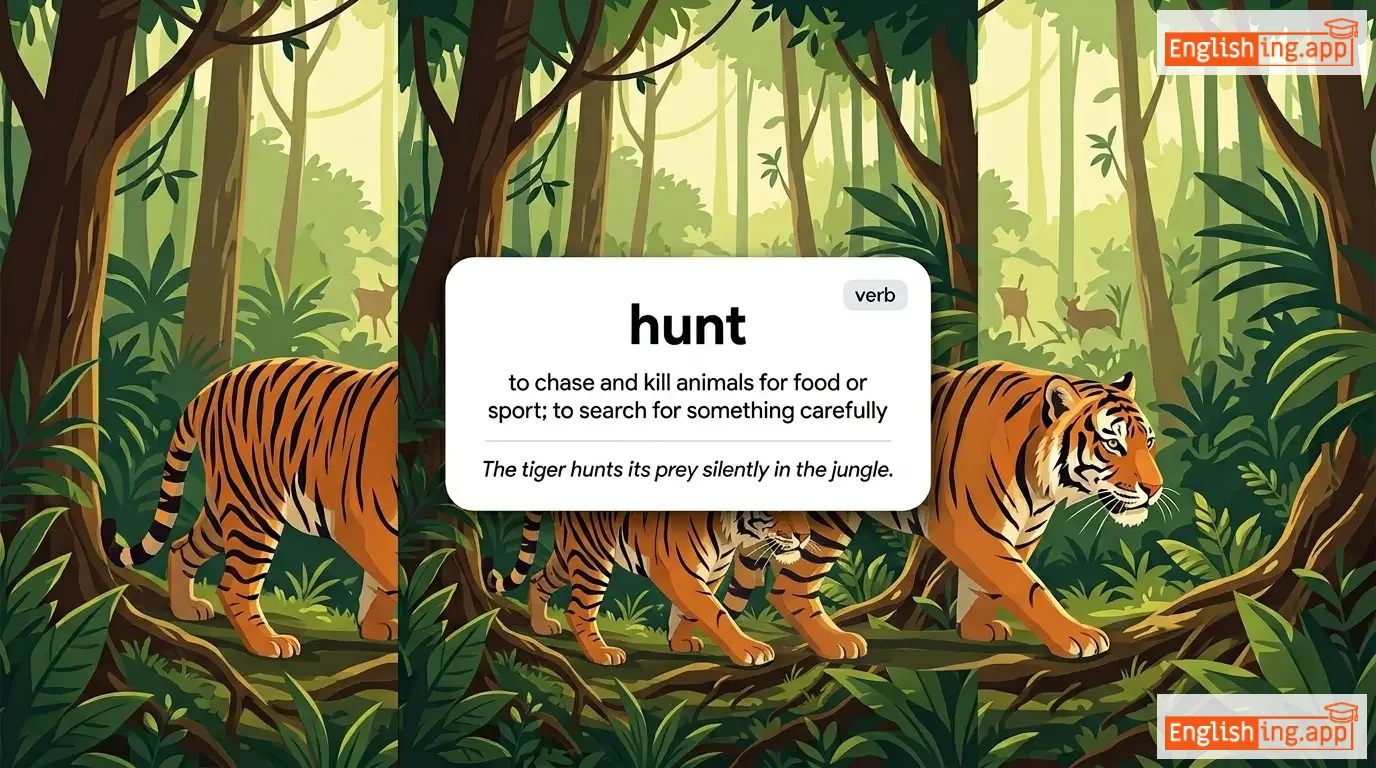
to chase and kill animals for food or sport; to search for something carefully
••••••
|
The tiger hunts its prey silently in the jungle.
Тигр охотится на свою добычу молча в джунглях.
••••••
|
Тигр охотится на свою добычу тихо в джунглях.
Tigr okhotitsya na svoyu dobychu tikho v dzhunglyakh.
••••••
|
on the hunt for
на охоте за
••••••
|
actively searching for something or someone
••••••
|
в поисках
v pois'kakh
••••••
|
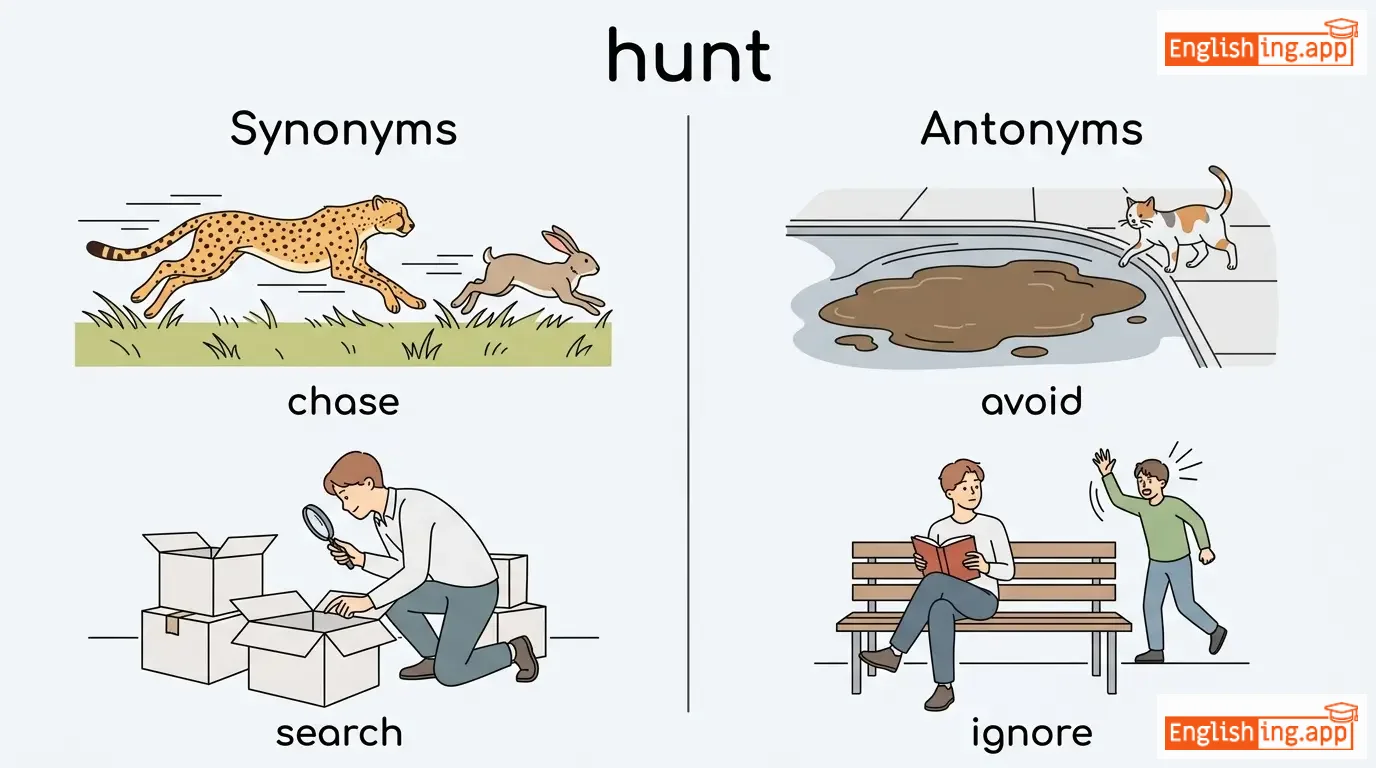
chase, search, track, pursue, seek
••••••
|
avoid, ignore, escape
••••••
|
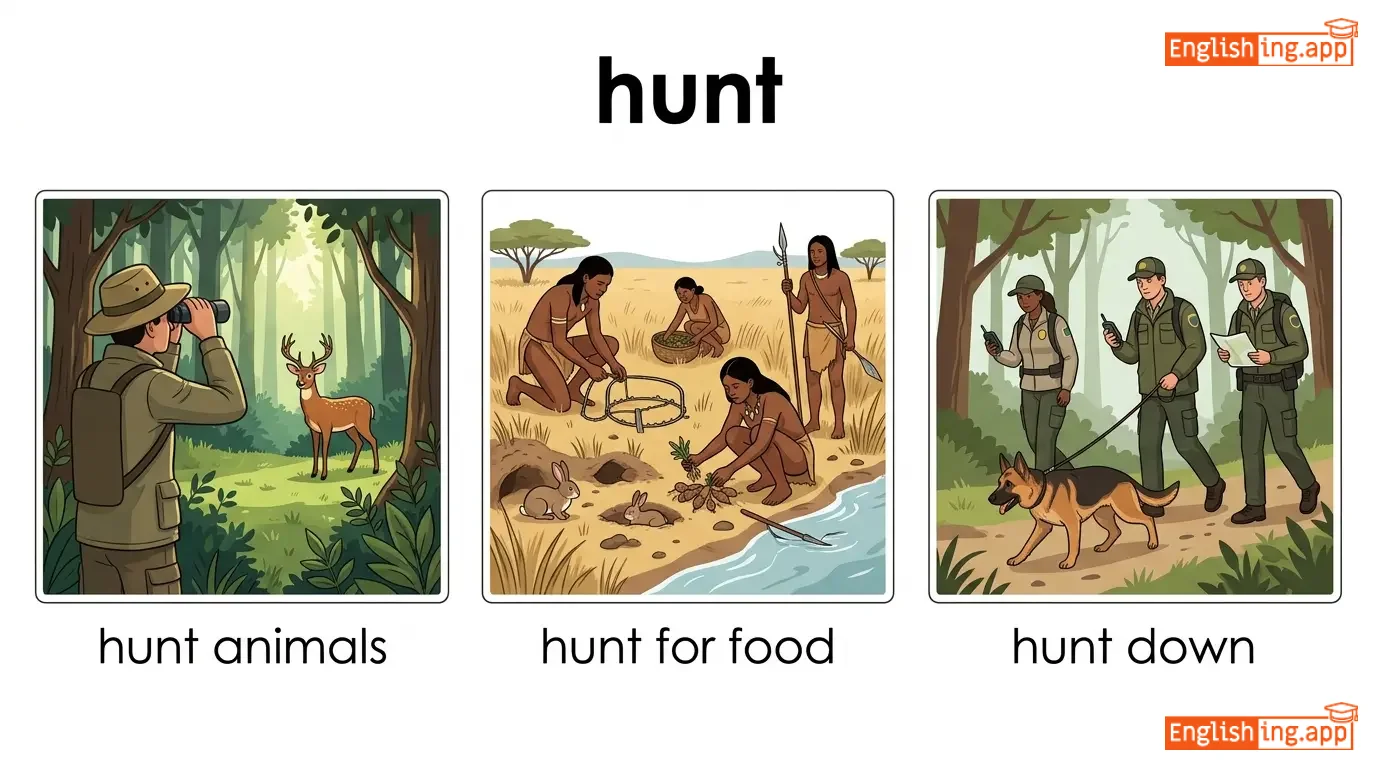
hunt animals, hunt for food, hunt down, go hunting
••••••
|
Охотиться, пока не найдешь!
••••••
|
|
🏹
••••••
|
/ˈhʌntər/
noun
(хантэр)
••••••
|
- •••••• |
охотник
okhotnik
••••••
|
- •••••• | - •••••• | - •••••• | - •••••• |
a person or animal that hunts animals for food or sport
••••••
|
The hunter tracked the deer through the forest.
Охотник проследил за оленем через лес.
••••••
|
Охотник проследил за оленем через лес.
Okhotnik prosledil za olenem cherez les.
••••••
|
- •••••• | - •••••• | - •••••• |
trapper, chaser, pursuer, stalker
••••••
|
prey, victim
••••••
|
skilled hunter, deer hunter, big-game hunter
••••••
|
Hunter означает охотник - охота для еды или спорта.
••••••
|
|
🎯
••••••
|
/ˈhʌntɪŋ/
noun/verb
(хантинг)
••••••
|
- •••••• |
охота
okhota
••••••
|
- •••••• | - •••••• |
hunts
хантует
••••••
|
hunting
хантинг
••••••
|
the activity of chasing and killing wild animals
••••••
|
Hunting is strictly regulated in many countries.
Охота строго регулируется во многих странах.
••••••
|
Охота строго регулируется во многих странах.
Okhota strogo reguliruetsya vo mnogikh stranakh.
••••••
|
house-hunting
поиск дома
••••••
|
the act of searching for a house to live in
••••••
|
поиск дома
poisk doma
••••••
|
pursuing, tracking, chasing, stalking
••••••
|
protecting, preserving
••••••
|
go hunting, hunting season, hunting ground
••••••
|
Hunting — это охота, Hunt как охота.
••••••
|
|
🏃
••••••
|
/ˈhʌri/
verb
(хурри)
••••••
|
|
спешить
speshit
••••••
|
hurried
хурид
••••••
|
hurried
хурид
••••••
|
hurries
хуриз
••••••
|
hurrying
хуринг
••••••
|
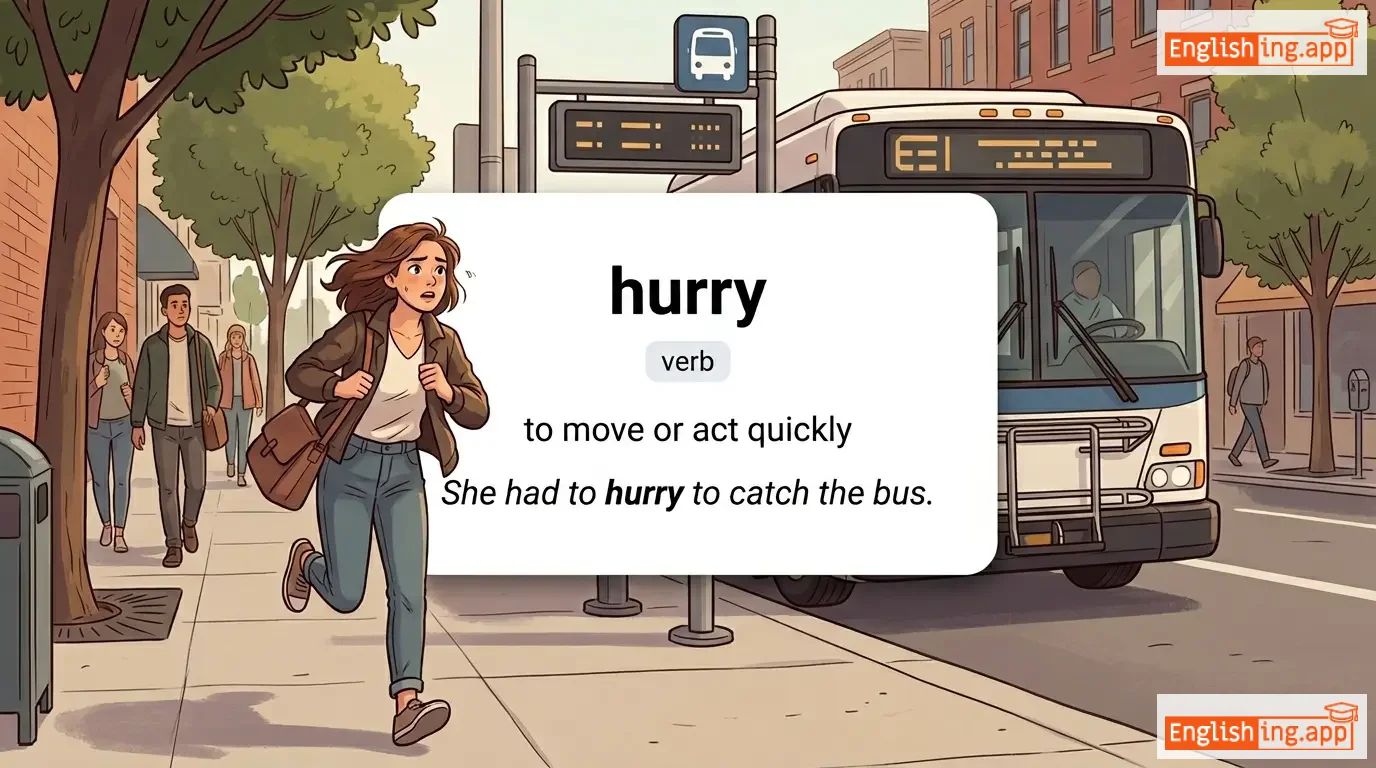
to move or act quickly
••••••
|
She had to hurry to catch the bus.
ей нужно было хурри, чтобы успеть на автобус.
••••••
|
Ей пришлось поспешить, чтобы успеть на автобус.
Ey prishlos' pospeshit', chtoby uspe't' na avtobus.
••••••
|
in a hurry
в хурри
••••••
|
rushing or pressed for time
••••••
|
в спешке
v speshke
••••••
|
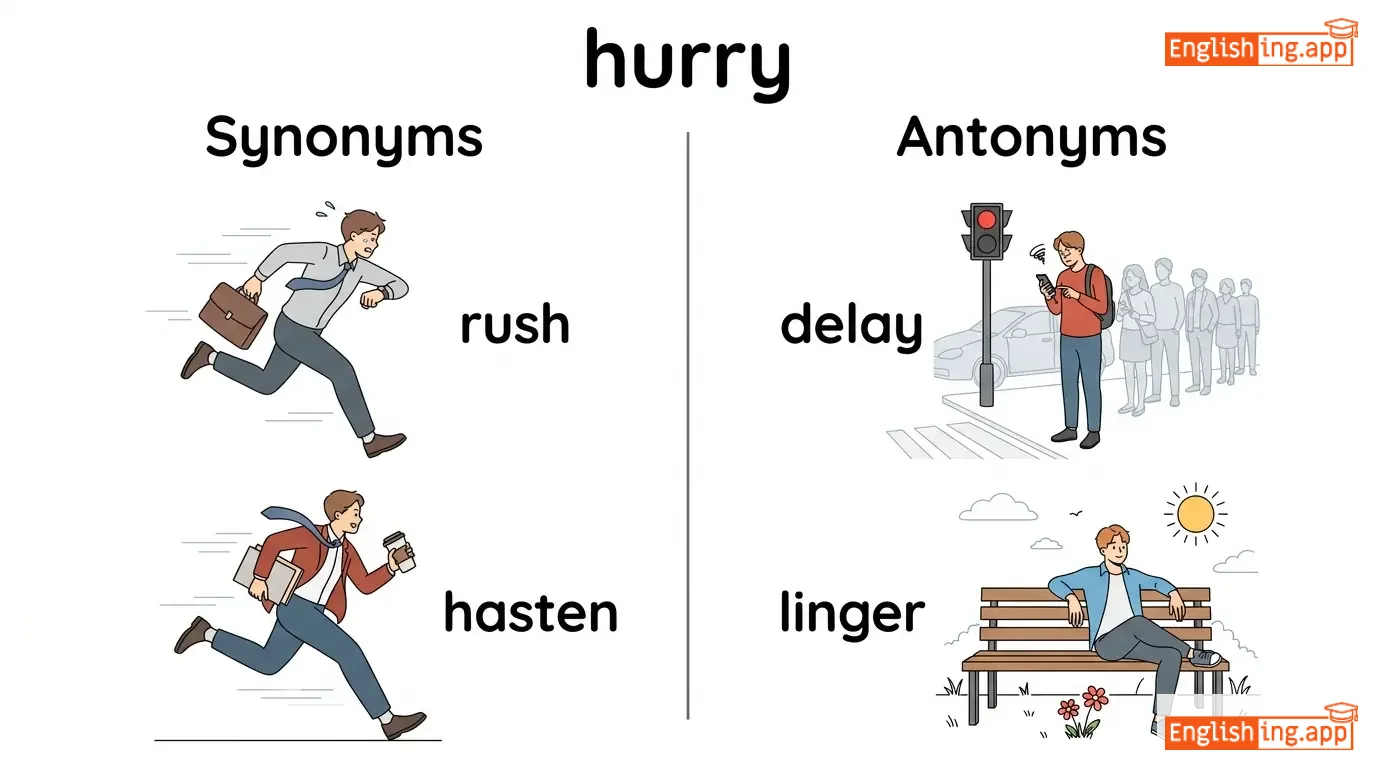
rush, hasten, speed, scurry, dash
••••••
|
delay, linger, wait
••••••
|
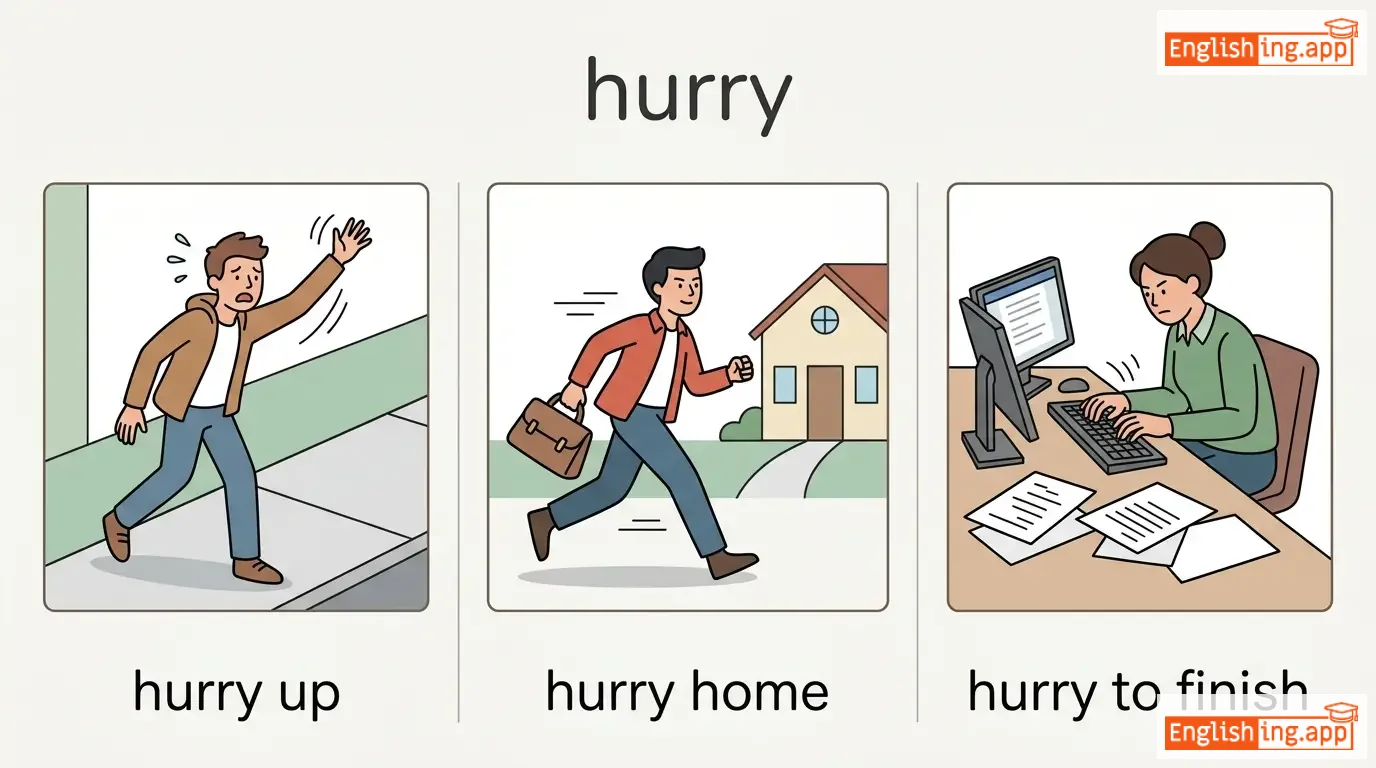
hurry up, hurry home, hurry to finish, hurry back
••••••
|
Hurry означает 'спешить' – двигаться быстро
••••••
|
|
🤕
••••••
|
/hɜːrt/
verb/adjective
(хёрт)
••••••
|
- •••••• |
повредить
povredit
••••••
|
hurt
хёрт
••••••
|
hurt
хёрт
••••••
|
hurts
хёртс
••••••
|
hurting
хёртинг
••••••
|
to cause pain or injury; to feel pain
••••••
|
He hurt his knee while playing football.
хи хёрт хиз нии уайл плейинг футбол
••••••
|
Он повредил колено, играя в футбол.
On povredil koleno, igraya v futbol.
••••••
|
hurt feelings
хёрт филингс
••••••
|
emotional pain caused by someone's words or actions
••••••
|
поврежденные чувства
povrezhdennye chuvstva
••••••
|
injure, wound, damage, bruise
••••••
|
heal, comfort, soothe
••••••
|
hurt badly, hurt someone, hurt feelings
••••••
|
Hurt означает повредить — боль от удара.
••••••
|
|
👨👩👧
••••••
|
/ˈhʌzbənd/
noun
(хазбэнд)
••••••
|
- •••••• |
муж
muzh
••••••
|
- •••••• | - •••••• | - •••••• | - •••••• |
A married man regarded in relation to his spouse.
••••••
|
Her husband is very supportive of her career. |
Ее муж очень поддерживает ее карьеру.
Yeyo muzh ochen' podderzhivayet yeyu kar'yeru.
••••••
|
good husband |
A caring, responsible, and supportive spouse.
••••••
|
хороший муж
khoroshiy muzh
••••••
|
spouse, partner, mate, groom, consort
••••••
|
wife, bachelor, single
••••••
|
loving husband, devoted husband, husband and wife
••••••
|
Husband значит 'House Band' - муж держит дом вместе.
••••••
|
|
🏚️
••••••
|
/hʌt/
noun
(хат)
••••••
|
- •••••• |
хижина
khizhina
••••••
|
- •••••• | - •••••• | - •••••• | - •••••• |
a small simple shelter or house
••••••
|
They lived in a small wooden hut near the river. |
Они жили в маленькой деревянной хижине рядом с рекой.
Oni zhili v malen'koy derevyannoy khizhine ryadom s rekoy.
••••••
|
- •••••• | - •••••• | - •••••• |
shack, cabin, cottage, shelter
••••••
|
mansion, palace
••••••
|
wooden hut, mountain hut, small hut, hut village
••••••
|
Hut - это хижина, простое место для отдыха от холодных ветров.
••••••
|
|
💧
••••••
|
/ˈhaɪdrədʒən/
noun
(водород)
••••••
|
- •••••• |
водород
vodorod
••••••
|
- •••••• | - •••••• | - •••••• | - •••••• |
a colorless, odorless, highly flammable gas that is the lightest and most abundant chemical element in the universe
••••••
|
Hydrogen is used as a clean fuel in many energy systems. |
Водород используется как чистое топливо во многих энергетических системах.
Vodorod ispol'zuetsja kak chistoe toplivo vo mnogikh energeticheskikh sistemakh.
••••••
|
- •••••• | - •••••• | - •••••• |
H2, fuel, gas
••••••
|
oxygen, carbon dioxide
••••••
|
hydrogen gas, hydrogen fuel, hydrogen bond
••••••
|
Hydrogen = водород = легкий газ, который может поднять Землю!
••••••
|
|
🔬
••••••
|
/haɪˈpɒθəsɪs/
noun
(гипотезис)
••••••
|
- •••••• |
гипотеза
gipotizis
••••••
|
- •••••• | - •••••• | - •••••• | - •••••• |
a proposed explanation made on the basis of limited evidence as a starting point for further investigation.
••••••
|
The scientist tested her hypothesis through multiple experiments.
Учёная проверила свою гипотезу через серию экспериментов.
••••••
|
Учёная проверила свою гипотезу через серию экспериментов.
Uchyonaya proveryla svoyu gipotezu cherez seriyu eksperimentov
••••••
|
working hypothesis
рабочая гипотеза
••••••
|
a provisional idea assumed for the sake of argument or investigation
••••••
|
рабочая гипотеза
rabochaya gipoteza
••••••
|
assumption, theory, proposition, supposition, premise
••••••
|
fact, proof, certainty
••••••
|
form a hypothesis, test a hypothesis, reject a hypothesis, confirm a hypothesis
••••••
|
ГипоТЕза: imagine a hippo holding a THESIS in its mouth to remember гипотеза и hypothe-sis
••••••
|
|
🙋
••••••
|
/aɪ/
pronoun
(ай)
••••••
|
- •••••• |
я
ya
••••••
|
- •••••• | - •••••• | - •••••• | - •••••• |
used by a speaker to refer to himself or herself
••••••
|
I am learning English every day. |
Я учу английский каждый день.
Ya uchu angliyskiy kazhdyy den'.
••••••
|
- •••••• | - •••••• | - •••••• |
me, myself
••••••
|
you, they
••••••
|
I think, I know, I want, I am
••••••
|
I означает я — 'ай' звучит как 'я'.
••••••
|
|
🧊
••••••
|
/aɪs/
noun
(ais)
••••••
|
- •••••• |
лед
lyod
••••••
|
- •••••• | - •••••• | - •••••• | - •••••• |
frozen water, a solid form of water
••••••
|
The lake was covered with thick ice in winter. |
Озеро было покрыто толстым льдом зимой.
Ozyero bylo pokryto tolstym lyodom zimoy.
••••••
|
break the ice |
to start a conversation in a social situation
••••••
|
сломать лед
slomat' lyod
••••••
|
frost, snow, glacier, icicle
••••••
|
heat, fire
••••••
|
ice cubes, ice cream, ice skating, thin ice
••••••
|
Ice = Лед, как в мороженом 🍦
••••••
|
|
🍦
••••••
|
/ˈaɪs kriːm/
noun
(ays krim)
••••••
|
- •••••• |
мороженое
morozhenoe
••••••
|
- •••••• | - •••••• | - •••••• | - •••••• |
a frozen sweet dessert made from dairy products, usually served cold
••••••
|
Children love to eat ice-cream on hot summer days.
Дети любят есть мороженое в жаркие летние дни.
••••••
|
Дети любят есть мороженое в жаркие летние дни.
Deti lyubyat yest' morozhenoe v zharkie letnie dni.
••••••
|
- •••••• | - •••••• | - •••••• |
frozen dessert, gelato, sorbet
••••••
|
hot dessert, warm pudding
••••••
|
vanilla ice-cream, ice-cream cone, ice-cream parlor
••••••
|
Мороженое освежает летом.
••••••
|
|
⭐
••••••
|
/ˈaɪkɒn/
noun
(aikon)
••••••
|
- •••••• |
икона, символ
ikona, simvol
••••••
|
- •••••• | - •••••• | - •••••• | - •••••• |
A person or thing regarded as a symbol of something, or a graphic symbol on a screen.
••••••
|
The singer became a cultural icon. |
Певец стал культурной иконой.
Pevets stal kul'turnoy ikonoy.
••••••
|
pop icon |
A famous person admired widely in popular culture.
••••••
|
поп-икона
pop-ikona
••••••
|
symbol, idol, emblem, figure, legend
••••••
|
unknown, ordinary
••••••
|
cultural icon, fashion icon, national icon, religious icon
••••••
|
Икона – это символ → на экране или звезда, восхищенная всеми.
••••••
|
|
🪪
••••••
|
/aɪˈdiː/
noun
(айди)
••••••
|
- •••••• |
удостоверение личности
udostoverenie lichnosti
••••••
|
- •••••• | - •••••• | - •••••• | - •••••• |
identification; a document or number used to prove who someone is
••••••
|
Please show your ID at the entrance.
Плиз шоу ёр айди эт зе энтранс.
••••••
|
Пожалуйста, покажите удостоверение личности на входе.
pozhaluysta pokazhite udostoverenie lichnosti na vhode
••••••
|
show your ID
шоу ёр айди
••••••
|
to present identification for verification
••••••
|
показать удостоверение личности
pokazat udostoverenie lichnosti
••••••
|
identification, identity, ID card, credentials
••••••
|
anonymity, unknown
••••••
|
photo ID, government ID, valid ID, student ID
••••••
|
ID = айди, помогает установить личность
••••••
|
|
💡
••••••
|
/aɪˈdiːə/
noun
(айдея)
••••••
|
- •••••• |
идея
ideya
••••••
|
- •••••• | - •••••• | - •••••• | - •••••• |
A thought, plan, or suggestion about what to do.
••••••
|
She had a brilliant idea for a new business. |
У неё была блестящая идея для нового бизнеса.
U nee byla blestyashchaya ideya dlya novogo biznesa.
••••••
|
bright idea |
a clever or creative thought or solution
••••••
|
яркая идея
yarkaya ideya
••••••
|
concept, notion, plan, thought, suggestion
••••••
|
ignorance, misunderstanding
••••••
|
good idea, brilliant idea, bad idea, business idea, creative idea
••••••
|
Идея как лампочка 💡, вспыхивающая в голове
••••••
|
|
✨
••••••
|
/aɪˈdiːəl/
adjective
(ajdíel)
••••••
|
- •••••• |
идеальный
ideal'nyj
••••••
|
- •••••• | - •••••• | - •••••• | - •••••• |
the best possible; perfect for a situation
••••••
|
This place is ideal for a picnic. |
Это место идеально подходит для пикника.
Eto mesto ideal'no podkhodyashchij dlya piknika.
••••••
|
- •••••• | - •••••• | - •••••• |
perfect, excellent, optimal, model, flawless
••••••
|
imperfect, flawed, unsuitable
••••••
|
ideal situation, ideal choice, ideal candidate, ideal time
••••••
|
Идеальный — это что-то, что идеально подходит для ситуации, как 'идеальная работа'.
••••••
|
|
👯
••••••
|
/aɪˈdentɪkl/
adjective
(айˈдентɪкэл)
••••••
|
- •••••• |
идентичный
identichny
••••••
|
- •••••• | - •••••• | - •••••• | - •••••• |
Exactly the same in every detail.
••••••
|
The twins wore identical clothes. |
Близнецы были в одинаковой одежде.
Bliznetsy byli v odinakovoi odezhde.
••••••
|
identical twin |
one of two twins who look exactly the same
••••••
|
идентичные близнецы
identichnye bliznitsy
••••••
|
same, indistinguishable, equal, duplicate
••••••
|
different, distinct, varied
••••••
|
identical clothes, identical result, almost identical, virtually identical
••••••
|
Identical означает 'идентичный' на русском языке, как два близнеца.
••••••
|
|
🪪
••••••
|
/aɪˌdɛntɪfɪˈkeɪʃən/
noun
(ay-den-ti-fi-katsiya)
••••••
|
- •••••• |
идентификация
identifikatsiya
••••••
|
- •••••• | - •••••• | - •••••• | - •••••• |
the process of recognizing or proving who or what someone or something is
••••••
|
You need proper identification to enter the building. |
Вам необходимо правильное удостоверение личности для входа в здание.
Vam neobkhodimo pravil'noe udostoverenie lichnosti dlya vkhoda v zdanie.
••••••
|
- •••••• | - •••••• | - •••••• |
recognition, verification, authentication, validation
••••••
|
misidentification, confusion
••••••
|
identity card, identification number, personal identification, photo identification
••••••
|
Identifikatsiya - это как показывать удостоверение личности.
••••••
|
|
🔍
••••••
|
/aɪˈdɛntɪfaɪ/
verb
(ai-den-ti-fai)
••••••
|
|
идентифицировать
identifitsirovat
••••••
|
identified
ai-den-ti-feid
••••••
|
identified
ai-den-ti-feid
••••••
|
identifies
ai-den-ti-fiz
••••••
|
identifying
ai-den-ti-fai-ing
••••••
|
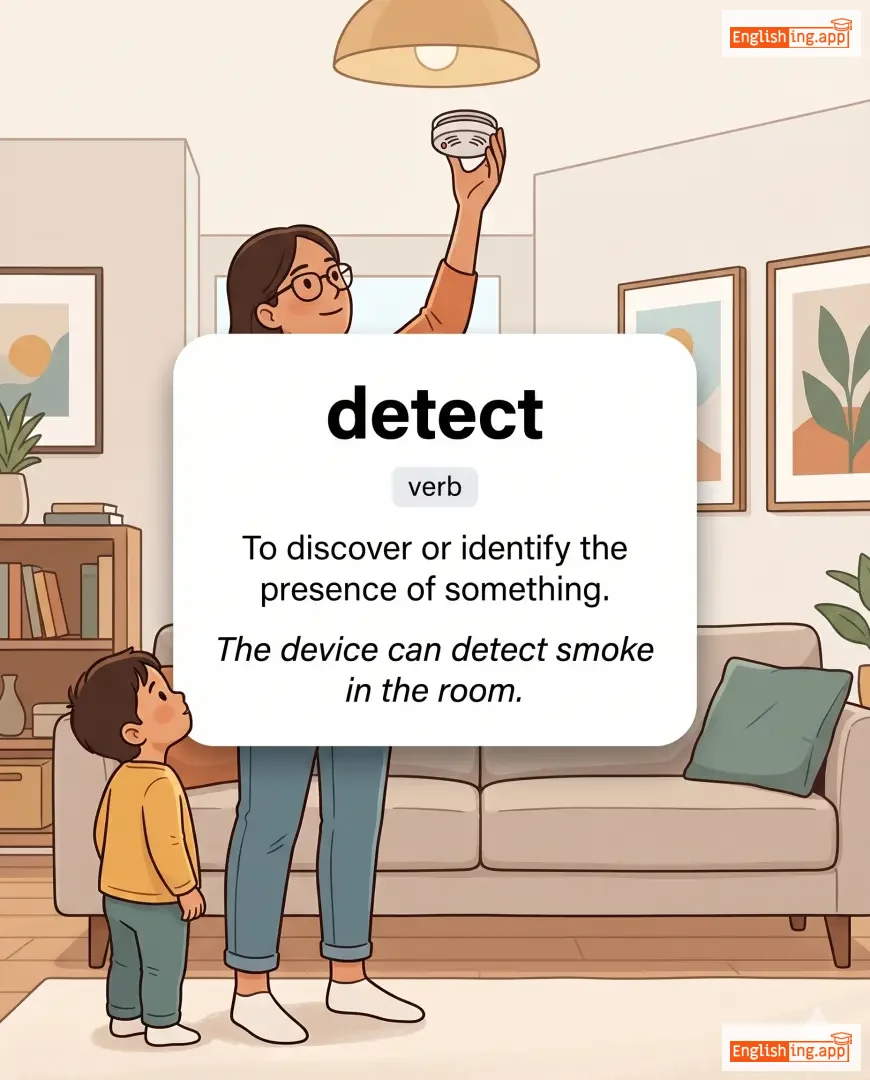
to recognize or establish what something or someone is
••••••
|
The police could not identify the suspect.
Полиция не смогла идентифицировать подозреваемого.
••••••
|
Полиция не смогла идентифицировать подозреваемого.
Politsiya ne smogla identifitsirovat' podozrevaemogo.
••••••
|
identify with
идентифицировать себя с
••••••
|
to feel that you understand someone because you have had similar experiences
••••••
|
сопереживать
so-pere-zhivat'
••••••
|
recognize, detect, determine, distinguish, verify
••••••
|
confuse, misidentify
••••••
|
identify problems, identify needs, identify the source, identify correctly
••••••
|
Идентификация значит распознавать - как с ID.
••••••
|
|
🪪
••••••
|
/aɪˈdɛntɪti/
noun
(aɪˈdɛntɪti)
••••••
|
|
идентичность
identichnost
••••••
|
- •••••• | - •••••• | - •••••• | - •••••• |
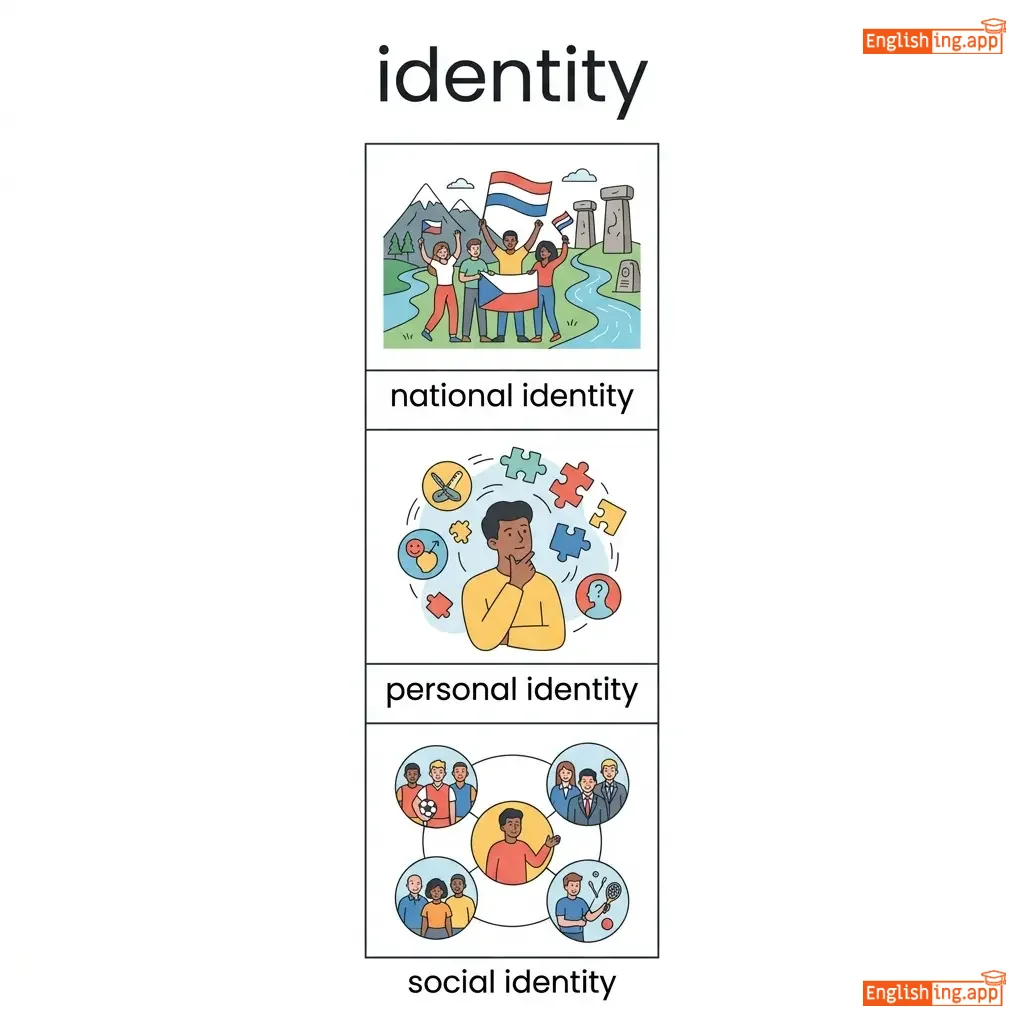
the characteristics, feelings, or beliefs that make a person or group different from others
••••••
|
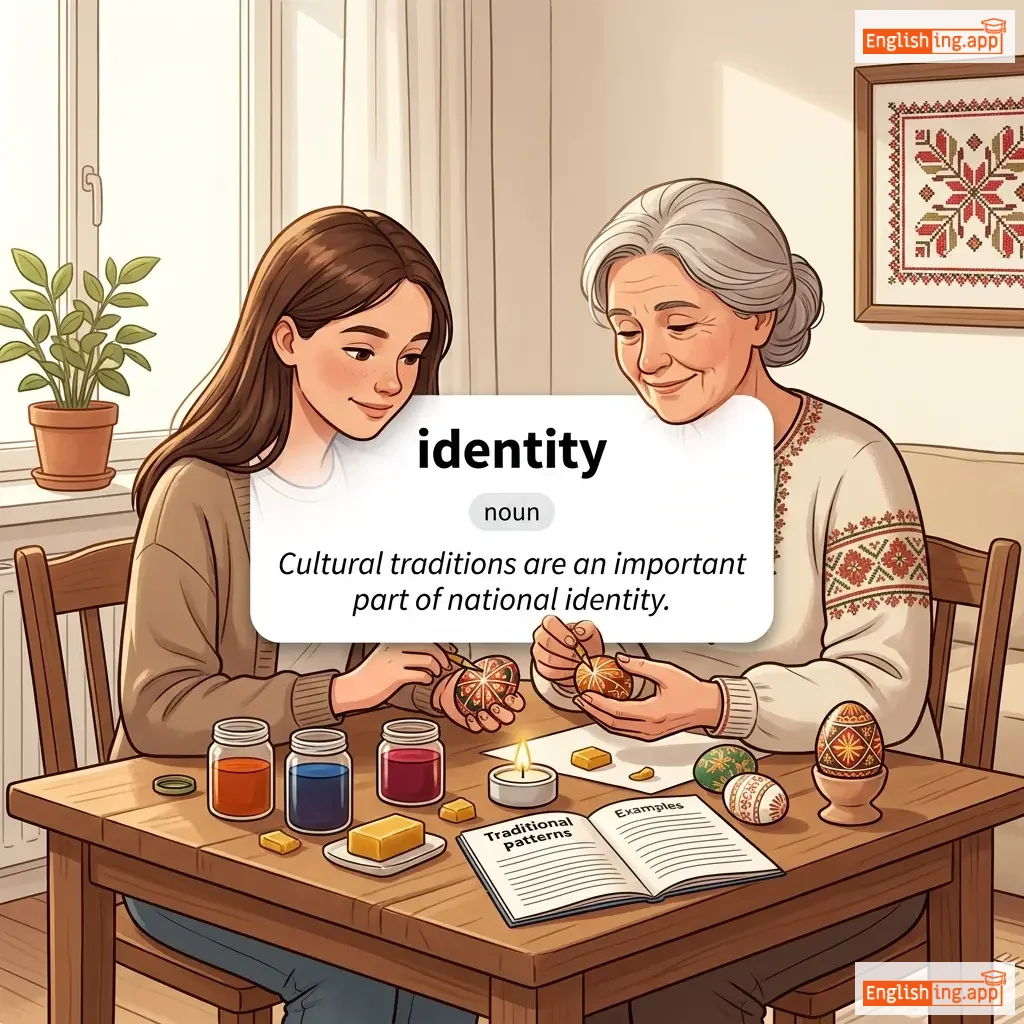
Cultural traditions are an important part of national identity. |
Культурные традиции являются важной частью национальной идентичности.
Kul'turnye traditsii yavyayutsya vazhnoy chastyu natsional'noy identichnosti
••••••
|
identity crisis |
a period of uncertainty about one's sense of self
••••••
|
кризис идентичности
krizis identichnosti
••••••
|
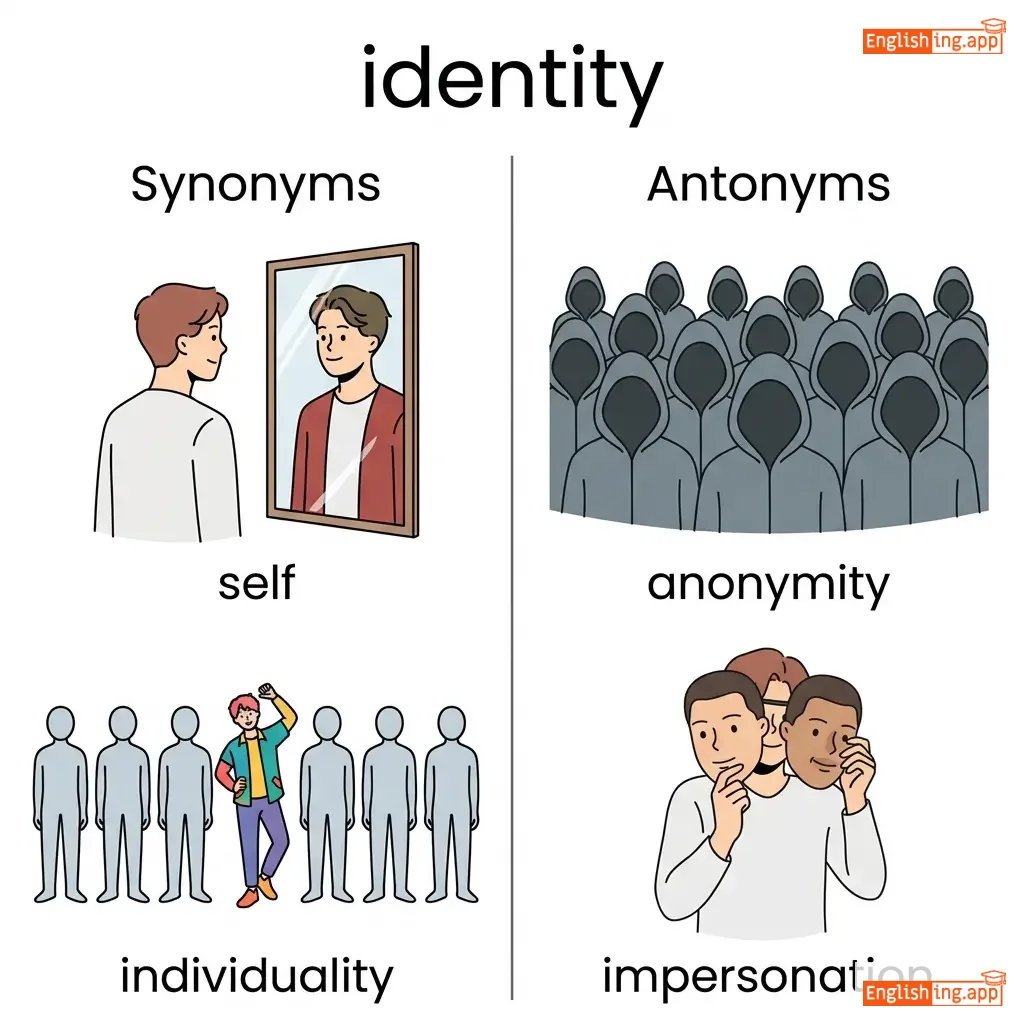
self, individuality, character, personality
••••••
|
anonymity, impersonation
••••••
|
national identity, personal identity, social identity, identity card
••••••
|
Идентичность означает идентичность - паспорт подтверждает твою идентичность
••••••
|
|
📚
••••••
|
/ˌaɪ.di.əˈlɒdʒ.ɪ.kəl/
adjective
(ай.di.əˈлɒдж.икл)
••••••
|
- •••••• |
идеологический
ideologicheskiy
••••••
|
- •••••• | - •••••• | - •••••• | - •••••• |
Relating to or based on a system of ideas or beliefs.
••••••
|
The two parties are divided by deep ideological differences. |
Обе партии разделены глубокими идеологическими разногласиями.
Obe partii razdeleny glubokimi ideologicheskimi raznoglasiya.
••••••
|
- •••••• | - •••••• | - •••••• |
philosophical, doctrinal, theoretical, political
••••••
|
practical, realistic
••••••
|
ideological debate, ideological conflict, ideological differences
••••••
|
Ideology к идеологический – относится к идеям или убеждениям
••••••
|
|
🤪
••••••
|
/ˈɪdɪət/
noun
(идиот)
••••••
|
- •••••• |
идиот
idiot
••••••
|
- •••••• | - •••••• | - •••••• | - •••••• |
a person who acts in a way that is considered very stupid or foolish
••••••
|
He acted like an idiot at the party last night.
Он вёл себя как идиот на вечеринке прошлой ночью.
••••••
|
Он вёл себя как идиот на вечеринке прошлой ночью.
On vyol sebya kak idiot na vecherinke proshloy noch'yu.
••••••
|
- •••••• | - •••••• | - •••••• |
fool, imbecile, moron, simpleton
••••••
|
genius, intellect, savant
••••••
|
complete idiot, stupid idiot, act like an idiot
••••••
|
Idiot = идиот = тот человек, который ведет себя как дурак!
••••••
|
|
❓
••••••
|
/ɪf/
conjunction
(иф)
••••••
|
- •••••• |
если
yesli
••••••
|
- •••••• | - •••••• | - •••••• | - •••••• |
used to introduce a condition or supposition
••••••
|
If it rains tomorrow, we will stay home. |
Если завтра будет дождь, мы останемся дома.
Esli zavtra budet dozhd', my ostanemsya doma.
••••••
|
if only |
used to express a wish or regret
••••••
|
если бы только
yesli by tol'ko
••••••
|
provided that, assuming, in case, supposing
••••••
|
certainly, definitely
••••••
|
if necessary, if possible, if only, if so
••••••
|
ЕСЛИ означает если—'If будет дождь' означает 'Esli budet dozhd''
••••••
|
|
🤷
••••••
|
/ˈɪɡ.nər.əns/
noun
(игнорэнс)
••••••
|
- •••••• |
невежество
nevezhestvo
••••••
|
- •••••• | - •••••• | - •••••• | - •••••• |
lack of knowledge or information; the state of being uninformed about something
••••••
|
His ignorance about basic computer skills made it difficult for him to find a job. |
Его невежество в базовых компьютерных навыках затрудняло ему поиск работы.
Ego nevezhestvo v bazovykh komp'yuternykh navykakh zatrudnyalo yemu poisk raboty.
••••••
|
- •••••• | - •••••• | - •••••• |
unawareness, lack of knowledge, illiteracy, inexperience
••••••
|
knowledge, awareness, education, understanding
••••••
|
willful ignorance, profound ignorance, ignorance about
••••••
|
In Russian, 'nevezhestvo' is a good match for 'ignorance' and helps recall the meaning.
••••••
|
|
🙉
••••••
|
/ɪɡˈnɔːr/
verb
(игнорировать)
••••••
|
|
игнорировать
ignorirovat
••••••
|
ignored
игнорировал
••••••
|
ignored
игнорировал
••••••
|
ignores
игнорирует
••••••
|
ignoring
игнорируя
••••••
|
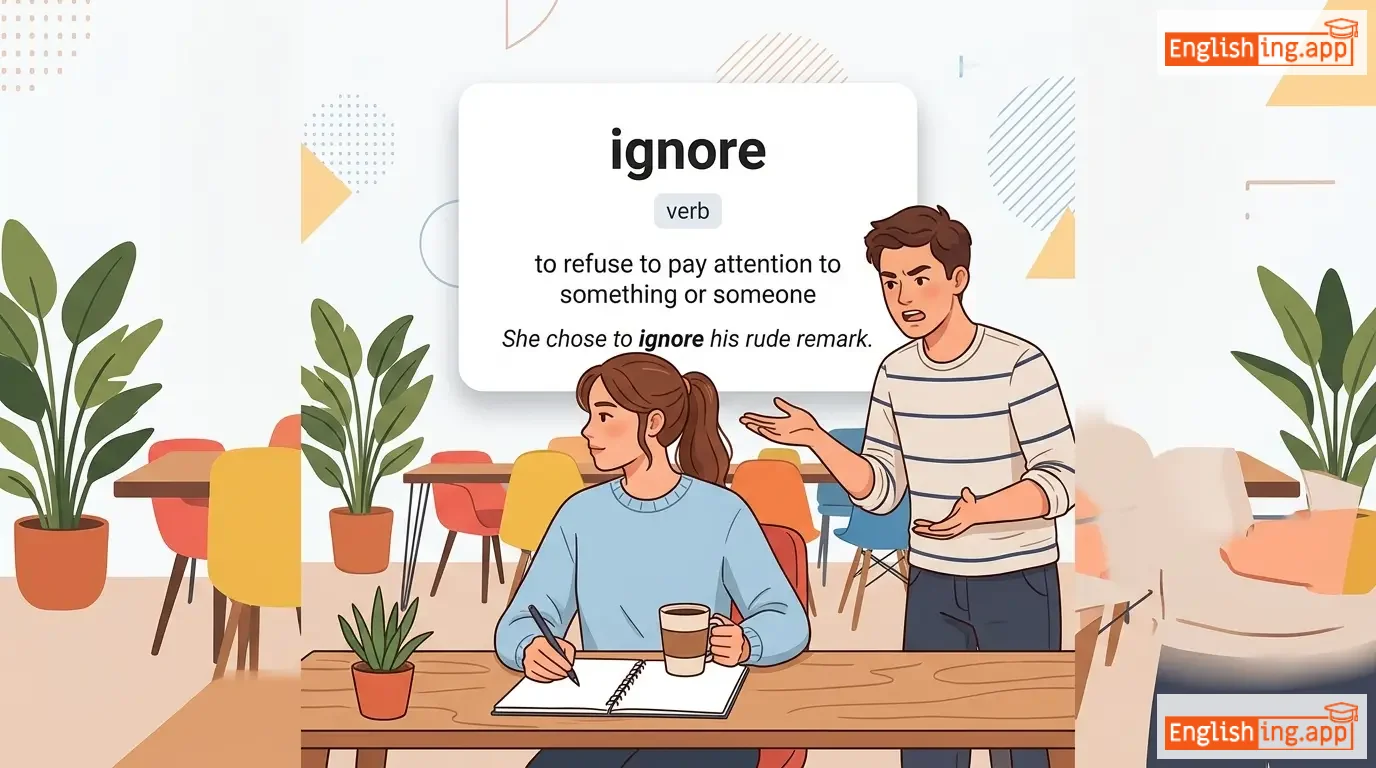
to refuse to pay attention to something or someone
••••••
|
She chose to ignore his rude remark.
Она выбрала игнорировать его грубое замечание.
••••••
|
Она выбрала игнорировать его грубое замечание.
Ona vybrala ignorirovat' ego gruboye zamechaniye.
••••••
|
ignore the elephant in the room
игнорировать слона в комнате
••••••
|
to deliberately avoid talking about a major issue
••••••
|
игнорировать слона в комнате
ignorirovat' slona v komnate
••••••
|
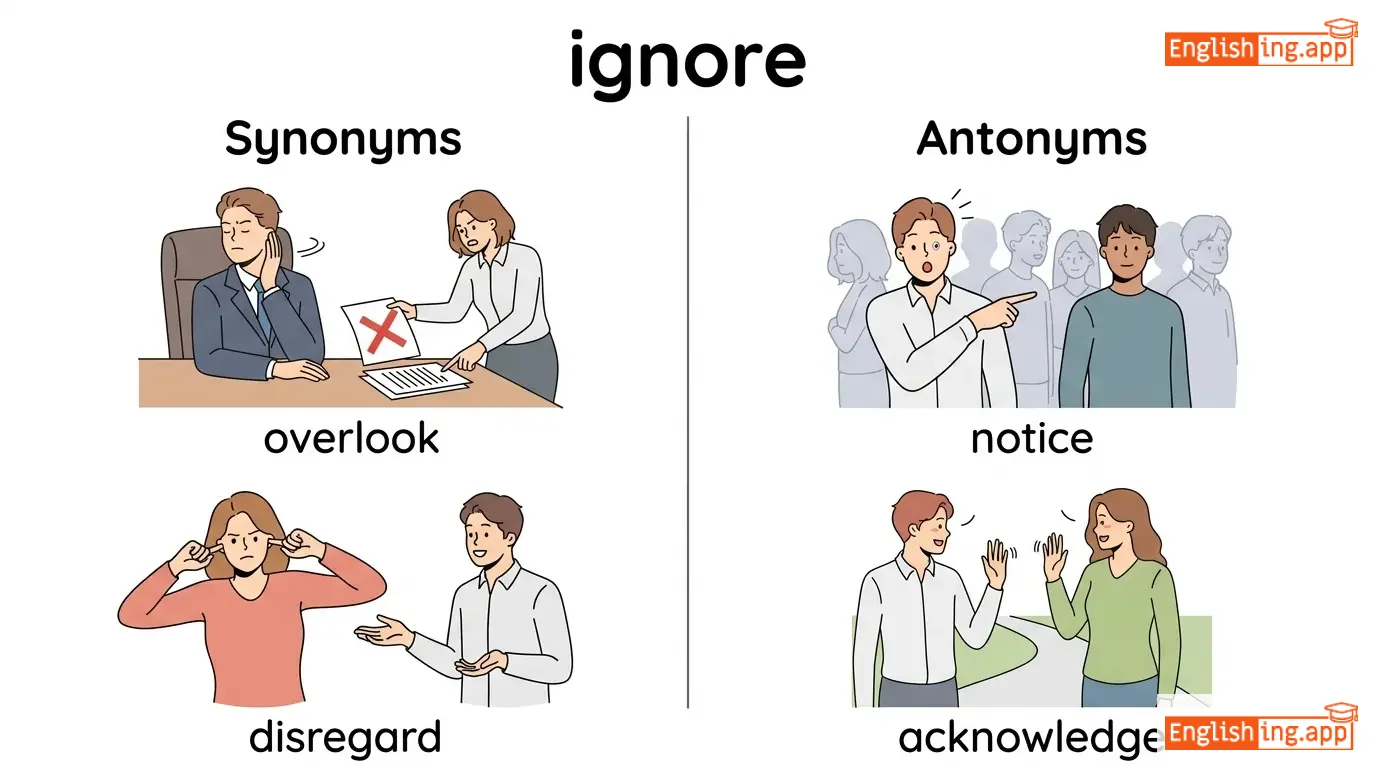
overlook, disregard, neglect, avoid, dismiss
••••••
|
notice, acknowledge, recognize
••••••
|
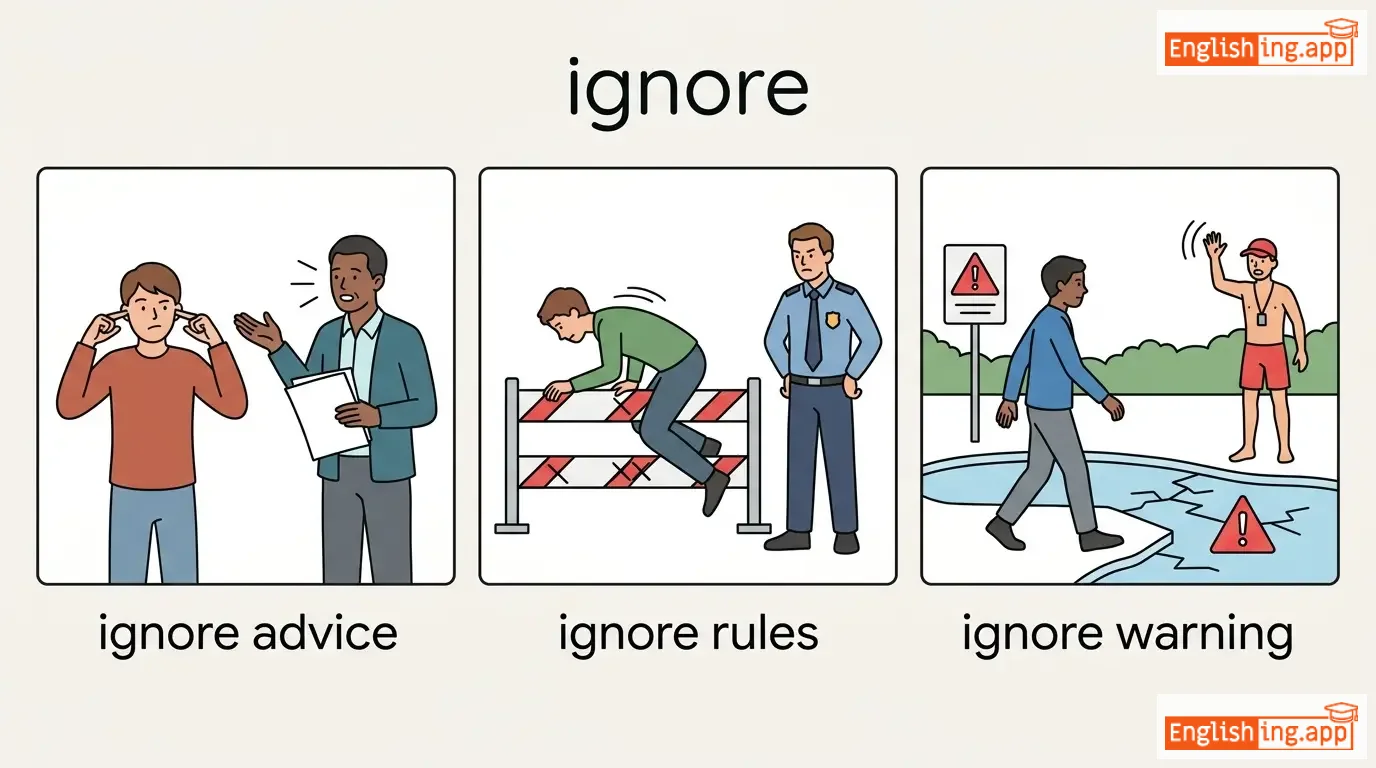
ignore advice, ignore rules, ignore warning
••••••
|
Игнорировать—не обращать внимания, как если бы вы сказали 'игнорировать!'
••••••
|
|
🤒
••••••
|
/ɪl/
adjective
(ил)
••••••
|
- •••••• |
больной
bolnoy
••••••
|
- •••••• | - •••••• | - •••••• | - •••••• |
Not in good health; sick or unwell.
••••••
|
He has been feeling ill since yesterday. |
Он чувствует себя больным с вчерашнего дня.
On chuvstvuyet sebya bol'nym s vchera.
••••••
|
ill at ease |
feeling uncomfortable or uneasy
••••••
|
чувствовать себя плохо
chuvstvovat' sebya plokho
••••••
|
sick, unwell, unhealthy, ailing
••••••
|
healthy, well, fine
••••••
|
feel ill, fall ill, ill health, ill effects
••••••
|
Ill означает больной, помни, что 'ill' значит больной 🤒.
••••••
|
|
🚫
••••••
|
/ɪˈliː.ɡəl/
adjective
(иллигл)
••••••
|
- •••••• |
незаконный
nezakonnyy
••••••
|
- •••••• | - •••••• | - •••••• | - •••••• |
Not allowed by law; unlawful.
••••••
|
It is illegal to drive without a valid license. |
Незаконно водить машину без действующей лицензии.
Nezakonno vodit' mashinu bez deystvuyushchey litsenzii.
••••••
|
- •••••• | - •••••• | - •••••• |
unlawful, criminal, forbidden, prohibited, illicit
••••••
|
legal, lawful, legitimate
••••••
|
illegal activity, illegal trade, illegal immigrant, illegal action
••••••
|
illegal означает не разрешено законом, следовательно → незаконный.
••••••
|
|
✍️
••••••
|
/ɪˌledʒ.əˈbɪl.ə.ti/
noun
(ɪlˈlɛdʒɪbɪlɪti)
••••••
|
- •••••• |
неразборчивость
nerazborchivost
••••••
|
- •••••• | - •••••• | - •••••• | - •••••• |
the quality of being impossible or difficult to read; unclear writing or print
••••••
|
The doctor's handwriting was famous for its illegibility among the pharmacy staff. |
Рукопись врача была известна своей неразборчивостью среди персонала аптеки.
Rukopis' vracha byla izvestna svoey nerazborchivost'yu sredi personala apteki.
••••••
|
- •••••• | - •••••• | - •••••• |
unreadability, unclear writing, indecipherability, obscurity
••••••
|
legibility, clarity, readability, clear writing
••••••
|
handwriting illegibility, complete illegibility, famous illegibility
••••••
|
Если рукопись невозможно прочитать, это неразборчивость!
••••••
|
|
✍️
••••••
|
/ɪˈledʒ.ə.bəl/
adjective
(илледжибл)
••••••
|
- •••••• |
неразборчивый
nerazborchivyy
••••••
|
- •••••• | - •••••• | - •••••• | - •••••• |
Not clear enough to be read; unreadable.
••••••
|
The doctor’s handwriting was almost illegible. |
Рукопись врача была почти неразборчивой.
Rukopis' vracha byla pochti nerazborchivoy.
••••••
|
- •••••• | - •••••• | - •••••• |
unreadable, unclear, indecipherable, obscure
••••••
|
legible, readable, clear
••••••
|
illegible handwriting, illegible text, illegible note, illegible document
••••••
|
неразборчивый означает unreadable → не может быть прочитано
••••••
|
|
🚷
••••••
|
/ɪˈlɪbərəl/
adjective
(иллиберал)
••••••
|
- •••••• |
иллиберальный
illiberalny
••••••
|
- •••••• | - •••••• | - •••••• | - •••••• |
Opposed to liberal principles; restricting freedom of thought or behavior.
••••••
|
The government was criticized for its illiberal policies.
Правительство было раскритиковано за свои иллиберальные политики.
••••••
|
Правительство было раскритиковано за свои иллиберальные политики.
Pravitel'stvo bylo raskritikovano za svoi illiberal'nye politiki.
••••••
|
- •••••• | - •••••• | - •••••• |
narrow-minded, intolerant, authoritarian, repressive
••••••
|
liberal, tolerant, open-minded
••••••
|
illiberal regime, illiberal policies, illiberal attitude, illiberal practices
••••••
|
Illiberal - это противоположность liberal, поэтому иллиберальный.
••••••
|
|
📚
••••••
|
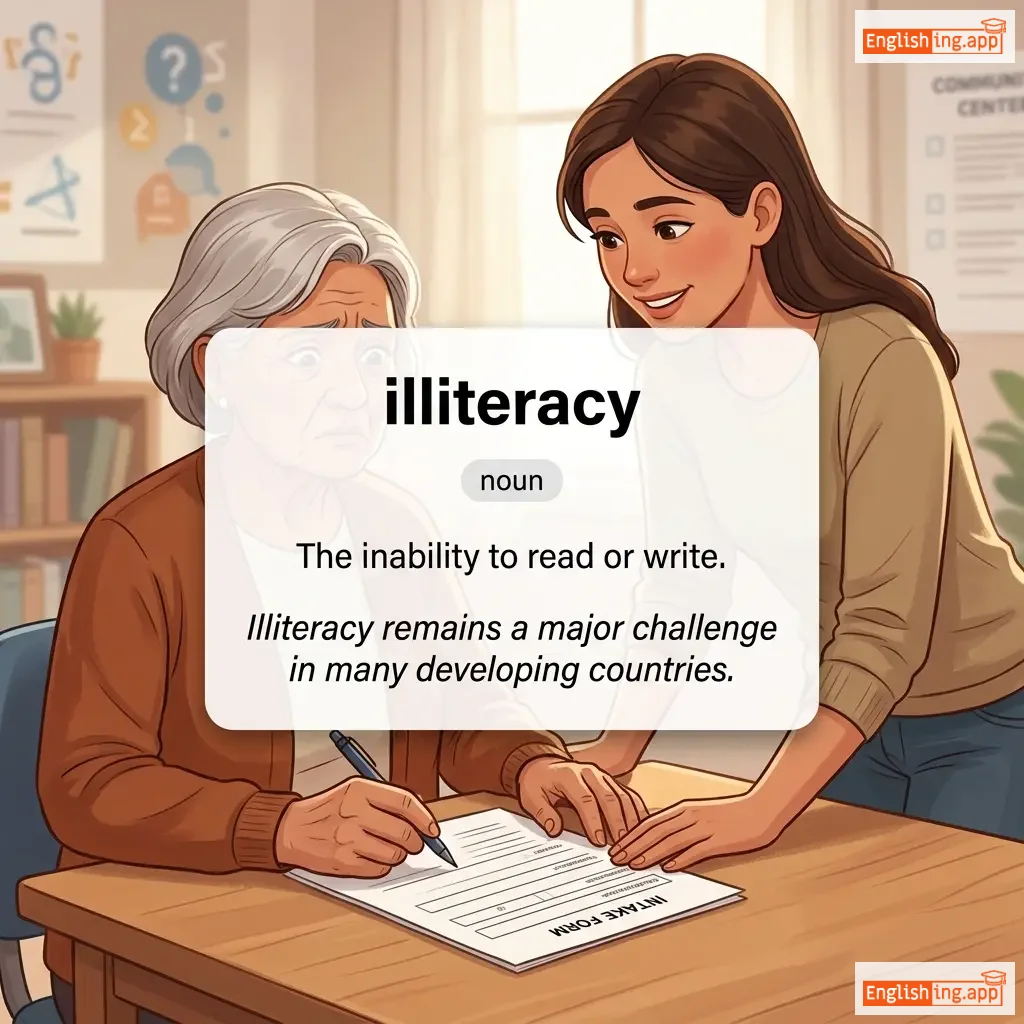
/ɪˈlɪtərəsi/
noun
(иллитераси)
••••••
|
|
безграмотность
bezgramotnost
••••••
|
- •••••• | - •••••• | - •••••• | - •••••• |
The inability to read or write.
••••••
|
Illiteracy remains a major challenge in many developing countries. |
Безграмотность остается серьезной проблемой в многих развивающихся странах.
Bezgramotnost' ostayetsya ser'yoznoy problemoy v mnogikh razvivayushchikhsya stranakh.
••••••
|
- •••••• | - •••••• | - •••••• |
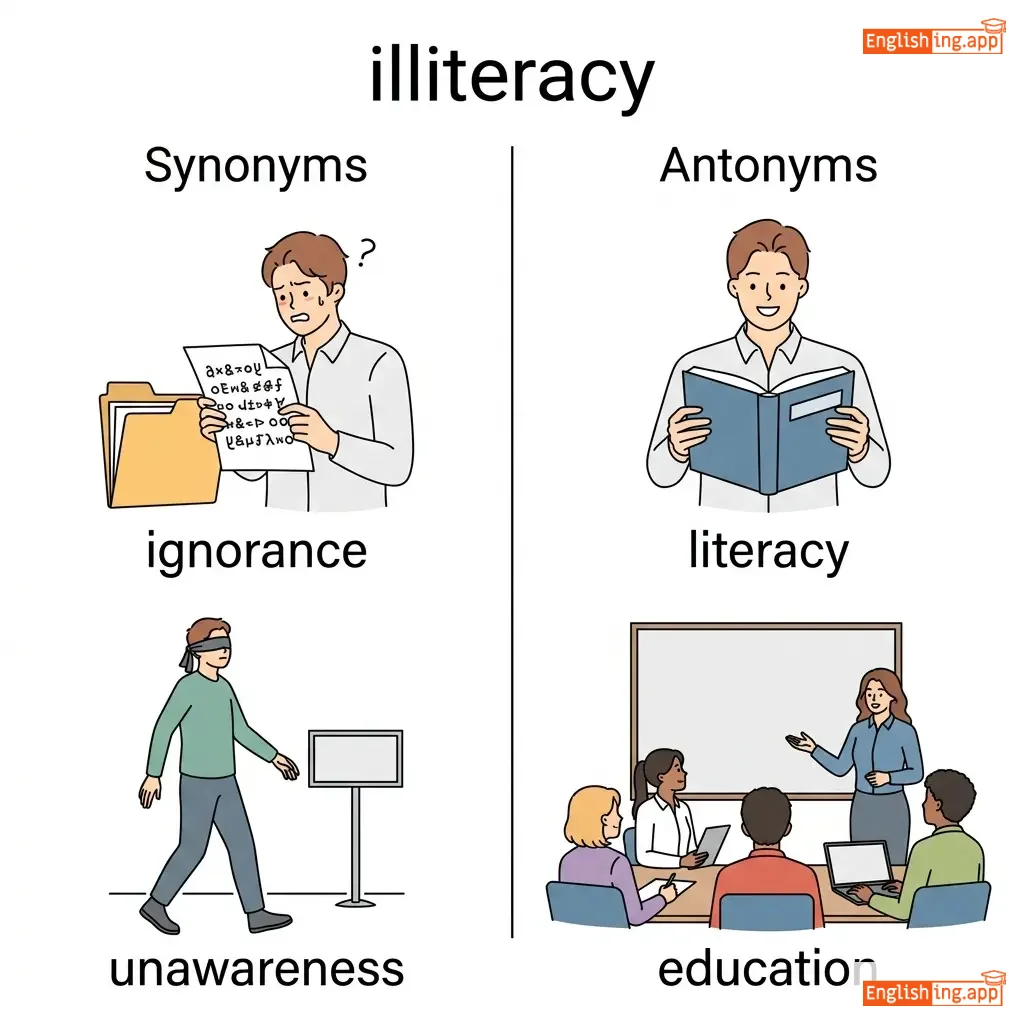
ignorance, unawareness, ill-education, illiterateness
••••••
|
literacy, education, knowledge
••••••
|
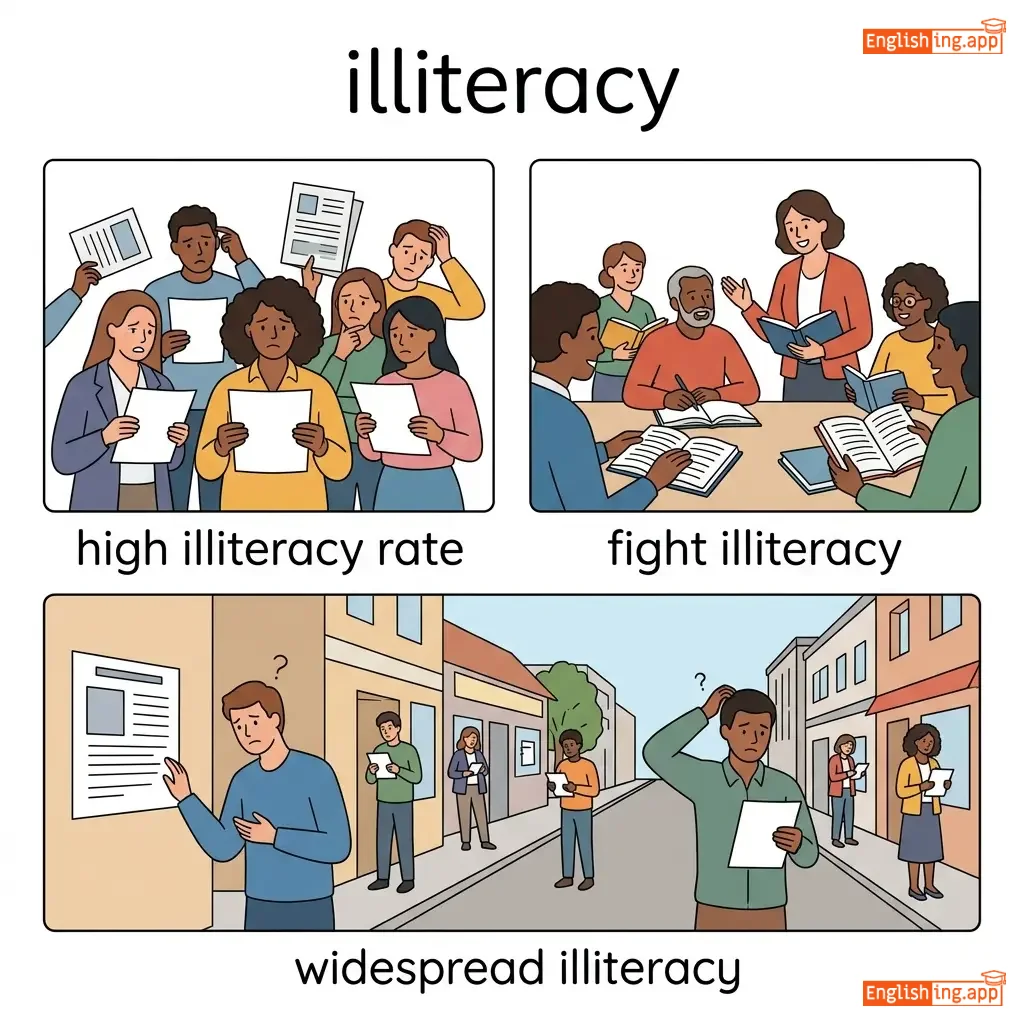
high illiteracy rate, fight illiteracy, widespread illiteracy, adult illiteracy
••••••
|
Illiterate означает, что человек не может читать или писать → Illiteracy = безграмотность
••••••
|
|
🙈
••••••
|
/ɪˈlɪtərət/
adjective
(илитэрэт)
••••••
|
- •••••• |
безграмотный
bezgramotny
••••••
|
- •••••• | - •••••• | - •••••• | - •••••• |
Unable to read or write.
••••••
|
Many villagers were still illiterate in the past. |
Многие деревенские жители были безграмотными в прошлом.
Mnogie derevenskie zhiteley byli bezgramotnymi v proshlom.
••••••
|
computer illiterate |
Lacking basic knowledge or skill in using computers
••••••
|
безграмотный в компьютерах
bezgramotny v komp'yuterakh
••••••
|
uneducated, unread, ignorant, unschooled
••••••
|
literate, educated, knowledgeable
••••••
|
illiterate person, remain illiterate, largely illiterate, computer illiterate
••••••
|
Безграмотный = не умеет читать или писать → безграмотный
••••••
|
|
🩺
••••••
|
/ˈɪlnəs/
noun
(ilnes)
••••••
|
- •••••• |
болезнь
bolezn
••••••
|
- •••••• | - •••••• | - •••••• | - •••••• |
A condition of being unwell or suffering from a disease.
••••••
|
She missed school due to a serious illness.
Она пропустила школу из-за серьезной болезни.
••••••
|
Она пропустила школу из-за серьезной болезни.
Ona propustila shkolu iz-za seryoznoy bolezni.
••••••
|
- •••••• | - •••••• | - •••••• |
sickness, disease, ailment, disorder
••••••
|
health, wellness
••••••
|
chronic illness, mental illness, recover from illness, illness symptoms
••••••
|
Illness = болезнь. 'Ill' и 'ness' означают быть больным.
••••••
|
|
🤔❌
••••••
|
/ɪˈlɒdʒ.ɪ.kəl/
adjective
••••••
|
- •••••• |
Иллогичный
Illogichny
••••••
|
- •••••• | - •••••• | - •••••• | - •••••• |
not reasonable or sensible; lacking logic
••••••
|
It would be illogical to go swimming in such cold weather. |
Было бы нелогично плавать в такой холодной погоде.
Bylo by nelogichno plavat' v takoy kholodnoy pogode
••••••
|
- •••••• | - •••••• | - •••••• |
irrational, unreasonable, senseless, absurd
••••••
|
logical, rational, reasonable, sensible
••••••
|
illogical argument, illogical thinking, illogical conclusion
••••••
|
Иллогичный - Когда что-то не имеет логики.
••••••
|

