|
絵文字
|
単語 | Images | 翻訳 | 過去 | 過去分詞 | 三人称単数 | 動名詞 | 意味 | 例文 | 例文の翻訳 | 表現例 | 表現例の意味 | 表現例の翻訳 | 同義語 | 対義語 | コロケーション | ニーモニック |
|---|---|---|---|---|---|---|---|---|---|---|---|---|---|---|---|---|---|
|
📧
••••••
|
/ˈiː.meɪl/
noun, verb
(イーメール)
••••••
|
- •••••• |
電子メール
denshi mēru
••••••
|
emailed
イーメールド
••••••
|
emailed
イーメールド
••••••
|
emails
イーメールズ
••••••
|
emailing
イーメーリング
••••••
|
messages distributed by electronic means from one computer user to another
••••••
|
I sent an e-mail to my professor yesterday.
私は昨日、教授にイーメールを送りました。
••••••
|
私は昨日、教授に電子メールを送りました。
Watashi wa kinou, kyoushu ni denshi mēru wo okurimashita.
••••••
|
check your e-mail
自分のイーメールを確認してください
••••••
|
to look at your inbox for new messages
••••••
|
自分の電子メールを確認してください
Jibun no denshi mēru wo kakunin shite kudasai
••••••
|
electronic mail, message, correspondence, digital letter
••••••
|
letter, postcard
••••••
|
send an e-mail, receive an e-mail, e-mail address, check e-mail
••••••
|
イーメールは、電子的な方法で送られた手紙です。
••••••
|
|
🧠
••••••
|
/ˈiːɡoʊ/
noun
••••••
|
- •••••• | - •••••• | - •••••• | - •••••• | - •••••• | - •••••• |
A person's sense of self-importance or self-esteem.
••••••
|
His fragile ego was hurt by the criticism. |
- •••••• |
inflate someone's ego |
to make someone feel more self-important or proud
••••••
|
- •••••• |
self, pride, self-esteem, self-importance
••••••
|
humility, modesty, selflessness
••••••
|
big ego, fragile ego, boost ego, hurt ego
••••••
|
No •••••• |
|
8️⃣
••••••
|
/eɪt/
number
(エイト)
••••••
|
- •••••• |
八
hachi
••••••
|
- •••••• | - •••••• | - •••••• | - •••••• |
The number equivalent to the product of two and four; one more than seven.
••••••
|
There are eight apples in the basket. |
バスケットには八つのリンゴがあります。
Basuketto ni wa yattsu no ringo ga arimasu.
••••••
|
behind the eight ball |
In a difficult or unfavorable situation.
••••••
|
八番のボールの後ろにいる
Hachiban no bōru no ushiro ni iru
••••••
|
octet, VIII, set of eight, group of eight
••••••
|
seven, nine
••••••
|
eight years, eight times, group of eight, eight people
••••••
|
八(hachi)という数字は、七(shichi)の後に来る数字です。
••••••
|
|
↔️
••••••
|
/ˈaɪðər/ or /ˈiːðər/
determiner/pronoun/conjunction/adverb
(アイザー)
••••••
|
- •••••• |
どちらか
dochiraka
••••••
|
- •••••• | - •••••• | - •••••• | - •••••• |
Used to indicate a choice between two alternatives.
••••••
|
You can either call me tonight or send me an email. |
今晩、私に電話するか、メールを送ることができます。
Konban, watashi ni denwa suru ka, mēru o okuru koto ga dekimasu.
••••••
|
either way |
Whatever happens, the result will be acceptable.
••••••
|
どちらでも
dochira demo
••••••
|
one, the one, any of the two, alternative
••••••
|
neither
••••••
|
either side, either way, either option, either choice
••••••
|
Eitherはどちらか、例えばお茶かコーヒー、どちらでも大丈夫。
••••••
|
|
📝
••••••
|
/ɪˈlæbəreɪt/ (verb), /ɪˈlæbərət/ (adjective)
verb, adjective
(イラボレイト)
••••••
|
- •••••• |
詳しく説明する / 複雑で詳細なデザイン
kōshiku setsumei suru / fukuzatsu de shōsai na dezain
••••••
|
elaborated
イラボレイテッド
••••••
|
elaborated
イラボレイテッド
••••••
|
elaborates
イラボレイツ
••••••
|
elaborating
イラボレイティング
••••••
|
verb: to explain something in detail; adjective: detailed and complicated in design
••••••
|
She asked him to elaborate on his proposal.
彼女は彼に提案について詳しく説明するように頼んだ。
••••••
|
彼女は彼に提案について詳しく説明するように頼んだ。
Kanojo wa kare ni teian ni tsuite kōshiku setsumei suru yō ni tanonda.
••••••
|
elaborate on something
何かについて詳しく説明する
••••••
|
to give more detail about something
••••••
|
何かについて詳しく説明する
nanika ni tsuite kōshiku setsumei suru
••••••
|
explain, expand, illustrate, detailed, intricate
••••••
|
simplify, summarize, condense
••••••
|
elaborate design, elaborate plan, elaborate explanation, elaborate details
••••••
|
イラボレイトは何かを詳しく説明することです。
••••••
|
|
💪
••••••
|
/ˈɛl.boʊ/
noun/verb
(エルボ)
••••••
|
- •••••• |
肘
hiji
••••••
|
elbowed
エルボード
••••••
|
elbowed
エルボード
••••••
|
elbows
エルボス
••••••
|
elbowing
エルボイング
••••••
|
The joint connecting the forearm and the upper arm; as a verb, to push aside using the elbow.
••••••
|
He accidentally hit the table with his elbow.
彼は偶然に肘でテーブルを叩きました。
••••••
|
彼は偶然に肘でテーブルを叩きました。
Kare wa guuzen ni hiji de teeburu wo tatakimashita.
••••••
|
rub elbows
肘をこすり合わせる
••••••
|
To socialize closely with people, often important or famous ones.
••••••
|
社交する
shakou suru
••••••
|
joint, bend, nudge, shove, push
••••••
|
pull, drag
••••••
|
elbow joint, elbow room, rub elbows, elbow grease
••••••
|
肘とは肘、肘をこすり合わせることで社交が生まれる。
••••••
|
|
👴
••••••
|
/ˈel.dər.li/
adjective
(エルダーリー)
••••••
|
- •••••• |
高齢者; 年配; 高齢
eldarli
••••••
|
- •••••• | - •••••• | - •••••• | - •••••• |
aged; advanced in years; old
••••••
|
The elderly man walked slowly with his cane. |
その高齢の男性は杖を使ってゆっくり歩いていました。
Sono koureino dansei wa tsue wo tsukatte yukkuri aruite imashita.
••••••
|
- •••••• | - •••••• | - •••••• |
aged, old, senior, ancient
••••••
|
young, youthful, juvenile
••••••
|
elderly people, elderly care, elderly population
••••••
|
Elderly - 'Elderli' は高齢者を表す言葉、祖父母のような存在です。
••••••
|
|
🗳️
••••••
|
/ɪˈlɛkt/
verb
(エレクト)
••••••
|
- •••••• |
選ぶ
erabu
••••••
|
elected
選ばれた
••••••
|
elected
選ばれた
••••••
|
elects
エレクトス
••••••
|
electing
エレクティング
••••••
|
To choose someone for a position or office by voting.
••••••
|
The citizens elected a new president.
市民は新しい大統領を選びました。
••••••
|
市民は新しい大統領を選びました。
Shimin wa atarashī daitōryō o erabimashita.
••••••
|
elect to
選ぶこと
••••••
|
To choose or decide to do something.
••••••
|
〜することを選ぶ
〜suru koto o erabu
••••••
|
choose, vote, select, appoint, pick
••••••
|
reject, dismiss, refuse
••••••
|
elect president, elect leader, elect representative, elect officials
••••••
|
選ぶ = E + elect = 選ぶ
••••••
|
|
🗳️
••••••
|
/ɪˈlɛkʃən/
noun
(エレクション)
••••••
|
- •••••• |
選挙
senkyo
••••••
|
- •••••• | - •••••• | - •••••• | - •••••• |
The process of choosing someone for public office by voting.
••••••
|
The election will be held next month. |
選挙は来月行われます。
Senkyo wa raigetsu okonawaremasu.
••••••
|
election fever |
Excitement and activity surrounding an upcoming election.
••••••
|
選挙フィーバー
Senkyo fivā
••••••
|
vote, poll, ballot, selection, referendum
••••••
|
appointment, selection without voting
••••••
|
general election, presidential election, election campaign, election results
••••••
|
Election は選挙 - 投票して選挙に参加しよう。
••••••
|
|
🗳️
••••••
|
/ɪˈlɛktərəl/
adjective
(エレクターラル)
••••••
|
- •••••• |
選挙の
senkyo no
••••••
|
- •••••• | - •••••• | - •••••• | - •••••• |
related to elections or voting
••••••
|
The electoral process in the country has been reformed in recent years. |
その国の選挙プロセスは近年改革されました。
Sono kuni no senkyo purosesu wa kin'nen kaikaku saremashita.
••••••
|
- •••••• | - •••••• | - •••••• |
voting, electoral system, election-related
••••••
|
non-electoral, non-voting
••••••
|
electoral process, electoral system, electoral reform
••••••
|
Electoral relates to elections—imagine voting at the booth!
••••••
|
|
⚡
••••••
|
/ɪˈlɛktrɪk/
adjective
(エレクトリック)
••••••
|
- •••••• |
電気的
denki-teki
••••••
|
- •••••• | - •••••• | - •••••• | - •••••• |
Relating to or operated by electricity.
••••••
|
The room was lit by an electric lamp. |
部屋は電気ランプで照らされていました。
Heya wa denki ranpu de terasarete imashita.
••••••
|
electric atmosphere |
A highly charged or exciting environment.
••••••
|
電気的雰囲気
denki-teki fun'iki
••••••
|
powered, charged, energized, electronic
••••••
|
manual, mechanical
••••••
|
electric car, electric power, electric shock, electric current
••••••
|
Electricは電気 ⚡を意味します。ライトやファンは電気で動作します。
••••••
|
|
⚡
••••••
|
/ɪˈlɛktrɪkəl/
adjective
(エレクトリカル)
••••••
|
- •••••• |
電気的な
denkitena
••••••
|
- •••••• | - •••••• | - •••••• | - •••••• |
related to electricity or the use of electrical power
••••••
|
The electrical system in the house needs repair. |
家の電気システムは修理が必要です。
Ie no denki shisutemu wa shūri ga hitsuyō desu.
••••••
|
- •••••• | - •••••• | - •••••• |
power, electric, electronic, voltage-related
••••••
|
non-electric, mechanical
••••••
|
electrical system, electrical engineer, electrical power, electrical circuit
••••••
|
電気的な = 電気に関する ⚡
••••••
|
|
🔌
••••••
|
/ɪˌlɛkˈtrɪsɪti/
noun
(エレクトリシティ)
••••••
|
- •••••• |
電気
denki
••••••
|
- •••••• | - •••••• | - •••••• | - •••••• |
A form of energy resulting from the existence of charged particles.
••••••
|
The storm caused a power cut and we had no electricity. |
嵐で停電し、電気がありませんでした。
Arashi de teiden shi, denki ga arimasen deshita.
••••••
|
generate electricity |
To produce electrical power.
••••••
|
電気を発生させる
Denki o hassei saseru
••••••
|
power, energy, current, charge
••••••
|
darkness, powerlessness
••••••
|
electricity supply, electricity bill, electricity generation, electricity consumption
••••••
|
電気はエネルギーを意味し、照明やファンには電気が必要です。
••••••
|
|
⚡
••••••
|
/ɪˈlɛktrɪfaɪ/
verb
(エレクトリファイ)
••••••
|
- •••••• |
電気を通す; 興奮させる
denki o toosu; koufun saseru
••••••
|
electrified
エレクトリファイド
••••••
|
electrified
エレクトリファイド
••••••
|
electrifies
エレクトリファイズズ
••••••
|
electrifying
エレクトリファイング
••••••
|
to charge with electricity; to excite or thrill intensely
••••••
|
The speaker's speech electrified the audience.
スピーカーのスピーチは聴衆をエレクトリファイした。
••••••
|
スピーカーのスピーチは聴衆を興奮させた。
Supeeka no supiichi wa choushu o koufun saseta
••••••
|
- •••••• | - •••••• | - •••••• |
excite, thrill, inspire, energize, stimulate
••••••
|
bore, calm, depress
••••••
|
electrify the crowd, electrify the audience, electrify the atmosphere
••••••
|
エレクトリファイ = 電気が流れるイメージで全員を興奮させる
••••••
|
|
💻
••••••
|
/ɪˌlɛkˈtrɒnɪk/
adjective
(エレクトロニック)
••••••
|
- •••••• |
電子の
denshi no
••••••
|
- •••••• | - •••••• | - •••••• | - •••••• |
Operating with or produced by the use of electronic devices.
••••••
|
She bought an electronic keyboard for her music lessons. |
彼女は音楽のレッスンのために電子キーボードを買った。
Kanojo wa ongaku no ressun no tame ni denshi kībōdo o katta.
••••••
|
electronic device |
A device that operates using electronic circuits.
••••••
|
電子機器
denshi kiki
••••••
|
digital, automated, computerized, high-tech
••••••
|
manual, mechanical
••••••
|
electronic device, electronic music, electronic mail, electronic circuit
••••••
|
Electronic deviceは電子機器を意味します - 例えば携帯電話 📱。
••••••
|
|
💻
••••••
|
/ɪˌlɛkˈtrɒnɪks/
noun
(エレクトロニクス)
••••••
|
- •••••• |
エレクトロニクス
erekutoronikusu
••••••
|
- •••••• | - •••••• | - •••••• | - •••••• |
the branch of physics and technology dealing with circuits and devices using transistors, microchips, and other components
••••••
|
He studied electronics at university. |
彼は大学でエレクトロニクスを学びました。
Kare wa daigaku de erekutoronikusu o manabimashita.
••••••
|
- •••••• | - •••••• | - •••••• |
tech, circuitry, electrotechnology, computing
••••••
|
mechanics, manual systems
••••••
|
electronics engineer, consumer electronics, electronics lab, electronics industry
••••••
|
エレクトロニクスはガジェットの世界 — テレビ、携帯電話、コンピューター、すべてが一緒に!
••••••
|
|
💃
••••••
|
/ˈɛlɪɡənt/
adjective
(エレガント)
••••••
|
- •••••• |
優雅で洗練された
yūga de senren sareta
••••••
|
- •••••• | - •••••• | - •••••• | - •••••• |
pleasingly graceful and stylish in appearance or manner
••••••
|
She looked elegant in her evening gown. |
彼女はイブニングガウンでエレガントに見えた。
Kanojo wa ibuningu gaun de ereganto ni mieta.
••••••
|
simple yet elegant |
beautiful and stylish without being complicated
••••••
|
シンプルでありながらエレガント
shinpurude arinagara ereganto
••••••
|
graceful, stylish, classy, refined, sophisticated
••••••
|
clumsy, messy, crude
••••••
|
elegant dress, elegant design, elegant solution, elegant lady
••••••
|
エレガントはまるで素晴らしい服を着て'わぁ!'と言いたくなる感じ
••••••
|
|
🔬
••••••
|
/ˈɛlɪmənt/
noun
(エレメント)
••••••
|
- •••••• |
要素
yōso
••••••
|
- •••••• | - •••••• | - •••••• | - •••••• |
A basic or essential part of something; a simple substance that cannot be broken down further.
••••••
|
Trust is a key element of any strong relationship.
信頼は強い関係の重要な要素です。
••••••
|
信頼は強い関係の重要な要素です。
Shinrai wa tsuyoi kankei no jūyōna yōso desu.
••••••
|
in one's element
自分の元素にいる
••••••
|
To be in a situation that is natural and comfortable for someone.
••••••
|
自分の元素にいる
Jibun no gensu ni iru
••••••
|
component, part, factor, ingredient, aspect
••••••
|
whole, entirety
••••••
|
basic element, chemical element, essential element, natural element
••••••
|
エレメントは基本的な部分、化学の要素のように、単純な構成部分です。
••••••
|
|
📘
••••••
|
/ˌɛlɪˈmɛntəri/
adjective
(エレメンタリー)
••••••
|
- •••••• |
基本的な
kihonteki na
••••••
|
- •••••• | - •••••• | - •••••• | - •••••• |
Relating to the basic or fundamental aspects of something; simple or easy to understand.
••••••
|
She gave an elementary explanation of the problem. |
彼女は問題の基本的な説明をしました。
Kanojo wa mondai no kihonteki na setsumei o shimashita.
••••••
|
elementary, my dear Watson |
A phrase used to suggest that the solution to a problem is simple.
••••••
|
基本的な、親愛なるワトソン
kihonteki na, shin'ainaru Watson
••••••
|
basic, fundamental, simple, introductory, rudimentary
••••••
|
advanced, complex, sophisticated
••••••
|
elementary school, elementary knowledge, elementary level, elementary course
••••••
|
基本的なは、英語でのelementaryと同じように、基本的で簡単なことを意味します。
••••••
|
|
🐘
••••••
|
/ˈɛlɪfənt/
noun
(ハピネス)
••••••
|
- •••••• |
幸せ
shiawase
••••••
|
- •••••• | - •••••• | - •••••• | - •••••• |
a very large animal with a trunk, long curved tusks, and thick gray skin, found in Africa and Asia
••••••
|
The elephant sprayed water over itself with its trunk. |
彼女は賞を受け取ったとき、自分の幸せを隠すことができませんでした。
Kanojo wa shō o uketotta toki, jibun no shiawase o kakusu koto ga dekimasen deshita.
••••••
|
the elephant in the room |
an obvious problem or issue that people avoid discussing
••••••
|
幸せを追い求める
shiawase o oi motomeru
••••••
|
mammal, giant, pachyderm, tusker
••••••
|
mouse, insect
••••••
|
herd of elephants, African elephant, elephant tusks, baby elephant
••••••
|
幸せは人生の中で最も価値のあるものを追い求めること!
••••••
|
|
⬆️
••••••
|
/ˈɛlɪveɪt/
verb
(エレベート)
••••••
|

|
高める
takameru
••••••
|
elevated
エレベーテッド
••••••
|
elevated
エレベーテッド
••••••
|
elevates
エレベーツ
••••••
|
elevating
エレベーティング
••••••
|
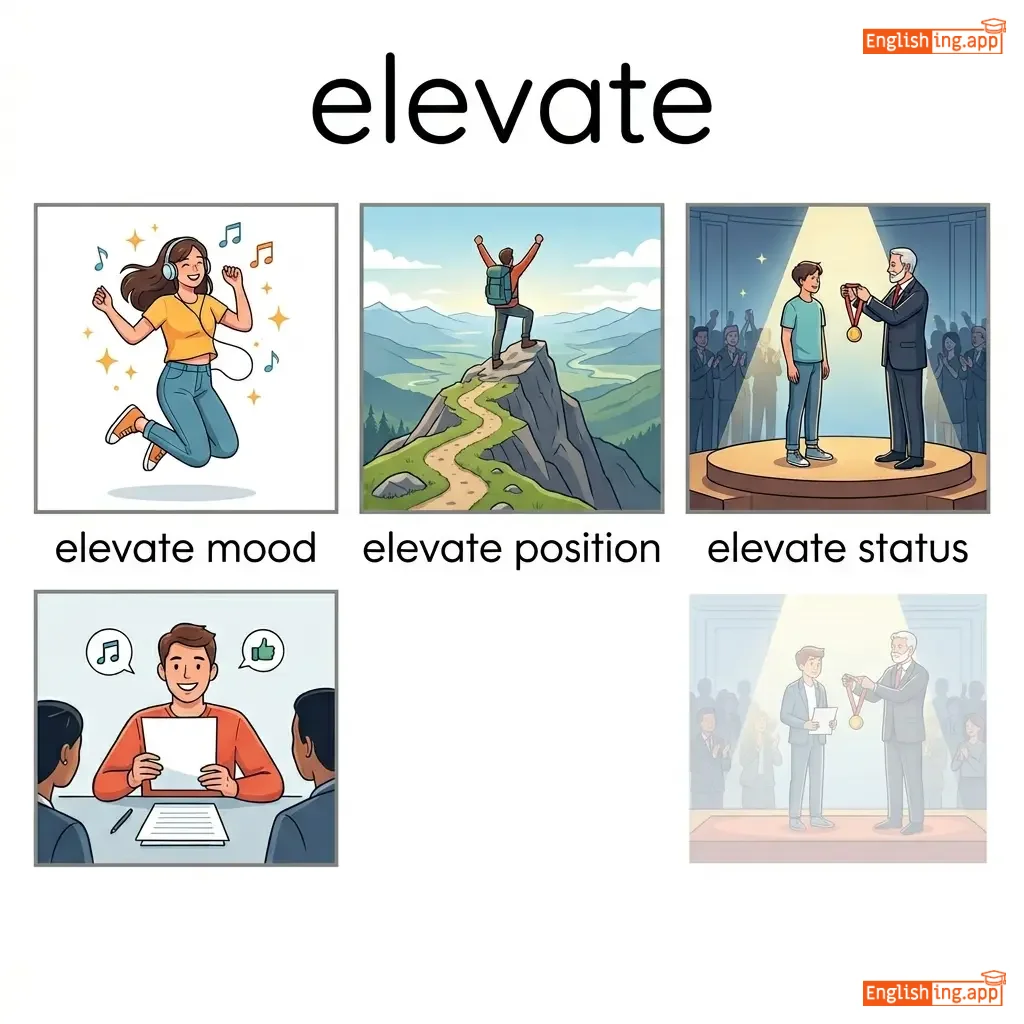
To raise or lift something to a higher position; to improve in status, mood, or quality.
••••••
|
Good music can elevate your mood instantly.
良い音楽は瞬時に気分を高めることができます。
••••••
|
良い音楽は瞬時に気分を高めることができます。
Yoi ongaku wa shunji ni kibun o takameru koto ga dekimasu.
••••••
|
elevate the discussion
議論を高める
••••••
|
To raise the level of a conversation to a more serious or intelligent one.
••••••
|
議論を高める
Giron o takameru
••••••
|
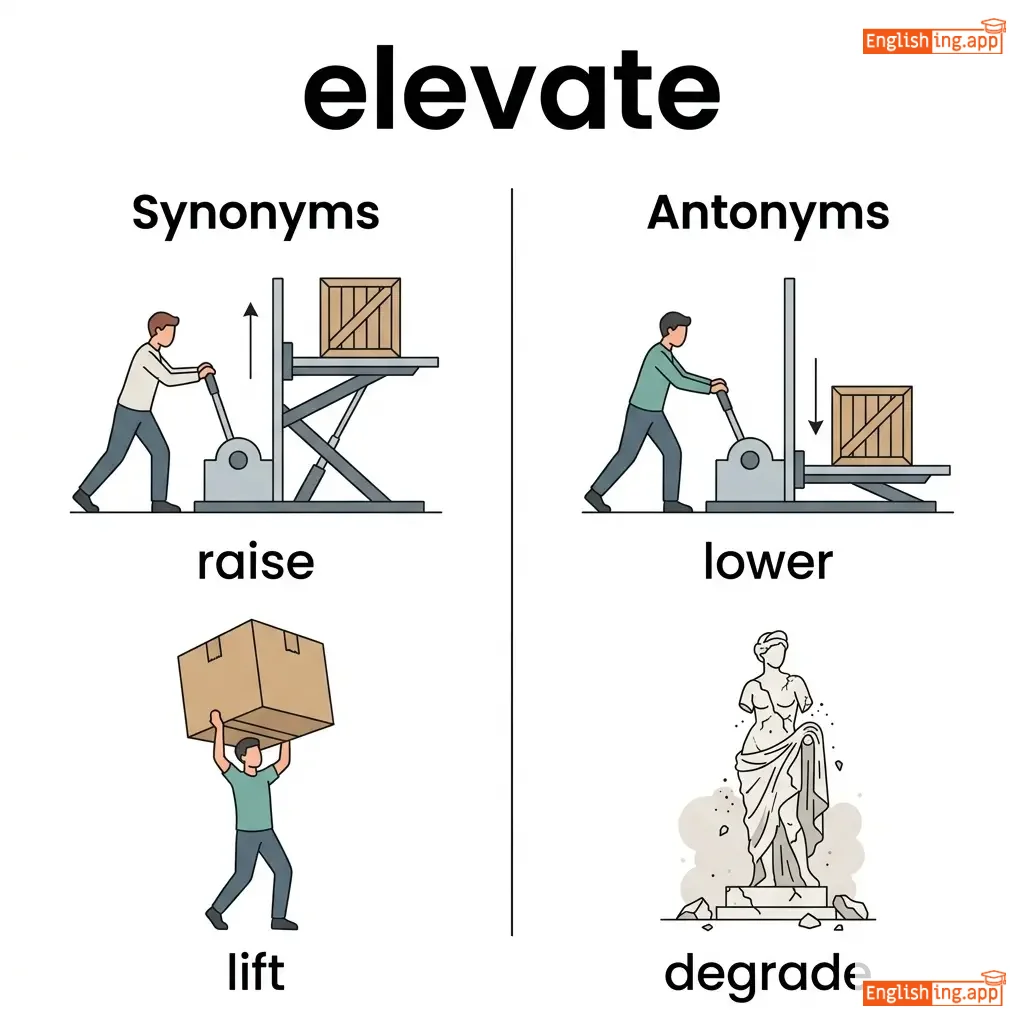
raise, lift, promote, heighten, uplift
••••••
|
lower, degrade, depress
••••••
|
elevate mood, elevate position, elevate status, elevate to
••••••
|
高めるはまるでエレベーターで上に行くようなものです。
••••••
|
|
🛗
••••••
|
/ˈɛləˌveɪtər/
noun
(エレベーター)
••••••
|
- •••••• |
エレベーター
erebētā
••••••
|
- •••••• | - •••••• | - •••••• | - •••••• |
a machine that carries people or goods up and down between floors in a building
••••••
|
We took the elevator to the tenth floor. |
私たちはエレベーターで10階に行きました。
Watashitachi wa erebētā de jukkai ni ikimashita.
••••••
|
elevator pitch |
a brief, persuasive speech to spark interest in an idea or project
••••••
|
エレベーターピッチ
erebētā picchi
••••••
|
lift, hoist, escalator, platform
••••••
|
stairs, descent
••••••
|
take the elevator, elevator door, elevator button, elevator ride
••••••
|
エレベーターは、上に下に動くことから、エレベーターピッチで興味を引き起こす!
••••••
|
|
✅
••••••
|
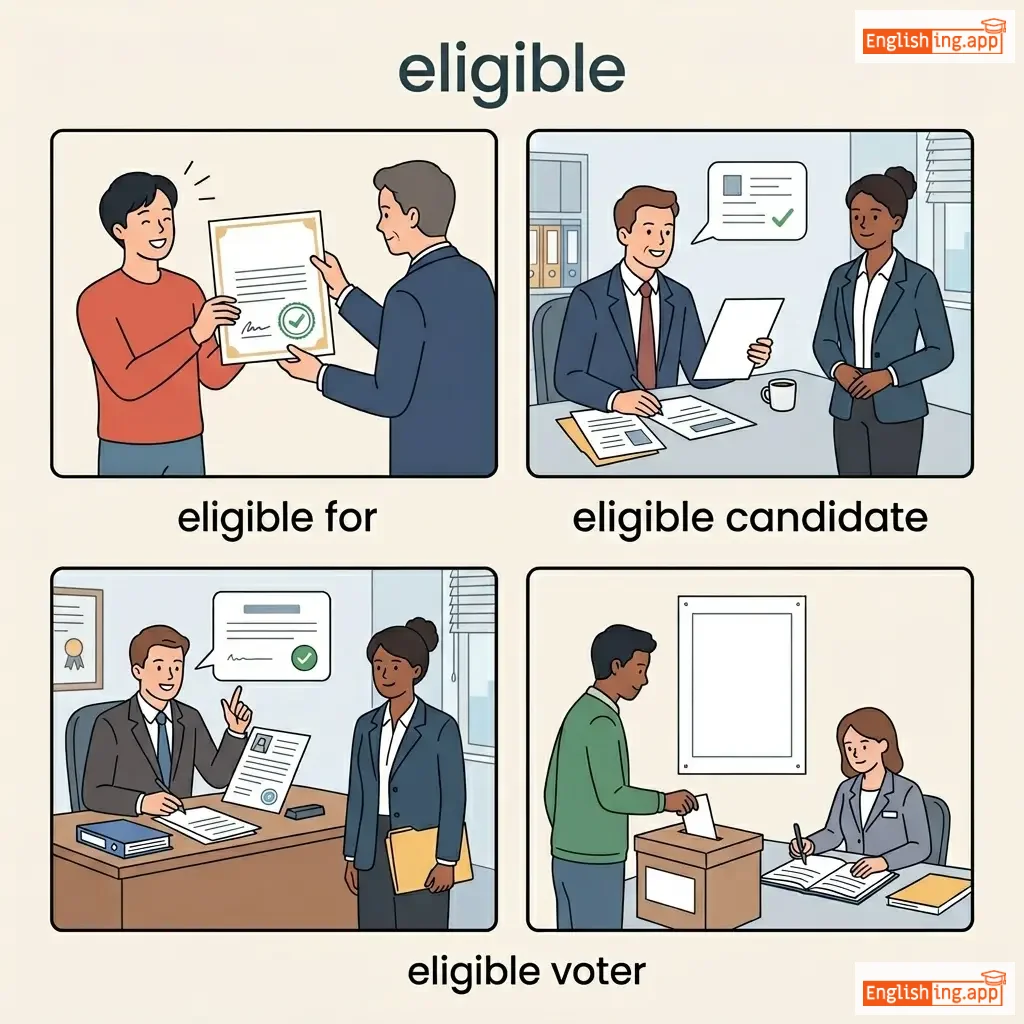
/ˈɛlɪdʒəbl/
adjective
(エリジブル)
••••••
|
|
適格な
tekikaku na
••••••
|
- •••••• | - •••••• | - •••••• | - •••••• |
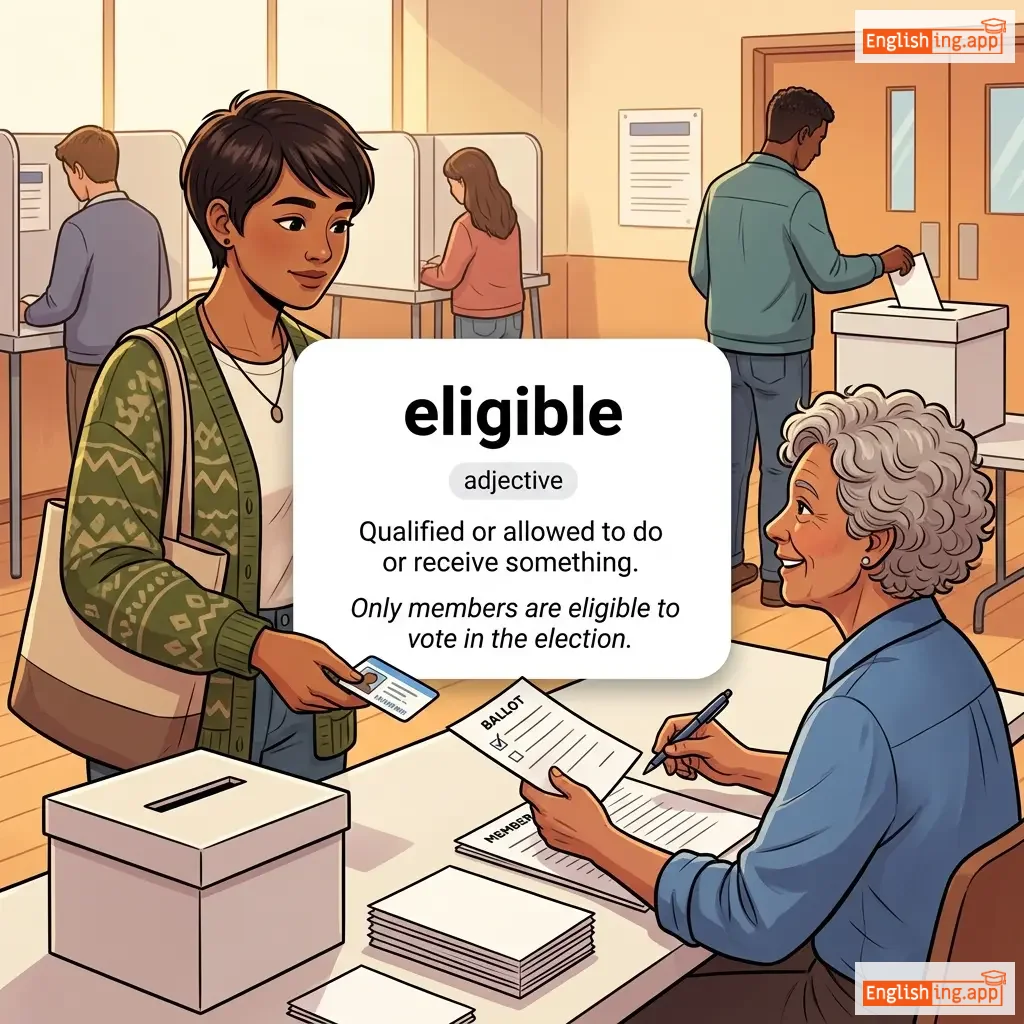
Qualified or allowed to do or receive something.
••••••
|
Only members are eligible to vote in the election. |
選挙で投票する資格があるのは会員のみです。
Senkyo de tōhyō suru shikaku ga aru no wa kaiin nomi desu.
••••••
|
eligible bachelor |
a man considered suitable for marriage
••••••
|
適格な独身男性
tekikaku na dokushin dansei
••••••
|
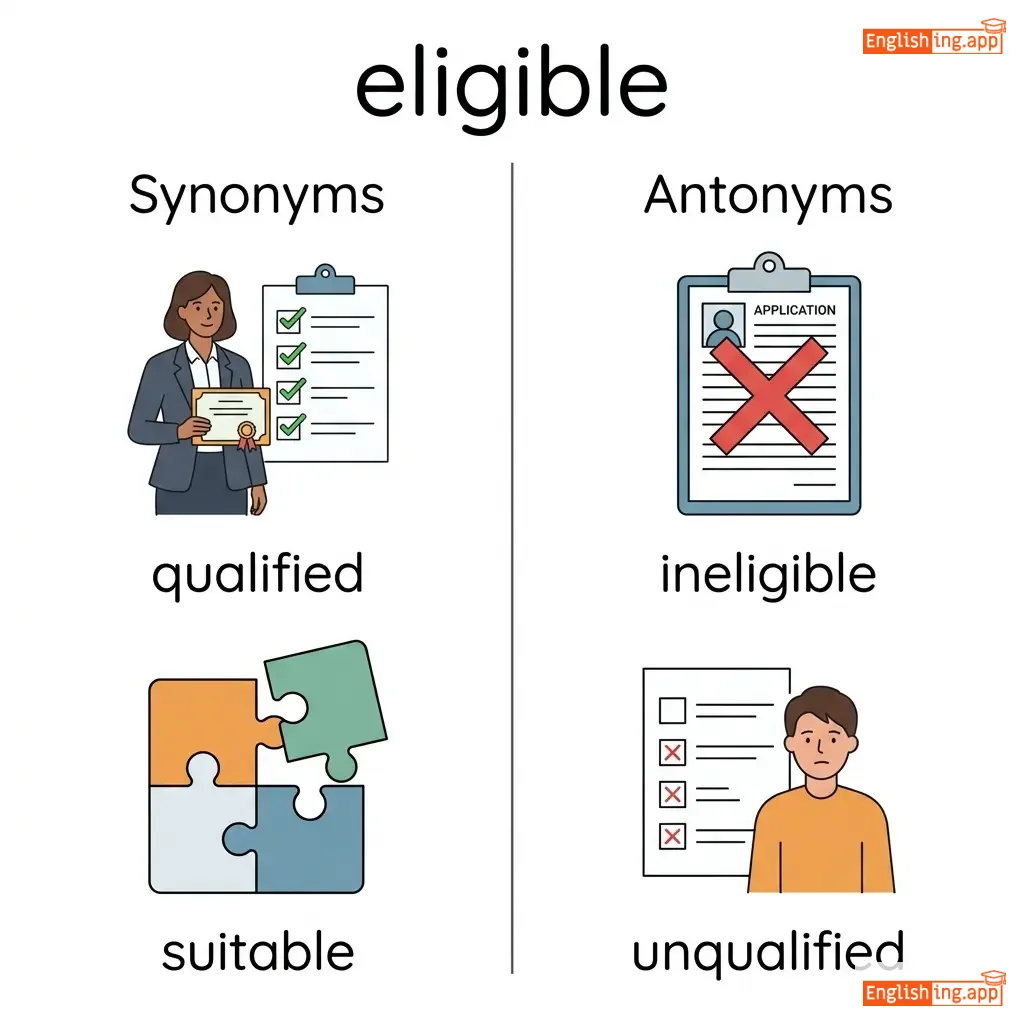
qualified, suitable, entitled, acceptable
••••••
|
ineligible, unqualified, unsuitable
••••••
|
eligible for, eligible candidate, eligible voter, eligible participant
••••••
|
Eligibleは、試験に合格すれば、適格になることを意味します。
••••••
|
|
❌
••••••
|
/ɪˈlɪməˌneɪt/
verb
(イリミネイト)
••••••
|
|
排除する
haijo suru
••••••
|
eliminated
イリミネイテッド
••••••
|
eliminated
イリミネイテッド
••••••
|
eliminates
イリミネイツ
••••••
|
eliminating
イリミネイティング
••••••
|
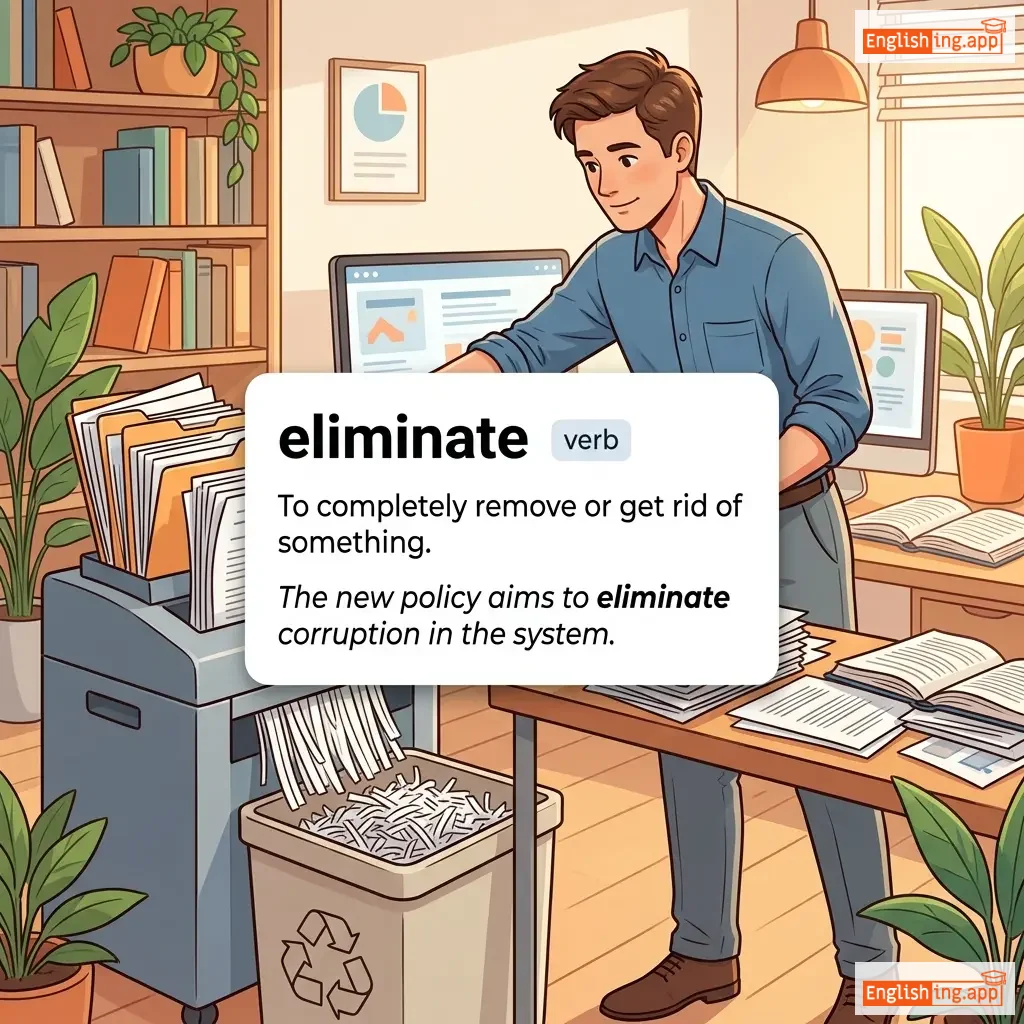
To completely remove or get rid of something.
••••••
|
The new policy aims to eliminate corruption in the system.
新しい政策はシステム内の汚職を排除することを目的としています。
••••••
|
新しい政策はシステム内の汚職を排除することを目的としています。
Atarashī seisaku wa shisutemu-nai no oshoku o haijo suru koto o mokuteki to shiteimasu.
••••••
|
eliminate the competition
競争を排除する
••••••
|
to defeat or remove rivals
••••••
|
競争を排除する
kyousou o haijo suru
••••••
|
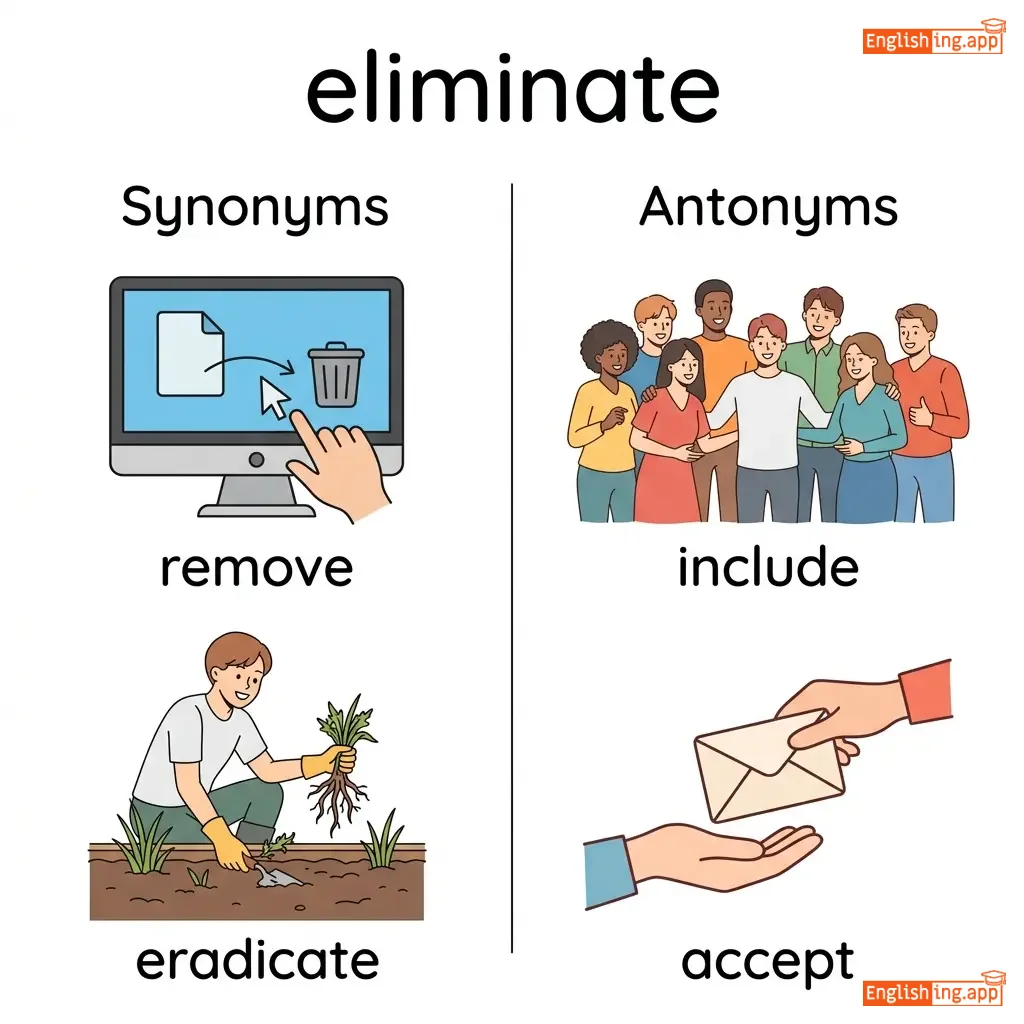
remove, eradicate, abolish, exterminate, wipe out
••••••
|
include, accept, retain
••••••
|
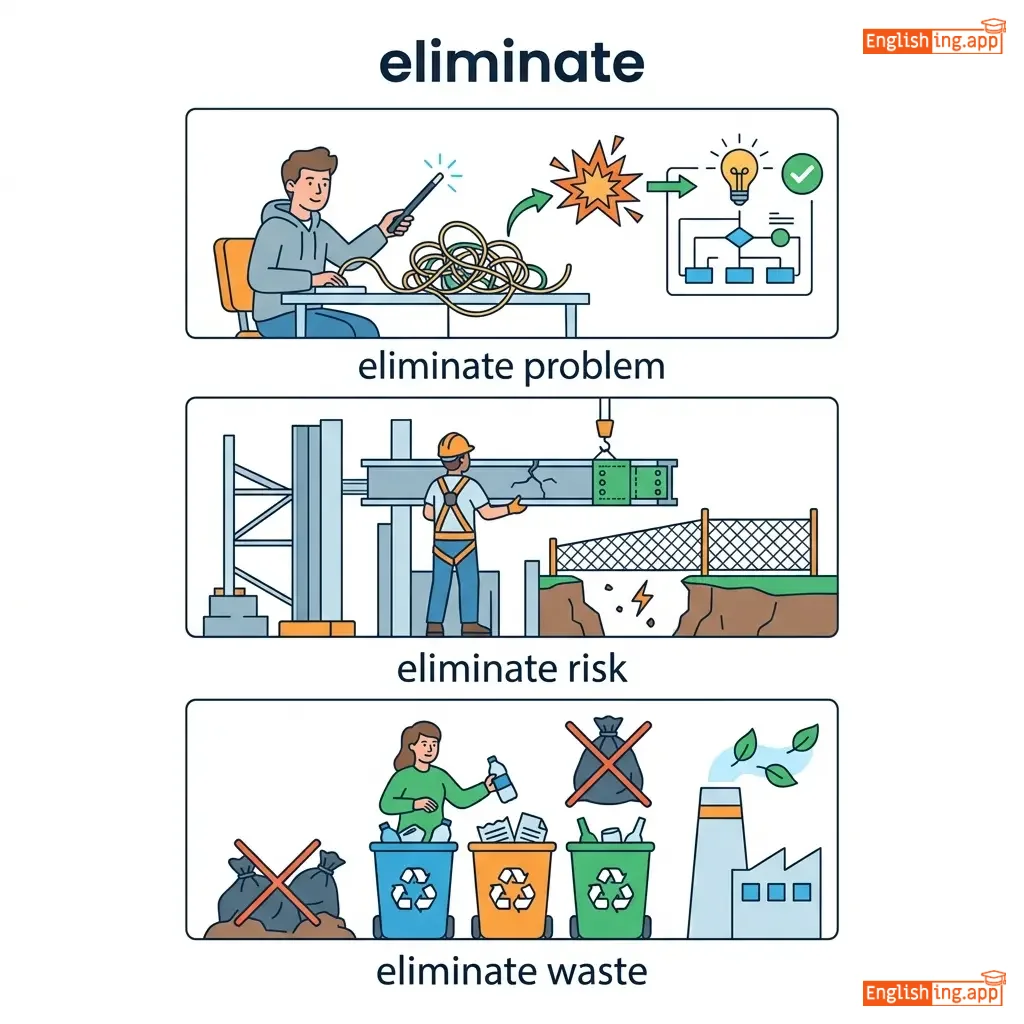
eliminate problem, eliminate risk, eliminate waste, eliminate need
••••••
|
テストで間違いを排除すれば、正しい答えが得られます。
••••••
|
|
❌
••••••
|
ɪˌlɪm.ɪˈneɪ.ʃən
noun
(エリミネーション)
••••••
|
|
排除
haijo
••••••
|
- •••••• | - •••••• | - •••••• | - •••••• |
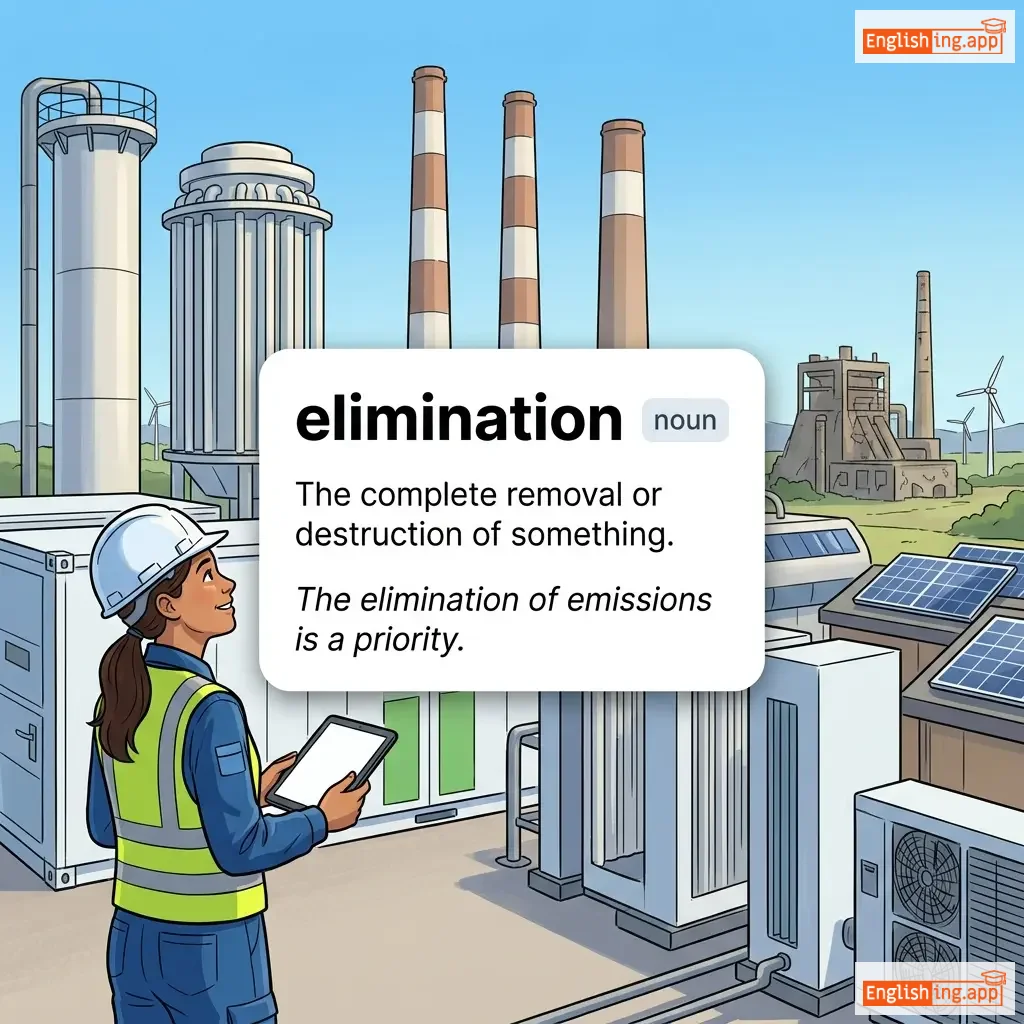
The complete removal or destruction of something.
••••••
|
The elimination of emissions is a priority.
排出の排除は優先事項です。
••••••
|
排出の排除は優先事項です。
Haishutsu no haijo wa yūsen jiko desu.
••••••
|
- •••••• | - •••••• | - •••••• |
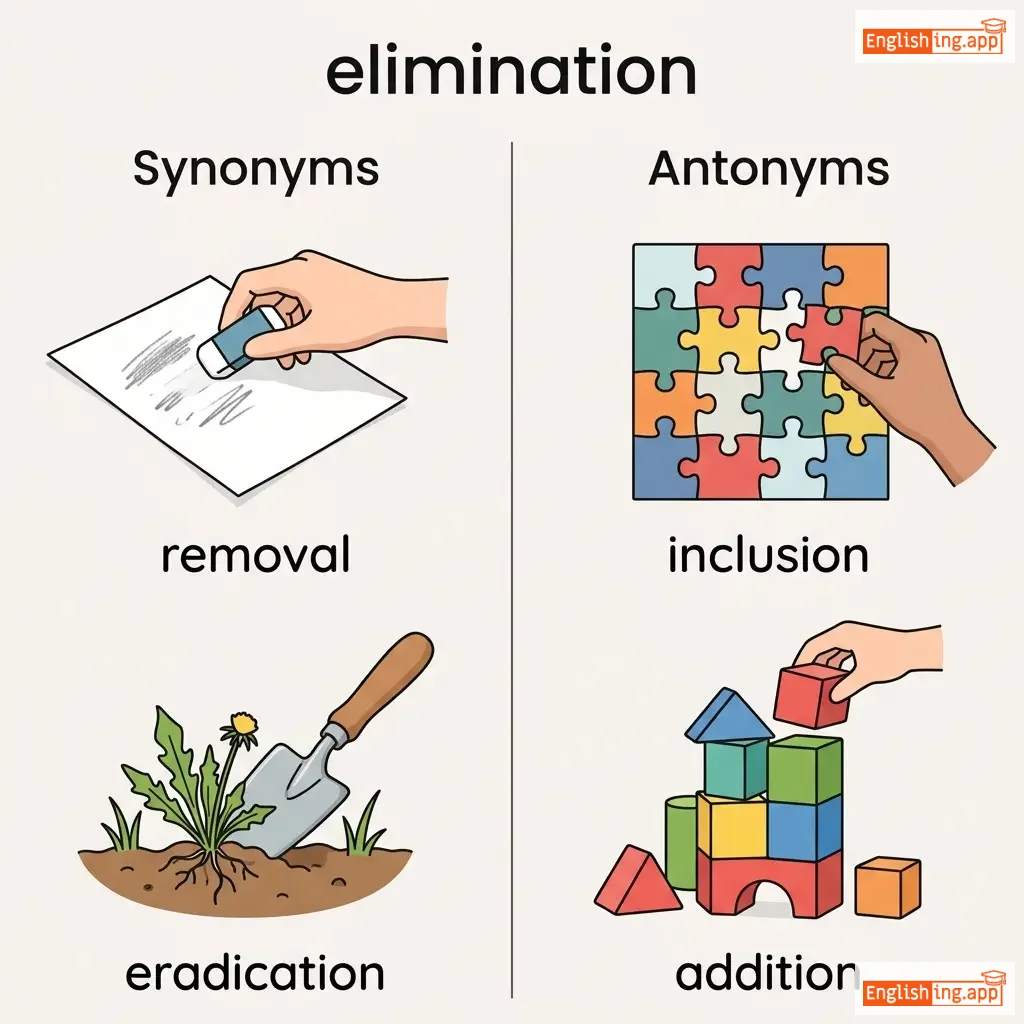
removal, eradication
••••••
|
inclusion, addition
••••••
|
- •••••• |
排除は何かを完全に取り除くことです。
••••••
|
|
👑
••••••
|
/ɪˈliːt/ or /eɪˈliːt/
noun
(エリート)
••••••
|
- •••••• |
エリート
elite
••••••
|
- •••••• | - •••••• | - •••••• | - •••••• |
A select group that is superior in terms of ability or qualities.
••••••
|
Only the elite were invited to the exclusive event. |
エリートだけがその独占的なイベントに招待されました。
Erīto dake ga sono dokusenteki na ibento ni shōtai saremashita.
••••••
|
social elite |
The most powerful or influential members of society.
••••••
|
社会的エリート
Shakaiteki erīto
••••••
|
aristocracy, upper class, nobility, high society
••••••
|
commoners, masses
••••••
|
elite group, elite class, elite athlete, elite institution
••••••
|
エリートとは、VIPのように特別で選ばれた存在です。
••••••
|
|
➕
••••••
|
/ɛls/
adverb
(エルス)
••••••
|
- •••••• |
他に何か
hoka ni nanika
••••••
|
- •••••• | - •••••• | - •••••• | - •••••• |
In addition; besides.
••••••
|
Is there anything else you need? |
他に何か必要ですか?
Hoka ni nanika hitsuyou desu ka?
••••••
|
or else |
Used to warn of unpleasant consequences if something is not done.
••••••
|
さもなくば
samonakuba
••••••
|
besides, otherwise, additionally, furthermore
••••••
|
nothing, none
••••••
|
anything else, someone else, somewhere else, nothing else
••••••
|
Else は他に何かを意味します ➕ - 'anything else?' は '他に何かありますか?' という意味です。
••••••
|
|
🌍
••••••
|
/ˈɛlswɛr/
adverb
(エルスウェア)
••••••
|
- •••••• |
他の場所で
hoka no basho de
••••••
|
- •••••• | - •••••• | - •••••• | - •••••• |
In, at, or to some other place.
••••••
|
If you can’t find it here, try looking elsewhere. |
ここで見つからない場合は、他の場所で探してみてください。
Koko de mitsukaranai baai wa, hoka no basho de sagashite mite kudasai.
••••••
|
- •••••• | - •••••• | - •••••• |
somewhere else, another place, away, outside
••••••
|
here, nearby
••••••
|
go elsewhere, look elsewhere, live elsewhere, seek elsewhere
••••••
|
Elsewhere は他の場所で → ここで見つからなければ、他の場所で探してください。
••••••
|
|
🚢
••••••
|
/ɪmˈbɑːrk/
verb
(エンバーク)
••••••
|
- •••••• |
乗り出す
noridasu
••••••
|
embarked
エンバークド
••••••
|
embarked
エンバークド
••••••
|
embarks
エンバークス
••••••
|
embarking
エンバーキング
••••••
|
to begin a journey, project, or activity
••••••
|
She decided to embark on a new career in medicine.
彼女は医学の新しいキャリアを始める決断を下しました。
••••••
|
彼女は医学の新しいキャリアを始める決断を下しました。
Kanojo wa igaku no atarashii kyaria wo hajimeru ketsudan wo kudashimashita.
••••••
|
embark on a journey
旅に出る
••••••
|
to start an important project or trip
••••••
|
旅に出る
tabi ni deru
••••••
|
start, commence, initiate, begin, undertake
••••••
|
end, finish, conclude
••••••
|
embark on a journey, embark on a project, embark on an adventure
••••••
|
船が出航する
••••••
|
|
😳
••••••
|
/ɪmˈbærəs/
verb
••••••
|
- •••••• | - •••••• |
embarrassed
••••••
|
embarrassed
••••••
|
embarrasses
••••••
|
embarrassing
••••••
|
to cause someone to feel awkward, self-conscious, or ashamed
••••••
|
His rude comment really embarrassed her in front of everyone. |
- •••••• |
embarrass oneself |
to make oneself look foolish or awkward
••••••
|
- •••••• |
humiliate, shame, discomfort, mortify, disconcert
••••••
|
encourage, comfort, flatter
••••••
|
feel embarrassed, deeply embarrassed, embarrass someone
••••••
|
No •••••• |
|
😳
••••••
|
/ɪmˈbærəst/
adjective
(エンバラスト)
••••••
|
- •••••• |
恥ずかしい
hazukashii
••••••
|
- •••••• | - •••••• | - •••••• | - •••••• |
feeling awkward, ashamed, or self-conscious about something
••••••
|
He felt embarrassed when he forgot her name. |
彼は彼女の名前を忘れたとき、恥ずかしいと感じた。
Kare wa kanojo no namae o wasureta toki, hazukashii to kanjita.
••••••
|
embarrassed silence |
an uncomfortable quietness after something awkward happens
••••••
|
恥ずかしい沈黙
hazukashii chinmoku
••••••
|
ashamed, awkward, uneasy, flustered, humiliated
••••••
|
confident, proud, relaxed
••••••
|
feel embarrassed, look embarrassed, deeply embarrassed, embarrassed smile
••••••
|
Embarrassed は恥ずかしい – プレゼン中に名前を忘れると恥ずかしい気持ちになる。
••••••
|
|
😳
••••••
|
/ɪmˈbær.ə.sɪŋ/
adjective
(エンバラスシング)
••••••
|
- •••••• |
恥ずかしい; 気まずい; 屈辱的な
hazukashii
••••••
|
- •••••• | - •••••• | - •••••• | - •••••• |
causing shame or awkwardness; uncomfortable; humiliating
••••••
|
It was embarrassing when I forgot her name.
彼女の名前を忘れたとき、それは恥ずかしかったです。
••••••
|
彼女の名前を忘れたとき、それは恥ずかしかったです。
Kanojo no namae o wasureta toki, sore wa hazukashikatta desu.
••••••
|
- •••••• | - •••••• | - •••••• |
humiliating, awkward, shameful, uncomfortable
••••••
|
comfortable, pleasant, dignified, proud
••••••
|
embarrassing moment, embarrassing situation, embarrassing mistake
••••••
|
Imagine how 'embarrassing' it is when you forget something important – that's '恥ずかしい' in Japanese.
••••••
|
|
😳
••••••
|
/ɪmˈbærəsmənt/
noun
(エンバラズメント)
••••••
|
- •••••• |
恥ずかしさ
hazukashisa
••••••
|
- •••••• | - •••••• | - •••••• | - •••••• |
a feeling of self-consciousness, shame, or awkwardness
••••••
|
Her face turned red with embarrassment after the mistake. |
彼女は間違いを犯した後、恥ずかしさで顔が赤くなった。
Kanojo wa machigai o okashita ato, hazukashisa de kao ga akaku natta.
••••••
|
- •••••• | - •••••• | - •••••• |
shame, awkwardness, discomfort, humiliation
••••••
|
pride, confidence, composure
••••••
|
public embarrassment, social embarrassment, cause embarrassment
••••••
|
『恥ずかしさ』を覚えて『エンバラズメント』 - 恥ずかしさは間違いの後に!
••••••
|
|
🏛️
••••••
|
/ˈɛmbəsi/
noun
(エンバシー)
••••••
|
- •••••• |
大使館
taishikan
••••••
|
- •••••• | - •••••• | - •••••• | - •••••• |
the official residence or offices of an ambassador
••••••
|
He works at the French embassy in Dhaka.
彼はダッカのフランス大使館で働いています。
••••••
|
彼はダッカのフランス大使館で働いています。
Kare wa Dhaka no Furansu taishikan de hataraiteimasu.
••••••
|
- •••••• | - •••••• | - •••••• |
consulate, diplomatic mission, embassy office
••••••
|
home, private office
••••••
|
foreign embassy, embassy staff, embassy office
••••••
|
大使館 (embassy) 覚えておこう、大使が住んでいる場所!
••••••
|
|
📎
••••••
|
/ɪmˈbɛd/
verb
(エンベッド)
••••••
|
- •••••• |
埋め込む
umekomu
••••••
|
embedded
エンベッデッド
••••••
|
embedded
エンベッデッド
••••••
|
embeds
エンベッツ
••••••
|
embedding
エンベッディング
••••••
|
to fix something firmly into a surrounding mass or context
••••••
|
The journalist was embedded with the military unit.
ジャーナリストは軍事ユニットに埋め込まれていた。
••••••
|
ジャーナリストは軍事ユニットに埋め込まれていた。
Jānarisuto wa gunji yunitto ni umekomarete ita.
••••••
|
embed in memory
メモリに埋め込む
••••••
|
to remain strongly remembered
••••••
|
メモリに埋め込む
Memori ni umekomu
••••••
|
implant, insert, fix, ingrain, lodge
••••••
|
remove, extract, detach
••••••
|
embed code, embed in, embedded system, deeply embedded
••••••
|
Embedは何かを記憶に埋め込むようなものです。
••••••
|
|
🌟
••••••
|
/ɪmˈbɒdi/
verb
(エンボディ)
••••••
|
- •••••• |
具現化する
gugenka suru
••••••
|
embodied
エンボディド
••••••
|
embodied
エンボディド
••••••
|
embodies
エンボディズ
••••••
|
embodying
エンボディイング
••••••
|
To give tangible or visible form to an idea, quality, or feeling.
••••••
|
She embodies the spirit of generosity.
彼女は寛大さの精神を体現しています。
••••••
|
彼女は寛大さの精神を体現しています。
Kanojo wa kandai sa no seishin o taigen shiteimasu.
••••••
|
- •••••• | - •••••• | - •••••• |
personify, represent, manifest, express, exemplify
••••••
|
conceal, obscure, suppress
••••••
|
embody the spirit, embodies values, embodies the idea, embody tradition
••••••
|
Embody は、体の中にアイデアを具現化することです。
••••••
|
|
🤗
••••••
|
/ɛmˈbreɪs/
verb
(エンブレス)
••••••
|
- •••••• |
抱きしめる
dakishimeru
••••••
|
embraced
エンブレスト
••••••
|
embraced
エンブレスト
••••••
|
embraces
エンブレッセス
••••••
|
embracing
エンブレッシング
••••••
|
to hold someone closely in your arms, or to accept or support something willingly
••••••
|
They embraced each other after a long separation.
彼らは長い別れの後、お互いを抱きしめました。
••••••
|
彼らは長い別れの後、お互いを抱きしめました。
Karera wa nagai wakare no ato, otagai o dakishimemashita.
••••••
|
embrace change
変化を受け入れる
••••••
|
to accept new ideas or situations willingly
••••••
|
変化を受け入れる
henka o ukeireru
••••••
|
hug, accept, adopt, welcome, support
••••••
|
reject, exclude, avoid
••••••
|
embrace opportunity, embrace culture, embrace diversity, embrace technology
••••••
|
Brace は抱きしめる、Em + brace → 抱きしめる
••••••
|
|
🌅
••••••
|
/ɪˈmɜːrdʒ/
verb
••••••
|
- •••••• | - •••••• |
emerged
••••••
|
emerged
••••••
|
emerges
••••••
|
emerging
••••••
|
to come into view or become apparent; to arise or appear from something
••••••
|
New opportunities will emerge as the industry grows. |
- •••••• |
emerge from the shadows |
to become known or visible after being hidden or unknown
••••••
|
- •••••• |
appear, arise, surface, materialize, develop
••••••
|
disappear, vanish, fade
••••••
|
emerge from, emerge as, clearly emerge, new trends emerge
••••••
|
No •••••• |
|
🌱
••••••
|
/ɪˈmɜːrdʒəns/
noun
(emājensu)
••••••
|
- •••••• |
出現
shutsugen
••••••
|
- •••••• | - •••••• | - •••••• | - •••••• |
the process of coming into view, existence, or prominence
••••••
|
The emergence of new technologies has transformed communication. |
新しい技術の出現は、コミュニケーションを変革しました。
Atarashī gijutsu no shutsugen wa, komyunikēshon o henka shimashita.
••••••
|
- •••••• | - •••••• | - •••••• |
appearance, rise, development, arrival
••••••
|
disappearance, decline
••••••
|
emergence of, sudden emergence, gradual emergence
••••••
|
Emergence は何か新しいものの '出現' を意味します。
••••••
|
|
🚑
••••••
|
/ɪˈmɜrdʒənsi/
noun
(emājenshī)
••••••
|
|
緊急事態
kinkyū jitai
••••••
|
- •••••• | - •••••• | - •••••• | - •••••• |
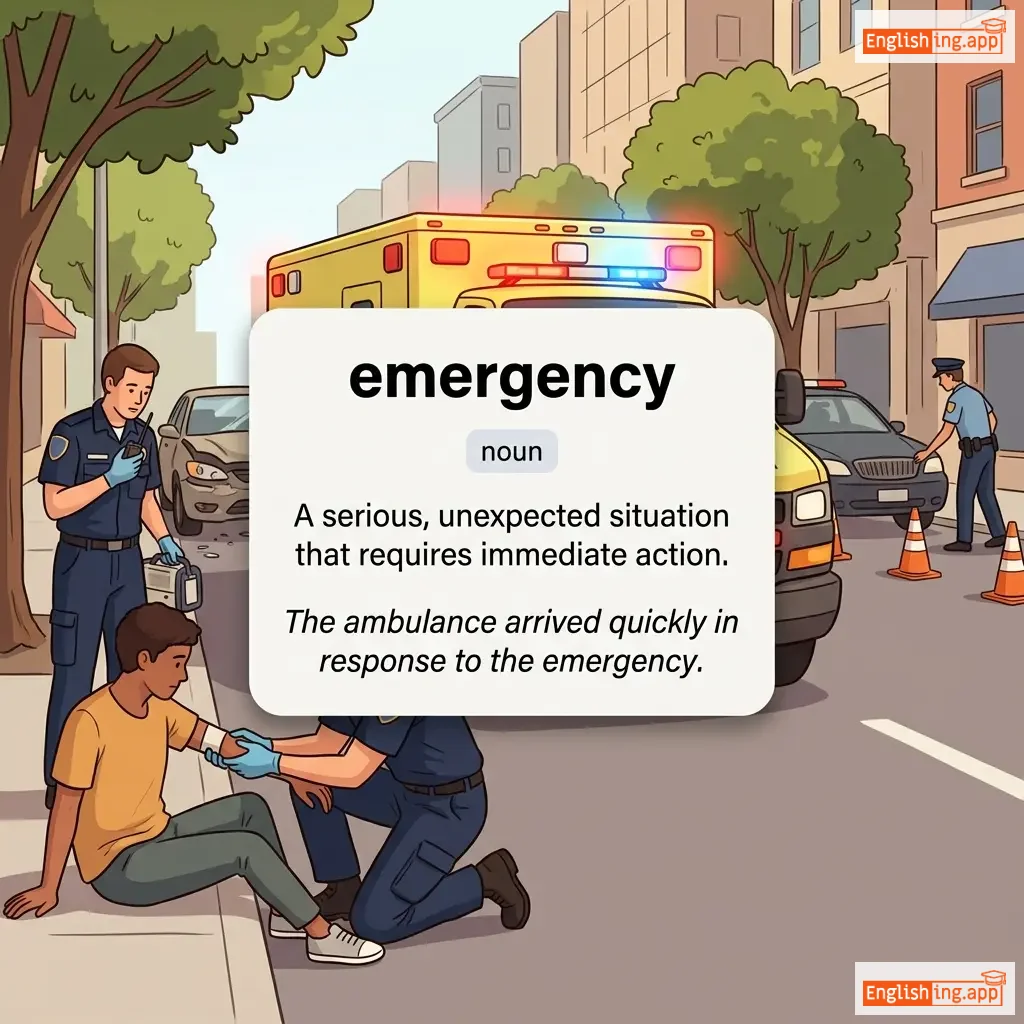
A serious, unexpected situation that requires immediate action.
••••••
|
The ambulance arrived quickly in response to the emergency. |
救急車は緊急事態に迅速に対応しました。
Kyūkyūsha wa kinkyū jitai ni jinsoku ni taio shimashita.
••••••
|
emergency room |
A hospital department where urgent cases are treated.
••••••
|
救急室
kyūkyū-shitsu
••••••
|
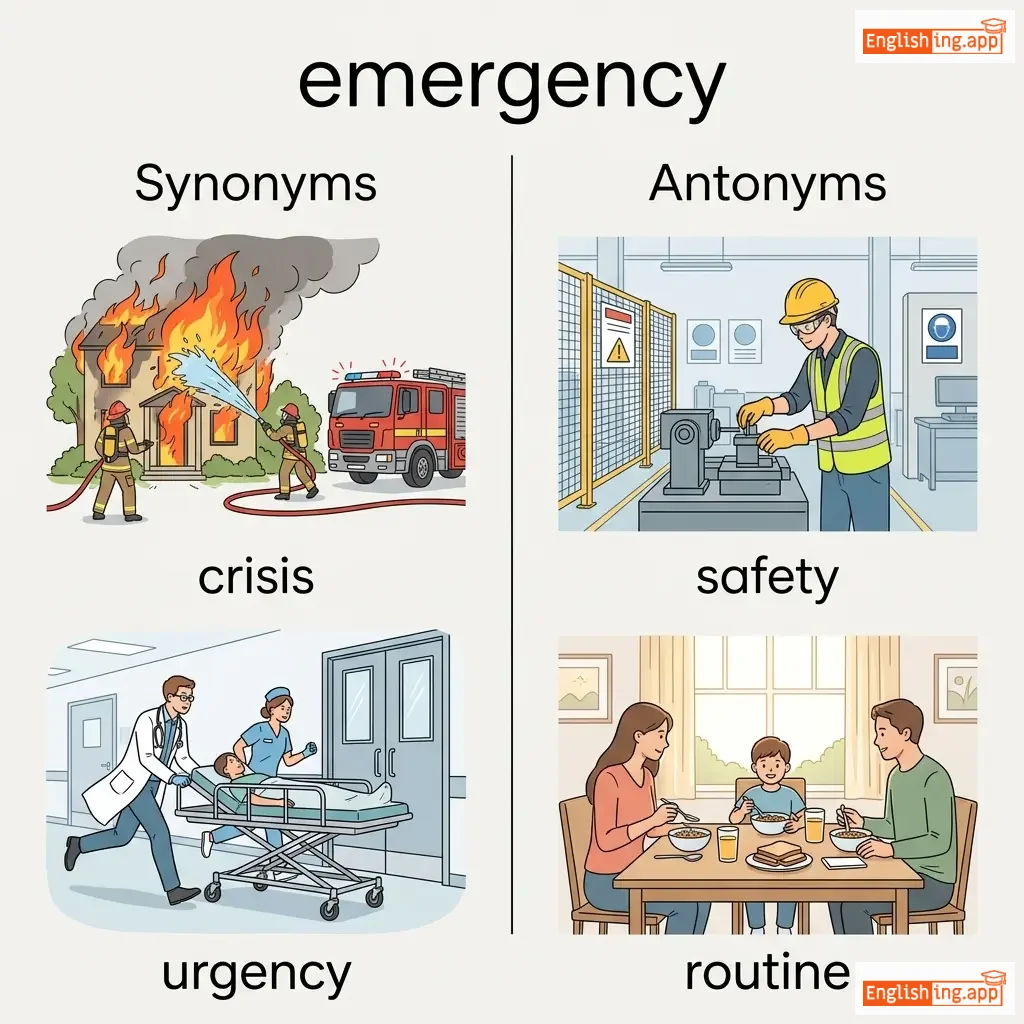
crisis, urgency, disaster, accident
••••••
|
safety, routine
••••••
|
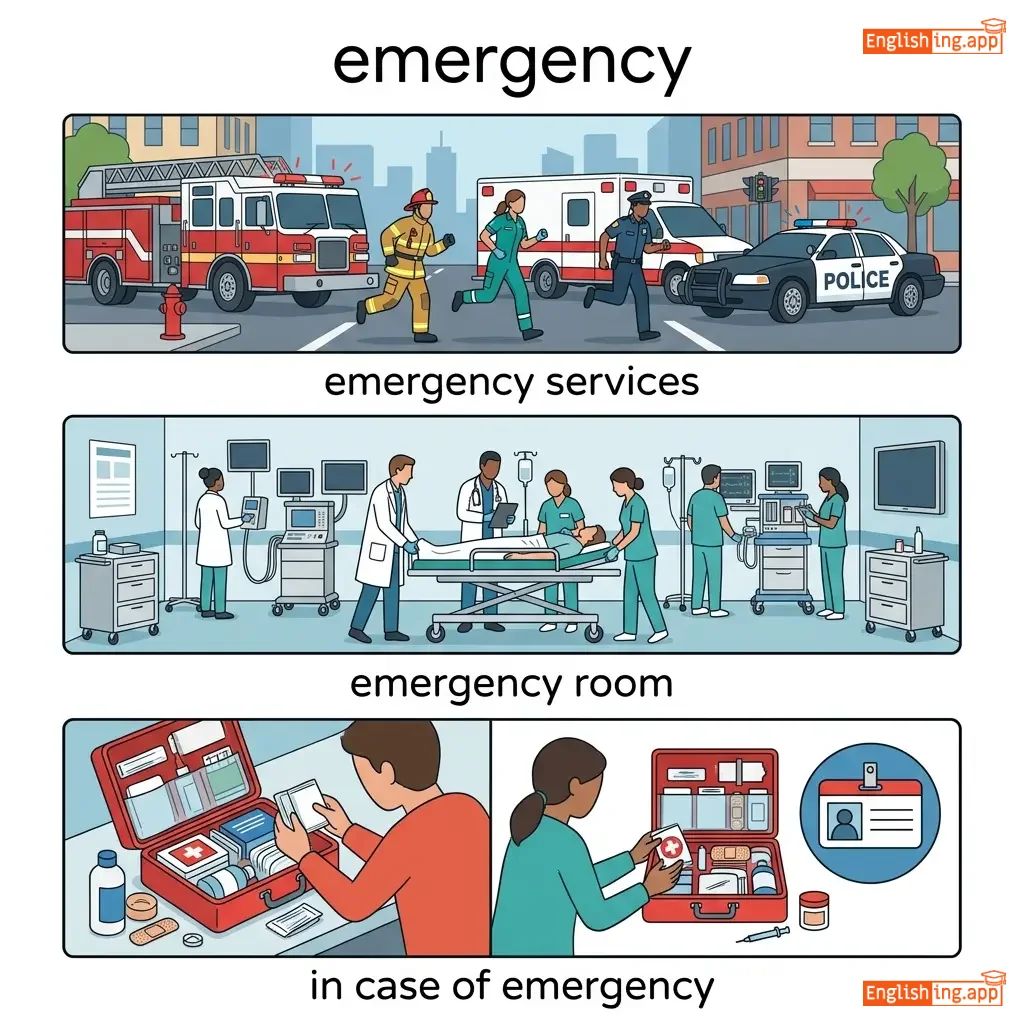
emergency services, emergency room, in case of emergency, emergency exit
••••••
|
Emergency = Kinkyū (緊急) → 即座の対応が必要!
••••••
|
|
💨
••••••
|
/ɪˈmɪʃən/
noun
(エミッション)
••••••
|
|
排出
haishutsu
••••••
|
- •••••• | - •••••• | - •••••• | - •••••• |
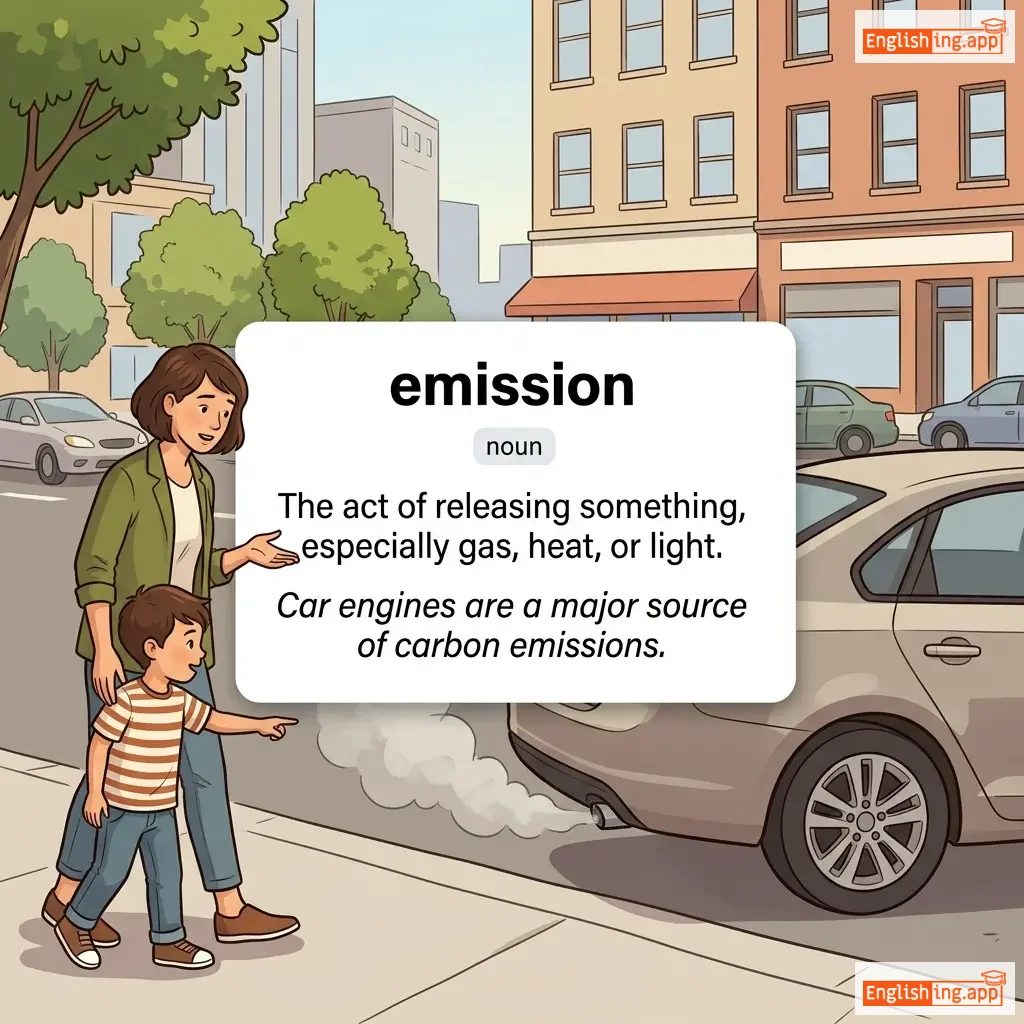
The act of releasing something, especially gas, heat, or light.
••••••
|
Car engines are a major source of carbon emissions. |
自動車のエンジンは主な二酸化炭素排出源です。
Jidousha no enjin wa omona nisankatanso haishutsu gen desu.
••••••
|
greenhouse gas emissions |
Gases released into the atmosphere that contribute to climate change.
••••••
|
温室効果ガス排出
Onshitsu kouka gasu haishutsu
••••••
|
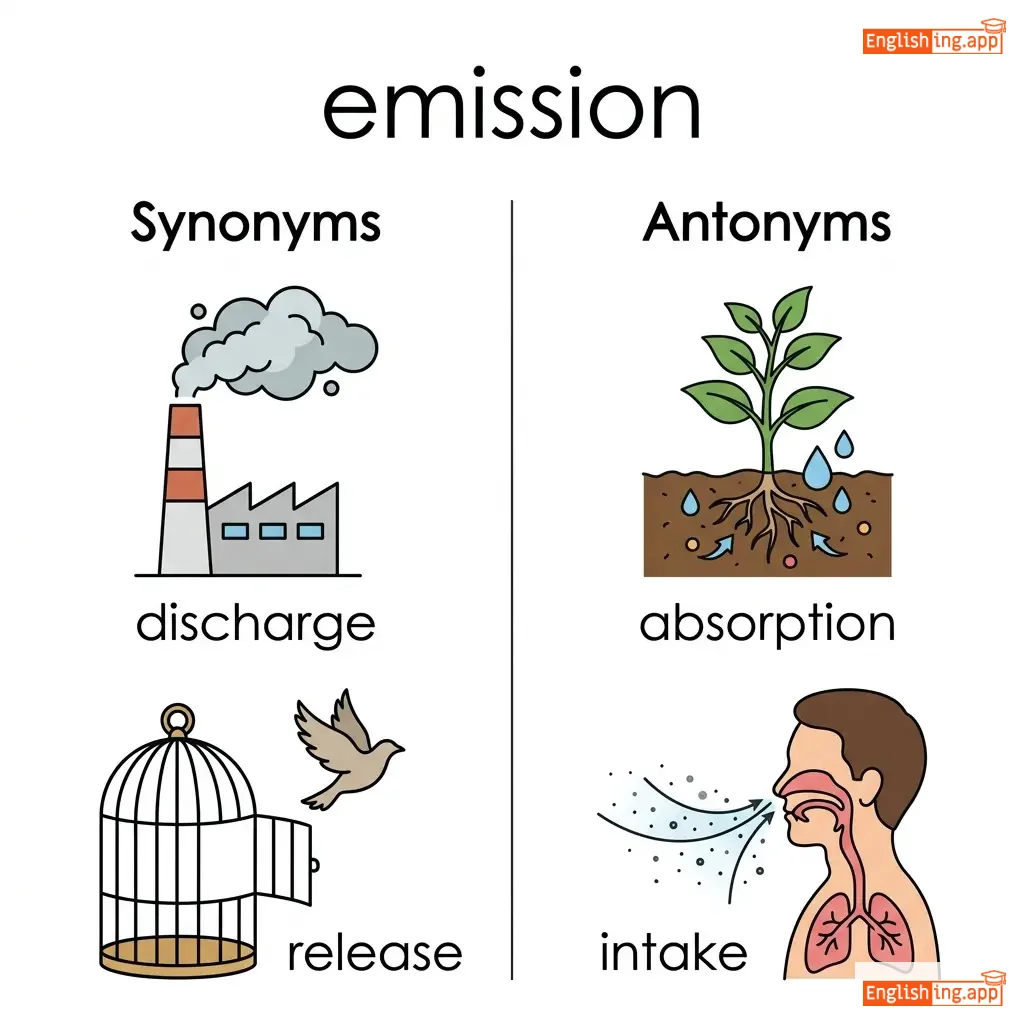
discharge, release, output, radiation
••••••
|
absorption, intake
••••••
|
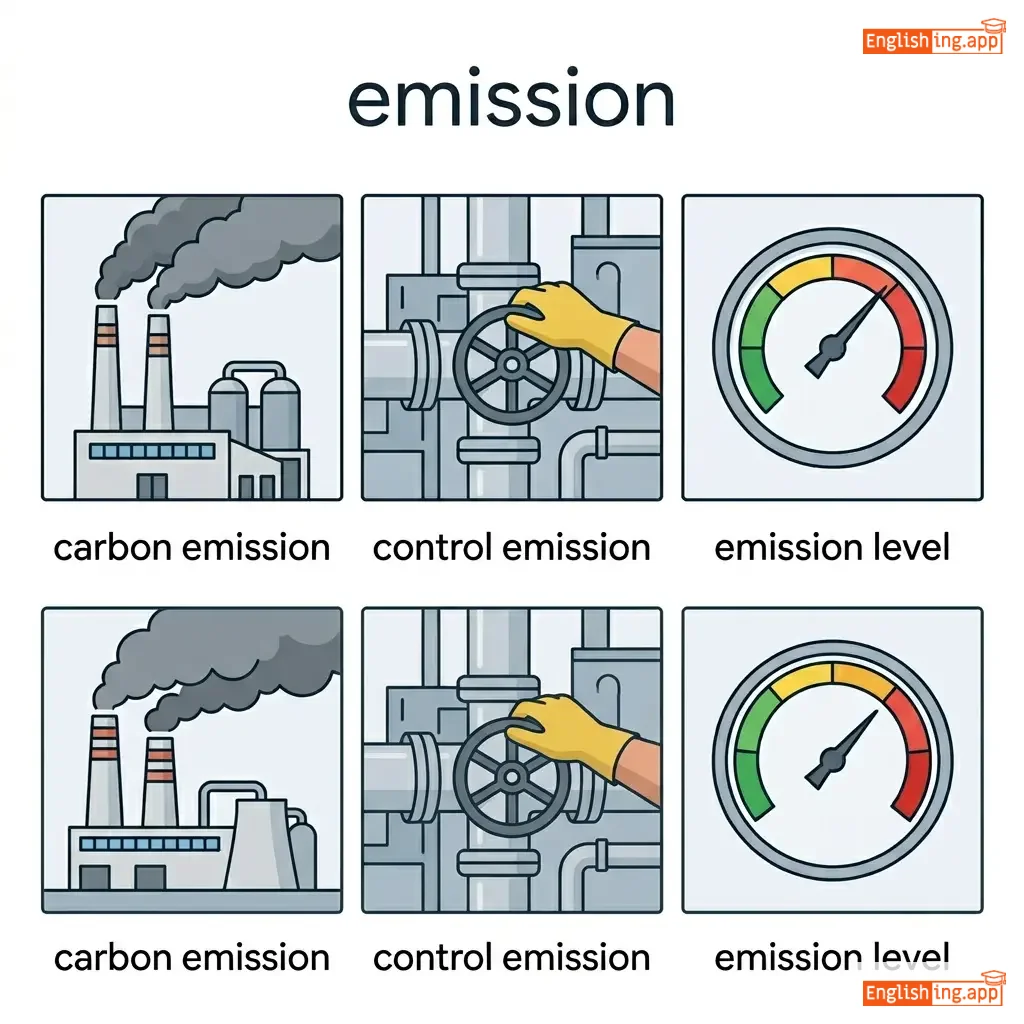
carbon emission, control emission, emission level, reduce emissions
••••••
|
Emission = Emit + shutsu → Emit は放出を意味し、Emission は排出を意味します。
••••••
|
|
💨
••••••
|
/ɪˈmɪt/
verb
(エミット)
••••••
|
- •••••• |
放出する
Hōshutsu suru
••••••
|
emitted
エミットされた
••••••
|
emitted
エミットされた
••••••
|
emits
エミットする
••••••
|
emitting
エミットしている
••••••
|
to send out something such as light, heat, sound, or gas
••••••
|
The factory emits smoke into the atmosphere.
工場は大気中に煙を排出します。
••••••
|
工場は大気中に煙を排出します。
Kōjō wa taikichū ni kemuri o haishutsu shimasu.
••••••
|
emit a sigh
ため息をつく
••••••
|
to let out a sound of relief or frustration
••••••
|
ため息をつく
Tameiki o tsuku
••••••
|
release, discharge, exhale, radiate, give off
••••••
|
absorb, contain, withhold
••••••
|
emit light, emit sound, emit radiation, emit gas
••••••
|
放出する、工場が煙を放出するように。
••••••
|
|
❤️
••••••
|
/ɪˈmoʊʃən/
noun
(エモーション)
••••••
|
- •••••• |
感情
kanjou
••••••
|
- •••••• | - •••••• | - •••••• | - •••••• |
A strong feeling such as happiness, sadness, anger, or fear.
••••••
|
She was overwhelmed with emotion when she heard the news. |
彼女はそのニュースを聞いたとき、感情に圧倒されていた。
Kanojo wa sono nyu-su o kiita toki, kanjou ni attou sarete ita.
••••••
|
mixed emotions |
Conflicting feelings about a situation.
••••••
|
複雑な感情
Fukuzatsu na kanjou
••••••
|
feeling, sentiment, passion, mood
••••••
|
apathy, indifference
••••••
|
show emotion, strong emotion, control emotion, express emotion
••••••
|
Emotion = E (エネルギー) + motion (動き) → 内面的な感情が動き続ける。
••••••
|
|
😭
••••••
|
/ɪˈmoʊʃənəl/
adjective
(エモーショナル)
••••••
|
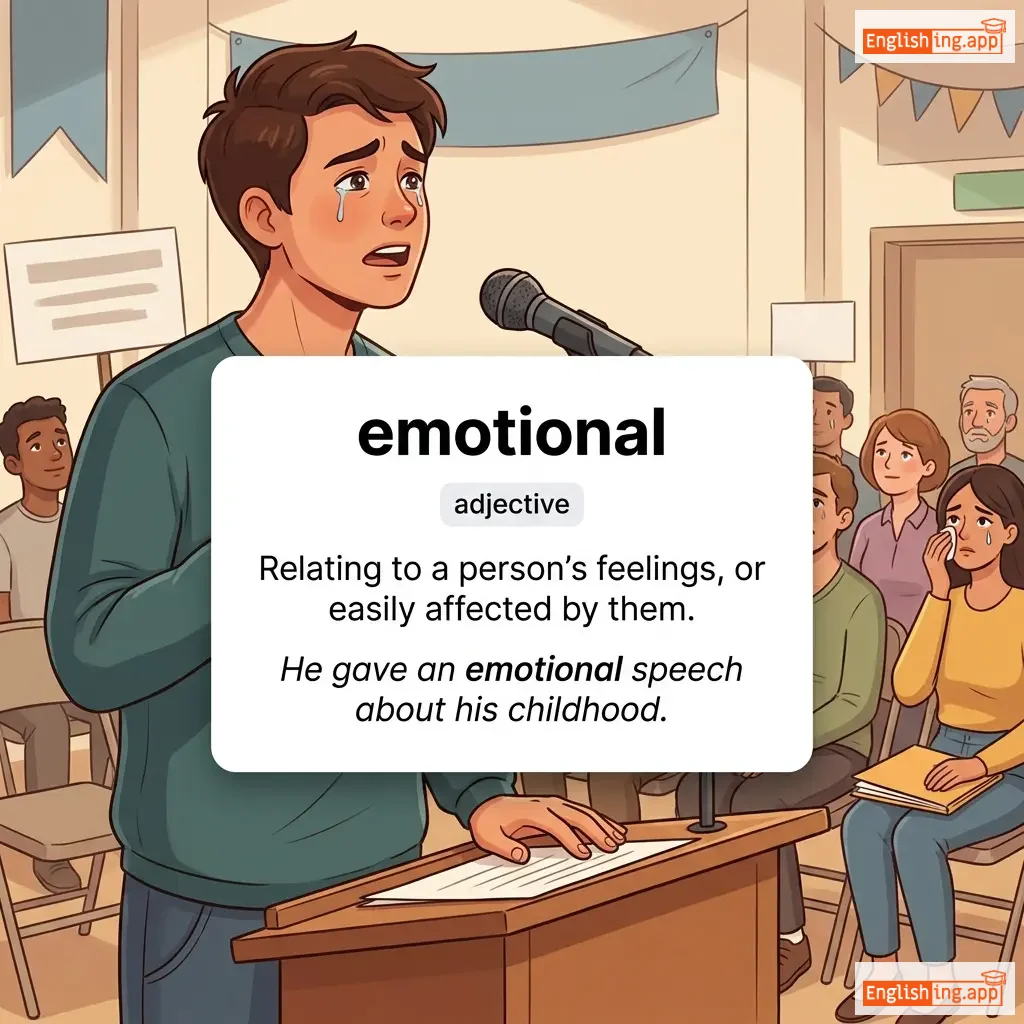
|
感情的な
kanjōteki na
••••••
|
- •••••• | - •••••• | - •••••• | - •••••• |
Relating to a person’s feelings, or easily affected by them.
••••••
|
He gave an emotional speech about his childhood. |
彼は自分の子供時代について感情的なスピーチをしました。
Kare wa jibun no kodomojidai ni tsuite kanjōteki na supīchi o shimashita.
••••••
|
emotional support |
Comfort and reassurance provided to someone in distress.
••••••
|
感情的サポート
kanjōteki sapōto
••••••
|
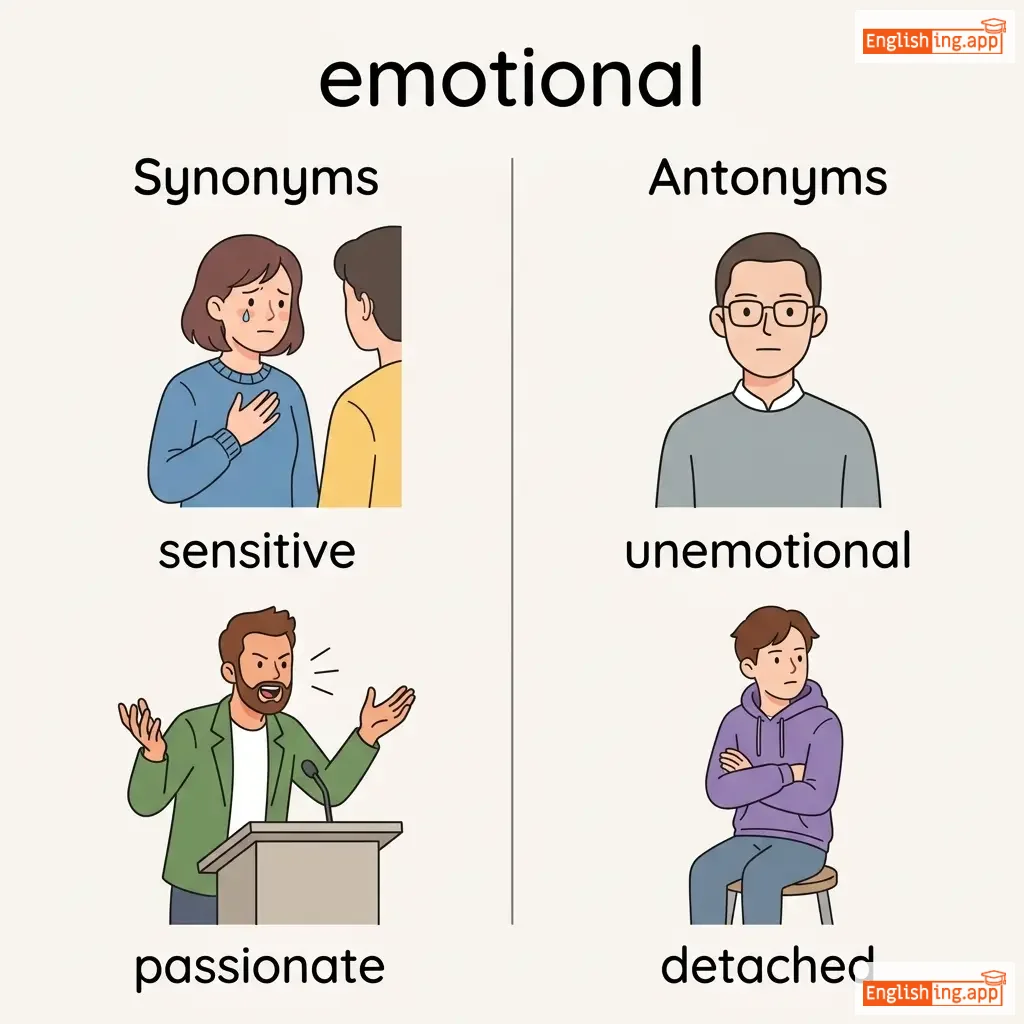
sensitive, passionate, sentimental, expressive
••••••
|
unemotional, detached, indifferent
••••••
|
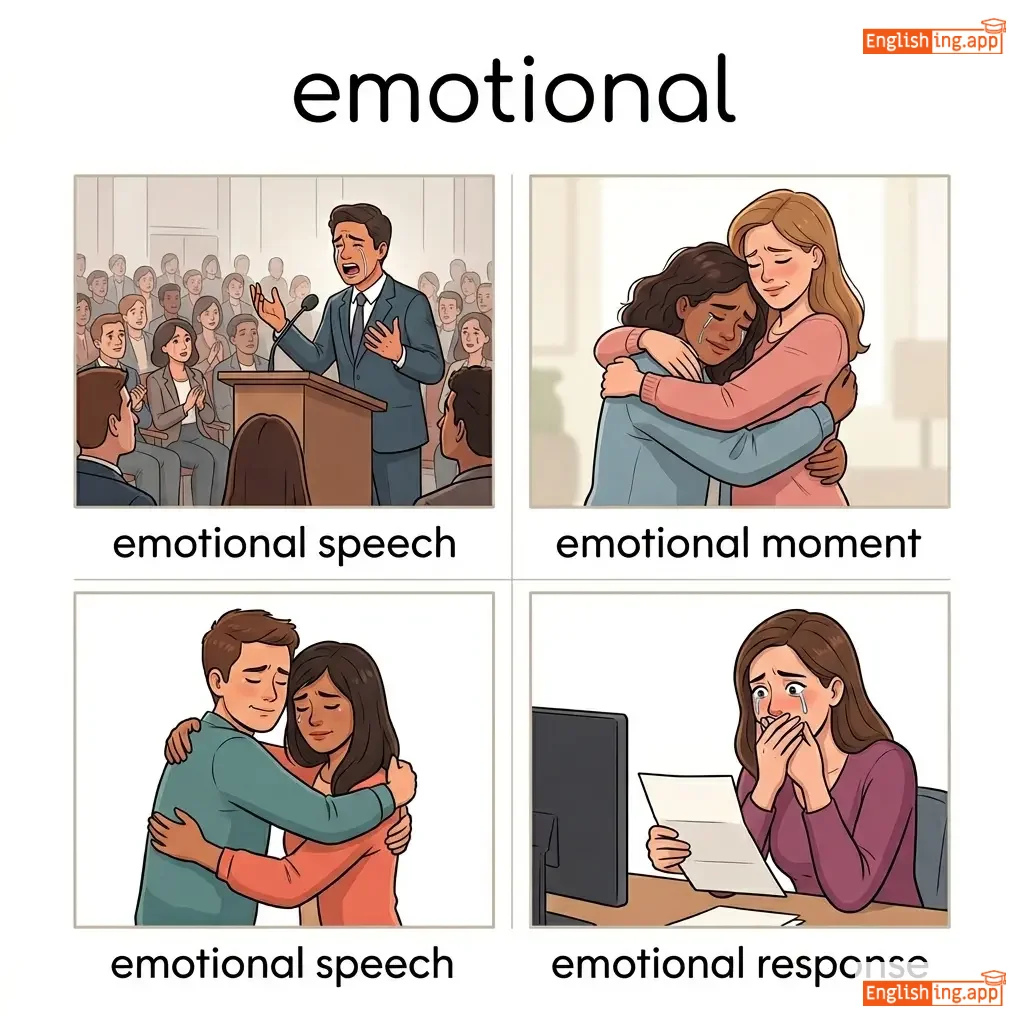
emotional speech, emotional moment, emotional response, emotional support
••••••
|
Emotional = Emotion + al → 感情に関連 → 感情的な
••••••
|
|
💓
••••••
|
/ɪˈməʊʃənəli/
adverb
(エモーショナリー)
••••••
|
- •••••• |
感情的に
kanjōteki ni
••••••
|
- •••••• | - •••••• | - •••••• | - •••••• |
in a way that relates to a person's feelings or emotions
••••••
|
She became emotionally attached to her pet. |
彼女はペットに感情的に結びついていた。
Kanojo wa petto ni kanjōteki ni musubitsuite ita.
••••••
|
emotionally drained |
feeling exhausted due to strong emotional experiences
••••••
|
感情的に疲れた
kanjōteki ni tsukareta
••••••
|
feelingly, sensitively, passionately, sentimentally, affectively
••••••
|
coldly, indifferently
••••••
|
emotionally strong, emotionally stable, emotionally attached, emotionally drained
••••••
|
Emotion + ally = 感情的に誰かや何かに結びつく。
••••••
|
|
🔍
••••••
|
/ˈɛmfəsɪs/
noun
(エンファシス)
••••••
|
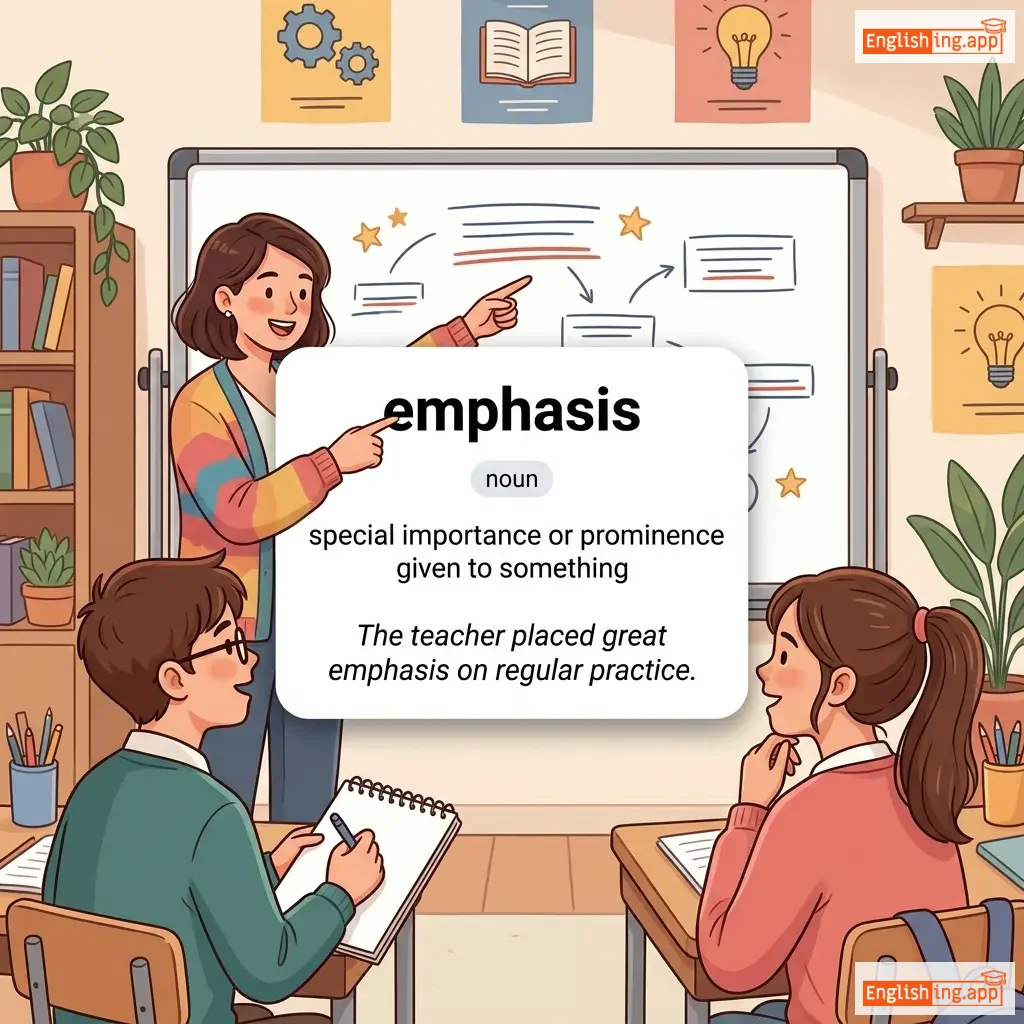
|
強調
kyōchō
••••••
|
- •••••• | - •••••• | - •••••• | - •••••• |
special importance or prominence given to something
••••••
|
The teacher placed great emphasis on regular practice. |
先生は定期的な練習の重要性を強調しました。
Sensei wa teikiteki na renshū no jūyō-sei o kyōchō shimashita.
••••••
|
place emphasis on |
to give special importance to something
••••••
|
強調する
kyōchō suru
••••••
|
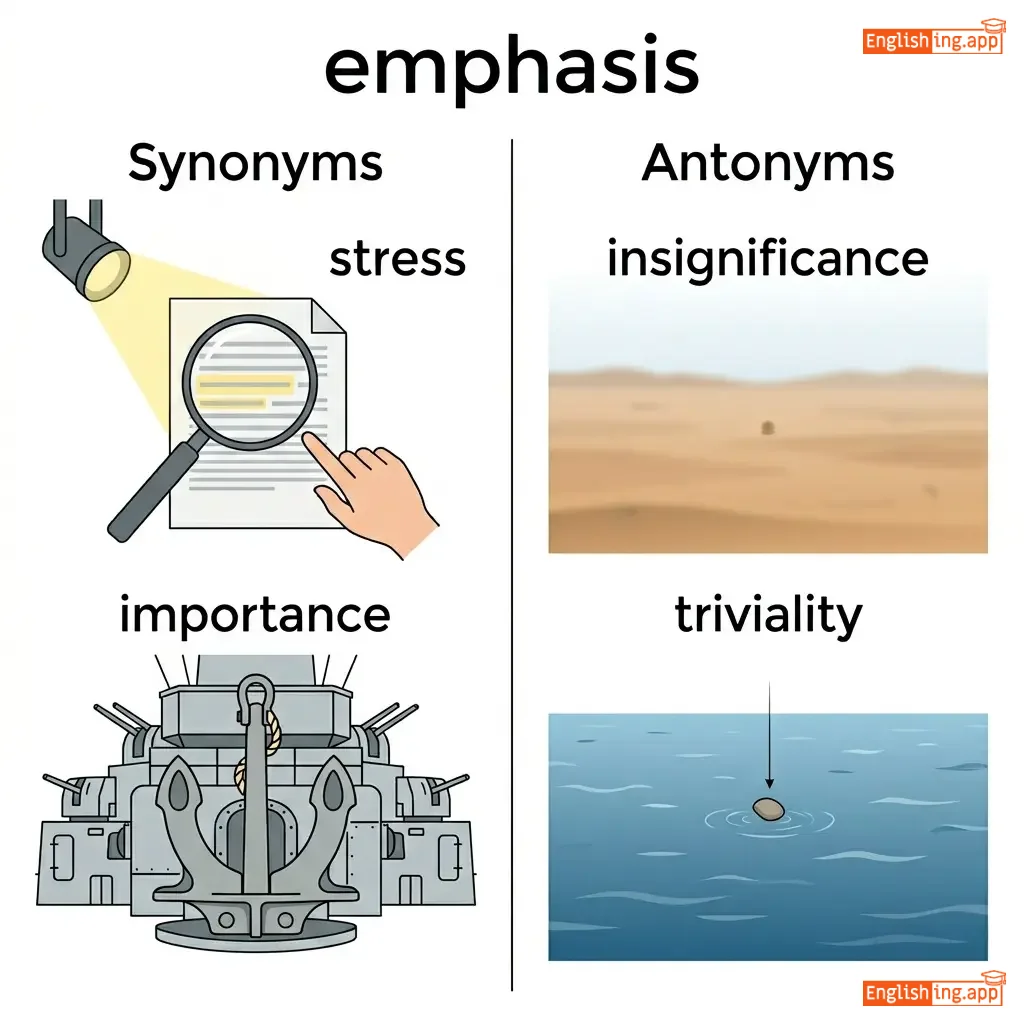
stress, importance, weight, significance, priority
••••••
|
insignificance, triviality
••••••
|
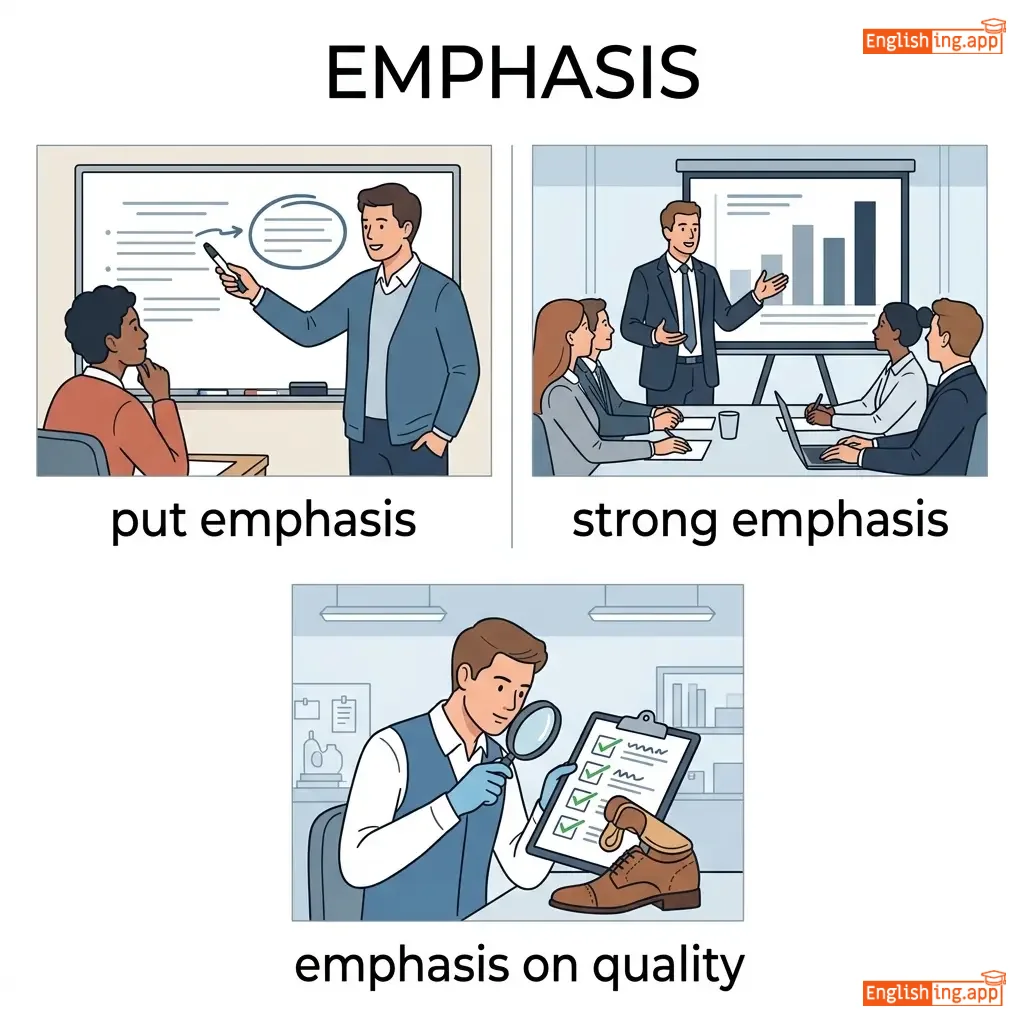
put emphasis, strong emphasis, emphasis on quality, emphasis added
••••••
|
強調(きょうちょう)という言葉は、何かを強く言うことから意味を取っています。
••••••
|
|
📢
••••••
|
/ˈɛmfəsaɪz/
verb
(エンファサイズ)
••••••
|
|
強調する
kyōchō suru
••••••
|
emphasized
エンファサイズド
••••••
|
emphasized
エンファサイズド
••••••
|
emphasizes
エンファサイズズ
••••••
|
emphasizing
エンファサイズイング
••••••
|
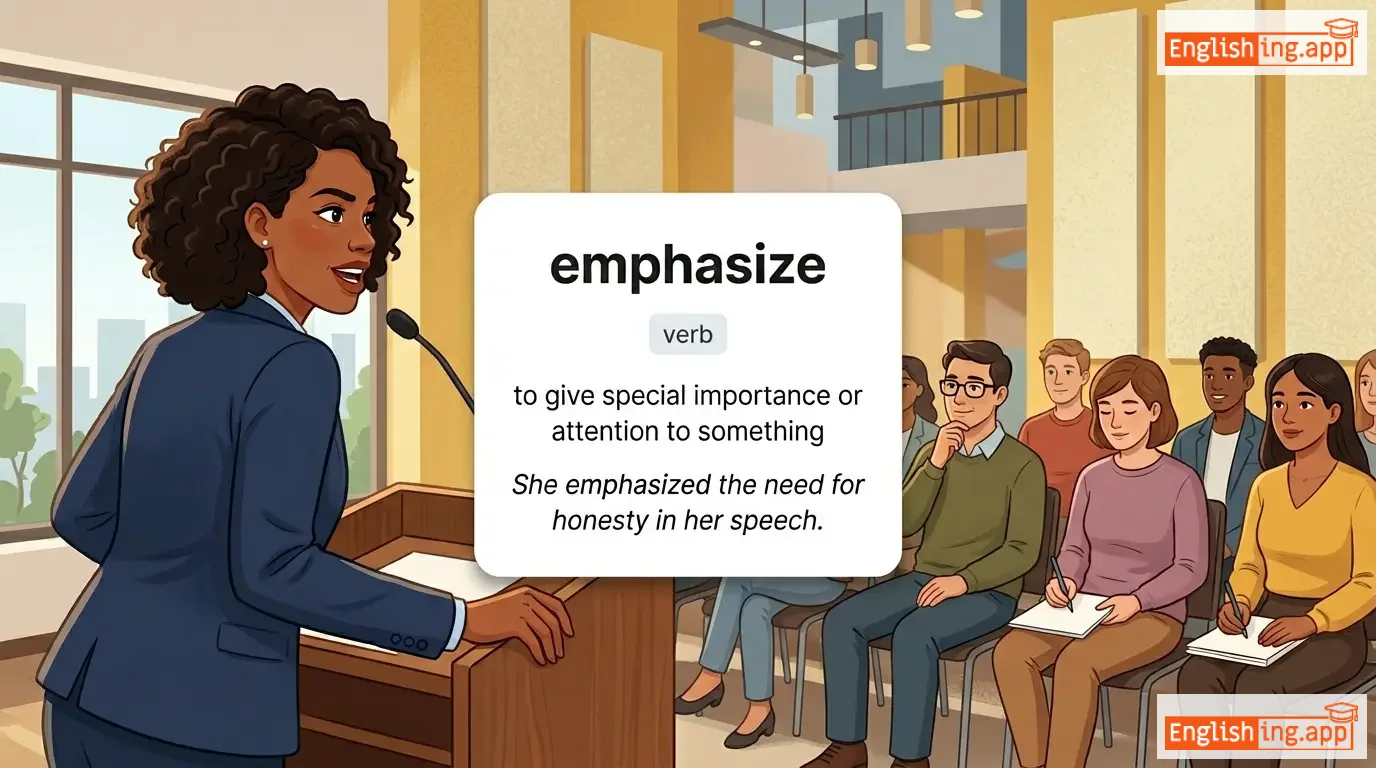
to give special importance or attention to something
••••••
|
She emphasized the need for honesty in her speech.
彼女はスピーチの中で正直さの重要性を強調しました。
••••••
|
彼女はスピーチの中で正直さの重要性を強調しました。
Kanojo wa supīchi no naka de shōjiki-sa no jūyō-sei o kyōchō shimashita.
••••••
|
cannot emphasize enough
十分に強調することはできません
••••••
|
used to strongly stress the importance of something
••••••
|
十分に強調することはできません
Jūbun ni kyōchō suru koto wa dekimasen
••••••
|
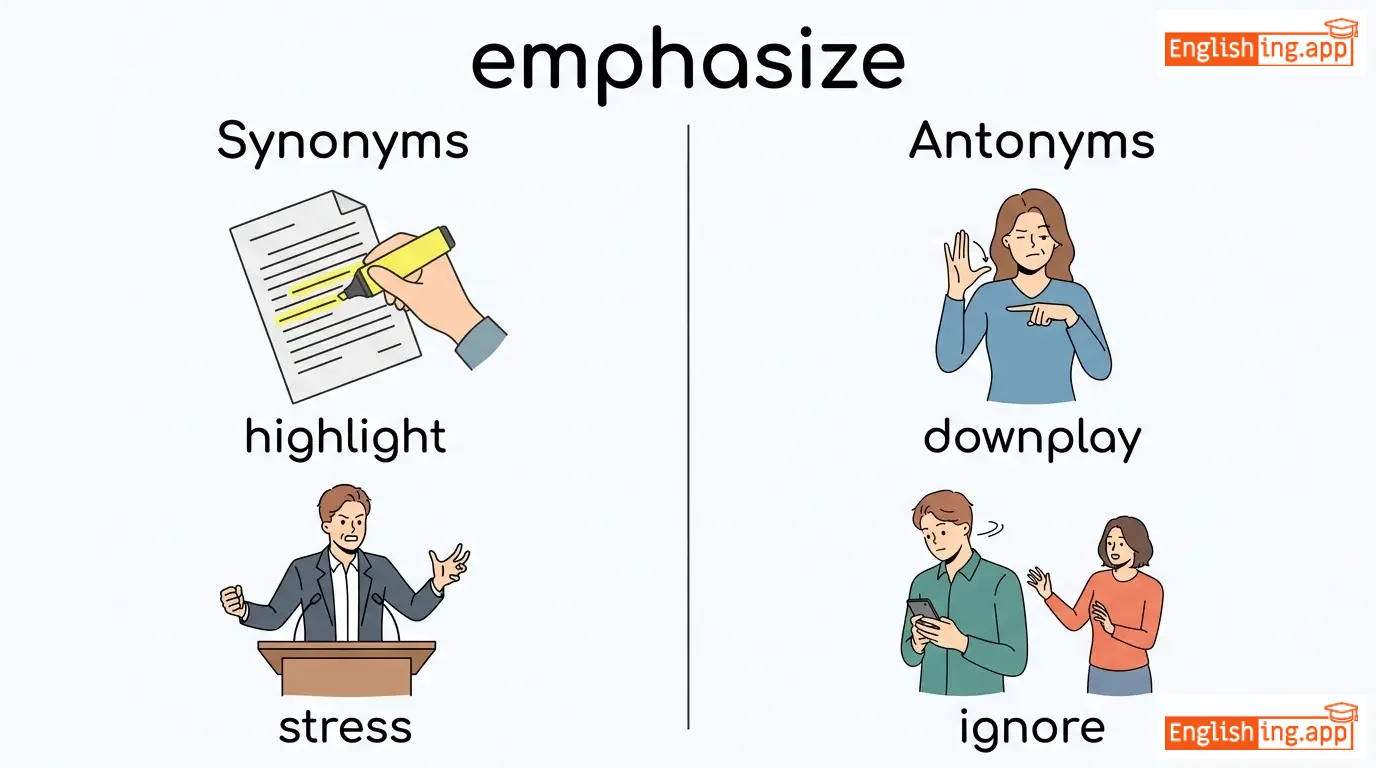
highlight, stress, underline, accentuate, point out
••••••
|
downplay, ignore, overlook
••••••
|
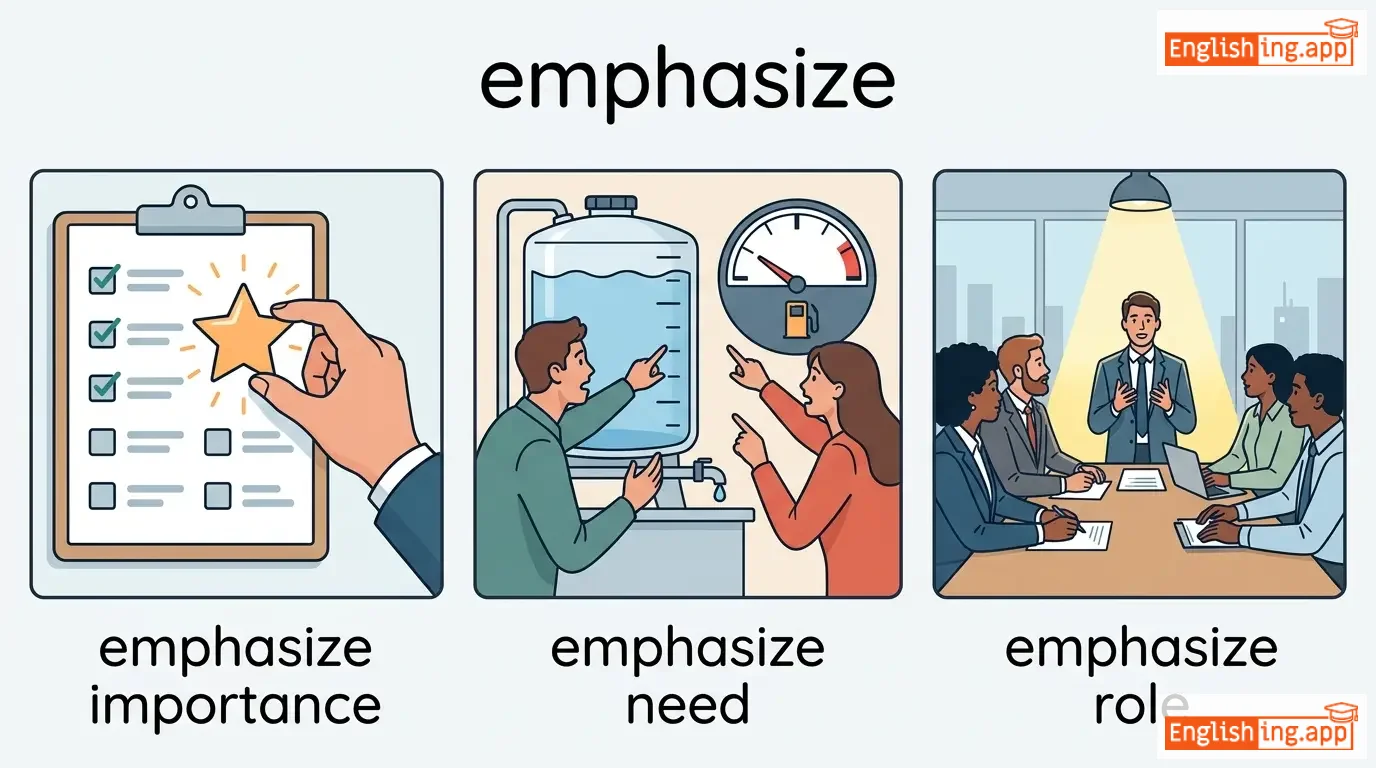
emphasize importance, emphasize need, emphasize role, emphasize strongly
••••••
|
強調することで、重要なことを目立たせる、まるで大文字のように!
••••••
|
|
🏰
••••••
|
/ˈempaɪər/
noun
(empaiā)
••••••
|
- •••••• |
帝国
teikoku
••••••
|
- •••••• | - •••••• | - •••••• | - •••••• |
a group of countries or regions controlled by one ruler or government
••••••
|
The Roman Empire lasted for centuries. |
ローマ帝国は何世代にもわたって続きました。
Rōma teikoku wa nan sedai ni mo watatte tsuzukimashita.
••••••
|
build an empire |
to create a large and powerful organization or business
••••••
|
帝国を築く
teikoku o kizuku
••••••
|
kingdom, realm, dominion, federation, sovereignty
••••••
|
colony, dependency
••••••
|
Roman empire, British empire, build an empire, vast empire
••••••
|
帝国はまるで'帝'(皇帝)を意味する。支配の象徴。
••••••
|
|
🔬
••••••
|
/ɛmˈpɪrɪkəl/
adjective
(エンピリカル)
••••••
|
|
経験的
keiken-teki
••••••
|
- •••••• | - •••••• | - •••••• | - •••••• |
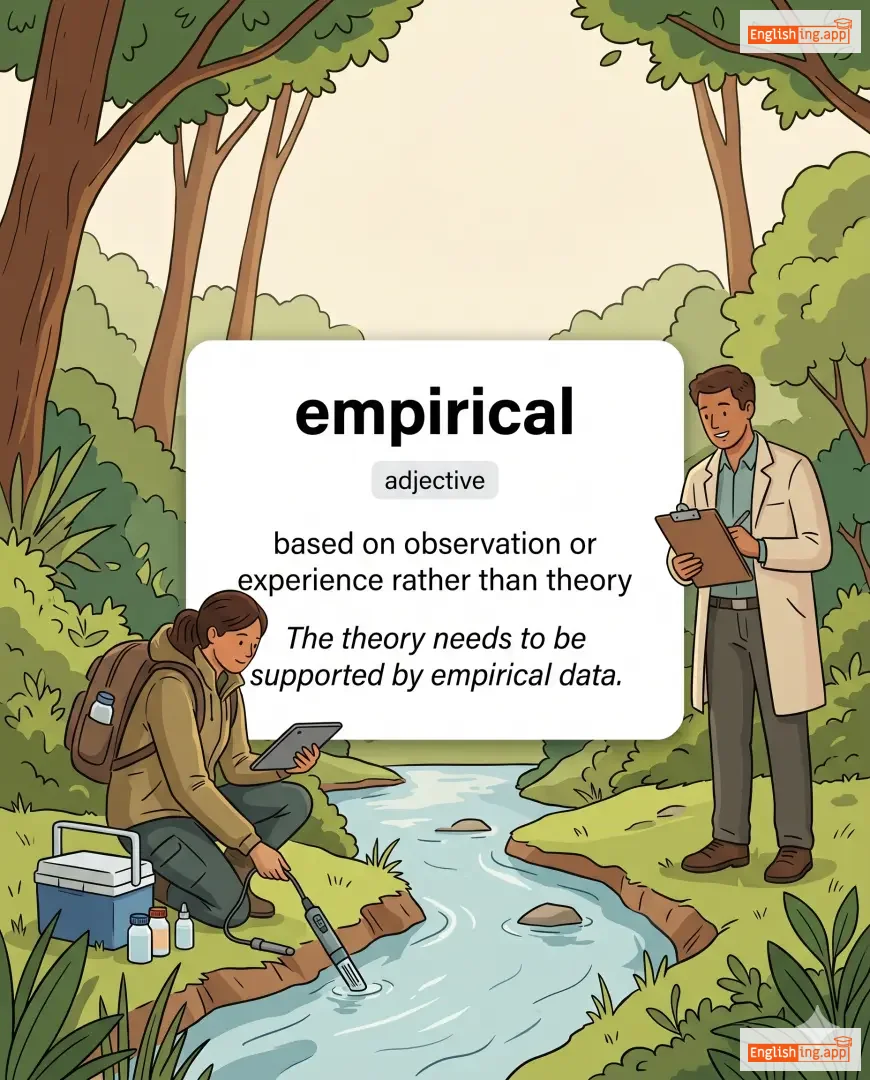
based on observation or experience rather than theory
••••••
|
The theory needs to be supported by empirical data. |
理論は経験的なデータで裏付けられるべきです。
Riron wa keiken-teki na deeta de urazukerarebe ki desu.
••••••
|
empirical evidence |
information gained through observation or experiment
••••••
|
経験的証拠
keiken-teki shouko
••••••
|
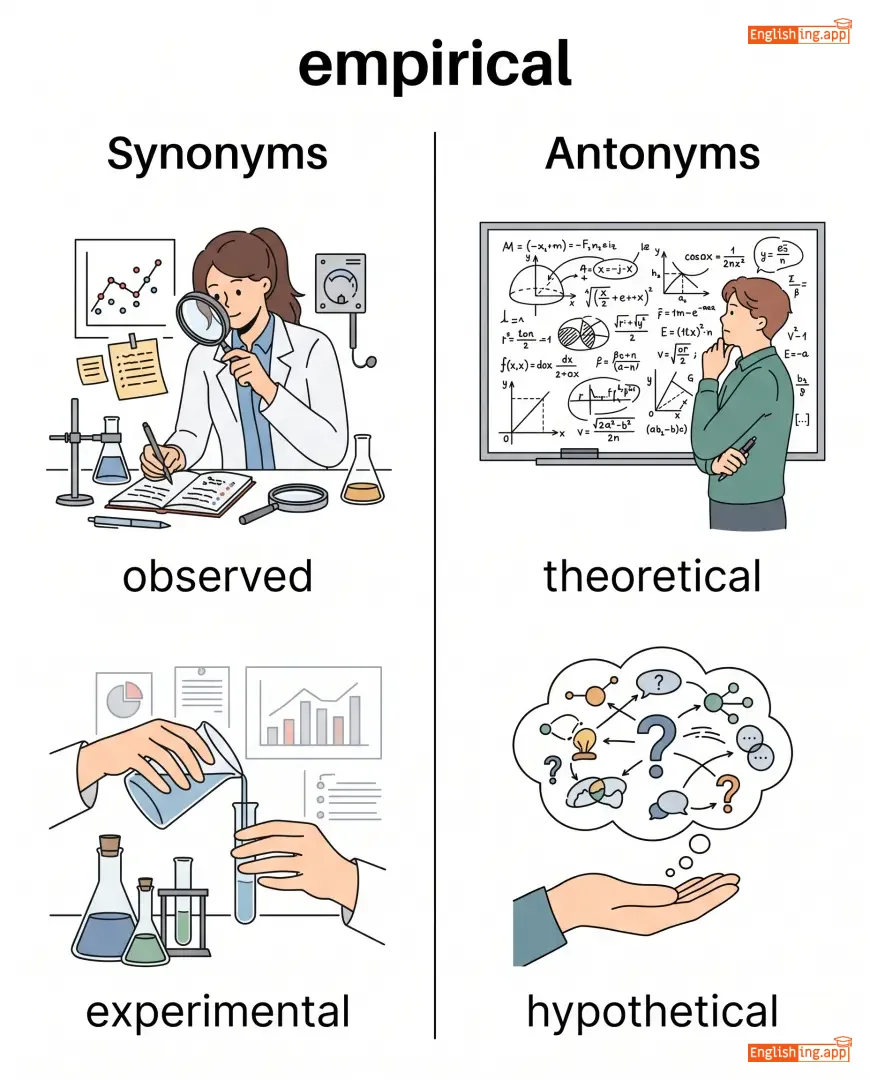
observed, experimental, factual, practical, real
••••••
|
theoretical, hypothetical
••••••
|
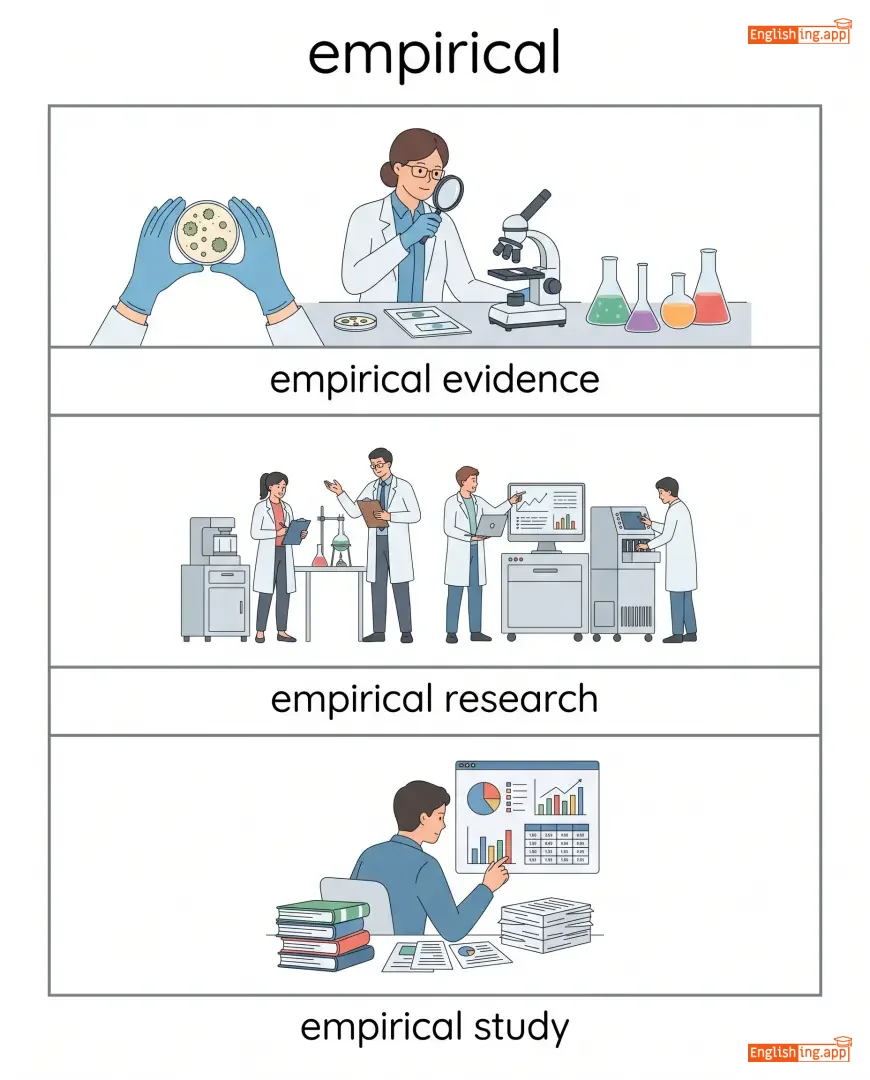
empirical evidence, empirical research, empirical study, empirical data
••••••
|
Empiricalは経験から来る、だから経験的(keiken-teki)!
••••••
|
|
👔
••••••
|
/ɪmˈplɔɪ/
verb
(エンプロイ)
••••••
|
- •••••• |
雇う
yatoi
••••••
|
employed
エンプロイド
••••••
|
employed
エンプロイド
••••••
|
employs
エンプルオイ
••••••
|
employing
エンプルオイング
••••••
|
to hire someone to do a job; to use something effectively
••••••
|
The company plans to employ more engineers next year.
その会社は来年、もっと多くのエンジニアを雇う予定です。
••••••
|
その会社は来年、もっと多くのエンジニアを雇う予定です。
Sono kaisha wa rainen, motto ōku no enjinia o yatou yotei desu.
••••••
|
gainful employment
有給雇用
••••••
|
work that provides a steady income
••••••
|
有給雇用
yūkyū koyō
••••••
|
hire, recruit, engage, utilize, appoint
••••••
|
dismiss, fire, discharge
••••••
|
employ workers, employ staff, employ methods, employ strategies
••••••
|
Employ は雇うという意味 — 会社が employ すれば、楽しむことができる。
••••••
|

