|
表情符号
|
单词 | Images | 翻译 | 过去时 | 过去分词 | 第三人称单数 | 动名词 | 含义 | 例句 | 例句翻译 | 示例表达 | 示例表达含义 | 示例表达翻译 | 同义词 | 反义词 | 搭配词 | 助记符 |
|---|---|---|---|---|---|---|---|---|---|---|---|---|---|---|---|---|---|
|
📧
••••••
|
/ˈiː.meɪl/
noun, verb
(i-mèil)
••••••
|
- •••••• |
电子邮件
dianzi youjian
••••••
|
emailed
i-méilèd
••••••
|
emailed
i-méilèd
••••••
|
emails
i-méils
••••••
|
emailing
i-méiling
••••••
|
messages distributed by electronic means from one computer user to another
••••••
|
I sent an e-mail to my professor yesterday.
我昨天给我的教授发了一封电子邮件。
••••••
|
我昨天给我的教授发了一封电子邮件。
wo zuotian gei wode jiaoshou fa le yi feng dianzi youjian.
••••••
|
check your e-mail
检查你的电子邮件
••••••
|
to look at your inbox for new messages
••••••
|
检查你的电子邮件
jiancha nide dianzi youjian
••••••
|
electronic mail, message, correspondence, digital letter
••••••
|
letter, postcard
••••••
|
send an e-mail, receive an e-mail, e-mail address, check e-mail
••••••
|
电子邮件就是现代邮递,完全电子化的邮件方式
••••••
|
|
🧠
••••••
|
/ˈiːɡoʊ/
noun
••••••
|
- •••••• | - •••••• | - •••••• | - •••••• | - •••••• | - •••••• |
A person's sense of self-importance or self-esteem.
••••••
|
His fragile ego was hurt by the criticism. |
- •••••• |
inflate someone's ego |
to make someone feel more self-important or proud
••••••
|
- •••••• |
self, pride, self-esteem, self-importance
••••••
|
humility, modesty, selflessness
••••••
|
big ego, fragile ego, boost ego, hurt ego
••••••
|
No •••••• |
|
8️⃣
••••••
|
/eɪt/
number
(eɪt)
••••••
|
- •••••• |
八
ba
••••••
|
- •••••• | - •••••• | - •••••• | - •••••• |
The number equivalent to the product of two and four; one more than seven.
••••••
|
There are eight apples in the basket. |
篮子里有八个苹果。
Lanzi li you ba ge pingguo.
••••••
|
behind the eight ball |
In a difficult or unfavorable situation.
••••••
|
处于困难境地
Chuyu kunnan jingdi
••••••
|
octet, VIII, set of eight, group of eight
••••••
|
seven, nine
••••••
|
eight years, eight times, group of eight, eight people
••••••
|
八和数字八相同。
••••••
|
|
↔️
••••••
|
/ˈaɪðər/ or /ˈiːðər/
determiner/pronoun/conjunction/adverb
(艾瑟尔)
••••••
|
- •••••• |
任一
renyi
••••••
|
- •••••• | - •••••• | - •••••• | - •••••• |
Used to indicate a choice between two alternatives.
••••••
|
You can either call me tonight or send me an email. |
你可以今晚打电话给我,或者给我发电子邮件。
Nǐ kěyǐ jīnwǎn dǎ diànhuà gěi wǒ, huòzhě gěi wǒ fā diànzǐ yóujiàn.
••••••
|
either way |
Whatever happens, the result will be acceptable.
••••••
|
不管怎样
bùguǎn zěnyàng
••••••
|
one, the one, any of the two, alternative
••••••
|
neither
••••••
|
either side, either way, either option, either choice
••••••
|
Either意味着任一,就像是茶或咖啡,任一都行。
••••••
|
|
📝
••••••
|
/ɪˈlæbəreɪt/ (verb), /ɪˈlæbərət/ (adjective)
verb, adjective
(伊拉博雷特)
••••••
|
- •••••• |
详细说明 / 设计复杂的
xiángxì shuōmíng / shèjì fùzá de
••••••
|
elaborated
伊拉博雷特过
••••••
|
elaborated
伊拉博雷特过
••••••
|
elaborates
伊拉博雷特斯
••••••
|
elaborating
伊拉博雷特-ing
••••••
|
verb: to explain something in detail; adjective: detailed and complicated in design
••••••
|
She asked him to elaborate on his proposal.
她要求他详细说明他的提议。
••••••
|
她要求他详细说明他的提议。
Tā yāoqiú tā xiángxì shuōmíng tā de tíyì.
••••••
|
elaborate on something
详细说明某事
••••••
|
to give more detail about something
••••••
|
详细说明某事
xiángxì shuōmíng mǒushì
••••••
|
explain, expand, illustrate, detailed, intricate
••••••
|
simplify, summarize, condense
••••••
|
elaborate design, elaborate plan, elaborate explanation, elaborate details
••••••
|
伊拉博雷特意味着详细解释某事。
••••••
|
|
💪
••••••
|
/ˈɛl.boʊ/
noun/verb
(艾尔博)
••••••
|
- •••••• |
肘部
zhoubu
••••••
|
elbowed
艾尔博德
••••••
|
elbowed
艾尔博德
••••••
|
elbows
艾尔博斯
••••••
|
elbowing
艾尔博英
••••••
|
The joint connecting the forearm and the upper arm; as a verb, to push aside using the elbow.
••••••
|
He accidentally hit the table with his elbow.
他不小心用肘部撞到了桌子。
••••••
|
他不小心用肘部撞到了桌子。
Ta bu xiaoxin yong zhoubu zhuangdao le zhuozi.
••••••
|
rub elbows
摩擦肘部
••••••
|
To socialize closely with people, often important or famous ones.
••••••
|
社交接触
shejiao jiechu
••••••
|
joint, bend, nudge, shove, push
••••••
|
pull, drag
••••••
|
elbow joint, elbow room, rub elbows, elbow grease
••••••
|
肘部意味着肘部,通过摩擦肘部可以社交。
••••••
|
|
👴
••••••
|
/ˈel.dər.li/
adjective
(艾尔德利)
••••••
|
- •••••• |
老年人; 年长的; 老年
aierdeli
••••••
|
- •••••• | - •••••• | - •••••• | - •••••• |
aged; advanced in years; old
••••••
|
The elderly man walked slowly with his cane. |
那位年长的男人拿着拐杖慢慢走。
Na wei nian zhang de nan ren na zhe guai zhang man man zou.
••••••
|
- •••••• | - •••••• | - •••••• |
aged, old, senior, ancient
••••••
|
young, youthful, juvenile
••••••
|
elderly people, elderly care, elderly population
••••••
|
Elderly - 'Elderli' 是老年人的代表,像是祖父母。
••••••
|
|
🗳️
••••••
|
/ɪˈlɛkt/
verb
(选举)
••••••
|
- •••••• |
选举
xuǎnjǔ
••••••
|
elected
当选
••••••
|
elected
当选
••••••
|
elects
选举
••••••
|
electing
选举
••••••
|
To choose someone for a position or office by voting.
••••••
|
The citizens elected a new president.
公民选举了新总统。
••••••
|
公民选举了新总统。
Gōngmín xuǎnjǔle xīn zǒngtǒng.
••••••
|
elect to
选择做
••••••
|
To choose or decide to do something.
••••••
|
选择做
xuǎnzé zuò
••••••
|
choose, vote, select, appoint, pick
••••••
|
reject, dismiss, refuse
••••••
|
elect president, elect leader, elect representative, elect officials
••••••
|
选举 = 选择选。
••••••
|
|
🗳️
••••••
|
/ɪˈlɛkʃən/
noun
(选举)
••••••
|
- •••••• |
选举
xuanju
••••••
|
- •••••• | - •••••• | - •••••• | - •••••• |
The process of choosing someone for public office by voting.
••••••
|
The election will be held next month. |
选举将在下个月举行。
Xuanju jiang zai xiage yue juxing.
••••••
|
election fever |
Excitement and activity surrounding an upcoming election.
••••••
|
选举热潮
Xuanju rechao
••••••
|
vote, poll, ballot, selection, referendum
••••••
|
appointment, selection without voting
••••••
|
general election, presidential election, election campaign, election results
••••••
|
Election 是选举 - 投票参加选举,成为选举的一部分。
••••••
|
|
🗳️
••••••
|
/ɪˈlɛktərəl/
adjective
(选举的)
••••••
|
- •••••• |
选举的
xuǎnjǔ de
••••••
|
- •••••• | - •••••• | - •••••• | - •••••• |
related to elections or voting
••••••
|
The electoral process in the country has been reformed in recent years. |
该国的选举程序在近年来进行了改革。
Gāi guó de xuǎnjǔ chéngxù zài jìnnián lái jìnxíngle gǎigé.
••••••
|
- •••••• | - •••••• | - •••••• |
voting, electoral system, election-related
••••••
|
non-electoral, non-voting
••••••
|
electoral process, electoral system, electoral reform
••••••
|
Electoral relates to voting—think of ballots and voting booths!
••••••
|
|
⚡
••••••
|
/ɪˈlɛktrɪk/
adjective
(电的)
••••••
|
- •••••• |
电的
diàn de
••••••
|
- •••••• | - •••••• | - •••••• | - •••••• |
Relating to or operated by electricity.
••••••
|
The room was lit by an electric lamp. |
房间里用电灯照明。
Fángjiān lǐ yòng diàndēng zhàomíng.
••••••
|
electric atmosphere |
A highly charged or exciting environment.
••••••
|
电气氛围
diàn qì fēnwéi
••••••
|
powered, charged, energized, electronic
••••••
|
manual, mechanical
••••••
|
electric car, electric power, electric shock, electric current
••••••
|
Electric意味着电 ⚡, 记住,灯或风扇是用电运行的。
••••••
|
|
⚡
••••••
|
/ɪˈlɛktrɪkəl/
adjective
(电的)
••••••
|
- •••••• |
电的
diàn de
••••••
|
- •••••• | - •••••• | - •••••• | - •••••• |
related to electricity or the use of electrical power
••••••
|
The electrical system in the house needs repair. |
房子的电力系统需要修理。
Fángzi de diànlì xìtǒng xūyào xiūlǐ.
••••••
|
- •••••• | - •••••• | - •••••• |
power, electric, electronic, voltage-related
••••••
|
non-electric, mechanical
••••••
|
electrical system, electrical engineer, electrical power, electrical circuit
••••••
|
电的 = 和电有关 ⚡
••••••
|
|
🔌
••••••
|
/ɪˌlɛkˈtrɪsɪti/
noun
(电力)
••••••
|
- •••••• |
电力
dianli
••••••
|
- •••••• | - •••••• | - •••••• | - •••••• |
A form of energy resulting from the existence of charged particles.
••••••
|
The storm caused a power cut and we had no electricity. |
风暴导致了停电,我们没有电力。
Fengbao daozhi le tingdian, women meiyou dianli.
••••••
|
generate electricity |
To produce electrical power.
••••••
|
产生电力
Chansheng dianli
••••••
|
power, energy, current, charge
••••••
|
darkness, powerlessness
••••••
|
electricity supply, electricity bill, electricity generation, electricity consumption
••••••
|
电力意味着能量,记住灯和风扇需要电力。
••••••
|
|
⚡
••••••
|
/ɪˈlɛktrɪfaɪ/
verb
(伊莱克特里法伊)
••••••
|
- •••••• |
通电; 激动
tong dian; jidong
••••••
|
electrified
伊莱克特里法伊德
••••••
|
electrified
伊莱克特里法伊德
••••••
|
electrifies
伊莱克特里法伊斯
••••••
|
electrifying
伊莱克特里法英
••••••
|
to charge with electricity; to excite or thrill intensely
••••••
|
The speaker's speech electrified the audience.
演讲者的演讲让观众感到兴奋。
••••••
|
演讲者的演讲让观众感到兴奋。
Yanjiang zhe de yanjian rang guanzhong gandao xingfen
••••••
|
- •••••• | - •••••• | - •••••• |
excite, thrill, inspire, energize, stimulate
••••••
|
bore, calm, depress
••••••
|
electrify the crowd, electrify the audience, electrify the atmosphere
••••••
|
Electrify = 想象电流流过人群,激动全场
••••••
|
|
💻
••••••
|
/ɪˌlɛkˈtrɒnɪk/
adjective
(电子的)
••••••
|
- •••••• |
电子的
dianzi de
••••••
|
- •••••• | - •••••• | - •••••• | - •••••• |
Operating with or produced by the use of electronic devices.
••••••
|
She bought an electronic keyboard for her music lessons. |
她为她的音乐课买了一台电子键盘。
Tā wèi tā de yīnyuè kè mǎile yī tái diànzǐ jiànpán.
••••••
|
electronic device |
A device that operates using electronic circuits.
••••••
|
电子设备
diànzǐ shèbèi
••••••
|
digital, automated, computerized, high-tech
••••••
|
manual, mechanical
••••••
|
electronic device, electronic music, electronic mail, electronic circuit
••••••
|
Electronic device意味着电子设备 - 就像手机 📱。
••••••
|
|
💻
••••••
|
/ɪˌlɛkˈtrɒnɪks/
noun
(电子学)
••••••
|
- •••••• |
电子学
dianzi xue
••••••
|
- •••••• | - •••••• | - •••••• | - •••••• |
the branch of physics and technology dealing with circuits and devices using transistors, microchips, and other components
••••••
|
He studied electronics at university. |
他在大学学习电子学。
Ta zai daxue xuexi dianzi xue.
••••••
|
- •••••• | - •••••• | - •••••• |
tech, circuitry, electrotechnology, computing
••••••
|
mechanics, manual systems
••••••
|
electronics engineer, consumer electronics, electronics lab, electronics industry
••••••
|
电子学是关于设备和电路的世界——电视、手机、电脑,统统在一起!
••••••
|
|
💃
••••••
|
/ˈɛlɪɡənt/
adjective
(优雅)
••••••
|
- •••••• |
优雅且精致
yōuyǎ qiě jīngzhì
••••••
|
- •••••• | - •••••• | - •••••• | - •••••• |
pleasingly graceful and stylish in appearance or manner
••••••
|
She looked elegant in her evening gown. |
她在晚礼服中看起来优雅。
Tā zài wǎn lǐfú zhōng kàn qǐlái yōuyǎ.
••••••
|
simple yet elegant |
beautiful and stylish without being complicated
••••••
|
简单而优雅
jiǎndān ér yōuyǎ
••••••
|
graceful, stylish, classy, refined, sophisticated
••••••
|
clumsy, messy, crude
••••••
|
elegant dress, elegant design, elegant solution, elegant lady
••••••
|
优雅就是穿着漂亮衣服让人忍不住说'哇!'
••••••
|
|
🔬
••••••
|
/ˈɛlɪmənt/
noun
(元素)
••••••
|
- •••••• |
元素
yuánsù
••••••
|
- •••••• | - •••••• | - •••••• | - •••••• |
A basic or essential part of something; a simple substance that cannot be broken down further.
••••••
|
Trust is a key element of any strong relationship.
信任是任何强大关系的关键元素。
••••••
|
信任是任何强大关系的关键元素。
Xìnrèn shì rènhé qiángdà guānxì de guānjiàn yuánsù.
••••••
|
in one's element
在自己的元素中
••••••
|
To be in a situation that is natural and comfortable for someone.
••••••
|
在自己的元素中
Zài zìjǐ de yuánsù zhōng
••••••
|
component, part, factor, ingredient, aspect
••••••
|
whole, entirety
••••••
|
basic element, chemical element, essential element, natural element
••••••
|
元素意味着基本部分,就像化学中的元素,简单的组成部分。
••••••
|
|
📘
••••••
|
/ˌɛlɪˈmɛntəri/
adjective
(基础的)
••••••
|
- •••••• |
基础的
jīchǔ de
••••••
|
- •••••• | - •••••• | - •••••• | - •••••• |
Relating to the basic or fundamental aspects of something; simple or easy to understand.
••••••
|
She gave an elementary explanation of the problem. |
她给出了一个问题的基础性解释。
Tā gěichūle yīgè wèntí de jīchǔ xìng jiěshì.
••••••
|
elementary, my dear Watson |
A phrase used to suggest that the solution to a problem is simple.
••••••
|
基础的,我亲爱的沃森
jīchǔ de, wǒ qīn'ài de wò sēn
••••••
|
basic, fundamental, simple, introductory, rudimentary
••••••
|
advanced, complex, sophisticated
••••••
|
elementary school, elementary knowledge, elementary level, elementary course
••••••
|
基础的意味着简单和基本,就像英文中的elementary一样。
••••••
|
|
🐘
••••••
|
/ˈɛlɪfənt/
noun
(海皮尼斯)
••••••
|
- •••••• |
幸福
xìngfú
••••••
|
- •••••• | - •••••• | - •••••• | - •••••• |
a very large animal with a trunk, long curved tusks, and thick gray skin, found in Africa and Asia
••••••
|
The elephant sprayed water over itself with its trunk. |
当她收到奖项时,她无法隐藏自己的幸福。
Dāng tā shōudào jiǎngxiàng shí, tā wúfǎ yǐncáng zìjǐ de xìngfú.
••••••
|
the elephant in the room |
an obvious problem or issue that people avoid discussing
••••••
|
追求幸福
zhuīqiú xìngfú
••••••
|
mammal, giant, pachyderm, tusker
••••••
|
mouse, insect
••••••
|
herd of elephants, African elephant, elephant tusks, baby elephant
••••••
|
幸福就是持续追求满足和快乐的过程!
••••••
|
|
⬆️
••••••
|
/ˈɛlɪveɪt/
verb
(艾列维特)
••••••
|


|
提升
tisheng
••••••
|
elevated
提升
••••••
|
elevated
提升
••••••
|
elevates
提升
••••••
|
elevating
提升
••••••
|
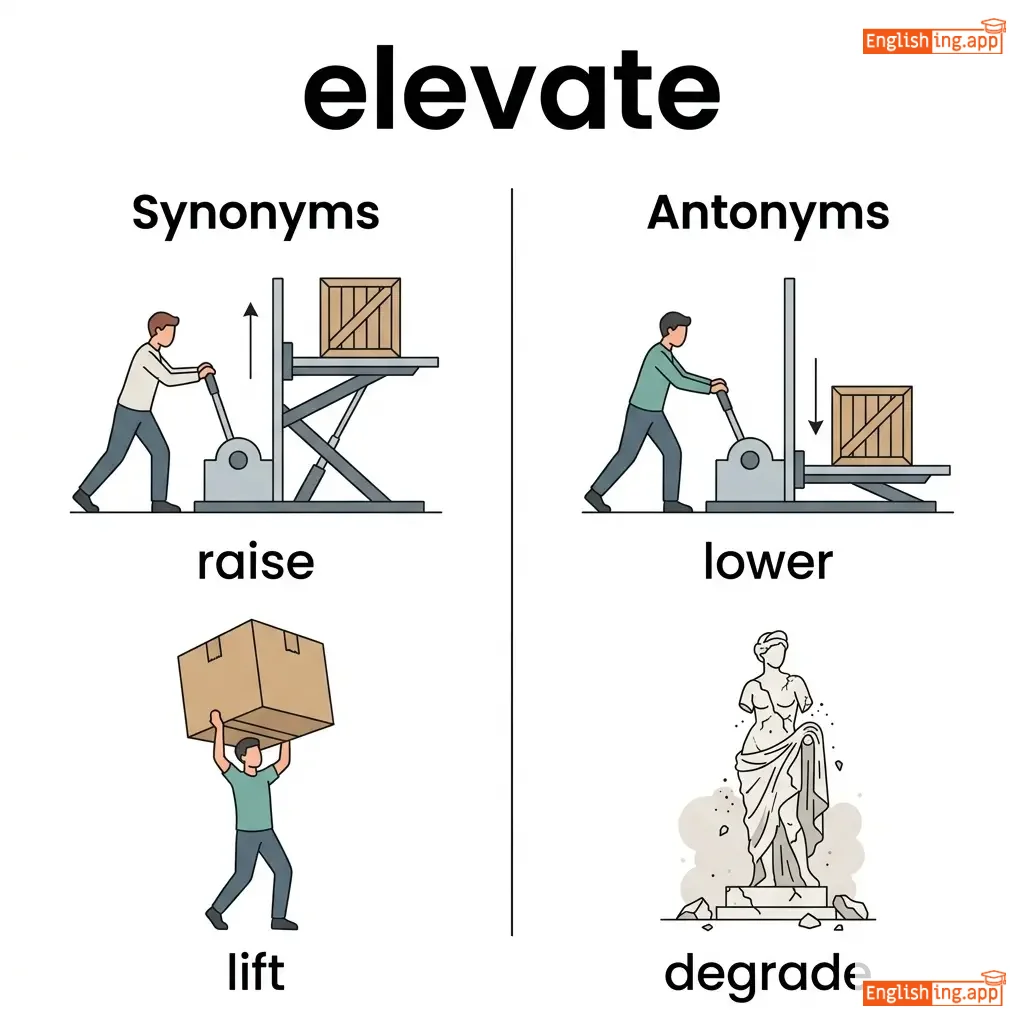
To raise or lift something to a higher position; to improve in status, mood, or quality.
••••••
|
Good music can elevate your mood instantly.
好音乐可以瞬间提升你的情绪。
••••••
|
好音乐可以瞬间提升你的情绪。
Hao yinyue keyi shunjian tisheng nide qingxu.
••••••
|
elevate the discussion
提升讨论
••••••
|
To raise the level of a conversation to a more serious or intelligent one.
••••••
|
提升讨论
Tisheng taolun
••••••
|
raise, lift, promote, heighten, uplift
••••••
|
lower, degrade, depress
••••••
|
elevate mood, elevate position, elevate status, elevate to
••••••
|
提升就像坐电梯一样往上升。
••••••
|
|
🛗
••••••
|
/ˈɛləˌveɪtər/
noun
(电梯)
••••••
|
- •••••• |
电梯
dianti
••••••
|
- •••••• | - •••••• | - •••••• | - •••••• |
a machine that carries people or goods up and down between floors in a building
••••••
|
We took the elevator to the tenth floor. |
我们乘坐电梯到达了第十层。
Wǒmen chéngzuò diàntī dàodále dì shí céng.
••••••
|
elevator pitch |
a brief, persuasive speech to spark interest in an idea or project
••••••
|
电梯推销
dianti tuixiao
••••••
|
lift, hoist, escalator, platform
••••••
|
stairs, descent
••••••
|
take the elevator, elevator door, elevator button, elevator ride
••••••
|
电梯就像 Elevator 一样,往上走,往下走,像 Elevator Pitch 一样激发兴趣!
••••••
|
|
✅
••••••
|
/ˈɛlɪdʒəbl/
adjective
(é lì jí bǎo)
••••••
|
|
合格的
hege de
••••••
|
- •••••• | - •••••• | - •••••• | - •••••• |
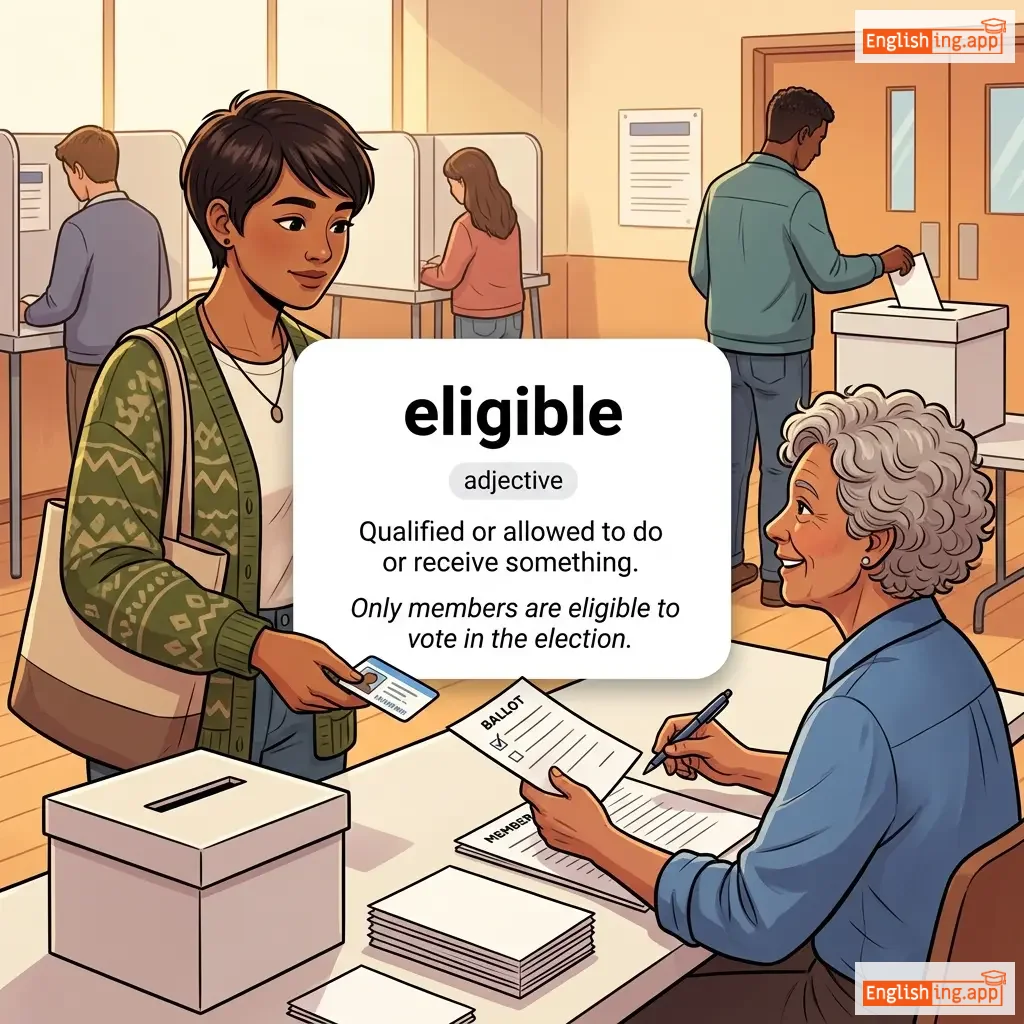
Qualified or allowed to do or receive something.
••••••
|
Only members are eligible to vote in the election. |
只有会员才能在选举中投票。
Zhiyou huiyuan cai neng zai xuanju zhong tou piao.
••••••
|
eligible bachelor |
a man considered suitable for marriage
••••••
|
合格的单身汉
hege de danshenhan
••••••
|
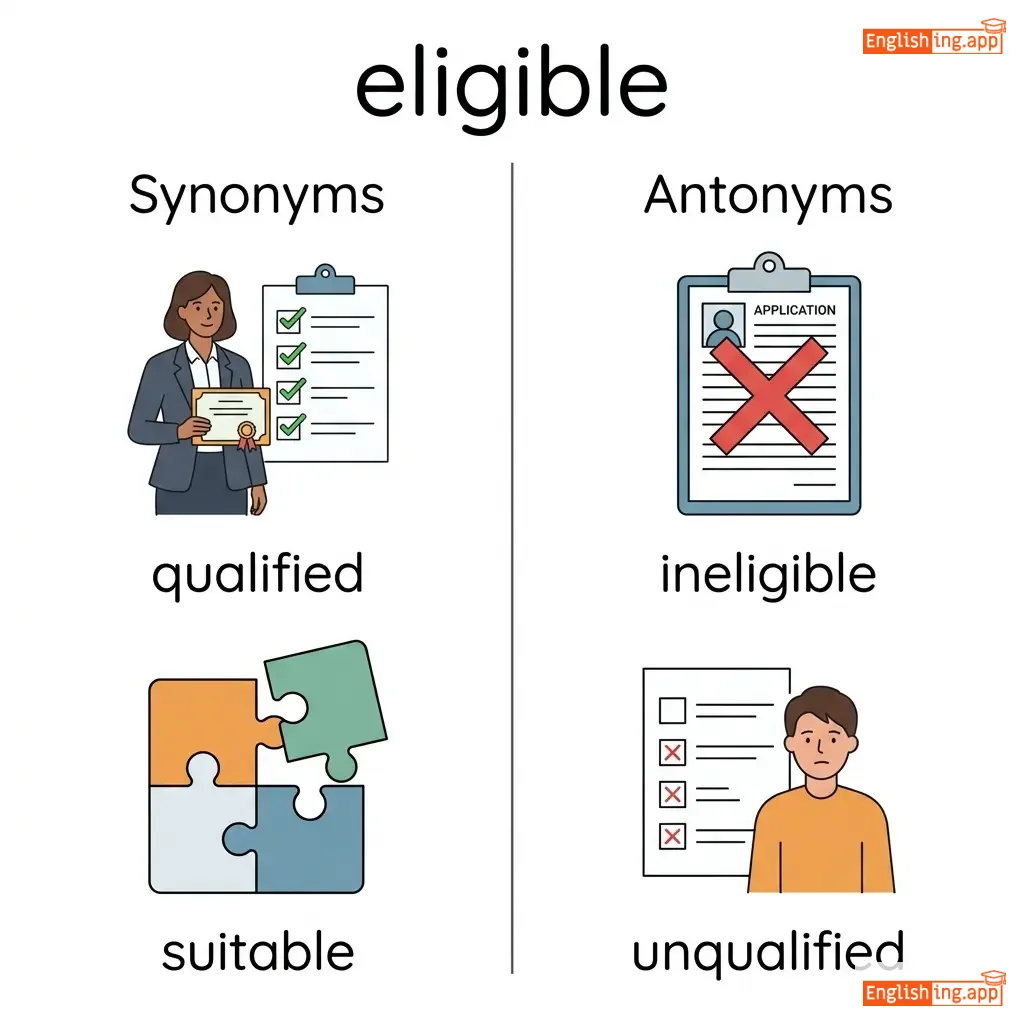
qualified, suitable, entitled, acceptable
••••••
|
ineligible, unqualified, unsuitable
••••••
|
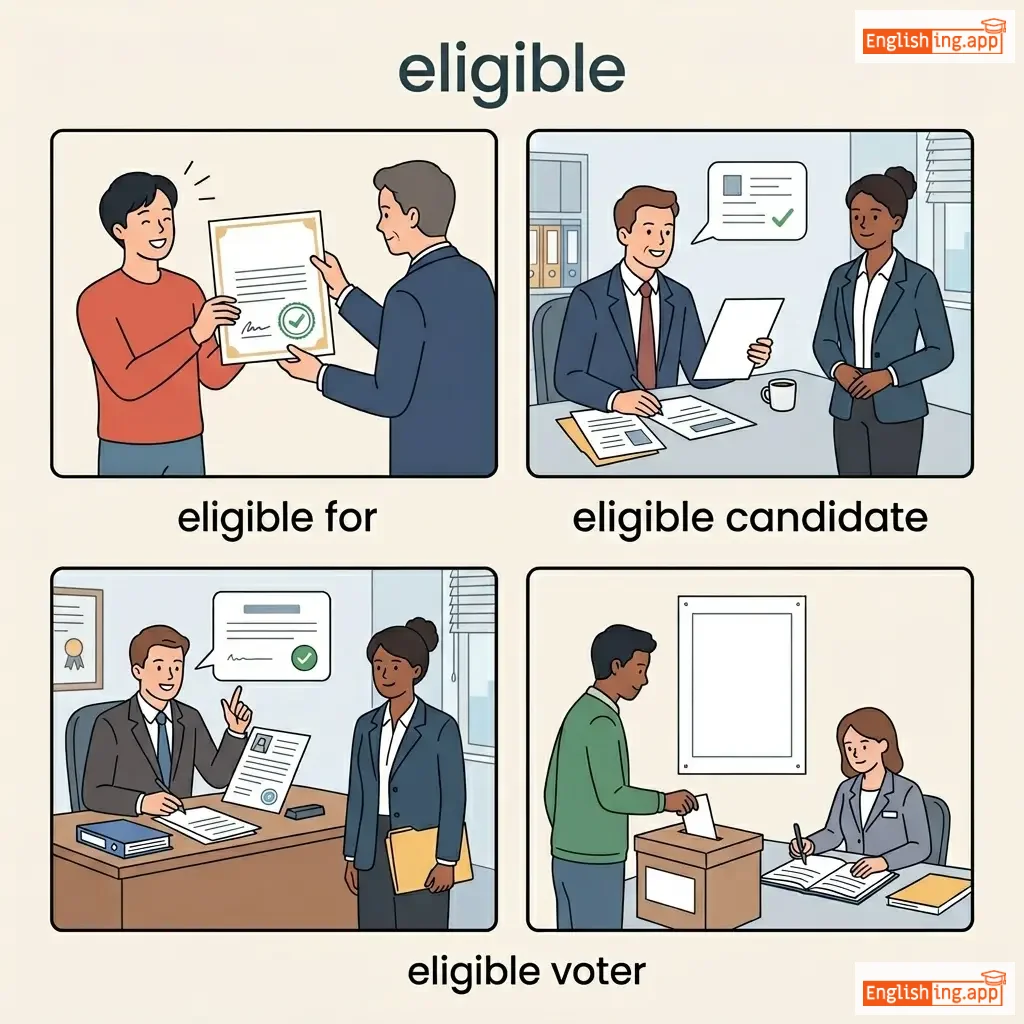
eligible for, eligible candidate, eligible voter, eligible participant
••••••
|
Eligible 就是当你符合条件时,你就有资格。
••••••
|
|
❌
••••••
|
/ɪˈlɪməˌneɪt/
verb
(伊利米内特)
••••••
|

|
消除
xiaochu
••••••
|
eliminated
伊利米内特德
••••••
|
eliminated
伊利米内特德
••••••
|
eliminates
伊利米内特斯
••••••
|
eliminating
伊利米内廷
••••••
|
To completely remove or get rid of something.
••••••
|
The new policy aims to eliminate corruption in the system.
新政策旨在消除系统中的腐败。
••••••
|
新政策旨在消除系统中的腐败。
xin zhengce zhi zai xiaochu xitong zhong de fubai.
••••••
|
eliminate the competition
消除竞争
••••••
|
to defeat or remove rivals
••••••
|
消除竞争
xiaochu jingzheng
••••••
|
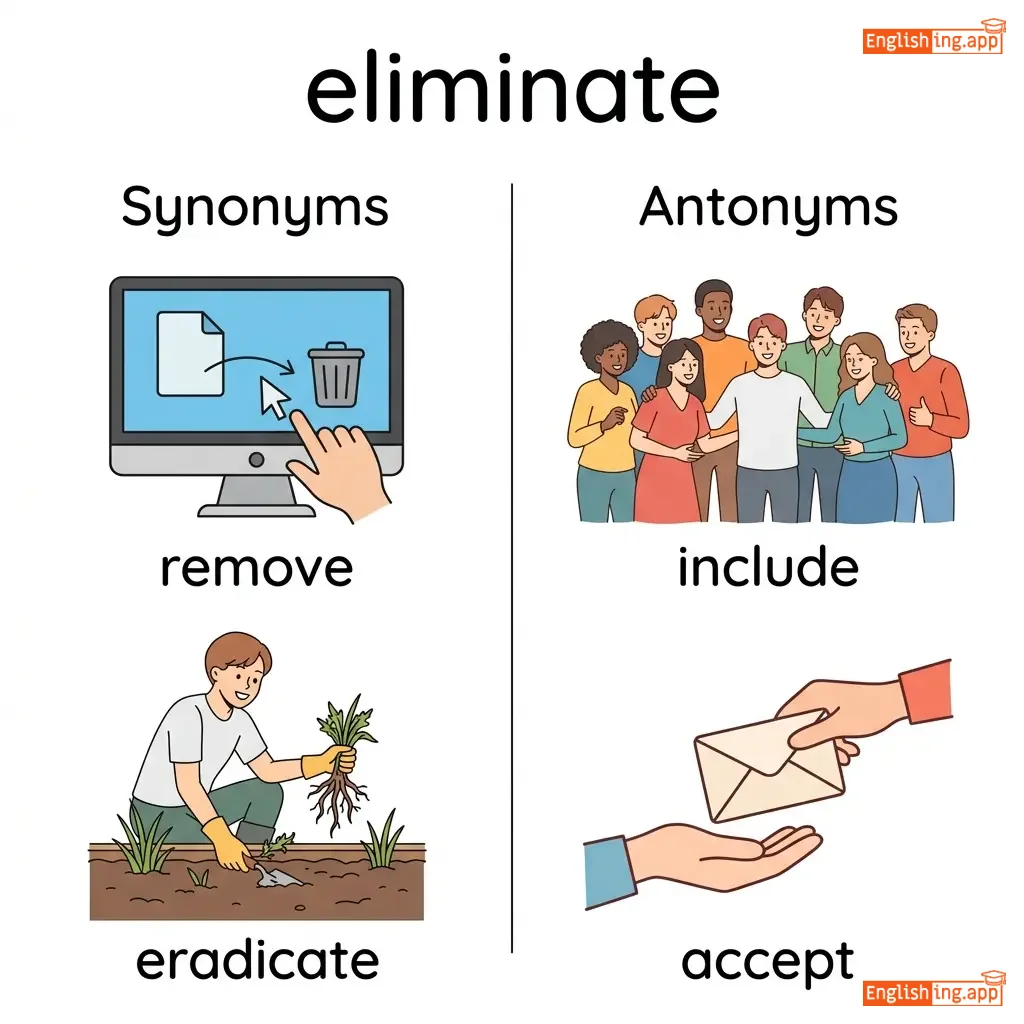
remove, eradicate, abolish, exterminate, wipe out
••••••
|
include, accept, retain
••••••
|
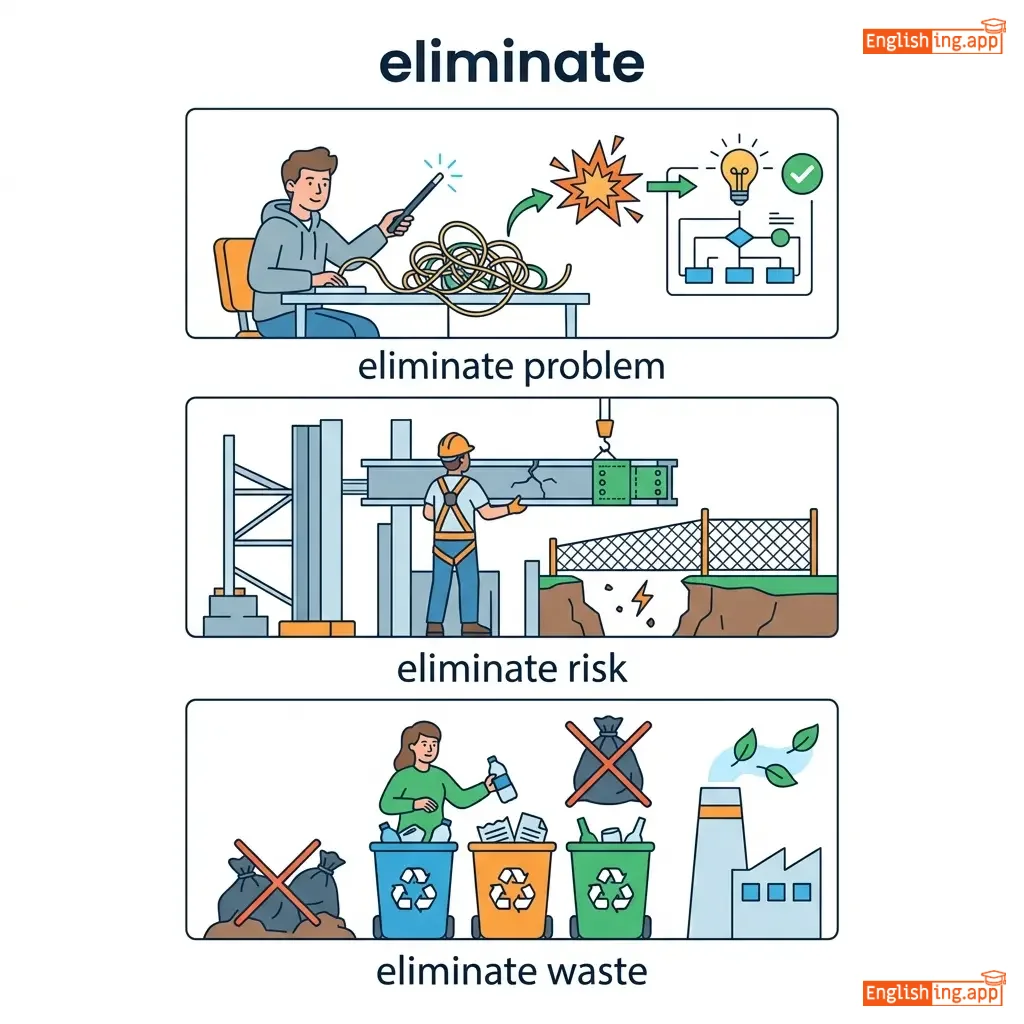
eliminate problem, eliminate risk, eliminate waste, eliminate need
••••••
|
如果你消除错误,你可以得到正确的答案。
••••••
|
|
❌
••••••
|
ɪˌlɪm.ɪˈneɪ.ʃən
noun
(消除)
••••••
|
|
消除
xiaochu
••••••
|
- •••••• | - •••••• | - •••••• | - •••••• |
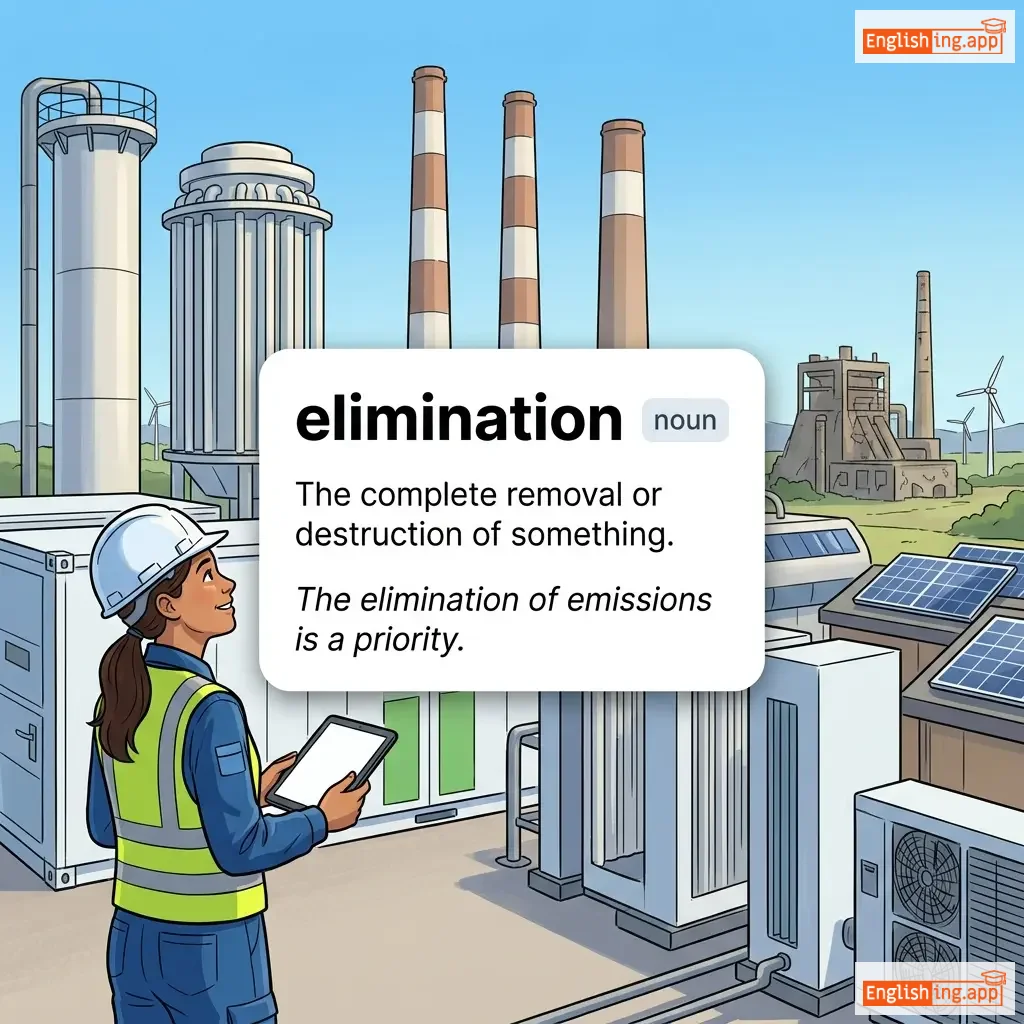
The complete removal or destruction of something.
••••••
|
The elimination of emissions is a priority.
消除排放是优先事项。
••••••
|
排放的消除是优先事项。
Paifang de xiaochu shi youxian shixiang.
••••••
|
- •••••• | - •••••• | - •••••• |
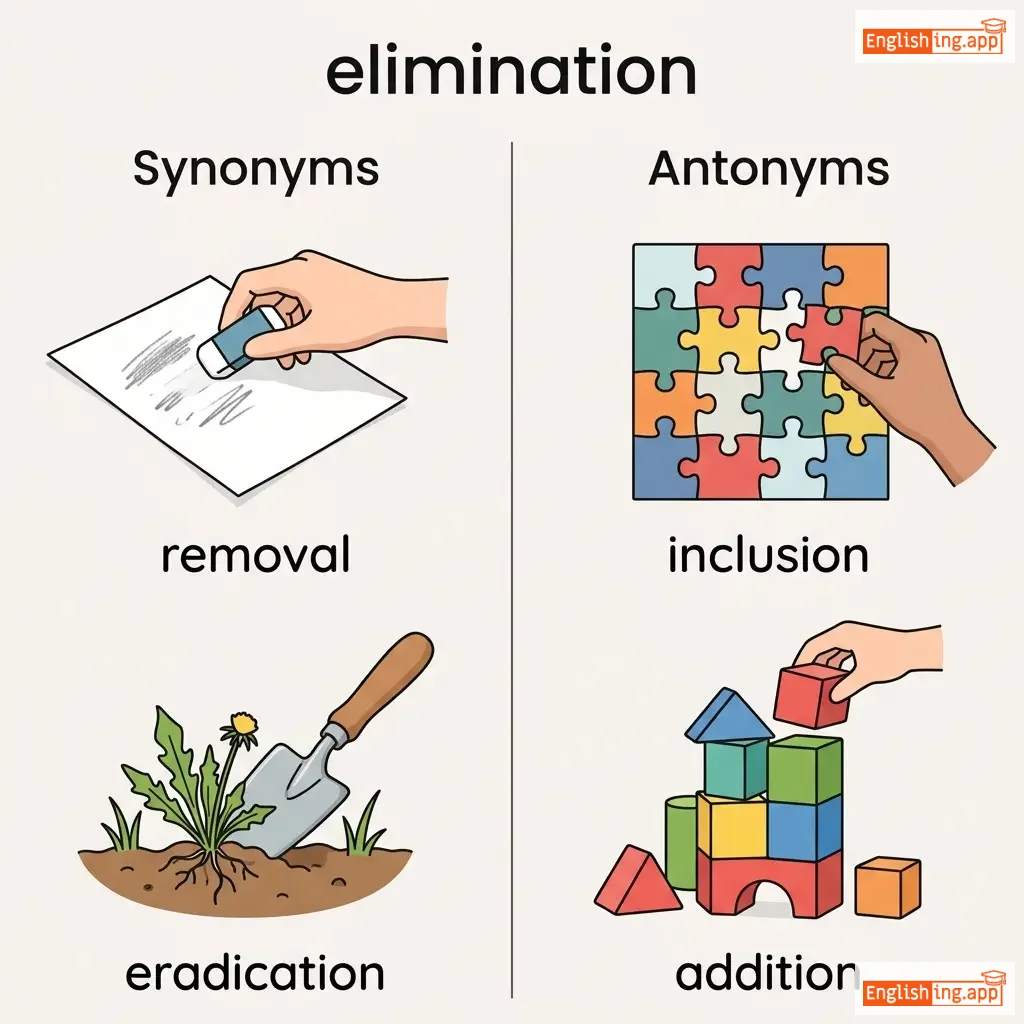
removal, eradication
••••••
|
inclusion, addition
••••••
|
- •••••• |
消除是指完全去除或销毁某物。
••••••
|
|
👑
••••••
|
/ɪˈliːt/ or /eɪˈliːt/
noun
(精英)
••••••
|
- •••••• |
精英
jing ying
••••••
|
- •••••• | - •••••• | - •••••• | - •••••• |
A select group that is superior in terms of ability or qualities.
••••••
|
Only the elite were invited to the exclusive event. |
只有精英才被邀请参加独家活动。
Zhi you jing ying cai bei yaoqing canjia dujia huodong.
••••••
|
social elite |
The most powerful or influential members of society.
••••••
|
社会精英
Shehui jing ying
••••••
|
aristocracy, upper class, nobility, high society
••••••
|
commoners, masses
••••••
|
elite group, elite class, elite athlete, elite institution
••••••
|
精英就像VIP一样,都是特别的存在。
••••••
|
|
➕
••••••
|
/ɛls/
adverb
(ěr sī)
••••••
|
- •••••• |
还有别的吗
hái yǒu bié de ma
••••••
|
- •••••• | - •••••• | - •••••• | - •••••• |
In addition; besides.
••••••
|
Is there anything else you need? |
你还需要其他的吗?
Nǐ hái xūyào qítā de ma?
••••••
|
or else |
Used to warn of unpleasant consequences if something is not done.
••••••
|
否则
fǒu zé
••••••
|
besides, otherwise, additionally, furthermore
••••••
|
nothing, none
••••••
|
anything else, someone else, somewhere else, nothing else
••••••
|
Else 意思是还有别的 ➕ - 就像 'anything else?' 意味着 '还有别的东西吗?'
••••••
|
|
🌍
••••••
|
/ˈɛlswɛr/
adverb
(ɛlswɛr)
••••••
|
- •••••• |
在别的地方
zài bié de dìfāng
••••••
|
- •••••• | - •••••• | - •••••• | - •••••• |
In, at, or to some other place.
••••••
|
If you can’t find it here, try looking elsewhere. |
如果你在这里找不到,试着去别的地方找找。
Rúguǒ nǐ zài zhèlǐ zhǎo bù dào, shìzhe qù bié de dìfāng zhǎo zhǎo.
••••••
|
- •••••• | - •••••• | - •••••• |
somewhere else, another place, away, outside
••••••
|
here, nearby
••••••
|
go elsewhere, look elsewhere, live elsewhere, seek elsewhere
••••••
|
Elsewhere 意思是别的地方 → 找不到这里就去别的地方找!
••••••
|
|
🚢
••••••
|
/ɪmˈbɑːrk/
verb
(embark)
••••••
|
- •••••• |
开始
kaishi
••••••
|
embarked
embarkd
••••••
|
embarked
embarkd
••••••
|
embarks
embarks
••••••
|
embarking
embarking
••••••
|
to begin a journey, project, or activity
••••••
|
She decided to embark on a new career in medicine.
她决定开始医学领域的新事业。
••••••
|
她决定开始医学领域的新事业。
Ta jueding kaishi yixia yixue lingyu de xin shiye.
••••••
|
embark on a journey
开始一段旅程
••••••
|
to start an important project or trip
••••••
|
开始一段旅程
kaishi yixia lvxing
••••••
|
start, commence, initiate, begin, undertake
••••••
|
end, finish, conclude
••••••
|
embark on a journey, embark on a project, embark on an adventure
••••••
|
船开始旅行
••••••
|
|
😳
••••••
|
/ɪmˈbærəs/
verb
••••••
|
- •••••• | - •••••• |
embarrassed
••••••
|
embarrassed
••••••
|
embarrasses
••••••
|
embarrassing
••••••
|
to cause someone to feel awkward, self-conscious, or ashamed
••••••
|
His rude comment really embarrassed her in front of everyone. |
- •••••• |
embarrass oneself |
to make oneself look foolish or awkward
••••••
|
- •••••• |
humiliate, shame, discomfort, mortify, disconcert
••••••
|
encourage, comfort, flatter
••••••
|
feel embarrassed, deeply embarrassed, embarrass someone
••••••
|
No •••••• |
|
😳
••••••
|
/ɪmˈbærəst/
adjective
(embarrassed)
••••••
|
- •••••• |
尴尬
gan ga
••••••
|
- •••••• | - •••••• | - •••••• | - •••••• |
feeling awkward, ashamed, or self-conscious about something
••••••
|
He felt embarrassed when he forgot her name. |
当他忘记她的名字时,他感到尴尬。
Dang ta wangji tade mingzi shi, ta gandao gan ga.
••••••
|
embarrassed silence |
an uncomfortable quietness after something awkward happens
••••••
|
尴尬的沉默
gan ga de chen mo
••••••
|
ashamed, awkward, uneasy, flustered, humiliated
••••••
|
confident, proud, relaxed
••••••
|
feel embarrassed, look embarrassed, deeply embarrassed, embarrassed smile
••••••
|
Embarrassed 代表尴尬 - 你在做演讲时忘记名字,感到非常尴尬。
••••••
|
|
😳
••••••
|
/ɪmˈbær.ə.sɪŋ/
adjective
(embarrassing)
••••••
|
- •••••• |
尴尬的; 令人不安的; 使羞愧的
gan'ga de
••••••
|
- •••••• | - •••••• | - •••••• | - •••••• |
causing shame or awkwardness; uncomfortable; humiliating
••••••
|
It was embarrassing when I forgot her name.
当我忘记她的名字时,那真是太尴尬了。
••••••
|
当我忘记她的名字时,那真是太尴尬了。
Dang wo wangji tade mingzi shi, na zhen shi tai gangan le.
••••••
|
- •••••• | - •••••• | - •••••• |
humiliating, awkward, shameful, uncomfortable
••••••
|
comfortable, pleasant, dignified, proud
••••••
|
embarrassing moment, embarrassing situation, embarrassing mistake
••••••
|
Imagine how 'embarrassing' it is to forget someone's name in Chinese, '尴尬的'.
••••••
|
|
😳
••••••
|
/ɪmˈbærəsmənt/
noun
(embarrassment)
••••••
|
- •••••• |
尴尬
ganga
••••••
|
- •••••• | - •••••• | - •••••• | - •••••• |
a feeling of self-consciousness, shame, or awkwardness
••••••
|
Her face turned red with embarrassment after the mistake. |
她因错误而羞愧得脸红了。
Ta yin cuowu er xiukui de lianhong le.
••••••
|
- •••••• | - •••••• | - •••••• |
shame, awkwardness, discomfort, humiliation
••••••
|
pride, confidence, composure
••••••
|
public embarrassment, social embarrassment, cause embarrassment
••••••
|
记住 '尴尬' 为 'embarrassment' - 错误后的尴尬感!
••••••
|
|
🏛️
••••••
|
/ˈɛmbəsi/
noun
(ēmbāxī)
••••••
|
- •••••• |
大使馆
dàshǐguǎn
••••••
|
- •••••• | - •••••• | - •••••• | - •••••• |
the official residence or offices of an ambassador
••••••
|
He works at the French embassy in Dhaka.
他在达卡的法国大使馆工作。
••••••
|
他在达卡的法国大使馆工作。
Tā zài Dākǎ de Fàguó dàshǐguǎn gōngzuò.
••••••
|
- •••••• | - •••••• | - •••••• |
consulate, diplomatic mission, embassy office
••••••
|
home, private office
••••••
|
foreign embassy, embassy staff, embassy office
••••••
|
大使馆 (embassy) 记住,那里住着大使!
••••••
|
|
📎
••••••
|
/ɪmˈbɛd/
verb
(embed)
••••••
|
- •••••• |
嵌入
qian ru
••••••
|
embedded
嵌入
••••••
|
embedded
嵌入
••••••
|
embeds
嵌入
••••••
|
embedding
嵌入中
••••••
|
to fix something firmly into a surrounding mass or context
••••••
|
The journalist was embedded with the military unit.
记者与军事单位嵌入。
••••••
|
记者与军事单位嵌入。
Jizhe yu junshi danwei qianru.
••••••
|
embed in memory
嵌入记忆
••••••
|
to remain strongly remembered
••••••
|
嵌入记忆
Qian ru ji yi
••••••
|
implant, insert, fix, ingrain, lodge
••••••
|
remove, extract, detach
••••••
|
embed code, embed in, embedded system, deeply embedded
••••••
|
Embed 就是把东西嵌入到周围的环境中。
••••••
|
|
🌟
••••••
|
/ɪmˈbɒdi/
verb
(艾姆博迪)
••••••
|
- •••••• |
体现
tixian
••••••
|
embodied
艾姆博迪德
••••••
|
embodied
艾姆博迪德
••••••
|
embodies
艾姆博迪兹
••••••
|
embodying
艾姆博迪英
••••••
|
To give tangible or visible form to an idea, quality, or feeling.
••••••
|
She embodies the spirit of generosity.
她体现了慷慨的精神。
••••••
|
她体现了慷慨的精神。
Ta tixian le kangkai de jingshen.
••••••
|
- •••••• | - •••••• | - •••••• |
personify, represent, manifest, express, exemplify
••••••
|
conceal, obscure, suppress
••••••
|
embody the spirit, embodies values, embodies the idea, embody tradition
••••••
|
Embody 就是将一个想法装进身体,给它具象的外形。
••••••
|
|
🤗
••••••
|
/ɛmˈbreɪs/
verb
(恩布瑞斯)
••••••
|
- •••••• |
拥抱
yōngbào
••••••
|
embraced
恩布瑞斯德
••••••
|
embraced
恩布瑞斯德
••••••
|
embraces
恩布瑞斯斯
••••••
|
embracing
恩布瑞斯英
••••••
|
to hold someone closely in your arms, or to accept or support something willingly
••••••
|
They embraced each other after a long separation.
他们在长时间的分离后相拥而泣。
••••••
|
他们在长时间的分离后相拥而泣。
Tāmen zài cháng shíjiān de fēnlí hòu xiāngyōng ér qì.
••••••
|
embrace change
接受变化
••••••
|
to accept new ideas or situations willingly
••••••
|
接受变化
jiēshòu biànhuà
••••••
|
hug, accept, adopt, welcome, support
••••••
|
reject, exclude, avoid
••••••
|
embrace opportunity, embrace culture, embrace diversity, embrace technology
••••••
|
Brace 代表拥抱,Em + brace → 拥抱
••••••
|
|
🌅
••••••
|
/ɪˈmɜːrdʒ/
verb
••••••
|
- •••••• | - •••••• |
emerged
••••••
|
emerged
••••••
|
emerges
••••••
|
emerging
••••••
|
to come into view or become apparent; to arise or appear from something
••••••
|
New opportunities will emerge as the industry grows. |
- •••••• |
emerge from the shadows |
to become known or visible after being hidden or unknown
••••••
|
- •••••• |
appear, arise, surface, materialize, develop
••••••
|
disappear, vanish, fade
••••••
|
emerge from, emerge as, clearly emerge, new trends emerge
••••••
|
No •••••• |
|
🌱
••••••
|
/ɪˈmɜːrdʒəns/
noun
(emáo jìng)
••••••
|
- •••••• |
出现
chūxiàn
••••••
|
- •••••• | - •••••• | - •••••• | - •••••• |
the process of coming into view, existence, or prominence
••••••
|
The emergence of new technologies has transformed communication. |
新技术的出现改变了沟通方式。
Xīn jìshù de chūxiàn gǎibiànle gōutōng fāngshì.
••••••
|
- •••••• | - •••••• | - •••••• |
appearance, rise, development, arrival
••••••
|
disappearance, decline
••••••
|
emergence of, sudden emergence, gradual emergence
••••••
|
Emergence 意味着新的东西的 '出现'。
••••••
|
|
🚑
••••••
|
/ɪˈmɜrdʒənsi/
noun
(yīmàzhènxì)
••••••
|
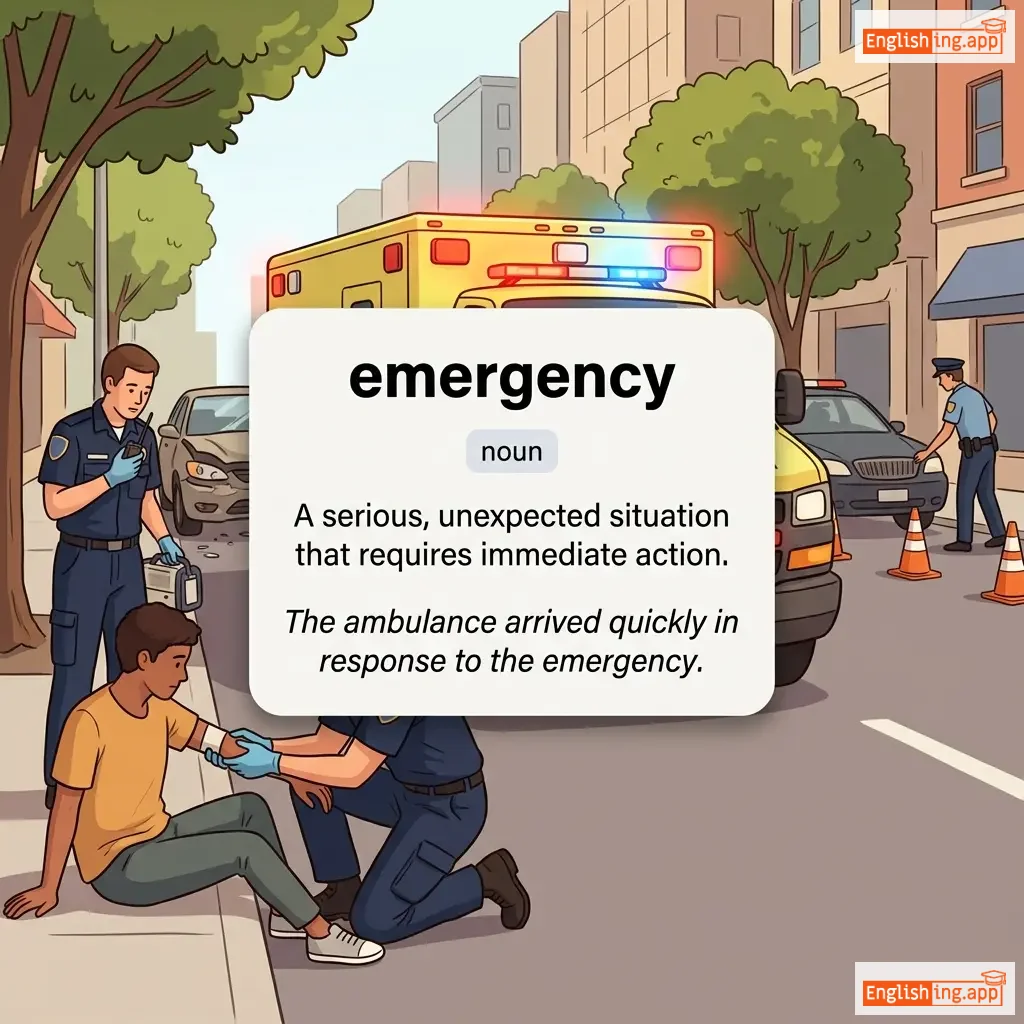
|
紧急情况
jinji qingkuang
••••••
|
- •••••• | - •••••• | - •••••• | - •••••• |
A serious, unexpected situation that requires immediate action.
••••••
|
The ambulance arrived quickly in response to the emergency. |
救护车迅速赶到应对紧急情况。
Jiuhu che xunsu gandao yingdui jinji qingkuang.
••••••
|
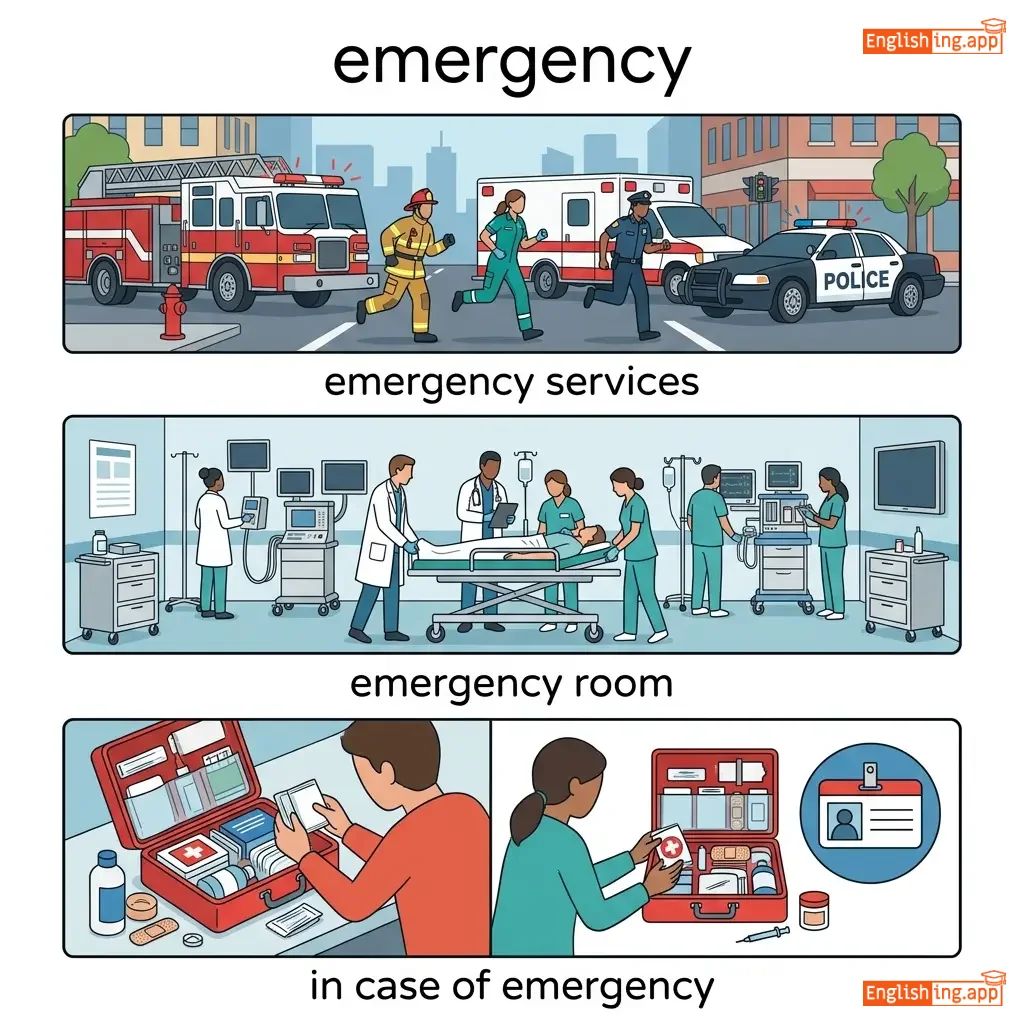
emergency room |
A hospital department where urgent cases are treated.
••••••
|
急诊室
Jizhen shi
••••••
|
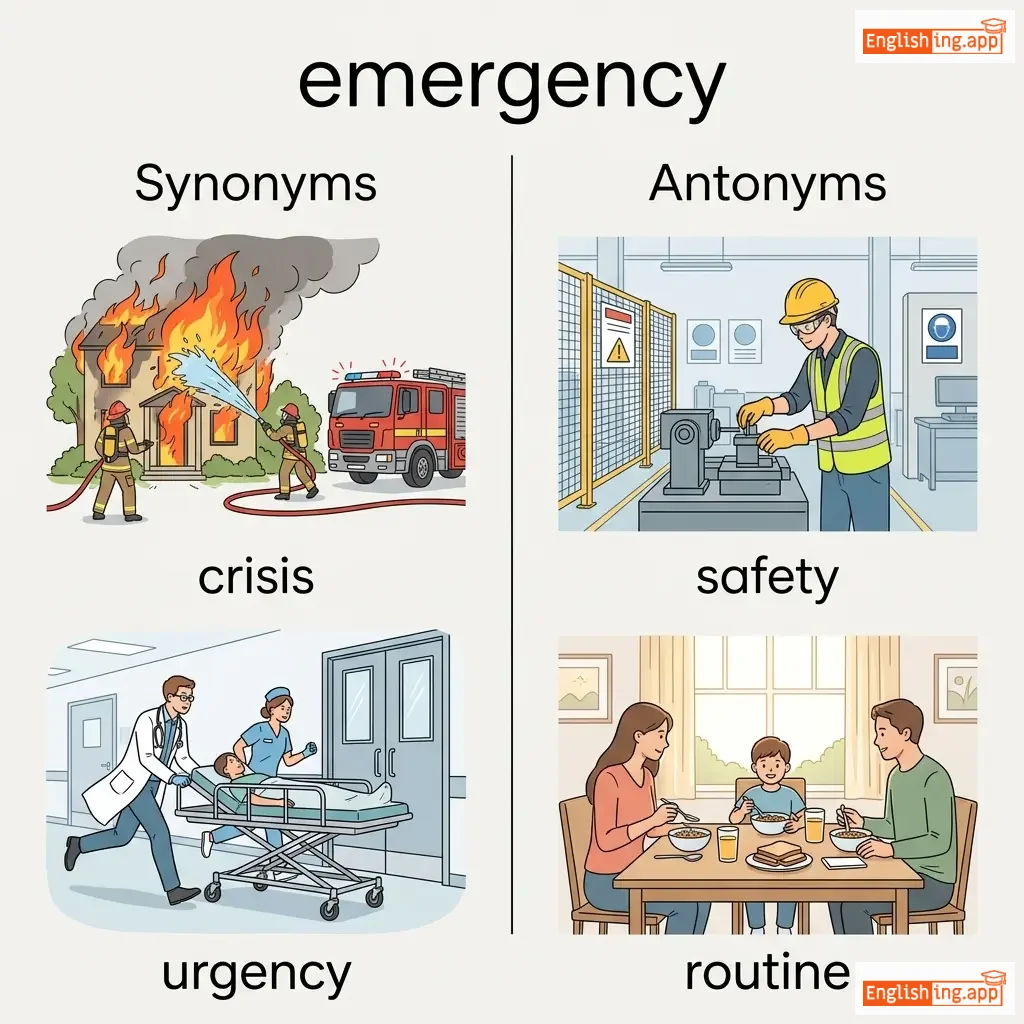
crisis, urgency, disaster, accident
••••••
|
safety, routine
••••••
|
emergency services, emergency room, in case of emergency, emergency exit
••••••
|
Emergency = Jinji (紧急) → 紧急时刻,马上行动!
••••••
|
|
💨
••••••
|
/ɪˈmɪʃən/
noun
(emission)
••••••
|
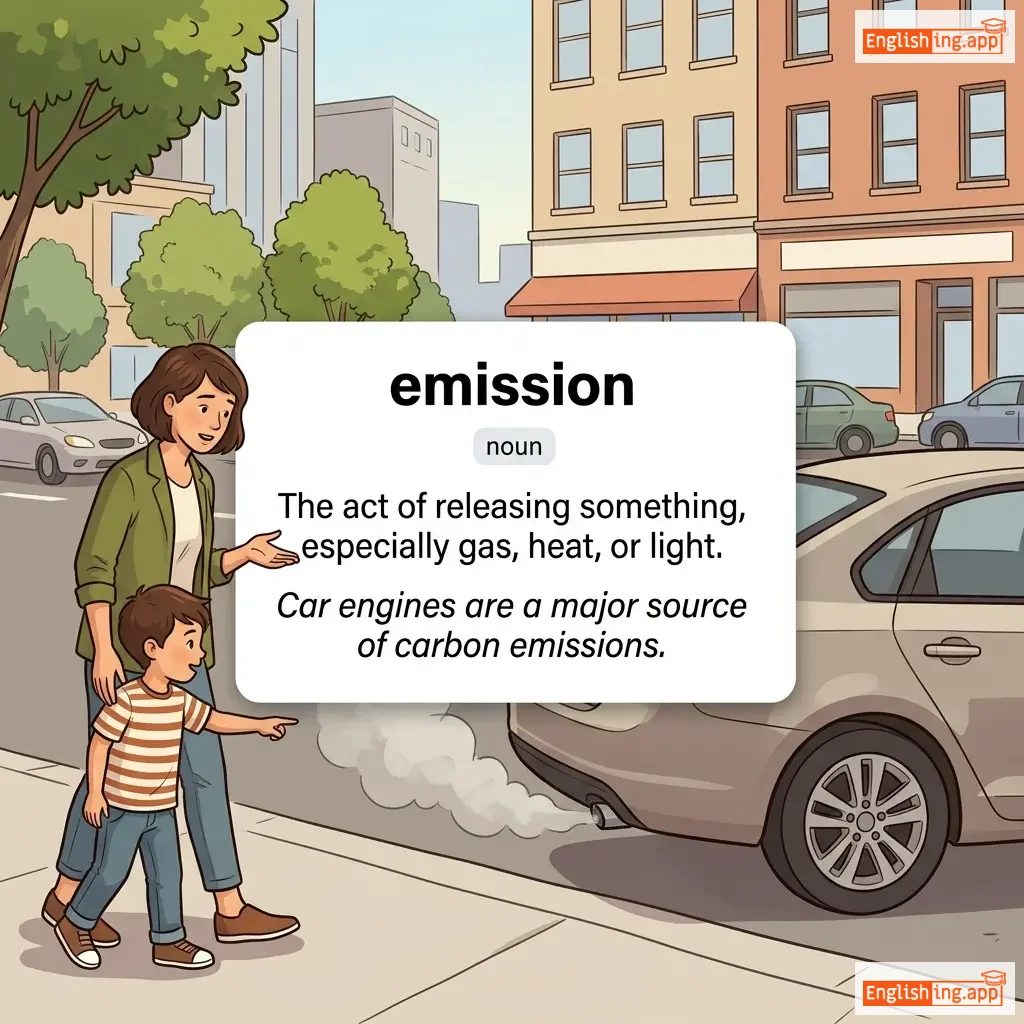
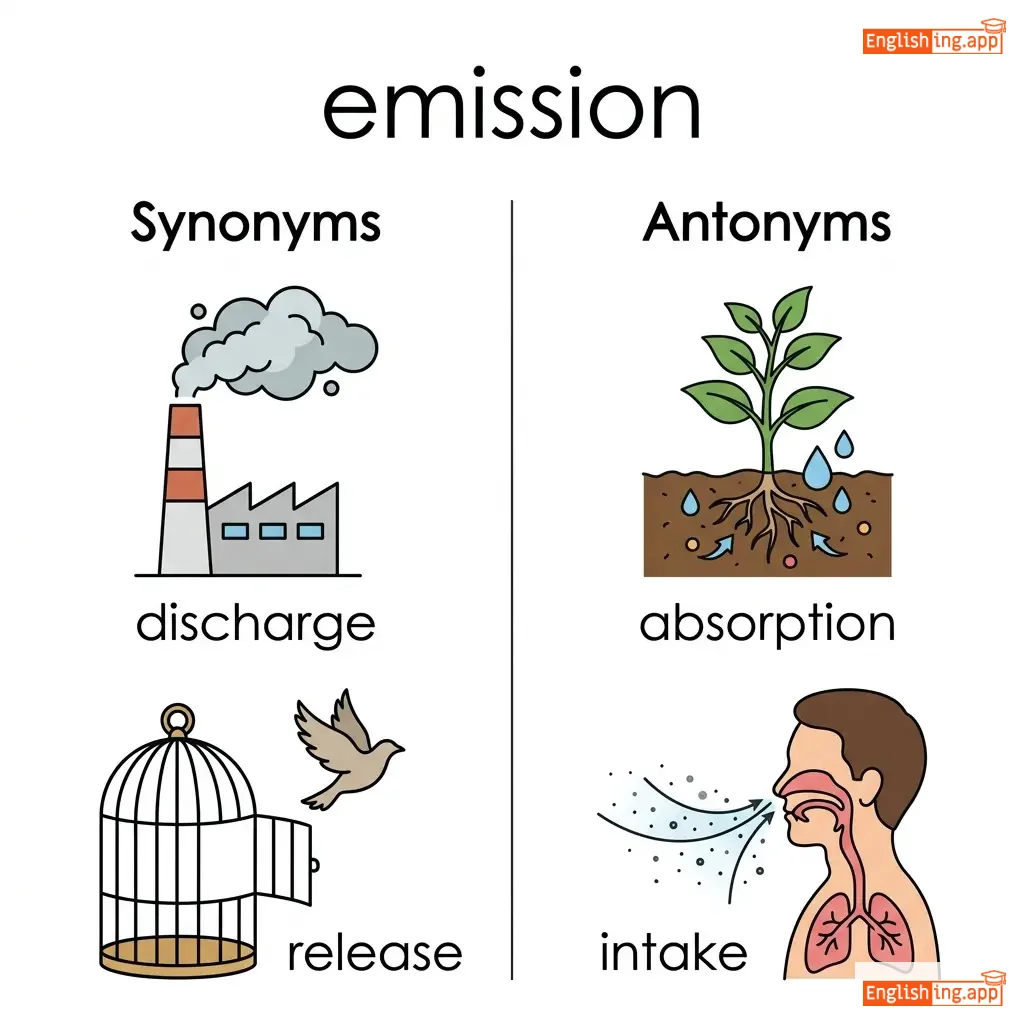
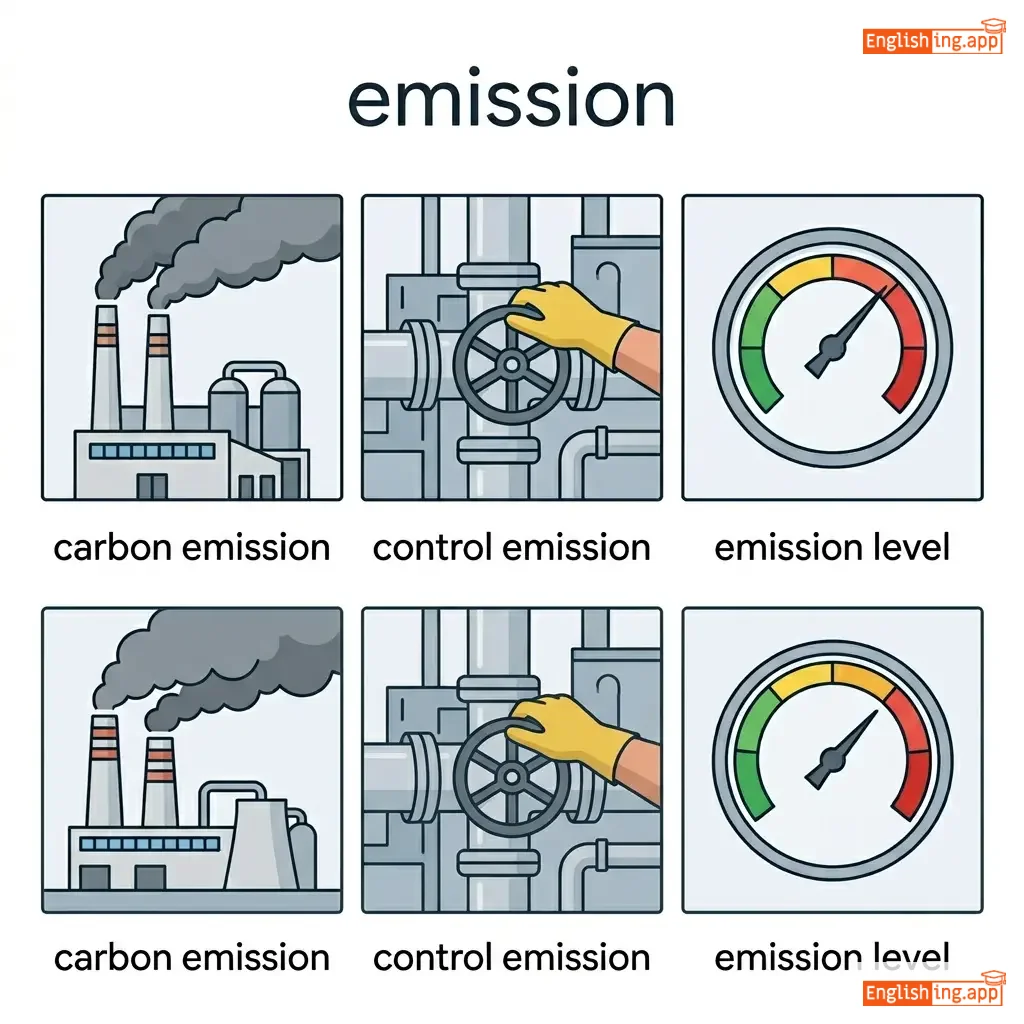
|
排放
paifang
••••••
|
- •••••• | - •••••• | - •••••• | - •••••• |
The act of releasing something, especially gas, heat, or light.
••••••
|
Car engines are a major source of carbon emissions. |
汽车发动机是碳排放的主要来源。
Qiche fadongji shi tan paifang de zhuyao laiyuan.
••••••
|
greenhouse gas emissions |
Gases released into the atmosphere that contribute to climate change.
••••••
|
温室气体排放
wenshiti qiti paifang
••••••
|
discharge, release, output, radiation
••••••
|
absorption, intake
••••••
|
carbon emission, control emission, emission level, reduce emissions
••••••
|
Emission = Emit + fang → Emit 表示排出,排放表示释放。
••••••
|
|
💨
••••••
|
/ɪˈmɪt/
verb
(艾米特)
••••••
|
- •••••• |
发射
Fāshè
••••••
|
emitted
艾米特过
••••••
|
emitted
艾米特过
••••••
|
emits
艾米特斯
••••••
|
emitting
艾米特会
••••••
|
to send out something such as light, heat, sound, or gas
••••••
|
The factory emits smoke into the atmosphere.
工厂将烟雾排放到大气中。
••••••
|
工厂将烟雾排放到大气中。
Gōngchǎng jiāng yānwù páifàng dào dàqì zhōng.
••••••
|
emit a sigh
发出叹息
••••••
|
to let out a sound of relief or frustration
••••••
|
发出叹息
Fāchū tànxī
••••••
|
release, discharge, exhale, radiate, give off
••••••
|
absorb, contain, withhold
••••••
|
emit light, emit sound, emit radiation, emit gas
••••••
|
发射,像工厂排放烟雾。
••••••
|
|
❤️
••••••
|
/ɪˈmoʊʃən/
noun
(情感)
••••••
|
- •••••• |
情感
qinggan
••••••
|
- •••••• | - •••••• | - •••••• | - •••••• |
A strong feeling such as happiness, sadness, anger, or fear.
••••••
|
She was overwhelmed with emotion when she heard the news. |
她在听到消息时情感涌上心头。
Ta zai tingdao xiaoxi shi qinggan yong shang xintou.
••••••
|
mixed emotions |
Conflicting feelings about a situation.
••••••
|
复杂的情感
Fuza de qinggan
••••••
|
feeling, sentiment, passion, mood
••••••
|
apathy, indifference
••••••
|
show emotion, strong emotion, control emotion, express emotion
••••••
|
Emotion = E (内心的) + motion (运动) → 情感在我们内心不断运动。
••••••
|
|
😭
••••••
|
/ɪˈmoʊʃənəl/
adjective
(情绪的)
••••••
|
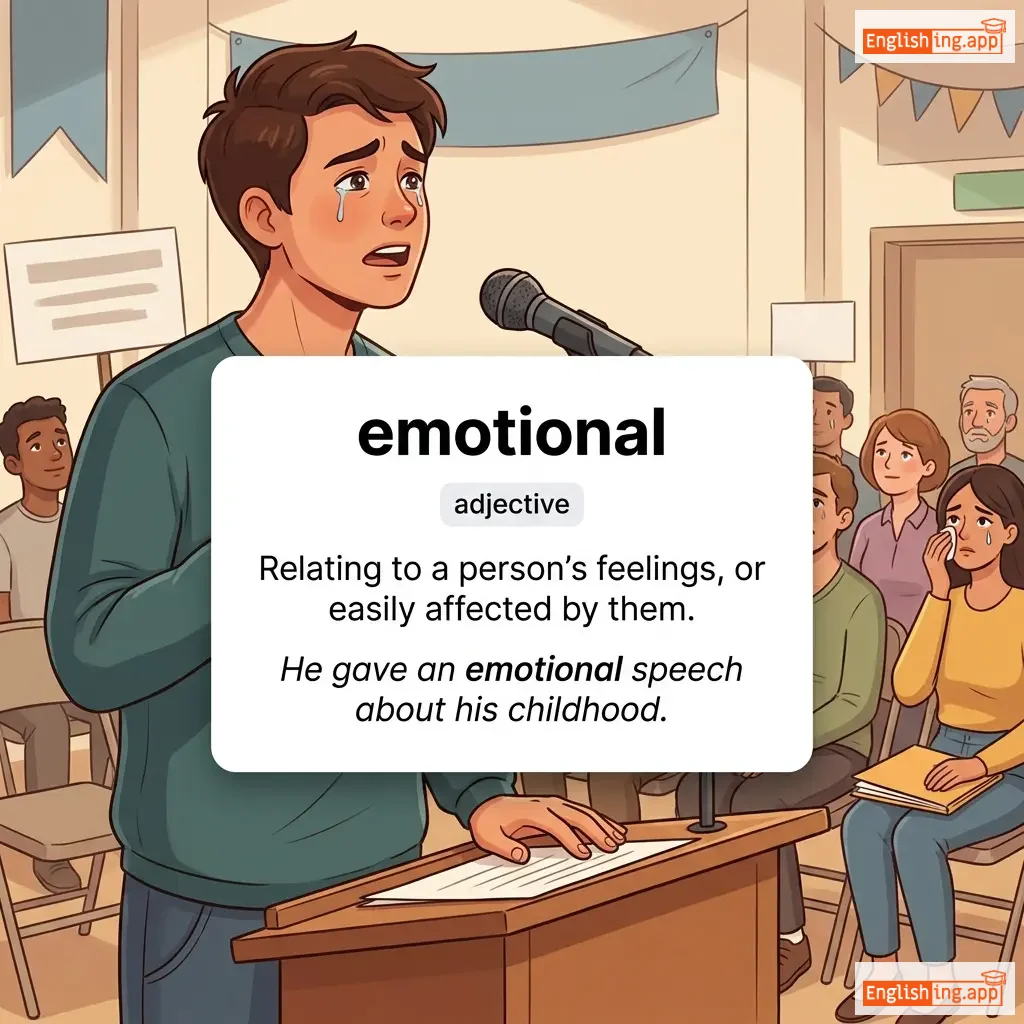
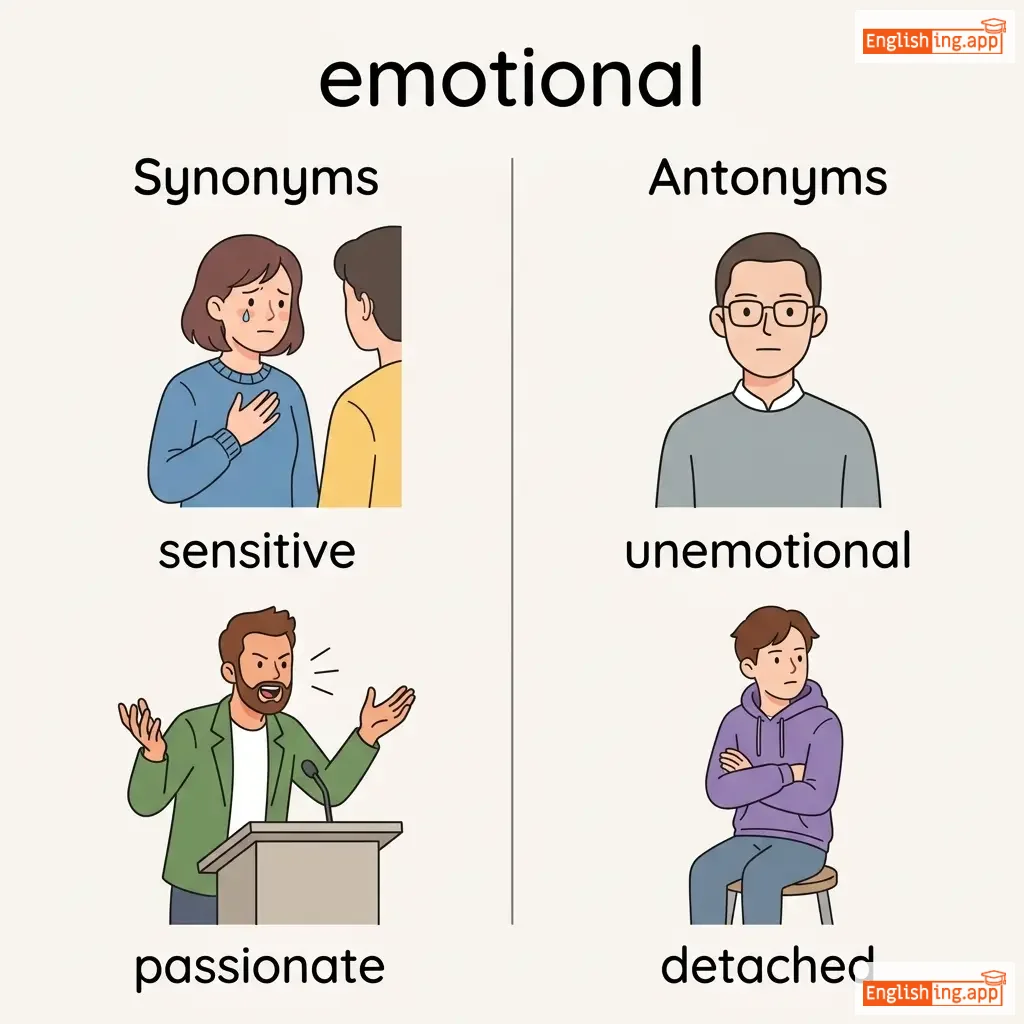

|
情绪的
qíngxù de
••••••
|
- •••••• | - •••••• | - •••••• | - •••••• |
Relating to a person’s feelings, or easily affected by them.
••••••
|
He gave an emotional speech about his childhood. |
他发表了关于自己童年的情绪化演讲。
Tā fābiǎo le guānyú zìjǐ tóngnián de qíngxù huà yǎnjiǎng.
••••••
|
emotional support |
Comfort and reassurance provided to someone in distress.
••••••
|
情绪支持
qíngxù zhīchí
••••••
|
sensitive, passionate, sentimental, expressive
••••••
|
unemotional, detached, indifferent
••••••
|
emotional speech, emotional moment, emotional response, emotional support
••••••
|
Emotional = Emotion + al → 与情感相关 → 情绪的
••••••
|
|
💓
••••••
|
/ɪˈməʊʃənəli/
adverb
(情感上)
••••••
|
- •••••• |
情感上
qínggǎn shàng
••••••
|
- •••••• | - •••••• | - •••••• | - •••••• |
in a way that relates to a person's feelings or emotions
••••••
|
She became emotionally attached to her pet. |
她变得情感上依赖她的宠物。
Tā biàn dé qínggǎn shàng yīlài tā de chǒngwù.
••••••
|
emotionally drained |
feeling exhausted due to strong emotional experiences
••••••
|
情感上疲惫
qínggǎn shàng píbèi
••••••
|
feelingly, sensitively, passionately, sentimentally, affectively
••••••
|
coldly, indifferently
••••••
|
emotionally strong, emotionally stable, emotionally attached, emotionally drained
••••••
|
Emotion + ally = 与某人或某事建立情感上的联系。
••••••
|
|
🔍
••••••
|
/ˈɛmfəsɪs/
noun
(强加)
••••••
|
|
重点
zhòngdiǎn
••••••
|
- •••••• | - •••••• | - •••••• | - •••••• |
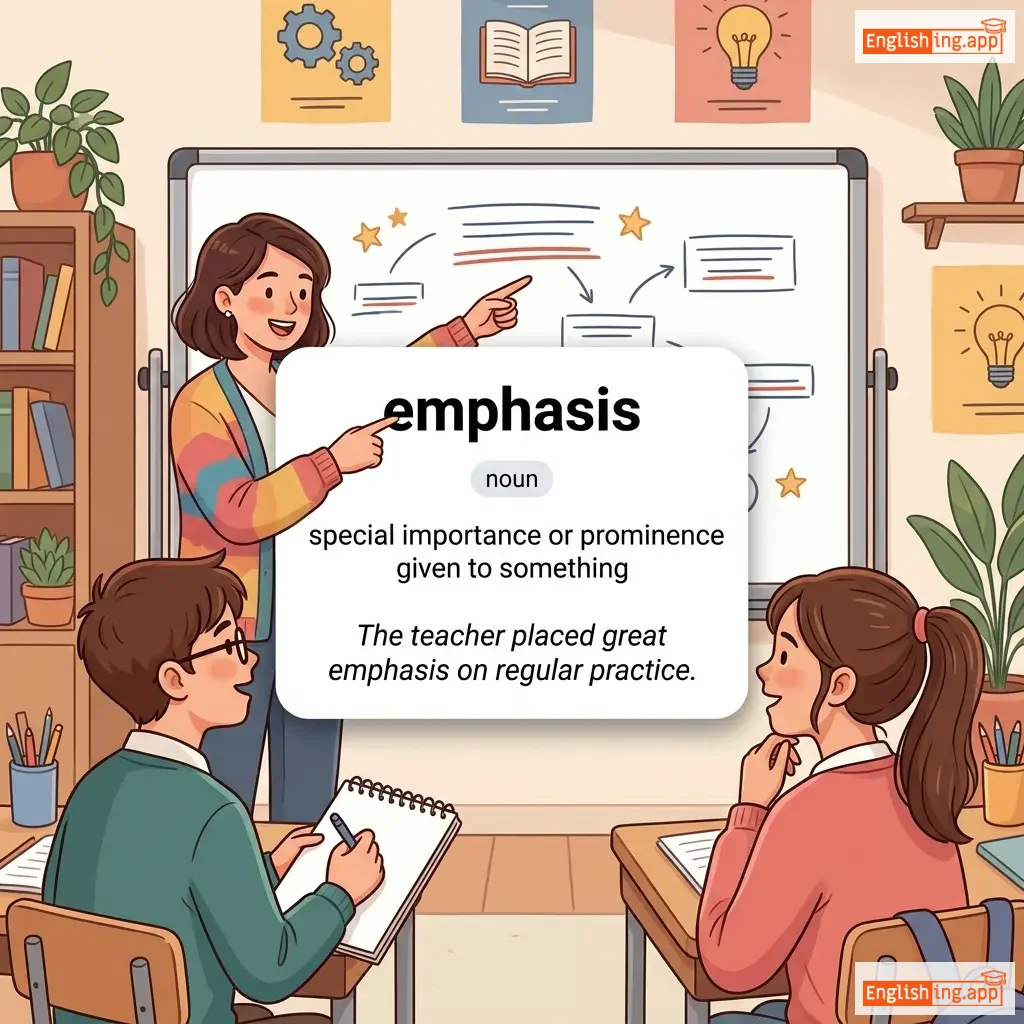
special importance or prominence given to something
••••••
|
The teacher placed great emphasis on regular practice. |
老师强调了定期练习的重要性。
lǎoshī qiángdiàole dìngqī liànxí de zhòngyào xìng.
••••••
|
place emphasis on |
to give special importance to something
••••••
|
给予重点
jǐ yǔ zhòngdiǎn
••••••
|
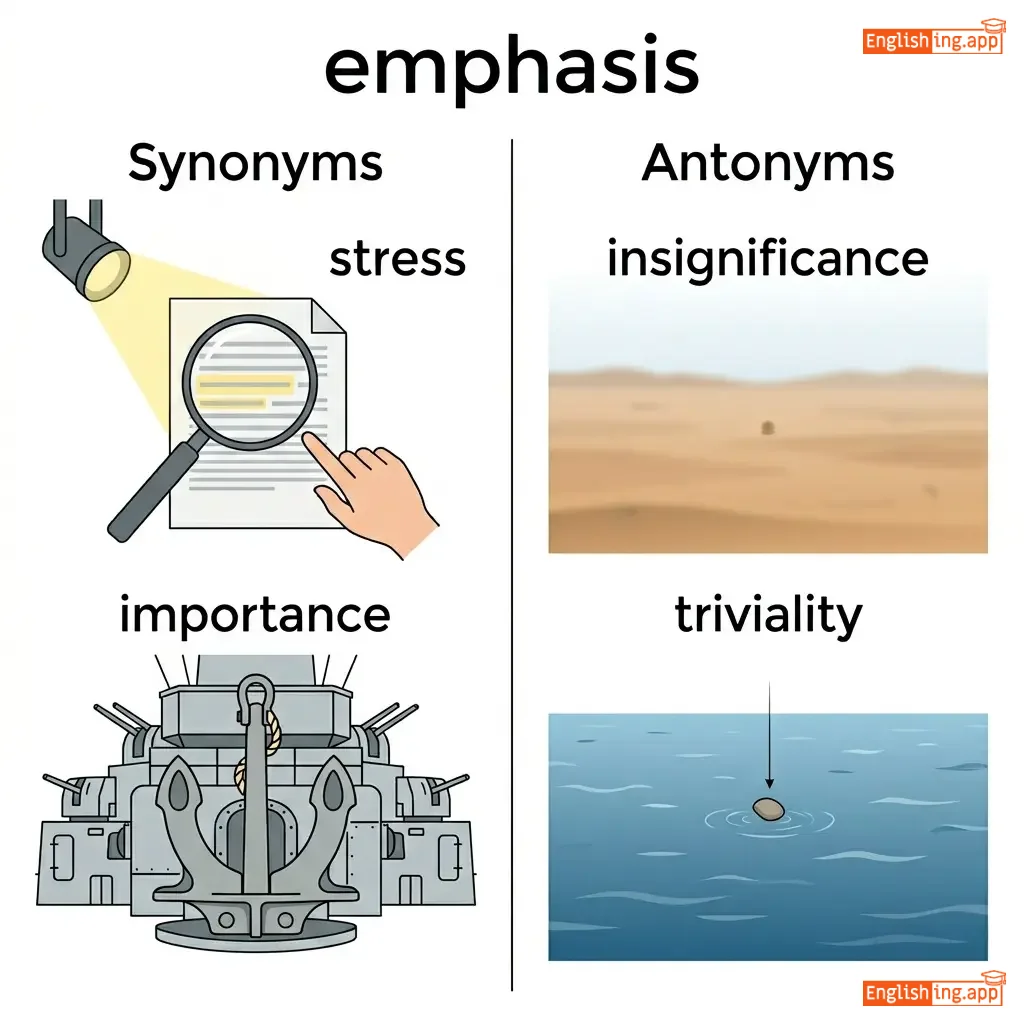
stress, importance, weight, significance, priority
••••••
|
insignificance, triviality
••••••
|
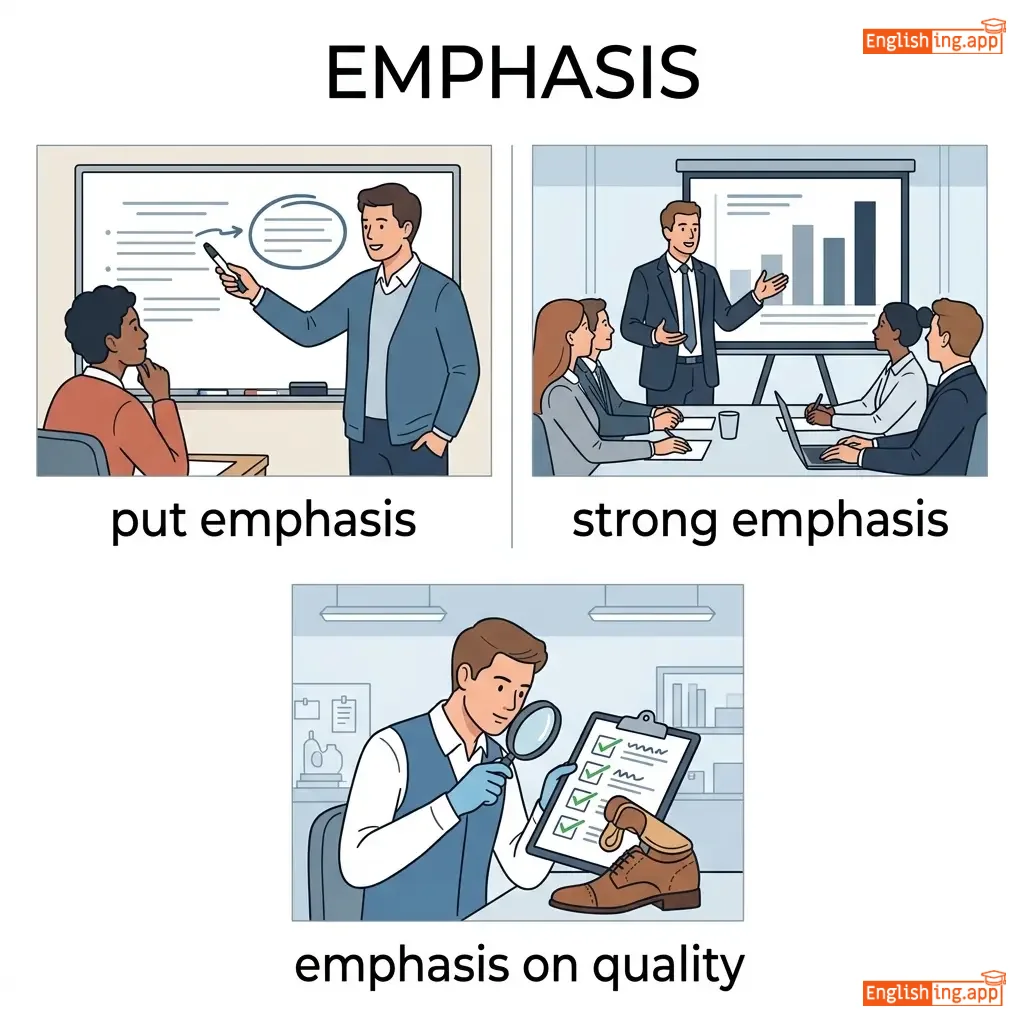
put emphasis, strong emphasis, emphasis on quality, emphasis added
••••••
|
用重点来表示强加的意思,重点是让人重视的事物。
••••••
|
|
📢
••••••
|
/ˈɛmfəsaɪz/
verb
(èmfásáiz)
••••••
|
|
强调
qiángdiào
••••••
|
emphasized
èmfásáizd
••••••
|
emphasized
èmfásáizd
••••••
|
emphasizes
èmfásáizes
••••••
|
emphasizing
èmfásáizing
••••••
|
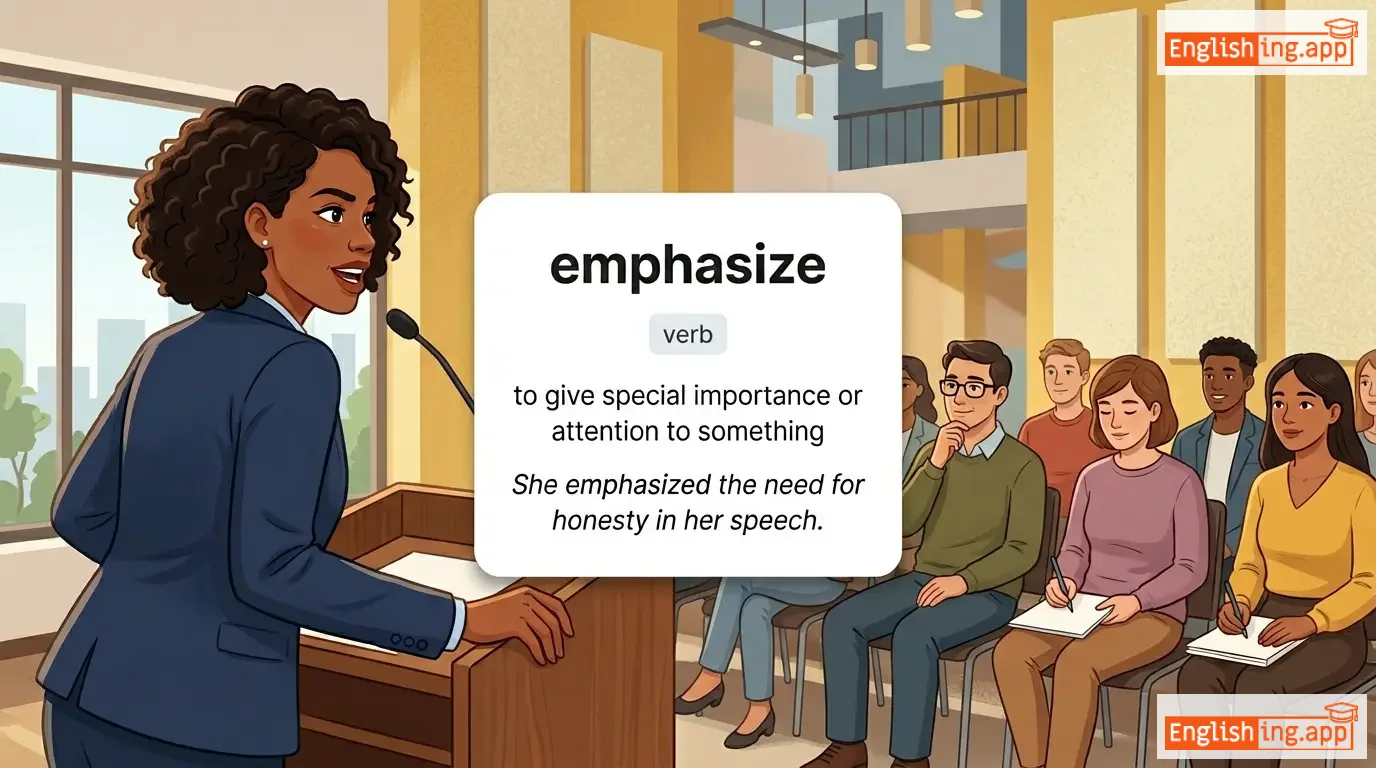
to give special importance or attention to something
••••••
|
She emphasized the need for honesty in her speech.
她强调了她演讲中诚实的重要性。
••••••
|
她强调了她演讲中诚实的重要性。
Tā qiángdiào le tā yǎnjiǎng zhōng chéngshí de zhòngyào xìng.
••••••
|
cannot emphasize enough
我们无法强调得足够多
••••••
|
used to strongly stress the importance of something
••••••
|
我们无法强调得足够多
Wǒmen wúfǎ qiángdiào dé zúgòu duō
••••••
|
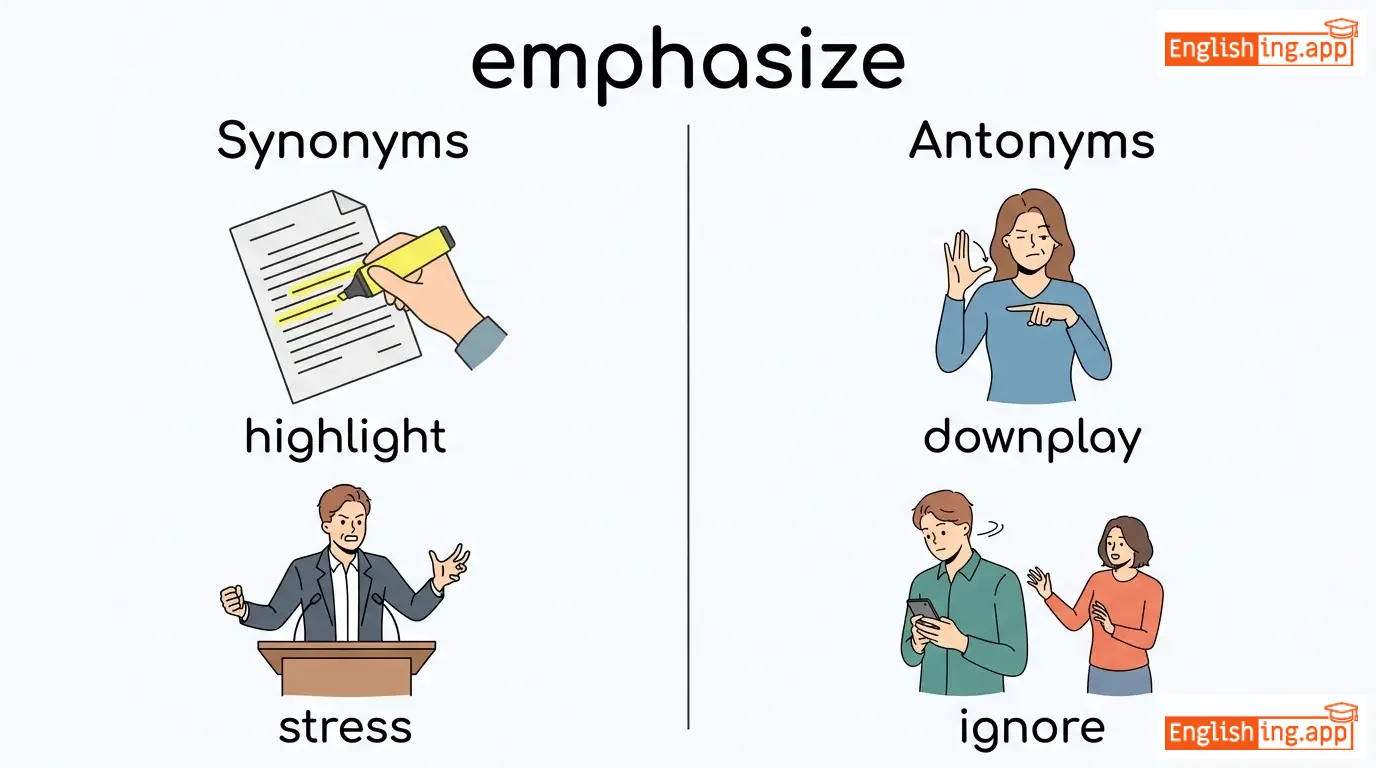
highlight, stress, underline, accentuate, point out
••••••
|
downplay, ignore, overlook
••••••
|
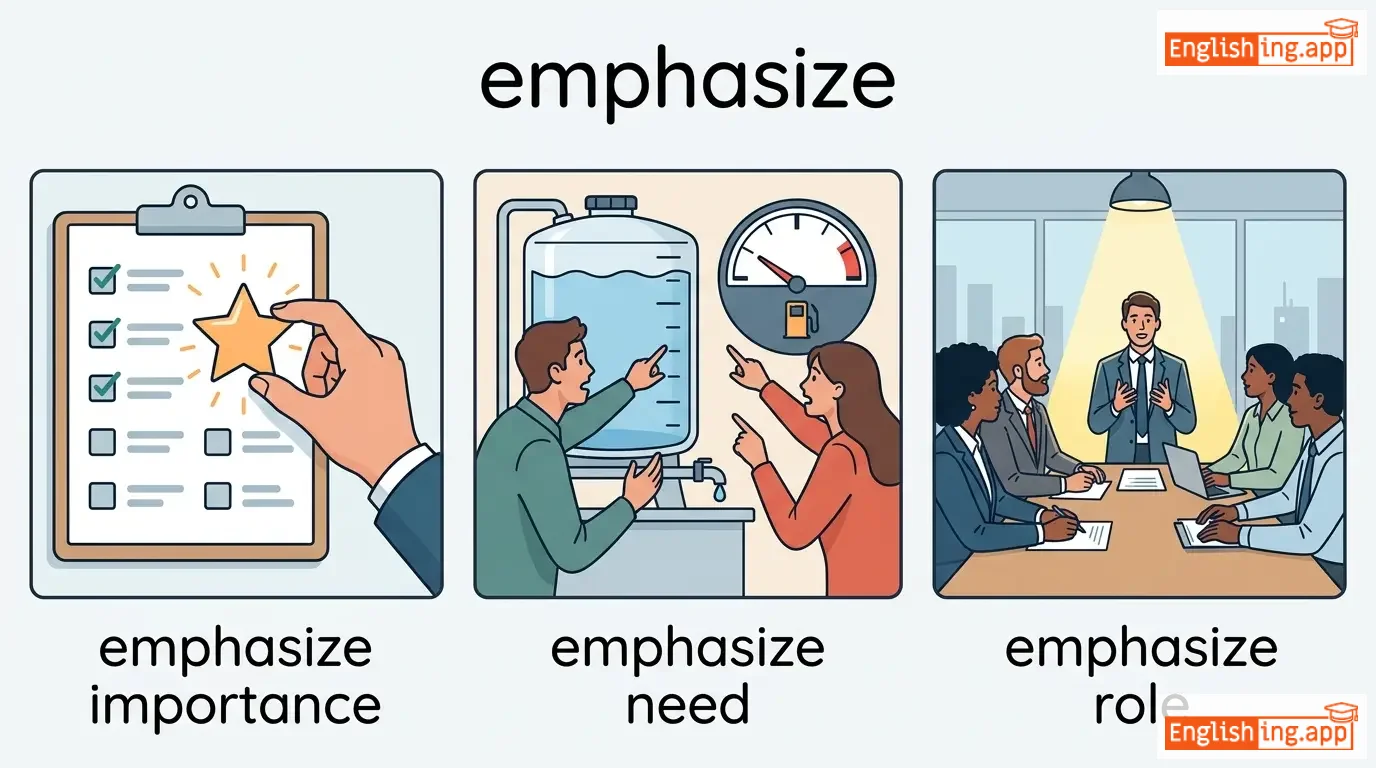
emphasize importance, emphasize need, emphasize role, emphasize strongly
••••••
|
强调让事情变得更重要,就像写加粗字一样!
••••••
|
|
🏰
••••••
|
/ˈempaɪər/
noun
(ài mǐ ér)
••••••
|
- •••••• |
帝国
dìguó
••••••
|
- •••••• | - •••••• | - •••••• | - •••••• |
a group of countries or regions controlled by one ruler or government
••••••
|
The Roman Empire lasted for centuries. |
罗马帝国延续了几个世纪。
Luómǎ dìguó yánxùle jǐ gè shìjì.
••••••
|
build an empire |
to create a large and powerful organization or business
••••••
|
建立帝国
jiànlì dìguó
••••••
|
kingdom, realm, dominion, federation, sovereignty
••••••
|
colony, dependency
••••••
|
Roman empire, British empire, build an empire, vast empire
••••••
|
帝国像'帝'(帝王),控制所有领域的权利。
••••••
|
|
🔬
••••••
|
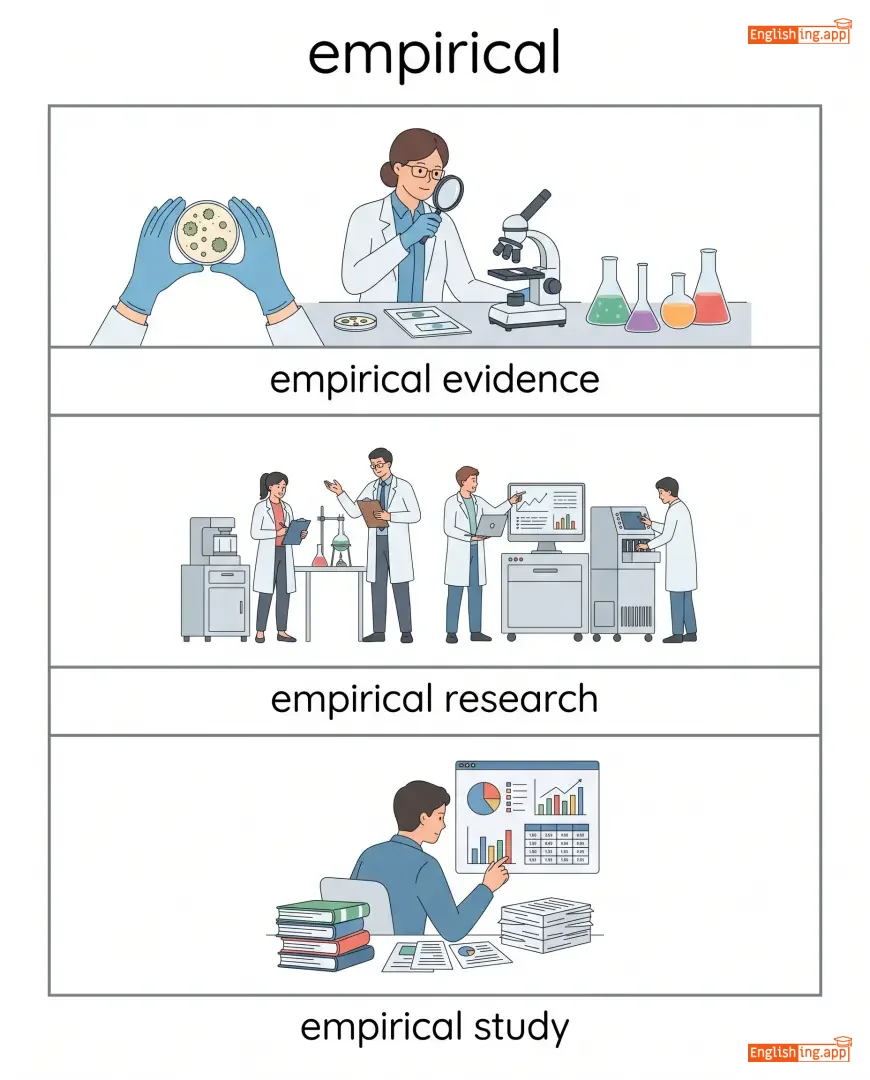
/ɛmˈpɪrɪkəl/
adjective
(恩皮里科)
••••••
|
|
经验的
jingyan de
••••••
|
- •••••• | - •••••• | - •••••• | - •••••• |
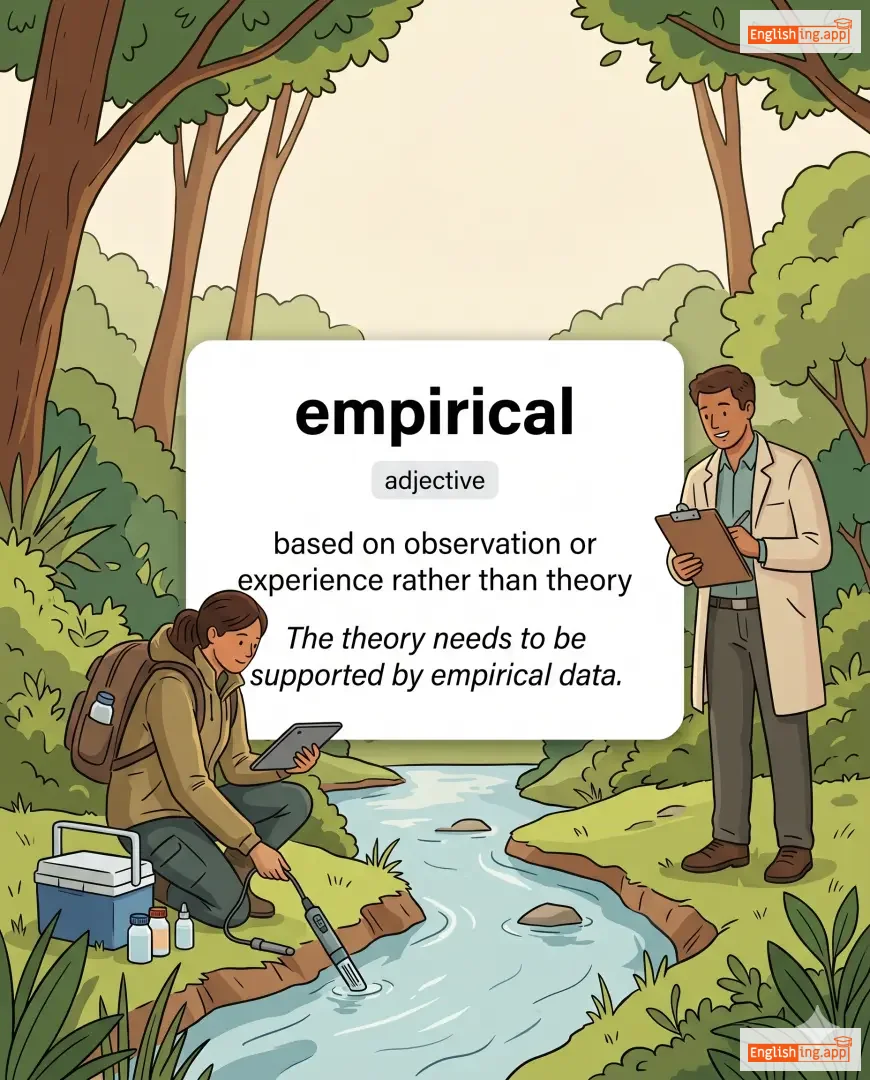
based on observation or experience rather than theory
••••••
|
The theory needs to be supported by empirical data. |
理论需要通过经验数据来支持。
Lilun xuyao tongguo jingyan shuju lai zhichi.
••••••
|
empirical evidence |
information gained through observation or experiment
••••••
|
经验证据
jingyan zhengju
••••••
|
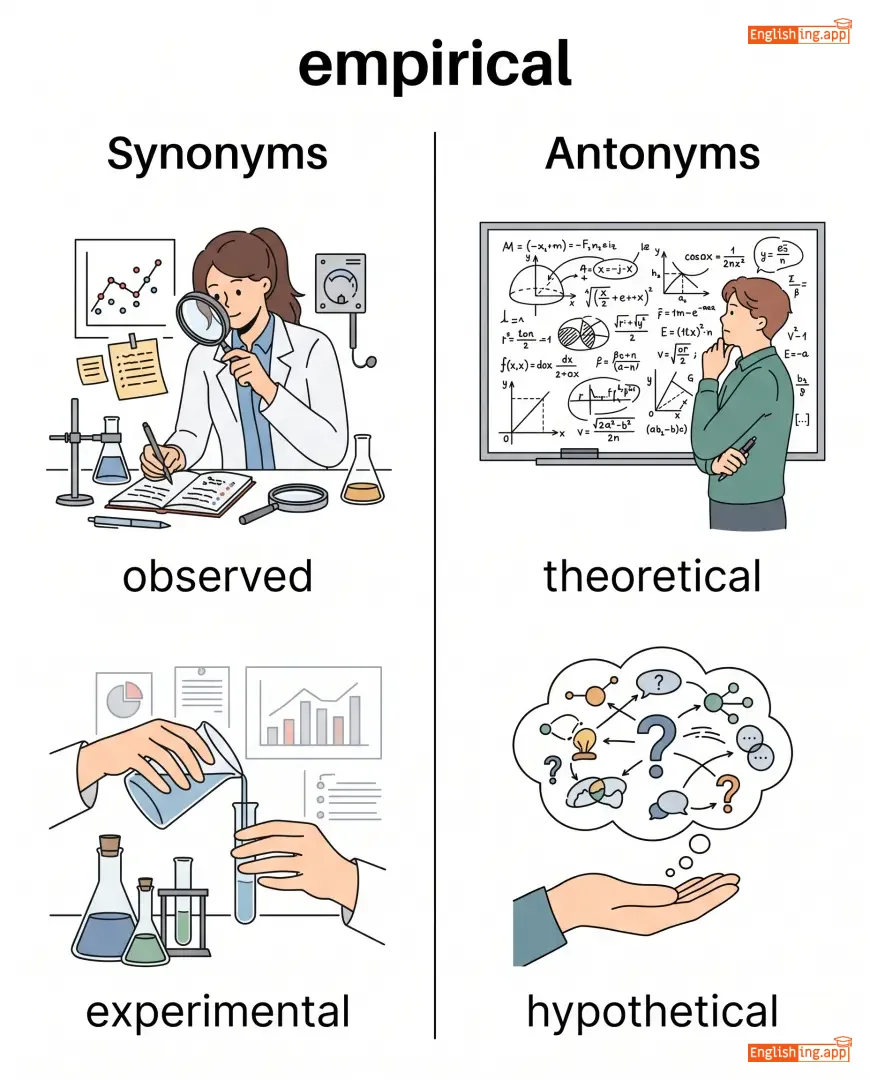
observed, experimental, factual, practical, real
••••••
|
theoretical, hypothetical
••••••
|
empirical evidence, empirical research, empirical study, empirical data
••••••
|
Empirical 意味着基于经验, 就像经验的 (jingyan de)
••••••
|
|
👔
••••••
|
/ɪmˈplɔɪ/
verb
(雇用)
••••••
|
- •••••• |
雇佣
gùyōng
••••••
|
employed
雇用过
••••••
|
employed
雇用过
••••••
|
employs
雇用
••••••
|
employing
雇用中
••••••
|
to hire someone to do a job; to use something effectively
••••••
|
The company plans to employ more engineers next year.
公司计划明年雇用更多的工程师。
••••••
|
公司计划明年雇用更多的工程师。
Gōngsī jìhuà míngnián gùyòng gèng duō de gōngchéngshī.
••••••
|
gainful employment
有薪工作
••••••
|
work that provides a steady income
••••••
|
有薪工作
yǒu xīn gōngzuò
••••••
|
hire, recruit, engage, utilize, appoint
••••••
|
dismiss, fire, discharge
••••••
|
employ workers, employ staff, employ methods, employ strategies
••••••
|
Employ意味着雇佣 — 当公司雇佣,你会享受它。
••••••
|

