|
絵文字
|
単語 | Images | 翻訳 | 過去 | 過去分詞 | 三人称単数 | 動名詞 | 意味 | 例文 | 例文の翻訳 | 表現例 | 表現例の意味 | 表現例の翻訳 | 同義語 | 対義語 | コロケーション | ニーモニック |
|---|---|---|---|---|---|---|---|---|---|---|---|---|---|---|---|---|---|
|
📉
••••••
|
/kənˈstreɪnt/
noun
(kənˈstreɪnt)
••••••
|
- •••••• |
制約
seiyaku
••••••
|
- •••••• | - •••••• | - •••••• | - •••••• |
a limitation or restriction
••••••
|
Time is the biggest constraint in completing the project. |
プロジェクトを完了するための最大の制約は時間です。
Purojekuto o kanryou suru tame no saidai no seiyaku wa jikan desu.
••••••
|
budget constraint |
a financial limitation on spending
••••••
|
予算制約
yosan seiyaku
••••••
|
restriction, limitation, curb, control, restraint
••••••
|
freedom, liberty, allowance
••••••
|
budget constraint, legal constraint, time constraint, resource constraint
••••••
|
Constraint = 制約: 予算内で抑えられる
••••••
|
|
🏗️
••••••
|
/kənˈstrʌkt/
verb
(コンストラクト)
••••••
|
- •••••• |
建設する
kensetsu suru
••••••
|
constructed
コンストラクテッド
••••••
|
constructed
コンストラクテッド
••••••
|
constructs
コンストラクツ
••••••
|
constructing
コンストラクトイング
••••••
|
to build or form something by putting parts together
••••••
|
They plan to construct a new bridge over the river.
彼らは川に新しい橋を建設する予定です。
••••••
|
彼らは川に新しい橋を建設する予定です。
Karera wa kawa ni atarashī hashi o kensetsu suru yotei desu.
••••••
|
construct an argument
論証を構築する
••••••
|
to build or develop a logical case or reasoning
••••••
|
論証を構築する
ronshō o kōchiku suru
••••••
|
build, erect, assemble, create, establish
••••••
|
demolish, destroy, dismantle
••••••
|
construct a building, construct a theory, construct a bridge, construct meaning
••••••
|
CONstruction = 建設する
••••••
|
|
🏗️
••••••
|
/kənˈstrʌkʃən/
noun
(コンストラクション)
••••••
|
|
建設
kensetsu
••••••
|
- •••••• | - •••••• | - •••••• | - •••••• |
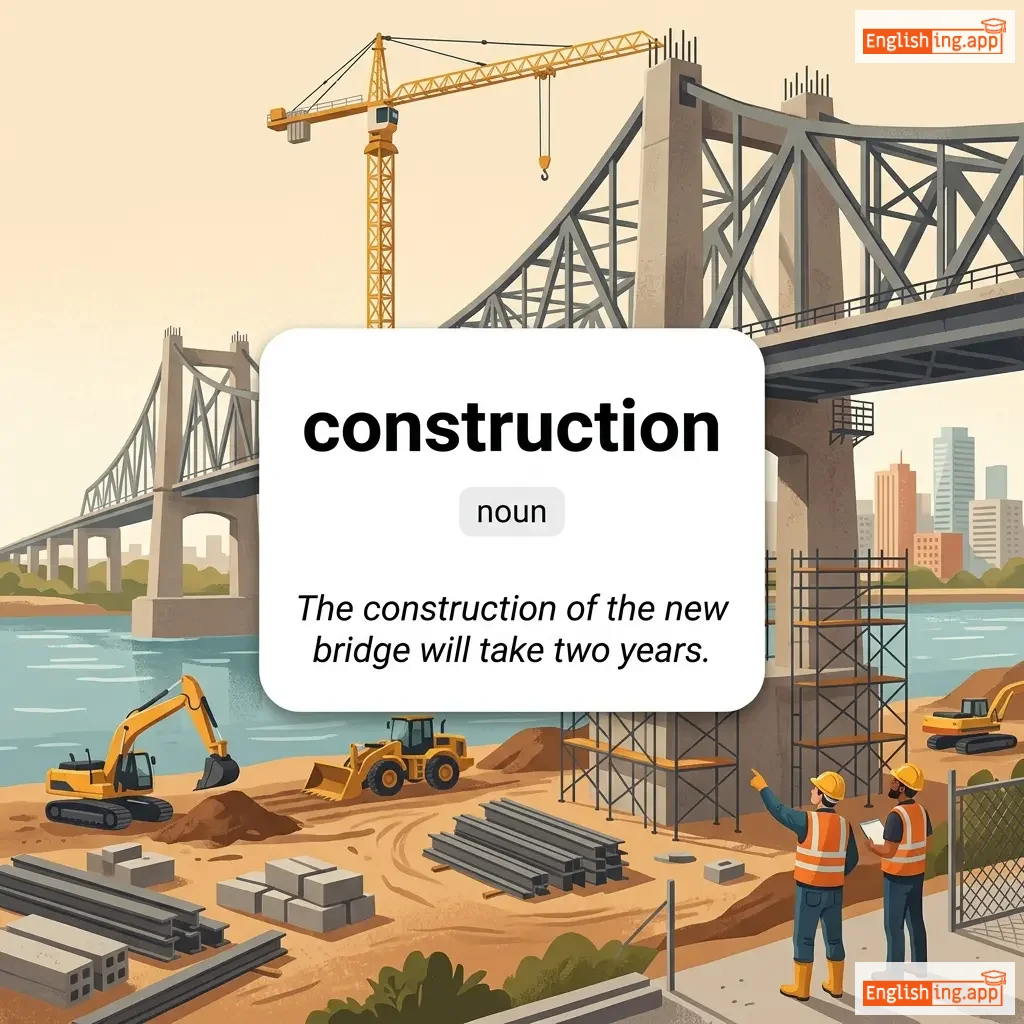
The process of building something, typically large structures such as houses, roads, or bridges.
••••••
|
The construction of the new bridge will take two years. |
新しい橋の建設には2年かかります。
Atarashii hashi no kensetsu ni wa 2-nen kakarimasu.
••••••
|
under construction |
in the process of being built or repaired
••••••
|
建設中
kensetsu-chuu
••••••
|
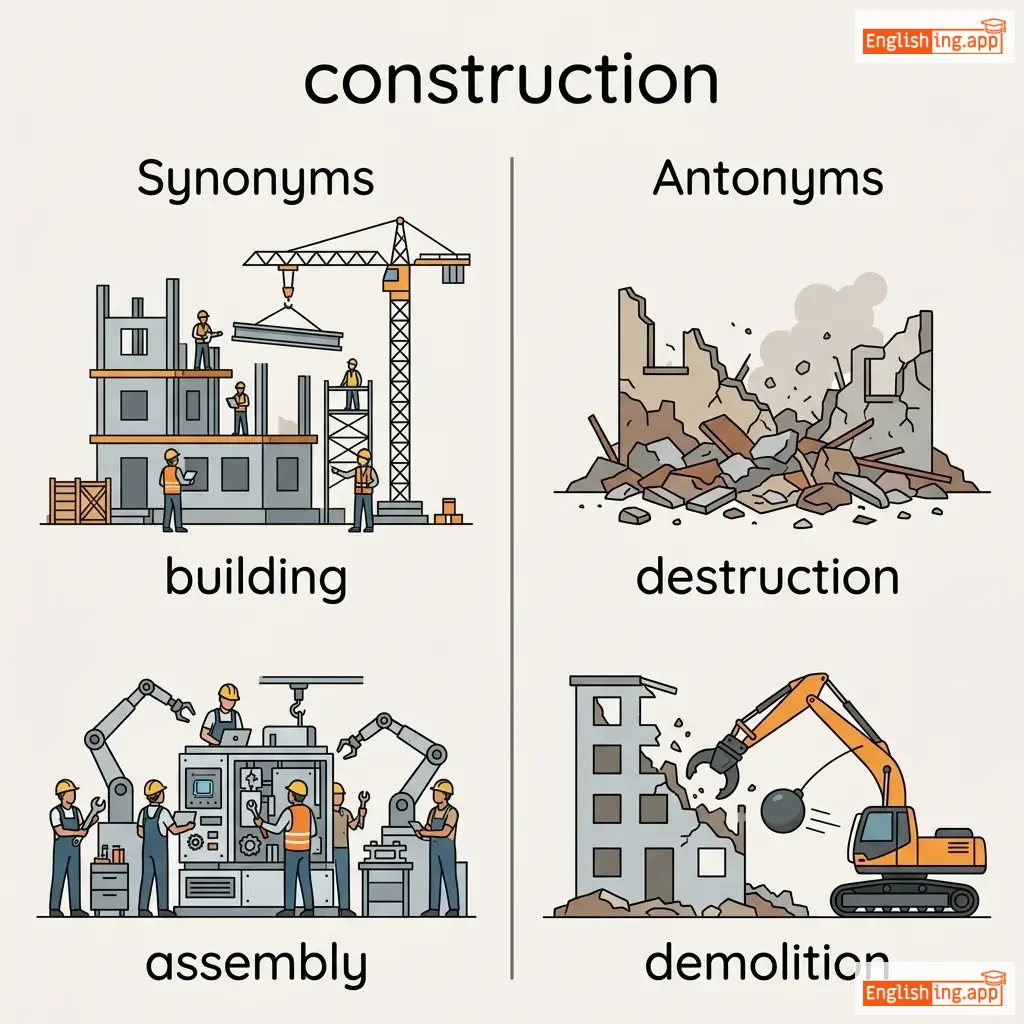
building, assembly, creation, development, erection
••••••
|
destruction, demolition, dismantling
••••••
|
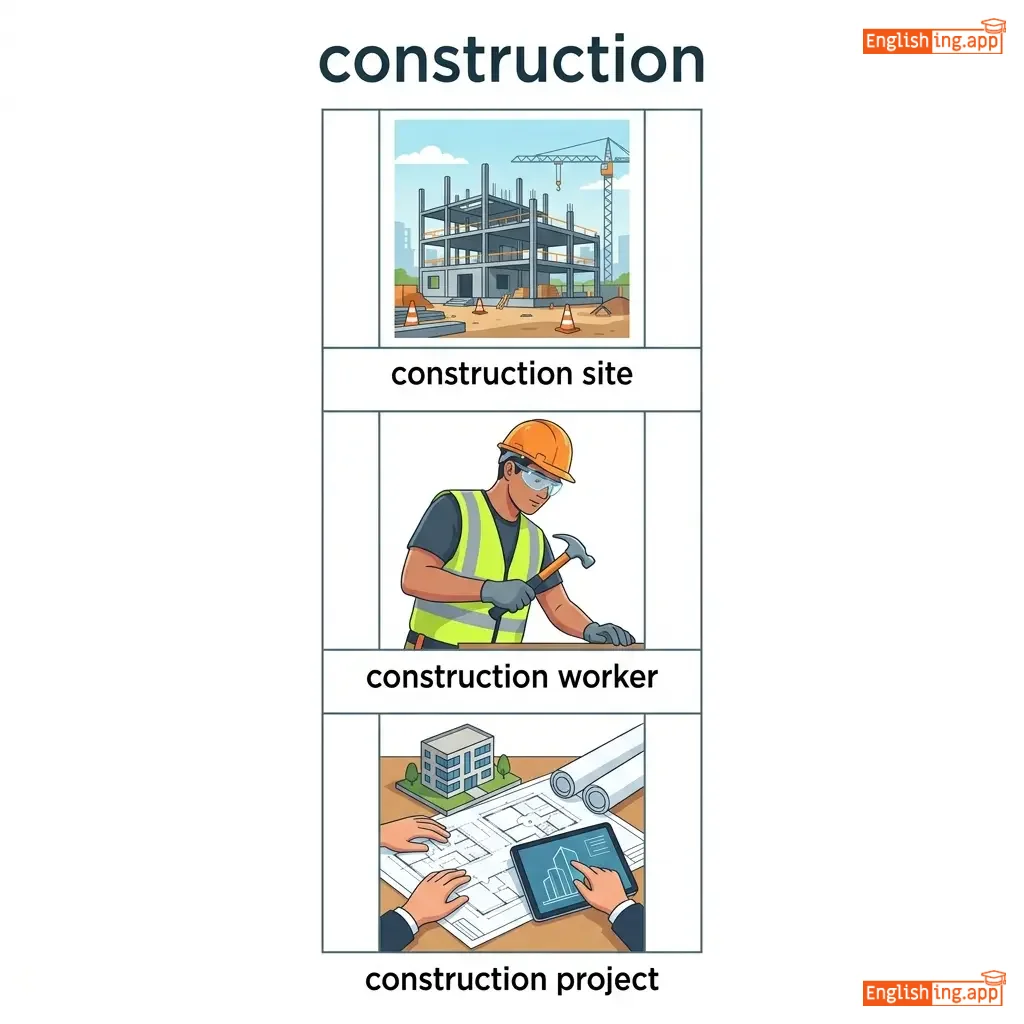
construction site, construction worker, construction project, construction materials
••••••
|
建設 = 建物を建てること。それは永遠に残るものです。
••••••
|
|
💬
••••••
|
/kənˈsʌlt/
verb
(コンサルト)
••••••
|
- •••••• |
相談する
soudan suru
••••••
|
consulted
コンサルテッド
••••••
|
consulted
コンサルテッド
••••••
|
consults
コンサルツ
••••••
|
consulting
コンサルティング
••••••
|
To seek advice or information from someone with expertise.
••••••
|
You should consult a doctor before starting the treatment.
治療を始める前に、医師に相談するべきです。
••••••
|
治療を始める前に、医師に相談するべきです。
Chiryō o hajimeru mae ni, ishi ni soudan suru beki desu.
••••••
|
consult with
〜と相談する
••••••
|
to discuss something with someone before making a decision
••••••
|
〜と相談する
〜to soudan suru
••••••
|
advise, confer, discuss, recommend, counsel
••••••
|
ignore, neglect, disregard
••••••
|
consult a doctor, consult an expert, consult the lawyer, consult with colleagues
••••••
|
相談する → 医師に相談して治療方法を決める。
••••••
|
|
👨💼
••••••
|
/kənˈsʌltənt/
noun
(kənˈsʌltənt)
••••••
|
- •••••• |
コンサルタント
konsarutanto
••••••
|
- •••••• | - •••••• | - •••••• | - •••••• |
A professional who provides expert advice in a particular area.
••••••
|
The company hired a consultant to improve its marketing strategy. |
会社はマーケティング戦略を改善するためにコンサルタントを雇いました。
Kaisha wa māketingu senryaku o kaizen suru tame ni konsarutanto o yatōshimashita.
••••••
|
- •••••• | - •••••• | - •••••• |
advisor, expert, specialist, counselor, mentor
••••••
|
client, novice, amateur
••••••
|
management consultant, business consultant, IT consultant, financial consultant
••••••
|
コンサルタントは相談してアドバイスする人です。
••••••
|
|
💼
••••••
|
/ˌkɒnsʌlˈteɪʃən/
noun
(コンサルテーション)
••••••
|

|
相談
soudan
••••••
|
- •••••• | - •••••• | - •••••• | - •••••• |
a meeting with an expert or professional to seek advice
••••••
|
The doctor scheduled a consultation with the patient. |
医師は患者との相談を予定しました。
Ishi wa kanja to no soudan o yotei shimashita.
••••••
|
- •••••• | - •••••• | - •••••• |
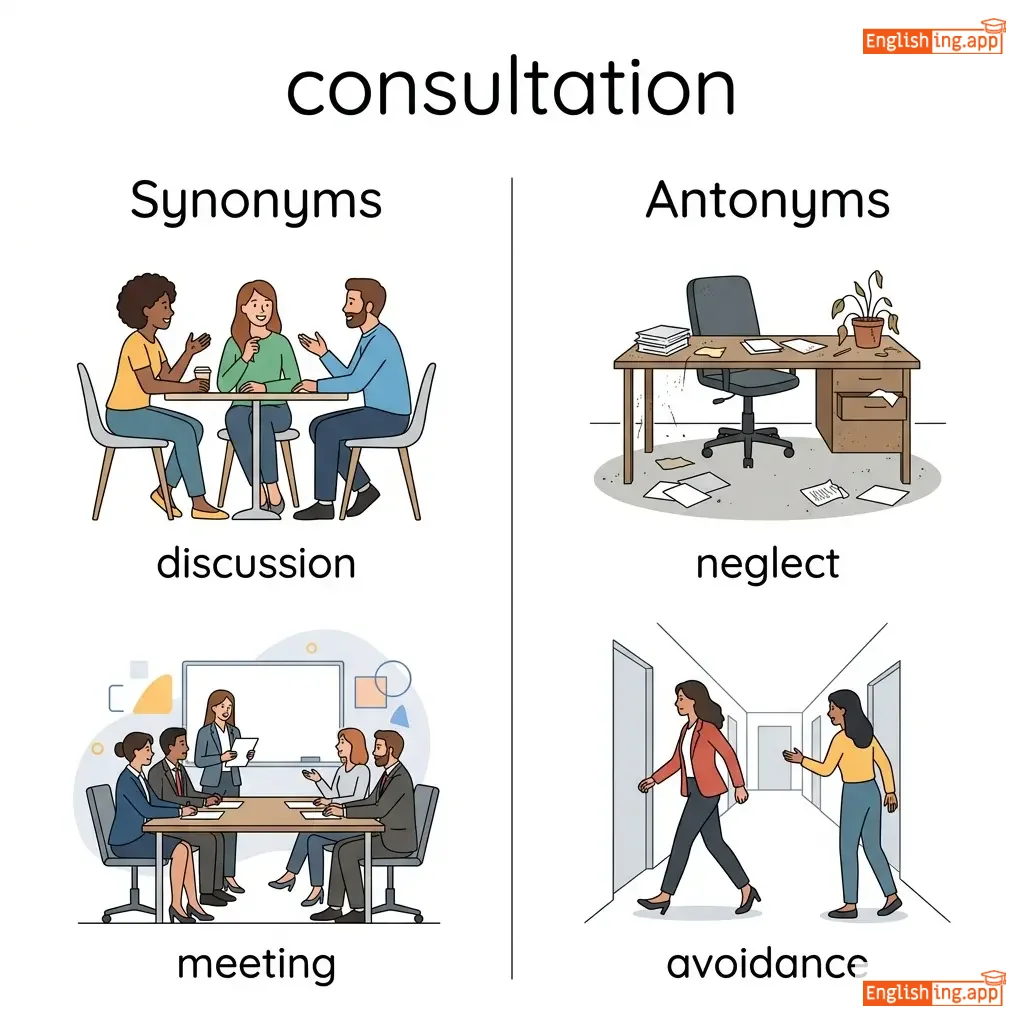
discussion, meeting, conference, advice
••••••
|
neglect, avoidance, ignoring
••••••
|
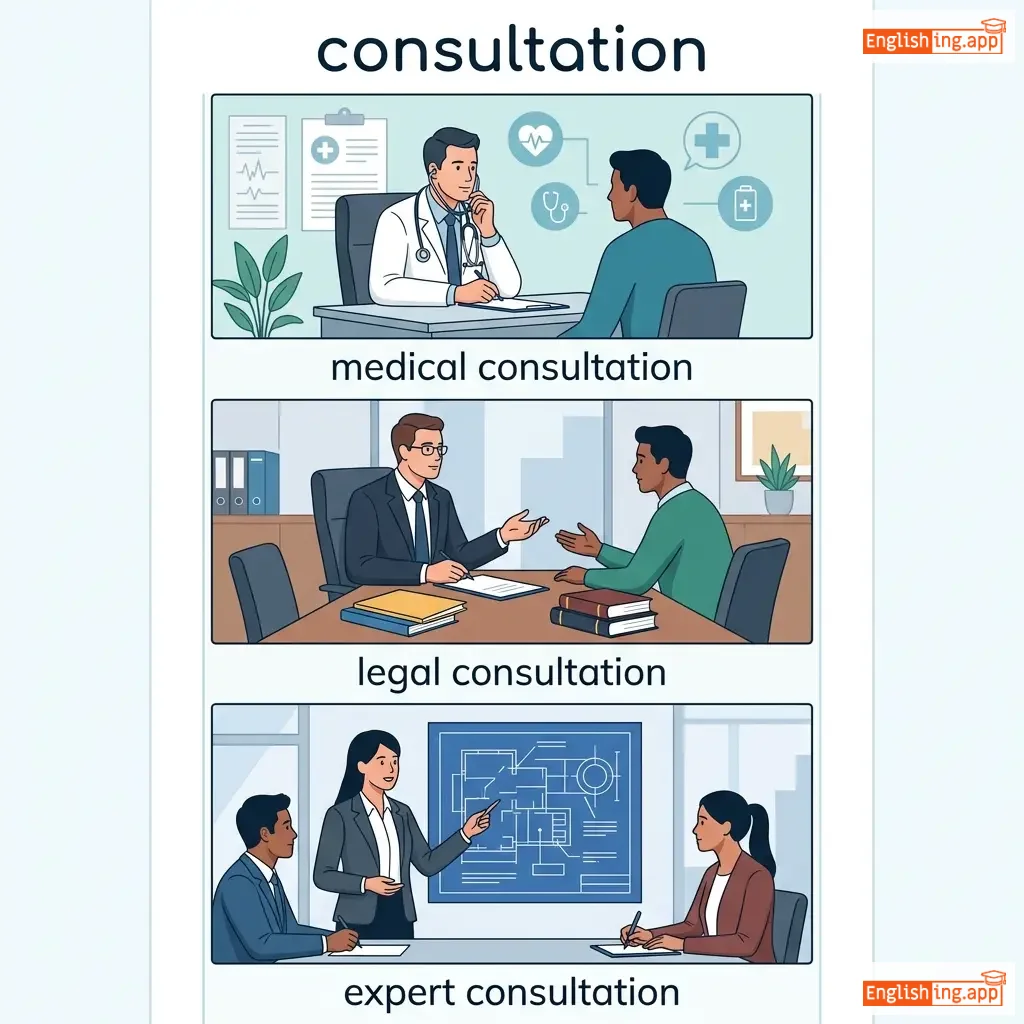
medical consultation, legal consultation, expert consultation
••••••
|
医者に相談するための相談!
••••••
|
|
🍽️
••••••
|
/kənˈsjuːm/
verb
(コンシューム)
••••••
|
|
消費する
shouhishiru
••••••
|
consumed
コンシュームド
••••••
|
consumed
コンシュームド
••••••
|
consumes
コンシュームズ
••••••
|
consuming
コンシューミング
••••••
|
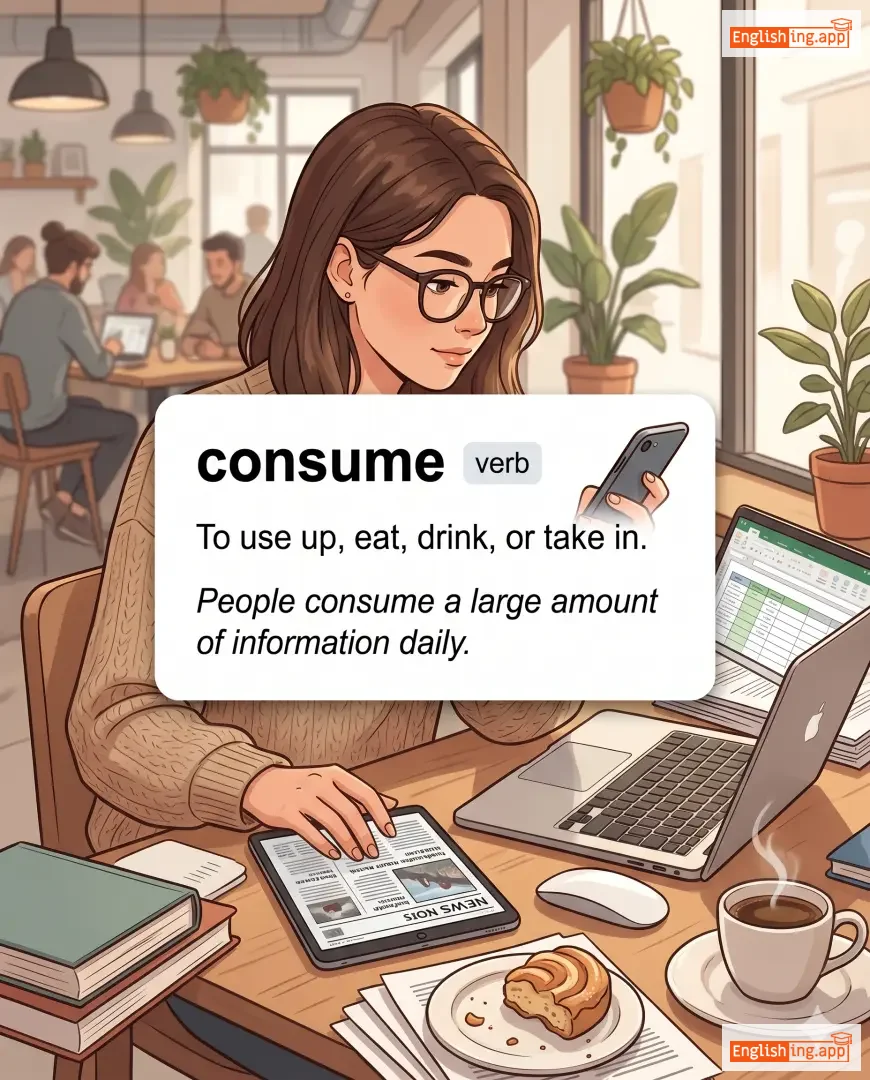
To use up, eat, drink, or take in.
••••••
|
People consume a large amount of information daily.
人々は毎日大量の情報を消費します。
••••••
|
人々は毎日大量の情報を消費します。
Hitobito wa mainichi tairyou no jouhou o shouhishimasu.
••••••
|
consume time
時間を消費する
••••••
|
to take up or waste time
••••••
|
時間を消費する
jikan o shouhi suru
••••••
|
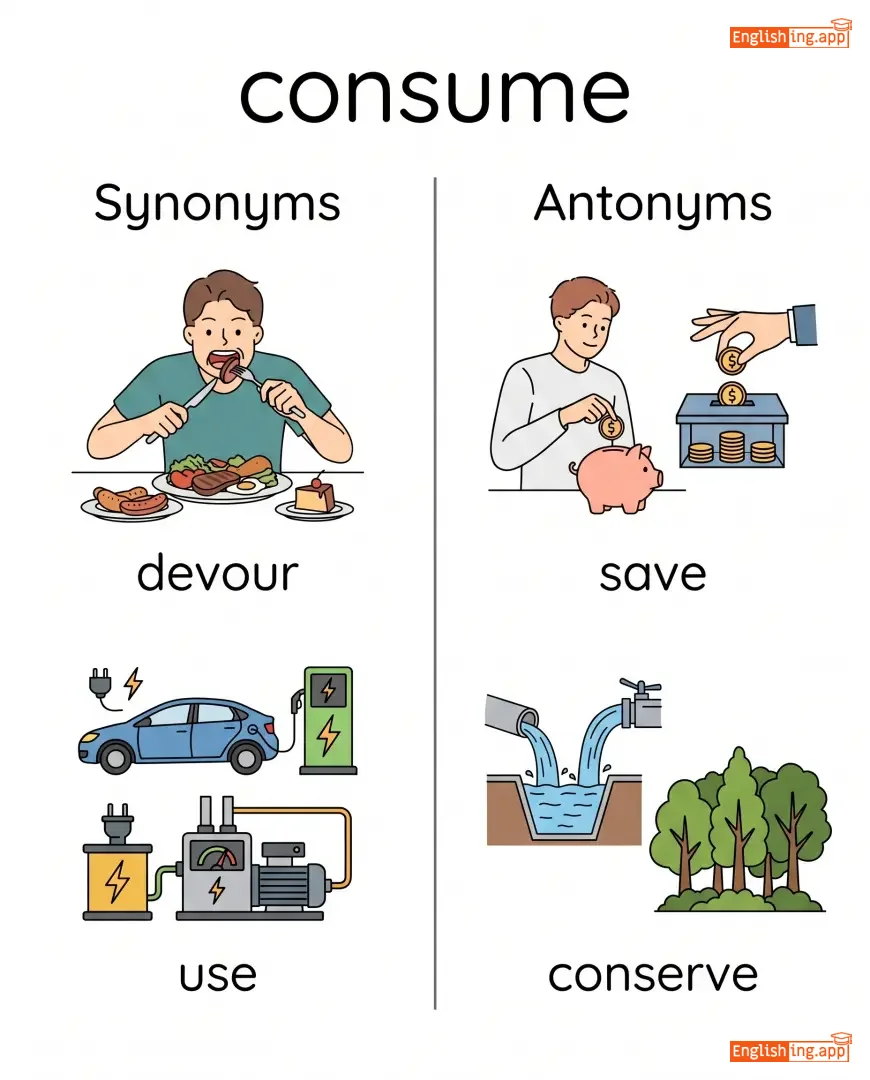
devour, use, absorb, spend, ingest
••••••
|
save, conserve, preserve
••••••
|
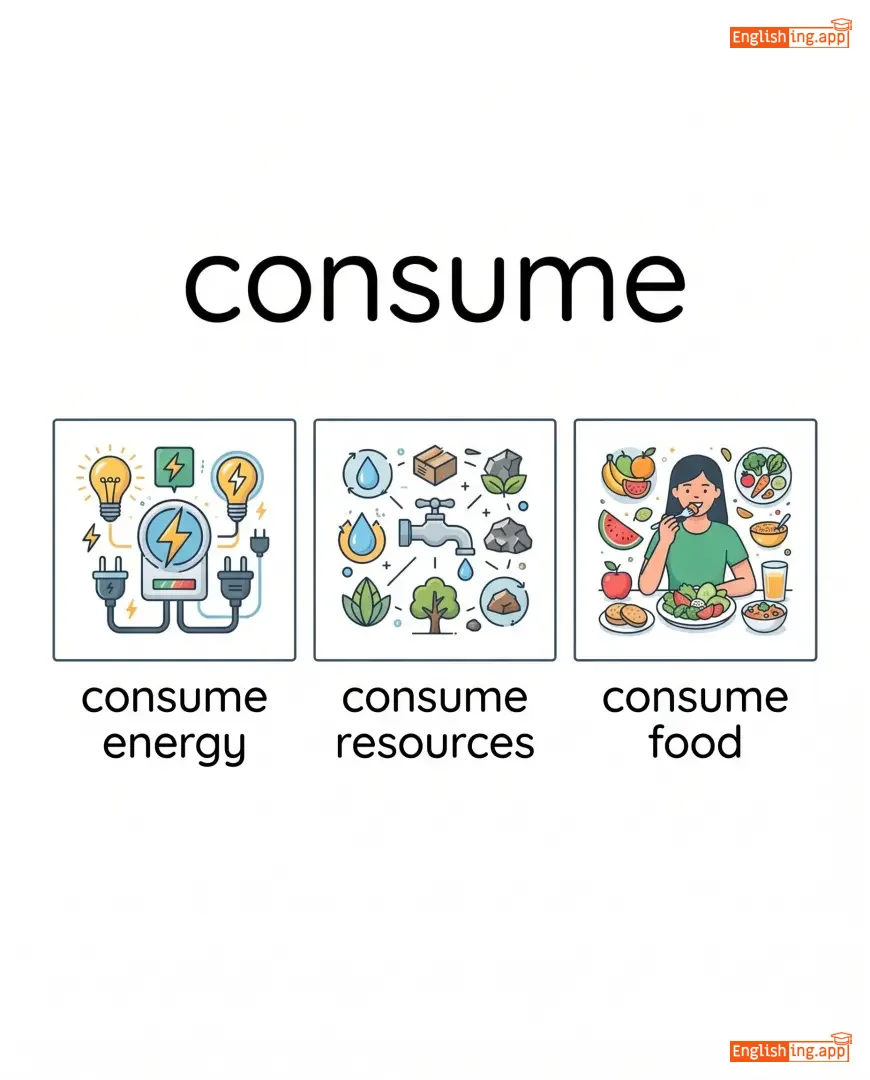
consume energy, consume resources, consume food, consume products
••••••
|
Consume = '消費する' は、食べたり、飲んだり、使ったりすることです。
••••••
|
|
🛒
••••••
|
/kənˈsjuːmər/
noun
(カンシューマー)
••••••
|
- •••••• |
消費者
shōhisha
••••••
|
- •••••• | - •••••• | - •••••• | - •••••• |
A person who buys and uses goods and services.
••••••
|
The company focuses on understanding consumer needs. |
その会社は消費者のニーズを理解することに重点を置いています。
Sono kaisha wa shōhisha no nīzu o rikai suru koto ni jūten o oiteimasu.
••••••
|
consumer behavior |
the study of how individuals make purchasing decisions
••••••
|
消費者行動
shōhisha kōdō
••••••
|
buyer, customer, purchaser, client
••••••
|
seller, producer, manufacturer
••••••
|
consumer demand, consumer rights, consumer goods, consumer market
••••••
|
Consumer = 消費する人、日本語では消費者。
••••••
|
|
⚡
••••••
|
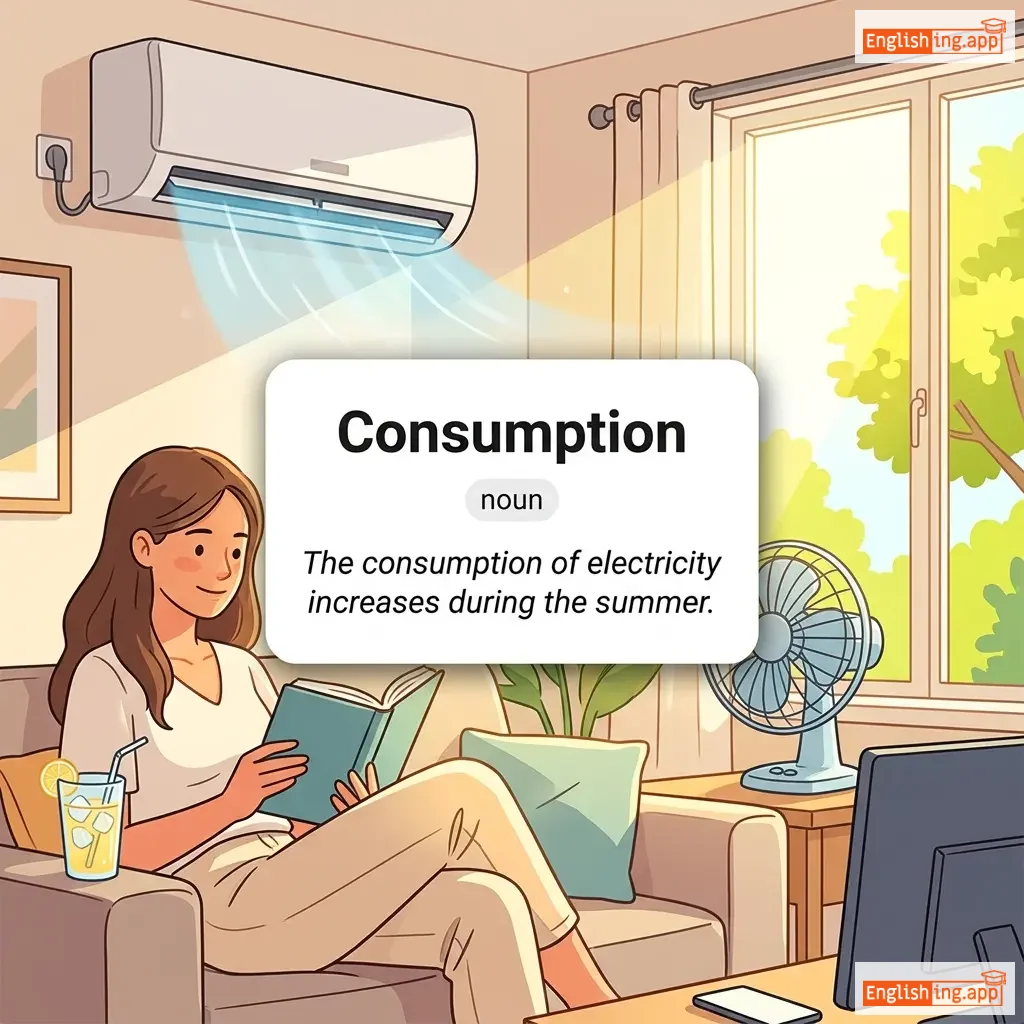
/kənˈsʌmpʃən/
noun
(コンシュンプション)
••••••
|
|
消費
shōhi
••••••
|
- •••••• | - •••••• | - •••••• | - •••••• |
The act of using up resources, goods, or energy; also refers to the eating or drinking of something.
••••••
|
The consumption of electricity increases during the summer. |
夏の間、電力の消費が増加します。
Natsu no aida, denryoku no shōhi ga zōka shimasu.
••••••
|
consumption tax |
A tax placed on goods and services purchased by consumers.
••••••
|
消費税
shōhizei
••••••
|
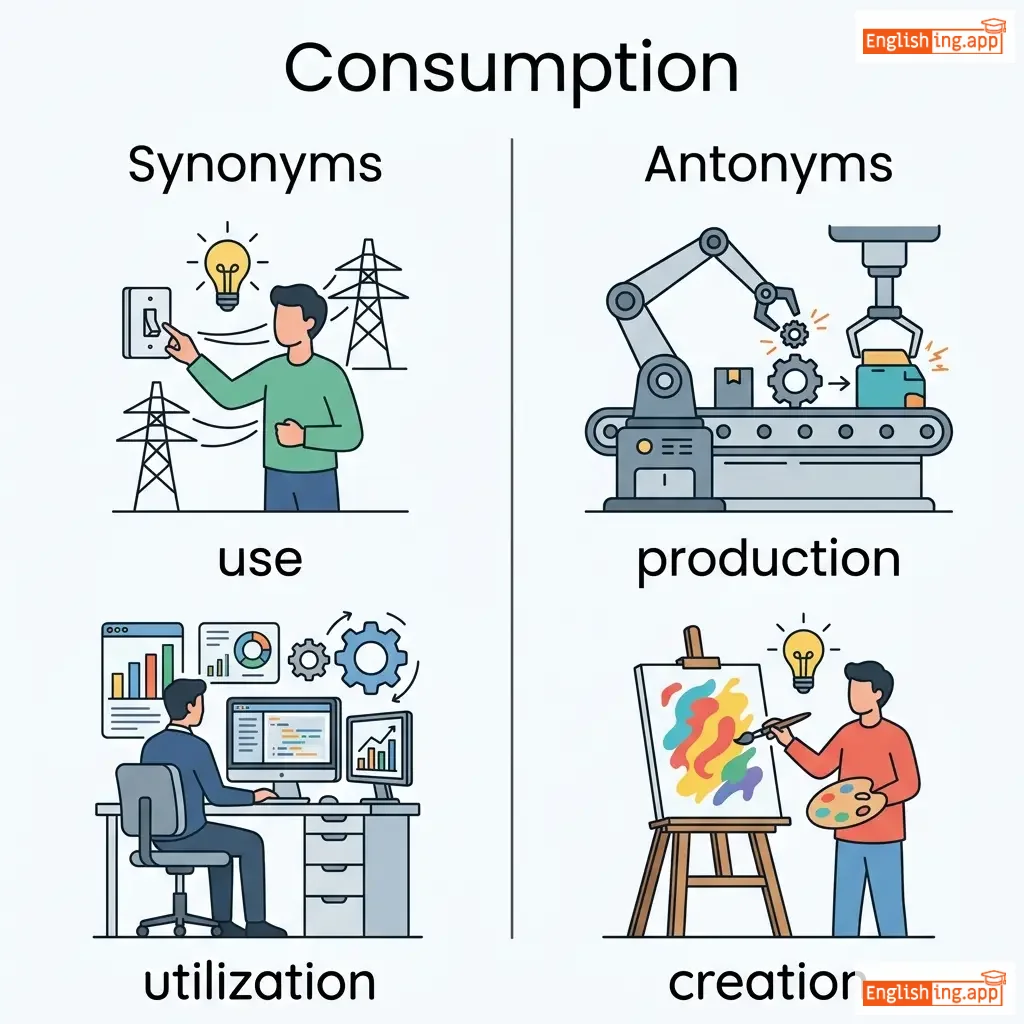
use, utilization, expenditure, intake, absorption
••••••
|
production, creation, conservation
••••••
|
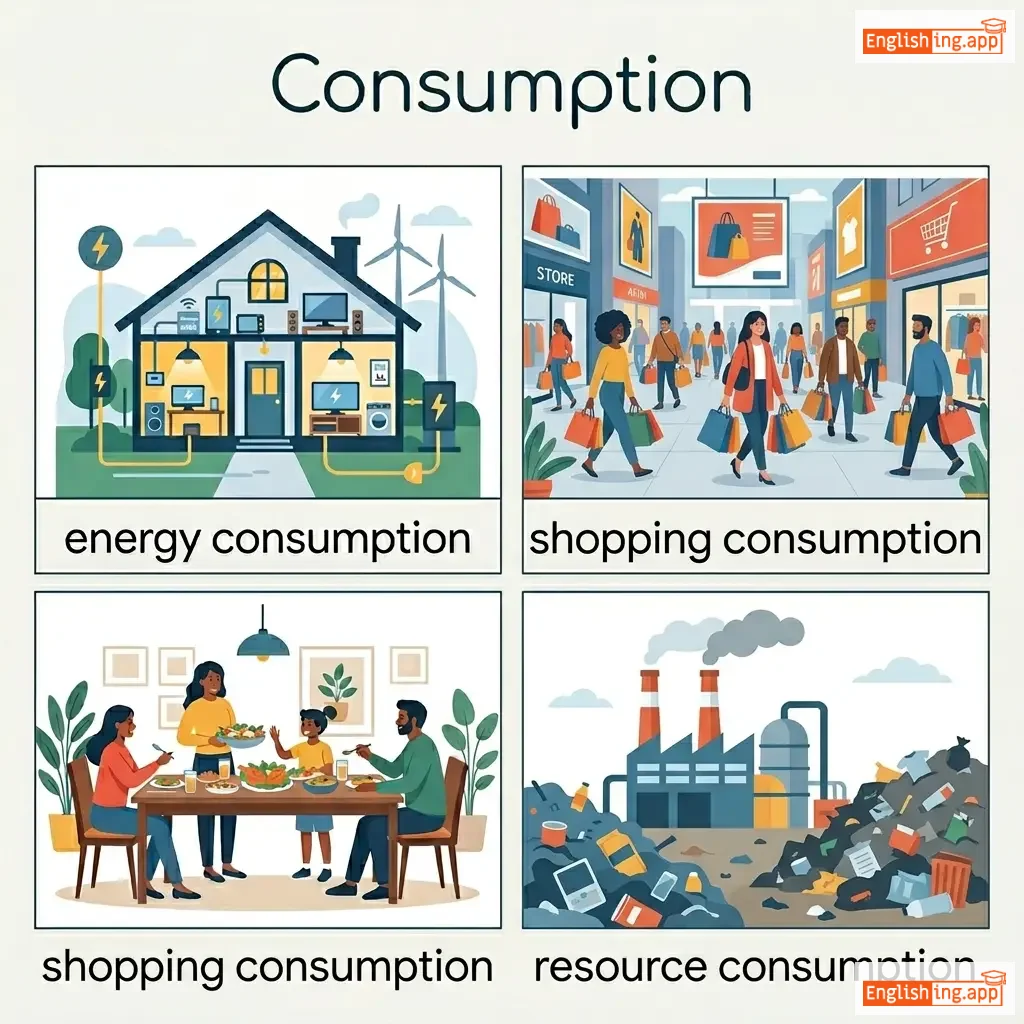
energy consumption, food consumption, mass consumption, over consumption
••••••
|
消費は使うと食べること—電力の消費も夏に増える。
••••••
|
|
📞
••••••
|
/ˈkɒntækt/
noun/verb
(コンタクト)
••••••
|
- •••••• |
接触
sesshoku
••••••
|
contacted
コンタクトした
••••••
|
contacted
コンタクトした
••••••
|
contacts
コンタクトする
••••••
|
contacting
コンタクトする
••••••
|
Communication or connection with someone.
••••••
|
You should contact your doctor if symptoms persist.
症状が続く場合は、医師にコンタクトを取るべきです。
••••••
|
症状が続く場合は、医師にコンタクトを取るべきです。
Shōjō ga tsuzuku baai wa, ishi ni kontakuto o toru beki desu.
••••••
|
lose contact
連絡を失う
••••••
|
to stop communicating with someone
••••••
|
連絡を失う
renraku o ushinau
••••••
|
communication, link, connection, touch
••••••
|
disconnection, separation
••••••
|
make contact, personal contact, emergency contact, direct contact
••••••
|
接触は誰かに連絡すること
••••••
|
|
📦
••••••
|
/kənˈteɪn/
verb
(kənˈteɪn)
••••••
|
|
含む
fukumu
••••••
|
contained
kənˈteɪnd
••••••
|
contained
kənˈteɪnd
••••••
|
contains
kənˈteɪns
••••••
|
containing
kənˈteɪnɪŋ
••••••
|
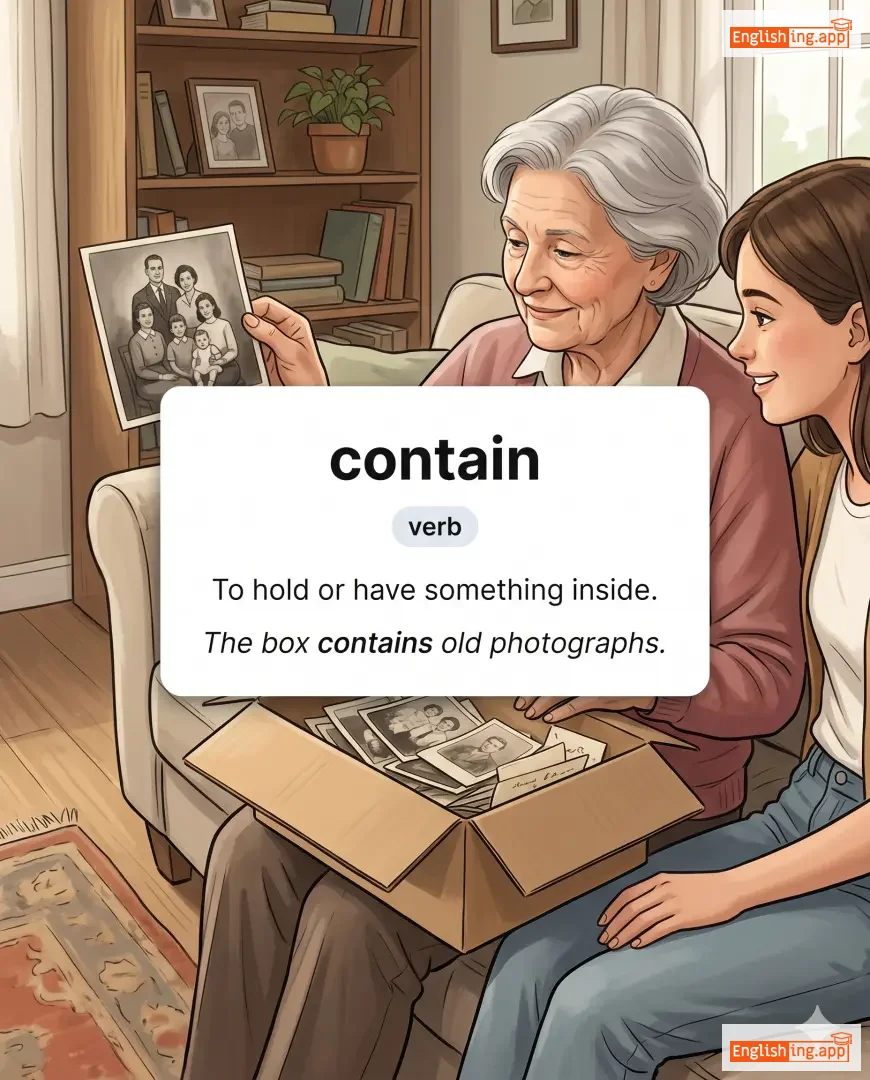
To hold or have something inside.
••••••
|
The box contains old photographs.
ðə bɒks kənˈteɪnz oʊld fətəgrɑːfs.
••••••
|
箱には古い写真が含まれています。
Hako ni wa furui shashin ga fukumareteimasu.
••••••
|
contain excitement
kənˈteɪn ɪksɑɪtmənt
••••••
|
to control or hold back excitement
••••••
|
興奮を抑える
Kōfun o osaeru
••••••
|
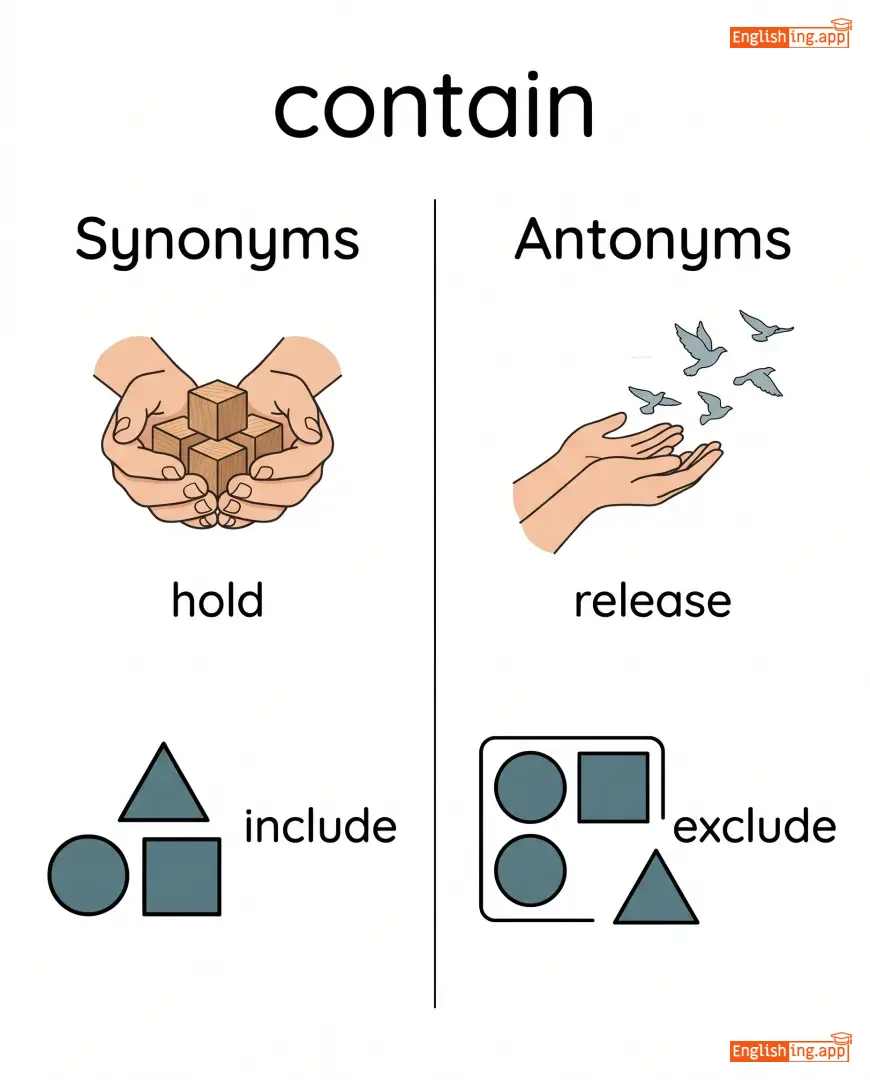
hold, include, comprise, enclose, involve
••••••
|
release, exclude, free
••••••
|
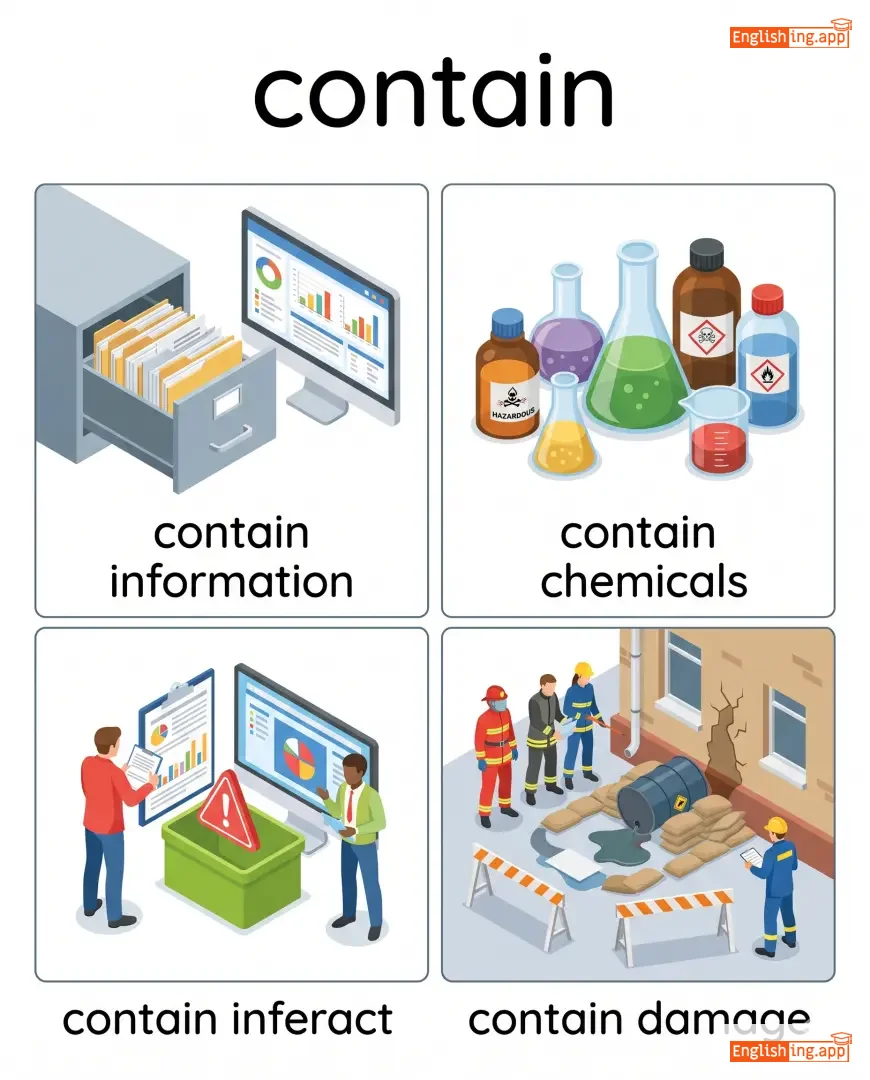
contain information, contain chemicals, contain damage, contain anger
••••••
|
Contain はコンテナのように物を入れることです。
••••••
|
|
📦
••••••
|
/kənˈteɪnər/
noun
(コンテナ)
••••••
|
|
コンテナ
kontena
••••••
|
- •••••• | - •••••• | - •••••• | - •••••• |
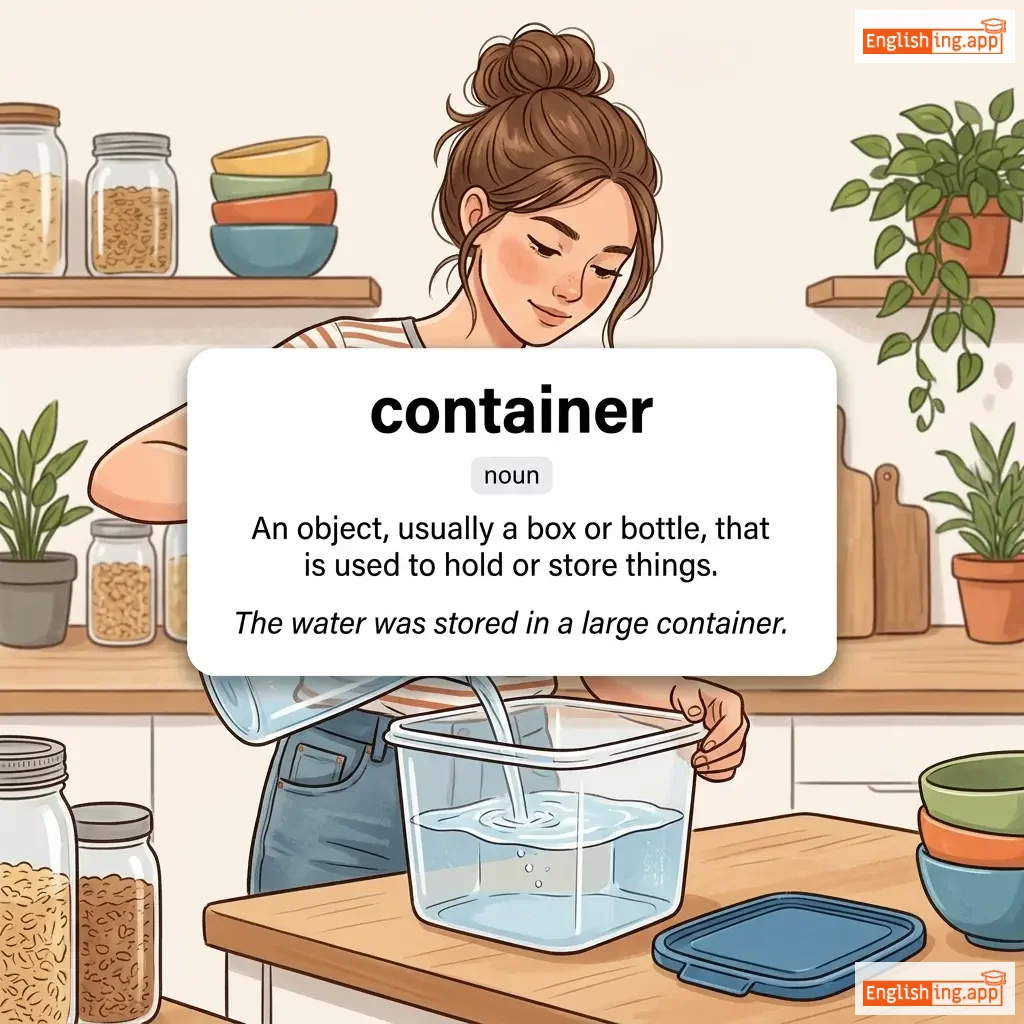
An object, usually a box or bottle, that is used to hold or store things.
••••••
|
The water was stored in a large container. |
水は大きなコンテナに保存されました。
Mizu wa ookina kontena ni hozon saremashita.
••••••
|
container ship |
A large ship designed to carry standardized cargo containers.
••••••
|
コンテナ船
kontena sen
••••••
|
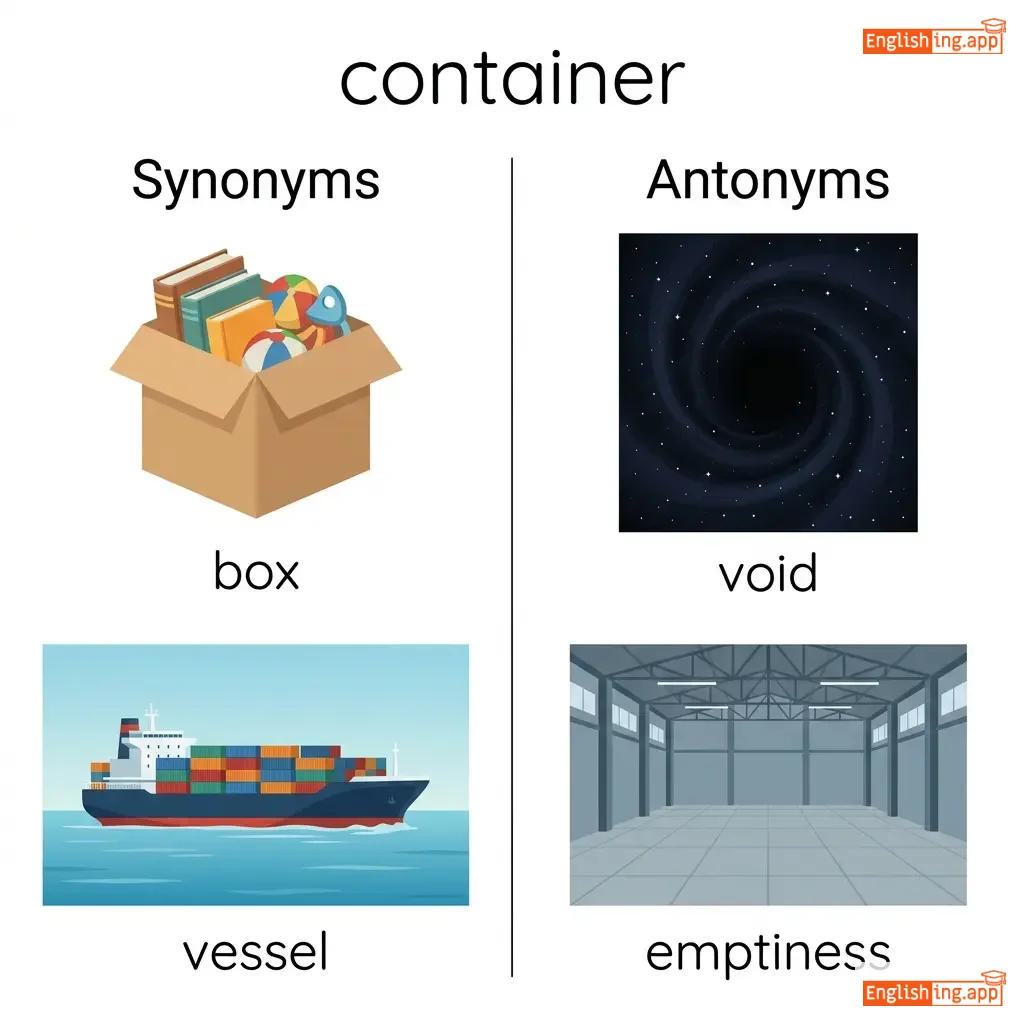
box, vessel, receptacle, crate, jar
••••••
|
void, emptiness
••••••
|
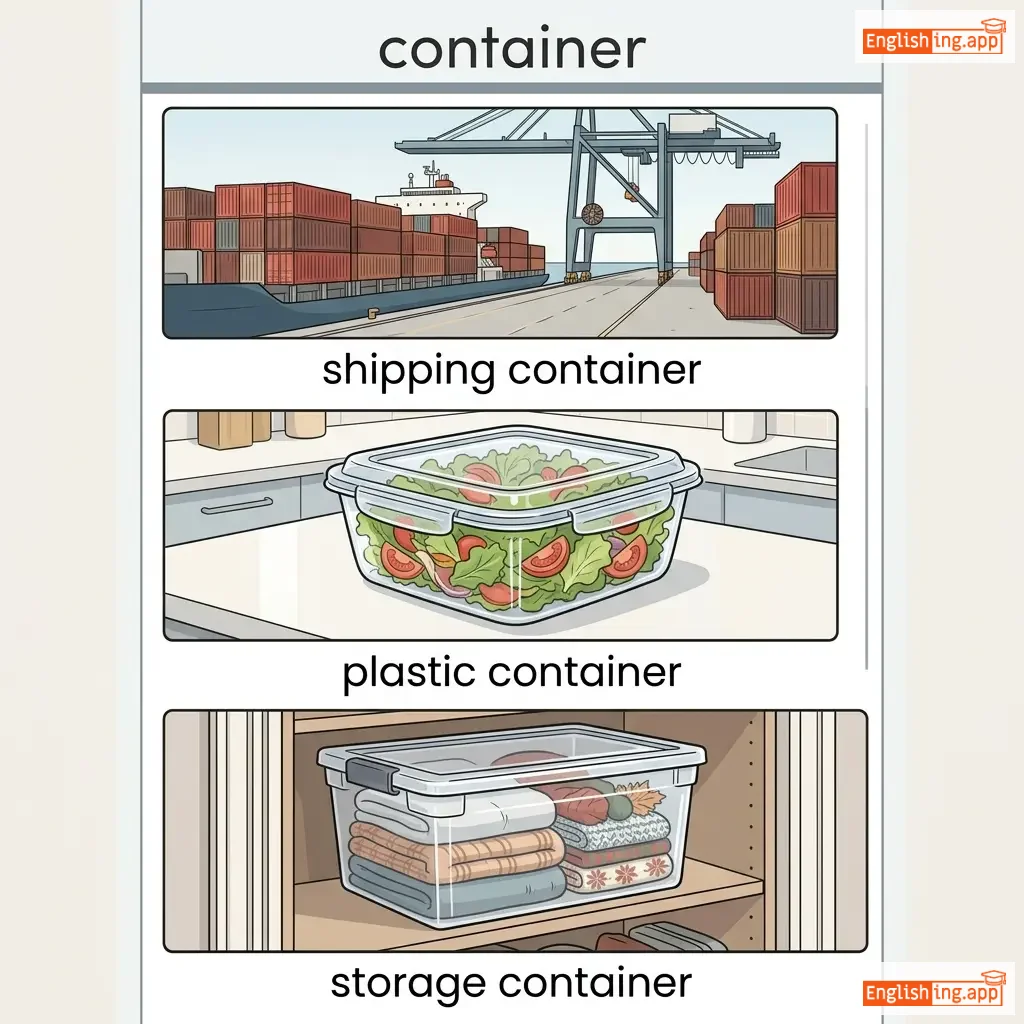
shipping container, plastic container, storage container, container ship
••••••
|
コンテナ 📦 物を入れておける箱のようなもの。
••••••
|
|
🤔
••••••
|
/ˈkɒntəmpleɪt/
verb
••••••
|
- •••••• | - •••••• |
contemplated
••••••
|
contemplated
••••••
|
contemplates
••••••
|
contemplating
••••••
|
to think deeply and carefully about something; to consider thoughtfully
••••••
|
She sat quietly to contemplate her future plans. |
- •••••• |
contemplate the meaning of life |
to think deeply about the purpose or nature of life
••••••
|
- •••••• |
consider, ponder, meditate, reflect, deliberate
••••••
|
ignore, dismiss, neglect
••••••
|
contemplate the future, contemplate change, deeply contemplate, seriously contemplate
••••••
|
No •••••• |
|
🎨
••••••
|
/kənˈtɛmpərɛri/
adjective
(コンテンポラリー)
••••••
|
- •••••• |
現代的な, 現代の
gendai-teki na, gendai no
••••••
|
- •••••• | - •••••• | - •••••• | - •••••• |
belonging to the same time period; modern
••••••
|
She enjoys contemporary art exhibitions.
彼女は現代アートの展示を楽しんでいます。
••••••
|
彼女は現代アートの展示を楽しんでいます。
Kanojo wa gendai āto no tenji o tanoshindeimasu.
••••••
|
contemporary issues
現代の問題
••••••
|
current problems or topics relevant to the present time
••••••
|
現代の問題
gendai no mondai
••••••
|
modern, current, present-day, up-to-date
••••••
|
old-fashioned, outdated, ancient
••••••
|
contemporary art, contemporary culture, contemporary society, contemporary issues
••••••
|
Contemporary = con+temporary = 同じ時代に現代的/現代の。
••••••
|
|
😤
••••••
|
/kənˈtɛmpt/
noun
••••••
|
- •••••• | - •••••• | - •••••• | - •••••• | - •••••• | - •••••• |
a strong feeling of dislike and lack of respect towards someone or something
••••••
|
He spoke with contempt about the corrupt officials. |
- •••••• |
hold in contempt |
to consider someone or something unworthy of respect
••••••
|
- •••••• |
disdain, scorn, disrespect, derision
••••••
|
respect, admiration, honor
••••••
|
deep contempt, open contempt, show contempt, treat with contempt
••••••
|
No •••••• |
|
🏆
••••••
|
/kənˈtɛnd/
verb
(コンテンド)
••••••
|
|
争う、主張する
arasou, shuchou suru
••••••
|
contended
コンテンドした
••••••
|
contended
コンテンドした
••••••
|
contends
コンテンドス
••••••
|
contending
コンテンドイング
••••••
|
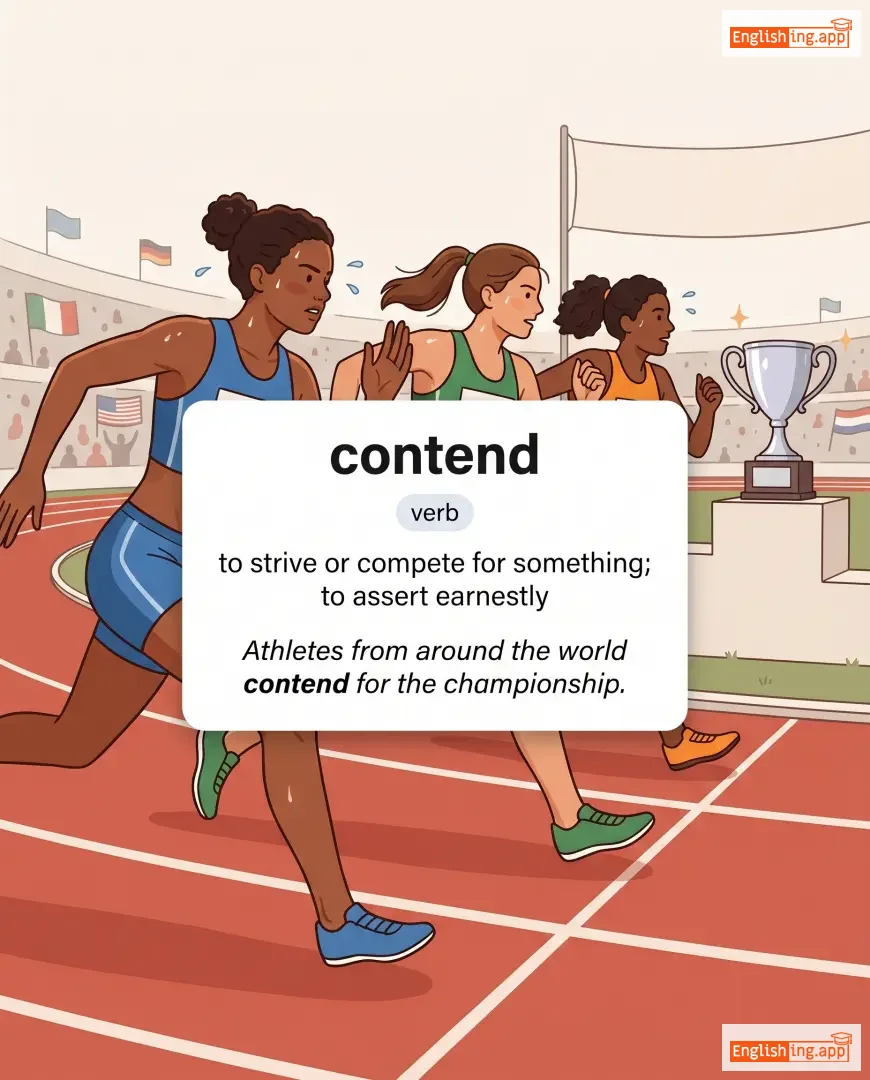
to strive or compete for something; to assert earnestly
••••••
|
Athletes from around the world contend for the championship.
世界中のアスリートがチャンピオンシップを争っています。
••••••
|
世界中のアスリートがチャンピオンシップを争っています。
Sekai juu no asurīto ga chanpionship wo arasotteimasu.
••••••
|
- •••••• | - •••••• | - •••••• |
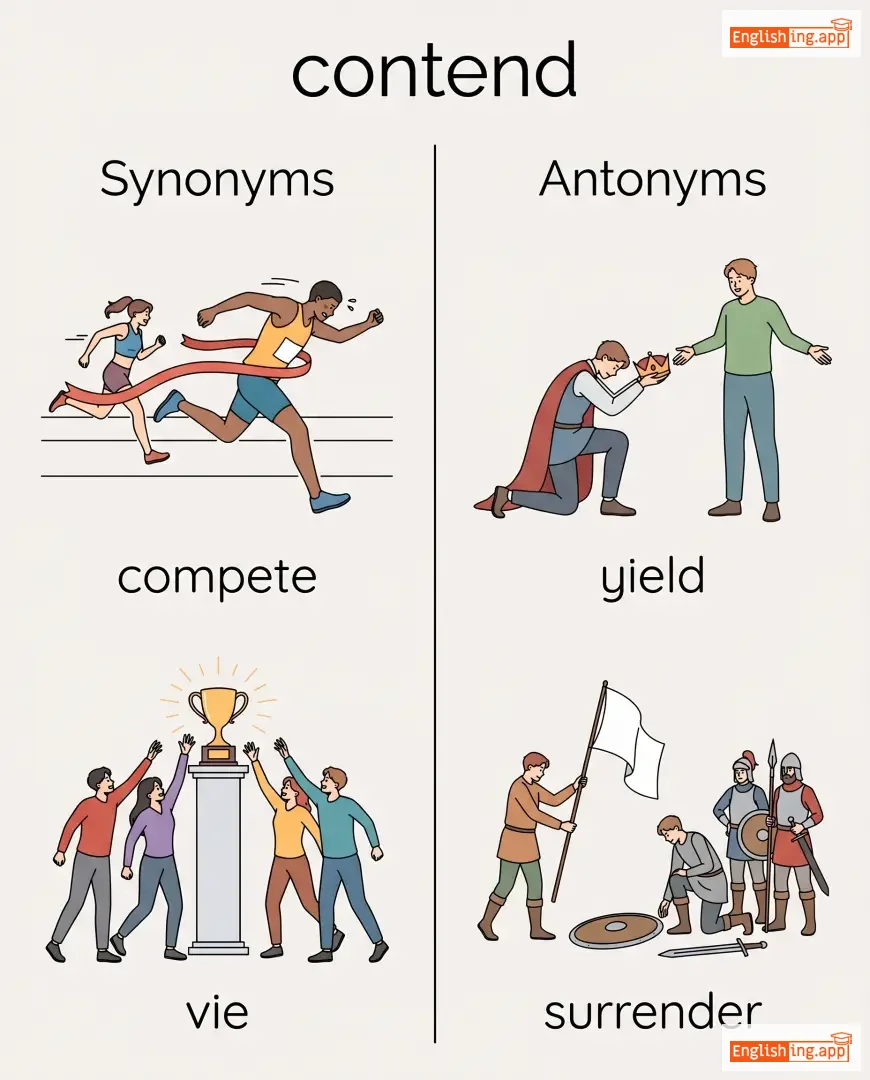
compete, vie, struggle, assert
••••••
|
yield, surrender, concede
••••••
|
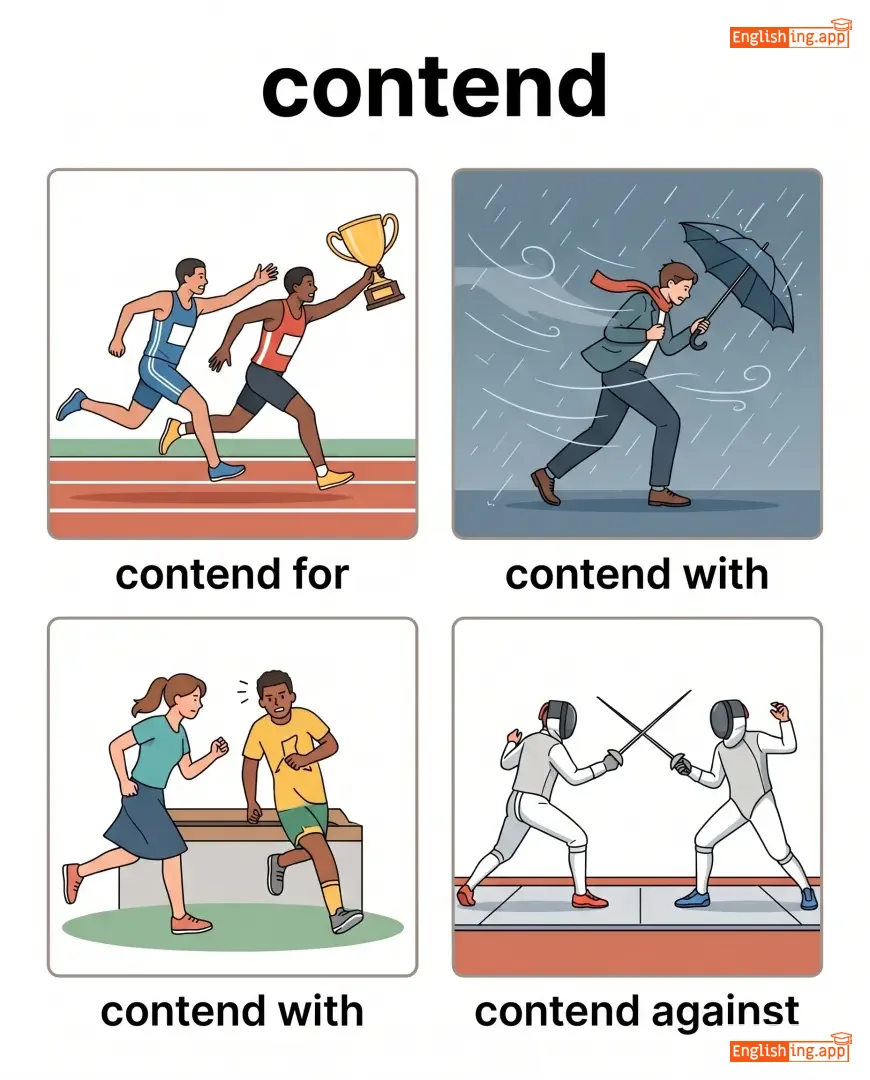
contend for, contend with, contend against, contend successfully
••••••
|
Contendはコンテストで争うこと - 常にコンテストでcontend
••••••
|
|
🥇
••••••
|
/kənˈtɛndər/
noun
(kontendā)
••••••
|
- •••••• |
競争者, 立候補者
kyousou-sha, rikkou-hosha
••••••
|
- •••••• | - •••••• | - •••••• | - •••••• |
a person or team competing for a title or prize
••••••
|
She is a strong contender for the mayoral position.
彼女は市長職の強力な候補者です。
••••••
|
彼女は市長職の強力な候補者です。
Kanojo wa shichou shoku no kyouryoku na kouhosha desu.
••••••
|
- •••••• | - •••••• | - •••••• |
challenger, competitor, aspirant, nominee
••••••
|
non-contender, bystander
••••••
|
strong contender, main contender, serious contender, leading contender
••••••
|
Contenderは勝利を目指す候補者、競争者です。
••••••
|
|
😌
••••••
|
/ˈkɑn.tent/
noun
(コンテント)
••••••
|
- •••••• |
満足
manzoku
••••••
|
- •••••• | - •••••• | - •••••• | - •••••• |
pleased and satisfied; the things that are contained in something; subject matter of a text
••••••
|
She felt content with her simple life in the countryside.
彼女は田舎でのシンプルな生活に満足していました。
••••••
|
彼女は田舎でのシンプルな生活に満足していました。
Kanojo wa inaka de no shimpuru na seikatsu ni manzoku shite imashita.
••••••
|
- •••••• | - •••••• | - •••••• |
satisfied, material, substance, happy
••••••
|
dissatisfied, unhappy, discontented
••••••
|
content with life, website content, table of contents
••••••
|
Content = 満足 (Manzoku), シンプルな生活で満足している。
••••••
|
|
😊
••••••
|
/kənˈtɛntɪd/
adjective
(コンテンデッド)
••••••
|
- •••••• |
満足した
manzoku shita
••••••
|
- •••••• | - •••••• | - •••••• | - •••••• |
Feeling or expressing happiness and satisfaction.
••••••
|
She was contented with her simple life. |
彼女はシンプルな生活に満足していた。
Kanojo wa shinpuruna seikatsu ni manzoku shiteita.
••••••
|
- •••••• | - •••••• | - •••••• |
satisfied, pleased, fulfilled, happy, gratified
••••••
|
discontented, unhappy, dissatisfied
••••••
|
feel contented, look contented, be contented with, contented smile
••••••
|
Contentedは、YouTubeコンテンツを見て幸せで満足しているようなものです。
••••••
|
|
⚔️
••••••
|
/kənˈtɛnʃən/
noun
(コンテンション)
••••••
|
|
争い, 意見の相違
arasoi, iken no soui
••••••
|
- •••••• | - •••••• | - •••••• | - •••••• |
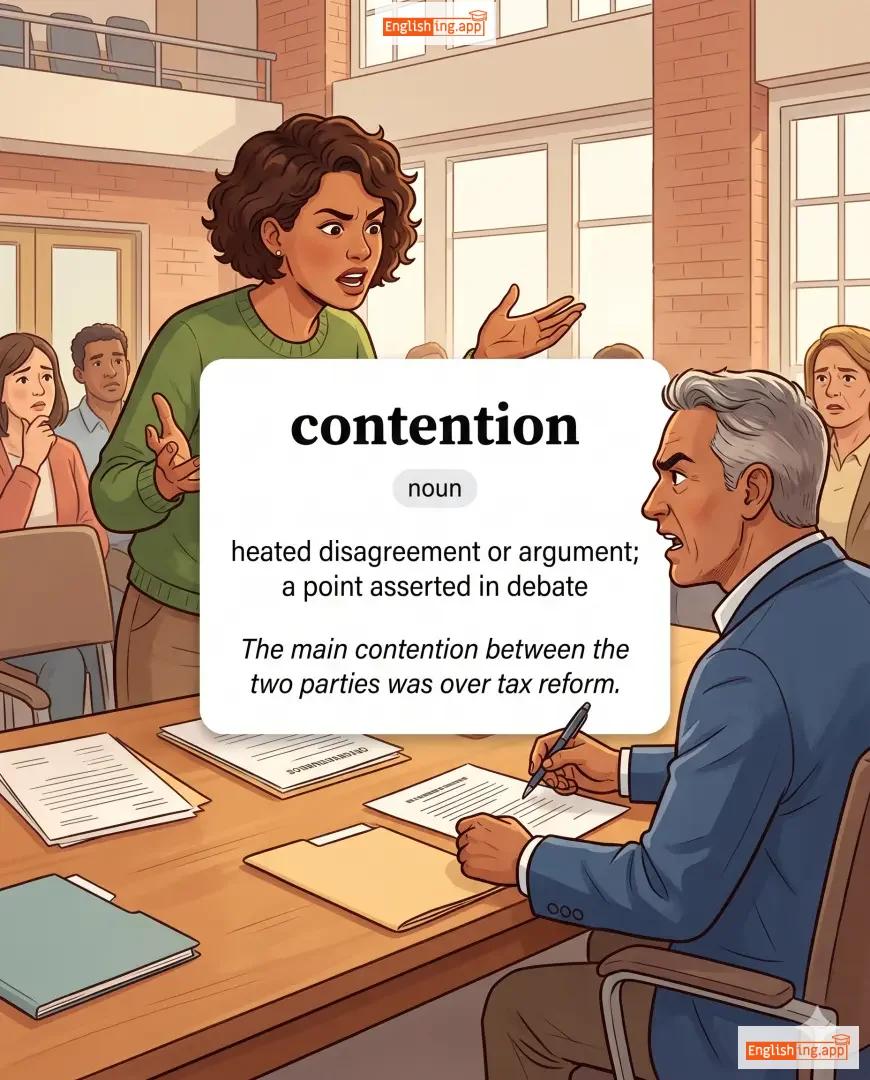
heated disagreement or argument; a point asserted in debate
••••••
|
The main contention between the two parties was over tax reform. |
二つの党派間での主要な争いは税制改革に関するものでした。
Futatsu no tōhakanai de no shuyō na arasoi wa zeisei kaikaku ni kansuru mono deshita.
••••••
|
- •••••• | - •••••• | - •••••• |
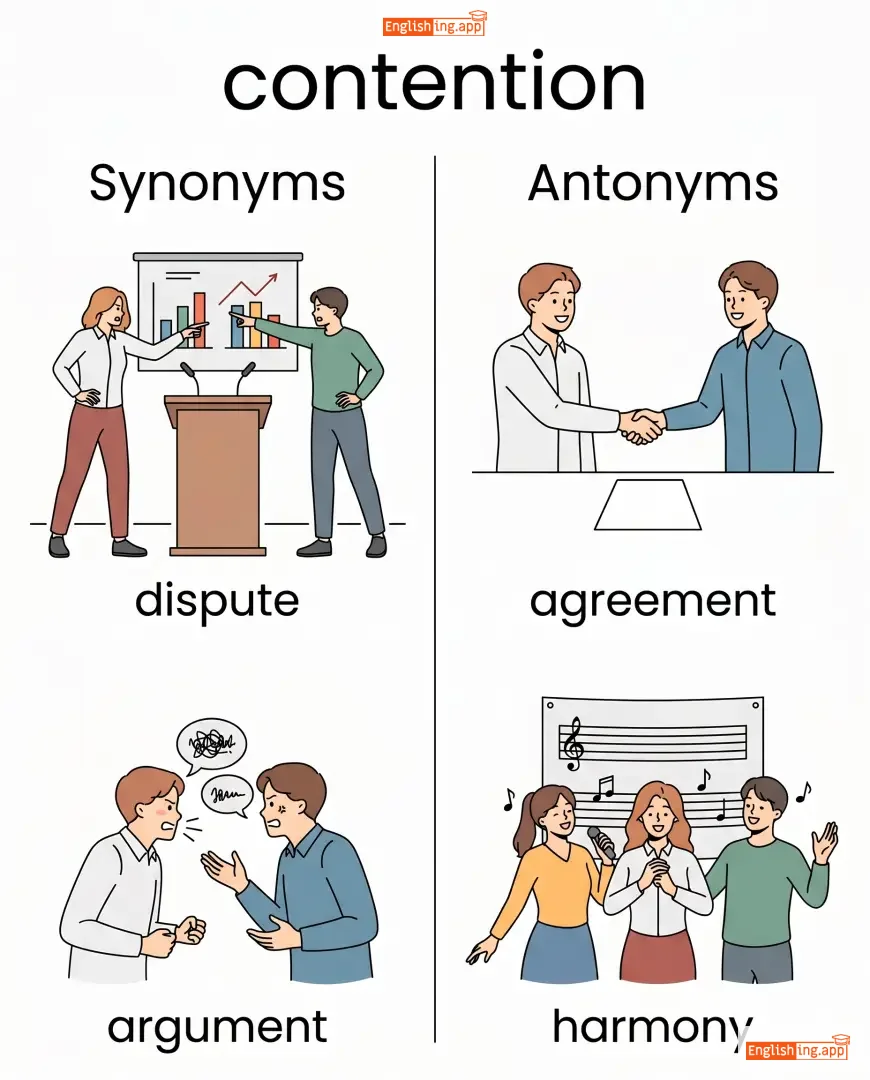
dispute, argument, debate, disagreement
••••••
|
agreement, harmony
••••••
|
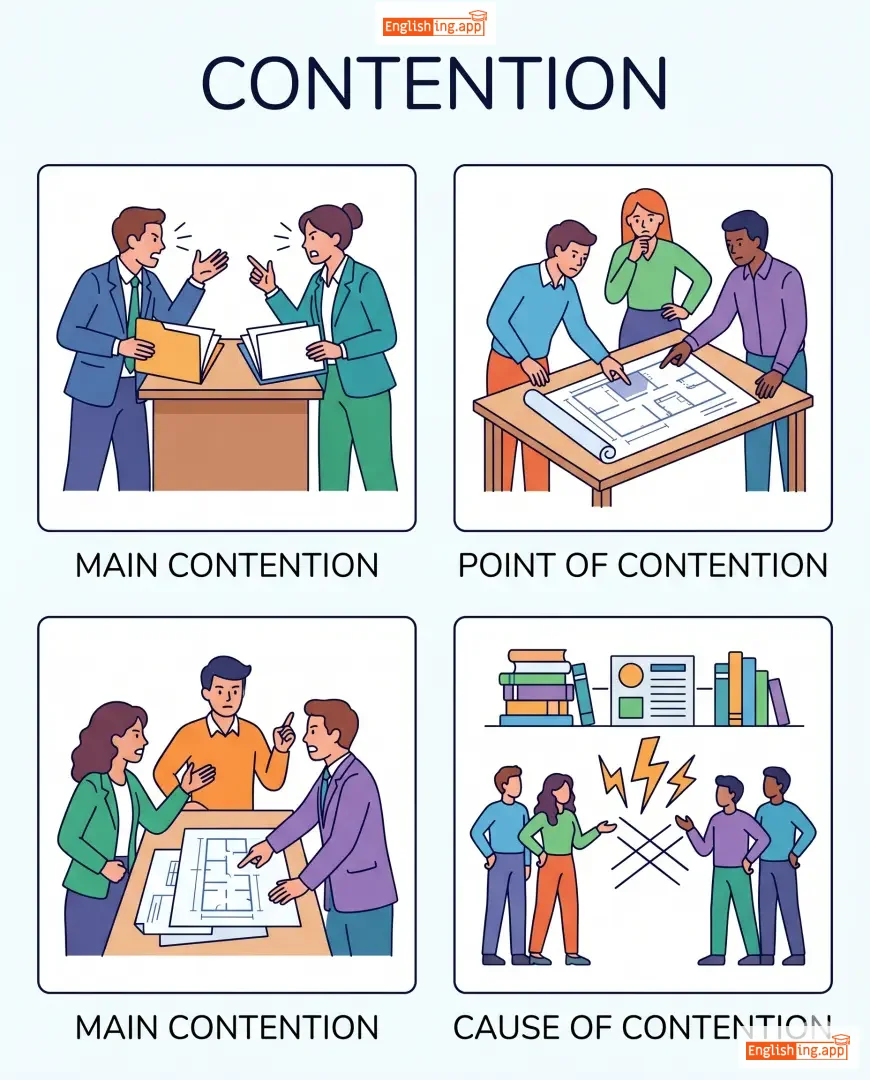
main contention, point of contention, cause of contention, fierce contention
••••••
|
Contention では二つの党派が争っています - Imagine two parties in contention
••••••
|
|
😌
••••••
|
/kənˈtentmənt/
noun
(コンテントメント)
••••••
|
- •••••• |
満足感
manzokukan
••••••
|
- •••••• | - •••••• | - •••••• | - •••••• |
a state of happiness and satisfaction with what one has
••••••
|
She felt a deep sense of contentment after helping others.
シー フェルト ア ディープ センス オブ コンテントメント アフター ヘルピング アザーズ。
••••••
|
他人を助けた後、彼女は深い満足感を感じた。
tanin o tasuketa ato kanojo wa fukai manzokukan o kanjita
••••••
|
a feeling of contentment
ア フィーリング オブ コンテントメント
••••••
|
a sense of being satisfied and at peace
••••••
|
満足感のある気持ち
manzokukan no aru kimochi
••••••
|
satisfaction, fulfillment, happiness, peace, serenity
••••••
|
discontent, dissatisfaction, unhappiness
••••••
|
sense of contentment, deep contentment, quiet contentment, lasting contentment
••••••
|
Contentment = コンテント → 心が満足。
••••••
|
|
🏆
••••••
|
/ˈkɒntɛst/
verb, noun
(コンテスト)
••••••
|
- •••••• |
競技, 挑戦
kyougi, chousen
••••••
|
contested
コンテステッド
••••••
|
contested
コンテステッド
••••••
|
contests
コンテスツ
••••••
|
contesting
コンテスティング
••••••
|
verb: to compete or challenge; noun: a competition or dispute
••••••
|
She decided to contest the election against the incumbent.
シー ディサイデッド トゥ コンテスト ザ イレクション アゲインスト ザ インカンベント
••••••
|
彼女は現職に対して選挙に挑戦することを決定しました。
Kanojo wa genshoku ni taishite senkyo ni chousen suru koto o kettei shimashita.
••••••
|
- •••••• | - •••••• | - •••••• |
compete, challenge, vie, dispute
••••••
|
yield, concede
••••••
|
contest an election, contest a decision, contest results, fiercely contest
••••••
|
Contest = 競技や挑戦、選挙コンテスト
••••••
|
|
📖
••••••
|
/ˈkɒntɛkst/
noun
(コンテキスト)
••••••
|
- •••••• |
文脈
bunmyaku
••••••
|
- •••••• | - •••••• | - •••••• | - •••••• |
the circumstances or background relevant to an event, statement, or idea
••••••
|
To understand the quote, you need to know the context in which it was said. |
引用を理解するには、それが言われた文脈を知っている必要があります。
Inyō o rikai suru ni wa, sore ga iwareta bunmyaku o shitte iru hitsuyō ga arimasu.
••••••
|
- •••••• | - •••••• | - •••••• |
background, circumstances, setting, situation
••••••
|
isolation, disconnection
••••••
|
historical context, in context, social context, provide context
••••••
|
文脈 = 物事の背景を理解する - Think of the situation in which something happens
••••••
|
|
🌍
••••••
|
/ˈkɒntɪnənt/
noun
(kontinent)
••••••
|
- •••••• |
大陸
tairiku
••••••
|
- •••••• | - •••••• | - •••••• | - •••••• |
one of the large landmasses on Earth such as Asia, Africa, or Europe
••••••
|
Asia is the largest continent in the world. |
アジアは世界で最も大きな大陸です。
Ajia wa sekai de mottomo ōkina tairiku desu.
••••••
|
- •••••• | - •••••• | - •••••• |
landmass, region, area, territory
••••••
|
island, ocean
••••••
|
African continent, European continent, across the continent, continental drift
••••••
|
大陸は「たくさんの土地が広がる場所」、アジアは最大の大陸!
••••••
|
|
🔄
••••••
|
/kənˈtɪnjuəli/
adverb
(コンティニュアリー)
••••••
|
- •••••• |
絶えず; 繰り返し
taezu; kurikaeshi
••••••
|
- •••••• | - •••••• | - •••••• | - •••••• |
without stopping; repeatedly
••••••
|
She continually checked her phone for messages.
彼女はメッセージのために絶えず電話を確認しました。
••••••
|
彼女はメッセージのために絶えず電話を確認しました。
Kanojo wa messeeji no tame ni taezu denwa o kakunin shimashita.
••••••
|
- •••••• | - •••••• | - •••••• |
constantly, repeatedly, persistently, incessantly
••••••
|
occasionally, rarely, intermittently, sporadically
••••••
|
continually improving, continually evolving, continually changing
••••••
|
In Japanese, '絶えず' means continually, just like you keep checking your phone for messages!
••••••
|
|
➡️
••••••
|
/kənˈtɪnjuː/
verb
(コンティニュー)
••••••
|
- •••••• |
続ける
tsuzukeru
••••••
|
continued
コンティニュード
••••••
|
continued
コンティニュード
••••••
|
continues
コンティニュース
••••••
|
continuing
コンティニュイング
••••••
|
To keep happening, existing, or doing something without stopping.
••••••
|
The rain will continue throughout the night.
雨は一晩中続きます。
••••••
|
雨は一晩中続きます。
Ame wa hitobanju tsudzukimasu.
••••••
|
continue on
続けて進む
••••••
|
to persist or move forward despite difficulties
••••••
|
進み続ける
susumitsudzukeru
••••••
|
persist, proceed, endure, carry on, keep going
••••••
|
stop, cease, quit
••••••
|
continue working, continue education, continue efforts, continue journey
••••••
|
Continueは進み続ける、止まらない雨のように。
••••••
|
|
➡️
••••••
|
/kənˈtɪn.juːd/
verb
(kontinyuudo)
••••••
|
- •••••• |
続ける
tsuzukeru
••••••
|
continued
kontinyuudo
••••••
|
continued
kontinyuudo
••••••
|
continues
kontinyuuzu
••••••
|
continuing
kontinyuingu
••••••
|
Kept happening or carried on without stopping.
••••••
|
She continued working despite the challenges.
彼女は挑戦にもかかわらず働き続けました。
••••••
|
彼女は挑戦にもかかわらず働き続けました。
Kanojo wa chousen ni mo kakawarazu hatarakitsuzukemashita.
••••••
|
to be continued
次回に続く
••••••
|
Phrase indicating that a story or sequence is not yet finished.
••••••
|
次回に続く
Jikai ni tsuzuku
••••••
|
persisted, carried on, lasted, endured, prolonged
••••••
|
stopped, ended, ceased
••••••
|
continued effort, continued support, continued growth, to be continued
••••••
|
Continuedは物事が終わらず続いていることを意味します。
••••••
|
|
📈
••••••
|
/kənˈtɪn.ju.əs/
adjective
(kontinyuus)
••••••
|
- •••••• |
連続的
renzokuteki
••••••
|
- •••••• | - •••••• | - •••••• | - •••••• |
forming an unbroken whole; without interruption
••••••
|
The factory operates on a continuous 24-hour schedule.
工場は24時間連続したスケジュールで稼働しています。
••••••
|
工場は24時間連続したスケジュールで稼働しています。
Koujou wa 24 jikan renzokushita sukejuuru de kadou shiteimasu.
••••••
|
- •••••• | - •••••• | - •••••• |
uninterrupted, unbroken, constant, perpetual
••••••
|
intermittent, broken, sporadic
••••••
|
continuous operation, continuous improvement, continuous flow
••••••
|
Continuousは日本語で連続的、工場が途切れずに働き続けるようなものです。
••••••
|
|
➡️
••••••
|
/kənˈtɪnjuəsli/
adverb
(konteinyuarushi)
••••••
|
- •••••• |
連続的に; 絶え間なく; 途切れることなく
renzokuteki ni; taemanaku; togereru koto naku
••••••
|
- •••••• | - •••••• | - •••••• | - •••••• |
without interruption; in an unbroken sequence
••••••
|
The machine operates continuously for 24 hours.
その機械は24時間連続して稼働します。
••••••
|
その機械は24時間連続して稼働します。
sono kikai wa 24 jikan renzoku shite kadō shimasu.
••••••
|
- •••••• | - •••••• | - •••••• |
constantly, uninterruptedly, without pause, ceaselessly
••••••
|
intermittently, occasionally, sporadically, discontinuously
••••••
|
continuously running, continuously operating, continuously monitoring
••••••
|
In Japanese, '連続的に' (renzokuteki ni) means 'continuously', just like in English, it represents something unbroken.
••••••
|
|
📄
••••••
|
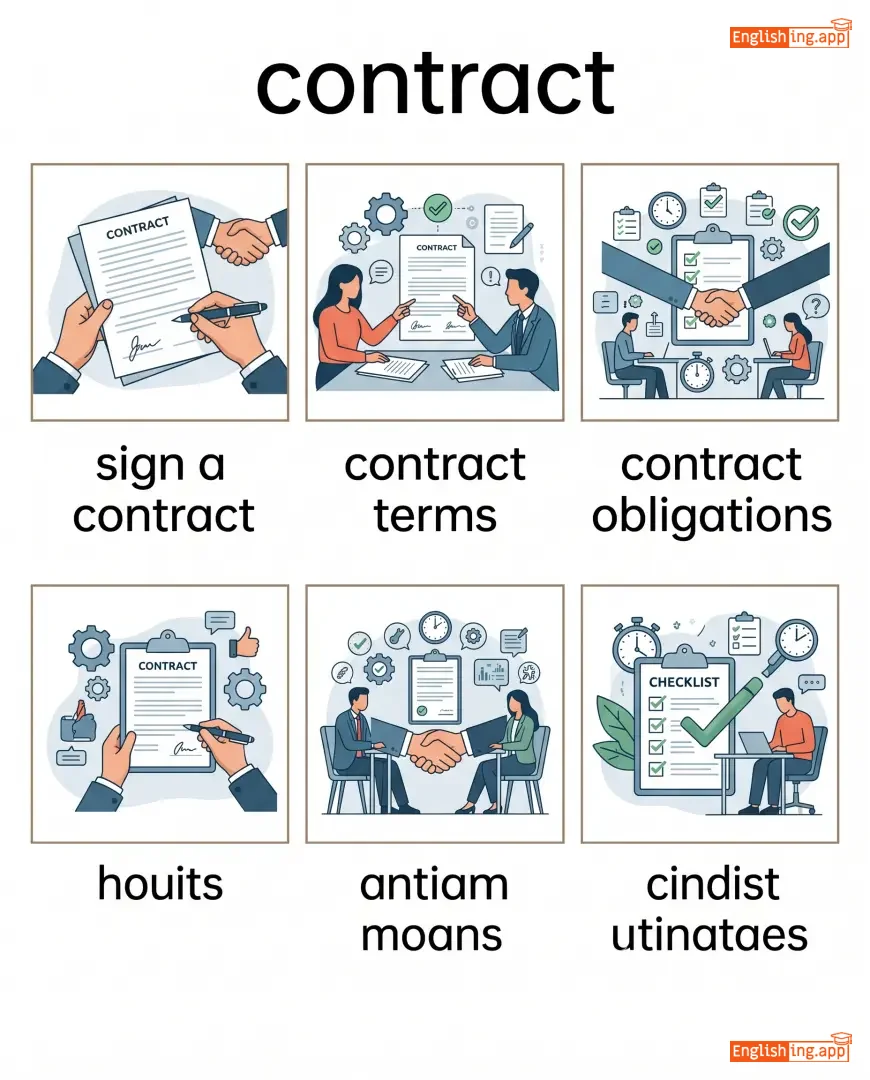
/ˈkɒntrækt/
verb
(kontratto)
••••••
|

|
契約する
keiyaku suru
••••••
|
contracted
kontrakuto
••••••
|
contracted
kontrakuto
••••••
|
contracts
kontrakuto
••••••
|
contracting
kontrakuto
••••••
|
to make smaller; to enter into a formal agreement
••••••
|
The company will contract a new supplier for materials.
kaisha wa shin no supuraia o chūryo shimasu.
••••••
|
会社は新しい供給者と契約を結ぶでしょう。
Kaisha wa atarashī kyōkyūsha to keiyaku o musubu deshō.
••••••
|
- •••••• | - •••••• | - •••••• |
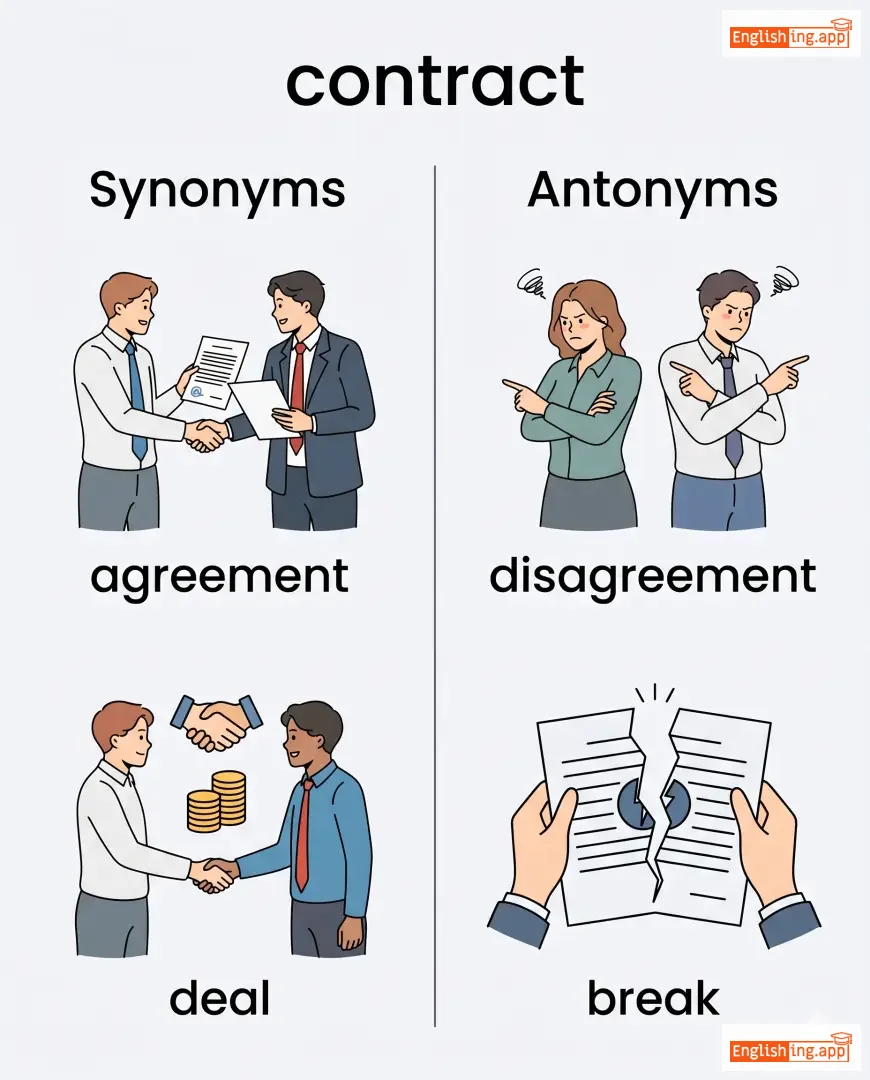
shrink, reduce, agree, hire
••••••
|
expand, extend, dissolve, cancel
••••••
|
contract work, contract services, contract terms, sign contract
••••••
|
契約することで安全を確保し、繁栄を約束します。
••••••
|
|
🏗️
••••••
|
/ˈkɒntræktər/
noun
(コントラクター)
••••••
|
- •••••• |
請負業者
ukeoi gyōsha
••••••
|
- •••••• | - •••••• | - •••••• | - •••••• |
a person or company that agrees to provide materials or labor to perform a service or do a job
••••••
|
The contractor completed the building project on time. |
請負業者は建設プロジェクトを期限内に完了しました。
Ukeoi gyōsha wa ken'etsu purojekuto o kigen-nai ni kanryō shimashita.
••••••
|
general contractor |
a person or company responsible for overseeing a construction project
••••••
|
元請業者
moto ukeoi gyōsha
••••••
|
builder, supplier, provider, constructor, vendor
••••••
|
client, employee
••••••
|
building contractor, general contractor, independent contractor, government contractor
••••••
|
請負業者は契約を結んで仕事をする人—'contractor'を覚えておこう。
••••••
|
|
⚡
••••••
|
/ˌkɑn.trəˈdɪk.ʃən/
noun
(コントラディクション)
••••••
|
- •••••• |
矛盾; 不一致
mōdun, fuicchi
••••••
|
- •••••• | - •••••• | - •••••• | - •••••• |
a combination of statements, ideas, or features which are opposed to one another; inconsistency
••••••
|
There was a clear contradiction between his words and his actions. |
彼の言葉と行動の間には明確な矛盾がありました。
Kare no kotoba to kōdō no aida ni wa meikaku na mōdun ga arimashita.
••••••
|
- •••••• | - •••••• | - •••••• |
inconsistency, conflict, opposition, paradox
••••••
|
consistency, agreement, harmony, accord
••••••
|
direct contradiction, logical contradiction, contradiction in terms
••••••
|
Contradiction in Japanese = '矛盾' = opposition of thoughts
••••••
|
|
↔️
••••••
|
/ˈkɒn.trəri/
adjective
(コントゥレリ)
••••••
|
- •••••• |
反対の
hantai no
••••••
|
- •••••• | - •••••• | - •••••• | - •••••• |
opposite in nature, direction, or meaning
••••••
|
Her views are contrary to mine. |
彼女の意見は私の意見と反対です。
Kanojo no iken wa watashi no iken to hantai desu.
••••••
|
on the contrary |
used to state that the opposite of what has been said is true
••••••
|
その反対
sono hantai
••••••
|
opposite, conflicting, opposed, inconsistent
••••••
|
similar, agreeing, consistent
••••••
|
contrary opinion, contrary evidence, contrary result, contrary to
••••••
|
Contrary は日本語で反対を意味します。反対は違う方向を指します。
••••••
|
|
⚖️
••••••
|
/ˈkɒn.trɑːst/ (noun), /kənˈtræst/ (verb)
noun, verb
(ハピネス)
••••••
|
|
幸せ
shiawase
••••••
|
contrasted
••••••
|
contrasted
••••••
|
contrasts
••••••
|
contrasting
••••••
|
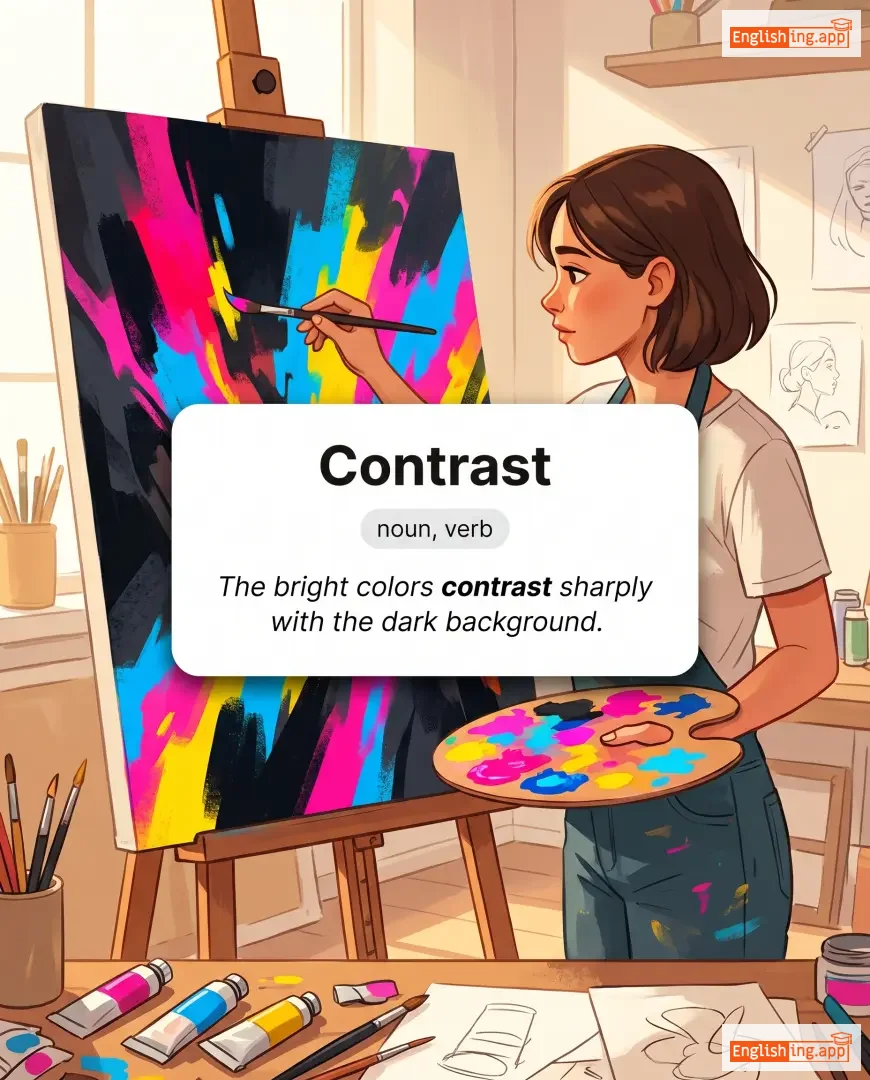
A difference between two or more things; to compare two things to show how they are different.
••••••
|
The bright colors contrast sharply with the dark background. |
彼女は賞を受け取ったとき、自分の幸せを隠せなかった。
Kanojo wa shō o uketotta toki, jibun no shiawase o kakusenakatta.
••••••
|
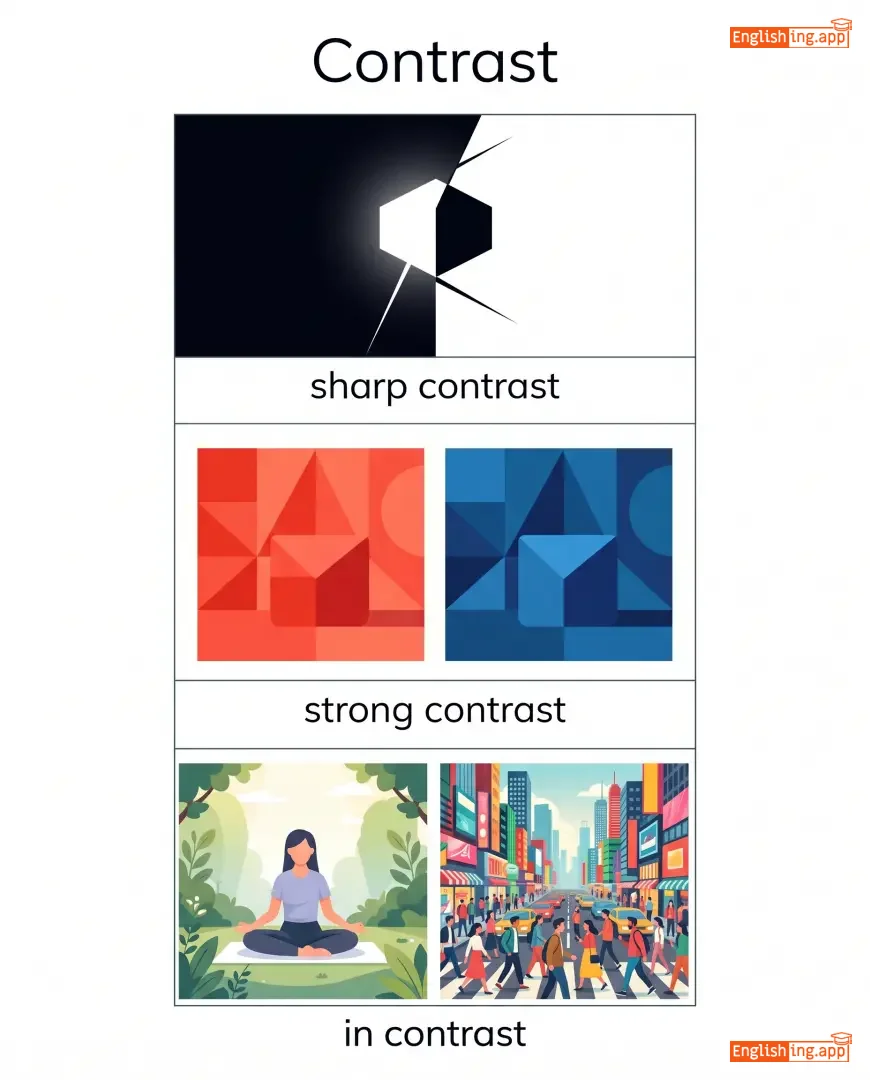
in contrast |
Used to show a clear difference between two things.
••••••
|
幸せを求めて
shiawase o motomete
••••••
|
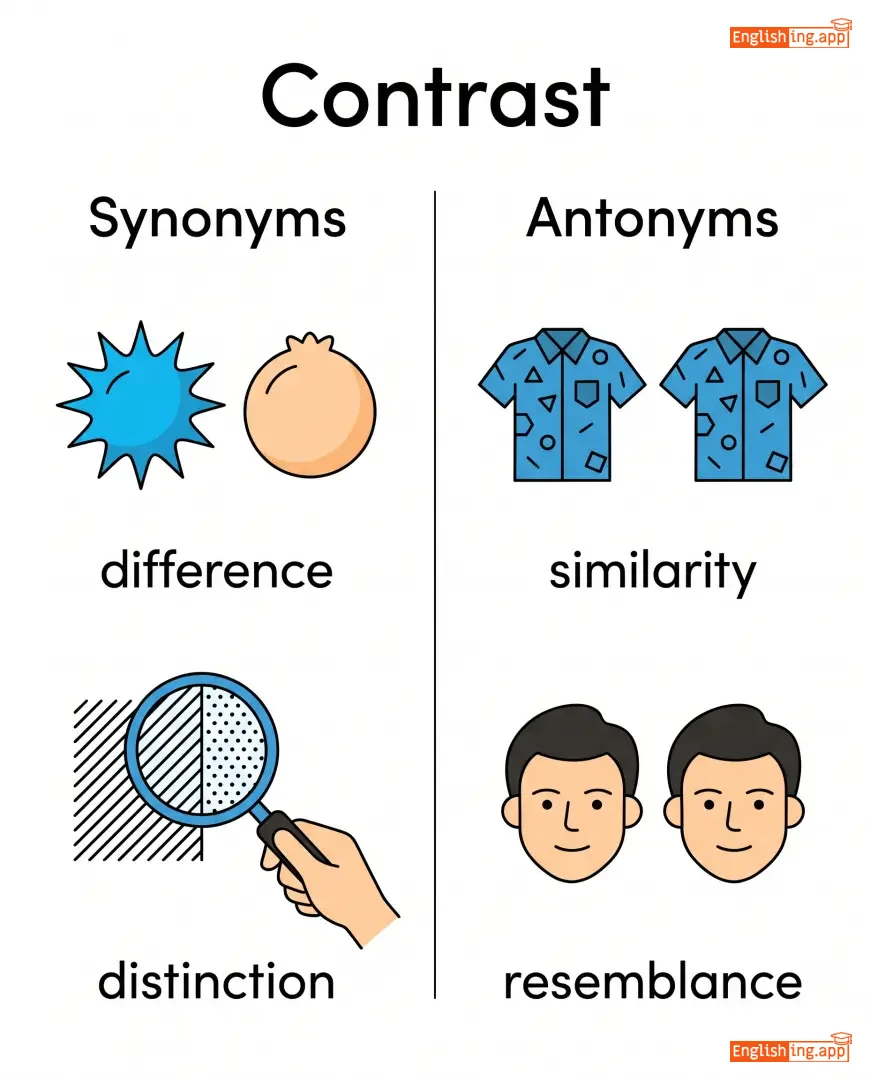
difference, distinction, divergence, comparison
••••••
|
similarity, resemblance
••••••
|
sharp contrast, strong contrast, in contrast, contrast between
••••••
|
幸せは毎日が楽しいことで生まれる。
••••••
|
|
🤲
••••••
|
/kənˈtrɪbjuːt/
verb
••••••
|
|
- •••••• |
contributed
••••••
|
contributed
••••••
|
contributes
••••••
|
contributing
••••••
|
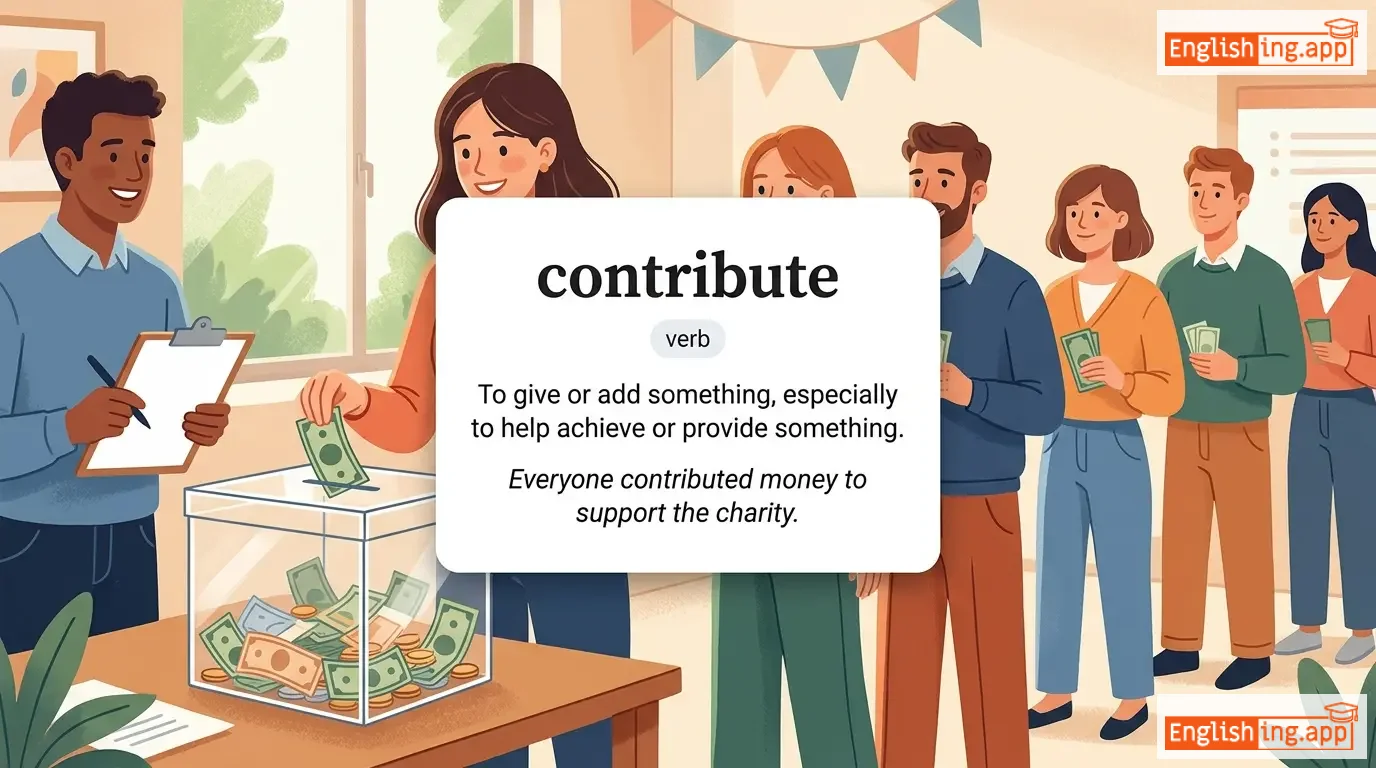
To give or add something, especially to help achieve or provide something.
••••••
|
Everyone contributed money to support the charity. |
- •••••• |
contribute to |
To help bring about or cause something.
••••••
|
- •••••• |
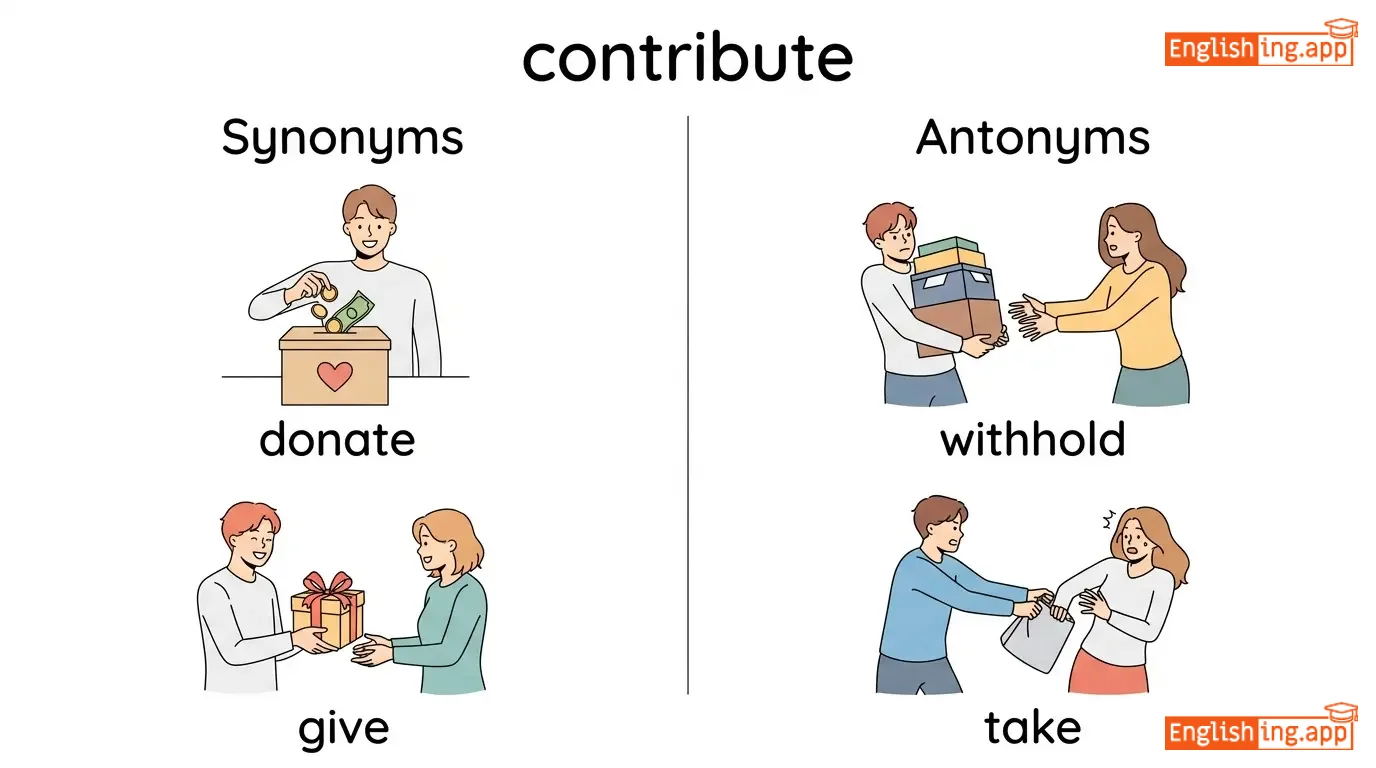
donate, give, provide, supply, add
••••••
|
withhold, take
••••••
|
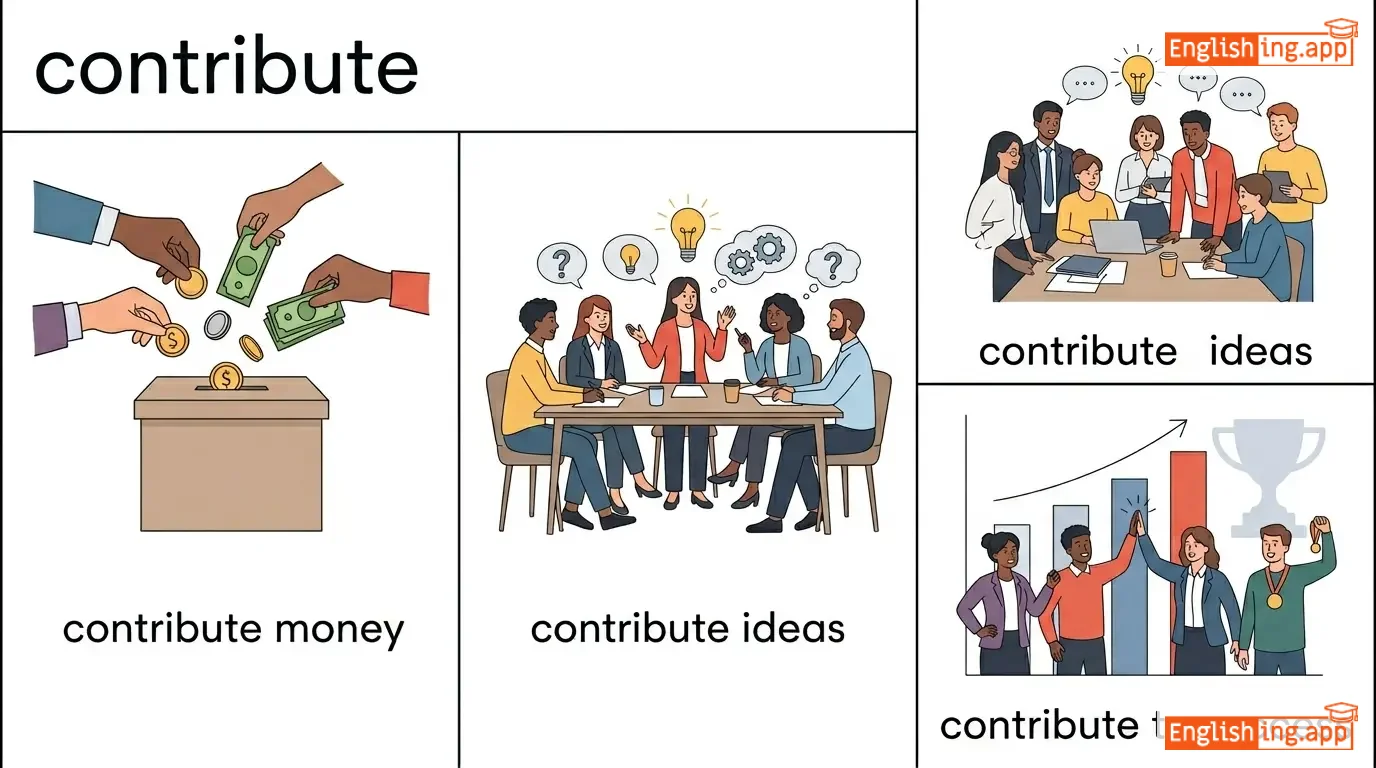
contribute money, contribute ideas, contribute to success, contribute significantly
••••••
|
No •••••• |
|
💝
••••••
|
/ˌkɒn.trɪˈbjuː.ʃən/
noun
(コン・トリ・ビュー・ション)
••••••
|
|
貢献
kouken
••••••
|
- •••••• | - •••••• | - •••••• | - •••••• |
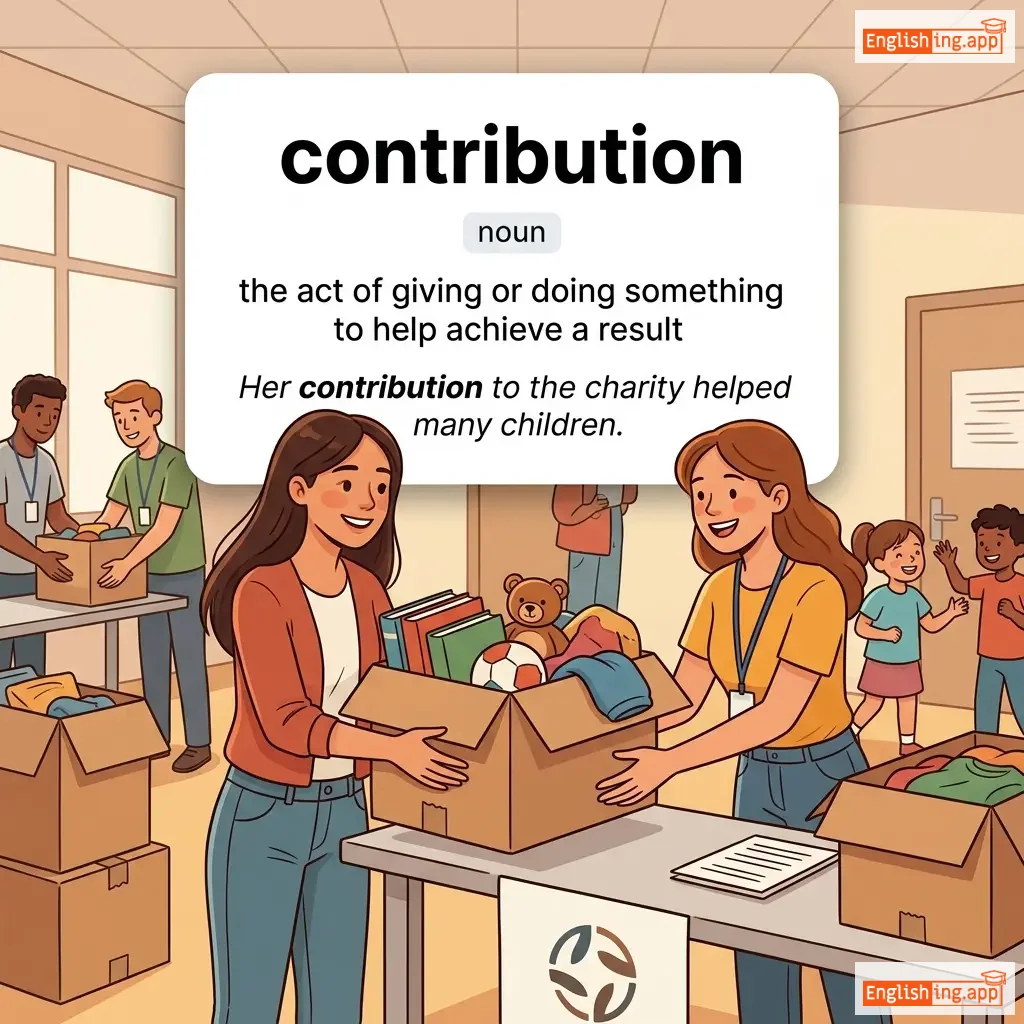
the act of giving or doing something to help achieve a result
••••••
|
Her contribution to the charity helped many children. |
彼女の慈善活動への貢献は多くの子供たちを助けました。
Kanojo no jizen katsudou e no kouken wa ooku no kodomotachi o tasukemashita.
••••••
|
- •••••• | - •••••• | - •••••• |
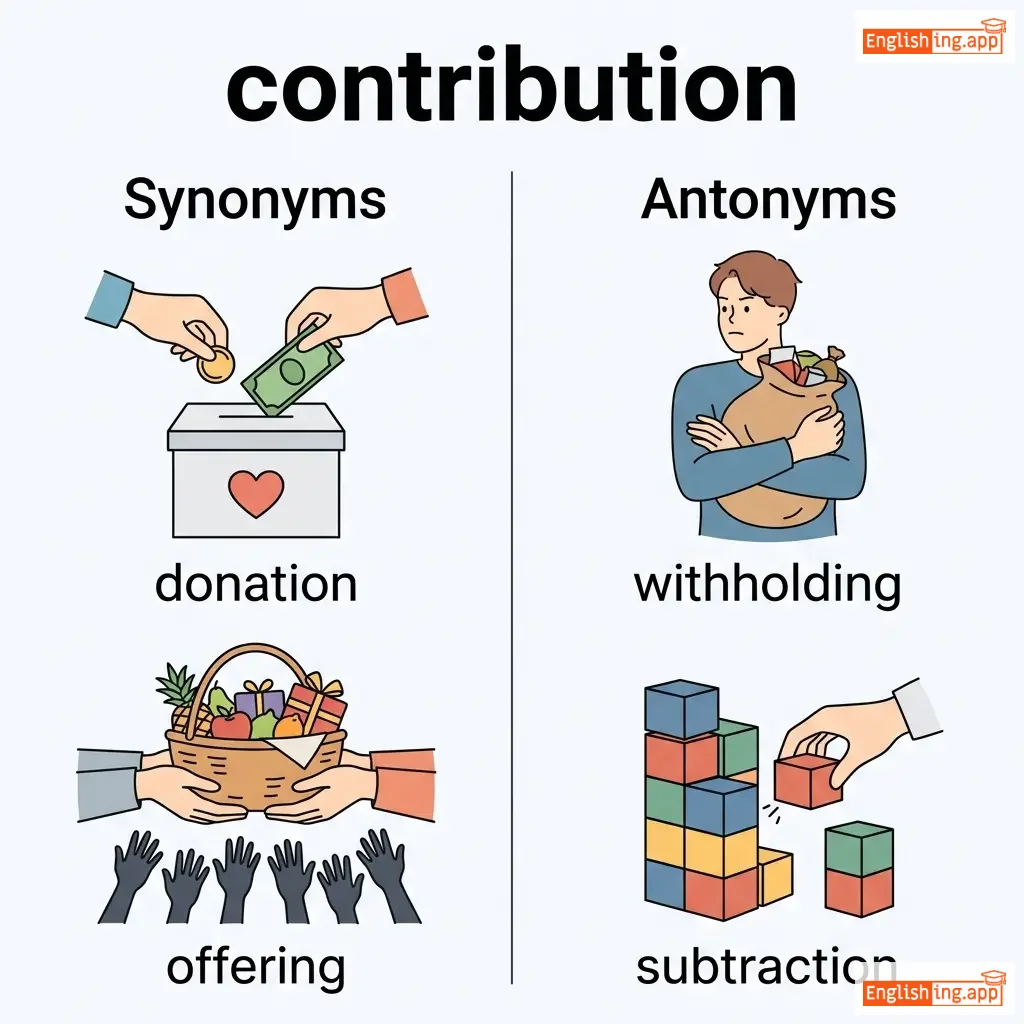
donation, offering, input, gift, aid
••••••
|
withholding, subtraction
••••••
|
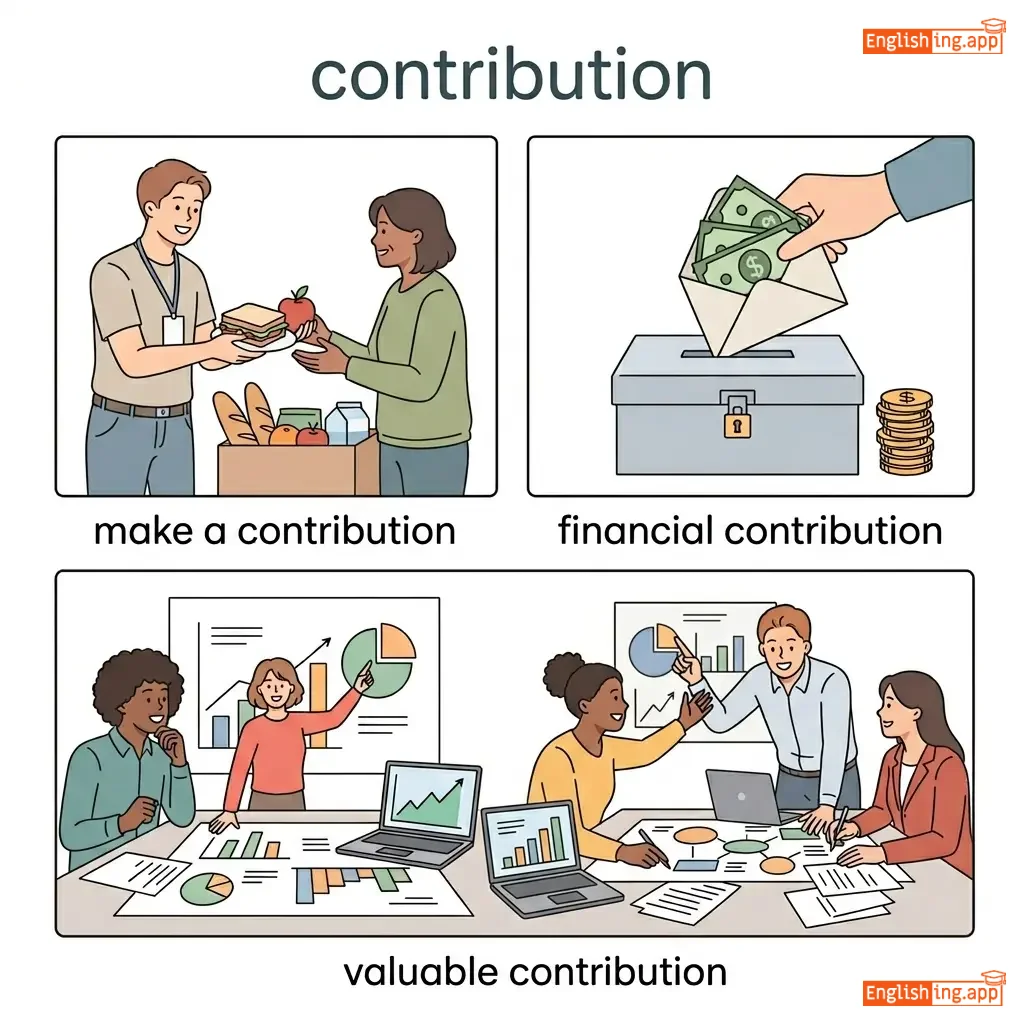
make a contribution, financial contribution, valuable contribution, contribution to society
••••••
|
貢献は社会の一部として貢献すること
••••••
|
|
📝
••••••
|
/ˈkɒn.trɪ.bjʊ.tər/
noun
(コン・トリビュート・ター)
••••••
|
- •••••• |
貢献者
kōken-sha
••••••
|
- •••••• | - •••••• | - •••••• | - •••••• |
a person who gives something to help achieve a result
••••••
|
He was a regular contributor to the local newspaper. |
彼は地元の新聞の定期的な貢献者でした。
Kare wa jimoto no shinbun no teikiteki na kōken-sha deshita.
••••••
|
- •••••• | - •••••• | - •••••• |
donor, supporter, benefactor, participant, giver
••••••
|
noncontributor, opponent
••••••
|
major contributor, active contributor, financial contributor, regular contributor
••••••
|
Contributor は貢献 (kōken) をする人です
••••••
|
|
🎮
••••••
|
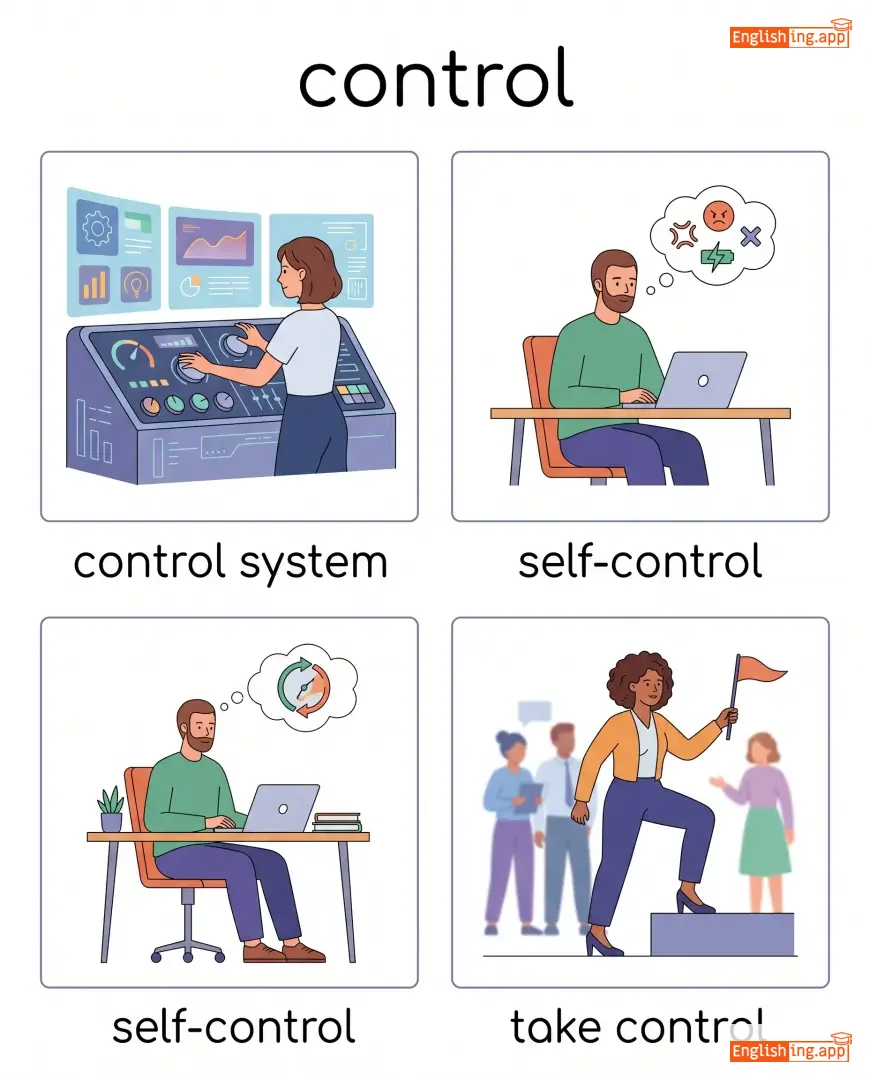
/kənˈtroʊl/
verb
(コントロール)
••••••
|
|
管理する
kanri suru
••••••
|
controlled
コントロールド
••••••
|
controlled
コントロールド
••••••
|
controls
コントロールズ
••••••
|
controlling
コントローリング
••••••
|
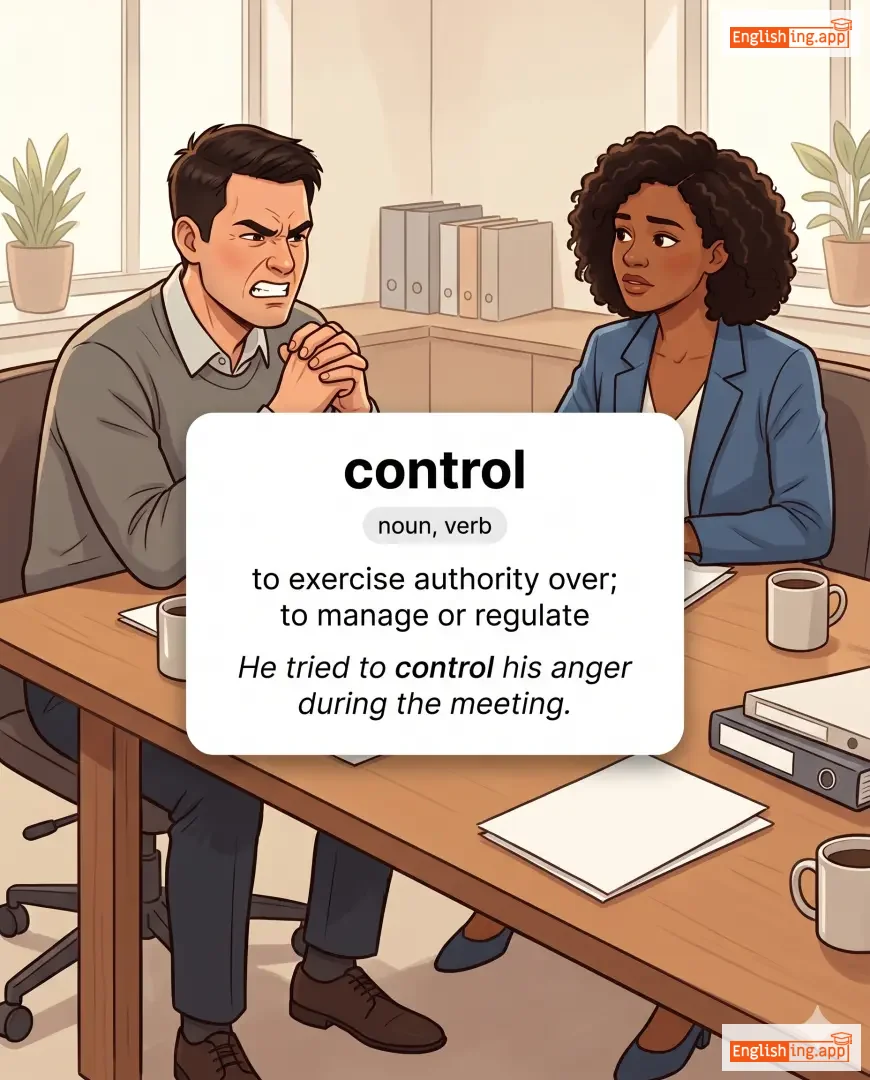
to have power over; to manage or regulate
••••••
|
She controls the company's financial decisions.
彼女は会社の財務に関する決定を管理している。
••••••
|
彼女は会社の財務に関する決定を管理している。
Kanojo wa kaisha no zaimu ni kansuru kettei o kanri shite iru
••••••
|
- •••••• | - •••••• | - •••••• |
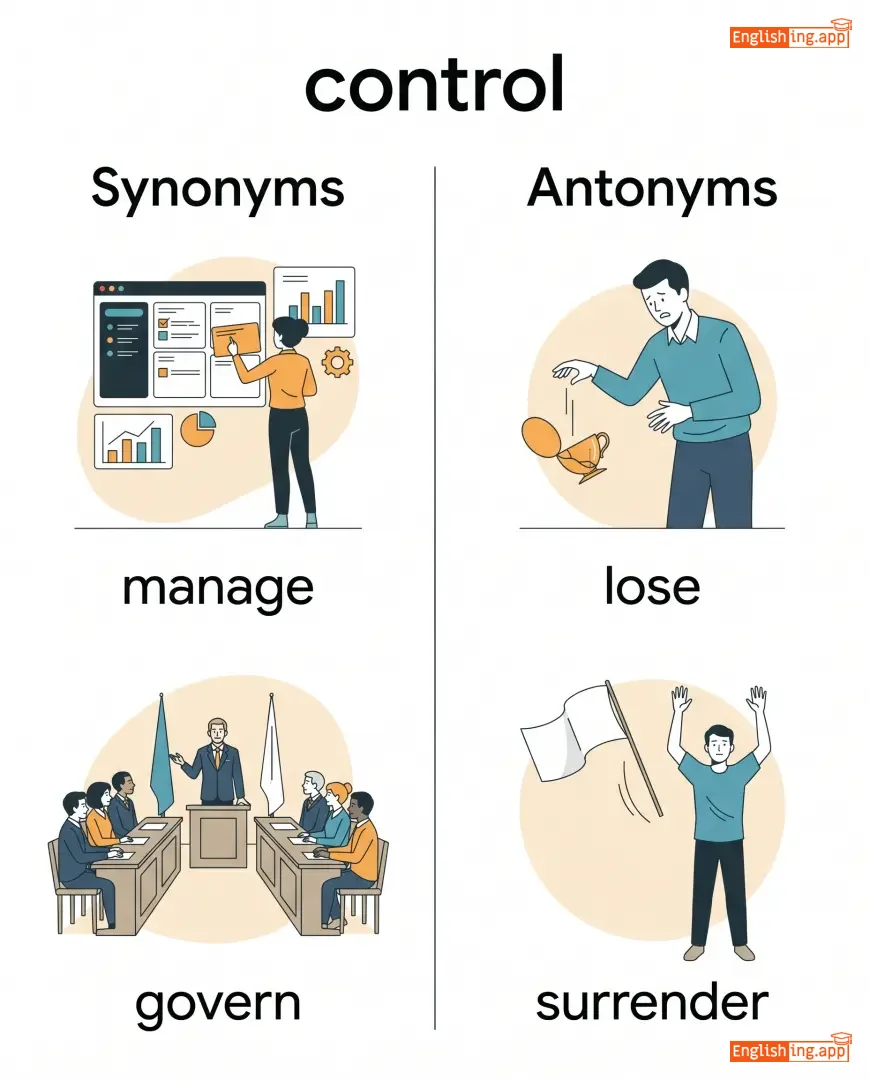
manage, regulate, command, govern
••••••
|
release, free, lose, abandon
••••••
|
control yourself, control emotions, remote control, under control
••••••
|
コントロール = control。イメージは『can + roll』で何でも回せるので管理できる。コントロールするときは管理する = kanri suru。
••••••
|
|
🎛️
••••••
|
/kənˈtroʊld/
adjective
(コントロールド)
••••••
|
- •••••• |
管理された
kanri sareta
••••••
|
- •••••• | - •••••• | - •••••• | - •••••• |
managed or regulated carefully; kept within limits
••••••
|
The experiment was conducted in a controlled environment.
ジ エクスペリメント ワズ コンデクティッド イン ア コントロールド エンバイロンメント。
••••••
|
実験は管理された環境で行われました。
jikken wa kanri sareta kankyo de okonawaremashita
••••••
|
controlled substance
コントロールド サブスタンス
••••••
|
a drug or chemical whose use is regulated by law
••••••
|
規制物質
kisei busshitsu
••••••
|
regulated, managed, restrained, supervised, disciplined
••••••
|
uncontrolled, chaotic, unrestrained
••••••
|
controlled environment, controlled experiment, controlled conditions, tightly controlled
••••••
|
コントロールされている=controlled
••••••
|
|
🎮
••••••
|
/kənˈtroʊlər/
noun
(コントローラー)
••••••
|
- •••••• |
コントローラー
kontorōrā
••••••
|
- •••••• | - •••••• | - •••••• | - •••••• |
a person or device that manages, directs, or regulates something
••••••
|
The game controller made it easy to play the video game. |
ゲームコントローラーはビデオゲームを簡単にプレイできるようにしました。
Gēmu kontorōrā wa bideo gēmu o kantan ni purei dekiru yō ni shimashita.
••••••
|
- •••••• | - •••••• | - •••••• |
manager, operator, regulator, supervisor
••••••
|
- •••••• |
flight controller, financial controller, game controller, controller unit
••••••
|
CONTROLLER = 物事をCONTROLする人
••••••
|
|
🔥
••••••
|
/ˌkɒn.trəˈvɜː.ʃəl/
adjective
(コン・トロヴァーシャル)
••••••
|
|
論争のある; 議論される;
ronso no aru; giron sareru
••••••
|
- •••••• | - •••••• | - •••••• | - •••••• |
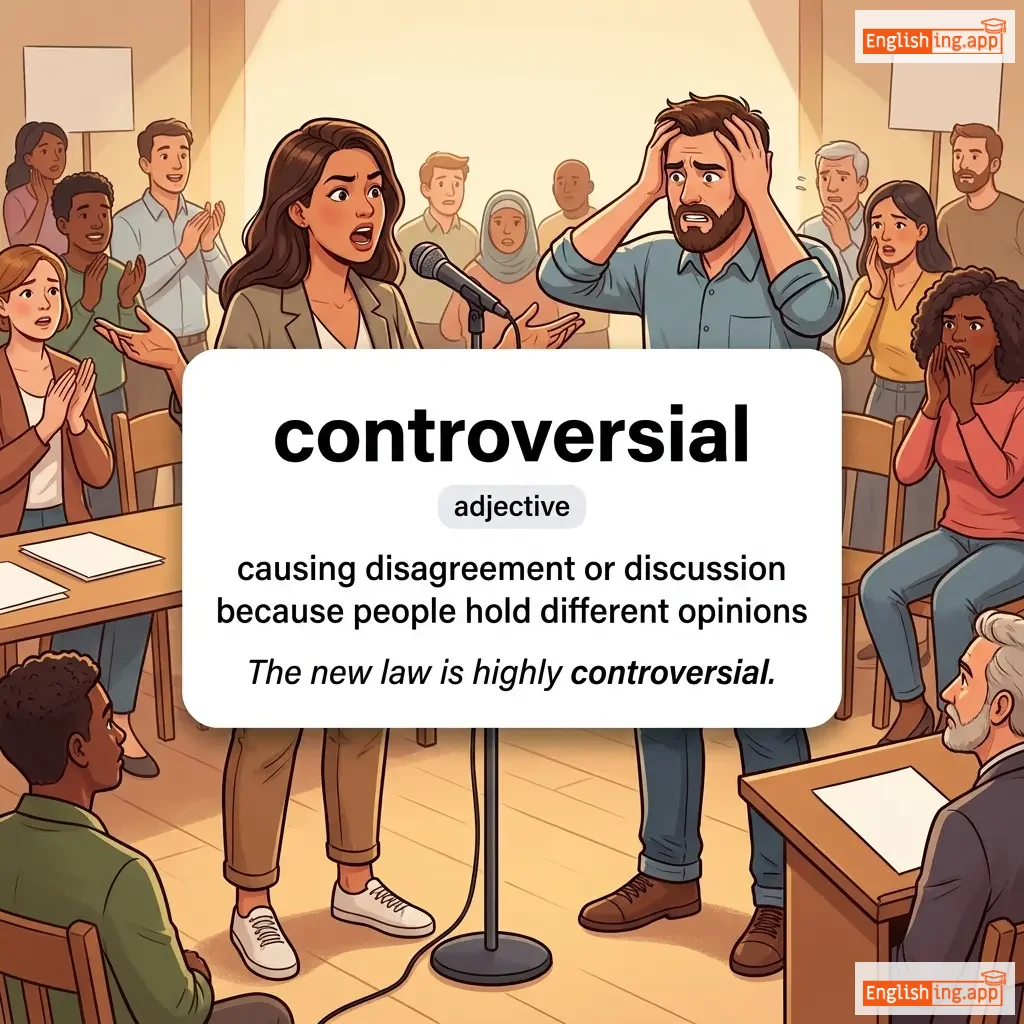
causing disagreement or heated discussion; disputed and debatable
••••••
|
The politician's controversial remarks sparked a heated debate.
政治家の物議を醸す発言は熱い議論を巻き起こしました。
••••••
|
政治家の物議を醸す発言は熱い議論を巻き起こしました。
Seijika no butsu gi o kamosu hatsugen wa atsui giron o makiokoshimashita.
••••••
|
- •••••• | - •••••• | - •••••• |
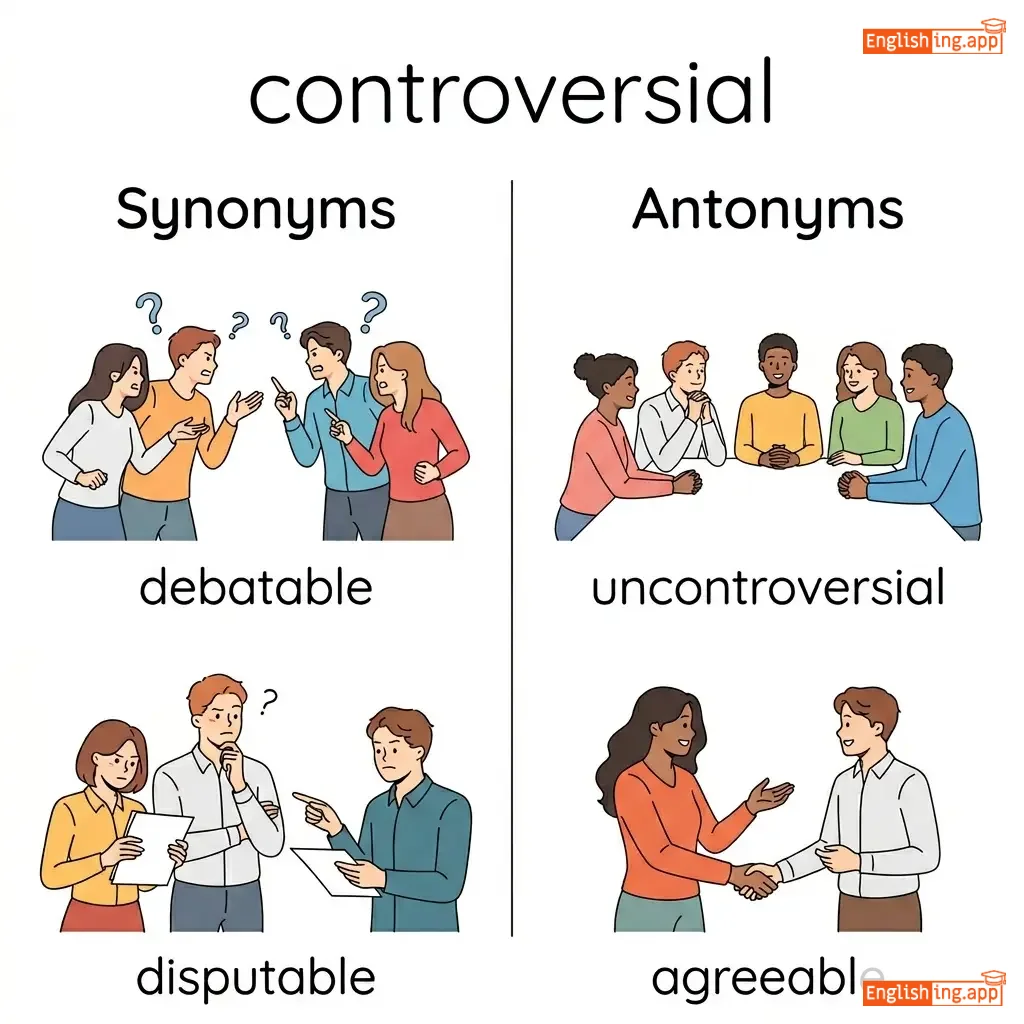
disputed, debatable, contentious, polarizing
••••••
|
uncontroversial, accepted, agreed-upon
••••••
|
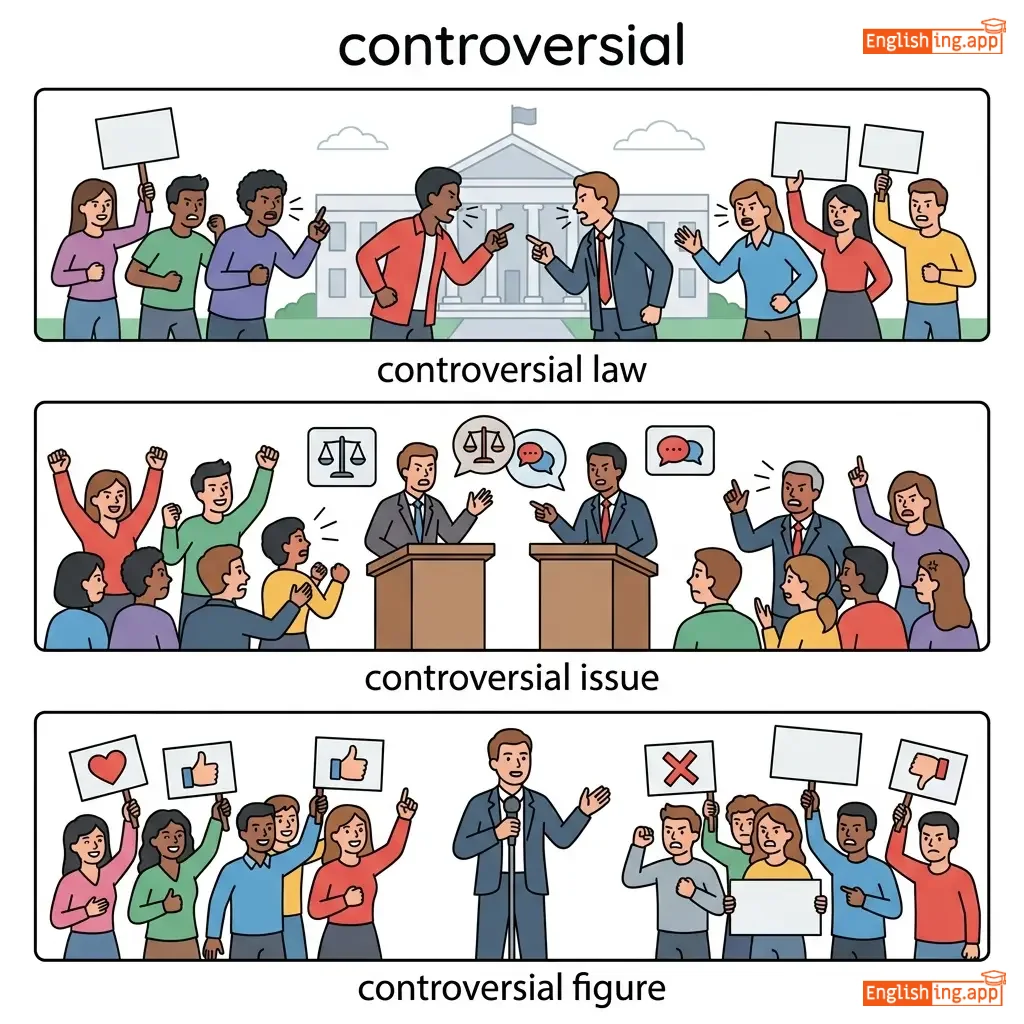
controversial topic, controversial decision, controversial figure
••••••
|
論争のある = 'ロング' + 'ソー' (長い論争)
••••••
|
|
🔥
••••••
|
/ˈkɒn.trə.vɜːr.si/
noun
(コントロバーシー)
••••••
|
- •••••• |
論争
ronzō
••••••
|
- •••••• | - •••••• | - •••••• | - •••••• |
A prolonged public disagreement or heated discussion.
••••••
|
The new policy sparked a major controversy. |
新しい政策が大きな論争を引き起こしました。
Atarashī seisaku ga ōkina ronzō o hikiokoshimashita.
••••••
|
spark controversy |
To cause strong public disagreement or debate.
••••••
|
論争を引き起こす
ronzō o hikiokosu
••••••
|
dispute, argument, debate, conflict, quarrel
••••••
|
agreement, harmony
••••••
|
major controversy, spark controversy, cause controversy, political controversy
••••••
|
Controversyはcontrol + verse、つまり論争を意味します。
••••••
|
|
🛍️
••••••
|
/kənˈviː.ni.əns/
noun
(コンビニエンス)
••••••
|
- •••••• |
便利
benri
••••••
|
- •••••• | - •••••• | - •••••• | - •••••• |
the state of being able to proceed with something without difficulty; a thing that contributes to an easy way of life
••••••
|
The convenience of online shopping has changed how people buy products. |
オンラインショッピングの便利さは、製品を購入する方法を変えました。
Onrain shoppingu no benrisa wa, seihin wo kounyuu suru houhou wo kaemashita.
••••••
|
- •••••• | - •••••• | - •••••• |
ease, comfort, advantage, benefit
••••••
|
inconvenience, difficulty, hardship, trouble
••••••
|
for your convenience, convenience store, modern convenience
••••••
|
Benri = Benri no je!
••••••
|
|
🛒
••••••
|
/kənˈviː.ni.ənt/
adjective
(コンビニエント)
••••••
|
- •••••• |
便利
benri
••••••
|
- •••••• | - •••••• | - •••••• | - •••••• |
suitable or easy to use; fitting in well with one's needs
••••••
|
This shop is convenient for my daily needs.
この店は私の日常的なニーズに便利です。
••••••
|
この店は私の日常的なニーズに便利です。
Kono mise wa watashi no nichijō-tekina nīzu ni benri desu.
••••••
|
at your convenience
あなたの都合の良い時に
••••••
|
whenever it is suitable for you
••••••
|
あなたの都合の良い時に
anata no tsugō no yoi toki ni
••••••
|
handy, suitable, practical, useful
••••••
|
inconvenient, unsuitable, difficult
••••••
|
convenient location, convenient time, convenient way, convenient shop
••••••
|
便利な場所、便利な生活!
••••••
|
|
🎤
••••••
|
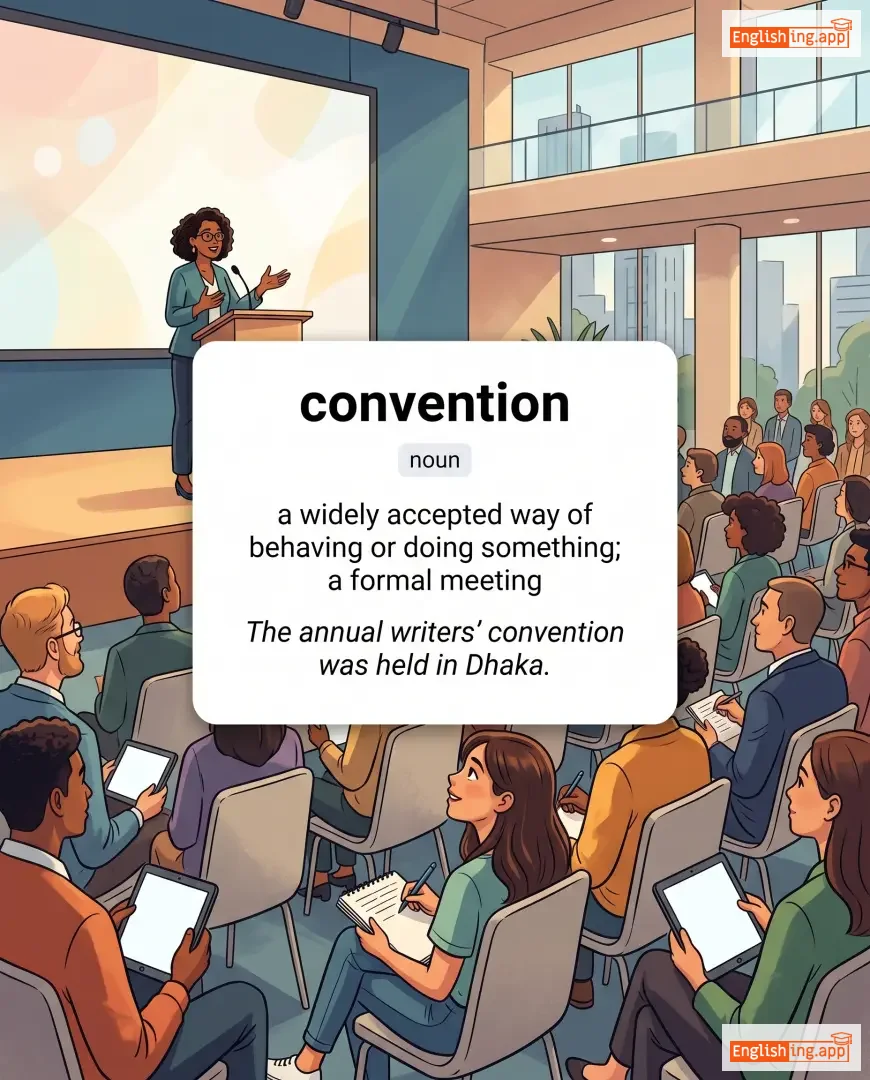
/kənˈvɛnʃən/
noun
(コンベンション)
••••••
|
|
コンベンション
konbenshon
••••••
|
- •••••• | - •••••• | - •••••• | - •••••• |
a widely accepted way of behaving or doing something; a formal meeting
••••••
|
The annual writers' convention was held in Dhaka.
作家の年次コンベンションはダッカで開催されました。
••••••
|
作家の年次コンベンションはダッカで開催されました。
Sakka no nenji konbenshon wa Dakka de kaisai saremashita.
••••••
|
- •••••• | - •••••• | - •••••• |
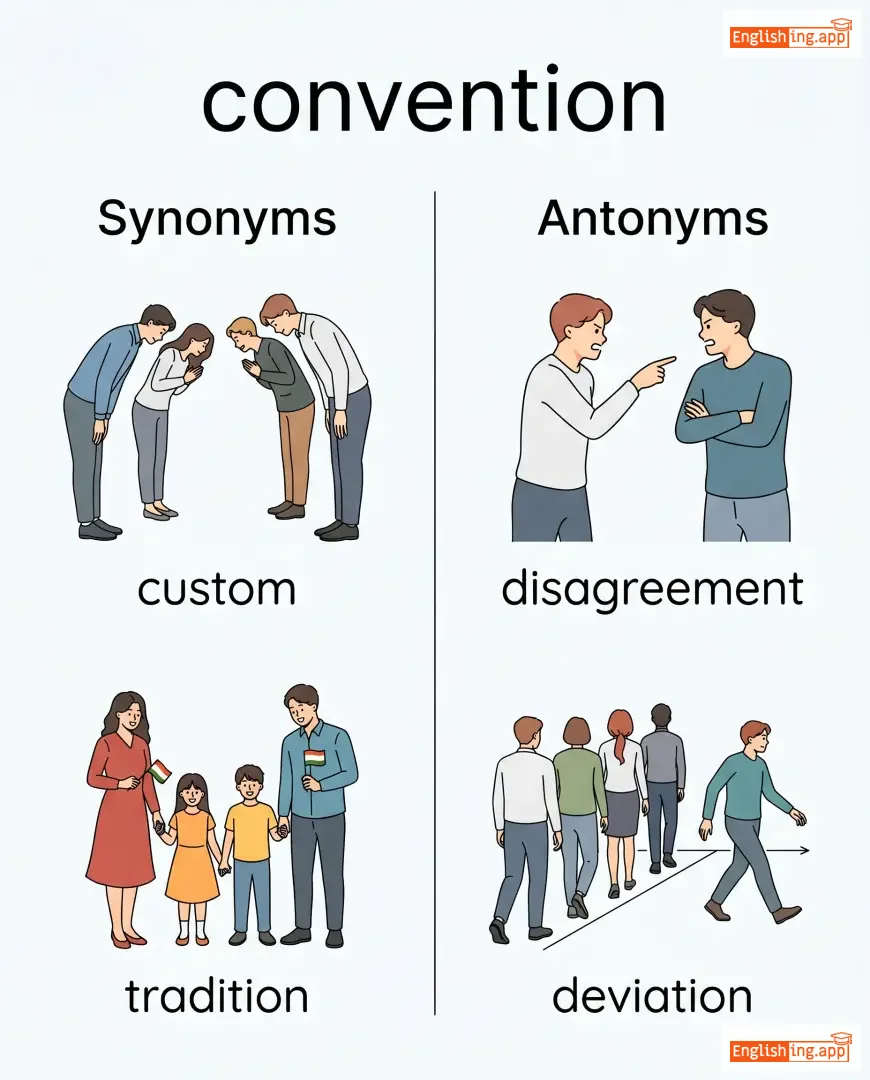
custom, tradition, meeting, assembly
••••••
|
disagreement, deviation
••••••
|
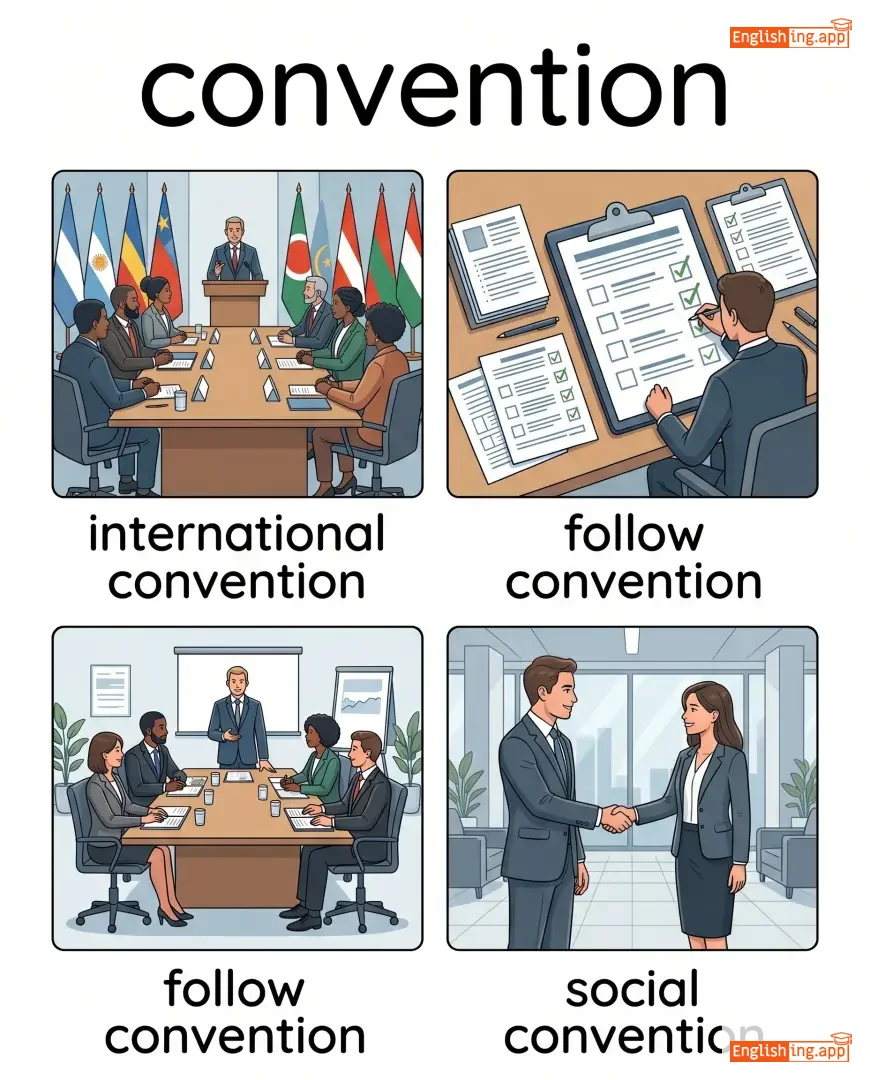
social convention, international convention, follow convention, break convention
••••••
|
コンベンションで皆が集まる - Convention brings everyone together
••••••
|
|
🏛️
••••••
|
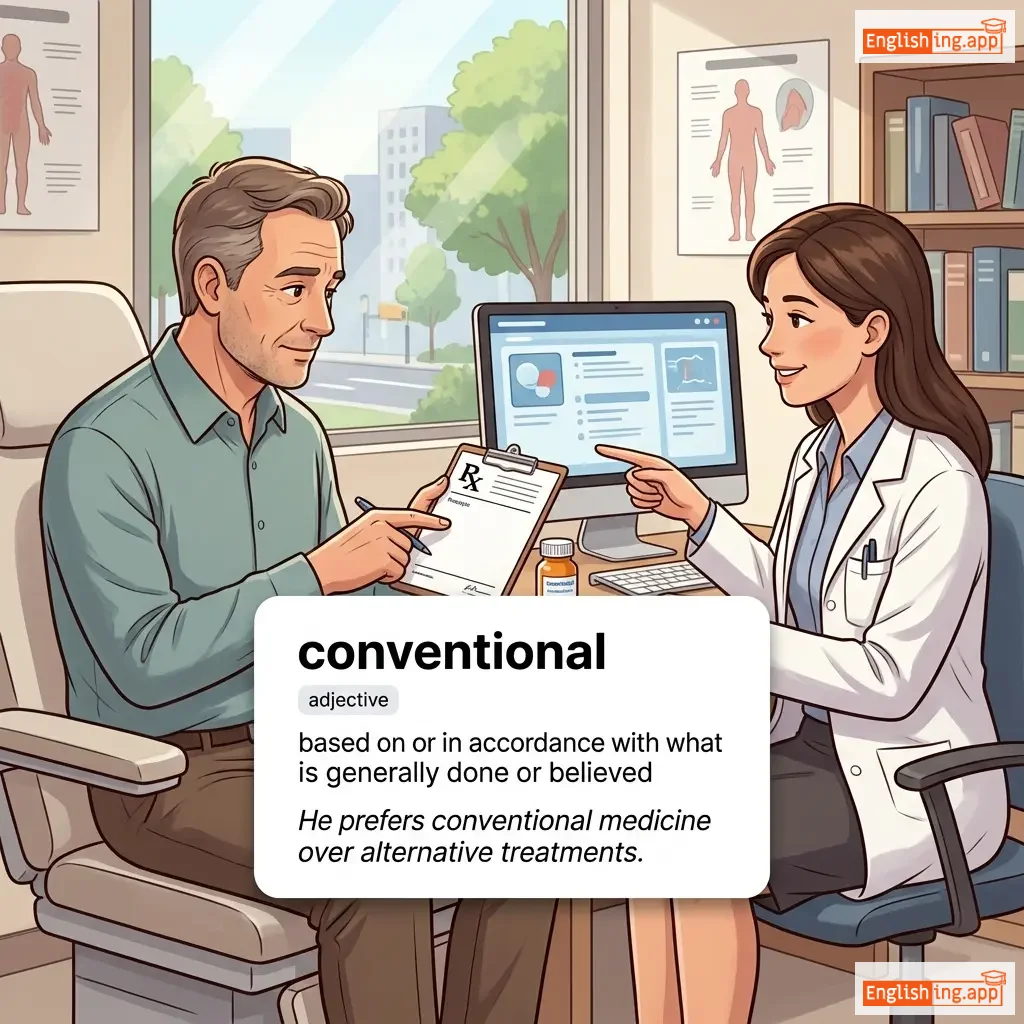
/kənˈvenʃənəl/
adjective
(コンヴェンショナル)
••••••
|
|
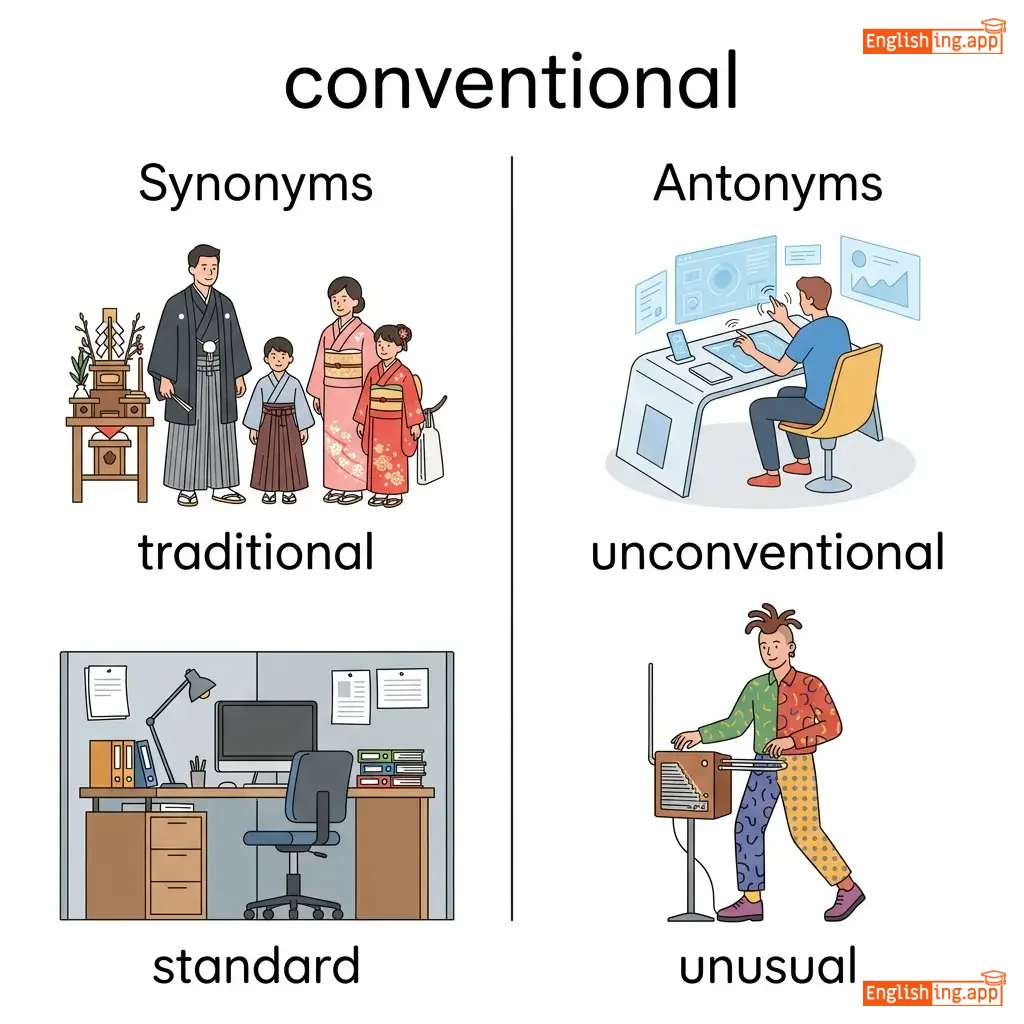
伝統的な; 従来の; 一般的に受け入れられている; 慣習に基づく
dentōteki na; jōraiteki na; ippan-teki ni ukeirarete iru; kanshū ni motozuku
••••••
|
- •••••• | - •••••• | - •••••• | - •••••• |
following traditional practices; customary; generally accepted; bound by convention
••••••
|
She chose a conventional wedding dress for her big day. |
彼女は彼女の大きな日用に伝統的な結婚式のドレスを選びました。
Kanojo wa kanojo no ōkina hi yō ni dentōteki na kekkonshiki no doresu o erabimashita.
••••••
|
- •••••• | - •••••• | - •••••• |
traditional, orthodox, standard, normal
••••••
|
unconventional, innovative, radical, modern
••••••
|
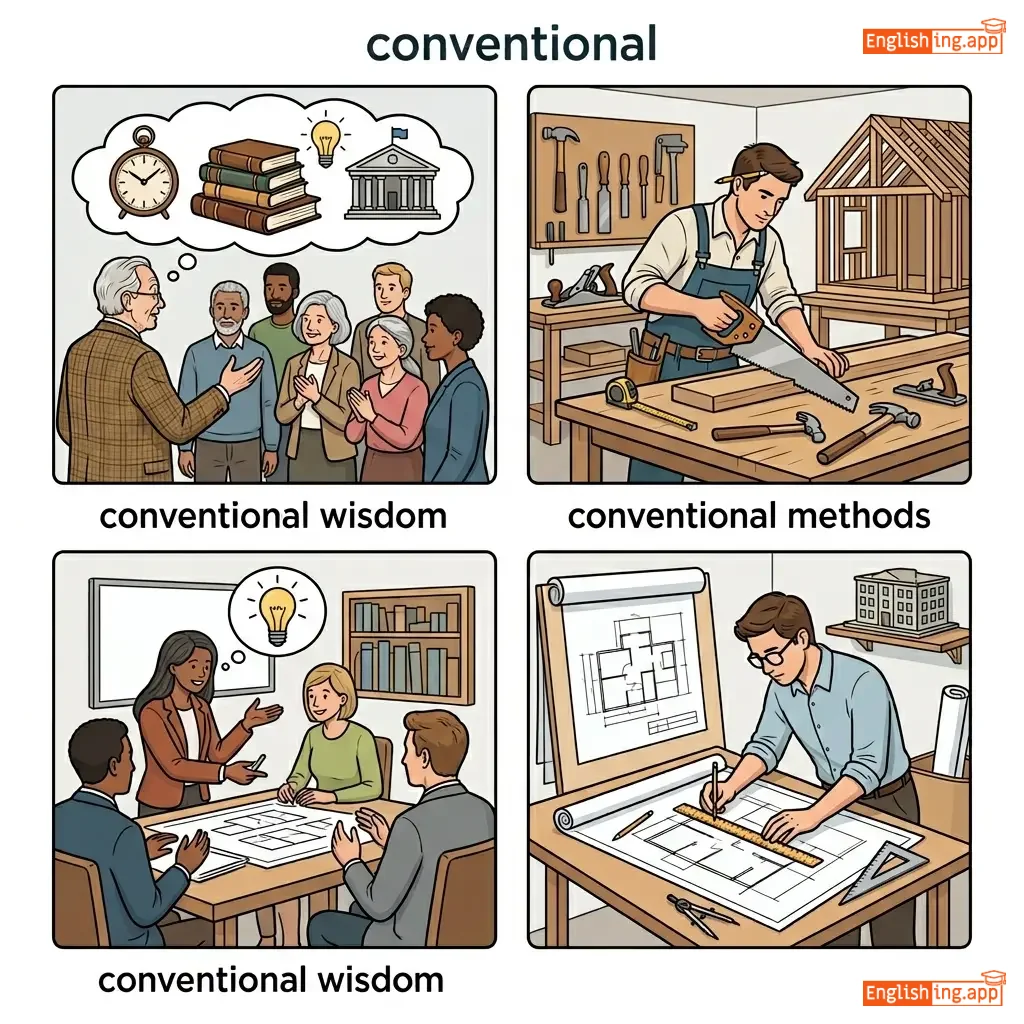
conventional wisdom, conventional approach, conventional medicine
••••••
|
伝統が今も受け入れられている
••••••
|
|
💬
••••••
|
/ˌkɒnvəˈseɪʃn/
noun
(kɔnˈvɚseɪʃən)
••••••
|
- •••••• |
会話
kaiga
••••••
|
- •••••• | - •••••• | - •••••• | - •••••• |
an informal talk between two or more people, in which ideas, feelings, and thoughts are exchanged
••••••
|
We had a long conversation about future plans. |
私たちは未来の計画について長い会話をしました。
Watashitachi wa mirai no keikaku ni tsuite nagai kaiwa o shimashita.
••••••
|
make conversation |
to talk with someone to appear polite, often about trivial things
••••••
|
会話をする
kaiwa o suru
••••••
|
dialogue, talk, discussion, chat, exchange
••••••
|
silence, quiet, muteness
••••••
|
casual conversation, phone conversation, deep conversation, conversation starter
••••••
|
会話とはアイデアと考えを共有することです。
••••••
|
|
💬
••••••
|
/kənˈvɜːs/
verb
(コンバース)
••••••
|

|
会話する
kaiwa suru
••••••
|
conversed
コンバースド
••••••
|
conversed
コンバースド
••••••
|
converses
コンバースズ
••••••
|
conversing
コンバーシング
••••••
|
to have a conversation; to talk together
••••••
|
They conversed about literature for hours.
ゼイ コンバースド アバウト リテラチャー フォー アワーズ。
••••••
|
彼らは何時間も文学について話し合った。
Karera wa nanjikan mo bungaku ni tsuite hanashiatta.
••••••
|
- •••••• | - •••••• | - •••••• |
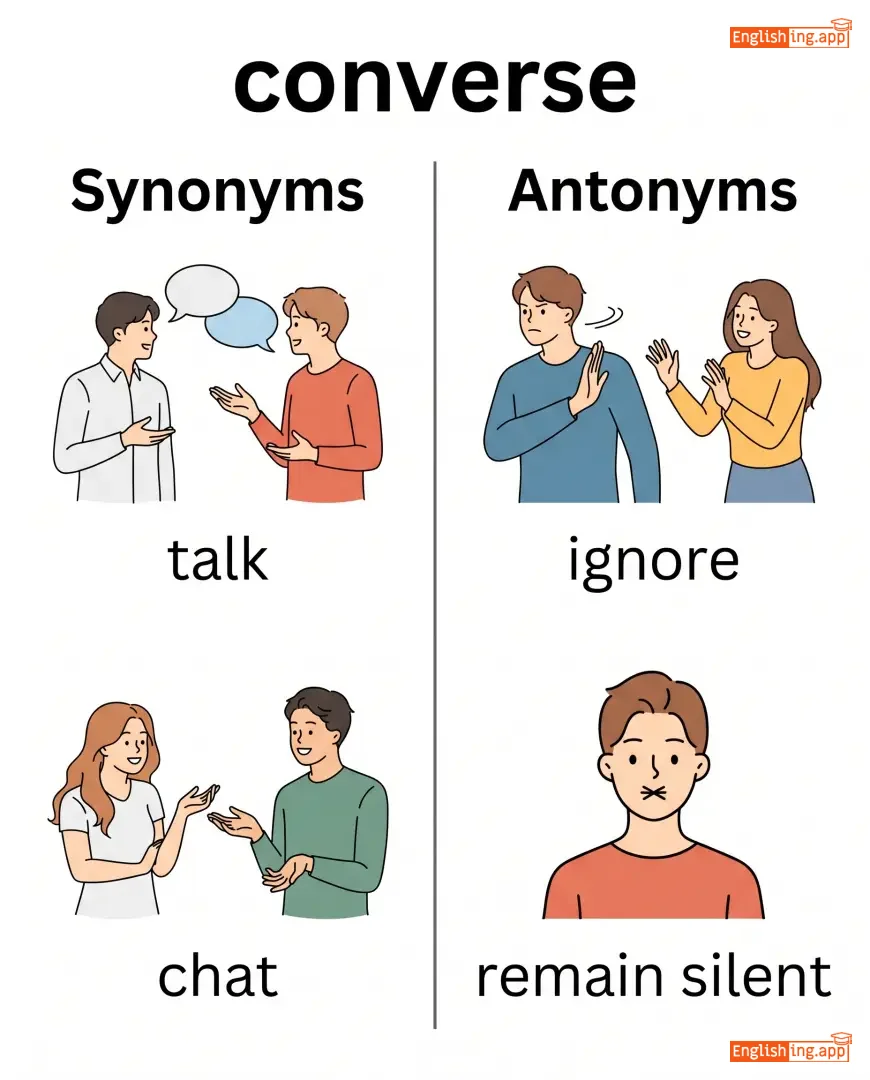
talk, chat, discuss, communicate
••••••
|
ignore, silence, avoid, shun
••••••
|
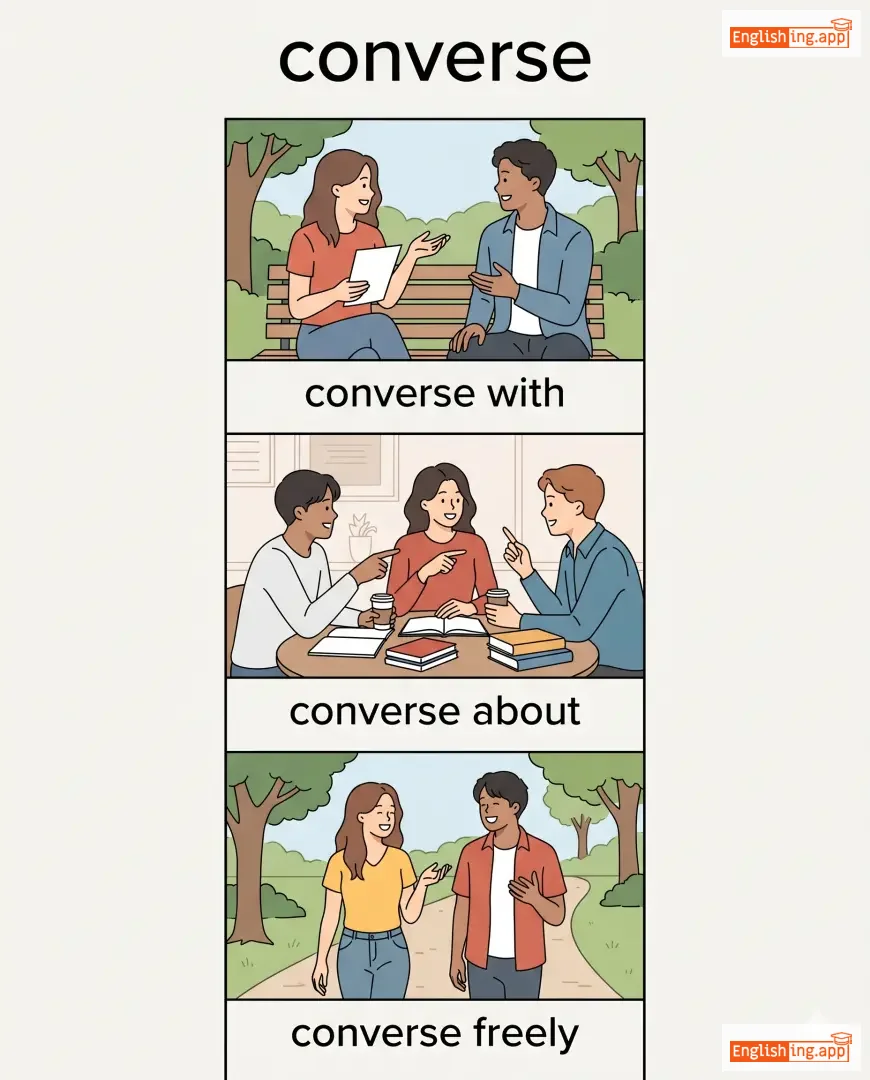
converse freely, converse with, converse about, politely converse
••••••
|
‘Converse’ means ‘kaiwa suru’ — imagine polite Japanese small talk.
••••••
|
|
🔄
••••••
|
/kənˈvɜr.ʃən/
noun
(コンバージョン)
••••••
|
|
転換; 変換; 変更
tenkan, henkan, henkō
••••••
|
- •••••• | - •••••• | - •••••• | - •••••• |
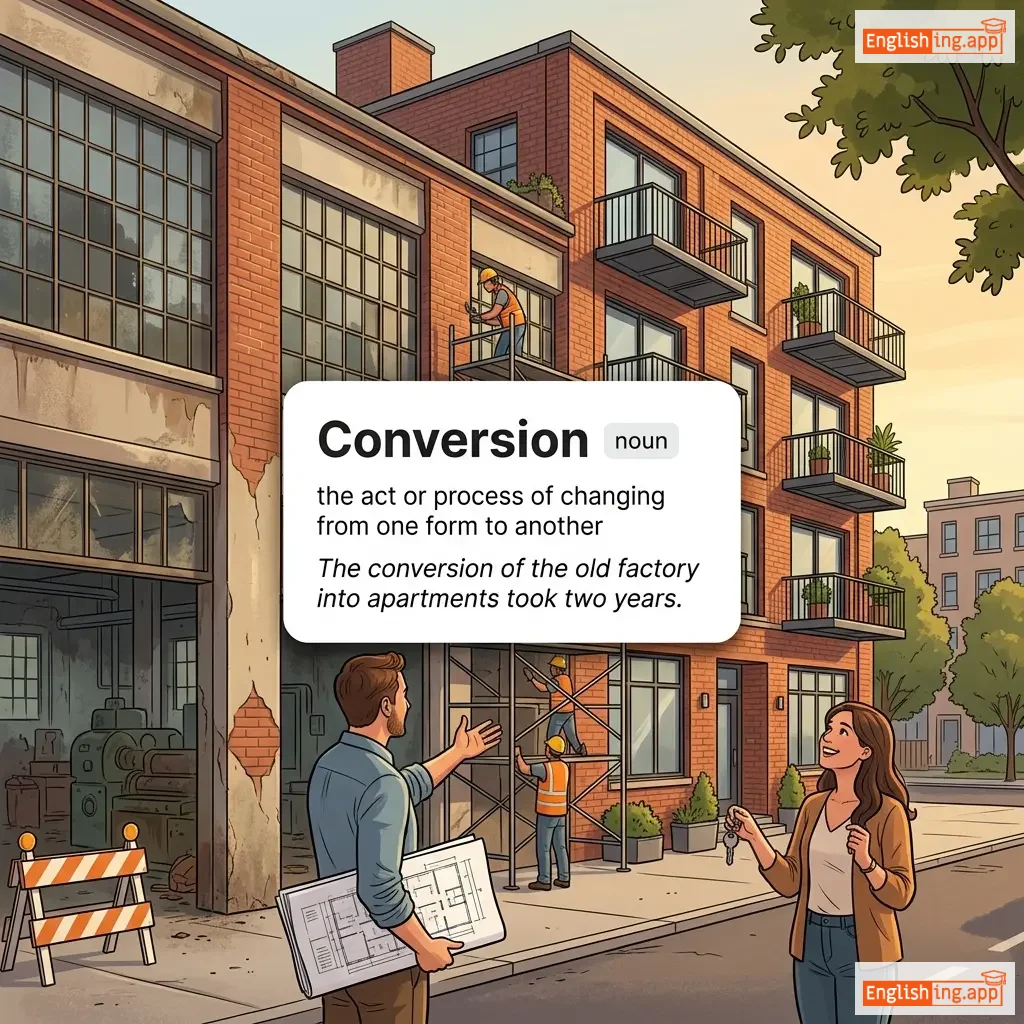
the process of changing or causing something to change from one form to another; the act of changing one's religion or beliefs
••••••
|
The conversion of the old factory into a modern shopping center took two years.
古い工場を現代的なショッピングセンターに転換するのに2年かかりました。
••••••
|
古い工場を現代的なショッピングセンターに転換するのに2年かかりました。
Furui kōjō o gendai-teki na shoppingu sentā ni tenkan suru no ni 2-nen kakarimashita.
••••••
|
- •••••• | - •••••• | - •••••• |
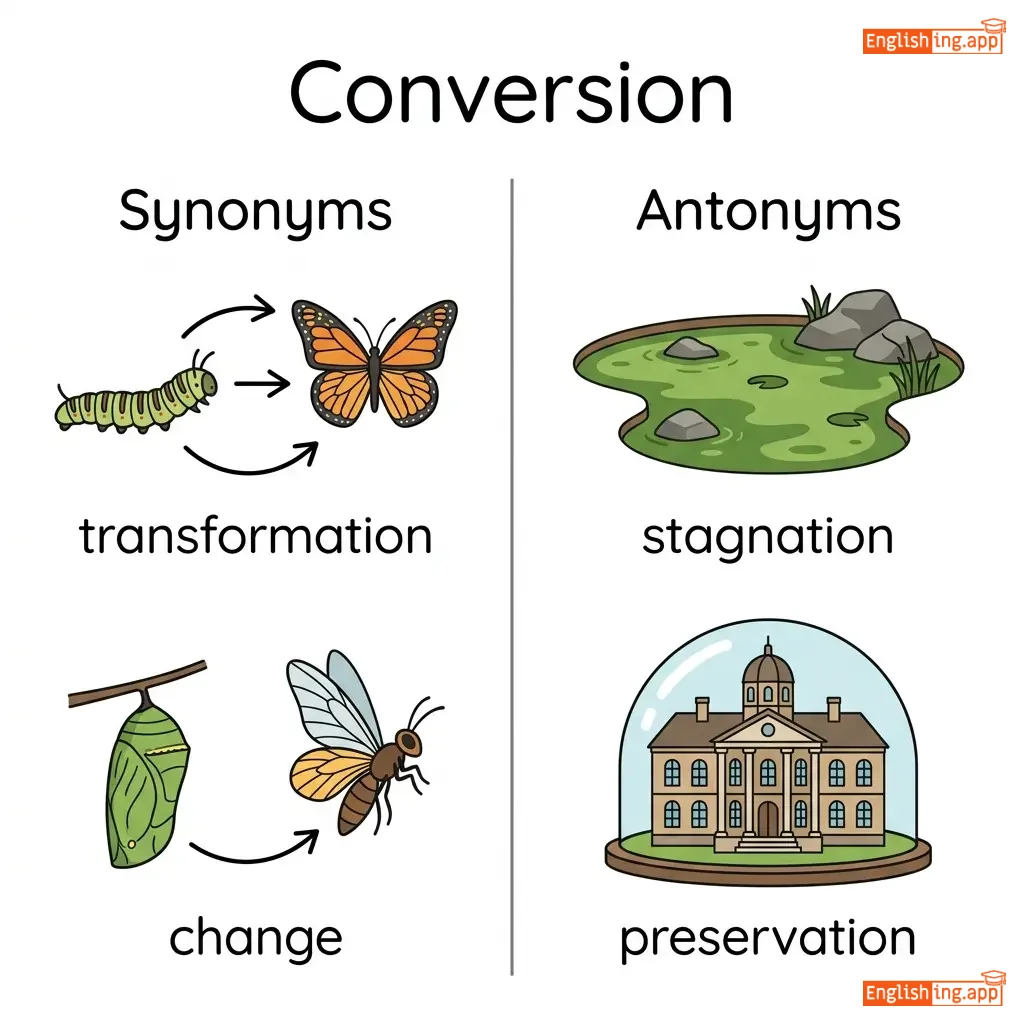
transformation, change, alteration, switch
••••••
|
preservation, maintenance, stagnation
••••••
|
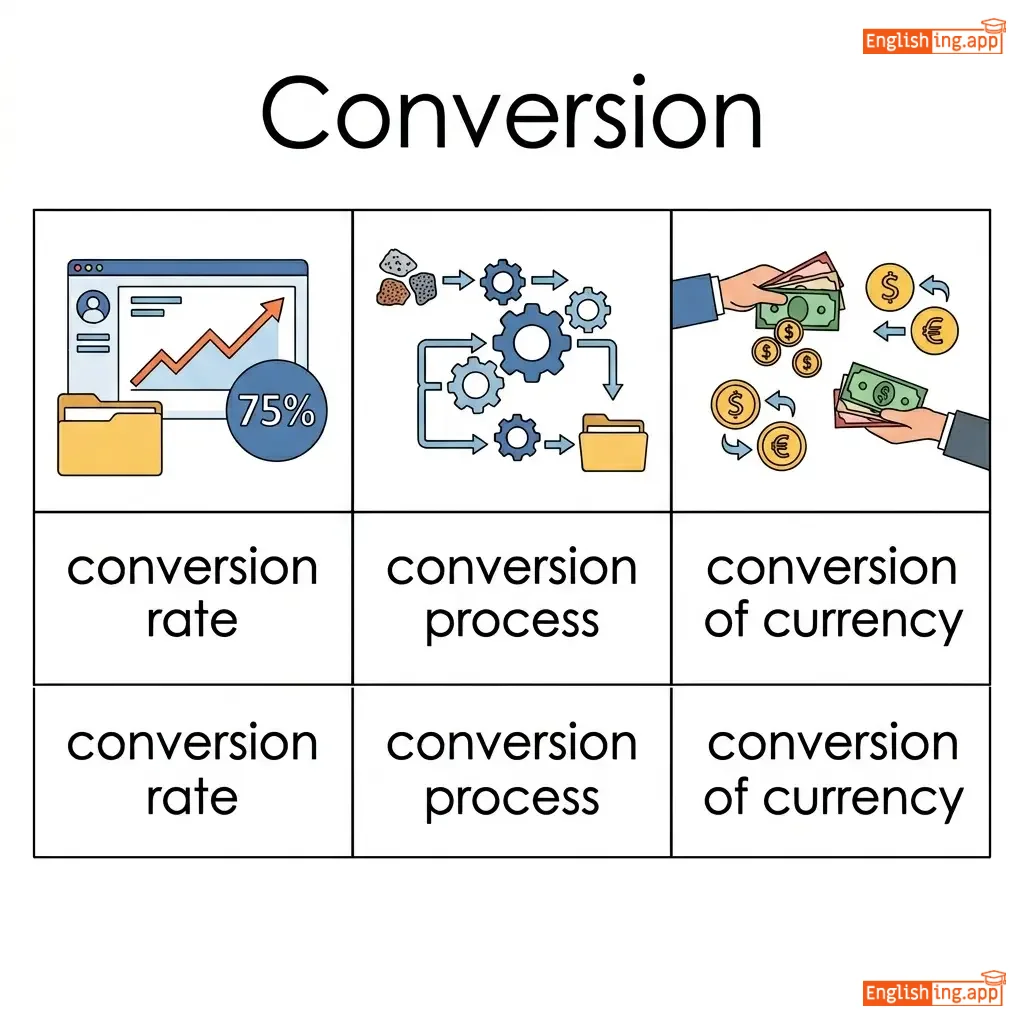
religious conversion, conversion rate, energy conversion
••••••
|
転換 = 新しい信念への変化
••••••
|

