|
絵文字
|
単語 | Images | 翻訳 | 過去 | 過去分詞 | 三人称単数 | 動名詞 | 意味 | 例文 | 例文の翻訳 | 表現例 | 表現例の意味 | 表現例の翻訳 | 同義語 | 対義語 | コロケーション | ニーモニック |
|---|---|---|---|---|---|---|---|---|---|---|---|---|---|---|---|---|---|
|
🎓
••••••
|
/ˈkɒlɪdʒ/
noun
(カレッジ)
••••••
|
- •••••• |
大学
daigaku
••••••
|
- •••••• | - •••••• | - •••••• | - •••••• |
An educational institution where students study for degrees or professional qualifications.
••••••
|
She hopes to attend college in the city next year. |
彼女は来年、市内の大学に通うことを望んでいます。
Kanojo wa rainen, shinai no daigaku ni kayou koto o nozondeimasu.
••••••
|
go to college |
to enroll in and attend a college for studies
••••••
|
大学に行く
daigaku ni iku
••••••
|
university, institute, academy, campus
••••••
|
school, dropout
••••••
|
college degree, college student, college campus, go to college
••••••
|
大学で知識を学び未来を切り開こう。
••••••
|
|
🚗💥🚗
••••••
|
/kəˈlɪʒən/
noun
(コリジョン)
••••••
|
- •••••• |
衝突
shoutotsu
••••••
|
- •••••• | - •••••• | - •••••• | - •••••• |
an instance of two or more objects crashing into each other
••••••
|
The collision on the highway caused a major traffic jam. |
高速道路での衝突が大きな交通渋滞を引き起こしました。
Kousoku douro de no shoutotsu ga ookina koutsuu juutai wo hikiokoshimashita.
••••••
|
on a collision course |
moving toward inevitable conflict or disaster
••••••
|
衝突コース上
shoutotsu koosu jou
••••••
|
crash, impact, accident, clash
••••••
|
separation, avoidance, peace
••••••
|
car collision, head-on collision, fatal collision
••••••
|
コリジョンは衝突コースを意味します – 車🚗💥🚗が衝突します
••••••
|
|
🏛️
••••••
|
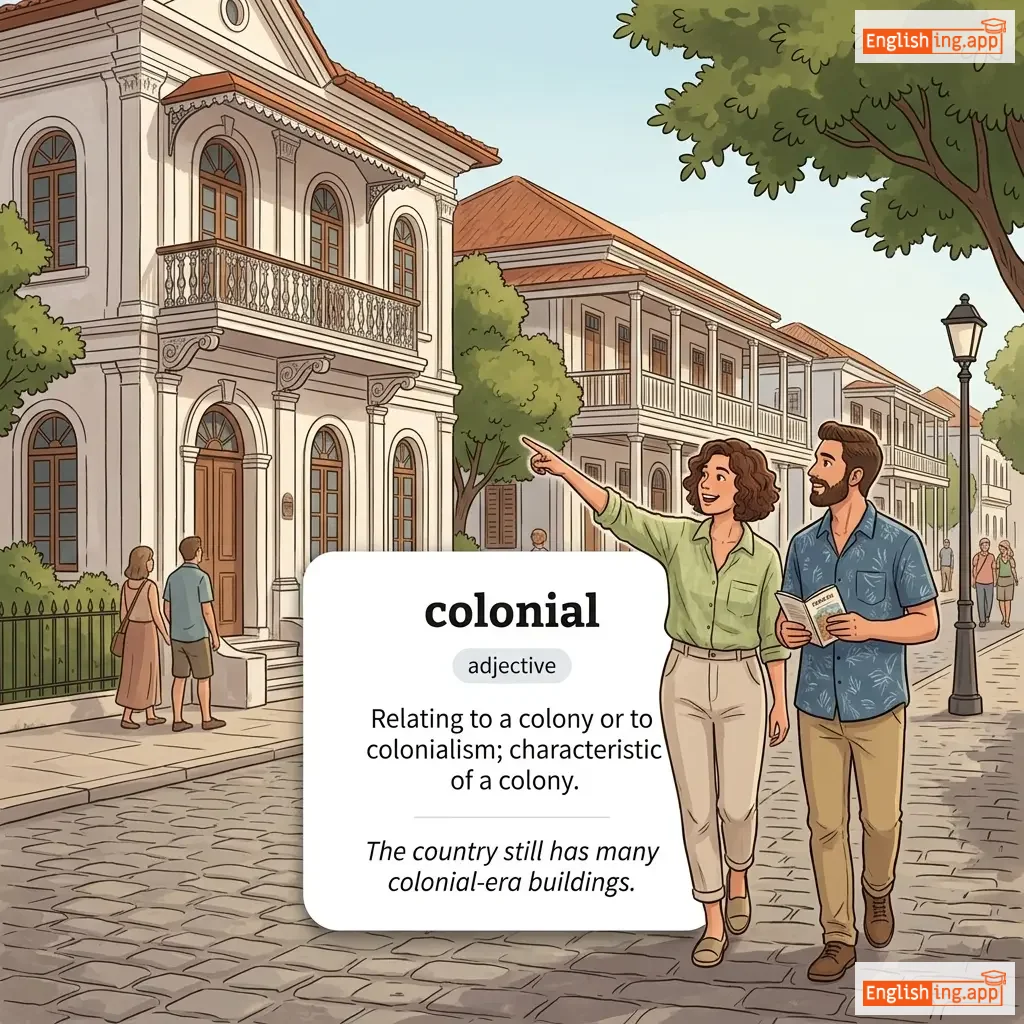
/kəˈloʊniəl/
adjective
(コロニアル)
••••••
|
|
植民地の
shokuminchi no
••••••
|
- •••••• | - •••••• | - •••••• | - •••••• |
Relating to a colony or to colonialism; characteristic of a colony.
••••••
|
The country still has many colonial-era buildings.
その国にはまだ多くの植民地時代の建物があります。
••••••
|
その国にはまだ多くの植民地時代の建物があります。
Sono kuni ni wa mada ooku no shokuminchi jidai no tatemono ga arimasu.
••••••
|
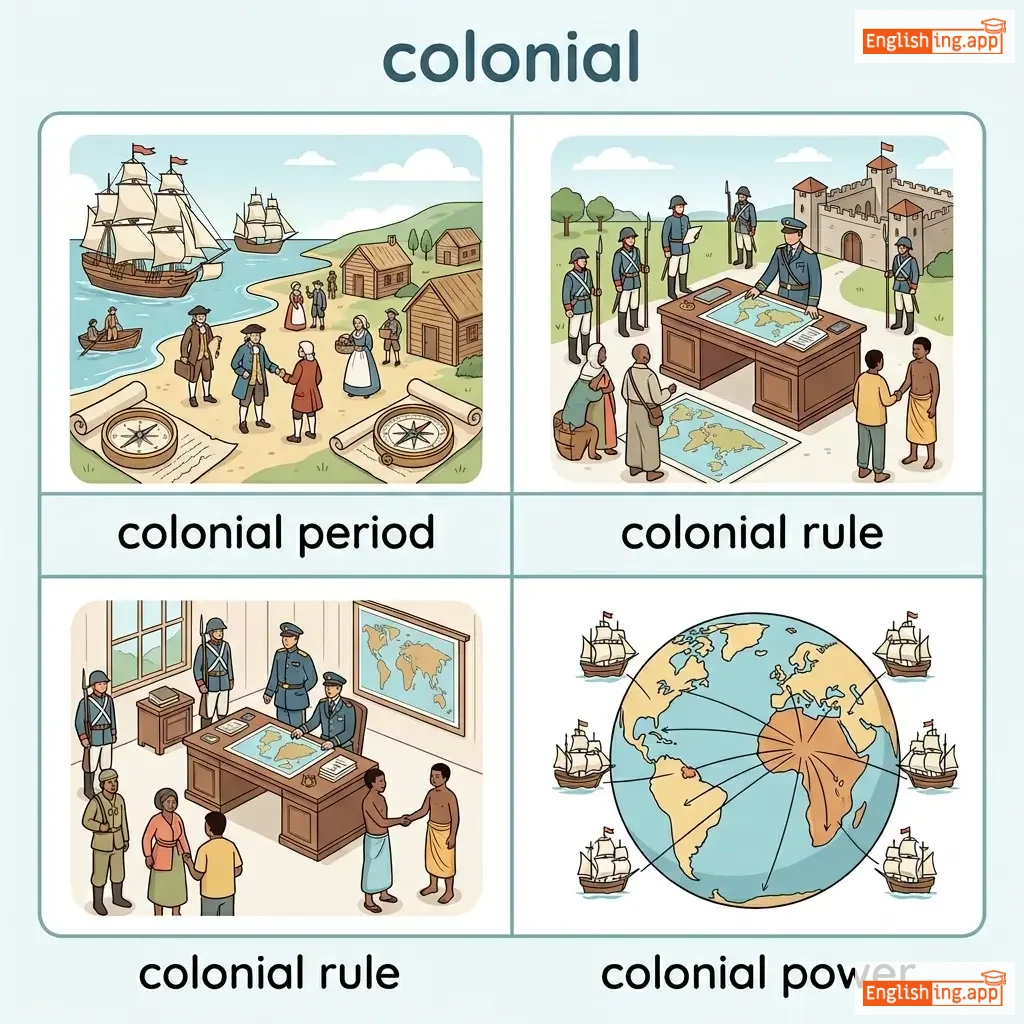
colonial rule
植民地支配
••••••
|
political control of one country by another
••••••
|
植民地支配
shokuminchi shihai
••••••
|
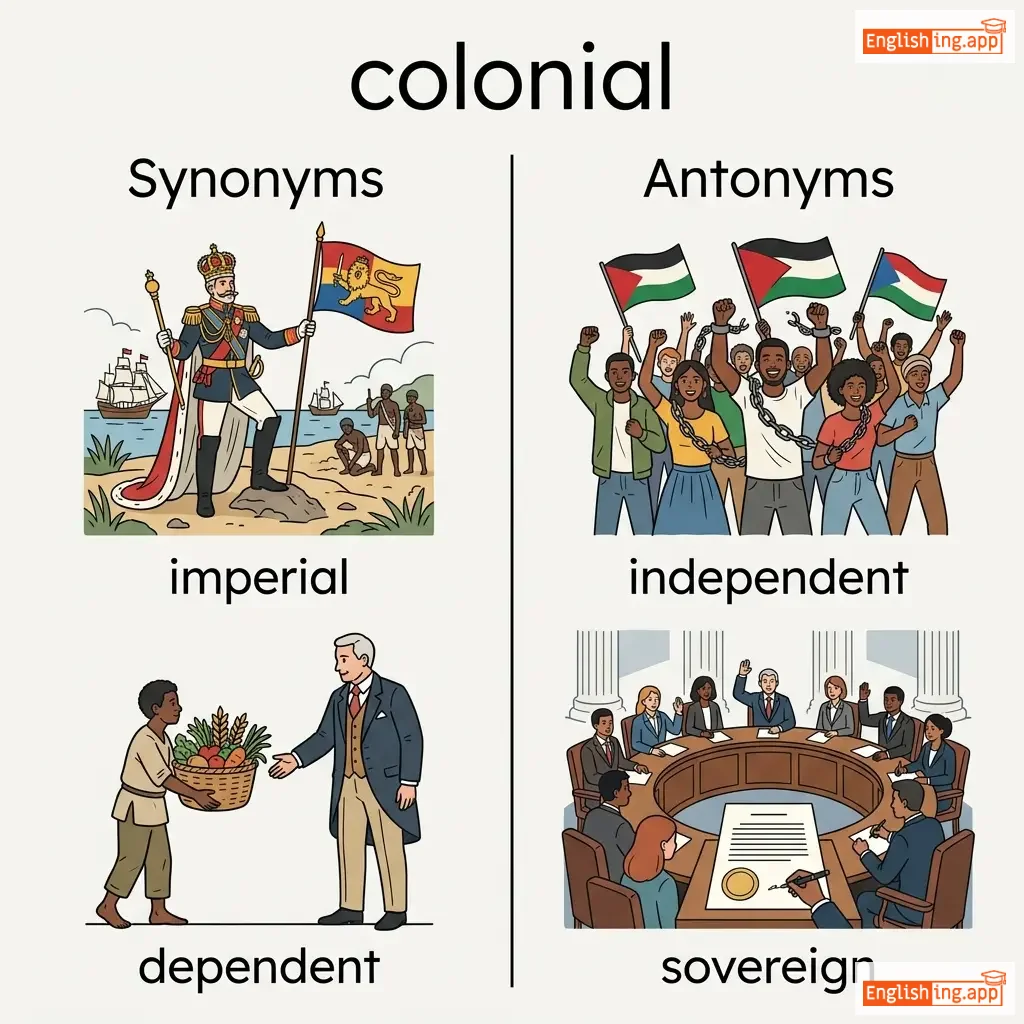
imperial, dependent, overseas, settler
••••••
|
independent, sovereign
••••••
|
colonial period, colonial rule, colonial power, colonial history
••••••
|
Colonial は日本語で植民地を意味し、歴史的な植民地支配を思い出させます。
••••••
|
|
🏝️
••••••
|
/ˈkɒləni/
noun
(koronī)
••••••
|
- •••••• |
植民地
shokumindi
••••••
|
- •••••• | - •••••• | - •••••• | - •••••• |
a territory or community controlled by another country or group of people
••••••
|
India was once a British colony. |
インディアはかつてイギリスの植民地でした。
India wa katsute Igirisu no shokumindi deshita.
••••••
|
- •••••• | - •••••• | - •••••• |
territory, settlement, dependency, dominion, outpost
••••••
|
independent state, homeland
••••••
|
British colony, animal colony, colony of ants, colonial rule
••••••
|
Colony は日本語で '植民地' で、他国に支配されている場所です。
••••••
|
|
🎨
••••••
|
/ˈkʌl.ər/
noun
(カラー)
••••••
|
- •••••• |
色
iro
••••••
|
- •••••• | - •••••• | - •••••• | - •••••• |
The property possessed by an object of producing different sensations on the eye as a result of the way it reflects or emits light.
••••••
|
Blue is her favorite color. |
青は彼女のお気に入りの色です。
Ao wa kanojo no okiniiri no iro desu.
••••••
|
show your true colors |
To reveal one's real character or intentions
••••••
|
本当の色を見せて
Hontō no iro o misete
••••••
|
hue, shade, tint, tone, pigment
••••••
|
monochrome, colorless
••••••
|
bright color, favorite color, primary color, true color
••••••
|
Color(カラー)は日本語で‘色’として覚えやすい。
••••••
|
|
🌈
••••••
|
/ˈkʌlərfəl/
adjective
(カラーフル)
••••••
|
- •••••• |
カラフル
karafuru
••••••
|
- •••••• | - •••••• | - •••••• | - •••••• |
having bright colors; full of variety or interest
••••••
|
The festival was full of colorful decorations.
その祭りはカラフルな装飾でいっぱいでした。
••••••
|
その祭りはカラフルな装飾でいっぱいでした。
Sono matsuri wa karafuru na sōshoku de ippai deshita.
••••••
|
colorful personality
カラフルな個性
••••••
|
a lively, interesting, and sometimes eccentric person
••••••
|
カラフルな個性
karafuru na kosei
••••••
|
vivid, bright, vibrant, lively, picturesque
••••••
|
colorless, dull, plain
••••••
|
colorful clothes, colorful festival, colorful language, colorful character
••••••
|
Colorful = カラー + フル — 色とりどりの花のような色彩豊かなもの。
••••••
|
|
🎨
••••••
|
/ˈkʌl.ər/
noun
(カラ)
••••••
|
- •••••• |
色
iro
••••••
|
- •••••• | - •••••• | - •••••• | - •••••• |
the property possessed by an object of producing different sensations on the eye as a result of the way it reflects light; hue, tint, shade
••••••
|
What is your favorite colour for painting the bedroom walls?
寝室の壁を塗るためのお気に入りの色は何ですか?
••••••
|
寝室の壁を塗るためのお気に入りの色は何ですか?
Shinshitsu no kabe o nuru tame no okiniiri no iro wa nan desu ka?
••••••
|
- •••••• | - •••••• | - •••••• |
hue, tint, shade, tone, pigment
••••••
|
colorless, transparent, clear, monochrome
••••••
|
bright colour, dark colour, primary colour, colour scheme, colour blind
••••••
|
色 (iro) = あなたが目にするもの
••••••
|
|
📊
••••••
|
/ˈkɒləm/
noun
••••••
|
- •••••• | - •••••• | - •••••• | - •••••• | - •••••• | - •••••• |
A vertical structure that supports a building; also a section of text arranged vertically in a newspaper or table.
••••••
|
The ancient temple had tall marble columns. |
- •••••• |
advice column |
a section in a newspaper where advice is given to readers
••••••
|
- •••••• |
pillar, post, support, section
••••••
|
row, line
••••••
|
newspaper column, support column, table column, advice column
••••••
|
No •••••• |
|
🖋️
••••••
|
/ˈkɒləmnɪst/
noun
(kōramunisuto)
••••••
|
- •••••• |
コラムニスト
koramunisuto
••••••
|
- •••••• | - •••••• | - •••••• | - •••••• |
a journalist who regularly writes articles or opinions for a newspaper or magazine
••••••
|
The columnist wrote an article about climate change. |
コラムニストは気候変動に関する記事を書きました。
Koramunisuto wa kikō hendō ni kansuru kiji wo kakimashita.
••••••
|
- •••••• | - •••••• | - •••••• |
journalist, writer, commentator, reporter, contributor
••••••
|
reader, audience
••••••
|
newspaper columnist, political columnist, famous columnist, opinion columnist
••••••
|
コラムニストは、コラムを書いている人。ニュースペーパーでコラムを書いていることを覚えておこう。
••••••
|
|
⚔️
••••••
|
/ˈkɒmbæt/
verb
(コンバット)
••••••
|
- •••••• |
戦う
tatakau
••••••
|
combated
コンバテッド
••••••
|
combated
コンバテッド
••••••
|
combats
コンバッツ
••••••
|
combating
コンバティング
••••••
|
to fight against something, especially to reduce or stop it
••••••
|
The government is taking steps to combat corruption.
政府は汚職と戦うための措置を講じています。
••••••
|
政府は汚職と戦うための措置を講じています。
Seifu wa oshoku to tatakau tame no sochi o kōjiteimasu.
••••••
|
combat crime
犯罪と戦う
••••••
|
to fight against criminal activity
••••••
|
犯罪と戦う
hanzai to tatakau
••••••
|
fight, battle, oppose, resist, tackle
••••••
|
support, encourage, promote
••••••
|
combat disease, combat terrorism, combat climate change, combat poverty
••••••
|
戦う = Come + Battle — さあ戦おう (come to fight)!
••••••
|
|
🔢
••••••
|
/ˌkɒmbɪˈneɪʃən/
noun
(コンビネーション)
••••••
|
- •••••• |
組み合わせ / 混合
kumiawase / kongō
••••••
|
- •••••• | - •••••• | - •••••• | - •••••• |
The act of joining or mixing two or more things together.
••••••
|
This dish is a perfect combination of sweet and spicy flavors. |
この料理は甘いと辛いフレーバーの完璧な組み合わせです。
Kono ryōri wa amai to karai furēbā no kanpeki na kumiawase desu.
••••••
|
combination lock |
a lock that opens by turning dials to a particular sequence of numbers
••••••
|
コンビネーションロック
konbinēshon rokku
••••••
|
blend, mixture, union, fusion, merger
••••••
|
separation, division
••••••
|
perfect combination, unique combination, combination lock, combination of factors
••••••
|
Combination = Com + Bini + shon – 数字を合わせて鍵を開ける
••••••
|
|
⚙️
••••••
|
/kəmˈbaɪn/
verb
(コンバイン)
••••••
|
- •••••• |
結合する
ketsugou suru
••••••
|
combined
コンバインド
••••••
|
combined
コンバインド
••••••
|
combines
コンバインズ
••••••
|
combining
コンバイニング
••••••
|
To bring two or more things together to form a single unit.
••••••
|
They decided to combine their resources for the project.
彼らはプロジェクトのためにリソースを結合することに決めました。
••••••
|
彼らはプロジェクトのためにリソースを結合することに決めました。
Karera wa purojekuto no tame ni risōsu o ketsugou suru koto ni kimemashita.
••••••
|
combine forces
力を合わせる
••••••
|
To work together with others towards a common goal.
••••••
|
力を合わせる
Chikara o awaseru
••••••
|
merge, join, unite, blend, fuse
••••••
|
separate, split, divide
••••••
|
combine efforts, combine forces, combine ingredients, combine ideas
••••••
|
Come + Bine = 結合する
••••••
|
|
🚶
••••••
|
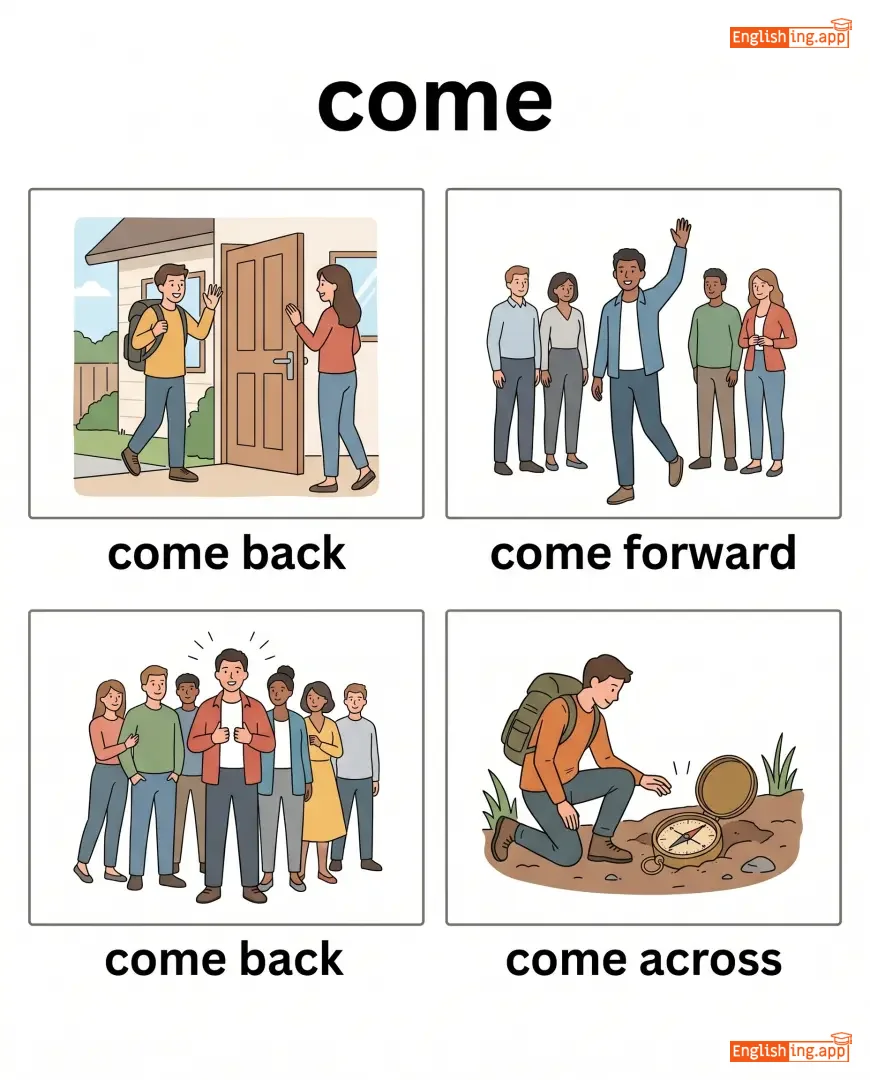
/kʌm/
verb
(ハピネス)
••••••
|

|
幸せ
shiawase
••••••
|
came
••••••
|
come
••••••
|
comes
••••••
|
coming
••••••
|
to move or travel toward or into a place thought of as near or familiar
••••••
|
She will come to the party later. |
彼女は賞を受け取ったとき、自分の幸せを隠すことができませんでした。
Kanojo wa shō o uketotta toki, jibun no shiawase o kakusu koto ga dekimasen deshita.
••••••
|
come true |
to happen as wished or dreamed
••••••
|
幸せを追求する
shiawase o tsuikyū suru
••••••
|
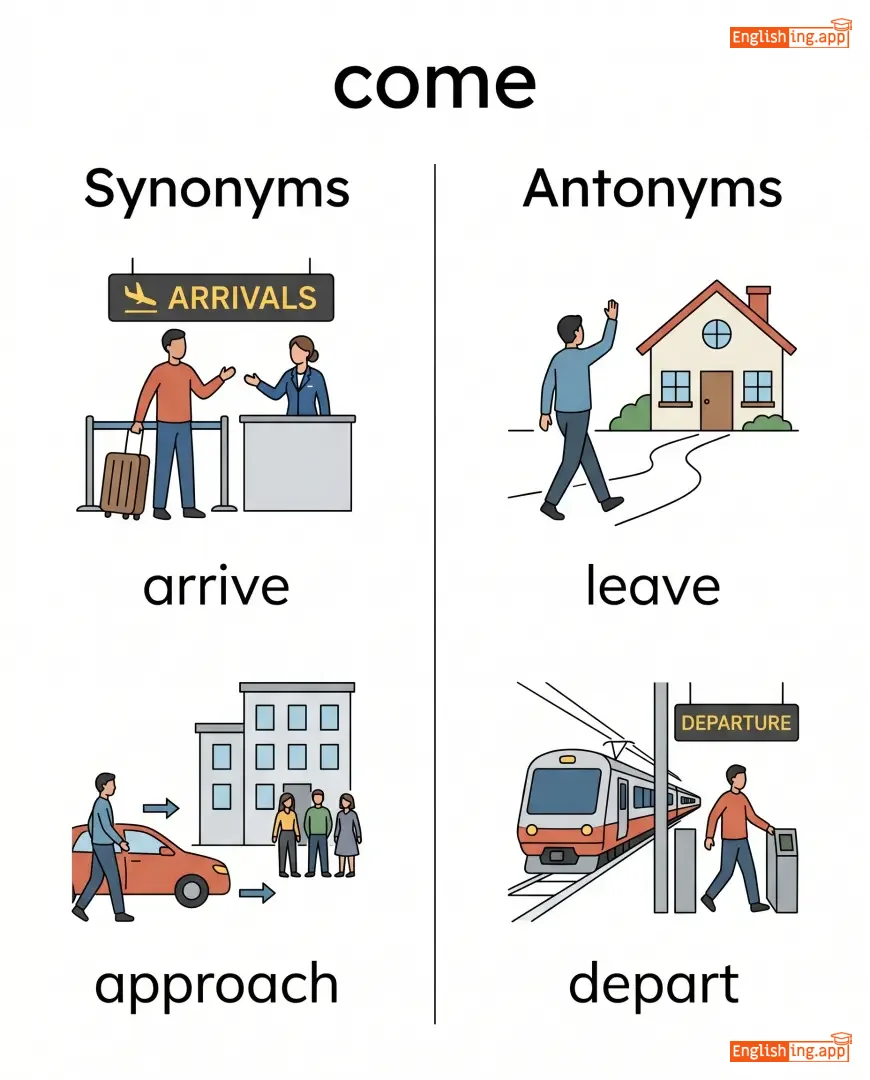
arrive, approach, reach, appear, enter
••••••
|
leave, depart, go
••••••
|
come back, come forward, come across, come out, come together
••••••
|
幸せ (shiawase) とは幸せ — 誰かが言う '私は幸せです!' と思ってみてください。
••••••
|
|
😂
••••••
|
/ˈkɒmədi/
noun
(コメディ)
••••••
|
- •••••• |
コメディ
komedi
••••••
|
- •••••• | - •••••• | - •••••• | - •••••• |
A type of entertainment that is intended to make people laugh.
••••••
|
We watched a hilarious comedy at the theater.
私たちは劇場で面白いコメディを見ました。
••••••
|
私たちは劇場で面白いコメディを見ました。
Watashitachi wa gekijou de omoshiroi komedi o mimashita.
••••••
|
tragicomedy
悲喜劇
••••••
|
a dramatic work that combines elements of tragedy and comedy
••••••
|
悲喜劇
hikigeki
••••••
|
humor, farce, satire, joke, parody
••••••
|
tragedy, drama
••••••
|
stand-up comedy, comedy show, comedy movie, romantic comedy
••••••
|
コメディ - 笑って楽しんで!
••••••
|
|
🛋️
••••••
|
/ˈkʌmfərt/
noun
(コンフォート)
••••••
|
- •••••• |
快適さ
kaitekisa
••••••
|
- •••••• | - •••••• | - •••••• | - •••••• |
a state of physical ease and freedom from pain or distress
••••••
|
The soft chair gave him great comfort.
その柔らかい椅子は彼に大きな快適さを与えました。
••••••
|
その柔らかい椅子は彼に大きな快適さを与えました。
Sono yawarakai isu wa kare ni ōkina kaitekisa o ataemashita.
••••••
|
cold comfort
冷たい快適さ
••••••
|
something that offers little consolation
••••••
|
冷たい快適さ
tsumetai kaitekisa
••••••
|
ease, relief, support, solace, convenience
••••••
|
discomfort, distress, pain
••••••
|
seek comfort, provide comfort, comfort zone, physical comfort, emotional comfort
••••••
|
快適さ = 安らぎを感じる状態、まるで家の中のような安心感。
••••••
|
|
🛋️
••••••
|
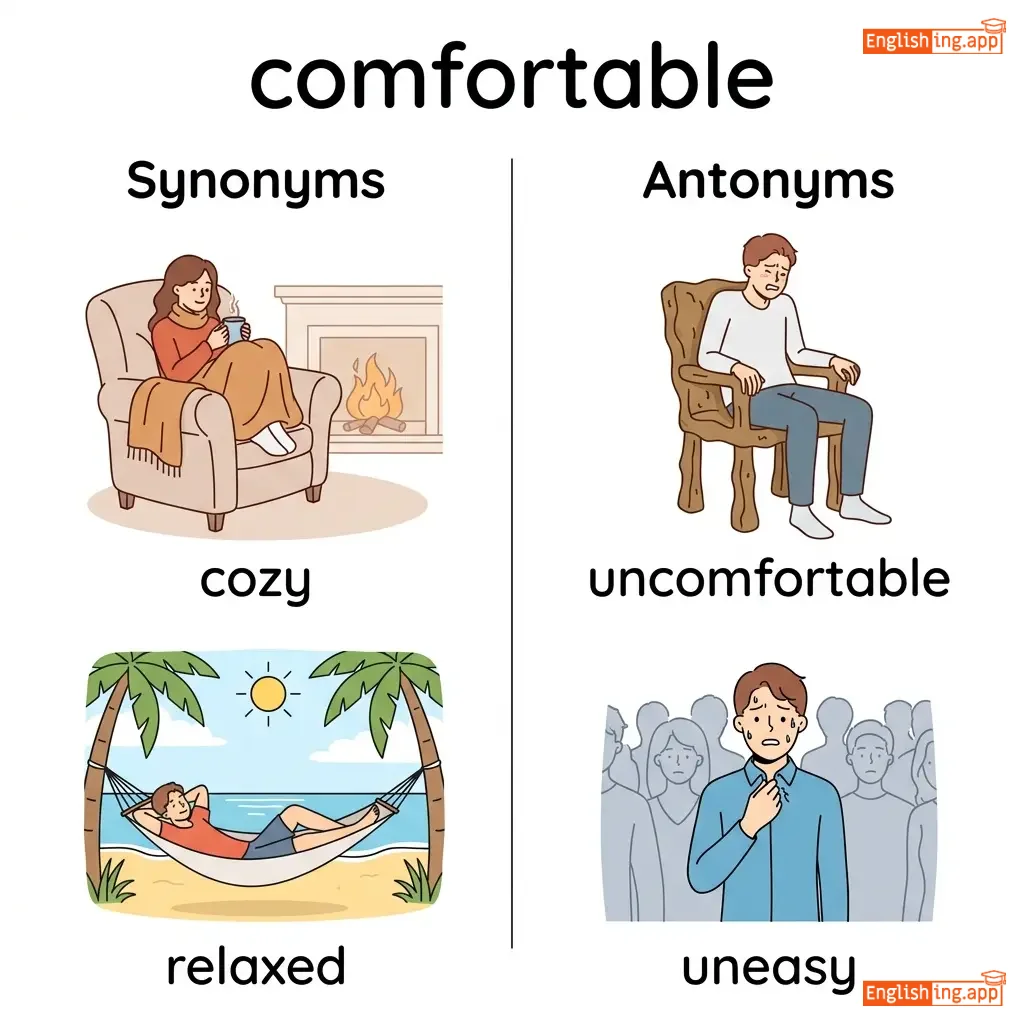
/ˈkʌmf.tə.bəl/
adjective
(コンフォータブル)
••••••
|


|
快適な
kaiteki na
••••••
|
- •••••• | - •••••• | - •••••• | - •••••• |
providing physical ease and relaxation; free from stress or worry
••••••
|
This chair is so comfortable that I could sit here all day.
この椅子はとても快適で、私は一日中ここに座っていられます。
••••••
|
この椅子はとても快適で、私は一日中ここに座っていられます。
Kono isu wa totemo kaiteki de, watashi wa ichinichijū koko ni suwatte iraremasu.
••••••
|
make yourself comfortable
くつろいでください
••••••
|
to relax and feel at ease
••••••
|
くつろいでください
Kutsuroide kudasai
••••••
|
cozy, relaxed, pleasant, easy, restful
••••••
|
uncomfortable, uneasy, unpleasant
••••••
|
comfortable chair, comfortable clothes, feel comfortable, comfortable life
••••••
|
快適な感じは座ったときにすぐに感じる
••••••
|
|
😂
••••••
|
/ˈkɒmɪk/
adjective
(コミック)
••••••
|
- •••••• |
コミカル
komikaru
••••••
|
- •••••• | - •••••• | - •••••• | - •••••• |
causing or meant to cause laughter
••••••
|
The movie had several comic scenes. |
映画にはいくつかのコミカルなシーンがありました。
Eiga ni wa ikutsuka no komikaru na shīn ga arimashita.
••••••
|
comic relief |
a humorous break in a serious narrative
••••••
|
コミカルな救済
komikaru na kyūsai
••••••
|
funny, humorous, amusing, witty, entertaining
••••••
|
serious, tragic, solemn
••••••
|
comic book, comic strip, comic character, comic effect, comic scene
••••••
|
コミックは笑いを引き起こすもの
••••••
|
|
🎖️
••••••
|
/kəˈmænd/
verb
(コマンド)
••••••
|
- •••••• |
命令
meirei
••••••
|
commanded
コマンドした
••••••
|
commanded
コマンドした
••••••
|
commands
コマンドする
••••••
|
commanding
コマンドしている
••••••
|
to give an order authoritatively; to control or direct
••••••
|
The general commanded the soldiers to move forward.
将軍は兵士たちに前進するよう命じた。
••••••
|
将軍は兵士たちに前進するよう命じた。
Shōgun wa heishi-tachi ni zenshin suru yō meijita.
••••••
|
at your command
あなたのコマンドで
••••••
|
ready to serve or act at someone's order
••••••
|
あなたの命令で
Anata no meirei de
••••••
|
order, direct, instruct, control, demand
••••••
|
obey, request, follow
••••••
|
give a command, command authority, command attention, command respect
••••••
|
コマンド、コンピュータの命令
••••••
|
|
👨✈️
••••••
|
/kəˈmændər/
noun
(コマンダー)
••••••
|
- •••••• |
司令官
shireikan
••••••
|
- •••••• | - •••••• | - •••••• | - •••••• |
a person in authority over a military unit; leader of armed forces
••••••
|
The commander ordered his troops to advance.
司令官は部隊に前進するよう命じました。
••••••
|
司令官は部隊に前進するよう命じました。
Shireikan wa butai ni zenshin suru yō meijimashita.
••••••
|
- •••••• | - •••••• | - •••••• |
leader, general, chief, captain
••••••
|
subordinate, follower, private
••••••
|
military commander, commanding officer, field commander
••••••
|
司令官 in Japanese means a military leader with authority over troops.
••••••
|
|
🎬
••••••
|
/kəˈmɛns/
verb
(コメンス)
••••••
|
- •••••• |
開始する
kaishi suru
••••••
|
commenced
コメンスト
••••••
|
commenced
コメンスト
••••••
|
commences
コメンスズ
••••••
|
commencing
コメンシング
••••••
|
to begin or start something
••••••
|
The ceremony will commence at noon.
式は正午に開始されます。
••••••
|
式は正午に開始されます。
Shiki wa shougo ni kaishi saremasu.
••••••
|
commence operations
作業開始
••••••
|
to start working or functioning
••••••
|
作業開始
Sagyou kaishi
••••••
|
begin, start, initiate, launch, inaugurate
••••••
|
end, finish, conclude
••••••
|
commence work, commence proceedings, commence operations, commence at
••••••
|
Commenceは開始する、例えば「作業開始」つまり作業を開始することです。
••••••
|
|
💬
••••••
|
/ˈkɒm.ent/
noun
(komento)
••••••
|
- •••••• |
コメント
komento
••••••
|
- •••••• | - •••••• | - •••••• | - •••••• |
a verbal or written remark expressing an opinion or reaction
••••••
|
She posted a kind comment on my photo. |
彼女は私の写真に優しいコメントを投稿しました。
Kanojo wa watashi no shashin ni yasashī komento o tōkō shimashita.
••••••
|
no comment |
refusal to answer a question or give an opinion
••••••
|
コメントなし
komento nashi
••••••
|
remark, observation, statement, feedback
••••••
|
silence, quiet
••••••
|
make a comment, post a comment, critical comment, positive comment
••••••
|
Facebookでコメントすることはコメント(komento)をすることです
••••••
|
|
🗣️
••••••
|
/ˈkɒmənˌtɛri/
noun
(komentari)
••••••
|
- •••••• |
コメント
komento
••••••
|
- •••••• | - •••••• | - •••••• | - •••••• |
An expression of opinions or explanations about an event, situation, or text.
••••••
|
The professor's commentary on the novel was insightful.
教授の小説に対するコメントは洞察に満ちていました。
••••••
|
教授の小説に対するコメントは洞察に満ちていました。
Kyouju no shousetsu ni taisuru komento wa dousatsu ni michiteimashita.
••••••
|
running commentary
ランニングコメント
••••••
|
Continuous spoken description of events as they happen.
••••••
|
ランニングコメント
Running komento
••••••
|
explanation, interpretation, analysis, observation, critique
••••••
|
silence, quiet, neglect
••••••
|
political commentary, sports commentary, live commentary, social commentary
••••••
|
コメント = コメントする = 話す
••••••
|
|
🎙️
••••••
|
/ˈkɒmənˌteɪtər/
noun
(コメントレーター)
••••••
|
- •••••• |
解説者
kaisetsusha
••••••
|
- •••••• | - •••••• | - •••••• | - •••••• |
a person who reports and discusses events, especially on TV or radio
••••••
|
The commentator described the football match in detail. |
解説者はサッカーの試合を詳細に説明しました。
Kaisetsusha wa sakkā no shiai o shōsai ni setsumei shimashita.
••••••
|
- •••••• | - •••••• | - •••••• |
announcer, reporter, narrator, broadcaster, critic
••••••
|
audience, listener
••••••
|
sports commentator, political commentator, live commentator, TV commentator
••••••
|
解説者はテレビでスポーツの試合を解説する人です。
••••••
|
|
💼
••••••
|
/ˈkɒmɜːs/
noun
(コマース)
••••••
|
- •••••• |
商業
shōgyō
••••••
|
- •••••• | - •••••• | - •••••• | - •••••• |
the activity of buying and selling goods and services
••••••
|
International commerce has expanded significantly in recent years.
国際商業は近年顕著に拡大しています。
••••••
|
国際商業は近年顕著に拡大しています。
Kokusai shōgyō wa kin'nen kencho ni kakudai shiteimasu.
••••••
|
- •••••• | - •••••• | - •••••• |
trade, business, industry, retail
••••••
|
non-trade, isolation
••••••
|
global commerce, e-commerce, retail commerce, international commerce
••••••
|
商業 = 買うと売る = 商業
••••••
|
|
💼
••••••
|
/kəˈmɜːʃəl/
adjective
(コマーシャル)
••••••
|

|
商業的
shōgyō-teki
••••••
|
- •••••• | - •••••• | - •••••• | - •••••• |
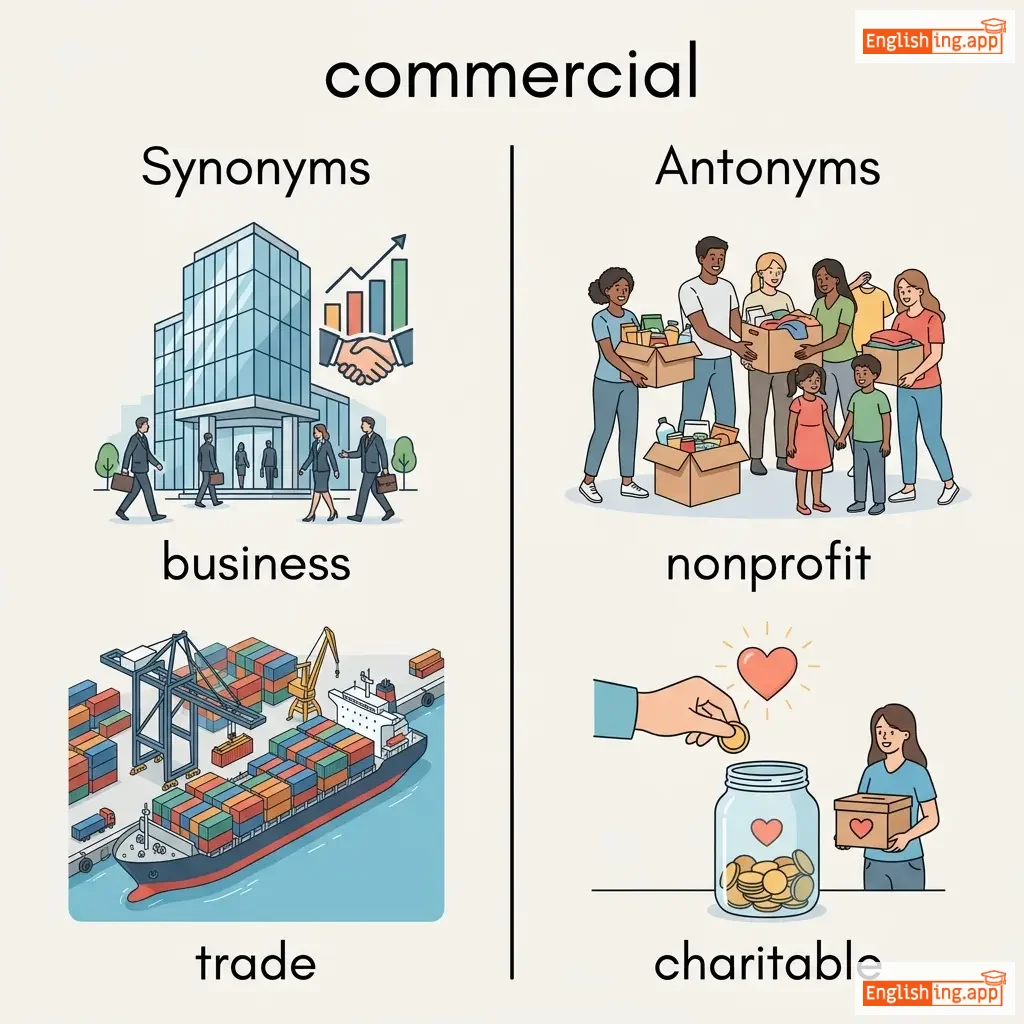
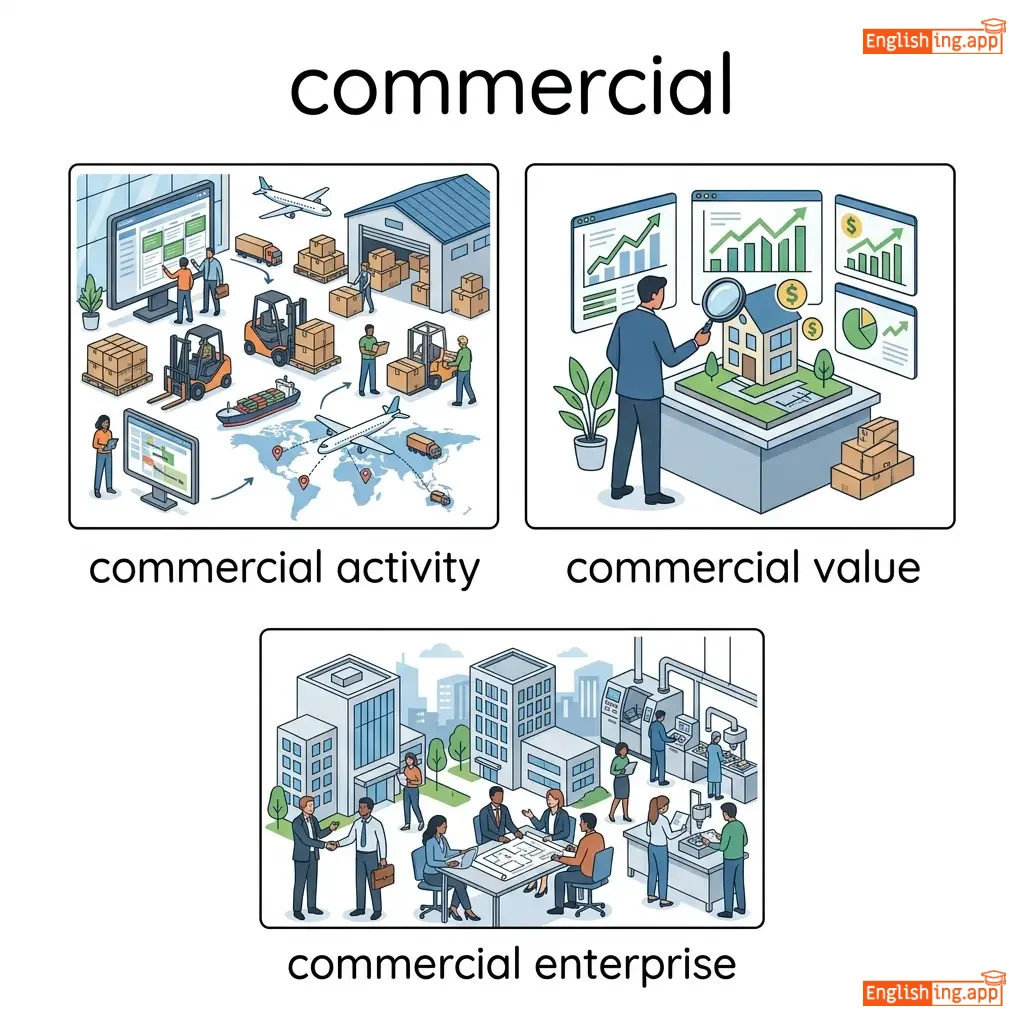
Concerned with or engaged in commerce; intended to make a profit.
••••••
|
The company focused on commercial success rather than artistic value. |
会社は芸術的価値よりも商業的成功に注力しました。
Kaisha wa geijutsuteki kachi yori mo shōgyō-teki seikō ni chūryoku shimashita.
••••••
|
commercial break |
An interruption in a broadcast for advertisements.
••••••
|
コマーシャル休憩
komāsharu kyūkei
••••••
|
business, trade, financial, profit-driven, market-oriented
••••••
|
nonprofit, charitable, artistic
••••••
|
commercial activity, commercial value, commercial enterprise, commercial success
••••••
|
商業的は商売に関する意味なので、ビジネスや利益に関連しています。
••••••
|
|
💼
••••••
|
/kəˈmɪʃən/
noun
••••••
|


|
- •••••• | - •••••• | - •••••• | - •••••• | - •••••• |
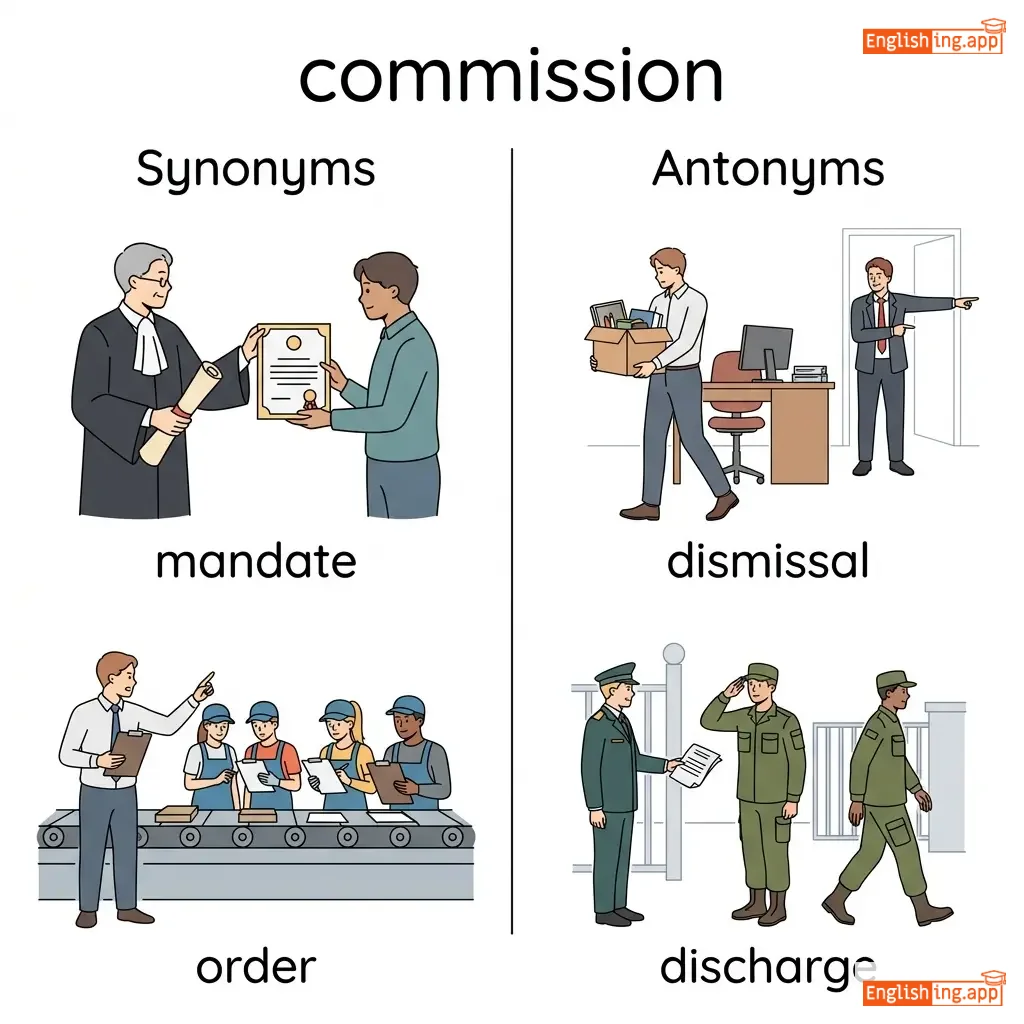
An instruction, command, or duty given to a person or group; also a fee paid to an agent or employee for a transaction.
••••••
|
The artist received a commission to paint a portrait. |
- •••••• |
on commission |
Working for payment based on the amount of sales made rather than a fixed salary.
••••••
|
- •••••• |
mandate, order, task, fee, allowance
••••••
|
dismissal, discharge, unemployment
••••••
|
earn commission, sales commission, commission rate, commission fee
••••••
|
No •••••• |
|
👮♂️
••••••
|
/kəˈmɪʃənər/
noun
(コミッショナー)
••••••
|
- •••••• |
コミッショナー
komisshonā
••••••
|
- •••••• | - •••••• | - •••••• | - •••••• |
an official in charge of a particular department or area
••••••
|
The police commissioner addressed the media about the incident.
警察のコミッショナーは、事件についてメディアに話しました。
••••••
|
警察のコミッショナーは、事件についてメディアに話しました。
Keisatsu no komisshonā wa, jiken ni tsuite media ni hanashimashita.
••••••
|
- •••••• | - •••••• | - •••••• |
official, director, superintendent, chief, officer
••••••
|
subordinate, employee
••••••
|
police commissioner, election commissioner, city commissioner, commissioner office
••••••
|
コミッショナーは責任を意味し、コミッショナーはその責任を持つ人です。
••••••
|
|
✍️
••••••
|
/kəˈmɪt/
verb
••••••
|
- •••••• | - •••••• |
committed
••••••
|
committed
••••••
|
commits
••••••
|
committing
••••••
|
To carry out or perpetrate an act; to pledge or bind to a course of action.
••••••
|
He committed a serious mistake in the report. |
- •••••• |
commit to memory |
To learn something so well that you can remember it perfectly.
••••••
|
- •••••• |
perform, perpetrate, pledge, dedicate, undertake
••••••
|
neglect, abstain, withdraw
••••••
|
commit a crime, commit suicide, commit oneself, commit to
••••••
|
No •••••• |
|
🤝
••••••
|
/kəˈmɪtmənt/
noun
••••••
|


|
- •••••• | - •••••• | - •••••• | - •••••• | - •••••• |
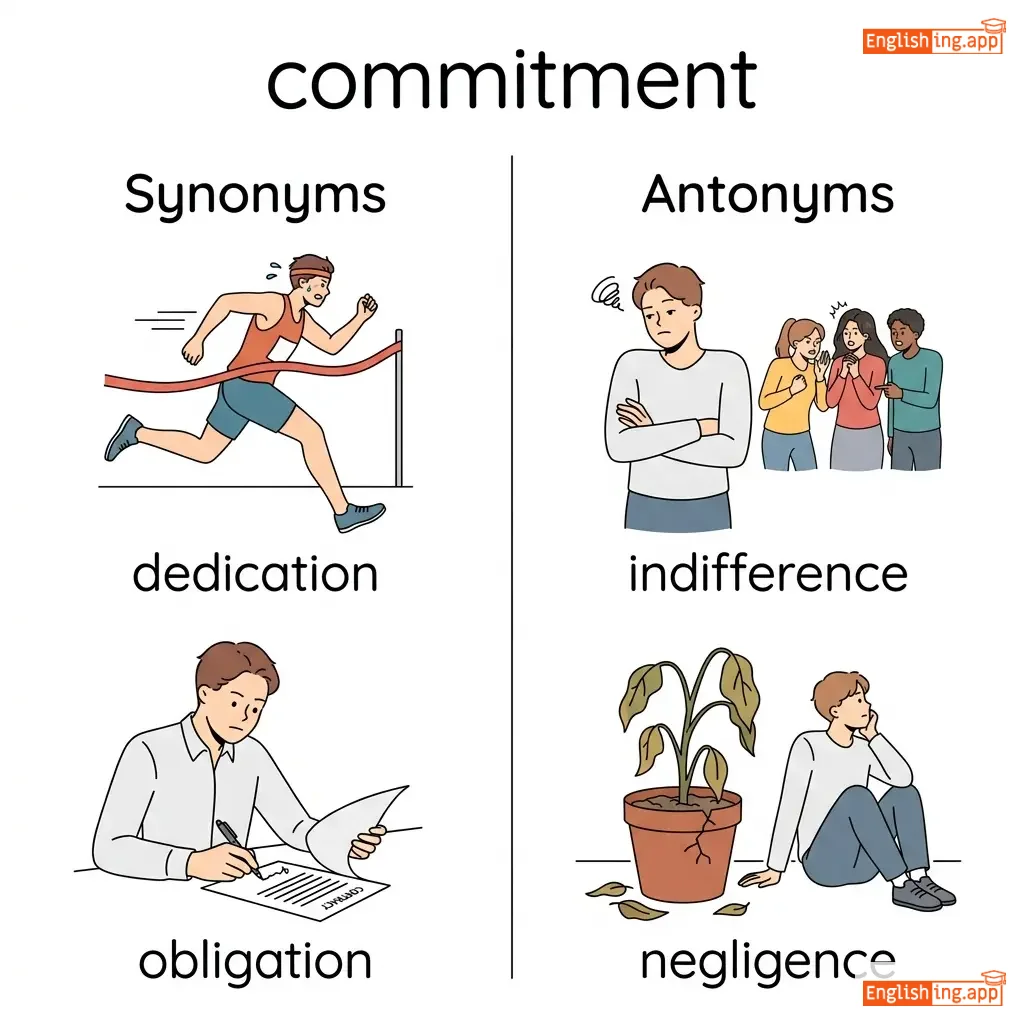
A promise or firm decision to do something; dedication or obligation to a cause or activity.
••••••
|
She showed great commitment to her studies. |
- •••••• |
a lifelong commitment |
A promise or responsibility that lasts for one's whole life.
••••••
|
- •••••• |
dedication, obligation, devotion, promise, responsibility
••••••
|
indifference, negligence, irresponsibility
••••••
|
strong commitment, show commitment, commitment to, long-term commitment
••••••
|
No •••••• |
|
👥
••••••
|
/kəˈmɪt.i/
noun
(コミッティ)
••••••
|

|
委員会
iinkai
••••••
|
- •••••• | - •••••• | - •••••• | - •••••• |
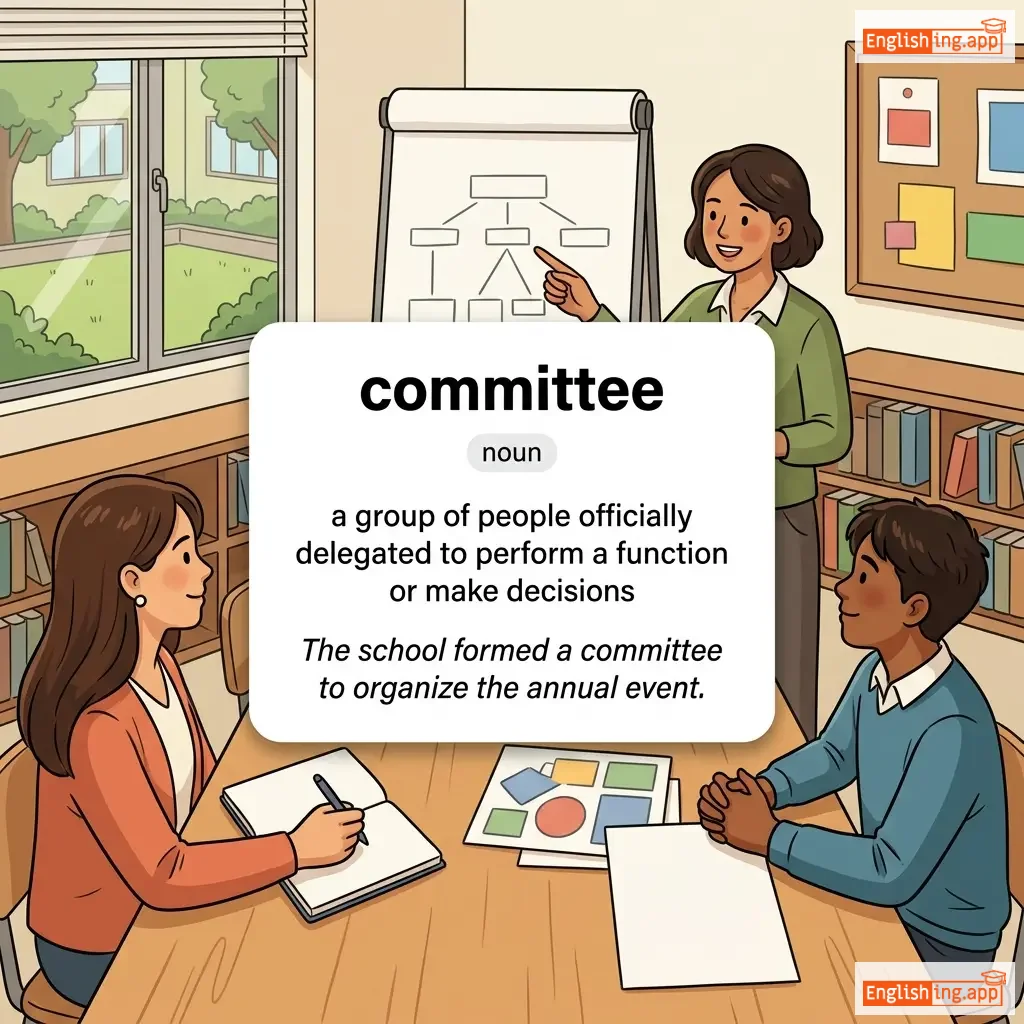
a group of people officially delegated to perform a function or make decisions
••••••
|
The school formed a committee to organize the annual event. |
学校は年次イベントを組織するために委員会を結成しました。
Gakkō wa nenji ibento o soshiki suru tame ni iinkai o kessei shimashita.
••••••
|
- •••••• | - •••••• | - •••••• |
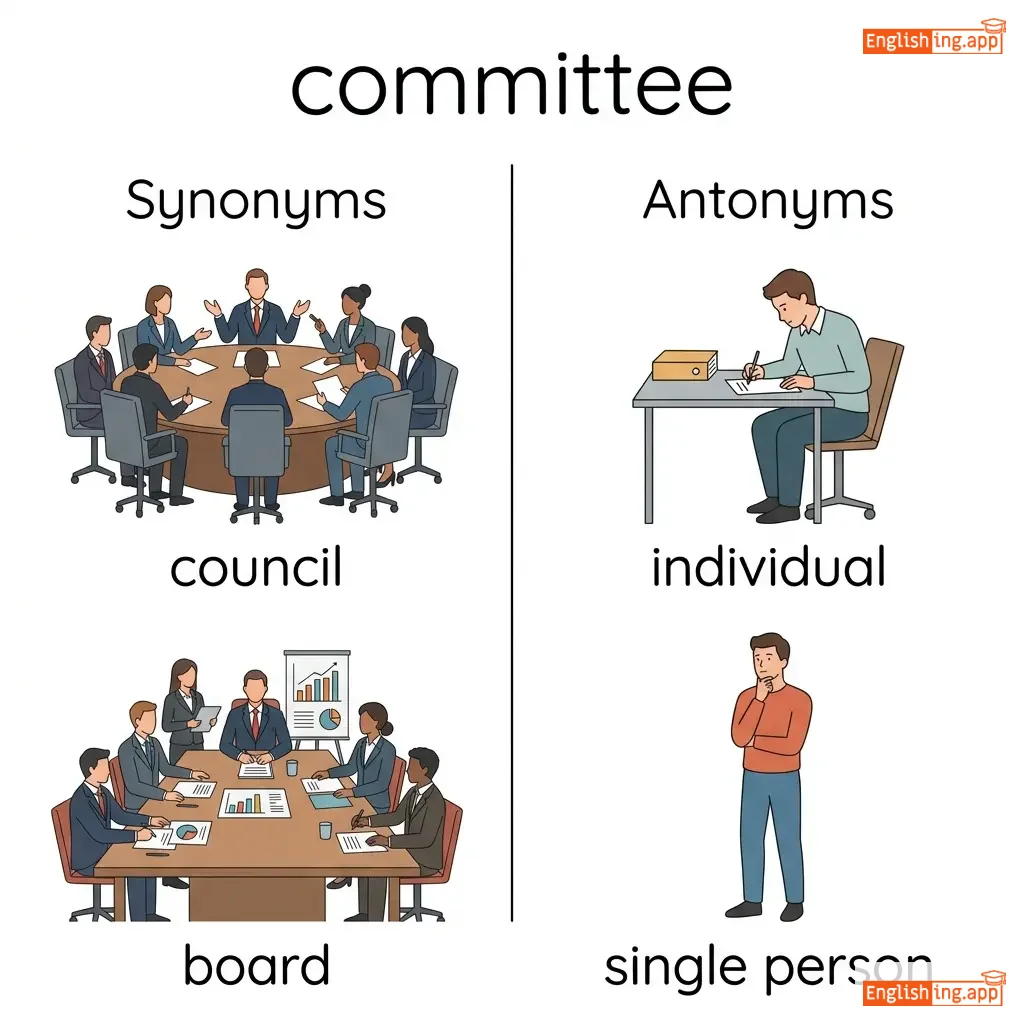
council, board, panel, group, commission
••••••
|
individual, single person
••••••
|
committee meeting, committee decision, committee member, school committee
••••••
|
委員会 = 重要な決定を行うグループ
••••••
|
|
📦
••••••
|
/kəˈmɑːdəti/
noun
(コモディティ)
••••••
|

|
商品
shouhin
••••••
|
- •••••• | - •••••• | - •••••• | - •••••• |
a raw material or primary product that can be bought and sold
••••••
|
Oil is the most traded commodity in the world.
オイル イズ ザ モースト トレイディッド コモディティ イン ザ ワールド。
••••••
|
石油は世界で最も取引されている商品です。
sekiyu wa sekai de mottomo torihiki sarete iru shouhin desu
••••••
|
hot commodity
ホット コモディティ
••••••
|
something or someone that is in high demand
••••••
|
人気のある商品
ninki no aru shouhin
••••••
|
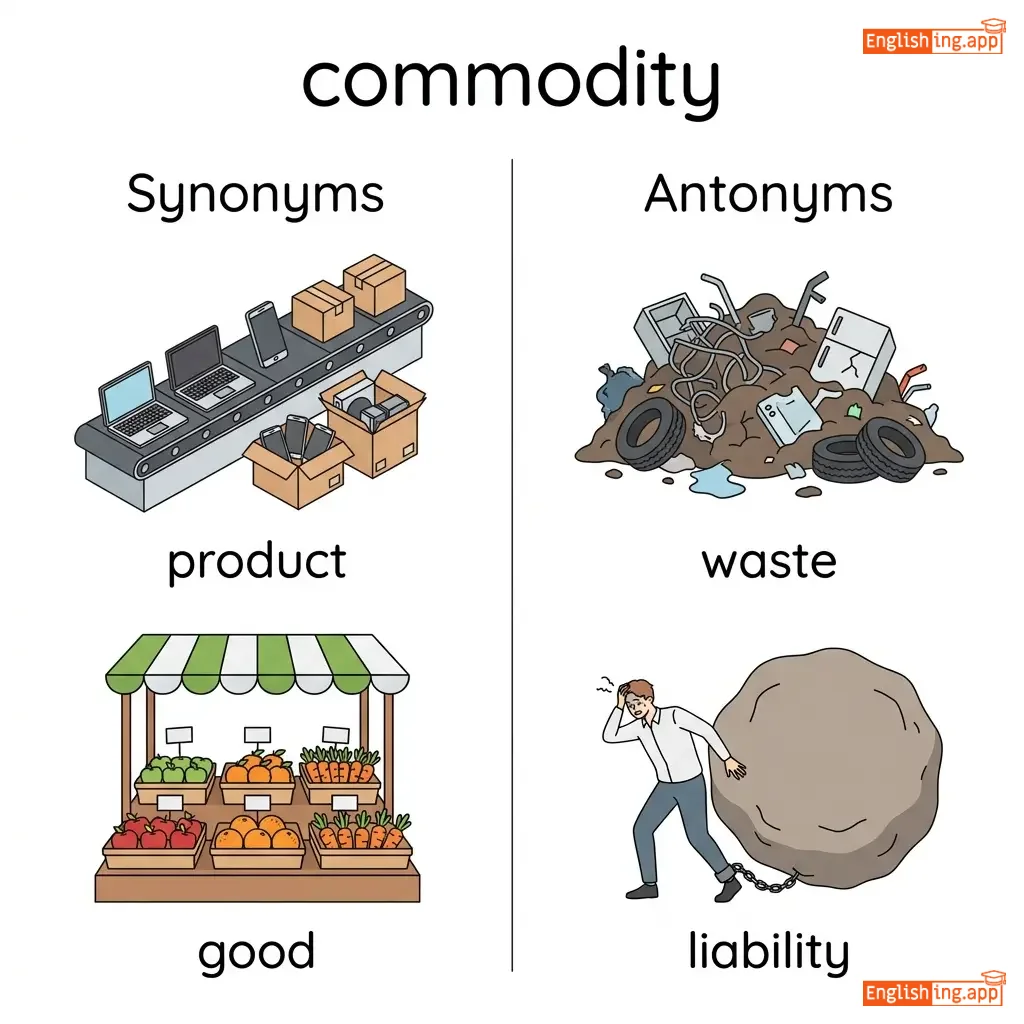
product, good, merchandise, item, resource
••••••
|
waste, liability, burden
••••••
|
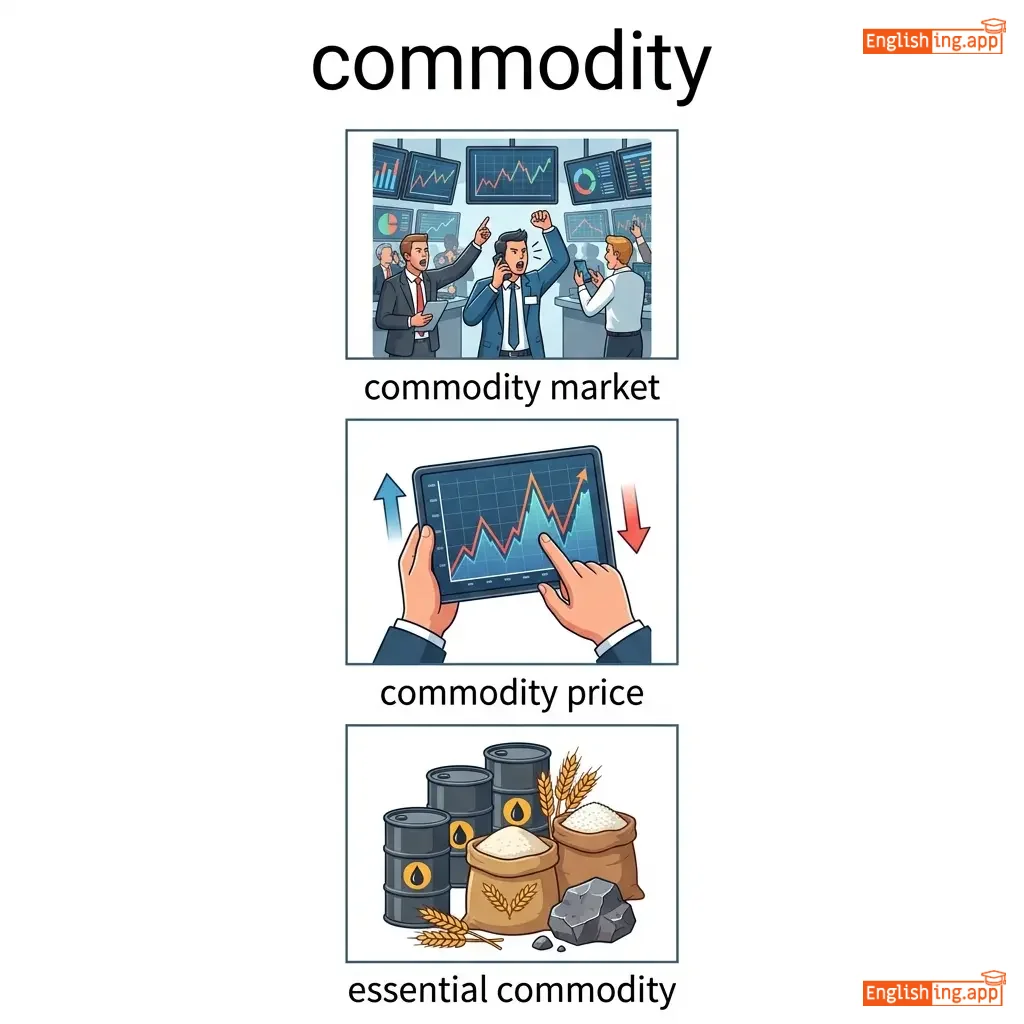
commodity market, commodity price, essential commodity, trading commodity
••••••
|
Commodity sounds like ‘Komoditi’ — 日本語の‘商品’のように取引されるもの。
••••••
|
|
🌍
••••••
|
/ˈkɒm.ən/
adjective
(komon)
••••••
|
- •••••• |
共通
kyoutsuu
••••••
|
- •••••• | - •••••• | - •••••• | - •••••• |
occurring frequently or widely; shared by all
••••••
|
It is common to see traffic in the city during rush hour. |
ラッシュアワー中に都市で交通渋滞を見るのは一般的です。
Rasshu awa-chuu ni toshi de koutsuu jyuutai wo miru no wa ippanteki desu
••••••
|
common sense |
good practical judgment based on everyday experience
••••••
|
常識
joushiki
••••••
|
usual, ordinary, frequent, general
••••••
|
rare, uncommon, unusual
••••••
|
common problem, common interest, common mistake, in common
••••••
|
共通はみんなで分かち合うこと、例えば‘常識’のように。
••••••
|
|
🗣️
••••••
|
/ˈkɒmənli/
adverb
(コモンリー)
••••••
|
- •••••• |
一般的に
ippanteki ni
••••••
|
- •••••• | - •••••• | - •••••• | - •••••• |
usually or by most people
••••••
|
This phrase is commonly used in everyday speech. |
このフレーズは日常会話で一般的に使われます。
Kono fureezu wa nichijō kaiwa de ippanteki ni tsukawaremasu.
••••••
|
- •••••• | - •••••• | - •••••• |
usually, generally, typically, often, ordinarily
••••••
|
rarely, seldom, unusually
••••••
|
commonly used, commonly known, commonly accepted, commonly found
••••••
|
Commonは一般的な意味なので、commonlyは一般的にという意味です
••••••
|
|
💬
••••••
|
/kəˈmjuː.nɪ.keɪt/
verb
••••••
|
- •••••• | - •••••• |
communicated
••••••
|
communicated
••••••
|
communicates
••••••
|
communicating
••••••
|
to share or exchange information, ideas, or feelings
••••••
|
They used gestures to communicate across the noisy room. |
- •••••• |
communicate clearly |
to express oneself in a way that others can easily understand
••••••
|
- •••••• |
convey, express, share, transmit, inform
••••••
|
conceal, suppress
••••••
|
communicate effectively, communicate directly, communicate through, communicate clearly
••••••
|
No •••••• |
|
📞
••••••
|
/kəˌmjuː.nɪˈkeɪ.ʃən/
noun
(コミュニケーション)
••••••
|


|
コミュニケーション
komyunikeeshon
••••••
|
- •••••• | - •••••• | - •••••• | - •••••• |
the act or process of sharing information, ideas, or feelings
••••••
|
Good communication is essential for a strong relationship. |
良いコミュニケーションは強い関係には不可欠です。
Yoi komyunikeeshon wa tsuyoi kankei ni wa fukaketsu desu.
••••••
|
lines of communication |
the channels or methods by which people communicate
••••••
|
コミュニケーションライン
komyunikeeshon rain
••••••
|
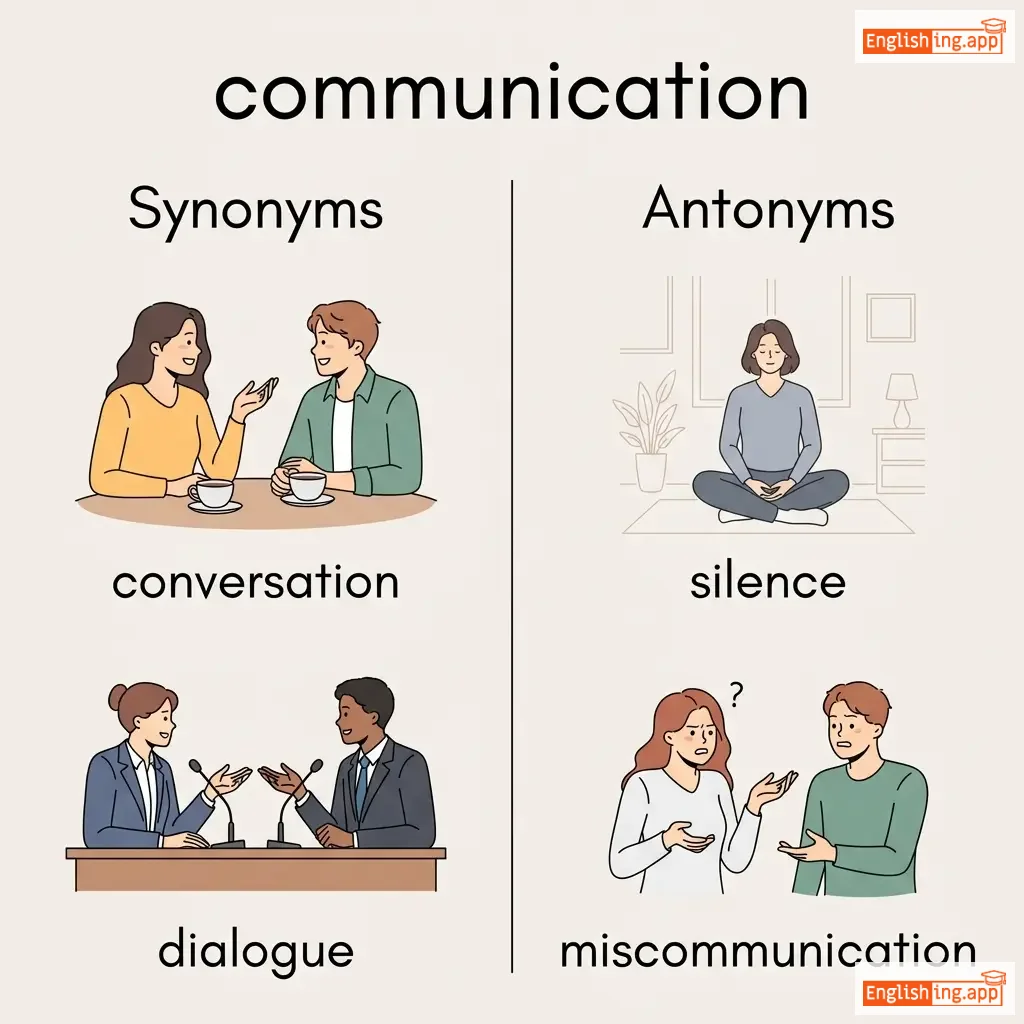
conversation, dialogue, exchange, correspondence, contact
••••••
|
silence, miscommunication
••••••
|
effective communication, open communication, communication skills, communication barrier
••••••
|
コミュニケーション = コミュニティ + 行動 = 社会での情報交換
••••••
|
|
✊
••••••
|
/ˈkɒmjʊnɪst/
noun
••••••
|
- •••••• | - •••••• | - •••••• | - •••••• | - •••••• | - •••••• |
a person who supports or believes in the principles of communism
••••••
|
The communist ideology aims for a classless society. |
- •••••• | - •••••• | - •••••• | - •••••• |
socialist, Marxist, leftist, revolutionary
••••••
|
capitalist, bourgeois
••••••
|
communist party, communist government, communist manifesto
••••••
|
No •••••• |
|
🏘️
••••••
|
/kəˈmjuː.nə.ti/
noun
(コミュニティ)
••••••
|
- •••••• |
コミュニティ
komyuniti
••••••
|
- •••••• | - •••••• | - •••••• | - •••••• |
a group of people living in the same place or sharing common interests
••••••
|
The community worked together to clean the park.
コミュニティは公園を掃除するために一緒に働きました。
••••••
|
コミュニティは公園を掃除するために一緒に働きました。
Komyuniti wa kouen wo souji suru tame ni issho ni hatarakimashita.
••••••
|
sense of community
コミュニティの感覚
••••••
|
a feeling of belonging and togetherness among people
••••••
|
コミュニティの感覚
Komyuniti no kankaku
••••••
|
group, society, population, collective, neighborhood
••••••
|
individual, isolation
••••••
|
local community, global community, community service, community center
••••••
|
コミュニティ = Com (一緒に) + unity (団結) = 一つのグループとして団結。
••••••
|
|
👫
••••••
|
/kəmˈpænjən/
noun
(コンパニオン)
••••••
|
- •••••• |
仲間
nakama
••••••
|
- •••••• | - •••••• | - •••••• | - •••••• |
a person or animal you spend time with or travel with
••••••
|
He was my companion during the long journey. |
彼は長い旅の間、私の仲間でした。
kare wa nagai tabi no aida, watashi no nakama deshita.
••••••
|
travel companion |
a person who accompanies you on a trip
••••••
|
旅行仲間
ryokou nakama
••••••
|
friend, partner, mate, associate, ally
••••••
|
enemy, rival, stranger
••••••
|
close companion, loyal companion, travel companion, lifelong companion
••••••
|
Companion は日本語で仲間 — 仲間が旅行を共にする
••••••
|
|
🏢
••••••
|
/ˈkʌm.pə.ni/
noun
(kōmpanī)
••••••
|
- •••••• |
会社
kaisha
••••••
|
- •••••• | - •••••• | - •••••• | - •••••• |
a business organization; the presence of other people
••••••
|
She started her own company to sell handmade products. |
彼女は手作りの製品を販売するために自分の会社を始めました。
Kanojo wa tedzukuri no seihin o hanbai suru tame ni jibun no kaisha o hajimemashita.
••••••
|
keep someone company |
to stay with someone so they are not alone
••••••
|
誰かに付き添う
dareka ni tsukisou
••••••
|
firm, corporation, enterprise, business, organization
••••••
|
individual, solitude
••••••
|
company policy, company profile, company growth, company headquarters
••••••
|
会社 = '会社' はビジネスを意味し、 '付き添う' は誰かと一緒にいることを意味します。
••••••
|
|
⚖️
••••••
|
/ˈkɒmp(ə)rəbl/
adjective
(コンパラブル)
••••••
|
- •••••• |
比較できる
hikaku dekiru
••••••
|
- •••••• | - •••••• | - •••••• | - •••••• |
Able to be likened to something else in size, amount, or quality.
••••••
|
The two products are comparable in quality but differ in price.
二つの製品は品質がコンパラブルですが、価格が異なります。
••••••
|
二つの製品は品質が比較できるが、価格が異なる。
futatsu no seihin wa hinshitsu ga hikaku dekiru ga kakaku ga kotonaru
••••••
|
comparable to
コンパラブル トゥ
••••••
|
Similar or equivalent to something else
••••••
|
〜と比較できる
to hikaku dekiru
••••••
|
similar, equivalent, analogous, alike, matching
••••••
|
different, dissimilar, unequal
••••••
|
comparable quality, comparable size, comparable results, comparable standards
••••••
|
‘Hikaku dekiru’ = able to compare, same root as comparable!
••••••
|
|
📊
••••••
|
/kəmˈpærətɪv/
adjective
(コンパラティブ)
••••••
|
- •••••• |
比較の
hikaku no
••••••
|
- •••••• | - •••••• | - •••••• | - •••••• |
Measured or considered by comparison; relative.
••••••
|
She lives in comparative comfort after moving to the city.
シー リブズ イン コンパラティブ コンフォート アフター ムービング トゥ ザ シティ。
••••••
|
彼女は都市に引っ越した後、比較的快適に暮らしている。
kanojo wa toshi ni hikkoshita ato hikakuteki kaiteki ni kurashite iru
••••••
|
comparative advantage
コンパラティブ アドバンテージ
••••••
|
The ability of a country or company to produce goods or services at a lower opportunity cost than others
••••••
|
比較優位
hikaku yui
••••••
|
relative, proportional, measured, evaluative
••••••
|
absolute, definite, fixed
••••••
|
comparative study, comparative analysis, comparative comfort, comparative advantage
••••••
|
‘比較’ (hikaku) means comparison—so comparative = 比較の (hikaku no).
••••••
|
|
⚖️
••••••
|
/kəmˈpeər/
verb
(kəmˈpeər)
••••••
|

|
比較する
hikaku suru
••••••
|
compared
kəmˈpeərd
••••••
|
compared
kəmˈpeərd
••••••
|
compares
kəmˈpeərz
••••••
|
comparing
kəmˈpeərɪŋ
••••••
|
to examine the similarities and differences between two or more things
••••••
|
The teacher asked us to compare two poems.
先生は私たちに二つの詩を比較するように頼みました。
••••••
|
先生は私たちに二つの詩を比較するように頼みました。
Sensei wa watashitachi ni futatsu no shi o hikaku suru yō ni tanomimashita.
••••••
|
compare notes
ノートを比較する
••••••
|
to exchange information or opinions on a subject
••••••
|
ノートを比較する
nōto o hikaku suru
••••••
|
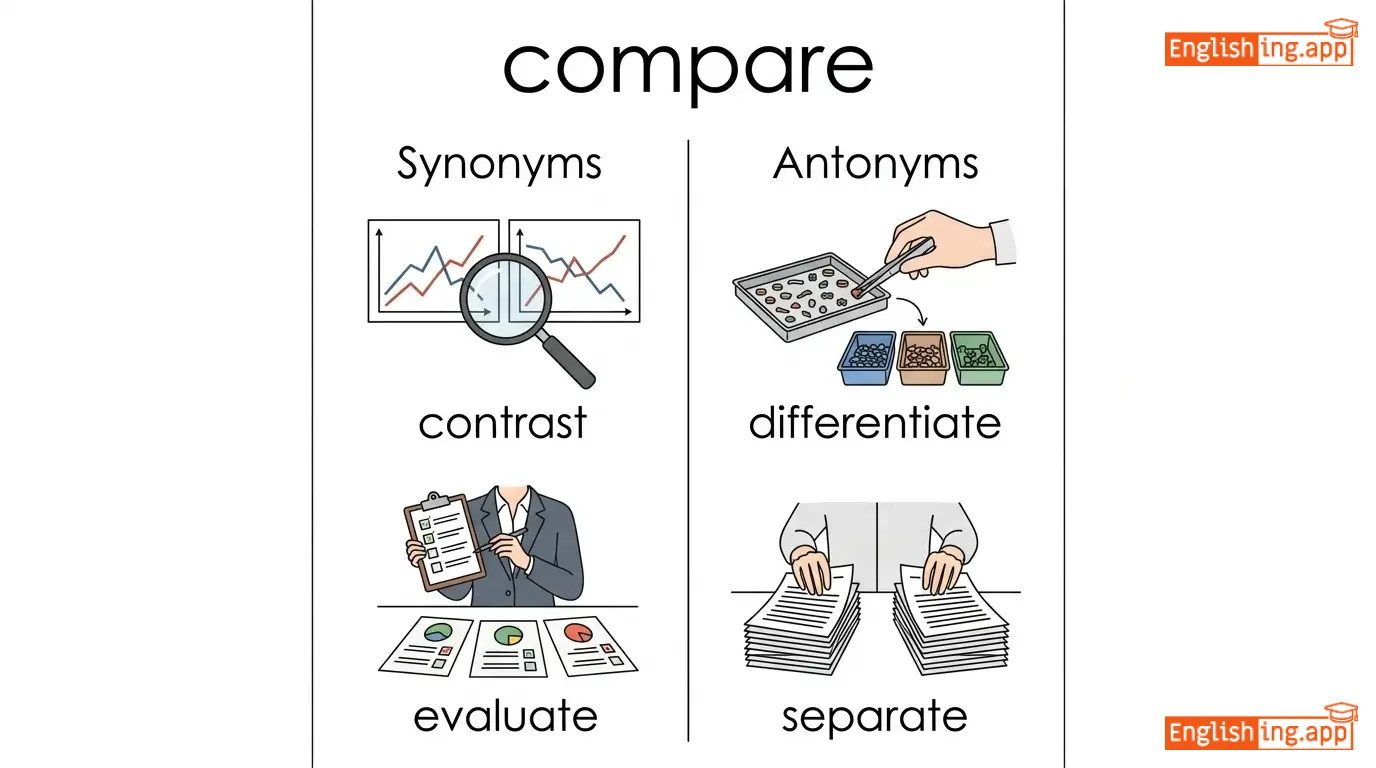
contrast, evaluate, match, measure, analyze
••••••
|
differentiate, separate
••••••
|
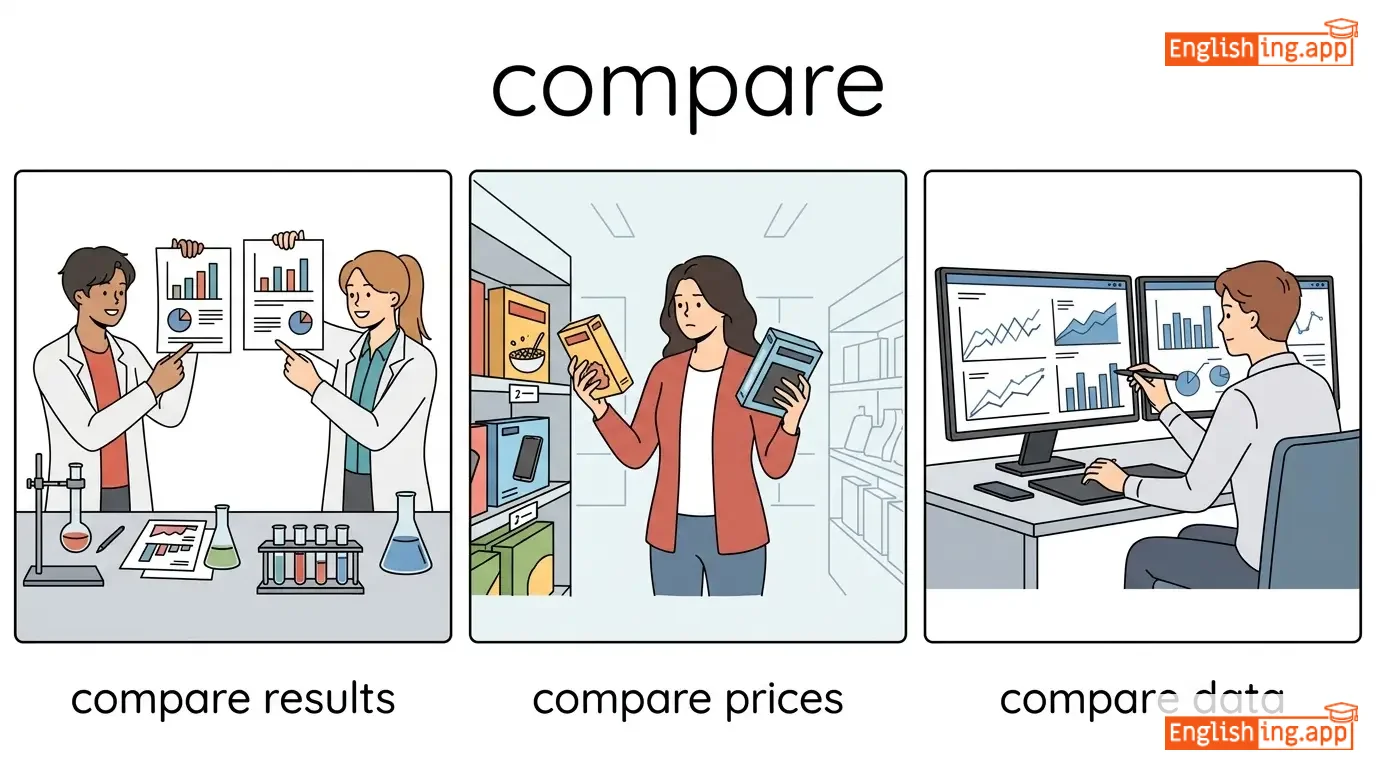
compare results, compare prices, compare data, compare favorably
••••••
|
Compare は比較するという意味です - お店で価格を比較するようなものです。
••••••
|
|
🔍
••••••
|
/kəmˈpærɪsən/
noun
(コンパリソン)
••••••
|
- •••••• |
比較
hikaku
••••••
|
- •••••• | - •••••• | - •••••• | - •••••• |
The act or process of examining the similarities and differences between things.
••••••
|
A comparison of the two reports shows several inconsistencies.
ア コンパリソン オブ ザ トゥー レポーツ ショウズ セヴェラル インコンシステンシーズ。
••••••
|
2つの報告書を比較すると、いくつかの不一致が見られます。
futatsu no houkokusho o hikaku suru to ikutsuka no fuicchi ga mirarerumasu
••••••
|
draw a comparison
ドロー ア コンパリソン
••••••
|
To point out similarities or differences between two or more things
••••••
|
比較する
hikaku suru
••••••
|
contrast, evaluation, juxtaposition, measurement
••••••
|
isolation, separation
••••••
|
make a comparison, draw a comparison, comparison chart, comparison between
••••••
|
Comparison → 比較 (hikaku): ‘Hi’ like ‘he’, ‘kaku’ like ‘compare two’ – easy link!
••••••
|
|
❤️
••••••
|
/kəmˈpæʃən/
noun
(コンパッション)
••••••
|
- •••••• |
思いやり
omoiyari
••••••
|
- •••••• | - •••••• | - •••••• | - •••••• |
Sympathetic concern for the sufferings or misfortunes of others.
••••••
|
The nurse treated the patients with great compassion.
看護師は患者を大きな思いやりで治療しました。
••••••
|
看護師は患者を大きな思いやりで治療しました。
Kangoshi wa kanja o ōkina omoiyari de chiryō shimashita.
••••••
|
act of compassion
思いやりの行動
••••••
|
An action motivated by empathy and kindness toward others
••••••
|
思いやりの行動
Omoiyari no kōdō
••••••
|
sympathy, empathy, pity, kindness, mercy
••••••
|
cruelty, indifference, harshness
••••••
|
show compassion, feel compassion, compassion for others, compassion and kindness
••••••
|
思いやり(omoiyari)- 他人を思いやることがコンパッションです。
••••••
|
|
👉
••••••
|
/kəmˈpɛl/
verb
(コンペル)
••••••
|
- •••••• |
強制する
kyousei suru
••••••
|
compelled
コンペルド
••••••
|
compelled
コンペルド
••••••
|
compels
コンペルス
••••••
|
compelling
コンペリング
••••••
|
To force or drive someone to do something.
••••••
|
The law compels citizens to pay taxes.
法律は市民に税金を支払うことを強制します。
••••••
|
法律は市民に税金を支払うことを強制します。
Hōritsu wa shimin ni zeikin o shiharau koto o kyōsei shimasu.
••••••
|
compel attention
注目を集める
••••••
|
To strongly attract or demand focus.
••••••
|
注目を集める
chūmoku o atsumeru
••••••
|
force, drive, oblige, pressure, coerce
••••••
|
dissuade, discourage, prevent
••••••
|
compel someone, compel obedience, compel action, compel attention
••••••
|
Compel は強制するという意味、例えば: '先生が宿題を強制する!'
••••••
|
|
🌟
••••••
|
/kəmˈpɛlɪŋ/
adjective
(ケムˈペリング)
••••••
|
- •••••• |
魅力的な
miryokuteki na
••••••
|
- •••••• | - •••••• | - •••••• | - •••••• |
Evoking interest, attention, or admiration in a powerful way.
••••••
|
She gave a compelling speech about climate change. |
彼女は気候変動について魅力的なスピーチをしました。
Kanojo wa kikō hendō ni tsuite miryokuteki na supīchi o shimashita.
••••••
|
compelling evidence |
Evidence that is convincing and hard to refute.
••••••
|
説得力のある証拠
settokuryoku no aru shōko
••••••
|
convincing, powerful, persuasive, gripping, fascinating
••••••
|
unconvincing, weak, boring
••••••
|
compelling argument, compelling reason, compelling story, compelling evidence
••••••
|
魅力的, あなたを魅了するスピーチのようなもの!
••••••
|
|
💰
••••••
|
/ˈkɒmpənseɪt/
verb
(コンペンセイト)
••••••
|
|
補償する
hoshō suru
••••••
|
compensated
コンペンセイテッド
••••••
|
compensated
コンペンセイテッド
••••••
|
compensates
コンペンセイツ
••••••
|
compensating
コンペンセイティング
••••••
|
To give something, typically money, in recognition of loss, suffering, or work done.
••••••
|
The company compensated the worker for his injury.
会社は彼の怪我に対して労働者に賠償金を支払いました。
••••••
|
会社は彼の怪我に対して労働者に賠償金を支払いました。
Kaisha wa kare no kega ni taishite rōdōsha ni baishōkin o shiharai mashita.
••••••
|
compensate for
補償する
••••••
|
To make up for something, usually a fault or loss.
••••••
|
補償する
hoshō suru
••••••
|
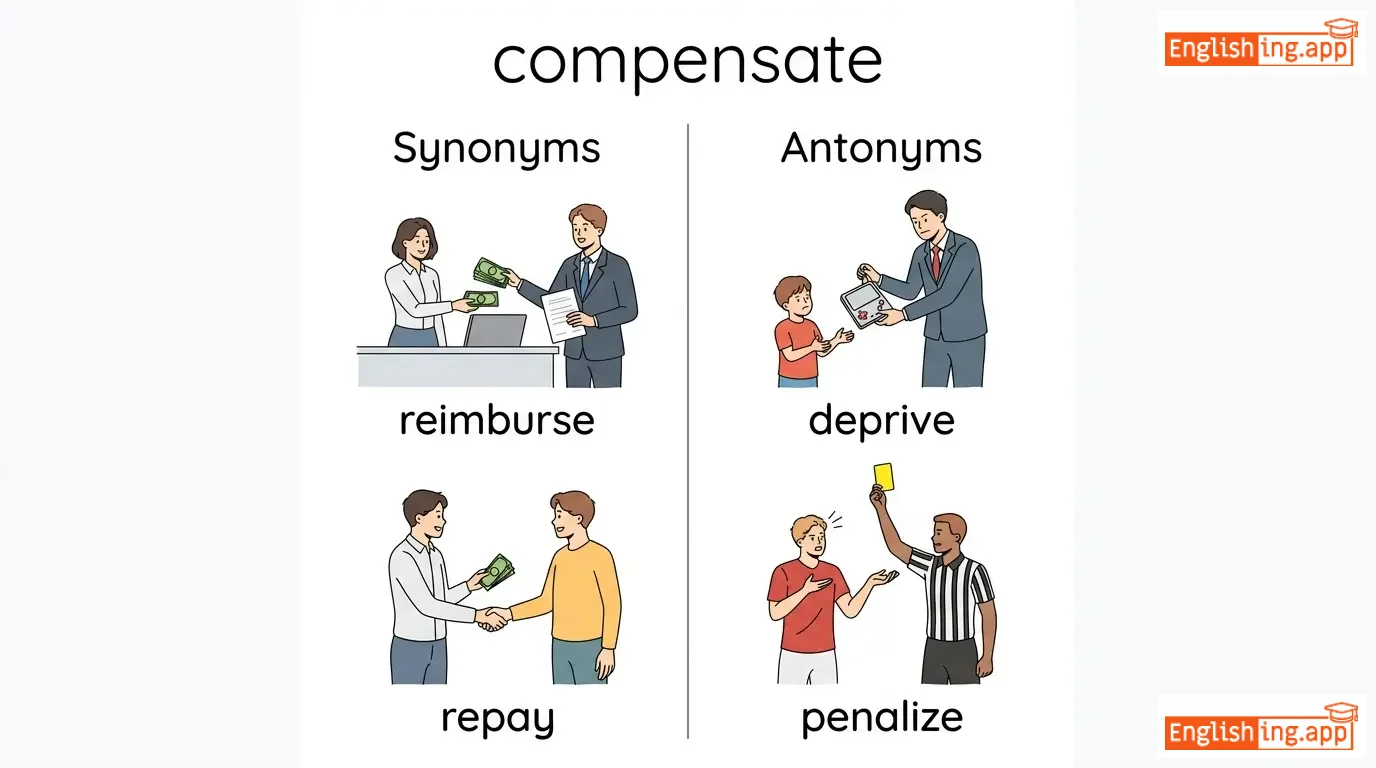
reimburse, repay, recompense, reward, indemnify
••••••
|
deprive, penalize, fine
••••••
|
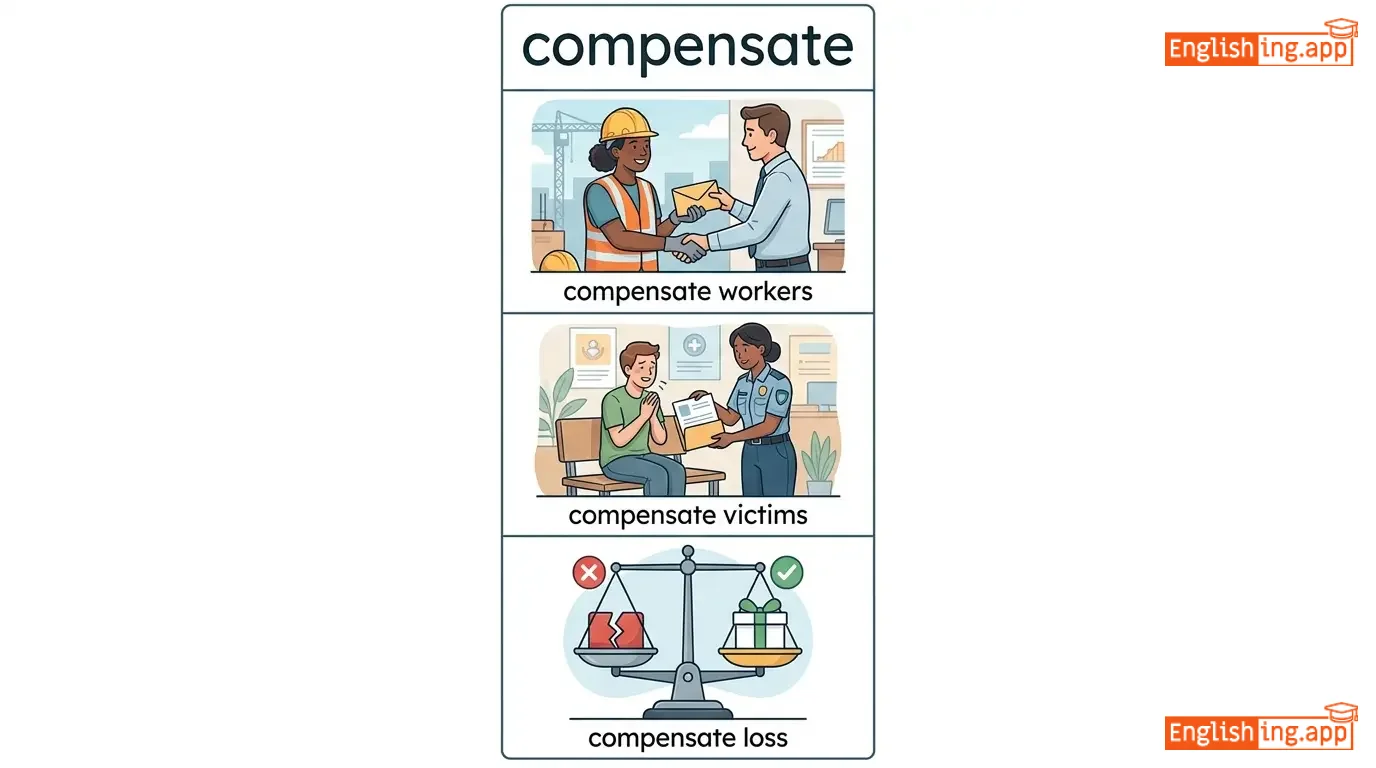
compensate workers, compensate victims, compensate loss, compensate for damage
••••••
|
補償するは損失を埋める、または何かを支払う意味です。
••••••
|
|
💰
••••••
|
/ˌkɒmpənˈseɪʃən/
noun
(kəmˌpɛnsəˈɪʃən)
••••••
|
- •••••• |
補償
hoshō
••••••
|
- •••••• | - •••••• | - •••••• | - •••••• |
something, typically money, given to make up for loss, injury, or work done
••••••
|
She received financial compensation for the accident. |
彼女は事故のために金銭的補償を受けました。
Kanojo wa jiko no tame ni kinseiteki hoshō o ukemashita.
••••••
|
seek compensation |
to request payment or restitution for loss or damage
••••••
|
補償を求める
hoshō o motomeru
••••••
|
reimbursement, repayment, indemnity, recompense, restitution
••••••
|
penalty, loss, damage
••••••
|
compensation package, compensation claim, compensation for loss, financial compensation
••••••
|
補償 = 損失や怪我を補うお金!
••••••
|
|
🏆
••••••
|
/kəmˈpiːt/
verb
(コンペート)
••••••
|
- •••••• |
競争する
kyousou suru
••••••
|
competed
コンペーティッド
••••••
|
competed
コンペーティッド
••••••
|
competes
コンピーツ
••••••
|
competing
コンピーティング
••••••
|
to try to win or be more successful than others in a contest or activity
••••••
|
Several companies compete for dominance in the market.
いくつかの会社が市場での支配を競い合っています。
••••••
|
いくつかの会社が市場での支配を競い合っています。
Ikutsuka no kaisha ga shijou de no shihai o kisoiatteimasu.
••••••
|
compete against time
時間との競争
••••••
|
to try to do something very quickly before time runs out
••••••
|
時間との競争
Jikan to no kyousou
••••••
|
contend, vie, strive, rival, challenge
••••••
|
cooperate, support, assist
••••••
|
compete for, compete against, compete in, fiercely compete
••••••
|
競争するということは競い合うことです!
••••••
|

