Получите неограниченный доступ ко всем словам с подпиской Pro
Обновить до ProПолучите неограниченный доступ ко всем предложениям с подпиской Pro
Обновить до Pro|
Эмодзи
|
Слово | Images | Перевод | Прошедшее | Причастие прошедшего времени | Третье лицо единственного числа | Герундий | Значение | Пример предложения | Перевод примера предложения | Пример выражения | Значение примера выражения | Перевод примера выражения | Синонимы | Антонимы | Коллокации | Мнемоника |
|---|---|---|---|---|---|---|---|---|---|---|---|---|---|---|---|---|---|
|
🎓
••••••
|
/ˈkɒlɪdʒ/
noun
(колледж)
••••••
|
- •••••• |
колледж
kolledzh
••••••
|
- •••••• | - •••••• | - •••••• | - •••••• |
An educational institution where students study for degrees or professional qualifications.
••••••
|
She hopes to attend college in the city next year. |
Она надеется поступить в колледж в городе в следующем году.
Ona nadeyetsya postupit' v kolledzh v gorode v sleduyushchem godu.
••••••
|
go to college |
to enroll in and attend a college for studies
••••••
|
поступить в колледж
postupit' v kolledzh
••••••
|
university, institute, academy, campus
••••••
|
school, dropout
••••••
|
college degree, college student, college campus, go to college
••••••
|
Колледж — это место, где получаешь знания! Не упусти шанс попасть в колледж!
••••••
|
|
🚗💥🚗
••••••
|
/kəˈlɪʒən/
noun
(коллизион)
••••••
|
- •••••• |
столкновение
stolknoveniye
••••••
|
- •••••• | - •••••• | - •••••• | - •••••• |
an instance of two or more objects crashing into each other
••••••
|
The collision on the highway caused a major traffic jam. |
Столкновение на шоссе вызвало большую пробку.
Stolknoveniye na shosse vyzvalo bol'shuyu probku.
••••••
|
on a collision course |
moving toward inevitable conflict or disaster
••••••
|
на пути к столкновению
na puti k stolknovleniyu
••••••
|
crash, impact, accident, clash
••••••
|
separation, avoidance, peace
••••••
|
car collision, head-on collision, fatal collision
••••••
|
Коллизия означает столкновение – машины 🚗💥🚗 сталкиваются
••••••
|
|
🏛️
••••••
|
/kəˈloʊniəl/
adjective
(колониальный)
••••••
|
|
колониальный
kolonialny
••••••
|
- •••••• | - •••••• | - •••••• | - •••••• |
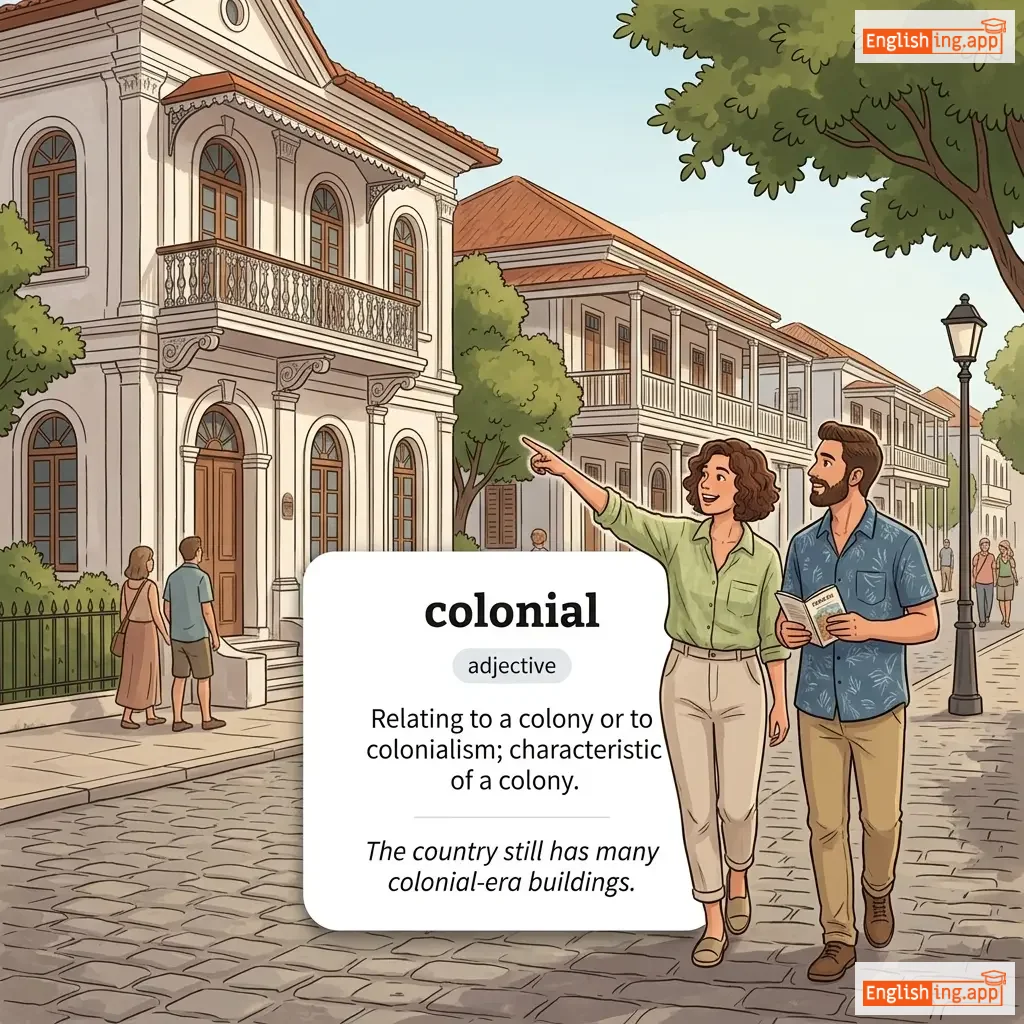
Relating to a colony or to colonialism; characteristic of a colony.
••••••
|
The country still has many colonial-era buildings.
В стране все еще есть много колониальных зданий.
••••••
|
В стране все еще есть много колониальных зданий.
V strane vse eshche est' mnogo kolonial'nykh zdaniy.
••••••
|
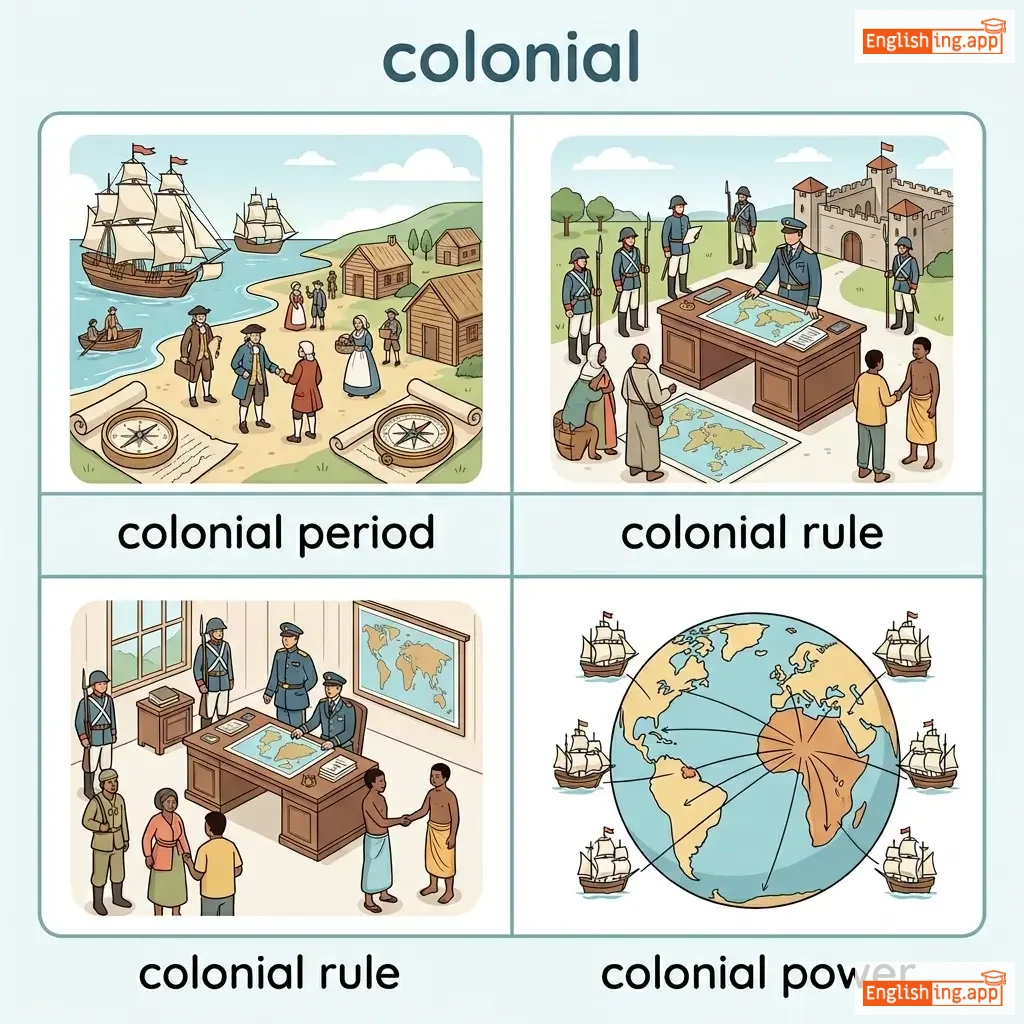
colonial rule
колониальное правление
••••••
|
political control of one country by another
••••••
|
колониальное правление
kolonial'noe pravlenie
••••••
|
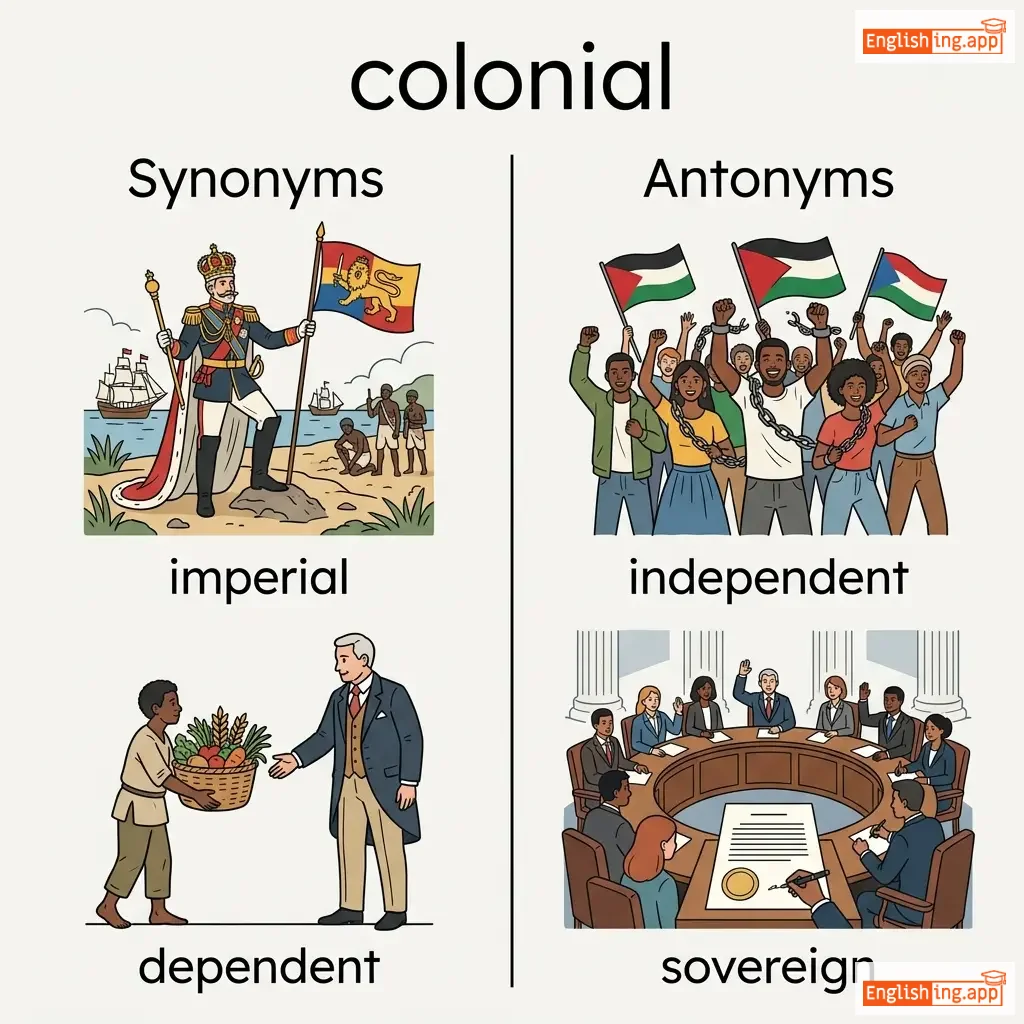
imperial, dependent, overseas, settler
••••••
|
independent, sovereign
••••••
|
colonial period, colonial rule, colonial power, colonial history
••••••
|
Колониальный — это как колония, только в историческом контексте.
••••••
|
|
🏝️
••••••
|
/ˈkɒləni/
noun
(kóloni)
••••••
|
- •••••• |
колония
koloniya
••••••
|
- •••••• | - •••••• | - •••••• | - •••••• |
a territory or community controlled by another country or group of people
••••••
|
India was once a British colony. |
Индия когда-то была британской колонией.
Indiya kogda-to byla britanskoy koloniey.
••••••
|
- •••••• | - •••••• | - •••••• |
territory, settlement, dependency, dominion, outpost
••••••
|
independent state, homeland
••••••
|
British colony, animal colony, colony of ants, colonial rule
••••••
|
Colony похоже на 'колония' по-русски, территория под контролем другого.
••••••
|
|
🎨
••••••
|
/ˈkʌl.ər/
noun
(kólɐr)
••••••
|
- •••••• |
цвет
tsvet
••••••
|
- •••••• | - •••••• | - •••••• | - •••••• |
The property possessed by an object of producing different sensations on the eye as a result of the way it reflects or emits light.
••••••
|
Blue is her favorite color. |
Синий — ее любимый цвет.
Siniy — yeye lyubimy tsfvet.
••••••
|
show your true colors |
To reveal one's real character or intentions
••••••
|
покажите свои настоящие цвета
pokazhyte svoi nastoyashchie tsveta
••••••
|
hue, shade, tint, tone, pigment
••••••
|
monochrome, colorless
••••••
|
bright color, favorite color, primary color, true color
••••••
|
Цвет — это слово, похожее на 'color', легко запомнить.
••••••
|
|
🌈
••••••
|
/ˈkʌlərfəl/
adjective
(кэлерфул)
••••••
|
- •••••• |
яркий
yarkiy
••••••
|
- •••••• | - •••••• | - •••••• | - •••••• |
having bright colors; full of variety or interest
••••••
|
The festival was full of colorful decorations.
Фестиваль был полон ярких украшений.
••••••
|
Фестиваль был полон ярких украшений.
Festival byl polon yarkikh ukrasheniĭ.
••••••
|
colorful personality
цветная личность
••••••
|
a lively, interesting, and sometimes eccentric person
••••••
|
цветная личность
tsvetnaya lichnost'
••••••
|
vivid, bright, vibrant, lively, picturesque
••••••
|
colorless, dull, plain
••••••
|
colorful clothes, colorful festival, colorful language, colorful character
••••••
|
Colorful — как яркий цветок в саду, полный жизни и красок.
••••••
|
|
🎨
••••••
|
/ˈkʌl.ər/
noun
(kʌlɚ)
••••••
|
- •••••• |
цвет
tsvet
••••••
|
- •••••• | - •••••• | - •••••• | - •••••• |
the property possessed by an object of producing different sensations on the eye as a result of the way it reflects light; hue, tint, shade
••••••
|
What is your favorite colour for painting the bedroom walls?
Какой твой любимый цвет для покраски стен в спальне?
••••••
|
Какой твой любимый цвет для покраски стен в спальне?
Kakoy tvoy lyubimyy tsvet dlya pokraski sten v spal'ne?
••••••
|
- •••••• | - •••••• | - •••••• |
hue, tint, shade, tone, pigment
••••••
|
colorless, transparent, clear, monochrome
••••••
|
bright colour, dark colour, primary colour, colour scheme, colour blind
••••••
|
Цвет = то, что видишь
••••••
|
|
📊
••••••
|
/ˈkɒləm/
noun
(kolonna)
••••••
|
- •••••• |
колонна
kolonna
••••••
|
- •••••• | - •••••• | - •••••• | - •••••• |
A vertical structure that supports a building; also a section of text arranged vertically in a newspaper or table.
••••••
|
The ancient temple had tall marble columns.
Древний храм имел высокие мраморные колонны.
••••••
|
Древний храм имел высокие мраморные колонны.
Drevniy khram imel vysokie mramornye kolonni.
••••••
|
advice column
колонка советов
••••••
|
a section in a newspaper where advice is given to readers
••••••
|
колонка советов
kolonka sovetov
••••••
|
pillar, post, support, section
••••••
|
row, line
••••••
|
newspaper column, support column, table column, advice column
••••••
|
Колонна как поддерживающая линия – в газете или на здании.
••••••
|
|
🖋️
••••••
|
/ˈkɒləmnɪst/
noun
(kolumnist)
••••••
|
- •••••• |
колумнист
kolumnist
••••••
|
- •••••• | - •••••• | - •••••• | - •••••• |
a journalist who regularly writes articles or opinions for a newspaper or magazine
••••••
|
The columnist wrote an article about climate change. |
Колумнист написал статью о изменении климата.
Kolumnist napisal stat'yu o izmenenii klimata.
••••••
|
- •••••• | - •••••• | - •••••• |
journalist, writer, commentator, reporter, contributor
••••••
|
reader, audience
••••••
|
newspaper columnist, political columnist, famous columnist, opinion columnist
••••••
|
Колумнист — это тот, кто пишет статьи в газете. Запомни как 'колонка', и тебе будет легче запомнить.
••••••
|
|
⚔️
••••••
|
/ˈkɒmbæt/
verb
(комбат)
••••••
|
- •••••• |
сражаться
srazhat'sya
••••••
|
combated
комбатировал
••••••
|
combated
комбатировал
••••••
|
combats
комбатирует
••••••
|
combating
комбатируя
••••••
|
to fight against something, especially to reduce or stop it
••••••
|
The government is taking steps to combat corruption.
Правительство принимает меры для борьбы с коррупцией.
••••••
|
Правительство принимает меры для борьбы с коррупцией.
Pravitel'stvo prinimayet mery dlya bor'by s korruptsiey.
••••••
|
combat crime
борьба с преступностью
••••••
|
to fight against criminal activity
••••••
|
борьба с преступностью
bor'ba s prestupnost'yu
••••••
|
fight, battle, oppose, resist, tackle
••••••
|
support, encourage, promote
••••••
|
combat disease, combat terrorism, combat climate change, combat poverty
••••••
|
Сражаться = Come + Battle — давай бороться (come to fight)!
••••••
|
|
🔢
••••••
|
/ˌkɒmbɪˈneɪʃən/
noun
(комбинация)
••••••
|
- •••••• |
комбинация / смесь
kombinaciya / smes
••••••
|
- •••••• | - •••••• | - •••••• | - •••••• |
The act of joining or mixing two or more things together.
••••••
|
This dish is a perfect combination of sweet and spicy flavors. |
Это блюдо - идеальная комбинация сладких и острых вкусов.
Eto blyudo - ideal'naya kombinaciya sladkikh i ostrykh vkuso.
••••••
|
combination lock |
a lock that opens by turning dials to a particular sequence of numbers
••••••
|
комбинационный замок
kombinacionnyy zamok
••••••
|
blend, mixture, union, fusion, merger
••••••
|
separation, division
••••••
|
perfect combination, unique combination, combination lock, combination of factors
••••••
|
Combination = Com + Bini + shon – Соединение чисел для открытия замка
••••••
|
|
⚙️
••••••
|
/kəmˈbaɪn/
verb
(комбайн)
••••••
|
- •••••• |
объединить
ob'edinyt'
••••••
|
combined
комбайнд
••••••
|
combined
комбайнд
••••••
|
combines
комбайнз
••••••
|
combining
комбайнинг
••••••
|
To bring two or more things together to form a single unit.
••••••
|
They decided to combine their resources for the project.
Они решили объединить свои ресурсы для проекта.
••••••
|
Они решили объединить свои ресурсы для проекта.
Oni reshilі ob'yedinit' svoi resursy dlya proekta.
••••••
|
combine forces
объединить силы
••••••
|
To work together with others towards a common goal.
••••••
|
объединить силы
ob'yedinit' sily
••••••
|
merge, join, unite, blend, fuse
••••••
|
separate, split, divide
••••••
|
combine efforts, combine forces, combine ingredients, combine ideas
••••••
|
Come + Bine = Объединить
••••••
|
|
🚶
••••••
|
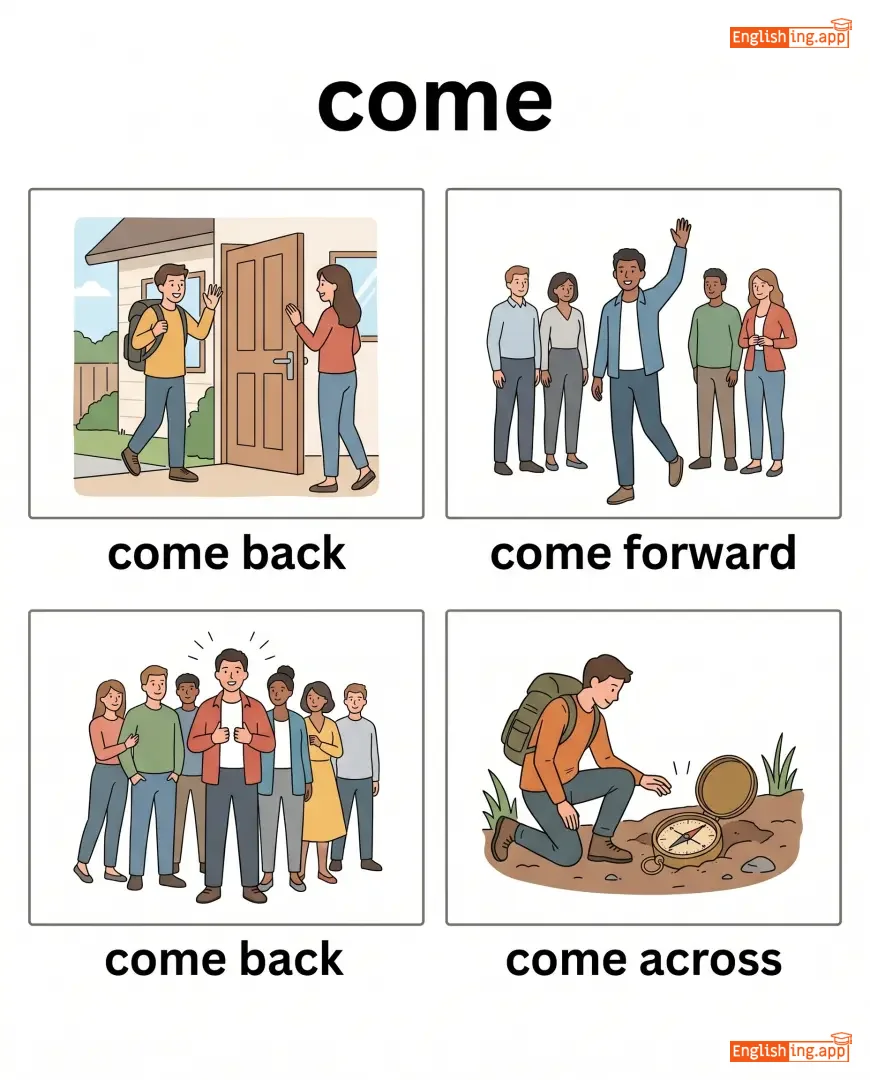
/kʌm/
verb
(хэппинесс)
••••••
|

|
счастье
schastye
••••••
|
came
••••••
|
come
••••••
|
comes
••••••
|
coming
••••••
|
to move or travel toward or into a place thought of as near or familiar
••••••
|
She will come to the party later. |
Она не смогла скрыть свое счастье, когда получила награду.
Ona ne smogla skryt' svoe schast'ye, kogda poluchila nagradu.
••••••
|
come true |
to happen as wished or dreamed
••••••
|
поиск счастья
poisk schast'ya
••••••
|
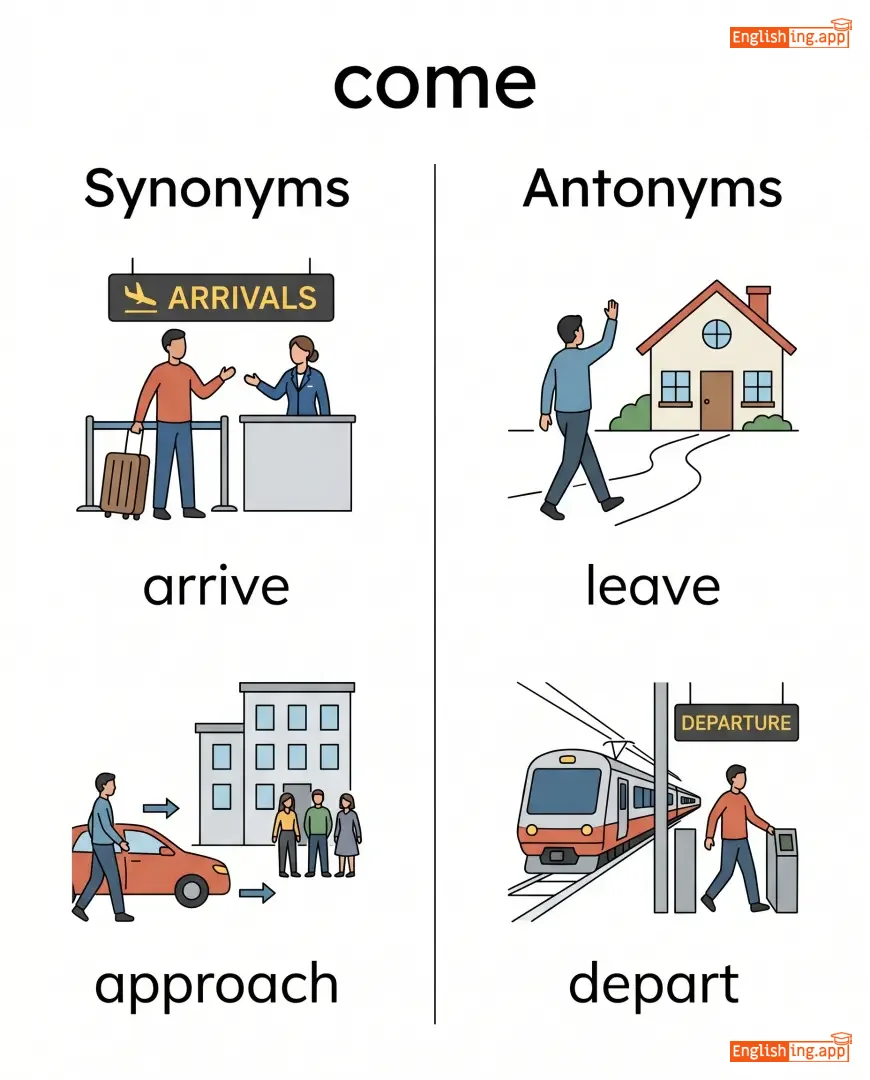
arrive, approach, reach, appear, enter
••••••
|
leave, depart, go
••••••
|
come back, come forward, come across, come out, come together
••••••
|
Счастье (happiness) — это когда ты счастлив. Например, 'Я счастлив видеть свою семью.'
••••••
|
|
😂
••••••
|
/ˈkɒmədi/
noun
(комедия)
••••••
|
- •••••• |
комедия
komediya
••••••
|
- •••••• | - •••••• | - •••••• | - •••••• |
A type of entertainment that is intended to make people laugh.
••••••
|
We watched a hilarious comedy at the theater.
Мы посмотрели веселую комедию в театре.
••••••
|
Мы посмотрели веселую комедию в театре.
My posmotreli vesyoluyu komediyu v teatre.
••••••
|
tragicomedy
трагикомедия
••••••
|
a dramatic work that combines elements of tragedy and comedy
••••••
|
трагикомедия
tragikomediya
••••••
|
humor, farce, satire, joke, parody
••••••
|
tragedy, drama
••••••
|
stand-up comedy, comedy show, comedy movie, romantic comedy
••••••
|
Комедия - смех для всех! Laughter is the key.
••••••
|
|
🛋️
••••••
|
/ˈkʌmfərt/
noun
(комфорт)
••••••
|
- •••••• |
комфорт
komfort
••••••
|
- •••••• | - •••••• | - •••••• | - •••••• |
a state of physical ease and freedom from pain or distress
••••••
|
The soft chair gave him great comfort.
Мягкое кресло принесло ему большое удобство.
••••••
|
Мягкое кресло принесло ему большое удобство.
Myagkoye kreslo prineslo yemu bol'shoye udobstvo.
••••••
|
cold comfort
холодный комфорт
••••••
|
something that offers little consolation
••••••
|
холодный комфорт
kholodnyy komfort
••••••
|
ease, relief, support, solace, convenience
••••••
|
discomfort, distress, pain
••••••
|
seek comfort, provide comfort, comfort zone, physical comfort, emotional comfort
••••••
|
Комфорт – это ощущение тепла и уюта, как в доме.
••••••
|
|
🛋️
••••••
|
/ˈkʌmf.tə.bəl/
adjective
(komfortabel)
••••••
|


|
удобный
udobnyj
••••••
|
- •••••• | - •••••• | - •••••• | - •••••• |
providing physical ease and relaxation; free from stress or worry
••••••
|
This chair is so comfortable that I could sit here all day.
Этот стул такой удобный, что я мог бы сидеть здесь весь день.
••••••
|
Этот стул такой удобный, что я мог бы сидеть здесь весь день.
Etot stul takoy udobnyj, chto ya mog by sidet' zdes' ves' den'.
••••••
|
make yourself comfortable
расположитесь удобно
••••••
|
to relax and feel at ease
••••••
|
расположитесь удобно
raspolozhites' udobno
••••••
|
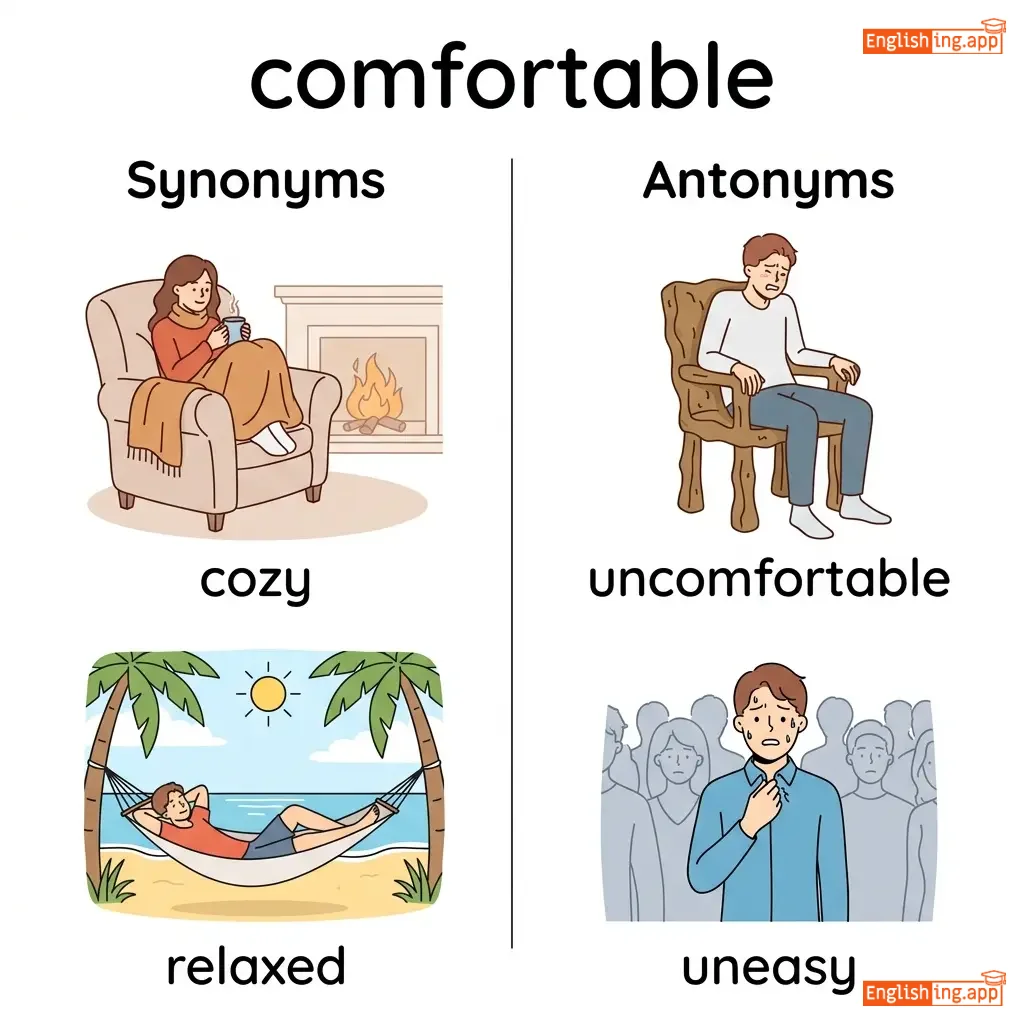
cozy, relaxed, pleasant, easy, restful
••••••
|
uncomfortable, uneasy, unpleasant
••••••
|
comfortable chair, comfortable clothes, feel comfortable, comfortable life
••••••
|
Удобный — как расслабиться после трудного дня
••••••
|
|
😂
••••••
|
/ˈkɒmɪk/
adjective
(комик)
••••••
|
- •••••• |
комический
komicheskiy
••••••
|
- •••••• | - •••••• | - •••••• | - •••••• |
causing or meant to cause laughter
••••••
|
The movie had several comic scenes. |
В фильме было несколько комических сцен.
V filme bylo neskol'ko komicheskikh stsene.
••••••
|
comic relief |
a humorous break in a serious narrative
••••••
|
комическое облегчение
komicheskoe oblegchenie
••••••
|
funny, humorous, amusing, witty, entertaining
••••••
|
serious, tragic, solemn
••••••
|
comic book, comic strip, comic character, comic effect, comic scene
••••••
|
Комический – всегда вызывает смех!
••••••
|
|
🎖️
••••••
|
/kəˈmænd/
verb
(команда)
••••••
|
- •••••• |
приказ
prikaz
••••••
|
commanded
командовал
••••••
|
commanded
командовал
••••••
|
commands
командует
••••••
|
commanding
командуя
••••••
|
to give an order authoritatively; to control or direct
••••••
|
The general commanded the soldiers to move forward.
Генерал отдал приказ солдатам двигаться вперёд.
••••••
|
Генерал приказал солдатам двигаться вперёд.
General prikazal soldatam dvizhatsya vpered.
••••••
|
at your command
по вашему приказу
••••••
|
ready to serve or act at someone's order
••••••
|
по вашему приказу
po vashemu prikazu
••••••
|
order, direct, instruct, control, demand
••••••
|
obey, request, follow
••••••
|
give a command, command authority, command attention, command respect
••••••
|
Команда как приказ
••••••
|
|
👨✈️
••••••
|
/kəˈmændər/
noun
(командант)
••••••
|
- •••••• |
командир
komandir
••••••
|
- •••••• | - •••••• | - •••••• | - •••••• |
a person in authority over a military unit; leader of armed forces
••••••
|
The commander ordered his troops to advance.
Командант приказал своим войскам двигаться вперед.
••••••
|
Командант приказал своим войскам двигаться вперед.
Komandant prikazal svoim voiskam dvigatsya vpered.
••••••
|
- •••••• | - •••••• | - •••••• |
leader, general, chief, captain
••••••
|
subordinate, follower, private
••••••
|
military commander, commanding officer, field commander
••••••
|
Komandir in Russian means a leader with authority over troops.
••••••
|
|
🎬
••••••
|
/kəˈmɛns/
verb
(комменсировать)
••••••
|
- •••••• |
начинать
nachinat
••••••
|
commenced
начал
••••••
|
commenced
начат
••••••
|
commences
начинает
••••••
|
commencing
начиная
••••••
|
to begin or start something
••••••
|
The ceremony will commence at noon.
Церемония начнется в полдень.
••••••
|
Церемония начнется в полдень.
Tseremoniya nachnyotsya v poldyen.
••••••
|
commence operations
начать операции
••••••
|
to start working or functioning
••••••
|
начать операции
nachat' operatsii
••••••
|
begin, start, initiate, launch, inaugurate
••••••
|
end, finish, conclude
••••••
|
commence work, commence proceedings, commence operations, commence at
••••••
|
Commence значит начать, как в 'начать работу' — это значит начать делать что-то.
••••••
|
|
💬
••••••
|
/ˈkɒm.ent/
noun
(komyent)
••••••
|
- •••••• |
комментарий
kommentariy
••••••
|
- •••••• | - •••••• | - •••••• | - •••••• |
a verbal or written remark expressing an opinion or reaction
••••••
|
She posted a kind comment on my photo. |
Она оставила добрый комментарий под моей фотографией.
Ona ostavila dobryy kommentariy pod moyey fotografiyey.
••••••
|
no comment |
refusal to answer a question or give an opinion
••••••
|
без комментариев
bez kommentariyev
••••••
|
remark, observation, statement, feedback
••••••
|
silence, quiet
••••••
|
make a comment, post a comment, critical comment, positive comment
••••••
|
В Facebook комментарий — это комментарий (kommentariy)
••••••
|
|
🗣️
••••••
|
/ˈkɒmənˌtɛri/
noun
(kommentari)
••••••
|
- •••••• |
комментарий
kommentari
••••••
|
- •••••• | - •••••• | - •••••• | - •••••• |
An expression of opinions or explanations about an event, situation, or text.
••••••
|
The professor's commentary on the novel was insightful.
Комментарий профессора по роману был проницательным.
••••••
|
Комментарий профессора по роману был проницательным.
Kommentariy professora po romanu byl pronitsatel'nym.
••••••
|
running commentary
бегущий комментарий
••••••
|
Continuous spoken description of events as they happen.
••••••
|
постоянный комментарий
postoyannyy kommentariy
••••••
|
explanation, interpretation, analysis, observation, critique
••••••
|
silence, quiet, neglect
••••••
|
political commentary, sports commentary, live commentary, social commentary
••••••
|
Комментарий = Комментировать = Говорить о чем-то
••••••
|
|
🎙️
••••••
|
/ˈkɒmənˌteɪtər/
noun
(kəmɪn'teɪtə)
••••••
|
- •••••• |
комментатор
kommentator
••••••
|
- •••••• | - •••••• | - •••••• | - •••••• |
a person who reports and discusses events, especially on TV or radio
••••••
|
The commentator described the football match in detail. |
Комментатор подробно описал футбольный матч.
Kommentator podrobno opisal futbol'nyj match.
••••••
|
- •••••• | - •••••• | - •••••• |
announcer, reporter, narrator, broadcaster, critic
••••••
|
audience, listener
••••••
|
sports commentator, political commentator, live commentator, TV commentator
••••••
|
Комментатор — это тот, кто комментирует спортивные события на телевидении.
••••••
|
|
💼
••••••
|
/ˈkɒmɜːs/
noun
(коммерс)
••••••
|
- •••••• |
торговля
torgovlya
••••••
|
- •••••• | - •••••• | - •••••• | - •••••• |
the activity of buying and selling goods and services
••••••
|
International commerce has expanded significantly in recent years.
Международная торговля значительно расширилась в последние годы.
••••••
|
Международная торговля значительно расширилась в последние годы.
Mezhdunarodnaya torgovlya znachitel'no rasshirilas' v poslednie gody.
••••••
|
- •••••• | - •••••• | - •••••• |
trade, business, industry, retail
••••••
|
non-trade, isolation
••••••
|
global commerce, e-commerce, retail commerce, international commerce
••••••
|
Торговля = покупка и продажа = Торговля
••••••
|
|
💼
••••••
|
/kəˈmɜːʃəl/
adjective
(kəmɪrˈʂʲɪəl)
••••••
|


|
коммерческий
kommercheskiy
••••••
|
- •••••• | - •••••• | - •••••• | - •••••• |
Concerned with or engaged in commerce; intended to make a profit.
••••••
|
The company focused on commercial success rather than artistic value. |
Компания сосредоточила внимание на коммерческом успехе, а не на художественной ценности.
Kompaniya sosredotochila vnimanie na kommercheskom uspekhe, a ne na khudozhestvennoy tsennosti.
••••••
|
commercial break |
An interruption in a broadcast for advertisements.
••••••
|
рекламная пауза
reklamnaya pauza
••••••
|
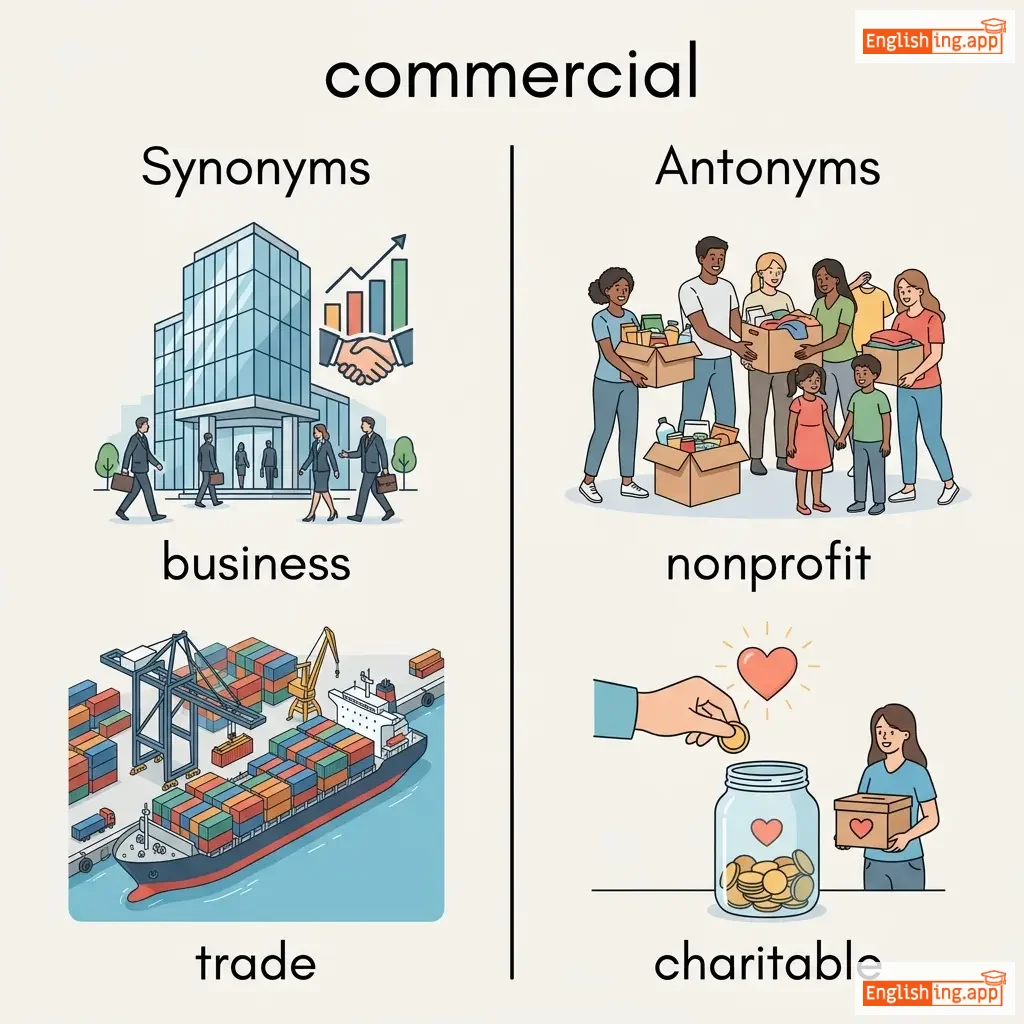
business, trade, financial, profit-driven, market-oriented
••••••
|
nonprofit, charitable, artistic
••••••
|
commercial activity, commercial value, commercial enterprise, commercial success
••••••
|
Коммерческий — это бизнес, так что связано с деньгами и прибылью.
••••••
|
|
💼
••••••
|
/kəˈmɪʃən/
noun
••••••
|


|
- •••••• | - •••••• | - •••••• | - •••••• | - •••••• |
An instruction, command, or duty given to a person or group; also a fee paid to an agent or employee for a transaction.
••••••
|
The artist received a commission to paint a portrait. |
- •••••• |
on commission |
Working for payment based on the amount of sales made rather than a fixed salary.
••••••
|
- •••••• |
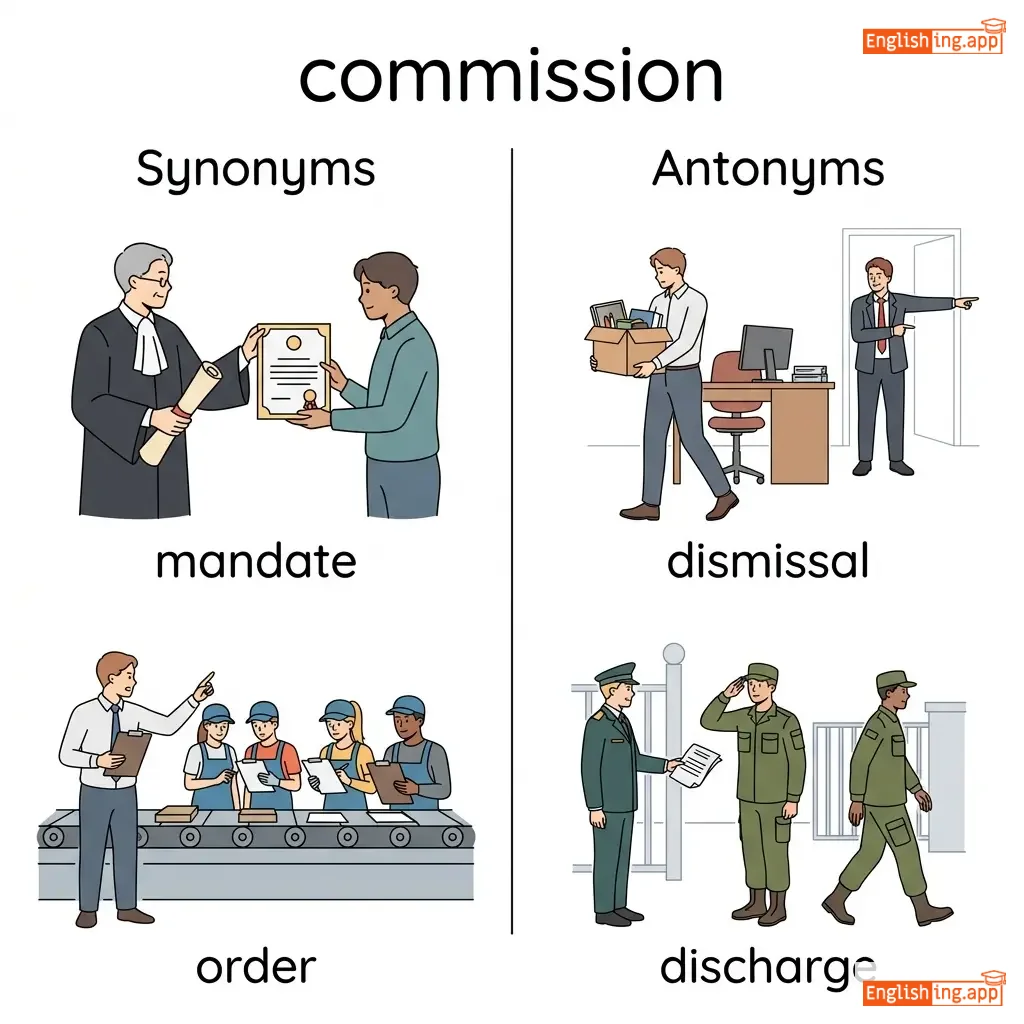
mandate, order, task, fee, allowance
••••••
|
dismissal, discharge, unemployment
••••••
|
earn commission, sales commission, commission rate, commission fee
••••••
|
No •••••• |
|
👮♂️
••••••
|
/kəˈmɪʃənər/
noun
(комиссар)
••••••
|
- •••••• |
комиссар
komissar
••••••
|
- •••••• | - •••••• | - •••••• | - •••••• |
an official in charge of a particular department or area
••••••
|
The police commissioner addressed the media about the incident.
Полицейский комиссар рассказал СМИ о происшествии.
••••••
|
Полицейский комиссар рассказал СМИ о происшествии.
Politseyskiy komissar rasskazal SMI o proisshestvii.
••••••
|
- •••••• | - •••••• | - •••••• |
official, director, superintendent, chief, officer
••••••
|
subordinate, employee
••••••
|
police commissioner, election commissioner, city commissioner, commissioner office
••••••
|
Комиссар означает ответственность, комиссар - это тот, кто несет ответственность.
••••••
|
|
✍️
••••••
|
/kəˈmɪt/
verb
••••••
|
- •••••• | - •••••• |
committed
••••••
|
committed
••••••
|
commits
••••••
|
committing
••••••
|
To carry out or perpetrate an act; to pledge or bind to a course of action.
••••••
|
He committed a serious mistake in the report. |
- •••••• |
commit to memory |
To learn something so well that you can remember it perfectly.
••••••
|
- •••••• |
perform, perpetrate, pledge, dedicate, undertake
••••••
|
neglect, abstain, withdraw
••••••
|
commit a crime, commit suicide, commit oneself, commit to
••••••
|
No •••••• |
|
🤝
••••••
|
/kəˈmɪtmənt/
noun
(коммитмент)
••••••
|


|
приверженность
kommitment
••••••
|
- •••••• | - •••••• | - •••••• | - •••••• |
A promise or firm decision to do something; dedication or obligation to a cause or activity.
••••••
|
She showed great commitment to her studies.
Она проявила большую приверженность учёбе.
••••••
|
Она проявила большую приверженность учёбе.
Ona proyavila bolshuyu priverezhennost uchebe.
••••••
|
a lifelong commitment
пожизненная приверженность
••••••
|
A promise or responsibility that lasts for one's whole life.
••••••
|
пожизненная приверженность
pozhizennaya priverezhennost
••••••
|
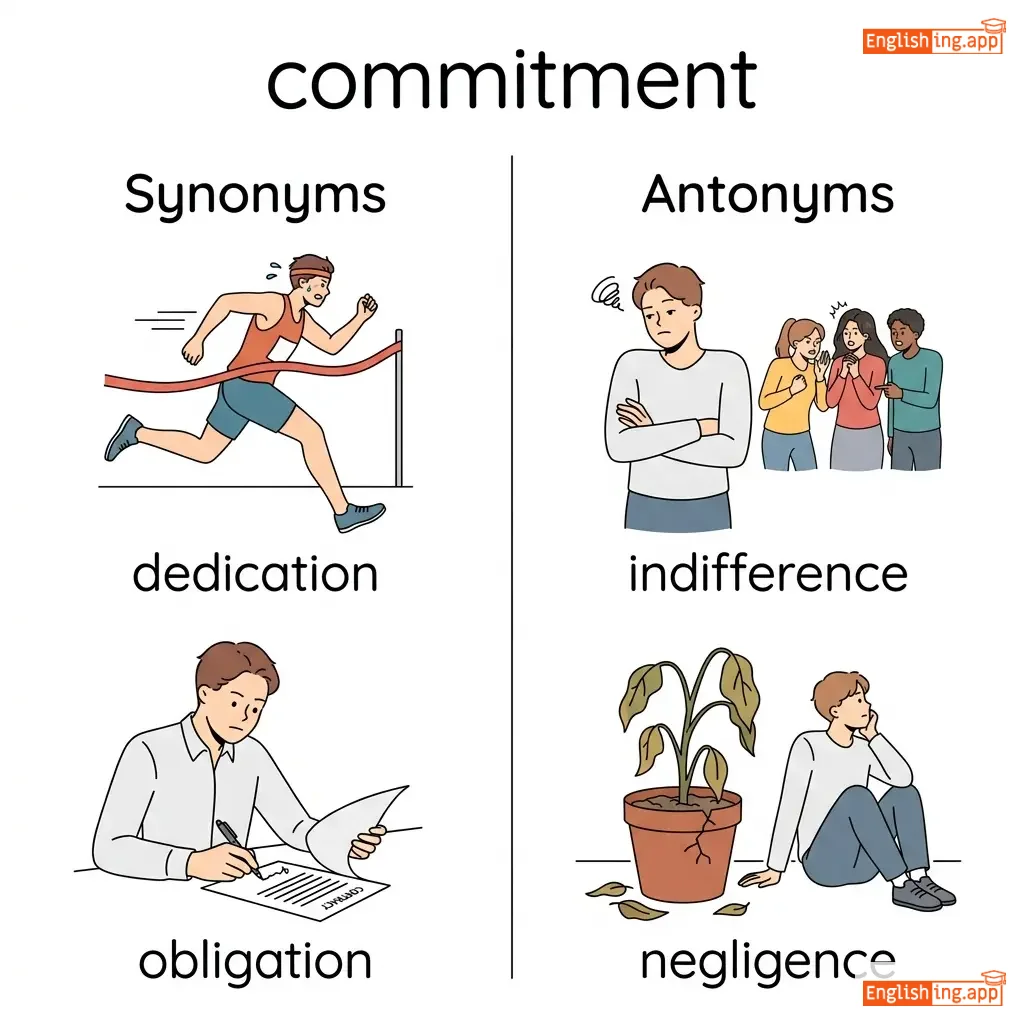
dedication, obligation, devotion, promise, responsibility
••••••
|
indifference, negligence, irresponsibility
••••••
|
strong commitment, show commitment, commitment to, long-term commitment
••••••
|
Коммитмент = коммит + мент: держи обещание и приверженность навсегда
••••••
|
|
👥
••••••
|
/kəˈmɪt.i/
noun
(комитет)
••••••
|

|
комитет
komitet
••••••
|
- •••••• | - •••••• | - •••••• | - •••••• |
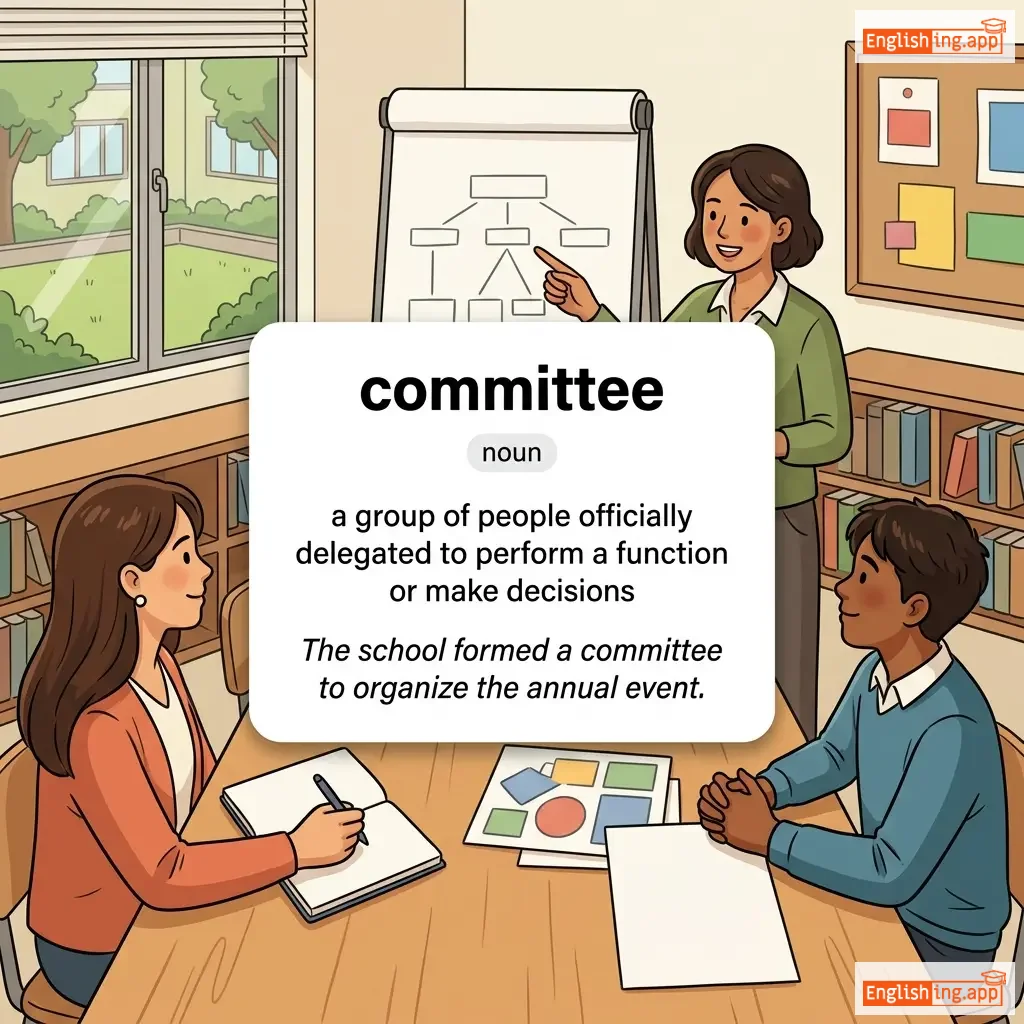
a group of people officially delegated to perform a function or make decisions
••••••
|
The school formed a committee to organize the annual event. |
Школа создала комитет для организации ежегодного мероприятия.
Shkola sozdala komitet dlya organizatsii ezhegodnogo meropriyatiya.
••••••
|
- •••••• | - •••••• | - •••••• |
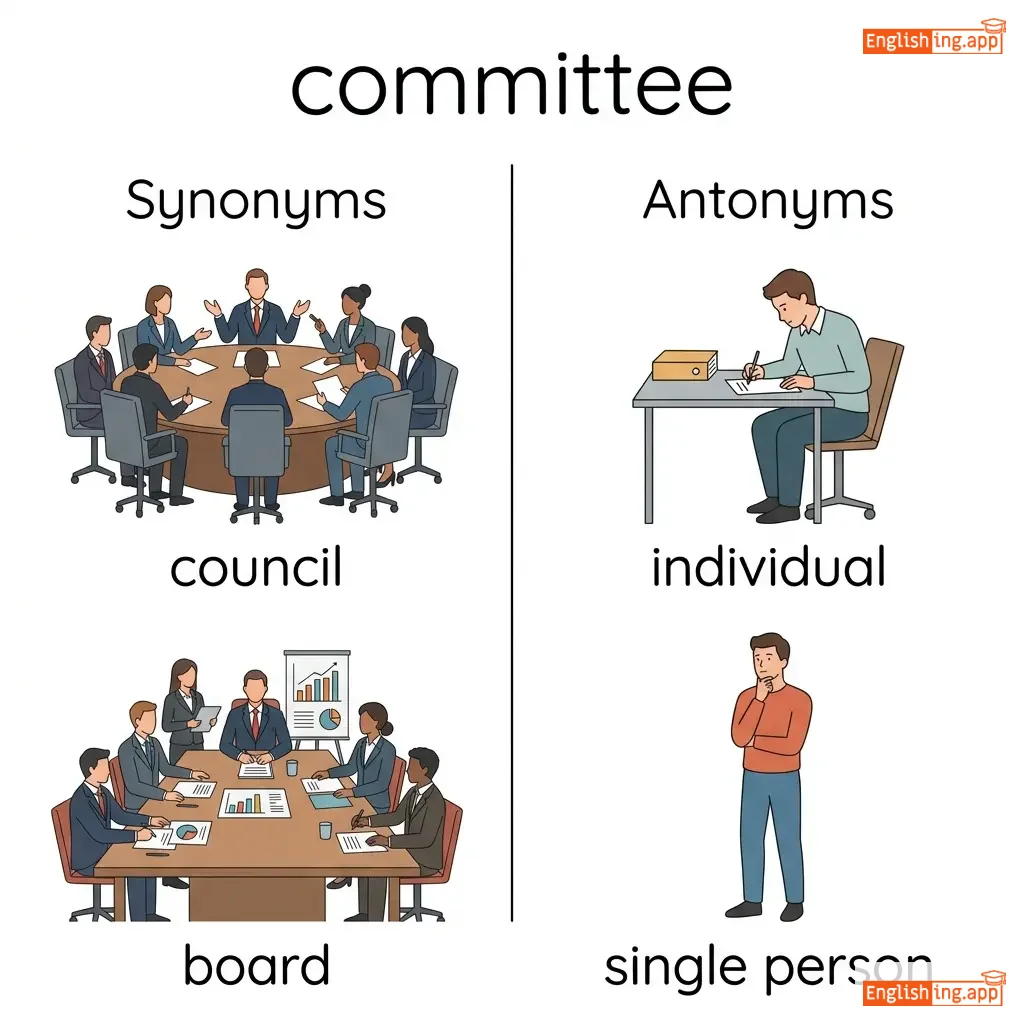
council, board, panel, group, commission
••••••
|
individual, single person
••••••
|
committee meeting, committee decision, committee member, school committee
••••••
|
Комитет = группа людей, которая решает.
••••••
|
|
📦
••••••
|
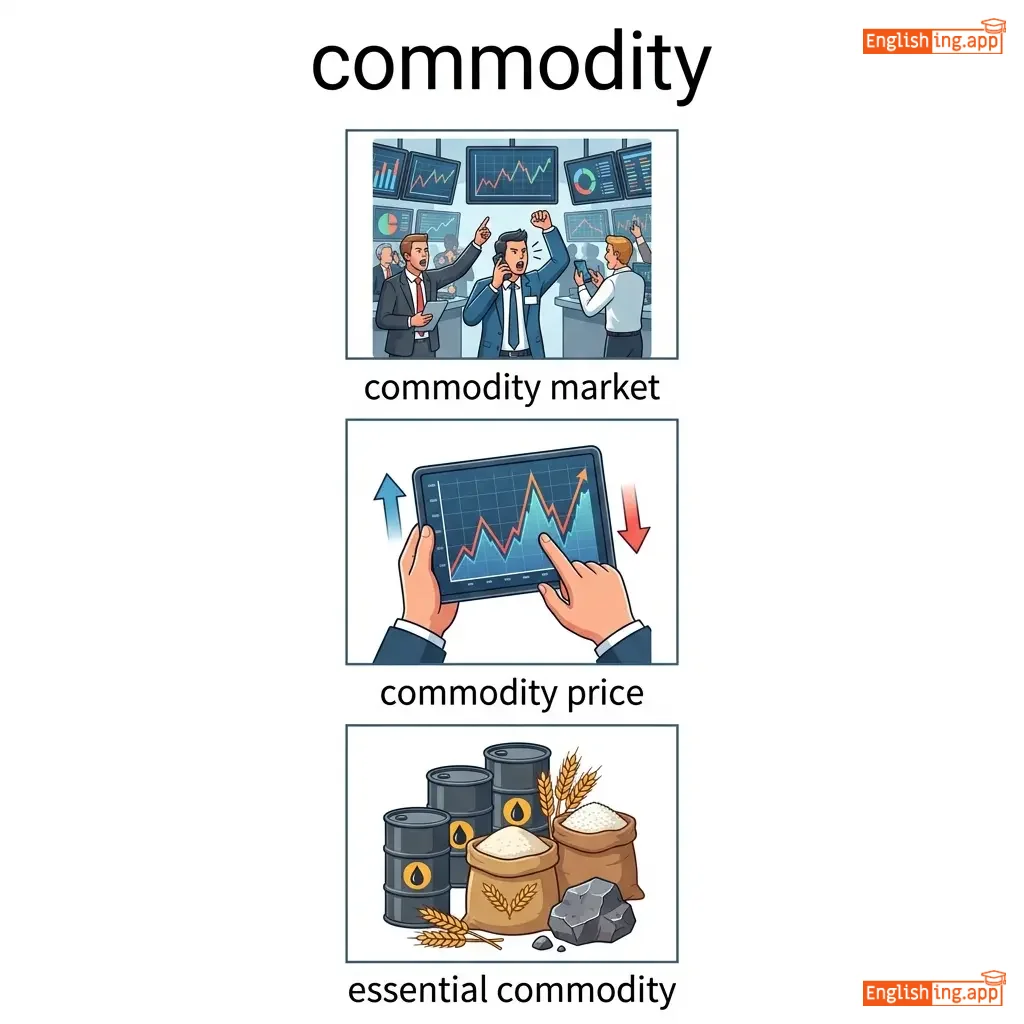
/kəˈmɑːdəti/
noun
(коммодити)
••••••
|

|
товар
tovar
••••••
|
- •••••• | - •••••• | - •••••• | - •••••• |
a raw material or primary product that can be bought and sold
••••••
|
Oil is the most traded commodity in the world.
Ойл из зе мост трейдед коммодити ин зе ворлд.
••••••
|
Нефть — это самый торгуемый товар в мире.
Neft eto samyi torguemyi tovar v mire
••••••
|
hot commodity
хот коммодити
••••••
|
something or someone that is in high demand
••••••
|
востребованный товар
vostrebovannyi tovar
••••••
|
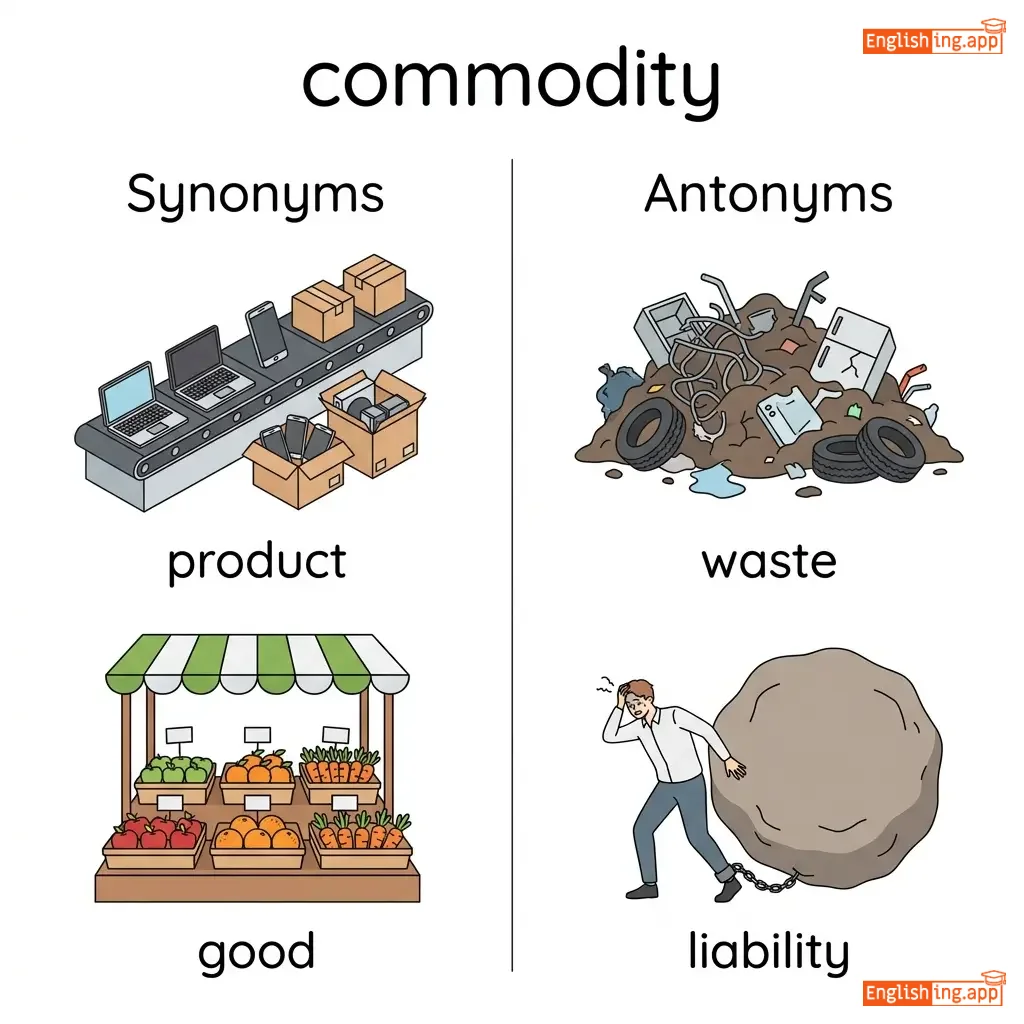
product, good, merchandise, item, resource
••••••
|
waste, liability, burden
••••••
|
commodity market, commodity price, essential commodity, trading commodity
••••••
|
Commodity = товар — то, чем торгуют на рынке.
••••••
|
|
🌍
••••••
|
/ˈkɒm.ən/
adjective
(komon)
••••••
|
- •••••• |
общий
obshchiy
••••••
|
- •••••• | - •••••• | - •••••• | - •••••• |
occurring frequently or widely; shared by all
••••••
|
It is common to see traffic in the city during rush hour. |
Обычно в городе можно увидеть пробки в часы пик.
Obychno v gorode mozhno uvidet' probki v chasy pik
••••••
|
common sense |
good practical judgment based on everyday experience
••••••
|
здравый смысл
zdravyy smysl
••••••
|
usual, ordinary, frequent, general
••••••
|
rare, uncommon, unusual
••••••
|
common problem, common interest, common mistake, in common
••••••
|
Общий означает что-то, что доступно всем, как 'здравый смысл'.
••••••
|
|
🗣️
••••••
|
/ˈkɒmənli/
adverb
(kómənli)
••••••
|
- •••••• |
обычно
obychno
••••••
|
- •••••• | - •••••• | - •••••• | - •••••• |
usually or by most people
••••••
|
This phrase is commonly used in everyday speech. |
Эта фраза обычно используется в повседневной речи.
Eta fraza obychno ispol'zuetsya v povsednevnoj rechi.
••••••
|
- •••••• | - •••••• | - •••••• |
usually, generally, typically, often, ordinarily
••••••
|
rarely, seldom, unusually
••••••
|
commonly used, commonly known, commonly accepted, commonly found
••••••
|
Common означает общее, поэтому commonly означает обычно
••••••
|
|
💬
••••••
|
/kəˈmjuː.nɪ.keɪt/
verb
••••••
|
- •••••• | - •••••• |
communicated
••••••
|
communicated
••••••
|
communicates
••••••
|
communicating
••••••
|
to share or exchange information, ideas, or feelings
••••••
|
They used gestures to communicate across the noisy room. |
- •••••• |
communicate clearly |
to express oneself in a way that others can easily understand
••••••
|
- •••••• |
convey, express, share, transmit, inform
••••••
|
conceal, suppress
••••••
|
communicate effectively, communicate directly, communicate through, communicate clearly
••••••
|
No •••••• |
|
📞
••••••
|
/kəˌmjuː.nɪˈkeɪ.ʃən/
noun
(коммуникация)
••••••
|


|
коммуникация
kommunikatsiya
••••••
|
- •••••• | - •••••• | - •••••• | - •••••• |
the act or process of sharing information, ideas, or feelings
••••••
|
Good communication is essential for a strong relationship. |
Хорошая коммуникация важна для крепких отношений.
Khoroshaya kommunikatsiya vazhna dlya krepkikh otnosheniy.
••••••
|
lines of communication |
the channels or methods by which people communicate
••••••
|
линии связи
linii svyazi
••••••
|
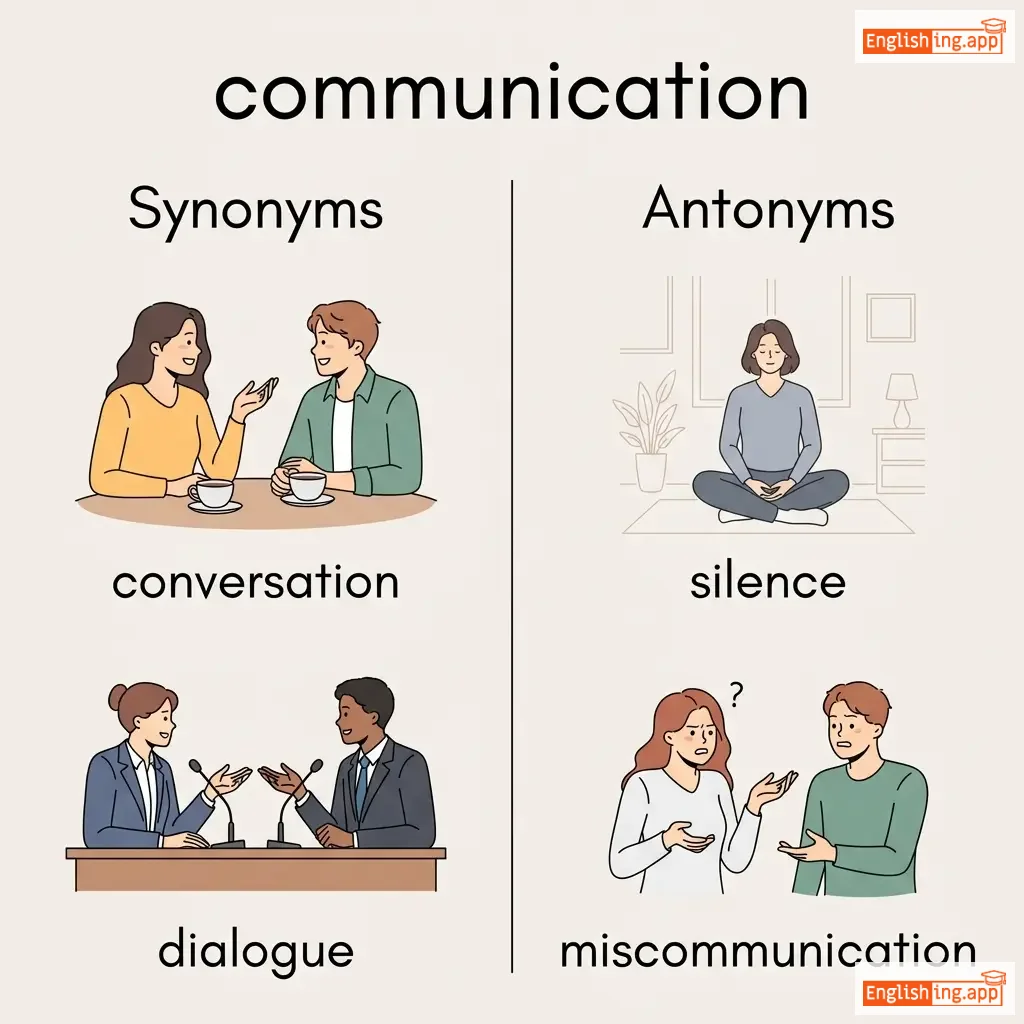
conversation, dialogue, exchange, correspondence, contact
••••••
|
silence, miscommunication
••••••
|
effective communication, open communication, communication skills, communication barrier
••••••
|
Коммуникация = сообщество + действие = обмен информацией в обществе
••••••
|
|
✊
••••••
|
/ˈkɒmjʊnɪst/
noun
••••••
|
- •••••• | - •••••• | - •••••• | - •••••• | - •••••• | - •••••• |
a person who supports or believes in the principles of communism
••••••
|
The communist ideology aims for a classless society. |
- •••••• | - •••••• | - •••••• | - •••••• |
socialist, Marxist, leftist, revolutionary
••••••
|
capitalist, bourgeois
••••••
|
communist party, communist government, communist manifesto
••••••
|
No •••••• |
|
🏘️
••••••
|
/kəˈmjuː.nə.ti/
noun
(комьюнити)
••••••
|
- •••••• |
сообщество
soobshchestvo
••••••
|
- •••••• | - •••••• | - •••••• | - •••••• |
a group of people living in the same place or sharing common interests
••••••
|
The community worked together to clean the park.
Комьюнити работало вместе, чтобы очистить парк.
••••••
|
Сообщество работало вместе, чтобы очистить парк.
Soobshchestvo rabotalo vmeste, chtoby ochistit' park.
••••••
|
sense of community
чувство общности
••••••
|
a feeling of belonging and togetherness among people
••••••
|
чувство общности
chuvstvo obshchnosti
••••••
|
group, society, population, collective, neighborhood
••••••
|
individual, isolation
••••••
|
local community, global community, community service, community center
••••••
|
Сообщество = Со (вместе) + общность (единство) = люди, объединённые в одно целое.
••••••
|
|
👫
••••••
|
/kəmˈpænjən/
noun
(kompanion)
••••••
|
- •••••• |
спутник
sputnik
••••••
|
- •••••• | - •••••• | - •••••• | - •••••• |
a person or animal you spend time with or travel with
••••••
|
He was my companion during the long journey. |
Он был моим спутником во время долгого путешествия.
On byl moim sputnikom vo vremya dolgogo puteshestviya.
••••••
|
travel companion |
a person who accompanies you on a trip
••••••
|
путевой спутник
putevoy sputnik
••••••
|
friend, partner, mate, associate, ally
••••••
|
enemy, rival, stranger
••••••
|
close companion, loyal companion, travel companion, lifelong companion
••••••
|
Companion звучит как спутник по-русски — спутник, который всегда рядом
••••••
|
|
🏢
••••••
|
/ˈkʌm.pə.ni/
noun
(kɔmpani)
••••••
|
- •••••• |
компания
kompaniya
••••••
|
- •••••• | - •••••• | - •••••• | - •••••• |
a business organization; the presence of other people
••••••
|
She started her own company to sell handmade products. |
Она начала свою собственную компанию, чтобы продавать изделия ручной работы.
Ona nachala svoyu sobstvennuyu kompaniyu, chtoby prodavat' izdeliya ruchnoy raboty.
••••••
|
keep someone company |
to stay with someone so they are not alone
••••••
|
составить компанию
sostavit' kompaniyu
••••••
|
firm, corporation, enterprise, business, organization
••••••
|
individual, solitude
••••••
|
company policy, company profile, company growth, company headquarters
••••••
|
Компания = 'компания' означает бизнес, а 'составить компанию' означает быть с кем-то.
••••••
|
|
⚖️
••••••
|
/ˈkɒmp(ə)rəbl/
adjective
(компэрабл)
••••••
|
- •••••• |
сопоставимый
sopostavimy
••••••
|
- •••••• | - •••••• | - •••••• | - •••••• |
Able to be likened to something else in size, amount, or quality.
••••••
|
The two products are comparable in quality but differ in price.
два продукта сопоставимы по качеству, но различаются по цене
••••••
|
Два продукта сопоставимы по качеству, но различаются по цене.
dva produkta sopostavimy po kachestvu no razlichayutsya po tsene
••••••
|
comparable to
сопоставимый с
••••••
|
Similar or equivalent to something else
••••••
|
сопоставимый с
sopostavimy s
••••••
|
similar, equivalent, analogous, alike, matching
••••••
|
different, dissimilar, unequal
••••••
|
comparable quality, comparable size, comparable results, comparable standards
••••••
|
‘Sopostavimy’ sounds like ‘comparable’— both mean similar or matching.
••••••
|
|
📊
••••••
|
/kəmˈpærətɪv/
adjective
(компэрэтив)
••••••
|
- •••••• |
сравнительный
sravnitelnij
••••••
|
- •••••• | - •••••• | - •••••• | - •••••• |
Measured or considered by comparison; relative.
••••••
|
She lives in comparative comfort after moving to the city.
ши ливз ин компэрэтив комфэрт афтэ мувинг ту зэ сити.
••••••
|
После переезда в город она живет в сравнительном комфорте.
posle pereyezda v gorod ona zhivet v sravnitelnom komforte
••••••
|
comparative advantage
компэрэтив эдвантедж
••••••
|
The ability of a country or company to produce goods or services at a lower opportunity cost than others
••••••
|
сравнительное преимущество
sravnitelnoe preimushchestvo
••••••
|
relative, proportional, measured, evaluative
••••••
|
absolute, definite, fixed
••••••
|
comparative study, comparative analysis, comparative comfort, comparative advantage
••••••
|
Сравнительный sounds like 'compare'—think 'comparison = comparative'.
••••••
|
|
⚖️
••••••
|
/kəmˈpeər/
verb
(kəmˈpeɪər)
••••••
|
|
сравнивать
sravnivat'
••••••
|
compared
kəmˈpeɪərd
••••••
|
compared
kəmˈpeɪərd
••••••
|
compares
kəmˈpeɪərz
••••••
|
comparing
kəmˈpeɪərɪŋ
••••••
|
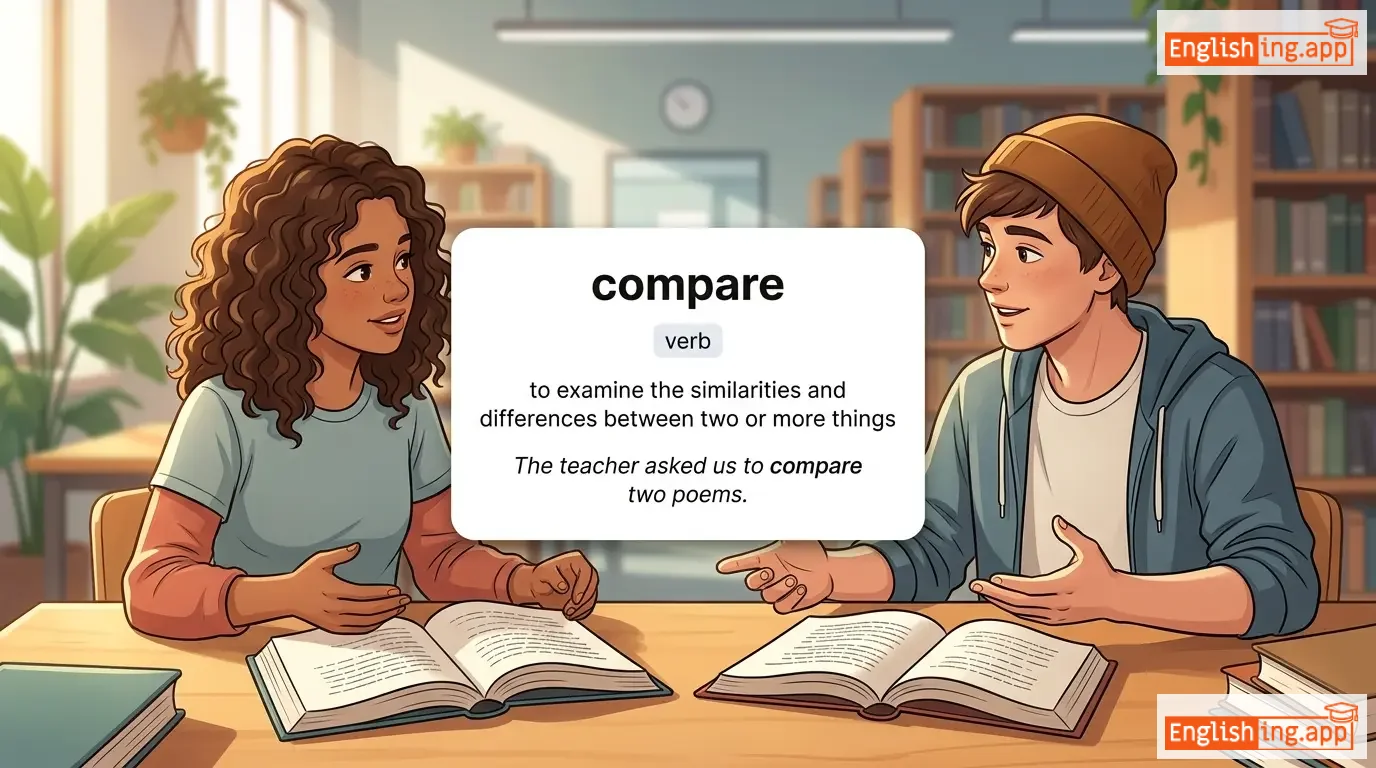
to examine the similarities and differences between two or more things
••••••
|
The teacher asked us to compare two poems.
Учитель попросил нас сравнить два стихотворения.
••••••
|
Учитель попросил нас сравнить два стихотворения.
Uchitel' poprosil nas sravnity dva stikhotvoreniya.
••••••
|
compare notes
сравнивать заметки
••••••
|
to exchange information or opinions on a subject
••••••
|
сравнивать заметки
sravnivat' zametki
••••••
|
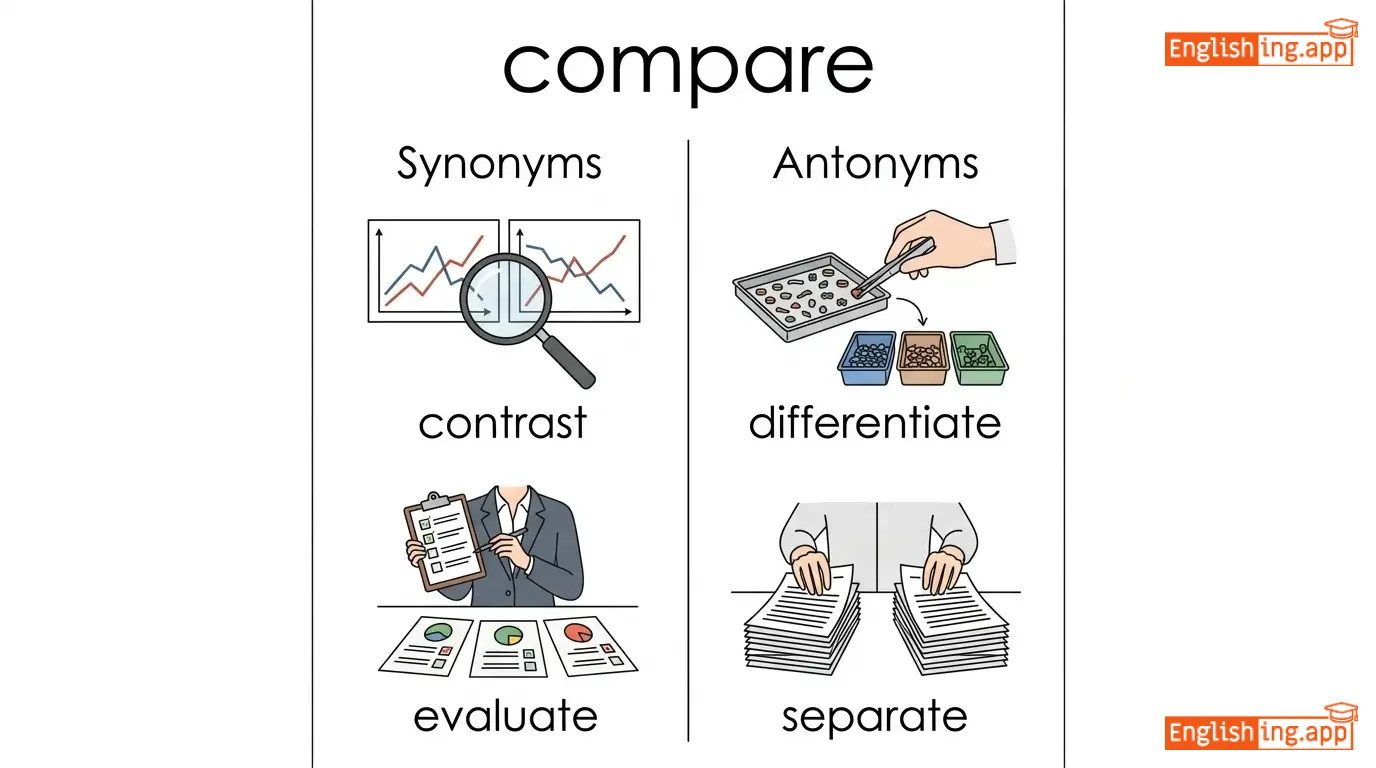
contrast, evaluate, match, measure, analyze
••••••
|
differentiate, separate
••••••
|
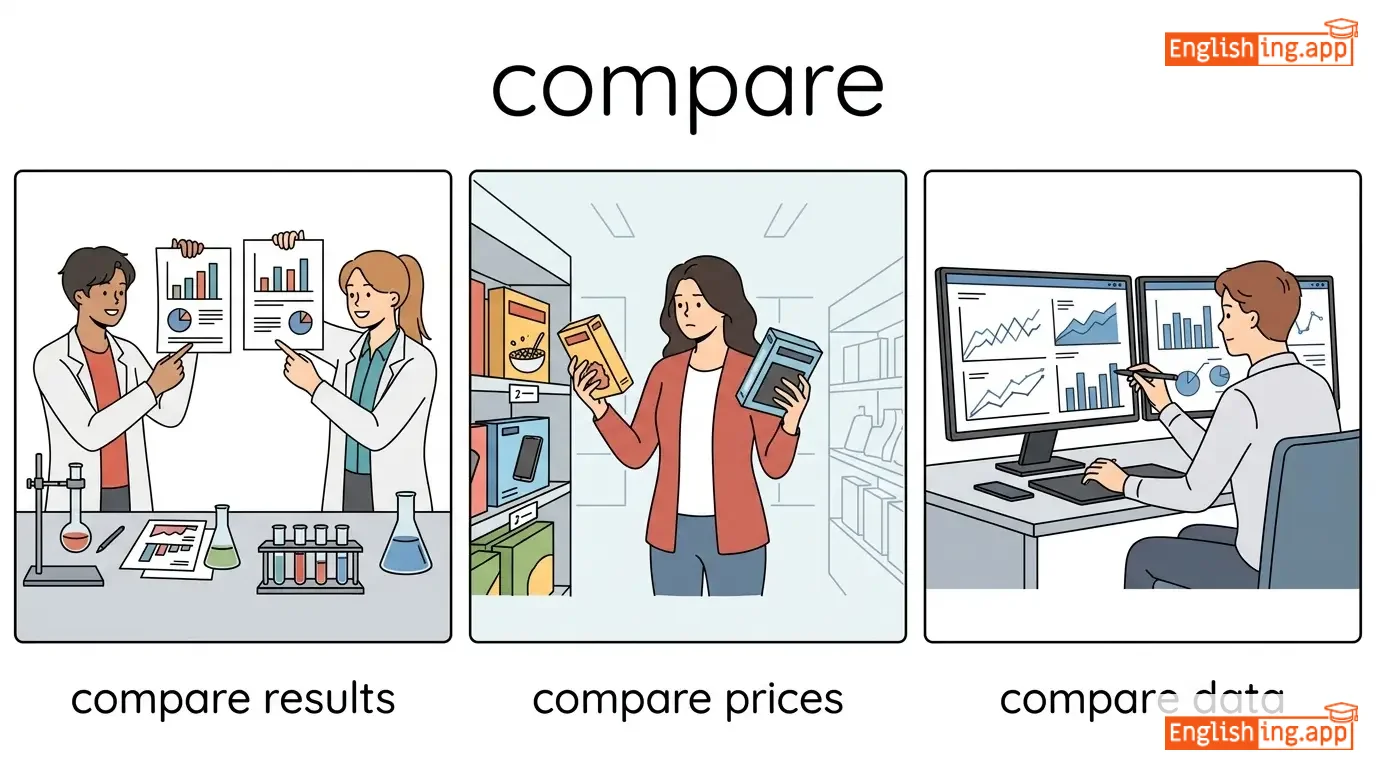
compare results, compare prices, compare data, compare favorably
••••••
|
Compare означает сравнивать - как сравнивать цены в магазине.
••••••
|
|
🔍
••••••
|
/kəmˈpærɪsən/
noun
(компэрисон)
••••••
|
- •••••• |
сравнение
sravnenie
••••••
|
- •••••• | - •••••• | - •••••• | - •••••• |
The act or process of examining the similarities and differences between things.
••••••
|
A comparison of the two reports shows several inconsistencies.
а компэрисон оф зэ ту рэпотс шоуз сэвэрэл инконсистэнсиз.
••••••
|
Сравнение двух отчётов показывает несколько несоответствий.
Sravnenie dvukh otchyotov pokazyvaet neskolko nesootvetstvii
••••••
|
draw a comparison
дро э компэрисон
••••••
|
To point out similarities or differences between two or more things
••••••
|
провести сравнение
provesti sravnenie
••••••
|
contrast, evaluation, juxtaposition, measurement
••••••
|
isolation, separation
••••••
|
make a comparison, draw a comparison, comparison chart, comparison between
••••••
|
Comparison = сравнение (sounds like ‘sravnenie’).
••••••
|
|
❤️
••••••
|
/kəmˈpæʃən/
noun
(компэшн)
••••••
|
- •••••• |
сострадание
sostradanie
••••••
|
- •••••• | - •••••• | - •••••• | - •••••• |
Sympathetic concern for the sufferings or misfortunes of others.
••••••
|
The nurse treated the patients with great compassion.
медсестра лечила пациентов с большой сострадательностью.
••••••
|
Медсестра лечила пациентов с большим состраданием.
Medsestra lechila patsientov s bol'shim sostradaniem.
••••••
|
act of compassion
акт сострадания
••••••
|
An action motivated by empathy and kindness toward others
••••••
|
акт сострадания
akt sostradaniya
••••••
|
sympathy, empathy, pity, kindness, mercy
••••••
|
cruelty, indifference, harshness
••••••
|
show compassion, feel compassion, compassion for others, compassion and kindness
••••••
|
Sostradanie: сострадание - это когда ты заботишься о страданиях других.
••••••
|
|
👉
••••••
|
/kəmˈpɛl/
verb
(kom-pel)
••••••
|
- •••••• |
заставлять
zastavlyat
••••••
|
compelled
kom-peld
••••••
|
compelled
kom-peld
••••••
|
compels
kom-pels
••••••
|
compelling
kom-pel-ing
••••••
|
To force or drive someone to do something.
••••••
|
The law compels citizens to pay taxes.
Закон заставляет граждан платить налоги.
••••••
|
Закон заставляет граждан платить налоги.
Zakon zastavlyayet grazhdan platit' nalogi.
••••••
|
compel attention
привлекать внимание
••••••
|
To strongly attract or demand focus.
••••••
|
привлекать внимание
privelikat' vnimanie
••••••
|
force, drive, oblige, pressure, coerce
••••••
|
dissuade, discourage, prevent
••••••
|
compel someone, compel obedience, compel action, compel attention
••••••
|
Compel означает заставлять, как когда мама говорит: 'Ты должен заставить себя сделать уроки!'
••••••
|
|
🌟
••••••
|
/kəmˈpɛlɪŋ/
adjective
(кэмˈпɛлɪŋ)
••••••
|
- •••••• |
захватывающий
zakhvatyvayushchiy
••••••
|
- •••••• | - •••••• | - •••••• | - •••••• |
Evoking interest, attention, or admiration in a powerful way.
••••••
|
She gave a compelling speech about climate change. |
Она произнесла захватывающую речь о климатических изменениях.
Ona proiznesla zakhvatyvayushchuyu rech' o klimatycheskikh izmeneniyakh.
••••••
|
compelling evidence |
Evidence that is convincing and hard to refute.
••••••
|
неопровержимое доказательство
neopoverezhimoe dokazatel'stvo
••••••
|
convincing, powerful, persuasive, gripping, fascinating
••••••
|
unconvincing, weak, boring
••••••
|
compelling argument, compelling reason, compelling story, compelling evidence
••••••
|
Захватывающее, как речь, которая захватывает внимание!
••••••
|
|
💰
••••••
|
/ˈkɒmpənseɪt/
verb
(kompenséit)
••••••
|
|
компенсировать
kompensirovat
••••••
|
compensated
kompensiroval
••••••
|
compensated
kompensiroval
••••••
|
compensates
kompensiruyet
••••••
|
compensating
kompensiruyushchiy
••••••
|
To give something, typically money, in recognition of loss, suffering, or work done.
••••••
|
The company compensated the worker for his injury.
Компания компенсировала работника за его травму.
••••••
|
Компания компенсировала работника за его травму.
Kompaniya kompensirovala rabotnika za ego travmu.
••••••
|
compensate for
kompensirovat' za
••••••
|
To make up for something, usually a fault or loss.
••••••
|
компенсировать за
kompensirovat' za
••••••
|
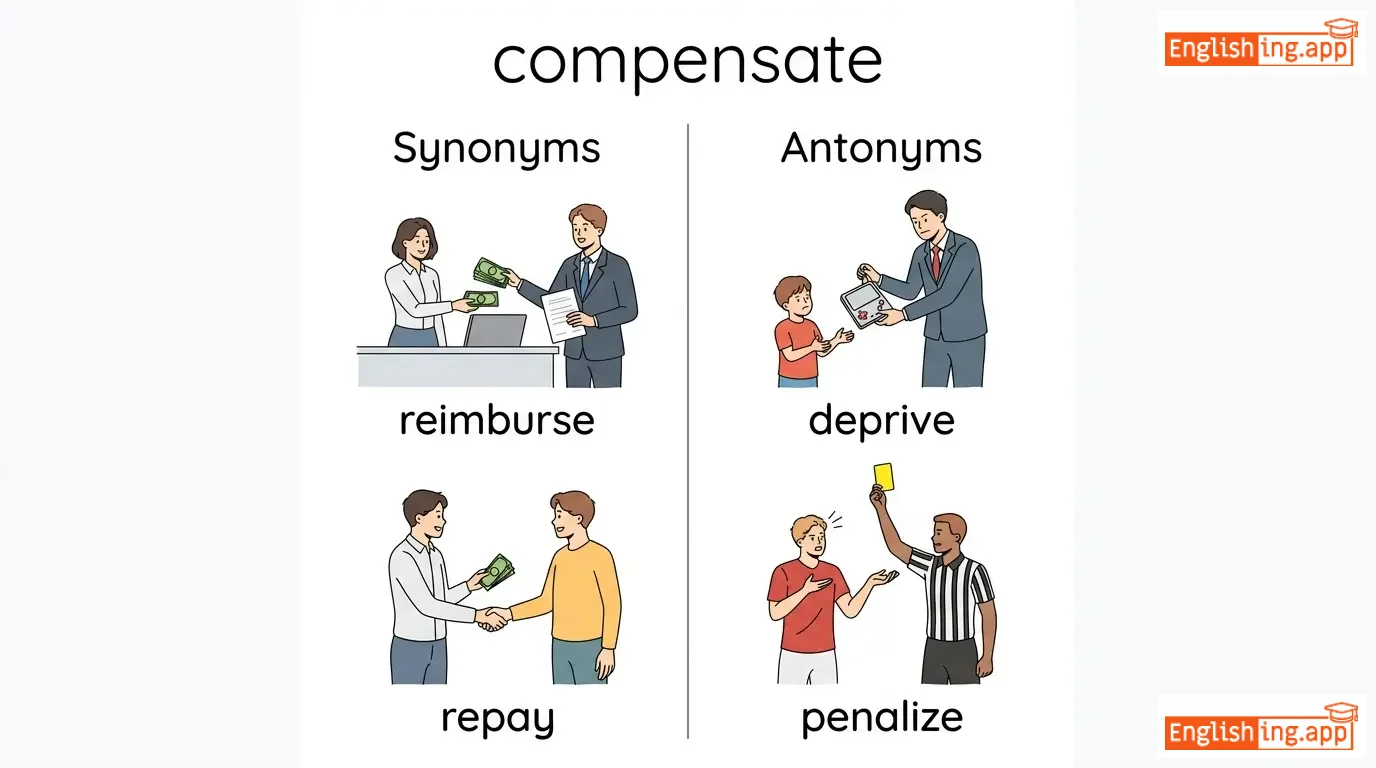
reimburse, repay, recompense, reward, indemnify
••••••
|
deprive, penalize, fine
••••••
|
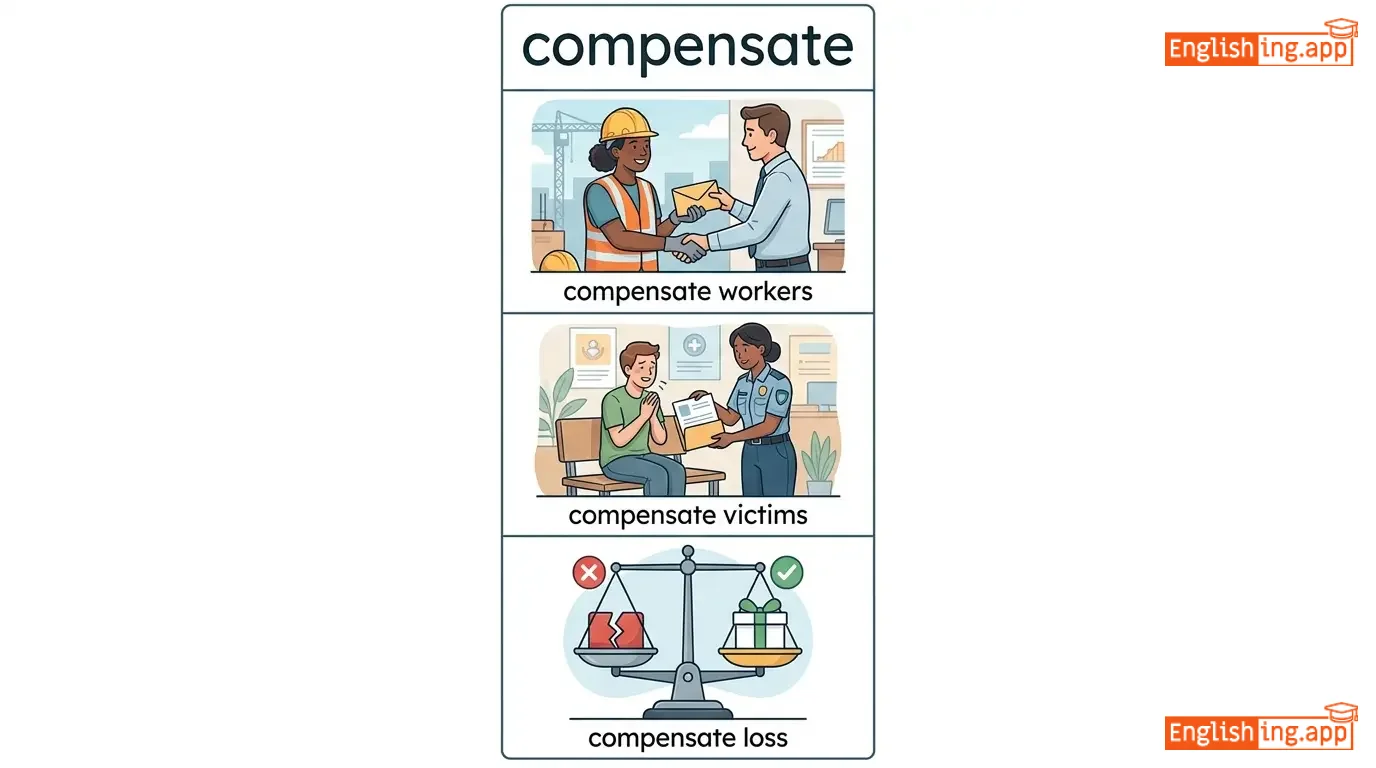
compensate workers, compensate victims, compensate loss, compensate for damage
••••••
|
Компенсировать напоминает ‘компенсацию’, что означает исправить ошибку или утрату.
••••••
|
|
💰
••••••
|
/ˌkɒmpənˈseɪʃən/
noun
(kəmˌpɛnsəˈɪʃən)
••••••
|
- •••••• |
компенсация
kompensatsiya
••••••
|
- •••••• | - •••••• | - •••••• | - •••••• |
something, typically money, given to make up for loss, injury, or work done
••••••
|
She received financial compensation for the accident. |
Она получила финансовую компенсацию за несчастный случай.
Ona poluchila finansovuyu kompensatsiyu za neschastnyy sluchay.
••••••
|
seek compensation |
to request payment or restitution for loss or damage
••••••
|
искать компенсацию
iskat' kompensatsiyu
••••••
|
reimbursement, repayment, indemnity, recompense, restitution
••••••
|
penalty, loss, damage
••••••
|
compensation package, compensation claim, compensation for loss, financial compensation
••••••
|
Компенсация — это деньги за потерю или ущерб!
••••••
|
|
🏆
••••••
|
/kəmˈpiːt/
verb
(компет)
••••••
|
- •••••• |
соревноваться
sorevnovatsya
••••••
|
competed
компетировал
••••••
|
competed
компетировал
••••••
|
competes
конкурирует
••••••
|
competing
конкурируя
••••••
|
to try to win or be more successful than others in a contest or activity
••••••
|
Several companies compete for dominance in the market.
Несколько компаний конкурируют за доминирование на рынке.
••••••
|
Несколько компаний конкурируют за доминирование на рынке.
Neskol'ko kompaniy konkuriruyut za dominiruyushchuyu pozitsiyu na rynke.
••••••
|
compete against time
соревноваться с временем
••••••
|
to try to do something very quickly before time runs out
••••••
|
соревноваться с временем
sorevnovatsya s vremy
••••••
|
contend, vie, strive, rival, challenge
••••••
|
cooperate, support, assist
••••••
|
compete for, compete against, compete in, fiercely compete
••••••
|
Соревнуйтесь за победу!
••••••
|

