|
表情符号
|
单词 | Images | 翻译 | 过去时 | 过去分词 | 第三人称单数 | 动名词 | 含义 | 例句 | 例句翻译 | 示例表达 | 示例表达含义 | 示例表达翻译 | 同义词 | 反义词 | 搭配词 | 助记符 |
|---|---|---|---|---|---|---|---|---|---|---|---|---|---|---|---|---|---|
|
🎓
••••••
|
/ˈkɒlɪdʒ/
noun
(kāo lè jí)
••••••
|
- •••••• |
大学
dàxué
••••••
|
- •••••• | - •••••• | - •••••• | - •••••• |
An educational institution where students study for degrees or professional qualifications.
••••••
|
She hopes to attend college in the city next year. |
她希望明年能在城市的大学就读。
Tā xīwàng míngnián néng zài chéngshì de dàxué jiùdú.
••••••
|
go to college |
to enroll in and attend a college for studies
••••••
|
上大学
shàng dàxué
••••••
|
university, institute, academy, campus
••••••
|
school, dropout
••••••
|
college degree, college student, college campus, go to college
••••••
|
大学就是知识的殿堂,去吧,去找寻你的未来!
••••••
|
|
🚗💥🚗
••••••
|
/kəˈlɪʒən/
noun
(碰撞)
••••••
|
- •••••• |
碰撞
pengzhuang
••••••
|
- •••••• | - •••••• | - •••••• | - •••••• |
an instance of two or more objects crashing into each other
••••••
|
The collision on the highway caused a major traffic jam. |
高速公路上的碰撞造成了严重的交通堵塞。
Gāosù gōnglù shàng de pèngzhuàng zàochéngle yánzhòng de jiāotōng dǔsè.
••••••
|
on a collision course |
moving toward inevitable conflict or disaster
••••••
|
在碰撞的轨道上
zai pengzhuang de guidao shang
••••••
|
crash, impact, accident, clash
••••••
|
separation, avoidance, peace
••••••
|
car collision, head-on collision, fatal collision
••••••
|
碰撞意味着碰撞轨道 – 车🚗💥🚗碰撞
••••••
|
|
🏛️
••••••
|
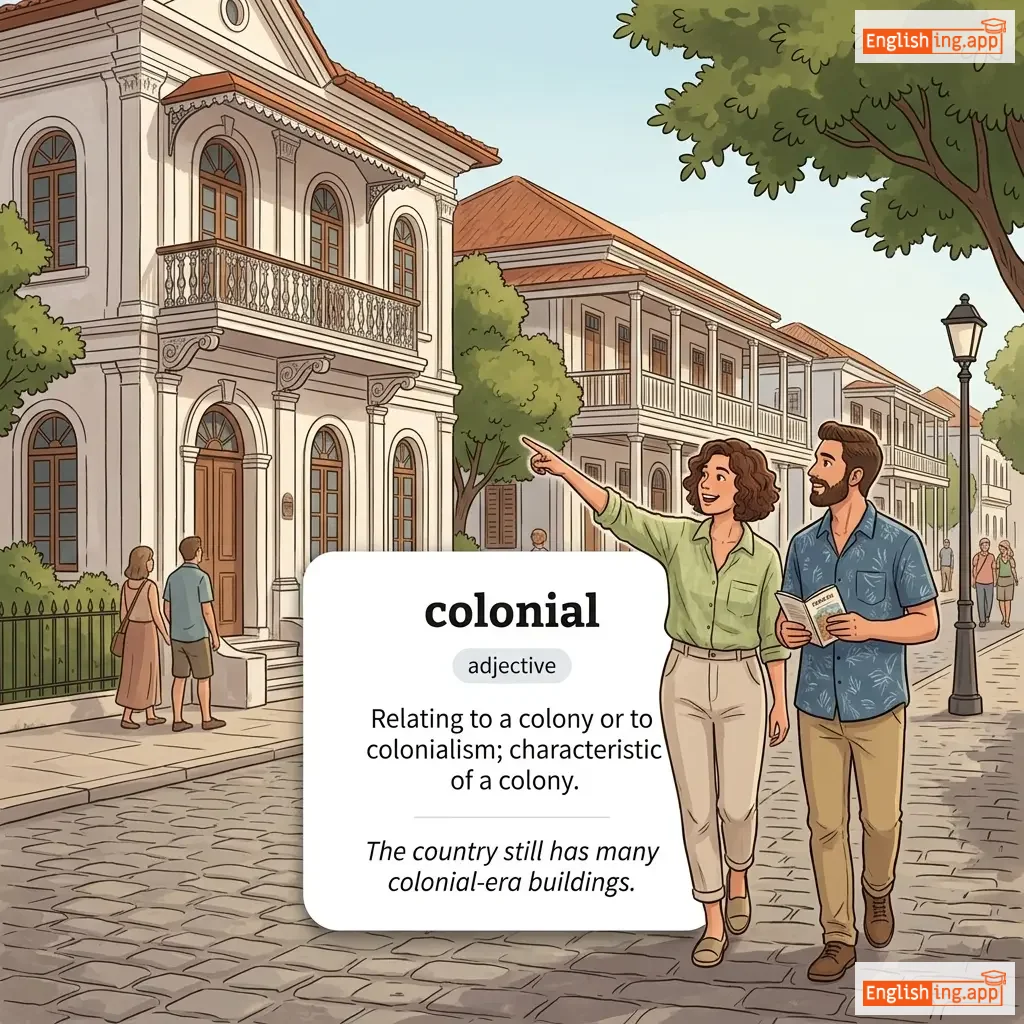
/kəˈloʊniəl/
adjective
(殖民地的)
••••••
|
|
殖民的
zhímín de
••••••
|
- •••••• | - •••••• | - •••••• | - •••••• |
Relating to a colony or to colonialism; characteristic of a colony.
••••••
|
The country still has many colonial-era buildings.
这个国家仍然有许多殖民时代的建筑。
••••••
|
这个国家仍然有许多殖民时代的建筑。
Zhège guójiā réngrán yǒu xǔduō zhímín shídài de jiànzhú.
••••••
|
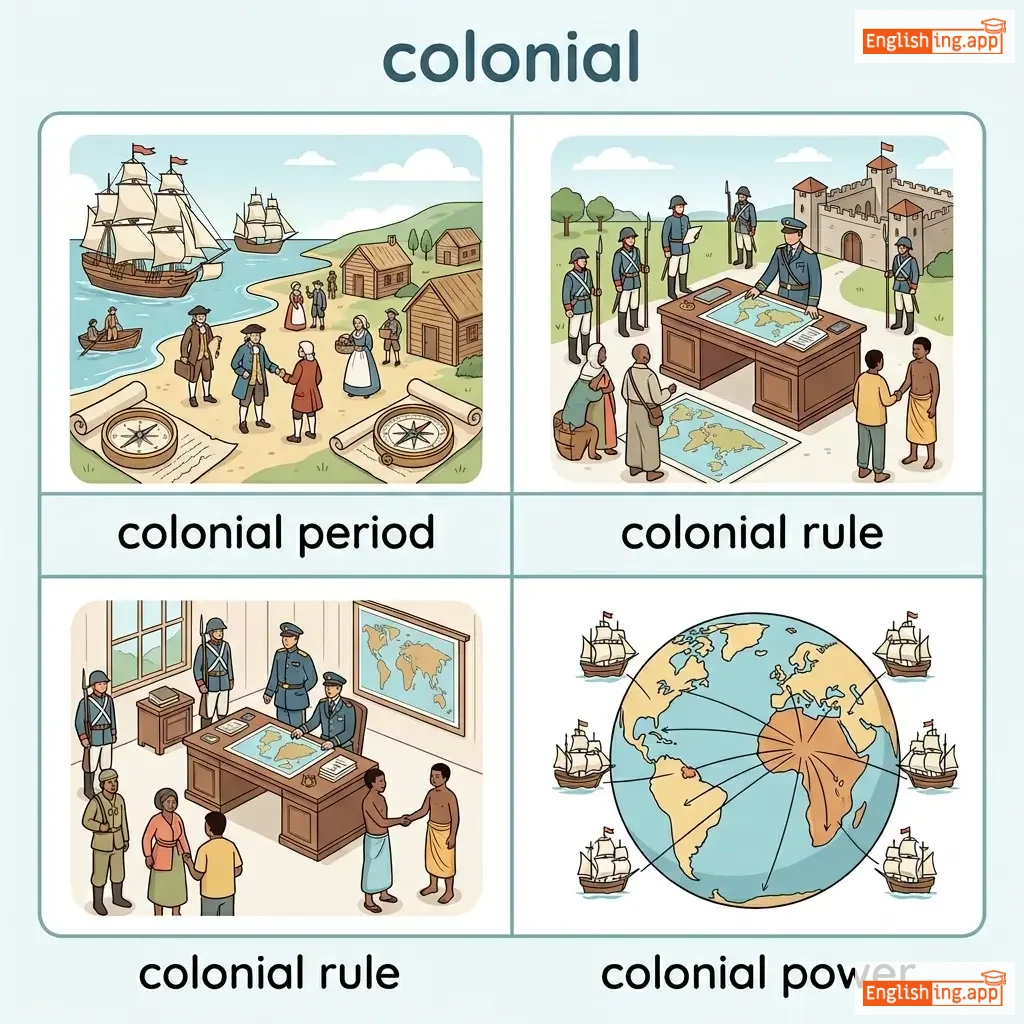
colonial rule
殖民统治
••••••
|
political control of one country by another
••••••
|
殖民统治
zhímín tǒngzhì
••••••
|
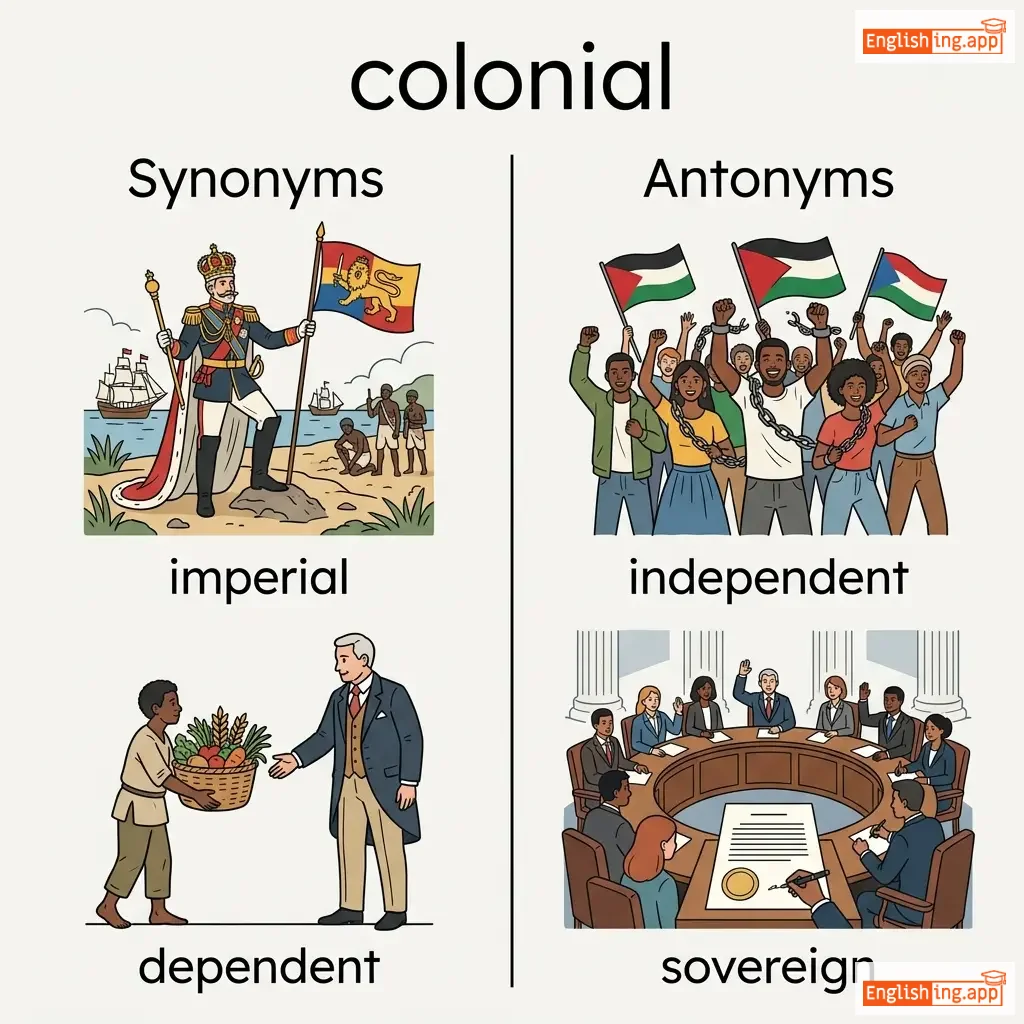
imperial, dependent, overseas, settler
••••••
|
independent, sovereign
••••••
|
colonial period, colonial rule, colonial power, colonial history
••••••
|
Colonial 在中文中代表殖民,想象历史上殖民时代的情景。
••••••
|
|
🏝️
••••••
|
/ˈkɒləni/
noun
(kēlúnní)
••••••
|
- •••••• |
殖民地
zhímíndì
••••••
|
- •••••• | - •••••• | - •••••• | - •••••• |
a territory or community controlled by another country or group of people
••••••
|
India was once a British colony. |
印度曾是英国的殖民地。
Yìndù céng shì Yīngguó de zhímíndì.
••••••
|
- •••••• | - •••••• | - •••••• |
territory, settlement, dependency, dominion, outpost
••••••
|
independent state, homeland
••••••
|
British colony, animal colony, colony of ants, colonial rule
••••••
|
Colony 发音像 '殖民地', 由另一个国家控制的地方。
••••••
|
|
🎨
••••••
|
/ˈkʌl.ər/
noun
(kè lò)
••••••
|
- •••••• |
颜色
yanse
••••••
|
- •••••• | - •••••• | - •••••• | - •••••• |
The property possessed by an object of producing different sensations on the eye as a result of the way it reflects or emits light.
••••••
|
Blue is her favorite color. |
蓝色是她最喜欢的颜色。
Lán sè shì tā zuì xǐhuān de yánsè.
••••••
|
show your true colors |
To reveal one's real character or intentions
••••••
|
展示你的真实色彩
Zhǎnshì nǐ de zhēnshí sècǎi
••••••
|
hue, shade, tint, tone, pigment
••••••
|
monochrome, colorless
••••••
|
bright color, favorite color, primary color, true color
••••••
|
颜色(yanse)和‘color’相似,容易记住。
••••••
|
|
🌈
••••••
|
/ˈkʌlərfəl/
adjective
(kālāfú)
••••••
|
- •••••• |
五彩缤纷
wǔ cǎi bīn fēn
••••••
|
- •••••• | - •••••• | - •••••• | - •••••• |
having bright colors; full of variety or interest
••••••
|
The festival was full of colorful decorations.
这个节日充满了五彩缤纷的装饰。
••••••
|
这个节日充满了五彩缤纷的装饰。
Zhège jiérì chōngmǎnle wǔ cǎi bīn fēn de zhuāngshì.
••••••
|
colorful personality
五彩斑斓的个性
••••••
|
a lively, interesting, and sometimes eccentric person
••••••
|
五彩斑斓的个性
wǔ cǎi bīn fēn de gèxìng
••••••
|
vivid, bright, vibrant, lively, picturesque
••••••
|
colorless, dull, plain
••••••
|
colorful clothes, colorful festival, colorful language, colorful character
••••••
|
Colorful = 彩色 + 满 — 就像一只五彩斑斓的蝴蝶。
••••••
|
|
🎨
••••••
|
/ˈkʌl.ər/
noun
(kè lòu èr)
••••••
|
- •••••• |
颜色
yan se
••••••
|
- •••••• | - •••••• | - •••••• | - •••••• |
the property possessed by an object of producing different sensations on the eye as a result of the way it reflects light; hue, tint, shade
••••••
|
What is your favorite colour for painting the bedroom walls?
你最喜欢的卧室墙面涂什么颜色?
••••••
|
你最喜欢的卧室墙面涂什么颜色?
Nǐ zuì xǐhuān de wòshì qiángmiàn tú shénme yánsè?
••••••
|
- •••••• | - •••••• | - •••••• |
hue, tint, shade, tone, pigment
••••••
|
colorless, transparent, clear, monochrome
••••••
|
bright colour, dark colour, primary colour, colour scheme, colour blind
••••••
|
颜色 = 你眼中看到的
••••••
|
|
📊
••••••
|
/ˈkɒləm/
noun
••••••
|
- •••••• | - •••••• | - •••••• | - •••••• | - •••••• | - •••••• |
A vertical structure that supports a building; also a section of text arranged vertically in a newspaper or table.
••••••
|
The ancient temple had tall marble columns. |
- •••••• |
advice column |
a section in a newspaper where advice is given to readers
••••••
|
- •••••• |
pillar, post, support, section
••••••
|
row, line
••••••
|
newspaper column, support column, table column, advice column
••••••
|
No •••••• |
|
🖋️
••••••
|
/ˈkɒləmnɪst/
noun
(kāo-lè-míng-sī-tè)
••••••
|
- •••••• |
专栏作家
zhuān lán zuò jiā
••••••
|
- •••••• | - •••••• | - •••••• | - •••••• |
a journalist who regularly writes articles or opinions for a newspaper or magazine
••••••
|
The columnist wrote an article about climate change. |
专栏作家写了一篇关于气候变化的文章。
Zhuān lán zuò jiā xiě le yī piān guān yú qì hòu biàn huà de wén zhāng.
••••••
|
- •••••• | - •••••• | - •••••• |
journalist, writer, commentator, reporter, contributor
••••••
|
reader, audience
••••••
|
newspaper columnist, political columnist, famous columnist, opinion columnist
••••••
|
专栏作家就是写专栏的记者,记住‘专栏’二字,可以联想到写专栏的记者。
••••••
|
|
⚔️
••••••
|
/ˈkɒmbæt/
verb
(康巴特)
••••••
|
- •••••• |
对抗
duìkàng
••••••
|
combated
康巴特了
••••••
|
combated
康巴特了
••••••
|
combats
康巴特
••••••
|
combating
康巴特中
••••••
|
to fight against something, especially to reduce or stop it
••••••
|
The government is taking steps to combat corruption.
政府正在采取措施来对抗腐败。
••••••
|
政府正在采取措施来对抗腐败。
Zhèngfǔ zhèngzài cǎiqǔ cuòshī lái duìkàng fǔbài.
••••••
|
combat crime
打击犯罪
••••••
|
to fight against criminal activity
••••••
|
打击犯罪
dǎjī fànzuì
••••••
|
fight, battle, oppose, resist, tackle
••••••
|
support, encourage, promote
••••••
|
combat disease, combat terrorism, combat climate change, combat poverty
••••••
|
对抗 = Come + Battle — 来打仗 (come to fight)!
••••••
|
|
🔢
••••••
|
/ˌkɒmbɪˈneɪʃən/
noun
(组合)
••••••
|
- •••••• |
组合 / 混合
zuhé / hùnhé
••••••
|
- •••••• | - •••••• | - •••••• | - •••••• |
The act of joining or mixing two or more things together.
••••••
|
This dish is a perfect combination of sweet and spicy flavors. |
这道菜是甜味和辛辣味的完美组合。
Zhè dào cài shì tián wèi hé xīnlà wèi de wánměi zǔhé.
••••••
|
combination lock |
a lock that opens by turning dials to a particular sequence of numbers
••••••
|
组合锁
zǔhé suǒ
••••••
|
blend, mixture, union, fusion, merger
••••••
|
separation, division
••••••
|
perfect combination, unique combination, combination lock, combination of factors
••••••
|
Combination = Com + Bini + shon – 数字组合锁
••••••
|
|
⚙️
••••••
|
/kəmˈbaɪn/
verb
(kóngbáin)
••••••
|
- •••••• |
合并
hébìng
••••••
|
combined
kóngbáind
••••••
|
combined
kóngbáind
••••••
|
combines
kóngbáinz
••••••
|
combining
kóngbáining
••••••
|
To bring two or more things together to form a single unit.
••••••
|
They decided to combine their resources for the project.
他们决定将他们的资源合并到该项目中。
••••••
|
他们决定将他们的资源合并到该项目中。
Tāmen juédìng jiāng tāmen de zīyuán hébìng dào gāi xiàngmù zhōng.
••••••
|
combine forces
合并力量
••••••
|
To work together with others towards a common goal.
••••••
|
合并力量
hébìng lìliàng
••••••
|
merge, join, unite, blend, fuse
••••••
|
separate, split, divide
••••••
|
combine efforts, combine forces, combine ingredients, combine ideas
••••••
|
Come + Bine = 合并
••••••
|
|
🚶
••••••
|
/kʌm/
verb
(海皮尼斯)
••••••
|

|
幸福
xingfu
••••••
|
came
••••••
|
come
••••••
|
comes
••••••
|
coming
••••••
|
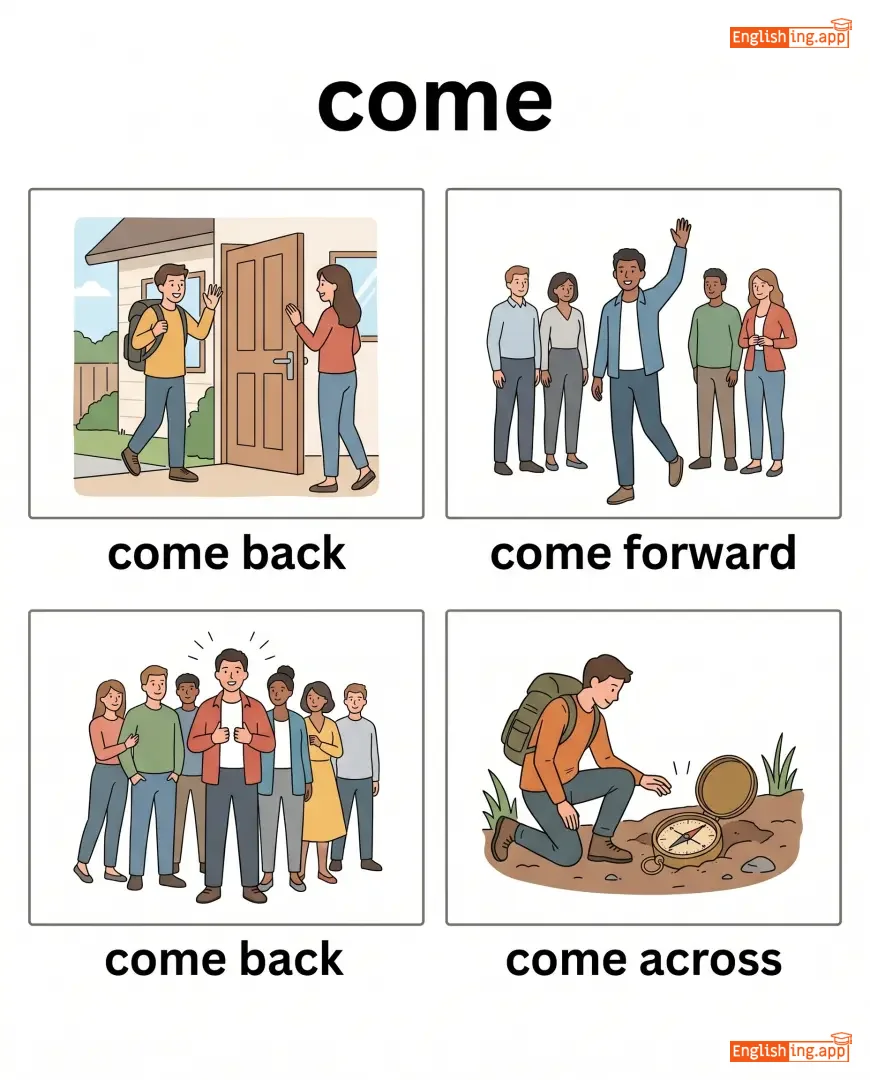
to move or travel toward or into a place thought of as near or familiar
••••••
|
She will come to the party later. |
她收到奖项时无法隐藏她的幸福。
Tā shōudào jiǎngxiàng shí wúfǎ yǐncáng tā de xìngfú.
••••••
|
come true |
to happen as wished or dreamed
••••••
|
追求幸福
zhuīqiú xìngfú
••••••
|
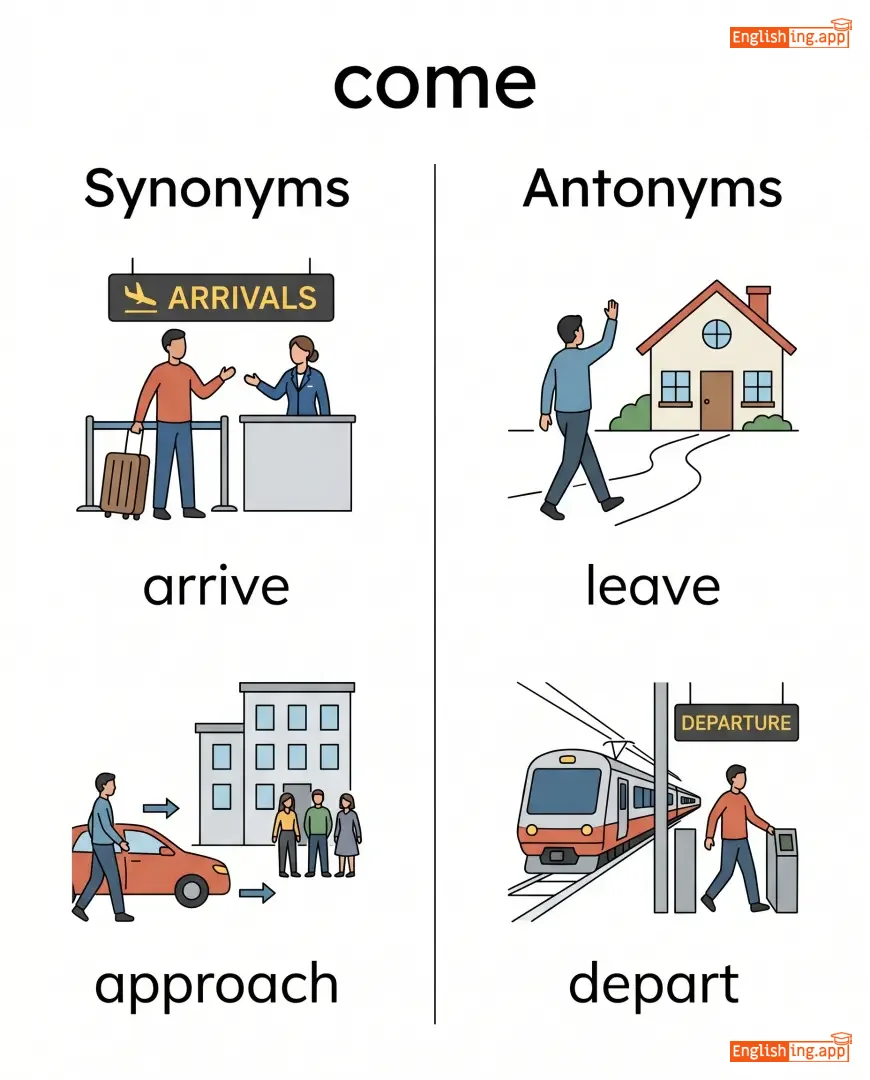
arrive, approach, reach, appear, enter
••••••
|
leave, depart, go
••••••
|
come back, come forward, come across, come out, come together
••••••
|
幸福 (xingfu) 意味着幸福 — 想象有人说 '我感到非常幸福!'
••••••
|
|
😂
••••••
|
/ˈkɒmədi/
noun
(喜剧)
••••••
|
- •••••• |
喜剧
xijü
••••••
|
- •••••• | - •••••• | - •••••• | - •••••• |
A type of entertainment that is intended to make people laugh.
••••••
|
We watched a hilarious comedy at the theater.
我们在剧院看了一场有趣的喜剧。
••••••
|
我们在剧院看了一场有趣的喜剧。
Wo men zai ju yuan kan le yi chang you qu de xi ju.
••••••
|
tragicomedy
悲喜剧
••••••
|
a dramatic work that combines elements of tragedy and comedy
••••••
|
悲喜剧
beixiju
••••••
|
humor, farce, satire, joke, parody
••••••
|
tragedy, drama
••••••
|
stand-up comedy, comedy show, comedy movie, romantic comedy
••••••
|
喜剧 - 笑到不行!笑是最好的药!
••••••
|
|
🛋️
••••••
|
/ˈkʌmfərt/
noun
(康福特)
••••••
|
- •••••• |
舒适
shushi
••••••
|
- •••••• | - •••••• | - •••••• | - •••••• |
a state of physical ease and freedom from pain or distress
••••••
|
The soft chair gave him great comfort.
那把软椅子给了他很大的舒适感。
••••••
|
那把软椅子给了他很大的舒适感。
Na ba ruan yǐzi gěi le tā hěn dà de shūshì gǎn.
••••••
|
cold comfort
冷舒适
••••••
|
something that offers little consolation
••••••
|
冷舒适
lěng shūshì
••••••
|
ease, relief, support, solace, convenience
••••••
|
discomfort, distress, pain
••••••
|
seek comfort, provide comfort, comfort zone, physical comfort, emotional comfort
••••••
|
舒适 = 让你感觉放松和平静的状态。
••••••
|
|
🛋️
••••••
|
/ˈkʌmf.tə.bəl/
adjective
(kāngfú tè bǎo)
••••••
|


|
舒适的
shūshì de
••••••
|
- •••••• | - •••••• | - •••••• | - •••••• |
providing physical ease and relaxation; free from stress or worry
••••••
|
This chair is so comfortable that I could sit here all day.
这把椅子太舒服了,我可以整天坐在这里。
••••••
|
这把椅子太舒服了,我可以整天坐在这里。
Zhè bǎ yǐzi tài shūfu le, wǒ kěyǐ zhěngtiān zuò zài zhèlǐ.
••••••
|
make yourself comfortable
让自己舒服
••••••
|
to relax and feel at ease
••••••
|
让自己舒服
Ràng zìjǐ shūfu
••••••
|
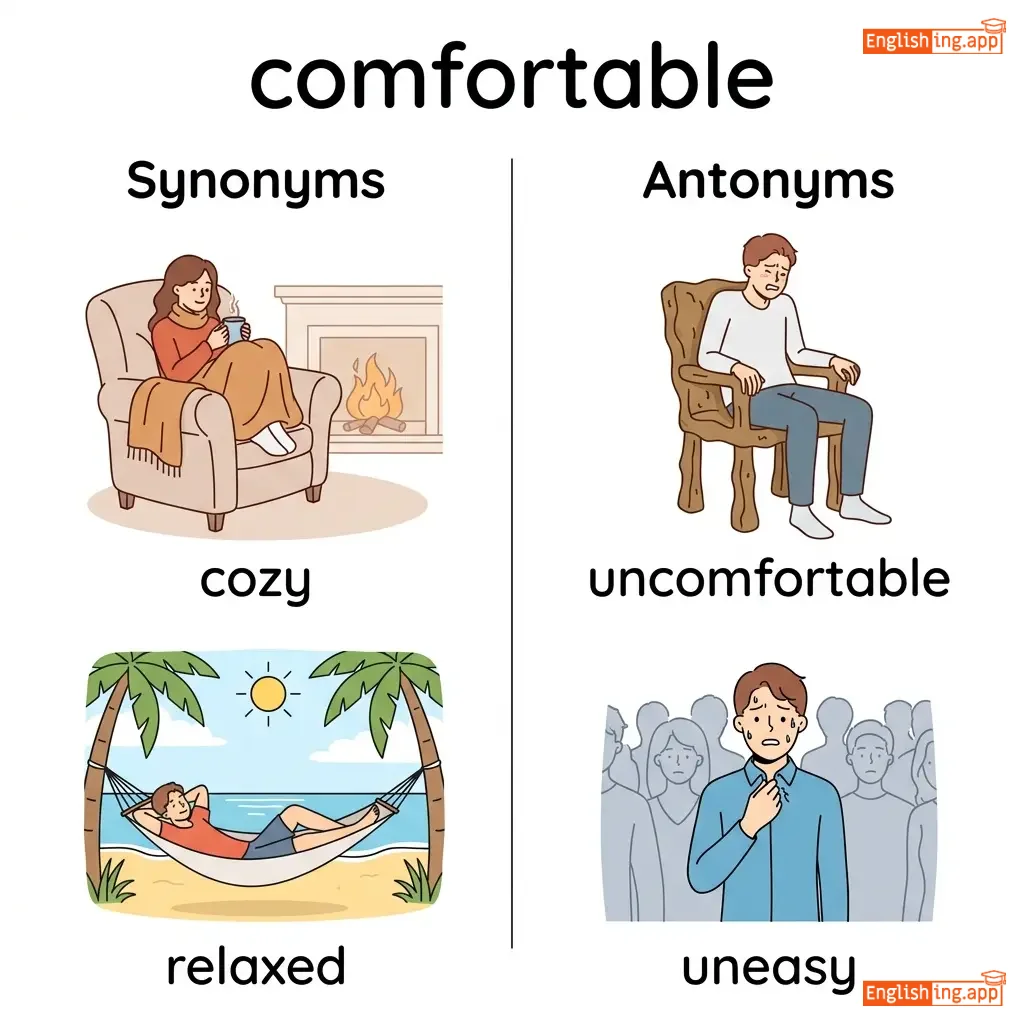
cozy, relaxed, pleasant, easy, restful
••••••
|
uncomfortable, uneasy, unpleasant
••••••
|
comfortable chair, comfortable clothes, feel comfortable, comfortable life
••••••
|
舒适的就像是舒适的座椅让你放松
••••••
|
|
😂
••••••
|
/ˈkɒmɪk/
adjective
(喜剧的)
••••••
|
- •••••• |
喜剧的
xǐjù de
••••••
|
- •••••• | - •••••• | - •••••• | - •••••• |
causing or meant to cause laughter
••••••
|
The movie had several comic scenes. |
这部电影有几个喜剧场景。
Zhè bù diànyǐng yǒu jǐ gè xǐjù chǎngjǐng.
••••••
|
comic relief |
a humorous break in a serious narrative
••••••
|
喜剧救援
xǐjù jiùyuán
••••••
|
funny, humorous, amusing, witty, entertaining
••••••
|
serious, tragic, solemn
••••••
|
comic book, comic strip, comic character, comic effect, comic scene
••••••
|
喜剧就是让你笑的东西
••••••
|
|
🎖️
••••••
|
/kəˈmænd/
verb
(命令)
••••••
|
- •••••• |
命令
mìnglìng
••••••
|
commanded
命令了
••••••
|
commanded
命令了
••••••
|
commands
命令
••••••
|
commanding
命令中
••••••
|
to give an order authoritatively; to control or direct
••••••
|
The general commanded the soldiers to move forward.
将军命令士兵们前进。
••••••
|
将军命令士兵们前进。
Jiāngjūn mìnglìng shìbīngmen qiánjìn.
••••••
|
at your command
听从命令
••••••
|
ready to serve or act at someone's order
••••••
|
遵命
zūn mìng
••••••
|
order, direct, instruct, control, demand
••••••
|
obey, request, follow
••••••
|
give a command, command authority, command attention, command respect
••••••
|
命令 = 发出指示
••••••
|
|
👨✈️
••••••
|
/kəˈmændər/
noun
(指挥官)
••••••
|
- •••••• |
指挥官
zhǐ huī guān
••••••
|
- •••••• | - •••••• | - •••••• | - •••••• |
a person in authority over a military unit; leader of armed forces
••••••
|
The commander ordered his troops to advance.
指挥官命令他的部队前进。
••••••
|
指挥官命令他的部队前进。
Zhǐ huī guān mìnglìng tā de bùduì qiánjìn.
••••••
|
- •••••• | - •••••• | - •••••• |
leader, general, chief, captain
••••••
|
subordinate, follower, private
••••••
|
military commander, commanding officer, field commander
••••••
|
指挥官 in Chinese means the head of the military unit who leads the troops.
••••••
|
|
🎬
••••••
|
/kəˈmɛns/
verb
(kaimen)
••••••
|
- •••••• |
开始
kaishi
••••••
|
commenced
kaimenle
••••••
|
commenced
kaimenle
••••••
|
commences
kaimen
••••••
|
commencing
kaimen zhong
••••••
|
to begin or start something
••••••
|
The ceremony will commence at noon.
仪式将在中午开始。
••••••
|
仪式将在中午开始。
Yishi jiang zai zhongwu kaishi.
••••••
|
commence operations
开始操作
••••••
|
to start working or functioning
••••••
|
开始操作
Kaishi zuo zuo
••••••
|
begin, start, initiate, launch, inaugurate
••••••
|
end, finish, conclude
••••••
|
commence work, commence proceedings, commence operations, commence at
••••••
|
Commence意为开始,就像'开始操作'表示开始工作。
••••••
|
|
💬
••••••
|
/ˈkɒm.ent/
noun
(kòmènt)
••••••
|
- •••••• |
评论
pinglun
••••••
|
- •••••• | - •••••• | - •••••• | - •••••• |
a verbal or written remark expressing an opinion or reaction
••••••
|
She posted a kind comment on my photo. |
她在我的照片下留言了一条友好的评论。
Tā zài wǒ de zhàopiàn xià liúyánle yītiáo yǒuhǎo de pínglùn.
••••••
|
no comment |
refusal to answer a question or give an opinion
••••••
|
无评论
wú pínglùn
••••••
|
remark, observation, statement, feedback
••••••
|
silence, quiet
••••••
|
make a comment, post a comment, critical comment, positive comment
••••••
|
在Facebook上发表评论即为评论 (pinglun)
••••••
|
|
🗣️
••••••
|
/ˈkɒmənˌtɛri/
noun
(kèméntǎlì)
••••••
|
- •••••• |
评论
pinglun
••••••
|
- •••••• | - •••••• | - •••••• | - •••••• |
An expression of opinions or explanations about an event, situation, or text.
••••••
|
The professor's commentary on the novel was insightful.
教授对小说的评论非常有见地。
••••••
|
教授对小说的评论非常有见地。
Jiaoshou dui xiaoshuo de pinglun feichang you jiandi.
••••••
|
running commentary
实时评论
••••••
|
Continuous spoken description of events as they happen.
••••••
|
实时评论
shishi pinglun
••••••
|
explanation, interpretation, analysis, observation, critique
••••••
|
silence, quiet, neglect
••••••
|
political commentary, sports commentary, live commentary, social commentary
••••••
|
评论 = Pinglun = 讨论或解释
••••••
|
|
🎙️
••••••
|
/ˈkɒmənˌteɪtər/
noun
(kəmɛnˈteɪtər)
••••••
|
- •••••• |
解说员
jiěshuōyuán
••••••
|
- •••••• | - •••••• | - •••••• | - •••••• |
a person who reports and discusses events, especially on TV or radio
••••••
|
The commentator described the football match in detail. |
解说员详细描述了足球比赛。
Jiěshuōyuán xiángxì miáoshùle zúqiú bǐsài.
••••••
|
- •••••• | - •••••• | - •••••• |
announcer, reporter, narrator, broadcaster, critic
••••••
|
audience, listener
••••••
|
sports commentator, political commentator, live commentator, TV commentator
••••••
|
解说员就像是电视上解说比赛的专家,帮你了解比赛细节。
••••••
|
|
💼
••••••
|
/ˈkɒmɜːs/
noun
(科姆尔斯)
••••••
|
- •••••• |
商业
shangye
••••••
|
- •••••• | - •••••• | - •••••• | - •••••• |
the activity of buying and selling goods and services
••••••
|
International commerce has expanded significantly in recent years.
国际商务在最近几年显著增长。
••••••
|
国际商务在最近几年显著增长。
Guoji shangye zai zuijin jiannian xianzhu zengzhang.
••••••
|
- •••••• | - •••••• | - •••••• |
trade, business, industry, retail
••••••
|
non-trade, isolation
••••••
|
global commerce, e-commerce, retail commerce, international commerce
••••••
|
商业 = 买卖 = 商业
••••••
|
|
💼
••••••
|
/kəˈmɜːʃəl/
adjective
(kəmɪrˈʂʲɪəl)
••••••
|


|
商业的
shāngyè de
••••••
|
- •••••• | - •••••• | - •••••• | - •••••• |
Concerned with or engaged in commerce; intended to make a profit.
••••••
|
The company focused on commercial success rather than artistic value. |
公司专注于商业成功,而不是艺术价值。
Gōngsī zhuānzhù yú shāngyè chénggōng, ér bù shì yìshù jiàzhí.
••••••
|
commercial break |
An interruption in a broadcast for advertisements.
••••••
|
商业广告时间
shāngyè guǎnggào shíjiān
••••••
|
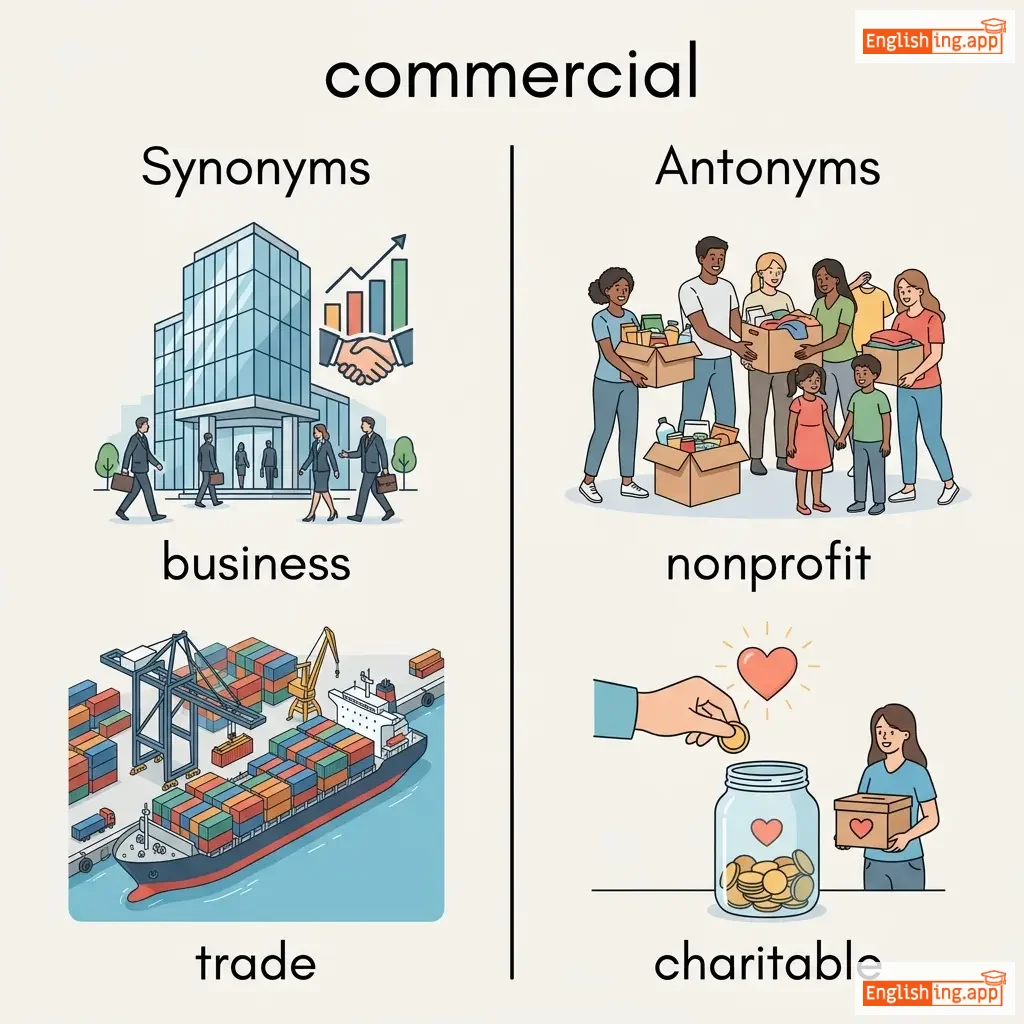
business, trade, financial, profit-driven, market-oriented
••••••
|
nonprofit, charitable, artistic
••••••
|
commercial activity, commercial value, commercial enterprise, commercial success
••••••
|
商业的 = 商业 + 的, 就是与做生意有关的事。
••••••
|
|
💼
••••••
|
/kəˈmɪʃən/
noun
••••••
|


|
- •••••• | - •••••• | - •••••• | - •••••• | - •••••• |
An instruction, command, or duty given to a person or group; also a fee paid to an agent or employee for a transaction.
••••••
|
The artist received a commission to paint a portrait. |
- •••••• |
on commission |
Working for payment based on the amount of sales made rather than a fixed salary.
••••••
|
- •••••• |
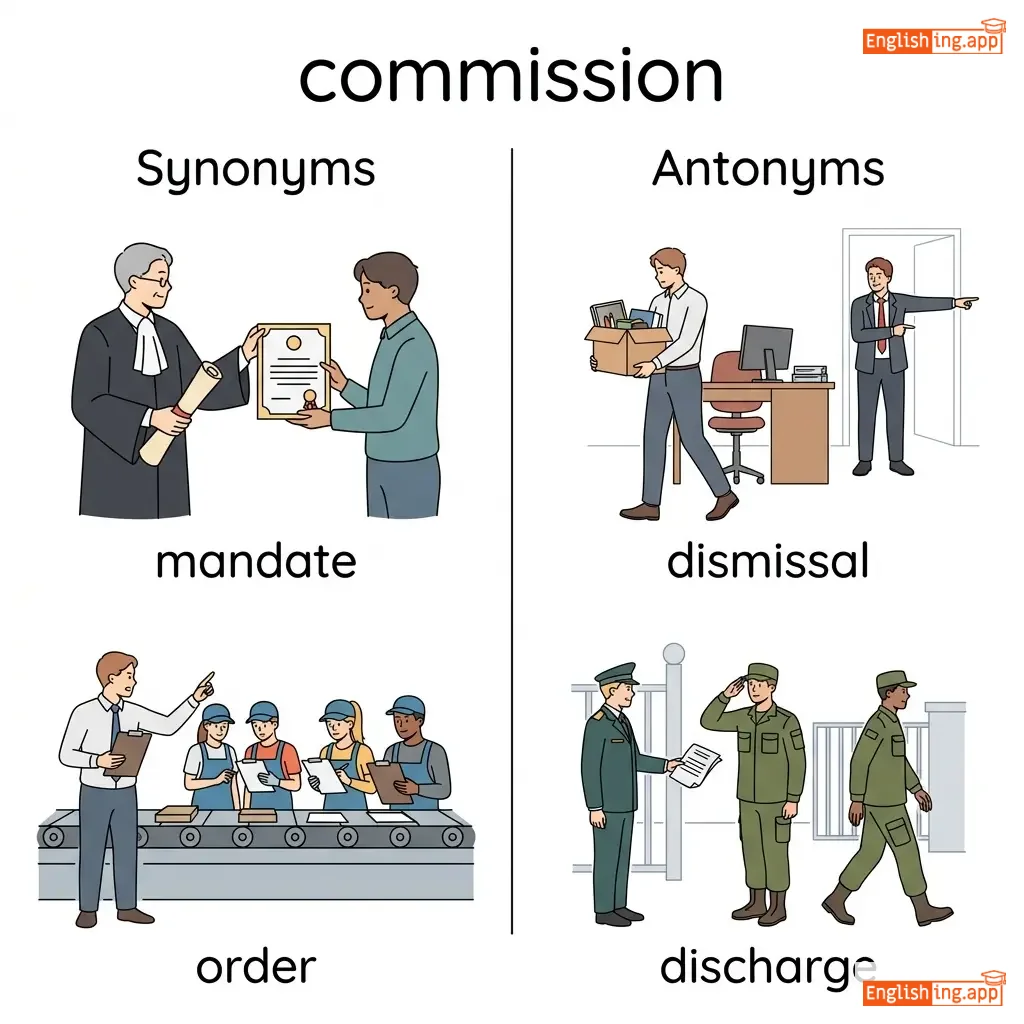
mandate, order, task, fee, allowance
••••••
|
dismissal, discharge, unemployment
••••••
|
earn commission, sales commission, commission rate, commission fee
••••••
|
No •••••• |
|
👮♂️
••••••
|
/kəˈmɪʃənər/
noun
(专员)
••••••
|
- •••••• |
专员
zhuānyuán
••••••
|
- •••••• | - •••••• | - •••••• | - •••••• |
an official in charge of a particular department or area
••••••
|
The police commissioner addressed the media about the incident.
警察专员向媒体介绍了事件。
••••••
|
警察专员向媒体介绍了事件。
Jǐngchá zhuānyuán xiàng méitǐ jièshào le shìjiàn.
••••••
|
- •••••• | - •••••• | - •••••• |
official, director, superintendent, chief, officer
••••••
|
subordinate, employee
••••••
|
police commissioner, election commissioner, city commissioner, commissioner office
••••••
|
专员意味着负责人,专员是担任责任的人。
••••••
|
|
✍️
••••••
|
/kəˈmɪt/
verb
••••••
|
- •••••• | - •••••• |
committed
••••••
|
committed
••••••
|
commits
••••••
|
committing
••••••
|
To carry out or perpetrate an act; to pledge or bind to a course of action.
••••••
|
He committed a serious mistake in the report. |
- •••••• |
commit to memory |
To learn something so well that you can remember it perfectly.
••••••
|
- •••••• |
perform, perpetrate, pledge, dedicate, undertake
••••••
|
neglect, abstain, withdraw
••••••
|
commit a crime, commit suicide, commit oneself, commit to
••••••
|
No •••••• |
|
🤝
••••••
|
/kəˈmɪtmənt/
noun
••••••
|


|
- •••••• | - •••••• | - •••••• | - •••••• | - •••••• |
A promise or firm decision to do something; dedication or obligation to a cause or activity.
••••••
|
She showed great commitment to her studies. |
- •••••• |
a lifelong commitment |
A promise or responsibility that lasts for one's whole life.
••••••
|
- •••••• |
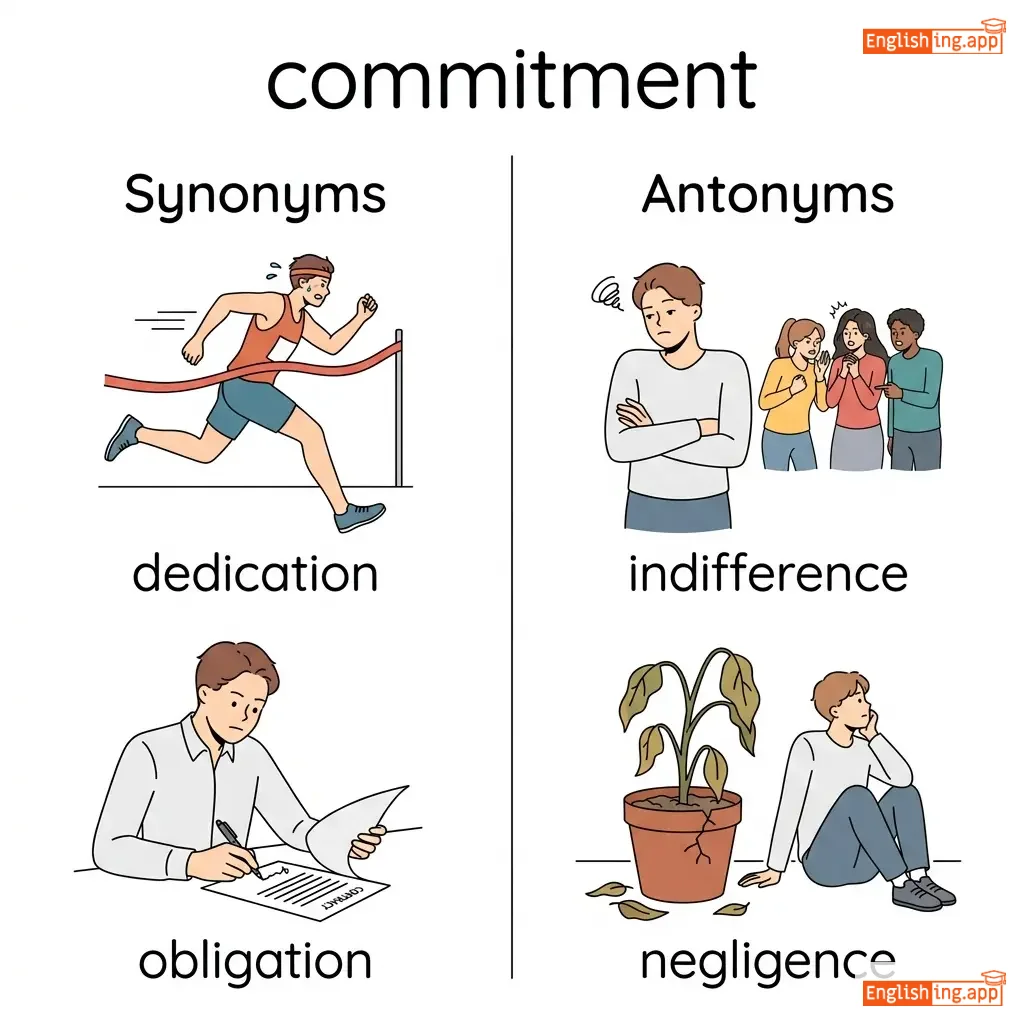
dedication, obligation, devotion, promise, responsibility
••••••
|
indifference, negligence, irresponsibility
••••••
|
strong commitment, show commitment, commitment to, long-term commitment
••••••
|
No •••••• |
|
👥
••••••
|
/kəˈmɪt.i/
noun
(委员会)
••••••
|

|
委员会
wei yuan hui
••••••
|
- •••••• | - •••••• | - •••••• | - •••••• |
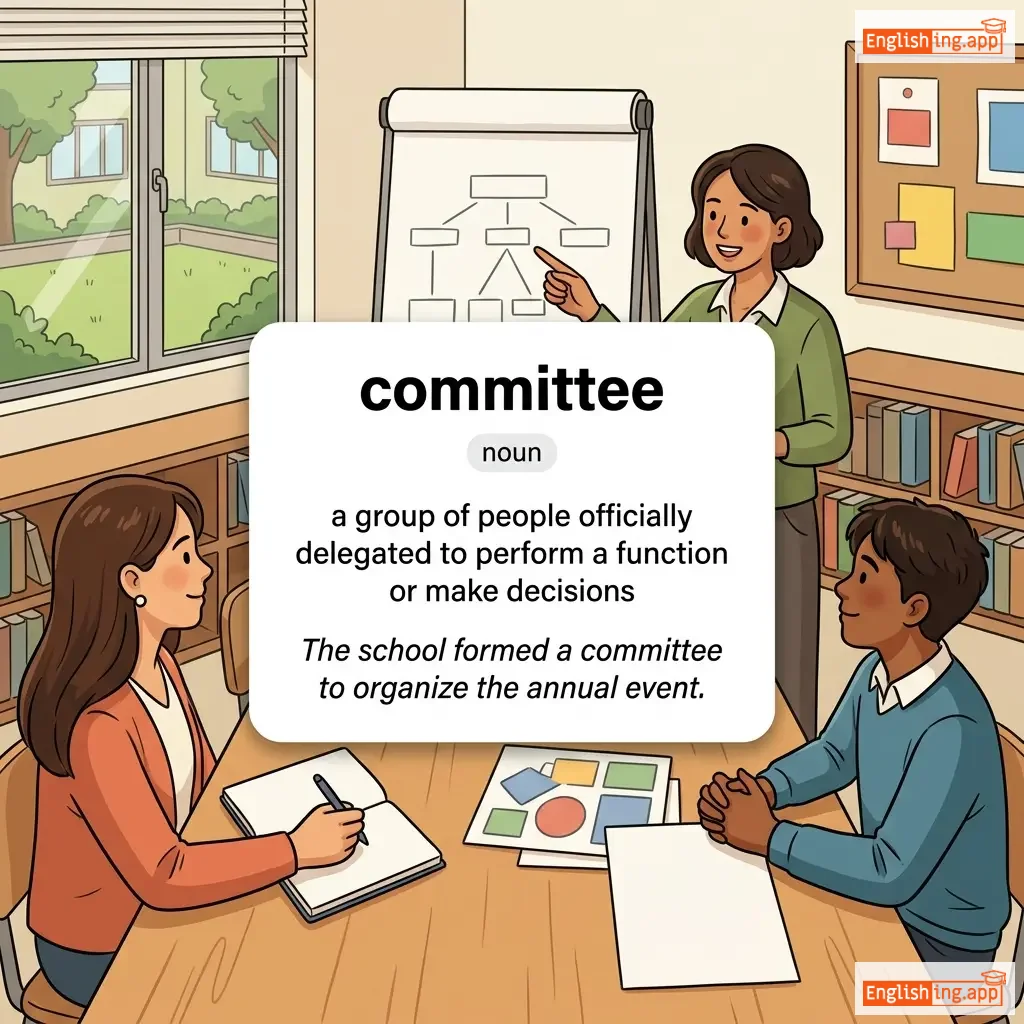
a group of people officially delegated to perform a function or make decisions
••••••
|
The school formed a committee to organize the annual event. |
学校成立了一个委员会来组织年度活动。
Xuéxiào chénglìle yīgè wěiyuán huì lái zǔzhī niándù huódòng.
••••••
|
- •••••• | - •••••• | - •••••• |
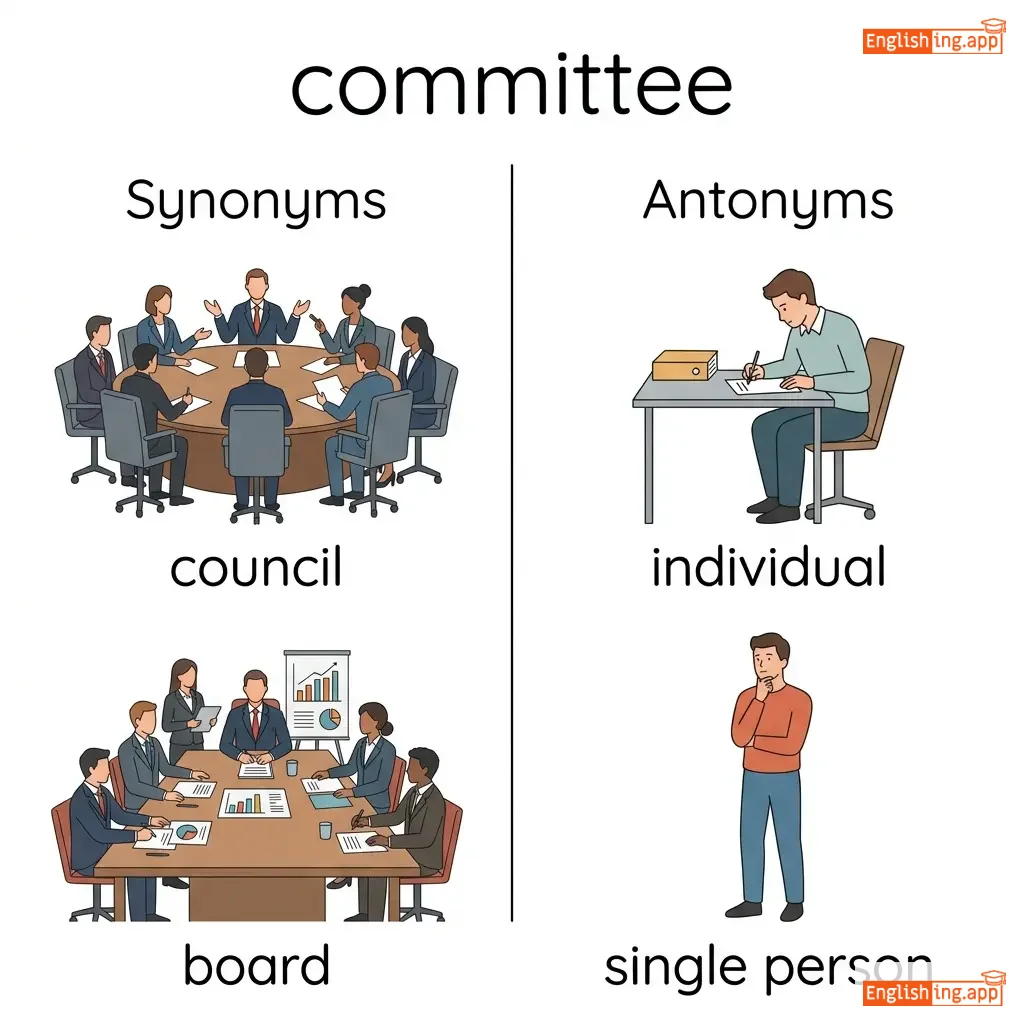
council, board, panel, group, commission
••••••
|
individual, single person
••••••
|
committee meeting, committee decision, committee member, school committee
••••••
|
委员会 = 一个组织决策的群体。
••••••
|
|
📦
••••••
|
/kəˈmɑːdəti/
noun
(科莫迪提)
••••••
|

|
商品
shangpin
••••••
|
- •••••• | - •••••• | - •••••• | - •••••• |
a raw material or primary product that can be bought and sold
••••••
|
Oil is the most traded commodity in the world.
奥伊尔 伊斯 最 多 交易 的 科莫迪提。
••••••
|
石油是世界上交易最多的商品。
shiyou shi shijie shang jiaoyi zuiduo de shangpin
••••••
|
hot commodity
热门 科莫迪提
••••••
|
something or someone that is in high demand
••••••
|
热门商品
remen shangpin
••••••
|
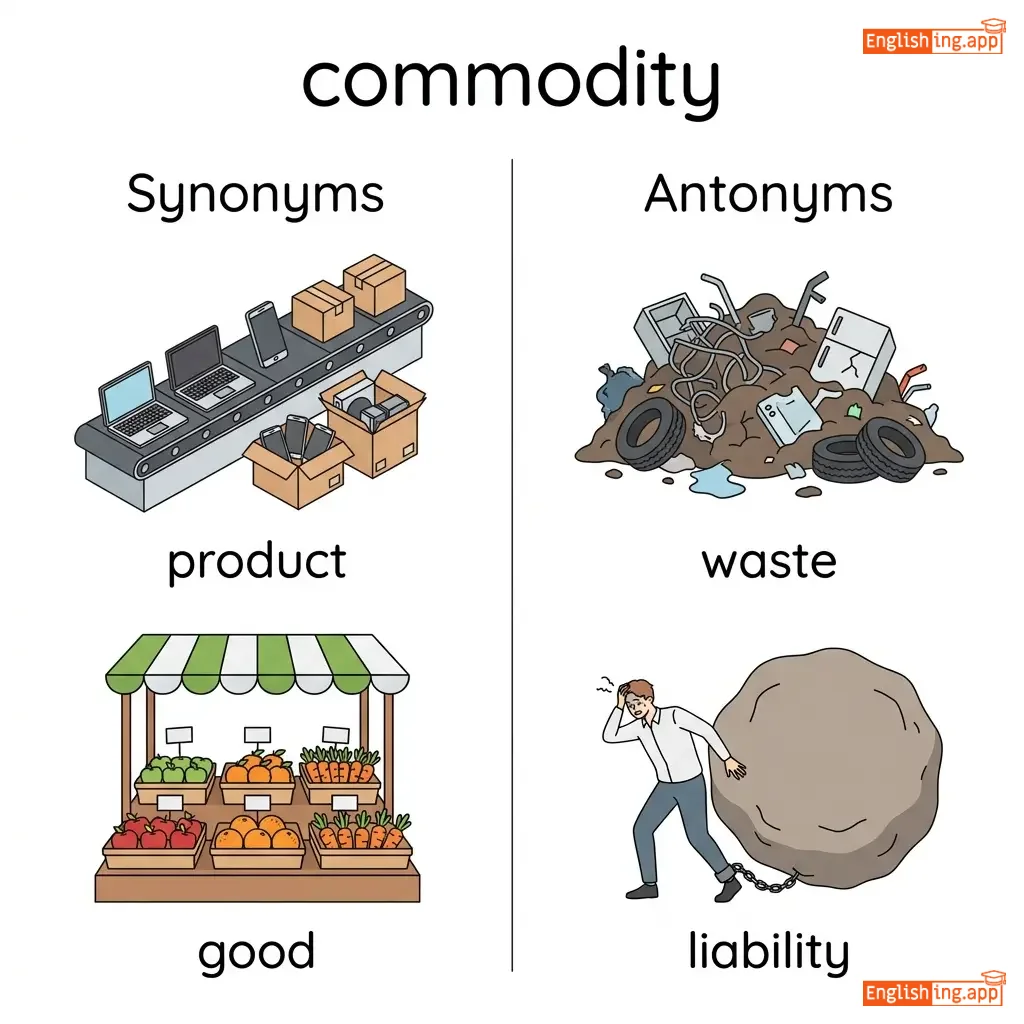
product, good, merchandise, item, resource
••••••
|
waste, liability, burden
••••••
|
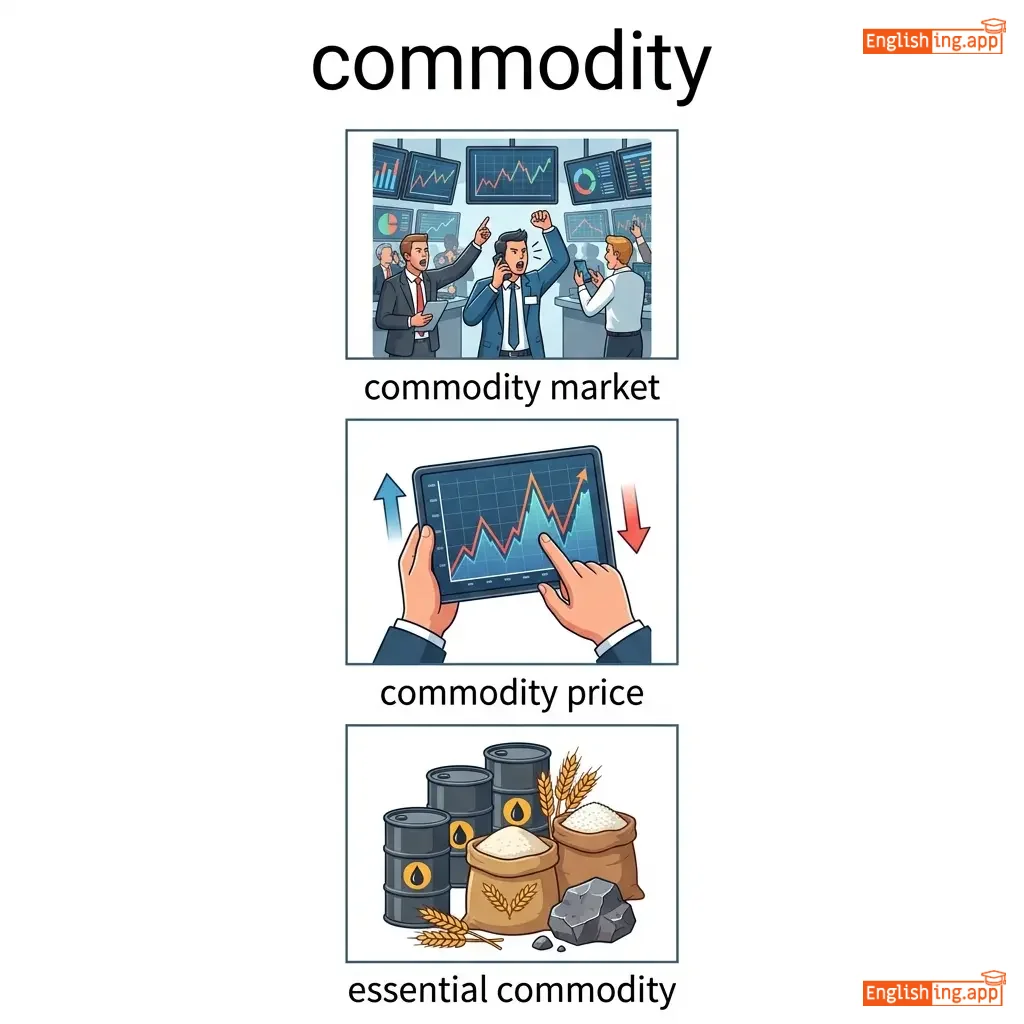
commodity market, commodity price, essential commodity, trading commodity
••••••
|
Commodity 就像中文‘商品’—可以买卖的东西。
••••••
|
|
🌍
••••••
|
/ˈkɒm.ən/
adjective
(kòngmèn)
••••••
|
- •••••• |
共同
gongtong
••••••
|
- •••••• | - •••••• | - •••••• | - •••••• |
occurring frequently or widely; shared by all
••••••
|
It is common to see traffic in the city during rush hour. |
在高峰时间看到城市里的交通是很常见的。
Zai gaofeng shijian kandao chengshi li de jiaotong shi hen changjian de
••••••
|
common sense |
good practical judgment based on everyday experience
••••••
|
常识
changshi
••••••
|
usual, ordinary, frequent, general
••••••
|
rare, uncommon, unusual
••••••
|
common problem, common interest, common mistake, in common
••••••
|
共同意味着大家共享的,就像‘常识’一样。
••••••
|
|
🗣️
••••••
|
/ˈkɒmənli/
adverb
(kómənli)
••••••
|
- •••••• |
通常
tōngcháng
••••••
|
- •••••• | - •••••• | - •••••• | - •••••• |
usually or by most people
••••••
|
This phrase is commonly used in everyday speech. |
这个短语通常在日常语言中使用。
Zhège duǎnyǔ tōngcháng zài rìcháng yǔyán zhōng shǐyòng.
••••••
|
- •••••• | - •••••• | - •••••• |
usually, generally, typically, often, ordinarily
••••••
|
rarely, seldom, unusually
••••••
|
commonly used, commonly known, commonly accepted, commonly found
••••••
|
Common的意思是常见的,所以commonly意味着通常
••••••
|
|
💬
••••••
|
/kəˈmjuː.nɪ.keɪt/
verb
••••••
|
- •••••• | - •••••• |
communicated
••••••
|
communicated
••••••
|
communicates
••••••
|
communicating
••••••
|
to share or exchange information, ideas, or feelings
••••••
|
They used gestures to communicate across the noisy room. |
- •••••• |
communicate clearly |
to express oneself in a way that others can easily understand
••••••
|
- •••••• |
convey, express, share, transmit, inform
••••••
|
conceal, suppress
••••••
|
communicate effectively, communicate directly, communicate through, communicate clearly
••••••
|
No •••••• |
|
📞
••••••
|
/kəˌmjuː.nɪˈkeɪ.ʃən/
noun
(沟通)
••••••
|


|
沟通
goutong
••••••
|
- •••••• | - •••••• | - •••••• | - •••••• |
the act or process of sharing information, ideas, or feelings
••••••
|
Good communication is essential for a strong relationship. |
良好的沟通对建立牢固的关系至关重要。
Lianghao de goutong dui jianli laogu de guanxi zhiguanchongyao.
••••••
|
lines of communication |
the channels or methods by which people communicate
••••••
|
沟通渠道
goutong qudao
••••••
|
conversation, dialogue, exchange, correspondence, contact
••••••
|
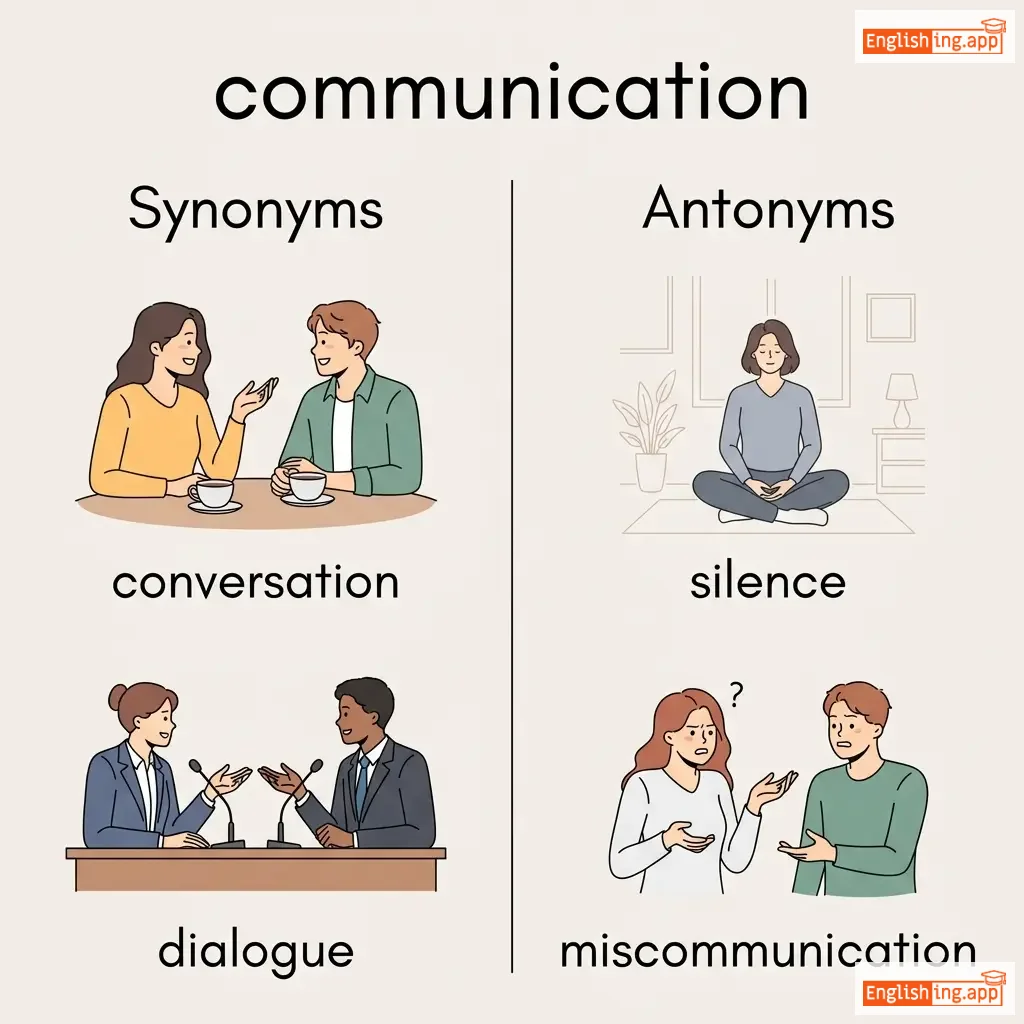
silence, miscommunication
••••••
|
effective communication, open communication, communication skills, communication barrier
••••••
|
沟通 = 社区 + 行动 = 社会中的信息交换
••••••
|
|
✊
••••••
|
/ˈkɒmjʊnɪst/
noun
••••••
|
- •••••• | - •••••• | - •••••• | - •••••• | - •••••• | - •••••• |
a person who supports or believes in the principles of communism
••••••
|
The communist ideology aims for a classless society. |
- •••••• | - •••••• | - •••••• | - •••••• |
socialist, Marxist, leftist, revolutionary
••••••
|
capitalist, bourgeois
••••••
|
communist party, communist government, communist manifesto
••••••
|
No •••••• |
|
🏘️
••••••
|
/kəˈmjuː.nə.ti/
noun
(社区)
••••••
|
- •••••• |
社区
shequ
••••••
|
- •••••• | - •••••• | - •••••• | - •••••• |
a group of people living in the same place or sharing common interests
••••••
|
The community worked together to clean the park.
这个社区一起工作,清理了公园。
••••••
|
这个社区一起工作,清理了公园。
Zhege shequ yiqi gongzuo, qingli le gongyuan.
••••••
|
sense of community
社区意识
••••••
|
a feeling of belonging and togetherness among people
••••••
|
社区意识
shequ yishi
••••••
|
group, society, population, collective, neighborhood
••••••
|
individual, isolation
••••••
|
local community, global community, community service, community center
••••••
|
社区 = 社 (大家) + 区 (区域) = 一个大家庭,大家齐心协力。
••••••
|
|
👫
••••••
|
/kəmˈpænjən/
noun
(kè péi nián)
••••••
|
- •••••• |
伙伴
huǒ bàn
••••••
|
- •••••• | - •••••• | - •••••• | - •••••• |
a person or animal you spend time with or travel with
••••••
|
He was my companion during the long journey. |
他是我在漫长旅程中的伴侣。
tā shì wǒ zài màn cháng lǚ chéng zhōng de bàn lǚ.
••••••
|
travel companion |
a person who accompanies you on a trip
••••••
|
旅行伙伴
lǚ xíng huǒ bàn
••••••
|
friend, partner, mate, associate, ally
••••••
|
enemy, rival, stranger
••••••
|
close companion, loyal companion, travel companion, lifelong companion
••••••
|
Companion听起来像伙伴 — 伴你旅行的伙伴
••••••
|
|
🏢
••••••
|
/ˈkʌm.pə.ni/
noun
(kǒngpànī)
••••••
|
- •••••• |
公司
gongsi
••••••
|
- •••••• | - •••••• | - •••••• | - •••••• |
a business organization; the presence of other people
••••••
|
She started her own company to sell handmade products. |
她开设了自己的公司来销售手工制作的产品。
Tā kāishè le zìjǐ de gōngsī lái xiāoshòu shǒugōng zhìzuò de chǎnpǐn.
••••••
|
keep someone company |
to stay with someone so they are not alone
••••••
|
陪伴某人
péibàn mǒu rén
••••••
|
firm, corporation, enterprise, business, organization
••••••
|
individual, solitude
••••••
|
company policy, company profile, company growth, company headquarters
••••••
|
公司 = '公司' 意味着商业,而 '陪伴' 意味着和某人一起。
••••••
|
|
⚖️
••••••
|
/ˈkɒmp(ə)rəbl/
adjective
(康帕瑞布尔)
••••••
|
- •••••• |
可比的
ke bi de
••••••
|
- •••••• | - •••••• | - •••••• | - •••••• |
Able to be likened to something else in size, amount, or quality.
••••••
|
The two products are comparable in quality but differ in price.
这两种产品在质量上是康帕瑞布尔的,但价格不同。
••••••
|
这两种产品在质量上可比,但价格不同。
zhe liang zhong chan pin zai zhi liang shang ke bi dan jia ge bu tong
••••••
|
comparable to
康帕瑞布尔于
••••••
|
Similar or equivalent to something else
••••••
|
可与…相比
ke yu ... xiang bi
••••••
|
similar, equivalent, analogous, alike, matching
••••••
|
different, dissimilar, unequal
••••••
|
comparable quality, comparable size, comparable results, comparable standards
••••••
|
‘Ke bi de’ sounds like ‘can be compared’ — easy link to comparable.
••••••
|
|
📊
••••••
|
/kəmˈpærətɪv/
adjective
(海皮纳提夫)
••••••
|
- •••••• |
比较的
bijiao de
••••••
|
- •••••• | - •••••• | - •••••• | - •••••• |
Measured or considered by comparison; relative.
••••••
|
She lives in comparative comfort after moving to the city.
她住在城市后,生活相对舒适。
••••••
|
搬到城市后,她生活得相对舒适。
ban dao chengshi hou ta shenghuo de xiangdui shushi
••••••
|
comparative advantage
比较优势
••••••
|
The ability of a country or company to produce goods or services at a lower opportunity cost than others
••••••
|
比较优势
bijiao youshi
••••••
|
relative, proportional, measured, evaluative
••••••
|
absolute, definite, fixed
••••••
|
comparative study, comparative analysis, comparative comfort, comparative advantage
••••••
|
‘比较的’ means comparative—think of 比 (compare) + 较 (contrast).
••••••
|
|
⚖️
••••••
|
/kəmˈpeər/
verb
(kəmˈpeər)
••••••
|
|
比较
bǐjiào
••••••
|
compared
kəmˈpeərd
••••••
|
compared
kəmˈpeərd
••••••
|
compares
kəmˈpeərz
••••••
|
comparing
kəmˈpeərɪŋ
••••••
|
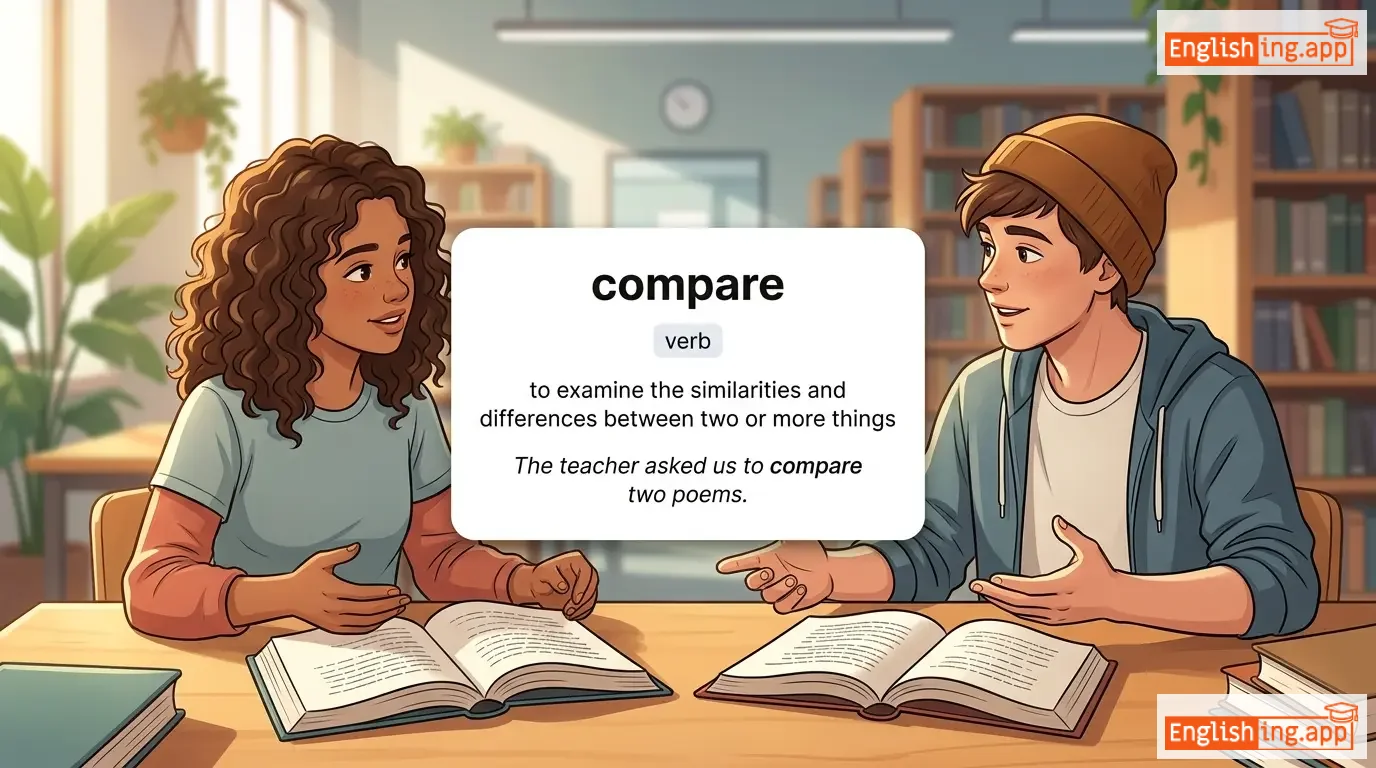
to examine the similarities and differences between two or more things
••••••
|
The teacher asked us to compare two poems.
老师让我们比较了两首诗。
••••••
|
老师让我们比较了两首诗。
lǎoshī ràng wǒmen bǐjiàole liǎng shǒu shī.
••••••
|
compare notes
比较笔记
••••••
|
to exchange information or opinions on a subject
••••••
|
比较笔记
bǐjiào bǐjì
••••••
|
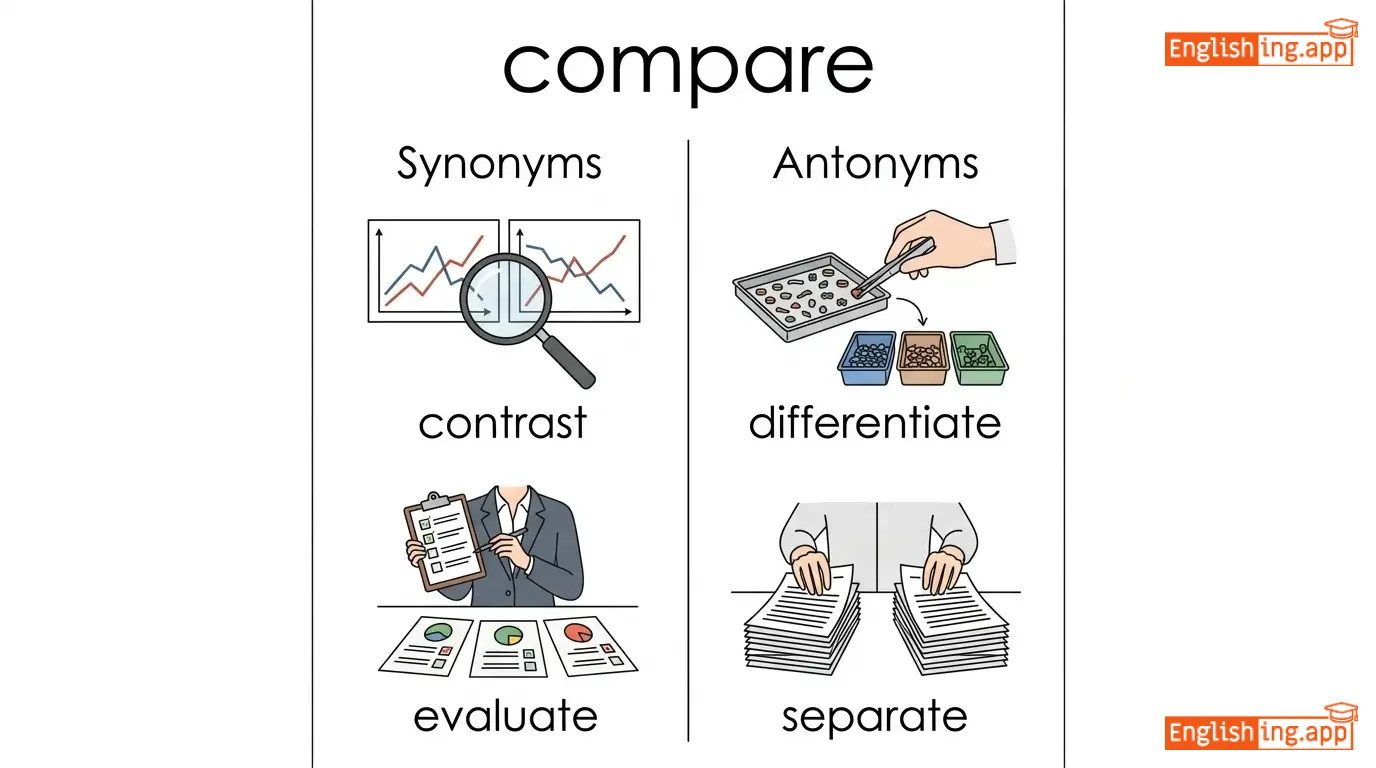
contrast, evaluate, match, measure, analyze
••••••
|
differentiate, separate
••••••
|
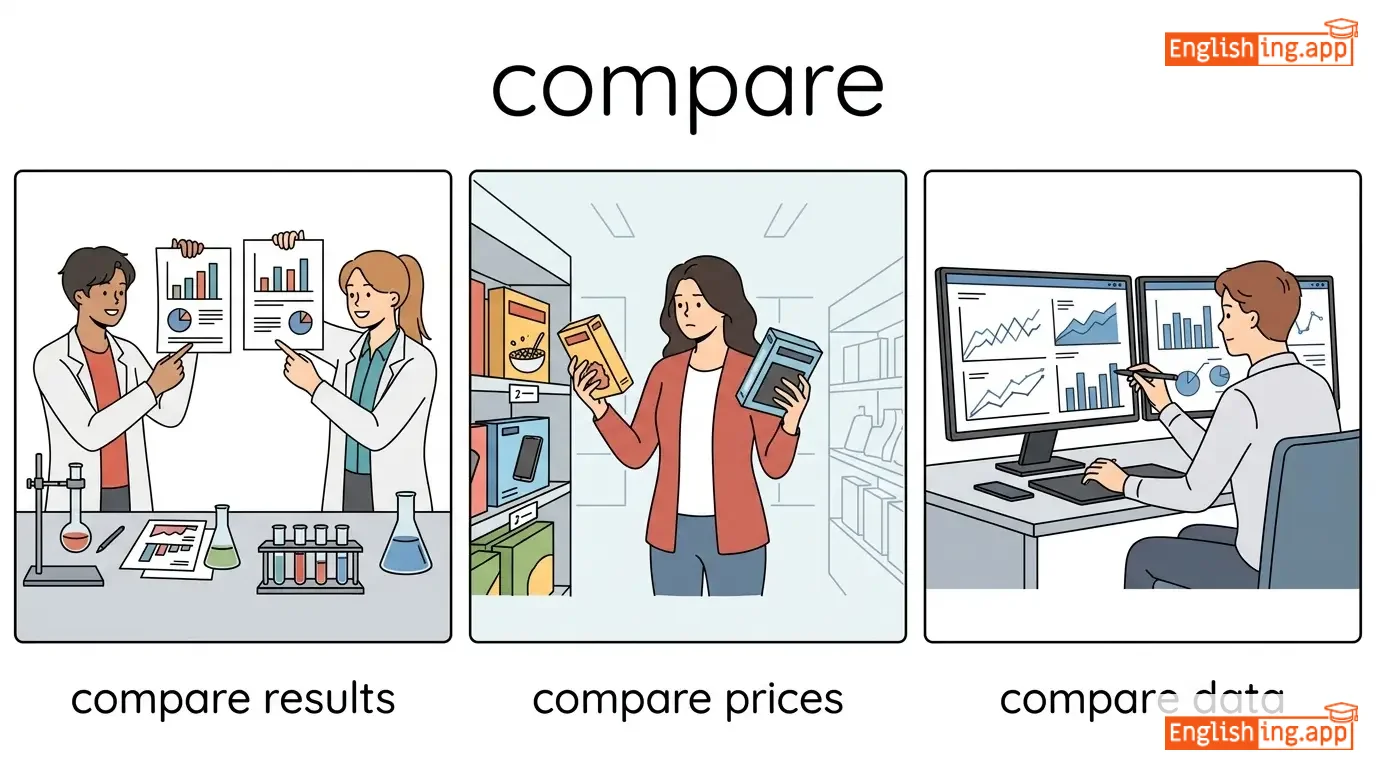
compare results, compare prices, compare data, compare favorably
••••••
|
Compare 意思是比较 - 就像比较商店的价格。
••••••
|
|
🔍
••••••
|
/kəmˈpærɪsən/
noun
(康派瑞森)
••••••
|
- •••••• |
比较
bijiao
••••••
|
- •••••• | - •••••• | - •••••• | - •••••• |
The act or process of examining the similarities and differences between things.
••••••
|
A comparison of the two reports shows several inconsistencies.
啊 康派瑞森 欧夫 两个 报告 秀斯 几个 不一致。
••••••
|
对两份报告的比较显示出几个不一致之处。
dui liangfen baogao de bijiao xianshichu jige buyizhi zhichu
••••••
|
draw a comparison
德劳 啊 康派瑞森
••••••
|
To point out similarities or differences between two or more things
••••••
|
进行比较
jinxing bijiao
••••••
|
contrast, evaluation, juxtaposition, measurement
••••••
|
isolation, separation
••••••
|
make a comparison, draw a comparison, comparison chart, comparison between
••••••
|
Comparison → 比较 (bi-jiao) sounds like 'be jiao' – to compare!
••••••
|
|
❤️
••••••
|
/kəmˈpæʃən/
noun
(同情)
••••••
|
- •••••• |
同情
tóngqíng
••••••
|
- •••••• | - •••••• | - •••••• | - •••••• |
Sympathetic concern for the sufferings or misfortunes of others.
••••••
|
The nurse treated the patients with great compassion.
护士用极大的同情心对待病人。
••••••
|
护士用极大的同情心对待病人。
Hùshì yòng jí dà de tóngqíng xīn duìdài bìngrén.
••••••
|
act of compassion
同情的行为
••••••
|
An action motivated by empathy and kindness toward others
••••••
|
同情的行为
Tóngqíng de xíngwéi
••••••
|
sympathy, empathy, pity, kindness, mercy
••••••
|
cruelty, indifference, harshness
••••••
|
show compassion, feel compassion, compassion for others, compassion and kindness
••••••
|
同情(tóngqíng):同理心让我们感同身受,帮助别人。
••••••
|
|
👉
••••••
|
/kəmˈpɛl/
verb
(kōng-pèi-ěr)
••••••
|
- •••••• |
强迫
qiangpo
••••••
|
compelled
kōng-pèi-ěr-d
••••••
|
compelled
kōng-pèi-ěr-d
••••••
|
compels
kōng-pèi-ěr-s
••••••
|
compelling
kōng-pèi-ěr-ing
••••••
|
To force or drive someone to do something.
••••••
|
The law compels citizens to pay taxes.
法律强迫公民缴纳税款。
••••••
|
法律强迫公民缴纳税款。
Fǎlǜ qiángpò gōngmín jiǎonà shuìkuǎn.
••••••
|
compel attention
吸引注意
••••••
|
To strongly attract or demand focus.
••••••
|
吸引注意
xīyǐn zhùyì
••••••
|
force, drive, oblige, pressure, coerce
••••••
|
dissuade, discourage, prevent
••••••
|
compel someone, compel obedience, compel action, compel attention
••••••
|
Compel 意味着强迫,像妈妈说的: '你得强迫自己做作业!'
••••••
|
|
🌟
••••••
|
/kəmˈpɛlɪŋ/
adjective
(凯姆ˈ佩林)
••••••
|
- •••••• |
引人注目的
yǐn rén zhù mù de
••••••
|
- •••••• | - •••••• | - •••••• | - •••••• |
Evoking interest, attention, or admiration in a powerful way.
••••••
|
She gave a compelling speech about climate change. |
她就气候变化发表了引人注目的演讲。
Tā jiù qì hòu biàn huà fā biǎo le yǐn rén zhù mù de yǎn jiǎng.
••••••
|
compelling evidence |
Evidence that is convincing and hard to refute.
••••••
|
令人信服的证据
lìng rén xìn fú de zhèng jù
••••••
|
convincing, powerful, persuasive, gripping, fascinating
••••••
|
unconvincing, weak, boring
••••••
|
compelling argument, compelling reason, compelling story, compelling evidence
••••••
|
引人注目, 就像一场引人注目的演讲!
••••••
|
|
💰
••••••
|
/ˈkɒmpənseɪt/
verb
(kāngpēnsèit)
••••••
|
|
赔偿
péicháng
••••••
|
compensated
kāngpēnsèitèd
••••••
|
compensated
kāngpēnsèitèd
••••••
|
compensates
kāngpēnsèits
••••••
|
compensating
kāngpēnsèitíng
••••••
|
To give something, typically money, in recognition of loss, suffering, or work done.
••••••
|
The company compensated the worker for his injury.
公司为工人的伤害进行了赔偿。
••••••
|
公司为工人的伤害进行了赔偿。
Gōngsī wèi gōngrén de shānghài jìnxíngle péicháng.
••••••
|
compensate for
补偿
••••••
|
To make up for something, usually a fault or loss.
••••••
|
补偿
bǔcháng
••••••
|
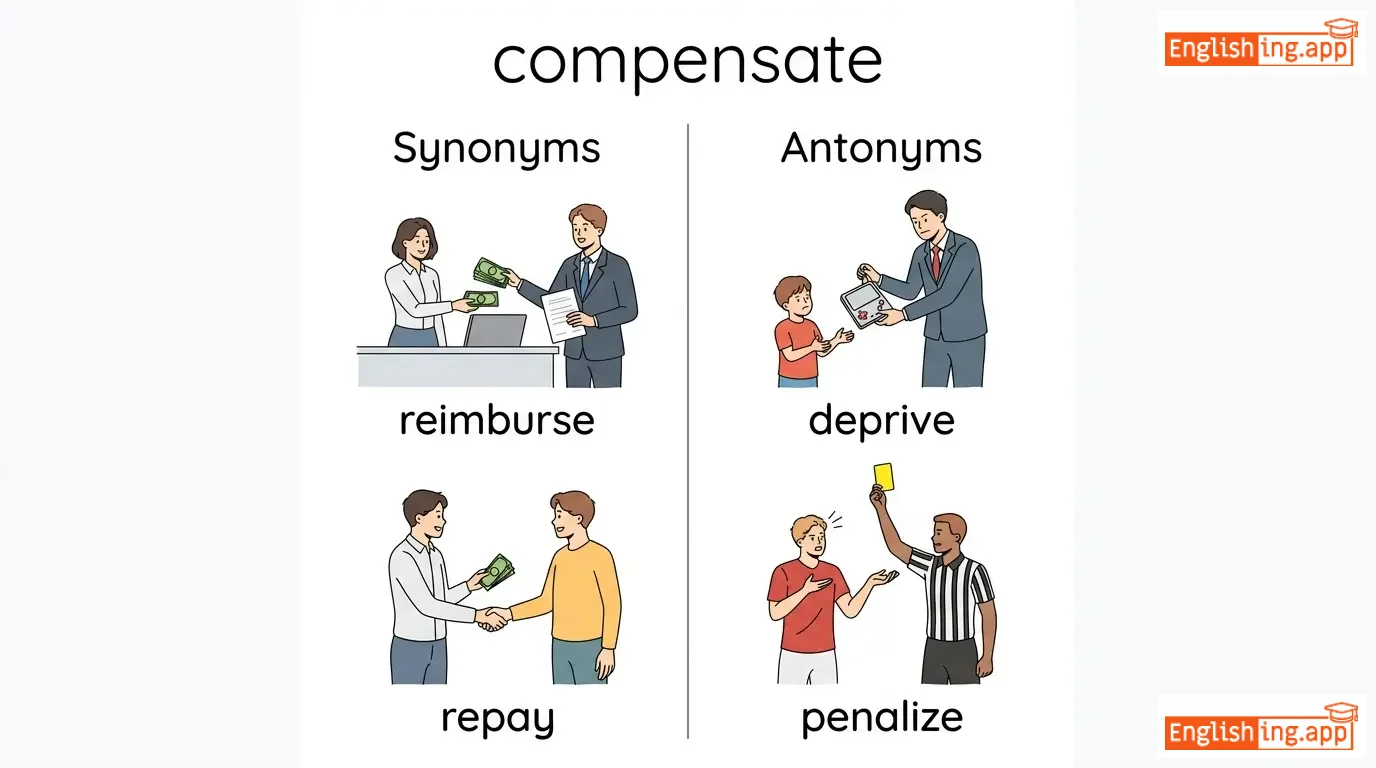
reimburse, repay, recompense, reward, indemnify
••••••
|
deprive, penalize, fine
••••••
|
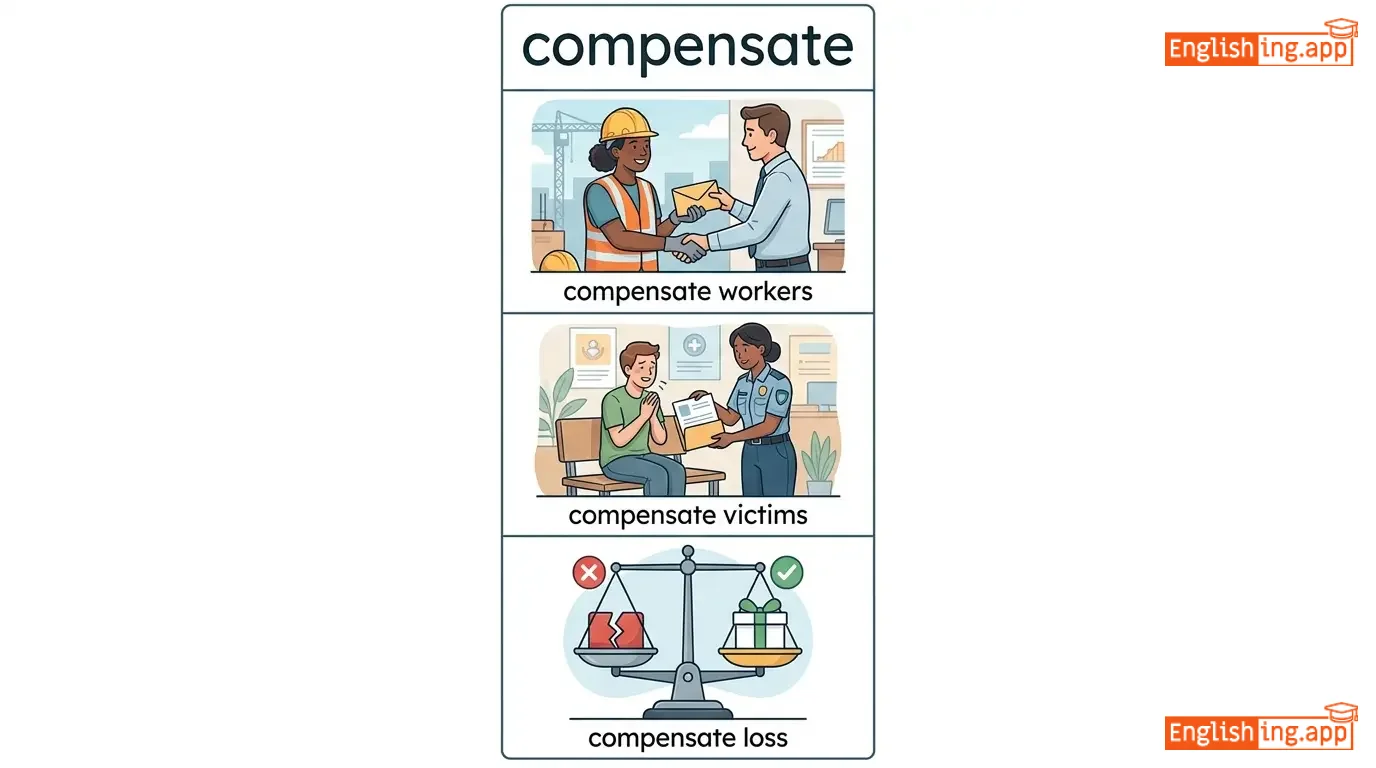
compensate workers, compensate victims, compensate loss, compensate for damage
••••••
|
赔偿像‘支付钱’一样,补偿损失。
••••••
|
|
💰
••••••
|
/ˌkɒmpənˈseɪʃən/
noun
(kəmˌpɛnsəˈɪʃən)
••••••
|
- •••••• |
赔偿
peichang
••••••
|
- •••••• | - •••••• | - •••••• | - •••••• |
something, typically money, given to make up for loss, injury, or work done
••••••
|
She received financial compensation for the accident. |
她因事故获得了经济赔偿。
Tā yīn shìgù huòdéle jīngjì péicháng.
••••••
|
seek compensation |
to request payment or restitution for loss or damage
••••••
|
寻求赔偿
xúnqiú péicháng
••••••
|
reimbursement, repayment, indemnity, recompense, restitution
••••••
|
penalty, loss, damage
••••••
|
compensation package, compensation claim, compensation for loss, financial compensation
••••••
|
赔偿 = 赔偿你的损失或伤害!
••••••
|
|
🏆
••••••
|
/kəmˈpiːt/
verb
(竞赛)
••••••
|
- •••••• |
竞争
jìngzhēng
••••••
|
competed
竞赛了
••••••
|
competed
竞赛了
••••••
|
competes
竞赛
••••••
|
competing
竞赛中
••••••
|
to try to win or be more successful than others in a contest or activity
••••••
|
Several companies compete for dominance in the market.
多家公司为市场主导地位而竞赛。
••••••
|
多家公司为市场主导地位而竞赛。
Duō jiā gōngsī wèi shìchǎng zhǔdǎo dìwèi ér jìngzhēng.
••••••
|
compete against time
与时间赛跑
••••••
|
to try to do something very quickly before time runs out
••••••
|
与时间赛跑
Yǔ shíjiān sàipǎo
••••••
|
contend, vie, strive, rival, challenge
••••••
|
cooperate, support, assist
••••••
|
compete for, compete against, compete in, fiercely compete
••••••
|
Jìngzhēng 就是努力拼搏赢得比赛!
••••••
|

